Conventional behaviour change interventions often flounder
Systematic reviews and meta-analyses suggest that behaviour change interventions tend to have small-to-medium effect sizes, struggle to work in the long term and that the heterogeneity in effects of intervention studies is high.Reference Rose, Barker and Maria Jacob1–Reference Steinmetz, Knappstein, Ajzen, Schmidt and Kabst3 Such interventions take huge effort to design and run for what becomes relatively small return in terms of changes to behaviour. This is a serious matter because we may be subjecting the majority of people to interventions which are ineffective for them.
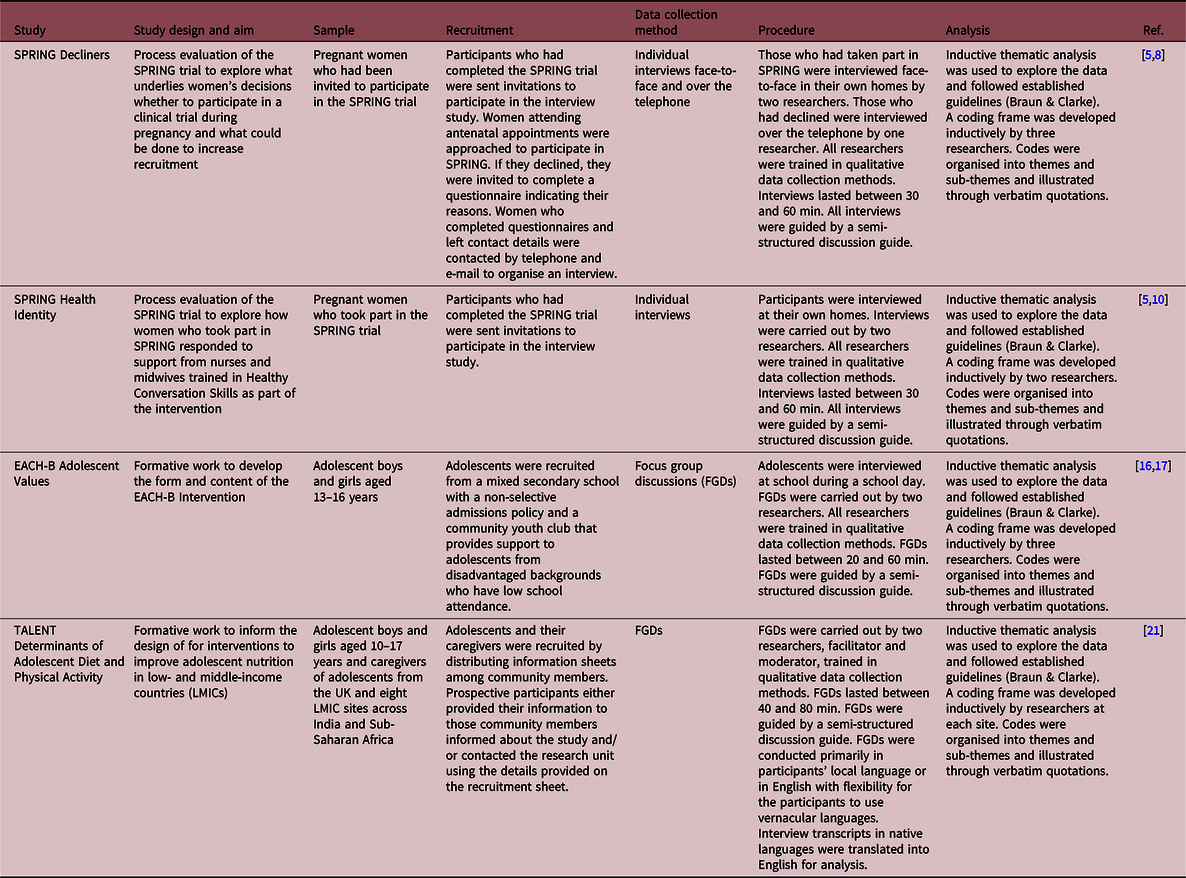
So why do behaviour change interventions struggle in this way and how can we make them more effective? This article offers some thoughts about what may underlie these failures of behaviour change interventions. To support this critique, we draw on our team’s experience of developing multiple interventions to promote and support health behaviour change with a variety of populations in different global contexts. The individual studies are described in Table 1. Each of these studies involved concerted efforts to consult the target populations in their design and/or the evaluation of the interventions, and therefore offers insights into participant responses to intervention features and processes.
Details of the aims, recruitment and data collection methods for each study

We propose three main reasons that may explain why our current method of designing and conducting behaviour change interventions struggle to achieve the change we expect. These are the following:
-
1. Our current model for testing the efficacy or effectiveness of interventions tends to a mean effect size. This ignores individual differences in response to interventions.
-
2. Our interventions tend to assume that everyone values health as we do as health professionals.
-
3. The great majority of our interventions focus on addressing cognitions as mechanisms of change. We appeal to people’s logic and rationality rather than recognising that much of what we do and how we behave, including our health behaviours, is governed as much by how we feel and how engaged we are emotionally as it is with whatever we plan and intend to do.Reference Reynolds, Webb, Benn, Chang and Sheeran4
Southampton PRegnancy Intervention for the Next Generation – Individual differences in response to interventions and variation in motivation
Interventions are usually designed as a ‘one-size-fits-all’, thus setting up a stumbling block to the success of health behaviour change interventions as we know there is considerable variation in participant engagement. This is evident from the point at which people decide to take part in the first place, to their engagement with and maintenance of behavioural changes beyond the duration of the intervention.
In a recent process of evaluation study, we examined the role of individual differences in how women engaged in a pregnancy trial of nutritional supplementation, the Southampton PRegnancy Intervention for the Next Generation (SPRING) trial. In the SPRING randomised control trial, we have combined a behaviour change approach with vitamin D supplementation.Reference Baird, Barker and Harvey5 The trial aimed to 1) assess the efficacy of a behaviour change intervention (Healthy Conversation Skills [HCS])Reference Lawrence, Black and Tinati6 in improving the diet quality of pregnant women; 2) assess the efficacy of oral daily vitamin D supplementation in improving the vitamin D status of pregnant women; and 3) to explore the efficacy of an intervention combining vitamin D supplementation and behaviour change support in improving the diet quality and nutritional status of pregnant women.
HCS is a set of skills for health and social care practitioners designed to support behaviour change developed in collaboration with local health services in Southampton, UK.Reference Black, Lawrence and Cradock7 By using these skills, trained SPRING nurses aimed to encourage women to reflect on their health behaviours and empower them to find their own solutions to overcome barriers to change. This is facilitated through conversations with patients who are driven by open discovery questions, beginning with ‘how’ or ‘what’, encouraging patients to reflect on the changes they would like to make, and on their personal circumstances. HCS-trained practitioners listen rather than give advice, and facilitate the setting of health goals and plans that are Specific, Measurable, Action-oriented, Realistic, Timed, Evaluated and Reviewed (SMARTER).
We carried out two studies as part of this process evaluation. The first explored what underlies women’s decisions whether or not to participate in a clinical trial during pregnancy and what could be done to increase recruitment.Reference Strömmer, Lawrence and Rose8 Only around 30% of clinical trials manage to reach their target sample size in the intended time.Reference Campbell, Snowdon and Francis9 Our understanding of what makes people take part and engage in health interventions, and consequentially how effective those interventions are, is largely based on speaking to individuals who do participate. We wanted to know why women were reluctant to take part in our trials as we know little about what stops them. We combined quantitative survey data about their reasons for declining from 296 pregnant women who declined to participate in SPRING, with interview data from two groups of women: 30 who declined to participate in SPRING and 44 women who took part.
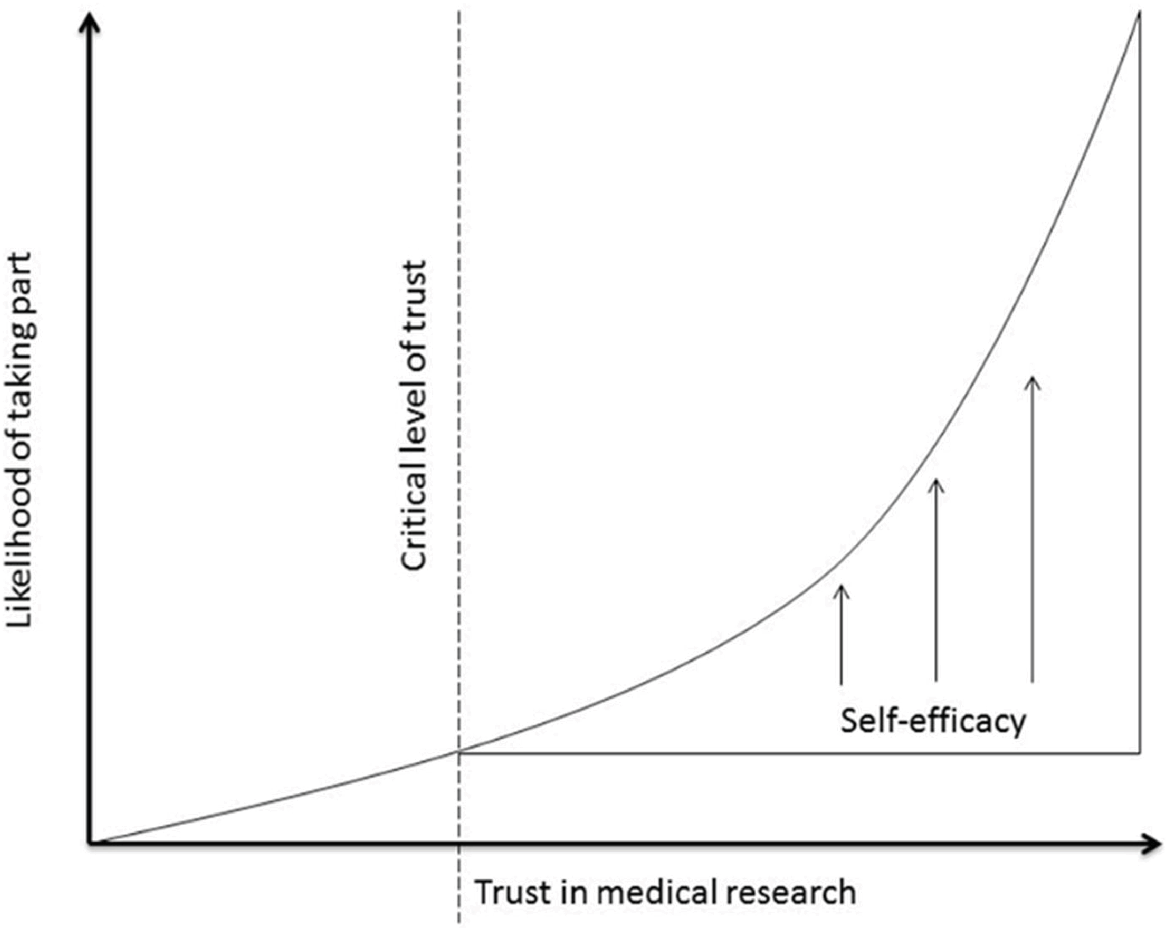
The survey data from women who had declined to take part in SPRING showed that when asked, women indicated a number of predictable barriers to participation: not wishing to take study medication, having difficulty making time, organising childcare and overcoming work commitments. When interviewed, however, women who had agreed to take part described similarly busy lives, filled with commitments to work and children. The difference between women who agreed to take part in SPRING and those who declined was not so much that those who declined were busier, but more that those who agreed felt confident that they were able to overcome barriers to taking part. This was linked to a fundamental belief that the research would do them no harm and to the trust they had in medical research and medical researchers.Reference Strömmer, Lawrence and Rose8 The decision to take part in the trial was based therefore on a combination of these two factors. Interviews suggested that women had to have a certain level of trust before they were prepared to consider taking part, or prepared to make efforts to overcome any barriers to fulfilling trial requirements (Figure 1). Recruitment methods for pregnancy trials should therefore focus on building women’s trust in the trial, and on enhancing women’s self-efficacy so they feel able to meet trial requirements. Trust could be built by investing time in an open, honest discussion about participation, improving visibility of the research team, testimonials from previous participants and advertising study safety and ethical conduct. Training research staff in empowering styles of communication may further enable women to feel heard and supported to problem-solving.Reference Strömmer, Lawrence and Rose8
Hypothetical model of the relationship between level of trust in medical research, likelihood of participation and the role of self-efficacy in women approached to take part in trials in pregnancy.Reference Strömmer, Lawrence and Rose8

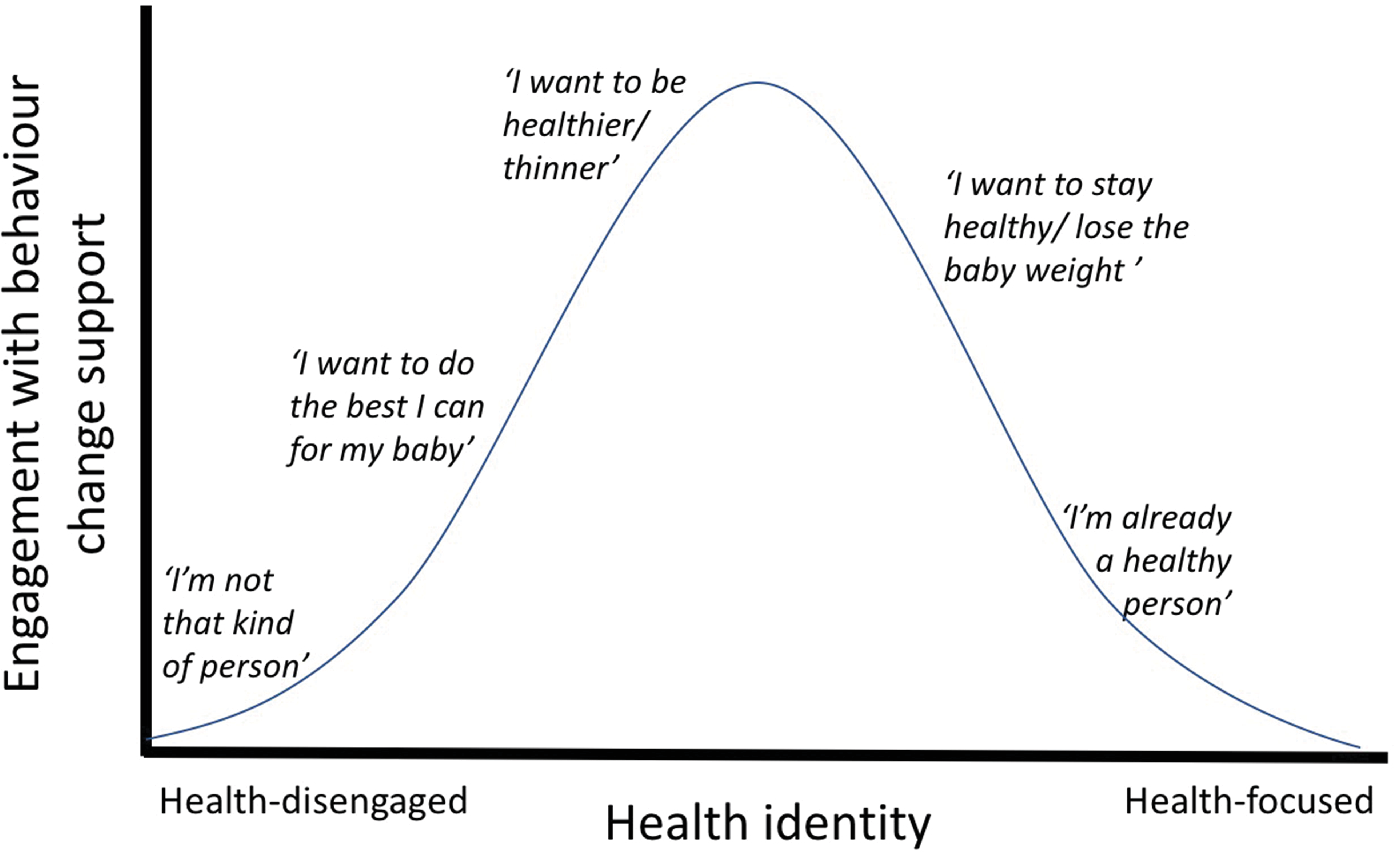
A second qualitative study examined individual differences in how women who took part in SPRING responded to support from nurses and midwives trained in HCS as part of the intervention. Seventeen women who had received the HCS intervention were interviewed about how they had found the experience and how this had influenced their thinking about their health behaviour in pregnancy. What we found is that women varied in their response to the HCS intervention depending on how far they self-identified as ‘healthy people’.Reference Morris, Strömmer and Vogel10 The way women described themselves suggested that they were all positioned somewhere on a spectrum from ‘health disengaged’ to ‘health focused’. We termed this their ‘health identity’ (see Figure 2).
Health identity and variation in engagement with behaviour change intervention.Reference Morris, Strömmer and Vogel10

Women at both ends of this spectrum appeared less likely to be engaged with the intervention we were offering them to support a healthy pregnancy than were women in the middle of the spectrum. Health-disengaged women were not interested in talking about their lifestyles; they had other priorities. Health-focused women were managing their health well and did not feel that they needed extra support. It was the women in the middle of the distribution who wanted support and appreciated input from the midwives. Our learning from this study is that health behaviour change interventions need the capacity to be tailored to meet the needs of individuals with different health identities and different levels of engagement with their health. Clearly, women who are health-disengaged need support of a different type to that needed by women who are more engaged. There is now good evidence to suggest that tailored interventions may be more effective than others, presumably because they take individual differences into consideration.Reference Rodriguez Rocha and Kim11
Data from SPRING have shaped our conviction that we need to focus much more on individual differences in response to behaviour change interventions if we want to maximise their effect. The concept of this is not far removed from that of personalised medicine,Reference Gray12 except that the personalisation of behaviour change interventions is on the basis of psychological differences rather than genetic or physiological ones. What the SPRING data also indicate is that people vary in how much they value health and medicine, and how much non-rational factors such as trust and confidence influence their engagement with behaviour change interventions.
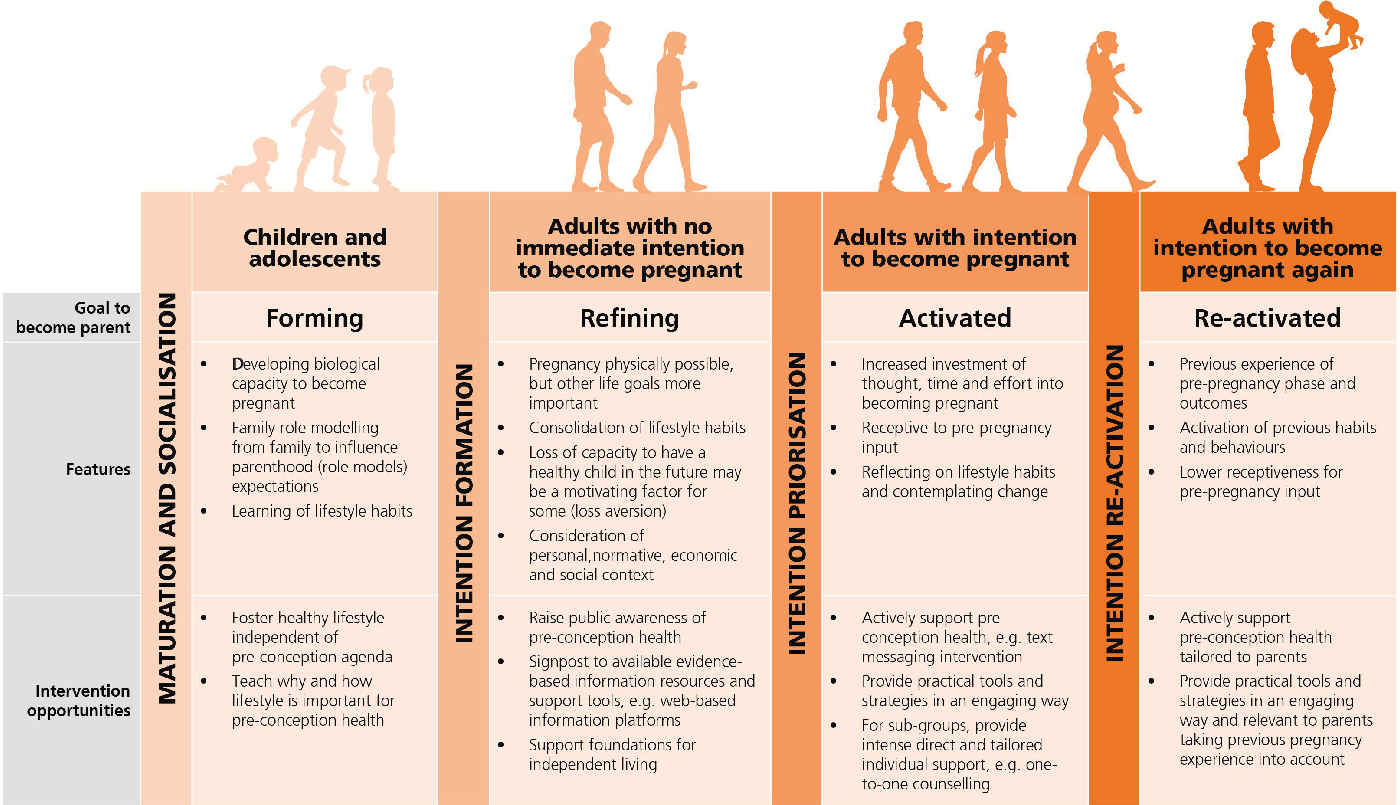
In a recent Lancet article, we proposed strategies for intervening before conception that are framed by a life-course model of individual motivations and receptiveness at different preconception action phases (Figure 3).Reference Barker, Dombrowski and Colbourn13 The analysis was based on Rubicon model of Action phases of developmental regulation,Reference Heckhausen and Heckhausen14,Reference Heckhausen15 and maps motivations, values and goals at different life-course stages.
Model of preconception action phases: goal to become a parent.Reference Barker, Dombrowski and Colbourn13

It reflects the way that each of these life-course stages is different in terms of what might engage and motivate people to change and what they value.
The analysis aimed to map understanding of these life-stage-specific motivations, values and goals on to interventions that are consistent with them and are therefore most likely to engage. The goal of people in this analysis is to become a parent in optimal health. This intention is very differently formed in adolescents than it is in adults, however, which means that they will respond differently, and that we have to design interventions with them that are consistent with their differences in motivation and intention. Interventions in adulthood with those planning a pregnancy may be more focused on actively supporting preconception health and be more directive. Interventions in adolescence, on contrary, may focus on fostering healthy lifestyles notwithstanding any potential benefits to future children.
Engaging Adolescents in Changing Behaviour – Understanding values and priorities as behavioural drivers
Our studies of adolescents have taught us a great deal about values that are not health-related and how they affect engagement with health interventions. We recently conducted extensive formative work to inform the design of a multi-component intervention to support adolescent diet and physical activity in the UK (Engaging Adolescents in Changing Behaviour [EACH-B]).Reference Strommer, Shaw and Jenner16,Reference Strömmer, Barrett and Woods-Townsend17 The EACH-B trial combines an educational module taught in schools and a visit to LifeLab – a purpose-built educational facility in the University Hospital Southampton with teacher support using HCS, previously used successfully by healthcare practitioners in SPRING.
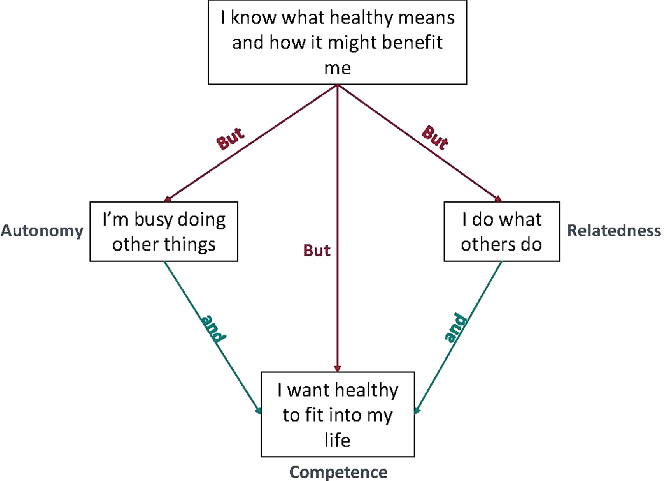
Part of the EACH-B development work involved speaking to 54 young people (12–14 years of age) in secondary schools. The young people we spoke to told us that they valued being with their friends, doing what they enjoyed and were good at, being seen and heard as individuals, and being respected and supported. Being healthy was important to them, but only if achievable without compromising other things that were important to them. The values they described overlap with the three basic psychological needs outlined by Self-Determination Theory (SDT): autonomy, competence and relatedness.Reference Ryan and Deci18,Reference Ryan, Deci, Deci and Ryan19 They described a need to compromise between expectations of the world around them, and a growing desire to make their own choices about their lives (autonomy). Adolescents valued the sense of mastery and accomplishment to be gained from challenging and rewarding activities (competence), but on the contrary, described healthy choices as being boring and inconvenient. Adolescents valued their social world and wanted to make choices that aligned with those of their peer group (relatedness); these were not always healthy choices.
The conceptual map of reflecting analysis of this data suggests that although adolescents recognise the importance of being active and eating well, they have other priorities that align more directly with their basic psychological needs (Figure 4). The need to be healthy was not aligned with these needs, priorities or values. This explains why when we make an appeal to adolescents to eat better or exercise more in order to improve their long-term health, we are unlikely to get much traction. What they most value is in the present not in the future.
A model of adolescent values in relation to eating well and being active, and the relationship of these values to basic psychological needs.Reference Strommer, Shaw and Jenner16

To make progress in supporting adolescents to eat better and exercise more, we must align our interventions more directly with adolescents’ own values and priorities.
Each of the red connections in Figure 4 needs to be catered for in an intervention to support adolescent health. We have found similar themes in discussions with other groups of adolescents in different global contexts,Reference Bay, Vickers, Mora, Sloboda and Morton20 including our team’s work in India and Sub-Saharan Africa.
The Transforming Adolescent LivEs through NutriTion – Understanding values and priorities in different global contexts
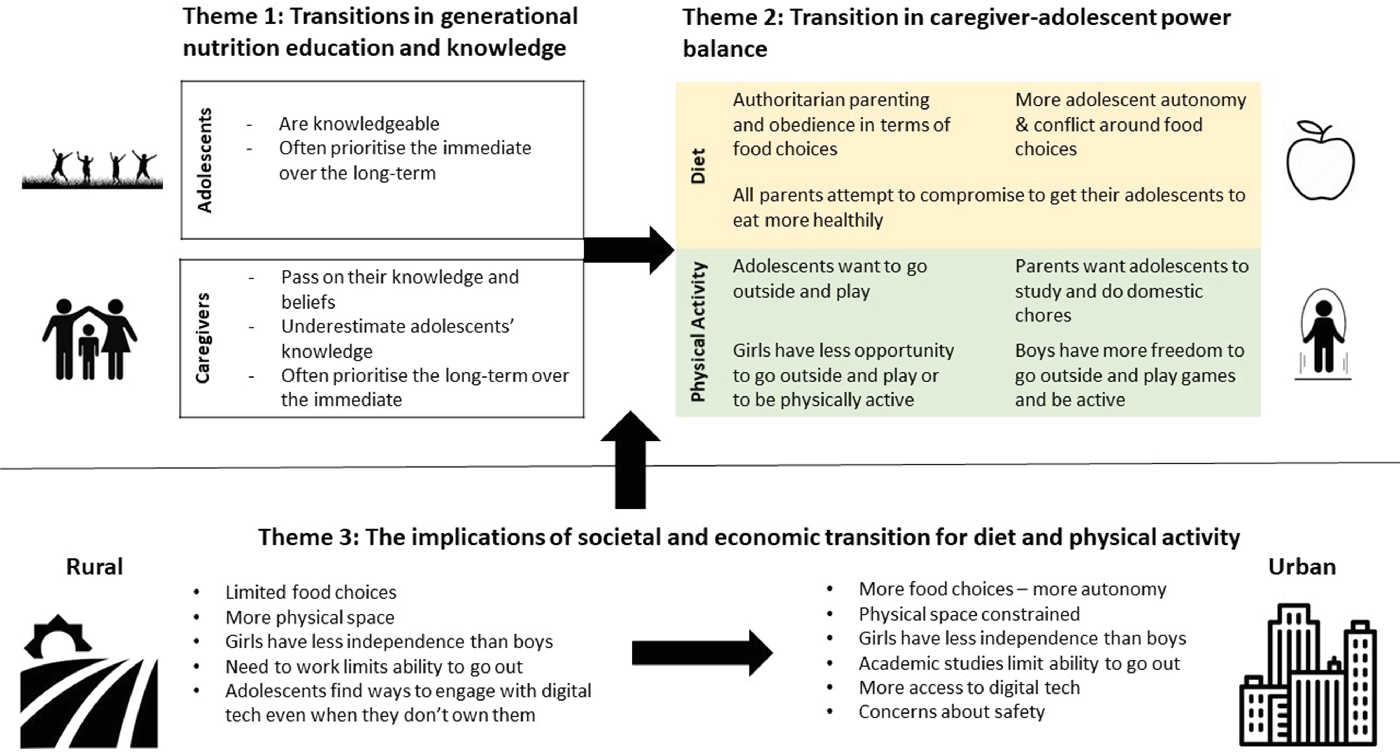
The Transforming Adolescent LivEs through NutriTion (TALENT) consortium was formed in 2018 to build the evidence base for interventions to improve adolescent nutrition in low- and middle-income countries (LMICs).Reference Weller, Hardy-Johnson and Strömmer21 It comprises researchers from the UK and eight LMIC sites across India and Sub-Saharan Africa with strong links to their communities and with diverse interdisciplinary expertise. Focus group discussions were conducted with a total of 303 adolescents and 188 parents/carers, in four African countries (Ethiopia, Cote d’Ivoire, The Gambia and South Africa) and four sites in India (Mumbai, Pune, Dervan and Mysore); these sites representing varying stages of the epidemiologic and nutrition transition (Figure 5).Reference Weller, Hardy-Johnson and Strömmer21 The aim of these discussions was to explore determinants of adolescent diet and physical activity to inform the development of context-specific interventions to improve adolescent nutrition and physical activity.
Diagram depicting factors related to adolescent diet and physical activity across sites at varying stages of the epidemiologic and nutrition transition.Reference Ryan, Deci, Deci and Ryan19

In many of the discussions, parents and caregivers expressed frustration because despite trying their hardest to compromise and appease their adolescents, they were still not winning the fight to get them to eat more healthily. Parents tried to cook street foods at home because their adolescents said they liked street food, and because the adults would rather eat at home where they have some control over the ingredients and quality of the food. Parents then felt at their wits’ end when, despite these efforts, their adolescents would not eat the food at home. What the adults in this example may have been failing to understand was that eating street food was not actually about the food. It was more likely to be about being out, away from home, making independent, autonomous choices with friends. The food is not necessarily the primary driver of the experience.
This is a clear demonstration of what motivates adolescents not being rational from an adult point of view, but instead based on adolescent values and reasons which we need to understand if we are going to intervene effectively with them. These behavioural drivers tap into a territory which is somewhere between reason and emotion. Understanding the need to appeal to emotions is not something that those who design health interventions readily understand, but it is something that the marketing industry understands only too clearly.Reference Ballantyne, Warren and Nobbs22 So what do we currently know about the role of emotion in health behaviour change and how do we tap into it?
Sense and sensibility in behaviour change
Dual Process Theory is a psychological model that describes behaviour as a joint function of reflective and impulsive processes.Reference Strack and Deutsch23 On the one hand, the reflective system elicits behavioural decisions that are based on knowledge about facts and values, whereas on the other hand, the impulsive system directs behaviour through emotional associations and motivational orientations. The reflective system is slow and deliberate: consciously working through different considerations, applying different concepts and knowledge and weighing them all up. The impulsive system, on the contrary, is fast, automatic, emotional and subconscious.
Both are obviously involved in determining our health behaviours – we eat for example. We do not choose our food purely using logic and reasoning; sometimes we feel like eating things that are salty, sweet, high in fat and not very good for us. However, most of the behaviour change interventions we design appeal almost exclusively to the ‘rational’ reflective system rather than the ‘emotional’ impulsive system, or worse still, try to use the rational system to override the impulsive one. A growing number of behavioural scientists are advocating a paradigm shift in how we think about and design health interventions from a prescriptive biomedical model to more holistic person-centred approaches.Reference Bryan, Yeager and Hinojosa24–Reference Kimiecik, Horn, Newman and Kimiecik26 Even though we know emotions and motivations are major drivers in how we behave,Reference Lawton, Conner and McEachan27 we are only just beginning to think about interventions that might appeal to these.
For most of its history, psychological science steered clear of topics such as emotions, which were deemed too ethereal and irrelevant in the era of behaviourism.Reference Fredrickson and Joiner28,Reference Watson29 Even more than a decade after emotions became an accepted topic of study in psychological science, focus was directed primarily at ‘serious’ emotions, such as fear, anger and sadness. The scientific study of positive emotions was overlooked, often deemed frivolous, until the emergence of positive psychology at the turn of the century.Reference Fredrickson and Joiner28,Reference Seligman and Csikszentmihalyi30
Since then, discoveries in affective science have highlighted that when people associate positive emotions with health behaviours, they are more likely to intend to do those behaviours and, more importantly, to actually engage in them.Reference Lawton, Conner and McEachan27,Reference Van Cappellen, Rice, Catalino and Fredrickson31–Reference Kiviniemi, Voss-Humke and Seifert33 People are motivated to act when they feel good, rather than bad, about their progress towards a goal.Reference Reynolds, Webb, Benn, Chang and Sheeran4 Experiencing even small successes in making healthier choices gives rise to stronger intentions to further engage in those behaviours. What also matters is when positive affect is experienced: positive emotions experienced during activity forecast future activity, whereas similar emotions experienced after activity do not.Reference Rhodes and Kates34
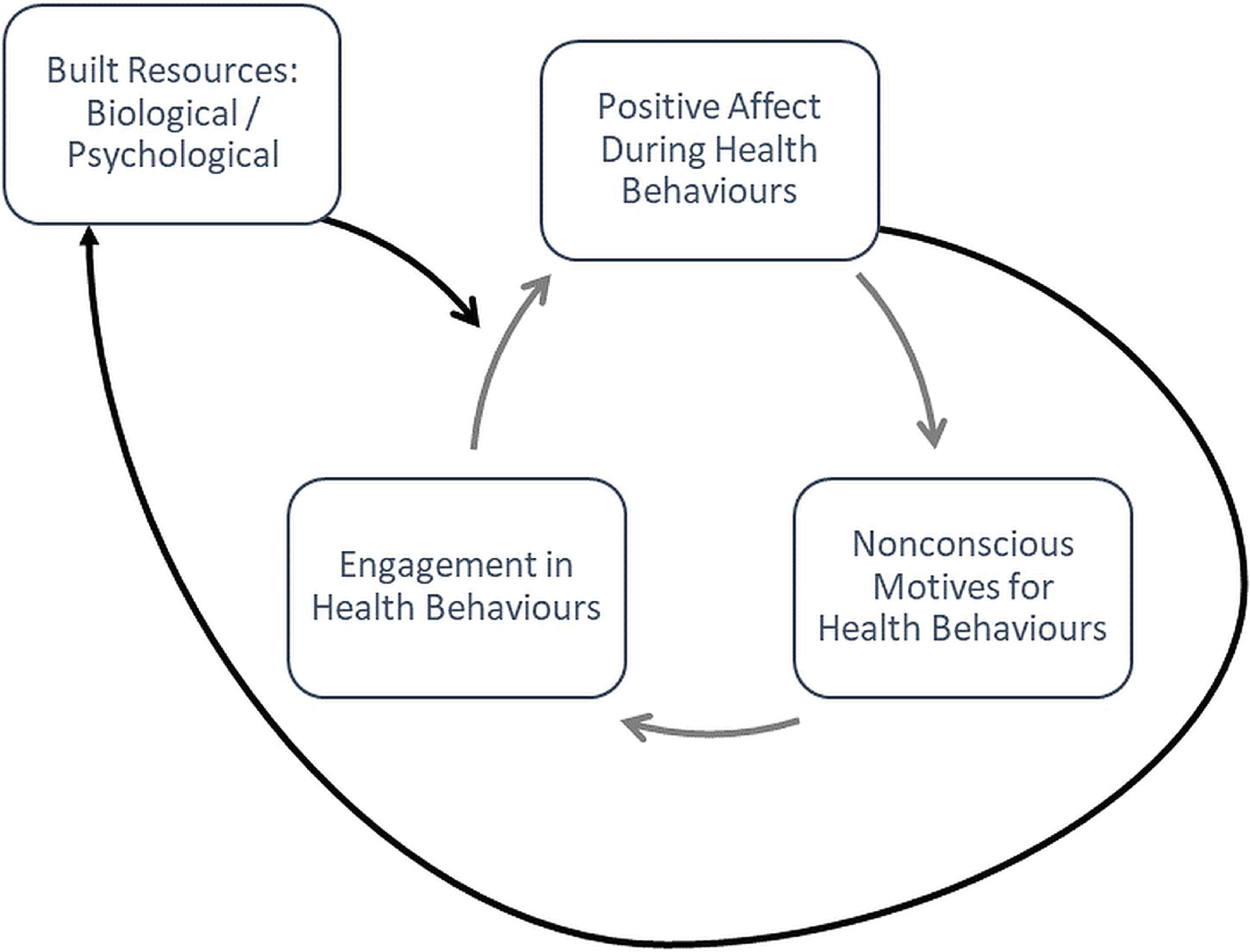
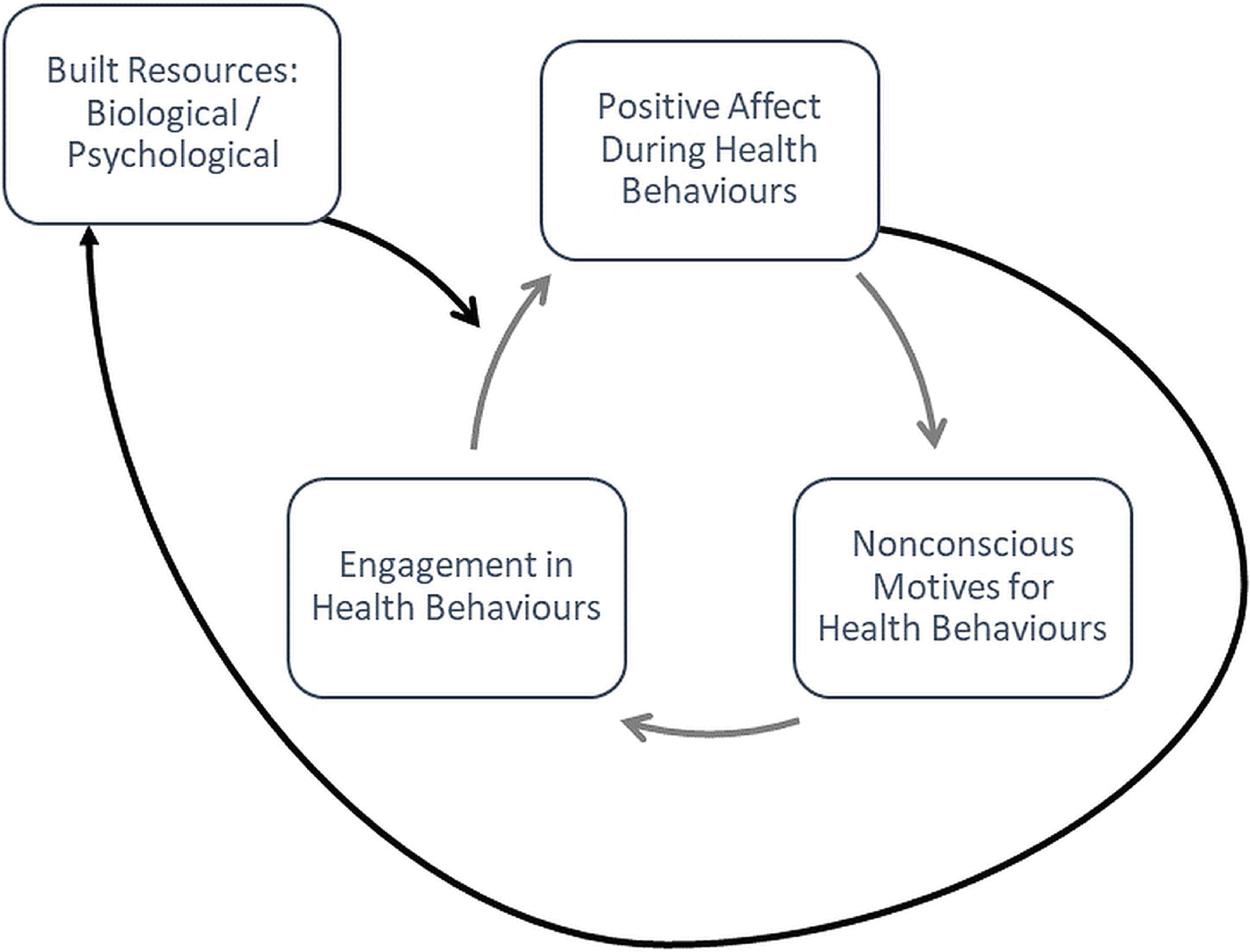
The upward spiral theory of lifestyle change weaves together insights from behavioural neuroscience and affective psychology (Figure 6).Reference Fredrickson and Joiner28 This theory proposes that where positive affect is experienced during a new health behaviour, it creates nonconscious motives for that behaviour. These motives grow stronger over time as they are increasingly supported by personal resources that positive affect also builds. As such, the theory is well positioned to explain the elusive sustained behavioural maintenance that underpins successful lifestyle change.Reference Van Cappellen, Rice, Catalino and Fredrickson31 Theories such as the upward spiral theory do not replace, but rather complement other theories of health behaviour change by shedding light on understudied affective, nonconscious and growth-related processes. Interventions that incorporate components designed to increase positive affect felt while engaging in positive health behaviours, can trigger the upward spiral by sparking nonconscious and increasing motives to pursue that behaviour in the future.
Model articulated by the upward spiral theory of lifestyle change.Reference Watson29,Reference Kiviniemi, Voss-Humke and Seifert33
Existing evidence suggests, therefore, that positive emotional experiences can fuel and sustain behaviour, whereas negative emotions can deter from taking part in the first place, or from engaging in behaviour consistently over time. The importance of understanding the role of emotions becomes painfully apparent when fear triggers large-scale conspiracy theories and mistrust of scientific evidence, as, for example, with vaccinesReference Dubé, Laberge, Guay, Bramadat, Roy and Bettinger35 and climate change.Reference Van Rensburg and Head36 These fear-driven social movements reflect the Dunning–Kruger effectReference Dunning37,Reference Motta, Callaghan and Sylvester38 : a cognitive bias in which people assess their cognitive ability as greater than it is and believe they know better than scientists or ‘experts’. In the face of biases such as this that fuel a mistrust in authority figures, no amount of science, fact, explaining the truth or using lay language will change people’s minds.
The vaccine hesitancy literature suggests that vaccine non-compliant individuals have, in fact, more knowledge of vaccination and vaccine preventable diseases than vaccine compliant individuals.Reference Dubé, Laberge, Guay, Bramadat, Roy and Bettinger35 Vaccine-hesitant individuals will spend more time searching for information on vaccines, including advice online.Reference Smith, Humiston and Marcuse39,Reference Dubé, Bettinger and Halperin40 This search is likely to lead to anti-vaccination websites, which use emotive appeals such as personal stories of vaccine damage and discrediting scientific experts.Reference Kata41,Reference Diethelm and McKee42 Large-scale experimental studies have shown that 5–10 min exposure to such websites increases perceived risk of vaccinations and makes the decision to vaccinate less likely.Reference Betsch, Renkewitz, Betsch and Ulshöfer43 These individuals actively seek out information, therefore feel informed about the topics, but also develop emotion-based reactions to these health practices. The judgement of risk is not based on any objective rationality, so appealing to rationality is unlikely to change it.
Future directions: using creative methods to bridge a divide
What adds fuel to the fire of this disconnect and lack of trust and engagement is that the research world is often alien and unreachable to the lay citizen. We as the research community need to reach across the divide and build rapport through understanding the emotional drivers of behaviour. One way of achieving this is through using more creative methods to generate research evidence and in disseminating it. A recent report published by UCL and the World Health Organisation (WHO) presents evidence from the world’s largest review to date into the health benefits of the arts to the promotion of good health and the prevention of ill-health across the life-course, comprising over 3000 studies.Reference Fancourt and Finn44 The review demonstrates that the arts offer cost-effective solutions because they can frequently draw on existing assets or resources.
Those who attended performing arts, and arts and cultural events are more likely to report being in good health.Reference Fenn45 Art uses strength-based approaches that can be a powerful tool to inspire, motivate, and empower change, challenge current thinking and promote conversations around sensitive and complex concepts.Reference Kennett46,Reference Jones47 A creative lens transcends societal barriers and can challenge cultural narratives, shift imagery and inspire emotions in a way that other traditional methods of learning rarely do.Reference Jones47 The benefits of traditional art forms are not only linked to improved physical and mental well-being, but also bring together communities, create social cohesion and inclusion.Reference Barraket48 In this process, such art activities are especially important and valuable.
We recently carried out a photography project with young people in Southampton to explore their own perspectives on life, health and food. We asked these young people to take pictures on their phones of their life and the foods that they ate on a day-to-day basis. The photos were published as a book. The collection depicted images of everything from beautifully mundane life with breakfasts and ketchup bottles in ordinary kitchens, to staged portrayals of snack foods poised on tree stumps in the sunset. The project reflected the whimsy of adolescents and provided a viewpoint on adolescent life that would have been impossible to capture using more conventional methods of research.
Art is a valuable medium in that it is inclusive particularly to sectors of society who might not feel equipped, confident, safe or articulate enough to engage with a world of science, rationality and expertise. Like the women who did not want to take part in our pregnancy studies, they may not trust us. No amount of rationalising and explaining is going to ignite that trust. Apart from the work of a few intrepid pioneers, we know very little about how to use alternative media to support behaviour change. Creative methods are an effective way to engage our target populations in co-creation; those most in need of health services and interventions are often also the most disenfranchised and ‘hard-to-reach’ groups of people.Reference Kelemen and Hamilton49 The aim of co-creation is to build trust with target populations, understand and agree desired outcomes, create real innovation and deliver better performance for health research implementation. These novel creative approaches also encourage the re-conceptualisation of what counts as expertise, thereby allowing a more equipoised co-productive engagement between researchers and members of the wider society.Reference Kelemen and Hamilton49 Such person-centred, holistic approaches can also empower communities to identify structural factors that could offer solutions to optimise their health and well-being, for example, by creating more green spaces that facilitate well-being activities.Reference Anderson, Ruggeri, Steemers and Huppert50
Conventional approaches to behaviour change struggle to achieve sustained changes in health behaviour and ultimately health improvement. This may be because we overlook individual differences in response to interventions and assume that achieving health is motivating. A growing number of researchers are calling for a paradigm shift from prescriptive biomedical models of health promotion which focus on people’s behavioural deficits, to more person-centred approaches that acknowledge that there is always meaning in human behaviour. There are early data suggesting that engaging people’s emotions might lead to more effective interventions. Art and other media that engage people emotionally rather than purely rationally can have the power to communicate complex information in a way that fosters understanding and retention. Future health behaviour change interventions may benefit from inclusion of strategies that acknowledge the human experience, engage and empower communities and appeal to our emotions as well as our logic through methods such as art.
Acknowledgments
The ideas discussed in this article were first presented at the 2019 DOHaD World Congress. The examples provided in this article are from ongoing projects. The authors thank the research teams working on EACH-B, SPRING and TALENT, all PPI contributors and individuals who have taken part in our research and activities.
Financial support
This paper/article/abstract presents independent research from EACH-B funded by the National Institute for Health Research (NIHR) under its Programme Grants for Applied Research Programme (Reference No. RP-PG-0216-20004). The views expressed are those of the author(s) and not necessarily those of the NIHR or the Department of Health and Social Care. The TALENT study was funded by a Global Challenges Research Fund/Medical Research Council pump priming grant (grant no.: MC_PC_MR/R018545/1). The funding agency was not involved in the study design, data analysis or writing of this article. The SPRING study was funded by grants from the National Institute for Health Research (NIHR) Southampton Biomedical Research Centre, Medical Research Council (MR_UU_12011/1) (MR_UU_12011/4) (MR/N011848/1) (MC_U147585819) (MC_UP_A620_1014) (MC_U105960371), British Heart Foundation (RG/07/009/23120), Arthritis Research UK(17702) (21231), Department of Health (HTA/10/33/04), Danone Nutricia Early Life Nutrition, National Institute for Health Research (NIHR)Southampton Biomedical Research Centre, University of Southampton and University Hospital Southampton NHS Foundation Trust, NIHR Musculoskeletal Biomedical Research Unit, University of Oxford and the European Union’s Seventh Framework Programme (FP7/2007–2013), projects Early Nutrition and ODIN under grant agreements numbers 289346 and613977.
Conflicts of interest
None.
Ethical standards
The authors assert that all procedures contributing to this work comply with the ethical standards of the relevant national guidelines on human experimentation (MRC policy on UK clinical trials regulations) and with the Helsinki Declaration of 1975, as revised in 2008, and has been approved by the institutional committees (Southampton University Faculty of Medicine Ethics Committee).