Introduction
Suicide has become a growing concern within the US military, with suicide rates among service members exceeding those found among civilians (Kuehn, Reference Kuehn2009; Nock et al., Reference Nock, Deming, Fullerton, Gilman, Goldenberg, Kessler, McCarroll, McLaughlin, Peterson, Schoenbaum, Stanley and Ursano2013). Consequently, there have been calls for research to better understand suicide risk factors among military populations (Ramchand et al., Reference Ramchand, Acosta, Burns, Jaycox and Pernin2011). In the broader suicide research literature, one consistently identified risk factor is a history of suicidality (i.e. ideation, plans, and/or attempts; Franklin et al., Reference Franklin, Ribeiro, Fox, Bentley, Kleiman, Musacchio, Huang, Jaroszewski, Chang and Nock2017). Among military samples, specifically, Bryan et al. (Reference Bryan, Bryan, Ray-Sannerud, Etienne and Morrow2014) found that military personnel with a history of pre-military self-injurious thoughts and behaviors (SITBs) reported more severe current suicidal ideation than those without this history. Another study of the entire active duty US military found that suicidal ideation and previous suicide attempts significantly predicted death by suicide (Hyman et al., Reference Hyman, Ireland, Frost and Cottrell2012). These findings, together, indicate that a suicidality history is a key signal of risk among service members. It remains unclear, however, which mechanisms account for the relationship between prior and future suicidality. Despite a paucity of research in this area, studies point to other psychiatric problems as candidate mechanisms that may underlie this association.
For one, suicidality may confer risk for the development of other psychiatric problems. Goldman-Mellor et al. (Reference Goldman-Mellor, Caspi, Harrington, Hogan, Nada-Raja, Poulton and Moffitt2014) found that suicide attempters were significantly more likely than those without an attempt history to go on to experience persistent major depressive episodes and substance dependence, even after accounting for baseline psychiatric morbidity. Multiple attempters, in particular, may go on to experience marked psychopathology as compared with single attempters (Forman et al., Reference Forman, Berk, Henriques, Brown and Beck2004). Research also indicates that psychiatric disorders predict future suicidal thoughts and behaviors. A meta-analysis of suicidality risk factors found that depression and anxiety diagnoses were among the strongest predictors of suicidal ideation (Franklin et al., Reference Franklin, Ribeiro, Fox, Bentley, Kleiman, Musacchio, Huang, Jaroszewski, Chang and Nock2017). Regarding military-specific findings, studies among US Army soldiers (Nock et al., Reference Nock, Ursano, Heeringa, Stein, Jain, Raman, Sun, Chiu, Colpe, Fullerton, Gilman, Hwang, Naifeh, Roselini, Sampson, Schoenbaum, Zaslavsky and Kessler2015) and active duty US military service members (LeardMann et al., Reference LeardMann, Powell, Smith, Bell, Smith, Boyko, Hooper, Gackstetter, Ghamsary and Hoge2013) have found that mental disorders (e.g. depression, bipolar disorder, alcohol use disorder) precede suicide ideation, attempts, and deaths. Thus, not only may prior suicidality predict more severe psychiatric symptoms, but more severe psychiatric symptoms may also predict future suicidal thoughts and behaviors.
Taken together, it is plausible that psychiatric problems mediate the relationship between prior suicidality and subsequent suicide risk among service members. Studies are needed, though, to test this conjecture. Indeed, as Ribeiro et al. (Reference Ribeiro, Franklin, Fox, Bentley, Kleiman, Chang and Nock2016) conclude in their meta-analysis, research is needed to clarify what mechanisms explain the significant relationship they observed between prior SITBs and future suicidal thoughts and behaviors. Because more severe attempt histories (e.g. multiple attempts) and more severe ideation histories (e.g. more lethal methods considered) have been linked to greater future suicide risk (Beautrais, Reference Beautrais2003; Brown et al., Reference Brown, Henriques, Sosdjan and Beck2004; Forman et al., Reference Forman, Berk, Henriques, Brown and Beck2004), it is especially important to examine severity of suicidality, and not simply its presence, as a predictor of suicide risk. This knowledge may improve our understanding of factors that maintain suicidality and reveal military suicide prevention avenues.
The present study
This longitudinal study aimed to evaluate possible explanatory factors underlying the relationship between prior suicidality and future suicidal ideation. Specifically, using a sample of high-risk military service members, we investigated various psychiatric factors (i.e. alcohol abuse, anxiety sensitivity, hopelessness, insomnia, posttraumatic stress, suicidal ideation, and thwarted belongingness) as parallel mediators of the association between: (1) lifetime suicidality severity (specifically, suicidal ideation severity, suicide attempt severity, and overall suicidality severity – i.e. ideation and attempt severity combined) at baseline and (2) suicidal ideation severity at 3-month follow-up. Given a lack of research in this domain, no a priori hypotheses were formulated. This study represents a subset of a larger investigation of suicide risk prediction among high-risk service members (Gutierrez et al., Reference Gutierrez, Joiner, Hanson, Avery, Fender, Harrison, Kerns, McGowan, Stanley, Silva and Rogersn.d.). Consequently, we were limited in which psychiatric constructs we could evaluate as mediators. Even so, each of our included mediators has demonstrated associations with both suicide ideation and attempts (Beck et al., Reference Beck, Brown and Steer1989; Joiner and Rudd, Reference Joiner and Rudd1996; Cougle et al., Reference Cougle, Resnick and Kilpatrick2009; Borges and Loera, Reference Borges and Loera2010; Capron et al., Reference Capron, Fitch, Medley, Blagg, Mallott and Joiner2012; Bernert et al., Reference Bernert, Kim, Iwata and Perlis2015; Chu et al., Reference Chu, Buchman-Schmitt, Stanley, Hom, Tucker, Hagan, Rogers, Podlogar, Chiurliza, Ringer, Michaels, Patros and Joiner2017; Franklin et al., Reference Franklin, Ribeiro, Fox, Bentley, Kleiman, Musacchio, Huang, Jaroszewski, Chang and Nock2017). Of note, we examined suicidal ideation as a mediator to investigate whether prior suicidality is associated with future ideation simply via the pathway of ideation, or whether other factors might better account for this relationship. Additionally, we note that because the main investigation was not designed to test our study hypotheses, data on psychiatric factors were not collected at each time point. Thus, this study serves as an initial investigation of possible mechanisms underlying the relationship between prior suicidality and future ideation, rather than a definitive test of longitudinal mediating effects (Maxwell and Cole, Reference Maxwell and Cole2007).
Methods
Participants
Participants (N = 624) were military service members referred to or seeking services from a military emergency department, inpatient psychiatric unit, or outpatient behavioral health clinic for suicide risk concerns. Participants were eligible if they were: (1) active duty US military service members, and (2) scheduled to be stationed within the continental USA for at least 3 months following study enrollment. Participants ranged in age from 18 to 52 years (M = 25.24; s.d. = 6.08), and the majority (77.9%) identified as male (21.1% female, 1.0% transgender). Regarding race, 62.4% identified as White/Caucasian, 19.1% Black/African American, 4.2% Asian/Pacific Islander, 0.8% Native American/Alaskan Native, and 13.6% another race; among participants, 17.3% identified as Hispanic or Latino/a. A plurality (47.8%) of participants reported being single (39.7% married, 6.9% separated, 5.6% divorced). Nearly half (48.6%) reported that their highest level of education completed was high school (0.5% no high school diploma, 37.8% some college, 5.6% associate's degree, 5.9% bachelor's degree, 1.6% master's/doctoral degree). Years of military service ranged from 0 to 25 (M = 4.62; s.d. = 4.97); all US military branches were represented.
Measures
Due to the need for a brief survey battery to minimize participant burden, the main investigation used the Military Suicide Research Consortium's Common Data Elements (MSRC CDEs) to assess alcohol abuse, anxiety sensitivity, hopelessness, insomnia, post-traumatic stress symptoms, and thwarted belongingness (see Ringer et al., Reference Ringer, Soberay, Rogers, Hagan, Chu, Schneider, Podlogar, Witte, Holm-Denoma, Plant, Gutierrez and Joiner2018 and Stanley et al., Reference Stanley, Buchman-Schmitt, Chu, Rogers, Gai, Wagner, Gutierrez and Joiner2018 for details regarding the development of the MSRC CDEs using factor analyses and their validation in a military sample).
Self-Harm Behavior Questionnaire
A clinician interview version of the Self-Harm Behavior Questionnaire (SHBQ) was utilized to assess the severity of participants’ lifetime histories of suicide ideation (five scored items) and attempts (six scored items) (Gutierrez et al., Reference Gutierrez, Osman, Barrios and Kopper2001). Total scores on the ideation and attempts subscales range from 0 to 13 and 0 to 23, respectively; higher scores signal greater severity. Per the SHBQ, a more severe ideation history is indicated by more lethal methods considered, a greater number of stressors contributing to the ideation, having made a specific suicide plan, not having thought about others’ reactions to one's suicide death, and/or having taken steps toward a suicide plan. Additionally, per the SHBQ, a more severe attempt history is indicated by the use of more lethal methods, a greater number of attempts, a more recent attempt, the need for medical attention following an attempt, a greater number of stressors associated with an attempt, and/or greater suicidal intent during an attempt. These subscales are summed to create an index of overall suicidality severity (range: 0–36). The SHBQ has demonstrated strong psychometric properties (Gutierrez et al., Reference Gutierrez, Osman, Barrios and Kopper2001; Fliege et al., Reference Fliege, Kocalevent, Walter, Beck, Gratz, Gutierrez and Klapp2006; Gutierrez and Osman, Reference Gutierrez and Osman2008). The SHBQ suicide ideation subscale demonstrated questionable but workable internal consistency (α = 0.62), the suicide attempt subscale excellent internal consistency (α = 0.95), and the overall suicidality index good internal consistency (α = 0.88). SHBQ indices were included as predictors in our mediation models.
Anxiety Sensitivity Index-3
A five-item version of the 18-item self-report Anxiety Sensitivity Index-3 (ASI-3) was used to assess concerns regarding anxiety-related sensations (Taylor et al., Reference Taylor, Zvolensky, Cox, Deacon, Heimberg, Ledley, Abramowitz, Holaway, Sandin, Stewart, Coles, Eng, Daly, Arrindell, Bouvard and Cardenas2007). The MSRC CDEs include five items from the ASI-3's cognitive concerns subscale because elevations on this subscale have been associated with increased suicide risk (Oglesby et al., Reference Oglesby, Capron, Raines and Schmidt2015). Items are rated on a 1 (Very little) to 5 (Very much) scale; higher ratings indicate greater anxiety sensitivity (range 5–25). The five-item ASI has demonstrated excellent internal consistency and a strong, significant relationship with the 18-item ASI-3 (r = 0.94; Ringer et al., Reference Ringer, Soberay, Rogers, Hagan, Chu, Schneider, Podlogar, Witte, Holm-Denoma, Plant, Gutierrez and Joiner2018). The abbreviated ASI demonstrated good internal consistency in this sample (α = 0.87). ASI anxiety sensitivity was included as a mediator in the analyses.
Alcohol Use Disorders Identification Test-Consumption
The Alcohol Use Disorders Identification Test-Consumption (AUDIT-C) is a three-item self-report screen for the presence of an alcohol use disorder (Bush et al., Reference Bush, Kivlahan, McDonell, Fihn and Bradley1998). Total scores range from 0 to 12, and higher scores indicate more problematic alcohol use. The AUDIT-C has demonstrated strong psychometric properties (Bradley et al., Reference Bradley, DeBenedetti, Volk, Williams, Frank and Kivlahan2007) and demonstrated good internal consistency in the current study (α = 0.86). AUDIT-C alcohol use was utilized as a mediator in this study.
Beck Hopelessness Scale
A three-item version of the 20-item self-report Beck Hopelessness Scale (BHS) was used to assess past-week negative expectations about the future (Beck and Steer, Reference Beck and Steer1988). Items are rated ‘true’ (1) or ‘false’ (0). Total scores range from 0 to 3; higher scores indicate greater hopelessness. The full-scale BHS has demonstrated strong concurrent validity (Beck and Steer, Reference Beck and Steer1988). The three-item BHS has demonstrated a significant, but relatively weak, correlation with the 18-item BHS (r = 0.29; Ringer et al., Reference Ringer, Soberay, Rogers, Hagan, Chu, Schneider, Podlogar, Witte, Holm-Denoma, Plant, Gutierrez and Joiner2018). In this study, the three-item BHS demonstrated acceptable internal consistency (α = 0.74) and was included as a mediator.
Depressive Symptom Inventory – Suicidality Subscale
The Depressive Symptom Inventory – Suicidality Subscale (DSI-SS) is a four-item self-report measure designed to assess the frequency and intensity of individuals’ suicidal thoughts and impulses in the past 2 weeks (Metalsky and Joiner, Reference Metalsky and Joiner1997). Items are rated on a 0–3 scale, and responses are summed such that higher scores indicate greater severity of suicidal ideation (range: 0–12). The DSI-SS has previously demonstrated strong psychometric properties, and DSI-SS total scores >2 are considered clinically significant (Joiner et al., Reference Joiner, Pfaff and Acres2002). The DSI-SS demonstrated excellent internal consistency in the current study (α = 0.90). DSI-SS suicidal ideation was included as a mediator in our analyses.
Insomnia Severity Index
A five-item version of the seven-item self-report Insomnia Severity Index (ISI) was utilized to assess insomnia symptom severity (Bastien et al., Reference Bastien, Vallieres and Morin2001). Individuals rate numerous sleep complaints on a 0–4 scale. Total scores range from 0 to 20; higher scores signal more severe insomnia symptoms. The five-item ISI has demonstrated good internal consistency (Ringer et al., Reference Ringer, Soberay, Rogers, Hagan, Chu, Schneider, Podlogar, Witte, Holm-Denoma, Plant, Gutierrez and Joiner2018), and the full seven-item ISI has demonstrated strong psychometric properties (Bastien et al., Reference Bastien, Vallieres and Morin2001; Morin et al., Reference Morin, Belleville, Bélanger, Ivers, Belanger and Ivers2011). The abbreviated ISI demonstrated good internal consistency in the current study (α = 0.81), and it was included as a mediator in our analyses.
Interpersonal Needs Questionnaire
A five-item version of the nine-item self-report Interpersonal Needs Questionnaire (INQ) thwarted belongingness subscale was used to assess perceived social isolation (Van Orden et al., Reference Van Orden, Cukrowicz, Witte and Joiner2012). Items are rated on a 1 (Not at all true for me) to 7 (Very true for me) scale. Total scores range from 5 to 35; higher scores indicate greater thwarted belongingness. The full subscale has demonstrated strong psychometric properties (Van Orden et al., Reference Van Orden, Cukrowicz, Witte and Joiner2012), and the five-item version has been shown to correlate significantly with the full subscale (r = 0.64; Ringer et al., Reference Ringer, Soberay, Rogers, Hagan, Chu, Schneider, Podlogar, Witte, Holm-Denoma, Plant, Gutierrez and Joiner2018). The abbreviated subscale demonstrated excellent internal consistency in this sample (α = 0.90) and was included as a mediator in this study.
Post-traumatic Stress Disorder (PTSD) Checklist – Military Version
An eight-item version of the 17-item self-report Post-traumatic Stress Disorder (PTSD) Checklist – Military Version (PCL-M) was utilized to assess PTSD symptom severity associated with stressful military experiences (Weathers et al., Reference Weathers, Litz, Huska and Keane1994). Individuals rate the degree to which they have been bothered by various PTSD symptoms in the past month on a 1 (Not at all) to 5 (Extremely) scale. Total scores range from 8 to 40; higher scores signal more severe PTSD symptoms. The full PCL-M has demonstrated strong psychometric properties (Wilkins et al., Reference Wilkins, Lang and Norman2011), and the eight-item version has been shown to be significantly correlated with the full PCL-M (r = 0.81; Ringer et al., Reference Ringer, Soberay, Rogers, Hagan, Chu, Schneider, Podlogar, Witte, Holm-Denoma, Plant, Gutierrez and Joiner2018). In this study, the abbreviated PCL-M demonstrated excellent internal consistency (α = 0.92) and was used as a mediator in our analyses.
Adult Suicidal Ideation Questionnaire
The Adult Suicidal Ideation Questionnaire (ASIQ) is a 25-item self-report measure of suicidal ideation severity (Reynolds, Reference Reynolds1987). Participants rate how frequently they have experienced various suicidal thoughts in the past month on a 0 (I never had this thought) to 6 (Almost everyday) scale. Total scores range from 0 to 150; higher scores indicate more severe suicidal ideation, and total scores >30 indicate high risk for a future suicide attempt (Reynolds, Reference Reynolds1991). The ASIQ has demonstrated strong validity and reliability in previous studies (Reynolds, Reference Reynolds1991; Osman et al., Reference Osman, Kopper, Linehan, Barrios, Gutierrez and Bagge1999), and it demonstrated excellent internal consistency in this study (α = 0.96). The ASIQ was administered at 3-month follow-up, and ASIQ suicidal ideation was included as the dependent variable in this study.
Procedures
This study is a subset of a larger investigation (N = 758; Gutierrez et al., Reference Gutierrez, Joiner, Hanson, Avery, Fender, Harrison, Kerns, McGowan, Stanley, Silva and Rogersn.d.). Participants were included in our analyses if they completed measures for all variables of interest (n = 624); there were no significant demographic differences between those excluded and included. Military providers referred service members who presented to care with elevated suicide risk to participate in the main study. Interested individuals then met in person with a study assessor (a licensed clinician) to learn more about the study and provide written informed consent. Following study enrollment, participants completed a clinical interview with the assessor and computerized self-report measures. Three months later, participants completed a follow-up assessment, which included clinician interviews and self-report measures. All measures in this study were administered only at baseline, except the ASIQ, which was administered only at follow-up. The authors assert that all procedures contributing to this work comply with the ethical standards of the relevant national and institutional committees on human experimentation and with the Helsinki Declaration of 1975, as revised in 2008.
Data analytic approach
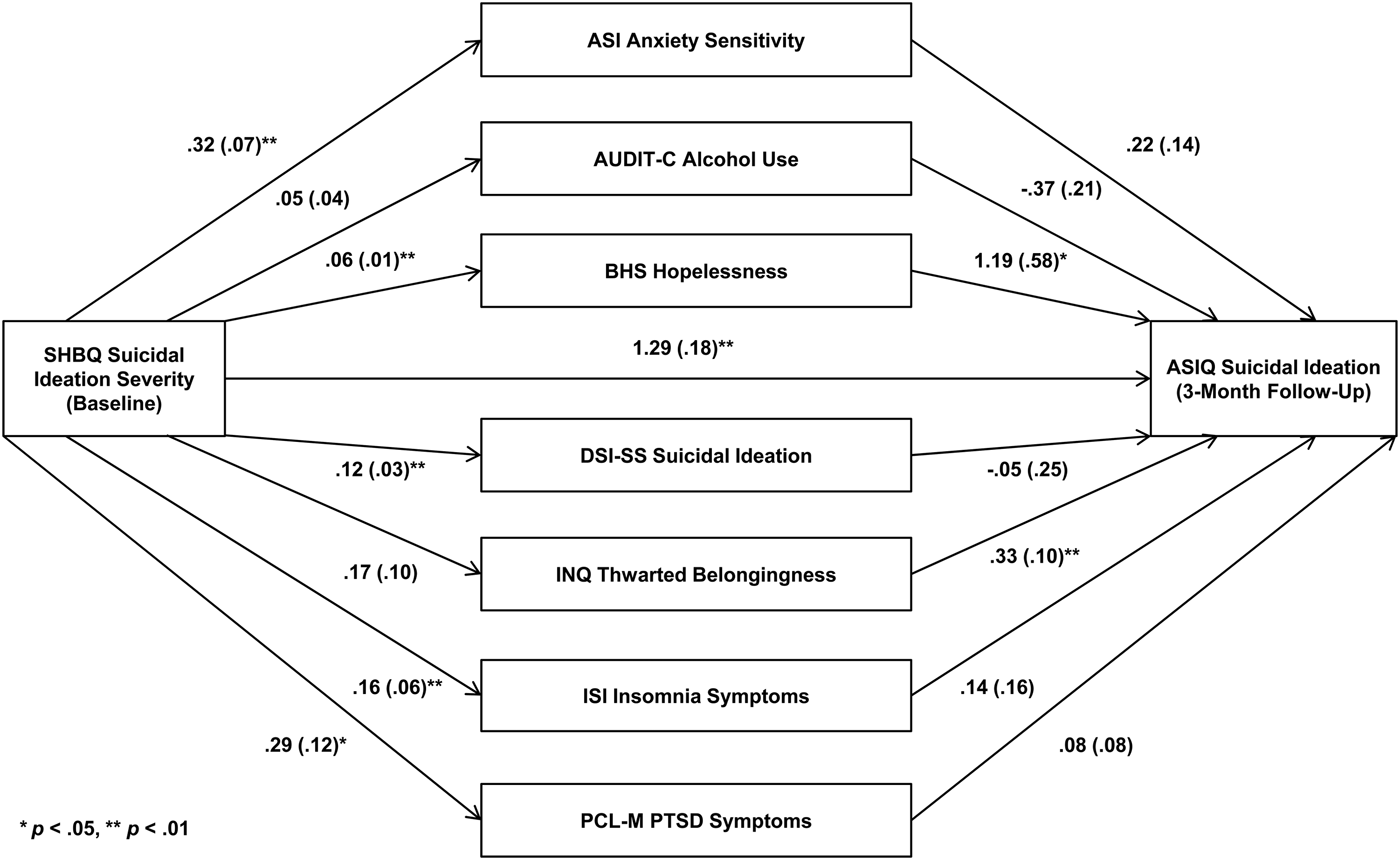
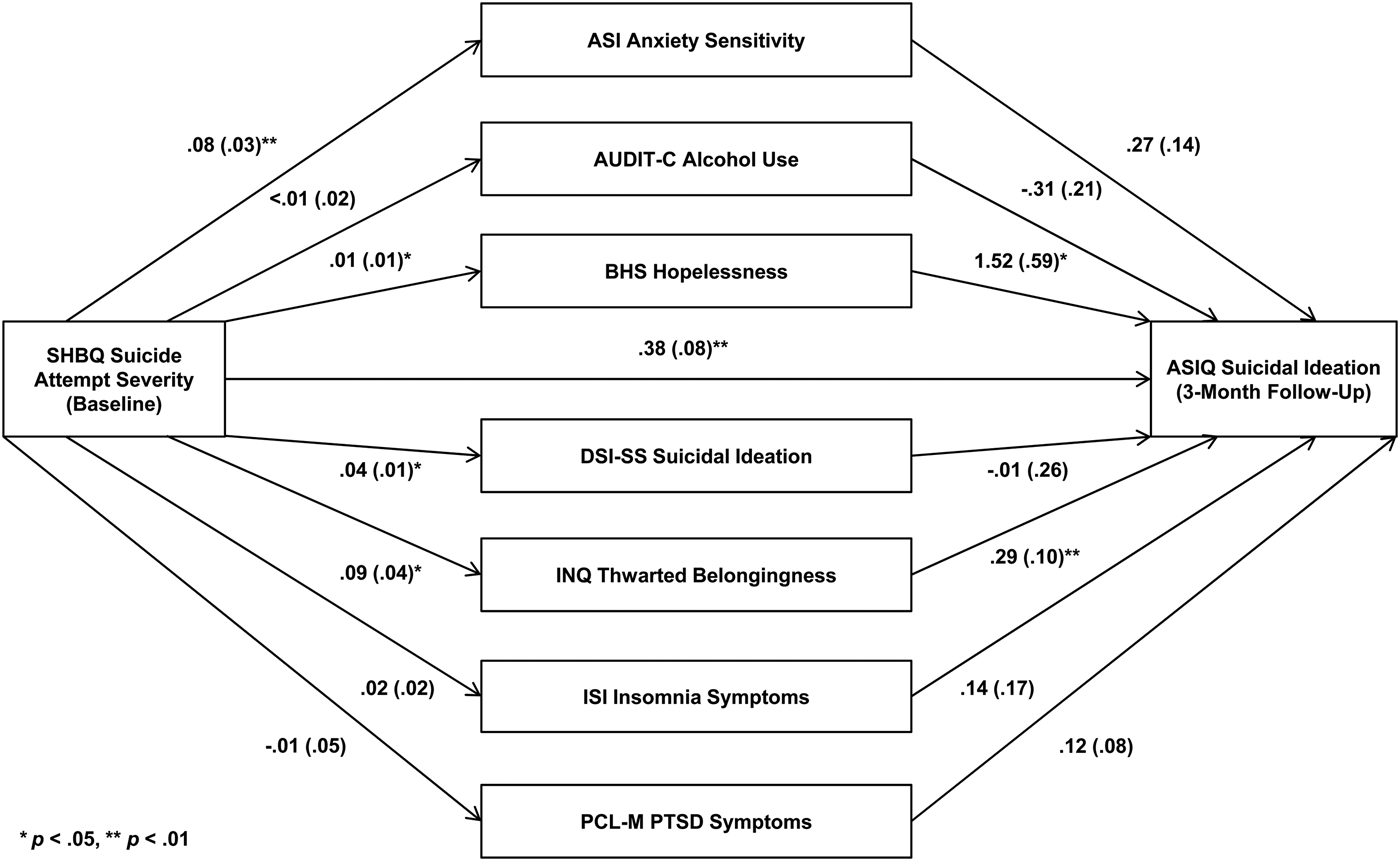
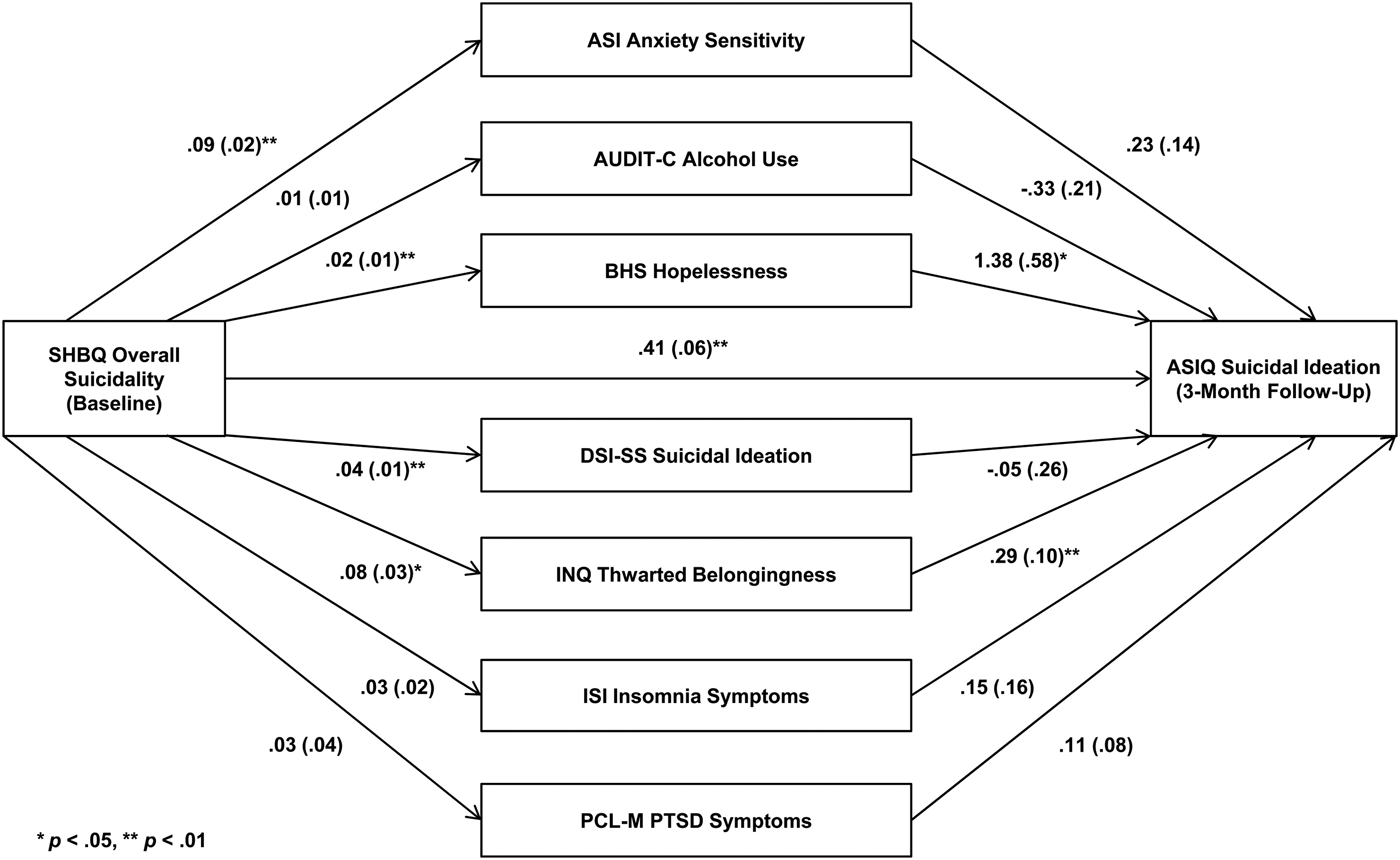
Study variables were screened for outliers and violations of normality. All variables were within acceptable ranges and normally distributed (see Table 1), except for ASIQ suicidal ideation, for which univariate outliers (n = 45) were identified. ASIQ scores two interquartile ranges above the median were brought to the appropriate fence (i.e. maximum total score of 56).Footnote †Footnote 1 Then, percentile bootstrap mediation analyses (5000 resamples) were used to examine aforementioned psychiatric factors as parallel mediatorsFootnote 2 of the relationship between: (1) SHBQ prior suicidal ideation severity, suicide attempt severity, and overall suicidality severity and (2) ASIQ suicidal ideation severity at follow-up (see Figs 1–3, respectively). These analyses served as an imperfect test of longitudinal mediation given our inability to control for psychiatric factors prior to our baseline assessment; however, we utilized mediation analyses given our aim of identifying explanatory factors. Regarding our use of one ideation measure (DSI-SS) as a mediator of two other ideation measures (SHBQ and ASIQ), we note that these measures assessed ideation at three distinct time points: lifetime prior to baseline (SHBQ), baseline (DSI-SS), and 3-month follow-up (ASIQ). The small-to-medium correlations between these measures (r = 0.13–0.30) further suggest that they captured related yet distinct constructs. Thus, we retained the DSI-SS as a mediator in analyses.Footnote 3 Mediation analyses were conducted utilizing the PROCESS macro (Hayes, Reference Hayes2013) in SPSS version 23.0.0. Mediators were considered statistically significant if the 95% confidence interval (CI) did not cross zero (α < 0.05). We utilized pairwise contrasts to compare the relative strength of significant mediators (α < 0.05).
Psychiatric factors as mediators of the relationship between SHBQ prior suicidal ideation severity at baseline and ASIQ suicidal ideation severity at 3-month follow-up.

Psychiatric factors as mediators of the relationship between SHBQ prior suicidal attempt severity at baseline and ASIQ suicidal ideation severity at 3-month follow-up.

Psychiatric factors as mediators of the relationship between SHBQ prior overall suicidality severity at baseline and ASIQ suicidal ideation severity at 3-month follow-up.

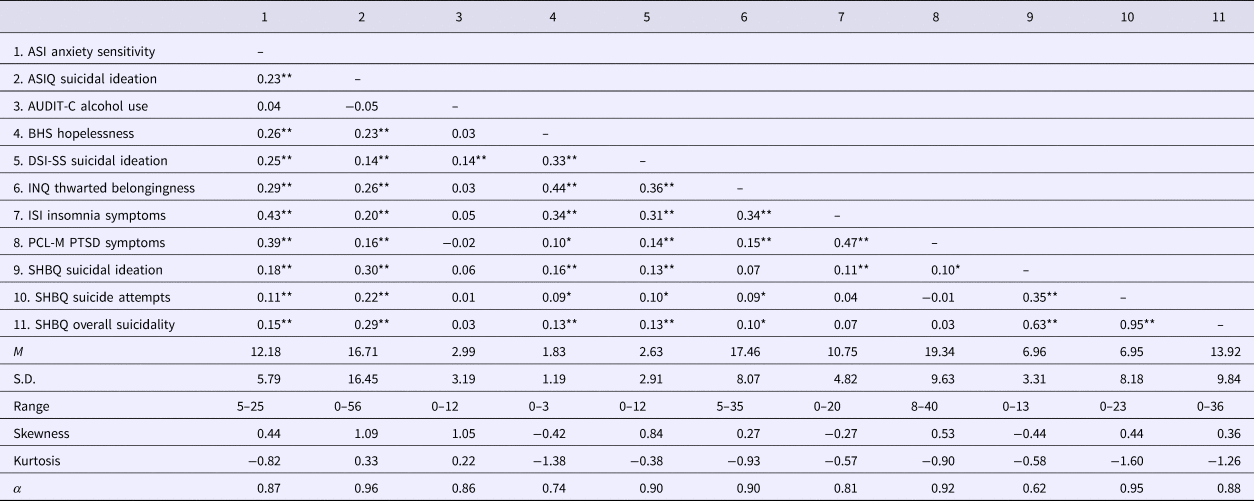
Means, standard deviations, ranges, and zero-order correlations for study measures

ASI, Anxiety Sensitivity Index; ASIQ, Adult Suicidal Ideation Questionnaire; AUDIT-C, Alcohol Use Disorders Identification Test-Consumption; BHS, Beck Hopelessness Scale; DSI-SS, Depressive Symptom Inventory – Suicidality Subscale; INQ, Interpersonal Needs Questionnaire; ISI, Insomnia Severity Index; PCL-M, PTSD Checklist-Military Version; PTSD, Post-traumatic Stress Disorder; SHBQ, Self-Harm Behavior Questionnaire.
Results
Descriptive statistics
See Table 1 for descriptive statistics and intercorrelations for all study measures. At baseline, 92.6% (n = 578) of participants reported a lifetime history of suicidal ideation on the SHBQ, 43.4% (n = 271) reported a lifetime suicide attempt history on the SHBQ, and 43.6% (n = 272) reported clinically significant current suicidal ideation on the DSI-SS. At follow-up, 17.8% (n = 111) reported clinically significant ideation on the ASIQ, with 84.1% (n = 525) reporting past-month suicidal thoughts (i.e. ASIQ total score >0). From baseline to 3-month follow-up, 68.9% of participants reported attending at least one psychiatric medical visit (not inclusive of non-medical appointment to address psychiatric needs; e.g. counseling).
Mediation analysesFootnote 4
SHBQ suicidal ideation severity
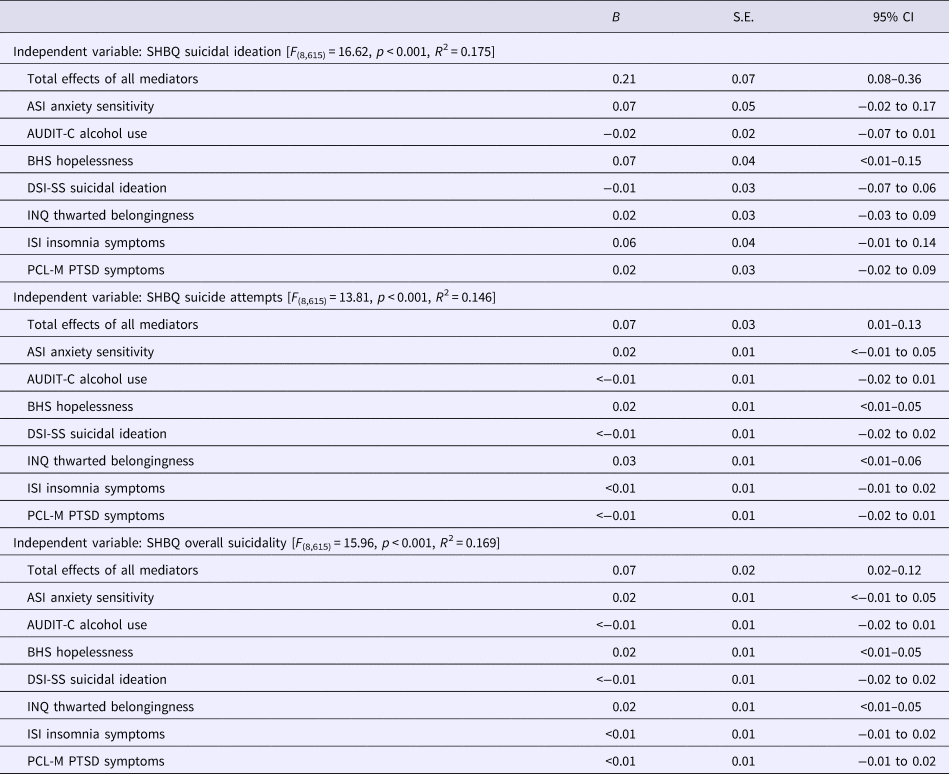
The indirect effects of SHBQ suicidal ideation on ASIQ suicidal ideation (i.e. the degree to which the ASIQ suicidal ideation scores change for every one-unit increase in SHBQ suicidal ideation scores) were significant through the pathways of BHS hopelessness [95% CI (<0.01–0.15)], specifically, and the total effect of all mediators [95% CI (0.08–0.36)] (Table 2, Fig. 1). No other pathways were statistically significant.
Indirect effects of prior suicidality severity at baseline on suicidal ideation severity at 3-month follow-up through the pathways of various psychiatric factors
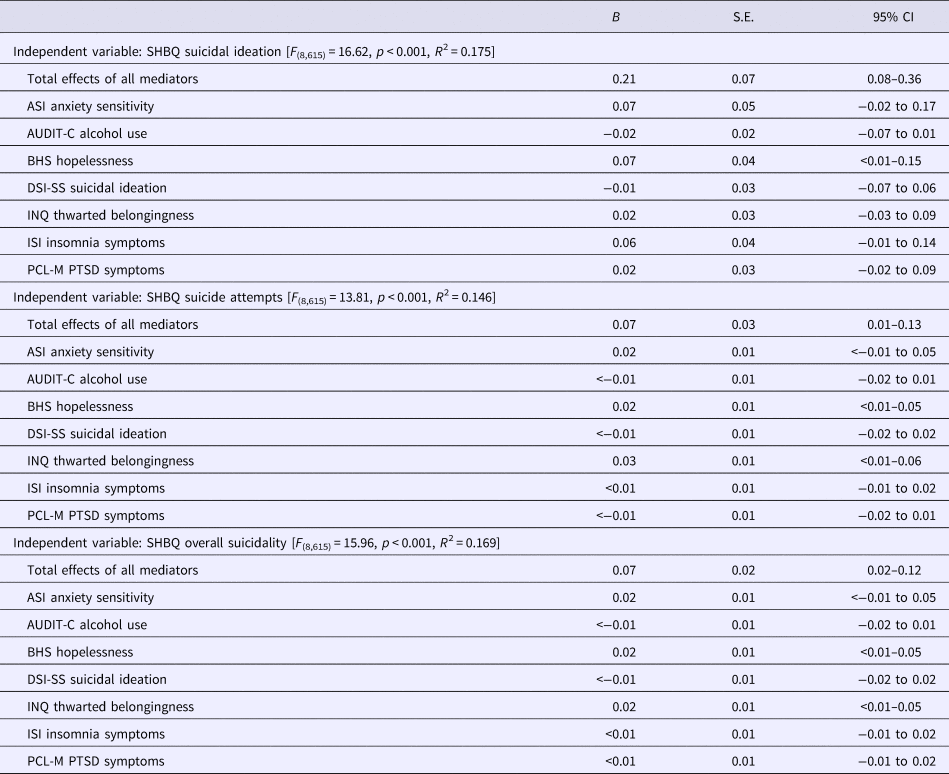
ASI, Anxiety Sensitivity Index; ASIQ, Adult Suicidal Ideation Questionnaire; AUDIT-C, Alcohol Use Disorders Identification Test-Consumption; BHS, Beck Hopelessness Scale; DSI-SS, Depressive Symptom Inventory – Suicidality Subscale; INQ, Interpersonal Needs Questionnaire; ISI, Insomnia Severity Index; PCL-M, PTSD Checklist-Military Version; PTSD, Post-traumatic Stress Disorder; SHBQ, Self-Harm Behavior Questionnaire; Total effects of all mediators, the degree to which the relationship between prior suicidality (i.e. SHBQ suicidal ideation, suicide attempts, and overall suicidality) and subsequent ASIQ suicidal ideation is accounted for by the summed effects of all parallel mediators included in each respective model (i.e. total indirect effects).
SHBQ suicide attempt severity
The indirect effects of SHBQ suicide attempt severity on ASIQ suicidal ideation were significant through the pathways of BHS hopelessness [95% CI (<0.01–0.05)], and INQ thwarted belongingness [95% CI (<0.01–0.06)], specifically, and through the total effects of all psychiatric symptoms [95% CI (0.01–0.13)] (Fig. 2). No other pathways were statistically significant. None of the significant mediators was significantly stronger than any other mediator.
SHBQ overall suicidality severity
The indirect effects of SHBQ overall suicidality on ASIQ suicidal ideation were significant through the pathways of BHS hopelessness [95% CI (<0.01–0.05)] and INQ thwarted belongingness [95% CI (<0.01–0.05)], specifically, and the total effects of all mediators [95% CI (0.02–0.12)] (Fig. 3). No other pathways were statistically significant. None of the significant mediators was significantly stronger than any other mediator.
Discussion
This study evaluated various psychiatric factors as mediators of the relationship between prior suicidality severity and subsequent suicidal ideation severity among high-risk military personnel. Across models, hopelessness and the total effects of all psychiatric factors each significantly mediated this relationship. Thwarted belongingness was an additional significant mediator in the models examining prior suicide attempt severity and prior overall suicidality severity as predictors. Findings have implications for research and clinical practice.
First, it is noteworthy that more severe prior suicidality (i.e. more severe suicidal ideation and/or suicide attempts) was generally significantly associated with more severe psychiatric problems at baseline. These findings align with prior research indicating that individuals with an attempt history may go on to experience more severe psychiatric symptoms (Forman et al., Reference Forman, Berk, Henriques, Brown and Beck2004; Miranda et al., Reference Miranda, Scott, Hicks, Wilcox, Harris Munfakh and Shaffer2008; Goldman-Mellor et al., Reference Goldman-Mellor, Caspi, Harrington, Hogan, Nada-Raja, Poulton and Moffitt2014). Our findings also extend prior work by demonstrating that more severe prior suicide attempts (e.g. attempts resulting in medical attention) and more severe prior suicidal ideation (e.g. having made specific suicide plans) each predict more severe psychiatric problems. These results underscore the importance of considering the severity – and not just the presence – of prior suicidality when working with at-risk service members. We also found that more severe psychiatric problems at baseline generally significantly predicted more severe suicidal ideation at follow-up. These findings align with prior work suggesting that clinically significant psychiatric symptoms predict risk for suicidal thoughts and behaviors among service members (LeardMann et al., Reference LeardMann, Powell, Smith, Bell, Smith, Boyko, Hooper, Gackstetter, Ghamsary and Hoge2013; Nock et al., Reference Nock, Ursano, Heeringa, Stein, Jain, Raman, Sun, Chiu, Colpe, Fullerton, Gilman, Hwang, Naifeh, Roselini, Sampson, Schoenbaum, Zaslavsky and Kessler2015). Furthermore, these findings build upon previous work by suggesting that this significant relationship is observed over a relatively short time frame. Thus, more severe psychiatric problems may serve as a warning sign for the experience of more severe suicidal thoughts.
With regard to our mediation findings, it is striking that hopelessness, in particular, emerged as a significant mediator across all three analytic models. What might explain these results? The interpersonal theory of suicide (Joiner, Reference Joiner2005; Van Orden et al., Reference Van Orden, Witte, Cukrowicz, Braithwaite, Selby and Joiner2010) posits that passive suicidal ideation emerges when individuals experience thwarted belongingness and perceived burdensomeness (i.e. belief that others would be better off if one were dead). However, it is not until they develop hopelessness regarding the tractability of thwarted belongingness and perceived burdensomeness that they experience active suicidal desire. Therefore, individuals with a history of more severe suicidal thoughts may develop hopelessness if their thwarted belongingness and perceived burdensomeness do not improve. This hopelessness, in turn, may result in more severe suicidal thoughts. Similarly, a more severe attempt history may contribute to feelings of hopelessness if individuals’ stressors do not improve or their circumstances remain unchanged. Suicide attempt survivors may also regret surviving their attempt and feel hopeless that they did not die. We are unable to test these conjectures with our current data; thus, further research is needed to delineate why hopelessness might explain the relationship between prior suicidality severity and subsequent suicidal ideation severity. In particular, it will be useful to control for prior hopelessness (i.e. hopelessness at Time 1 in a three time point longitudinal design) because hopelessness may predict the initial onset of suicidality (McMillan et al., Reference McMillan, Gilbody, Beresford and Neilly2007). It will also be useful to employ the full-scale BHS or another validated measure of hopelessness to ensure that this construct is adequately captured, as the three-item BHS appears weakly associated with the full-scale BHS (Ringer et al., Reference Ringer, Soberay, Rogers, Hagan, Chu, Schneider, Podlogar, Witte, Holm-Denoma, Plant, Gutierrez and Joiner2018).
Though not the primary focus of our study, also of import, the combined effects of all psychiatric factors significantly mediated the relationship between prior suicidality and subsequent suicidal ideation across all analytic models. Regarding explanations for these results, more severe prior suicidality may yield increased distress and impairment, which are associated with all forms of elevated psychiatric symptoms (American Psychiatric Association, 2013). This elevated distress and impairment may then lead to more severe suicidal thoughts in the future. It is also possible that elevated psychiatric problems precede, follow, and maintain suicidality. Though further research is needed to test this conjecture and to adequately test longitudinal mediation (i.e. by controlling for Time 1 psychiatric factors), our findings align with studies identifying psychiatric disorders as key factors in the development and maintenance of suicidality among service members (LeardMann et al., Reference LeardMann, Powell, Smith, Bell, Smith, Boyko, Hooper, Gackstetter, Ghamsary and Hoge2013; Nock et al., Reference Nock, Ursano, Heeringa, Stein, Jain, Raman, Sun, Chiu, Colpe, Fullerton, Gilman, Hwang, Naifeh, Roselini, Sampson, Schoenbaum, Zaslavsky and Kessler2015; Millner et al., Reference Millner, Ursano, Hwang, King, Naifeh, Sampson, Zaslavsky, Stein, Kessler, Nock and STARRS-LS2017). As will be further discussed, these results may also have utility in the context of military suicide prevention efforts.
Interestingly, in the model evaluating severity of prior suicide attempts as a predictor of future suicidal ideation, thwarted belongingness emerged as an additional mediator. Suicide attempt survivors have been found to experience stigma from others, including loved ones, as a result of their attempts (Frey et al., Reference Frey, Hans and Cerel2016; Sheehan et al., Reference Sheehan, Corrigan and Al-Khouja2016). It follows that a more severe suicide attempt may elevate thwarted belongingness. Higher levels of thwarted belongingness, a construct associated with more severe suicidal ideation (Chu et al., Reference Chu, Buchman-Schmitt, Stanley, Hom, Tucker, Hagan, Rogers, Podlogar, Chiurliza, Ringer, Michaels, Patros and Joiner2017), may then lead to more severe suicidal thoughts. We note that, here, too, additional research is needed to illuminate data-driven explanations for this pattern of findings.
Finally, we are hesitant to interpret null findings, but it is worth noting that baseline suicidal ideation severity did not serve as a significant mediator in any of our models. These results seem to suggest that more severe prior suicidality is not necessarily associated with more severe future suicidal ideation simply because more severe suicidality leads to more severe suicidality. Also, though we could not evaluate other interpersonal theory variables in our models (e.g. capability for suicide, perceived burdensomeness), that the constructs we were able to evaluate – hopelessness and thwarted belongingness – emerged as significant predictors provides a degree of support for the theory (Joiner, Reference Joiner2005; Van Orden et al., Reference Van Orden, Witte, Cukrowicz, Braithwaite, Selby and Joiner2010).
In terms of clinical implications, our findings suggest that it may be useful to target psychiatric symptoms and related domains among military service members with a history of severe suicidal thoughts and behaviors. In doing so, risk for more severe suicidal ideation may be decreased. This approach could be particularly effective if the identified psychiatric symptoms are primary drivers of service members’ suicidal desire (Tucker et al., Reference Tucker, Crowley, Davidson and Gutierrez2015; Jobes, Reference Jobes2016). Specifically, it may be useful to target hopelessness through cognitive behavioral therapy (CBT; Beck et al., Reference Beck, Rush, Shaw and Emery1979). Promisingly, brief CBT has been shown to effectively reduce risk for future suicide attempts among at-risk military service members (Rudd et al., Reference Rudd, Bryan, Wertenberger, Peterson, Young-McCaughan, Mintz, Williams, Arne, Breitbach, Delano, Wilkinson and Bruce2015), and Bryan et al. (Reference Bryan, Wood, May, Peterson, Wertenberger and Rudd2018) have posited that the reduction of hopelessness may have served as one possible mechanism for that study's findings. More broadly, we note that efficacious interventions exist for each of the psychiatric factors examined as mediators in this study. Because the total effects of all psychiatric factors emerged as a significant mediator across models, it may be useful to ensure that all elevated symptoms are addressed. Before definitive treatment recommendations can be provided, however, we emphasize that further work is needed to replicate our findings and to test whether such interventions effectively serve to thwart the trajectory from a prior history of suicidality to recurrence of suicidal ideation.
Limitations and future directions
This study was not without limitations. First, prior suicidality severity was assessed retrospectively; thus, these data were susceptible to retrospective reporting biases. Participants may have also been prone to under-reporting symptom and suicidality severity due to confidentiality concerns (Anestis and Green, Reference Anestis and Green2015). Second, the main investigation did not collect data regarding prior history of psychiatric disorders or psychiatric symptom severity at the time of suicidality onset. As a result, we were unable to control for these variables in our analyses. It is recommended that future studies collect detailed data regarding participants’ psychiatric history, thereby allowing for a more robust test of the mediating effects of psychiatric factors. A thorough assessment of any psychiatric care received – not only medical visits for psychiatric reasons – may also enhance our understanding of changes in psychiatric factors over time. Third, a clinician assessment of suicidality was utilized at baseline, but a self-report measure of suicidal ideation was utilized at follow-up. Future studies would benefit from the inclusion of the same battery of measures at each assessment point. Moreover, it would also be informative for future studies to collect data over even shorter periods of time to enhance our understanding of factors that may explain acute increases in suicide risk.
Fourth, we were not able to administer full-scale measures of all constructs of interest due to the need for a brief survey battery. Use of full-scale measure would have allowed for a more nuanced evaluation of symptom clusters within disorders and robust measurement of constructs of interest. We recommend that future studies use full-scale measures, especially the full-scale BHS. Fifth, due to our recruitment approach, all participants enrolled in our study after receiving psychiatric care for suicide risk. As a result, findings may not be generalizable to lower risk populations or individuals who have not recently utilized psychiatric services. A degree of restriction of range for certain measures (e.g. ASIQ) may have also influenced results. Sixth, we were unable to test other viable explanatory mechanisms (e.g. capability for suicide, perceived burdensomeness, agitation, nightmares, and depression; Brown et al., Reference Brown, Beck, Steer and Grisham2000; Busch et al., Reference Busch, Fawcett and Jacobs2003; Joiner, Reference Joiner2005; Van Orden et al., Reference Van Orden, Witte, Cukrowicz, Braithwaite, Selby and Joiner2010; Joiner et al., Reference Joiner, Hom, Hagan and Silva2016; Rogers et al., Reference Rogers, Ringer and Joiner2016) not collected in the main study. We recommend that future studies examine these and other possible mediators of the relationship between prior and subsequent suicidality. Finally, it would be clinically useful for future studies to evaluate the other types of suicidality not assessed by the SHBQ or ASIQ (e.g. suicidal intent, controllability of suicidal thoughts) as both predictors and outcomes.
Conclusions
This longitudinal study examined mediators of the relationship between prior suicidality severity and subsequent suicidal ideation severity within a short time frame (3 months) in a high-risk military sample. Findings suggest that hopelessness and overall severity of psychiatric problems account for the relationship between each type of prior suicidality and future suicidal ideation severity. Thwarted belongingness additionally appears to play a role in the relationship between suicide attempt severity and subsequent suicidal ideation. Thus, elevated psychiatric problems generally, and hopelessness and thwarted belongingness, specifically, may be useful therapeutic targets in reducing suicide risk among service members with a history of more severe suicidality. Despite this study's limitations, our findings offer a critical step toward better understanding the mechanisms underlying the relationship between prior and future suicidality in a high-risk group.
Financial support
This work was supported in part by the Military Suicide Research Consortium (MSRC), an effort supported by the Office of the Assistant Secretary of Defense for Health Affairs under Award No. (W81XWH-10- 2-0181, W81XWH-16-2-0003). Opinions, interpretations, conclusions, and recommendations are those of the authors and are not necessarily endorsed by the Military Suicide Research Consortium or the Department of Defense.
Conflict of interest
None.