Introduction
Ageing in place has become increasingly important, driven by the context of worldwide population ageing, the economic crisis, increasing cutbacks in health care, and the preference of a majority of older adults to remain in their homes and communities as long as possible (Ball et al. Reference Ball, Perkins, Whittington, Connell, Hollingsworth, King, Elrod and Combs2004; Gitlin Reference Gitlin2003; Heywood, Oldman and Means Reference Heywood, Oldman and Means2002; Pynoos, Caraviello and Cicero Reference Pynoos, Caraviello and Cicero2009; Vasunilashorn et al. Reference Vasunilashorn, Steinman, Liebig and Pynoos2012). Ageing in place refers to ‘the ability to live in one's own home and community safely, independently, and comfortably, regardless of age, income, or ability level’ (Centers for Disease Control and Prevention 2014). Worldwide efforts are being made to reduce reliance on expensive long-term care, resulting in a shift towards deinstitutionalisation, with nursing homes considered to be a last resort (Vasunilashorn et al. Reference Vasunilashorn, Steinman, Liebig and Pynoos2012). As older age is often accompanied by mobility limitations (Shaw et al. Reference Shaw, Krause, Liang and Bennett2007) and smaller social networks (McPherson, Smith-Loving and Brashears Reference McPherson, Smith-Lovin and Brashears2006; Oh and Kim Reference Oh and Kim2009), older people become more dependent on their neighbourhoods with respect to ageing in place (Cagney and Cornwell Reference Cagney and Cornwell2010; Peace, Holland and Kellaher Reference Peace, Holland and Kellaher2006; Sheets and Liebig Reference Sheets and Liebig2005; van Dijk et al. Reference van Dijk, Cramm, van Exel and Nieboer2014; Wiles et al. Reference Wiles, Leibing, Guberman, Reeve and Allen2011).
In 2007, the World Health Organization (WHO) published the Global Age-friendly Cities guide, in which they presented several physical and social neighbourhood domains that are important for the promotion of active ageing: ‘outdoor spaces and buildings’, ‘transportation’, ‘housing’, ‘social participation’, ‘respect and social approval’, ‘civic participation’, ‘communication and information’ and ‘community support and health services’. Research has indicated that these neighbourhood characteristics not only promote active ageing (as reported by the WHO), but also facilitate older people's ability to age in place (van Dijk et al. Reference van Dijk, Cramm, van Exel and Nieboer2014). While it is recognised that older adults generally prefer to stay in their home and local community for as long as possible (Keenan Reference Keenan2010; Löfqvist et al. Reference Löfqvist, Granbom, Himmelsbach, Iwarsson, Oswald and Haak2013), research clearly shows this is much more complicated for frail older people (Park et al. Reference Park, Roff, Sun, Parker, Klemmack, Sawyer and Allman2010). If neighbourhoods are not supportive for ageing in place, frail older people encounter more difficulties in commuting for services (Park et al. Reference Park, Roff, Sun, Parker, Klemmack, Sawyer and Allman2010) with an increased risk of institutionalisation (Gaugler et al. Reference Gaugler, Duval, Anderson and Kane2007). Social neighbourhood characteristics such as social participation, civic participation, respect and social approval are considered to be vital elements of a proper support system to help frail older people to age in place. They indeed have been found especially important for those in poor health, with limited mobility and poor levels of functioning, which could lead to social isolation and institutionalisation (Russell, Hill and Basser Reference Russell, Hill and Basser1998; Young, Russell and Powers Reference Young, Russell and Powers2004). These social neighbourhood characteristics are, of course, interrelated with physical neighbourhood domains. The condition and adequacy of dwellings and surroundings (e.g. outdoor spaces and buildings, transportation, housing, community support and health services) influence the establishment of social ties, leading to enhanced levels of (social and civic) participation, as well as respect and social approval among neighbours (Schwirian and Schwirian Reference Schwirian and Schwirian1993). When the physical characteristics of a neighbourhood are not conducive to the establishment of contact with other people, entrance into buildings, access to or use of transportation, or safe walking, then support may be more difficult to obtain, particularly for frail older people (Thompson and Krause Reference Thompson and Krause1998). Such physical barriers and the psychological barriers that accompany them (e.g. neighbourhood crime and fear of leaving one's home) can reduce opportunities for contact and support, which harms the ability to age in place. Those who fear crime are less likely to leave their dwellings, limiting activities such as walking and participating in recreational activities with friends, which in turn increases the risks of poor health, morbidity and institutionalisation (Booth et al. Reference Booth, Owen, Bauman, Clavisi and Leslie2000; Ross Reference Ross2000). An environment that supports ageing in place has affordable and appropriate housing, supportive community features and services, and adequate mobility options, which together facilitate personal independence and the engagement of residents in civic and social life (American Association of Retired Persons (AARP) 2005). Thus, physical and social neighbourhood characteristics are not only important for ageing in place, but also interrelated. Furthermore, ageing in place is determined by a fit with the needs of older people at the neighbourhood level (i.e. the eight neighbourhood characteristics identified by the WHO), as well as their level of frailty (Eales, Keefe and Keating Reference Eales, Keefe, Keating and Keating2008; Keating, Eales and Phillips Reference Keating, Eales and Phillips2013; Menec et al. Reference Menec, Means, Keating, Parkhurst and Eales2011; van Dijk et al. Reference van Dijk, Cramm, van Exel and Nieboer2014). Older people experiencing mobility loss, for example, attach greater value to accessible and proximate facilities (Menec et al. Reference Menec, Means, Keating, Parkhurst and Eales2011); for those who become frail, a supportive neighbourhood environment may become increasingly important for their ability to age in place (Cramm and Nieboer Reference Cramm and Nieboer2012; Cramm, Twisk and Nieboer Reference Cramm, Twisk and Nieboer2014; Cramm, van Dijk and Nieboer Reference Cramm, van Dijk and Nieboer2012). Given that this person–environment fit is not static – communities and older people change over time (Peace, Holland and Kellaher Reference Peace, Holland and Kellaher2006) – we thus argue that diversity in the frailty level among older people should be accounted for in the identification of neighbourhood characteristics that community-dwelling older adults need but are currently lacking with respect to ageing in place. Our previous research on ageing in place (see van Dijk et al. Reference van Dijk, Cramm, van Exel and Nieboer2014) already suggested a dynamic interplay between environmental needs and the frailty level of older people. This study using q-methodology (a research method used in psychology and in social sciences to study people's ‘subjectivity’ – that is, their viewpoint on a subject), that gained insight in the relative importance that (frail) older people attach to neighbourhood characteristics, demonstrated that frail and non-frail older people both evaluate neighbourhood characteristics in terms of the extent to which they contribute to their ability to retain a sense of control, autonomy and security; however, they seem to meet these needs differently. For example, whereas frail older people felt independent through the support of a home help, non-frail older people derived independence from their ability to clean their house by themselves. Given that studies using q-methodology are restricted to exploring different viewpoints, rather than researching the prevalence of such viewpoints (see Van Exel and de Graaf Reference Van Exel and de Graaf2005), the current study further elaborates on the relationship between frailty and ageing in place among a bigger population of older people, as well as differences in the neighbourhood characteristics that frail and non-frail older people miss for ageing in place. By ‘missing’ neighbourhood characteristics, we refer to those physical and social neighbourhood characteristics that older people need to age in place, but that are currently not present, as well as to those they had once and lost later. Ecological theory of ageing suggests that a decision to relocate is likely to be determined by the balance between environmental needs and individual competencies (Lawton Reference Lawton, Friedman and Wachs1999; Lawton and Nahemow Reference Lawton, Nahemow, Eisdorfer and Lawton1973; Lawton and Simon Reference Lawton and Simon1968). Theoretically, therefore, the preference of older people when it comes to ageing in place may be modified by neighbourhood characteristics. Empirical findings indeed show that individual neighbourhood resources interact with ageing in place preferences (Carpenter et al. Reference Carpenter, Edwards, Pickard, Palmer, Stark, Neufeld, Morrow-Howell, Perkinson and Morris2007; Tang and Pickard Reference Tang and Pickard2008). In particular, the perceived neighbourhood characteristics appear to be a deciding factor for ageing in place preferences which predict institutionalisation especially among those who are becoming frail. We therefore argue that missing particular neighbourhood characteristics among (frail) older people can be used to reflect the kinds of neighbourhood characteristics that support ageing in place for frail older people. This research increases our understanding of how to create environments that successfully promote ageing in place for all older people, regardless of individual differences in frailty, resulting in a better person–environment fit for all.
Methods
We used a concurrent, nested mixed-methods approach, conducting qualitative and quantitative evaluations and comparing the results to enrich the analysis. In this design, the investigators collect both forms of data in order to (a) integrate the information in the interpretation of the overall results and (b) to analyse different questions (Creswell Reference Creswell2003; Creswell and Plano Clark Reference Creswell and Plano Clark2007).
Quantitative evaluation
A sample of 945 independently living older adults residing in four districts of Rotterdam (Lage Land/Prinsenland, Lombardijen, Oude Westen and Vreewijk) were asked to complete a questionnaire in 2013. Each respondent was rewarded with a 1/5 lottery ticket in the monthly Dutch State Lottery. Non-respondents were first sent reminders by mail, were then asked by telephone to participate and were finally visited at home if they could not be reached by telephone, which resulted in a final response rate of 62 per cent (N = 558). In addition, 32 interviews with frail and non-frail older people were conducted to deepen our understanding of the relationships between background characteristics and items that older people missed with respect to ageing in place. The ethics committee of the Erasmus University Medical Centre of Rotterdam approved this study (MEC-2011-197). A detailed description of the study design can be found in the study protocol (Cramm et al. Reference Cramm, van Dijk, Lötters, van Exel and Nieboer2011).
Measures
Ageing in place was assessed using statements developed in an earlier study utilising the WHO (2007) framework for age-friendly cities and additional ageing in place literature (see e.g. Lui et al. Reference Lui, Everingham, Warburton, Cuthill and Bartlett2009; van Dijk et al. Reference van Dijk, Cramm, van Exel and Nieboer2014). Statement comprehensiveness and unambiguity were tested during the interviews with older people, which led to the use of a slightly adjusted set of items in the current study. After carefully excluding or rephrasing overlapping items, the instrument used in the current study consisted of 24 items representing the eight domains identified by the WHO as promoting active ageing: ‘outdoor spaces and buildings’, ‘transportation’, ‘housing’, ‘social participation’, ‘respect and social approval’, ‘civic participation’, ‘communication and information’ and ‘community support and health services’. Respondents were asked to rate the degree to which they missed neighbourhood characteristics facilitating ageing in place on a five-point scale ranging from 1 (not missed at all) to 5 (extremely missed). Mean sub-scale scores were calculated when responses to at least 50 per cent of the items were available, and total scale scores were calculated using average sub-scale scores (when responses to all eight sub-sections were available) Table 2 provides an overview of all ageing in place items and the neighbourhood characteristics to which they belong. The Cronbach's alpha value of the total scale score for this ageing in place instrument was 0.88, indicating good reliability.
The Tilburg Frailty Indicator (TFI) was used to identify frailty among respondents. The TFI assesses physical (eight items), social (three items) and psychological factors (four items), including one item on cognition. Most items can be answered with ‘yes’ or ‘no’, and the psychological items include the option of ‘sometimes’. Scores range from 0 to 15, with a score of 5 or more considered to indicate frailty (Gobbens et al. Reference Gobbens, van Assen, Luijkx, Wijnen-Sponselee and Schols2010). Research shows that the TFI is able to detect adverse outcomes such as disability, mortality, falls, visits to a general practitioner (GP) and hospital admission (Daniels et al. Reference Daniels, van Rossum, Beurskens, van den Heuvel and de Witte2012; Mulasso et al. Reference Mulasso, Roppolo, Gobbens and Rabaglietti2015). Furthermore, strong positive associations were found with depressive symptoms and the reverse for cognitive functioning and instrumental activities of daily living (Uchmanowicz et al. Reference Uchmanowicz, Lisiak, Wontor and Łoboz-Grudzień2015). The Cronbach's alpha value of the ageing in place instrument in this study was 0.75, indicating good reliability.
The questionnaire also solicited information about the respondents’ gender, age, marital status, ethnic background and education. The highest educational qualification achieved was measured using a seven-point scale ranging from 1 (primary school or less) to 7 (university degree). Education was dichotomised as poor (1; primary school or less) and good (0; more than primary school).
Statistical analyses
We used descriptive statistics to characterise the study population. Differences in missed neighbourhood characteristics between frail and non-frail older people were investigated using two-tailed, independent t-tests. Correlational analyses (Pearson and Spearman when appropriate) were used to investigate associations. We employed multi-level analyses (using a random-effects model) to investigate relationships between the respondents’ background characteristics and missed neighbourhood characteristics. The hierarchical structure comprised 558 older adults (level 1) nested in 72 neighbourhoods (level 2). Deviance tests or likelihood ratio tests were used to compare the relative fit of the different models. These results clearly indicated variance of ageing in place at the neighbourhood level (log-likelihood 1,091.616 versus 1,082.275 at p ⩽ 0.01). SPSS version 21 (IBM Corporation, Armonk, New York, USA) was used to perform the statistical analyses, and the results were considered significant when the two-sided p values were ⩽ 0.05.
Qualitative evaluation
Face-to-face interviews were conducted in the context of a study using q-methodology, the results of which have been published elsewhere (van Dijk et al. Reference van Dijk, Cramm, van Exel and Nieboer2014). In this q-study, 32 frail and non-frail participants were questioned on their views of their ideal neighbourhood for ageing in place. More specifically, they were asked to rank-order different neighbourhood characteristics (mostly overlapping with those displayed in Table 2) using a quasi-normal distribution. Subsequently, the interviewer asked participants to elaborate on their ordering, allowing a more pronounced interpretation (van Exel and de Graaf 2005). However, these interviews, which were conducted by the second author in participants’ homes (60–90 minutes), often resulted in in-depth conversations on older people's experiences regarding ageing in place, exceeding the initial scope of the q-study. Therefore, to justify the insights that emerged from these interviews, the current study further expands on the frail and non-frail participants’ descriptions of important neighbourhood characteristics as well as the dynamic interplay between individual characteristics (i.e. age, frailty, gender) and environmental needs.
All interviews were audio-taped (with the participants’ permission) and transcribed. The respondents were asked to elaborate on the neighbourhood characteristics they deemed most important for ageing in place. They were encouraged to describe and reflect upon their experiences with ageing in place in detail, including their evaluation of physical and social neighbourhood characteristics. Given that no new concepts or themes emerged, data saturation was reached after 32 interviews.
Analyses
Latent content analysis of narrative text, which yields a rich understanding of a phenomenon, was performed to analyse the qualitative findings (Graneheim and Lundman Reference Graneheim and Lundman2004; Hsieh and Shannon Reference Hsieh and Shannon2005). To avoid loss of nuance, participants’ narratives were translated into English only in the report-writing stage. In order to obtain a holistic perspective, the entire transcribed texts were first read with an open-minded approach several times. Then, the texts were read word by word, extracting ‘units of meaning’ that were coded and categorised. Finally, the underlying meanings (i.e. latent content) of characteristics were formulated into themes (Graneheim and Lundman Reference Graneheim and Lundman2004). The data were analysed both in a deductive and inductive way. Whereas the WHO framework led to a predetermined and structured way to analyse the data, an inductive approach was also taken in our search for themes and needs underlying older people's views on neighbourhood characteristics. Although the second author mainly analysed the qualitative data, the other authors did participate in the coding process through careful consideration of the data and codes as well as synthesising quantitative and qualitative data.
Results
Quantitative results
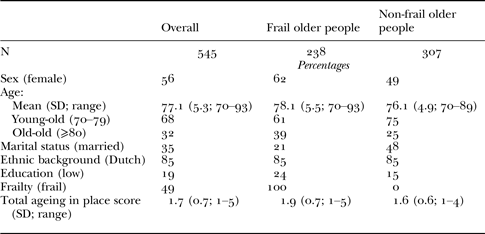
Table 1 displays the characteristics of the study participants. Of the 545 respondents with available frailty scores, 56 per cent were female, 19 per cent had low educational levels, 35 per cent were married, 85 per cent were born in the Netherlands and 49 per cent were frail. Mean age was 77.1 years (standard deviation (SD) = 5.3; range = 70–93). The mean ageing in place score was 1.7 (SD = 0.7; range = 1–5).
Descriptive statistics for the study population of community-dwelling older people in Rotterdam

Note : SD: standard deviation.
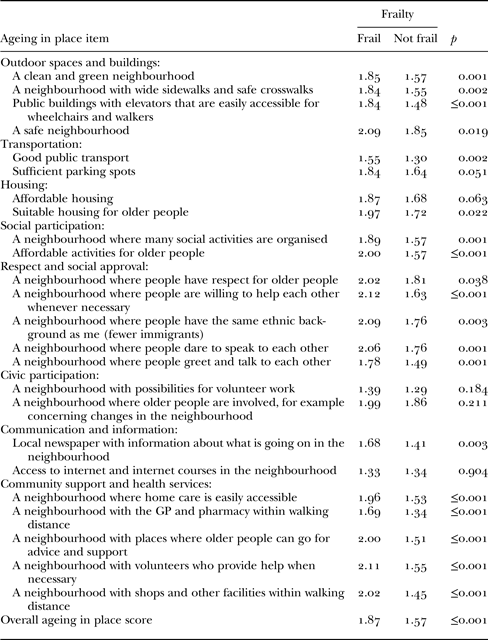
Two-tailed, independent t-tests showed that frail and non-frail older people missed different neighbourhood characteristics in seven of the eight domains (excluding civic participation; Table 2). Frail older people reported more difficulties related to ageing in place than did non-frail older people in all of these domains.
Missed neighbourhood characteristics for ageing in place among frail and non-frail community-dwelling older people

Note : GP, general practitioner.
In terms of ageing in place, frail older people especially missed the following neighbourhood characteristics: safety (outdoor spaces and buildings domain), willingness of people to help each other whenever necessary (respect and social inclusion domain), neighbours with the same ethnic backgrounds as the respondents (i.e. few immigrants; respect and social inclusion domain), willingness of people to speak to one another (respect and social inclusion domain) and volunteers who provide help when necessary (community support and health services domain). Non-frail older people especially missed the following: safety (outdoor spaces and buildings domain), people's demonstration of respect for older people (respect and social inclusion domain), neighbours with the same ethnic backgrounds as the respondents (i.e. few immigrants; respect and social inclusion domain) and willingness of people to speak to one another (respect and social inclusion domain). These results show that frail and non-frail community-dwelling older people in Rotterdam identified similar neighbourhood characteristics that they missed with respect to ageing in place. Frail older people, however, gave higher rankings to these ageing in place items, indicating that they missed them more than did non-frail respondents.
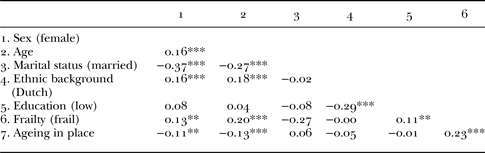
Among background characteristics, gender (p ⩽ 0.01), age (p ⩽ 0.001) and frailty (p ⩽ 0.001) were related significantly to missed neighbourhood characteristics for ageing in place in the bivariate analyses (Table 3). Men, those at a younger age and those who were frail were more likely to identify missed neighbourhood characteristics.
Associations among older people's background characteristics and missed neighbourhood characteristics for ageing in place

Note : N = 558.
Significance levels : ** p ⩽ 0.01, *** p ⩽ 0.001 (two-tailed).
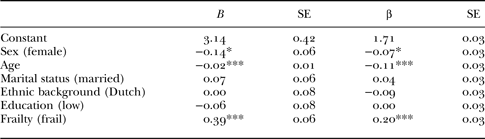
The results of multi-level analyses (N = 515) are displayed in Table 4. These analyses showed that the female gender (p ⩽ 0.05), age (p ⩽ 0.001) and frailty (p ⩽ 0.001) predicted missed neighbourhood characteristics. The female gender (β = −0.07) and older age (β = −0.11) seemed to protect respondents from missing neighbourhood characteristics with regard to ageing in place, whereas frailty (β = 0.20) increased the degree to which characteristics were missed, assuming that all other factors in the model remained constant.
Relationships between older people's background characteristics and missed neighbourhood characteristics for ageing in place (multi-level regression)

Notes : N = 558. SE: standard error. Listwise deletion of missing cases resulted in the inclusion of 515 cases in the multi-level regression analyses.
Significance levels : * p ⩽ 0.05, *** p ⩽ 0.001 (two-tailed).
Qualitative results
Our qualitative findings underscore the non-static nature of older people's environmental needs, which are affected by frailty status, but also gender and age. During the interviews, older people displayed an awareness of their increasing frailty and often acknowledged that it led to increased needs for neighbourhood characteristics that enabled them to age in place. Although the participants stressed the importance of different physical neighbourhood characteristics, such as accessible public buildings and nearby facilities and shops, they also highlighted the importance of neighbourhoods that could meet their social needs. Often, older people provided examples of multifunctional neighbourhood characteristics that met both their physical and social needs:
I enjoy living here, all these familiar shops and familiar people. When I go grocery shopping, I run into all those acquaintances from other streets. (81-year-old woman)
Mobility issues
Frail older people explained how their physical losses had affected their environmental needs. If these needs are not met, such losses could lead to a spiral of additional losses in physical, social and psychological aspects of life. For example, those who became reliant on wheelchairs or walkers explained that this reliance hampered their ability to undertake activities, enter buildings or use public transport. Thus, such respondents increasingly attached importance to accessible public transport, streets and buildings:
I've been in a wheelchair temporarily, which made clear that you cannot do without accessible public buildings, obviously. Public transport should be close to your home, otherwise you won't go out. The same goes for nearby shops, otherwise you won't get groceries anymore. (76-year-old woman)
As a result, the accessibility of a neighbourhood seems to be catalytic in providing the necessary preconditions that enable older people to maintain their daily routines, such as grocery shopping, undertaking social activities, and visiting friends and family.
Safety
Given their increasing frailty, older people became deeply attached to safe neighbourhoods:
When you're young, it doesn't cross your mind. Now it does. That's why I value a safe neighbourhood. When someone used to bother you, you could simply walk away fast, now that's not the case anymore. I'm not afraid, but you do get frail. (72-year-old man)
As you age, you're in more need of a safe neighbourhood. That goes for all of us of course, you become less defensible. (76-year-old woman)
Older people often perceive the ability to walk outside (at night) as an indication of neighbourhood safety. Participants further explained how physical characteristics, such as noise nuisance, loitering, street lighting and facilities, affected their sense of safety. Adequate physical features are perceived to inhibit opportunities for crime (WHO 2007). Participants also underscored the social dimension of feeling safe:
I just begin with saying good morning and good evening. Then, they [the neighbours living in the same apartment block] say it back and start to share their stories. And then they start to appeal to you as well. It contributes to my sense of safety. (79-year-old woman)
Social contacts among neighbours and feelings of safety seem to affect each other in a reciprocal manner. The social dimension of neighbourhood safety is also rooted in the way that older people experience and talk about neighbourhood safety. Many participants explained how (talks about) incidents in the neighbourhood (e.g. robberies and warnings from police men) had a profound impact on their sense of safety.
Social needs
Participants stressed that older people become increasingly reliant on social neighbourhood characteristics as they age. They reported that neighbours’ support served as a substitute for support from distant and hard-working family members who, according to older people, should be spared as much as possible:
My neighbours are true treasures … they come by every day to see if my curtains are open … I do feel lonely once in a while, during weekends … but my children all work, so there is no time left for their parents, you see, it used to be normal to visit your parents during weekends … but I do not blame my children, they should live their own life. (82-year-old woman)
Neighbours are your first line of aid right? Those without family [nearby] must at times feel lonely and miserable … when people are or become needy, then of course you're blessed with having a good neighbour around. (79-year-old woman)
Participants mentioned different examples of mutual monitoring (e.g. checking each other's curtains, exchanging keys) or the exchange of instrumental (e.g. help with transportation, groceries, picking up mail) and emotional support (e.g. undertaking social activities, drinking coffee) among neighbours:
My previous next-door neighbour once asked me to bring her urine to her GP because she wasn't able to go outdoors … after a while she asked me to throw away her garbage. Those things … I did it for four months, I was happy to support her, it made me feel capable and useful. (89-year-old woman)
Providing help and support to neighbours does not automatically imply a need for friendship. Some participants clearly preferred to have no more than casual acquaintanceships with their neighbours in their provision of social support, often expressed by a general reluctance ‘to drink a cup of coffee’ with their neighbours. This reluctance was often motivated by a strong desire to retain a sense of privacy:
Neighbours do not visit each other over here, and I have always found that strange. I once asked a neighbour to come over for some coffee, but she said ‘no, no, we won't get into that’ … We once said to each other that we aren't allowed to see the interiors of each other's homes. (89-year-old woman)
Apparently, many participants feared the disadvantages of social control, referring to the spread of gossip or unwanted interference.
Being (in)dependent
As frail older people struggle to accept their increased dependence on others, they often hold on to the daily activities they are still capable of doing by themselves, such as buying groceries and visiting the doctor's office or pharmacy. Several participants explained that they stocked up on food and other items during winter, thereby reducing their reliance on other people for help when they were not capable of going outside due to the snowy pavements. Older men especially emphasised the importance of maintaining their independence. They argued that they liked to maintain a sense of control, a quality they were accustomed to having in their work/family lives:
I'm very independent … I always had a managerial position, so I'm used to arranging things and showing how it should be done. (72-year-old man)
I grew up independently … that's how I was raised … You have to take care of your wife, you shouldn't bother other people, you shouldn't give them the opportunity to come to you … you should rather do it yourself. (72-year-old man)
Participants reported that they struggled to face their increased needs for amenities. Once they had accepted these needs, they often enjoyed how neighbourhood facilities supported their self-management in their own homes:
My resistance derived from a strong sense of remaining independence, I did not want to surrender. I even felt bad about taking vervoer op maat [a Dutch customised transport service for disabled and elderly individuals]. That bus … when I saw another one boarding, I thought: no, never. Now I applied for it and even enjoy it. (81-year-old woman)
Shifting environmental needs as people age
Although older people generally associated greater degrees of frailty with increased environmental needs, some also expressed that neighbourhood characteristics may lose importance at a certain point in life:
When you're in a bad condition, some things become less important. A clean and green neighbourhood, for example, has decreasing importance. But also the importance of public transport is dependent on your age; when you become immobile at older age, public transport becomes useless. (74-year-old man)
Thus, in addition to frailty, advanced age may actually decrease the chance that older people miss certain neighbourhood amenities (e.g. public transport or social activities), as they are simply no longer capable of or willing to use them at a certain point. At the same time, this situation may be coupled with an increased appreciation of other neighbourhood characteristics. One 89-year-old man passionately explained that he had enjoyed the lively and engaged neighbourhood in which he resided in until some years previously. However, he stated that he currently felt most at home in a peaceful and quiet neighbourhood. As he explained, his environmental needs had changed as he aged:
That has to do with your age … Picture yourself being 90 years old, what are your prospects then? Compared to when you're young, your view of life is completely different. (89-year-old man)
People who had to spend most of their time indoors due to mobility limitations or poor health also expressed that their environmental needs had shifted over time. They were especially attached to feeling comfortable at home and having nice views from their houses, enabling them to enjoy the dynamics and liveliness of the outside world:
A good view contributes to the vividness. Those seagulls, for example, gorgeous … And these children playing outside really make me laugh. It makes me want to play with them. (79-year-old woman)
Although the underlying needs may remain stable (e.g. retaining a sense of control, autonomy or belonging), the desired neighbourhood characteristics for satisfying these needs may vary with age and frailty status.
Discussion
In recent years, the building and maintenance of age-friendly environments have been recognised widely as core components of a positive approach to the challenge of population ageing (Lui et al. Reference Lui, Everingham, Warburton, Cuthill and Bartlett2009). Although the need for environments that support ageing in place is acknowledged widely, research on differences in frail and non-frail older people's environmental needs for ageing in place is lacking. This study aimed to identify differences in the neighbourhood characteristics that frail and non-frail older people miss in this context, and to characterise the relationship between frailty and ageing in place.
The results of this study indicate clearly that frailty leads to greater recognition of the lack of neighbourhood characteristics needed to age in place in seven of the eight domains identified by the WHO: outdoor spaces and buildings, transportation, housing, social participation, respect and social approval, communication and information, and community support and health services. Frail older people reported more difficulties in all of these domains with respect to ageing in place, compared with older people who were not frail. These results were corroborated by our qualitative findings, which demonstrated older people's awareness of their increasing frailty and need for adequate neighbourhood support. Although previous research has indicated that older people rarely use the word ‘frail’ to describe their own situations and health (Becker Reference Becker1994; Minkler Reference Minkler1990; van Campen Reference van Campen2011), our findings show that older people are well aware of their losses and subsequent needs in the physical, social and psychological domains of functioning.
Although some differences emerged, our study results show clearly that frail and non-frail community-dwelling older people in Rotterdam especially miss neighbourhoods that are safe (outdoor spaces and buildings domain), with people of the same ethnic background (respect and social inclusion domain) who speak to each other (respect and social inclusion domain). These findings may typify the experiences of older citizens living in large Dutch cities, such as Rotterdam. In the Netherlands, crime, feelings of unsafety and nuisance are most common in the four largest cities (Rotterdam, Amsterdam, The Hague and Utrecht), with Rotterdam having the highest reported rate of under-aged criminal suspects (Statistics Netherlands 2014a , 2014b ). In addition to missing a safe neighbourhood, they miss living in a neighbourhood with people of the same ethnic background. Immigrant populations in the Netherlands tend to live in urban areas; 39 per cent of the country's immigrants live in the four largest cities, and three in ten people in large cities have foreign backgrounds (Statistics Netherlands 2002). Rotterdam's relative lack of safety and large proportion of immigrants may explain our study population's characterisation of missed neighbourhood characteristics. Investment in the outdoor spaces and buildings and respect and social inclusion domains is thus important to support ageing in place among older residents of Rotterdam. As missed characteristics are expected to be determined by the neighbourhood context, similar investigations among frail and non-frail older people in other Dutch contexts and comparison of results from smaller cities and rural areas may produce different findings. For example, assumptions about ageing in place in rural areas are currently contradictory (Eales, Keefe and Keating Reference Eales, Keefe, Keating and Keating2008), ranging from concerns about lower levels of neighbourhood facilities to arguments that older people in rural areas are embedded more deeply in supportive social networks. Furthermore, recent research has revealed considerable differences among Rotterdam's neighbourhoods in the amount of social support that neighbours provide to one another; residents of wealthier neighbourhoods receive the most support, and those living in socio-economically deprived neighbourhoods receive the least support (Engbersen and Snel Reference Engbersen and Snel2015). This calls for the inclusion of a variety of neighbourhoods in terms of social support in these settings.
In line with previous research (Lui et al. Reference Lui, Everingham, Warburton, Cuthill and Bartlett2009; Walker and Hiller Reference Walker and Hiller2007), this study also highlighted the interrelatedness of physical and social neighbourhood characteristics. Physical neighbourhood characteristics often have social dimensions. For example, in addition to providing necessary resources, nearby grocery stores are important meeting places for older people and provide opportunities for small, yet important, social interactions between neighbours (Gardner Reference Gardner2011). These interactions have been deemed crucial for ageing in place. In agreement with previous research (Linders Reference Linders2010), however, our findings indicate that a delicate balance must be maintained between older people's sense of independence and privacy, and the receipt of adequate care and support to prevent institutionalisation.
The quantitative and qualitative data obtained in this study support our expectation that the person–environment fit is not static. Diversity in frailty level, gender and age, but also the interrelatedness of age and frailty, should be accounted for in the identification of social and physical neighbourhood characteristics that community-dwelling older adults need to age in place. Qualitative and quantitative data showed that greater frailty generally leads to increased environmental needs, although our qualitative data also indicated that frailty status may lead to a decreased appreciation of some neighbourhood characteristics (such as public transport and a clean and green environment). Possibly, our quantitative finding that frail older people overall seem to miss neighbourhood characteristics more urgently may also reflect how frail older people try to accept their physical and social losses, leading to a greater recognition of items that they miss to age in place, or try how to meet their (environmental) needs in a different way (accommodating their age and frailty status). Furthermore, our qualitative data indicated that in addition to frailty, advanced age may actually decrease the chance that older people miss certain neighbourhood characteristics. This is supported by our quantitative data; after controlling for frailty, age was associated negatively with missing neighbourhood categories needed to age in place, which may be explained by a shift in environmental needs over time. These findings suggest strongly that the person–environment fit is dynamic, although more research is needed to disentangle the dynamics between frailty, age and environmental needs further.
Several limitations should be kept in mind when interpreting our study findings. First, our data are cross-sectional. Although we found a significant relationship between frailty and missing neighbourhood characteristics, the lack of longitudinal data hampered our ability to identify causality between frailty and age-friendly environments. Second, we investigated ageing in place only among frail and non-frail community-dwelling older people in Rotterdam. Studies in other Dutch municipalities and beyond are needed to increase our understanding of how social and physical neighbourhood characteristics help community-dwelling older people to age in place, and to identify differences among communities. Given that most respondents generally do not miss neighbourhoods categories for ageing in place (the majority scored the items ‘not missed at all’ or ‘only a bit’), it is particularly relevant to study the variation in scores between different populations of community-dwelling older people as well as between municipalities and their effects on older people's wellbeing. Thus, future nationwide research and/or comparisons among countries is warranted. Finally, while the Cronbach's alpha value of the total ageing in place scale indicated good reliability, not all sub-scales were equally reliable. The housing (α = 0.77), social participation (α = 0.86), outdoor spaces and buildings (α = 0.81), respect and social inclusion (α = 0.88), and community support and health services (α = 0.82) sub-scales showed good reliability, but the civic participation sub-scale was less reliable (α = 0.59) and the reliability of the communication and information (α = 0.49) and transportation (α = 0.31) sub-scales was problematic. More research is needed to develop an instrument for the assessment of ageing in place among older people with valid and reliable sub-scales for all eight neighbourhood domains; such an instrument would also enhance our knowledge of the relative importance of each domain.
We conclude that community-dwelling older people's dependence on neighbourhoods varies with frailty status. This research increased our understanding of the person–environment fit with respect to ageing in place. Compared with those who are not frail, frail older people miss more social and physical neighbourhood characteristics that support their ability to age in place. Furthermore, frailty and the ability to age in place are related. This relationship appears to be dynamic; with frailty, older people become more dependent on their neighbourhoods and report more missing characteristics for ageing in place. However, at a certain age and frailty level, people's expectations regarding neighbourhood characteristics seem to dissipate.
Acknowledgements
The research was supported by a grant provided by the Netherlands Organization for Health Research and Development (ZonMw, project number 314030201). The views expressed in the paper are those of the authors. The authors declare that they have no conflicts of interest.