Introduction
The educational and occupational prospects for young people experiencing their first episode of psychosis are poor even after initial symptomatic remission. Completing education and finding employment is a key component of recovery. Impaired neurocognition is thought to play an important role in limiting these occupational outcomes (Green et al. Reference Green, Kern, Braff and Mint2000) but a recent meta-analysis showed that social cognition, particularly theory of mind (ToM), which refers to the capacity to represent one's own and others’ mental states (Baron-Cohen, Reference Baron-Cohen1995; Brüne & Brüne-Cohrs, Reference Brüne and Brüne-Cohrs2006), is a stronger predictor of community functioning than neurocognition (Fett et al. Reference Fett, Viechtbauer, Dominguez, Penn, van Os and Krabbendam2011). It is less clear if social cognition plays a similar role in functional outcome in early psychosis, as research with this group is scarce (Allott et al. Reference Allott, Liu, Proffitt and Killackey2011), but emerging data suggest that aspects of social cognition, such as facial affect recognition and social perception, are associated with social functioning independently of general cognition (Addington et al. Reference Addington, Saeedi and Addington2006a, Reference Addington, Saeedi and Addingtonb; Williams et al. Reference Williams, Whitford, Flynn, Flynn, Wong, Liddell, Silverstein and Gordon2008).
Attributional style has been a relatively neglected aspect of social cognition when investigating functional outcome (Fett et al. Reference Fett, Viechtbauer, Dominguez, Penn, van Os and Krabbendam2011; Mancuso et al. Reference Mancuso, Horan, Kern and Green2011). An externalizing attribution bias for negative events has been associated with psychosis (Fear et al. Reference Fear, Sharp and Healy1996; Sharp et al. Reference Sharp, Fear and Healy1997; Janssen et al. Reference Janssen, Versmissen, Campo, Myin-Germeys, van Os and Krabbendam2006; Jolley et al. Reference Jolley, Garety, Bebbington, Dunn, Freeman, Kuipers, Fowler and Hemsley2006), and a specific tendency to blame others has been linked to persecutory delusions (Bentall et al. Reference Bentall, Corcoran, Howard, Blackwood and Kinderman2001; Combs et al. Reference Combs, Penn, Michael, Basso, Wiedeman, Siebenmorgan, Tiegreen and Chapman2009; Fornells-Ambrojo & Garety, Reference Fornells-Ambrojo and Garety2009a). That attributional style may also influence occupational outcomes is suggested by Weiner's theory of achievement motivation (Weiner, Reference Weiner1986). This theory suggests that causal attributions of success and failure determine expectations and subsequent behaviour, so that attributing failure to one's own behaviour (e.g., factors such as personal effort) rather than to the uncontrollable actions of external agencies is associated with approaching rather than avoiding future challenges and by implication, greater success in overcoming obstacles.
The only study that has investigated the predictive value of attributional style in relation to neurocognition in work functioning in psychosis failed to find an association (Mancuso et al. Reference Mancuso, Horan, Kern and Green2011). This non-significant result could be explained by the choice of attribution measure in the study, the Ambiguous Intentions Hostility Questionnaire (AIHQ; Combs et al. Reference Combs, Penn, Wicher and Waldheter2007), that was specifically developed to investigate paranoia and therefore measures over-attribution of hostile intentions to others, blame and aggression, but does not assess locus of attribution (internal–external), one of the identified dimensions in Weiner's attributional theory.
Locus of Control (LoC; Rotter, Reference Rotter1966; Rotter, Reference Rotter1990), a related construct that refers to the extent to which an individual generally perceives events to be a consequence of his or her actions (internal control) or external forces such as fate, chance or powerful others (e.g., ‘This world is run by the few people in power, and there is not much the little guy can do about it’) has been found to be associated with functional outcome in psychosis. Fisher et al. (Reference Fisher, Schreier, Zammit, Maughan, Munafò, Lewis and Wolke2012) recently reported that an external LoC, alongside self-esteem, depression and anxiety, mediated the relationship between early adversity (harsh parenting, domestic violence, bullying) and psychosis-like symptoms in a large prospective longitudinal study. An external LoC was also associated with depression and predicted fewer periods of recovery, defined as symptomatic recovery and acceptable psycho-social functioning, in people with psychosis in a 15-year prospective study (Harrow et al. Reference Harrow, Hansford and Astrachan-Fletcher2009). Similarly, Hoffmann et al. (Reference Hoffmann, Kupper and Kunz2000) found that poor rehabilitation outcome in schizophrenia was predicted by an external LoC, a passive coping style and depression.
The current study aims to investigate for the first time if the externalizing attributional bias that has been associated with psychosis plays a role in the real-life occupational functioning of people with early psychosis. In line with the above studies, the role of neurocognition – relative to social cognition – will be investigated. Allot et al. recent systematic review (Allott et al. Reference Allott, Liu, Proffitt and Killackey2011) concluded that ‘reasoning and problem solving’ is one of the domains that most consistently predicts functional outcome in early psychosis.
The current study aimed to test the following hypotheses in relation to participation in occupational activity in people with early non-affective psychosis:
(a) Poor occupational activity will be associated with an external attributional style for negative events and this relationship will not be accounted for by depression or paranoia.
(b) Poor participation in occupational activity will be predicted by a concurrent externalizing attributional style for failures, negative symptoms of psychosis and poor executive functioning.
Method
Design and procedure
A cross-sectional design was used to examine whether attributional style was associated with current occupational functioning. The participants for the study were derived from a cohort of 144 participants of a randomized controlled trial (ISRCTN 73679874) that examined the effectiveness of a specialist service (Lambeth Early Onset, LEO) for people with early non-affective psychosis (Craig et al. Reference Craig, Garety, Power, Rahaman, Colbert and Fornells-Ambrojo2004).
The LEO service is a multidisciplinary community team established on the principles of assertive outreach. One of the programme's main goals is to help clients retain or recover functional capacity in the vocational domain (Craig et al. Reference Craig, Garety, Power, Rahaman, Colbert and Fornells-Ambrojo2004; Garety et al. Reference Garety, Craig, Dunn, Fornells-Ambrojo, Colbert, Rahaman, Reed and Power2006). The vocational intervention followed the principles outlined by the Early Psychosis Prevention and Intervention Centre (EPPIC) early intervention service (EPPIC, 1997; Edwards & McGorry, Reference Edwards and McGorry2002). Other evidence-based interventions included low-dose antipsychotic medication and cognitive behaviour therapy (CBT) (Fowler et al. Reference Fowler, Garety and Kuipers1995). The comparison services in the LEO randomized controlled trial were community mental health teams. These teams typically include an occupational therapist. Although these teams had not received specific training in early psychosis, they were encouraged to follow best practice guidelines (EPPIC, 1997; Aitchison et al. Reference Aitchison, Meehan and Murray1999).
Inclusion criteria for the LEO study included presenting to mental health services for the first time with non-affective psychosis (F20-29, Schizophrenia, Schizoaffective and Delusional Disorders; World Health Organization, 1992). In addition, people who had presented once previously but had immediately disengaged without treatment from routine mental health services were also deemed eligible. Exclusion criteria were organic psychosis and primary diagnosis of alcohol or drug addiction. All participants were living in the borough of Lambeth, London, the seventh most deprived of the 376 local authority boroughs in England and Wales at the time of recruitment (Department of Health, 2001).
Participants of the LEO trial completed a range of measures at both baseline and 18 months (Garety et al. Reference Garety, Craig, Dunn, Fornells-Ambrojo, Colbert, Rahaman, Reed and Power2006). Data from two measures assessing clinical state (positive and negative symptom scale (PANSS) by Kay et al. Reference Kay, Flszbein and Opfer1987; and Calgary Depression Rating Scale, by Addington et al. Reference Addington, Addington and Maticka-Tyndale1993) are reported in the current study. Information collected from clinical case note files on symptoms, social functioning, treatment and recovery pattern (Bebbington et al. Reference Bebbington, Craig, Garety, Fowler, Dunn, Colbert, Fornells-Ambrojo and Kuipers2006) during the 18-month period was also available from the LEO study.
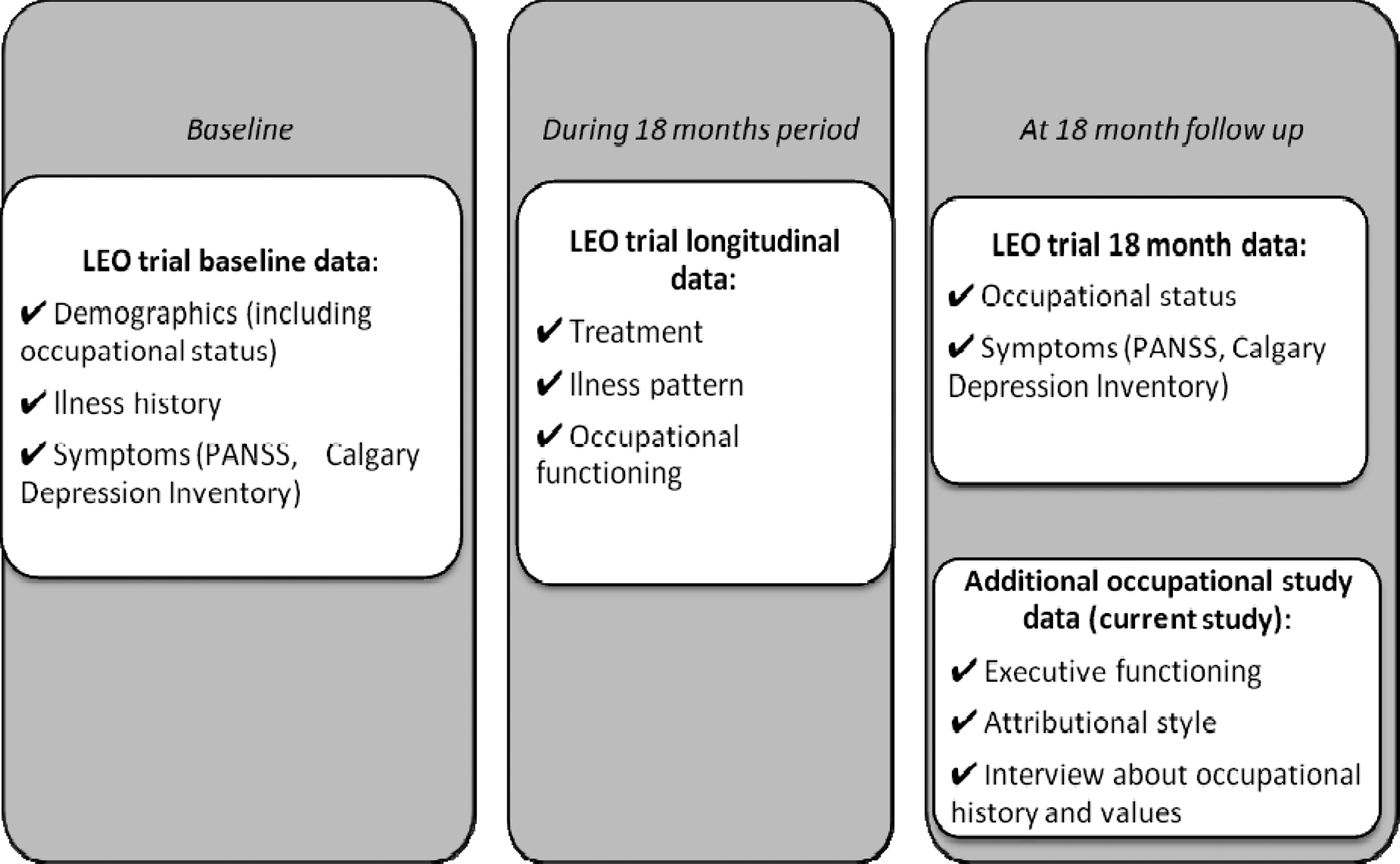
For the current study, participants were invited to complete three additional measures at the 18-month LEO follow-up: achievement and relationships attribution task (ARAT; Fornells-Ambrojo & Garety, Reference Fornells-Ambrojo and Garety2009b); Wisconsin Card Sorting Test-64 (WCST-64; Kongs et al. Reference Kongs, Thompson, Iverson and Heaton2000) and a semi-structure interview assessing participants’ vocational pathways during the previous 18-month period (Fig. 1).
Chart showing the baseline, 18 months longitudinal and 18-month data available for the current occupational study from the LEO trial (Craig et al. Reference Craig, Garety, Power, Rahaman, Colbert and Fornells-Ambrojo2004; Garety et al. Reference Garety, Craig, Dunn, Fornells-Ambrojo, Colbert, Rahaman, Reed and Power2006) and additional measures specifically collected for the current study at the 18-month follow-up.

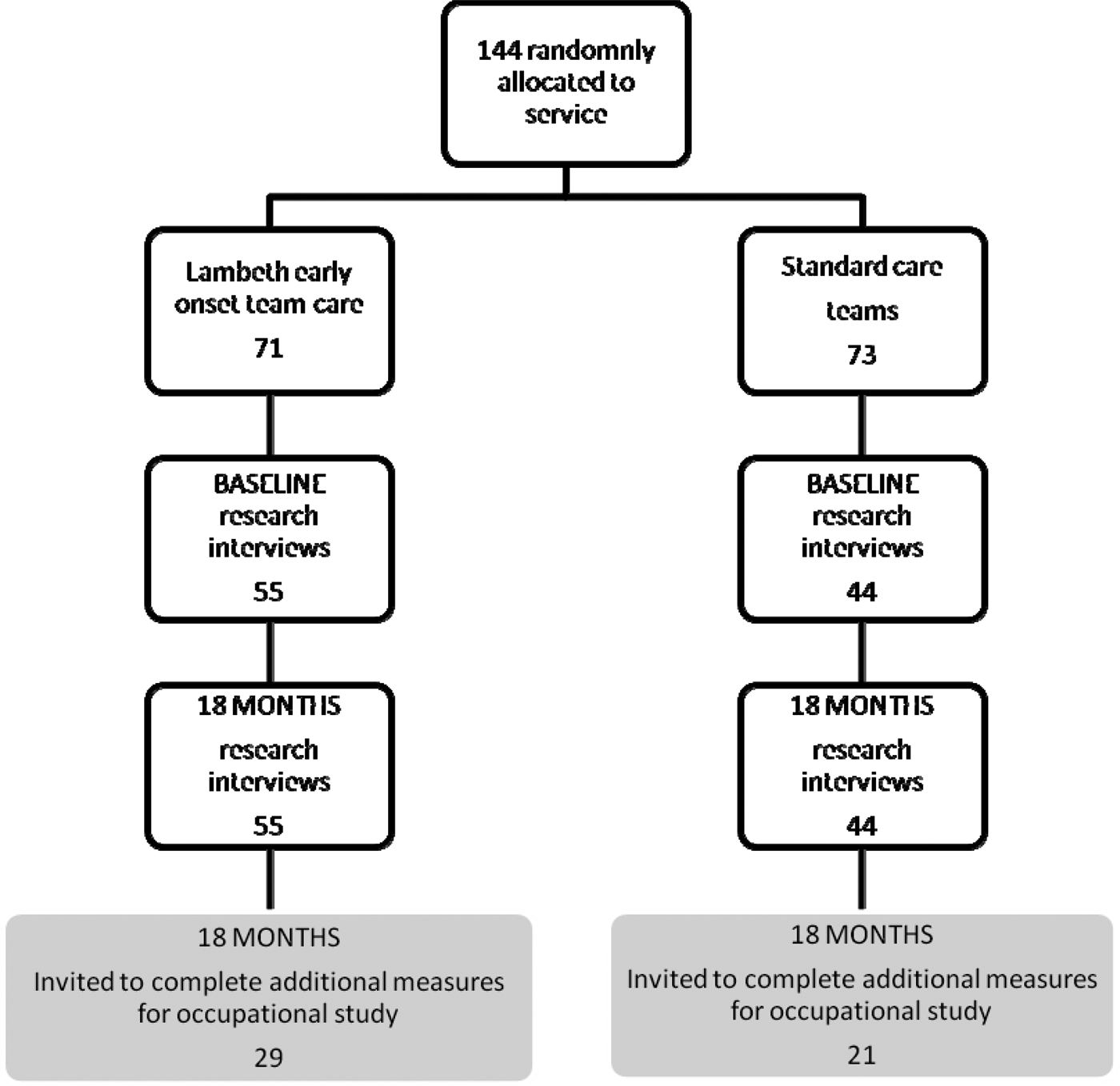
As the current occupational study was conceived as an ‘add-on’ to the 18-month follow-up assessment, local ethics committee approval was sought for an amendment to the original LEO trial application (Ref. EC99/126) to include the three additional measures for the occupational study. Participants whose 18-month LEO follow-up was due after ethical approval for the amendment was granted in May 2002 until the end of the trial (April 2003Footnote 1) were consecutively invited to take part in the current vocational study (see Fig. 2). All participants invited to complete the additional three measures gave informed consent for inclusion in the occupational study. Completion time for the LEO trial 18-month standard assessment and the additional measures for the current study was approximately 2 h and participants were given the option of completing the measures on two separate occasions.
Flow of participants for research interviews for the LEO randomized controlled trial (Craig et al. Reference Craig, Garety, Power, Rahaman, Colbert and Fornells-Ambrojo2004; Garety et al. Reference Garety, Craig, Dunn, Fornells-Ambrojo, Colbert, Rahaman, Reed and Power2006) and current occupational study. See Garety et al. (Reference Garety, Craig, Dunn, Fornells-Ambrojo, Colbert, Rahaman, Reed and Power2006) for full participant flow, including follow-up of case note records and reason for not being interviewed. Note: The LEO trial 18-month interviews took place between July 2001 and April 2003. Participants whose 18-month LEO follow-up was due after ethical approval for the amendment was granted in May 2002 and April 2003 were consecutively invited and agreed to take part in the current vocational study.
Measures
LEO assessment at 18 months: symptom severity
Psychotic symptoms were measured by interview, using the PANSS (Kay et al. Reference Kay, Flszbein and Opfer1987), a 30-item, seven-point (1–7) rating instrument, with three composite subscales: positive, negative and general psychopathology. Symptoms of depression were assessed with the Calgary Depression Rating Scale (Addington et al. Reference Addington, Addington and Maticka-Tyndale1993), a nine-item scale, (range 0–27), specifically designed to assess depression in people with schizophrenia.
Additional measures
Achievement and Relationships Attribution Task (ARAT; Fornells-Ambrojo, Reference Fornells-Ambrojo and Garety2009b)
The ARAT assesses individual preferences for three types of attributional loci: internal (oneself), external-personal (another person) and external-situational (circumstantial). Participants’ attributions for judgments on 12 scenarios (six positive and six negative events) depicting achievement and interpersonal events (e.g., you have trouble finding work, you get a pay rise) are summarized in six subscores. These subscores indicate the number of internal, external-personal and external-situational attributions that participants make for positive and negative events, respectively. The range of each of the subscores is 0–6. As the current study aims to investigate the role of the internal–external attribution distinction in occupational functioning, the two types of possible external attributions (another person or circumstances) are not considered separately for the purposes of this paperFootnote 2. The number of external attributions for negative events [possible range 0–6] was calculated adding the number of external-person attributions for negative events and the number of external-situation attributions for negative events. The number of external attributions for positive events [possible range 0–6] was calculated adding the number of external-person attributions for positive events and the number of external-situation attributions for positive events.
The Wisconsin Card Sorting Test-64 (WCST-64; Kongs et al. Reference Kongs, Thompson, Iverson and Heaton2000)
The WCST is a widely used neuropsychological measure of executive functioning in people with schizophrenia that assesses abstraction, set shifting, planning and flexibility. The original WCST and the WCST-64 provide similar results for clinical samples (Smith-Seemiller et al. Reference Smith-Seemiller, Franzen and Bowers1997). A study specifically looking at people with schizophrenia found high correlations between WCST and WCST-64 scores (Robinson et al. Reference Robinson, Kester, Saykin, Kaplan and Gur1991) Scoring for the WCST generates various indices, including the number of categories completed (possible range for the WCST-64 [0–6], perseverative responses and perseverative errors. For this study the number of perseverative errors was used. Perseverative errors refer to cards sorted according to a previous strategy even after the matching principle has been changed. A high number of perseverative errors represent difficulty in abstraction and low cognitive flexibility.
Occupational functioning
Given the fact that the first onset of psychosis occurs at a time when young people are completing education or are first entering the employment market, we defined occupational functioning as any participation in age-appropriate activity, including returning to complete educational courses, as well as employment.
Information on occupational functioning at 18-month follow-up was obtained from two sources. Firstly, demographic data and vocational status over each of the 18-month LEO trial periods were routinely collected from clinical case notes to assess social recovery (Garety et al. Reference Garety, Craig, Dunn, Fornells-Ambrojo, Colbert, Rahaman, Reed and Power2006). Secondly, participants completed a semi-structured interview that provided more in depth information about the nature of each occupation.
Statistical analysis
Representativeness of the sample included in the current study was evaluated in relation to all participants included in the LEO trial and against those who completed measures at 18-month LEO follow-up but who were not invited to take part in the occupational study by χ 2 and t-tests. As the current study aimed to investigate the factors associated with poor occupational functioning at 18 months, the sample of 50 participants was divided into two groups, ‘active’ and ‘inactive’. In order to control for the possible effects of demographics, illness characteristics and treatment variables on the 18-month occupational status, baseline and longitudinal variables available from the LEO trial were compared between members of the active and inactive groups at 18 months using χ 2 and t-tests. Active and inactive 18-month group differences were analysed using t-tests for concurrent executive functioning and symptoms, and analysis of covariance (ANCOVA) for concurrent attributional style using current depression and suspiciousness as covariates.
Lastly, variables that were significantly different between the active and inactive groups were entered into a hierarchical logistic regression to test the hypothesis that poor participation in occupational activity at 18 months would be predicted by a concurrent externalizing attributional style for failures, symptoms of psychosis and poor executive functioning, after controlling for baseline, treatment and longitudinal variables. Control variables were entered in block 1 and concurrent variables in block 2. An alpha 0.05 was chosen a priori. Statistical analyses were performed using SPSS.
Results
Participant representativeness
Fifty consecutively recruited participants took part in the current study (29 had been randomized to LEO, and 21 to treatment as usual, 18 months earlier). The demographics of the participants invited to take part in the occupational study (n = 50) (male = 32 (64%); White British Ethnicity = 16 (32%); mean age = 25.3 years (SD = 6.5)) did not differ from those of the rest of the participants in the LEO trial (n = 94) (male = 61 (65%), χ2 = 0.11, df = 1, p = 0.915; White British Ethnicity = 29 (31%), χ2 = 0.20, df = 1, p = 0.887; mean age = 26.81 years (SD = 5.9), t 142 = 1.44, p = 0.153). There were also no significant differences in clinical symptom measures between the 50 participants invited to the occupational study and the remaining 49 participants who completed the 18-month interview for the LEO trial (Garety et al. Reference Garety, Craig, Dunn, Fornells-Ambrojo, Colbert, Rahaman, Reed and Power2006), in terms of PANSS Total: MeanOccupational study = 51.65 (SD = 13.36), MeanNon-occupational study = 56.62 (SD = 15.89), t 97 = 1.69, p = 0.096; Calgary Depression Scale: MeanOccupational study = 2.39 (SD = 6.12), MeanNon-occupational study = 2.88 (SD = 3.60) t 97 = 0.73, p = 0.469, and the Global Assessment of Function: MeanOccupational study = 61.35 (SD = 15.32), MeanNon-occupational study = 59.24 (SD = 15.80), t 96 = 0.67, p = 0.505.
Occupational activity
Occupational activity is defined as any kind of education and work, including full- and part-time occupation, whether in or out of the competitive market. At the time of the 18-month follow-up, when the current study took place, 22 (44%) participants were engaged in employment or educational activity (active group), whereas 28 (56%) were unemployed and were not attending any kind of education or training (inactive group). The active group (n = 22) included people in full-time competitive employment (n = 3), part-time competitive employment (n = 4), work in family business (n = 5), voluntary work (n = 2), full-time mainstream education (n = 3), part-time mainstream education (n = 4), and training supported by mental health services (n = 1).
The next three sections present baseline and longitudinal data from the LEO trial for the previous 18 months as well as information on occupational functioning over this period for the active and inactive groups.
Baseline characteristics of occupationally active and inactive participants at 18 months
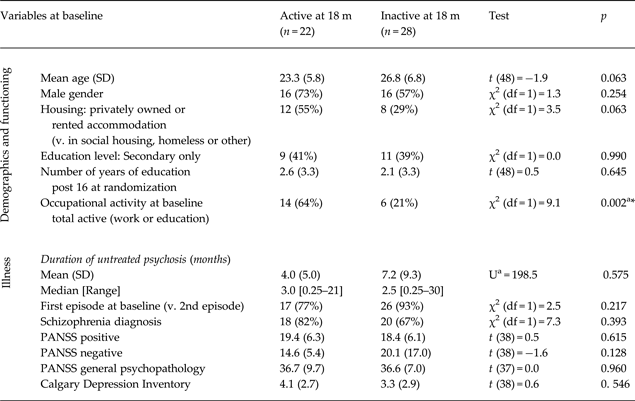
Active participants at 18 months were more likely to have this occupational status at baseline than their inactive counterparts (see Table 1). There was also a non-significant trend for active participants to be in privately rented accommodation at baseline, whereas the inactive group was more likely to live in worse housing conditions (e.g., social housing,). The groups did not differ on baseline symptoms measures, duration of untreated psychosis or other demographic descriptive data.
Baseline characteristics of occupationally active and inactive at 18-month follow-up (Values are numbers (SD) unless stated otherwise)
PANSS, positive and negative syndrome scale.
aMann–Whitney non-parametric test.
*p < 0.01.
Illness and treatment longitudinal data of occupationally active and inactive participants at 18 months
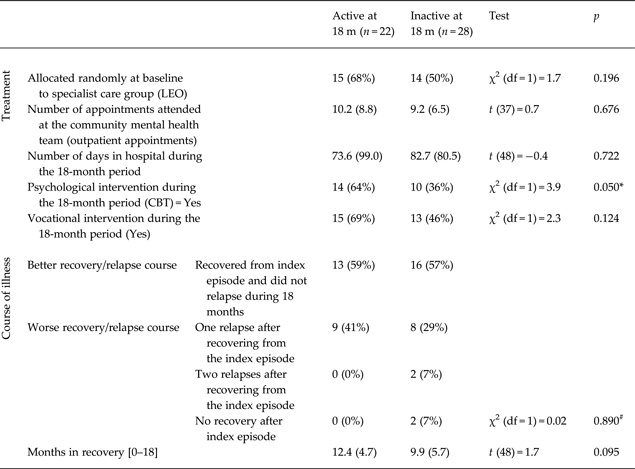
Table 2 shows that a higher proportion of participants in the active group had been randomized to receive the specialist service (LEO) at baseline, but this difference was not statistically significant. The active and inactive groups received similar levels of mental health care in terms of number of appointments attended in the community, number of days spent in hospital and vocational support, which typically involved help filling out forms and writing a CV, attending college or work with the client for support meetings or a vocational assessment. A significantly higher proportion of participants in the active group had been offered psychological input during the 18-month period than in the inactive group (69% v. 36%).
Contact with services and course of illness during previous 18 months by occupationally active and inactive at 18-month follow-up (values are numbers (SD) unless stated otherwise)
#Chi-square calculated for a 2 (active v. inactive) × 2 (better recovery/worse recovery course) (better recovery = recovered never relapsed; worse recovery course = recovered and had one or more relapses or never recovered) as 2 × 4 categories Chi-square would have not been valid as 4 cells had expected frequencies of less than 5.
*p ≤ 0.05.
The active and inactive groups did not significantly differ in terms of course of illness as evaluated by Bebbington et al. (Reference Bebbington, Craig, Garety, Fowler, Dunn, Colbert, Fornells-Ambrojo and Kuipers2006) recovery and relapse criteria (see also Craig et al. Reference Craig, Garety, Power, Rahaman, Colbert and Fornells-Ambrojo2004). Around 60% of participants in both groups recovered from the index episode and did not suffer a relapse during the follow-up period. There was, however, a non-significant trend for participants in the active group to have spent more months ‘in recovery’ in the previous 18 months than inactive participants.
Occupational activity during the previous 18 months
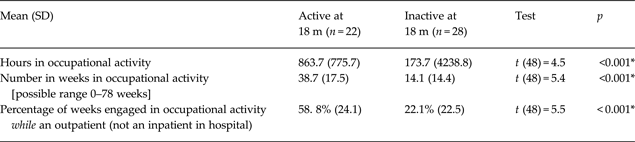
In order to check how representative the current occupational status at 18 months was of the 18-month period, the previous 18 months’ occupational histories of the active and inactive groups were compared. Table 3 shows that participants in the active group spent more time involved in activities (work or education) than the inactive group during the previous 18 months. Attempts to obtain work often included looking in the newspaper, attending the local job centre or applying in shops and food chains that accepted ‘walk-in’ applications. The most common type of education was part-time courses, in particular computing and art-related courses. In terms of employment, the majority of people worked part-time in competitive jobs, mostly at food chains or supermarkets.
Involvement in occupational activity (work and education) during the 18-month period by active/inactive at 18 months
*p < 0.001.
Concurrent executive functioning, symptoms and attributional style, by occupationally active or inactive at 18 months
Forty-eight participants completed the WCST-64 (Kongs et al. Reference Kongs, Thompson, Iverson and Heaton2000). The mean number of categories completed was 2.2 (SD = 1.5, range 0–5), the mean number of perseverative errors was 14.7 (SD = 9.2, range 4–44) and the value for overall perseverative responses was 17.2 (SD = 11.8, range 4–58). Robinson et al. (Reference Robinson, Kester, Saykin, Kaplan and Gur1991) proposed a cut-off for impairment on the WCST-64 score for perseverative responses ≥15. Applying this criteria, 27 out of forty-eight (56%) participants fell in the impaired range.
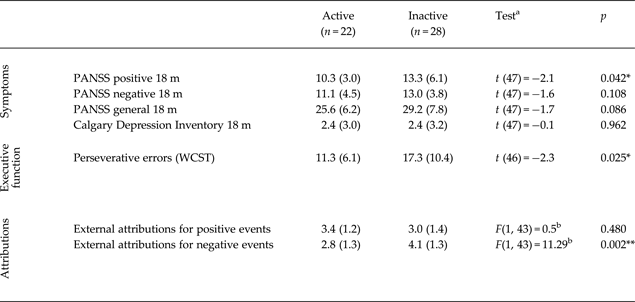
Table 4 shows that participants in the inactive group were more impaired in their executive functioning, as illustrated by the higher likelihood to make perseverative errors, as well as showing more severe positive symptoms of psychosis profile than the active group. The groups did not differ on negative symptoms, depression or general symptomatology.
Group comparisons between activity groups on executive functioning, symptoms and attributional style at 18 months
aWCST (n = 48); PANSS (n = 49) and ARAT (n = 49) as four participants refused to complete one of these measures.
bCovariates: current depression (Calgary depression inventory at 18 months) and suspiciousness (P6 items in the PANSS at 18 months).
*p < 0.05.
**p < 0.01.
Is occupational activity associated with attributional style?
Overall, participants provided a range of explanations for events. Internal explanations for both positive (mean = 2.8, SD = 1.3) and negative (mean = 2.5, SD = 1.4) events were more frequently endorsed, followed by a lower preference for personal-external attributions for positive events (mean = 1.8, SD = 1.2) and negative events (mean = 2.1, SD = 1.3) and an even lower tendency to attribute events to external-situational factors for positive (mean = 1.4, SD = 1.0) and negative events (mean = 1.5, SD = 1.4).
Next, the hypothesis that poor occupational activity would be associated with an external attributional style for negative events and this relationship would not be accounted for by depression or paranoia was tested by comparing attributional scores of the active and non-active groups, using ANCOVA analyses (see Table 4), where the dependent variables were external attributions for positive and negative events as assessed by the ARAT, and activity status at time of the current assessment was the independent variable. Current depression and suspiciousness were entered as covariates as they have previously been associated with attributional biases in psychosis. Table 4 shows that the inactive group made significantly more external attributions for failures than active participants and that this difference was not accounted for by depression or paranoia. Neither of the two covariates emerged as significant predictors of external attributions.
Hierarchical logistic regression to predict membership to active or inactive groups at 18 months
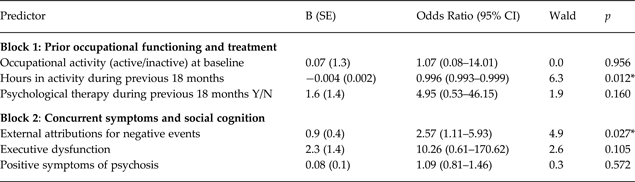
A hierarchical logistic regression analysis was performed to assess prediction of membership of occupational status (active/inactive) at 18 months on the basis of concurrent externalizing attributional style, negative symptoms of psychosis and executive functioning, after controlling for previous occupational functioning (baseline occupational status and hours spent in activity during the 18 monthsFootnote 3) and treatment variables during the 18-month period (psychology input). Only variables that have been shown to be significantly different between active and inactive groups at 18-month groups were entered as potential predictor variables. The hierarchy consisted of two steps and was structured as follows: Block 1 (baseline occupational status; hours in activity during the previous 18 months; psychology input) and Block 2 (externalizing attributional style at 18 months, negative symptoms of psychosis and executive functioning at 18 months). All three blocks were performed using the simultaneous method. A total of 46Footnote 4 cases were analysed and the full model was significantly reliable (Chi-square = 36.1, df = 6, p < 0.001).
This model accounted for between 54.4 and 72.8% of the variance in active status, with 90.5% of the ‘active’ participants and 92.0% of the ‘inactive’ participants successfully predicted. Overall, 91.3% of predictions were accurate. Table 5 gives coefficients and probability values for each of the predictor variables. This shows that concurrent attributional style and hours spent in activity (work or education) in the previous 18 months significantly predict activity group. A decrease of 1 h spent in occupational activity during the previous 18 months is associated with an increase in the odds of being inactive at 18 months by a factor of 0.996. An increase of one unit of external attributions for negative events (blame external causes for failures) is associated with an increase in the odds of being inactive in the vocational domain by a factor of 2.6. In other words, avoiding responsibility for failures and reduced engagement in occupational activity in the previous 18 months is associated with a decreased likelihood of being involved in vocational activities at 18-month follow-up.
Summary of hierarchical logistic regression for variables predicting occupational inactivity at 18 months (n = 46)a
a Dependent variable encoding: active at 18 months = 0 (n = 21), inactive at 18 months = 1 (n = 25). Active: any type of vocational activity (work or education); Inactive: unemployed and not engaged in education. Odds ratio = Exp (Beta); external attributions for negative events assessed by the ARAT; executive dysfunction assessed by the number of perseverative errors in the WCST; positive symptoms of psychosis as assessed by the positive scale of the PANSS at 18 months.
*p < 0.05.
Discussion
Main findings
The current study investigated the potential role of social cognition in explaining occupational functioning in a sample of people with early psychosis. The data confirmed the main hypothesis of the study, namely, that occupational inactivity would be associated with external attributions for negative events. Although poor executive functioning and positive symptoms of psychosis were linked to being occupationally inactive, attributional style emerged as a stronger predictor of level of functioning in this sample of people with early psychosis. Reduced engagement in occupational activities during the previous period was also significantly predictive of poor occupational functioning at 18 months.
Inactive participants had higher positive symptoms and impairments on executive functioning than active participants. These findings on executive functioning replicate previous data from samples with more chronic illnesses (Green et al. Reference Green, Kern, Braff and Mint2000). Cognitive inflexibility and reduced inhibitory function have been suggested to underlie perseverative errors in the WCST (Heaton, Reference Heaton1981). However, when these were included in a hierarchical logistic regression along with attributional style, only the latter remained a significant predictor of activity.
Taking responsibility for failures: a key attribution among active participants
The approach taken to exploring occupational activity in psychosis was an original feature of the study. Attributional style has been linked to achievement motivation in the social psychology literature (Weiner, Reference Weiner1986) and is a cognitive construct that could potentially contribute to explaining vocational behaviour in people with psychosis. Although there has been no previous research on attributions in vocational activity in early psychosis, there is evidence that cognitive constructs might be important in explaining the impact of impairments on functional outcome. Self-efficacy about symptom management shapes psycho-social functioning (Mueser et al. Reference Mueser, Meyer, Penn, Clancy, Clancy and Salyers1997; Ventura et al. Reference Ventura, Nuechterlein, Subotnik, Green and Gitlin2004) and a fatalistic LoC (i.e., believing that chance determines the course of events) predicted poorer vocational functioning in outpatients attending a rehabilitation programme (Hoffmann et al. Reference Hoffmann, Kupper, Zbinden and Hirsbrunner2003). In the current study, attributional style was found to be a stronger predictor of involvement in occupational activities than executive dysfunction or psychotic symptoms.
We therefore propose that how people with psychosis interpret events, and especially failures, is important in explaining vocational functioning in early psychosis. Specifically, if people with psychosis attribute negative events to external causes rather than to themselves, they might be less likely to engage in achievement-related behaviour.
There are some environmental factors that could account for excessive externalization of failures in adults with psychosis. Parsons (Reference Parsons1951) described the ‘sick role’ as a status associated with both rights and obligations: the individual is expected to accept the need to be cared for, and in turn she/he is ‘exempt from everyday social roles’ and ‘from the responsibility of getting well by their own actions alone’. As a predominant medical approach, characterized by low levels of patient involvement, prevails among mental health services (Goss et al. Reference Goss, Moretti, Mazzi, Del Piccolo, Rimondini and Zimmermann2008), there is still a need to promote the involvement of clients in therapeutic decision-making (Del Piccolo & Goss, Reference Del Piccolo and Goss2012) and to ensure that mental health services adopt psycho-social interventions to facilitate social integration and recovery (Saraceno, Reference Saraceno2012). Evidence suggests that the move from a paternalistic stance, in which the mental health-care system is ‘in control’ of the lives of people diagnosed with severe mental disorder, to patient-centred care, in which patients have a sense of responsibility for their own particular health status is promoted, increases the likelihood that patients will look after their health (Tansella & Thornicroft, Reference Tansella and Thornicroft2009; Ruggeri & Tansella, Reference Ruggeri and Tansella2012).
In the job market, contextual factors that promote the ‘sick role’ include welfare benefit-related financial disincentives, which act as barriers for seeking paid work among people with mental health problems in the UK (O'Flynn & Craig, Reference O'Flynn and Craig2001; Marwaha & Johnson, Reference Marwaha and Johnson2004; Leff & Warner, Reference Leff and Warner2006; SE_SURG, 2006; Lloyd-Evans et al. Reference Lloyd-Evans, Marwaha, Burns, Secker, Latimer, Blizard, Killaspy, Totman, Tanskanen and Johnson2012). Discrimination, the behavioural aspect of stigma, is also still commonly experienced by people with a diagnosis of schizophrenia all over the world, with little transnational differences (Rose et al. Reference Rose, Willis, Brohan, Sartorius, Villares, Wahlbeck and Thornicroft2011; Lakeman et al. Reference Lakeman, McGowan, MacGabhann, Parkinson, Redmond, Sibitz, Stevenson and Walsh2012). Negative discrimination experiences range from ‘humiliation’, ‘abuse’, ‘being mocked’, ‘being discounted’, to ‘well-meaning over-protection’ by work colleagues, involving shielding the person with mental health difficulties from the more difficult aspects of work. In spite of some improvements in employers’ knowledge of mental health and their willingness to offer ‘reasonable adjustments’ for people with mental health difficulties over the recent years (Little et al. Reference Little, Henderson, Brohan and Thornicroft2011), as well as governmental initiatives, such as the ‘Working our way to better mental health’ framework (Department of work and pensions, 2009) and specific legislation such as the Equality Act 2010, there is still the need to formalize these arrangements and the need for further training and support.
At the core of the recovery process is the notion of empowerment, conceptualized as ‘personal responsibility’, ‘control over life’ and ‘focusing upon strengths’ (Slade et al. Reference Slade, Leamy, Bacon, Janosik, Le Boutillier, Williams and Bird2012) and promoted and advocated by the service-user community (Davidson, Reference Davidson2012). A sense of agency, identifying personal capabilities such as responsibility and accountability, are crucial for social integration and work (Ware et al. Reference Ware, Hopper, Tugenberg, Dickey and Fisher2007, Warner, Reference Warner2010; Baumgartner & Susser, Reference Baumgartner and Susser2012), as is the existence of available opportunities to exercising such sense of personal agency (Burns, Reference Burns2011, Reference Burns2012).
Limitations
The current study was conducted opportunistically at the 18-month follow-up of the LEO trial (Craig et al. Reference Craig, Garety, Power, Rahaman, Colbert and Fornells-Ambrojo2004; Garety et al. Reference Garety, Craig, Dunn, Fornells-Ambrojo, Colbert, Rahaman, Reed and Power2006). Hypotheses about attributional style were tested using cross-sectional data which do not enable an assessment of the direction of effects. For instance, people who are unemployed are likely to feel disempowered and this could activate an externalizing attributional bias. The literature on attributional style in both depression and achievement motivation suggests that the influence is likely to be bi-directional. Thus, even if the current externalizing attributional bias was triggered by contextual factors (such as unemployment or hospitalization), the presence of such a bias is likely to further influence the person's behaviour because of the way she/he appraises events.
The ARAT assesses attributions using only the dimension of loci to self, others or situation. What can be concluded from the study is that active participants were more likely to provide internal attributions for failure events than inactive participants. However, the critical distinction between ‘taking responsibility’ v. ‘global self-damning’ internal attributions is not captured by the ARAT. An alternative multidimensional approach to attributions would have distinguished between attributions for negative events that foster and promote achievement-related behaviour (i.e., internal, unstable and controllable) from attributions that have a negative impact on self-esteem (i.e., internal, stable and uncontrollable) (Weiner, Reference Weiner1995). However, examination of the type of internal causes embedded in the negative scenarios in the ARAT suggests that they fall in the former category (i.e., internal, unstable and controllable)Footnote 5, and are indicative of ‘taking responsibility’ rather than ‘global self-damning’.
Future research should also examine the relative tendency to attribute blame to other people in detriment of circumstantial factors when externalizing (Bentall et al. Reference Bentall, Corcoran, Howard, Blackwood and Kinderman2001; Combs et al. Reference Combs, Penn, Michael, Basso, Wiedeman, Siebenmorgan, Tiegreen and Chapman2009; Fornells-Ambrojo & Garety, Reference Fornells-Ambrojo and Garety2009a), a distinction that was not investigated in the current study but is likely to influence interpersonal behaviour involved in gaining and sustaining employment. Deficits in ToM, have been found to be associated with a tendency to personalize blame in detriment to circumstantial explanations when making causal attributions (Kinderman et al. Reference Kinderman, Dunbar and Bentall1998; Taylor & Kinderman, Reference Taylor and Kinderman2002; Randall et al. Reference Randall, Corcoran, Day and Bentall2003), as the more complex circumstantial attributions rely on the ability to take another person's perspective to understand the circumstances that caused them to act in a certain way. Further research should investigate if such personalizing bias is more common in people who are occupationally inactive and if the bias is explained by ToM deficits, which have been systematically found to be impaired in people with schizophrenia (Brüne, Reference Brüne2005; Sprong et al. Reference Sprong, Schothorst, Vos, Hox and Van Engeland2007).
Implications
The current study suggests that the promotion of self-confidence, support to take calculated risks and the acceptance of responsibility for these which are involved in the service user's empowerment (Fisher, Reference Fisher1994; Slade et al. Reference Slade, Leamy, Bacon, Janosik, Le Boutillier, Williams and Bird2012) are legitimate targets that can be added to well-established vocational intervention models that have been found to be effective in people with early – episode psychosis, such as the Individual Placement and Support (IPS) model (Rinaldi et al. Reference Rinaldi, Killackey, Smith, Sheppherd, Singh and Craig2010).
Attributional style has long been an intervention target in CBT for depression (Seligman et al. Reference Seligman, Castellon, Cacciola, Schulman, Luborsky, Ollove and Downing1998) and more recently in CBT for paranoia and hallucinations (Kinderman & Benn, Reference Kinderman, Benn and Morrison2001). An externalizing attributional bias could potentially be targeted in rehabilitation programmes. Interestingly, a recent randomized controlled trial of CBT for improving social recovery in people with non-affective early psychosis reported significant improvements in weekly hours of structured and constructive economic activity, as well as reduction in global psychopathology and hopelessness (Fowler et al. Reference Fowler, Hodgekins and Painter2009; Hodgekins & Fowler, Reference Hodgekins and Fowler2010). The CBT intervention targeted negative beliefs about the self, stigma and aimed to promote a sense of agency.
Conflict of Interest
None.
Financial Support
The Lambeth Early Onset randomised controlled trial was funded by a grant from the Directorate of Health and Social Care for London Research & Development Organisation and Management Programme (Brixton Early Psychosis Project grant No RDC 01657). A grant from the Central Research Fund, University of London, awarded to the first author, was used to cover questionnaire copyright costs. The research was entirely independent of the funders, they had no further role in study design; in the collection, analysis and interpretation of data; and in the decision to submit the paper for publication.
Ethical standards
The authors assert that all procedures contributing to this work comply with the ethical standards of the relevant national and institutional committees on human experimentation and with the Helsinki Declaration of 1975, as revised in 2008.