Historically, oral and written corrective feedback (CF) have been investigated independently of each other. This reflects the differing concerns of SLA and second language (L2) writing researchers. Whereas SLA researchers have been largely concerned with whether CF has any impact on interlanguage development (e.g., Doughty & Varela, Reference Doughty, Varela, Doughty and Williams1998; Mackey, Reference Mackey1999) or on improvement in linguistic accuracy (e.g., Ellis, Loewen, & Erlam, Reference Ellis, Loewen and Erlam2006; Lyster, Reference Lyster2004; Sheen, Reference Sheen and Mackey2007b), L2 writing researchers have examined CF in relation to feedback in general (i.e., feedback on the organization and the content of a written text) and have measured whether it assists learners in improving their original draft during the revision process (e.g., Ashwell, Reference Ashwell2000; Chandler, Reference Chandler2003; Fathman & Whalley, Reference Fathman, Whalley and Kroll1990). In effect, whereas SLA researchers have been primarily concerned with CF in relation to how it affects learning processes and outcomes, such as noticing and changes in linguistic competence, L2 writing researchers have been primarily concerned with how CF can improve writing performance.
Oral and written CF differ in a number of ways. For example, whereas oral CF can be both implicit and explicit, written CF is invariably explicit. Whereas oral CF typically occurs online (i.e., more or less immediately after the learner error has occurred), written CF is inevitably offline (i.e., there is a delay between the learner making the error and receiving the feedback). A comparison of these two types of CF, therefore, should enable researchers to address the relative effects of explicit-implicit, online CF and explicit, offline CF. To this end, this article presents the results of an empirical study that systemically compared the effects of four different types of CF on the acquisition of one linguistic feature by adult intermediate English-as-a-second-language (ESL) learners.
The four types of CF investigated were (a) oral recasts, (b) oral metalinguistic correction, (c) written direct correction, and (d) written metalinguistic correction. The linguistic structure that the CF focused on was English articles: the indefinite article a and definite article the. This study draws on a larger research project that used the same participants (see Sheen, Reference Sheen2007a, Reference Sheen and Mackey2007b). This project compared two different CF types within the written and oral media: (a) written direct and written metalinguistic correction and (b) oral recasts and oral metalinguistic correction, respectively. By investigating the efficacy of four individual feedback types on L2 learning, the current study presents a new analysis and affords new insights into how the medium (and, in particular, the explicitness of the feedback) influences the effect that CF has on learning. In so doing, the article will explore the commonalities and differences in the theories and research designs that have informed the study of oral CF by SLA researchers and written CF by L2 writing researchers.
BACKGROUND
Oral CF
The extent to which CF plays a role in SLA is a matter of controversy (see, e.g., Truscott, Reference Truscott1999, vs. Lyster, Lightbown, & Spada, Reference Lyster, Lightbown and Spada1999; Long, Reference Long and Long2007, vs. Lyster, Reference Lyster2007). One position is that CF leads only to explicit (not implicit) L2 knowledge; that is, it does not affect learners’ linguistic competence if this is defined in terms of implicit knowledge (Krashen, Reference Krashen1982, Reference Krashen1985; Schwartz, Reference Schwartz1993; Truscott, Reference Truscott1996, Reference Truscott2004). An alternative position is that CF contributes to the development of implicit knowledge (directly or indirectly) and thus has a demonstrable effect on SLA (e.g., Mackey & Gass, Reference Mackey and Gass2006; Russell & Spada, Reference Russell, Spada, Norris and Ortega2006).
There are also debates as to whether particular types of CF are more beneficial to L2 learning. For example, some researchers argue that recasts (defined as the reformulation of a learner utterance that includes the correct form) are the most effective type of CF in facilitating L2 learning because it serves as a vehicle for helping learners make cognitive comparisons when provided in a so-called window of opportunity immediately following learner errors (Doughty, Reference Doughty, Doughty and Long2003; Long, Reference Long and Long2007). Other researchers, however, claim that CF types that withhold the correct form (e.g., clarification requests, elicitation) are most likely to contribute to development by pushing learners to stretch their interlanguages (Ammar & Spada, Reference Ammar and Spada2006; Lyster, Reference Lyster2004).
There are now a substantial number of studies that have investigated the effects of oral CF on L2 learning. Additionally, Nicholas, Lightbown, and Spada (Reference Nicholas, Lightbown and Spada2001), Long (Reference Long and Long2007), and Ellis and Sheen (Reference Ellis and Sheen2006) have provided reviews of the research on one type of CF—recasts (see also Mackey, Reference Mackey and Mackey2007). Recasts have received the most intense scrutiny in the last decade and continue to generate attention among researchers and practitioners for reasons both theoretical (e.g., they provide the learner with both negative and positive evidence; see Leeman, Reference Leeman and DeKeyser2007) and pedagogical (e.g., recasts have been shown to be the most frequently used CF strategy in the language classroom and to be preferred by teachers).
Long (Reference Long, Ritchie and Bhatia1996, Reference Long and Long2007) has argued that recasts facilitate acquisition by drawing learners’ attention to form while keeping learners focused on meaning throughout a conversational exchange. He claimed that recasts work best precisely because they are implicit and thus do not interrupt communication. However, Sheen’s (Reference Sheen and Mackey2007b) findings suggest that this implicit kind of CF does not necessarily result in learner noticing and awareness and is not effective in promoting acquisition in a classroom context. Sheen has also shown that the teacher’s recasts may not be of value if learners fail to recognize their corrective force. In fact, one of the reasons why recasts have received so much attention in SLA is that researchers doubt the extent to which they are salient to learners and can therefore be argued to provide negative evidence. Lyster (Reference Lyster1998) and Mackey, Gass, and McDonough (Reference Mackey, Gass and McDonough2000) suggested that recasts of utterances that contain morphosyntactic errors may be too implicit and nonsalient for learners to notice their corrective force and thus are ineffective in producing learner repair and in facilitating subsequent learning. However, Sheen (Reference Sheen2006) argued that recasts should be viewed as more or less implicit or explicit, depending on their linguistic form. In her in-depth examination of the characteristics of recasts and learner uptake in communicative ESL and English-as-a-foreign-language (EFL) classrooms, she found that the forms and functions of recasts varied considerably in terms of their implicitness or explicitness: Recasts that were declarative (mode), short, and reduced (partial) and involved only one error led to higher learner uptake, which suggests that recasts with such features were more salient to learners and more likely to promote L2 development. This argument is supported by Egi (Reference Egi2007), who investigated learner perceptions following recasts by way of stimulated recall. She showed that recasts were more or less explicit and that whether learners recognized them as corrective depended on their linguistic characteristics (e.g., whether they were short vs. long or full vs. partial). Loewen and Philp (Reference Loewen and Philp2006) provided further evidence to suggest that recasts produce differential effects depending on a number of features, including degree of explicitness.
Another point of relevance to the debate about recasts concerns the interactional or instructional context (e.g., Lyster & Mori, Reference Lyster and Mori2006; Sheen, Reference Sheen2004). Research that has examined context variables (e.g., immersion and content-based vs. form-focused classrooms) suggests that the role recasts plays in facilitating learner noticing and subsequent learning is influenced by the setting. For example, Lyster and Izquierdo (Reference Lyster and Izquierdo2009) found that recasts were as effective as other feedback types in dyadic interaction contrary to classroom studies that failed to demonstrate this. Oliver and Mackey (Reference Oliver and Mackey2003) reported that their classroom learners noticed recasts to a greater extent in an explicit language lesson than in contexts that involved conversational interaction.
Whereas recasts are generally considered a more implicit CF strategy, metalinguistic feedback constitutes an explicit CF strategy. Several studies have found that explicit types of CF are more effective than implicit types of CF. For example, Carroll, Swain, and Roberge (Reference Carroll, Swain and Roberge1992), in a laboratory study, reported that an explicit correction group outperformed the control group that did not receive error correction. In a follow-up study, Carroll and Swain (Reference Carroll and Swain1993) found that this kind of explicit CF (in which learners were told that they had made an error and were given an explicit metalinguistic explanation) was more effective than any of the other error treatment types, which included so-called explicit utterance rejection (for which learners are simply told that they have made an error), recasts, and indirect metalinguistic feedback.
Similar results have been obtained in a number of classroom studies. Ellis et al. (Reference Ellis, Loewen and Erlam2006) found that metalinguistic feedback (explicit CF) was superior to recasts (implicit CF) in promoting the acquisition of English regular past tense. The testing instruments they used were designed to provide measures of both implicit and explicit knowledge. The results indicated that metalinguistic feedback assisted the development of implicit as well as explicit knowledge although its effect was only clearly evident in the delayed posttest. Ellis et al.’s results suggest that explicit feedback that contains metalinguistic comments can support the development of implicit as well as explicit L2 knowledge.
Lyster’s (Reference Lyster2004) study also suggests that metalinguistic feedback is more effective than recasts. Lyster examined the differential effects of recasts and other feedback types (or “prompts” [p. 406]) in form-focused instruction directed at French gender assignment. The prompts, which included metalinguistic clues (e.g., is it masculine or feminine?), had one feature in common: They all encouraged self-repair (pushed output) from learners by withholding the correct forms. For this reason, Lyster argued that prompts work better than recasts, which provide the learner with the correct form but frequently do not result in learner repair. However, this distinction between recasts and prompts is conflated with another important distinction—namely, the implicit versus explicit distinction. Thus, Lyster’s metalinguistic feedback may have proven more facilitative to acquisition not because it elicited output from the learners but because it provided explicit information about the target structure and thus was salient to the learner.Footnote 1
Another possibility is that metalinguistic feedback that consists of the provision of the correct form and grammatical information (i.e., direct metalinguistic feedback) will prove more effective than metalinguistic feedback that consists of just grammatical information (i.e., indirect metalinguistic feedback). Carroll and Swain’s (Reference Carroll and Swain1993) study of dative alternation lends support to this claim. This study found that direct metalinguistic feedback was superior to indirect metalinguistic feedback (and recasts) in the short term.
Of particular relevance to the current study are Sheen’s (Reference Sheen and Mackey2007b) findings, which show that oral recasts and oral metalinguistic CF produced differential effects on the acquisition of English articles, with oral metalinguistic CF but not recasts facilitating learning.Footnote 2 Sheen explained these findings by suggesting that the recasts in her study were not effective because they did not promote learner noticing due to the nonsalient nature of the morphosyntactic feature (i.e., English articles). On the other hand, the metalinguistic CF, which included the provision of the correct form, helped the learners improve the accuracy of their use of English articles because, upon receiving a rule and some time for processing its information, learners were able to engage in the cognitive comparison hypothesized to facilitate learning. In the current study, oral recasts will be compared with what is arguably its written equivalent—written direct correction—whereas oral metalinguistic correction will be compared with its counterpart in the written mode—written metalinguistic correction.
Written CF
Historically, most L2 writing researchers have adopted a process-oriented model of instruction to investigate the effects of written feedback (e.g., Ferris, Reference Ferris1995, Reference Ferris1999; Hedgcock & Lefkowitz, Reference Hedgcock and Lefkowitz1992; Polio, Fleck, & Leder, Reference Polio, Fleck and Leder1998; Robb, Ross, & Shortreed, Reference Robb, Ross and Shortreed1986). The process-oriented model, which emphasizes a multiple-draft approach to writing, has dominated recent first language (L1) and L2 research (Hedgcock, Reference Hedgcock and Hinkel2005). Seen as the ideal way to develop learners’ writing skills (Susser, Reference Susser1993; Zamel, Reference Zamel1983), the model requires L2 writers to go through various stages—prewriting, drafting, feedback, revising, and editing—that reflect the recursive, nonlinear cognitive processes involved in arriving at a final written product (Ferris & Hedgcock, Reference Ferris and Hedgcock2005). This view of L2 writing has minimized, if not dismissed, the role of written error correction in L2 writing classes. A number of experts consider such correction to belong properly to the domain of grammar teaching, which they regard as unnecessary (e.g., Zamel, Reference Zamel1987). Other experts, although accepting that error correction has a place in writing pedagogy, discuss its effectiveness in terms of the development of overall writing skills (e.g., Ferris, Reference Ferris1997).
Nevertheless, as Reichelt (Reference Reichelt2001) pointed out, there is an alternative way of conceptualizing writing and writing instruction. That is to say, instead of treating writing as an end in itself, ESL writing can be viewed as a means for promoting L2 learning and thereby more accurate production in both oral and written language use. In other words, writing instruction that incorporates written CF can be considered an instructional technique to draw L2 learners’ attention to linguistic forms in their writing products and thus to improve their acquisition of a L2. Similarly, feedback provided orally may have positive effects on learners’ written production (see Yang & Lyster, this issue).
Recent studies of written CF (e.g., Ashwell, Reference Ashwell2000; Chandler, Reference Chandler2003; Ferris & Hedgcock, Reference Ferris and Hedgcock2005; Polio et al., Reference Polio, Fleck and Leder1998) indicate that teachers (and writing researchers) have favored the use of indirect feedback (in the form of coding systems) and have placed an emphasis on the importance of the revision process. Relatively few studies have investigated direct feedback (where learners are given the corrections) by comparing an experimental and a control group that did not receive any feedback. Moreover, it is only recently that researchers have started to examine the effect of focused written CF, which is directed at a single linguistic feature. There is even less research (e.g., Ellis, Sheen, Murakami, & Takashima, Reference Ellis, Sheen, Murakami and Takashima2008; Sheen, Wright, & Moldawa, Reference Sheen, Wright and Moldawa2009) that has compared focused and unfocused written CF (i.e., CF directed at a wide range of linguistic features).
Sheen (Reference Sheen2007a) examined the effects of two different types of focused written CF and her findings are of relevance to the current study.Footnote 3 Sheen noted that L2 writing research investigating CF has suffered from a number of methodological limitations (e.g., the lack of a control group as in Lalande, Reference Lalande1982, and Robb et al., Reference Robb, Ross and Shortreed1986). For this reason, research findings to date have failed to provide clear evidence that written CF helps learners improve linguistic accuracy over time. In an attempt to overcome these limitations, Sheen’s research examined the effects of direct, focused written CF using a methodology adopted from SLA, which avoids the kinds of methodological problems evident in many written CF studies. In comparing the effects of written direct and written metalinguistic correction, Sheen reported that written direct correction with and without metalinguistic comments was effective in improving the grammatical accuracy of English articles. However, written direct correction together with metalinguistic comments proved to be more effective because it assisted learners in understanding the underlying rules behind the two functions of English articles, which, in turn, promoted learning.
Previous written CF studies have not convincingly demonstrated that written CF has a positive effect on learning. However, Sheen’s (Reference Sheen2007a) findings, together with more recent studies (e.g., Bitchener & Knoch, Reference Bitchener and Knoch2008; Ellis et al., Reference Ellis, Sheen, Murakami and Takashima2008) provide counterevidence to Truscott’s (Reference Truscott1996, Reference Truscott1999, Reference Truscott2007) claim that written grammar error correction is ineffective and even harmful and lend empirical support to Ferris’s (Reference Ferris1999, Reference Ferris2004) argument that written CF can promote interlanguage development.Footnote 4 Given Sheen’s (Reference Sheen2007a, Reference Sheen and Mackey2007b) findings that written as well as oral metalinguistic CF promoted learning, it would be of great interest to examine which of these two types of CF has the greater effect on the acquisition of English articles.
Distinctions Between Oral and Written CF
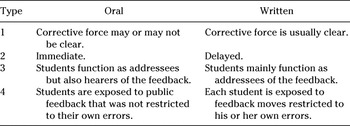
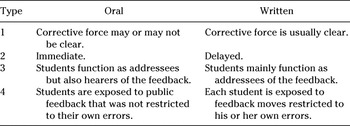
There are a number of ways in which oral and written CF potentially differ. First, in the case of oral CF, the corrective force may or may not be noticed, depending on the CF strategy. In this respect, oral CF differs from written CF in that the latter is more likely to be noticed by the learner as correction. Second, oral CF is provided online, whereas written CF is delayed. Third, oral CF is typically directed at individual learners but is available to the rest of the class as hearers. In contrast, written CF is provided to individual learners who function as addressees and is not available to other students (unless they happen to examine the corrections of another student’s text). Fourth, learners who receive oral CF are likely to be exposed to multiple corrections, whereas learners who receive written CF are exposed to only a few corrections. Table 1 summarizes these key distinctions between oral and written CF.Footnote 5
Differences between oral and written CF
Given these differences between oral and written CF, it can be hypothesized that the extent to which CF is effective may be influenced by the medium in which the CF is provided. Few studies have explored the relative efficacy of oral and written CF while focusing on the same target feature. Doughty and Varela (Reference Doughty, Varela, Doughty and Williams1998) addressed both oral and written CF in the form of recasts; however, they did not distinguish the effects of the recasts according to the medium. Thus, their findings do not clarify whether one medium is superior to the other or whether the beneficial effect of recasts on learning that they reported could be attributed to oral CF, written CF, or both.
Bitchener, Young, and Cameron’s (Reference Bitchener, Young and Cameron2005) study is also relevant to the current investigation. They found that written direct CF coupled with 5-min individual oral conferences was more effective than written CF alone. Although their finding points to the importance of utilizing both oral and written modes in improving the accuracy of students’ writing, it does not provide evidence as to the relative effectiveness of CF in oral and written modes. In fact, one can hypothesize that written correction imposes less cognitive load on memory than oral CF, which typically demands a cognitive comparison online and requires learners to heavily rely on their short-term memory. Combining oral and written CF thus might make it possible to optimize learners’ processing of the feedback, which, in turn, might expedite L2 learning.
On the other hand, written CF can be much more complex than oral CF (as reflected in the current SLA literature). It addresses different aspects of writing—for example, overall quality, grammatical accuracy, syntactic complexity, lexical features, content, mechanics, coherence and discourse features, and fluency (Polio, Reference Polio, Silva and Matsuda2001)—whereas oral CF (as a focus-on-form technique) generally involves drawing attention to form in learners’ erroneous utterances as they arise in communicative activities. These differences in methodology explain why the written CF literature is so distinct from that of oral CF and why it has been marginalized in the field of SLA (Leki, Reference Leki2000).
However, with the exception of the delayed versus immediate difference, these differences are more a matter of tradition than of necessity. It is possible to devise a common methodology for examining oral and written CF; this was one of the goals of this study. Moreover, inquiry into written CF within the SLA research paradigm can be seen as relevant to L2 writing pedagogy, given that one of the aims of such pedagogy is to improve students’ written grammatical accuracy. Thus, the perspective adopted here is to view written CF as a type of form-focused instruction undertaken in a communicative teaching context with relevance to both SLA and the development of one important aspect of writing proficiency (i.e., grammatical accuracy). In sum, the aim of the current study is to compare the effects of oral and written CF by adopting the methodology that has been used to investigate oral CF. In that way, the study attempts to bridge the gap between SLA and L2 writing research.
RESEARCH QUESTIONS
The current study sets out to examine whether there is a differential effect on ESL learners’ acquisition of English articles for oral and written CF. The following two research questions guided the research:
1. Is there any difference in the effect of oral recasts and direct written correction on the acquisition of English articles?
2. Is there any difference in the effect of oral and written metalinguistic feedback on the acquisition of English articles?
METHOD
Research Site
This study was conducted in a community college on the east coast of the United States. The college offers intensive and extensive English language courses in its American language program (ALP) for those who wish to speak and write English accurately and fluently. Grammar, writing, reading, and speech (i.e., listening comprehension using audio tapes and speaking practice) are offered each semester, and each class is taught by a native or near-native English-speaking teacher and lasts from 1 hr 20 min to 3 hr per session.
The program has four levels—foundation and levels I, II, and III (most advanced level)—with an average class size of 15–20 students. More than 1,100 students enroll each semester (15 weeks total), with a wide range of backgrounds in terms of age (18–62), ethnicity, previous education (from high school graduates to doctorate students), and occupation. Three major student populations in the program are Spanish, Polish, and Korean.
The ALP is oriented toward accurate language use with an emphasis on the development of the type of English ability required for college. The major goal of the program is to prepare the learners to speak and write well in a formal setting (e.g., higher education institutions, the professional job market). Prior to the current study, the researcher visited the site several times to observe different types and levels of classes. Level II—intermediate—was chosen for this study because (a) the level II students were found to already know the linguistic forms a and the but to use them incorrectly and (b) the testing and treatment instruments were shown to be neither too easy nor too difficult for learners at this level.
Participants
The participants were 10 teachers, all native American speakers, and their 177 students of intermediate proficiency. The students were drawn from both international and immigrant ESL populations and represented various language (11 L1s) and educational backgrounds (e.g., from high school diploma to doctoral degree). Class sizes ranged from 15 to 22. From this total of 177 students, only those with a complete dataset—that is, those who completed the questionnaire, the pretest, and the two posttests (immediate and delayed)—were finally included in the study, for a total of 143 participating students. Five broader cluster groups were formed of a total of 12 intact classrooms: two oral CF groups (a recasts group and a metalinguistic group), two written CF groups (a direct correction group and a metalinguistic group), and one control group.
Operationalizations
Oral Recasts. This type of recasts is operationalized as a teacher’s oral reformulation of a student’s erroneous utterance in the context of a communicative activity; this reformulation does not change the meaning of the student’s original utterance (Sheen, Reference Sheen2006). Recasts can be classified as full, when the teacher reformulates the complete utterance, or as partial, when the teacher only reformulates the incorrect segment (e.g., phrase, word) of the learner’s utterance. Thus, in the recasts group, the teacher corrected the students’ erroneous utterances that involved article use.
Oral Metalinguistic Feedback. Oral metalinguistic correction is operationalized as a teacher’s provision of the correct form following an error, together with metalinguistic information. Thus, in the metalinguistic group, linguistic information was given along with the correct form.
Written Direct Correction. This type of feedback constitutes a traditional CF strategy that includes (a) indicating the location of an error on the student’s written text and (b) providing the correct form by deleting and replacing the error or by adding a linguistic element. Each correction consisted of marking the error and writing the correction above it or inserting a missing article.
Written Metalinguistic Correction. This type of correction is operationalized as the provision of metalinguistic explanation to justify the correct form when an error is made. In this study, the correct form along with metalinguistic information was provided. More specifically, each error was first marked with a number, and notes for each numbered error were given at the bottom of a learner’s sheet. The notes indicated what was wrong (using metalinguistic information) and also provided the correct form. Examples of the four different types of CF used in the current study are provided in Appendix A.
Design
This study employed a quasi-experimental design with a pretest, treatment, posttest, and delayed-posttest design, using intact ESL classes. There were four experimental groups and one control group. The treatment—the key independent variable in the current study—consisted of four different types of CF strategies: (a) oral recasts, (b) oral metalinguistic correction, (c) written direct correction, and (d) written metalinguistic correction. The grammatical target was the use of English definite and indefinite articles.
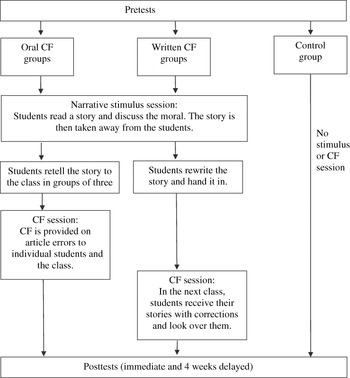
During the week prior to the start of the CF treatments, the participants completed the pretests. Figure 1 summarizes the treatments for the different groups. The immediate posttests were completed on the same days as the second and last CF sessions and the delayed posttests were completed 3–4 weeks later. During each testing session, the three tests were administered in the following order: the speeded dictation test, the writing test, and the error correction test.
Design of the study.

Target Linguistic Structures
To isolate the effect of error correction from any potential effect of grammar instruction in general, articles were chosen as the target structure for the current study. This decision was made after a series of discussions with the participating faculty members at the college, which revealed that (a) participating students are not explicitly taught articles during the semester, and (b) articles, although commonly the locus of student errors, are infrequently corrected due to their nonsalience and the complicated rule explanations involved in their use.
It should be noted that due to the use of intact classes in the design of this study, the learners’ L1 background was not controlled for. It is possible that learners whose L1 contains articles (i.e., the Spanish students) might have had an advantage. However, the composition of each of the four CF treatment groups and the control group was such that the Spanish learners made up a similar proportion in each group (i.e., between 20% and 35%). Thus, there is no reason to believe that any group differences evident in the effects of the CF were due to L1 differences.
Narrative Task
The first narrative task involved an adapted version of Aesop’s fable, “The Fox and the Crow” (www.pagebypagebooks.com/Aesop/Aesops_Fables/The_Fox_and_the_Crow_p1.html), as shown in Appendix B. Some words in the original fable were replaced with easier words, and a few sentence structures were simplified by the researcher to minimize the processing load on the learners when reproducing the narrative. There were seven indefinite articles and seven definite articles in the story. The ALP faculty considered the task suitable for their intermediate-level students but also expected that the students would make article errors.
The second story (see Appendix C) was constructed by the researcher: The goal was to create an interesting, yet simple story with easy vocabulary that afforded many instances of the two functions of articles. There were 7 indefinite articles and 10 definite articles in the story. The story had an open ending so that learners could be asked to write one or two sentences to conclude it.
CF Treatment
The oral CF treatment took place over a period of 2 weeks. For each of the two treatment sessions, a 30-min narrative task was used to elicit article errors from the learners. In the case of the oral CF treatment, the narrative task required that the students retell a story to the entire class. When a learner made an error in article usage, the teacher corrected the error using recasts (in the oral recast group) or correction plus metalinguistic explanation (in the oral metalinguistic group). The written CF treatment involved the same story tasks used in the oral treatment sessions, but students were asked to reproduce the story in writing and subsequently (in the next class) were given written CF that provided the correct form either with (in the written metalinguistic group) or without (in the written direct group) metalinguistic feedback.
Oral CF Treatment Procedures
The oral CF treatment took place in the five intact classes over a period of 2 weeks. The entire treatment involved two narrative tasks and CF treatment. For each of the two treatment sessions, a 30-min narrative task was used to elicit article errors from the learners. Each session was audio-recorded by the researcher with a clip-on microphone attached to the teacher. The procedures were as follows:
1. The teacher handed out a fable or parable to the students and told them that they were to read a short story and then tell the story themselves.
2. The teacher asked the students to read the story silently.
3. The teacher discussed the moral of the story with the class.
4. The teacher then collected the stories and read the story aloud just once to refresh students’ memory.
5. The teacher gave the students 5 min to practice telling the story in groups of three or four.
6. Each group retold the story to the entire class, with each individual in the group providing only one or two sentences before passing the speaker role to the next group member.
7. Whenever a student made an error in article usage, the teacher corrected the error using either a recast (in the recast groups) or a metalinguistic explanation (the metalinguistic group).
8. After each correction, the teacher paused to give the student a chance to repeat the correction if he or she chose to do so.
Written CF Treatment Procedures
The written treatment involved the same story tasks used in the oral treatment session. For the written CF groups, five intact classes were also used.Footnote 6 The specific procedures of the treatment were as follows:
1. First, the teacher handed out a short fable or parable with an empty writing sheet attached to it and told the students that they were going to read the story and then rewrite the story.
2. Students were asked to read the short fable or parable silently.
3. The teacher explained key words and discussed the moral of the story with the class.
4. The teacher then collected the stories by asking the students to tear off the story page and keep the writing sheet only.
5. Before asking the students to rewrite the story, the teacher read the story aloud just once to refresh their memory.
6. Then the students were asked to rewrite the story as closely as they could remember.
7. The teacher collected the students’ written narratives that were then handed to the researcher.
8. The researcher corrected the narratives focusing on article errors.
9. In the following class (typically 2–4 days later), the students received their narratives with corrections.
10. The students were asked to look over their errors and the corrections carefully for at least 5 min. However, the teacher did not comment further on their errors or give any additional explanation; nor were students asked to revise their writing.
Testing Instruments
Three tests were used to measure acquisition in this study: (a) a speeded dictation test, (b) a narrative writing test, and (c) an error correction test.
Speeded Dictation Test. This test was adapted from Butler (Reference Butler2002) and Liu and Gleason’s (Reference Liu and Gleason2002) instruments for measuring knowledge of articles. It consisted of 14 items, each of which contained one or two sentences that involved the use of indefinite and definite articles. This speeded dictation test was time-pressured to limit learners’ ability to draw on their explicit grammatical knowledge (R. Ellis, Reference Ellis2005a). An oral elicited imitation test would have been ideal for this purpose (Bley-Vroman & Chaudron, Reference Bley-Vroman, Chaudron, Tarone and Cohen1994), but due to logistic constraints, the individual testing that this format would have required was not possible.
Each item in the test had one or two stimuli that involved article-obligatory contexts. The test contained a total of 9 indefinite and 12 definite articles. Example (1) illustrates how knowledge of the indefinite article a and the definite article the with the referential-second mention function of the article (the two stimuli in the item are a movie and the movie) was measured.
(1) I saw a movielast night. The moviemade me sad.
For the dictation test scoring guidelines, targetlike use scores were calculated (Pica, Reference Pica1984). The targetlike use analysis was used to measure learners’ knowledge of articles by taking overuse of the target form into consideration. Articles were first scored for correct use in obligatory contexts. This score then became the numerator of a ratio whose denominator was the sum of the number of obligatory contexts for articles and the number of nonobligatory contexts in which articles were supplied inappropriately.
Writing Test. This test, adapted from one of Muranoi’s (Reference Muranoi2000) test instruments for English articles, consisted of four sequential pictures. The students were asked to write a coherent story based on these pictures. Word prompts next to each picture were included to elicit noun phrases that involve article usage. For example, next to the first picture, the word prompts were old man, paint, and picture, to encourage the students to construct a sentence such as An old man likes to paint pictures. In coding the writing data, the same scoring guidelines as those for the dictation test were adopted (i.e., targetlike use). Using the targetlike use formula, students’ scores were calculated as percentages.
Error Correction Test. This test consisted of 17 items. Each item contained two related statements, one of which was underlined and contained an error, which the learners were asked to correct in writing. The items, which focused on articles, were adapted from test instruments used in Liu and Gleason (Reference Liu and Gleason2002) and Muranoi (Reference Muranoi2000); an example is provided in (2). Four distracter items were included and involved the use of past tense, modal choice, and subject-verb agreement.
(2) I saw an interesting movie last night. I forgot the name of movie.
Answer: I forgot the name of the movie.
The error correction test was scored on a discrete item basis. One point was given for each correct suppliance of an article in the 14 obligatory contexts in the underlined sentences in the test. The students’ final scores were calculated as percentages.
Exit Questionnaire. A short questionnaire was administered immediately following the error analysis test in the delayed-posttest session. The exit questionnaire was designed to examine whether the students were aware of the focus of the error correction treatments and tests.
Data Analysis
All scores were entered into the statistical package for the social sciences (SPSS) version 11.5. SPSS datasets were used for descriptive and inferential statistics. First, descriptive statistics for the speeded dictation, writing, and error correction tests as well as the exit questionnaire were computed.
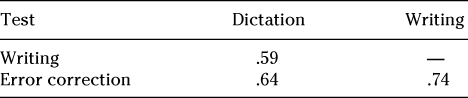
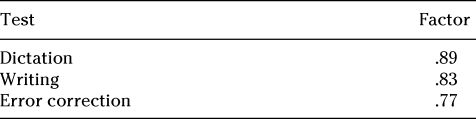
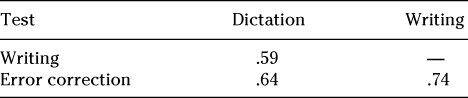
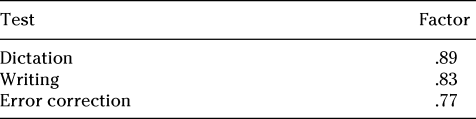
To examine the relationship among three criterion measures, a correlational analysis and a factor analysis were performed. Table 2 displays Pearson product moment coefficients calculated among the three test measures. The error correction test was correlated significantly with the other tests but more strongly with the writing test (r = .74), which, on the other hand, was correlated less strongly with the dictation test (r = .59). As shown in Table 3, the factor analysis produced a single factor solution, with all three tests scores loading on the same factor and accounting for 70% of the variance. This indicates that the tests were measuring the same underlying construct.
Correlational matrix for the three tests (pretests)
Factor analysis of the three tests (pretests)
Note
The main factor accounts for 74.52% of the variance.
As a result of these analyses that show the interrelatedness of the three tests, and also for the purpose of making the analyses for the inferential statistics parsimonious, the results in the main sections will be reported using total test scores only (i.e., average scores for the three tests). To investigate the differential effects of different types of CF, one-way ANOVAs for the composite scores measuring article acquisition were computed, followed by two-way repeated-measures ANOVAs, and Tukey post hoc comparison tests.
Test Reliability
With regard to the speeded dictation test and writing test, a second researcher coded a sample of 25% of the total dictation and writing data. The 25% sample came equally from the pretest, posttest, and delayed posttest. The percentage agreement scores were 87.1, 89.2, and 92.1, respectively, for the dictation test and 84.4, 88.3, and 89.2, respectively, for the writing test. The reliability of the error correction test (during the pretest session) was estimated using Cronbach’s alpha; the reliability coefficient for the 14 items in the pretest produced an alpha of .84 (M = 5.17, SD = 3.59, N = 143).
RESULTS
Comparisons of Oral Recasts, Written Direct, and Control Groups
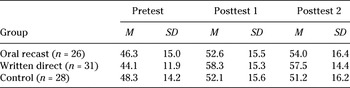
The first research question concerned the relative effectiveness of oral recasts and written direct correction. Table 4 displays the descriptive statistics for total scores derived from the dictation, writing, and error correction tests over the three testing periods (i.e., pretest, immediate posttest, and delayed posttest) for the oral recasts, the written direct CF, and the control groups.
Comparison of test score means and standard deviations by group type

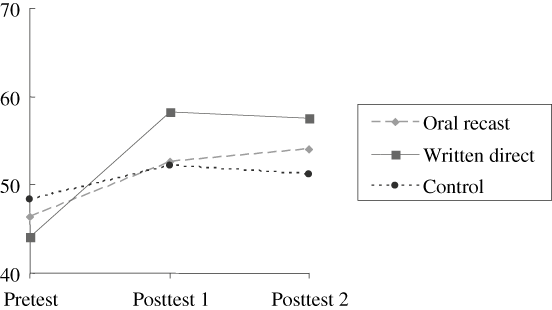
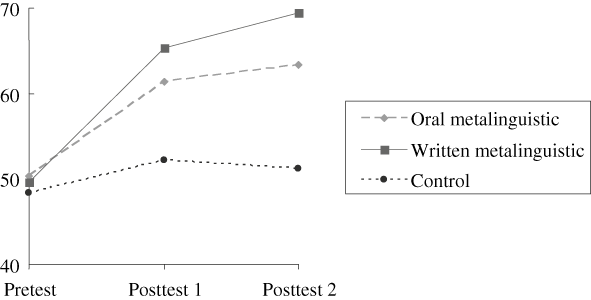
Figure 2 provides a visual representation of the total test scores for the three groups under analysis over the three testing periods. To establish whether the differences in the groups’ scores on the pretest were statistically significant, a one-way ANOVA was performed. This revealed no statistically significant group differences among the three groups, F(2, 82) = 0.71, p = .49.
Mean total test scores versus time for the oral recasts, the written direct CF, and the control groups.
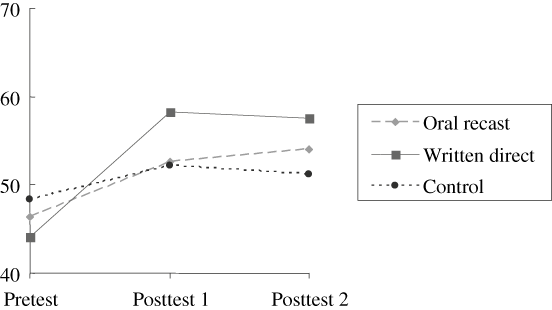
It should be noted that even the relatively moderate gains observed in the control group between the pretest and immediate posttest as well as between the pretest and delayed posttest were significant, F(1, 27) = 9.57, p < .01 and F(2, 27) = 4.93, p < .05, respectively. The crucial analysis, therefore, concerns whether there was a Time × Treatment interaction. A two-way repeated-measures ANOVA was performed, with total scores as a dependent variable and with time (pretest, immediate posttest, and delayed posttest) and CF treatment (oral recasts and written direct CF) as independent variables. The results of the analysis revealed that there was a significant Time × Treatment interaction, F(4, 164) = 9.64, p < .01, which indicates that the groups performed differently from each other over time. One-way ANOVAs revealed significant between-group differences in both the immediate posttest, F(2, 82) = 2.03, p < .05, and the delayed posttest, F(2, 82) = 2.89, p < .05.
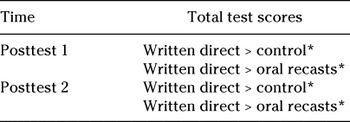
Tukey’s post hoc pairwise comparisons were computed to detect where the significant differences lay among the groups (with an α level of .05). These analyses revealed that in both the immediate and the delayed posttests, the written direct group performed better than either the oral recast group or the control group in terms of total test scores. However, there was no significant difference between the recast and the control group in the immediate and the delayed posttests. The statistically significant differences that emerged from this analysis are summarized in Table 5.
Summary of statistically significant group differences

Note
The asterisk indicates that p < .05, and the symbol > corresponds to better than.
Comparisons Among Oral Metalinguistic, Written Metalinguistic, and Control Groups
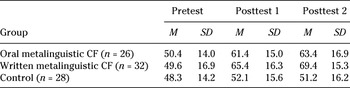
The second research question asked whether there was any difference in the effect of oral and written metalinguistic correction on the acquisition of English articles. Table 6 presents the descriptive statistics for total scores for the oral metalinguistic and written metalinguistic groups and the control group.
Comparison of test score means and standard deviations by group type

Figure 3 provides a visual representation of the mean total test scores for the three testing periods for the oral and the written metalinguistic groups and the control group. A one-way ANOVA revealed that there were no significant differences among these three groups’ scores on the pretest, F(2, 83) = 1.07, p = .87. To examine if the differences across the group scores over time were statistically significant, a two-way repeated-measures ANOVA was performed. It revealed that there was a significant Time × Treatment interaction, F(3, 142) = 14.1, p < .01, which means that the groups performed differently from each other over time and according to the CF treatment. One-way ANOVAs revealed that there were significant group differences in both the immediate posttest, F(2, 83) = 3.97, p < .05, and the delayed posttest, F(2, 83) = 5.53, p < .01.
Mean total test scores versus time for the oral and the written metalinguistic groups and the control group.
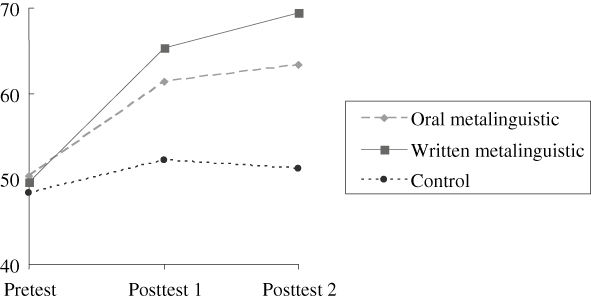
To examine whether there were significant differences between the oral and the written metalinguistic CF groups, post hoc tests were performed (with an α level of .05). These comparisons indicated that, in both posttests, the oral metalinguistic group as well as the written metalinguistic group performed better than the control group. Additionally, in the delayed posttest, both treatment groups performed better than the control group. However, there was no significant difference between the oral and the written metalinguistic groups. Table 7 summarizes the statistically significant differences revealed by the post hoc pairwise comparisons.
Summary of statistically significant group differences

Note
The asterisk indicates that p < .05, and the symbol > corresponds to better than.
Exit Questionnaire
Upon completion of the delayed posttests, learners were given an exit questionnaire that asked two questions relating to learner awareness of the focus of the research.Footnote 7 The students’ responses to this questionnaire were compared using Pearson’s chi-square (χ2) tests (with Haberman’s adjusted residuals of above or below 2.0). This comparison showed that the group differences were significant (p < .05), with the written metalinguistic group exhibiting 52% of awareness, the oral metalinguistic group exhibiting 35% of awareness, the written direct group exhibiting 25% of awareness, and the oral recasts group exhibiting 0% of awareness. Overall, the metalinguistic CF in both oral and written modes produced significantly higher levels of learner awareness of the focus on grammar, and on English articles in particular, than the oral recasts and written direct CF.
DISCUSSION
Oral Recasts Versus Written Direct Correction
The findings of the current study reveal that written direct correction was superior to oral recasts in helping learners improve the grammatical accuracy of English articles. This is not surprising and was to be expected given the results of Sheen (Reference Sheen2007a, Reference Sheen and Mackey2007b), which showed that the oral recasts investigated in her study (based in part on the current database) did not affect learning, whereas there was an effect for written direct correction in both the short and the long term.
These two CF types—oral recasts and written direct CF—differed in terms of the medium in which CF was provided to the learners. This difference in the medium, in turn, involves two further distinctions: (a) between explicit and implicit CF and (b) between CF provided online or offline. Therefore, even though the oral recasts and written direct correction investigated in this study were considered to be an equivalent form of CF because they both provided learners with the correct forms (see Doughty & Varela, Reference Doughty, Varela, Doughty and Williams1998), the results show that they were not equivalent to one another: Written direct CF and oral recasts function differently.
The most obvious reason for this difference is that the students failed to notice the corrective force of the oral recasts, whereas they recognized that the written direct feedback was corrective. This finding is in line with the common argument that oral recasts are implicit because there is no overt linguistic signal that indicates that an error has been committed. In contrast, written direct CF is explicit in nature; that is, its corrective function is clear to learners. Written CF can be direct (i.e., the correct form is given as in the current study) or indirect (i.e., only clues as to how to correct the nontarget form are provided). However, in both cases, learners are likely to become aware that an error has been committed, whereas oral recasts often fail to induce learner noticing, as noted by a number of researchers (e.g., Lyster & Ranta, Reference Lyster and Ranta1997; Mackey et al., Reference Mackey, Gass and McDonough2000). This difference is supported by the analysis of the exit questionnaire results; that is, among the five groups (four CF treatment groups and one control group), no students in the oral recast group showed any awareness of the focus of the CF on grammar (and more specifically on articles).
Oral Metalinguistic Versus Written Metalinguistic Correction
According to R. Ellis’s (Reference Ellis2005b) categorization of CF, both oral metalinguistic and written CF are examples of an explicit and input-providing feedback strategy. It should be noted that the metalinguistic feedback employed in the current study is different from that investigated in other CF studies (e.g., Ellis, Basturkmen, & Loewen, Reference Ellis, Basturkmen and Loewen2001; Lyster, Reference Lyster2004; Lyster & Ranta, Reference Lyster and Ranta1997) in that it provided both the correct form and metalinguistic information. In other words, CF was of the direct, input-providing type rather than indirect and output-prompting type. Thus, in contrast to the difference between oral recasts and written direct correction, the only thing that distinguished oral and written metalinguistic CF was the medium of the feedback. Additionally, it should be noted that both the oral and written metalinguistic CF were explicit in nature and, therefore, that what distinguished them was whether the feedback was online (as in the case of the oral metalinguistic CF) or offline (as in the case of the written metalinguistic CF).
Although the oral and written metalinguistic feedback differed with regard to whether it is immediate or delayed, whether the students function as addressees only or also as hearers, and whether students are exposed to public feedback or only his or her own (Table 1), it would appear that these differences were not sufficiently influential because there was no significant difference between the oral and written metalinguistic groups’ total test scores. Recall that when oral recasts and written direct feedback were compared, the medium in which feedback was provided played an important role. The reason given for this was that the learners were not aware that they were being corrected in the case of oral recasts (the only implicit CF strategy investigated in this study) but were aware of it in the case of written direct feedback. Thus, what these results suggest overall is that the crucial factor that influences the effectiveness of CF is the explicitness of the feedback (i.e., whether its corrective force is clear). It would seem that where article errors of the kind investigated in this study are concerned, learners simply do not benefit from implicit CF, such as that provided by oral recasts.
The differential effects of oral recasts and written direct correction may have been due to either the implicit-explicit difference or to the online-offline difference. However, the finding that both the oral and written metalinguistic feedback were equally effective in promoting learning would suggest that what is crucial is not whether the CF is online or offline but whether it is explicit. In other words, the current study suggests that it may not matter whether the CF is provided immediately or is delayed as long as it is noticeable.Footnote 8
Differential Effects of Oral and Written CF
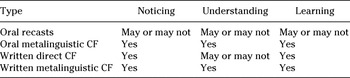
The differential effects of the four CF types investigated in the current study can be discussed in terms of Schmidt’s (Reference Schmidt1995, Reference Schmidt and Robinson2001) two notions of awareness: noticing and understanding. Noticing is a crucial step toward acquisition, but understanding can lead to deeper and greater learning. Thus, it can be hypothesized that all CF types except oral recasts would promote noticing, whereas the CF types that provided metalinguistic comments would promote not only noticing and but also understanding. These hypothesized relationships between the CF types, on the one hand, and learner awareness and the subsequent learning, on the other, are summarized in Table 8. The entries for oral and written metalinguistic CF types are clearly supported by the results reported in this article. However, whereas this study failed to demonstrate that the learners either noticed or understood the corrections provided by the recasts, other studies suggest that recasts can promote noticing—although perhaps not to the same extent as more explicit types of oral CF (e.g., Ammar & Spada, Reference Ammar and Spada2006; Lyster, Reference Lyster2004; Yang & Lyster, this issue). In Sheen (Reference Sheen2008), it has been shown that one factor that can influence learners’ ability to notice recasts is their level of language anxiety (i.e., low-anxiety learners notice recasts, but high-anxiety learners do not). For this reason, I have indicated that recasts may or may not promote noticing and understanding in Table 8. With regard to written direct CF, it can be argued that this type of CF can promote understanding if learners reflect on their errors and work out why they were incorrect and what the rule is. Therefore, it is also unclear whether written direct CF promotes understanding.
Hypothesized relationships among CF types, learner awareness, and learning

Long (Reference Long, Ritchie and Bhatia1996, Reference Long and Long2007) has argued that recasts facilitate acquisition by drawing learners’ attention to form while keeping learners focused on meaning throughout a conversational exchange. He claimed that recasts work best precisely because they are implicit and, thus, do not interrupt an interactional sequence. However, the findings of the current study suggest that this implicit kind of CF does not promote learner noticing and awareness in a classroom context and, thus, is not effective in promoting acquisition.
This lack of effect points to the importance of the negative evidence that CF provides. Leeman (Reference Leeman2003) claimed that recasts are effective not because they provide negative evidence but because they serve as positive evidence. The findings of the current study suggest the opposite. Recasts that target English article errors do not constitute an effective strategy because they serve only as positive evidence. The other three CF types investigated in this study proved to be effective because they provided the learners with negative evidence as well as positive evidence. Thus, it can be argued that the explicitness of CF is the pivotal factor that influences the extent to which various types of CF are beneficial to L2 learners. This finding is consistent with Carroll’s (Reference Carroll2001) autonomous induction theory, which claims that CF cannot facilitate learning unless learners recognize the corrective function of CF. Explicit CF types, such as direct or metalinguistic correction, enable learners to notice the gap between their nontarget output and the correct form; this, in turn, facilitates interlanguage development.
It should be noted, however, that all the types of CF investigated here were input-providing feedback; thus, unlike prompts, they did not push learners to modify their output, which Swain (Reference Swain, Cook and Seidlhofer1995) and Lyster (Reference Lyster2004), among others, have hypothesized promotes learning. Thus, all that can be said on the basis of the results presented in this study is that input-providing CF that causes learners to attend to their errors and their correction is more effective than CF that simply provides learners with the correct form. The possibility remains that other types of CF leading to pushed output could be even more effective, although, fairly obviously, this is only possible if learners possess partially internalized knowledge of the target feature, as was probably the case with the target structure (i.e., articles) in this study, given the pretest results.
A further possible limitation of the results reported here is that they do not demonstrate that the explicit types of CF had any effect on learners’ implicit knowledge, because the tests used in the study did not clearly distinguish between explicit and implicit knowledge. Nevertheless, there are grounds for arguing that even if the knowledge imparted by the feedback was of the explicit kind, this would be of value to learners, because explicit knowledge can assist the subsequent development of implicit knowledge (see N. C. Ellis, Reference Ellis2005). Additionally, although there is no basis for claiming that explicit feedback resulted in implicit knowledge, there is also no basis for claiming that it did not or could not eventually become internalized as implicit knowledge.
Although the current study was carried out with a careful research design, using a series of instruments that had previously been tested in a pilot study in the same research site, a number of shortcomings must be acknowledged. First, the testing instruments did not include a measure of the learners’ unplanned oral production, such as an open-ended spontaneous speaking task or an oral elicited imitation test. Second, this study examined the effects of CF on just two relatively simple functions of English articles: the indefinite article a as an anaphoric mention and the definite article the as a second mention. Given the complex nature of articles (i.e., both linguistic and pragmatic factors determine their use), the findings of this study cannot be directly generalized to the acquisition of articles as a whole, let alone to other grammatical features. Third, the treatment was admittedly short. One might argue that implicit instruction such as that consisting of oral recasts requires a longer time for a significant improvement to become evident. If learners had been provided with oral recasts intensively over a longer period of time, a statistically significant effect might have been found (as in other studies). At the same time, however, a longer and more substantial CF treatment might have also produced an even stronger and more robust effect for the oral metalinguistic, written direct, and metalinguistic correction. It could also be argued from a pedagogical standpoint that allocating only a short period of time to the treatments was a strength of the study, as teachers are unlikely to have the luxury of devoting lengthy periods of time to individual errors. Focused CF of the kind practiced in this study has high ecological validity. Finally, the students in the written CF treatment groups were not required to revise their writing, which might be considered a limitation, given that revision is a common feature in L2 writing research. However, one advantage of excluding revision is that it allows for the effect of the written CF treatment to be investigated by itself and to be compared with the oral CF treatment.
CONCLUSION
The purpose of the current study was to investigate whether oral and written CF have differential effects on learning. To that end, the following comparisons were carried out: (a) oral recasts versus written direct correction and (b) oral versus written metalinguistic CF. The results of these comparisons are summarized as follows:
1. Written direct correction was found to be a more effective CF strategy than oral recasts in the current study. This may have been because the corrective function of such explicit CF was clear to the learners, whereas that of the oral recasts was not.
2. Oral metalinguistic CF was as effective as written metalinguistic CF in facilitating the acquisition of English articles. The two types of CF were both explicit, and both constituted a multiple feedback move, supplying learners with the correct form and providing an explanation of the error. This kind of CF facilitated learning due to its explicitness, which is hypothesized to promote learner noticing, understanding, and subsequent learning. In this respect, the medium of the CF did not cause any differential effects on learning, which suggests that whether the CF was provided immediately or delayed did not play a role in promoting interlanguage development.
3. The results of the exit questionnaire indicated that, overall, metalinguistic CF in both the oral and written modes produced higher levels of learner awareness than CF without metalinguistic information.
Overall, these findings suggest that it is not so much the medium of the CF as the degree of its explicitness or the extent of information provided that is important. The demonstrated advantage of written direct CF over oral recasts may be explained by Carroll’s (Reference Carroll2001) autonomous induction theory, according to which CF, to be effective, must draw learners’ attention to the errors that they have committed. It can be argued that oral recasts examined in the current study in the context of a communicative task failed to play this role and therefore did not promote acquisition, whereas the oral metalinguistic, written direct, and written metalinguistic CF did.
The results reported here addressed the general effects of CF on groups of learners. In other words, this study reflects a holistic approach based on the assumption that all learners will benefit from CF. An alternative approach, which was not within the scope of the current research, is the notion that learners may differ in their ability and preparedness to benefit from CF. It remains a possibility, for example, that although explicit CF (irrespective of medium) has been shown to be superior to implicit CF (in the form of oral recasts), this may not be the case for all learners. There are an increasing number of studies that now examine how individual difference factors such as language aptitude and anxiety mediate the effects of the different types of CF (e.g., Sheen, Reference Sheen2008; Trofimovich, Ammar, & Gatbonton, Reference Trofimovich, Ammar, Gatbonton and Mackey2007).
The findings of the current study also point to various ways to further investigate the relative effects of different types of feedback. For example, the current research found an advantage for explicit CF that included both the provision of the correct form and metalinguistic information. It is not clear whether the explicitness itself, or the metalinguistic information, or both contributed to learning. Thus, a future study is needed to examine the effects of explicit feedback that distinguishes (a) explicit provision of the correct form, (b) metalinguistic information without provision of the correct form, and (c) both provision and metalinguistic information (as in this study). The metalinguistic feedback investigated here constituted an input-providing type of feedback. One can argue that, unlike prompts, such metalinguistic correction may not have pushed learners to modify their output, which has been hypothesized to promote learning (Lyster, Reference Lyster2004; Swain, Reference Swain, Cook and Seidlhofer1995). Thus, it remains possible that CF prompts such as clarification requests (in the case of oral CF) and indirect error coding treatment (in the case of written CF) will be more effective than direct metalinguistic feedback.
To date, few studies have been carried out that systematically compare different types of CF across two modalities (i.e., oral and written). With this type of investigation, researchers can contribute not only to a better understanding of the role CF plays in L2 learning but also to bridging the gap between SLA and L2 writing research (see Sheen’s introduction, this issue). The study reported here constitutes one of the first attempts to compare different types of CF across two modalities and, hopefully, will stimulate further research.
APPENDIX A: CORRECTIVE FEEDBACK EXAMPLES
ORAL RECASTS
Student: There was fox.
Teacher: There was a fox.
WRITTEN DIRECT CORRECTION
AΛ crow stole a piece of cheese and flew away at a nearby tree.Footnote 9
AΛ fox saw this and wanted
TheΛ piece of cheese and said to the crow…
ORAL METALINGUISTIC FEEDBACK
Student: Crow was stupid, I think.
Teacher: THE (theee) crow. You should use the definite article ‘the’ because you’ve already mentioned ‘crow.’
WRITTEN METALINGUISTIC CORRECTION
Crow (1) stole a piece of cheese and flew away at a nearby tree. Fox (2) saw this and wanted piece of cheese (3) and said to the crow…
1) ‘a’ needed: indefinite article. First mention of ‘crow’
2) ‘a’ needed: indefinite article.
First mention of ‘fox’
3) ‘the’ needed: definite article: ‘cheese’ already mentioned
APPENDIX B: “THE FOX AND THE CROW” STORY
There was once a crow who stole a piece of cheese from a kitchen window. She flew off with the cheese to a nearby tree. A fox saw what the crow had done, and he walked over to the tree. “Oh, Mistress Crow, you have such lovely black feathers, such little feet, such a beautiful yellow beak, and such fine black eyes! You must have a beautiful voice. Would you please sing for me?” The crow felt very proud. She opened her beak and sang CAW-CAW-CAW-CAW. Of course the cheese fell down, and the fox ate the piece of cheese.
APPENDIX C: “THE PET SNAKE” STORY
A boy bought a snake from a pet shop. He took the snake home. His mother screamed when she saw the snake. She told him to take the snake back to the pet shop but the owner refused to take the snake back. The boy put the snake in a box and left it on a seat in the park near his house. An old woman found the box. When she saw the snake she had a heart attack.