Introduction
Women's education is associated with positive economic, social and health outcomes for women and their families, as well as greater opportunities and decision-making power for women within and outside of the household (Lynch, Reference Lynch2003; Boyle et al., Reference Boyle, Racine, Georgiades, Snelling, Hong and Omariba2006; Gakidou et al., Reference Gakidou, Cowling, Lozano and Murray2010; World Bank, 2012). While concerted effort to improve access to education, for girls in particular, has been part of the global agenda for the past few decades, investment in education reflects a complex set of decisions and constraints. Central to this investment, as noted by Cleland (Reference Cleland2002) and Ryder (Reference Ryder2010), is the socio-psychological change at the societal level that enables girls and women to decide for themselves the extent to which, if at all, they will be dedicated to childbearing and childrearing activities and ‘on the availability of opportunities for [them] to fill non-familial roles and earn prestige from them’ (Ryder, Reference Ryder2010, p. 613).
Improvements in women's education have also substantially altered the opportunities and lives of individual women and their families (Malhotra & Riley, Reference Malhotra and Riley2009). With smaller families and less time spent on reproduction and childrearing, women may avail, or may create new opportunities for themselves and for their children. Malhotra and Riley (Reference Malhotra and Riley2009) and others (Mason, Reference Mason1997; Mason & Taj, Reference Mason and Taj1987; McNay, Reference McNay2005) described the implications of fertility decline and rapid demographic changes for women and gender equality, namely the creation of new ideals and aspirations, as well as an enriched environment in which their children can achieve these new ideals. Women's aspirations for their children reflect their own life experiences and empowerment, as well as the belief in the potential for their children, particularly their daughters, to go beyond traditional expectations (Kabeer, Reference Kabeer1999; Malhotra et al., Reference Malhotra, Schuler and Boender2002; Duflo, Reference Duflo2011).
This study used a unique longitudinal and inter-generational dataset to explore the relationships between Filipina women's education, fertility and educational aspirations for their children. The study aims were to first examine the influences of mother's and father's socio-demographic characteristics and women's status and empowerment measures on mothers' educational aspirations for their children, and then to determine the extent to which these factors and these aspirations predict the children's actual educational attainment.
The Philippines
The setting for this study is Metro Cebu, located on the island of Cebu in the Central Visayas region of the Philippines. With a population of 1.4 million in 2007, Metro Cebu is the second largest metropolitan area of the Philippines. The Philippines has undergone profound social and demographic changes over the past few decades, including rapid urbanization and economic growth, a greater reliance on mobile and internet technology and expanded employment and educational opportunities, especially in metropolitan areas such as Cebu (National Statistics Office & ICF Macro, 2009). These influences, among others, are facilitating changes in family formation and childbearing patterns, including a desire for smaller families and reduced fertility, increased nucleation of families and greater acceptance and practise of non-marital fertility and cohabitation (Medina, Reference Medina2001; Xenos & Kabamalan, Reference Xenos and Kabamalan2007).
Education in the Philippines
The education system in the Philippines consists of primary school (1st–6th grades) and secondary school (1st year–4th year). Educational attainment has increased over the past several decades in the Philippines, with nearly universal literacy rates among youth aged 15–24 (97% for males; 98% for females) (UNICEF, 2013). The Philippines has the highest median enrolment rates in South/South-east Asia; however, there are marked differences in enrolment and literacy rates by household income and region (Measure DHS & USAID, 2013).
The Philippines is the only country (apart from the Maldives) in South/South-east Asia in which median enrolment rates are higher for females as compared with males (Measure DHS & USAID, 2013). In 1993, median education levels were nearly equivalent for males and females (5.6 and 5.7 years, respectively), yet by 2008, the gap had widened to a median of 6.4 years for males and 7.4 years for females. Much of this gap is attributable to differential enrolment in secondary school where girls are outpacing boys, probably due to the need for boys, particularly those from low-income families, to contribute to the household income (Philippines National Statistics Office, 2003). A recent, sub-regional survey conducted in 24 cities and provinces in the Philippines indicated slightly higher attendance for girls as compared with boys in primary school (1.06) and an even greater advantage for girls in secondary school (1.27) (National Statistics Office & UNICEF, 2007).
Regional data from Bicol and Cebu corroborate these national findings, indicating that girls are more likely to be enrolled in school (Degraff et al., Reference DeGraff, Bilsborrow and Herrin1996; Hindin, Reference Hindin2005) and that parents may perceive greater benefits from educating girls because of higher expected returns or greater expected financial support from daughters than from sons (Degraff et al., Reference DeGraff, Bilsborrow and Herrin1996).
Fertility in the Philippines
The Philippines has experienced a decline in fertility over the past 40 years, from a total fertility rate of 6.0 in 1973 to 3.3 in 2008; however, the pace of the decline has levelled off over the past 10–15 years (National Statistics Office & ICF Macro, 2009). A more nuanced picture emerges when comparing fertility rates between urban and rural areas (2008 TFR: 2.8 versus 3.8, respectively) and between the highest and lowest wealth quintiles (1.9 versus 5.2, respectively), and reflects stark attitudinal and geographic differences in the desire for children and in the ability and willingness of local governments to meet the contraceptive needs of Filipinos (National Statistics Office & ICF Macro, 2009; Guttmacher Institute & Likhaan Center for Women's Health, 2010). Contraceptive use lags behind neighbouring nations, with 51% of currently married women reporting use of contraception (a large proportion consisting of traditional method use) and 22% of women reporting an unmet need for family planning (National Statistics Office & ICF Macro, 2009).
Fertility and empowerment in the Philippines
In nearly all gender equity indicators, levels for Filipina women exceed those of Filipino men (United Nations Development Program, 2006). Filipina women have historically had a higher degree of power and greater autonomy than women in the rest of Asia and elsewhere in the developing world (Mason & Smith, Reference Mason and Smith2000). According to the Philippine Commission on Women, women compare favourably with men in terms of literacy and enrolment and completion of primary and secondary school (Philippine Commission on Women, 2009a). In addition, a smaller proportion of women are unemployed (of those seeking employment) compared with men, although a greater proportion of men are in the labour force. When looking at influential occupations such as government officials, corporate executives, managers and supervisors, 2.5 million women are employed in such positions compared with 2.4 million men (Philippine Commission on Women, 2009b). These achievements have been bolstered by the Philippine women's movement, whose efforts have focused on promoting gender equality in the areas of development, children and family, violence against women and women's health and reproductive rights.
The roles and associated power of women in the private spheres of the household and intimate relationships are more nuanced. Women's roles and decision-making power may be more limited within the realm of reproduction, with women being inclined to adhere to traditional notions of propriety and submissiveness (Medina, Reference Medina2001). In-depth work on reproductive decision-making among Filipino couples by Williams et al. (Reference Williams, Sobieszczyk and Perez2000) and Biddlecom et al. (Reference Biddlecom, Casterline and Perez1997) depict a range of decision-making styles among couples, but found that overall, men's concerns about family planning had a significant impact on women's use of contraception, accounting for 20% of all unmet need for contraception as reported by wives (Casterline et al., Reference Casterline, Perez and Biddlecom1997). Moreover, despite the improvements in the educational and economic opportunities available to Filipina women, divorce remains illegal and often results in women having fewer rights and recourse, as compared with men (United Nations Committee on the Elimination of Discrimination against Women [Cedaw], 2006).
Filipina women are often thought to wield substantial control over household financial decisions due to their various housekeeping and childbearing responsibilities, as well as the common practice of a husband turning over his earnings to his wife, who typically controls the spending and allocation decisions (Illo, Reference Illo and Torres1989). Other studies suggest, however, that while women may keep the household money, husbands may have a greater say in deciding where the money goes (Bautista & Dungo, Reference Bautista, Dungo and Heyzer1987) and wives often attribute decision-making to their husbands even if she actually makes the decision (Sevilla, Reference Sevilla and Torres1995). In a more recent study of cohabiting and married Filipino couples in Metro Cebu, male partners were significantly more likely to report joint decision-making on household decisions as compared with their female partners (Preciado & Gipson, Reference Preciado and Gipson2013).
Several recent investigations from the Philippines, and specifically from Cebu, the setting for the present study, examined the influence of women's status and household decision-making on health and social outcomes. In these studies, joint marital/parental household decision-making was found to be associated with a decreased risk of violence for women (Hindin & Adair, Reference Hindin and Adair2002), fewer reports of violence among children (Fehringer & Hindin, Reference Fehringer and Hindin2009) and higher educational attainment among daughters (Hindin, Reference Hindin2005). In another study examining the relationship between parental relationships and their children's sexual initiation, joint parental decision-making was associated with delayed first sex among boys, whereas the mother's higher status was associated with delayed sexual initiation among their daughters (Upadhyay & Hindin, Reference Upadhyay and Hindin2007). Yet another study found that women's household decision-making autonomy (i.e. having final say on decisions) was associated with longer birth spacing (Upadhyay & Hindin, Reference Upadhyay and Hindin2005). While most studies found a protective effect of joint household decision-making, two additional studies indicated that domination of household decision-making by either partner and women's higher relationship power were associated with higher levels of intimate partner violence (Hindin & Adair, Reference Hindin and Adair2002; Lucea et al., Reference Lucea, Hindin, Kub and Campbell2012).
Research questions and hypotheses
This paper examines the ways in which women's socio-demographic characteristics and fertility are related to women's aspirations for their children and to what extent these aspirations predict actual educational attainment of their sons and daughters using a unique, longitudinal dataset comprised of mothers and their young adult children. The paper first assesses the factors associated with mothers' educational aspirations for their children, as measured in 1994, when the children were 10–11 years old. Then, educational data throughout 2009 are analysed to explore the determinants of school completion among these same children (as young adults), and to see to what extent mothers' aspirations influence actual educational attainment. The hypotheses are:
-
1. Maternal fertility will be inversely related to aspirations for their children's educational attainment, and that this inverse association will be stronger for girls.
-
2. Women with lower fertility will be better able to ensure that their children meet these educational aspirations; that is, children of lower fertility mothers will be more likely to meet or to exceed their mother's educational aspirations as compared with children of higher fertility mothers.
-
3. Mothers' educational aspirations for their children will independently and significantly predict children's subsequent educational attainment, above and beyond the effects of background characteristics and other measures of women's status and empowerment.
Data and Methods
The Cebu Longitudinal Health and Nutrition Study
This study used data collected through the Cebu Longitudinal Health and Nutrition Study (CLHNS) in partnership with the Office of Population Studies (OPS), University of San Carlos, Cebu Philippines. The CLHNS is an ongoing longitudinal study of a cohort of mothers and their children born in 1983–84, selected from a random sample of 33 communities (barangays) in Metro Cebu. The CLHNS has followed these women and their children over the last 30 years, with recent surveys conducted in 2009 and 2013–14 (Adair et al., Reference Adair, Barry, Popkin, Akin, Guilkey and Gultiano2011).
In total, 2214 women were interviewed in the 1994 CLHNS survey, including questions on 2186 index children. The sample was further narrowed to married or cohabiting mothers of non-twin children and excluded respondents who had missing data on key variables, resulting in a final sample of married mothers and non-twin children with complete data (n=1728).
Dependent variables
The dependent variables were ‘maternal aspirations’ and ‘educational attainment’. Maternal aspirations were the mother's report of her educational aspirations for her child, as reported by the mother in the 1994 CLHNS survey. Response choices were: some elementary/elementary graduate, high school graduate, college graduate and more than college. Based on the distribution of mothers' responses, a dichotomous outcome variable was created (high school or less versus college or higher). Educational attainment was based on children's educational attainment and school completion (termination or drop-out), as calculated through the 2009 survey. All available educational data from the index children through the 2009 CLHNS survey were included to determine the highest grade achieved. In the 2009 survey, 7% of index children reported attendance in a technical or vocational school either before or after completion of high school. Those who completed secondary school before attending vocational school were coded as ‘completing secondary school’ (grade 11), whereas those who entered vocational school prior to graduation from secondary school were coded as ‘completing primary school’ (grade 6). Seven children never attended school due to disabilities and were excluded from the analysis.
Independent variables
Mother's fertility was measured as the number of living children reported by the mother in 1994. Responses ranged from 1 to 14, with a mean of 5.03. The variable was categorized into: 1–2, 3–4, 5–6 children and 7 or more children, with 3–4 children serving as the reference group.
Women's status and empowerment were included in models via four constructs. Questions from the 1994 survey were included on the mother's reports of household decision-making on ten items, such as buying children's clothes, children's schooling and making major household purchases. For each item, women were asked: (1) Who would she consult with in making the decision on that matter?; (2) Whose decision will prevail in that matter? Based on previous analyses of the CLHNS data, joint decision-making was used as a measure of women's status within the household (Hindin & Adair, Reference Hindin and Adair2002; Hindin, Reference Hindin2005). First, new variables were created to determine the number of decisions that were made jointly by both spouses. Second, an index was created that sums the number of decisions (0–10) made jointly by both spouses. This index was normally distributed and was included as a continuous variable. The second construct, the ‘well-kept’ scale, was developed as part of a previous qualitative study investigating contextually relevant measures of women's status in Cebu (Adair et al., Reference Adair, Gultiano and Avila1998). In focus group discussions, local women indicated that they assessed social status ‘by observing how well-kept the woman, her children, and her house and environs were’ (Adair et al., Reference Adair, Gultiano and Avila1998, p. 4). Hence, in the 1994 survey of the CLHNS mothers, interviewers were asked to discreetly observe the woman and her immediate household environment to determine if they thought the woman, her household and her children were well-kept. Similar to another analysis conducted among this population to assess the relationship of women's status and birth intervals (Upadhyay & Hindin, Reference Upadhyay and Hindin2005) and based on the distribution of responses, women were considered of high status if any of these three were considered to be ‘well-kept’. The third variable was constructed based on women's reports that their husbands turned over all of their money to them (74%) versus turning over part of the money (25%) or not working (1%). Finally, based on previous findings from the Philippines indicating that spousal age and/or educational difference is related to women's empowerment and household decision-making (Mason & Smith, Reference Mason and Smith2003), variables were constructed based on the ages and educational attainment of the husband and wife.
Parents' socio-demographic characteristics included in this study were age, education and religiosity. Mother's age and education were categorized in the multivariate models according to age cohorts and elementary (57%) versus higher than elementary education (43%). Similar to the national population of the Philippines, this sample was predominantly Catholic (95%). Previous analyses of CLHNS data indicated an important influence of religiosity (Hindin & Adair, Reference Hindin and Adair2002), so measures of mothers' and fathers' church attendance were included. Responses were dichotomized into attending never/occasionally/once a month versus once a week or more. Father's age and education are presented relative to the mother's characteristics, as noted below.
Household characteristics. Residence was a dichotomous variable with urban as the reference group. Household wealth was based on the number of selected items in the household (e.g. colour television, refrigerator, bicycle, electricity) (twelve items; Cronbach's α=0.81; mean=4.0) and was categorized into low (0–2 items), medium (3–5 items) and high (6 or more items).
Lastly, sex of the index child was included in the regression analyses and as the stratifying variable.
Modelling
Bivariate analyses were first conducted to test the association of the independent variables with the outcomes of educational aspirations and school completion. Variables that were significant in the bivariate models and/or that were determined to be of theoretical importance to the analysis were included in the multivariate models. All models accounted for clustering at the community (barangay) level.
Logistic regression was employed to examine the factors associated with mothers' educational aspirations for their children, with the dichotomous measure of aspirations (high school or less, college or more). First, a combined, multivariate analysis was conducted, followed by gender-stratified analyses. To predict schooling completed, Cox Proportional Hazards modelling with final year of schooling completed as the censoring event and time measured in calendar year. (Although a child may have repeated a grade, the final grade (or year of schooling) completed by 2009 is the censoring event.) Interactions by sex of index child were included, as well as gender-stratified Cox Proportional Hazards models.
Results
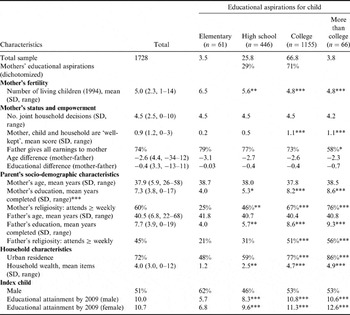
Table 1 displays the characteristics of the overall sample and according to mothers' educational aspirations for their children. The vast majority of the mothers stated a desire for their children to attend college or higher (71%). These mothers were also wealthier, more religious, more educated and more likely to live in urban areas. They also had fewer children, on average, scored higher on the ‘well-kept’ scale and had husbands who were more religious and with higher education. Women who desired their child to achieve the highest levels of education (beyond college) were also more likely to have a husband who handed over none, or only part of, his income, as compared with all of his income. Boys completed an average of 10 years of schooling, compared with 10.7 years for girls (p≤0.001). Levels of completed education were significantly different according to their mothers' stated educational aspirations; however, it was only for girls that educational levels increased across all four categories of educational aspirations.
Distribution of variables and mothers' education aspirations for their children (percentages), Philippines, 1994

Bonferroni tests with elementary as reference group: ***p≤0.001; **p≤0.01; *p≤0.05; †p≤0.10.
Maternal aspirations for children completing college or more
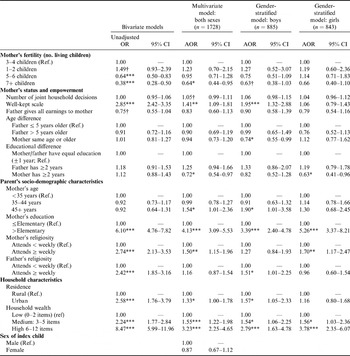
Table 2 displays the bivariate and multivariate models of the factors associated with mothers' reports of wanting their child to complete college or higher. In the combined, multivariate model, significant effects of parity on educational aspirations were only found among the highest parity group (7+ children), with mothers of higher parity having significantly lower expectations for their children compared with mothers with 3–4 children (Adjusted Odds Ratio (AOR)=0.64; 95% CI: 0.44–0.95). Compared with younger, rural mothers and those who attended church less frequently, older mothers (45+ years) (OR=1.54; 95% CI: 1.01–2.36), urban mothers (AOR=1.33; 95% CI: 1.00–1.78) and mothers who attended church at least once a week were more likely to have higher educational aspirations for their children (AOR=1.50; 95%CI: 1.15–1.96). Mothers who had secondary schooling or higher were more than four times as likely (AOR=4.13; 95% CI: 3.09–5.53), and mothers in the highest wealth category were over three times as likely to want their child to go to college (OR: 3.23; 95% CI: 2.25–4.65), as compared with mothers with no/elementary education and who were in the lowest wealth tertile.
Unadjusted and adjusted odds of mother's report of wanting child to complete college or higher, Philippines, 1994 (n=1728)

***p≤0.001; **p≤0.01; *p≤0.05; †p≤0.10.
α Log-likelihood test p=0.51 indicating no significant difference in nested versus full model, conducted on models without adjusting for clustering at barangay level.
Two of the women's status measures remained independently associated with mothers' educational aspirations. ‘Well-kept’ mothers were more likely to report higher educational aspirations for their children (AOR=1.41; 95% CI: 1.09–1.81). Mothers exceeding their partners' education by at least two years were less likely to report that they wanted their children to attend college or higher (AOR=0.72; 95% CI: 0.54–0.97), as compared with couples with more equitable education (within one year).
The gender-stratified models were consistent with the combined model for many of the variables with strong and positive effects of mother's education and household wealth on aspirations (Table 2); however, for some variables gender-specific effects emerged only in the disaggregated models. Mother's religiosity was positively associated with higher aspirations for girls only (AOR=1.70; 95% CI: 1.17–2.47), whereas father's religiosity was positively associated with higher aspirations for boys only (AOR=1.51; 95% CI: 1.01–2.25). The effects of high fertility (7+ children), mother's older age, urban residence and mothers with same or older age relative to the father were only significant for boys, whereas mother's higher educational attainment relative to the father was only significant for girls. A strong effect of the ‘well-kept’ scale emerged only for boys, with ‘well-kept’ mothers of boys being nearly twice as likely to have higher educational aspirations for their sons, as compared with mothers who were not considered to be ‘well-kept’ (AOR=1.95; 95% CI: 1.32–2.88).
Maternal aspirations and school completion
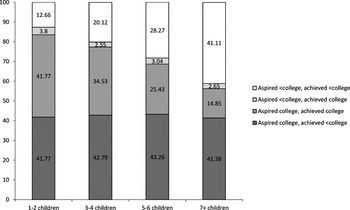
Cox Proportional Hazards models were used to predict the time to school completion (termination or drop-out) by 2009. The median duration of schooling for sons and daughters was 11 years, though the mean duration differed (10.0 years for boys versus 10.7 years for girls, p≤0.001). Moreover, the mean duration of schooling was 8.7 years for children whose mothers aspired for them to achieve up to college or less, whereas it was 11.0 years for children whose mothers aspired for them to achieve at least a college education (data not shown). Figure 1 depicts the unadjusted comparisons of mothers' educational aspirations and the index child's educational attainment by 2009 according to the number of living children. Across fertility levels, there was a similar proportion (41–43%) of mother–child dyads in which mothers aspired for their child to go to college, yet the child dropped out of school. However, mother–child dyads in which the mother had fewer children had a significantly higher proportion of children meeting their mothers' aspirations of college attainment (42%), as compared with mother–child dyads in which the mother had more children (15% for mothers with 7+ children) (χ 2 test p≤0.001).
Mothers' educational aspirations for their children and children's educational attainment, by mother's number of living children, Philippines, 1994.

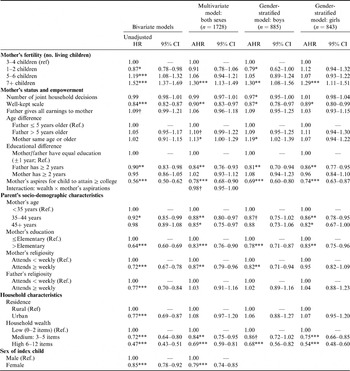
Table 3 shows the bivariate and multivariate hazards models predicting school completion by a given year, until 2009. The three, key independent variables – mother's aspirations, mother's parity and mother's education – showed persistent effects in the multivariate models. Mother's educational aspirations had a significant and independent effect on the risk of years of schooling completed by a given year, with mothers who aspired for their children to attend college or higher having lower hazards of school completion by 2009 (AHR=0.78; 95% CI: 0.68–0.90). Moreover, there was a marginally positive interactive effect (p≤0.10) of wealth with mother's educational aspirations, such that children from wealthier households and whose mothers aspired for them to attend at least college had lower hazards of school termination by 2009. Parity, however, demonstrated a threshold effect, such that only children from the largest families (7 or more children) were significantly more likely to complete school by 2009 (AHR=1.30; 95% CI: 1.13–1.45), as compared with children from families of 3–4 children. Children whose mothers had secondary or higher education were significantly less likely to complete schooling by 2009, as compared with children whose mothers had less education (AHR=0.83; 95% CI: 0.76–0.90).
Bivariate and multivariate hazard models predicting child's school completion by 2009, by parent's socio-demographic characteristics, household characteristics, women's status and mother's educational aspirations, Philippines, 1994 (n=1728)

***p≤0.001; **p≤0.01; *p≤0.05; †p≤0.10.
Other socio-demographic variables demonstrated consistent, protective effects on children's schooling, including older age of mothers (AHR=0.88; 95% CI: 0.80–0.97 for women aged 35–44; and AHR=0.85; 95% CI: 0.75–0.97 for women aged 45+ years, as compared with women aged <35 years) and higher household wealth (AHR=0.84; 95% CI: 0.75–0.95; and AHR=0.69, 95%CI: 0.59–0.81, respectively, as compared with poorer women). Additionally, the hazards of school completion were lower for children of mothers who attended church more frequently (at least weekly versus less often; AHR=0.87; 95% CI: 0.79–0.96).
Children whose mothers were ‘well-kept’ had significantly lower hazards of completing school by 2009 (AHR=0.90; 95% CI: 0.83–0.97). Additionally, children whose fathers' education exceeded their mothers' by at least two years had significantly lower hazards of completing school by 2009 (AHR=0.84; 95 % CI: 0.76–0.93), as compared with children whose parents had equivalent educational levels (±1 year). Females had significantly lower hazards of school completion by 2009, as compared with males (AHR=0.79; 95% CI: 0.74–0.85).
The gender-stratified analyses showed that the effects seen in the combined model were generally consistent with those in the sex-stratified model for mothers' aspirations, children from families of seven or more children, and women's status. In the stratified models, however, a protective effect emerged, with boys in families of 1–2 children having lower hazards of school completion by 2009, as compared with boys in families of 3–4 children (AHR=0.79; 95% CI: 0.62–1.00).
Several of the women's status and empowerment variables maintained significant and similar patterns to the combined sex model, with protective effects on schooling found for children of ‘well-kept’ mothers, and children in families in which the father was more educated than the mother and in which the mother aspired for her child to attain college or higher education. For boys only, there were protective effects of joint decision-making (AHR=0.97; 95% CI: 0.95–1.00) and higher hazards of school completion if the boy's mother was of equivalent or older age to the father (AHR=1.19; 95% CI: 1.02–1.39), as compared with their peers.
Mothers' education and household wealth had consistent and significant effects on school completion in a given year in the gender-stratified models. The models also indicated that some effects were more pronounced in one sex: older maternal age was significant and protective for girls only (AHR=0.86; 95% CI: 0.78–0.95 for mothers aged 35–44 years; and AHR=0.82; 95% CI: 0.67–1.00 for mothers aged 45+, versus <35 years), and mothers' religiosity was protective for boys only (AHR=0.82; 95% CI: 0.71–0.94).
Discussion and Conclusions
The findings of this study point to several key factors that influence mothers' educational aspirations for their children and their children's subsequent educational attainment in the Philippines. The first hypothesis – that maternal fertility will be inversely related to aspirations for their children's educational attainment – was only found for women with seven or more children. This effect remained, however, even after controlling for measures of socioeconomic status, indicating that, at least for this group of women, fertility had an independent effect on stated educational aspirations. The second part of this hypothesis – that this inverse association will be stronger for girls – was not found. The multivariate models indicated similar influences on educational aspirations for boys and girls and only marginally significant effects for boys in gender-stratified models.
There were gender differences in educational attainment with girls being significantly less likely to complete school by 2009. These results support current national-level data that find higher literacy and enrolment rates for females. Although education among males has historically been higher, or on a par with female education, national-level data indicate higher literacy rates among females and shifts in younger cohorts such that females now have educational advantages over males (National Statistics Office & ICF Macro, 2009). This may be driven by employment opportunities for males, but the poorer performance of boys in this setting may suggest the need to pay more attention to boys' education.
The second main hypothesis was that children born to women with lower fertility would be more likely to meet or to exceed their mothers' educational aspirations, as compared with women of higher fertility mothers. Although there were significant differences in educational attainment across family size strata (1–2, 3–4, 5–6, versus 7 children) (data not shown) and significant differences in the achievement of mothers' higher educational aspirations according to fertility levels, the risk of school completion in a given year was significantly higher only among children from the largest families (7+). These effects were consistent for boys and girls and persisted in the multivariate models adjusting for all other socio-demographic, household and women's status variables. Although lower educational aspirations were found among higher parity mothers, the independent effect of mothers' aspirations in multivariate models highlights the importance of identifying factors beyond wealth or mother's education that may enable mothers to support their child's academic achievement. This finding suggests that further investigation of mothers' aspirations for their children is warranted, and should be explored as both a marker of women's status, as well as a possible predictor of children's outcomes.
Mothers' education had a persistent and independent influence on their educational aspirations, as well as their children's actual educational attainment. Given the continued gains in education among Filipina women over the past decades, these findings are promising, as they indicate that these investments in women's education are resulting in long-term and inter-generational benefits. On average, daughters had 3.4 more years of education than the mothers, representing a substantial gain for female education in the span of a generation. Findings from this and other studies from this setting (e.g. Hindin, Reference Hindin2005) indicate that both mothers' and fathers' educational attainment affected aspirations and educational attainment of their children, thus highlighting the need for continued focus on the family-level (inter-generational transmission of wealth and educational status) and structural factors (e.g. the necessity of working rather than attending school) that decrease children's chances of continuing in school.
A central finding of this paper is that, even after adjusting for socio-demographic, household and women's status measures, mothers' educational aspirations were strongly associated with subsequent educational attainment. Numerous studies indicate strong linkages between women's status, child well-being and child health (e.g. Hobcraft, Reference Hobcraft1993; Malhotra et al., Reference Malhotra, Schuler and Boender2002; Upadhyay & Hindin, Reference Upadhyay and Hindin2007), yet relatively few studies have explored mother's aspirations for their children as a marker of women's status. As noted by Malhotra et al. (Reference Malhotra, Schuler and Boender2002) and others, women's aspirations for their children are a reflection of women's own life experiences, as well as their beliefs of what could be achieved in the future. Studies that have examined mother's attitudes and aspirations regarding their children's schooling have found they are predictive of subsequent educational achievement (Stash & Hannum, Reference Stash and Hannum2001; Zhang et al., Reference Zhang, Kao and Hannum2007). In this analysis, after controlling for all other variables, mothers' educational aspirations accounted for, on average, 1.7 additional years of schooling among males and 0.9 years among females (data not shown).
The strength of mother's aspirations, as well as the independent and significant effects of other measures of women's status in predicting educational aspirations or educational attainment, is a notable finding and one that deserves further attention in subsequent research. These findings are similar to those of Hindin (Reference Hindin2005), who conducted an earlier analysis of educational outcomes among CLHNS children, though in contrast to Waite et al. (Reference Waite, Rindfuss and De Tray1986), who found a significant and positive effect of mothers' own schooling on aspirations for children's schooling in Malaysia, but did not find an effect of other measures of women's status (i.e. work before marriage and age at first birth). In addition to the inclusion of commonly used women's status measures (e.g. household decision-making; age and educational symmetry between spouses), the persistent and significant effects of the ‘well-kept’ measure highlights the importance of qualitative research in identifying and integrating locally defined and culturally relevant measures and underscores the need for inclusion of measures beyond socio-demographic characteristics in measuring mothers' (and parents') influences on their children's health and social outcomes.
Additionally, the persistence of mother's religiosity as a factor associated with children's schooling indicates that this is an important influence on the lives of mothers, and indirectly, on children's lives. In addition to exposure to different people and worldviews that may influence behaviour, participation in groups (such as that through church) may provide particular psychosocial supports for individuals and couples in achieving their desires, either for themselves or for their families (Barber et al., Reference Barber, Pearce, Chaudhury and Gurung2002). Given the powerful influence of religion in the Philippines, this is an area that deserves further exploration to understand the mechanisms behind women's church participation and these outcomes.
A few caveats should be mentioned in the interpretation and application of these findings. First, it is possible that there may be selection bias since the analysis only examined intact families in 1994; however, non-intact families represented <10% of the sample. Second, an analysis of CLHNS data from 1994–2001 by Schmeer (Reference Schmeer2009) indicated that changes in residential sib size affected children's educational progress, though the effects were not uniform. This possibility was examined within our sample by including the reported family size of mothers from the 2005 survey (n=1542), but found no significant effect. Third, based on past studies indicating that women's employment can be an important facet of women's status and a determinant of her educational expectations for her children (e.g. Waite et al., Reference Waite, Rindfuss and De Tray1986), this variable was examined; however, probably due to substantial participation in the workforce (95% have ever worked and 91% of women worked before marriage), there was no significant associations in either bivariate or multivariate models.
Overall, this paper provides significant insight into the factors associated with mothers' educational aspirations, as well as subsequent educational attainment among young adults in Cebu, Philippines. Although there is great concern about girls' education throughout the developing world, the findings indicate that girls fare better than boys in this setting. There is no evidence of sex discrimination in terms of maternal aspirations suggesting that even nearly two decades ago, women in Cebu believed that both boys and girls should have equal educational opportunities. The inter-generational influences of high fertility, women's status and mothers' educational aspirations on children's educational attainment highlight the importance of examining how the increased roles and opportunities for Filipina women beyond childbearing may not only positively benefit these women themselves, but also future generations.
Acknowledgments
The authors acknowledge financial support and conceptual inputs from the International Center for Research on Women (ICRW) and the Fertility and Empowerment Network and the research assistance of Archana More Sharma and Donna Ansara. Jessica Gipson would also like to acknowledge financial support from the Eunice Kennedy Shriver National Institute of Child Health & Human Development (NICHD) of the National Institutes of Health under Award Number 1K01HD067677. The content is solely the responsibility of the authors and does not necessarily represent the official views of the National Institutes of Health.