Introduction
The early postnatal period of life is a dynamic developmental period where dietary and environmental interventions can affect an individual’s phenotypic physiology, leading to beneficial or adverse health outcomes in subsequent stages of life. Reference Reichetzeder, Dwi Putra, Li and Hocher1 Nutrients and phytochemicals can interact with the epigenetic machinery of the individual during the neonatal period leading to epigenetic changes. Reference Pandey and Pandey2 These epigenetic changes are associated with dysregulation of gene expression that underlies the developmental programming of adverse health outcomes in adulthood. Reference Dearden, Bouret and Ozanne3 The diet-induced epigenetic changes occurring during the neonatal period can also affect the individual’s immature brain. Reference Dearden, Bouret and Ozanne3
During the early postnatal period, the differentiating satiety centre in the brain is influenced by intrinsic and extrinsic factors that affect appetite, and consequently, nutrition and weight gain cannot be adequately regulated. Reference Alzamendi, Castrogiovanni, Gaillard, Spinedi and Giovambattista4 The dietary nutrients that can have an effect during the neonatal period include high-fructose diets. Reference Clayton, Vickers, Bernal, Yap and Sloboda5 Excess dietary fructose consumption during childhood leads to the development of cardio-metabolic disorders including central obesity, dyslipidaemia, type-II-diabetes and coronary heart disease in the subsequent developmental periods of life. Reference Mai and Yan6 The aforementioned are amongst the components of metabolic syndrome. Reference Buzzetti, Pinzani and Tsochatzis7
Over one billion people in the world are affected by metabolic syndrome, with females having a higher prevalence (53%) than males (43%), while children account for 3–4%. Reference Akbarzadeh, Nourian, Hovsepian and Kelishadi8,Reference Saklayen9 This high prevalence of metabolic syndrome is associated with an increase in fructose consumption among other factors. Reference Pai, Munshi and Panchal10
Most of the ingested fructose is transported to the liver where it is metabolised leading to visceral fat deposition, dyslipidaemia, obesity, excessive weight gain, insulin resistance and type-II-diabetes. Reference Mortera, Bains and Gugliucci11 Whilst glucose metabolism is regulated at the level of phosphofructokinase, by the amount of adenosine triphosphate (ATP) generated and insulin secreted, fructose metabolism is independent of these two factors. Reference Mortera, Bains and Gugliucci11 This results in fructose being converted to fatty acids, triglycerides and low-density lipoprotein cholesterol (LDL-c) which predisposes to the pathogenesis of obesity and metabolic syndrome. Reference Mortera, Bains and Gugliucci11 Fructose also suppresses hepatic fatty acid oxidation and high-density lipoprotein cholesterol secretion leading to visceral adiposity and an increase in the overall body mass. Reference Hannou, Haslam, McKeown and Herman12
Fructose-rich diets affect insulin sensitivity via lipogenesis leading to insulin resistance and eventually type-II-diabetes. Reference Tappy13 Adiponectin, an anti-inflammatory adipokine, enhances insulin sensitivity, energy metabolism and fatty acid oxidation by activating peroxisome proliferator-activated receptor alpha (PPARα). Reference Reynolds and Vickers14 Fructose decreases adiponectin signalling leading to hypoadiponectinaemia, which may affect the extent to which adiponectin inhibits lipogenesis thereby predisposing individuals to visceral obesity and metabolic dysfunction in later life. Reference Reynolds and Vickers14
Management of metabolic disorders remains a challenge globally due to the expense of synthetic conventional drugs and poor healthcare facilities, especially in developing countries, making the drugs inaccessible to most. Reference Fuchs15 The currently used drugs also tend to be monotherapeutic, targeting specific components of the metabolic syndrome and hence patients must take several formulations simultaneously and chronically to treat the conditions, resulting in adverse side effects, drug reactions, non compliance and increased costs. Reference Lembede, Erlwanger, Nkomozepi and Chivandi16,Reference Jamshidi-kia and Lorigooini17 Given these challenges, there is an increasing interest in the strategic use of medicinal plants and naturally derived phytochemicals with a broad spectrum of biological action. Reference Jamshidi-kia and Lorigooini17 Previous studies have demonstrated positive health outcomes with the strategic use, during the neonatal period, of phytochemicals including S-allyl cysteine, Reference Lembede, Erlwanger, Nkomozepi and Chivandi16 oleanolic acid Reference Nyakudya, Mukwevho, Nkomozepi and Erlwanger18 and ursolic acid Reference Mukonowenzou19 as protection against metabolic dysfunction.
Zingerone (Vanillyl acetone) is a bioactive ketone found in ginger (Zingiber officinale) and is used as a flavouring agent in the food industry. Reference Kumar, Harjai and Chhibber20 It has demonstrated antiobesity (fructose-induced), hypolipidaemic (fructose-induced) and antidiabetic (alloxan and streptozotocin-induced) properties in adult male rats. Reference Ahmad, Rehman and Amin21–Reference Narayanan and Jesudoss25 The effects of zingerone on the liver include increase in PPAR activities and fatty acid oxidation that attenuate lipogenesis and preventing hepatic damage via inhibition of free radicals generation, downregulating inflammatory cytokines Reference Narayanan and Jesudoss25,Reference Mani, Siddique, Arivalagan and Thomas26 and decreasing the activity of ALT Reference Mani, Siddique, Arivalagan and Thomas26,Reference Julietpoornamathy and Parameswari27 (our target for studies). The biological properties of zingerone make it a possible candidate that could be administered during the neonatal period to protect against long-term adverse metabolic outcomes secondary to high-fructose diets.
Metabolic studies were previously mostly conducted on adult males. Reference Pai, Munshi and Panchal10,Reference Jothi, Parameswari and Vincent24,Reference Mamikutty, Thent and Suhaimi28,Reference Mamikutty, Thent and Sapri29 However, components of metabolic syndrome are also observed in growing children, with sexually dimorphic features between males and females. Reference Dearden, Bouret and Ozanne3 We thus explored the potential of neonatal orally administered zingerone to programme for long-term protection against the adverse metabolic outcomes secondary to a high-fructose diet in male and female growing rats.
Methods
Study setting
The study was undertaken at the Central Animal Service of the University of Witwatersrand, Johannesburg, South Africa, following approval by the Animal Research Ethics Committee of the University of Witwatersrand (Reference No: 2017/010/71/B). The study was conducted according to internationally accepted principles for laboratory animal use and care as stipulated in South African National Standard (SANS 10386:2008) and Animals Protection Act, 1962: Act No. 71. The manuscript was compiled in alignment with the Animal Research Reporting of In Vivo Experiments (ARRIVE) guidelines.
Animal housing
The experiment used 4-day-old male and female rat pups and consisted of a pre-weaning stage (postnatal days 8–21) and a post-weaning stage (postnatal days 22–91). The pre-weaning stage involved housing of the pups in each litter with their dams, respectively, in Perspex cages that were lined with wood shavings. In the post-weaning stage, the pups were housed singly in Perspex cages. In both stages, the room of the animals was kept at a temperature range of 24–26 °C with a 12-h dark and light cycles, with lights on from 7:00 h to 19:00 h for all the stages of the experiment.
Study design
A total of 79, 4-day-old suckling male and female Sprague-Dawley rat pups weighing 9.7 ± 1.1 g were received from seven nulliparous dams, each with a litter consisting of 8–12 pups. The sample size ranged between 8 and 12 rats per group and was calculated based on a previous study conducted in our research Laboratory Reference Lembede, Erlwanger, Nkomozepi and Chivandi16 using the following formula: Reference Charan and Kantharia30
Sample size = 2 SD2 (1.96 + 0.842)2/d2
where SD = standard deviation from previous study; 1.96 = type 1 error of 5%; 0.842 = at 80% power; d = difference between mean values.
The pups were acclimatised to handling and the environment for 4 days and then randomly allocated to four treatment groups: Group I which served as the negative control (W) [gavaged with 10 ml/kg body weight (bwt) of distilled water before weaning and then provided unlimited access to plain tap water post-weaning, n = 20; M = 9, F = 11]; Group II (FS) received fructose only (gavaged with 10 ml/kg bwt of a 20% fructose solution before weaning and then provided unlimited access to a 20% fructose solution to drink post-weaning, n = 20; M = 9, F = 11) to induce metabolic dysfunction; Group III was administered zingerone (40 mg/kg bwt) neonatally to programme for protection against long-term high-fructose consumption, received 20% fructose solution (10 ml/kg bwt) neonatally and then unlimited access to 20% fructose solution to drink post-weaning (ZF, n = 21; M = 9, F = 12); Group IV administered with zingerone only (40 mg/kg bwt of zingerone dissolved in distilled water before weaning and given unlimited access to plain tap water to drink post-weaning (ZW, n = 18, M = 8, F = 10) to assess the effects of zingerone alone on metabolic health of the animals. In addition, all the pups nursed freely from their respective dams during the pre-weaning stage and later had free access to standard rat chow [Labchef Rodent Breeder, Nutritionalhub (Pty) Ltd, Stellenbosch 7602, South Africa] during the post-weaning stage.
Fructose (Natures Choice, South Africa) was made as a 20% solution by diluting 200 g of fructose in one litre of water. Reference Mamikutty, Thent and Sapri29 Food grade zingerone (W312401-1KG) was purchased from Sigma-Aldrich (USA).
Measurements
Food, fluid and calorie intake
The food and fluid intake by each rat was determined weekly in the last 4 weeks of intervention. At the end of each week, the remaining amounts of food in the cage were subtracted from the total amounts supplied at the beginning of the week. The fluid was provided in freshly prepared predetermined amounts such that there was a constant supply. The remaining fluid was then subtracted from the total supplied at the end of each week. The weekly food and fluid consumption were computed as a percentage of body mass as g/100 g and ml/100 g, respectively.
The total weekly calorie intake was determined by multiplying the amount of food and fructose consumed each week by their respective reference calorie values, and the two were then added together.
Body mass
The rats were weighed daily during the pre-weaning stage and then twice a week during the post-weaning stage by individually placing the rats in a pre-weighed cage on an electronic balance (Snowrex Electronic Scale, Clover Scales, Johannesburg).
Terminal procedures
On postnatal day 90, the rats were fasted from solid feed but provided plain drinking water overnight for 12 h. Terminal body mass was then determined (on postnatal day 91) as stated earlier. In order to quantify fasting blood glucose, a drop of blood was taken after a pinprick on the tail vein. The fasting concentration of glucose in the blood was quantified using a glucose meter (Contour Plus Bayer Health Care, Diabetes Care, Isando, South Africa) according to the manufacturer’s instructions. The rats were then euthanised with sodium pentobarbitone (Centaur Laboratories, Johannesburg, South Africa) at 150 mg/kg body weight intraperitoneally, which is considered as appropriate and acceptable euthanasia in rats. Reference Zatroch, Knight, Reimer and Pang31
A ventral midline incision was made on the thorax and abdomen, and intra-cardiac blood was drawn into syringes via attached needles. The blood samples were then transferred into heparinised tubes (BD Vacutainer, Plymouth, UK) and centrifuged (Rotofix 32A, Hettich Zentrifugen, Germany) at 3700 g for 15 min at 20 °C. The plasma was harvested and stored at −20 °C for later assays.
Visceral fat (surrounding the liver, kidneys, pancreas, stomach, small and large intestines) was carefully removed and weighed on a Presica 310M digital scale (Precision Instruments, Johannesburg, South Africa).
Blood parameters
Lipid profile
The stored plasma samples were thawed and triglycerides (TGs), total cholesterol (TC), LDL-c and high-density lipoprotein cholesterol (HDL-c) concentrations were determined using specific enzyme-based assay kits (Elabscience Biotechnology Co., Ltd, Wuhan, Hubei, China).
Adiponectin, insulin and Homeostasis Model of Assessment
Fasting plasma insulin and adiponectin were determined using rat-specific insulin and adiponectin Enzyme-Linked Immuno-Sorbent Assay kits (Elabscience Biotechnology Co., Ltd, Wuhan, Hubei, China). The insulin resistance index was computed according to the Homeostasis Model of Assessment (HOMA-IR): Reference Matthews, Hosker and Rudenski32
HOMA-IR = [fasting plasma insulin (µU/ml) × fasting glucose (mmol/L)]/22.5
Statistical analysis
GraphPad Prism 5 software (Graph-Pad Software Inc., San Diego, USA) was used to analyse the data from all the animals. Data were expressed as mean ± standard deviation. A one-way analysis of variance [(ANOVA), parametric] was used to analyse multiple-group data on food, fluid and calorie intake, blood parameters and visceral fat, while repeated-measures ANOVA was used to analyse within-group data on weekly body mass, food and fluid intake. The multiple-comparisons Tukey post hoc test was used to compare the means. A two-way ANOVA was used to compare the effect of variation in treatment, sex and interaction, and statistical significance was considered when P < 0.05.
Results
Food, fluid and calorie intake in adulthood
The weekly food, fluid and calorie intake of the rats in the last 4 weeks of the intervention period is shown in Supplementary Tables S1 A, S1 B and S1 C, respectively. Rats that received fructose with or without zingerone (FS; ZF) had significantly [P = 0.0005 (Males); P < 0.0001 (Females)] lower food intake compared to the negative controls (W) and the group administered zingerone only neonatally (ZW; Supplementary Table S1 A). There was no difference [P = 0.7618 (Males); P = 0.1083 (Females)] in the food intake between the negative controls (W) and the group that received zingerone only (ZW), as well as between the fructose only group (FS) and the group that had fructose and zingerone (ZF) [P = 0.6511 (Males); P = 0.5234 (Females); Supplementary Table S1 A].
Rats that received fructose with or without zingerone (FS; ZF) had significantly [P = 0.0005 (Males); P < 0.0001 (Females)] higher fluid intake compared to the controls (W) and the group that had zingerone only (ZW; Supplementary Table S1 B). There were no differences [P = 0.4529 (Males); P = 0.3105 (Females)] in the fluid intake between the control (W) and zingerone only (ZW) groups, as well as between the fructose only group (FS) and the group administered a combination of fructose and zingerone (ZF) [P = 0.3563 (Males); P = 0.1350 (Females); Supplementary Table S1 B).
Rats that received fructose with or without zingerone (FS; ZF) had significantly [P = 0.0003 (Males); P < 0.0001 (Females)] higher calorie intake compared to the controls (W) and the group that had zingerone only (ZW; Supplementary Table S1 C). There were no differences [P = 0.2802 (Males); P = 0.1113 (Females)] in the calorie intake between the control (W) and zingerone only (ZW) groups, as well as between the fructose only group (FS) and the group administered a combination of fructose and zingerone (ZF) [P = 0.8165 (Males); P = 0.9342 (Females); Supplementary Table S1 C].
However, female rats had significantly higher food [P = 0.0002 (sex effect), P < 0.0001 (treatment effect), P = 0.0028 (interaction effect)], fluid [P < 0.0001 (sex, treatment and interaction effects)] and calorie [P < 0.0001 (sex and treatment effects), P = 0.0015 (interaction effect)] intake in comparison to their male counterparts.
Body mass
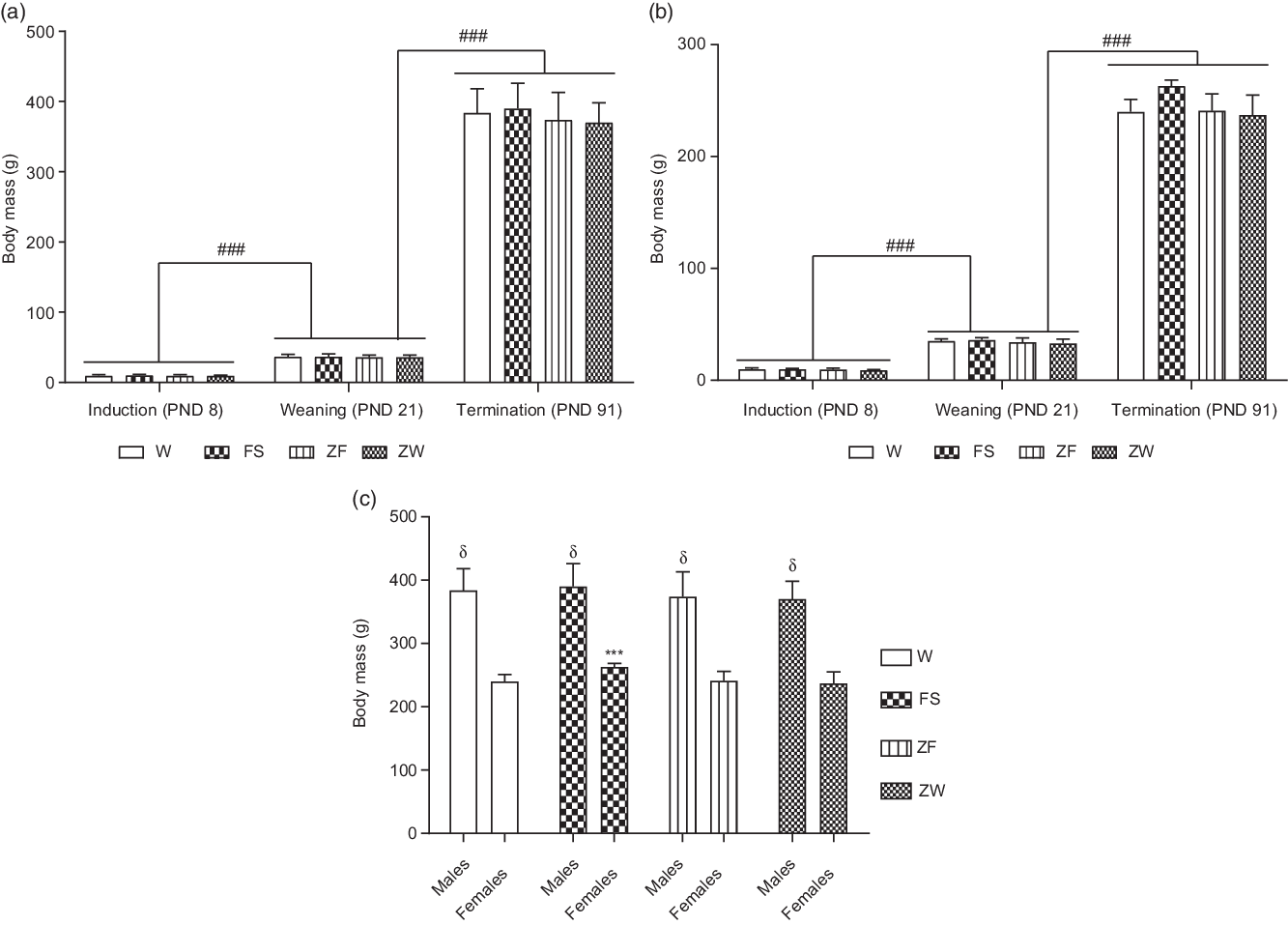
The induction, weaning and terminal body masses of the study rats are represented in Fig. 1. All the rats grew significantly (P < 0.0001) from induction to weaning as well as from weaning to termination. In males, there were no differences in the induction (P = 0.5976), weaning (P = 0.9658) and terminal (P = 0.6214) body masses of the rats across treatment groups (Fig. 1a).
Effects of neonatally administered zingerone on average body mass of high-fructose fed male (a), and female (b) rats from induction to weaning and termination, and compared terminal mass between males and females (c). Data expressed as mean ± standard deviation. ### = P < 0.0001 when induction is compared to weaning and when weaning is compared to termination; *** = P < 0.0001 when FS termination mass is compared to other treatments in females; δ = P < 0.0001 when males’ termination masses are compared to those of females; W = gavaged with 10 ml/kg body weight (bwt) of distilled water before weaning and then provided unlimited access to plain tap water post-weaning (M = 9, F = 11); FS = gavaged with 10 ml/kg bwt of a 20% fructose solution before weaning and then provided unlimited access to a 20% fructose solution to drink post-weaning (M = 9, F = 11); ZF = gavaged with a combination of 20% 3 fructose solution (10 ml/kg bwt) and zingerone (40 mg/kg bwt) before weaning and then unlimited access to 20% fructose solution to drink post-weaning (M = 9, F = 12); ZW = gavaged with zingerone only at 40 mg/kg bwt dissolved in distilled water before weaning and given unlimited access to plain tap water to drink post-weaning (M = 8, F = 10); PND = postnatal day; M = males; F = females.

In females, there were no differences in the induction (P = 0.3127) and weaning (P = 0.1456) body masses of the rats across treatment groups (Fig. 1b). However, the high-fructose diet significantly (P < 0.0001; FS vs other treatments) increased the terminal body mass of the female rats. Thus, neonatal administration of zingerone prevented the high-fructose diet-induced increase in terminal body mass in female rats. The body weight data showing the longitudinal weight curves at time points in which changes in body weight occurred in male and female rats are shown in Supplementary Figure S1 A and B, respectively.
Despite no difference in the induction [P = 0.1931 (sex effect), P = 0.4517 (treatment effect), P = 0.7884 (interaction effect)] and weaning [P = 0.0640 (sex effect), P = 0.1933 (treatment effect), P = 0.8121 (interaction effect)] body masses between male and female rats, the male rats had significantly [P < 0.0001 (sex effect), P = 0.0310 (treatment effect), P = 0.7537 (interaction effect) higher terminal body masses than females (Fig. 1c).
Clinical metabolic parameters in circulation
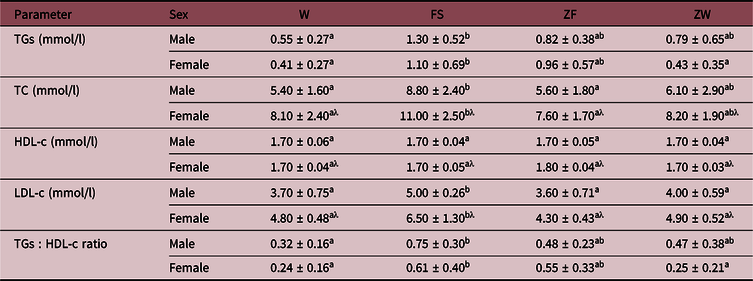
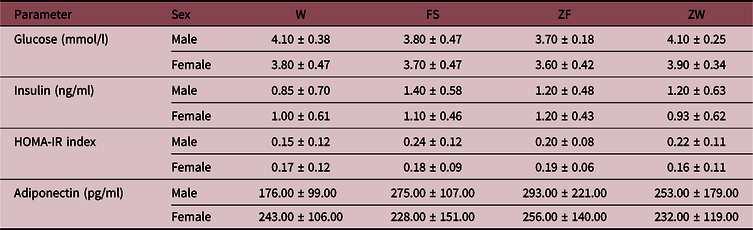
Table 1 shows the plasma lipid profile of the study rats. In both males and females, the high-fructose diet (FS) significantly increased plasma triglyceride concentrations [P = 0.0226 (males);P = 0.0049 (females)], triglycerides to HDL-c ratio [P = 0.0190 (males); P = 0.0084 (females)], concentrations of TC [P = 0.0970 (males); P = 0.0005 (females)] and LDL-c [P = 0.0002 (males); P < 0.0001 (females)] compared to the control (W; Table 1). The high-fructose diet-induced hypercholesterolemia (both sexes), hyper-LDL-cholesterolaemia (both sexes) and increase in triglycerides to HDL-c ratio (females only) were prevented (P > 0.05 when ZF was compared to control) by the neonatal orally administered zingerone (Table 1; with zingerone treated groups having similar concentrations of TC, LDL-c and triglycerides to HDL-c ratio with the control). The concentrations of HDL-c [Table 1; P = 0.2847 (males); P = 0.3765 (females)], fasting glucose [P = 0.1042 (males); P = 0.3679 (females)], insulin [P = 0.3387 (males); P = 0.6824 (females)] and adiponectin [P = 0.4289 (males); P = 0.9563 (females)], as well as the values of HOMA-IR [P = 0.3033 (males); P = 0.9208 (females)] were not different across the different treatment groups (Table 2) in both sexes.
Effects of neonatally administered zingerone on lipid profile of high-fructose fed rats in adulthood

Data expressed as mean ± standard deviation. ab = within row means with different letters significantly different at P < 0.05; λ = female rats had significantly higher level of cholesterol subtypes at P < 0.0001 compared to males; W = gavaged with 10 ml/kg body weight (bwt) of distilled water before weaning and then provided unlimited access to plain tap water post-weaning (M = 9, F = 11); FS = gavaged with 10 ml/kg bwt of a 20% fructose solution before weaning and then provided unlimited access to a 20% fructose solution to drink post-weaning (M = 9, F = 11); ZF = gavaged with a combination of 20% fructose solution (10 ml/kg bwt) and zingerone (40 mg/kg bwt) before weaning and then unlimited access to 20% fructose solution to drink post-weaning (M = 9, F = 12); ZW = gavaged with zingerone only at 40 mg/kg bwt dissolved in distilled water before weaning and given unlimited access to plain tap water to drink post-weaning (M = 8, F = 10); TGs = triglycerides; TC = total cholesterol; HDL-c = high-density lipoprotein cholesterol; LDL-c = low-density lipoprotein cholesterol.
Effects of neonatally administered zingerone on glycaemic parameters of high-fructose fed rats in adulthood

Data expressed as mean ± standard deviation. P > 0.05; W = gavaged with 10 ml/kg body weight (bwt) of distilled water before weaning and then provided unlimited access to plain tap water post-weaning (M = 9, F = 11); FS = gavaged with 10 ml/kg bwt of a 20% fructose solution before weaning and then provided unlimited access to a 20% fructose solution to drink post-weaning (M = 9, F = 11); ZF = gavaged with 10 ml/kg bwt of a 20% fructose solution combined with zingerone at 40 mg/kg bwt before weaning and then unlimited access to 20% fructose solution to drink post-weaning (M = 9, F = 12); ZW = gavaged with zingerone only at 40 mg/kg bwt dissolved in distilled water before weaning and given unlimited access to plain tap water to drink post-weaning (M = 8, F = 10); HOMA-IR = homeostatic model assessment of insulin resistance.
Females rats had significantly higher levels of total [P < 0.0001 (sex and treatment effects), P = 0.9590 (interaction effect)], LDL [P < 0.0001 (sex and treatment effects), P = 0.3259 (interaction effect)] and HDL [P = 0.0124 (sex effect), P = 0.0004 (treatment and interaction effects)] cholesterols than their corresponding males. However, no sex difference was observed in the levels of TGs [P = 0.2117 (sex effect), P < 0.0001 (treatment effect), P = 0.4545 (interaction effect)] TGs to HDL-c ratio [P = 0.1628 (sex effect), P = 0.0002 (treatment effect), P = 0.4530 (interaction effect)] and glycaemic parameters (P > 0.05 for sex, treatment and interaction effects).
Visceral obesity
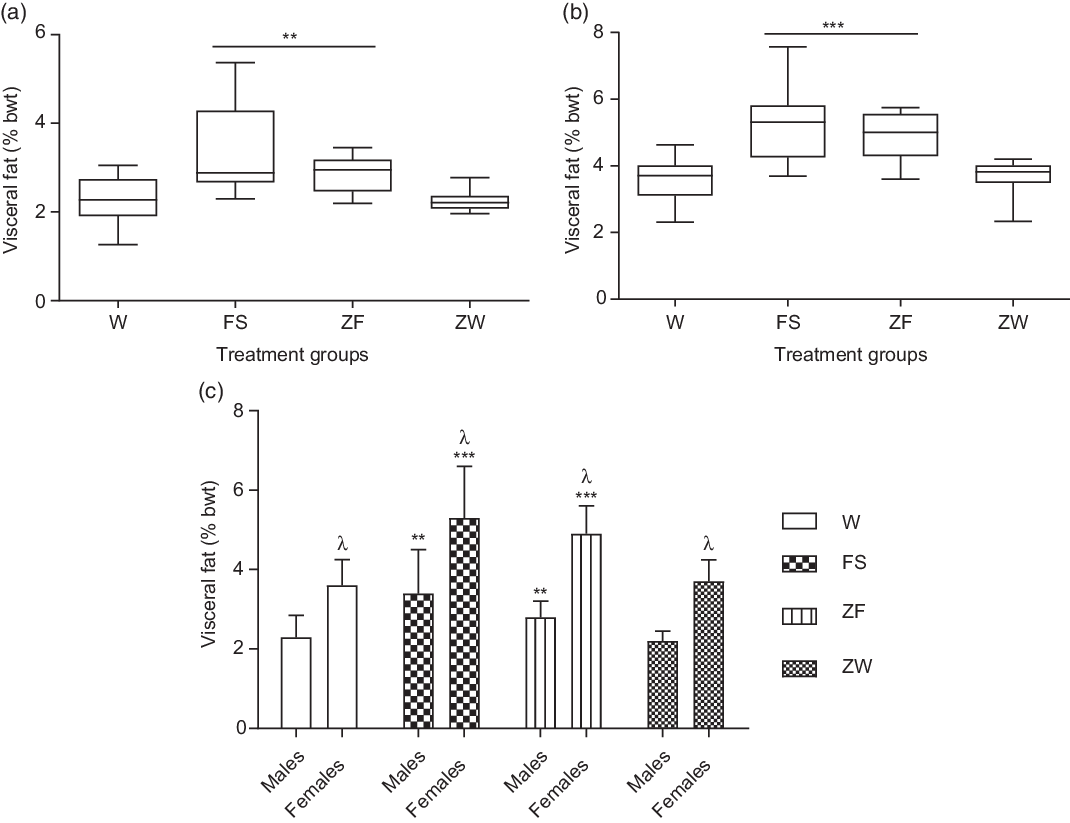
The visceral fat percentages of both male and female rats are shown in Fig. 2. In both sexes, high dietary fructose (FS; ZF) significantly [P = 0.0037 (males); P < 0.0001 (females)] increased visceral fat (percentage body mass) compared to the control (W; Fig. 2a and 2b). However, the zingerone only treated group (ZW) had similar relative visceral fat percentage with the controls in both sexes [P = 0.1590 (males); P = 0.3414 (females)].
Effects of neonatally administered zingerone on the relative mass of visceral fat percentage (% bwt) of high-fructose fed male (a) and female (b) rats in adulthood; and visceral fat comparism between males and females (c). Data expressed as mean ± standard deviation. ** = fructose treated groups in male rats (FS; ZF) had significantly higher visceral fat percentage at P = 0.0037 when compared to other treatments; *** = fructose treated groups in female rats (FS; ZF) had significantly higher visceral fat percentage at P < 0.0001 when compared to other treatments; λ = female rats had significantly higher visceral fat percentage at P < 0.0001 compared to males; W = gavaged with 10 ml/kg body weight (bwt) of distilled water before weaning and then provided unlimited access to plain tap water post-weaning (M = 9, F = 11); FS = gavaged with 10 ml/kg bwt of a 20% fructose solution before weaning and then provided unlimited access to a 20% fructose solution to drink post-weaning (M = 9, F = 11); ZF = gavaged with a combination of 20% fructose solution (10 ml/kg bwt) and zingerone (40 mg/kg bwt) before weaning and then unlimited access 20% fructose solution to drink post-weaning (M = 9, F = 12); ZW = gavaged with zingerone only at 40 mg/kg bwt dissolved in distilled water before weaning and given unlimited access to plain tap water to drink post-weaning (M = 8, F = 10); % bwt= percentage body weight.

Female rats significantly [P < 0.0001 (sex and treatment effects), P = 0.3573 (interaction effect)] had higher visceral fat percentage than males (Fig. 2c).
Discussion
The study evaluated whether orally administered zingerone in the neonatal period would protect against the development later in adulthood, of long-term dietary fructose-induced metabolic derangements in Sprague-Dawley rats. In both sexes, it was observed that as adults, there were differences in fluid consumption such that rats provided fructose solution drank more fluid and had a greater total calorie intake than those that had plain water. Additionally, the rats provided fructose solution as drinking fluid ate less food (standard rat chow) than those provided plain water. Rats provided fructose solution to drink had increased terminal body masses (females), visceral adiposity and elevated plasma triglyceride and cholesterol concentrations at termination (both sexes). Administration of zingerone to neonatal rats programmed protection against high-fructose diet-induced increase in body mass (females) and hypercholesterolemia in adulthood (both sexes). Dimorphic responses were also observed with the manifestation of metabolic parameters.
The amount of food or water that is consumed by an organism depends on several intrinsic and extrinsic factors, including palatability, the aroma of the food and state of satiety. Reference Tappy13 The current study reports that the rats that received fructose solution consumed larger amounts of fluid (FS), but lesser amounts of rat chow when compared with those that did not receive fructose solution as drinking fluid in adult life in both sexes (Supplementary Tables S1A and S1B). The increase in fluid intake observed in the high-fructose diet-fed rats could have been due to the sweet taste of the fructose solution. Reference Pai, Munshi and Panchal10,Reference Mamikutty, Thent and Sapri29 However, rats have intrinsic mechanisms that regulate calorie intake. Reference Tappy13 This could explain why there was a reduction in the consumption of solid food by the rats drinking fructose in order to maintain their calorie intake, preferentially from consumption of the fructose solution. In addition, 5 ml of 20% fructose solution (which contains 1 g fructose) yields more calories of energy than the 1 g of standard rat food. Reference Mamikutty, Thent and Sapri29 Therefore, despite the food consumption being higher in the rats that received water (W and ZW), the rats that received fructose had a relatively higher caloric intake from fructose than the other rats (Supplementary Table S1C).
It was observed in this study that female rats consumed relatively more food and fluid (and thus had more calories) than males in adulthood. Dimorphic responses have been reported on rats’ feeding, with females having higher intake than males. Reference Li, Wang and Sun33 The increase in food intake observed in females could be due to increase in ghrelin levels that is reported to be higher in females. Reference Li, Wang and Sun33 However, we did not assay ghrelin levels in this study. In addition, females have a been reported to have a greater preference for sweet solutions than males. Reference Ackroff and Sclafani34 This could probably be due to oestrogen effects on the satiety centre. Reference Curtis, Stratford and Contreras35 An increase in fructose consumption could lead to metabolic complications including increasing the body mass of the rats.
The induction body mass of the rats was not different across the treatments in both sexes. This reflects the deliberate choice to use rats born in litter sizes of 8–12, thereby avoiding the impact of litter size on induction mass which could impact on the study outcomes, as small litter sizes are prone to faster growth and obesity compared to large litter sizes. Reference Briffa, O’dowd and Romano36 The suckling period is characterised by rapid growth which can be altered (positively or negatively) by dietary interventions. Reference McGrath-Morrow, Hayashi and Aherrera37 The high-fructose diet and/or zingerone had no effect on the weaning (PND 21) body mass of the male and female pups in this study, suggesting that both fructose and zingerone did not negatively affect growth during the neonatal period. Although the terminal body mass of the male rats was not affected by the interventions, the high-fructose diet increased the terminal body mass of the female rats compared to the other rats. Zingerone programmed protection against the high-fructose diet-induced increase in body mass in female rats. Fructose is known to increase body mass by increasing hepatic de novo lipogenesis and tissue’s adipogenesis that contribute to the development of obesity. Reference Mortera, Bains and Gugliucci11 Thus, it could be speculated that neonatal orally administered zingerone prevented the fructose-induced increase in terminal body masses by programming protection (via regulating hepatic fatty acid oxidation) against fructose-induced hepatic lipogenesis and tissue’s adipogenesis in the female rats. Reference Ahmad, Rehman and Amin38 The higher terminal body mass observed in males in comparison to females could be due to the greater trophic effects of testosterone and growth hormone in males compared to females. Reference Stafford39,Reference Spritzer and Roy40 An increase in body mass is associated with visceral obesity that is known to result in poor cardio-metabolic health. Reference Hu, Huang and You41
The present study found that a long-term high-fructose diet had programmed for increased visceral adiposity in both male and female rats. The high-fructose diet-fed rats that were administered neonatal zingerone had a 26% (males) and 11% (females) reduction in mean visceral fat pad mass compared to those who were fed the high-fructose diet alone. This means that neonatal zingerone had programmed for a reduction in the visceral adiposity observed with fructose fed rats. It has been reported that complete attenuation of obesity is not usually achievable in practical situations; however, a 5–10% weight loss significantly decreases the risk of morbidity and mortality. Reference Zemel and Lee42 Although not significantly different statistically, an 11% reduction in the visceral fat showed that neonatal zingerone could potentially attenuate the risk of developing cardio-metabolic complications later in life, since increased visceral obesity has been linked to the development of cardio-metabolic disorders including dyslipidaemia. Reference Hu, Huang and You41
The higher visceral fat percentage observed in female rats than males could be explained by the fact that females have a greater tendency of fat accumulation than males, an effect that has been ascribed to female sex hormones. Reference Chusyd, Wang, Huffman and Nagy43 This finding had reinforced that of terminal body masses observed in both sexes, in which fructose had increased the terminal body mass in females but not in males. An increase in adiposity is invariably associated with dyslipidaemia. Reference Hu, Huang and You41
Indeed, in the current study, the long-term intake of a high-fructose diet resulted in hypertriglyceridaemia, hypercholesterolemia, hyper-LDL-cholesterolemia in both sexes. Dyslipidaemia is a key component of metabolic syndrome that can lead to cardiovascular diseases including hypertension and atherosclerosis. Reference Hannou, Haslam, McKeown and Herman12 The triglyceride to HDL-cholesterol ratio is an atherogenic index that is used to assess the risk of developing metabolic syndrome and coronary artery disease. Reference da Luz, Favarato, Faria-Neto, Lemos and Chagas44 This study found that long-term intake of a high-fructose diet increased the triglycerides to HDL-cholesterol ratio in adulthood suggesting a greater risk of developing metabolic syndrome and related cardiovascular diseases. Reference Chu45 Neonatal zingerone prevented the fructose-induced dyslipidaemia, thus zingerone had programmed protection against fructose-induced dyslipidaemia in adulthood. These anti-hyperlipidaemic effects of zingerone have been observed in streptozotocin-induced diabetic adult rats. Reference Jothi, Parameswari and Vincent23 It was reported that zingerone exerts its anti-hyperlipidaemic effects by stimulating lipolysis and enhancing the activity of norepinephrine-sensitive lipases. Reference Gupta, Singh, Singh and Singh46 We observed sex differences in the levels of cholesterol subtypes such that cholesterol was elevated in female rats in this study. This is not surprising since females are more prone to dyslipidaemia than males, which could have been due to oestrogen effect. Reference Chusyd, Wang, Huffman and Nagy43 Fructose-induced dyslipidaemia can result without affecting glycaemic parameters in rats. Reference Ibrahim, Chivandi, Mojiminiyi and Erlwanger47
Despite fructose consumption having been implicated in the aetiology of hyperglycaemia, hyperinsulinaemia, insulin resistance and hypoadiponectinaemia in adult rats, Reference Ibitoye and Ajiboye48 these parameters were not affected by the interventions of the current study, in both sexes. This indicated that administration of 20% fructose solution did not programme for the development of hyperglycaemia, hyperinsulinaemia, insulin resistance and low plasma adiponectin in adulthood. These findings contradict that of Ibitoye and Ajiboye Reference Ibitoye and Ajiboye48 who reported dysglycaemia and hypoadiponectinaemia following administration of a high fructose diet to adult Wistar rats for 6 weeks. The variance could be due to the rats’ age at commencement of the study, strain and the mode of fructose administration. High-fructose diets where fructose is mixed into feed tend to produce features of metabolic dysfuction more readily than fructose intake as a drinking solution; Reference de Moura, Ribeiro, de Oliveira, Stevanato and de Mello49 likewise, Wistar rats are more prone to manifest features of metabolic syndrome than Sprague-Dawley rats. Reference Mamikutty, Thent and Sapri29 Older rats are also more susceptible to the effects of fructose than younger rats due to innate protective mechanisms present at young age. Reference de Moura, Ribeiro, de Oliveira, Stevanato and de Mello49 As consumption of fructose did not affect the glycaemic parameters, the potential protective programming effect of neonatal zingerone against dysglycaemia and insulin resistance in adulthood could not apparently manifest, and this needs future investigation.
Our study is novel in showing that zingerone administered in the neonatal phase can programme long-term protection against high-fructose diet-induced dyslipidaemia. The precise mechanisms need to be further explored; however, it is likely that zingerone could have dysregulated the proteins and receptors involved in lipid metabolism such as PPARα thereby regulating fatty acid oxidation and preventing the fructose-induced lipogenesis and dyslipidaemia. Reference Narayanan and Jesudoss25 As mentioned in the introduction section, the liver also plays a central role in lipid metabolism, and the impact of the interventions on the liver needs to be investigated in future studies.
Conclusion
This study has demonstrated that long-term fructose intake caused visceral obesity and dyslipidaemia in both male and female rats. The novelty of our study is that oral administration of zingerone to rats during the neonatal period programmed for long-term protection against the development of high-fructose diet-induced visceral obesity and dyslipidaemia later in adult life. Thus, a similar strategic use of zingerone neonatally could be explored in humans to manage diet-induced metabolic syndrome, thereby replacing the use of animal models in exploring the therapeutic effects of zingerone.
Supplementary material
To view supplementary material for this article, please visit https://doi.org/10.1017/S2040174420000525
Acknowledgements
Staff of the Central Animal Service Unit, Faculty of Health Sciences, University of the Witwatersrand are hereby acknowledged for assistance with the care of the animals. Gratitude is extended to Miss Monica Gomes for her technical assistance with the metabolic assays. Dr Trevor Nyakudya, Ms Thobekile Precious Dladla and Mr Bayanda Mdoda are also acknowledged for their assistance during the terminal procedures.
Financial Support
The authors acknowledge the Medical Faculty Research Endowment Fund, Faculty of Health Sciences Research Committee and School of Physiology of the University of Witwatersrand for providing the research funds (Grant Number: 001 254 8521101 5121105 000000 0000000000 5254). The National Research Foundation (NRF) Thuthuka Fund (Grant Number: TTK170415227205) is acknowledged for their financial support. The Federal University Birnin Kebbi (Nigeria) and Tertiary Education Trust Fund of Nigeria are also acknowledged for providing funds required for feeding, accommodation and transportation during the conduct of the study.
Conflicts of Interest
None declared.
Ethical standards
We confirm that the study was conducted according to the internationally accepted principles for laboratory animal use and care as stipulated in South African National Standard (SANS 10386:2008) and Animals Protection Act, 1962: Act No. 71 and was approved by the Animal Research Ethics Committee (AREC) of the University of Witwatersrand (Reference No: 2017/010/71/B).