


In wartime, civilians often bear the brunt of state and militant violence. Research on how such exposure shapes public opinion, however, finds mixed results. Violence can harden attitudes, increasing militancy and reducing support for diplomacy.Footnote 1 Yet in some cases, it deters conflict or fosters “war-weariness,” increasing support for compromise.Footnote 2 In the Israeli–Palestinian conflict, research similarly finds that violence can militarize both Israelis and Palestinians, but can also have pacifying effects.Footnote 3
One explanation for these mixed effects is the nature of violence: because military actions vary considerably in their selectivity, this heterogeneity may explain why military violence, considered as a whole, produces inconsistent effects on attitudes across contexts: more selective or targeted actions may pacify even as more indiscriminate ones harden opinion, with the two tendencies partially offsetting one another in aggregate.Footnote 4 Yet this distinction only partially captures civilians’ varied exposure to conflict, leaving open which events and actors most shape public opinion. In many conflicts, much of the violence civilians experience is low level and perpetrated, not by military forces, but by opposing civilians—a dynamic that characterizes many protracted sectarian conflicts, including in Northern Ireland, Cyprus, Nagorno-Karabakh, and Kashmir. The resulting stress and insecurity, along with information about adversary intentions conveyed through these interactions, may significantly shape political attitudes, yet remains understudied.Footnote 5
Focusing on lethal, organized violence is understandable: major escalations in protracted conflicts like the Israeli–Palestinian conflict—such as the 2023 Israel–Gaza War, the Second Intifada, or other “uncommon, but notable violent acts”—can strongly affect public opinion toward the conflict and its resolution.Footnote 6 Their human costs are also immense. However, such violence is the exception, not the norm, in most protracted conflicts, where daily life is marked by more routine confrontations, often between adversary civilians, including harassment, assault, vandalism, theft, and land seizure.Footnote 7
Our understanding of these hostile actions—defined as threatening acts by a conflict actor that risk escalating to injury or death—remains limited. Empirically, they are difficult to study because they are inconsistently reported in news media while high-profile events like airstrikes receive far greater attention.Footnote 8 Theoretically, they are difficult to conceptualize, as perpetrators range from everyday civilians to vigilantes and informal militias, with differing levels of coordination and state ties.
This study addresses these empirical and theoretical challenges by examining how community-level exposure to these hostile actions shapes political attitudes. We focus on the relationship between local hostile actions by Israeli civilians (specifically, West Bank settlers) and Palestinian political attitudes to highlight three understudied features of violence exposure in sectarian territorial conflicts: (1) localized personal-or community-level exposure; (2) non-lethal, lower-level hostile actions; and (3) victimization by the adversary civilian population. Our central argument is that, in protracted conflicts, political attitudes are shaped not only by rare episodes of extreme violence but also by the effects of daily, low-level interactions with the adversary. Moreover, the identity of the perpetrator carries distinct informational content, directly shaping beliefs about the unpredictability of violence, the hostility of the broader adversary population, and the aggressive intentions of the state. As such, even in the context of deeply entrenched attitudes shaped by prolonged exposure to conflict, we hypothesize that increases in local exposure to hostile actions by Israeli civilians will play a unique role in increasing political militancy among local Palestinian residents.
Importantly, while this study conceptualizes Israeli settlers who engage in hostile actions as civilian perpetrators, in Israel—as in many conflicts—the line between civilian and military perpetrators is often blurred. Many Israeli settlers do not engage in direct hostilities with Palestinians, and some maintain cooperative or even close personal relationships with Palestinian neighbors.Footnote 9 On the other hand, hostilities are prevalent and Palestinians often infer that these actions are implicitly or explicitly sanctioned by the Israeli government and military, and human rights groups have documented at least some cases in which the Israeli army has “stood by” while settlers committed violent acts.Footnote 10 This ambiguity in attribution may lead Palestinians to view settlers as extensions of the state even when not in uniform. However, whether political responses differ by perpetrator identity is ultimately an empirical question we directly examine with our data. Despite the intertwined aspects of settler and military actions in Israel, we hypothesize that community-level exposure to settler hostilities will nonetheless have a distinct effect on public opinion and that, in the short term, will more consistently shift attitudes than exposure to military actions, whose short-term effects may be muted by their largely routinized, already-habituated nature.
To test our theory, we adopt two empirical strategies. First, we use a time-series cross-sectional design and dynamic autoregressive models, leveraging a newly constructed data set of hostile actions in the Israeli–Palestinian conflict from 2010 to 2020, the Palestinian–Israeli Interactions and Microhostilities (PA’ILIM) data set.Footnote 11 It includes tens of thousands of events involving the Israeli military, Israeli settlers in the West Bank, and Palestinian civilians and armed groups. Importantly, over 95 percent of Israeli actions in the West Bank catalogued by PA’ILIM result in no injuries (and under 1 percent in fatalities), allowing us to capture conflict activity well below conventional definitions of “violence.” We combine these data with quarterly surveys from the Palestinian Center for Policy and Survey Research (PCPSR) to examine how district-level settler hostilities shape Palestinian political attitudes. We find that increases in district-level settler hostilities are significantly associated with higher Palestinian militancy in subsequent quarters, even after accounting for a wide range of time-and place-varying factors. Notably, hostile settler actions are more consistent predictors of attitudes than the far more frequent Israeli military actions, which show no significant association. These patterns hold when disaggregating by severity: both injurious and non-injurious settler actions are associated with increased militancy, while neither category of military action produces comparable effects.
Our second study examines one prominent form of civilian-initiated hostility in territorial conflicts: land expropriation.Footnote 12 Specifically, we compare Palestinian attitudes before and after the construction of nearby settler outposts, using an extended version of the Peace Now Settlement and Outpost Database with quarterly geo-coded PCPSR survey data from 2017 to 2021 to conduct both a pre-post and staggered DiD analysis. We find that outpost construction produces a modest increase in local militancy, even absent concurrent rises in settler or military actions—suggesting that outposts themselves, perceived as land expropriation and a signal of declining prospects for statehood, drive attitudinal change. This town-level analysis also provides stronger evidence of direct, personal exposure effects given the smaller geographic radius.
These results have important implications for understanding public opinion dynamics in violent conflicts globally, providing insight into “bottom-up” opinion formation.Footnote 13 While our analysis focuses on the Israeli–Palestinian conflict, similar dynamics of everyday civilian victimization and hostility appear in other settings with contested territorial claims among co-located ethnic or religious groups, including Northern Ireland, Bosnia, and Kashmir.Footnote 14 Our findings show that low-level hostile actions by adversary civilians can harden the political attitudes of targeted populations, extending research that has primarily focused on high-intensity, lethal violence such as airstrikes, militant attacks, or forced disappearances.Footnote 15 This work therefore highlights the importance of distinguishing not only the relative indiscriminate nature of violence, but also perpetrator identity and the information such actions convey to adversary populations.Footnote 16
Ultimately, by centering civilians’ daily lived experiences, this study offers a more granular account of how political attitudes evolve in protracted conflicts, helping reconcile findings on both the malleability and persistence of wartime attitudes while giving due attention to the routine, micro-level hardships that shape life under sustained conflict.Footnote 17 These attitudes are also politically consequential: in contexts like the Israeli–Palestinian conflict, where public opinion is closely monitored by domestic and international actors, changes in public attitudes can shape mobilization, the viability of negotiations, and the prospects for durable political settlements.Footnote 18
Civilian Victimization and Low-Level Hostilities in Conflict
Civilians face immense violence during conflict, whether through deliberate targeting by states and armed groups or as collateral damage.Footnote 19 Beyond its human toll, wartime victimization profoundly shapes political attitudes and behavior, often across generations.Footnote 20 In the short term, exposure to violence can produce “war weariness,” increasing support for compromise, conflict termination, or separation from adversarial groups.Footnote 21 Yet violence can also increase militancy, raising support for retaliation and reducing support for diplomacy.Footnote 22 This can produce tit-for-tat dynamics in which violence by one side generates violence from the other, a pattern observed in many sectarian conflicts, including the Israeli–Palestinian conflict.Footnote 23
The type of violence civilians experience is one key explanation for the varying effects of violence on attitudes. Across conflicts, less selective violence tends to harden attitudes more than selective violence, a pattern also observed in the Israeli–Palestinian conflict.Footnote 24 For example, exposure to indiscriminate Palestinian rocket fire and terror attacks increases militancy among affected Israeli civilians, while more indiscriminate Israeli repression predicts subsequent increases in Palestinian terrorism.Footnote 25 Similarly, broad Israeli home demolition policies—including “precautionary” demolitions of unrelated homes and “administrative” demolitions of unlicensed structures—increase terrorism, whereas narrowly targeted demolitions aimed at militant operatives appear more deterrent.Footnote 26 Yet the distinction between discriminate and indiscriminate violence only partially captures variation in civilian conflict exposure, leaving unresolved which actions and perpetrators most shape public attitudes.
Existing studies of violence exposure focus primarily on high-level, lethal violence by states or militant groups. Yet in many conflicts, most violence civilians face is better characterized as low-level hostile actions short of “violence”: threatening acts that may escalate to injury or death, but do not. While major escalations carry enormous human costs, they are relatively rare compared to the routine hostilities common in protracted sectarian conflicts. These everyday experiences likely play an important role in shaping political attitudes. Recent research suggests that public opinion in long-running conflicts is shaped not only by high-level lethal violence but also by the cumulative effects of persistent low-level hostilities and by “nonviolent” events that convey information about adversary intentions.Footnote 27 Repeated encounters with the other side may therefore gradually shape political worldviews.Footnote 28 For example, Israeli military checkpoints in the West Bank—a daily source of frustration and humiliation (but not necessarily lethality) for Palestinians—increase support for resistance and reduce support for cooperation, while checkpoint removals can reduce militancy and increase support for diplomacy.Footnote 29 Examining how these types of localized, low-level interactions shape public opinion is therefore critical for understanding attitudes in protracted conflicts.
The Israeli–Palestinian conflict is, unfortunately, an ideal setting in which to examine these dynamics—a canonical protracted sectarian conflict over territory in which civilians interact daily with both each other and the adversary’s military or militants.Footnote 30 Like many such conflicts, however, it ebbs and flows over time, with shorter periods of intense escalation interspersed with longer periods of relative calm.Footnote 31 Indeed, because of the low number of fatalities in many years, the UCDP Armed Conflict data set does not classify Israel as in conflict for half of the years between 2010 and 2020—the period covered by our data.Footnote 32
However, this relative calm belies civilians’ lived reality, as conflict events occur daily even during quieter periods. Particularly for Palestinians, who live under blockade in Gaza and military occupation in the West Bank, daily life is marked by conflictual interactions and hostilities. These include Israeli military actions—such as flying checkpoints, raids, crowd dispersal, and detentions—and, in the West Bank, actions by some Israeli settlers, including harassment, vandalism, theft, and assault.Footnote 33 Collectively, these actions have been described as “slow violence”—violence that manifests gradually and often invisibly, in contrast to spectacular violence that more frequently garners media and political attention.Footnote 34 We argue that persistent exposure to these hostile actions plays an important but understudied role in shaping conflict attitudes. While large-scale military operations and wars often have broad, national-level effects on public opinion, these localized hostilities—often experienced directly or through word of mouth rather than national media—likely produce more localized attitudinal effects.Footnote 35
Civilian Perpetration of Hostilities in Conflict
In sectarian conflicts, civilians also encounter variation in the perpetrator of violence against them, including state military forces, militant groups, and—crucially—adversary civilians. Because civilians are so often exposed to political violence in conflicts, research on civilians in conflict has tended to focus on their role as victims. However, civilians in conflict settings occupy dual and complex roles, simultaneously experiencing victimization while also perpetrating violence or enabling armed actors through material or moral support.Footnote 36 Yet we know surprisingly little about how the civilian identity of the perpetrator affects public opinion. This gap is particularly consequential because civilian-initiated hostile actions are often “low level” in nature, involving property destruction, harassment, or intimidation rather than lethal violence.
We contend that, just as the type or severity of hostile actions communicates information about an adversary’s coercive capacity and intentions, so too does the identity of the perpetrator—shaping beliefs about the predictability of violence, the preferences of the adversary population writ large, and the degree of state complicity and, thus, state intentions.Footnote 37 While military actions are understood as the conduct of a formal state institution operating, at least nominally, under rules of engagement and broader strategic objectives, actions perpetrated by civilians are not. Because civilian-initiated hostilities fall outside these institutional constraints, they may feel more arbitrary and ungoverned, intensifying perceptions of personal threat and existential vulnerability as potential targets struggle to guess when, where, or against whom attacks will occur. Moreover, because civilian actions are, by definition, committed by members of the public, they can directly convey information about the preferences, norms, and willingness for violence among members of the civilian outgroup, particularly when these adversary civilians are the primary ones with whom victimized communities interact. Finally, civilian actions can also indirectly communicate information about state preferences: when a state tolerates or fails to punish civilian perpetration of hostile actions, this permissiveness can convey that the state’s long-term political intentions are more aggressive than its official military conduct alone would suggest.
Thus while military and civilian actions may both be inflammatory, civilian-initiated hostilities carry distinct signals about unpredictability, popular preferences, and state intentions that can, collectively, produce a uniquely militarizing effect on victimized communities. Moreover, because the vast majority of military actions in protracted conflicts are routine and long-standing policing practices—for example, checkpoints, raids, and other recurring features of militarized occupation—their effects on attitudes may already be absorbed into baseline attitudes over long-time horizons, muting short-term responsiveness to fluctuations in military activity. Settler actions, being comparatively rarer and more novel, communicate more new information and thus are likely to more consistently produce short-term attitudinal change.
At the most basic level, these hostile civilian actions may occur incidentally, as members of adversarial communities encounter each other in routine daily life. In conflict settings, these negative encounters can substantially increase prejudice, perhaps due to the heightened salience of outgroup membership.Footnote 38 Such incidental interactions can thus highlight intergroup boundaries and lead affected populations to draw unfavorable inferences about the broader adversary population, heightening militancy.Footnote 39
Hostile actions may also escalate to purposeful intercommunal violence—attacks against civilians explicitly motivated by group identity. For example, Beber and colleagues find that exposure to intercommunal violence in Sudan hardened ethnic identities and increased support for partition.Footnote 40 These effects are driven by heightened perceptions of existential threat and unpredictability.Footnote 41 Hostile civilian actions can also take the form of organized vigilante violence—extralegal punishment of the adversary population that is often severely underpoliced.Footnote 42 Critical approaches have emphasized the state’s active role in fostering permissive climates for such violence.Footnote 43 Exposure to vigilante violence can undermine trust in formal institutions as individuals perceive the state as unable or unwilling to intervene. This institutional mistrust, in turn, can increase support for retributive justice, or lead communities to turn toward armed self-protection.Footnote 44
Finally, civilians and their actions may constitute organized militias acting with state sponsorship. States often outsource violence to militias to achieve deniability and extend coercive power.Footnote 45 Because civilians often connect these actions to the state and because militias tend to perpetrate the most inflammatory actions—including land appropriation and territorial intimidation—exposure to militia violence may both intensify perceptions of state complicity and signal that the adversary’s aims are territorial rather than defensive.Footnote 46 As such, the influence of perpetrator identity and action type are bundled: settler hostilities are inflammatory not simply because civilians rather than soldiers carry them out, but also because of what types of actions civilian perpetrators commit.
Thus civilian-initiated hostile actions encompass several overlapping categories, each with distinct but mutually reinforcing implications for how victimized communities perceive their adversaries. In practice, the boundary between state and civilian perpetration is often difficult to draw cleanly. Nonetheless, we empirically conceptualize hostile actions as civilian-initiated when perpetrated by individuals not in military uniform acting outside their official capacity and without the active participation of on-duty soldiers. The theoretical and empirical interest is the joint effect of facing this particular kind of adversary, who often carry out distinct forms of hostile actions, on the political attitudes of victimized communities.
Settler Actions and Palestinian Political Attitudes in the West Bank
Actions by Israeli settlers against Palestinians in the West Bank encompass elements of all the frameworks we described:Footnote 47 incidental interactions, intercommunal violence driven by disputes over land and identity, vigilante policing of Palestinian behavior, and quasi-militia activity operating within a gray zone of perceived state endorsement.Footnote 48 These categories are overlapping and fluid, and nearly impossible to parse out at the event level. These categories are also heavily contested and perceptions of events and actors vary across different observers and stakeholders. We therefore conceptualize settler actions simply as civilian-initiated hostile actions, using a deliberately broad framing to encompass the variety of events in our data. Our goal is not to differentiate the effects of these distinct forms but to identify their collective, mutually reinforcing militarizing impact on victimized Palestinian communities.
We argue that the impact of settler actions will be distinct from the effects of Israeli military actions, through several interrelated mechanisms. First, settler actions may be perceived as less predictable and more indiscriminate than military ones, particularly given that settlers live in close proximity to Palestinian communities, intensifying fears of being personally targeted by one’s neighbors. One resident captures this distinction plainly, saying: “It was better when the army was in charge. They were brutal. But they had rules. They were more predictable.”Footnote 49 Another notes, “We used to come and go, mostly without any problems … If we met the army, they would ask for our IDs. We give them. We went back and forth. We didn’t have the same problems. But these guys are completely different.”Footnote 50 This sense of ungoverned threat translates into pervasive personal fear. As one Al Jazeera report notes, “while the sweeping arrests [by the IDF] have terrorised Palestinians in the occupied West Bank, [people] are more scared of encountering settlers”—with one Deir Dibwan resident expressing an anxiety many seem to share: “Every day [Palestinians] leave their houses, they think, maybe it’s my turn [to be attacked].”Footnote 51
Second, because settlers are embedded in broader Israeli civilian society, their actions can directly shape Palestinian beliefs about the distribution of preferences within the Israeli population writ large. Namely, settler hostilities are interpreted as evidence that antagonism toward Palestinians is not confined to state decision makers, but is instead more broadly socially pervasive. This is because, for many Palestinians, settlers are the primary Israeli civilians with whom they interact. It is not that Palestinians view all Israelis as identical, or that they are unaware of Israeli internal dissent—but settlers’ expanding numbers and prominent public role mean they are more readily treated by Palestinians as representative of broader Israeli opinion. As one left-wing Israeli activist observes: “The only Israelis these people know are settlers and soldiers. Through me they [finally] know a different Israeli.”Footnote 52
Third, settlers may also be seen as direct agents of the Israeli state, heightening moral outrage at the impunity with which Israeli civilians are permitted to perpetrate hostilities against Palestinians and conveying a more antagonistic state position than would formal military conduct alone. Indeed, many Palestinians express the view that the army facilitates rather than restrains settler actions. For example, in one instance in 2023, Palestinians reported the army “turn[ing] their guns on the Palestinian residents instead of the vandals marching into the town with guns and firebombs, throwing fuel oil and setting alight everything in their path. The army ‘literally clearing the way for them’.”Footnote 53
Finally, some settler actions involve particularly inflammatory activities like land seizure and property destruction, signaling to Palestinians that Israeli aims are rooted in aggressive territorial goals rather than a defensive security rationale. Those who experience it often draw this conclusion directly: “The settlers plan to displace the Palestinian people from all the land,” says Youssef Zawahreh, a resident of the Palestinian Bedouin hamlet of Khallet a-Sidra, “They don’t want to see any Palestinian on this land. They say this land belongs to them, not to Palestinians.”Footnote 54 Palestinian activist Basel Adra draws the broader conclusion in his opinions: “It’s part of a policy, in which settlers and the Israeli army don’t want us to feel safe where we live … They want to kick us out of this land.”Footnote 55 Together, these actions thus lead many Palestinians to believe that Israel is not motivated by security for its citizens, but by further territorial conquest, conveying a signal that is qualitatively different from military checkpoints or patrols alone.Footnote 56
Whether these perceptions accurately reflect the intentions of the Israeli state or the settler population as a whole is, of course, deeply contested. Israeli officials and many settlers categorically reject the characterization of settler actions as a coordinated dispossession strategy, and the settler community itself is demographically and ideologically diverse—with roughly two-thirds of settlements established primarily for “quality-of-life” rather than ideological reasons, and motivations for settlement ranging from religious conviction to economic opportunity.Footnote 57 From a theoretical standpoint, however, what matters is not whether these perceptions are accurate but that they are widely held: for many Palestinians, hostile interactions with settlers serve as a primary lens through which Israel as a political entity is experienced, with settlers understood not as marginal extremists but as agents backed by state infrastructure, legal protection, and military support.
This blurred line between civilian and military actions in this conflict also raises a natural question of whether studying the relative impact of each is theoretically meaningful. As a society with universal conscription, Israeli settlers also serve in the military, further complicating the civilian-military distinction in this context.Footnote 58 Nonetheless, our theoretical logic does not require Palestinians to perceive settler and military actions as fully independent. Even when linked, the identity of the perpetrator still conveys a distinct message—indeed, a joint settler-military incident may be especially potent precisely because it combines institutional force with civilian participation. As Jordan Valley resident Mahmoud Mleihat perceives it, “The settlers are armed and attack us, and the (Israeli) military protects them.”Footnote 59 The key argument, then, is that who carries out hostile actions—including the frequent, non-lethal encounters that constitute the bulk of conflict events—shapes how these actions are interpreted. Whether Palestinians react differently to settler actions compared to these other forms of conflict hostilities and victimization is therefore the central empirical question of this study, and one whose answer would indicate whether civilians and soldiers are indeed perceived as distinct phenomena carrying unique psychological and political weight.
Research Design
Causally identifying the effect of Israeli settler actions on Palestinian public opinion is difficult because the kind of “natural experiments” where structural violence shifts suddenly and exogenously across space and time is rare.Footnote 60 Like state actions, civilian actions are also strategic: Israeli settlers’ placement of settlements and outposts in the West Bank may be a strategic, nonrandom response to Palestinian actions, creating feedback dynamics that complicate causal inference about their effects on Palestinian attitudes.Footnote 61
We conduct two sets of analyses using newly constructed data sets on fine-grained local exposure to conflict hostilities, combined with forty-six nationally representative quarterly public opinion polls of Palestinians in the West Bank conducted by the Palestinian Center for Policy and Survey Research (PCPSR). First, we conduct a time-series cross-sectional analysis using a new data set of tens of thousands of Israeli–Palestinian hostile actions from 2010 to 2020—including nearly 9,000 settler actions—to examine the relationship between district-level settler activity and subsequent Palestinian political attitudes. To better account for potential dynamic feedback processes, we supplement the main specification with dynamic autoregressive panel models that account for auto-correlation and distinguish between short-and long-run effects. Second, we examine how nearby outpost construction shapes Palestinian attitudes, building on the geo-coded Settlement and Outpost data set compiled by Peace Now, adding data on the exact quarter each outpost was established.Footnote 62 Here too we include two approaches, assessing how the attitudes of PCPSR respondents living near newly established outposts from 2017 to 2021 shift after outpost establishment using a global pre-post analysis and a staggered difference-in-differences model to better identify causal effects.
Data
For data on hostile actions—including the main explanatory variable in our first analysis (settler actions)—we use the new Palestinian–Israeli Interactions and Microhostilities (PA’ILIM) data set.Footnote 63 The event-level data are compiled from daily reports produced by the Negotiations Affairs Department (NAD) of the Palestinian Authority and the Meir Amit Intelligence and Terrorism Information Center.Footnote 64 NAD produces daily reports on hostile Israeli military and settler actions in the West Bank and Gaza, ranging from low-level incidents such as harassment and trespassing to more severe violence, including assaults, shootings, air raids, and artillery strikes.Footnote 65 The Meir Amit Center publishes weekly reports on hostile Palestinian actions, covering both lower-level actions such as violent protests and higher-level attacks such as rockets and shootings, and both organizations reported consistently throughout the study period.
The resulting PA’ILIM data set covers more than 180,000 events from 2010 to 2020.Footnote 66 These include 8,474 Israeli settler actions, 166,863 Israeli military or police actions, and 4,983 Palestinian actions.Footnote 67 Using information on the co-occurrence of settler and military actions, we also create a “joint” perpetrator category. A notable amount (50.82 percent) of settler actions occur on the same day and in the same town as a military action, suggesting substantial overlap and possible coordination, though approximately half occur independently. Recategorizing these same-day, same-town settler, and military actions as a single “joint” action yields 5,898 settler-only actions, 163,345 military-only actions, and 6,094 joint actions. Together, these Israeli and Palestinian actions resulted in over 30,000 casualties (injuries and deaths) and approximately 3,000 fatalities.Footnote 68 Although Israeli military actions occur far more frequently, settler-initiated events remain common, with roughly 150 to 300 incidents reported each quarter across the West Bank (Figure 1a), though volumes vary by district (supplementary Figure A6).Footnote 69 Settler actions are also more likely to cause injuries than military actions (13.58 percent versus 4.93 percent), though military actions remain much more frequent overall. Settler actions take a variety of forms, including harassment, assault, arson, theft, stone-throwing, and prayer in contested spaces, among others (Figure 1b).
Patterns of settler actions

The size of the settler population is positively correlated with hostile actions against Palestinians. However, this relationship is far from perfect. Hebron and Nablus, in particular, have relatively small settler populations (supplementary Figure A5) but account for a disproportionate share of attacks and harassment against Palestinians (supplementary Figure A7). In Hebron, for example, conflict may be intensified by the unusual presence of Israeli settlers in the center of a major Palestinian city.Footnote 70 The geographic distribution of settler hostilities is thus highly uneven, with incidents concentrated in particular regional councils and largely absent in others. This variation underscores the importance of local context in shaping settler–Palestinian dynamics and suggests that differential exposure to settler hostility may shape Palestinian political attitudes at the local level.Footnote 71
In our second set of analyses, we shift from hostile settler actions to another form of civilian-initiated conflict activity: land expropriation.Footnote 72 In the Israeli–Palestinian context,Footnote 73 this often involves the establishment of settler “outposts” on private Palestinian land.Footnote 74 Specifically, we examine how proximity to ad hoc settler outposts shapes Palestinians’ political attitudes. We define these outposts as residential settler sites established beyond the Green Line that are not formally planned or authorized by the Israeli government.Footnote 75 However, the extent to which outposts receive implicit or unofficial state support remains heavily contested.Footnote 76 Importantly, while we distinguish between settlements and outposts based on their legal status in Israel, Palestinians view both as forms of territorial expansion and obstacles to statehood.Footnote 77 However, outposts may be especially provocative despite their smaller populations, given their frequent location on private Palestinian land and their illegality even under Israeli law. As such, they serve as potent symbols of settler impunity and the broader settlement project’s impact on Palestinian sovereignty aspirations.
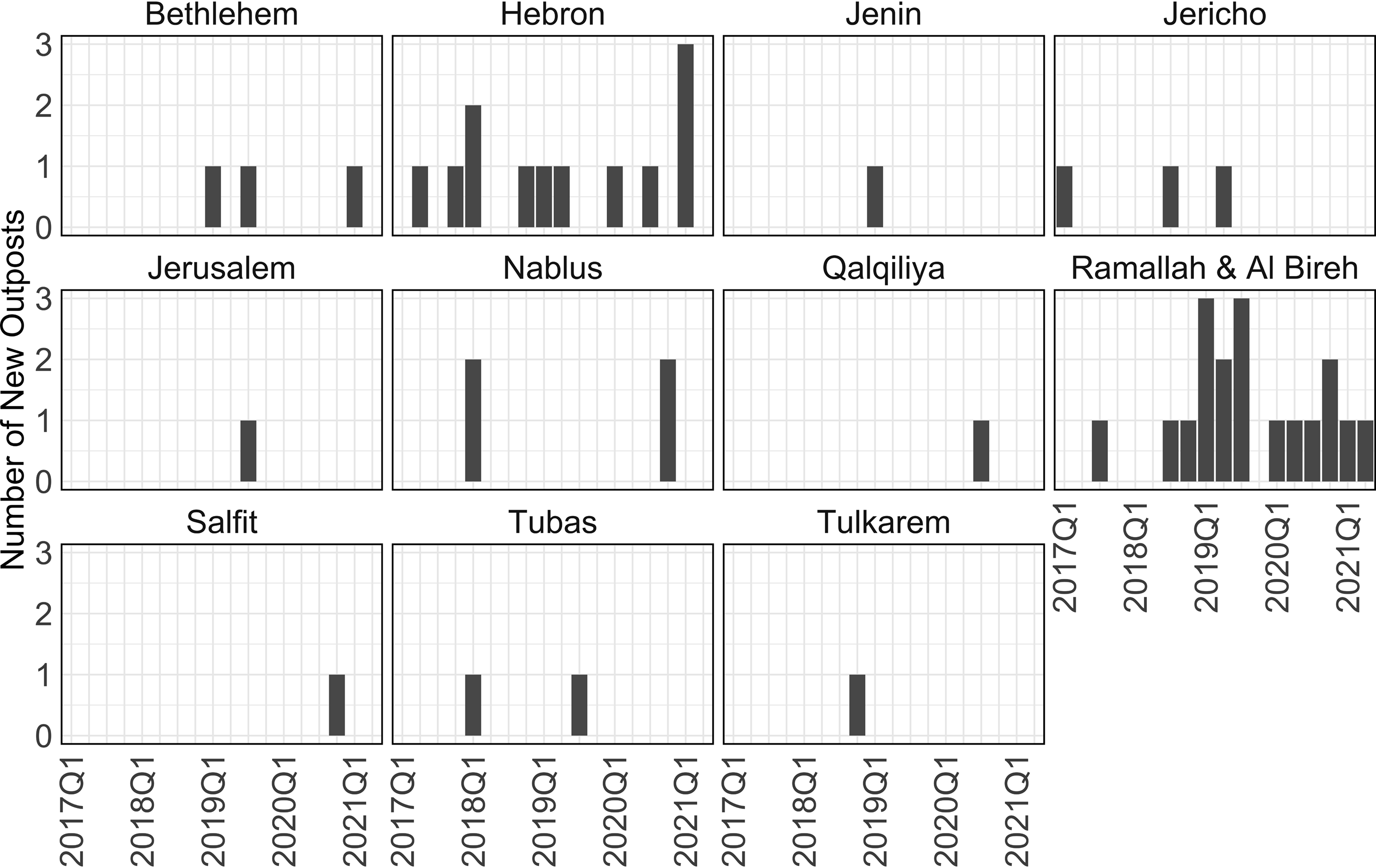
To analyze the relationship between nearby outpost construction and Palestinian political attitudes, we build on Peace Now’s Settlement and Outpost data set, using detailed primary source research to determine the exact quarter of establishment for forty-seven out of fifty-one outposts constructed from 2017 through early 2021 in the West Bank (Figure 2).Footnote 78 This fine-grained temporal and geo-coded data set allows us to estimate the localized consequences of exposure to new outposts, a form of civilian-initiated land appropriation, on the attitudes of Palestinians in nearby towns.
Number of new outposts by district (2017Q1–2021Q1)
Our main attitudinal outcome variables for both analyses are drawn from quarterly polls fielded by the Palestinian Center for Policy and Survey Research (PCPSR), a well-known survey research institute that has conducted nationally representative quarterly public opinion polls of Palestinians living in the West Bank and Gaza Strip since 2000. For our analyses, we focus on Palestinians living in the West Bank, surveyed between the end of 2009 through the beginning of 2021, leading to a sample size of
 $n=35,\!745$
respondents.
PCPSR has a number of questions about Palestinian political attitudes that repeat across all or most of the polls during this time period.Footnote 79 Data until 2016 is freely available online and data from 2017 to 2021 was purchased by the researchers.Footnote 80 In our analyses, we are interested primarily in political militancy: support for the use of violence as a tool to advance the Palestinian political cause.Footnote 81 We measure each concept with several survey measures to enhance robustness (Table 1). All three measures capture support for militancy, but they differ in the specificity and framing of violent action they invoke: attacks in israel reflects a more explicit endorsement of violence against Israeli civilians within Israel, armed intifada captures support for a “return” to past uprisings like the first and second Intifada, and armed action best measures a more general, instrumental willingness to endorse violence as the “most effective” tactic for achieving Palestinian statehood. Using these three measures, we also construct a bundled index, militancy scale, using the three items listed in Table 1. Because the items are measured on different scales, we first rescale the nonbinary items to range from 0 to 1. We then take the individual-level mean of all non-missing items within each wave. Respondents are assigned an index value as long as they answered at least one of the three items. This approach reduces item-level missingness and yields a single measure of political militancy.
Measurement of Palestinian political attitudes

Table 1 Long description
A table with three rows and four columns. The columns are labeled Question text, Measurement, Time series, and Total n. The rows are as follows: Row 1: Question text: Concerning armed attacks against Israeli civilians inside Israel, I ...; Measurement: Four-item Likert scale (strongly support to strongly oppose); Time series: 2009Q4-2016Q4, 2018Q2, 2019Q1; Total n: 33,974. Row 2: Question text: Under current conditions, do you support or oppose the following policy options?: return to the armed intifada and confrontations; Measurement: Four-item Likert scale (strongly support to strongly oppose); Time series: 2011Q4-2016Q4, 2017Q4, 2020Q1, 2020Q2, 2020Q3; Total n: 27,296. Row 3: Question text: In your view, what is the most effective means for the establishment of a Palestinian state next to the state of Israel/ending the occupation?; Measurement: Binary (answer: armed action); Time series: 2014Q3-2016Q4, 2017Q2; Total n: 20,797.
Examining Settler Actions and Palestinian Militancy
To assess the relationship between exposure to local hostile actions by Israeli settlers and military forces and Palestinian political attitudes, we first present results from the following OLS model:
 $\eqalign{ At{t_{i,g,q}} = \;\;& {\beta _1}Settle{r_{g,q - 1}} + {\beta _2}Militar{y_{g,q - 1}} + {\beta _3}Join{t_{g,q - 1}} \cr & + {\beta _4}{D_{g,q}} + {\beta _5}{R_{i,g,q}} + {\beta _6}{V_{g,q - 1}} + {\mu _g} + {\gamma _q} + {\varepsilon _{i,g,q}} \cr} $
In words, our primary estimand,
 $\beta_{1}$
, represents the within-governorate (g) effect of a one-unit increase in logged settler actions during quarter
 $q-1$
on individual i’s militancy attitudes at time q, averaged across all respondents and governorate-quarter observations in our sample.
 $\beta_2$
represents the same, but for the number of Israeli military actions. We also classify as a separate category those incidents in which settler and military actions occur in the same town on the same day as joint actions because these actions may be interpreted in different ways by Palestinian residents (
 $\beta_3$
). Models include district-(D) and individual-level covariates (R). To address possible reverse causality and account for “own-side” violence to which Palestinians are also exposed, we include lagged measures of Israeli and Palestinian hostile actions and Hamas support (V; see Table 2),Footnote
82
a lagged dependent variable to account for temporal autocorrelation in local attitudes,Footnote
83
and governorate and quarter fixed effects to absorb time-invariant district characteristics and broader temporal shocks.Footnote
84
Standard errors are clustered by governorate and estimated using a wild bootstrap with a Webb distribution to account for the small number of clusters.Footnote
85
Included covariates in time-series analyses

Table 2 Long description
A table with four columns and twelve rows, detailing covariates, measurements, time series, and sources. The columns are labeled Covariate, Measurement, Time series, and Source. The table is divided into two sections: District and time varying, and Individual varying. Each row lists a specific covariate, its measurement type, the time series period, and the source. For example, the first row under District and time varying lists Settler population with an annual total (log) measurement, a time series from 2009Q4, and the source ICBS. The table includes various measurements such as annual totals, sums, averages, and binary or ordinal data types. The time series periods vary, with some starting from 2009Q4 and others from different quarters. The sources include ICBS, PCBS, Meir Amit, PMG-NAD, PCPSR Polls, and others.
Note: * indicates included in robustness check models only.
Importantly, though this specification is designed to address several key modeling concerns, the setup still relies on a selection-on-observables assumption for causal identification: that, conditional on governorate and quarter fixed effects and observed covariates, unobserved determinants of political attitudes do not systematically co-vary with within-governorate fluctuations in settler actions. Given the strength of this assumption, we interpret our estimates as associational rather than definitively causal throughout the article.Footnote 86 Moreover, recent advancement in the literature on panel data analysis leads us to further caution in a causal interpretation of our estimands.Footnote 87 Because all governorates experience some events, the design lacks pure untreated units, and the coefficient is identified from relative intensity differences across governorates and over time rather than from pure treated-versus-untreated comparisons. This is the correct specification from a theoretical perspective, as we advance an argument about how the overall volume or “dosage” of exposure to settler actions shapes attitudes; however, it can nonetheless introduce methodological challenges.Footnote 88 This is because, in continuous-treatment settings, the two-way fixed effects estimand may place negative weights on below-average dose units and positive weights on above-average dose units, and, as such may not correspond to a well-defined average causal response.Footnote 89 With these caveats in mind, our estimands are best understood as capturing the association between within-governorate variation in hostilities and Palestinian attitudes.
Overall, we find a significant association between the number of hostile settler actions in a district and subsequent Palestinian militancy, across three out of the four measures (Figure 3).Footnote 90 In substantive terms, a doubling in the number of settler actions in a district is associated with a 0.010-unit increase in the militancy index on a zero-to-one scale, a 2.1 percentage-point increase in support for armed action, and a 0.028-point increase on the four-point scale measuring support for a return to armed intifada. For comparison, a doubling of settler actions is associated with roughly half the magnitude of the association between refugee status and militancy—historically one of the strongest predictors of Palestinian political militancy.Footnote 91

Notably, the relationship between settler actions and Palestinian militancy is stronger and more consistently positive than the relationship between military actions and militancy, suggesting that settler actions have a distinct effect on conflict-related attitudes. Although we had no strong prior expectations about the direction of the effects of military actions, given mixed findings in the literature on the militarizing versus pacifying effects of state violence, the estimated effect runs in the opposite direction of settler actions.Footnote 92 joint actions also increase militancy, though the estimates are smaller and not statistically significant.Footnote 93 These findings suggest that, even in a context characterized by long-term, persistent exposure to conflict events, a spike in local settler actions can nonetheless shift Palestinian political attitudes.
If we further break out actions by both perpetrator and severity (that is, injurious versus non-injurious actions), we see very similar results (supplementary Tables A14 and A1 in the appendix). Specifically, we find that the scale of hostile actions is less important than the identity of the perpetrator: both injurious (
 $\beta=0.011$
) and non-injurious (
 $\beta=0.009$
) settler actions increase militancy, while actions by the Israeli military do not (
 $\beta= -0.008$
,
 $\beta=-0.003$
, respectively). These results suggest that who carries out the action matters more for shaping militancy than whether the incident was physically injurious.
Dynamic Autoregressive Models
That the associations between local settler actions and Palestinian attitudes are robust across measures of political militancy is reassuring. However, one concern with this specification may be that it mixes individual-level outcomes (political attitudes) with governorate-quarter-level treatments (the number of settler and military actions) and also does not explicitly account for the potentially dynamic nature of the relationship between Israeli actions and Palestinian public opinion.
To address these issues, we next adopt an alternative dynamic panel specification which allows us to model feedback processes directly and better estimate potential persistence dynamics.Footnote 94 This approach also helps diagnose and account for potential serial autocorrelation in attitudes. We estimate a series of autoregressive distributed lag (ARDL) models at the governorate-quarter level, following the logic of dynamic panel specifications used in prior work.Footnote 95 We first apply the Frisch-Waugh-Lovell theorem to partial out individual-level covariates, then aggregate the resulting residualized outcomes to the governorate-quarter level. We then run the following model:
 $\eqalign{avgAt{t_{gq}} = & \;{\beta _1}Settle{r_{gq - 1}} + {\beta _2}Militar{y_{gq - 1}} + {\beta _3}Join{t_{gq - 1}} + {\beta _4}{D_{gq}} + {\beta _5}{V_{gq - 1}} \cr & + \sum\limits_{j = 1}^J {{\rho _{q - j}}} avgAt{t_{gq - j}} + {\mu _g} + {\gamma _q} + {\varepsilon _{gq}} \cr} $
where all right-hand side terms are identical to our primary model except the lagged averaged outcomes term (
 $\sum_{j=1}^J \rho_{q-j}avgAtt_{gq-j}$
). Using the estimates, we follow the procedure of Acemoglu and colleagues to obtain the four quantities of interest: the short-run effect of settler hostilities in the next quarter (
 $\hat{\beta}_1$
), capturing the immediate association holding past attitudes constant; persistence, denoted by the AR parameters (
 $\hat{\rho}_j$
), showing how strongly current attitudes are predicted by their own past values; the long-run effect (
 ${{{{\hat \beta }_1}} \over {1 - \sum\nolimits_{j = 1}^J {{{\hat \rho }_j}} }}$
), which measures the total change in attitudes if settler hostilities were to rise by one unit and remain at that higher level permanently; and the cumulative effect over twelve quarters or three years (
 $\sum_{j=1}^{p} \hat{\rho}_j \bar{y}_{g,q-j}$
), which captures how much attitudes change in total over three years following a one-time increase in settler actions, without assuming that the shock is permanent.Footnote
96
We select the lag length (J) by minimizing the mean absolute partial autocorrelation function (PACF) across models with
 $J = 1, ..., 4$
and use wild cluster bootstrap to obtain standard errors.Footnote
97
Figure 4 presents the results of the AR models across four quantities of interest. The vertical axis denotes the militancy outcomes. Settler actions have a statistically significant short-run positive effect on militancy scale and armed intifada, and a marginally significant short-run effect on armed action best (at the 10 percent level). Attack inside israel remains insignificant across all panels, also consistent with the prior model. The persistence estimates confirm that militancy attitudes carry forward over time. One exception is a negative persistence coefficient for armed intifada, indicating that shocks to this outcome dissipate. We also find that the long-run and cumulative effects are of similar magnitude. This suggests that the attitudinal response to exposure is mostly concentrated within the short-term following exposure, rather than building gradually over a longer horizon. Overall, the AR specification reinforces the main findings.
Autoregressive model for the militancy outcomes

Assessing Robustness and Extensions
We evaluate a range of alternative model specifications to assess the robustness of our findings. First, we conduct numerous methodological robustness checks, including adding additional district-level controls from the Palestinian Central Bureau of Statistics available for 2015 to 2020 only (Appendix A4.2); excluding the lagged dependent variable to address potential Nickell’s bias (Appendix A4.3); including a twice- rather than once-lagged dependent variable to account for potential endogeneity between lagged actions and attitudes from the same time period (Appendix A4.4); estimating settler and military actions in separate models to mitigate possible post-treatment bias from analyzing the two together (Appendix A4.5); adding governorate-specific time trends to account for differential secular trajectories (Appendix A4.6); estimating an alternative model that does not separate joint Israeli military-civilian actions into their own category (Appendix A4.7); and using the unlogged counts of hostile actions (Appendix A4.16).Footnote 98
We conduct several other tests as well. In Appendix A4.13, we show that results are robust to sensitivity analyses of potential unobservable omitted variable bias using the sensemakR package.Footnote 99 Specifically, we find that potentially omitted variables that are more than three times more correlated with our outcome than the most correlated covariates in our model would still not overturn the significance of any of our militancy measures.
In Appendix A4.14, we diagnose the potential for negative weights in our model using the TwoWayFEWeights package.Footnote 100 We find some evidence for negative weights in our model, with approximately 40 percent of cells receiving negative weight. Importantly, these weights are broadly dispersed rather than driven by a few influential cells; however, some concentration appears at the governorate level, where a single governorate can account for up to 16 to 20 percent of total weight, and at the quarter level, where a single quarter accounts for up to 5 to 12 percent. To address this issue, we conduct a jackknife “leave-one-out” analysis, finding that our estimates remain broadly stable when any single governorate is excluded. While this procedure cannot fully eliminate concerns associated with negative weighting in two-way fixed effects designs, it provides reassurance that our findings are not driven by a small number of highly influential units and represents the strongest feasible diagnostic available in our setting.
Finally, we also conduct two placebo tests in Appendix A4.15 to assess the possibility of anticipation effects or differential nonresponse by exposure levels. First, we examine the association between future settler and military actions at
 $q + 1$
and Palestinian militancy attitudes at q. Second, we examine the associations between settler and military actions and NA responses on the militancy items. The results from these placebo analyses do not support these concerns.
We also examine important theoretical extensions related to potential mechanisms and sources of heterogeneity in the relationship between hostile settler actions and Palestinian attitudes. First, we test temporal persistence by adding two and three quarter lags of settler and military hostilities (Appendix A4.8). Settler actions in the most recent quarter are the strongest and most consistent predictor of attitudes, while earlier exposure has weaker or no effects, suggesting relatively short-lived impacts that attenuate without continued exposure. Second, we test whether military effects are muted by ceiling effects, given their ubiquity in this context. We focus on the subset of injurious military actions, dropping non-injurious military actions from the model, to isolate more consequential incidents (Appendix A4.9). We find that settler actions continue to increase militancy, while military actions remain statistically insignificant even when including only rarer, higher-severity events. Third, we distinguish retaliatory from nonretaliatory incidents (Appendix A4.10), coding settler actions as retaliatory if they occur within three days of Palestinian actions in the same town (20 percent of events). Both types increase militancy, but nonretaliatory incidents have stronger and more consistent effects, suggesting greater sensitivity to perceived unprovoked violence. Fourth, we examine intensity using a three-level classification (Appendix A4.11), including rare lethal events (
 $\lt$
0.3 percent) as a separate category. Lethal violence shows a distinct pattern, with a weakly pacifying association for both settlers and military actors, in contrast to nonlethal actions that increase militancy—further underscoring the importance of theorizing and studying the distinct attitudinal consequences of low- versus high-level political violence.
Finally, while the preceding results demonstrate robust associations between settler actions and Palestinian militancy, a natural question is whether individuals are meaningfully aware of settler actions in their district. To explore this, we draw on an additional item in the PCPSR survey in which respondents are asked to name the most important issue the Palestinian Authority should address, with one response option explicitly listing “continuation of occupation and settlements.” We construct a binary indicator equal to 1 if the respondent selects this option and 0 otherwise. We then run both individual-level and AR models to examine whether exposure to settler actions in the respondent’s district at time
 $t-1$
predicts selecting this option at time t.Footnote
101
Table 3 displays the results. Both models show that an increase in settler actions in one’s district is associated with a statistically significant increase in the likelihood of identifying settler activity as the most pressing concern in the following quarter. Awareness of settler activity thus represents one plausible pathway linking local hostilities to attitudinal change.
Association between local settler/military actions and concerns about occupation and settlements

Table 3 Long description
A table with two columns and six rows. The columns are labeled ‘Term’ and ‘(1) Individual-level’ and ‘(2) Dynamic panel’. The rows list different terms and their corresponding values. Row 1: SETTLER ACTIONS (lagged, log), 0.014* (0.003, 0.026), 0.015** (0.003, 0.027). Row 2: MILITARY ACTIONS (lagged, log), -0.029+ (-0.061, 0.008), -0.027 (-0.067, 0.011). Row 3: JOINT ACTIONS (lagged, log), -0.006 (-0.015, 0.003), -0.006 (-0.015, 0.002). Row 4: Starting quarter, 2010Q4, 2010Q4. Row 5: Lagged DV, Yes, Yes. Row 6: Controls, Governorate FE, Year quarter FE, Bootstrapped SEs, Obs., R^2, Adj. R^2, Yes, Yes, Yes, Yes, 27.885, 0.018, 0.015, 374, 0.408, 0.307.
Note: 95% confidence intervals in parentheses. +p <.10; *p <.05; **p <.01; ***p <.001.
Examining Settler Outposts and Palestinian Militancy
Thus far, we have found a robust relationship between local settler actions and subsequent political militancy among the Palestinian population. A related and consequential form of settler action is land confiscation: specifically, the rapid, independent expansion of unsanctioned outposts, often built directly on private Palestinian land. This directly affects Palestinians’ lives and may shape their political attitudes. These outposts appear with little warning and, once they emerge, are rarely removed. As one Palestinian resident of the town of Sarra puts it, “In the night you look at them and you think there is nothing, and the next morning you look and you see there are more caravans [but] this land is not yours to take—you’re stealing it.”Footnote 102
As such, increasing proximity to settler outposts alone (that is, even if direct hostile actions by settlers do not concomitantly increase) may also harden Palestinian political attitudes, as these outposts directly threaten the viability of a future Palestinian state by furthering the geographic entanglement of Israeli and Palestinian residents.
To assess this possibility, our second set of analyses uses a data set of Israeli outposts constructed between 2017 and Q1–2021, based on the Peace Now Settlement and Outpost data set. We focus on this period because it overlaps with detailed town-level PCPSR survey data. Peace Now identifies fifty-one outposts constructed in this period; we are able to determine the exact quarter of establishment for forty-seven.Footnote 103 Using a Haversine distance measure between respondents’ towns and each outpost, we identify forty-seven outposts constructed within ten kilometers of 10,779 PCPSR respondents across 105 surveyed towns. Figure 5 maps surveyed towns during this period: towns within three kilometers of new outposts are shown in bright red, with color fading to blue as distance increases up to ten kilometers, while towns beyond ten kilometers are shown in gray.
Towns in close proximity to new outposts and surveyed pre/post (2017–2020)

For comparability across treated and control towns, we subset our full data set to include only respondents from towns that eventually receive a new outpost within ten kilometers during this time period. This reduces the risk that town-level characteristics, such as proximity to existing settlements or baseline political attitudes, confound our estimates.
Pre-Post Analysis of Outpost Construction
In our first set of analyses, we conduct a global pre-post analysis, comparing the attitudes of Palestinian residents before and after outposts are established in close proximity to their town. Because the exact geographic cutpoint at which outposts are “local enough” to shape Palestinian political attitudes is not theoretically clear, we assess the effects of outposts across a variety of geographic cutpoints. Because polls take place near the end of each quarter, respondents are denoted as “treated” in the quarter in which an outpost is established within x kilometers of their town and remain treated for every quarter thereafter.Footnote 104 Prior to the establishment of that outpost, respondents from these towns are denoted as untreated.Footnote 105
This analysis is pre-post, measuring the average militancy of Palestinians in town X during any period prior to outpost establishment compared to the average attitude in that town in any period after outpost establishment. Analyses in the main text focus on distance bands up to five kilometers, which we view as the most substantively plausible range at which outpost establishment will shape attitudes. Appendix analyses extend the focus out to ten kilometers to assess potentially broader geographic impacts (Appendix A6.1). Identification thus comes from comparing respondents surveyed in the same town before and after a new outpost arrived within each distance band. We regress militant attitudes on categorical indicators that interact outpost-installation status with discrete distance bands from newly constructed outposts. We define four mutually exclusive proximity rings as [0,3], (3,4), and (4,5) km.Footnote 106 This categorization allows us to assess whether the estimated effects attenuate with distance. We estimate:
 $\eqalign{ At{t_{i,t,q}} = \;\;& {\beta _1}Outpos{t^b_{t,q}}} + {\beta _2} {R_{i,t,q}} + {\alpha_t} + {\gamma_q} + {\psi^t_q} + \varepsilon_{{i,t,q}},$
where
 $Att_{i,t,q}$
denotes the attitudes outcome for individual i living in town t surveyed in year-quarter q.
 $Outpos{t^b_{t,q}}$
is an indicator for whether town t falls within distance band b from a newly constructed outpost in quarter q. The coefficient
 $\beta_{1}$
captures how the estimated effect of outpost construction varies with geographic proximity.
 $R_{i,t,q}$
includes individual-level covariates, including gender, age, refugee status, education, religiosity, poverty status, and unemployment status.
 $\alpha_t$
and
 $\gamma_q$
denote town and year-quarter fixed effects, and
 $\psi^t_q$
denotes governorate-specific time trends to account for pre-existing differences in militancy trajectories across governorates. Standard errors are clustered at the town level, again using a wild bootstrap to account for the small number of clusters. Based on this specification, our estimand is the average within-town change in attitudes following nearby outpost construction, conditional on common time shocks, town-specific time trends, and observed individual characteristics.
Table 4 presents the results. Among respondents within zero to three kilometers of an established outpost, we find a significant effect on armed action best and a marginally significant effect on militancy scale. Among respondents living three to four kilometers from an outpost, we find a significant effect on attacks in israel.Footnote 107 This suggests that new outpost construction leads to modest increases in militancy among Palestinians living in proximate towns.
Outpost proximity and mlitancy attitudes

Table 4 Long description
The table presents data on militancy attitudes among respondents at different distances from established outposts. It includes four columns: Militancy Scale, Attacks in Israel, Armed Action Best, and Armed Intifada. Each column lists values for respondents within zero to three kilometers, three to four kilometers, and four to five kilometers of an outpost. The table also includes rows for covariates, quarter fixed effects, town fixed effects, time trends, clustered standard errors, number of observations, and R-squared values. Notable values include significant effects on armed action best and militancy scale for respondents within zero to three kilometers, and a significant effect on attacks in Israel for respondents three to four kilometers from an outpost.
Notes: Standard errors in parentheses. +p <.10; *p <.05; ***p <.01; ***p <.001.
Difference-in-Difference Analysis
The pre-post analysis, while informative, falls short of a fully causally identified model. An ideal approach would be to exploit the staggered timing of outpost construction using heterogeneity-robust difference-in-differences (DiD) estimators.Footnote 108 In our setting, this design faces a major limitation in that survey coverage is sparse and uneven across cohorts, motivating our decision to first conduct a global pre-post analysis. As we show in Appendix A6.4, we have fourteen cohorts of towns that experienced outpost installation within five kilometers between 2017Q1 and 2021Q1, but surveys were not conducted consistently for most cohorts.Footnote 109 Specifically, 92.4 percent of cohort-year-quarter strata consist of fewer than five towns, meaning cohort-period comparisons rely on very few units. This produces noisy, unstable cohort-specific estimates that undermine the precision of the aggregated dynamic effects.
To address the sparsity issue, we aggregate cohorts into three periods: Early cohort (2017Q4–2018Q4; n = 9 towns); Mid cohort (2019Q1–2019Q4; n = 17 towns); and Late cohort (2020Q1–2021Q1; n = 14 towns).Footnote 110 With bundling, only 5.9 percent of cohort-year-quarter strata consist of fewer than five towns.
Aggregating cohorts improves cell sizes but introduces the assumption of treatment-effect homogeneity within bundles and weakens the fine-grained cohort structure these estimators are designed to exploit. For each bundled cohort, we assign the earliest quarter in the cohort as the treatment timing to obtain a cleaner assessment of pre-treatment parallel trends. This choice, however, also leads to a conservative estimate of potential treatment effects because some observations are coded as in the post-treatment period even though they are not yet exposed to a nearby outpost. In the most extreme case, this creates a gap of up to five quarters between the assigned and actual treatment timings, which would clearly attenuate any estimated treatment effects.
With these important caveats in mind, we turn to our analyses. After bundling the cohorts into three groups, we estimate staggered difference-in-differences models following Callaway and Sant’Anna,Footnote 111 employing the doubly robust estimator that combines inverse probability weighting and outcome regression.Footnote 112 Our sample consists of all respondents residing in towns that receive an outpost within ten kilometers at some point during the observation period. The treatment group is respondents residing in towns that receive a new outpost within five kilometers. The not-yet-treated comparison group consists of respondents in towns that eventually receive an outpost within five kilometers but have not yet done so at the time of comparison. The never-treated comparison group consists of respondents in towns that are between five to ten kilometers away from new outposts established during this time period. Thus the sample comprises forty treated towns (outpost within five kilometers) and eighty-one comparison towns (outpost within five to ten kilometers).Footnote 113 We use the same demographic covariates as in the pre-post analysis.Footnote 114
Appendix A6.6 reports joint Wald tests of the pre-treatment coefficients across three lead windows. Overall, we find no evidence that the parallel trends assumption is violated for most outcomes. The only exception is armed action best, for which the pre-treatment coefficients are marginally distinguishable from zero at the 10 percent level.
Table 5 presents the ATTs of outpost installation on militancy outcomes, using both not-yet-treated and never-treated comparison groups.Footnote 115 In the not-yet-treated specification, outpost establishment within five kilometers increases the militancy scale by about 4.2 percentage points (significant at the 10 percent level) and increases support for attacks in israel by 0.14 points on a zero to four scale. The corresponding never-treated estimates are nearly identical. For armed action best and armed intifada, the coefficient estimates are in the direction expected by our theory, but are not statistically significant. Again, since our bundling strategy assigns the earliest quarter within each broad cohort as the treatment timing, these estimates should be interpreted as conservative.
DiD estimates of outpost proximity and militancy attitudes

Table 5 Long description
A table comparing militancy scale and attacks in Israel across different conditions. The table has 2 rows and 5 columns. The columns are labeled as MILITANCY SCALE, ATTACKS IN ISRAEL, ARMED ACTION BEST, ARMED INTIFADA, and Pre-trend p. The row labels are OP <= and Pre-trend p. Row 1: MILITANCY SCALE, Not yet 0.042+ (0.023), Never 0.043+ (0.022), ATTACKS IN ISRAEL, Not yet 0.144* (0.068), Never 0.144* (0.068), ARMED ACTION BEST, Not yet 0.040 (0.038), Never 0.043 (0.038), ARMED INTIFADA, Not yet 0.060 (0.072), Never 0.065 (0.074), Pre-trend p, 0.277, 0.284, 0.464, 0.480, 0.079, 0.080, 0.921, 0.925. Row 2: Pre-trend p, 0.277, 0.284, 0.464, 0.480, 0.079, 0.080, 0.921, 0.925.
Notes: Standard errors in parentheses. Pre-trend p-values are from the default joint pretest. Not yet and Never denote the control group used for each estimate. Estimates are computed with the DiD package (via DRDID) and may vary slightly across operating systems due to platform-specific numerical libraries. +p <.10; *p <.05; **p <.01; ***p <.001.
Outposts may shift attitudes by bringing an influx of extremist settlers or triggering additional military policing, both of which would increase local hostilities. To test for this possibility, we conduct a secondary DiD analysis to examine whether the establishment of an outpost triggers a significant increase in settler actions, military actions or joint actions within five kilometers of the outpost, using the number of actions as the dependent variable.Footnote 116 Interestingly, we do not find a significant relationship between the establishment of nearby outposts and increased Israeli actions in the area. This suggests that the presence of the outposts themselves is driving shifts in Palestinian opinion, rather than any concomitant rise in military or settler actions.
However, this is still somewhat surprising—particularly for settler actions—given the many anecdotal examples of increases in settler hostilities following outpost construction. For example, in 2026, following the construction of a new outpost near the Palestinian town of Qusra, it was reported that “when Palestinian locals attempt to approach the area, armed Israeli settlers open fire on them,” suggesting hostile interactions increase as outposts are established.Footnote 117 As such, to descriptively characterize the volume of settler actions before and after outpost construction, Figure 6 plots the difference in the average number of hostile actions by settlers before and after the establishment of an outpost between zero and five kilometers from each proximate Palestinian town. There is clear variation by town; however, on average almost all towns experience an increase in the reported number of nearby settler actions following outpost construction, despite the fact that the overall trend line for settler actions in the West Bank during this period is relatively flat (see Figure 1a).Footnote 118 Thus we interpret the null difference-in-difference estimate for settler actions with some caution and view the implications of outpost construction for downstream settler hostilities as a key question for future work.
Pre-post difference-in-means of settler actions (counts)

Figure 6 Long description
Panel A: A bar graph showing the difference in means of settler actions within 3 kilometers. The horizontal axis lists various locations, and the vertical axis measures the count of settler actions. Bars are vertical and show varying counts with error bars indicating variability. Panel B: A bar graph showing the difference in means of settler actions within 4 kilometers. The horizontal axis lists various locations, and the vertical axis measures the count of settler actions. Bars are vertical and show varying counts with error bars indicating variability. Panel C: A bar graph showing the difference in means of settler actions within 5 kilometers. The horizontal axis lists various locations, and the vertical axis measures the count of settler actions. Bars are vertical and show varying counts with error bars indicating variability.
Discussion
The results of this study demonstrate that localized, hostile actions by adversary civilians have distinct and important effects on public opinion, building on existing research on wartime civilian victimization which has predominantly emphasized high-intensity military or militant violence. The unique public reactivity to civilian-initiated hostile actions demonstrates how civilian perpetrators can profoundly shape the perceptions and attitudes of victimized populations, underscoring the necessity of differentiating not only between types of conflict actions but between the identity of the perpetrators as well.Footnote 119 Moreover, by centering the more quotidian daily hostilities that typify these civilian-civilian interactions, we highlight the importance of examining the cumulative psychological and political effects of persistent, low-level hostilities on affected populations and provide a more granular understanding of how continuous, low-visibility hostile actions can sustain and entrench conflict over time.Footnote 120
Our findings also align with relational theories of contentious politics, demonstrating how civilian-civilian interactions generate distinct mechanisms of conflict transformation even without formal organizational structures.Footnote 121 The settler–Palestinian case exemplifies what Tilly calls “boundary action”: hostile interactions between civilians progressively harden intergroup divisions and reduce perceived possibilities for compromise.Footnote 122
Although the outcomes we examine are attitudinal, they nonetheless have important implications for conflict processes. A large body of research shows that public opinion influences both state and nonstate strategic behavior, particularly in conflicts involving democratic states.Footnote 123 Civilian attitudes shape the broader political environment in which conflict actors operate: militancy engendered by victimization can increase support for armed groups, facilitate high-risk mobilization, and raise the political costs for leaders who pursue compromise.Footnote 124 In the Israeli–Palestinian context, shifts in Palestinian attitudes toward militancy or negotiations can therefore have downstream effects on patterns of violence, the credibility of peace initiatives, and the durability of political agreements. This makes unpacking how civilian actions shape opinion among affected populations consequential not only for understanding attitudes, but for the long-term dynamics of conflict escalation and peacebuilding.
This work also provides a framework for understanding how local conflict dynamics and hostile actions from civilian actors influence broader political trajectories in other divided societies. While the Israeli–Palestinian conflict is unique in many respects, the prevalence of low-level and dispersed, hostile actions by and against civilians is pervasive across global conflicts. Indeed, similar civilian-civilian conflict dynamics can be observed in several contemporary and historical cases where civilian populations interact regularly under conditions of territorial dispute or occupation. In Northern Ireland, confrontations between Catholic and Protestant civilians contributed to cycles of radicalization and weakened diplomatic resolutions.Footnote 125 In Bosnia, inter-ethnic violence and contested land claims “from below” hardened political identities and shaped wartime violence.Footnote 126 In Kashmir, the expansion of adversary civilian communities has exacerbated tensions and fueled resistance among local populations.Footnote 127 These parallels suggest our findings about the impact of local, civilian-perpetrated hostile actions on conflict attitudes may generalize beyond the Israeli–Palestinian case. However, these cases also exhibit varying degrees of state support for settler activities, different levels of institutionalization of the settlement enterprise, and distinct patterns of civilian-military cooperation, providing rich comparative context to assess the potential scope of our findings.
In the context of the Israeli–Palestinian conflict, our research shifts attention from high-profile spikes in violence to the broader spectrum of daily conflict events.Footnote 128 By including both settler actions and military operations in our analysis, we demonstrate that the impact of civilian-initiated hostile actions is both robust and distinct from that of state-led actions. This nuanced perspective on the dynamics of sectarian, territorial conflict highlights the importance of addressing all forms of violence, including lower-level hostile actions, to understand and mitigate their effects on militancy and increase prospects for conflict resolution.
Of course, community exposure to civilian-initiated hostile actions may harden political attitudes through several interrelated pathways: updating beliefs about the hostility of the broader population, intensifying personal fear through unpredictable attacks from proximate civilians, signaling state complicity and impunity, or communicating aggressive territorial rather than defensive aims. While this study was not designed to disentangle the specific mechanisms through which civilian-initiated hostile actions change attitudes, future research should do so. Relatedly, because perpetrator identity is closely bundled with the type of action a given perpetrator characteristically carries out, the results we find capture their joint impact and future work should aim to separate these two components more cleanly. This could include qualitative interviews or ethnographic approaches that provide deeper insights into how individuals interpret daily conflict, or survey experiments designed to disentangle the effect of perpetrator identity versus action type and directly assess how settler actions shift beliefs about the adversary population, government intentions, or trust in negotiated processes in ways distinct from military actions.Footnote 129 A structural framework explicitly modeling how individuals update beliefs in response to hostile actions from different perpetrators could also be fruitful for more explicitly modeling strategic dynamics—for example, extending the contest framework of Crisman-Cox and Gibilisco to conceptualize settler and military actions as conveying distinct signals about capacity and the expected effectiveness of resistance, could highlight the circumstances under which settler (or military) actions are most likely to foment militancy versus pacify adversary populations.Footnote 130
Another notable limitation of the present study is that it excludes the Gaza Strip and, in so doing, largely excludes those Palestinians who have suffered the most high-level violence in this conflict during this time period. Indeed, from 2010 to 2020, there were at least three major Israel–Gaza operations, which led to a high level of Palestinian fatalities, the vast majority in Gaza. These escalatory spikes clearly have important implications for public opinion, as documented in numerous polls. We find localized effects, varying by district, in response to the low-level hostile actions that characterize civilian interactions. By contrast, high-level state violence is likely to shape attitudes nationally, even among those geographically distant from it. The interplay between high-intensity military escalation and persistent low-level conflict, as well as the spillover effects beyond immediately victimized communities, thus warrant further study.Footnote 131
Disentangling the differential effects of state- and civilian-led hostile actions has become particularly pressing in the wake of the October 7th Hamas attack on Israel and subsequent Israel–Gaza war in 2023. The war’s unprecedented scale has further polarized both Israeli and Palestinian communities, deepening distrust and reinforcing zero-sum narratives. Thus it is important to consider how this ongoing violent escalation has shifted the dynamics of conflict in the region, including those related to settler actions and public opinion. Israeli settler violence has intensified dramatically since the end of our study period, following Hamas’s devastating attack on Israel, which killed approximately 1,200 Israelis and took over 250 hostages. According to data from both the United Nations and Israel’s Institute for National Security Studies, violent incidents targeting Palestinians more than doubled between 2021 and 2023, reaching a peak of 1,135 incidents in the immediate aftermath of October 7th, compared to 480 incidents in 2021.Footnote 132 While the INSS reports that levels have declined since this peak, they remain substantially higher than pre-2022 baselines.Footnote 133 Palestinian activist Issa Amro describes these changes succinctly, explaining how the military used to be seen by some Palestinians as a moderating force, but no longer: “In the past, we could call upon the army to protect us from the settlers, but … that relationship has changed.”Footnote 134
Indeed, since 7 October 2023 Israel has increasingly turned to Israeli settler reservists to resume active-duty as regional defense battalions throughout the West Bank, further blurring civilian–military distinctions.Footnote 135 These trends have been accompanied by the rapid expansion of settler outposts: While our study examines the effects of fifty-one outposts established between 2017 and the first quarter of 2021, since then, Peace Now has tracked 149 new outposts, almost triple the number we analyzed here.Footnote 136 These new outposts have been bolstered in part by Israeli government funding, including millions of shekels in state funding and the construction of new roads to facilitate settler access to contested areas, underscoring the settlement movement’s significant role in reshaping the region’s dynamics amid the ongoing conflict.Footnote 137 In short, the degree of temporal and spatial overlap between settler, government, and military activity has become dramatically more pronounced since October 7th. Further exploring the impact of these more “joint” actions, as we began to do here, is an important step for future research.
These developments provide a natural extension of our analysis, suggesting that the mechanisms we identify—whereby settler actions shape Palestinian conflict attitudes—may be operating with greater force in the current period, perhaps with even larger attitudinal effects than those we document from 2010 from 2020. Our findings suggest that, in this context, while Hamas’s extremist positions on Israel also remain a major obstacle to peace, policies aimed at mitigating these and other forms of civilian-driven hostile actions in contested territories, whether through selective sanctions, legal accountability, enforcement measures, or conflict de-escalation strategies, are also crucial for preventing further radicalization and fostering conditions for a long-term diplomatic resolution to this protracted, deadly conflict.
Data Availability Statement
Replication files for this article may be found at <https://doi.org/10.7910/DVN/WMTS5>.
Supplementary Material
Supplementary material for this article is available at <https://doi.org/10.1017/S0020818326101520>.
Acknowledgments
We thank the many colleagues who provided feedback on this manuscript, including Keith Schnakenberg, Ted Enamorado, Anna Getmansky, Thomas Zeitzoff, Chagai Weiss, Daniel Silverman, Daniel Arnon, Sidney Tarrow, and David Meyer, among others. We are grateful to the participants at the WashU Junior Faculty Workshop, the WashU Behavioral Approaches to the Study of Global Political Violence Workshop, the Political Psychology Lab at the University of Haifa, the T-Politography Research Group, the Harvard Political Psychology Workshop, the Peace Science Annual Conference, and the Riker Seminar Series at the University of Rochester for their valuable feedback and suggestions. We thank the Palestinian Center for Policy and Survey Research for providing access to survey data. We are also grateful to our undergraduate research team for their contributions to building the PA’ILIM data set. Finally, we thank David Az and Rex Weiye Deng for their excellent research assistance.
Claude Sonnet 5 was used for light copyediting for length and clarity, proofreading, and assistance with production of the replication files. All substantive analysis, interpretation, and writing decisions were made by the authors, who take full responsibility for the content of this article.
Funding
We gratefully acknowledge funding from the Weidenbaum Center on the Economy, Government, and Public Policy at Washington University in St. Louis and the T-Politography Research Group.
Authors
Carly Wayne is Associate Professor of Political Science at Washington University in St. Louis. She can be reached at carlywayne@wustl.edu.
Sivan Hirsch-Hoefler is Associate Professor of Political Science at Reichman University. She can be reached at hsivan@runi.ac.il.
Masanori Kikuchi is a PhD candidate in Political Science at Washington University in St. Louis. He can be reached at m.kikuchi@wustl.edu.
Daphna Canetti is Professor of Political Science at the University of Haifa. She can be reached at dcanetti@poli.haifa.ac.il.


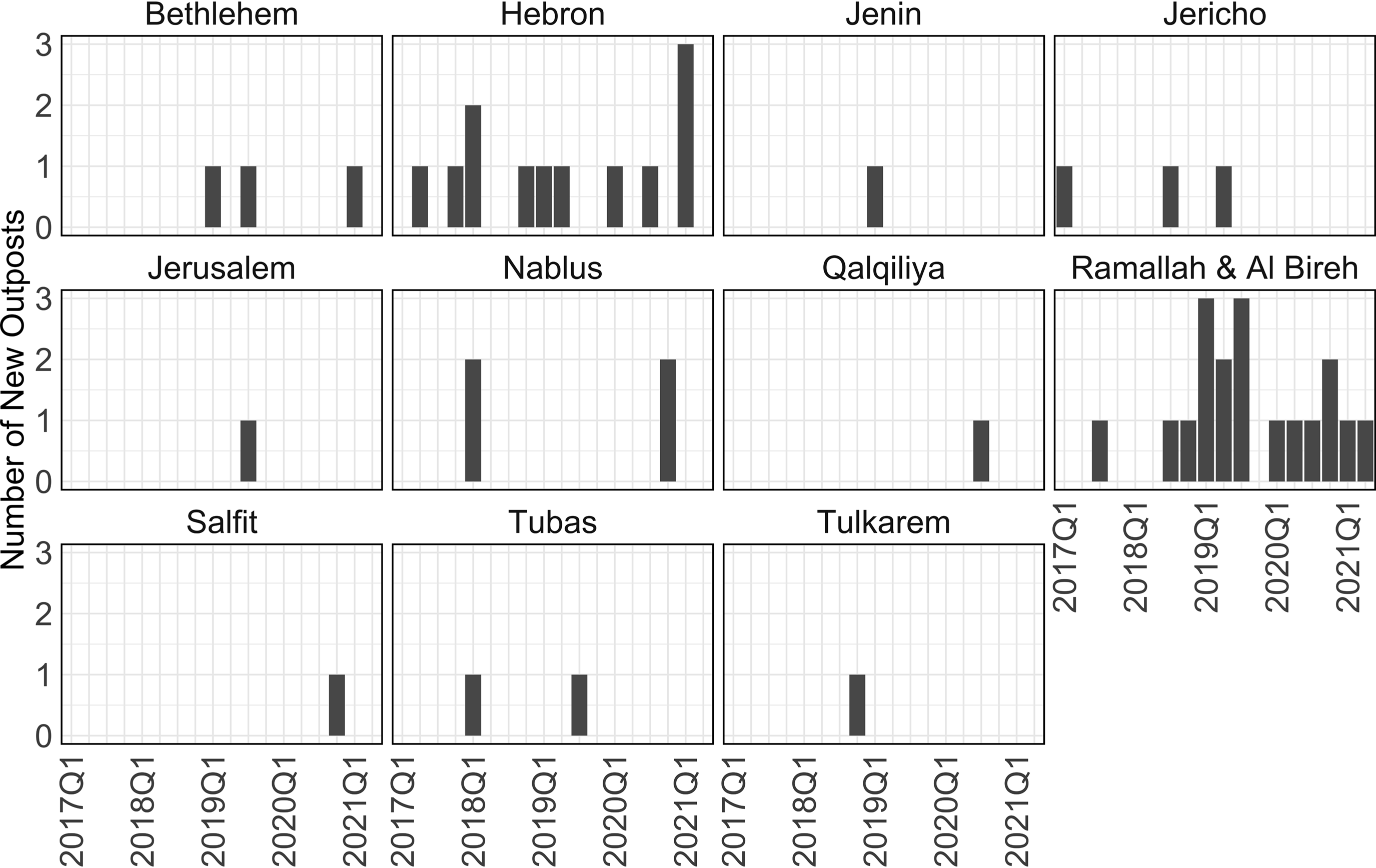
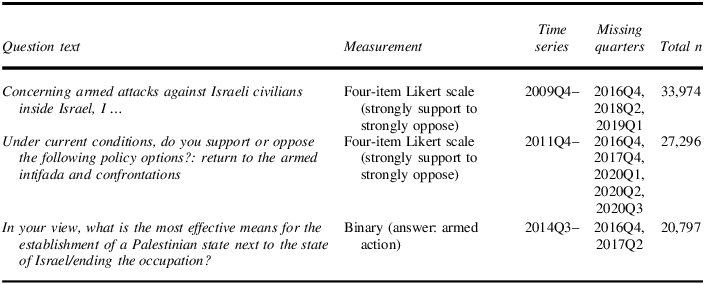
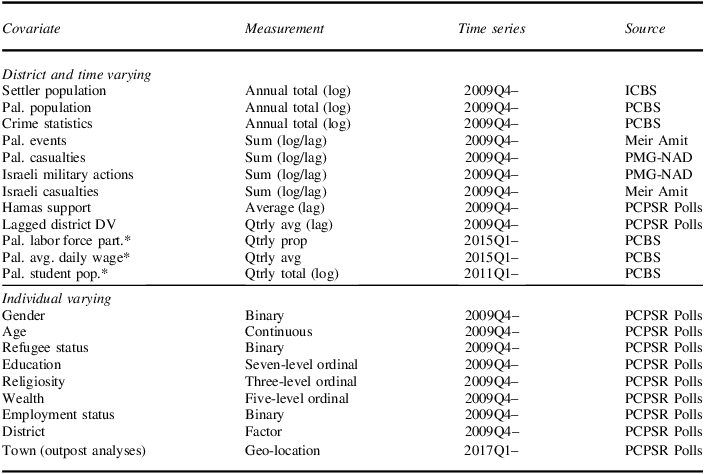

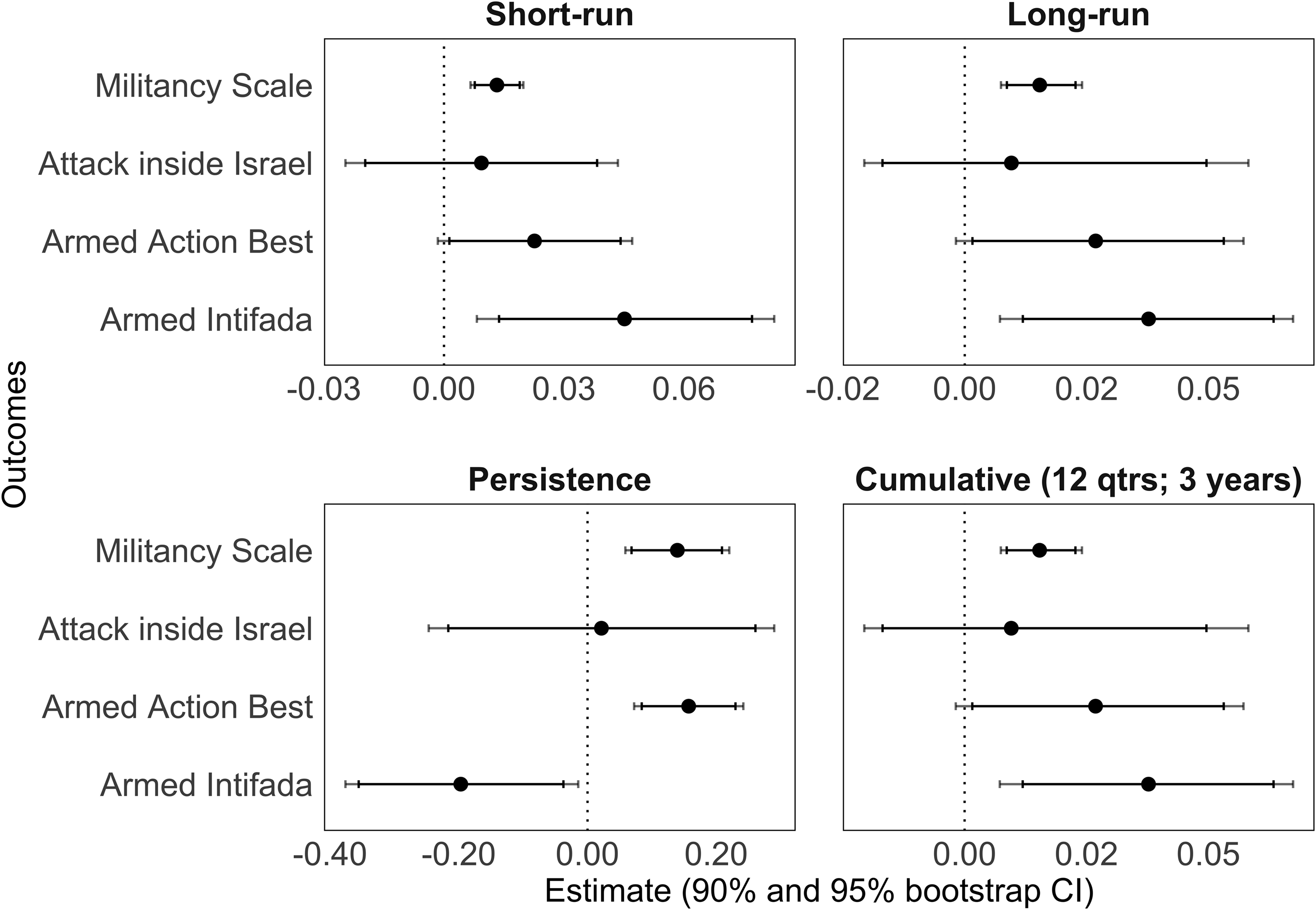
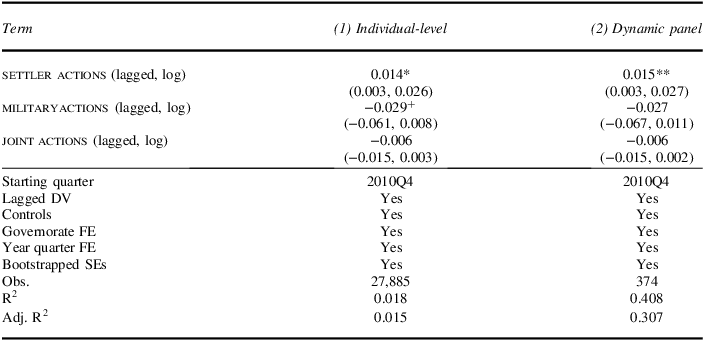

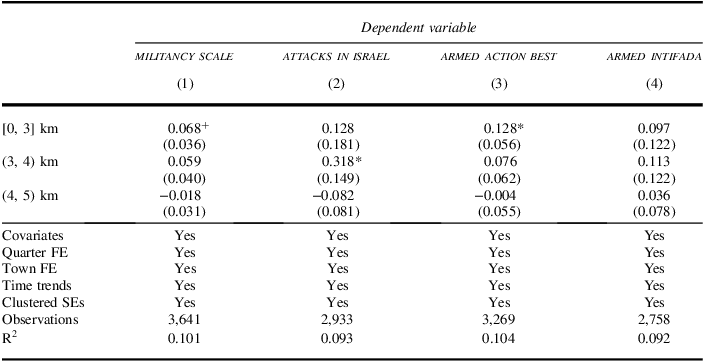
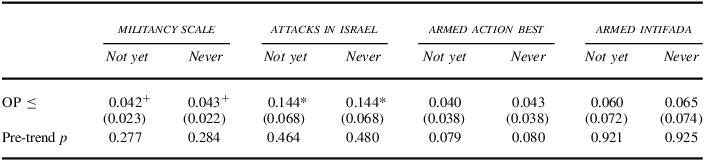
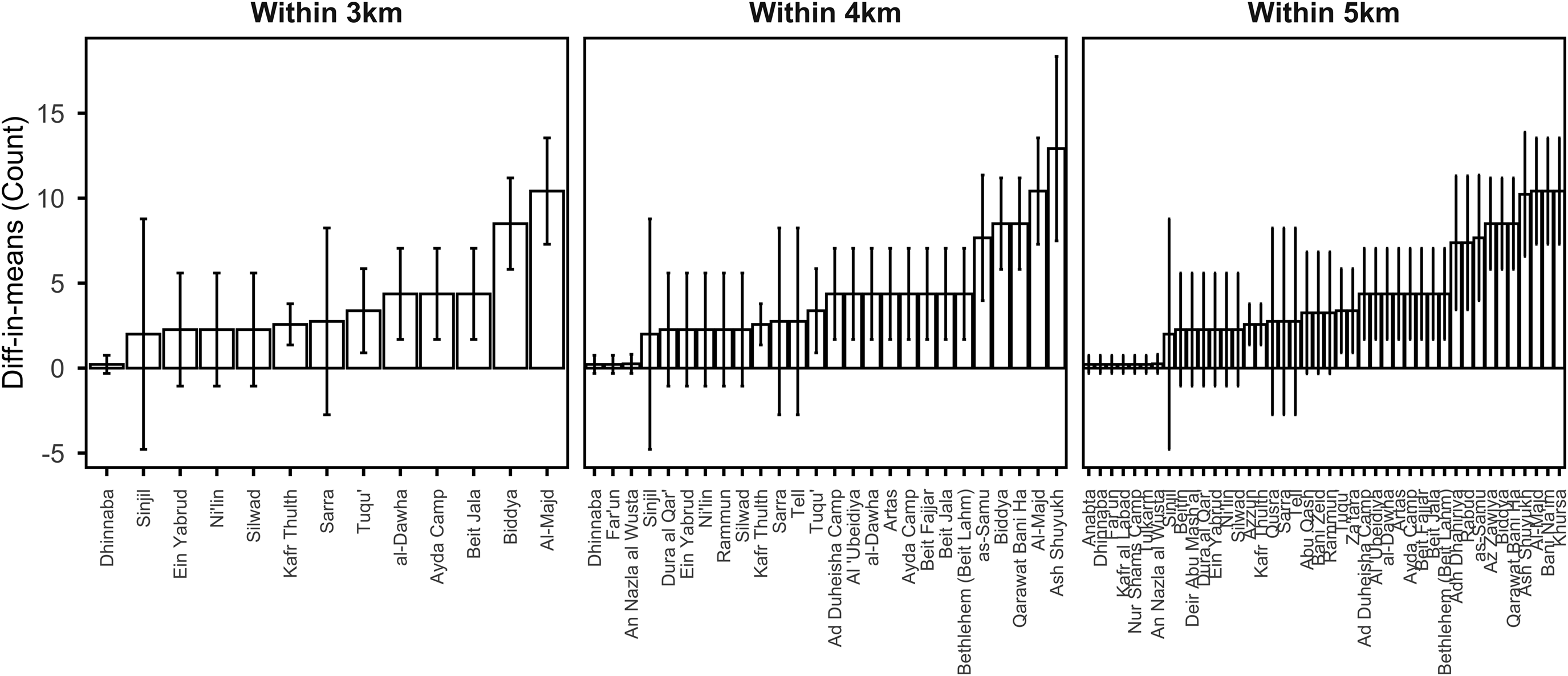


 Open access

