Introduction
Cognitive deficits are considered to be a core feature of the schizophrenia-spectrum, with impairments apparent in both first-episode psychosis (FEP) patients, and in individuals with established illness (Bora et al. Reference Bora, Yucel and Pantelis2009; Aas et al. Reference Aas, Dazzan, Mondelli, Melle, Murray and Pariante2014). Although deficits are observed across virtually all cognitive domains, the greatest levels of impairment are seen in attention, executive function, verbal fluency, and verbal learning and memory (Bora et al. Reference Bora, Yucel and Pantelis2009; Aas et al. Reference Aas, Dazzan, Mondelli, Melle, Murray and Pariante2014; Fatouros-Bergman et al. Reference Fatouros-Bergman, Cervenka, Flyckt, Edman and Farde2014).
Currently, deficits in cognition in schizophrenia are thought to be present at the time of illness onset and to remain stable over its course (Bora & Murray, Reference Bora and Murray2013). This is consistent with the prevailing neurodevelopmental hypothesis, which posits that abnormal brain development leads to arrested maturation of cognitive abilities in individuals who go on to develop schizophrenia (Murray & Lewis, Reference Murray and Lewis1987; Weinberger, Reference Weinberger1987). Indeed, the evidence from longitudinal studies shows that the cognitive performance of individuals at ultra-high risk (UHR) of developing psychosis and FEP patients improves over time (Bora & Murray, Reference Bora and Murray2013). These findings indicate that cognitive deficits are present prior to the onset of prodromal symptoms, with no evidence for a decline in functioning as the illness progresses.
Cross-sectional studies on the other hand, provide evidence for cognitive deterioration following psychosis onset (Napal et al. Reference Napal, Ojeda, Sánchez, Eltzagárate, Peña, Ezcurra and Gutiérrez2012), at least in some areas of cognitive functioning. These studies, which typically compare cognitive functioning in early illness stages with that of chronic schizophrenia patients, tend to report more severe cognitive impairment in individuals with chronic or multi-episode schizophrenia (Braw et al. Reference Braw, Bloch, Mendelovich, Ratzoni, Gal, Harari, Tripto and Levkovitz2008; Napal et al. Reference Napal, Ojeda, Sánchez, Eltzagárate, Peña, Ezcurra and Gutiérrez2012; Keefe, Reference Keefe2014). A recent review of cognitive ability at different illness stages revealed that individuals at UHR of developing psychosis demonstrated only mild cognitive impairments, with performance approximately 0.5 standard deviations below that of healthy individuals (Keefe, Reference Keefe2014). Recent onset patients, on the other hand, demonstrated cognitive performance approximately 1.5 standard deviations below that of healthy comparison subjects. However, the largest deficits were observed in individuals with chronic schizophrenia, whose performance sat around 2.5 standard deviations below that of healthy individuals. Taken together, these findings suggest that cognition may deteriorate as the severity of illness increases, or that poor clinical outcome is associated with poor cognitive performance (Carlsson et al. Reference Carlsson, Nyman, Ganse and Cullberg2006; Bodnar et al. Reference Bodnar, Malla, Joober and Lepage2008; Leeson et al. Reference Leeson, Barnes, Hutton, Ron and Joyce2009a ).
Visuospatial associative memory is one area of cognition that has been found to be more impaired in individuals with established schizophrenia than in FEP patients (Wood et al. Reference Wood, Proffitt, Mahony, Smith, Buchanan, Brewer, Stuart, Velakoulis, McGorry and Pantelis2002; Barnett et al. Reference Barnett, Sahakian, Werners, Hill, Brazil, Gallagher, Bullmore and Jones2005; Stip et al. Reference Stip, Sepehry, Prouteau, Briand, Nicole, Lalonde and Lesage2005; Donohoe et al. Reference Donohoe, Spoletini, McGlade, Behan, Hayden, O'Donoghue, Peel, Haq, Walker, O'Callaghan, Spalletta, Gill and Corvin2008). A previous cross-sectional study found that performance on the Cambridge Neuropsychological Test Automated Battery (CANTAB) paired-associates learning (PAL) task was preserved in FEP patients, who performed at a level similar to that of healthy controls (HCs) (Wood et al. Reference Wood, Proffitt, Mahony, Smith, Buchanan, Brewer, Stuart, Velakoulis, McGorry and Pantelis2002). Conversely, chronic patients demonstrated impaired PAL performance when compared with both HCs and to FEP patients. This discrepancy in cognitive performance between cohorts could indicate a deteriorating course – however, it could also be that poorer PAL performance in FEP is predictive of chronic illness outcome. To date, PAL performance has not been measured longitudinally over time in first-episode schizophrenia patients. Therefore, this question of a ‘deteriorating’ visuospatial memory course v. the prognostic value of low PAL ability remains to be directly assessed.
Here we report the results of the first longitudinal study of visuospatial associative memory performance in FEP patients, followed up over 5–10 years. Our aim was to investigate the longitudinal course of visuospatial associative memory ability following psychosis onset, and to compare this with the course of verbal associative memory ability over the same period. Based on previous cross-sectional findings, we hypothesised that visuospatial associative memory would deteriorate over the follow-up period for the FEP patients, whereas the performance of the HCs would remain stable. Verbal associative memory was expected to remain stable, or to improve, in both FEP patients and HCs over the follow-up period.
Method
Participants and clinical assessment
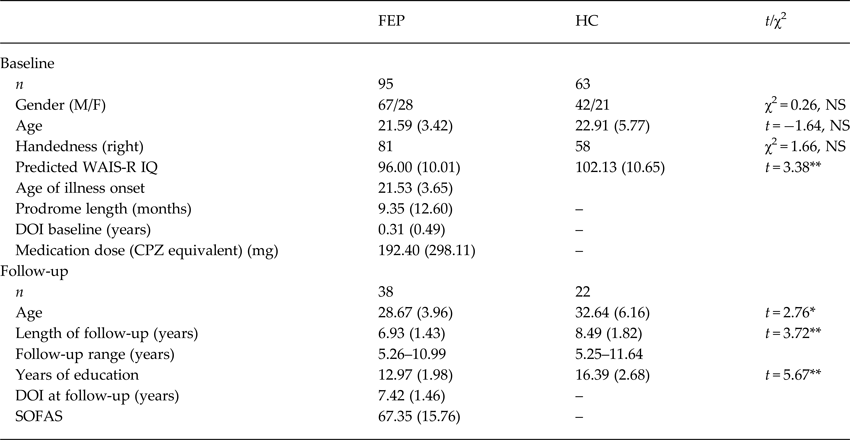
Table 1 presents the demographic and clinical characteristics of the sample. At baseline, 95 individuals experiencing FEP were recruited from Orygen Youth Health's Early Psychosis Prevention and Intervention Centre (EIC), Melbourne, Australia between 1993 and 2001. Diagnoses included schizophrenia (N = 19), schizophreniform disorder (N = 45), schizoaffective disorder (N = 17), delusional disorder (N = 2), brief psychotic disorder (N = 4), psychotic disorder not otherwise specified (N = 6), and substance-induced psychosis (N = 2). FEP-specific inclusion criteria were; (1) current DSM-III (American Psychiatric Association, 1987) Axis I diagnosis of a psychotic disorder; and (2) less than 6 months of neuroleptic treatment. The current study also excluded FEP patients with a primary mood diagnosis (bipolar disorder and depression). The Royal Park Multidiagnostic Instrument for Psychosis (Mcgorry et al. Reference Mcgorry, Copolov and Singh1990) and the Structured Diagnostic Interview for DSM-III (SCID-I/P) (First et al. Reference First, Spitzer, Gibbon and Williams2002) were used to determine diagnosis. Further information about the methodology has been described previously (Henry et al. Reference Henry, Harris, Amminger, Yuen, Harrigan, Lambert, Conus, Schwartz, Prosser, Farrelly, Purcell, Herrman, Jackson and McGorry2007). HC participants (N = 63) were recruited from the same catchment area as patients. HCs with a history of psychiatric illness were excluded. Exclusion criteria for FEP and HC included: significant head injury and/or loss of consciousness for >1 min; preferred language other than English; known history of learning disability; estimated premorbid IQ < 70 based on the National Adult Reading Test (NART) (Nelson & Willison, Reference Nelson, Willison and Nelson1991); DSM diagnosis of substance abuse or dependence; neurological disease; baseline age >45. All participants provided informed consent and had adequate English comprehension.
Demographics

*p < 0.05: **p < 0.01; NS, not significant.
Abbreviations: FEP, first-episode psychosis; HC, healthy control; DOI, duration of illness; CPZ, chlorpromazine; SOFAS, social and occupational functioning assessment scale.
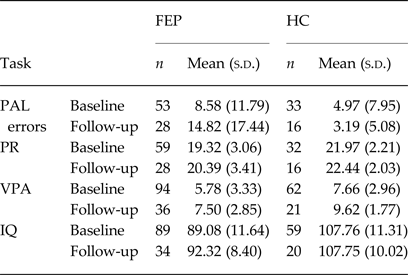
Follow-up assessments were carried out between 1998 and 2005. Thirty-eight FEP and 22 HCs completed follow-up cognitive assessment, although a number of participants did not complete all cognitive tasks (see Table 2). For the FEP patients, level of functioning at follow-up was measured using the Social and Occupational Functioning Assessment Scale (SOFAS) (Goldman et al. Reference Goldman, Skodol and Lave1992).
Cognitive performance at baseline and follow-up

Abbreviations: FEP, first-episode psychosis; HC, healthy control; PAL, paired associates learning; PR, pattern recognition; VPA, verbal paired-associates.
Cognitive measures
Estimated premorbid IQ was measured with the NART (Nelson & Willison, Reference Nelson, Willison and Nelson1991). NART scores were converted to Wechsler Adult Intelligence Scale-Revised intelligence quotient (WAIS-R IQ) (Wechsler, Reference Wechsler1981) scores. Four subtests of the WAIS-R were used to obtain an estimate of current full scale IQ.
Visuospatial associative memory was assessed using the Visuospatial Paired-Associate Learning (PAL) Task from the CANTAB (Cambridge Cognition, 2016). This task uses cued recall of a series of patterns at different spatial locations. In the early stages of the task, six white boxes are spaced evenly on the screen, and opened up in a random order to reveal a coloured pattern inside. In the first trial, only one box contains a coloured pattern. Once all of the boxes have opened, the pattern is displayed in the centre of the screen and the participant is required to touch the box in which it was located. The number of patterns increases in subsequent trials, and the final stage of the task requires participants to remember the locations of eight different patterns. The number of errors on the final stage of the task (eight shapes) was the variable of interest for the current study. Participants who did not reach the eight shape stage of the task were given an adjusted score of 70 as described in the CANTAB administration guide (Cambridge Cognition, 2012). This adjustment is calculated using the following formula:
 $$\eqalign {& \left(\matrix{{\hbox {number of patterns}} \cr {\hbox{not attempted} (8)}\cr} - {\displaystyle {\hbox {number of boxes (8)}} \over {\hbox {number of patterns (8)}}}\right) \cr & \qquad \times {\hbox {total number of possible trials (10).}}}$$
Basic visual recognition was measured with the Pattern Recognition (PR) task from the CANTAB (Cambridge Cognition, 2016). In a white box in the centre of the screen, a series of 12 patterns were displayed one by one. Patterns were designed so that they cannot be easily verbalised. In the recognition phase, the participant is required to choose between a novel pattern and a pattern that they have already seen. Patterns are presented in reverse order in the recognition phase. This sub-test is then repeated with a second set of patterns, and participants are given a score out of 24.
Verbal associative memory was assessed using the semantically-unrelated (difficult) pairs from the from the Wechsler Memory Scale-Revised (WMS-R) Verbal Paired Associates (VPA) task (Wechsler, Reference Wechsler1987). In this task, participants were first read a list of four word pairs. The examiner then read the first word of each pair, and the participant is asked to provide the corresponding word. Three trials were completed.
Data analysis
Group differences between FEP patients and HCs on demographic measures were examined using χ2 tests for categorical data, and independent groups t tests for continuous variables.
Due to the fact that PAL errors are recorded as a count variable, and data were overdispersed (the variance was substantially greater than the mean), generalised estimating equations (GEE) negative binomial regression was determined to be the most appropriate method for examining change in PAL scores over time. Stepwise backward selection criteria were employed to determine the final model: all independent variables (IV) were initially entered into the model and then variables with a p value >0.05 were removed. Group and time (time 1, time 2), as well as the group × time interaction, were included as IVs in each model. Initial covariates included age, IQ, years of education, sex, length of follow-up, and PR scores. PR was included as a covariate in the analysis of PAL performance as it has been found to predict performance on the PAL task in previous studies (Wood et al. Reference Wood, Proffitt, Mahony, Smith, Buchanan, Brewer, Stuart, Velakoulis, McGorry and Pantelis2002). GEE allows for missing data at each time-point, however data must be missing completely at random. As data-screening analyses confirmed that missing data at follow-up were not related to any variables of interest [including: age, sex, diagnosis, baseline cognition scores (PAL errors, verbal memory scores, IQ, estimated premorbid IQ), or years of education], data were deemed missing completely at random, and participants with missing data were thus included in the analysis.
A generalised linear mixed model was used to analyse change in VPA performance over time. This model allows the slope or intercept to vary across participants as a random effect (Laird & Ware, Reference Laird and Ware1982). Again, stepwise backward selection criteria were employed to determine the final model. In the initial model, VPA scores were included as the dependent variable, and group, time (time 1, time 2), group × time, age, IQ, and years of education were included as fixed effects. Our analyses included all available data collected for each participant at each time-point.
Relationships between neuropsychological test scores (PAL and VPA) and social and occupational functioning at follow-up were analysed using Spearman's rank order correlations.
Results
Demographics
FEP patients had a significantly shorter follow-up interval than HCs, and a significantly lower age at follow-up (see Table 1). HCs also completed more years of education, and had higher estimated premorbid IQ scores than FEP patients. Neuropsychological assessment scores at baseline and follow-up are displayed in Table 2.
Visuospatial associative memory
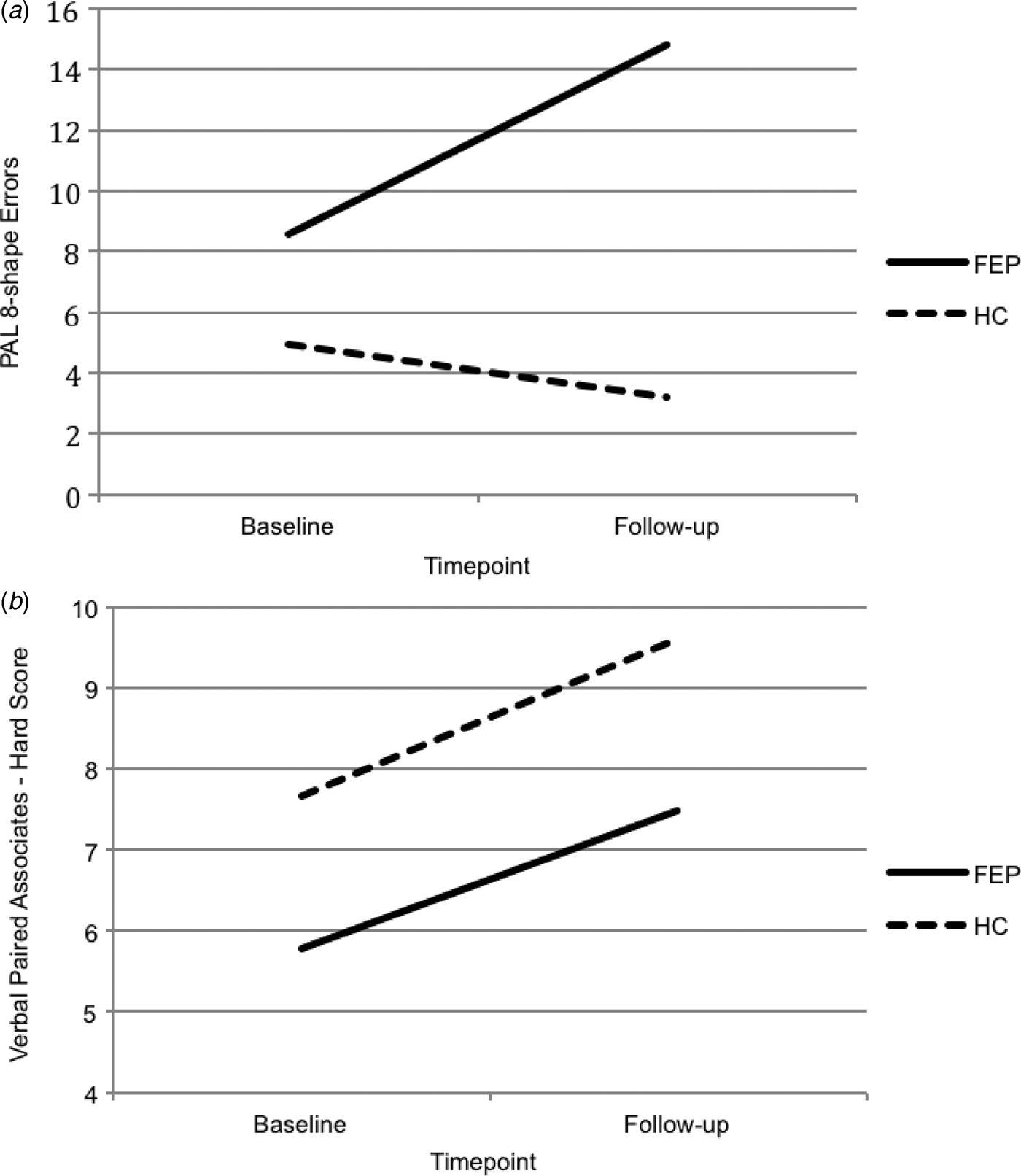
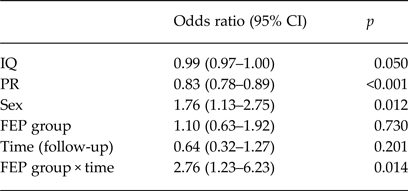
Table 3 displays the results of the GEE model for PAL performance. IQ, sex, and PR performance were included as covariates in the final model. IQ and PR scores were negatively correlated with PAL performance, with lower scores associated with more errors on the PAL task. There was also a main effect of sex, with males making more errors than females. A significant group × time interaction was also observed (Wald χ2(1) = 6.02, p = .014): At baseline, there was no difference between FEP individuals and HCs in terms of PAL errors, however the HC group demonstrated slight improvement on the PAL task over time, whereas performance of the FEP group deteriorated from baseline to follow-up (see Fig. 1a ).
Cognitive performance at baseline and follow-up for (a) PAL 8 shape errors and (b) VPA scores. FEP, first-episode psychosis; HC, healthy control; PAL, paired associates learning; VPA, verbal paired associates.

GEE Negative binomial regression model for PAL performance

Abbreviations: FEP, first-episode psychosis; HC, healthy control; PR, pattern recognition; PAL, paired associates learning.
Verbal associative memory
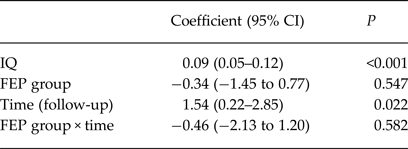
Table 4 displays the generalised linear mixed model for VPA performance. IQ was included as a covariate in the final model as IQ scores were positively related to VPA scores. A main effect of time was also observed, with both groups’ performance improving over the follow-up period. There was no main effect of group, and no group × time interaction.
Generalized linear mixed model for VPA performance

Abbreviations: FEP, first-episode psychosis; HC, healthy control; VPA, verbal paired associates.
Correlations with Functioning
For patients, number of errors on the PAL task at baseline was significantly negatively correlated with level of functioning at follow-up, r s(26) = −0.38 p = 0.045. There was no correlation between baseline VPA performance and SOFAS scores at follow-up. Number of PAL errors at follow-up was significantly negatively correlated with SOFAS scores at follow-up, r s(34) = −0.37 p = 0.027. VPA scores at follow-up were also significantly correlated with SOFAS scores at follow-up, r s(35) = −0.41 p = 0.012.
Discussion
In this longitudinal study of individuals with FEP disorders, we examined changes in visuospatial and verbal associative memory abilities over a follow-up period of 5–11 years. Our findings revealed no difference in either visuospatial or verbal associative memory scores in FEP patients relative to HCs at baseline. However, we identified a deteriorating trajectory in visuospatial associative memory compared with HCs subjects. In contrast change in verbal associative memory did not differ from HC subjects, with both groups showing improved ability over time.
While previous studies have typically found some aspects of memory to be impaired at illness onset (Bora & Murray, Reference Bora and Murray2013; Aas et al. Reference Aas, Dazzan, Mondelli, Melle, Murray and Pariante2014), the results of the current study, and of other similar studies of associative memory (Wood et al. Reference Wood, Proffitt, Mahony, Smith, Buchanan, Brewer, Stuart, Velakoulis, McGorry and Pantelis2002, Reference Wood, Tarnawski, Proffitt, Brewer, Savage, Anderson, McGorry, Velakoulis and Pantelis2007; Brewer et al. Reference Brewer, Francey, Wood, Jackson, Pantelis, Phillips, Yung, Anderson and McGorry2005; Bartholomeusz et al. Reference Bartholomeusz, Proffitt, Savage, Simpson, Markulev, Kerr, McConchie, McGorry, Pantelis, Berger and Wood2011; Williams et al. Reference Williams, Avery, Woolard and Heckers2012), indicate that both visual and verbal associative memory are preserved in the early stages of psychosis. Chronic schizophrenia patients, on the other hand, have been found to demonstrate impairments in both visual (Wood et al. Reference Wood, Proffitt, Mahony, Smith, Buchanan, Brewer, Stuart, Velakoulis, McGorry and Pantelis2002; Toulopoulou et al. Reference Toulopoulou, Rabe-Hesketh, King, Murray and Morris2003; Donohoe et al. Reference Donohoe, Spoletini, McGlade, Behan, Hayden, O'Donoghue, Peel, Haq, Walker, O'Callaghan, Spalletta, Gill and Corvin2008; Armstrong et al. Reference Armstrong, Kose, Williams, Woolard and Heckers2012a , Reference Armstrong, Williams and Heckers b ) and verbal associative memory (Elvevag et al. Reference Elvevag, Egan and Goldberg2000; Toulopoulou et al. Reference Toulopoulou, Rabe-Hesketh, King, Murray and Morris2003), which suggests that associative memory ability may deteriorate over the course of psychotic illness.
Consistent with previous cross-sectional findings (Wood et al. Reference Wood, Proffitt, Mahony, Smith, Buchanan, Brewer, Stuart, Velakoulis, McGorry and Pantelis2002; Barnett et al. Reference Barnett, Sahakian, Werners, Hill, Brazil, Gallagher, Bullmore and Jones2005; Stip et al. Reference Stip, Sepehry, Prouteau, Briand, Nicole, Lalonde and Lesage2005; Donohoe et al. Reference Donohoe, Spoletini, McGlade, Behan, Hayden, O'Donoghue, Peel, Haq, Walker, O'Callaghan, Spalletta, Gill and Corvin2008), the current study found that visuospatial associative memory ability was preserved at baseline in the FEP cohort. In this first longitudinal study of PAL performance from psychosis onset, visuospatial associative memory ability deteriorated significantly over a 5–11 year follow-up period in patients having a schizophrenia spectrum disorder at baseline. This decline occurred despite stability in PR performance over the same period in both FEP and HCs, indicating that the decline in visuospatial associative memory performance is not accompanied by any changes in basic visual recognition. Deterioration in visuospatial associative memory challenges the ‘dominant’ notion of stable cognitive deficits in schizophrenia (Bora & Murray, Reference Bora and Murray2013), and highlights that different areas of cognition may have different trajectories over the course of psychotic illness. That is, while some cognitive domains are impaired at the earliest stages of the illness, other areas of cognition are preserved at illness onset and deteriorate only as the illness progresses (Pantelis et al. Reference Pantelis, Wannan, Bartholomeusz, Allott and McGorry2015). In order to understand these differing trajectories, it is important to consider individual cognitive tasks within the context of normal development, while also taking into account the brain changes that have been found to occur in the period following illness onset (Pantelis et al. Reference Pantelis, Yucel, Wood, Velakoulis, Sun, Berger, Stuart, Yung, Phillips and McGorry2005, Reference Pantelis, Yucel, Bora, Fornito, Testa, Brewer, Velakoulis and Wood 2009b , Reference Pantelis, Wannan, Bartholomeusz, Allott and McGorry2015).
We have previously argued that there is an interaction between the age of illness onset and stage of brain development, which may result in a relatively greater impact on brain structures and functions that are maturing around the time of illness onset (Pantelis et al. Reference Pantelis, Yucel, Wood, Velakoulis, Sun, Berger, Stuart, Yung, Phillips and McGorry2005, Reference Pantelis, Yucel, Bora, Fornito, Testa, Brewer, Velakoulis and Wood 2009b , Reference Pantelis, Wannan, Bartholomeusz, Allott and McGorry 2015 ; Gogtay et al. Reference Gogtay, Vyas, Testa, Wood and Pantelis2011). Thus, areas of cognition that are continuing to mature are likely to have their development interrupted by illness onset (possibly before overt symptoms), whereas areas of cognition that develop early, prior to illness onset, may be preserved. Spatial working memory ability, for example, which typically does not fully mature until the mid-20s (de Luca et al. Reference de Luca, Wood, Anderson, Buchanan, Proffitt, Mahony and Pantelis2003), and may therefore be interrupted by psychosis onset, has been found to be impaired to a similar extent in FEP patients and chronic schizophrenia patients (Wood et al. Reference Wood, Proffitt, Mahony, Smith, Buchanan, Brewer, Stuart, Velakoulis, McGorry and Pantelis2002; Pantelis et al. Reference Pantelis, Wood, Proffitt, Testa, Mahony, Brewer, Buchanan, Velakoulis and McGorry2009a ). Conversely, associative memory ability develops early in life, with performance increasing steeply between ages 8 and 11 and plateauing thereafter (Thaler et al. Reference Thaler, Goldstein, Pettegrew, Luther, Reynolds and Allen2013). It is possible that this ability has finished maturing prior to illness onset, and is therefore unaffected in the early stages of the illness. This was also observed on a task of attentional set-shifting ability (Pantelis et al. Reference Pantelis, Wood, Proffitt, Testa, Mahony, Brewer, Buchanan, Velakoulis and McGorry2009a ), which also matures early (de Luca et al. Reference de Luca, Wood, Anderson, Buchanan, Proffitt, Mahony and Pantelis2003).
Previous studies have argued that cognitive impairments observed in first-episode patients may reflect underlying deficits in executive functions or information processing, which are related to prefrontal cortex dysfunction (Leeson et al. Reference Leeson, Robbins, Franklin, Harrison, Harrison, Ron, Barnes and Joyce2009b , Reference Leeson, Barnes, Harrison, Matheson, Harrison, Mutsatsa, Ron and Joyce 2010 ). However, tasks that index medial temporal lobe functioning, such as verbal memory retention, appear to be independent of this relationship (Leeson et al. Reference Leeson, Robbins, Franklin, Harrison, Harrison, Ron, Barnes and Joyce2009b ). Our results suggests that the deficits observed in PAL are likewise independent of such underlying deficits in executive functioning, and this may be due to the heavy reliance on medial temporal lobe structures required for this task. The brain network that is implicated in performance on the PAL task is the hippocampal-prefrontal pathway (De Rover et al. Reference de Rover, Pironti, McCabe, Acosta-Cabronero, Arana, Morein-Zamir, Hodges, Robbins, Fletcher, Nestor and Sahakian2011; Barnett et al. Reference Barnett, Blackwell, Sahakian and Robbins2016), which has been shown to be disrupted in individuals with schizophrenia (Sigurdsson & Duvarci, Reference Sigurdsson and Duvarci2015). Activity in this pathway is highly sensitive to stress (Godsil et al. Reference Godsil, Kiss, Spedding and Jay2013), and it is therefore possible that the acute stress experienced at the onset of psychosis may lead to increasingly aberrant functional coupling between the hippocampus and prefrontal cortex and, consequently, deteriorating visuospatial associative memory ability. Regions of the temporal lobes, such as the parahippocampus and the entorhinal cortex, are also implicated in PAL performance (Owen et al. Reference Owen, Sahakian, Semple, Polkey and Robbins1995; De Rover et al. Reference de Rover, Pironti, McCabe, Acosta-Cabronero, Arana, Morein-Zamir, Hodges, Robbins, Fletcher, Nestor and Sahakian2011), and have also been shown to be abnormal in schizophrenia (Joyal et al. Reference Joyal, Laakso, Tiihonen, Syvalahti, Vilkman, Laakso, Alakare, Rakkolainen, Salokangas and Hietala2002; Bartholomeusz et al. Reference Bartholomeusz, Cropley, Wannan, Di Biase, McGorry and Pantelis2016). Longitudinal studies of brain structure in individuals with schizophrenia have identified progressive loss of grey matter in regions relevant to the PAL task, including in the prefrontal cortex and the medial temporal lobe (Radua et al. Reference Radua, Borgwardt, Crescini, Mataix-Cols, Meyer-Lindenberg, McGuire and Fusar-Poli2012; Vita et al. Reference Vita, De Peri, Deste and Sacchetti2012; Bartholomeusz et al. Reference Bartholomeusz, Cropley, Wannan, Di Biase, McGorry and Pantelis2016). Thus, while visuospatial associative memory ability is preserved at the time of illness onset, progressive deterioration, both structurally and functionally, in brain regions relevant to this area of cognition may impact on functioning as the illness progresses.
Further, we found that visuospatial associative memory performance at baseline and follow-up was associated with functional outcome at follow-up. A previous study of FEP patients by Barnett et al. (Reference Barnett, Sahakian, Werners, Hill, Brazil, Gallagher, Bullmore and Jones2005) found that individuals who failed this same task scored higher on negative symptom and psychopathology measures, had poorer levels of global functioning, and higher disability scores. In chronic patients, visuospatial associative memory performance at baseline predicted improvement in daily living autonomy and social competence following participation in a rehabilitation program (Prouteau et al. Reference Prouteau, Verdoux, Briand, Lesage, Lalonde, Nicole, Reinharz and Stip2005). The current study adds to these findings by demonstrating that visuospatial associative memory ability early in a psychotic illness can predict social and occupational functioning over long follow-up periods of 5–11 years. Thus, poor performance on this task at the time of psychosis onset may help identify individuals having poor long-term functional outcome. In contrast, baseline performance on the VPAs was not associated with later social and occupational functioning, suggesting that its use as a predictive tool is limited in psychosis populations.
The observed deterioration of visuospatial associative memory contrasts with the relatively preserved verbal associative memory performance observed over the same period in the FEP cohort. Thus, the observed improvement in verbal associative memory over time was in accord with improved ability in controls. While a number of longitudinal studies have observed similar improvement in verbal memory performance following psychosis onset (Rodríguez-Sánchez et al. Reference Rodríguez-Sánchez, Ayesa-Arriola, Pérez-Iglesias, Periañez, Martinez-Garcia, Gomez-Ruiz, Tabares-Seisdedos and Crespo-Facorro2013; Olivier et al. Reference Olivier, Killian, Chiliza, Asmal, Schoeman, Oosthuizen, Kidd and Emsley2015), what differentiates the current findings from those of the majority of previous studies is that, after accounting for general intellectual impairment, the patient group did not demonstrate deficits on the verbal associative memory task at either baseline or follow-up. While this result is surprising, it is in line with an earlier cross-sectional study of verbal memory abilities in FEP patients and individuals with chronic schizophrenia (Wood et al. Reference Wood, Tarnawski, Proffitt, Brewer, Savage, Anderson, McGorry, Velakoulis and Pantelis2007), which found preserved verbal associative memory ability in both patient cohorts relative to HCs. Preservation of verbal associative memory may simply be related to the relative ease of the VPA task compared with the PAL task. That is, this task may not be sensitive enough to psychosis-related brain abnormalities to detect memory impairments above and beyond those that result from generalised intellectual impairment. The ease of the VPA task may, in-part, reflect the fact that the attentional load of this task is likely to be much lower than that of the CANTAB PAL task. As attention has been found to be highly impaired in individuals with schizophrenia (; Braw et al. Reference Braw, Bloch, Mendelovich, Ratzoni, Gal, Harari, Tripto and Levkovitz2008; Fioravanti et al. Reference Fioravanti, Bianchi and Cinti2012; Aas et al. Reference Aas, Dazzan, Mondelli, Melle, Murray and Pariante2014), tasks with a high attentional load are more likely to be impaired in these individuals. Previous studies that have identified impairments in VPA performance in FEP have tended not to include measures of IQ or attention as covariates in their analyses (e.g. Goldberg et al. Reference Goldberg, Ragland, Torrey, Gold, Bigelow and Weinberger1990; Hutton et al. Reference Hutton, Puri, Duncan, Robbins, Barnes and Joyce1998), and it is therefore difficult to separate out memory impairments from impairments in general intellectual functioning.
The results of the current study should be considered in the context of several limitations. The small number of participants (particularly healthy individuals) completing the PAL task at follow-up may limit the generalisability of the findings. However, due to the long follow-up duration, a high attrition rate is not unexpected. Additionally, follow-up assessment was only conducted at one time-point, and it is therefore impossible to determine the timing and rate of the changes that were observed in cognitive performance at follow-up. Increasing the number of follow-up time-points would help identify when cognitive changes occur following psychosis onset, and the relative speed with which they occur, especially given brain changes in early illness stages are shown to occur in a relatively short timeframe (Bartholomeusz et al. Reference Bartholomeusz, Cropley, Wannan, Di Biase, McGorry and Pantelis2016).
In summary, the current study has found that visuospatial associative memory was preserved at baseline in FEP patients, with significant deterioration occurring over the 5–11-year follow-up period relative to healthy individuals. Baseline performance on the PAL task was also found to be a predictor of later social and occupational functioning. Verbal associative memory, on the other hand, was unimpaired at both time-points, and was found to improve over follow-up to a similar degree observed in HCs. Baseline verbal associative memory ability was not associated with functioning at follow-up. These findings highlight the importance of taking the normal maturational trajectories of different areas of cognition into account, with evidence suggesting that areas of cognition that reach maturity earlier in life are likely to be preserved at the time of illness onset, but may be impacted by factors relating to the illness or its treatment, leading to deterioration of these abilities over time. These findings may also have implications for the remediation strategies used to treat cognitive impairments in schizophrenia; while these strategies have, to date, largely focused on deficits, it is possible that different approaches are required for areas of cognition with different trajectories (Pantelis et al. Reference Pantelis, Wannan, Bartholomeusz, Allott and McGorry2015). Namely, preventing deterioration in areas of cognition that are relatively unaffected at illness onset, particularly those that are closely related to functional outcome, should be an important treatment goal.
Acknowledgements
The study was supported by NHMRC Project Grants (IDs: 970598, 981112, 145627) and NHMRC Program Grants (ID: 350241, 566529). Prof C. Pantelis was supported by a NHMRC Senior Principal Research Fellowship (628386 & 1105825), and a Brain and Behavior Research Foundation (NARSAD) Distinguished Investigator Award (US; Grant ID: 18722). Prof Patrick McGorry was supported by a NHMRC senior principal research fellowship. Dr Van Rheenen was supported by a National Health and Medical Research Council (NHMRC) Early Career Fellowship (APP1088785).
Conflicts of interest
None.