Introduction
In September 1867, seven-year-old Patrick Keffe went out to play. Less than 120 feet from his home in Northfield, Minnesota was a railroad turntable operated by the Milwaukee & St. Paul Railway Company. The turntable, a section of rotating track used to reverse the direction of locomotives, was “easily turned around at the pleasure of small children.” While riding on the turntable, Patrick's leg was caught and so mangled that “in order to save the life” of the small boy the leg had to be amputated. Patrick became “a cripple” for life (“Negligent Use of One's Property” 1875, 170).
Under the common law, trespassers could not recover damages for injuries (Welke Reference Welke2001, 82, 116–17). Patrick's father alleged that his son was “without judgment or discretion” and so could not be held liable for his injury even though he was a trespasser (Keffe v. Milwaukee & St. Paul Ry. Co. 1875, 208). He argued that the defendant railroad company should have known that children were in the habit of playing on its turntable, and locked it. The railroad in response argued that it was Patrick's own “gross carelessness and negligence” that caused his injury (“Negligent Use of One's Property” 1875, 171). The Minnesota Supreme Court, however, agreed with Patrick's father: “acting upon the natural instincts by which such children are controlled,” Patrick was drawn into “a hidden danger,” from which he “could not be expected to protect [himself].” Children, the court held, could not be blamed “for not resisting the temptation [the railroad] had set before them,” and so it was the railroad's responsibility to keep them from getting hurt (Keffe v. Milwaukee 1875, 212).
In the early 1870s, led by cases such as Patrick's, courts began to carve out an exception to the common law rule of no recovery in the case of child trespassers who were injured by the dangerous machinery of industrial landowners. At first called the “turntable doctrine” because so many cases occurred on railroad turntables, the doctrine was later dubbed “attractive nuisance” on the theory that the dangerous implement on the landowner's property had “attracted” the child to play with it (Prosser Reference Prosser1959, 431; Batson Reference Batson1967, 140). For this article, I surveyed over 200 attractive nuisance cases, about 40 percent of which involved railroads.Footnote 1 Beginning with the turntable cases of the 1870s, “a war of conflicting ideas … raged with unabated vigor” over the doctrine (City of Shawnee v. Cheek 1913, 725). In 1934, the American Law Institute (ALI) endorsed it, and by 1955 all but eight states had accepted the doctrine (ALI 1934, § 339; Prosser Reference Prosser1955, 439).Footnote 2
Little has been written on attractive nuisance, yet it is an important window into how ideas about risk and responsibility transformed over the late nineteenth and early twentieth centuries.Footnote 3 In the conflict over the doctrine in this period, responsibility for bearing one's own risk became intimately linked to questions of the injured party's capacity to understand danger and to exert self-control. Industrial accidents to trespassing children prompted a conversation about the capacity of children in particular to assess and avoid danger. This was part of a larger debate over how to allocate the risk of industrial accidents, a concern prompted by rapid industrialization and the concurrent increase in accidental injury.
In the case of trespassing children, the question of risk allocation played out quite differently from that of adults and even child laborers. As adults and child workers were gradually perceived as being less able to exert control over industrial environments and so less responsible for risk, children who were injured while trespassing on industrial land were increasingly seen as being capable of exercising judgment and self-control, and so responsible for their own risk. By the early twentieth century, courts had adopted a more flexible, middle-ground approach to responsibility for risk: adults and child laborers no longer bore the entire risk of injury themselves, but neither were trespassing children exempted from bearing risk. In other words, responsibility to avoid accidental injury did not just lie with industrial actors, but was spread across all members of the public who encountered industrial technology as well.
The shift toward less responsibility for risk for adults was influenced by rapid industrialization and the concurrent rise in accidental injuries. In the early stages of industrialization in the mid-nineteenth century, adult individuals were generally considered responsible for their own risk. In the workplace, doctrines like the fellow servant rule, assumption of risk, and contributory negligence placed the responsibility for accidental injury on the individual worker rather than the employer (Witt Reference Witt2009, 16; White Reference White2011, 41). Women workers appear to have been treated similarly to men (Atkinson Reference Atkinson2013, 42–43). Members of the public also bore their own risk when interacting with transportation technology like trains or streetcars (Welke Reference Welke2001, 7). These legal doctrines were premised on the tenet of the dominant legal ideology of the time, classical legal thought, that because individuals were independent and able to exercise free will, they bore their own risk (Levy Reference Levy2012, 10).
Yet the dramatic uptick in industrial accidents in the late nineteenth and early twentieth centuries challenged the expectation that individuals would be able to exert control over their environments and protect themselves from injury. Legal scholar Roscoe Pound remarked in Reference Pound1907 that in the industrial workplace, “the individual vigilance and responsibility contemplated by the common law are impossible in practice” (614). As John Fabian Witt has shown, courts and legislatures shifted much of the responsibility for the risk of workplace injury from workers to their employers, making individual workers less independent but more protected. Through the establishment of workers' compensation and laws abolishing pro-employer doctrines, the belief in the independent manhood of the individual worker was replaced by an understanding of the worker as needing special protection from the state (2009, 63). Barbara Welke tells a related story with regard to passengers and the public involving traffic accidents. Whereas in mid-century Americans had considered encountering danger on streetcars and railroads as a necessary evil of their freedom and independence, by the Progressive Era safety measures restricted the actions of the traveling public in order to protect them from injury (2001, 39).Footnote 4 As Witt and Welke reveal, because industrial accidents were increasingly perceived as being unpredictable and out of individual control, the legal responsibility of adults to assess and avoid risk was diminished.
The story of whether and when children bore their own risk of industrial injury is more complicated. As James Schmidt (Reference Schmidt2010) has shown in the workplace context, for most of the nineteenth century child laborers were held to the same standards as adults and treated as responsible, risk-bearing individuals. Pro-employer doctrines like assumption of risk and contributory negligence barred children's injury claims just as they barred claims by adult workers. Schmidt demonstrates that this view of children transformed in the latter nineteenth century, influenced by the attractive nuisance doctrine's special carve-out for child victims of industrial accidents, as well as the increasing prevalence of workplace injury. In labor law, as in the early attractive nuisance doctrine, child laborers began to be treated as less able to understand danger or control their environment. This view of child laborers as unable to avoid injury motivated Progressive reformers' efforts to enact child labor laws, which attempted to prevent accidental injury to children by removing them from the industrial workplace altogether (Schmidt Reference Schmidt2010, 143–49).
The ability of children to comprehend their environment or exert self-control was also challenged in the criminal context. Whereas even in the late nineteenth century children had been jailed and tried as adults, this practice came under fire in the early twentieth century. Michael Willrich has shown that the emerging field of child psychology, along with the romantic view of children as dependent, influenced the Progressive vision of children as less in control of their actions and so needing special guidance and protection. This justified the creation of distinct legal institutions for child criminals, such as the juvenile court (2004, 209–14). In both the labor and criminal context, the emerging legal and social view of children was that they were unable sufficiently to control their environment or to appreciate the consequences of their actions, and so could not be subject to the same legal standards of behavior as adults.
In contrast, the vision of childhood presented in the attractive nuisance doctrine developed along the opposite trajectory. Whereas popular and legal conceptions of child laborers and child criminals shifted from children as responsible actors to dependents lacking adult capacity, child trespassers on industrial land were transformed from innocent, irresponsible “butterflies” to responsible, self-governing, risk-bearing individuals. When the attractive nuisance doctrine was first formulated in the 1870s, judges, like the author of the opinion in Patrick Keffe's case, presumed that children were inherently irrational, impulsive, and incapable of understanding danger, and so could not be responsible for their own risk. However, toward the end of the century this presumption was challenged by industrial actors. One of the most striking examples of the competing vision of childhood in the trespassing context is the railroad corporations' Safety First antitrespassing movement. The Safety First campaign assumed that children were capable of assessing danger to both themselves and their communities, and of exercising self-control so as to avoid injury. This view of children as prudent and self-governing increasingly informed judicial opinions in trespassing cases, and courts began to transfer responsibility for the risk of industrial accidents to children themselves.
Differences in how children were treated in the context of workplace and criminal law versus how they were perceived in attractive nuisance case law reveals the competing visions of childhood in the late nineteenth and early twentieth centuries: one of children as incapable of reason and so needing special protection, and the other as capable and therefore responsible for their own actions. In the attractive nuisance case law, the vision of children as rational and responsible for risk never completely replaced the older vision of children as irrational, impulsive, and dependent. Rather, these visions overlapped. Exemplified by the ALI's 1934 Restatement, by midcentury children were presumed to be “reasonable,” which meant capable of understanding and avoiding danger. Child plaintiffs, however, could invoke an older conception of children as ignorant and needing protection to prove otherwise in individual cases.

The Development of the Attractive Nuisance Doctrine
Central to the development of the attractive nuisance doctrine was the question of who should be responsible for injury from industrial accidents. Because children could not understand danger or control their curiosity, these judges held, they could not be responsible for their own risk where industrial technology was concerned. Rather, responsibility for risk lay with industrial landowners. The rhetoric of children's irrationality justified a different standard for child trespassers than that applied to adults (Sioux City & P. R. Co. v. Stout 1873, 660). While landowners had no liability for injuries to adult trespassers, they had special duties to children, “who, like the bees and butterflies, wander everywhere, and into every place left open, as their childish instincts and impulses lead them” (Dublin Cotton Oil Co. v. Jarrard 1897, 534–35).
This vision of children's incapacity was supported by a romantic conception of childhood that had gained prominence over the course of the eighteenth and nineteenth centuries. As Steven Mintz (Reference Mintz2004, 3) shows, beginning in the mid-eighteenth century, among the middle class, childhood began to be reconceived as a separate stage of life. Children were considered to be innocent, malleable, fragile, and needing special care. Holly Brewer (Reference Brewer2005, 342) has revealed that starting in the late eighteenth century, children began to be seen as irrational and incapable of self-government, a development intimately tied to theories of democratic governance being debated at the time. The ability to participate in government no longer depended on one's status regardless of age, but on the ability to reason, as determined by age. Because children were not able to comprehend the details of policy or be self-governing, prerequisites of democratic participation, they were justified in being excluded from the polity and confined to dependent status.
By the early nineteenth century, the view of children as irresponsible, spontaneous, and uninhibited was firmly entrenched among the middle class (Mintz Reference Mintz2004, 76). Although poor working-class and agricultural families could not offer their children the same protected childhood as middle-class families, by the late nineteenth century poor parents also embraced the ideal of the innocent child. This shift was apparent through working men's claims for a “family wage” that would allow their wives and children to stay at home (Mintz Reference Mintz2004, 152), as well as through parents' embrace of the conception of childhood innocence in cases involving workplace accidents (Schmidt Reference Schmidt2010, 227). As Viviana Zelizer (Reference Zelizer1985, 27) illustrates, along with this sentimentalization of childhood came a greater emphasis on preserving children's lives and safety and an increasingly public concern with children's death. Concern about injury to children along with fear of disorder in the nation's families prompted reformers to argue that because children were exceptionally vulnerable, they had a special claim to protection (Grossberg Reference Grossberg, Gamber, Grossberg and Hartog2003, 119).
This view of children as innocent, impulsive, and needing protection is prominent in the language of the early attractive nuisance cases. Children, courts held, had a natural tendency to explore, which meant that trespass was inevitable. As the judge in Patrick Keffe's case explained, children were controlled by “childish instincts” that “allured them into a place of danger,” and they could not be blamed for not being able to resist “the temptation of an attractive playing” (Keffe v. Milwaukee & St. P. Ry. Co. 1875, 211). This vision of children often had a gendered cast. Children, “especially boys,” had an “inbred disposition and ever-present impulse … to explore and investigate” (Biggs v. Consolidated Barb-Wire Co. 1899, 5). One treatise writer explained: “Now, boys are just as God has made them, and as God has not seen fit to make them careful, cautious, reasonable, and reflective, most courts have deemed it wise and humane” to require landowners to exercise greater care (Browne Reference Browne1897, 892). As one Kansas judge elaborated in a turntable case:
Everybody knows that by nature and by instinct boys love to ride, and love to move by other means than their own locomotion. They will … even pay to ride upon imitation horses and imitation chariots, swung around in a circle by means of steam or horse-power. This last is very much like riding around in a circle upon a turn-table. (Kansas Cent. Ry. Co. v. Fitzsimmons 1879, 690–91)
Yet although the vast majority of the attractive nuisance plaintiffs were boys and boys' love of adventure is a common trope in the opinions, girl plaintiffs do not appear to have been treated any differently in the cases (Dublin Cotton Oil Co. v. Jarrard 1897; Edgington v. Burlington C.R. & N.R. Co. 1902);Footnote 5 rather, the predisposition of all children to wander and explore is taken for granted. It was “useless to moralize upon the instinct for play which controls the action of a child,” as it was “ingrained in the child's being” (Edgington v. Burlington C.R. & N.R. Co. 1902, 96). Children were “little barbarians” who were “certain to go on their quests without regard to the civilized conception of land ownership” (Hudson Reference Hudson1923, 842). This language evoked the vision of children in literature of the period as adventuresome and high-spirited, qualities most often attributed to boys in novels like Mark Twain's ([Reference Twain1884] 1892) Adventures of Huckleberry Finn, but also to girl protagonists, as in Rebecca of Sunnybrook Farm (Wiggin Reference Wiggin1903). As children were by nature irrational and impulsive, jurists concluded it was unjust to hold “that childhood and manhood are bound to observe the same degree of diligence” (Western & A.R. Co. v. Young 1888, 914); rather, it was the landowner's responsibility to recognize the “ordinary propensities” of children, including “their love of adventure,” and to set up the necessary safeguards (Faylor v. Great Eastern Quicksilver Mining Co. 1919, 204).

There was an irony in these judges' depiction of children as irresponsible and innocent. In fact, many of the child plaintiffs were exercising household responsibilities when they were injured.Footnote 6 The majority of the children in the attractive nuisance suits hailed from poor agricultural and working-class families, a large number of whom lived in rural areas or small towns. In predominantly rural communities, work and play were often mixed, and children covered expanses of terrain independent of adult supervision (Riney-Kehrberg Reference Riney‐Kehrberg2001, 3; Alphonso Reference Alphonso and Marten2014, 71). Children in farming communities were responsible for tasks that often took them far afield of the family farm, searching for escaped horses, grazing cattle, and hunting small game (West Reference West1989, 87; Riney-Kehrberg Reference Riney‐Kehrberg2001, 3; Chudacoff Reference Chudacoff2007, 91). In urban working-class homes, children were likewise expected to contribute their labor to the household through working at a factory, on the street, or at piecework; minding siblings; and scavenging for scraps of coal and tinder (Nasaw Reference Nasaw1985, 97–98; Clement Reference Clement1997, 142–46).Footnote 7 Until the introduction of playgrounds in cities, there was also nowhere for poor children to play but streets and industrial yards (Nasaw Reference Nasaw1985, 17; Zelizer Reference Zelizer1985, 33–35, 51). In these communities, children were used to going about as they pleased both for work and recreation, without thought that they may have been “technically trespassing” or that industrial perils might lie in wait (Plaintiff's Brief, Sioux City & P. R. Co. v. Stout 1873, 8).
For the judges who invoked the romantic conception of childhood innocence to justify the attractive nuisance doctrine, however, the fact that child plaintiffs were capable of exercising family responsibilities did not mean they had the capacity to recognize and avoid industrial danger. The courts' focus was not on the knowledge and responsibility of children involving daily tasks, but their capacity to appreciate the danger of novel industrial machinery. Judges noted without comment the work children were engaged in when injured. Twelve-year-old Jerry Fitzsimmons, the son of “a laborer in very limited circumstances,” had gone to look for his family's cow on the commons, which was bisected by the defendant's railroad track. After he found the cow, he joined some other boys playing on the railroad's nearby turntable, where he was maimed (Kansas Cent. Ry. Co. v. Fitzsimmons 1879, 36). A seven-year-old girl in Iowa, on her way to “gather scraps of wood for fuel” from a box factory nearby, was likewise hurt when she stopped to play on a railroad turntable (Edgington v. Burlington, C.R. & N.R. Co. 1902, 95–96), while an eight-year-old boy in California was sent to the turntable area to gather fallen coal (Barrett v. Southern Pac. Co. 1891, 297). Nine-year-old Thompkins Cheek drowned in a pumphouse while watching his family's hogs (City of Shawnee v. Cheek 1913, 725). Before his leg was crushed in the turntable, twelve-year-old Homer Conrad had “worked in a glass factory for a considerable period of time,” and “frequently assisted the railway employe´s in turning engines” on the turntable. He and his friends “played ‘Hide and Seek’ and ‘Throw the Wicket’ round” the turntable as well (Conrad v. Baltimore & O.R. Co. 1908, 45). Thirteen-year-old Albert Nelson likewise hung around a canning factory where his friend's older brother worked, sometimes helping out employees for “payment of 5 or 10 cents,” before he was killed while playing on the elevator there (Nelson v. Burnham & Morrill Co. 1915, 1030).Footnote 8 Yet although these children were engaged in some sort of labor when injured, judges did not consider them responsible, rational beings as far as industrial danger was concerned; rather, these judges applied a middle-class vision of childhood innocence to children who in fact were not living protected, dependent lives but who were actively contributing to the family economy.
Children Gathering Coal from a Rail Yard in Chicago, 1903
Source: Bartholomew (Reference Bartholomew2014).
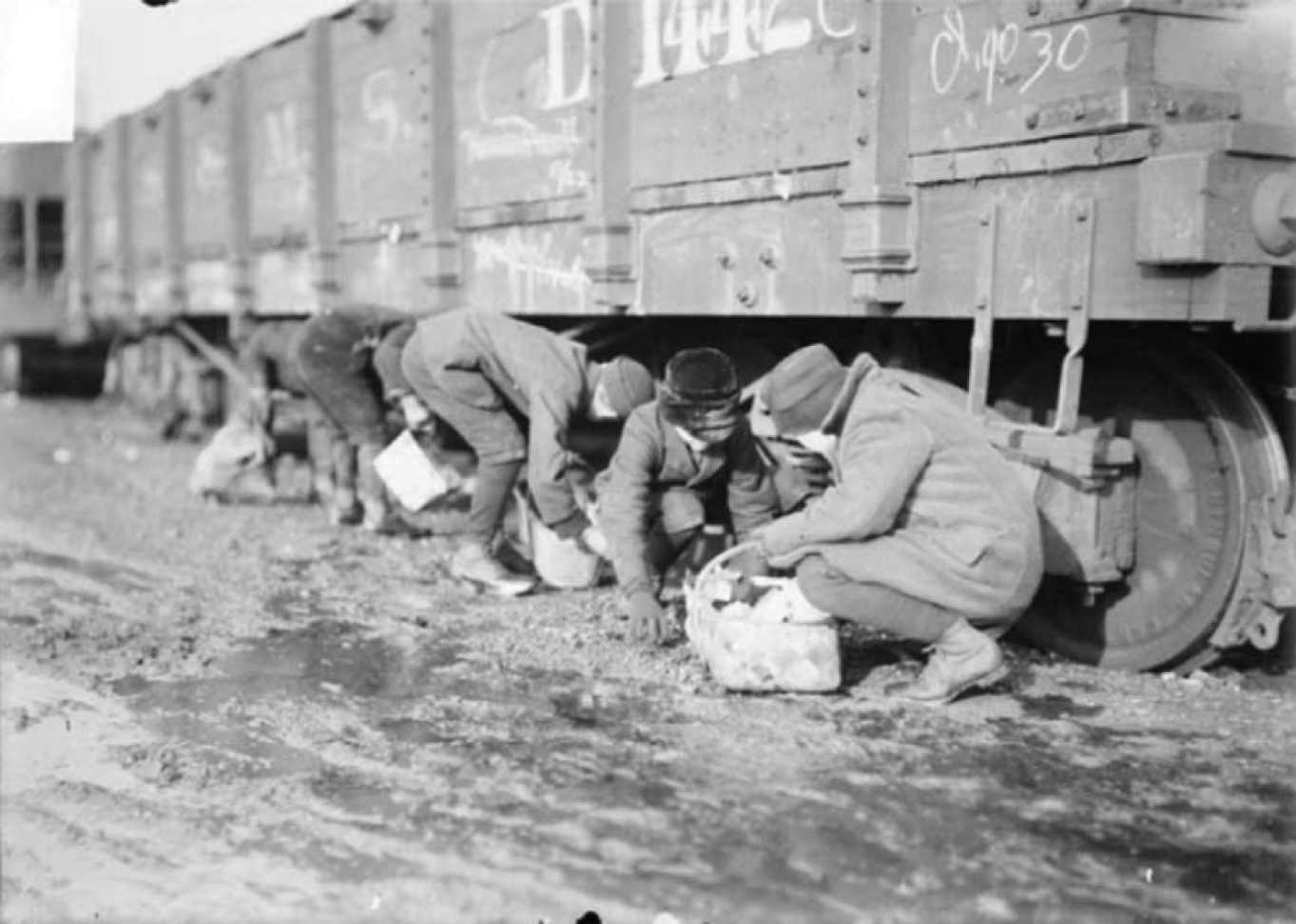
Notably, judges held that it was not parents who were responsible for protecting children from harm. In response to those who argued that “[t]he private duty to guard a child against unconcealed dangers devolves upon the parent, and not upon the landowner,” judges and jurists who endorsed the attractive nuisance doctrine emphasized that it was impossible for parents to keep a constant eye on their children, particularly poor and working-class parents (Riggle v. Lens 1914, 130).Footnote 9 Anyone who understands “the difficulties growing out of the parental relation,” a Nebraska judge reminded the jury, “know[s] full well how easy it is for children six or eight years of age to escape the watchful care and vigilance of parents for the purpose of indulging in childlike amusements” (Stout v. Sioux City & P.R. Co. 1872, 182). Children's “instinctive desire to examine and explore,” an Oklahoma judge concurred, “is often stronger than the influence of even the best and highest degree of parental effort to instruct and restrain” (City of Shawnee v. Cheek 1913, 732).
Class played a significant role in courts' unwillingness to hold parents responsible in cases involving injury to their children. Imputing the negligence of the parent to the child, a Pennsylvania judge held, “is repulsive to our natural instincts, and repugnant to the condition of that class of persons who have to maintain life by daily toil.” In this case, the mother of nineteen-month-old Lizzie was a washerwoman living in a “small shanty” by the railroad. As the court described the case, “here a mother toiling for daily bread, and having done the best she could, in the midst of her necessary employment, loses sight of her child for an instant, and it strays upon the track. With no means to provide a servant for her child, why should the necessities of her position in life attach to the child, and cover it with blame?” (Kay v. Pennsylvania R. Co. 1870, 276–77). The Supreme Court of South Carolina illustrated the difficulties of child supervision for a poor millworker's family. “His father was at work in the mill; the place the defendant [millowner] wanted him to be,” the judge explained. “By the laws of the state, wisely enacted, the child could not be in the mill. The child's mother was at the time of the tragedy nursing a sick neighbor woman,” and though she had brought her children with her, the plaintiff had slipped out to play and been injured (McLendon v. Hampton Cotton Mills Co. 1917, 783).
These judges acknowledged that poor agricultural or working-class laborers could not be expected to exercise ceaseless vigilance over their children. This line of thinking echoed that of anti-child-labor activists at the time, who argued that since poor and immigrant parents could not adequately protect their children from industrial exploitation, the state and the public must (Grossberg Reference Grossberg, Gamber, Grossberg and Hartog2003, 221, 228; Schmidt Reference Schmidt2010, 56, 61). Because poor and working-class parents were unable to oversee their children and the children themselves were incapable of understanding danger, these judges reasoned, the only party with the resources to guard against industrial accidents was the landowner.
Industrial landowners challenged the presumption of children's incapacity. Some children, they argued, especially older ones, could appreciate the danger and so should bear their own risk of accidental injury. That children's capacity to exercise reason and self-control increased as they grew older was hard to contest; judges noted that “approaching maturity brings some reasonable measure of judgment and discretion” (Edgington v. Burlington, C.R. & N.R. Co. 1902, 96). But when children possessed such judgment and discretion was a difficult question. A Kansas judge explained, “We know of no precise age at which a child may be said, as a matter of law, to have acquired such knowledge and discretion as to be fully accountable for all his acts.” He noted that even among children of the same age, “there is great difference … owing as well to differences in education and surroundings as to natural capacity” (Consolidated City & C.P. Ry. Co. v. Carlson 1897, 637). Children would not be considered trespassers “until they are old enough and intelligent enough to know and appreciate” danger (Dublin Cotton Oil Co. v. Jarrard 1897, 534–35). Whether a given child plaintiff had the capacity to understand danger required an individualized, fact-based inquiry (Garland and McGehee Reference Garland and McGehee1898, 409).
This flexible approach to when children developed the capacity to reason and exert self-control was in direct conflict with other emerging legal trends at the time that established age as a bright-line rule. For instance, as Mary Odem (Reference Odem1995, 9) discusses, the push for age-of-consent laws in the late nineteenth century centered on the claim that prior to age sixteen young women were unable to consent to sexual relations. In various juvenile court systems, children under eighteeen were likewise categorically excluded from the adult criminal system (Willrich Reference Willrich2004, 212), while in child labor laws children's age also strictly determined their ability to work (Schmidt Reference Schmidt2010, 75–76; Pearson Reference Pearson2015, 1144). In contrast, in the attractive nuisance cases, judges held that whether children should be responsible for the risk of industrial accidents depended on where they fell on the continuum between innocence and knowledge, impulsivity and control (Wilmes v. Chicago Great Western Ry. Co. 1916, 880). The responsibility for risk was intimately tied to the ability to exercise judgment and self-governance, not age.
Whether or not a child plaintiff was capable of appreciating the danger of a particular industrial setting was typically considered a question of fact for the jury (Schmitz v. St. Louis, I.M. & S. Ry. Co. 1893, 477). The question turned on an assessment of the child's “capacity,” which included “personal experience as well as natural gifts” (Western & A.R. Co. v. Young 1888, 914). Age, schooling, experience with the technology in question, and whether the child had been warned about the danger were all factors to take into account (Merryman v. Chicago, R.I. & P.R. Co. 1892, 545). Juries were instructed that if they determined that “by reason of the youth and inexperience of the plaintiff, he was not aware of the danger to which he was exposed,” they should find for the child (Schmitz v. St. Louis, I.M. & S. Ry. Co. 1893, 475). As such, in reviewing jury determinations, courts typically noted whether the child was “of average intelligence” or “unusually bright for his age,” as well as whether the child had been to school or lived close to the industrial site (Ecliff v. Wabash, St. L. & P.R. Co. 1887, 203; Twist v. Winona & St. P. R. Co. 1888, 169). Importantly, children were “presumably not guilty of conscious negligence” unless proven otherwise by the defendant (Shearman Reference Shearman1888, 157–58). Where “there was no evidence tending to show the requisite capacity … the presumption of incapacity prevails” (Pratt Coal & Iron Co. v. Brawley 1888, 557). In other words, it was the responsibility of the defendant landowner to introduce evidence of the child's capacity; otherwise, children would be presumed incapable of understanding danger.
Capacity also had class and race implications. The Kansas Supreme Court upheld recovery in the case of a twelve-year-old boy injured on a turntable, emphasizing, “we should think [he] was not a very bright boy, even for that age. He was born in Ireland, and his father was a common day laborer” (Kansas Cent. Ry. Co. v. Fitzsimmons 1879, 691). Another court noted that the plaintiff's father was “of foreign birth and testified by means of an interpreter” and his mother worked in a factory (Weik v. Southern Pac. Co. 1913, 713). As most of the child plaintiffs hailed from poor agricultural or working-class backgrounds, and not a few have Irish, German, Polish, or Italian last names, even unspoken assumptions about poor or immigrant children's intelligence likely played a role in assessments of capacity. Because of stereotypes about the class and nationality of the child plaintiffs, poor and immigrant children may have benefited from the emphasis on capacity as determinative of risk.
Juries, however, appear to have resisted the judge-formulated rule that children's capacity determined their responsibility for risk. In the case of ten-year-old Verne Twist, the jury found that Verne, the son of “a railroad man,” knew that “it was dangerous to play on the turn-table” and that “he had no right to go there.” Yet in spite of his apparent capacity, the jury concluded that he was not “of sufficient age and discretion to understand and comprehend the danger he subjected himself to” (Twist v. Winona & St. P. R. Co. 1888, 170). Similarly, a Kansas jury found that nine-year-old William Todd “knew that it was wrong to go under the cars, and to sit and play there,” that he “had been frequently cautioned” by his parents not to play in the railroad yard, and that such a “prudent, intelligent, and bright boy … would ordinarily know and appreciate the risk of going under the cars to such extent as to know it would be dangerous” (Atchison, T. & S.F.R. Co. v. Todd 1895, 804). Yet the jury still awarded damages to William. For these juries, the capacity to understand danger did not justify shifting the burden of risk onto the child. Popular resentment against railroad companies in the areas in which the turntable cases first arose likely played a role in jury determinations, as well as perceptions that wealthy industrial actors should justly bear the cost of injuries rather than the child's parents, who were likely the twelve men's neighbors. For these juries, knowledge of danger was subordinate to other considerations in determining liability.
Judges expressed impatience with the reticence of the jury to attribute responsibility for risk to the child even when they had concluded the child did in fact have the requisite capacity. For these judges, knowledge of the danger implied the ability to exercise self-control, which meant bearing the risk. In William's case, the Kansas judge reversed the jury decision emphatically, holding: “The findings of the jury leave no doubt in this case that the deceased had sufficient capacity to understand the danger to which he was exposed” (Atchison, T. & S.F.R. Co. v. Todd 1895, 806). Similarly, where a twelve-year-old boy was “bright for his age” and evidence showed he knew of the danger of trains, the Michigan Supreme Court held, it was useless to submit the case to the jury, as “[t]here could be but one result” unless the jury's conclusion was “warped” by sympathy for the child (Ecliff v. Wabash, St. L. & P.R. Co. 1887, 203). Unlike sympathetic juries, judges associated knowledge of danger with ownership of risk; if children were capable of comprehending the danger, they were expected to be able to avoid it, and were therefore responsible for their own risk. Instead of relying on jury determinations, these judges assessed the individual capacity of the children themselves.
Beginning in the 1880s, some judges also began to make determinations about capacity in cases where evidence showed that the child had been warned about the danger or was familiar with the technology. In these cases, the excuse of “childish instincts” would not apply, particularly where children were older (Twist v. Winona & St. P. R. Co. 1888, 167). The California Supreme Court explained that “[c]hildren, as well as adults, should use the prudence and discretion which persons of their years ordinarily have, and they cannot be permitted with impunity to indulge in conduct which they know, or ought to know, to be careless” (Studer v. Southern Pac. Co. 1898, 404).
As industrialization accelerated toward the end of the nineteenth century, the expectation that children would be familiar with dangers posed by technology like railroads gained more purchase. While admitting that a twelve-year-old boy might be “more heedless and thoughtless of danger than a man,” a Michigan judge held that because the plaintiff lived “in the immediate vicinity of railroad trains, and [was] accustomed to them,” he “must be presumed to have known of the great peril and danger of riding where he did” (Ecliff v. Wabash, St. L. & P.R. Co. 1887, 203). Importantly, these cases still involved individualized determinations of the child's capacity; familiarity with the technology involved is the key reason for denying recovery.
Notably, the question of capacity was only relevant in cases of injuries from industrial technology. Courts generally agreed that in the case of “natural” conditions of land, such as ponds, children could be expected to understand the danger and so the attractive nuisance doctrine would not apply (Frost v. Eastern R. R. 1887, 791; Emond v. Kimberly-Clark Co. 1914, 761); rather, it was injuries from “any obviously dangerous, artificial, and attractive condition … which in character is clearly different from common and well-known dangerous natural conditions,” that the doctrine was designed to address (City of Shawnee v. Cheek 1913, 732). For instance, in the case of thirteen-year-old Casimir Wojciechowski, who drowned in an icy pond on Christmas Day, the Illinois Supreme Court denied recovery, stating that a boy “knows as well as a man that a pond like this one is not a safe place upon which to go when the ice is broken at the edge and covered with water, and if, with the knowledge of such danger, he carelessly and recklessly goes upon such pond and loses his life,” the attractive nuisance doctrine would not apply (Heimann v. Kinnare 1901, 161). In practice, this distinction meant that “the owner of a fruit tree” was not bound “to cut it down because a boy trespasser may possibly fall from its branches,” but the owner of a railroad yard would be liable for injuries caused by his turntable (Gillespie v. McGowan 1882, 151).
Courts' primary concern was protecting children from industrial accidents, not the quotidian accidents of agricultural or working-class life. The attractive nuisance doctrine first took hold in the Midwest, West, and South, places that were only beginning to industrialize in the 1870s–1890s. As railroads expanded westward, trains, tracks, and turntables became the primary form of industrial technology that these communities encountered. Unlike ponds or other natural conditions, children could not be expected to understand the dangers of this novel technology.
Injuries from railroad and other industrial accidents were also particularly brutal. Children had been injured and killed in the course of daily life activities before industrialization, but those injuries, though tragic, were in a sense ordinary—falling down a well, getting scalded by a pot of boiling soup, drinking lye, being kicked by a cow.Footnote 10 These were hazards of normal household production. The injuries children experienced as the result of industrialization were different—novel, scary, often inexplicable (Zelizer Reference Zelizer1985, 36; Welke Reference Welke2001, 19):Footnote 11 legs crushed in railroad turntables, electrocution by wires carelessly draped through trees (Lynchburg Telephone Co. v. Bokker 1905), acid burns from chemical runoff into swimming holes (United Zinc & Chem. Co. v. Britt 1922, 300). These injuries were physical evidence of the immense toll industrialization and the introduction of new technology placed not only on individual children and families but on whole communities' established modes of living. The danger the doctrine sought to protect children against was the danger posed by industrialization, not the danger of preindustrial life.
The distinction courts drew between “natural” and “novel” or “artificial” conditions reveals that the core question motivating the development of the attractive nuisance doctrine was how to distribute the risk of industrial accidents. Traditional uses of property, such as farming, were protected; the issue was whether industrial use of land subjected property owners to a different standard of responsibility. The emergence of the attractive nuisance doctrine in the 1870s reflects a concurrent trend in other areas of law to hold powerful actors involved in the industrializing economy to a different standard of responsibility in their uses of their property. In 1876, the U.S. Supreme Court in Munn v. Illinois and its companion cases held that property used in “the public interest” could be subject to greater regulatory controls than property used by purely private persons, applying this rule to grain warehouses and railroads (126). Taken together, the “public interest” doctrine and the attractive nuisance doctrine reflect a willingness on the part of courts in the 1870s and 1780s to limit uses of industrial property in the interest of the public welfare.
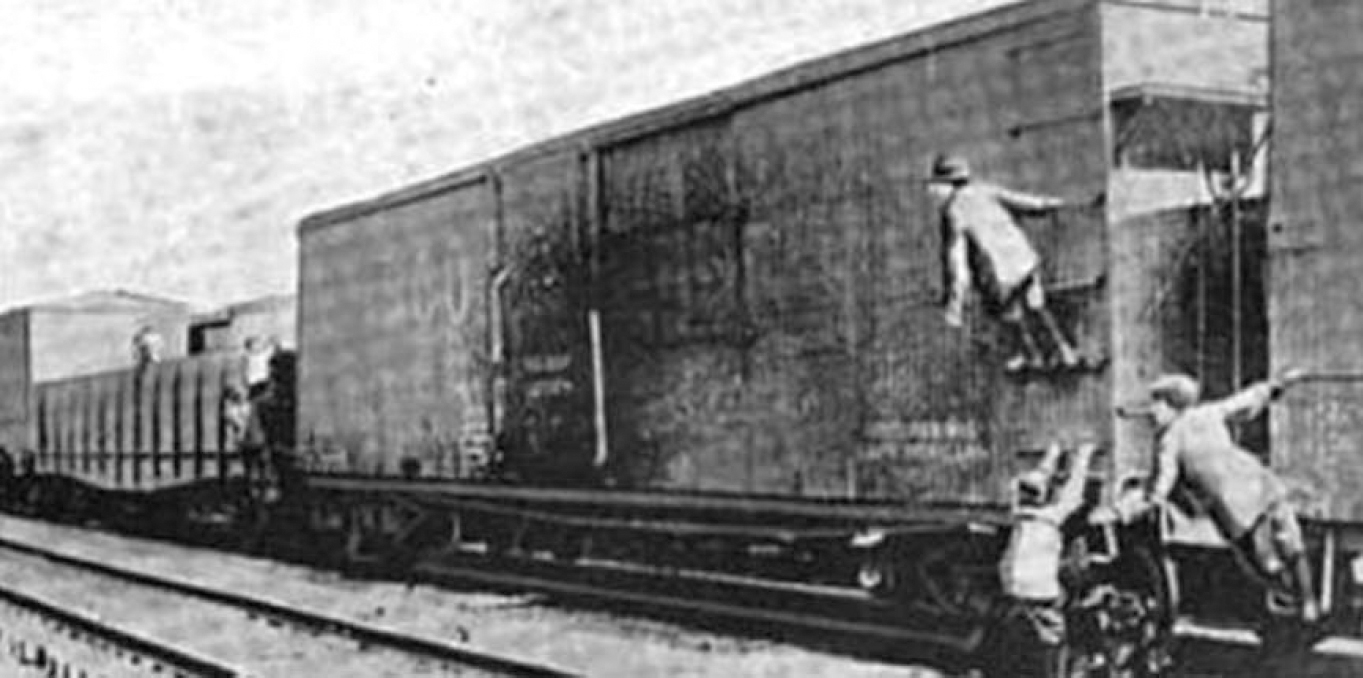
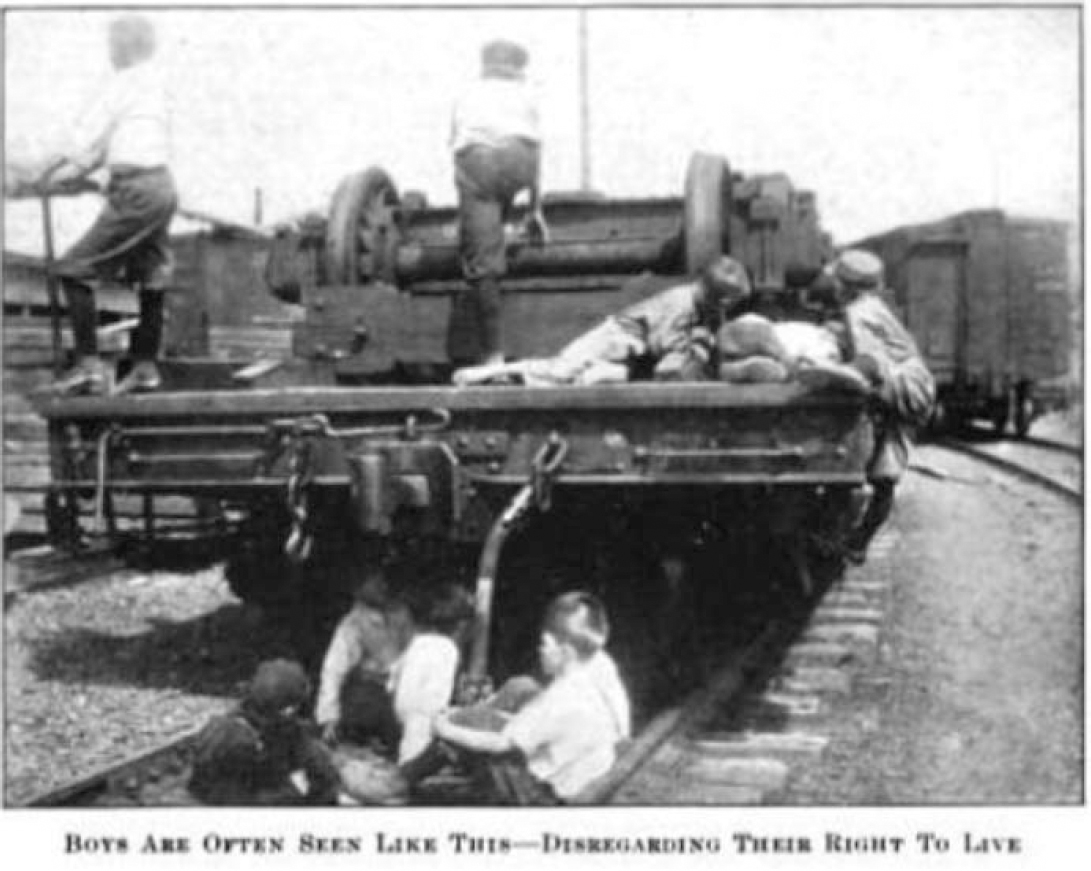
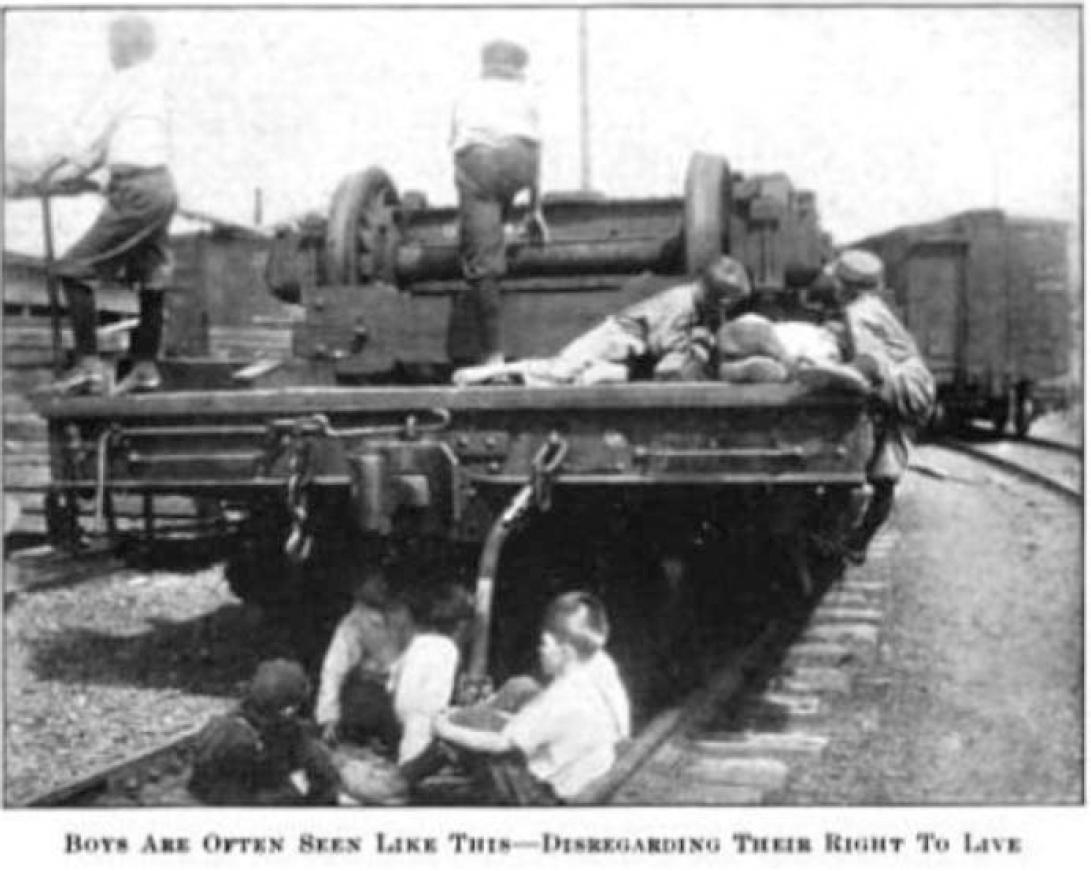
Boys Playing on a Train Car, Circa 1915
Source: Lane (Reference Lane1915, 132). The caption reads “Boys Are Often Seen Like This—Disregarding Their Right to Live.”
The Safety First Antitrespassing Campaign
The presumption of childhood innocence was challenged in the early twentieth century by industrial landowners who sought to shift the responsibility for trespassing accidents off their shoulders and onto those of children and the public. In 1912, railroad corporations, the most prominent industrial landowner sued in the attractive nuisance cases, launched a “Safety First” antitrespassing campaign to educate children, parents, and the public about the dangers of trespassing. This campaign presented the child as a rational actor capable of assessing and avoiding danger. Through promotional material, films, lectures, and activities, safety reformers assumed that children could be taught to engage with the industrial world in informed and responsible ways. The Safety First movement shifted the baseline assumption in both popular culture and law about children's capacity to understand danger.
Railroads launched the Safety First campaign as part of a larger effort to deflect responsibility for industrial accidents. In 1888, the newly formed Interstate Commerce Commission (ICC) began to compile statistics for railroad accidents, and its subsequent annual reports revealed a steady increase in railroad injuries (Aldrich Reference Aldrich1992, 11). Although state railroad commissions had been collecting accident statistics for several decades, these records had received less attention (Aldrich Reference Aldrich2006, 210). The statistics provided by the ICC “staggered” the public, prompting an “avalanche” of federal railroad safety legislation (Belnap Reference Belnap1918, 483).Footnote 12
The ICC reports divided railroad injuries into separate categories for workers, passengers, and trespassers (Aldrich Reference Aldrich2006, 120–21). Previously, public attention to railroad accidents had focused on the drama of train crashes involving injured passengers and on the unsafe working conditions of railroad employees (Mohun Reference Mohun2013, 101, 94). In contrast, “the death of a man, woman, or child walking the track” had produced only a “feeble protest” (Richards Reference Richards1915, 53).Footnote 13 Unlike train crashes involving large numbers of passengers, injuries to trespassers were sporadic and less visible. The ICC statistics brought the hidden cost of injury to trespassers to the fore. As the annual reports documented, the annual rate of reported injuries to trespassers climbed from 3,062 in 1890 to 4,346 in 1900, peaking at 5,612 in 1907 (Aldrich Reference Aldrich2006, 335). Proportionally, injury to trespassers far surpassed injury to passengers or railroad employees. In 1890, 48 percent of people killed on US railroads were trespassers, while 39 percent were employees and only 5 percent passengers. In 1900, 55 percent of those killed were trespassers, as compared to 32 percent employees and 3 percent passengers (Aldrich Reference Aldrich2006, 120–21). About 15 percent of trespassing accidents were estimated to be to children under eighteen (Belnap Reference Belnap1918, 484). Between 1901 and 1910, one reformer reported emphatically that “there were 13,000 children under 14 years of age killed and injured while trespassing on railroad property, and there were 20,000 more killed or injured between the ages of 14 and 21” (Lane Reference Lane1915, 132, emphasis in original).
As public attention turned toward trespass accidents, newspapers began to illuminate who these trespassers were. Contrary to popular perception, these articles explained, it was “not only tramps who are killed and injured while trespassing,” but also “men of the laboring class, factory workmen, their wives and children” (“Trespassing Accidents,” 1909). Many trespassers were migrant workers following the track from town to town in search of seasonal employment, or working-class people who could not afford train fare and preferred the railroad track to roads because of its “even surface and cleanliness” (Fourth Annual Report 1910, 424). As the judges in the attractive nuisance cases had noted, trespassers were also “children [who] come on the road to pick up coal that may have dropped off the cars,” and “little children … living in the vicinity” of the tracks (Hearings Before the Subcommittee 1917, 56).
The lack of public awareness about trespasser injury was likely due to the fact that most of those injured while trespassing were impoverished agricultural or industrial laborers, not wealthy passengers or unionized laborers (Aldrich Reference Aldrich2006, 123). R. C. Richards, the claim agent for the Chicago & North Western Railroad and a key promoter of the antitrespassing movement, emphasized this at a gathering of railroad officials in 1913. He pointed out that in the previous two decades, 86,730 trespassers had been killed, fourteen times the number of passenger fatalities. He joked, “If we had killed that many passengers during the last 20 years there wouldn't be any railroad officials in this audience. They would all be in jail.” This quip was followed by “Laughter and applause” (Coon Reference Coon1913, 3061).
The growing number of railroad accidents also resulted in increased litigation (Thomas Reference Thomas1999, 148). In 1908, ICC statistics revealed that railroads paid $56,700,700.00 for loss of property and personal injuries arising from accidents (Fourth Annual Report 1910, 421). In Chicago, claim agent Richards noted in 1915 that the average cost of a railroad accident was “$113.93 per case; each accident prevented, then, means a saving of $113.93” (Richards Reference Richards1915, 60). In addition to the rise in the number of accidents, the uptick in litigation was likely also the result of an increasingly active plaintiff's attorney bar that operated on the contingency fee system, in which lawyers only received a cut of the damage award if their clients won (Karsten Reference Karsten1998, 231). Deaths to children were particularly costly, in part because of the moral as well as economic value that was beginning to be put on the lives of children during this period, resulting in higher damage awards (Zelizer Reference Zelizer1985, 149).
The increased cost and frequency of personal injury lawsuits, coupled with the negative publicity of the ICC accident statistics, spurred the railroads to action. In 1913, a coalition of railroads and other industrial actors launched a national Safety First movement (Proceedings of the First Cooperative Safety Congress 1912). A central goal of this movement was to educate children about the perils of trespassing on railroad property.
The Safety First antitrespassing campaign was modeled after a workplace safety movement that had begun to take shape a few years earlier. As Mark Aldrich (Reference Aldrich1997, 104) discusses, as states began to pass workers' compensation laws in the early twentieth century, industrial employers had greater incentives to reduce the number of accidents. To fend off impending government safety regulation, in 1906 the industrial mega-corporation US Steel had started a “Safety First” movement to prevent workplace injury, forming a Committee on Safety in 1908 (91). Around the same time, railroads, led by the Chicago & North Western Railway, also began to promote railroad workplace safety (188). These Safety First campaigns sought to educate employees about safety risks and to impose greater managerial control over the workplace through increased supervision and the imposition of safety rules (196). Improving safety practices appealed to industrial corporations because it increased efficiency, reduced costs, and allowed for greater managerial oversight of the workplace, in addition to bolstering their public image (Witt Reference Witt2009, 145; Mohun Reference Mohun2013, 142).
Although the Safety First movement within the workplace has received much scholarly attention, little notice has been paid to a concurrent project: the Safety First movement to prevent trespassing on railroad property.Footnote 14 Just as industrial and railroad corporations launched their effort to improve public relations and lower the rate of accidents of industrial workers, railroads simultaneously engaged in a campaign to educate the public about the dangers of trespassing. Like the campaign aimed at workers, the antitrespassing movement was geared toward mitigating the railroad corporations' liability by changing the behavior of individual members of the public—in this case, children (Aldrich Reference Aldrich1997, 193; Welke Reference Welke2001, 35). Railroad corporations coordinated their public position on safety through organizations like the American Railroad Association, formed in 1909, and the American Railway Safety Association, formed in 1913 (“American Railway Safety Association” 1913, 825; Aldrich Reference Aldrich2006, 196). They also appealed to Progressive reformers such the Public Safety Commission of Chicago (on the board of which several railroad officials served), the American Museum of Safety in New York, and “all the women's clubs of the nation” (Brownell Reference Brownell1913, 25; Lane Reference Lane1915, 135). Together, they promised, railroads and reform groups could help awaken “that powerful but now sleeping giant, the American public” to the need to “stamp[] out the trespass evil” (Lane Reference Lane1915, 135).
It was not the responsibility of railroad corporations to prevent accidents, railroad safety agents argued. Although many states had had laws on the books since the 1840s requiring railroads to fence their lines, railroads notoriously disregarded these statutes.Footnote 15 At the turn of the century, in response to regulations passed by state legislatures, railroads did begin to implement new safety measures, such as crossing gates, flag men, and train whistles.Footnote 16 Yet to undertake to guard against all trespasser injury themselves, railroads claimed, “would involve enormous expense, in many cases equal to or greater than the entire capitalization of the railroads” (Rockwell Reference Rockwell1916, 558); rather, railroads focused on shifting the responsibility for preventing injury to trespassers. As far as adults were concerned, railroads advocated for the enactment and enforcement of criminal antitrespassing laws, as “adults will persist in trespassing” upon the tracks “with impunity” (Metcalfe Reference Metcalfe1920, 127). With regard to trespassing children, railroads embraced a different tactic: a national antitrespassing educational campaign.
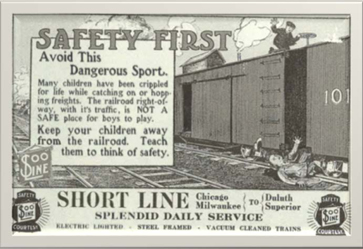
A Safety First Postcard Warning Parents to “Keep Your Children Away from the Railroad”
Source: Grant (Reference Grant1997, 127). [Color figure can be viewed at wileyonlinelibrary.com]
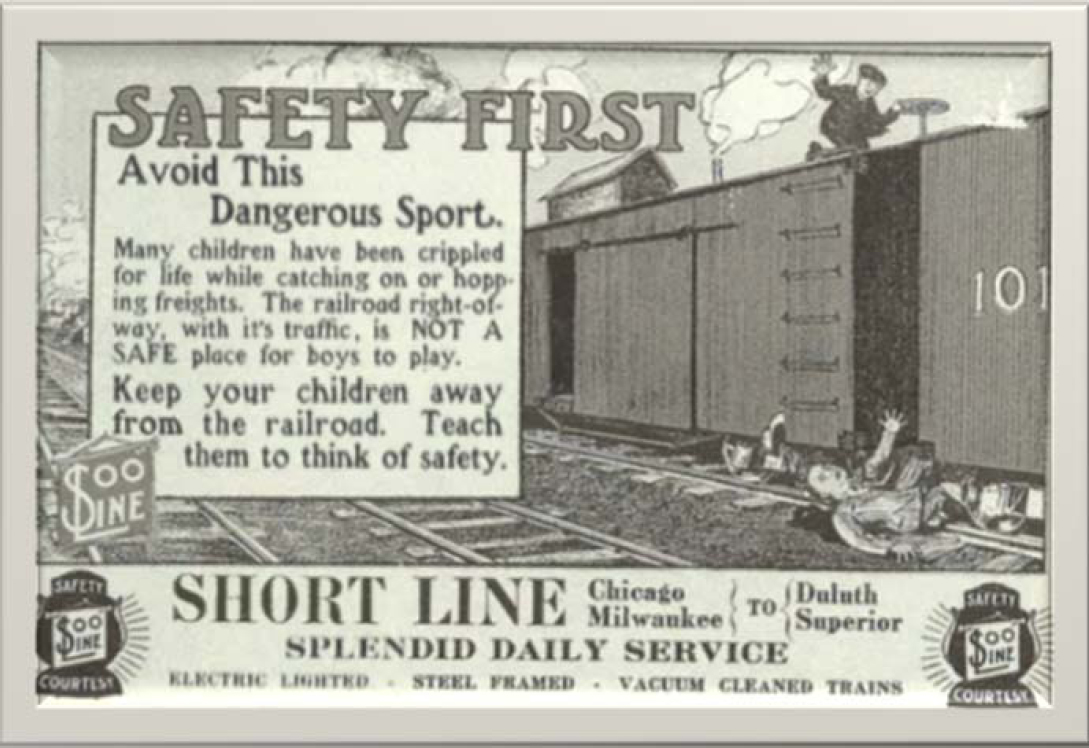
Like progressive reformers more generally, railroad safety agents believed that children were more malleable than adults and could act as agents of change in poor and immigrant families by introducing middle-class values into the home (Rothman Reference Rothman1980, 50–51; Aldrich Reference Aldrich1997, 137; Mohun Reference Mohun2013, 153). One claim agent explained that the safety program focused on educating children to “be more careful, and through them to reach the ‘grown-ups' in their homes” (Carson Reference Carson1914, 166). The Baltimore & Ohio gave each schoolchild a “prettily colored pamphlet” to take home, by which the child “carries a lesson to its parents,” particularly “if the parents are foreigners” (Leigh Reference Leigh1916, 26). Through their children, railroads “hoped to secure the co-operation of the parents and create a public sentiment” against trespassing (“Safety Rhymes for Children” 1913, 514).
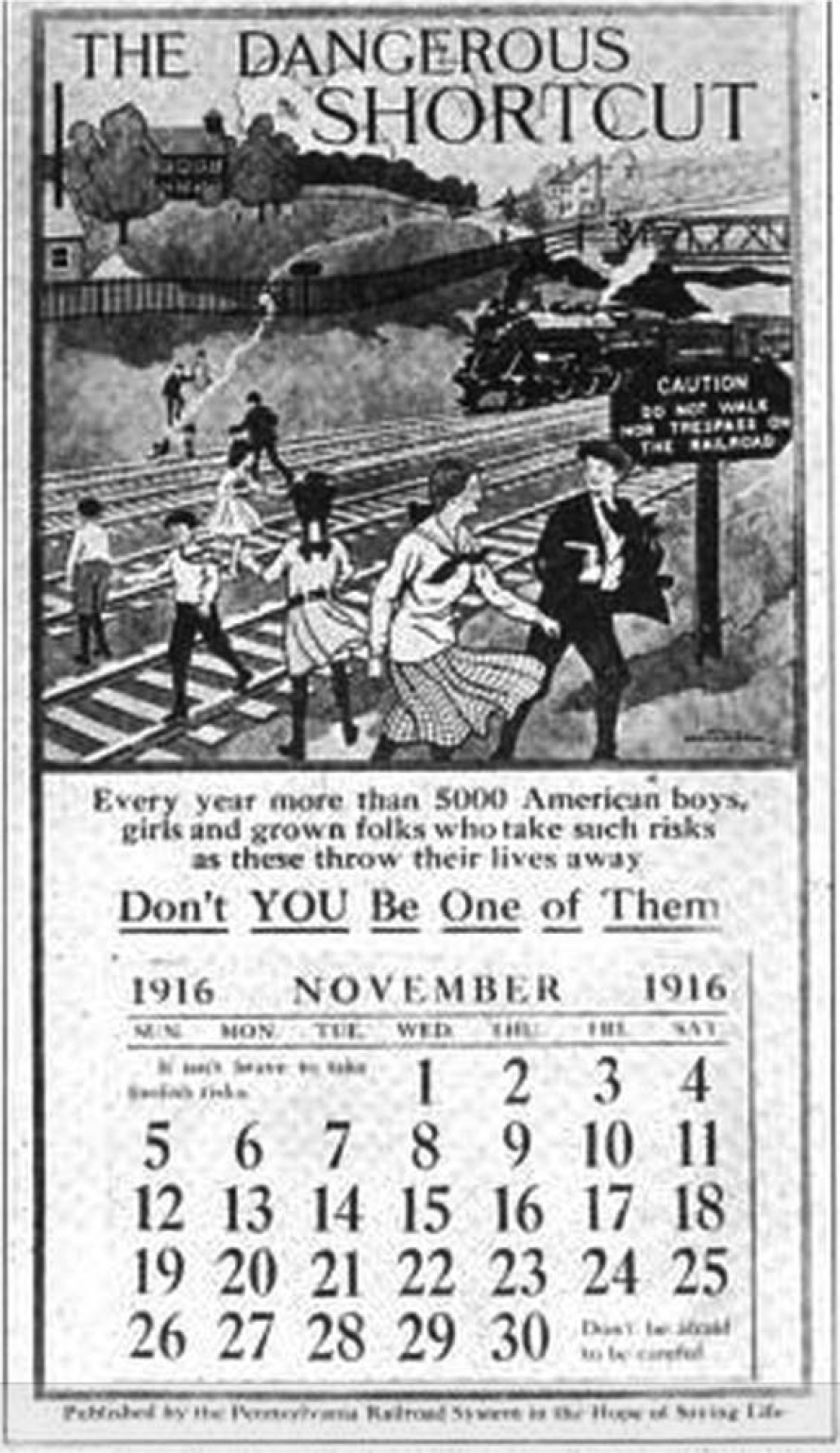
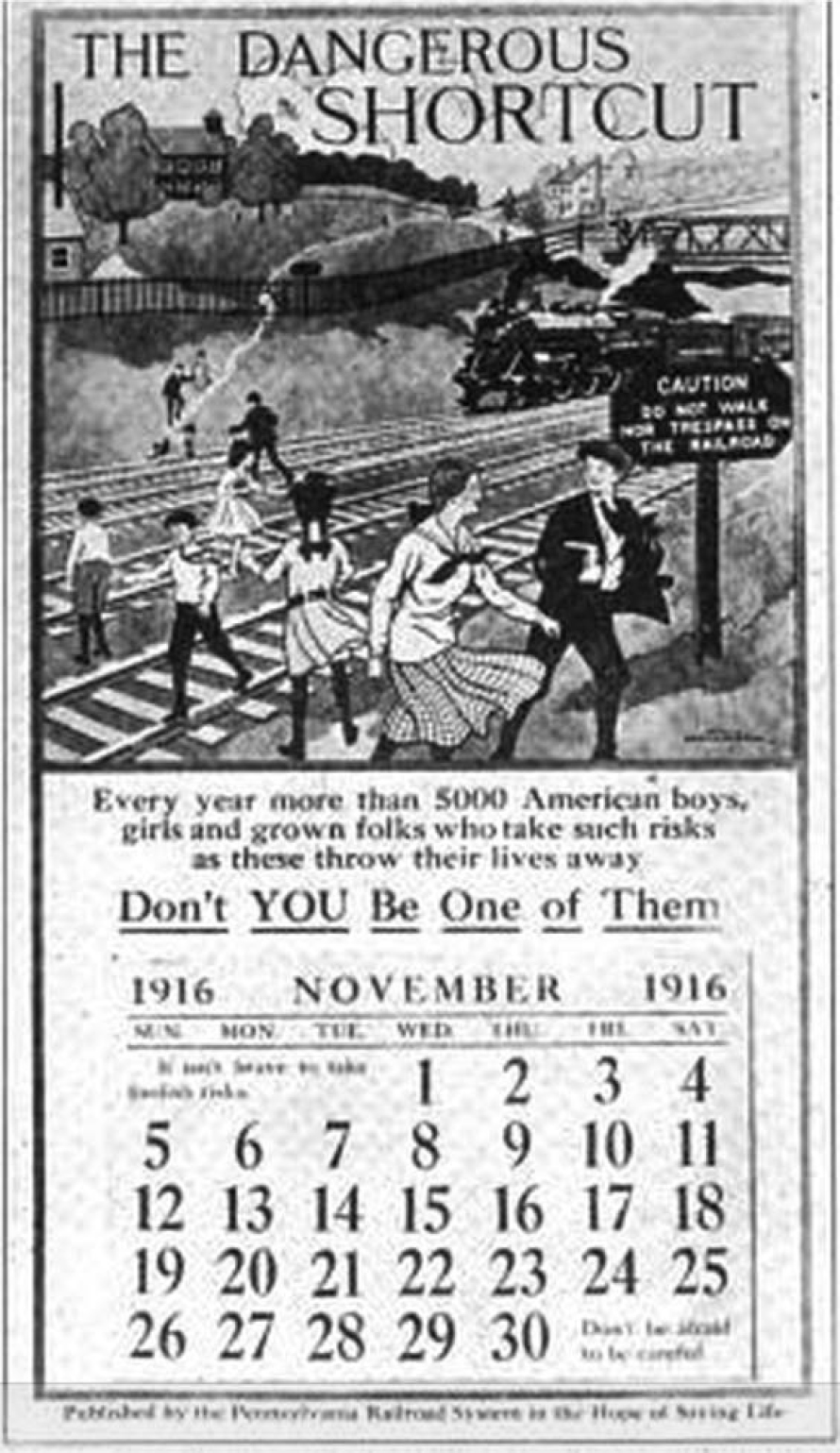
The assumption behind the antitrespassing educational campaign was that children were capable of being taught to understand the dangers of an industrial environment and to control the childish impulses that might expose them to hazards. Children were trained to identify and assess potentially dangerous situations and to take steps to prevent and avoid them. The educational program took many forms. Railroad “safety agents” canvassed schools in towns along their routes, giving lectures and distributing materials explaining railroad safety to children (Lane Reference Lane1915, 134). One lecturer in Milwaukee paraded forty-one schoolboys onstage, informing the audience of schoolchildren, “That number of boys is killed in accidents in the United States every day,” at which point a “dead hush fell over the entire hall” (“How Safety Was Sold” 1920, 14). Public school teachers were encouraged to “ma[ke] safety lessons a part of their regular work” (Lane Reference Lane1915, 134, emphasis in original). The Central Safety Committee of the Chicago, St. Paul, Minneapolis & Omaha Railway worked with public officials and school superintendents in Sioux City to distribute “a series of illustrated blotters depicting accidents and telling children to keep away from the railroads, the blotters being changed every week” (“Deadly Toll” 1915, 6). The Pennsylvania Railroad issued an “illustrated calendar” that portrayed children “stumbling on the track in front of an approaching train” and “indulging in the dangerous sport of ‘balancing on the rails,’” with the heading: “Every year more than 5000 American boys, girls and grown folks who take such risks as these throw their lives away. Don't you be one of them” (“Children's Calendar Teaches Danger of Trespassing” 1916, 799). Ditties like that written by Edward Tinker, the Safety Supervisor of the El Paso & Southwestern Railroad, set safety rules to rhyme. The song warned children:
Never cross the tracks by night or by day,
Without stopping to listen and look each way.
Never walk along the railroad ties—
You can't always trust your ears and eyes.
Never hop a freight, for nothing quite heals
The wound received under grinding wheels.
Never, on a hot or sunny day,
Sit beneath box cars to rest or play.
Never crawl under a car of freight
When the crossing's blocked—play safe and wait.
Never board, or alight from, a train that is moving,
Accidents, daily, its dangers are proving.
Never play games ‘round the tracks at the station—
There are much safer places to seek recreation.
Never a railroad bridge should you cross,
A train may come and result in your loss.
Never pick up coal around the railroad yard,
A train may catch you off your guard. (Lane Reference Lane1915, 135)
The song, it was claimed, had been “read to hundreds of thousands of school children in day schools, Sunday and parochial schools, and children's courts,” and “reprinted in dozens of papers” (Van Sant Reference Van Sant1915, 122). The Union Pacific Railroad even promoted a “moving picture film” for educating the public about accident prevention (“Safety Work on Union Pacific” 1913, 347).
Calendar Distributed to Children by the Pennsylvania Railroad in 1916
Source: “Children's Calendar Teaches Danger of Trespassing” (1916, 799).
Scare tactics and peer pressure were certainly part of the program, but the primary focus of the broader Safety First educational campaign was training children to perceive danger and exercise care. Children were not expected to absorb safety lessons passively, but actively to embody them. Safety reformers promoted the formation of “Safety First Clubs” in local schools and passed out “safety buttons” for safety-conscious behavior (“Safety Rhymes for Children” 1913, 514). E. George Payne, a safety educator in St. Louis, published a comprehensive curriculum for elementary school students featuring safety lessons for each grade. Payne explained that his educational program drew from the new psychology of “the development of child nature” that focused on teaching the child “controls or behavior … to make him an effective individual” in society (1919, 21–22). For Payne, children had the capacity to exercise self-control and restraint. His curriculum included such lessons as sending children to observe and report on a coroner's inquest of a young boy who had died while hitching a ride on a streetcar; dramatizing the rescue of younger children by older; incorporating accident statistics into arithmetic instruction; and drawing pictures of accidents, dangerous objects, and safety strategies.
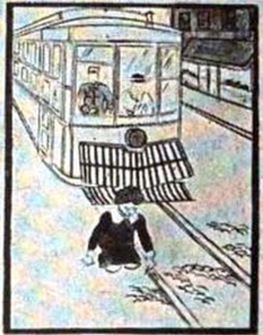
Drawing by a Child in a St. Louis Safety Program
Source: Payne (Reference Payne1919, 70). [Color figure can be viewed at wileyonlinelibrary.com]
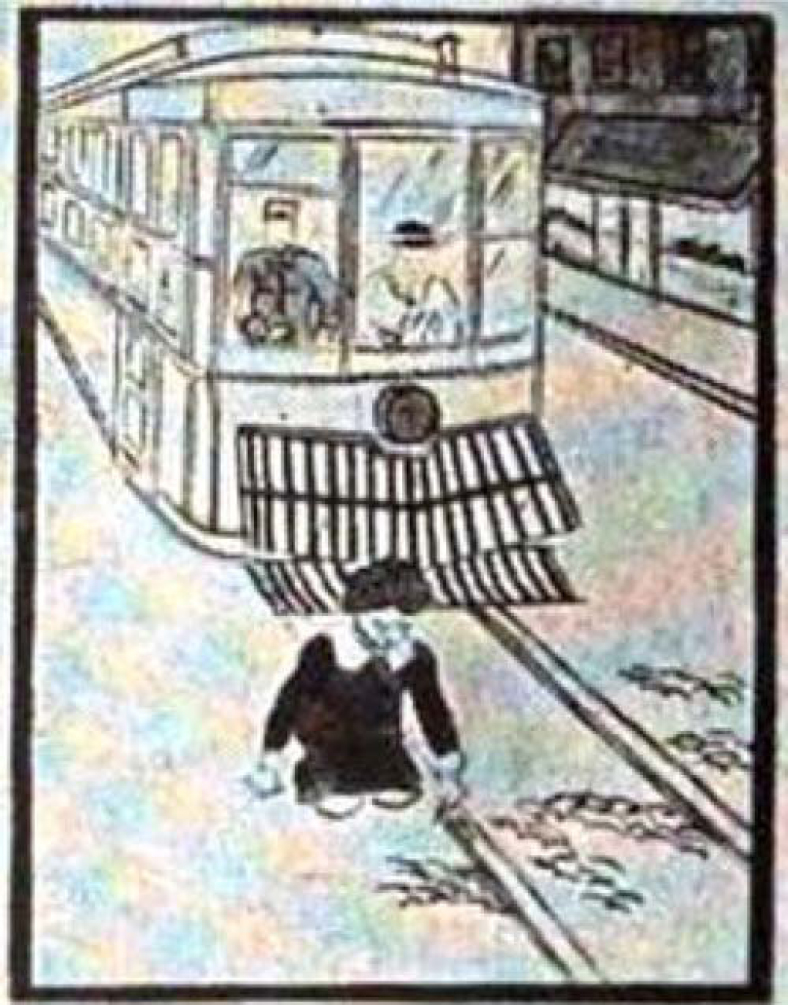
As Payne emphasized, the foundation of the Safety First movement's approach was to give children the tools to control their behavior and environment by training them to identify and avoid danger. Promotional material like posters helped children to visualize the cost of accidents. Through the visit to the coroner, the dramatization of dangerous situations and rescues, and Safety First clubs, the program gave children experiential knowledge of danger. By memorizing rhymes listing dangerous activities, calculating the number of children killed on railroad tracks, and drawing pictures of children getting hit by trains, children were encouraged to internalize the realities of industrial hazards. The gruesomeness of some of the experiences and images used in the campaign indicates that safety reformers were not concerned with protecting children's innocence, but instead viewed understanding the horrors of the industrial world as necessary for children's education. In this aspect of the campaign, children's capacity for rational thinking—their ability to assess the potential danger of situations and adjust their behavior accordingly, once trained to do so—was taken for granted.
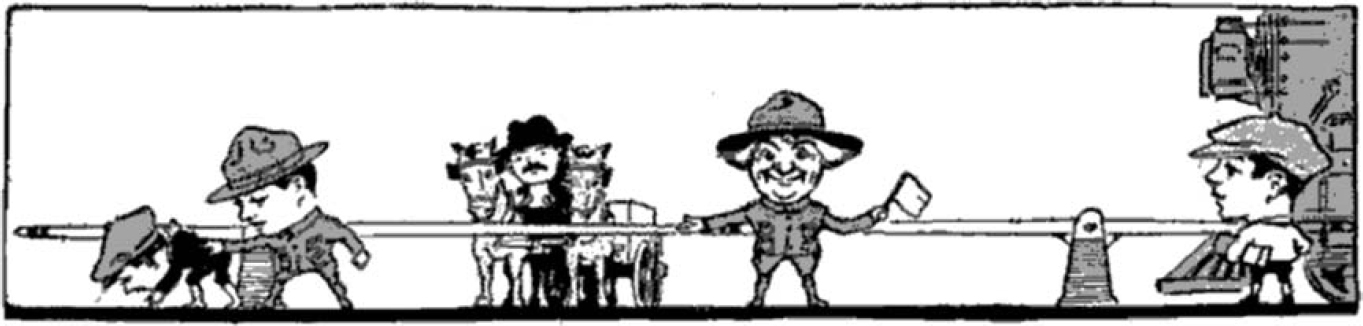
Sure Pop and a Safety Scout Preventing a Child from Being Hit by a Train
Source: Bailey (Reference Bailey1917, 73).
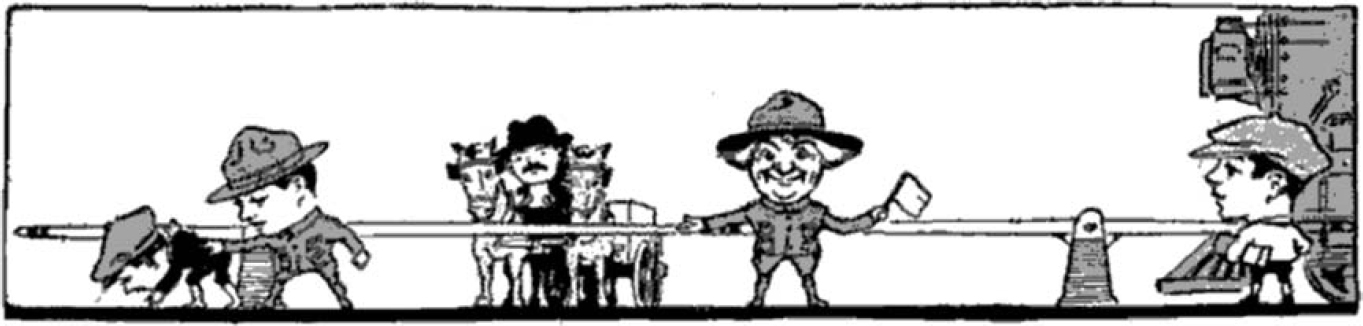
The safety campaign encouraged children to look out not only for themselves, but for their friends and communities as well. Announcing that “[c]hildren can be taught to become alert to their own safety,” the National Safety Council's (1917) promotional book Sure Pop and the Safety Scouts set out to illustrate what self-control and community safety policing looked like (Bailey Reference Bailey1917, xii). In the book, a gnomelike man named “Sure Pop” appears to inspire the protagonists Bob and Betty, children of a local millworker, to keep a lookout for danger. Sure Pop encourages the children to “read the little signs that spell DANGER” and to err on the side of assuming situations are hazardous. The children embrace the “adventure” of safety scouting, and go on daily quests to ferret out hazards and prevent accidents.
Children, the book indicates, should operate on the assumption that their environments are dangerous, and keep a constant lookout for the safety of themselves and others. Having learned about the danger of live wires, when Bob sees a fallen wire, he warns a group of children away: “He didn't [know the wire was live]. He simply had sense to treat all fallen wires as if they were alive” (Bailey Reference Bailey1917, 76). Inspired by Sure Pop, at the end of the book Betty and Bob form their own “Safety Scout” club and take the safety pledge, “I will be vigilant not only for my own safety, but for that of others, in the street or indoors, on foot or in conveyances, anywhere and at all times” (2). The message of Sure Pop is that children have the capacity and the responsibility to look out not just for themselves, but for their communities as well. In this book, children are able to read the signs of danger all around them—a fallen wire, a crumbling bridge, railroad tracks—and to avoid injury through exercising their knowledge and self-control.
Importantly, the Safety First campaign encouraged children to weigh the risk of potential hazards, not just to avoid them. Sure Pop draws a distinction between foolish and justified risks. Unlike story books that suggest “it's a brave thing to risk your life,” Sure Pop explains: “It is a manly thing to take a risk—when it's necessary. When somebody's life is in danger, it's the manliest thing on earth to take a risk for the sake of saving it” (75, emphasis in original). Illustrating his capacity to weigh risks, Bob braves the danger of a burning building in order to rescue a little girl—but determines it is too late to save a dog electrocuted by the fallen wire (46, 35). This aspect of the campaign encouraged children's capacity for rational thinking, their ability to weigh the cost of potential injury to themselves against the greater good of saving lives.Footnote 17
The vision of children presented by the Safety First movement reflected and promoted a key shift in the social perception of children's capacity to deal with industrial danger. No longer were children impulsive “butterflies” at the mercy of the industrial world. In the Safety First promotional material, children are portrayed as thoughtful, rational, and self-governing actors, capable of assessing the danger of their environment, avoiding hazards, and exercising self-control.
The Safety First educational campaign drew on new theories promoted by Progressive educational reformers like John Dewey, which posited that the primary purpose of schools was to socialize children to be self-directing and contributing members of the community (Dewey Reference Dewey1899, 40; Steffes Reference Steffes2011, 195). Educational reform was a core part of the Progressive agenda to craft a new society equipped to deal with the problems of industrialization and capitalism (Welke Reference Welke2001, 39). Yet as Tracy Steffes (Reference Steffes2011, 7) shows, education alone was ineffective for addressing the root causes of social and economic problems. The antitrespassing campaign reflects these limitations. Certainly, encouraging children not to play on railroad tracks or equipment makes sense from the perspective of valuing human life. However, the steps railroad safety reformers took to curtail trespassing did not address the reasons why trespassing occurred—such as the absence of safety equipment like fences along railroad tracks; the lack of well-kept roads or affordable public transportation; the poverty of families who depended on scavenged coal for fuel; and the absence of playgrounds and other safe spaces for poor children to play;Footnote 18 rather, the campaign centered on socializing children to inevitable danger. In the Safety First campaign's framing of industrial accidents, it was the responsibility of the individual to assess and avoid danger, rather than the responsibility of the industrial actor to prevent the dangerous situation from occurring.
The Attractive Nuisance Doctrine in the Twentieth Century
The antitrespassing Safety First movement highlighted and accelerated a new vision of childhood that emerged in the early twentieth century. Within the attractive nuisance case law, this emerging view of children's competence competed with the older, romantic vision of children's defenselessness. This conflict played out in court determinations of a child plaintiff's capacity. Through the 1920s, courts considering child trespassing cases employed conflicting approaches to whether determinations of capacity should be individualized or standardized and whether children should be presumed incapable or capable of understanding danger. This debate culminated in the ALI's Restatement on the attractive nuisance doctrine in 1934, which instantiated the legal standard of the “reasonable child” and endorsed the presumption that children had the capacity to understand and avoid danger.
This transformation in the attractive nuisance case law reflects both external social changes and internal legal developments. As the Safety First campaign reveals, popular perceptions of childhood were changing in the first decades of the twentieth century; influenced by Progressive theories of education that treated children as capable of being trained to exercise discretion and contribute to the community, children were reconceived as individuals capable of rationalization and self-control. Within legal thought, another trend played a role: the push by jurists to systematize the rules of tort law.Footnote 19
In the late nineteenth and early twentieth centuries, jurists like Christopher Columbus Langdell sought to turn law into a body of consistent, predictable rules (Wiecek Reference Wiecek1998, 91). As Oliver Wendell Holmes, Jr. explained, uniform standards were necessary so that the rules of liability would be stable and predictable: “when men live in society, a certain average of conduct, a sacrifice of individual peculiarities going beyond a certain point, is necessary to the general welfare.” To be predictable, rules and standards had to be of “general application.” Instead of individualized assessments, “[t]he law considers … what would be blameworthy in the average man, the man of ordinary intelligence and prudence, and determines liability by that” (Reference Holmes1881, 108).
In tort law, this translated into an effort to standardize the responsibility of persons to others whom they might potentially injure. To determine whether liability for injury lay with the tortfeasor (the person who committed the injury) or whether it could be attributed to the carelessness of the victim in not avoiding the injury (the victim's “contributory negligence”), judges held both tortfeasors and victims to the standard of the “reasonable man” (White Reference White2003, 107). A victim could recover for injuries only if he had exercised the care that a reasonably prudent man in his position would have exercised. Reasonableness was to be determined by the jury (White Reference White2003, 77). Barbara Welke has discussed the de facto modification of this standard in the case of female tort plaintiffs to create the “reasonable woman.” Because of pregnancy, clothing, and body shape, as well as gender roles, women faced different obstacles and conformed to different behavioral expectations than men; as a result, courts held that the care a reasonable woman would take in a given situation, such as alighting from a train, would differ from that of a reasonable man (Welke Reference Welke1994, 387).
Inspired by this push for standardization, in the early twentieth century, judges increasingly held children to the standard of what a “reasonable, prudent child” would understand and how he or she would behave. In the late 1880s a few judges had begun to deny recovery to children who, they concluded, based on the child's age and circumstances, ought to have known of the danger, regardless of whether the child actually did know. For instance, in the case of eleven-year-old Walter Masser, killed while playing on a handcar, the Iowa Supreme Court held that a jury could not possibly find for the plaintiff, as a “boy 11 years of age knows, as well as an adult does, what a railroad is, and the use to which it is put, and the consequence to a person who should be struck by a passing train, and knows that he should not stop to play or lounge amid a net-work of tracks” (Masser v. Chicago 1886, 778). Whether or not Walter actually knew of the danger was not relevant, as the court determined that a boy his age ought to possess that understanding. The court indicated that the proper determination of capacity was not an individualized assessment, but a comparison of the plaintiff to some standard of behavior—that of a similarly situated reasonable child.
In the early twentieth century, the question of whether a child's capacity was to be determined by an individualized inquiry or by comparison with a uniform standard of knowledge and behavior became increasingly contentious. Nineteenth-century courts had by and large held that an individual child's capacity was a question of fact for the jury. Some early twentieth-century judges continued to require an individualized assessment of capacity. Expressing doubt that eight-year-old Mack Busbee did not understand the danger of the machinery in a box factory, given that he had been warned away multiple times, an Arkansas court nonetheless held that it was a still a question for the jury whether Mack “had sufficient mental capacity to appreciate the danger after such a warning” (Nashville Lumber Co. v. Busbee 1911, 306). Similarly, an Iowa court held that in a case of electrocution, it was up to the jury to weigh the evidence that the plaintiff was “a precocious and unusually bright boy” and “an inveterate reader, mostly of books of adventure” when determining if “he knew and appreciated the danger” of climbing an electric pole (McKiddy v. Des Moines Elec. Co. 1926, 816, 818).
Some courts and jurists, however, began to contend that the capacity to understand and avoid danger should instead be determined by reference to a generalized standard of what a reasonable child should know. One legal scholar explained: “Just as in the case of adults, one of the qualities of the standard ‘reasonable man’ is consistent carefulness or prudence, so in the case of infants, the element of prudence is standardized” (Shulman Reference Shulman1927, 625). Embracing the reasonable child standard, a Kansas court denied recovery to twelve-year-old Howard Wilson on the grounds that the “perils” of railway trains were well understood by children because they “pass and repass through every community with such frequency” (Wilson v. Atchison 1903, 282). Similarly, where a fourteen-year-old boy had climbed a telephone poll to show off for some female classmates, the judge stated he found it “inconceivable” that “a bright, intelligent boy, doing well in school, past 14 years of age and living in the city,” would not understand the dangers of climbing a poll strung with electric wires (State ex rel. Kansas City Light & Power Co. v. Trimble 1926, 39).
Adopting a localized version of the reasonable child standard, another court denied recovery to seven-year-old Victor McLendon on the grounds that “it was generally understood by the children of the village that they were not allowed to go inside” the defendant's reservoir and that they knew the purpose of a fence (McLendon v. Hampton Cotton Mills Co. 1917, 781). Instead of performing an individualized inquiry, these courts compared the child plaintiffs to their conception of what a reasonable child in their position ought to have known.
Yet even when courts determined a reasonable child would have understood the danger, some child plaintiffs succeeded by proving that they themselves were ignorant. Again, race and class were implicated in determinations of children's knowledge. Ten-year-old Albert Weik, an immigrant's son, testified, “I had never played on the turntable before the day I was hurt” and had never seen it operated. He furthermore stated, “If I knew I was going to get hurt, I would not have gone on there” (Weik v. Southern Pac. Co. 1913, 718). Because of his strong testimony that he was ignorant of turntables, the California court was willing to conclude that he lacked the capacity to understand the danger in spite of its conclusion that a reasonable child would have comprehended it. Albert's statement that had he known of the danger he would not have ridden the turntable also may have communicated to the court that this was a responsible child who knew to avoid dangers he could identify.
In another case, a North Carolina court upheld a verdict for fifteen-year-old Claude Graham, electrocuted while climbing a pole, on the grounds that he was “an illiterate and ignorant negro boy, not informed of the deadly peril of the electricity transmitted over the wires,” who was “mentally below normal” and whose family evinced a “hereditary taint” of insanity (Graham v. Sandhill Power Co. 1925, 432). However, the strong showing of ignorance on the part of these children indicates that there was increasing pressure on child plaintiffs to prove deviance from an established norm of cognizance before they could recover.
A related point of contention was whether children should be presumed ignorant of danger, as early attractive nuisance cases had held, or presumed to understand danger, as industrial defendants argued. As shown above, in the latter nineteenth century, courts presumed that children were unable to appreciate industrial dangers; it was up to the defendant to rebut this presumption by convincing the jury of the child's knowledge. The Alabama Supreme Court explained: “A child between seven and fourteen years of age is prima facie incapable of exercising judgment and discretion, but evidence may be received to show capacity” (Pratt Coal & Iron Co. v. Brawley 1888, 374).
Toward the turn of the century, however, this presumption began to shift. “There is no presumption of law that plaintiff did not have capacity to understand that it was dangerous for him to go in front of a moving car,” a California trial court informed the jury. This was so even though the plaintiff's mother had testified that her son was “not a particularly bright or intelligent child” (George v. Los Angeles Ry. Co. 1899, 362). A Texas appellate court in 1928 held that the burden of proof was on the child to show that he “did not have sufficient intelligence to understand the dangers incident to going near, touching or playing with said machinery” (Duron v. Beaumont Iron Works 1928, 1105). A legal scholar writing in the Yale Law Journal endorsed this view: “The burden of raising the issue of, and proving, backwardness is on the child” (Shulman Reference Shulman1927, 622). This scholar invoked a standard of the reasonable child, arguing that the responsibility was on the child plaintiff to show deviance from that standard.
Another judge attempted to create a sliding scale for the presumption of knowledge, announcing that “a child under the age of seven years is presumed not to have discretion such as will enable it to avoid danger or dangerous places, and that as to children between the ages of seven and fourteen years, it is a question of fact as to whether they possess such discretion, and that as to children over fourteen years of age, the presumption is that they have such discretion” (Johns v. Fort Worth Power & Light Co. 1930, 557). As these conflicting opinions reveal, who bore the burden of proving knowledge or ignorance was an unsettled question throughout the early decades of the twentieth century. At its heart, this issue was really about the nature of childhood—Were children inherently innocent and irrational, as the romantic vision endorsed by the early attractive nuisance judges had supposed? Or were children capable of assessing and avoiding danger, as the Safety First movement had assumed?
The ALI's (1934) Restatement of the Law of Torts offered solutions to the questions of how to determine capacity and whether children should be presumed to understand danger. In its section “Artificial Conditions Highly Dangerous to Trespassing Children,” the ALI's reporters proposed a cause of action for making an attractive nuisance claim. Among the elements child plaintiffs would have to argue and prove were (1) the landowner realized or should have realized that the dangerous condition of the land involved “an unreasonable risk of death or serious bodily harm” to such children as would play there; and (2) the children in fact “because of their youth” did not “discover the condition or realize the risk” of the danger (§ 339). If either of these requirements were not satisfied, a child plaintiff could not recover.
Courts interpreted the first requirement to mean that a child plaintiff could not recover where a landowner would have expected that a reasonable child would have understood the danger. When thirteen-year-old Rosalio Herrera was injured while trespassing on a freight train, the court explained that the Restatement required the plaintiff to prove “knowledge of the possessor of the likelihood that trespassing children would not appreciate the danger” (Herrera v. Southern Pac. Ry. Co. 1961, 448, emphasis in original). The defendant railroad surely could not foresee that “a boy of 13 or 14” would not understand or appreciate “the danger of hopping and riding a moving railroad car,” as “[n]othing could be more pregnant with warning of danger than the noise and appearance of a huge, rumbling, string of railroad cars” (449). Similarly, pointing out that the defendant “could not reasonably be required to foresee” that “a normal child” of the plaintiff's age and circumstances would be playing in the defendant's construction site at night, the California court denied recovery to twelve-year-old Dolores Garcia (Garcia v. Soogian 1959, 118). These judges interpreted the Restatement as adopting the standard of the “reasonable, prudent child.” If the court determined that a reasonable child would understand the danger of the landowner's technology, the child plaintiff could not recover.
In the second element, the Restatement required that child plaintiffs prove that even if a reasonable child could not be expected to understand the danger, they themselves in fact did not understand it. The comments to this section explained that the purpose of the doctrine was “to protect children from dangers which they are unlikely to appreciate,” not to protect the child “who in fact discovers the condition and appreciates the full risk involved therein but none the less chooses to encounter it out of recklessness or bravado” (ALI 1934, comment on Clause (b)).
Applying the Restatement in the case of nine-year-old Daniel Nolley, the Minnesota Supreme Court determined that the defendant railroad company could have foreseen that a reasonable child would not appreciate the danger of climbing on a moving freight train in a railroad yard. Yet they concluded that nonetheless Daniel in fact understood the danger, and so could not recover. He was “a bright, alert and intelligent boy,” who was familiar with the railroad yards, attended public school, and had been warned about going on railroad tracks. Furthermore, he “had frequently been given the responsibility of taking his younger brother and sister through the metropolitan traffic and on street cars” (Nolley v. Chicago, M., St. P. & P. R. Co. 1950, 568). In this case, not only was Daniel sufficiently knowledgeable about train cars to understand the danger to himself, but he was also “responsible” enough to shepherd his siblings through dangerous situations. In other words, Daniel was a “safety scout.” Because of his pronounced ability to understand danger, even though a “reasonable” child would not have, Daniel was responsible for bearing his own risk.
Finally, the Restatement's formulation of the cause of action solidified the trend in the case law by placing the burden of proving incapacity on the child. Unlike in the early decades of the attractive nuisance doctrine, the child plaintiff was not presumed to be ignorant and impulsive; rather, in the Restatement's cause of action, children were presumed to be cognizant of danger unless they argued and proved that they were in fact ignorant. By placing the burden on the child plaintiff to prove both the standard of the reasonable child and to show actual incapacity, the ALI altered the baseline assumption in law about children's ability to understand and avoid the possibility of industrial accidents.
Conclusion
If a court had heard the case of Patrick Keffe, whose story began this article, in 1934 instead of 1875, the outcome may well have been different. Rather than presume that no child, including Patrick, could understand or avoid the danger of a turntable, the court would have required Patrick to prove not only that a reasonable child in his situation would not have understood the hazard, but that he himself did not. His father's argument that it was the responsibility of the railroad corporation to protect children from the danger of its machinery would have failed without this showing. Although the court would not have dismissed Patrick's claim of ignorance out of hand, he would have been compelled to prove it.
Although familiarity with industrial technology was certainly more widespread by the 1930s, industrialization alone is insufficient to explain this change in the doctrine. Rather, the transformation hinges on changing perceptions of children's responsibility for risk. Unlike the trespassing children of the 1870s, the trespassing children of the 1930s were not exempted from bearing risk; rather, in the early twentieth-century understanding of children's capacity exemplified and promoted by the Safety First movement, children became primarily responsible for assessing and avoiding danger. They were expected to maintain safety awareness and exercise control over their behavior and environment. As the popular vision of children as inherently innocent, irrational, and impulsive gave way to a perception of children as informed and perceptive, courts became more comfortable shifting the risk of industrial accidents from industrial landowners to trespassing children. The development of the reasonable man standard within legal thought supported this doctrinal change.
Although the current case law varies by state, with some courts adopting more permissive attitudes toward child trespassers than others, the Restatement's basic formulation of the cause of action remains consistent and widely used.Footnote 20 In determining the capacity of the “reasonable child,” the dominant approach of courts today is to compare the plaintiff with children of the same age.Footnote 21 Other considerations in determining what a reasonable child would know include the general familiarity of children with the type of industrial machinery involved (Holland v. Baltimore & O. R. Co. 1981, 603), as well as whether the average child would comprehend signals of danger such as noise (Herrera v. S. Pac. Ry. Co. 1961, 449) and warning signs (Stiele ex rel. Gladieux v. City of Crystal 2002, 254). Reflecting a potential change in perceptions of parental responsibility, whether the child was old enough to be allowed out alone can also factor into the determination of reasonableness (Herrera 1961, 449).
In determining a particular child's capacity to comprehend the danger, courts consider experience with the machinery in question, performance in school, and demeanor on the witness stand (Guilfoyle By and Through Wild v. Missouri, Kansas, and Texas Railroad Company 1987, 1292). Children are sometimes compelled to argue that they are “mentally below normal” or have some sort of “disability” in order to show their personal lack of knowledge (Hashtani v. Duke Power Co. 1978, 545; Stiele ex rel. Gladieux v. City of Crystal 2002, 254).Footnote 22
This transformation in the responsibility of trespassing children for industrial accidents highlights a key aspect of the nature of risk in industrializing America: the responsibility for bearing risk was based on the capacity to understand danger and exercise self-control. Knowledge and self-governance were thus essential components that courts weighed in determining how to allocate the risk of industrial accidents. Although the eventual endorsement of the attractive nuisance doctrine by most states might seem to indicate that twentieth-century landowners bore more legal responsibility for preventing accidents than children, a detailed examination of the case law and its development indicates that over time child trespassers were attributed an increasingly greater responsibility for risk. Today, “reasonable children” are expected to know a great deal about the dangers of their surroundings and to exercise sufficient self-control to avoid hazards. Child plaintiffs must prove that they lack the capacity to perceive and reason about their environment in order to recover, and unlike in Patrick's case, the burden of proof of ignorance rests on the child instead of on the landowner.