1. Introduction
A number of studies have documented a decrease in deforestation rates in Brazilian rainforests (Nepstad et al., Reference Nepstad, Stickler, Alencar, Azevedo, Swette, Bezerra, Digiano, Shimada, Seroa Da Motta, Armijo, Castello, Brando, Hansen, McGrath-Horn, Carvalho and Hess2014; Cisneros et al., Reference Cisneros, Zhou and Börner2015). However, deforestation in the Amazon remains a major issue on the Brazilian environmental agenda. This is driven by concerns about biodiversity loss and the deterioration of ecosystem services, including the fact that deforestation across the country contributes strongly to the nation's total greenhouse gas (GHG) emissions (e.g. Gebara and Thuault, Reference Gebara and Thuault2013).Footnote 1 Moreover, forest loss also puts at risk local communities whose livelihoods depend upon the extraction of timber and non-timber resources. Understanding the determinants of deforestation is of paramount importance for the design and implementation of effective policy measures for forest conservation.
There is a large literature on the determinants of Amazon deforestation, and several deforestation drivers have been identified. Empirical studies have pointed to the significant role played by agricultural activities (Chomitz and Thomas, Reference Chomitz and Thomas2003; Barona et al., Reference Barona, Ramankutty, Hyman and Coomes2010), land settlement governmental programs, road infrastructure (Pfaff, Reference Pfaff1999; Andrade et al., Reference Andrade, Palmer and Di Falco2013), land tenure insecurity (Araujo et al., Reference Araujo, Araujo-Bonjean, Combes, Motel-Combes and Reis2009), protected areas (Pfaff et al., Reference Pfaff, Robalino, Herrera and Sandoval2015) and land concentration (Sant'anna, Reference Sant'anna2017). However, there are several important economic issues which have been neglected. In particular, the relation between off-farm income and deforestation may be cited.
According to Bluffstone (Reference Bluffstone1995), higher off-farm income vis-à-vis revenues associated with agricultural activities may increase the opportunity cost of the latter, reducing deforestation pressure. In this sense, public policies aimed at stimulating off-farm employment (e.g., improving access to urban labor markets) and revenue generation could succeed in curbing deforestation.
Additionally, labor market imperfections regarding off-farm activities may have significant impacts on deforestation (Bluffstone, Reference Bluffstone1995; Shively and Pagiola, Reference Shively and Pagiola2004; Groom et al., Reference Groom, Grosjean, Kontoleon, Swanson and Zhang2010). Farmers who face restricted access to off-farm labor markets may allocate their time between farm and off-farm activities in an inefficient way. This could be the case, for example, of smallholders who produce mainly for subsistence purposes. Even if off-farm activities are more profitable, households close to subsistence could be unable to take advantage of opportunities such as seasonal migration to urban areas because they are vulnerable and afraid of disastrous outcomes. For example, they may fail to find urban employment during a period in which their family is already experiencing substantial negative agricultural income shocks (Bryan et al., Reference Bryan, Chowdory and Mobarak2014).Footnote 2 The need to assure a minimum production level may lead to an excessive allocation of time to farm activities, resulting in increasing deforestation pressure. In this way, restricted access to off-farm labor markets could not only reduce income generation opportunities in rural areas, it might also involve environmental externalities associated with increasing deforestation.
Production for subsistence purposes is still an important activity in the Brazilian rural sector. According to the 2006 Agricultural Census, 72.2 per cent of the rural establishments declared that they allocate part of their production for self-consumption. More importantly, 18 per cent of the establishments reported that more than 90 per cent of their total production is destined for self-consumption. Production for subsistence purposes is particularly important in small farms with less than 5 hectares (Grisa et al., Reference Grisa, Schneider, Conterato, Schneider and Ferreira2014). In addition to highlighting the role played by production for subsistence purposes, the Agricultural Census also provides certain evidence that access to off-farm labor markets varies according to farmsize: while 32 per cent of the rural establishments with less than 5 hectares declared having received revenues from off-farm activities, this percentage reaches 52 per cent among establishments with total area ranging from 100 to 500 ha, and rises to 61 per cent among those establishments with more than 2,500 ha (IBGE, 2009). A possible explanation for this pattern may be that smallholders producing for subsistence purposes cannot take advantage of profitable off-farm opportunities.
This article aims at assessing the determinants of deforestation in the Legal Amazon, with an emphasis on the role played by off-farm income. A theoretical model is proposed and subsequently the empirical implications are tested using data from the 2006 Brazilian Agricultural Census.
Estimation results suggest that higher off-farm incomes are associated with reduced deforestation rates. In fact, higher off-farm incomes could increase the opportunity cost associated with farm activities. The latter become less attractive and farmers dedicate less time to farm activities, thereby reducing deforestation pressure. Results also show that smallholders respond less to the increase in the returns from off-farm activities than largeholders, which matches our hypothesis of labor market imperfections regarding off-farm activities.
The article is organized in five sections. Following this introduction, the second section presents a survey of the empirical literature on the determinants of Amazon deforestation. The third section describes the theoretical model which addresses the relation between off-farm income and deforestation, as well as the consequences of off-farm labor market imperfections on farmers' decisions. The fourth section presents the estimation results. Finally, the concluding section synthesizes the main results and discusses some policy implications.
2. Literature review
There is a vast literature on the economic determinants of deforestation.Footnote 3 In this survey, the taxonomy proposed by Angelsen and Kaimowitz (Reference Angelsen and Kaimowitz1999) is followed, which classifies deforestation drivers in two groups: underlying factors and immediate causes.
These so-called underlying factors are related to macroeconomic and policy-related issues that may have an indirect influence on agents' decisions regarding deforestation. Underlying factors include demographic pressure, economic growth, land settlement governmental programs and regional-oriented development policies. On the other hand, immediate causes are associated with market, technological, institutional and infrastructure conditions that may have a direct influence on agents' decisions regarding deforestation. Immediate causes include the price of agricultural and forestry products, input prices, credit market access, farm and off-farm income, technological progress, transport infrastructure and property rights.
The main empirical results regarding the influence of underlying factors and immediate causes on Amazon deforestation are discussed below.
2.1 Underlying factors
It is difficult to establish causal connections between underlying factors and deforestation. The transmission mechanisms through which macroeconomic conditions and policy instruments may influence deforestation decisions are difficult to establish, preventing the identification of causal relations. This difficulty can be illustrated by the ambiguous relation between demographic growth and deforestation. On the one hand, population growth tends to increase the demand for agricultural products, which leads to higher returns on agricultural activities. The higher returns on agricultural activities tend to increase the deforestation pressure. On the other hand, higher population growth and density may be related to the acceleration of the urbanization process. This urbanization process may increase urban wages which induces workers to search for non-agricultural activities, thereby reducing the deforestation pressure. It should also be noted that population growth is a potentially endogenous variable in deforestation models. Several studies suggest that population growth in forest regions is induced by road construction, land settlement programs and fiscal subsidies. Deforestation pressures should therefore be attributed to the infrastructure and governmental policies, and not to demographic growth. Pfaff (Reference Pfaff1999) argues that population density is not statistically significant in deforestation models that control for infrastructure and institutional characteristics.
The relation between economic growth and deforestation is also quite complex. On the one hand, higher economic growth may increase the demand for agricultural products, providing incentives for additional deforestation due to agricultural expansion. On the other hand, higher economic growth is associated with an increase in off-farm income and employment opportunities, thus reducing the pressure on deforestation. Andersen and Reis (Reference Andersen and Reis1997) and Reis and Blanco (Reference Reis, Blanco, Paolo and Vanhanen2000) observe that economic growth has a positive impact on deforestation. Nepstad et al. (Reference Nepstad, Soares, Merry, Lima, Moutinho, Carter, Browman, Cattaneo, Rodrigues and Schwartzman2009) suggest that the recent slowdown in Amazon deforestation is related to the global financial crisis. However, these empirical models have failed to include variables related to off-farm income. It should also be pointed out that the causality between economic growth and deforestation may be inverted: the exploitation of natural resources may determine economic growth. In this sense, econometric models assessing the relationship between economic growth and deforestation should take into account potential endogeneity problems related to reverse causality.
As far as public policies are concerned, empirical studies suggest that policy measures implemented by the Brazilian government during 1960-1980 have contributed to Amazon deforestation. During this period, the government promoted the occupation of the Amazon territory based on land settlement projects, subsidized credit for agricultural activities and road construction. Andersen and Reis (Reference Andersen and Reis1997) estimate that this regional development strategy had a positive impact of USD4.5 billion on the regional GDP. On the other hand, these policies have provided a decisive contribution to Amazon deforestation.
2.2 Immediate causes
There is substantial empirical evidence of the influence of agricultural product prices on deforestation. Higher profitability in agricultural activities induces the expansion of the agricultural frontier and thereby contributes to the deforestation process. In the case of the Amazon, Margulis (Reference Margulis2003) identifies the high economic returns on cattle ranching activities as the major force behind deforestation. Assunção et al. (Reference Assunção, Gandour and Rocha2015) demonstrate that the deforestation slowdown within the Brazilian Amazon during the period 2002-2009 may be partially attributed to decreasing agricultural commodity prices.
On the input side, land prices may have an ambiguous role in the deforestation process. Higher land prices may reduce the demand for land, thereby reducing deforestation pressure. Rising land prices may also provide incentives for cattle ranching intensification, thus decreasing new clearing of forest for ranching. On the other hand, higher land prices also mean higher expected returns for the deforestation agents, resulting in increasing deforestation due to speculation. In the case of the Amazon, Andersen and Reis (Reference Andersen and Reis1997) and Ferraz (Reference Ferraz2001) have identified a negative relation between land prices and deforestation, suggesting that higher land prices may reduce deforestation rates.
Higher farm wages tend to increase the cost of agricultural activities and thereby reduce deforestation rates. In the same way, higher off-farm income would make farm activities less attractive, contributing to a reduction in deforestation rates. Ferraz (Reference Ferraz2001) is the only work that addresses the relation between rural wages and deforestation. The author was not able to find a statistically significant relation between the two variables. However, it is worth noting that no work to date has analyzed the question of off-farm income, the subject of the present paper.
In relation to infrastructure, the construction of new roads tends to reduce transport costs. Lower transport costs increase agricultural profitability. In this sense, a positive relation between road density and deforestation would be expected. However, better road infrastructure may also induce urban growth, which is associated with higher off-farm wages and declining deforestation pressure. Notwithstanding the ambiguity of the theoretical relationship between transport infrastructure and deforestation, the empirical evidence favors the argument of lower transport costs: a positive relationship between roads and deforestation has been found in the Amazon context by Andersen and Reis (Reference Andersen and Reis1997), Pfaff (Reference Pfaff1999) and Ferraz (Reference Ferraz2001).
Finally, in terms of institutional features, the poor enforcement of property rights is also identified as an important determinant of deforestation. In the Amazon region, where a large number of farmers have no land titles, deforestation may act as a signal that the land is allocated for productive purposes. Deforestation as a signal of land use is a strategy adopted by farmers to reduce expropriation risk, since forest areas may be seen as ‘unproductive land’ and therefore subject to expropriation and inclusion in the land reform program. Araujo et al. (Reference Araujo, Araujo-Bonjean, Combes, Motel-Combes and Reis2009) have analyzed the impact of land tenure insecurity in the Amazon region. These authors have not rejected the hypothesis that precarious property rights are associated with higher deforestation rates.
3. Economic model
This section presents a theoretical model which addresses the relation between off-farm income and deforestation. The model is based on Groom et al. (Reference Groom, Grosjean, Kontoleon, Swanson and Zhang2010), but has been extended in order to incorporate a three-sector framework. For expositional purposes, the farmers' behavior within a framework without labor market imperfections is first analysed. Secondly, labor market imperfections are considered by introducing restrictions on access to off-farm activities.
3.1 Basic model
A representative rural household is assumed, whose preferences are defined by the time allocated to leisure and the consumption of an aggregate good denoted by c. The household decides to allocate time T among four activities: leisure (l z), agricultural activities (l ag), forestry activities (l for) and off-farm labor (l off), such that T = l z + l ag + l for + l off. The off-farm wage is assumed to be exogenous and denoted by w off.
The rural household has a total land endowment denoted by N. Agricultural production is determined by the amount of agricultural land and labor, and may be represented by the production function q ag(l ag, n), where q ag is the agricultural production quantity, l ag the quantity of labor allocated to agricultural activities and the land allocated to agricultural production. Production technology follows the standard assumptions adopted by the literature: 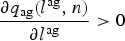 $\displaystyle{{\partial q_{{\rm ag}}(l^{{\rm ag}},{\mkern 1mu} n)} \over {\partial l^{{\rm ag}}}} > 0$,
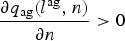 $\displaystyle{{\partial q_{{\rm ag}}(l^{{\rm ag}},{\mkern 1mu} n)} \over {\partial n}} > 0$,
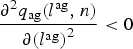 $\displaystyle{{\partial ^2q_{{\rm ag}}(l^{{\rm ag}},{\mkern 1mu} n)} \over {\partial {(l^{{\rm ag}})}^2}} < 0$, and
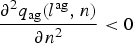 $\displaystyle{{\partial ^2q_{{\rm ag}}(l^{{\rm ag}},{\mkern 1mu} n)} \over {\partial n^2}} < 0$. Agricultural land and labor are also considered as complementary inputs:
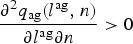 $\displaystyle{{\partial ^2q_{{\rm ag}}(l^{{\rm ag}},{\mkern 1mu} n)} \over {\partial l^{{\rm ag}}\partial n}} > 0$. This last hypothesis is supported by empirical estimates of Brazilian agricultural production function parameters (Gomes and Rosado, Reference Gomes and Rosado2005; Conte and Ferreira Filho, Reference Conte and Ferreira Filho2007, among others).
Similarly, forestry production is determined by forestland and labor allocated to forestry activities. Forestland is defined by the difference between total land endowment and the area allocated to agricultural activities. Thus, the production function may be expressed as q for(l for, N − n). In common with agricultural production technology, we assume that 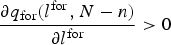 $\displaystyle{{\partial q_{{\rm for}}(l^{{\rm for}},{\mkern 1mu} N - n)} \over {\partial l^{{\rm for}}}} > 0$,
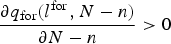 $\displaystyle{{\partial q_{{\rm for}}(l^{{\rm for}},{\mkern 1mu} N - n)} \over {\partial N - n}} > 0$,
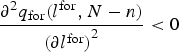 $\displaystyle{{\partial ^2q_{{\rm for}}(l^{{\rm for}},{\mkern 1mu} N - n)} \over {{(\partial l^{{\rm for}})}^2}} < 0$, and
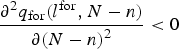 $\displaystyle{{\partial ^2q_{{\rm for}}(l^{{\rm for}},{\mkern 1mu} N - n)} \over {\partial {(N - n)}^2}} < 0$. Note that this forestry production specification assumes that there will be a gradual regrowth of forest on agricultural land that is not used. It is also assumed that forest area and labor are complementary inputs:
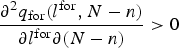 $\displaystyle{{\partial ^2q_{{\rm for}}(l^{{\rm for}},{\mkern 1mu} N - n)} \over {\partial l^{{\rm for}}\partial (N - n)}} > 0$.
The rural household utility function U(y, l z, c) is concave and twice differentiable. Total household income is given by the sum of agricultural revenue, forest revenue and off-farm income. It may be represented by y = p agq ag(l ag, n) + p forq for(l for, N − n) + w offl off, where p ag is an aggregate agricultural price index and p for is a forestry price index representing both timber and non-timber products. The time allocated to leisure is expressed by l z = T − l ag − l for − l off. The optimization problem faced by the rural household consists of choosing the time allocated to agricultural, forestry and off-farm activities, as well as the land allocated to agricultural production. The optimization problem may be expressed by:
 $$\eqalign{\mathop {{\rm Max}}\limits_{l^{{\rm ag}},\;l^{{\rm off}},\;l^{{\rm for}},\;n} &\;U[T - l^{{\rm ag}} - l^{{\rm off}} - l^{{\rm for}},c] \cr {\rm such that}\;\;\;c & \le p_{{\rm ag}}q_{{\rm ag}}(l^{{\rm ag}},n) + p_{{\rm for}}q_{{\rm for}}(l^{{\rm for}},N - n) + w^{{\rm off}}l^{{\rm off}} \cr \;n & \le N \cr l^{{\rm ag}} & \ge 0 \cr l^{{\rm off}} & \ge 0 \cr l^{{\rm for}} & \ge 0.} $$
The case is considered where rural households allocate strictly positive amounts of time to agricultural, forestry and off-farm activities.Footnote 4 Moreover, since the household's preference is well-behaved, the budget constraint binds. In this context, the first-order conditions of the optimization problem (1) are given by the following expressions:
 $$U_1(\cdot )w^{{\rm off}} - U_2(\cdot ) = 0$$
 $$U_1(\cdot )p_{{\rm ag}}\displaystyle{{\partial q_{{\rm ag}}\left( {l^{{\rm ag}},n} \right)} \over {\partial l^{{\rm ag}}}} - U_2(\cdot ) = 0$$
 $$U_1(\cdot )p_{{\rm for}}\displaystyle{{\partial q_{{\rm for}}\left( {l^{{\rm for}},N - n} \right)} \over {\partial l^{{\rm for}}}} - U_2(\cdot ) = 0$$
 $$U_1(\cdot )\left[ {p_{{\rm ag}}\displaystyle{{\partial q_{{\rm ag}}\left( {l^{{\rm ag}},n} \right)} \over {\partial n}} + p_{{\rm for}}\displaystyle{{\partial q_{{\rm for}}\left( {l^{{\rm for}},N - n} \right)} \over {\partial n}}} \right] + \lambda ^n = 0$$
 $$\lambda ^n\left( {N - n} \right) = 0,\;\lambda ^n \ge 0\quad {\rm and}\quad \left( {N - n} \right) \ge 0,$$
where U 1(.) is the marginal utility of the revenue, U 2(.) is the marginal utility of leisure and λ n is the Lagrangean multiplier associated with the land restriction. If the farmer does not use all available land for agricultural purposes, the first-order conditions can be written as:
 $$U_1(\cdot )w^{{\rm off}} - U_2(\cdot ) = 0$$
 $$U_1(\cdot )p_{{\rm ag}}\displaystyle{{\partial q_{{\rm ag}}\left( {l^{{\rm ag}},n} \right)} \over {\partial l^{{\rm ag}}}} - U_2(\cdot ) = 0$$
 $$U_1(\cdot )p_{{\rm for}}\displaystyle{{\partial q_{{\rm for}}\left( {l^{{\rm for}},N - n} \right)} \over {\partial l^{{\rm for}}}} - U_2(\cdot ) = 0$$
 $$U_1(\cdot )\left[ {p_{{\rm ag}}\displaystyle{{\partial q_{{\rm ag}}\left( {l^{{\rm ag}},n} \right)} \over {\partial n}} + p_{{\rm for}}\displaystyle{{\partial q_{{\rm for}}\left( {l^{{\rm for}},N - n} \right)} \over {\partial n}}} \right] = 0.{\rm }$$
From conditions (7), (8) and (9), it can verified that
 $$w^{{\rm off}} = p_{{\rm ag}}\displaystyle{{\partial q_{{\rm ag}}\left( {l^{{\rm ag}},n^*} \right)} \over {\partial l^{{\rm ag}}}} = p_{{\rm for}}\displaystyle{{\partial q_{{\rm for}}\left( {l^{{\rm for}},N - n^*} \right)} \over {\partial l^{{\rm for}}}},$$
where n* is the optimal quantity of land allocated for agricultural activities. Equation (11) indicates that the rural household will determine land allocation for agricultural purposes in order to equalize the marginal productivity of the three activities: agricultural, forestry and off-farm.
From the optimization condition (11) it can be assessed how variations in off-farm wage w off and forestry prices p for affect households' decisions regarding time allocation and land use. By totally differentiating the equality between off-farm and agricultural marginal revenues, the following result is obtained:
 $${\rm d}w^{{\rm off}} = p_{{\rm ag}}\displaystyle{{\partial ^2q_{{\rm ag}}\left( {l^{{\rm ag}}(n^*),n^*} \right)} \over {{(\partial l^{{\rm ag}})}^2}}\displaystyle{{{\rm d}l^{{\rm ag}}} \over {{\rm d}n}}{\rm d}n + \displaystyle{{\partial ^2q_{{\rm ag}}\left( {l^{{\rm ag}}(n^*),n^*} \right)} \over {\partial l^{{\rm ag}}\partial n}}{\rm d}n.$$
Therefore, an increase in off-farm wage w off requires a higher marginal productivity associated with agricultural activities in order for equality (11) to hold. This is obtained by reducing l ag and n. This result may be explained by the higher opportunity cost associated with agricultural activities when there is an increase in off-farm wages w off. Farmers will allocate less time to agricultural labor, and since production inputs are assumed to be complements, they also reduce agricultural land n. Since farm activities become less attractive vis-à-vis the off-farm labor market, there is a reduction in deforestation pressure.Footnote 5
Similarly, by taking the total differential of the equality between agricultural and forestry marginal revenues in (11), it can also be seen that an increase in p for will lead to a reduction in the use of agricultural land, thereby reducing deforestation pressure.
3.2 Introducing market failures: subsistence production and inefficiencies in off-farm labor allocation decisions
In this section it will be demonstrated that rural households which must attain a certain threshold level in agricultural production may take inefficient decisions regarding time and land use allocation, leading to more deforestation pressure.
Suppose that the rural household must attain a minimum agricultural production level  $\bar {q}_{\rm ag}$. This can be the case of smallholders who should attain a certain subsistence level. In this case, the optimization problem is given by
 $$\eqalign{\mathop {{\rm Max}}\limits_{l^{{\rm ag}},\;l^{{\rm off}},\;l^{{\rm for}},\;n} & \;U[T - l^{{\rm ag}} - l^{{\rm off}} - l^{{\rm for}},c] \cr {\rm such that}\;\;\;c & \le p_{{\rm ag}}q_{{\rm ag}}(l^{{\rm ag}},n) + p_{{\rm for}}q_{{\rm for}}(l^{{\rm for}},N - n) + w^{{\rm off}}l^{{\rm off}} \cr q_{{\rm ag}}(l^{{\rm ag}},n) &\ge {\bar q}_{{\rm ag}} \cr n & \le N \cr l^{{\rm ag}} & \ge 0 \cr l^{{\rm off}} & \ge 0 \cr l^{{\rm for}} & \ge 0.} $$
The first-order conditions for the optimization program are the following:
 $$U_1(\cdot )w^{{\rm off}} - U_2(\cdot ) = 0$$
 $$U_1(\cdot )p_{{\rm ag}}\displaystyle{{\partial q_{{\rm ag}}\left( {l^{{\rm ag}},n} \right)} \over {\partial l^{{\rm ag}}}} - U_2\left( \cdot \right) - \mu ^q\displaystyle{{\partial q_{{\rm ag}}\left( {l^{{\rm ag}},n} \right)} \over {\partial l^{{\rm ag}}}} = 0$$
 $$U_1(\cdot )p_{{\rm for}}\displaystyle{{\partial q_{{\rm for}}\left( {l^{{\rm for}},N - n} \right)} \over {\partial l^{{\rm for}}}} - U_2(\cdot ) = 0$$
 $$U_1(\cdot )\left[ {p_{{\rm ag}}\displaystyle{{\partial q_{{\rm ag}}\left( {l^{{\rm ag}},n} \right)} \over {\partial n}} + p_{{\rm for}}\displaystyle{{\partial q_{{\rm for}}\left( {l^{{\rm for}},N - n} \right)} \over {\partial n}}} \right] - \mu ^q\displaystyle{{\partial q_{{\rm ag}}\left( {l^{{\rm ag}},n} \right)} \over {\partial n}} + \mu ^n = 0$$
 $$\mu ^q\left[ {\bar q - q_{{\rm ag}}\left( {l^{{\rm ag}},n} \right)} \right] = 0,\;\;\mu ^q \ge 0\;\;{\rm and}\;\;c - q_{{\rm ag}}\left( {l^{{\rm ag}},n} \right) \le 0$$
 $$\mu ^nn = 0\;{\rm and}\;\mu ^n \ge 0,$$
where μ n and μ q are the Lagrangean multipliers associated with the land and production restrictions, respectively.
From conditions (14) and (15), it can be observed that households facing binding production restrictions (i.e., μ q strictly positive) may not be able to equalize the marginal returns of agricultural and off-farm labor:
 $$w^{{\rm off}} = p_{{\rm ag}}\displaystyle{{\partial q_{{\rm ag}}(l^{{\rm ag}},n)} \over {\partial l^{{\rm ag}}}} - \mu ^q\displaystyle{{(\partial q_{{\rm ag}}(l^{{\rm ag}},n))/(\partial l^{{\rm ag}})} \over {U_1(\cdot )}}.$$
The off-farm labor price faced by constrained households is a shadow price whose value lies below the market price w off. The decision price in the off-farm labour market is no longer the market wage, but a shadow wage which depends on the minimum production constraint and which is lower than the off-farm market wage.Footnote 6 For these constrained agents, the opportunity cost of off-farm labor is lower than the opportunity cost of agricultural labor. This inequality implies that agents choose agricultural labor and agricultural land use quantities above the efficient level, leading to increasing deforestation pressure. In addition, households facing binding production restrictions will be less sensitive to an increase in off-farm revenues.
In the empirical application that follows, it is assumed that smallholders face binding production constraints. As mentioned in the introductory section, 18 per cent of the establishments reported that more than 90 per cent of their total production is destined for self-consumption. Production for subsistence purposes is particularly important in small farms with less than 5 hectares (Grisa et al., Reference Grisa, Schneider, Conterato, Schneider and Ferreira2014). The Agricultural Census also provides certain evidence that access to off-farm labor markets varies according to farm size: while 32 per cent of the rural establishments with less than 5 hectares declared having received revenues from off-farm activities, this percentage reaches 52 per cent among establishments with total area ranging from 100 to 500 ha, and rises to 61 per cent among those establishments with more than 2,500 ha (IBGE, 2009). A possible explanation for this pattern is that smallholders producing for subsistence purposes cannot take advantage of profitable off-farm opportunities, which is in line with the theoretical predictions of our model regarding households facing binding production restrictions.
4. Empirical evidence
From the theoretical model described in the previous section, the following testable hypotheses may be derived: (i) higher off-farm wage is associated with a reduction in deforestation; and (ii) smallholders are less sensitive to increases in off-farm wages than largeholders.
To evaluate these hypotheses, an econometric model has been specified. This model has been estimated by using a database composed of the 604 municipalities located in the Amazon region. For each municipality, information from the 2006 Agricultural Census is available according to 11 farm size categories.Footnote 7 The econometric model has the following specification:
 $$\eqalign{{\rm ln}\left( {{\rm De}{\rm f}_{ij}} \right) = & \alpha + \beta _1\;{\rm ln}\left( {Y_{ij}^{{\rm off}} } \right) + \beta _2\;{\rm ln}\left( {N_{ij}} \right) + \beta _3\;{\rm ln}\left( {Y_{ij}^{{\rm off}} } \right) \cr & \times {\rm ln}\left( {N_{ij}} \right) + \delta \;{\rm ln}\left( {X_{ij}} \right) + \theta _i + \eta _j + \varepsilon _{ij},} $$
where index i refers to municipality and index j represents farm size category (j = 1,…,11). Variable Def ij is the deforestation measure in agricultural establishments located in municipality i belonging to size category j, and  $Y_{ij}^{\rm off}$ is the relative revenues associated with off-farm. We expect β 1 < 0. N ij is total farmland. Variable
 $ {\rm ln}( Y_{ij}^{\rm off} )\times {\rm ln}( N_{ij} )$ is the cross product between off-farm revenues and farm size. By introducing the cross-product term, we allow the elasticity of deforestation with respect to off-farm returns to vary across farm size. Such heterogeneity enables us to assess the hypothesis that smallholders are less sensitive to off-farm income variations, since they have constrained access to off-farm labor markets (β 3 < 0).
X ij is a vector of control variables for characteristics that may affect deforestation decisions. First, we control for the proportional distribution of the establishments according to land tenure status. Indeed, precarious property rights are associated with higher deforestation rates. Second, we introduce the relative revenues associated with forestry activities that are negatively correlated with deforestation as we see above. Third, we include the average farm debt: households' efforts to increase revenues to pay their debt could positively contribute to deforestation (Kahn and Mcdonald, Reference Kahn and Mcdonald1995).
Parameters α, β 1, β 2, β 3 and δ are the regression coefficients to be estimated, while η j and θ i stand for the fixed effects regarding farm size categories and municipality, respectively. The municipality-related fixed term θ i is intended to capture unobserved, size invariant municipal characteristics that may affect household decisions regarding deforestation, such as soil types and other geographical features (e.g., geographical location). The same reasoning applies to the introduction of the size-related fixed term η j. Finally, εij represents the idiosyncratic error which is assumed to follow the distribution 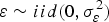 $\varepsilon \sim iid(0, \sigma _\varepsilon ^2 )$.
The database was constructed from the Brazilian Agricultural Census 2006. The deforestation variable is computed as the difference between total farm area and the land allocated to agricultural purposes. The resulting total deforested area is then divided by the number of establishments within each category. This normalization is intended to mitigate scale effects associated with the different number of observations within each size category. The variable  $$Def_{ij}$$ may therefore be interpreted as the average deforested area in farm size category j at municipality i. A similar procedure is applied to normalize all regression variables expressed in levels.
Relative off-farm revenues are computed as the ratio of total off-farm wages to total agricultural revenues. The 2006 Agricultural Census reports several types of off-farm revenues: salaries received in off-farm activities, pensions, retirement benefits, donations, governmental transfers and others. In constructing this off-farm income variable, no more than the off-farm wage component, which is closely associated with off-farm labor market conditions, was considered. It should be noted that the off-farm wage component may include revenues from working for other farmers in agricultural activities. However, out of the households who declared receiving off-farm revenues, approximately 70 per cent mentioned that these revenues were obtained from non-agricultural activities (IBGE, 2009). In addition to that, most of the remaining 30 per cent of respondents that declared working on off-farm agricultural activities are smallholders working for larger farmers. Since Amazon deforestation has concentrated in smallholders during the recent years (Godar et al., Reference Godar, Gardner, Tizado and Pacheco2014), smallholders' agricultural off-farm activities may be related to a decreasing deforestation pressure. Although we cannot completely exclude measurement errors, we can therefore consider that off-farm revenues provide a good proxy for agricultural opportunity cost.
Similarly, relative forestry returns are computed as the ratio of forestry revenues to agricultural revenues. Forestry revenues are given by the production value of both (sustainable) timber and non-timber products.
The proportion of establishments according to land tenure status is computed by dividing the number of establishments belonging to a certain ownership category by the total number of establishments. There are four ownership categories: owner, sharecropper, renter and squatter. The size variable refers to the average farm area within each category.
An estimation of equation (21) raises endogeneity issues. In fact, deforestation and agricultural / non-agricultural labor supply decisions are likely to be simultaneous. In order to account for the endogeneity of the relative off-farm income, we construct an instrument based on the neighboring farm size categories located in the same municipality. More precisely, we obtain our instrumental variable for size category j by computing the average of the relative off-farm revenues of the adjacent size categories j − 1 and j + 1. The implicit assumption underlying the choice of this instrument is that adjacent size categories within a certain municipality share similar off-farm labor opportunities. Our instrument may fail if unobserved deforestation determinants of the j th farmsize category are correlated with the (similar) labor market opportunities faced by the adjacent size categories within the same municipality. This would be the case, for example, if the different size categories are non-homogeneously distributed across the territory of the municipalities. In this case, distinct size categories would face different transport costs to access urban markets. This potential unobserved spatial correlation between size categories in the same municipality may cause endogeneity problems. Although our instrument may not be able to fully address the question of unobserved heterogeneity, we try to reduce its potential effects when checking the robustness of our results.
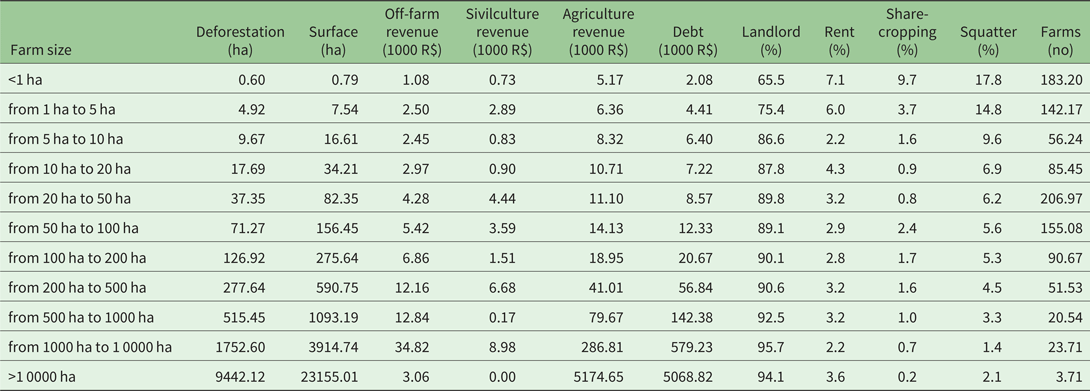
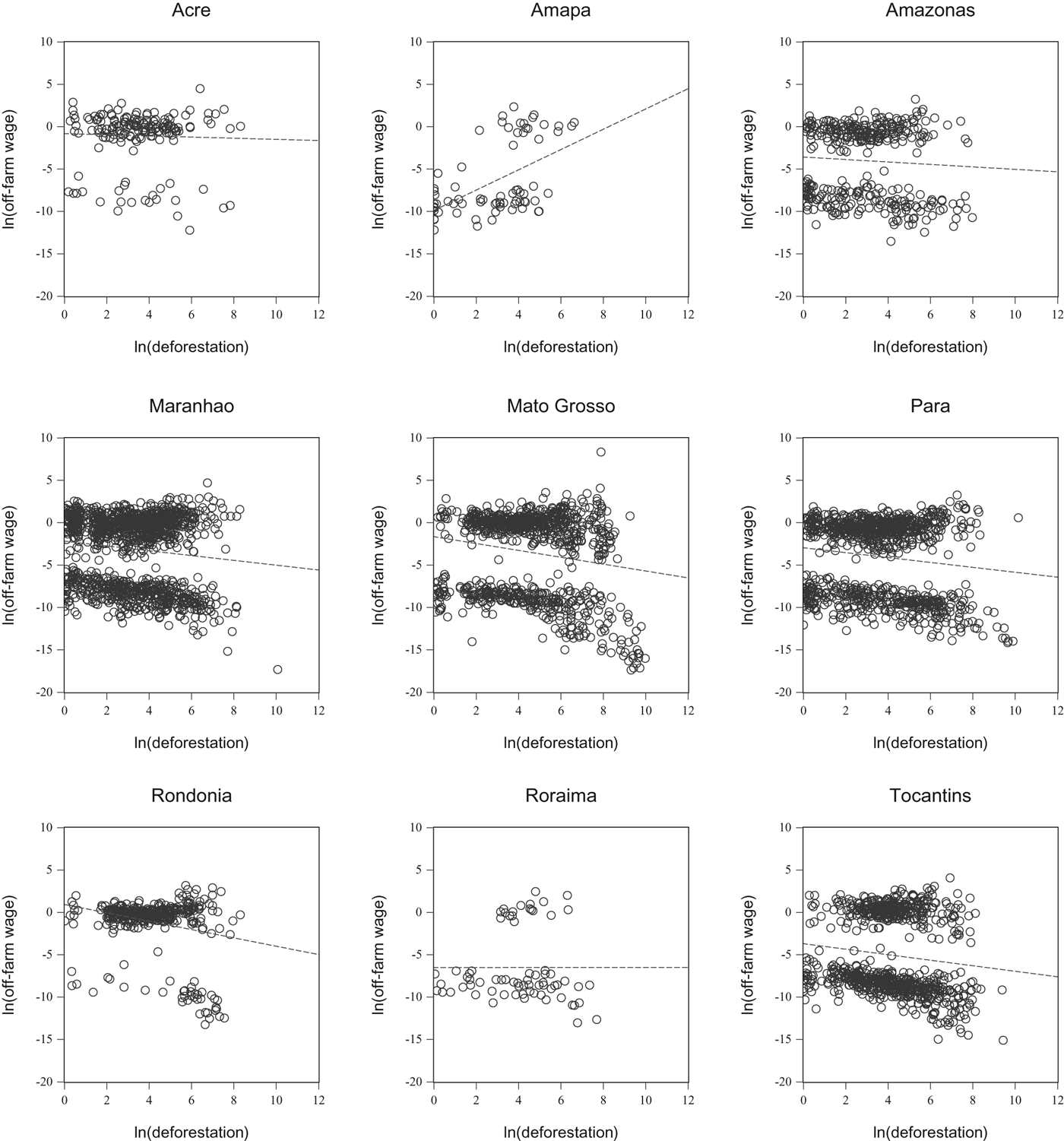
Table 1 exhibits the average value of the regression variables according to size category. It should be noted that larger establishments tend to deforest a smaller proportion of total area and display higher off-farm income. Ownership structure is also related to farm size: the proportion of landowners is higher in the larger establishment categories. Preliminary evidence on the negative relationship between off-farm income and deforestation is provided by the scatter diagrams in appendix A (figure 1). In the majority of states within the Amazon region, a negative linear trend between off-farm wage and deforestation can be found, indicating that higher deforestation rates are associated with lower levels of off-farm income.
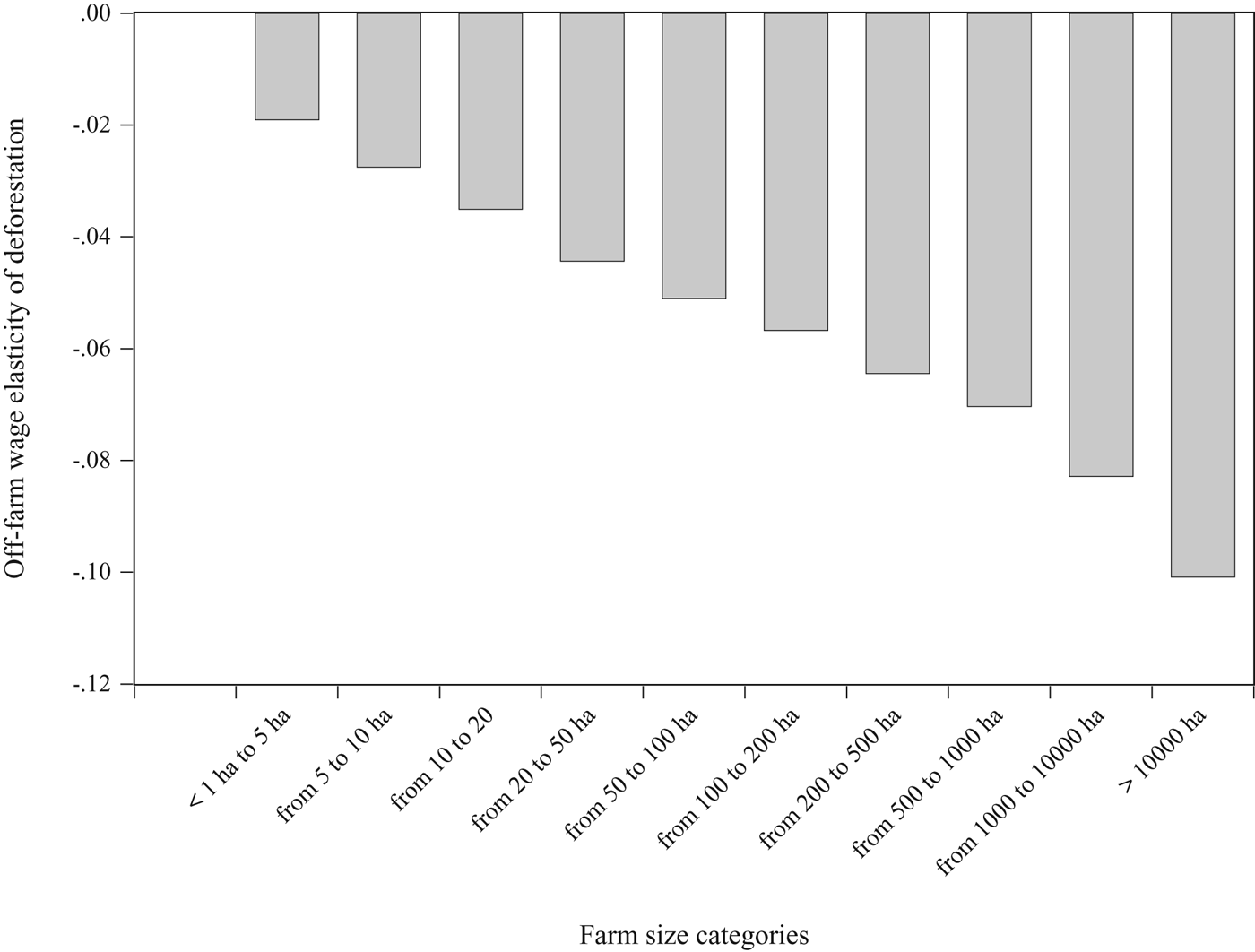
Off-farm wage elasticity of deforestation according to size category.

Descriptive statistics –average values according to size category

Source: IBGE
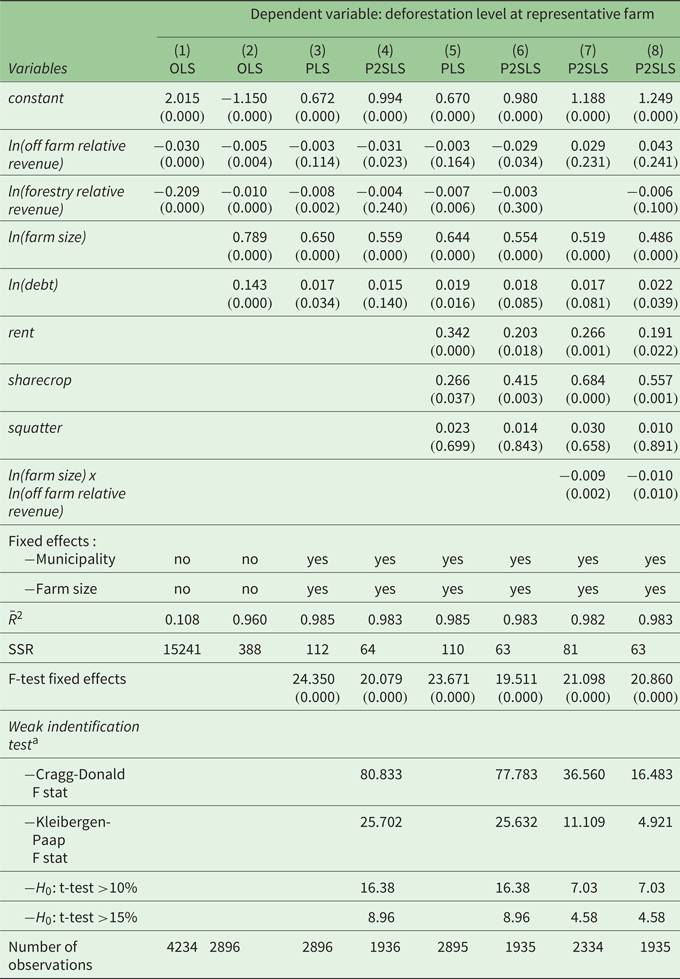
Table 2 presents the econometric results. Regression specifications differ according to the control variables, the use of the instrumental variable and the inclusion of the cross-product variable which accounts for the heterogeneity of the marginal impact of off-farm wages. Regression results provide empirical support for the first hypothesis derived from the theoretical model. Coefficients related to off-farm income display the expected negative sign and they are statistically significant at the 10 per cent level in most of the specifications that do not account for heterogeneity in the marginal impact of off-farm wages (except for the specifications in columns (3) and (5)). According to the specification presented in column (6), a 1 per cent increase in relative off-farm income is associated with a reduction of 0.03 per cent in deforestation. These results are in line with our argument that higher off-farm income corresponds to an increase in opportunity costs regarding agricultural activities, reducing the attractiveness of agricultural activities and therefore deforestation.
Econometric results
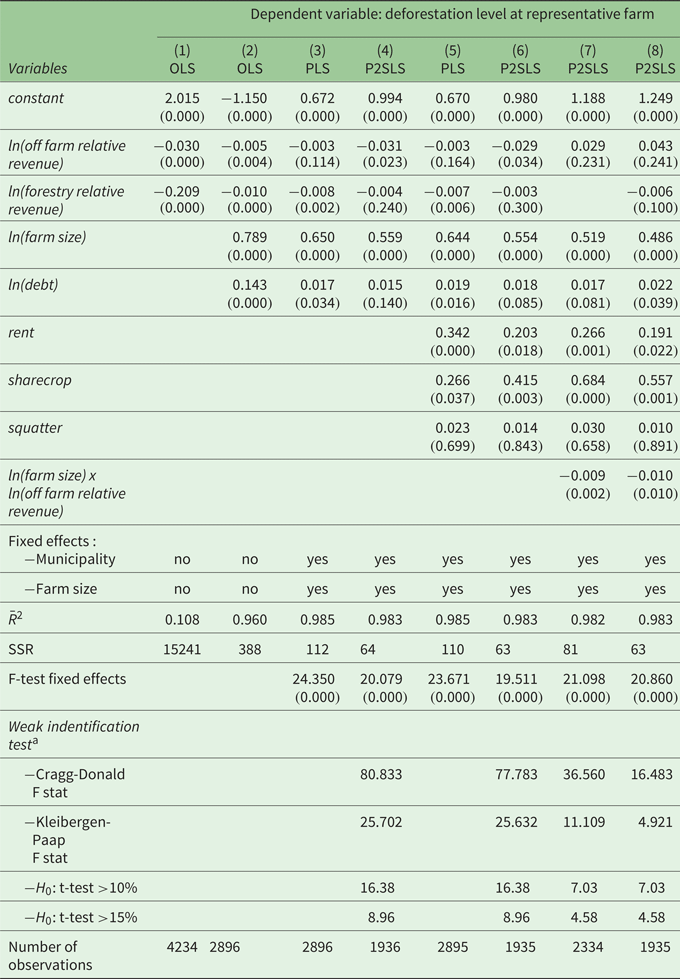
Notes : robust p-value in parenthesis.
OLS: ordinary least squares; PLS: panel least squares; P2SLS: panel two-stage least squares.
aThe Cragg-Donald and Kleibergen-Paap Wald statistics correspond respectively to non-robust and heteroskedasticity-robust multivariate analogues to the first-stage F statistcs. Below each test statistic, we report the critical value from tests, obtained from Stock and Yogo (Reference Stock, Yogo, Andrews and Stock2005), of whether the actual size of the t-test at the 5% significance level is greater than 10%.
The introduction of the cross-product (columns (7) and (8)) allows for the assessment of how deforestation decisions react to off-farm revenue variation according to farm size categories. The coefficients related to the cross-product variable (off-farm income × farm size) are significant and negative, therefore providing empirical support for our second hypothesis. The off-farm wage elasticities of deforestation based on coefficient estimates of column (8) are provided in figure 1. It appears that smallholders respond less to the increase in off-farm income when compared to largeholders, which is consistent with our hypothesis of labor market imperfections in terms of off-farm activities. Since smallholders would face a shadow off-farm return below the market wage, an increase in off-farm wage would not induce smallholders to reduce time allocated for agricultural activities and therefore to reduce deforestation.
The coefficients related to forestry revenues exhibit the expected negative signal in all regression specifications (although they are not significant in specifications (4) and (6)). Moreover, the influence of ownership status on deforestation patterns is assessed by using landowners as the reference category. Results suggest that a higher proportion of renters and sharecroppers are associated with increased deforestation. This is somewhat expected, since renters and sharecroppers tend to be found where agricultural activities are more profitable and therefore land is more prone to deforestation. Finally, the sign of the debt variable is positive, as expected.
Although we do not have additional instruments to undertake overidentification tests, weak instrument tests based on the first stage F statistics are provided in table 2. More precisely, the multivariate analogues of the Stock and Yogo test –namely, the Cragg-Donald and the robust Kleibergen-Paap statistics –have been implemented. Both estimates are above the critical values and hence the null hypothesis of weak instruments is rejected.
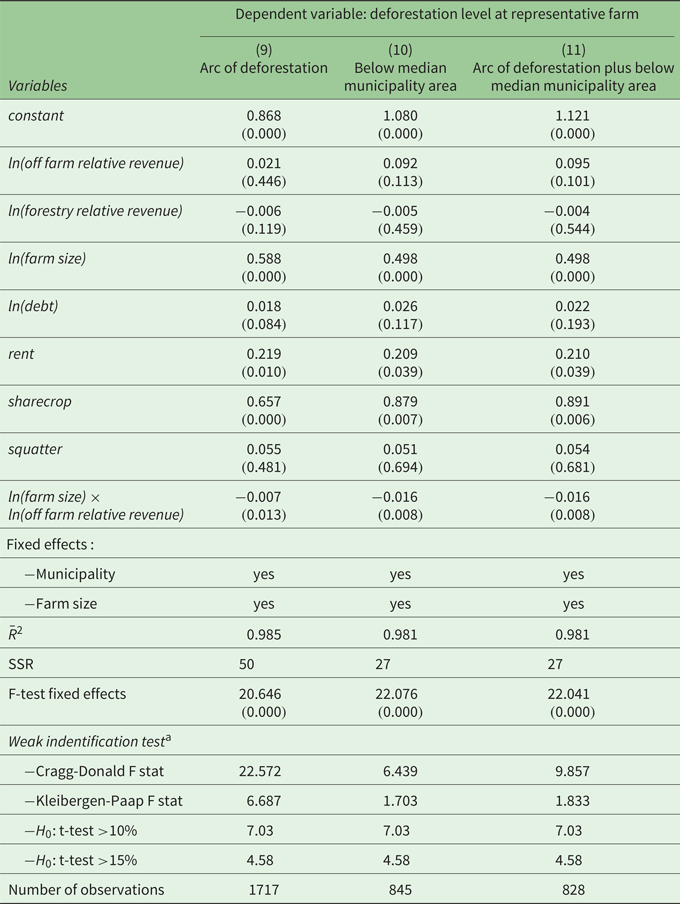
Table 3 reports the results from robustness checks based on subsamples. Specifically, in order to reduce the potential effects of unobserved heterogeneity, regressions are estimated by considering the municipalities located in the so-called ‘arc of deforestation’ and the smallest municipalities (below municipality median area) within the Amazon region. The arc of deforestation is composed of the Brazilian states where forest conversion occurs at a faster pace –namely the states of Maranhão, Mato Grosso, Pará, Rondônia and Tocantins. These states have a more developed transport infrastructure when compared to municipalities outside the arc of deforestation. Therefore, even though the different size categories may be unevenly dispersed among the territory of the municipality, farms located in the arc of deforestation should face a more homogeneous (unobserved) transport cost when compared to the ones outside the region.Footnote 8 Similarly, smaller municipalities should present less heterogeneity regarding transport costs.
Econometric results: robustness testing

Notes : robust p-value in parenthesis.
aThe Cragg-Donald and Kleibergen-Paap Wald statistics correspond respectively to non-robust and heteroskedasticity-robust multivariate analogues to the first-stage F statistcs. Below each test statistic, we report the critical value from tests, obtained from Stock and Yogo (Reference Stock, Yogo, Andrews and Stock2005), of whether the actual size of the t-test at the 5% significance level is greater than 10%.
Columns (9) and (10) present estimation results for the subsample of municipalities within the arc of deforestation and the subsample of municipalities whose territorial extension are below the median (i.e., the 50 per cent smallest municipalities regarding territorial extension), respectively. Results are consistent with those found in column (8). In particular, the cross-product variable (off-farm income× farm size) is still negative and significant, suggesting smallholders are less sensitive to increases in off-farm wages than largeholders. Finally, in column (11) we consider simultaneously the municipalities located in the arc of deforestation and below the median and we find similar results. Therefore, although we cannot fully exclude endogeneity issues in our analysis, the robustness tests indicate that that our findings still hold for municipalities where unobserved heterogeneity should be a less critical issue.
5. Conclusion and policy recommendations
This article aimed at evaluating the determinants of Amazon deforestation, with particular emphasis on the role of off-farm incomes. Initially, a theoretical model was proposed, which relates off-farm incomes to deforestation patterns. An econometric model was then specified and estimated using data from the 2006 Brazilian Agricultural Census with an instrumental variable.
The results suggest that higher off-farm incomes are associated with reduced deforestation. This finding may be explained by the fact that higher off-farm income increases the opportunity cost of agricultural labor. As a response to the higher opportunity costs, farmers allocate less time to agricultural activities and therefore deforestation pressure is reduced. In this sense, policymakers aiming at curbing deforestation may implement employment and income generation programs not directly related to agricultural activities.
The results also suggest that smallholders are less responsive to the off-farm incomes increase than large ones, which is in line with the hypothesis of labor market imperfections regarding off-farm activities. Hence, providing insurance for smallholders that are close to subsistence through income-support schemes may be effective in reducing inefficiencies regarding time and land use allocation decisions. Such measures may reveal themselves as a ‘win-win’ situation: they may induce farmers to allocate their time in a more efficient and productive way, and at the same time provide incentives for forest conservation.
Acknowledgments
This work was supported by the Agence Nationale de la Recherche of the French government through the program ‘Investissements d'avenir ANR-10-LABEX-14-01’.
Appendix Relationship between off-farm income and deforestation
Scatter diagrams –off-farm wage share and deforestation share.