Practice guidelines for childhood anxiety disorders recommend early identification and intervention, and highlight the importance of gathering information using multiple informants (child, parent, and teacher) to ensure accurate clinical assessment (Connolly & Bernstein, Reference Connolly and Bernstein2007). Due to the covert nature of anxiety, children are thought to be more reliable reporters of their symptoms than their parents or teachers (Smith, Reference Smith2007). Although parents and teachers may underestimate the severity of the children's symptoms (Lagattuta, Sayfan, & Bamford, Reference Lagattuta, Sayfan and Bamford2012), they may better appreciate the impact of anxiety on family and school functioning (Connolly & Bernstein, Reference Connolly and Bernstein2007).
Assessment procedures for children younger than 8 years have relied primarily on parent reports (Hirshfeld-Becker, Micco, Mazursky, Bruett, & Henin, Reference Hirshfeld-Becker, Micco, Mazursky, Bruett and Henin2011). The exclusion of the younger child's perspective in assessment procedures has a long history (Loxton, Reference Loxton2009), due partly to concerns about their developmental immaturity and the accuracy of their information (Lagattuta et al., Reference Lagattuta, Sayfan and Bamford2012). Young children have an undeveloped sense of time and have difficulty providing an accurate report of the onset, frequency, and duration of their symptoms (Dubi & Schneider, Reference Dubi and Schneider2009; Hirshfeld-Becker et al., Reference Hirshfeld-Becker, Micco, Mazursky, Bruett and Henin2011). As their cognitive and literacy skills are still developing, self-report questionnaires designed for children above 8 years are generally assumed to be unsuitable for younger children because the content and response formats are too abstract (Muris, Reference Muris2007).
Taking into account young children's developmental needs, a few researchers have attempted to overcome the cognitive and language barriers of the traditional self-report questionnaires by using visual analogue rating scales and picture aids to depict content (Dubi & Schneider, Reference Dubi and Schneider2009; Muris et al., Reference Muris, Meesters, Mayer, Bogie, Luijten, Geebelen and Smit2003). Two such instruments are the Koala Fear Questionnaire (KFQ; Muris et al., Reference Muris, Meesters, Mayer, Bogie, Luijten, Geebelen and Smit2003) and the Picture Anxiety Test (PAT; Dubi & Schneider, Reference Dubi and Schneider2009). Both measures do not require literacy skills as administration involves the examiner reading each assessment item while the child looks at a pictorial display of the associated phobia or anxiety content. Acknowledging children's difficulties with time concepts, the KFQ and the PAT have not included questions on the frequency or duration of their symptoms (Dubi & Schneider, Reference Dubi and Schneider2009; Muris, Reference Muris2007). The KFQ is a standardised self-report scale for measuring fears and fearfulness in children aged between 4 and 12 years (Muris et al., Reference Muris, Meesters, Mayer, Bogie, Luijten, Geebelen and Smit2003). According to Muris et al. (Reference Muris, Meesters, Mayer, Bogie, Luijten, Geebelen and Smit2003), the KFQ has a good internal consistency and test–retest stability with non-clinical preschool and primary school children aged 4–12 years. The PAT provides a multidimensional assessment of specific anxieties (i.e., social phobia, separation anxiety, generalised anxiety, and specific phobia) and avoidance patterns in children aged between 5 and 7 years (Dubi & Schneider, Reference Dubi and Schneider2009; Dubi, Lavallee, & Schneider, Reference Dubi, Lavallee and Schneider2012). The authors of the PAT reported high internal consistencies for its subscales and composite scales and moderate to high test–retest reliability (Dubi et al., Reference Dubi, Lavallee and Schneider2012). The authors also found evidence for the PAT's ability to discriminate between individuals with and without anxiety disorder and it was sensitive to treatment effects (Dubi & Schneider, Reference Dubi and Schneider2009; Dubi et al., Reference Dubi, Lavallee and Schneider2012). The PAT includes a measure of avoidance patterns, but the forced choice format of the questions may not capture the full breadth of the children's coping efforts. For example, if the child selects a picture that shows the ‘critical symptom’ (e.g., a child walking away from the dog), the child rates their degree of avoidance but is not asked about the rationale for the response or other coping strategies that could be used. In the dog vignette, children may choose the picture ‘walk away’ because they have been trained not to touch unfamiliar dogs. In such a case, the child is not displaying maladaptive avoidance, but instead a learned behavioural skill that is helpful.
Although it has been suggested that effective coping is influenced by the characteristics of the stressor (Blount et al., Reference Blount, Simons, Devine, Jaaniste, Cohen, Chambers and Hayutin2008), there is a lack of research examining effective coping strategies for early childhood anxiety. Existing self-report measures target upper primary and secondary school populations and have been designed to assess coping in response to areas such as medical conditions, pain, academic stressors, and general problems appraised as stressful (Blount et al., Reference Blount, Simons, Devine, Jaaniste, Cohen, Chambers and Hayutin2008). The Coping Strategies Inventory (CSI; Tobin, Reference Tobin1991; Reference Tobin2001) and the Kidcope (Spirito, Stark, & Williams, Reference Spirito, Stark and Williams1988) are examples of evidenced-based self-report questionnaires that have been used to assess the coping strategies of children aged 7 years and above. Although the CSI and Kidcope are widely used in paediatric psychology (Blount et al., Reference Blount, Simons, Devine, Jaaniste, Cohen, Chambers and Hayutin2008), these questionnaires were not designed to be used with young non-readers. Adaptations for younger children have been criticised for failing to be more developmentally accessible (Holen, Lervåg, Waaktaar, & Ystgaard, Reference Holen, Lervåg, Waaktaar and Ystgaard2012; Stallard, Velleman, Langsford, & Baldwin, Reference Stallard, Velleman, Langsford and Baldwin2001).
Exploratory research using pictorial semi-structured interviews has demonstrated that children as young as 4 years can identify a range of coping strategies that are situation specific (Chalmers, Frydenberg, & Deans, Reference Chalmers, Frydenberg and Deans2011; Muris, Merckelbach, Ollendick, King, & Bogie, Reference Muris, Merckelbach, Ollendick, King and Bogie2001). For example, Chalmers et al. (Reference Chalmers, Frydenberg and Deans2011) complemented their semi-structured interview with seven pictures illustrating common fears or challenging situations. Their research indicated that the majority of the children could identify at least five to six coping strategies across the seven situations explored.
Muris et al. (Reference Muris, Merckelbach, Ollendick, King and Bogie2001) used a picture storybook to accompany a 10-minute child interview that investigated children's night-time fears and coping strategies. The children's parents were asked identical questions. The results of the study indicated that young children were able to describe their night-time fears and an array of coping strategies (e.g., support seeking, avoidance, and distraction). Compared to the child self-report, parent reports markedly underestimated the frequency of their children's night-time fears, demonstrated a lack of awareness of the full repertoire of their child's coping strategies, and more than a third did not know how their child coped with night-time fears (Muris et al., Reference Muris, Merckelbach, Ollendick, King and Bogie2001). These findings are consistent with research that has indicated that unless children disclose their experiences of fear and anxiety, such problems may not come to the attention of their parents or teachers because many of the symptoms of anxiety are covert and not easily identified (Miller, Martinez, Shumka, & Baker, Reference Miller, Martinez, Shumka and Baker2014). Taken together, these findings suggest that young children have a unique awareness of their own internal experiences and their views need to be considered to gain a complete understanding of their anxiety symptoms, coping skills, and circumstances. Given the internalising nature of anxiety symptoms and the evidence that suggests clinically significant anxiety can exist in young children (Edwards, Rapee, Kennedy, & Spence, Reference Edwards, Rapee, Kennedy and Spence2010; Spence, Rapee, McDonald, & Ingram, Reference Spence, Rapee, McDonald and Ingram2001), an age-appropriate child self-report can have clinical benefit, especially if it leads to the early identification of anxiety symptoms and maladaptive coping behaviours that may worsen if left untreated (van der Sluis, Reference van der Sluis2016).
Helping children develop a broad repertoire of coping skills to manage their fears and worries is an important aim of prevention and early intervention programs for early childhood anxiety (Anticich, Barrett, Silverman, Lacherez, & Gillies, Reference Anticich, Barrett, Silverman, Lacherez and Gillies2013). Yet, few intervention studies include a measure of coping, a factor that is thought to play a protective role in buffering the impact of anxiety (Muris, Reference Muris2007; Spence, Reference Spence, Vasey and Dadds2001). Moreover, young children's personal reports of their anxiety symptoms, and their views of the benefits of the interventions are seldom explored in research (Riley, Reference Riley2004; van der Sluis, Reference van der Sluis2016). Missing from the early childhood assessment and early intervention literature is an anxiety-specific child self-report that can measure changes in coping skills. Although the pictorial semi-structured interviews (Chalmers et al., Reference Chalmers, Frydenberg and Deans2011; Muris et al., Reference Muris, Merckelbach, Ollendick, King and Bogie2001) used in the exploratory studies have not been validated for use in clinical populations, their findings have important implications. Using the free response format of the semi-structured interviews and concrete visual aids, the researchers were able to gain valuable information about the helpful and unhelpful strategies children employ for a range of challenging situations, thus providing some insight into the children's coping strengths and weaknesses. This information is critical when determining what skills to target in anxiety interventions. Together, the findings for the picture-aided rating scales (Dubi & Schneider, Reference Dubi and Schneider2009; Muris et al., Reference Muris, Meesters, Mayer, Bogie, Luijten, Geebelen and Smit2003) and pictorial interviews (Chalmers et al., Reference Chalmers, Frydenberg and Deans2011; Muris et al., Reference Muris, Merckelbach, Ollendick, King and Bogie2001) indicate the utility of such instruments in assessing anxiety and coping in young children. An improved coping assessment that specifically targets anxiety symptoms would enable the clinician to develop the best approach for tailoring interventions to build, consolidate, and expand children's coping skills for anxiety management (Simpson, Suarez, & Connolly, Reference Simpson, Suarez and Connolly2012).
Purpose of the Current Study
This study reports on the development and preliminary analyses of the pictorial semi-structured Child Anxiety and Coping Interview (CACI) designed to facilitate a link between the assessment of anxiety and intervention in young children. The CACI was designed to elicit the children's self-reported anxiety problems, emotions, emotional intensity, coping strategies, and coping self-efficacy. Through the identification of coping strategies for anxiety as defined by the children, this study aims to contribute to the literature by building on the database of what is known about effective and ineffective ways of coping. A comprehensive assessment of the breadth of young children's coping repertoire may help guide how these skills are addressed within their intervention, as the clinician can identify and target the skills that require improvement. Finally, the establishment of a comprehensive list of young children's coping skills for anxiety may also have utility in future research and clinical practice when exploring the effects of coping skills interventions.
Method
Participants
Participants in this study were part of a larger research project evaluating the effectiveness of the school-based intervention called Get Lost Mr Scary (GLMS; MacGregor & Herger, Reference MacGregor and Herger2007, Reference MacGregor and Herger2011), a group cognitive behavioural therapy (CBT) program for anxiety. Participants were 195 children (91 males and 104 females) aged 5–7 years (M age = 6.71; SD age = .76) attending general education classes (Kindergarten to Year Two) in one of 29 public primary schools located in Western Sydney, Australia. The majority of children lived in a two-parent home (85.2%), were born in Australia (88.2%), and their parents identified their ethnicity as Australian (83.1%). An index of socio-economic advantage and disadvantage was calculated using the home postcode (socio-economic indexes for areas (SEIFA); Australian Bureau of Statistics, 2011). Deciles are used to divide the distribution of SEIFA scores into equal groups. The lowest scoring 10% of areas is given a decile rank of 1 and the highest 10% of areas is given a decile rank of 10. The SEIFA scores for the current study indicated that participants in this sample represented a diversity of socio-economic backgrounds (M = 1013.53, SD = 91.77, range = 829–1128), 28.7% lived in areas experiencing relative disadvantage, 35.4% were neither advantaged or disadvantaged relative to others, and 35.9% were relatively advantaged.
Materials
Child Anxiety and Coping Interview
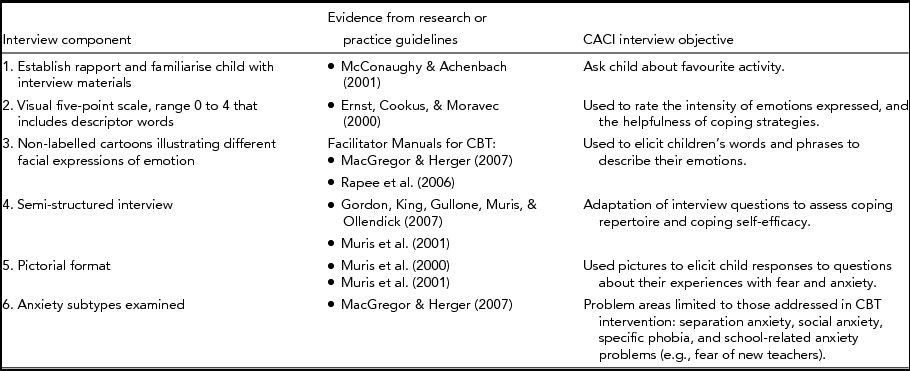
Table 1 presents a summary of the research and practice protocols that underpinned the key components of developing the CACI. The interview setting and delivery approach are illustrated in Figure 1. The CACI is semi-structured in format. It contains a mixture of open and closed questions that explore four common scenarios. Each scenario is illustrated in a coloured picture: (a) a classroom with four students and their teacher; (b) four students in a playground; (c) a community park, with play equipment and various animals nearby (dog, cat, spider, and insects); and (d) a house. Twelve unlabelled emotion pictures (e.g., schematic faces illustrating happy, angry, sad, and scared) were used as visual prompts to help children name their emotions. A ‘floor scale’ (Figure 1b) was also used as a visual and interactional prompt to help children rate the intensity of their emotions (range 0 ‘none’ to 4 ‘big amount’) and the helpfulness of their coping strategies (range 0 ‘no help’ to 4 ‘to a big help’).
Summary of evidence base and practice guidelines for interview components.

Schematic drawings illustrating (a) interview set up and (b) floor rating scale for feelings and coping efficacy.

Spence Children's Anxiety Scale-Parent Report (SCAS-P; Nauta et al., Reference Nauta, Scholing, Rapee, Abbott, Spence and Waters2004)
The SCAS-P is a 38-item parent report assessing a range of anxiety symptoms in children. The SCAS-P yields a total anxiety score and six subscale scores that examine separation anxiety, physical injury fears (i.e., simple phobia), social phobia, generalised anxiety, panic and agoraphobia, and obsessive-compulsive symptoms. According to the authors (Nauta et al., Reference Nauta, Scholing, Rapee, Abbott, Spence and Waters2004), findings on the internal consistency for the total SCAS-P score indicated it was equally high (α = .89) for clinically anxious children and non-clinical controls. Subscales also showed satisfactory to excellent reliability (α = .58–.81). The internal consistency for the total SCAS-P score in the current study was high (α = .89).
The 5-year-old participants (n = 34) were younger than the designated age range for the SCAS-P. The school-age format (age 6–18 years; Nauta et al., Reference Nauta, Scholing, Rapee, Abbott, Spence and Waters2004) rather than the preschool format (age 3–6 years; Spence et al., Reference Spence, Rapee, McDonald and Ingram2001) was used as its items were considered more relevant to the primary school context where the participants attended.
Procedure
Ethical clearance was obtained from the Monash University Human Research Ethics Committee and State Education Research Approvals Process, New South Wales State Department of Education and Communities. Interested families returned consent forms after responding to a school newsletter advertisement about the GLMS (MacGregor & Herger, Reference MacGregor and Herger2007, Reference MacGregor and Herger2011) intervention.
Parents who consented to be involved in the research and the GLMS intervention completed the SCAS-P as part of the battery of pre-intervention questionnaires that were completed before the CACI and the first GLMS session. Before administrating the CACI, the SCAS-P assessments were reviewed, and any indications of child anxiety problems in the target areas (e.g., separation, social anxiety, and phobia) were identified for examination. For example, if the parent indicated ‘sometimes’, ‘often’, or ‘always’ for the item ‘my child is scared of the dark’, it was noted.
Interviews were carried out in a private room in the child's school by the first author. The interview typically took 20–30 minutes, depending on the number of anxiety problems explored. Anxiety problems from the SCAS-P data were selected for examination if the area was specifically targeted in the GLMS intervention (Table 1).
While 217 consent forms were returned, children who did not have parent SCAS-P assessments, who missed the child interviews, or who did not have proficient English language skills (n = 22) were excluded from the interview analyses. A total of 195 participants were included in the final CACI analyses.
Administration of the Child Interview
Children were shown one scenario picture at a time and the 12 feeling cards (Figure 1a) and asked the following questions: ‘Which face shows how you feel about (scenario picture)?’and ‘What feeling does this face show?’. The child was then invited to ‘Tell me about a time when you felt (child feeling word) about (scenario context)?’. Using the ‘floor scale’ (Figure 1b), the child was invited to ‘use this feeling scale to see how much (feeling word) you have when (scenario context)?’. If a problem situation was reported the subsequent questions included, ‘What do you do when you feel (feeling word) about (problem)?’ and ‘How much does (child coping strategy) help you feel less (feeling word)?’. Finally, ‘What else do you do?’. If another coping response was provided, the helpfulness (i.e., coping self-efficacy) question was repeated. If the child's responses did not include the anxiety problems raised by their parents, a direct question was asked. For example, ‘I often help kids who have problems at school. I was wondering if you ever had a time when you (description of anxiety problem, e.g., found it difficult to tell the news in front of the class).’ If the child responded yes, the above interview sequence was repeated. If the child response was no, the examiner moved onto the next problem.
Analysis
The method of qualitative data analysis differed across the three content areas (i.e., problems, emotions, and coping strategies). The classification of child identified problems was guided by the item descriptions and diagnostic categories used in the SCAS-P (Nauta et al., Reference Nauta, Scholing, Rapee, Abbott, Spence and Waters2004) and the specific school problems (e.g., finding friends) addressed in their planned CBT group intervention (Table 1).
The classification of children's emotion-related words was an adaptation of the procedure outlined by Fabes, Eisenberg, Hanish, and Spinrad (Reference Fabes, Eisenberg, Hanish and Spinrad2001). The emotion word that the child used to label the schematic emotion pictures (Figure 1a) was assigned to an emotion cluster (e.g., happiness, anxiety, sadness, and anger).
Qualitative content analysis was used to analyse the documented child responses for coping strategies. This approach provides a systematic approach for describing and coding qualitative data using a rule-guided classification scheme (Burla et al., Reference Burla, Knierim, Barth, Liewald, Duetz and Abel2008). The first step in the coding procedure involved content and thematic analysis. For each problem area, the children's coping responses were classified following the coding schemes developed by Ryan-Wenger (Reference Ryan-Wenger1992) and Zimmer-Gembeck and Skinner (Reference Zimmer-Gembeck and Skinner2011). The first author reviewed all of the responses with the aim of developing an exhaustive list of coping strategies that covered all child responses.
To assess the consistency of the coding scheme for the coping strategies, Cohen's Kappa statistic was used to evaluate inter-rater agreement. The Cohen's Kappa statistic provides an estimate of the proportion of agreement between two raters and takes into account the proportion of agreement that would be expected by chance (Pallant, Reference Pallant2016). In this study, it was used to determine whether the children's coping responses would be coded into the same coping category by different raters. Cohen's Kappa coefficient can yield values between – 1 and + 1, where +1 indicates perfect agreement and 0 indicates no agreement other than that due to chance (Burla et al., Reference Burla, Knierim, Barth, Liewald, Duetz and Abel2008). The goal of this procedure was to identify weaknesses in the coding scheme and to establish if the first author was a consistent and reliable rater.
The children's coping responses were recorded on a spread sheet under the headings problem situation, verbatim coping response, coping category, and response number. A separate spreadsheet was created for each coping category. A computer-based application called the ‘research randomizer’ (Urbaniak & Plous, Reference Urbaniak and Plous2013) was used to randomly select a subset of response numbers from each coping category so that items could be identified for rating.
Data were analysed using the Statistical Package for Social Sciences (IBM Corp, 2015) Version 23. Analyses included descriptive statistics (means, standard deviations, frequencies, and percentages), t-tests, and chi-square tests. Preliminary analyses revealed that the assumptions of normality, homogeneity of variance, and independence of observations were met. The minimum expected cell frequency for the chi-square analyses was also met. The alpha was set at .05 for all analyses.
Results
CACI Preliminary Analyses
In total, 1032 coping responses were reported by the 195 child participants. The responses were categorised into 20 coping categories. Due to the large number of coping responses, a subset of three coping responses was randomly selected from each coping category for rating. For example, in the coping category ‘Pray’ (e.g., ‘I pray’, ‘I say my prayers’, and ‘I pray to God’), the children's responses were almost identical, and therefore only one item was required for rating. A total of 57 items were identified for rating. Cohen's Kappa statistic was used to evaluate the extent of coding agreement between the first author and three clinicians. The clinicians were registered psychologists each with more than 10 years of experience in child and adolescent mental health. The Kappa values showed moderate to strong inter-rater agreement (K = .72–.90). The discrepancies in the coding were discussed and clarified. After reviewing the coding, two coping categories were dropped from the coding scheme. The responses coded as ‘Help Others’ (e.g., ‘I warn kids not to go near it’) were subsumed under the ‘Control Others’ category and the coping category ‘Problem Disappeared’ (e.g., ‘not scared anymore’, ‘thoughts gone away’) was dropped because there were less than 1% of reponses (n = 6) in the category.
SCAS-P Parent Reported Child Anxiety
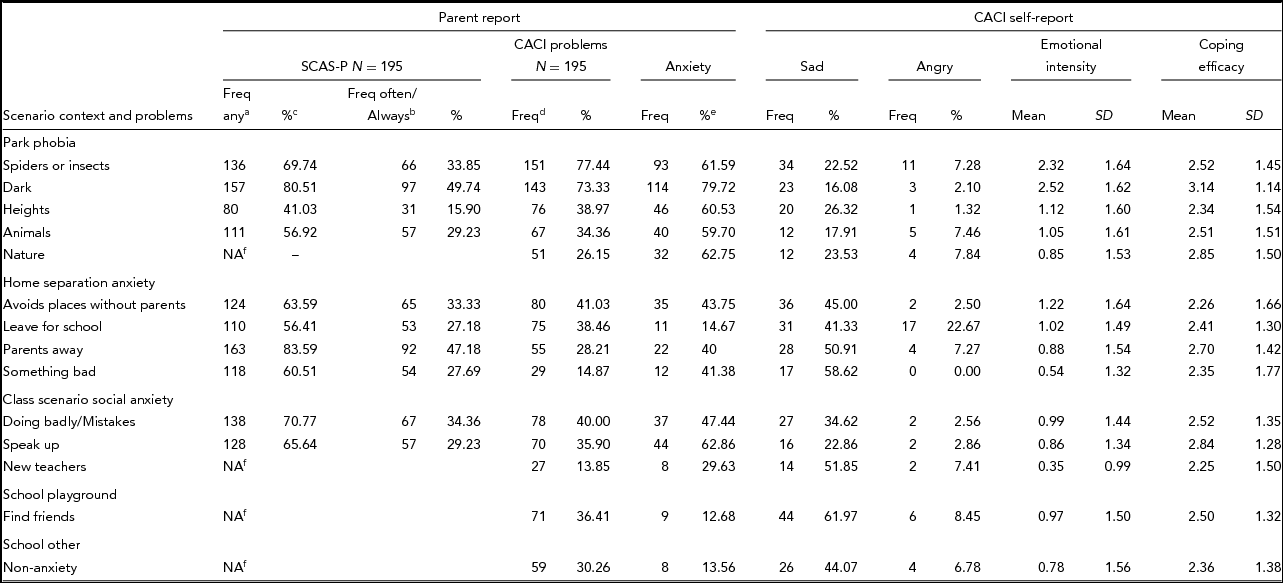
The 10 SCAS-P items that were identified for examination in the CACI interview are listed in Table 2. The top five problems that parents reported as often to always occurring were fear of the dark (n = 97; 49.74%), parents being away (n = 92; 47.18), doing badly at school (n = 67; 34.36), fear of spiders or insects (n = 66; 33.85%), and avoiding places without parents (n = 65; 33.33%).
Means, standard deviations and frequencies of emotions, and intensity and coping efficacy for scenario problems.

Note:
a Freq any = Frequency, the number of parents who reported the problem as being a concern as sometimes, often, or always
b Freq often/ Always = Frequency, the number of parents who reported the problem as being a concern as sometimes, often, or always
c Percentages = based on the total number of participants who reported it
d Freq = Frequency, the number of times a problem or emotion words was mentioned by children
e Percentages = based on the total number of times that a problem or an emotion word was mentioned (low frequency emotions were not included)
f NA = Not Applicable.
A series of t-tests were performed to examine gender differences on the parent report for the total SCAS-P and subscale scores. No significant gender differences were found.
CACI Gender Differences
Chi-square tests were used to assess gender differences in the frequency counts for child self-report data on scenario problems, emotions, and coping strategies. No gender differences were found in the problem and emotion analyses. The chi-square tests revealed gender differences in 2 out of the 18 coping strategies identified. A significantly higher proportion of females used self-control (χ2 (1, n = 195) = 7.07, p = .01) and a significantly higher proportion of males used aggression (χ2 (1, n = 195) = 4.99, p = .035). These two coping strategies did not rank in the top five for the group as a whole. Therefore, the findings for the total group are reported in subsequent analyses.
Child Self-Reported Problems
Of the 15 problems that were categorised (Table 2), 13 problems related to the children's self-report on anxiety symptoms, one problem related to the issue of ‘finding friends’ in the school playground, and school problems that were not anxiety related (e.g., bullying and dislike of homework) were collapsed into one group called ‘school other’. The top five most common problems reported by the children were as follows: fear of spiders or insects (77.44%, n = 151), the dark (73.33%, n = 143), avoiding going places without parents (41.03%, n = 80), doing badly/making mistakes (40.00%, n = 78), and heights (38.97%, n = 76).
Child Reported Emotions and Emotional Intensity
The children's self-reported emotion responses and their mean emotional intensity scores for each problem type are presented in Table 2. Most children were able to name the emotions that were associated with their problems. The top three most common emotion clusters were anxiety, sadness, and anger. Anxiety was the most common emotion reported by children for their problems with specific phobia (e.g., ‘fear of the dark’, 79.72%; n = 114). Sadness was the most common feeling reported for friendship difficulties (61.97%; n = 44) and separation anxiety (e.g., being away from parents, 50.91%; n = 28).
As shown in Table 2, mean emotional intensity scores ranged from 0.35 to 2.52 (SD = .99–1.62). The problem ‘fear of the dark’ had the highest mean emotional intensity score.
Child Reported Coping Strategies Across Problems
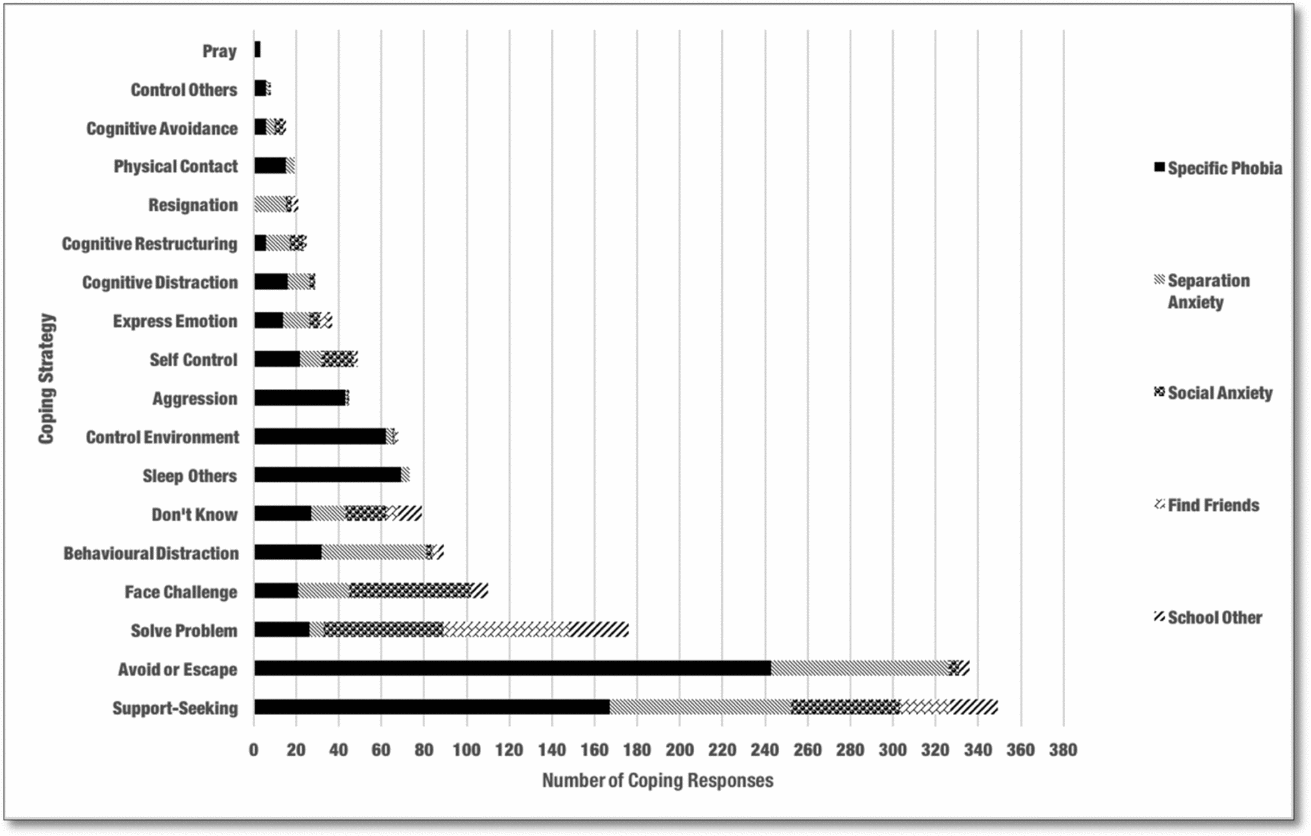
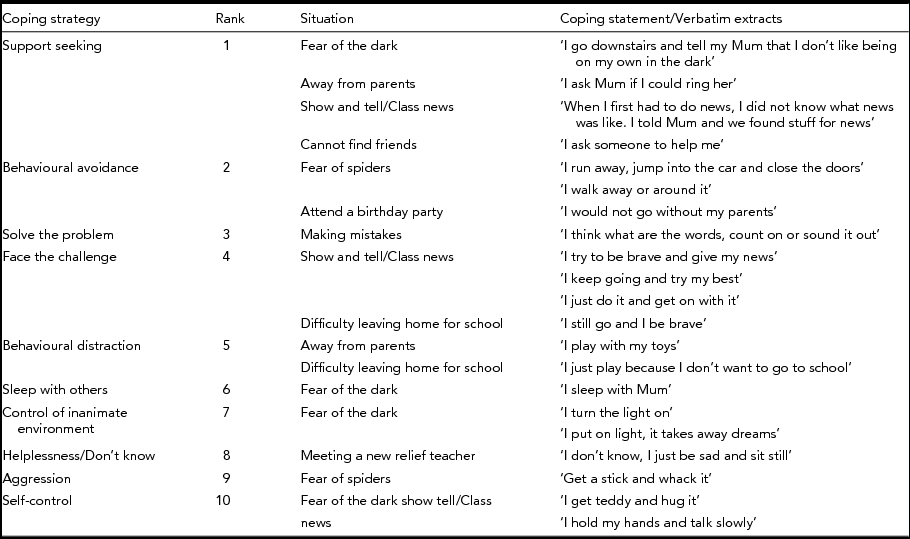
The number of coping responses reported for each problem area across the 18 coping strategies are depicted in Figure 2. The widest repertoire of coping behaviours was reported for specific phobia and separation anxiety problems. In both problem areas, 17 of the 18 coping strategies were indicated. Although the strategies seek support (e.g., ‘I ask Mum if I could ring her’), sleep with others (e.g., ‘I have nightmares, I sleep with Mum’), and seek closeness or physical comfort (e.g., ‘I don't like thunderstorms, I cuddle up with Mum’) are examples of social support, they were categorised separately because children employed these strategies in unique ways when dealing with their problems. The top five most common coping strategies reported by children across all problem areas were as follows: support seeking (33.82%, n = 349), behavioural avoidance or escape (32.56%, n = 336), solving the problem (17.05%, n = 176), facing the challenge (10.66%, n = 110), and behavioural distraction (8.62%, n = 89). Less than 3% of responses indicated the employment of cognitive restructuring as a coping strategy (1.63%, n = 25). Table 3 presents verbatim extracts of children's coping responses with examples of the situations in which they occurred.
Pattern of coping strategies across problem areas.

Examples of situation-specific coping statements for coping strategies ranked in top 10.

Child Reported Coping Self-Efficacy
The mean coping self-efficacy scores for the children's strategies suggested that the majority of strategies were considered to be of ‘some help’ (M range = 2.25–314, SD = 1.14–1.50). Fear of the dark had the highest mean coping self-efficacy score, indicating that children generally perceived the effectiveness of their strategies for this problem as ‘a lot helpful’. The five most common coping strategies reported for fear of the dark in order of rank were as follows: sleep with others, control the environment, avoidance or escape, seek support, and self-control.
Discussion
This study reports on the development and preliminary analyses of the new semi-structured pictorial CACI. The results indicate children can report on their anxiety problems, emotions, level of emotional distress, coping strategies, and coping self-efficacy. In the current study, the most common anxiety problems reported by children and their parents included fear of the dark, fear of spiders, separation anxiety, and doing badly at school. Most children could name the emotion associated with the experience of their problem situations. The highest level of emotional distress and coping efficacy was reported by children who had a fear of the dark. The top five most common coping strategies reported by children across all contexts were as follows: support seeking, avoidance or escape, solving the problem, facing the challenge, and behavioural distraction. Overall, the CACI elicited a self-report on anxiety and the coping strategies that young children used to manage it. The CACI identified both adaptive and maladaptive coping strategies, providing preliminary support in its utility as a clinical assessment that may guide a child's future coping intervention by indicating those strategies that can be enhanced or improved.
In line with the findings of the Zimmer-Gembeck and Skinner's (Reference Zimmer-Gembeck and Skinner2011) review of coping patterns, the results of the current study indicate that support seeking was ‘an all-purpose strategy’ (p.12). Support seeking was the only coping strategy that was employed across all five problem domains (i.e., specific phobia, separation anxiety, social anxiety, friends, and school-related problems). Developmentally, when young children face distressing circumstances, support seeking from an adult is considered more useful than behavioural avoidance, especially if it leads to cooperative solutions based on more helpful coping strategies such as problem solving (Zimmer-Gembeck & Skinner, Reference Zimmer-Gembeck and Skinner2011). However, the findings of the current study suggest that the effectiveness of support seeking needs to be considered in the context in which it is employed, as the children's coping responses indicated that support seeking was used in both adaptive and maladaptive ways. For example, some children reported seeking constructive adult help to prepare resources for their class news presentation, and other children sought adult help to avoid it.
The use of coping strategies, such as problem-solving, facing the challenge, and self-control, for their school-related problems suggests some children were indicating signs of self-reliance. Despite reporting negative feelings of sadness or anxiety about anxiety problems such as speaking up in class, doing badly at school, or meeting unfamiliar people, children generally rated their emotional experiences in these situations as low intensity. These findings fit with research suggesting that as children start school they increasingly become more self-reliant and their coping repertoire becomes more expansive and differentiated (Compas, Connor-Smith, Saltzman, Thomsen, & Wadsworth, Reference Compas, Connor-Smith, Saltzman, Thomsen and Wadsworth2001; Zimmer-Gembeck & Skinner, Reference Zimmer-Gembeck and Skinner2011). Along with self-reliance strategies, seeking support from teachers was also common and it is possible that the children's teachers are encouraging and modelling independence. In the school context, children are asking teachers for a ‘little bit of help’ or ‘what to do’ and are possibly engaging in more collaborative problem solving.
Less self-reliance and more avoidant coping skills were employed for children's difficulties with phobia or separation. The highest emotional intensity ratings were obtained for fear of the dark and insects, and the majority of the children's emotional responses were anxiety related (e.g., feeling ‘scared’ or ‘frightened’). In line with the developmental literature, young children reported primarily seeking parental support (Zimmer-Gembeck & Skinner, Reference Zimmer-Gembeck and Skinner2011) to allay their fears and avoid anxiety-provoking situations. For example, children reported avoiding their fear of the dark by sleeping with their parents. Many children who reported difficulties with separation anxiety sought parental support to avoid situations such as going to school and attending birthday parties. It has been suggested that parental overprotection and over control in these situations may exacerbate rather than ameliorate children's difficulties with anxiety (McLeod, Wood, & Weisz, Reference McLeod, Wood and Weisz2007; Rapee, Reference Rapee and Rey2012; Thompson, Reference Thompson, Vasey and Dadds2001). When parents tend to overprotect, they may not be providing their children with opportunities to experience control in age-appropriate ways, or conversely, when children display high anxiety, parents may respond by taking more control by resolving their children's issues (McLeod et al., Reference McLeod, Wood and Weisz2007). Hence, children may not be provided with enough opportunities to develop the self-regulation and problem-solving skills that are crucial for social and emotional functioning. The findings of the current study are consistent with research that suggests children experiencing high levels of anxiety tend to rely heavily on behavioural avoidance, reducing their access to critical age-appropriate experiences and skill development (McLeod et al., Reference McLeod, Wood and Weisz2007; Vasey & Dadds, Reference Vasey, Dadds, Vasey and Dadds2001; Wood, Reference Wood2006). This finding highlights the greater need for a targeted coping skills intervention as young children are less likely to develop adaptive coping skills on their own (Vasey & Dadds, Reference Vasey, Dadds, Vasey and Dadds2001). These findings also underscore the need to include an assessment of adult and child coping behaviours so that any unhelpful coping efforts can be identified and addressed.
The children's perceptions of the effectiveness of their coping efforts did not appear to distinguish between adaptive and maladaptive coping strategies. For example, children generally rated their coping strategies for fear of the dark as being ‘a lot helpful’, including those that are maladaptive. The use of coping strategies such as self-control (e.g., hug a toy to self-soothe) and control the environment (e.g., use a night light) can be categorised as being more adaptive as the children are showing early signs of self-reliance. In contrast, behavioural avoidance strategies, such as sleeping with parents, are considered maladaptive because they provide short-term gains in reducing the child's distress but may undermine their ability to develop other skills such as self-reliance and self-esteem (Thompson, Reference Thompson, Vasey and Dadds2001). Due to their stage of development, young children may not have the insight to determine whether a specific coping strategy is better or worse than another, as most self-nominated coping strategies were successful in reducing their distress. Using an open question method instead of a rating scale, Loxton (Reference Loxton2009) examined the perceived effectiveness of children's coping strategies by asking the question ‘did it work/help you’ (p. 364). Consistent with this study's findings, social support was perceived as an effective strategy for dealing with their fears of the dark but many children were uncertain about the effectiveness of problem-focused avoidance strategies such as hiding under the bed. Future research efforts could compare the accuracy of young children's self-reports when using different methodologies such as rating scales and open question techniques.
Limitations and Future Directions
Although the findings of the CACI make several contributions to the literature on young children's anxiety and how they cope, this study had several methodological limitations. It is possible that some children may have reported greater concerns in domains of anxiety that were not assessed. Future research could consider administering an age-appropriate picture-based screener prior to interviewing the children so that their views of the presence or absence of symptoms for all domains of anxiety (i.e., separation, social anxiety, generalised anxiety, obsessive compulsive disorder, and panic disorder) are captured. For example, the Cool Kids anxiety program (Rapee et al., Reference Rapee, Lyneham, Schniering, Wuthrich, Abbott, Hudson and Wignall2006) employs a picture-based activity where children are invited to circle the pictures of the fears and worries that relate to their lived experience. Subsequently, the presence or absence of anxiety symptoms can be compared to their parent's report. The child and their parents could then rate the symptoms that are their ‘top five concerns’, and the subsequent interview with the child could focus on investigating these areas further.
The procedure used to code the children's anxiety problems was guided by diagnostic classification systems used in research (Nauta et al., Reference Nauta, Scholing, Rapee, Abbott, Spence and Waters2004; Spence et al., Reference Spence, Rapee, McDonald and Ingram2001). The final coding system for this study did not distinguish responses that clearly delineated generalized anxiety. Some children used the word ‘worried’ to describe their emotional experience about specific anxiety situations such as concerns about nightmares. In line with research in the Muris, Merckelbach, Gadet, and Moulaert's (Reference Muris, Merckelbach, Gadet and Moulaert2000) study, the young children's worries were primarily concerned with immediate concrete threats associated with being separated from parents, worrisome thoughts that parents would not return, family members may die, or that burglars could cause harm to self or family members. However, the children's responses did not provide other indicators of generalized anxiety such as problems with intrusive worrying thoughts, lack of sleep due to worry, worrying most of the day, or a need for excessive reassurance (Spence et al., Reference Spence, Rapee, McDonald and Ingram2001). This may be due to several methodological issues with the design of the interview. The interview did not include specific questions about their thoughts, and the children were not interviewed about the frequency or duration of their symptoms because of the clinical view that young children have an underdeveloped sense of time (Hirshfeld-Becker et al., Reference Hirshfeld-Becker, Micco, Mazursky, Bruett and Henin2011). The failure to identify generalized anxiety could also be attributed to the children's age, as younger children are known to be more aware of the physical manifestations of anxiety (Nauta et al., Reference Nauta, Scholing, Rapee, Abbott, Spence and Waters2004) rather than their thoughts about it. Moreover, due to less developed cognitive abilities, young children's capacity to understand anxious cognitions and anticipate future events is limited (Beidel & Alfano, Reference Beidel and Alfano2011).
Although children were asked to provide a report on the coping strategies they employed for their current real-life anxiety problems rather than hypothetical situations, their reports were retrospective. Without a comparison between reported behaviour and actual observed coping behaviour, the reliability of the child self-report data needs to be interpreted with caution (Chalmers et al., Reference Chalmers, Frydenberg and Deans2011). Similar to other findings in the field, some children may have a wider awareness of coping strategies than is actually reflected in their application (Chalmers et al., Reference Chalmers, Frydenberg and Deans2011; de Boo & Wicherts, Reference de Boo and Wicherts2007). To assist with the future validation and refinement of the child interview, a multi-dimensional assessment that includes a parent and teacher report as well as behavioural observations is needed (Chalmers et al., Reference Chalmers, Frydenberg and Deans2011). Although low agreement among informants is a common finding in research (Achenbach, Reference Achenbach2006), evidence of marked differences in the parent and teacher reports may signal situational variations in the child's problems and coping skills (McConaughy & Achenbach, Reference McConaughy and Achenbach2001). For example, teachers may be more aware of overt classroom behaviours such as a child's reluctance to speak up in class, whereas parents would be more aware of their child's reluctance to leave home because of problems with separation anxiety. Supplementing and comparing the child's self-report report with teacher and parent perspectives would provide an important clinical opportunity to design and implement interventions that are tailored to the child's home and school circumstances.
Clinical Implications
The findings of the child interview and parent report are consistent with prior research that suggests that symptoms of phobia, separation anxiety, and social anxiety are common among young children (Spence et al., Reference Spence, Rapee, McDonald and Ingram2001). Approximately 30% of children also reported school-related difficulties such as being teased, feeling bored, and academic problems. Offering early intervention programs that target coping skills for anxiety management and emotional regulation is especially important for children in the early primary school years, as heightened anxiety or negative emotions such as boredom, hopelessness, and frustration during this period have been shown to play a role in their problems with school refusal and academic underachievement (Harvey & Macklem, Reference Harvey, Macklem, Mowder, Rubinson and Yasik2009).
School-based prevention and early intervention initiatives are receiving increasing attention as an ideal avenue to address the unmet mental health needs of young children (Anticich, Barrett, Gillies, & Silverman, Reference Anticich, Barrett, Gillies and Silverman2012). Research findings from Australian school-based studies suggest that prevention and early intervention programs for anxiety can be effectively implemented in the preschool (Anticich et al., Reference Anticich, Barrett, Silverman, Lacherez and Gillies2013; Pahl & Barrett, Reference Pahl and Barrett2010) and early primary school setting (Ruocco, Gordon, & McLean, Reference Ruocco, Gordon and McLean2016). Two efficacy trials of the Fun FRIENDS program (Anticich et al., Reference Anticich, Barrett, Silverman, Lacherez and Gillies2013; Pahl & Barrett, Reference Pahl and Barrett2010) suggested that it has utility as a universal whole school program for anxiety prevention and the promotion of social and emotional competence among preschool children aged 4–7 years. Research on the group CBT program called Get Lost Mr Scary (MacGregor & Herger, Reference MacGregor and Herger2007, Reference MacGregor and Herger2011) indicated that it was an effective early intervention for the promotion of anxiety management skills with early primary school children aged 5–7 years (Ruocco et al., Reference Ruocco, Gordon and McLean2016).
Conclusion
Blount et al. (Reference Blount, Simons, Devine, Jaaniste, Cohen, Chambers and Hayutin2008) stated that the ‘goal of coping assessment should be to find effective malleable behaviours, and strategies that reduce stressful life events’ (p.1038). With this goal in mind, the CACI was designed to facilitate a link between the assessment and intervention of anxiety in young children. The results of this study indicate children were able to provide a self-report of their anxiety problems, coping strategies, and emotions when given the opportunity to communicate their views using their own terms and phrases. Although additional research is needed, the preliminary findings of the CACI indicate that young children have a range of helpful coping behaviours for anxiety management that can be strengthened, as well as less effective coping behaviours that would benefit from targeted intervention. The results suggest that a picture-based semi-structured interview, such as the CACI, may be a useful addition to multi-method, multi-informant approaches to evaluating young children, especially when the focus is on intervention planning (Villa & Reitman, Reference Villa, Reitman, Hersen and Thomas2007). Further research is needed to determine whether the list of coping strategies identified in this study is comprehensive and replicable with children from diverse cultural, language, and learning backgrounds. Future investigations using the pictorial interview to conduct a post-intervention assessment of children's anxiety and coping may provide further insights into the benefits of CBT and the possible mechanisms of change for children in this early life stage.