Introduction
Preventive home visits (PHVs) to elderly people have gained a lot of attention in recent decades, being considered as a promising intervention to improve health and independent functioning whilst reducing institutional care admissions and associated health care costs. Supporting the largest growing part of the population in autonomy and independence, and to “add life to their years – not only years to their life” (Hendriksen et al., Reference Hendriksen, Lund and Stromgard1984), is only part of the benefit. It is completed by the societal savings from slowing down functional and mental decline, in most cases followed by hospital or nursing home admission and associated cost (Kronborg et al., Reference Kronborg, Vass, Lauridsen and Avlund2006). This argument is especially important given that aging societies and age-related morbidity both raise the likelihood of increasing future health costs (Heinrich et al. Reference Heinrich, Rapp, Rissmann, Becker and Konig2010), and clarify the importance of PHVs as part of a possible solution for the demographic problem of future health care funding. An important field in this context is fall prevention, as shown by the large number (over 30%) of people aged over 65 years who fall each year, 50% of whom experience recurrent events (Tinetti et al., Reference Tinetti, Speechley and Ginter1988; Campbell et al., Reference Campbell, Borrie and Spears1989; Sattin, Reference Sattin1992). Both physical and psychological consequences can be observed: while healthcare use and costs increase (Rizzo et al., Reference Rizzo, Baker, McAvay and Tinetti1996), the ability to perform daily activities declines, and 25% of fallers thereafter avoid these activities due to fear of falling, which further reduces their quality of life (Tinetti et al., Reference Tinetti, Speechley and Ginter1988; Reference Tinetti, Liu and Claus1993).
In many cases, PHVs – here defined as “visits to older people living in the community, which are aimed at multidimensional medical, functional, psychosocial, and environmental evaluation of their problems and resources” (Bouman et al., Reference Bouman, van Rossum, Evers, Ambergen, Kempen and Knipschild2008) – have proven to be helpful in assessing the health status of those patients, with both medical and non-medical interventions showing positive effects. Nevertheless, the findings of numerous studies have been inconsistent (Hendriksen et al., Reference Hendriksen, Lund and Stromgard1984; Oktay et al., Reference Oktay and Volland1987; Bergner et al. Reference Bergner, Hudson, Conrad, Patmont, McDonald, Perrin and Gilson1988; Carpenter and Demopoulos, Reference Carpenter and Demopoulos1990; Tinetti et al., Reference Tinetti1994; Stuck et al., Reference Stuck1995; Raftery et al., Reference Raftery1996; Rizzo et al., Reference Rizzo, Baker, McAvay and Tinetti1996; Bernabei et al., Reference Bernabei1998; Mann et al., Reference Mann, Ottenbacher, Fraas, Tomita and Granger1999; Salkeld et al., Reference Salkeld, Cumming, O'Neill, Thomas, Szonyi and Westbury2000; Hébert and Dion, Reference Hébert and Dion2001; Landi et al., Reference Landi2001; Robertson et al., Reference Robertson, Devlin, Gardner and Campbell2001a; Reference Robertson, Gardner, Devlin, McGee and Campbell2001b; Campbell et al., Reference Campbell2005; Mitchell et al., Reference Mitchell, Walker, Walters, Morgan, Binns and Mathers2005; Kronborg et al., Reference Kronborg, Vass, Lauridsen and Avlund2006; Markle-Reid et al., Reference Markle-Reid, Weir, Browne, Roberts, Gafni and Henderson2006b; Reference Markle-Reid, Browne, Weir, Gafni, Roberts and Henderson2008; Bouman et al., Reference Bouman, van Rossum, Evers, Ambergen, Kempen and Knipschild2008; Hendriks et al., Reference Hendriks, Evers, Bleijlevens, Haastregt, Crebolder and Eijk2008; Melis et al., Reference Melis2008; Sahlen et al., Reference Sahlen, Lofgren, Mari and Lindholm2008). Systematic reviews and meta-analyses have commented on the difficulties concerning the composition of components and the differing benefits for certain target subgroups (van Haastregt et al., Reference van Haastregt, Diederiks, van Rossum, de Witte, Voorhoeve and Crebolder2000; Egger, Reference Egger2001; Elkan et al., Reference Elkan2001; Markle-Reid et al., Reference Markle-Reid, Browne, Weir, Gafni, Roberts and Henderson2006a). Additionally, only a few studies contained viable economic evaluations concerning costs and potential savings of PHVs (Hendriksen et al., Reference Hendriksen, Lund and Stromgard1984; van Rossum et al., Reference van Rossum, Frederiks, Philipsen, Portengen, Wiskerke and Knipschild1993; Stuck et al., Reference Stuck1995; Reference Stuck2000; Rizzo et al., Reference Rizzo, Baker, McAvay and Tinetti1996; Salkeld et al., Reference Salkeld, Cumming, O'Neill, Thomas, Szonyi and Westbury2000; Robertson et al., Reference Robertson, Devlin, Gardner and Campbell2001a; Reference Robertson, Gardner, Devlin, McGee and Campbell2001b; Kronborg et al., Reference Kronborg, Vass, Lauridsen and Avlund2006; Bouman et al., Reference Bouman, van Rossum, Evers, Ambergen, Kempen and Knipschild2008; Hendriks et al., Reference Hendriks, Evers, Bleijlevens, Haastregt, Crebolder and Eijk2008; Melis et al., Reference Melis2008; Sahlen et al., Reference Sahlen, Lofgren, Mari and Lindholm2008).
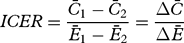
The aim of this review is therefore to establish whether PHVs to prevent falls are cost-effective, and which factors influence the results. We focused on those articles that conducted cost-effectiveness analyses, presenting the differences in costs and effects in incremental cost-effectiveness ratios (ICER): “ICERs represent the differences in mean costs ∆C between the intervention C 1 and usual care groups C 2 in the numerator and the difference in mean effects ∆Ē in the denominator (Ē1 − Ē2)” (Drummond et al., Reference Drummond, Sculpher, Torrance, O'Brien and Stoddart2005).
According to health economics standards, effects are favorably presented in terms of quality-adjusted life years (QALYs), which capture reduced morbidity and reduced mortality by weighting the duration of a health state with a preference-based valuation of quality of life (utility). To determine utilities, the EQ-5D questionnaire is used most frequently (Rasanen et al., Reference Rasanen, Roine, Sintonen, Semberg-Konttinen, Ryynanen and Roine2006). In the absence of sufficient studies performing such wide-ranging cost-utility analyses, so called cost-effectiveness analyses adopting other suitable denominators, namely prevented falls, were additionally considered in our study. Although there is no universally agreed upper limit for interventions to be cost-effective, those with ICERs below £20,000/QALY are considered to be cost effective, while ICERs between £20,000/QALY and £30,000/QALY are more likely to require additional justification, and even those above £30,000/QALY are not utterly excluded by guidelines of the National Institute for Health and Clinical Excellence (NICE) (National Institute for Health and Clinical Excellence, 2010). Threshold values are even higher in the U.S.A., where, starting from $50,000/QALY as the reference value based on evaluations from 1982, Braithwaite et al. (Reference Braithwaite, Meltzer, King, Leslie and Roberts2008) redefine the thresholds as being between $109,000/QALY and $297,000/QALY in 2008.
Methods
Search strategy
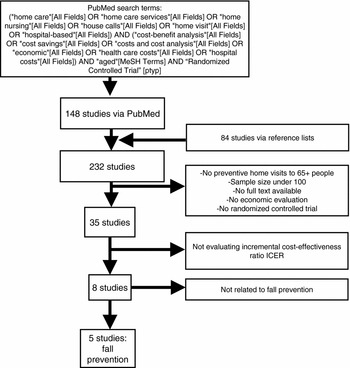
As shown in Figure 1, an online PubMed search was conducted to identify relevant studies. Search terms included combinations of the following keywords: (“home care”[All Fields] OR “home care services”[All Fields] OR “home nursing”[All Fields] OR “house calls”[All Fields] OR “home visit”[All Fields] OR “hospital-based”[All Fields]) AND (“cost-benefit analysis”[All Fields] OR “cost savings”[All Fields] OR “costs and cost analysis”[All Fields] OR “economic”[All Fields] OR “health care costs”[All Fields] OR “hospital costs”[All Fields]) AND “aged”[MeSH Terms] AND “Randomized Controlled Trial” [ptyp]. The search process ended on 22 June 2010. Titles and abstracts were examined in detail, and, if the article's eligibility remained unclear, the full text was examined. Additionally, reference lists were manually searched for further, potentially relevant studies (84 studies found). All eligible articles were retrieved in full text and closely examined.
Diagram showing filtering process of literature used

Inclusion and exclusion criteria
The articles that were included related to PHVs in the elderly. Unless separate data analyses were conducted for the subsamples of seniors aged over 65 years, any studies not limited to the senior population (defined as 65 years of age or older) were excluded. Only studies published in English or German and based on the evaluation of primary data were considered. The minimum sample size had to be larger than 100 to assure validity. Another inclusion criterion was use of a randomized controlled trial (RCT). Even though there is criticism about its validity (Clark, Reference Clark2001; further elaborated below in the Discussion), we consider RCTs to be the most acceptable method for ensuring rigorous results. Furthermore, articles had to be based on calculations using ICERs in combination with QALYs or other suitable denominators (as illustrated in Figure 1). Finally, studies not dealing with fall prevention were excluded.
Data analysis
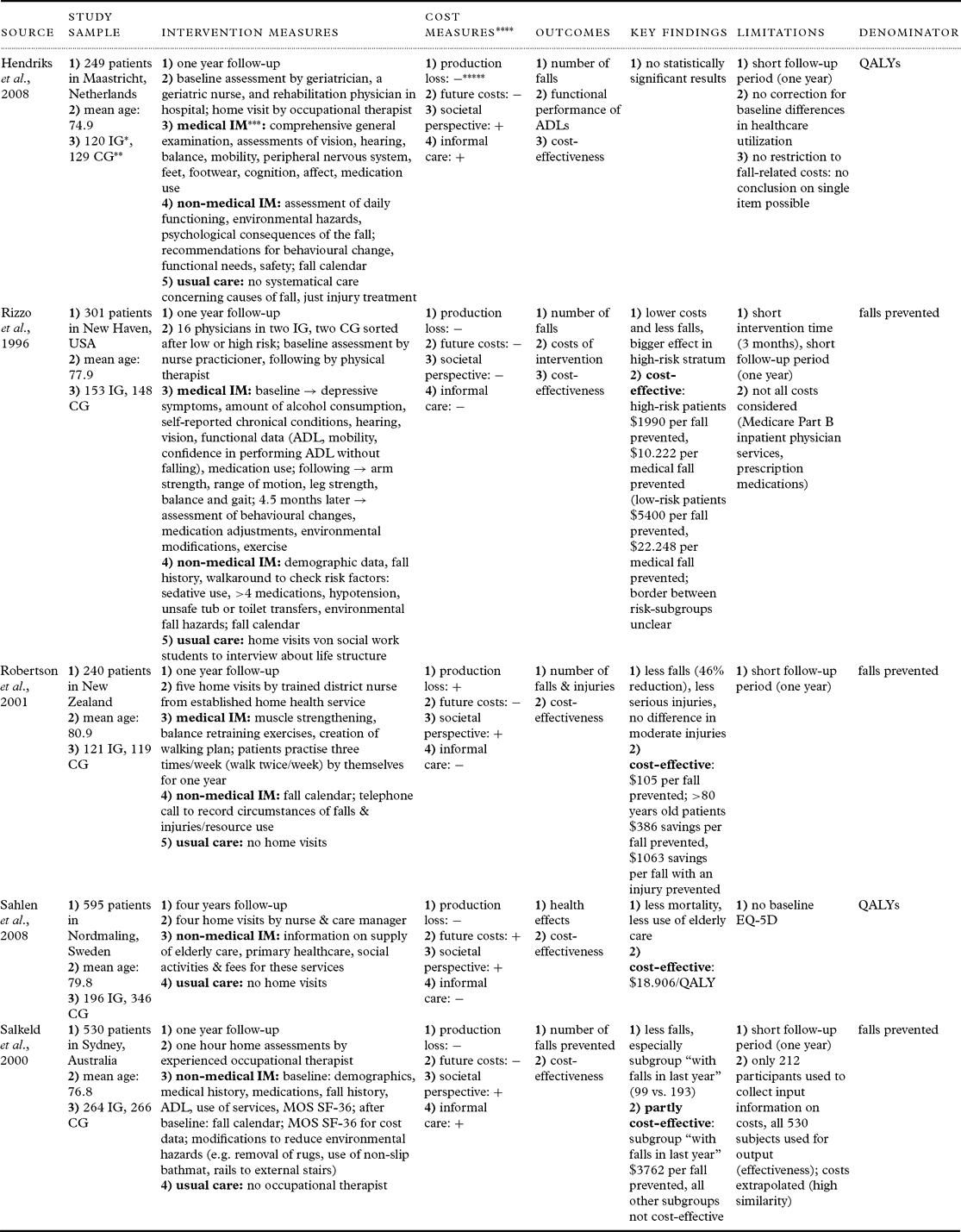
To facilitate comparisons, all cost estimates were inflated to 2008 using the OECD consumer price index, and converted into U.S. dollars using the OECD Purchasing Power Parities for GDP per $U.S. in 2008 (OECD, 2010). The following information was systematically extracted from the reviewed articles (see Table 1): source (authors and year of publication), study sample (its size indicating the validity of the article (varying from 151 to 4034 persons), the mean age of the sample, and its distribution among intervention and control groups), study design (length of follow-up period, decisive cost measures), intervention measures taken (general method with medical and/or non-medical activities in comparison to usual care), outcomes, key findings, limitations, and the denominator in the respective ICER equation.
Overview of articles used (in alphabetical order)
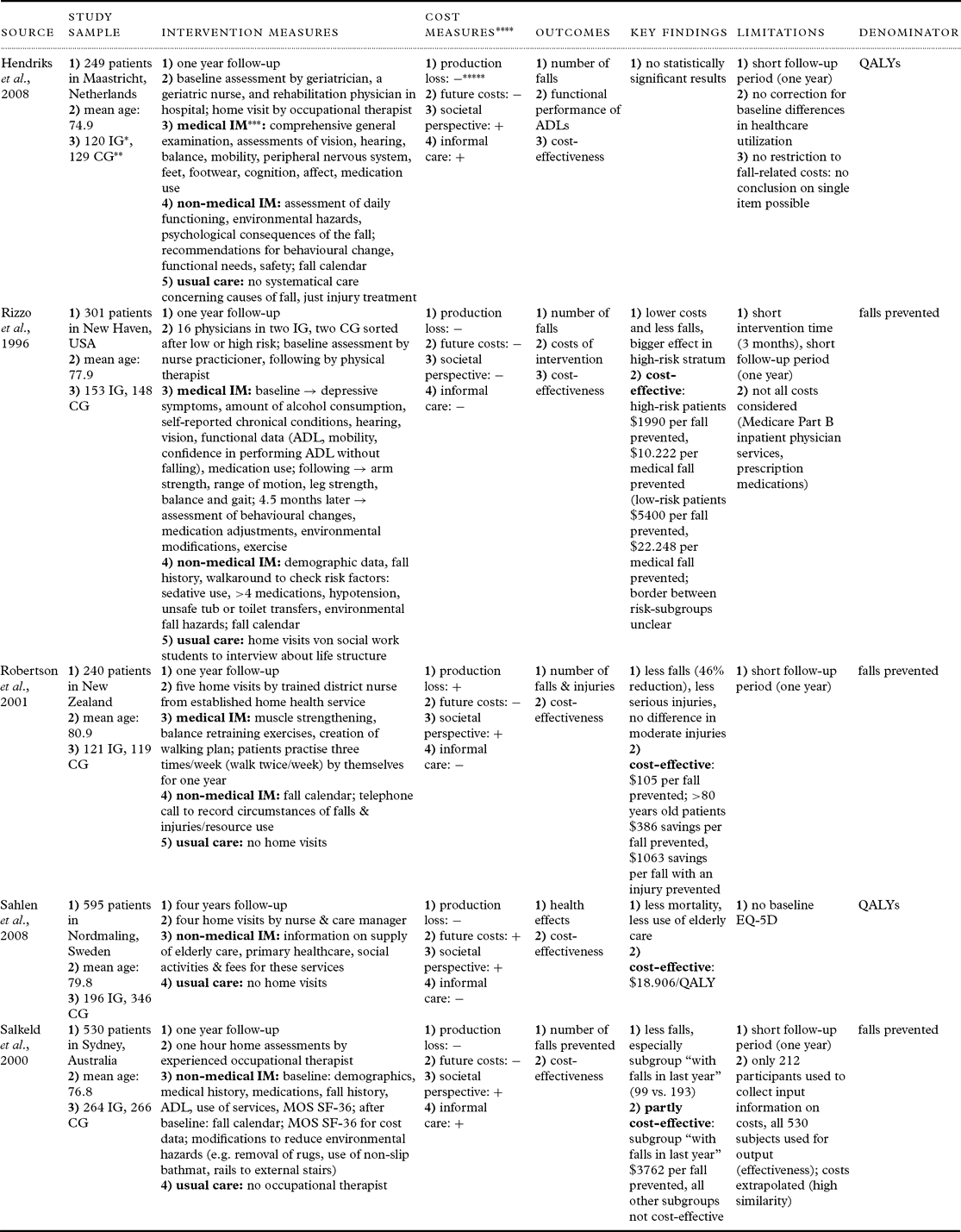
*IG = intervention group **CG = control group.
***IM = intervention measures.
****cost measures: selection of aspects distinguishing studies.
*****+ = considered, − = not considered.
ADL = activities of daily living; QALY = quality-adjusted life years.
Presentation of findings
This review is structured as follows: first, information on finding relevant articles and their respective methodological quality is given. Hereafter, every reviewed article is introduced, and contents and results are presented. Structurally, the arrangement of the descriptions resembles the subgroups utilized in Table 1. A brief comparison of the results is presented in the Discussion, together with an exploration of the possible reasons for the varying results regarding cost-effectiveness. We also highlight aspects such as the application of diverging assessment scales for health outcomes and the general applicability of QALYs and RCTs, as well as the influence of different study designs concerning the setting, employed health care personnel, intervention schemes, patient subgroups, and cost measures. Finally, a brief conclusion summarizes all our findings.
Results
Reviewed articles and methodological quality
A total of 148 papers were found via PubMed, and a further 84 papers were found via bibliographic search in the reference lists of eligible articles, resulting in a total of 232 studies. After applying the exclusion criteria (see above), 35 studies remained. Out of these, eight studies specifically evaluated ICERs (as illustrated in Figure 1). The application of concepts such as salutogenic versus pathogenic approaches (Antonovsky, Reference Antonovsky1979) to include or exclude studies failed owing to the heterogeneous intervention schemes that did not allow us to draw a coherent line between our studies. Therefore, aspects such as the number of visits and time spent with the seniors to build a trusty relationship are documented as important factors, but do not serve as exclusion criteria in order to provide an overview as broad as possible over a research field featuring a limited quantity of studies. Instead, the research field was narrowed to interventions dealing with fall prevention, and the five remaining articles used in this review span a period from 1994 to 2008.
Hendriks et al. (Reference Hendriks, Evers, Bleijlevens, Haastregt, Crebolder and Eijk2008)
Hendriks et al., conducted an RCT with one-year follow-up in the Netherlands, allocating 120 persons to the intervention and 129 to the control group, to assess cost-effectiveness of a fall prevention program. Instruments were questionnaires at baseline, after 4 months, and after 12 months. The intervention consisted of a baseline assessment (comprehensive general examination of vision, hearing, balance and mobility) by a geriatrician, a geriatric nurse and a rehabilitation physician in a hospital, followed by a summary giving recommendations to the patient. Furthermore, a PHV by an occupational therapist assessed daily functioning, made propositions for behavioral change and removed environmental hazards. By focusing on the elimination of risk factors and avoidance of problems, this study is considered to follow a pathogenic approach. Usual care only consisted of injury treatment; no systematic care concerning the causes of falls was conducted. Costs measures contained program costs (defining costs of the intervention, e.g. payments for health care professionals based on time spent with the patients), other health care costs (e.g. hospital admissions, medication, alternative medicine) as well as patient and family costs (e.g. home modifications, out-of-pocket expenses). Main outcomes were the number of persons who fell (established by monthly telephone enquiry), the development of the functional performance of ADLs, and the intervention's cost-effectiveness.
The key findings indicate that the program showed no differences, either in health outcomes or in costs. All results lacked statistical significance. Cost-effectiveness could not be assumed.
The study showed several limitations: first, one year of follow-up may be too short to detect differences in health care consumption. Secondly, no baseline correction concerning health care utilization was conducted, so that data before the first fall remain unknown. This limitation is reduced by the groups’ randomization but has to be borne in mind. Thirdly, the calculated costs contained all health care, family and patient costs, so that results cannot be related to falls only. Also, the intervention did not include enough time and sufficient PHVs to enable a trust-based relationship between the visitor and the participant, making it hard to prove that the outcome was a result of the PHVs.
Sahlen et al. (Reference Sahlen, Lofgren, Mari and Lindholm2008)
Sahlen et al., applied four years of follow-up to their RCT, allocating 196 Swedish patients to the intervention, and 346 to the control group, and sourcing relevant data from official documents and medical and social records. The intervention consisted of four PHVs (one every six months) by a nurse and a care manager, informing the intervention group about the supply of elderly care, primary health care, social activities and fees for these services. The main goal was to stimulate the patients “to adopt or maintain a healthy lifestyle and preserve functional ability as far as possible” with a focus on fall prevention, physical activity, diet, and common age-related problems. This broad mixture of measurements, working to create conditions of well-being as well as trying to avoid health problems makes this intervention both salutogenic and pathogenic. Usual care did not include PHVs. Cost measures were divided into intervention costs (e.g. salaries, training, materials) and associated costs (health care use, emergency visits). No informal care costs were included. Main outcomes were health effects and the cost-effectiveness of the intervention.
Besides less mortality during the intervention (short-range effect) and less use of elderly care in the intervention group, the key findings show an ICER of $20,383/QALY including costs of added life years, and therefore prove the intervention to be cost-effective, as the ratio is not only far below a common threshold in Sweden ($71,700/QALY), but also below our reference values from the U.K. and the U.S.A.
Concerning limitations, the study lacked a baseline measurement of EQ-5D, so that no initial differences were assumed according to the random allocation and “that any potential differences after the trial were caused by the intervention”.
Rizzo et al. (Reference Rizzo, Baker, McAvay and Tinetti1996)
Rizzo and colleagues conducted an economic evaluation of an intervention undertaken by Tinetti et al. (Reference Tinetti1994) which included 301 patients (153 in the intervention, 148 in the control group) in a two-year follow-up RCT, carried out in New Haven, U.S.A. The intervention took place as follows: 16 physicians were split into four groups, two at a time as intervention and control group, separated to care for low and high risk patients. After baseline interviews carried out by a nurse practitioner (assessment of demographic data, fall history, depressive symptoms) and, one week later, by a physical therapist (assessment of arm strength, range of motion, balance and gait), the intervention phase of three months started, consisting of medical measures such as medication adjustments and exercise, as well as non-medical assessments like a walk around to check for and remove risk factors and environmental fall hazards. Like the study by Sahlen et al. (Reference Sahlen, Lofgren, Mari and Lindholm2008), this combination of salutogenic (e.g. exercise) and pathogenic measurements (e.g. elimination of fall hazards) does not allow a clear classification. Usual care involved a PHV by a social work student to conduct an interview about behavior patterns in general. A three-month maintenance phase then took place in which patients were contacted monthly. Costs were categorized as intervention costs (e.g. developmental/training costs, staff-related expenses) and healthcare costs (e.g. hospitalization, outpatient services, and fall-related costs), while informal care costs were not ascertained. The calculations only include fall-related costs, leading to the assumption that potential cost-effectiveness would be even higher when integrating saved home care and nursing home costs. Main outcomes were the number of falls as well as the costs and the cost-effectiveness of the intervention.
Besides fewer falls, the key findings concerning cost-effectiveness of the intervention reveal that the subgroup of high-risk participants benefitted most: mean health care costs per fall prevented indicated savings for high-risk patients and overall, while low-risk patients showed savings of $2958. Regarding falls requiring medical attention, overall costs and high-risk patients still accounted for negative ICERs, with the figure for low-risk patients increased to $14,870. A bit beyond the scope of our topic, but worth mentioning, is the finding by Rizzo et al. (Reference Rizzo, Baker, McAvay and Tinetti1996) that effectiveness could be further increased by changing the setting of the intervention: when applying the measures in an HMO environment, where patients would visit a centre for the intervention, the largest share of costs – staff time –would be cut.
These results not only suggest that the intervention examined is cost-effective, but they also illustrate that certain subgroups benefit more than others, due to their predisposition. Unfortunately, the distinction between low- and high-risk patients remains unclear. Furthermore, several limitations have to be borne in mind: first, the intervention only lasted three months, although, the two year follow-up period indicated that the effectiveness did not decline significantly. Nevertheless, the time period appears to be too short to build up a trustful relationship between visitor and elderly person, as suggested by the concept of PHVs. Secondly, not all costs were charged (e.g. Medicare Part B inpatient physician services, informal care costs or prescription medication costs), but their influence is regarded to be negligible.
Robertson et al. (Reference Robertson, Devlin, Gardner and Campbell2001a)
Robertson and colleagues randomly assigned 240 patients in New Zealand to an intervention (121) or a control group (119), for an RCT with one-year follow-up. Besides telephone information about particular circumstances or injuries, participants took part by mailing a fall diary every month. A district nurse from an established home health service, trained for one week by a physiotherapist, conducted five PHVs (weeks one, two, four, eight; and after six months) to perform muscle strengthening and balance retraining exercises. In addition, a walking plan was developed, and patients taught to practice three times a week, and walk twice a week by themselves for one year. The focus on capacity enhancement indicates a salutogenic approach. The control group received no PHVs. Cost measures included the cost of implementing the program as well as the difference in hospital costs where those costs resulted directly from a fall. Main outcomes were the number of falls and injuries, as well as the cost-effectiveness of the intervention.
Besides a 46% reduction in falls and less serious injuries, the program proved to be cost-effective, especially for participants aged over 80 years. Including savings from hospital admissions, costs per fall prevented for the whole intervention group were $133, for over 80-year-old patients savings as high as $485 were recorded. Regarding costs per fall with an injury prevented, participants aged over 80 registered savings of $1337. Like the study by Rizzo et al. (Reference Rizzo, Baker, McAvay and Tinetti1996), it is striking that certain subgroups, in this case the over 80-year-old patients, benefit more than others from the intervention.
Concerning limitations, the question of sufficiency regarding a one-year follow-up period, as already seen in the study by Hendriks et al. (Reference Hendriks, Evers, Bleijlevens, Haastregt, Crebolder and Eijk2008), should be noted. Furthermore, future cost developments are not included in the evaluation, leading to a rather conservative estimation and thus reinforcing the impression of a very cost-effective intervention.
Salkeld et al. (Reference Salkeld, Cumming, O'Neill, Thomas, Szonyi and Westbury2000)
The study by Salkeld et al. (Reference Salkeld, Cumming, O'Neill, Thomas, Szonyi and Westbury2000) estimated the cost-effectiveness of the intervention carried out by Cumming et al. (Reference Cumming1999), who randomly assigned 530 Australian patients in a one-year follow-up RCT (264 in intervention, 266 in control group). Assessing only one component of a multifactorial approach to fall prevention, an experienced occupational therapist was charged with a one-hour home assessment with the aim of reducing environmental hazards by, for example, the removal of rugs or the use of non-slip bathmats (pathogenic approach). After baseline interviews to collect sociodemographic data, a brief medical history, current medications, a history of falls in the past 12 months, and the performance of ADLs, participants were asked to maintain a fall diary and post it to the researchers each month. Usual care involved no PHVs. The economic evaluation included costs for hospital admission, institutional settings, home nursing, and informal care. Main outcomes were the number of falls prevented and the cost-effectiveness of the intervention.
Regarding health outcomes, fewer falls, especially among subjects with a falls history (99 vs. 193), were reported. Concerning cost-effectiveness, sensitivity analyses showed that the intervention resulted in a cost saving for the subgroup of participants with “falls in last year”, whereas overall mean costs accounted for $1525. In comparison to the study by Rizzo et al. (Reference Rizzo, Baker, McAvay and Tinetti1996), which found that “the multifactorial intervention was associated with both lowered health care costs and fewer total and medical falls”, Salkeld et al. (Reference Salkeld, Cumming, O'Neill, Thomas, Szonyi and Westbury2000) only evaluated the home hazard-component, and reported fewer falls but higher healthcare costs. This can be explained by the fact that higher healthcare costs are not related to falls, but rather result from the occupational therapist's unintended impact on family members to become more aware of hazards and the patient's problems, and thereby increasing institutional care admissions.
A limitation, besides the recurring short follow-up period of only one year and the associated low number of PHVs, is the fact that not all 530 study subjects were assessed on their baseline use of resources, as only a subsample (n = 212: 103 in the intervention group, 109 in the control group) was recorded. Referring to virtually identical sociodemographic data, costs were extrapolated to all 530 subjects to derive cost-effectiveness.
Discussion
Five studies were identified that evaluated ICERs of PHVs in the elderly, focusing on fall prevention interventions. While three studies (Rizzo et al., Reference Rizzo, Baker, McAvay and Tinetti1996; Robertson et al., Reference Robertson, Devlin, Gardner and Campbell2001a; Sahlen et al., Reference Sahlen, Lofgren, Mari and Lindholm2008) showed that their intervention was cost-effective, one study did not (Hendriks et al., Reference Hendriks, Evers, Bleijlevens, Haastregt, Crebolder and Eijk2008). One study proved to be cost-effective for only a subgroup of the study sample, while all others subgroups failed (Salkeld et al., Reference Salkeld, Cumming, O'Neill, Thomas, Szonyi and Westbury2000).
Of the two studies utilizing QALYs as the denominator to costs, only one showed a positive result (Sahlen et al., Reference Sahlen, Lofgren, Mari and Lindholm2008), while the other (Hendriks et al., Reference Hendriks, Evers, Bleijlevens, Haastregt, Crebolder and Eijk2008) failed to deliver statistically significant results. When applying falls prevented as the denominator, two studies proved the interventions to be cost-effective (Rizzo et al., Reference Rizzo, Baker, McAvay and Tinetti1996; Robertson et al., Reference Robertson, Devlin, Gardner and Campbell2001a), while one could show this for only a subgroup of the study sample (Salkeld et al., Reference Salkeld, Cumming, O'Neill, Thomas, Szonyi and Westbury2000).
Overall, it remains difficult to identify clear methodological differences between cost-effective and non-cost-effective elements of the reviewed studies that could systematically lead to the range of results. Possible explanations include various follow-up periods (one year to four years), different outcome measures (e.g. falls and injuries prevented, functional performance of activities of daily living, QALYs), unequal cost compositions (including production loss, a societal perspective, informal care and future costs or not), and, most important, the various approaches of medical and non-medical intervention activities and opposing control groups that were also distinguished by different measures. For example, PHVs were conducted by different medical personnel (e.g. a nurse practitioner, a geriatrician or an experienced occupational therapist), while the measures themselves varied from comprehensive general examinations to information on supply of primary health-care.
General methodological considerations
Standardized instruments
A common source of bias in evaluating ICERs is the lack of standardized assessment scales for health outcomes. Both studies assessing QALYs applied the most frequently used instrument, the EQ-5D, with different follow-up periods and different results: Hendriks et al. (Reference Hendriks, Evers, Bleijlevens, Haastregt, Crebolder and Eijk2008) used the Dutch version at baseline, and after follow-up at four months and 12 months could not prove cost-effectiveness due to lack of significance in their results. In contrast, Sahlen et al. (Reference Sahlen, Lofgren, Mari and Lindholm2008) applied the EQ-5D in combination with mortality data for their study sample, approximately three months after the end of the intervention, and showed cost-effectiveness.
To assess the number of prevented falls, all respective studies (Rizzo et al., Reference Rizzo, Baker, McAvay and Tinetti1996; Robertson et al., Reference Robertson, Devlin, Gardner and Campbell2001a; Salkeld et al., Reference Salkeld, Cumming, O'Neill, Thomas, Szonyi and Westbury2000) used fall calendars that had to completed daily, and mailed monthly for an intervention period of one year. The circumstances of the fall and the severity of suffered injuries were ascertained via telephone interviews. All studies proved that these assessment scales could be a cost-effective way to evaluate progress, mainly by saving staff time (even though the study by Salkeld et al. only did this for a certain subgroup).
QALYs
There is doubt about the applied denominators themselves. Are QALYs a suitable measure to evaluate cost-effectiveness of PHVs, or are prevented falls more convenient for this purpose? Melis et al. (Reference Melis2008) point out that the complexity of elderly people's health states prevents the application of QALYs due to insufficient gradation of this instrument. Elkan et al. (Reference Elkan2000) argue that the generalizability of an evaluation would be limited by utilizing a single primary outcome measure. By contrast, QALYs attempt to provide a wide range of benefits, and thereby make up for potential ethical or practical weaknesses. Therefore, we decided to consider multiple types of denominators in our review, bearing in mind their particular strengths and weaknesses.
RCTs
A further question must be raised concerning one of our exclusion criteria: RCTs as a reliable approach for evaluating PHVs. Clark (Reference Clark2001) raised the question of their applicability, alleging that “studying home visits as an intervention in randomized controlled trials is analogous to studying drug treatment without specifying the drug or its dosage”. He concluded that RCTs are not appropriate when controlling for complex interactions like the physician-patient relationship, the patient's attitude towards and experience of health care and PHVs, or the perceived need for a PHV, which he believes are causal to the success of the intervention. In reply to this, Taylor (Reference Taylor2002) indicates that limitations concerning complex social factors are not exclusive to RCTs but constitute a common bias in commonly applied approaches. Therefore, RCTs remain a relevant way of gaining knowledge about cost-effectiveness without precluding other methods of evaluation. Elkan et al. (Reference Elkan2000) even call RCTs the “gold standard”, but limit this statement by warning of a biased external validity where circumstances are too strictly controlled and therefore promote a falsified relation to actual practice. In short, these authors trust in the validity of RCTs but keep possible sources of bias in mind.
Study design
Besides general methodological issues influencing the outcome, it is crucial to observe the particular study design itself, as there are numerous possible sources for bias and differences in the evaluation.
Setting
Much importance is attached to the diversity of health visiting services and settings. As shown by the interventions of Robertson et al. (Reference Robertson, Devlin, Gardner and Campbell2001a; Reference Robertson, Gardner, Devlin, McGee and Campbell2001b), applying equal measures in different environments and study samples is decisively influencing cost-effectiveness. While the first program was performed by an established home health service (trained district nurse) (Robertson et al., Reference Robertson, Devlin, Gardner and Campbell2001a), the second study's measures were delivered from general practices by trained practice nurses (Robertson et al., Reference Robertson, Gardner, Devlin, McGee and Campbell2001b). Training of the nurses, applied measures, cost categories and main outcomes were equal, but nevertheless led to a different result: the second, non-RCT setting turned out to be less cost-effective (costs per fall prevented = $1359; costs per fall with an injury prevented = $3045). Further, Melis et al. (Reference Melis2008) remind us that usual care might be adequate in certain healthcare settings, and employing oversized measures is rather counterproductive. Going beyond the approach of PHVs, Rizzo et al. (Reference Rizzo, Baker, McAvay and Tinetti1996) suggest the implementation of an HMO setting, where the majority of costs could be diminished by supplying elderly people from a centralized site, thereby saving staff time.
Personnel
It is essential that visit intensity and duration should be tailored closely to the needs of the elderly person while still considering cost-effectiveness. This depends on the elderly person's individual health status and intervention setting, and requires the health visitor to find a balance between spending sufficient time to gain trust and ensure a successful treatment while keeping an eye on costs. Secondly, a less qualified and thereby less costly workforce could be recruited to accomplish tasks such as baseline interviews, where involvement of general physicians, for example, would be unnecessary (Rizzo et al., Reference Rizzo, Baker, McAvay and Tinetti1996). An additional reason for higher costs is addressed in the study by Bergner et al. (Reference Bergner, Hudson, Conrad, Patmont, McDonald, Perrin and Gilson1988), where highly qualified personnel diagnosed conditions that had not been assessed before, and thereby increased costs (Bergner et al., Reference Bergner, Hudson, Conrad, Patmont, McDonald, Perrin and Gilson1988). Removing this aspect would imply checking the importance of qualifications terms of health outcomes and costs. Finding the appropriate balance is difficult, as the capability to identify the influence of the health care executives’ quality on the outcomes of the studies is limited.
Intervention schemes
Analyzing the interventions themselves, the authors fail to identify promising details and elements promoting cost-effectiveness. E.g., wide comprehensive assessments of demographic data, fall history, depressive symptoms, hearing, vision, functional data, medication use, environmental hazards, motion ability, balance and gait, followed by environmental modifications, exercise, behavioural changes and the keeping of a fall calendar, as well as medication adjustments, can be cost-effective as Rizzo et al. (Rizzo et al., Reference Rizzo, Baker, McAvay and Tinetti1996; Salkeld et al., Reference Salkeld, Cumming, O'Neill, Thomas, Szonyi and Westbury2000) show. But, slightly modified measures as conducted by Hendriks et al. (Reference Hendriks, Evers, Bleijlevens, Haastregt, Crebolder and Eijk2008) prove the opposite. Related to this reasoning, control groups also experience different treatments that do not admit any conclusion on cost-effectiveness (from no PHVs to such conducted by social work students).
Subgroups
The most indicating aspect we found towards cost-effectiveness consisted of subgroup analyses of study samples. Bergner et al. (Bergner et al., Reference Bergner, Hudson, Conrad, Patmont, McDonald, Perrin and Gilson1988) stress the importance of suitable adjustments for chosen patient groups, emphasizing that health outcomes and cost balances only improve when PHVs are conducted to selected patients. Decisive is the acquisition of baseline characteristics of participants, as many studies disregard the importance of pre-existing individual differences concerning health status or quality of life, while concentrating on home service utilization only (Markle-Reid et al., Reference Markle-Reid, Browne, Weir, Gafni, Roberts and Henderson2008). In our reviewed studies, subsamples have shown themselves to be diverse regarding origin, age, number, and most importantly, baseline demographic and health characteristics. And as Salkeld et al. (Salkeld et al., Reference Salkeld, Cumming, O'Neill, Thomas, Szonyi and Westbury2000), and to a lesser extent Rizzo et al. (Rizzo et al., Reference Rizzo, Baker, McAvay and Tinetti1996) and Robertson et al. (Robertson et al., Reference Robertson, Devlin, Gardner and Campbell2001a) elucidate, the calculation of sample subgroups can lead to different results for subgroups. E.g., in Salkeld's study (Salkeld et al., Reference Salkeld, Cumming, O'Neill, Thomas, Szonyi and Westbury2000), only those entering with “falls in last year” benefitted from the intervention, while all other subgroups did not experience this effect. Still, it remains unclear where to draw the line between different groups in the study sample, depending on the individual case. Besides that, paying attention to the generalisability is required, as study samples do not always represent median population characteristics (Stuck et al., Reference Stuck1995). The same is true of control groups, influencing evaluations the same way.
Cost measures
Constituting the foundation of defining ICERs, the composition of cost measures has to be displayed, as different principals may be responsible for diverse results. E.g., a superior number of studies (Hendriks et al., Reference Hendriks, Evers, Bleijlevens, Haastregt, Crebolder and Eijk2008; Rizzo et al., Reference Rizzo, Baker, McAvay and Tinetti1996; Sahlen et al., Reference Sahlen, Lofgren, Mari and Lindholm2008; Salkeld et al., Reference Salkeld, Cumming, O'Neill, Thomas, Szonyi and Westbury2000) waived to assess values for time and production loss during morbidity, because the exclusion criterion of being older than 65 years implicated retirement. And, even though Robertson et al. did so (Robertson et al., Reference Robertson, Devlin, Gardner and Campbell2001a), arguing that less lifetime left equals a higher value, the worth of senior's time and production to society remains speculative (Sahlen et al., Reference Sahlen, Lofgren, Mari and Lindholm2008). Also diverging is the use of a broad societal perspective (Hendriks et al., Reference Hendriks, Evers, Bleijlevens, Haastregt, Crebolder and Eijk2008; Robertson et al., Reference Robertson, Devlin, Gardner and Campbell2001a; Sahlen et al., Reference Sahlen, Lofgren, Mari and Lindholm2008; Salkeld et al., Reference Salkeld, Cumming, O'Neill, Thomas, Szonyi and Westbury2000), or only reporting fall-related costs and disregarding e.g. prescription medications (Rizzo et al., Reference Rizzo, Baker, McAvay and Tinetti1996). Further, the inclusion of future costs respectively net savings resulting from the intervention itself is handled differently. While only one study included those (Sahlen et al., Reference Sahlen, Lofgren, Mari and Lindholm2008), stating that cost consequences are part of the intervention, and only to be omitted in case of neglectable triviality, most go without (Hendriks et al., Reference Hendriks, Evers, Bleijlevens, Haastregt, Crebolder and Eijk2008; Rizzo et al., Reference Rizzo, Baker, McAvay and Tinetti1996; Robertson et al., Reference Robertson, Devlin, Gardner and Campbell2001a; Salkeld et al., Reference Salkeld, Cumming, O'Neill, Thomas, Szonyi and Westbury2000), relying on the fact that costs must not play a determining role in deciding which measures are considered helpful (Sahlen et al., Reference Sahlen, Lofgren, Mari and Lindholm2008). A similar distinction is made addressing the inclusion of costs from informal care, qualified as health care carried out by non-professionals. Here, too, the studies reviewed follow different paths: while two articles include this aspect into their evaluation (Hendriks et al., Reference Hendriks, Evers, Bleijlevens, Haastregt, Crebolder and Eijk2008; Salkeld et al., Reference Salkeld, Cumming, O'Neill, Thomas, Szonyi and Westbury2000), most omit (Rizzo et al., Reference Rizzo, Baker, McAvay and Tinetti1996; Robertson et al., Reference Robertson, Devlin, Gardner and Campbell2001a; Sahlen et al., Reference Sahlen, Lofgren, Mari and Lindholm2008).
Conclusion
Having conducted this systematic review, we found no compelling evidence to prove PHVs to be comprehensively cost-effective. Five studies were identified that evaluated this question: three illustrated cost-effective interventions (Rizzo et al., Reference Rizzo, Baker, McAvay and Tinetti1996; Robertson et al., Reference Robertson, Devlin, Gardner and Campbell2001a; Sahlen et al., Reference Sahlen, Lofgren, Mari and Lindholm2008), one portrayed a non cost-effective trial (Hendriks et al., Reference Hendriks, Evers, Bleijlevens, Haastregt, Crebolder and Eijk2008), and one dealt with a program which was cost-effective only for a subsample of the study's participants (Salkeld et al., Reference Salkeld, Cumming, O'Neill, Thomas, Szonyi and Westbury2000). Cost-effectiveness appears to depend on careful adaptation of selected measures (Wancata and Meise, Reference Wancata and Meise2009) for certain settings in special environments for designated patients and disease patterns, on a case-by-case basis. Nevertheless, an overview of results and relevant issues and obstacles provides a starting point for future research to assess this question. As shown, much overlap is found, most importantly with the instruments and cost composition of the economic evaluation, the setting, personnel and measures of the intervention, as well as in the careful selection and analysis of the study sample and its subgroups. An important aspect is the time perspective and its importance in longitudinal surveys since different follow-up times produce diverging results. A longer follow-up time includes a larger number of positive and negative cost- and health factors than short time-spans. Thus, a long follow-up period with at least three extensive time points is suggested (Muthén, Reference Muthén and Muthén2004; Fitzmaurice et al., Reference Fitzmaurice, Davidian, Verbeke and Molenberghs2009). In this context, a useful way to standardize cost-effectiveness in geriatric research could involve coherent standards in the instruments and cost composition of the economic evaluation. Components like the setting, personnel, measures of the intervention, and the heterogeneity of the study sample and its subgroups appear to depend strongly on the particular intervention. Therefore, a uniform follow-up time, a standardized cost measurement including production loss and future costs, applying a societal perspective and the costs of informal care, as well as the use of standardized denominators like QALYs (based on the EQ-5D questionnaire) could build a foundation for comparable results.
Conflict of interest
None.
Description of authors’ roles
SC conceived the study, participated in its design and implementation, and drafted and finalized the paper. DH participated in the study's design and implementation, and helped to draft the paper. SRH and HM played a role in critical revision, and helped to draft the paper. HHK conceived the study, participated in its design and implementation, and helped to draft the paper. All authors read and approved the final draft.
Acknowledgments
This work was supported by the German Federal Ministry for Education and Research (grant numbers: 01ET0719 (Esther-Net), 01GT0601 & 01GT0604 (Growing old at home: support by preventive home visits)). The German Federal Ministry for Education and Research played no further role in the study and publication of the results was not contingent on the sponsor's approval.