Introduction
Maximum partial carbon dioxide (CO2) pressure obtained at the end of exhalation is called end-tidal CO2 (EtCO2) and provides instant, non-invasive information about the perfusion, ventilation, and metabolic condition of the patients. Reference Nagler and Krauss1 The recognition and monitoring of metabolic disorders such as diabetic ketoacidosis (DKA) are among the EtCO2 use indications in prehospital care and the emergency department (ED).
In this case, the aim was to find out whether there was a correlation between the metabolic values determined by venous blood gas (VBG) analysis and continuous EtCO2 monitoring during the treatment of a patient with DKA.
Case Report
A 23-year-old patient with Type 1 diabetes arrived by ambulance to ED with complaints of nausea, vomiting, and fever. During ED admission, blood pressure was 100/70mm Hg, heart rate was 100/min, respiratory rate was 23/min, oxygen saturation was 100%, EtCO2 was 23mmHg, and temperature was 38°C. Physical examination of the patient revealed slight somnolence and oropharynx hyperemia with no other pathological finding. The VBG findings revealed pH: 7.17; bicarbonate (HCO3): 11.8mmol/L; base deficit: 16.6mmol/L; blood glucose: 457mg/dl; potassium: 5.5mmol/L; and elevated anion gap metabolic acidosis. Ketonuria was detected in urinary examination.
Proper treatment in conformity with up-to-date guidelines started as the patient was diagnosed with DKA. Patient’s vital signs and EtCO2 values obtained by capnography were continuously monitored and recorded. The patient’s treatment continued with regulations based on hourly VBG values and electrolyte levels. The latest EtCO2 value assessed on the eighth hour was 28mmHg, pH was 7.3, and HCO3 was 16mmol/L. The patient had regained consciousness; recovered from fever, nausea, and vomiting; and started oral intake and was transferred to the department of internal medicine.
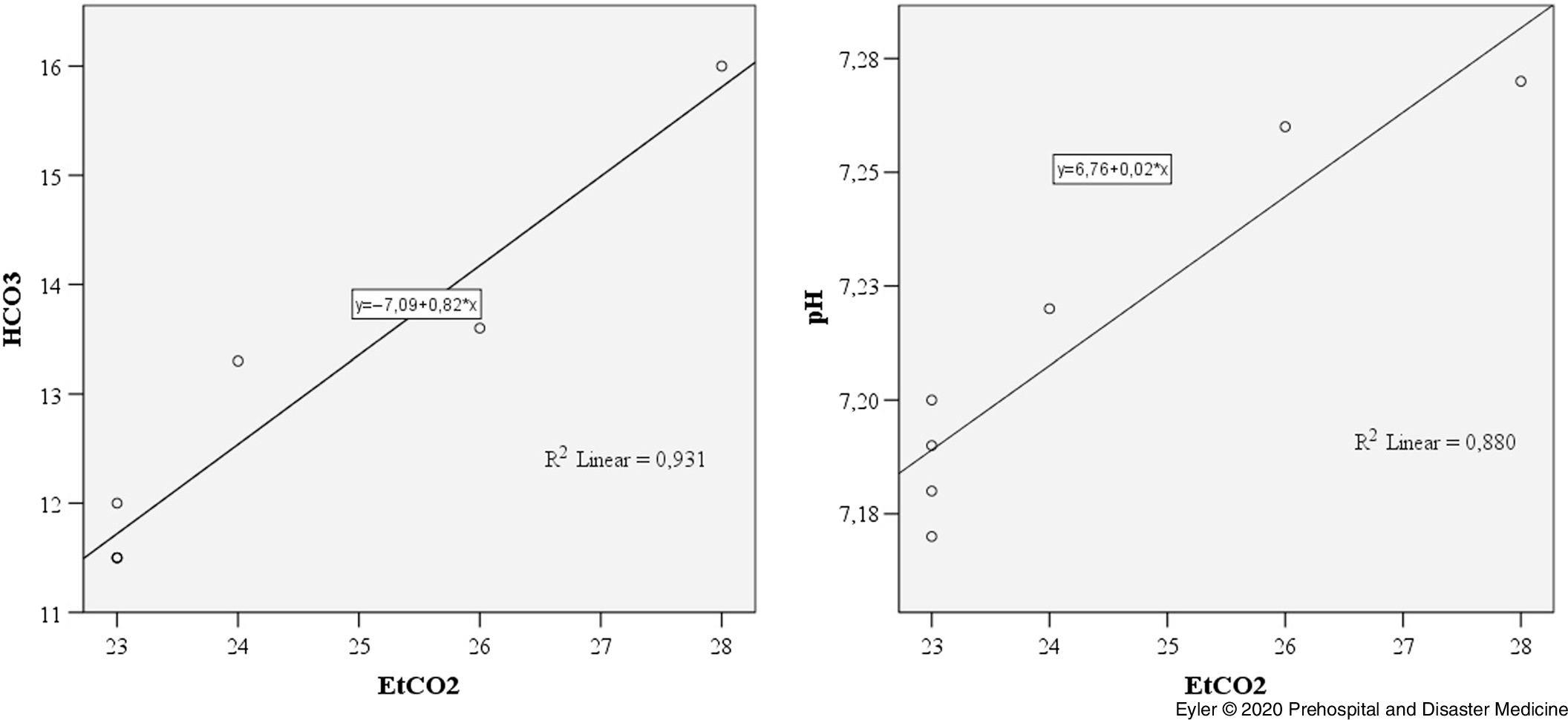
It was noted in the literature that EtCO2 monitoring could be useful in the monitoring of DKA. Reference Fearon and Steele2,Reference Gilhotra and Porter3 In this case, there was a good correlation between the values of EtCO2, pH, and HCO3. The correlations between EtCO2 and VBG parameters were assessed using Pearson correlations. End-tidal CO2 correlated well with serum HCO3 (r = 0.96; P < .001) and pH (r = 0.93; P < .001; Figure 1). Patient consent was obtained to participate in the report.
Scatterplot Illustrating the Relationship between Serum HCO3 (mmol/L)-EtCO2 (mmHg) and pH-EtCO2 (mmHg).

Discussion
Capnography devices have been increasingly used in the prehospital care and EDs as they are portable, cost-effective, and non-invasive. Diagnosis and monitoring of metabolic disorders are among their new areas of use. It’s a predictive tool for excluding metabolic disturbances in non-intubated patients. In a study examining the clinical value of EtCO2 in ED patients, it was reported that EtCO2 could be used for detecting low HCO3 levels in cases where arterial blood gas sampling is performed, such as acute renal failure, hyperglycemia, and ketoacidosis. Reference Kartal, Eray and Rinnert4 Similarly, there are studies supporting the use of non-invasive EtCO2 measurement instead of arterial blood gas in pediatric patients with suspected DKA and dehydration. Reference Kartal, Eray and Rinnert4,Reference Nagler, Wright and Baruch5
Although this technique is useful in reflecting the metabolic condition of the patients, there are some issues to be considered for its application. The CO2 concentration in the exhaled air is affected by three components, which are: amount of CO2 generated by systemic metabolism, CO2 circulation determined by pulmonary blood flow and cardiac output, and the respiratory system responsible for CO2 discharge. Therefore, it should be remembered that, EtCO2 values may fail to offer an exact reflection of the metabolic condition in the presence of a lung disease or other factors influencing the ventilation-perfusion relationship of the lungs.
Conclusion
Continuous EtCO2 monitoring provides instant, reliable, and valuable information about the metabolic status of the patients without cardiopulmonary problems. Unlike VBG, noninvasive, easy to apply, well-tolerated, and cost-effective capnography monitoring has many advantages in ED management of the patients.
Conflicts of interest/funding
The authors declare that they have no conflict of interest. This study has received no financial support.