Introduction
The regeneration niche has been defined by Grubb (Reference Grubb1977) as the biotic and abiotic requirements to replace a mature individual and includes stages in the life cycle of a plant from flowering to fruiting and seedling recruitment. In fire-prone ecosystems, regenerative strategies vary across species. For example, obligate seeders are killed by fire and regenerate from seed, resprouters regenerate from epicormic buds, lignotubers or other underground organs, and facultative seeder-sprouters combine both these modes of regeneration (Pate et al., Reference Pate, Froend, Bowen, Hansen and Kuo1990). Obligate seeders rely on a soil or canopy-stored seed bank for long-term survival. Seed banks play a major role in post-fire regeneration (Ooi et al., Reference Ooi, Denham, Santana and Auld2014), and are common in habitats affected by variable and stochastic disturbance. Seed persistence varies among species and populations and depends on the physical and physiological characteristics of seeds and how they are affected by the biotic and abiotic environment. A persistent soil seed bank helps distribute genetic diversity over time and contributes to sustainable plant populations (Long et al., Reference Long, Gorecki, Renton, Scott, Colville, Goggin, Commander, Westcott, Cherry and Finch-Savage2015).
Many species that store seeds in the soil seed bank possess mechanisms that act to postpone or slow the rate of germination (Baskin and Baskin, Reference Baskin and Baskin2014). Thus, dormancy plays a significant role in controlling the timing of germination. For example, dormancy mechanisms enable seeds to avoid germination in response to temperature and rainfall events that are not favourable for subsequent seedling establishment (Baskin and Baskin, Reference Baskin and Baskin2004). Physically dormant seeds have an impermeable seed coat and are unable to imbibe water to begin the germination process (Baskin and Baskin, Reference Baskin and Baskin2014). Physiological dormancy is characterized by a requirement for warm or cold stratification or dry after-ripening. Such seeds may require a pulse of high temperature, associated with wild fire, either to crack the testa (Auld, Reference Auld1991; Baskin and Baskin, Reference Baskin and Baskin2000) or a period of warm-dry/cold-wet cycles to erode the testa during soil burial and to alleviate physiological dormancy (Baker et al., Reference Baker, Steadman, Plummer and Dixon2005a; Merritt et al., Reference Merritt, Turner, Clarke and Dixon2007).
Western Australia has been recognized as having one of the largest and most unique floras in the world, with over 1500 genera and 12,500 taxa from more than 210 plant families native to the region. Within Western Australia, the South Western Australian Floristic Region (SWAFR), one of the world's five Mediterranean-climate biomes, is designated as an internationally renowned biodiversity hotspot (Mittermeier et al., Reference Mittermeier, Robles, Hoffman, Pilgrim, Brooks, Mittermeier, Lamoreux and da Fonseca2004; Hopper & Gioia, Reference Hopper and Gioia2004). Fire plays a major role in shaping and regenerating plant communities in the SWAFR (Dixon and Barrett, Reference Dixon, Barret, Abbot and Burrows2003; McCaw and Handstrum, Reference McCaw, Handstrum, Abbot and Burrows2003). Under natural conditions fires start from lightning strikes associated with convection storms (Bell, Reference Bell2001).
The relationship between temperature, dormancy break and germination is well documented (Vleeshouwers et al., Reference Vleeshouwers, Bouwmeester and Karssen1995; Probert, Reference Probert and Fenner2000; Baskin and Baskin, Reference Baskin and Baskin2004) and known to occur in SWAFR species (Baker et al., Reference Baker, Steadman, Plummer and Dixon2005b; Baker et al., Reference Baker, Steadman, Plummer, Merritt and Dixon2005c; Turner et al., Reference Turner, Merritt, Baskin, Baskin and Dixon2006). Temperatures of ~15°C associated with the winter wet season generally improve germination (Bell et al., Reference Bell, Plummer and Taylor1993; Bell et al., Reference Bell, Rokich, McChesney and Plummer1995b) and higher temperatures associated with the dry summer (≥30°C) tend to inhibit germination (Bellairs and Bell, Reference Bellairs and Bell1990). Merritt et al. (Reference Merritt, Turner, Clarke and Dixon2007) have also highlighted the substantial role of dry after-ripening in the alleviation of dormancy in Australian species. Dry after-ripening may involve dry storage of freshly harvested, mature seeds over a period of months or exposing seeds to high temperatures (80–120°C) for short periods (Merritt et al., Reference Merritt, Turner, Clarke and Dixon2007). The after-ripening period is intended to simulate the seeds’ first summer after dispersal from the parent plant.
Secondary factors that influence physiological processes within the testa and/or embryo can also play a role in promoting germination or alleviating seed dormancy. These include aerosol smoke (Dixon et al., Reference Dixon, Roach and Pate1995; Roche et al., Reference Roche, Dixon and Pate1997; Ward et al., Reference Ward, Koch and Grant1997; Tieu et al., Reference Tieu, Dixon, Meney and Sivasithamparam2001), smoked water solutions (Brown, Reference Brown1993; Baker et al., Reference Baker, Steadman, Plummer and Dixon2005a), and constant darkness (simulating burial). These secondary factors can interact with temperature (Bell, Reference Bell1994; Bell et al., Reference Bell, Deanna, McChesney, Catherine and Plummer1995a; Bell et al., Reference Bell, Rokich, McChesney and Plummer1995b; Keith, Reference Keith1997), but the extent to which temperature influences the promotional effects of such secondary factors is still poorly known (Baker et al., Reference Baker, Steadman, Plummer, Merritt and Dixon2005c). In addition, rising temperatures and changes to fire regimes associated with human-induced global warming could well affect complex germination strategies of many endemic species (Walck et al., Reference Walck, Hidayati, Dixon, Thompson and Poschlod2011). Such knowledge would prove beneficial to a greater understanding of germination ecology in Mediterranean-type ecosystems and would be a key factor in the conservation of threatened species and land rehabilitation.
This study examined key aspects of the life history of Stachystemon vinosus Halford & R.J.F.Hend., a species restricted to SWAFR. Stachystemon is a recently described genus in the cosmopolitan family Euphorbiaceae (Halford and Henderson, Reference Halford and Henderson2003). The genus contains 10 known species, all of which are endemic to Western Australia, with three listed as species of conservation concern (https://florabase.dpaw.wa.gov.au/; accessed January 2018). There is limited published information on the conservation biology of species from the Euphorbiaceae in Australia (e.g. Scott and Gross, Reference Scott and Gross2004; Vincent et al., Reference Vincent, Barrett, Cochrane, Plummer and Renton2015) and the only work on the genus Stachystemon is that of Groome and Lamont (Reference Groom and Lamont2015) on S. axillaris. Our research objectives were to examine the relationship between population structure, soil seed bank density and fire in S. vinosus to determine what life-history attributes are most vulnerable to key threatening processes. We also assessed seasonal temperatures as dormancy and germination cues for the species. We examined (1) flowering and fruiting phenology; (2) reproductive strategy; (3) soil seed bank density and its relationship with plant abundance and fire history (time since last fire); and (4) seed viability and conditions required for dormancy alleviation and germination of seeds. We hypothesized that population structure and soil seed bank density would be related to time since fire, and that season and seasonal temperatures would be important in the germination ecology of the species.
Materials and methods
Study species and habitat
Stachystemon vinosus is currently classified as a Priority 4 conservation species, naturally rare but not currently threatened. It is a dwarf monoecious shrub between 5 and 25 cm in height and 10–20 cm in width. Flowers are deep purple to black in colour and occur in spring. Female flowers can form separately or subtend a male flower which may be solitary or in clusters of up to four individuals. Stachystemon vinosus is pollinated by a small (~4 mm) black fly (order: Diptera) with no other pollinators observed (B. Vincent unpublished data). Each female flower produces a single endospermic seed (~3.2 × 2.7 mm in size) contained within a non-fleshy fruit capsule and these seeds mature and disperse in the following spring (Halford and Henderson, Reference Halford and Henderson2003). The seed has a caruncle or elaiosome attached near the hilum, an appendage that is common in the family Euphorbiaceae. Ants are known to collect the seeds of Euphorbiaceae (Berg, Reference Berg1975). Although the fate of these seeds once in the nest is unknown, it is assumed that only the caruncle is eaten (Mackay and Whalen, Reference Mackay and Whalen1998) and the remaining seed is disposed of within the nest. Many ant-dispersed species have dormancy mechanisms to aid their persistence in the landscape (Whitney, Reference Whitney2002).
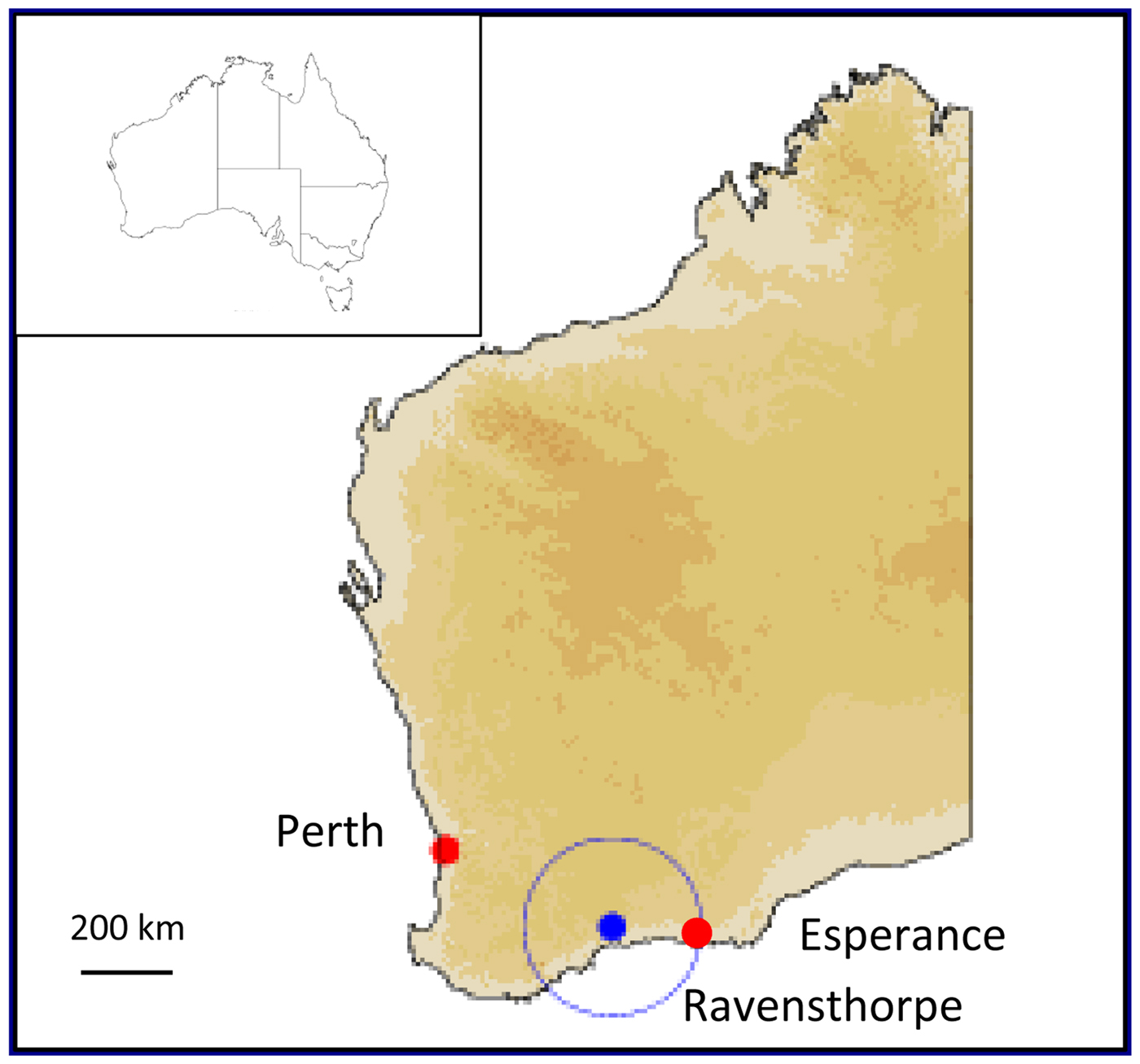
Stachystemon vinosus occurs in the Esperance Plains bioregion of SWAFR with a lineal extent of just over 300 km from Ravensthorpe in the west eastward to Mt Ragged, northeast of Esperance (Fig. 1). The habitat of S. vinosus is heath and mallee heath on sandy duplex soils. Plants typically occupy bare ground around the edge of dense shrubs or the base of mallee eucalypts. Within populations and in areas of suitable habitat, the distribution of S. vinosus can be extremely patchy, occurring in scattered clusters of up to 300 individuals interspersed with large unoccupied tracts of similar habitat.
Location of the study area  near Ravensthorpe, Western Australia.

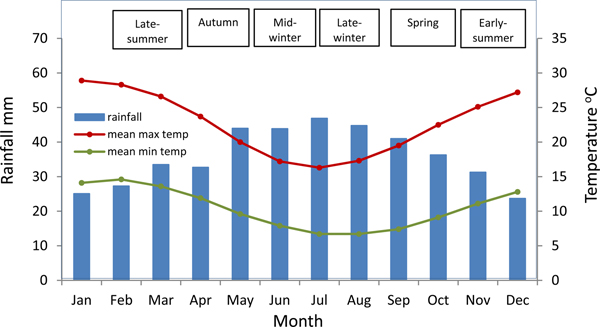
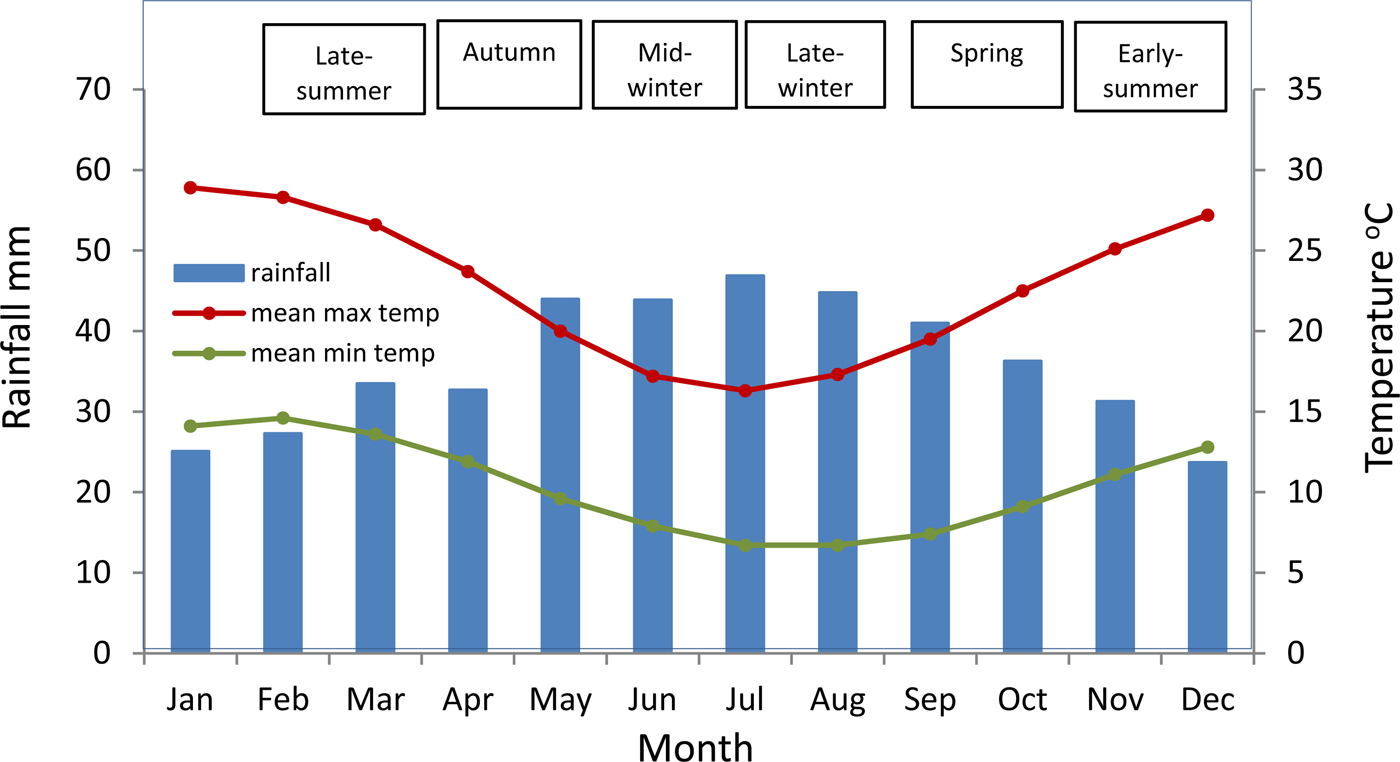
The study area has a warm Mediterranean climate with cool wet winters and warm dry summers (Beard, Reference Beard1990). The climate is moderated by proximity to the Southern Ocean and rainfall is derived mainly from southerly fronts during winter months; however, summer rainfall can originate from the north as remnants of tropical cyclones. The two study populations were located (i) 30 km east of Ravensthorpe (S33.66°, E120.37°) and (ii) at Bandalup Hill, 35 km east of Ravensthorpe (S33.66°, E120.43°) (Fig. 1). The Ravensthorpe population was last burnt in 1989 with part of the population burnt again in summer 2003; the Bandalup Hill population was last burnt in 1982.The long-term average annual rainfall for the Ravensthorpe area is 430 mm, with mean maximum and minimum annual temperatures of 23 and 10°C, respectively. July is the coldest and wettest month (16/7°C, 47 mm rainfall) and January is the hottest, driest month (29/14°C, 25 mm rainfall).
Experimental design
Phenology and fruit production
To determine the timing of phenological stages and estimate fruit production, 20 randomly selected plants in a population near Ravensthorpe were tagged and monitored in October 2005 and monitored for 24 months. Every month the number of buds, female/male flowers, aborted flowers, fruits and released seeds at the base of individual plants were recorded.
Regenerative strategy and population structure
We examined the regenerative characteristics of the species (obligate seeder or resprouter) by examining 10 randomly selected plants within the Ravensthorpe population and looking for evidence of rhizomes or lignotubers that would suggest plants were capable of resprouting. We excavated around the base of plants using a trowel and all soil was removed from the underground structures. The depth of the excavation continued until the tip of the tap root was located.
To assess plant density, all S. vinosus plants were counted and measured within 30 × 1 m2 quadrats that were randomly placed within the Ravensthorpe population in habitat last burnt in 1989 (henceforth termed ‘unburnt’). Individuals within the quadrats were tagged in October 2005 and monitored for 24 months. An additional 30 quadrats were placed in a nearby sub-population burnt in a wild-fire in 2003 (henceforth termed ‘burnt’) and all individuals were similarly assessed. Topography, edaphic conditions and species composition in the recently burnt habitat were very closely aligned with the sampled unburnt area. Additional individuals outside the quadrats were randomly chosen and measured (65 plants in the burnt area and 459 plants in the unburnt area).
In order to investigate population size structure, projective foliage cover of each S. vinosus plant was estimated using the following equation (Wilson, Reference Wilson2011):
 $$C = \pi \left( {\displaystyle{{w_1} \over 2}} \right)\left( {\displaystyle{{w_2} \over 2}} \right)$$
where C is projective foliage cover, w 1 is maximum horizontal plant width, and w 2 is horizontal width perpendicular to maximum width. Plant height was measured as the vertical distance from the base of plants to their apices.
Soil seed bank assessment
The soil seed bank density was assessed in the Ravensthorpe population after natural seed dispersal by collecting five replicate soil samples from each of the 30 × 1 m2 quadrats using a 10 cm2 × 5 cm deep steel frame placed at random points within each quadrat. The 30 quadrats were the same as those used for plant population density and demography measurements. The five samples from each quadrat were pooled into the same collection bag. The method was repeated for 30 quadrat samples from adjacent habitat within the population boundary where S. vinosus plants were absent, as well as from the recently burnt sub-population where plants were present. Soil samples were sieved using a 2 mm2 gauze sieve to separate S. vinosus seeds.
From October 2005, during monthly phenological monitoring of the Bandalup Hill population (Brian Vincent, unpublished data) ants were observed for one hour during daylight. Each month a different plant was randomly selected, and any freshly dehisced seeds were recorded. Observations of ants carrying seeds into a nest within sight of the plant were also noted.
Seed attributes, viability, dormancy alleviation and germination
Freshly dehisced, mature seeds of S. vinosus were collected from below plants in October 2007 from the Bandalup population. Twenty seeds were dissected for classification. Testa and endosperm were removed, and the exposed embryos examined for the presence of fully formed cotyledons, hypocotyl and radical.
The ability of seeds of S. vinosus to imbibe water was examined using seeds that were (i) fresh and intact, (ii) fresh with a small section of the testa removed (cut) and (iii) collected from the soil seed bank. Thirty seeds were used for each treatment. All seeds had their caruncles removed prior to examination. Seeds were weighed and placed on a circular piece of absorbent sponge cloth contained in an individual cell within a nucleon surface cell culture container (Nunc™). Distilled water (0.5 ml) containing disinfectant (0.15% Previcure, AgrEvo Glen Iris, VIC) was added to each cell. After 48 h, seeds were patted dry with a paper towel and re-weighed.
The viability of a random sample of 30 of the fresh seeds from the Bandalup population and a random selection of 30 seeds from the soil seed bank of the Ravensthorpe population from each of three different habitats (unburnt with plants present, unburnt with plants absent and recently burnt with plants present) was assessed. Seeds were placed in vials containing 2,3,5-triphenyl tetrazolium chloride solution (TZ, 0.5 ml, 1% w/v) and soaked for 24 h at 15°C in the dark. Once staining was complete, seeds were removed and split longitudinally approximately 0.5 mm from the central axis. This allowed colour saturation and differentiation through the tissues, including assessment of the texture of endosperm without damaging the embryo. Once the endosperm had been evaluated, the embryo was excised for colour evaluation. Embryos were scored as either non-viable (white or pale pink) or viable (red).
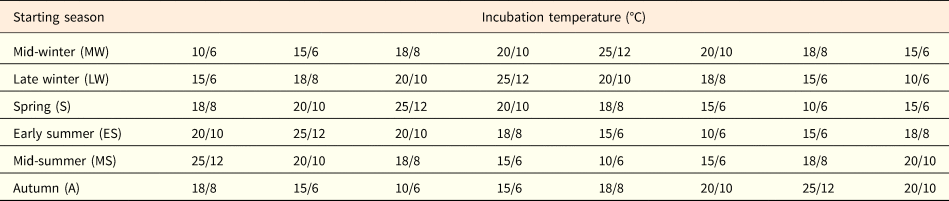
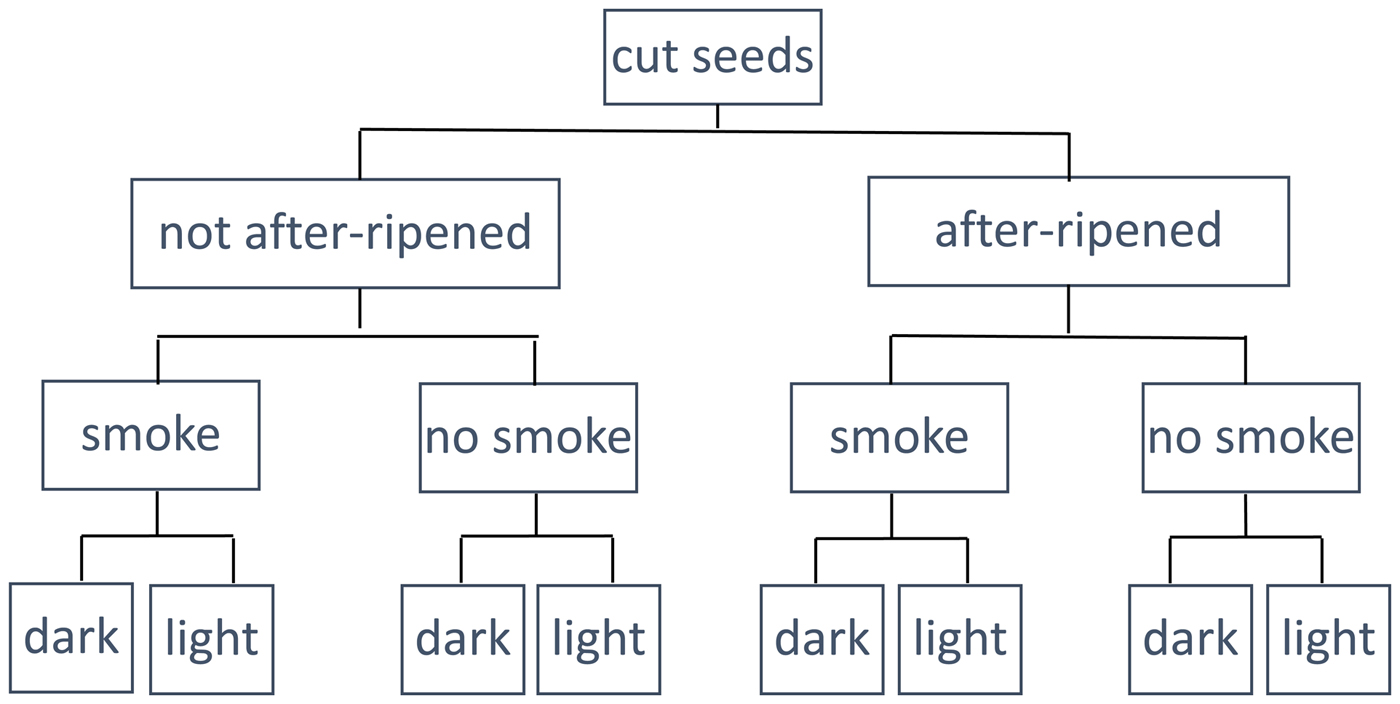
To determine the temperature or temperature sequence for breaking seed dormancy, a double-germination phenology technique or ‘move-along’ experiment was designed (Baskin and Baskin, Reference Baskin and Baskin2003) which passes moist seeds through a sequence of seasonal temperatures. In this investigation we mimicked six different seasonal phases of the year (Table 1) and commenced this test shortly after seed collection. Each starting season began with a specific diurnal temperature regime which varied through time following a sequence that roughly mirrored seasonal changes throughout the year in Ravensthorpe and lasted 32 weeks (Fig. 2). This experiment was split into two groups (Fig. 3). The first group was subjected to a dry after-ripening treatment, with fresh seeds placed in paper envelopes and incubated at 38°C for 6 weeks before incorporation into the move-along experiment. Seeds subject to after-ripening were not cut until placed into their move-along sequences. The second group of seeds were not subject to after-ripening and were placed directly into their move-along experiment at the six different temperature regimes.
The sequences of diurnal temperatures used in the move-along experiment, with seasonal starting temperatures as listed in the first column below (each temperature sequence lasted 4 weeks)

Long-term mean monthly maximum and minimum air temperature data from the Bureau of Meteorology for Ravensthorpe (S33.58°, E1290.05°). The equivalent seasons that approximately coincide with sequences of alternating temperature used in the move-along experiment are labelled in the top panel.
Schematic diagram of the germination experiment with the various secondary dormancy-breaking treatments that were applied to cut seeds. Table 1 provides the temperature sequences to which seeds were subjected in each treatment combination. The same secondary dormancy treatments were applied to cut seeds that were not incubated under the move-along experiment but were held at the non-moving starting temperatures as provided in Table 1.

Another set of seeds were incubated at the five different starting diurnal temperature sequences (i.e. 10/6, 15/6, 18/8, 20/10 and 25/12°C) but were not moved along to other temperatures. These were used as a non-moving temperature reference or ‘control’. Similarly to the move-along treatments, one set of seeds were dry after-ripened at 38°C for 6 weeks prior to incubation before being maintained at each of the constant temperature regimes for the full 32 weeks of the experiment without moving them along to a new temperature. The other set of seeds were not dry after-ripened before being maintained at each of the constant temperature regimes.
Within each move-along sequence and constant diurnal temperature experiment there were secondary treatments intended to simulate wild fire (smoked water) and burial by ants (darkness). For the ‘fire’ treatment, seeds were soaked for 24 h in 10% v/v Regen 2000® Smokemaster aqueous smoke solution and then rinsed in distilled water before incubation (smoked water, SW). For the ‘dark’ treatment, Petri dishes were placed in aluminium foil envelopes and seeds only observed under green light to eliminate red–far-red light effects on seed germination. For the alternative ‘light’ treatment, seeds were exposed to a 12 h/12 h light/dark regime with alternating (day/night) temperatures unless incubated in total darkness. The total number of treatments was thus 2 (light/dark) × 2 (± smoke water) × 2 (± after-ripening) × 11 (temperatures, 6 move-along plus 5 ‘controls’) = 88 total.
Each individual treatment consisted of three replicates of 22 seeds each. To overcome any mechanical obstacle offered by the hard testa, all seeds were cut prior to incubation to facilitate radicle protrusion. To prevent fungal infection, seeds were disinfected using 25% (v/v) solution of Austrotech Plant Preservative Material (PPM®) for 15 minutes, then rinsed with 10 ml of DI water prior to incubation. Seeds were placed on two pieces of Whatman's No. 1 filter paper on absorbent sponge cloth in 90 mm plastic Petri dishes.
Statistical analysis
Regenerative strategy and population structure
A size distribution graph was constructed by plotting height against projected foliage cover for each individual plant. A generalized linear model (GLM) with a Poisson error distribution was used to test whether there was a significant difference in the size of plants in unburnt versus recently burnt quadrats.
Soil seed bank assessment
A GLM (quasi-Poisson) was used to test the hypothesis that seed density is related to plant structure and fire. A quasi-Poisson model was used because the data were over-dispersed with unequal means and variance. The same model was used to test whether the number of seeds in the seed bank in unburnt or recently burnt habitat was related to projected foliage cover within quadrats.
Seed germination
To analyse the effects of treatments on initial and total germination, the number of seeds germinating in the first 4 weeks and the full 32 weeks was scored for each Petri dish. These data were then modelled with a binomial GLM using smoked water, light/dark, after-ripening and seasonal temperature regimes and their interactions as possible explanatory factors. The seasonal temperature regime is either the simulated seasonal diurnal temperatures for the move-along experiments (see Table 1), or the unchanging diurnal temperature regimes. The percentage of seeds germinating in each 4-week block of temperatures was calculated for each treatment and temperature regime. A regression tree model (Breiman et al., Reference Breiman, Friedman, Olshen and Stone1984) was used to determine which factors most clearly differentiated the number of seeds germinating in different 4-week blocks. Smoked water, light and after-ripening were possible explanatory factors. We also considered the temperature applied during each 4-week block, temperature difference (whether that temperature was lower, higher or the same as the previous 4-week block), and time (how many weeks had passed at the beginning of each 4-week block). The first 4-week block in each treatment was not included in the analysis of time, as temperature difference was not defined for this first block. Where the regression tree indicated a factor to be discriminating, a binomial GLM was used to test for statistical significance and obtain a P-value. All statistical analyses were carried out in the statistical software R (R Development Core team, 2009).
Results
Phenology and fruit production
Reproduction occurred in distinct periods during each year. Auxiliary floral buds initiated and became large enough for visual observation between June and August (2005). Male flowers began to open in August and female flowers matured in September (2005). Ovaries began to swell, and fruits matured and dehisced from parents between September and December. After all male flowers had abscised (November to December), some female flowers remained but their ovaries did not enlarge further than 2–3 mm in diameter and remained this size until the onset of autumn rains, when ovaries from female flowers slowly re-commenced their growth and during winter swelled into mature fruits. This fruit maturation overlapped with the next year's flowering from September (2006) and fruits dispersal thereafter. Fruit quiescence did not correlate with any observed environmental factors. All but one individual in the monitoring cohort produced quiescent flowers.
Regenerative strategy and population structure
Stachystemon vinosus was deemed to be an obligate seeder as plants did not possess lignotubers or rhizomes; however, excavation uncovered rooting branches that had been buried as a result of the Aeolian deposition of sand and soil particles burying sections of branches. This was evident in four branches on four separate individuals of the monitoring cohort.
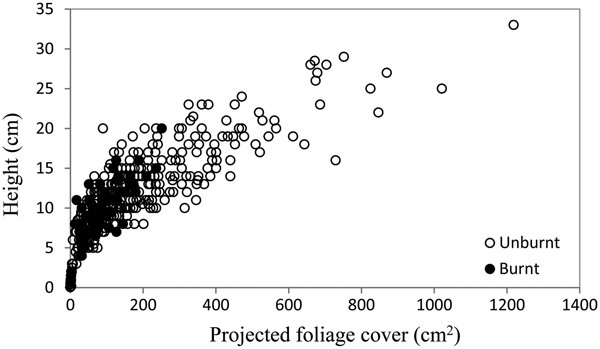
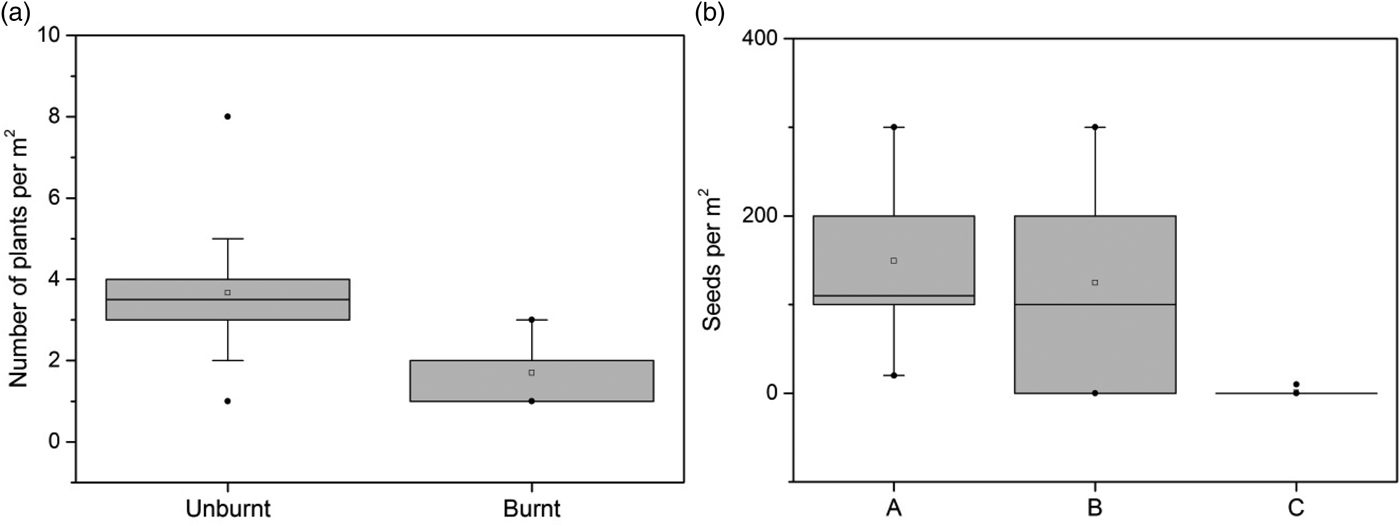
Almost a quarter (23%) of plants in the unburnt habitat fell into the same size range as plants found in habitat burnt in 2003, although there were plants in the unburnt habitat that were considerably larger than in the burnt site (Fig. 4). No seedlings were in the recently burnt habitat and 90% of plants were non-flowering juveniles. Plant density was significantly (P < 0.0001) higher in unburnt (3.6 ± 0.3 plants/m2) than in recently burnt (1.7 ± 0.1 plants/ m2) habitat (Fig. 5a).
The relationship between plant height (cm) and projected foliage cover (cm2) for plants from unburnt habitat and habitat burnt in 2003 (n = 459 and 65, respectively).

(a) Box and whisker plots of Stachystemon vinosus plant density in 30 × 1 m2 quadrats in unburnt and adjacent burnt habitat; (b) soil-stored seed bank density for Stachystemon vinosus from (A) unburnt habitat with plants present; (B) unburnt habitat with plants absent and; (C) burnt habitat with plants present. Boxes represent the mean, the horizontal lines are the median, upper and lower boundaries of the box representing the interquartile range (75th and 25th percentiles), and whiskers extend from maximum to minimum.

Soil seed bank assessment
Soil seed bank density was related to the presence/absence of S. vinosus plants and whether habitat was unburnt or burnt (P < 0.0001) (Fig. 5b). In long unburnt habitat, more quadrats contained seeds when S. vinosus was present (86%) than when S. vinosus was absent (73%). However, when seeds were found in unburnt quadrats where plants were absent, they were often in similar densities to unburnt habitat where S. vinosus was present. Random sampling of areas where S. vinosus was absent demonstrated that soil-stored seeds could occur up to 420 m away from a cluster of adult plants. Very few seeds were found in burnt habitat. During phenological monitoring, ants were observed collecting seeds from the ground at the base of adult plants during the months of November to February (unpublished data).
There was no significant relationship between seed bank density and S. vinosus projective foliage cover in long unburnt or more recently burnt habitat (data not shown).
Seed attributes, viability, dormancy alleviation and germination
Seeds had a thick testa (~1 mm) covering a leathery water-repellent integument. The embryo ran the length of the seed with the radical pointing towards the base of the caruncle. Embryos were 2.5–3 mm long with fully developed cotyledons, hypocotyl and radical at the time of seed dispersal. Based on these observations the seeds were classified as axile/linear in accordance with the Baskin and Baskin (Reference Baskin and Baskin2004) seed classification.
In imbibition tests, fresh intact seeds exhibited a 24% increase in weight over a 48 h period, whereas fresh cut seeds from the same seed collection exhibited an increase in weight of 45%. Intact seeds collected from the unburnt soil seed bank imbibed water and increased in weight by 40%.
Tetrazolium clearly stained the tissues of both embryo and endosperm of S. vinosus seeds. Fresh seeds from the Bandalup Hill population were 97% viable. Seeds from the soil seed bank in unburnt habitat at the Ravensthorpe population were 90% viable (plants present or absent) while those from burnt habitat (plants present) were 43% viable. All embryos examined were fully formed. In each sample of seeds, 20–30% of embryos stained in a random blotchy pattern but were regarded as viable.
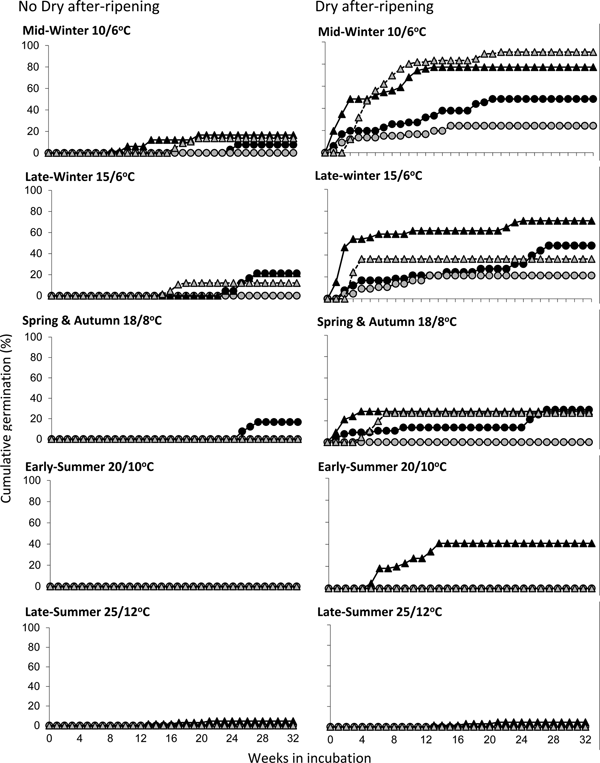
Seeds with their testa intact (uncut seeds), regardless of any other treatment, did not germinate to any significant level (data not shown), and so uncut seeds were excluded from the statistical analysis. Seeds after-ripened for 6 weeks at 38°C prior to incubation at the five constantly applied diurnal temperatures (‘controls’) demonstrated greater final germination than non-after-ripened ‘controls’ in most treatments and at most temperatures (Fig. 6). Mid-Winter temperature conditions, and to a lesser extent Late-Winter conditions, provided the highest germination after dry after-ripening in this constant diurnal temperature ‘control’ group. For the Mid-Winter temperature sequence (10/6°C), germination peaked at 90% (in light) after 21 weeks and 77% (in dark) at 13 weeks when seeds were incubated after smoked water treatment. Germination declined as each diurnal temperature regime became successively higher until insignificant levels were reached during Late-Summer (25/12°C) regardless of after-ripening.
Cumulative germination over 32 weeks for Stachystemon vinosus seeds incubated at five non-moving diurnal temperatures simulating the seasonal temperatures across the year. Left-hand panels: no dry after-ripening; right-hand panels: dry after-ripening. All seeds were cut prior to incubation. Filled symbols represent incubation in the dark: ●, no smoked water; ▴, smoked water. Open symbols represent incubation in the light: ○, no smoked water; ∆, smoked water.

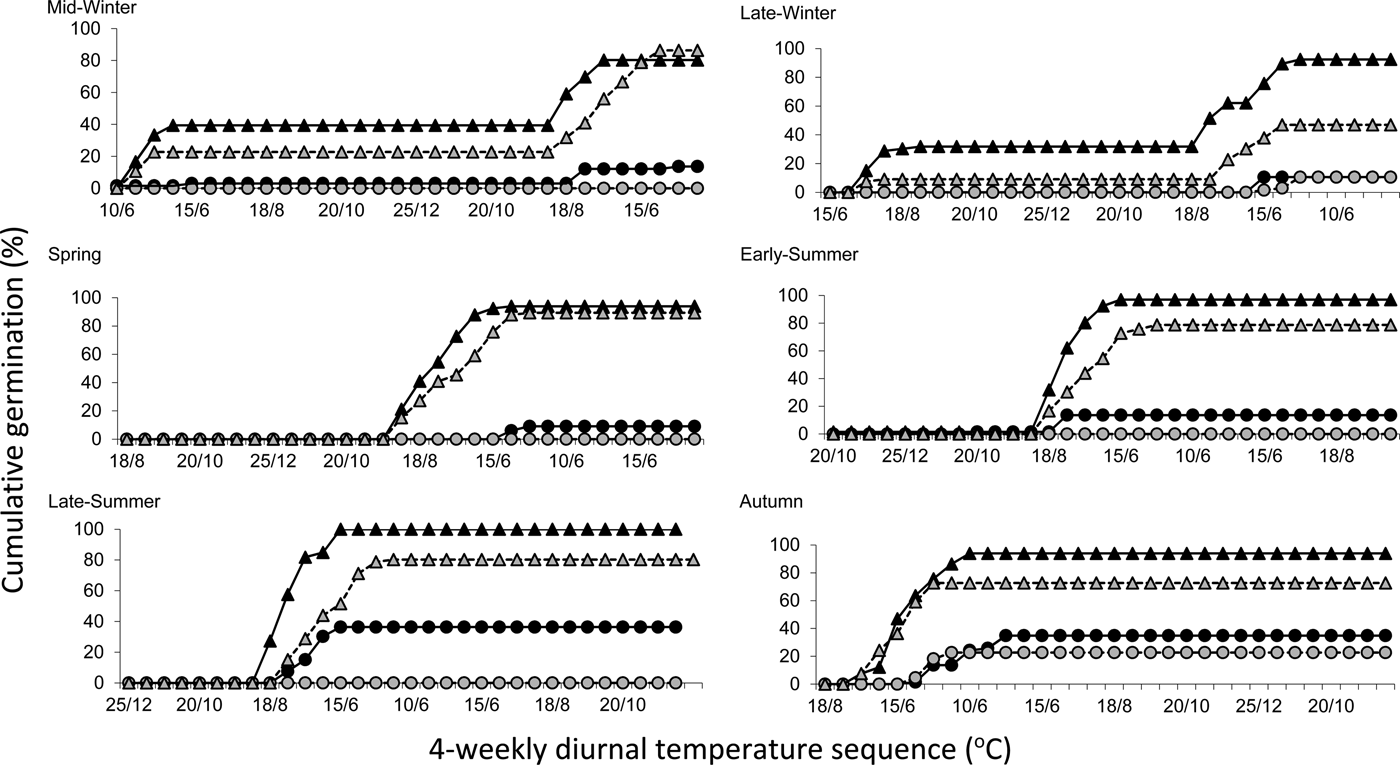
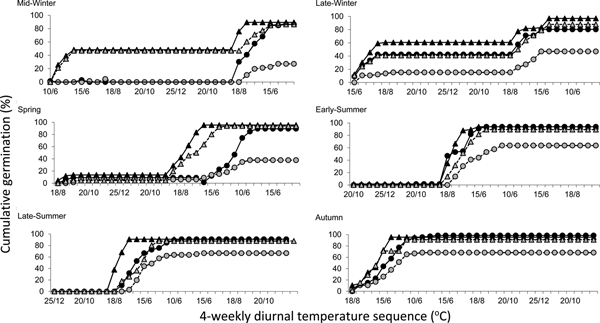
In the move-along experiment, and across all seed treatments, incubation in constant darkness, smoked water (dark + SW) without after-ripening consistently exhibited the highest percentage germination (Fig. 7). Under this treatment dormancy was completely alleviated. In the absence of smoked water both light- and dark-incubated seed failed to achieve more than 40% germination. For after-ripened seeds, peak germination was 89–97% in dark-incubated seeds treated with smoke water (Fig. 8). The timing of maximum germination was determined by the starting diurnal temperature sequence and was most rapid and reached 100% under Late-Summer starting conditions in non-after-ripened seeds when treated with smoked water and incubated in the dark. In after-ripened, smoked-water treated seeds incubated in the dark, the Autumn starting temperature provided the shortest time to peak germination, although highest germination occurred in this treatment in the Late-Winter sequence (97%). Overall, the trend was for lower and slower germination in light-incubated seeds, irrespective of smoked water or after-ripening treatment.
Cumulative germination for seeds of Stachystemon vinosus subjected to a move-along experiment (no after-ripening) with 4-weekly changes to diurnal temperatures simulating changes in seasonal temperatures. Each graph has a different starting temperature sequence representing the season as labelled. All seeds were cut prior to incubation. Filled symbols represent incubation in the dark: ●, no smoked water; ▴, smoked water. Open symbols represent incubation in the light: ○, no smoked water; ∆, smoked water.

Cumulative germination for seeds exposed to dry after-ripening with 4-weekly changes to diurnal temperatures simulating changes in seasonal temperatures. Each graph has a different starting temperature sequence representing the season as labelled. All seeds were cut prior to incubation. Filled symbols represent incubation in the dark: ●, no smoked water; ▴, smoked water. Open symbols represent incubation in the light: ○, no smoked water; ∆, smoked water.

The regression tree model showed that aqueous smoke, after-ripening, light/dark and temperature all had highly significant effects on germination (P < 0.001) (Table 2). Smoke water, after-ripening and darkness all increased germination. These results applied after both 4 and 32 weeks of incubation. At 4 weeks of incubation interactions were generally not significant, whereas after 32 weeks all interactions between factors were either highly (P < 0.001) or moderately (P < 0.01) significant. A decrease in temperature was the most discriminating factor determining the percentage of seeds germinating in any 4-week block, with an average germination of only 0.1% in all cases when temperature had not decreased (P < 0.001) (Figs 7 and 8). These decreases in temperature only occurred during Late-Summer and Autumn blocks. In the blocks where temperature had decreased, the next most discriminating factor was the incubation temperature itself, with an average germination of only 1% in all cases when temperature decreased to 20/10°C and only 11% when it decreased to 10/6°C, but 34 and 37% when it decreased to 18/8 and 15/6°C (P < 0.001). Throughout the experiment germination consistently commenced once temperatures dropped from a high alternating temperature to a lower temperature. This was most apparent in after-ripened seeds where germination occurred rapidly during the first week of incubation after treatment (Fig. 8; Mid- and Late-Winter). There was a similar but less rapid germination response in seeds without after-ripening (Fig. 7; Mid- and Late-Winter). Regardless of whether seeds were after-ripened or not, rising temperatures halted germination, such as later on in the Mid-Winter and Late-Winter alternating temperature sequences.
Regression tree model results differentiating treatment significance

SW, smoked water; LD, light/dark; AR, after-ripening; T, temperature; P-values for significant effects on the proportion of seeds germinating in the first 4-week block of the experiment and during the course of the whole experiment. Significance: ***P < 0.001, **P < 0.01, *P < 0.05; ‘n.s.’ denotes not significant
Discussion
The absence of rhizomes or lignotubers in the excavated plants indicates that S. vinosus is an obligate seeder (Gill, Reference Gill, Gill, Groves and Noble1981). The presence of predominantly non-flowering juvenile plants in the habitat impacted by wild-fire in 2003 further supports this regeneration strategy. However, a sufficient fire-free interval may be critical for persistence for S. vinosus as the density of juvenile plants in recently burnt habitat was approximately 50% of that in longer unburnt habitat. This suggests that either post-fire conditions for seed germination and seedling establishment were poor or that, alternatively, a substantial proportion of the population may be derived from inter-fire recruitment. This premise is reinforced by the considerable overlap in plant size between the habitat burnt in 2003 and the longer unburnt habitat which suggests that inter-fire recruitment had occurred since the last fire in 1982. Recruitment was clearly not limited to a single pulse of germination and establishment following fire which typically results in stands of populations with a relatively uniform size (Bond and van Wilgen, Reference Bond and van Wilgen1996). A similar pattern of recruitment has been observed in another southern Western Australian Euphorbiaceae species – Beyeria cockertonii (Vincent et al., Reference Vincent, Barrett, Cochrane, Plummer and Renton2015). This pattern contrasts with the general model of event-dependent theory (Bond and van Wilgen, Reference Bond and van Wilgen1996) in ecosystems were fire is the agent for regeneration. While spatial differences in fuel load and topographic variation can lead to multi-aged populations (Whelan, Reference Whelan1995), S. vinosus occurs in dense clusters of individuals on flat open plains with little variation in topography and fuel load. Therefore, populations are likely to burn uniformly, and inter-fire recruitment is the factor most likely to contribute to multi-aged populations.
The soil seed bank density and seed viability were lower in recently burnt sites than in long unburnt sites indicating that too frequent fire may limit soil seed bank persistence. Fresh and soil-stored seed (unburnt habitat) had similarly high viability (98 vs 90%). Seed banks are important for the persistence of individual species and the population as a whole (Bond and van Wilgen, Reference Bond and van Wilgen1996): if habitat disturbance results in plant death then viable seeds in seed banks can ensure the continuation of the species.
Seeds with a fully intact testa did not germinate despite being able to imbibe water, although significantly less than when the testa was cut. We therefore suggest that the hard testa of fresh seeds hinders radicle penetration until this structure has degraded or softened as evidenced by the soil-stored seeds having a comparable ability to imbibe water as mechanically scarified seeds. Although not physical dormancy, there appears to be a physical barrier to germination in fresh seeds. However, once the physical restriction of the seed coat was overcome, germination still did not occur to any significant level under conditions that otherwise would be favourable for germination (Baskin and Baskin, Reference Baskin and Baskin2014). We observed that the embryo is fully formed at the time of dispersal from the parent. A period of maturation is therefore not required for the seeds of this species and morphological dormancy is not present (Baskin and Baskin, Reference Baskin and Baskin2014). Thus, we consider that physiological dormancy is preventing germination in addition to the physical barrier imposed by the testa.
Many species with physiological dormancy may go through a series of temperature-driven changes (dormancy cycling) before they respond physiologically to various dormancy-breaking treatments (Baskin and Baskin, Reference Baskin and Baskin2004). Our data indicated that dormancy was expressed as primary and secondary dormancy. Dry after-ripening partially broke dormancy (primary dormancy) which was temperature-dependent in cut seeds as demonstrated by the results from the non-moving diurnal temperature ‘control’ experiment. The proportion of germinating seeds was related to the type and/or combination of additional treatments. Seeds remained quiescent when subjected to temperatures higher than 18/8°C regardless of additional treatments. Germination commenced once the temperature regime dropped and was determined by the type and combination of secondary treatments (continual darkness and/or smoked water). Such patterns of germination could be classified as non-deep physiological dormancy. Once dormancy was broken, the time required to complete germination took 5–7 weeks, both in darkness and in the light. This slow germination pattern characterizes the so-called Mediterranean germination syndrome (Doussi and Thanos, Reference Doussi and Thanos2002). Together with the low optimal germination temperatures, this strategy is ecologically advantageous within an unpredictable rainfall regime prevalent at the commencement of the rainy season in Mediterranean climates. Therefore, slow germination provides a delay mechanism which reduces seed cohort loss as a result of erratic rainfall (Picciau et al., Reference Picciau, Pritchard, Mattana and Bacchetta2019). The maintenance of dormancy with a rise in the temperature along the incubation sequence indicates a highly sensitive physiological mechanism able to detect temperatures indicative of autumn in the region.
Freshly matured, physiologically dormant, seeds need to experience first elevated temperatures in order to respond positively to subsequent cool temperatures. Similarly, after-ripened seeds with dormancy released germinate only under cool temperatures, while elevated temperatures inhibit germination during unfavourable seasons. The most effective commencing temperatures for initiation of germination were 10/6, 15/6 and 18/8°C. However, these temperatures can occur either in spring, when conditions for seedling survival are diminishing with the onset of summer drought, or equally in autumn with the onset of winter rain (Bell et al., Reference Bell, Plummer and Taylor1993). Seeds of S. vinosus appear to be able to detect the difference between autumn and spring by using falling temperatures as a cue. Postponing germination until cool weather is a strategy employed by many SWAFR species (Bell et al., Reference Bell, Plummer and Taylor1993) given the seasonal Mediterranean climate of the region and may be considered as a diversified germination strategy of seasonally dry environments. The ability to detect the difference between these two seasons benefits seedling survival helping to safeguard seeds from germination under unfavourable conditions. The time required for dormancy break can take from weeks to months and is dependent on seed coat weathering and temperature.
Although dry after-ripening and specific temperature sequences played a key role in overcoming dormancy, germination was further enhanced by darkness and smoked water. In combination these two treatments were capable of increasing the proportion of germinating seeds with or without after-ripening, across all temperature sequences. The significant inhibitory effect of white light in after-ripened (expressed through a decrease in rate and final percentage germination) may be interpreted as a means to avoid germination on the soil surface. This strategy is advantageous in situations where the soil dries rapidly, whilst burial of seeds may ensure enough moisture for germination and seedling establishment. In addition, the promotive effects of aqueous smoke with its active agent karrikinolide are now well known (Roche et al., Reference Roche, Dixon and Pate1998; Lloyd et al., Reference Lloyd, Dixon and Sivasithamparam2000; Tieu et al., Reference Tieu, Dixon, Meney and Sivasithamparam2001; van Staden et al., Reference van Staden, Jäger, Light and Burger2004). Our data strongly indicate that S. vinosus falls into this responsive group, suggesting that buried seeds may have enhanced germination following fire.
Seed burial appears to be an adaptation that improves regeneration success in S. vinosus. Seedlings that emerge from buried seeds may benefit from improved root access to soil moisture deeper in the soil profile. Burial can also improve the chance of seeds surviving a fire event. Previous studies on Australian Euphorbiaceae (Berg, Reference Berg1975; Mackay and Whalen, Reference Mackay and Whalen1998) indicate that the caruncle or elaiosome attached to the seeds of this family acts as an ant attractant. The myrmecochorous relationship facilitates placement at a location favouring germination and seedling survival. Although dispersal by ants may be limited to short distances (<1 m) (Whitney, Reference Whitney2002), we observed seeds in the soil up to 420 m away from live plants. Furthermore, ant middens provide burial in the dark, a condition which enhanced germination, and this may provide an adaptive advantage in the ecology of this species.
Conclusions
This study demonstrates that recruitment of Stachystemon vinosus depends largely on a soil seed bank formed mainly during inter-fire periods and suggests that frequent fires may be detrimental for the long-term persistence of populations. Seeds were deemed to be physiologically dormant on dispersal and the proportion of seeds germinating at any given time was driven by the sequence of temperatures and/or combination of secondary treatments. Cool temperatures resembling autumn/winter triggered seed germination and dry after-ripening, smoked water and dark conditions further improved germination but to a lesser extent than cool temperatures. Physiological dormancy in S. vinosus seeds serves to prevent germination during the summer following seed shedding, particularly after occasional rain in the region's Mediterranean climate. This seasonally delayed emergence helps to closely synchronize germination with the most favourable conditions for seedling establishment and survival conferring strong fitness benefits. However, global warming and changes to the fire regime may limit recruitment of S. vinosus leading to changes in species composition at the community level.
Author ORCIDs
Sarah Barrett, 0000-0003-2790-992X.
Acknowledgements
We thank B.H.P. Billiton for providing funding, accommodation and allowing B.V. access to the Ravensthorpe tenements during the two-year monitoring period. We also thank Maurice Hocking and fellow students for their patience, persistence and rigour in sifting soil and searching for seed. We are grateful to three anonymous reviewers for their comments on a previous draft. Addressing these comments greatly improved the manuscript.