A
When Emanuel Ringelblum was born on November 21, 1900, in Buczacz, the small, multilingual and multi-ethnic Galician town was to be found on the far northeastern part of the Austrian Empire. As a mail stamp on a Correspondenz-Karte or Karta korrespondencyja of 1890 shows, the place was officially spelled in accordance with its Polish orthography. However, it was called Butschtasch in German, Bichuch in Yiddish, and still differently in Ukranian. After World War I, it was for a short while part of Ukrania, and subsequently became Polish, then Soviet, and Ukranian again in the aftermath of the end of the Soviet Union. Ringelblum's cousin, Shmuel Josef Agnon (1888–1970), was also born in Buczacz. But their lives were to diverge in most respects. Agnon is remembered as one of the leading authors of modern Hebrew belles-lettres who was awarded the Nobel Prize for literature in 1966. And one remembers Ringelblum as the one who, with utmost and relentless courage, organized the underground archive Oyneg Shabes in the Warsaw ghetto. Samuel D. Kassow, the expert on the history of Oyneg Shabes and the author of a brilliant monograph on this subject, asserts that “more than anyone else it was Emanuel Ringelblum who encouraged individuals to write, who organized and conceptualized the archive, and who transformed it into a powerful center of civil resistance” (Kassow [Reference Kassow2007] 2009, 7).
Ringelblum is much less remembered, however, as an historian of Polish pre-World War II Jewry.Footnote 1 He is hardly ever mentioned as an historian of medicine.Footnote 2 This is probably due to the fact that he published mostly in Yiddish.Footnote 3 The few contributions that he published in Polish did not meet a readership as large as the scholarly publications in English, French, or Castillan, not to mention the fact that the history of medicine in and for Yiddish had become an inconceivable notion no later than May 1945.Footnote 4
After finishing the gymnasium, Ringelblum sought admission to the University of Warsaw – his intention had been to become a doctor. However, as a consequence of administrative provisions which did not grant equal rights to Jewish applicants, he had to renounce his intention and reapplied instead to another faculty to study history. Poor as many Jewish students of the time, Ringelblum had to earn some income. He taught in the evening schools of the Left Poalei Zion for a modest wage and translated into Yiddish, with Isaac Leybel, Ignacy (or Isaac) Schiper's monograph on the economic history of the Jews in Poland (cf. Schiper Reference Schiper1911 and Reference Schiper1926).Footnote 5 Both the Left Poalei Zion (LPZ) and Schiper himself symbolize two strings, or, if one prefers, two poles of affiliation that were to shape Ringelblum's life as an activist for the cause of Yiddish-Jewish autonomy and as an historian who used the Yiddish language (and subsidiarily the Polish one as a tool for widening his audience).
Ringelblum had come to Warsaw as a member of the Poaley Tsiyon, the party founded by Ber Borochov. When the party split in 1920, he opted for the left wing. He would find there not only ideological support, but also an attitude that linked educational and scholarly endeavors with the will to achieve social and economic improvement for the Jewish population. Shortly after the foundation of YIVO, the Yiddish Scientific Institute, Ringelblum emphasized how close the agenda of this new research organization was to the central idea of Borochov's Yiddishism which became an agenda for political action. He thus “called on Jewish workers to rally to the support of the YIVO. In order to ensure that the institute served the needs of the Jewish masses, workers had to become directly involved in YIVO activities” (Kassow [Reference Kassow2007] 2009, 40). After having stressed the importance of zamling, i.e. collecting data of all sorts, he asserted: “The working class must collect all kinds of material for the study of Jewish folklore, ethnography, history. [It should gather] all sources that could help in the study of our language and folk traditions . . .; various proverbs, popular sayings, jokes, styles of speech, terms used for tools, customs, and popular oaths” (quoted in ibid.).
Ringelblum may have been driven by some exaggerated outreaching optimism for involving the Jewish working class in historical research activities. Yet, the outcome of an approach which, as we might say, was strongly inspired by some guiding ideas of Borochovian or LPZ origin, turns out to have been one of Ringelblum's constant methodological concerns – that of collecting as much data, documents, artefacts, etc., as possible on every relevant aspect of Jewish life primarily in eastern Europe. No ontological (or pretended ontological) hierarchy was implied in the urge for collecting.Footnote 6 Indeed, works of art were not seen to be worthier of being collected than, let us say, police records, documents relating to the Jewish printing business (cf. Ringelblum 1932–1934) or traces concerning Jewish self help (aleynhilf) institutions.Footnote 7
The same impulse to do and to organize history had already been present when Ringelblum founded the Yunger Historiker Krayz (Young Historians Circle) with his friend Rafael Mahler, also an historian, who would likewise publish the results of his research, preferably in Yiddish, while he was in Poland. This Circle affiliated with YIVO in 1926. That same year saw the founding of the journal Yunger historiker (it became Bleter far geshikhte in 1934) and the Jewish Academic House at Warsaw; Schiper became its director in 1928. Ringelblum epitomized the conjunction of the various efforts to build a fully-fledged Yiddish body of scholarship in history, linguistics, ethnography, economics, sociology, and psychology in a formulation very typical of the motivation and the aims of the Yunger Historiker Krayz: “The members of the Historiker Krayz are trying to impact a new spirit in the writing of Jewish history. They want to liberate Jewish historiography from the influence of nationalist and religious attitudes. This is a pioneering circle, since almost all its members are trying to solve the problems of Jewish history from the standpoint of historical materialism” (quoted in Kassow [Reference Kassow2007] 2009, 60).
Medical practices were evidently part and parcel of Jewish everyday life in eastern Europe. But hardly anything was known about Jewish medicine. No wonder, then, that Ringelblum finally raised issues relating to this vast domain of social, economic, and cultural history – and the history of science as well. No wonder, also, that collecting material of all sorts turned out to be an unavoidable imperative for the present and future historiography of medicine. No wonder, finally, that a world congress of Jewish physicians to be held at Tel Aviv in the spring of 1936 was seen as an excellent platform for (a) reaching an international audience of physicians, among whom some would easily understand what this kind of historiography was all about, and (b) propagating a research program for a truly Jewish history of medicine.
We found that Ringelblum's proposals (or guidelines) for a new historiography of Jewish medicine reached Tel Aviv, for the issue of Sotsiale medistin is mentioned by Goldstein in Ha'aretz (cf. Goldstein Reference Goldstein1936). Thus, a material link, which had not been noticed earlier, is established between modern Yiddish scholarship in Poland and the history of medicine in Mandatory Palestine.
B
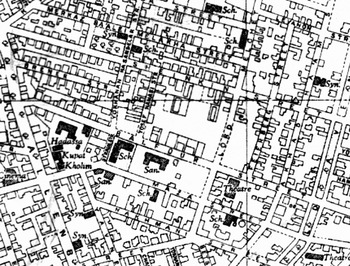
On Thursday, April 23, the First Congress of Jewish Physicians opened in Ohel Shem (Tent of the Lord) Hall in Tel Aviv (Anon. 1936b, 278) (see fig. 1). Several weeks prior to the opening session, the daily newspaper Ha'aretz began covering the event; it published news on physicians who were arriving on ships, and other related news. While the Congress was convening, the newspaper consistently covered, briefly or at length, the many sessions.
Map of Tel Aviv Town Planning Area, Jaffa Tel Aviv, 1;10,000, Survey of Palestine, August 1935 (surveyed 1932, partly revised 1935), taken from: Maps Library, Department of Geography, Tel Aviv University. Ohel Shem Hall was situated on Balfour Street (marked “Theatre” on the map).

David Arie Friedmann (whose name appears in his publications as “D. A. Friedmann”) was chairman of the preparatory committee in Mandatory Palestine as well as a member of the international committee for the preparation of the Congress (ibid., 279). He authored an article on the aims of the Congress, which was published in Ha'aretz and in the professional medical magazine Ha'refuah (The Medicine) (see Friedmann Reference Friedmann1936). According to Friedmann, the Congress was born during a time of hardship,
an hour of eclipse of the lights of the world, when all the suns are going down in the sky of humanity. . . . [This Congress is] a consequence of our instinct for existence. It is the natural and necessary expression of the law of the continuity of life within us; it is an outcome of our aspiration to persist in our cultural and vital task, against all regimes of foreign, dark powers that stand up against us to destroy us. (Ibid., 219)
Friedmann also quoted in full the Congress manifesto, which had been disseminated by the organizers (ibid., 219–220). The manifesto drew readers’ attention to the harmful conditions under which Jewish physicians were working in several parts of the world. In addition, the manifesto did not hide the political mission of Jewish physicians, which would consist not only of taking care of their people's health, but also of exposing the falsehood of “distorted” race theories. Finally, the manifesto called for the establishment of a worldwide alliance of Jewish physicians, “which will work for the improvement of the physicians’ condition both in the present and in the future, and also for the continuity of the beautiful tradition of medical education among our people, and the organization of the protection of health and eugenics among our people” (ibid., 220).
In his article, Friedmann eloquently urged that two organizations be established by the Congress – a world alliance of Jewish physicians, on the one hand (ibid., 221–222), and a central international office of health, on the other hand (ibid., 223). The alliance was meant to assist Jewish physicians worldwide in economic and professional matters, to direct the migration of the Jewish physicians according to existing needs, and to help those Jewish physicians who would choose the path of assimilation “to be cured of their hidden complexes” (cf. ibid., 222). The international office of health was meant to be an agency that would establish permanent contacts among the Jewish health institutes in different countries (ibid., 223).
The opening of the five-day congress was originally scheduled for April 21 (Anon. 1936a, 225). However, the opening was delayed until April 23, on account of riots during which, on April 19, nine Jewish residents of Jaffa were murdered and many others injured by local Arabs (Porath Reference Porat (Freud)1978, 195). The Congress flag, flying beside the national Hebrew and the official British flags on top of Ohel Shem Hall, was wrapped in a black cloth as a symbol of grief. Some 1,200 people attended the opening session, including 300 delegates from various countries: Austria, Belgium, Egypt, the United Kingdom, France, Latvia, Lithuania, the Netherlands, Poland, Romania, the Soviet Union, and the United States of America, etc. (Anon. 1936b, 278). Though representatives from Germany had been mentioned in the press before the onset of the Congress (Anon. 1936a, 226), in the end no Jewish physician from that country attended (Anon. 1936b, 280).
Among the speakers on the opening day were Meir Dizengoff, the first mayor of Tel Aviv; the chemist Chaim Weizmann, later to become the first president of the State of Israel; a representative of the district British governor; Hugo (or also Shmuel Hugo or Samuel Hugo) Bergman (or Bergmann), at the time rector of the Hebrew University in Jerusalem; Benjamin Weill-Hallé, a pediatrician from Paris and envoy of the French Ministry of Health; D. A. Friedmann, and some other physicians.
As reported in Ha'aretz, the opening speeches were “not long” and “their contents, as the contents of any opening speeches, did not excel” (Anon. 26 April 1936, 4). The reporter criticized the faulty Hebrew of several speeches (ibid.) and indeed the “language war” became an issue. A certain Dr. Goldstein had even published in that same newspaper (some days earlier) an article calling for a declaration that the Hebrew language be recognized as the official language of Jewish science and medicine. Nonetheless, he had also pleaded with those who attended to be patient with the speakers, for not all participants were Zionists (cf. Goldstein 23 April Reference Goldstein1936, 3).
In his speech, Friedmann greeted Sigmund Freud on the occasion of the latter's “eightieth birthday” (the first psychoanalyst was born on May 6, 1856), and welcomed Shaul Tschernichovsky, a physician and one of the greatest Hebrew poets, who was present at the Congress as a guest of honor of the Hebrew Medical Association in Mandatory Palestine (Anon. 1936b, 282). Dr. Hirschowitz, Chairman of the Central Committee of the Hebrew Medical Association, emphasized that the Congress's goal was not to become secluded from medicine in other parts of the world, but rather to unite with the Diaspora (ibid., 283). He also discussed the immigration of physicians, indicating that during the years preceding the organization of the congress, more than a thousand physicians had arrived in Eretz Israel. Hirschowitz outlined a few ways that immigrant Jewish physicians might contribute to the country, and added that although it was clear to him that not all physicians wanting to immigrate to Mandatory Palestine would be let in, he hoped that the gate would not be “artificially” shut against “the suffering physician, both in body and soul” (ibid., 284). Finally, the doctor recalled the need for opening a Faculty of Medicine on the Mount Scopus campus of the Hebrew University (ibid.) and the importance of publishing a serious scientific medical journal (ibid., 285).
On behalf of the French government, Weill-Hallé made an offer to the Congress organizers. According to Ha'refuah, he said, “this assembly carries the name ‘The First Congress,’ which entails that a second congress will follow.” Weill-Hallé then proposed that this second congress be held in Paris. The speaker referred to Albert Calmette's earlier suggestion that a Pasteur Institute be founded in Jerusalem so that Jewish scientists who had been constrained to emigrate from Germany would find a place where they might continue their bio-medical research. Weill-Hallé said he fully supported his colleague's vision (ibid., 290).
And Hugo Bergman talked of the preparations for the opening of the Faculty of Medicine at the Hebrew University in Jerusalem and the beginning of the construction of a university hospital on Mount Scopus (ibid., 291). Max Neuburger, professor of the history of medicine at the Medical Faculty of the University of Vienna (from which he would be chased in 1938), gave the opening lecture on the position of the Jewish physicians in the history of medical science (ibid., 293).
The titles of the lectures given during the five days of the congress indicate the nature of this professional and scientific event. Indeed, the congress did not revolve around typical issues such as clinical work, new medical discoveries, the conditions of medical research, therapeutic progress, etc. Rather, the lectures dealt with the socio-economic and political condition of physicians in different countries, the status of physicians in Mandatory Palestine (Eretz Israel), medical education and professional training in the Diaspora, the cultural tradition of Jewish physicians, the worldwide alliance of Jewish physicians, the issue of race and eugenics, the issues of social health of Jewish populations in different countries, problems of medical education for women physicians, and the condition of women physicians both in Palestine and in the Diaspora.
On April 26, the establishment of the World Alliance of Jewish Physicians was announced; one after the other, the attendees came up to the stage and signed the founders’ scroll. It was decided that any male or female physician could become a member, that the headquarters of the Alliance be located in Tel Aviv (for all countries except Europe) and in Vienna (for all European countries). And the Congress repeated its call for the establishment of a Medical Faculty at the Hebrew University (Anon. 1936c, 379).
The closing session of the Congress took place on the next afternoon at the Amphitheater of the Hebrew University in Jerusalem, which was filled to capacity. Among the attendees were Judah Leon Magnes, the first president of the Hebrew University, and Shlomo Zalman Schocken, chairman of the Hebrew University executive committee (Anon. 28 April 1936, 1). In his speech, Jehuda Leib RokachFootnote 8 referred to the Hebrew University as “our supreme cultural-scientific institution, which symbolizes the spiritual revival of the nation in our generation.” Optimistically he affirmed that “no power in this world will abolish the people's will to revival and resurrection; we shall continue to walk the path of self-liberation, and our national home will indeed be built!” (Anon. 1936c, 381). Magnes then talked of the establishment of a hospital on Mount Scopus and of the University's Medical Faculty. He expected the hospital's construction to be completed within two years and suggested that next time the physicians would meet in Eretz Israel, they would be able to do so in the new medical center (ibid., 381–382). Afterwards the resolutions of the Congress were read, and the scroll containing the resolution regarding the establishment of the Alliance was handed to Dr. Magnes for custody at the university (ibid., 382).
C
There is no doubt that the issue of Sotsiale meditsin containing Ringelblum's proposals (or, as we might say, guidelines) was physically present at the Tel Aviv Congress. The fact that Goldstein mentions the Yiddish journal is sufficient corroborative evidence. It is not known, in contradistinction, to what extent Ringelblum's ideas on how to further the history of Jewish medicine (in Yiddish or in any other language) were taken notice of. Nor is there any doubt that Ringelblum's approach, as it outlined a still-unrealized research program, differed from traditional approaches in the history of medicine (whether Jewish or non-Jewish, Hebrew or non-Hebrew) as embodied by Max Neuburger, the representative of academic scholarship in western Europe. Ringelblum's approach, indeed, seems to have been much closer to the methodology of inquiries into popular culture, folklore, ethnography, and economic history than to the major trends of academic history of medicine, which in the 1930s was presentistic in outlook, fixed on the achievements of great men (but less so on the great achievements of the rare women), and which emphasized the progressive character of medical research by reconstructing successful theories. In traditional history of medicine, one knew how to collect (documents, publications, data, evidence, etc.) – or rather, one pretended to well know how to deal with the requirements of reliable data-gathering. Ringelblum's call for zameln (collecting) sounded, or would have sounded if it had been heard in 1936, to many physicians and scholars attending the Tel Aviv Congress like a call resonating from times long past. And yet, visiting Ringelblum's guidelines today, one may notice that some of the ideas expressed in the short article have unknowingly, and unbeknownst to our contemporaries, become modern since they have turned into methodologically sound procedures in writing the history of medicine.
The (broadly speaking) Borochovian spirit of Ringelblum's definition of a new research program is also reflected in his political rhetoric. From the outset, the text sets a leftist tone by resorting to the then-current dichotomy of progress vs. reaction (cf. below, p. 581). The same politically informed attitude is to be observed, disguised in methodological discourse, in the article's repeated plea for historical analyses that would attend closely to the everyday phenomena of Jewish social life at large.
D
Emanuel Ringelblum was arrested on March 7, 1944, in what was left of the Warsaw ghetto. He had told his friends of Oyneg Shabes to hide, i.e. to safely bury, the underground archive so that it could be rescued after the War. The Germans brought him to the Pawiak prison. He was tortured and some days later executed by a German peloton somewhere in the ghetto ruins.
****
Entitled Eynike forshlegn tsum yidishn doktoyrim-kongres (Some proposals for the congress of Jewish physicians), Emanuel Ringelblum's article was first published in Yiddish in the quarterly journal Sotsiale medistin (Social Medicine), Reference Ringelblum1936 3:23–26. A Polish translation penned by Symcha Wajs appeared as ANEKS D of the article Emanuel Ringelblum (1900–1944) jako historyk medycyny żydowskiej (Emanuel Ringelblum [1900–1944] as historian of Jewish medicine) by Małgorzata Czeley-Wybieralska & Symcha Wajs, published in Archiwum historii i filosofii medycyny (Archive of the History and Philosophy of Medicine) in 1988, 51(2):187–212. The said ANEKS D is printed on pages 207–212; it bears the title Kilka wniosków dla wszechświatowego kongresu lerkzy-zydów (Some proposals for the world congress of Jewish physicians). This historical document was translated by Daniela Marec from the Polish edition of 1988. Due to the fact that the Yiddish original could be located at a very late stage only, little more than a quick check against the 1936 edition was possible.
Acknowledgments
For help and efficient support of most variegated kind, especially for locating rare published sources, we wish to cordially thank Leo Corry, Miki Elazar, Gennady Estraykh, Ellen Garske, Hans-Jörg Rheinberger, Urs Schöpflin, and Rakefet Zalashik. Not they, only we, are to be blamed for errors remaining unnoticed in this section of Science in Context.