Background
Psychopathy is a personality disorder characterized by lack of empathy and guilt, shallow affect, manipulation of other people, and severe, premeditated, and violent antisocial behavior (Hare & Neumann, Reference Hare and Neumann2008). Although individuals with criminal psychopathy share many features, including impulsivity, with other antisocial offenders, what really sets them apart is a relative absence of guilt for their actions, little concern for the suffering of their fellow human beings, shallow affiliative bonds, and a tendency to not show loyalty unless it is in their own interest (Hare & Neumann, Reference Hare and Neumann2008; Kiehl, Reference Kiehl2015). Individuals with psychopathy incur substantial societal costs, both as a direct financial consequence of their offending behavior and lack of normal participation in working life, but also in terms of the emotional and psychological costs to their victims. Given the serious nature of the disorder, researchers and clinicians are motivated to understand how psychopathy develops and how it might be prevented.
Measuring psychopathy in adults
Diagnostic manuals such as the Diagnostic and Statistical Manual of Mental Disorders Fif th Edition (DSM V) recognize antisocial personality disorder (ASPD), which is characterized by aggression, impulsivity, and violation of the rights of others. However, there is no specific diagnostic category of psychopathy. Only a minority of individuals diagnosed with ASPD meet criteria for psychopathy as diagnosed by the Psychopathy Checklist – Revised (Hare, Reference Hare2003), a standard instrument used in criminal justice settings that measures affective, interpersonal, lifestyle, and antisocial features associated with psychopathic personality. Other instruments such as the Triarchic Psychopathy Measure (Patrick, Reference Patrick2010), the Self-Report Psychopathy scale (Paulhus et al. Reference Paulhus, Neumann and Hare2016), and the Psychopathic Personality Inventory (Lilienfeld & Andrews, Reference Lilienfeld and Andrews1996) are also used to reliably measure psychopathic traits in a variety of settings. While there are differences between these measures, all capture aspects of callous presentation, lack of empathy, impulsivity, and disinhibition. Some, such as the Triarchic Psychopathy Measure and the Psychopathic Personality Inventory, also measure additional domains such as boldness/fearlessness.
Conceptualizing psychopathy within a developmental context
Can a child present with psychopathy? This remains a complex and controversial question. In our view, it is inappropriate (and inaccurate) to label any child as a psychopath. The label of psychopathy is frequently (but not always) used in the context of intractable criminality and violent behavior. Although the data are clear that comparable personality features and associated neurocognitive indicators can be identified in both adults with psychopathy and children with psychopathic features (Blair et al. Reference Blair, Leibenluft and Pine2014; Viding & McCrory, Reference Viding, McCrory, Thapar, Pine, Leckman, Scott, Snowling and Taylor2015), we also know that these features and associated behaviors are not fixed during childhood (e.g. Fontaine et al. Reference Fontaine, Rijsdijk, McCrory and Viding2010; Waller et al. Reference Waller, Gardner and Hyde2013). In this light, the negative connotations of a psychopathy label seem overly harsh in reference to children, especially as we know that developmental outcomes are not certain. This is the reason that we prefer to talk about developmental risk for psychopathy or psychopathic traits/features when we discuss findings relating to children. Our position is also in line with the fact that personality disorder diagnoses more broadly are reserved for adult populations.
However, while psychopathic features, in common with other personality features, may not be fixed across childhood, an established body of research now demonstrates that they are predictive of increased risk for persistent antisocial behavior and adult psychopathic presentation (Lynam et al. Reference Lynam, Caspi, Moffitt, Loeber and Stouthamer-Loeber2007; Viding & McCrory, Reference Viding, McCrory, Thapar, Pine, Leckman, Scott, Snowling and Taylor2015). Different measures, such as the Antisocial Process Screening Device (Frick & Hare, Reference Frick and Hare2001), Youth Psychopathic Traits Inventory (Andershed et al. Reference Andershed, Gustafson, Kerr and Stattin2002), Inventory of Callous Unemotional Traits (Essau et al. Reference Essau, Sasagawa and Frick2006), and Child Problematic Traits Inventory (Colins et al. Reference Colins, Andershed, Frogner, Lopez-Romero, Veen and Andershed2014) reliably capture psychopathic personality traits including callous, unempathetic, interpersonal, and impulsive features. In combination, these traits substantially increase the risk of persistent antisocial behavior in children and youth (Frick et al. Reference Frick, Ray, Thornton and Kahn2014; Viding & McCrory, Reference Viding, McCrory, Thapar, Pine, Leckman, Scott, Snowling and Taylor2015; Frogner et al. Reference Frogner, Gibson, Andershed and Andershed2016). The diagnostic schemes for conduct disorder capture many of the impulsive and interpersonal aspects associated with psychopathic presentation (some of which are shared with other individuals with antisocial behavior). The recent addition to the American Psychiatric Association DSM 5 (American Psychiatric Association, 2013) of a ‘limited prosocial emotions’ specifier [or callous–unemotional (CU) traits as they have been termed in research contexts] now also provides some coverage of the affective/unempathetic features of psychopathy. In line with the DSM 5 approach, many researchers, ourselves included, have used a measure of CU traits alongside a measure disruptive behaviors (capturing impulsive and interpersonal characteristics) to differentiate a group of children with disruptive behaviors who are at significantly elevated risk for persistent antisocial behavior/psychopathy, but who differ from other children with disruptive behavior in their affective presentation.
The current review
In this review, we will provide a short overview of neurocognitive studies that have focused on children with disruptive behaviors and CU traits. Findings from these studies can help us understand the degree to which charting disruptive behaviors together with CU traits identifies a group of children who are comparable to adults who present with psychopathy. We will also discuss genetically informative studies that have focused on psychopathic personality features (often CU traits) or on disruptive behaviors in the presence v. absence of such features. We have chosen to focus this review on the neurocognitive and genetically informative findings for two reasons. First, we think that findings from these two neurobiological areas can inform each other and a possible ‘roadmap’ for future research efforts that can bring us closer to understanding how psychopathy develops. Second, the extant research findings have a number of clear clinical implications, which we will also discuss.
Findings from neurocognitive studies
Behaviorally, children with disruptive behaviors and CU traits show a marked lack of empathy or guilt. They often engage in proactive, instrumental aggression, seem impervious to sanctions, and do not appear to exhibit the affiliative needs and goals that characterize typical children (Frick et al. Reference Frick, Ray, Thornton and Kahn2014; Viding & McCrory, Reference Viding, McCrory, Thapar, Pine, Leckman, Scott, Snowling and Taylor2015). Given this profile, many of the experimental studies on children with disruptive behaviors and CU traits have focused on how they process emotions, whether they empathize with others, how they attend to caregivers, and whether they change their behavior following punishment (see Kimonis et al. Reference Kimonis, Frick, Munoz and Aucoin2008; Marsh & Blair, Reference Marsh and Blair2008; Jones et al. Reference Jones, Happé, Gilbert, Burnett and Viding2010; Dadds et al. Reference Dadds, Jambrak, Pasalich, Hawes and Brennan2011, Reference Dadds, Allen, Oliver, Faulkner, Legge, Moul, Woolgar and Scott2012; Sylvers et al. Reference Sylvers, Brennan and Lilienfeld2011; de Wied et al. Reference de Wied, van Boxtel, Matthys and Meeus2012; Schwenck et al. Reference Schwenck, Mergenthaler, Keller, Zech, Salehi, Taurines, Romanos, Schecklmann, Schneider, Warnke and Freitag2012; Blair et al. Reference Blair, Leibenluft and Pine2014; Hodsoll et al. Reference Hodsoll, Lavie and Viding2014; Bedford et al. Reference Bedford, Pickles, Sharp, Wright and Hill2015; Martin-Key et al. Reference Martin-Key, Brown and Fairchild2016; White et al. Reference White, Briggs-Gowan, Voss, Petitclerc, McCarthy, Blair and Wakschlag2016a , Reference White, Tyler, Erway, Botkin, Kolli, Meffert, Pope and Blair b ). The majority of these studies have documented that, compared with typically developing children, those with disruptive behaviors and CU traits are less likely to attend to, react to, and recognize affective stimuli, including distress cues such as fearful and sad expressions of other people; are more likely to show blunted empathy toward others; are less likely to direct attention to the eyes of attachment figures; and adapt less well to changes in reward–punishment contingencies.
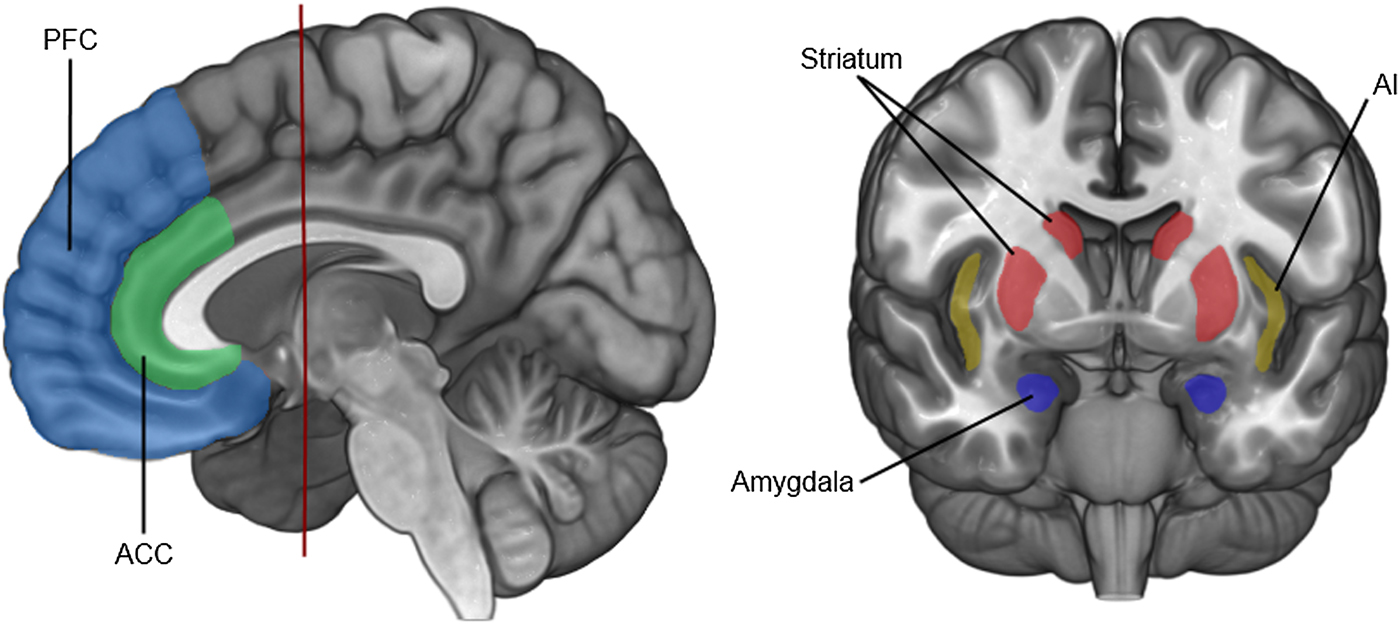
Functional magnetic resonance imaging (fMRI) studies of children exhibiting disruptive behaviors and CU traits have largely focused on probing the functioning of brain areas implicated in affective/reward processing (see Fig. 1)Footnote † Footnote 1 . These studies have indicated a neural activity profile consistent with low emotional responsiveness to others’ distress/pain and poor ability to learn from reinforcement information (Blair et al. Reference Blair, Leibenluft and Pine2014). Reduced amygdala activity to fearful face in children exhibiting disruptive behaviors with high levels of CU traits relative to typically developing children, children with attention-deficit/hyperactivity disorder (ADHD), and children exhibiting disruptive behaviors without CU traits has been reported in several studies (see Marsh et al. Reference Marsh, Finger, Mitchell, Reid, Sims, Kosson, Towbin, Leibenluft, Pine and Blair2008; Jones et al. Reference Jones, Riley, Williamson and Whitehead2009; Viding et al. Reference Viding, Sebastian, Dadds, Lockwood, Cecil, De Brito and McCrory2012; Blair et al. Reference Blair, Leibenluft and Pine2014), and one study found that the association between CU traits and proactive aggression is partially mediated by low amygdala reactivity to fearful faces (Lozier et al. Reference Lozier, Cardinale, VanMeter and Marsh2014). Cohn et al. studied fear conditioning in boys with early offending histories and reported that CU traits were negatively associated with anterior cingulate cortex activity during fear conditioning (Cohn et al. Reference Cohn, Popma, van den Brink, Pape, Kindt, van Domburgh, Doreleijers and Veltman2013). Using an attention-to-emotion paradigm, White et al. (Reference White, Marsh, Fowler, Schechter, Adalio, Pope, Sinclair, Pine and Blair2012a ) found atypically low amygdala activation to fear stimuli in children with disruptive behaviors and CU traits under low attentional load conditions; fear stimuli typically elicit amygdala activation in healthy volunteers (White et al. Reference White, Marsh, Fowler, Schechter, Adalio, Pope, Sinclair, Pine and Blair2012a ). Furthermore, attentional cueing by eye-gaze of a fearful face does not seem to elicit activation in the dorsal frontoparietal endogenous attention-orienting network in children with disruptive behaviors and high CU traits, although this network is reliably activated in typically developing children under such conditions (White et al. Reference White, Williams, Brislin, Sinclair, Blair, Fowler, Pine, Pope and Blair2012b ).
Neural circuitry involved in emotion, reward, and empathic processing; implicated in studies of children and elevated risk of developing psychopathy. Clearly, most of brain's emotional/empathic processes are achieved by functional integration across several brain areas, that is, although broad functions for these brain areas are discussed in this figure legend (below), many of these areas work together to achieve appropriate behavioral outcome for the organism. For example, amygdala, together with prefrontal cortex (PFC) and ventral striatum, form a network of structures involved in processing the current value of stimuli and various PFC/anterior cingulate cortex (ACC) regions are either directly or indirectly connected with amygdala to achieve emotion regulation via different mechanisms, such as reappraisal. The amygdala is a subcortical region that is important for processing the current value of stimuli. The amygdala has a critical role in several affective processes, such as mediating conditioned emotional responses, responding to various emotional stimuli (including facial expressions of emotion), and in social behavior toward conspecifics. The striatum is a subcortical region that plays a role in modulating behavior toward potentially rewarding stimuli, particularly stimuli that hold a high subjective reward value to an individual. The ACC is thought to play a distinct role in complex aspects of emotion, such as processing moral emotions (e.g. guilt), empathy, self-regulation of negative emotions, and action reinforcement (route by which reward history influences action choice). The anterior insula (AI) plays an important role in sensory integration and interoceptive awareness and may be involved in awareness of unpleasant feelings during empathy for pain. PFC: Various sectors of the PFC have been implicated in emotion. The areas that have received most attention in affective neuroscience studies of children at risk for developing psychopathy include the orbitofrontal cortex (OFC); ventromedial PFC (vMPFC); ventrolateral PFC (vLPFC); and dorsolateral PFC (DLPFC). The OFC is thought to implement rapid stimulus–reinforcement associations and the correction of these associations when the contingencies of reinforcement change, while the vMPFC is thought to represent the elementary positive and negative affective states in the absence of immediately present incentives. A more rostral region of the MPFC has been implicated in the processing of more complex social emotions such as guilt and embarrassment. Current research suggests that vLPFC integrates affective information and supports response selection by increasing the salience of alternative motor response option representations through interactions with the striatum. It is also associated with effortful regulation of negative affect, via connections with subcortical structures including the amygdala. DLPFC, in turn, is thought to increase attentional control of task-relevant stimulus features and represent goal states toward which more elementary positive and negative affective states are directed [Fig. 1 is reproduced with permission from Viding & McCrory (Reference Viding, McCrory, Thapar, Pine, Leckman, Scott, Snowling and Taylor2015)].

Reduced amygdala and insula activity in children with disruptive behaviors and high CU traits are also seen when these children engage in more complex forms of social judgment regarding other people's distress, such as categorization of legal and illegal behaviors in moral judgment tasks (Marsh et al. Reference Marsh, Finger, Schechter, Jurkowitz, Reid and Blair2011), making decisions about appropriate responses to the distress of others (Sebastian et al. Reference Sebastian, McCrory, Cecil, Lockwood, De Brito, Fontaine and Viding2012), or making decisions about whether to benefit self by harming others (Sakai et al. Reference Sakai, Dalwani, Mikulich-Gilbertson, Raymond, McWilliams, Tanabe, Rojas, Regner, Banich and Crowley2017). Finally, five recent studies of children exhibiting disruptive behaviors and varying levels of CU traits (four involving fMRI, and the other brain event-related potential measurement) have reported atypical neural reactivity to other people's pain (Cheng et al. Reference Cheng, Hung and Decety2012; Lockwood et al. Reference Lockwood, Sebastian, McCrory, Hyde, Gu, De Brito and Viding2013; Marsh et al. Reference Marsh, Finger, Fowler, Adalio, Jurkowitz, Schechter, Pine, Decety and Blair2013; Michalska et al. Reference Michalska, Zeffiro and Decety2016; Yoder et al. Reference Yoder, Lahey and Decety2016). Collectively, these studies implicate reduced activity and altered connectivity in children with disruptive behaviors and high levels of CU traits in a network of brain areas known to be associated with empathy for other people's pain in healthy individuals. This network encompasses a number of brain regions including the anterior insula, posterior insula, anterior cingulate cortex, and the amygdala. Importantly, this profile of reduced neural reactivity to expressions of pain is not coupled with difficulty in understanding intentionality on the part of others (Cheng et al. Reference Cheng, Hung and Decety2012).
Atypical ventromedial prefrontal cortex (vmPFC) and orbitofrontal cortex (OFC) response to punishment and reward in children with disruptive behaviors and CU traits has also been reported (Finger et al. Reference Finger, Marsh, Mitchell, Reid, Sims, Budhani, Kosson, Chen, Towbin, Leibenluft and Blair2008, Reference Finger, Marsh, Blair, Reid, Sims, Ng, Pine and Blair2011). For example, Finger et al. (Reference Finger, Marsh, Mitchell, Reid, Sims, Budhani, Kosson, Chen, Towbin, Leibenluft and Blair2008) reported that both typically developing children and children with ADHD showed a reduction in vmPFC activity following an unexpected punishment. Such reduction in vmPFC activity has been shown to co-occur with prediction error, that is, when an actual outcome differs from the expected outcome (Mitchell, Reference Mitchell2011). In contrast, youth with disruptive behaviors and CU traits did not show this reduction in vmPFC activity. In another study that used a passive avoidance task in which participants had to learn which stimuli were ‘good’ (rewarded) and which were ‘bad’ (unrewarded), Finger et al. (Reference Finger, Marsh, Blair, Reid, Sims, Ng, Pine and Blair2011) found that children with disruptive behaviors and CU traits showed less OFC and caudate responsiveness to early stimulus-reinforcement exposure, and less OFC responsiveness to rewards. These neural differences can be interpreted as reflecting compromised sensitivity to early reinforcement information in the vmPFC/OFC and caudate, and compromised sensitivity to reward outcome information in the vmPFC/OFC, in adolescents with disruptive behaviors and CU traits. Subsequent work, however, suggests that the difficulties in reinforcement learning may not be unique to disruptive behaviors with CU traits, but may instead be a common problem among children with disruptive behaviors as a whole (White et al. Reference White, Brislin, Sinclair, Fowler, Pope and Blair2013, Reference White, Fowler, Sinclair, Schechter, Majestic, Pine and Blair2014) and relate to the levels of conduct disorder symptoms (White et al. Reference White, Briggs-Gowan, Voss, Petitclerc, McCarthy, Blair and Wakschlag2016a , Reference White, Tyler, Erway, Botkin, Kolli, Meffert, Pope and Blair b ).
Collectively, these functional neuroimaging findings are largely in line with those typically reported in studies of psychopathic adults suggesting that assessing disruptive behaviors and CU traits identifies children who present with similar risk markers to those seen in adults with psychopathy (e.g. Kiehl et al. Reference Kiehl, Smith, Hare, Mendrek, Forster, Brink and Liddle2001; Birbaumer et al. Reference Birbaumer, Veit, Lotze, Erb, Hermann, Grodd and Flor2005; for a comprehensive review, see Seara-Cardoso & Viding, Reference Seara-Cardoso and Viding2014). These findings also suggest functional neural bases for why these children respond less to other people's distress and often make and repeat disadvantageous decisions. What is not clear from the current (cross-sectional) evidence base is the degree to which neurocognitive biases associated psychopathic features in children can change. Is amelioration in neurocognitive differences associated with behavioral improvement in some children? Or do these children achieve behavioral improvement via other, compensatory mechanisms? Answering questions like this will also constrain how ‘biomarkers’ such as neuroimaging data may be used. Neuroimaging ‘biomarkers’ may be primarily useful in informing how treatments might be best constrained (i.e. should you try to recalibrate affective processing or should you deploy approaches that focus on compensatory mechanisms) or they may, in some cases, provide additional risk prediction. Longitudinal data are required to answer these questions.
Findings from genetically informative studies
In interpreting findings from genetic/epigenetic studies, it is of critical importance to keep in mind that there are no genes that directly give rise to the development of psychopathy. Genes code for proteins that influence characteristics such as neurocognitive vulnerabilities that may in turn increase the risk for developing psychopathic features. The neurocognitive vulnerabilities associated with disruptive behaviors that occur together with CU traits are at least partially distinct from those associated with disruptive behaviors more broadly (see ‘Findings from neurocognitive studies’ section). This suggests that the risk alleles for psychopathy may be in part independent from the risk alleles for disruptive behaviors more broadly. Although an individual's genome likely limits a ‘range for phenotypic expression’, it does not pre-specify how an individual will turn out. The specific developmental trajectory of any individual is determined by a complex interplay between genetic propensities and other factors that constrain how those genetic propensities are expressed at several different levels of analysis. Genetic variants that are implicated as risk genes for psychopathic presentation may include several genes that confer advantages, as well as disadvantages, depending on the environmental context. It is also of critical importance to remember that an individual's genetic predisposition influences the types of environments the individual will encounter, a phenomenon known as gene–environment correlation (rGE). For example, an individual's genetic predisposition may influence behaviors that will in turn evoke different reactions in others. In order to understand how environmental risk operates in relation to the development of psychopathy, it is therefore important to conduct research into environmental risk within genetically informative study designs.
Here we review genetically informative findings in relation to CU traits, with particular emphasis on findings in the context of disruptive behaviors. This is to allow comparability with the neurocognitive literature of developmental risk for psychopathy that has primarily focused on differentiating children with disruptive behavior on CU traits. Individual differences in CU are typically estimated to be moderately to strongly heritable using the standard twin design, which compares resemblance in monozygotic (MZ) twins and dizygotic twins, in community samples of children and adolescents (range of heritability estimates =0.45–0.72; see Viding & McCrory, Reference Viding and McCrory2012; Ficks et al. Reference Ficks, Dong and Waldman2014; Flom & Saudino, Reference Flom and Saudino2017; see also Tuvblad et al. Reference Tuvblad, Fanti, Andershed, Colins and Larsson2017 for a recent study with a lower heritability estimate of 0.25 in 5-year-old twins). It is also of interest to note that disruptive behaviors accompanied by high levels of CU traits appear strongly heritable, whereas disruptive behaviors accompanied by low levels of CU traits appear to be more strongly influenced by environmental factors (Viding et al. Reference Viding, Blair, Moffitt and Plomin2005, Reference Viding, Jones, Paul, Moffitt and Plomin2008).
Twin studies suggest that there is considerable overlap in the genes that influence CU traits and conduct/externalizing problems, but that there are also unique genetic influences on CU (Viding et al. Reference Viding, Frick and Plomin2007; Forsman et al. Reference Forsman, Lichtenstein, Andershed and Larsson2008; Bezdjian et al. Reference Bezdjian, Raine, Baker and Lynam2011). This finding is consistent with evidence indicating that high levels of CU can occur in the absence of clinical levels of disruptive behaviors (Frick et al. Reference Frick, Cornell, Barry, Bodin and Dane2003; Kumsta et al. Reference Kumsta, Sonuga-Barke and Rutter2012), although this is rare. Persistent high levels of CU typically occur in the presence of disruptive behaviors (Fontaine et al. Reference Fontaine, McCrory, Boivin, Moffitt and Viding2011). Twin research findings also suggest that observed stability in CU/psychopathic traits is largely driven by genetic influences (Forsman et al. Reference Forsman, Lichtenstein, Andershed and Larsson2008; Fontaine et al. Reference Fontaine, Rijsdijk, McCrory and Viding2010; Flom & Saudino, Reference Flom and Saudino2017).
Only a handful of candidate gene-association studies to date have focused on CU traits in children or adolescents with most of these studies focusing on samples with some disruptive behavior. These studies have tentatively implicated variants of genes related to the serotonin and oxytocin systems (e.g. Fowler et al. Reference Fowler, Langley, Rice, van den Bree, Ross, Wilkinson, Owen, O'donovan and Thapar2009; Beitchman et al. Reference Beitchman, Zai, Muir, Berall, Nowrouzi, Choi and Kennedy2012; Malik et al. Reference Malik, Zai, Abu, Nowrouzi and Beitchman2012; Dadds et al. Reference Dadds, Moul, Cauchi, Hawes and Brennan2013; Moul et al. Reference Moul, Dobson-Stone, Brennan, Hawes and Dadds2013). Findings from these candidate gene studies need to be investigated in larger samples to evaluate whether they reflect true replicable associations; however, selecting candidate genes is not straightforward and can lead to unadjusted multiple testing. Because genetic risk may in many cases only ‘penetrate’ in the presence of environmental risk, genetic studies should carefully document the environmental risk factors in their samples to increase interpretability of the findings, and thereby enhance our understanding of how genetic risk translates to disorder outcomes. For example, one interesting study reported that the long allele of a serotonin transporter polymorphism, found to be related to low amygdala reactivity in prior research, was only a risk genotype for elevated CU traits in the context of lower socio-economic status (SES) backgrounds (Sadeh et al. Reference Sadeh, Javdani, Jackson, Reynolds, Potenza, Gelernter, Lejuez and Verona2010). This finding suggests that the degree to which genetic vulnerability to CU traits is expressed is dependent on the degree to which a child is exposed to environmental disadvantage. However, further studies are required to also investigate the significance of this finding in relation to developing psychopathy in adulthood.
The association studies highlighted above have only considered a limited number of candidate genes. However, an increasing number of genome-wide association (GWA) studies are now being published in the field of psychiatric genetics. These studies systematically scan the genome with hundreds of thousands of DNA markers, made possible by DNA arrays. GWA studies for psychiatric phenotypes have shown that genome-wide ‘hits’ are often in genes not previously hypothesized to influence the phenotype, or in parts of the genome other than genes themselves (Visscher et al. Reference Visscher, Brown, McCarthy and Yang2012). GWA studies focusing specifically on CU traits (both alone and in combination with disruptive behaviors) suggest that much larger samples will be needed to detect novel associations with common single nucleotide polymorphisms that account for far <1% of the variance (Viding et al. Reference Viding, Hanscombe, Curtis, Davis, Meaburn and Plomin2010, Reference Viding, Price, Jaffee, Trzaskowski, Davis, Meaburn, Haworth and Plomin2013). Furthermore, a genome-wide complex trait analysis study suggests that most of the genetic variance that is important for explaining genetically driven individual differences in CU traits or disruptive behaviors is not due to the additive effects of common genetic variants (Trzaskowski et al. Reference Trzaskowski, Dale and Plomin2013). This means that the search for genetic influences on psychopathy is likely to be complicated by the presence of gene–gene interactions and rare variants, as well as gene–environment interplay. As such, it is questionable how reliable the associations found for individual candidate genes will prove to be. Methods to identify gene–gene and gene–environment interactions are required, as is whole-genome sequencing to detect rare variants that might contribute to heritability of psychopathic presentation, but which would not be detected by candidate gene or GWAS methods. It may be possible to use information from such studies to indicate the most appropriate preventative approaches in the future, as well as inform how genetic features may constrain environmental inputs. Research into genetic contributions to psychopathic features, including studies using novel epigenetic approaches that may also help uncover mechanisms of gene–environment interplay, is likely to progress greatly in the coming decade. For example, two recent epigenetic studies have found that higher CU traits are associated with greater methylation of the oxytocin receptor gene (Cecil et al. Reference Cecil, Viding, Barker, Guiney and McCrory2014; Dadds et al. Reference Dadds, Allen, McGregor, Woolgar, Viding and Scott2014), although it remains unclear whether this methylation pattern indexes environmentally or genetically driven epigenetic processes.
Harsh and negative parenting has been associated with higher levels of CU traits and disruptive behaviors, while a warm parental style has been associated with lower levels of CU traits and disruptive behaviors in children (for a review, see Waller et al. Reference Waller, Gardner and Hyde2013), but it is not self-evident that such parenting correlates reflect purely environmental causal influences of parenting on behavioral development. Parents with genetic risk factors for psychopathy/antisocial behavior are likely to display parenting behaviors in line with these risks (e.g. harsh parenting) and may also pass on some risk genes to their offspring, which can increase the chance of developing disruptive behaviors and lack of empathy. This means that part of the association between less harsh parenting and CU traits/disruptive behaviors may represent a genetic confound (an example of passive rGE). We also know that children with psychopathic features are extremely challenging to a parent. Given that they typically show diminished empathy for others, less remorse, a tendency to manipulate others, self-serving behaviors, impulsivity, and little interest in seeking the approval of adults, it is not difficult to imagine that common parenting strategies would be quickly exhausted. It is therefore likely that children with psychopathic features evoke different parenting reactions than less challenging children and research suggests that this is the case (Hawes et al. Reference Hawes, Dadds, Frost and Hasking2011) (an example of evocative rGE).
To date only three genetically informative longitudinal studies have investigated parenting and development of psychopathic features, all focusing on CU traits (Viding et al. Reference Viding, Simmonds, Petrides and Frederickson2009; Hyde et al. Reference Hyde, Waller, Trentacosta, Shaw, Neiderhiser, Ganiban, Reiss and Leve2016; Waller et al. Reference Waller, Dishion, Shaw, Gardner, Wilson and Hyde2016). Results from the first of these studies, capitalizing on a MZ-twin differences design, suggest that the association between harsh and negative parenting and higher levels of CU traits in children may, at least in part, reflect genetic vulnerability within families (Viding et al. Reference Viding, Simmonds, Petrides and Frederickson2009). This could either reflect a shared genetic vulnerability for poor parenting and CU temperament, or an effect of CU temperament in evoking negative/harsh parenting. Complementing this work, two recent studies using the same adoption cohort found that level of antisocial behavior and fearlessness in the biological mother predicted early CU behaviors in toddlers who had been adopted. However, high levels of adoptive mother positive reinforcement were able to buffer the effects of heritable risk for CU behaviors (Hyde et al. Reference Hyde, Waller, Trentacosta, Shaw, Neiderhiser, Ganiban, Reiss and Leve2016; Waller et al. Reference Waller, Dishion, Shaw, Gardner, Wilson and Hyde2016). These findings are extremely encouraging, although it is important to bear in mind that parents in adoptive families are typically very motivated to undertake the challenges of parenting and are also often relatively well-resourced. By contrast, in biological families, parents of children with CU traits are more likely to have a host of genetic and contextual risk factors (including socio-economic disadvantage), which can pose challenges for promoting interventions that seek to increase positive reinforcement behaviors toward the child – particularly if that child is challenging.
A few studies to date have also reported an association between CU traits and disorganized attachment in children with disruptive behaviors (Pasalich et al. Reference Pasalich, Dadds, Hawes and Brennan2011; Bohlin et al. Reference Bohlin, Eninger, Brocki and Thorell2012). However, no genetically informative longitudinal studies exist that could elucidate the degree to which CU tendencies may drive the development of disorganized attachment in at-risk children. Several studies by Dadds et al. (Reference Dadds, Jambrak, Pasalich, Hawes and Brennan2011, Reference Dadds, Allen, Oliver, Faulkner, Legge, Moul, Woolgar and Scott2012, Reference Dadds, Allen, McGregor, Woolgar, Viding and Scott2014) suggest that compared with other children with disruptive behaviors, those with high levels of CU traits make less eye contact with their mothers in both free play and directed situations. The mothers of children with high levels of CU traits, on the other hand, do not differ from mothers of non-CU children with disruptive behaviors in the amount of eye contact they attempt with their children. This suggests that children with high CU traits and disruptive behaviors bring a number of challenges to the parent–child relationship, which may influence the formation of attachment style. It will be important to identify within a longitudinal design the features of children with high CU traits and disruptive behaviors that present a challenge to dyadic interactions, as well as carefully characterize the degree to which these are shared with other children with problematic presentation v. unique to those at risk for developing psychopathy. Other factors, apart from parenting and parental attachment, are also likely to contribute to the development of the combination of disruptive behaviors and CU traits and warrant mention. These include SES, peer relationships, cognitive ability, and pre- and peri-natal risk factors (Viding & McCrory, Reference Viding, McCrory, Thapar, Pine, Leckman, Scott, Snowling and Taylor2015). For example, peer relationships of children with high levels of CU traits are characterized by less stability and greater conflict (Muñoz et al. Reference Muñoz, Kerr and Besic2008), and children with high levels of CU traits associate more frequently with delinquent friends (Kimonis et al. Reference Kimonis, Frick and Barry2004). However, the extant evidence base is not able to elucidate the degree to which these associations are causal or correlational (e.g. related to the phenomenon of rGE). Interestingly, delinquent children with CU traits do not seem to be influenced by their friends’ peer delinquency (Kerr et al. Reference Kerr, Van Zalk and Stattin2012); rather, their delinquent behavior appears to strongly influence their friends’ delinquency (Kerr et al. Reference Kerr, Van Zalk and Stattin2012).
The current evidence base clearly indicates that both genetic and environmental risk factors contribute to developmental risk for psychopathy. We are at present some way away from identifying the precise genes that represent the genetic risk. The extant data suggest that finding such genes will be complicated by the presence of gene–gene interactions, as well as rare genetic variants. Findings to date also indicate that although family environmental factors that are associated with disruptive behaviors and CU traits may in part reflect genetic endowment within families, there is also manifest potential for positive environmental factors – such as warm and positive parenting – to ameliorate the development of psychopathic presentation.
Future research needs
Although substantive progress has been made in our understanding of the neurocognitive functioning of individuals at risk of developing psychopathy, as well as the origins of that risk, there are still a number of important questions to be addressed. First, only a limited range of tasks have been used in neurocognitive research (either experimental or imaging studies), the sample sizes in the extant studies (including our own) have often been modest, and the generalizability of the neurocognitive findings across different groups of people has not been systematically investigated. While the current body of findings contains many conceptual replications, exact replications are rare. There are some seemingly conflicting findings and it is not currently clear to what extent these reflect task, trait measurement, or sample differences (see, e.g. Hyde et al. Reference Hyde, Waller, Trentacosta, Shaw, Neiderhiser, Ganiban, Reiss and Leve2016; Martin-Key et al. Reference Martin-Key, Brown and Fairchild2016). It is important for future studies to use well-constructed measures that are able to clearly isolate specific affective/cognitive processes of interest, and to study whether the findings hold for both sexes or across cultures or ethnicities. It is also important to systematically investigate the aspects of developmental risk for psychopathy beyond CU traits, for example, those neurocognitive factors associated with seemingly impulsive and maladaptive decision-making and which have recently been isolated in adults with psychopathy (e.g. Baskin-Sommers et al. Reference Baskin-Sommers, Stuppy-Sullivan and Buckholtz2016; Hosking et al. Reference Hosking, Kastman, Dorfman, Samanez-Larkin, Baskin-Sommers, Kiehl, Newman and Buckholtz2017).
Second, there are no longitudinal studies with neuroimaging measures that shed light on how specific processing biases related to psychopathy risk develop nor how malleable such processing biases might be. We also do not know whether clinical improvement is associated with alterations in the neurocognitive systems associated with the risk of psychopathy or whether symptom changes relate to altered neural processing in other brain regions that may reflect ‘compensatory’ mechanisms.
A related, third point, concerns the lack of longitudinal data on neurocognitive functioning embedded within a rich set of other measures – including genetic and epigenetic data, and data on environmental risk and protective factors. As we have described, the specific developmental trajectory of any individual is determined by a complex interplay between genetic propensities and contextual factors that constrain how those genetic propensities are expressed throughout different developmental stages. Longitudinal work incorporating different levels of analysis would enable researchers to investigate a novel set of questions. For example, it could shed light on how genetic vulnerability might bias affective processing and how such a bias might be further potentiated and canalized given certain environmental contingencies or how affective processing biases themselves (in both children and their parents) may shape the environment. There are a number of factors that make conducting this kind of research particularly challenging. We have not yet identified a reasonable set of genes that we can confidently say are associated with the risk for developing psychopathy. The best way to probe neurocognitive biases across different ages is also not clear, nor will it be trivial to combine the different levels of analyses from the point of view of securing a sufficient sample size. We also have a poor understanding of how environmental risk operates in relation to the development of psychopathy and which are the most critical factors to focus on at different developmental stages.
Fourth, we need to investigate heterogeneity in the causal processes that may lead to the development of psychopathic features: such features may emerge in different children for different reasons. Originally, Cleckley (Reference Cleckley1976) described individuals with psychopathy as being low in anxiety and studies of children at risk for psychopathy often report low levels of co-occurring anxiety in these children (e.g. Frick et al. Reference Frick, Lilienfeld, Ellis, Loney and Silverthorn1999). However, we now know that a subgroup of children who present with CU traits and disruptive behaviors (a combination taken as a proxy for the risk of developing psychopathy) also present with co-occurring anxiety (Kimonis et al. Reference Kimonis, Skeem, Cauffman and Dmitrieva2011, Reference Kimonis, Frick, Cauffman, Goldweber and Skeem2012). It appears that these children are also characterized with more frequent experiences of social and environmental adversity (such as maltreatment) than children with CU traits and disruptive behaviors who present without anxiety. Currently, we do not know the degree to which children exposed to adversity who present with CU, disruptive behaviors, and co-morbid anxiety share genetic, neurocognitive, hormonal, and psychophysiological characteristics with children who exhibit CU traits and disruptive behaviors without anxiety. Emerging research suggests that those with co-morbid anxiety may look more like maltreated and anxious children in general (i.e. showing over-reactivity to affective stimuli, rather than the under-reactivity that is typical for non-anxious high-CU children with disruptive behaviors; Kimonis et al. Reference Kimonis, Frick, Cauffman, Goldweber and Skeem2012, Reference Kimonis, Kennealy and Goulter2016, Reference Kimonis, Goulter, Hawes, Wilbur and Groer2017). In other words, it is plausible that there may be both genetically and environmentally ‘weighted’ pathways to psychopathic presentation, and one epigenetic study is in line with this proposal (Cecil et al. Reference Cecil, Viding, Barker, Guiney and McCrory2014). Future research efforts are needed to systematically investigate the neurocognitive presentation and developmental trajectories of children who present with psychopathic features and high v. low levels of concurrent anxiety.
Treatment implications
While some children present with stable high levels of CU traits and disruptive behaviors, for others these traits either diminish or increase with age (e.g. Burke et al. Reference Burke, Loeber and Lahey2007; Fontaine et al. Reference Fontaine, Rijsdijk, McCrory and Viding2010). Encouragingly from a clinical perspective, even for those children and youth who show stable high CU traits and disruptive behaviors over time, interventions can contribute to reductions in disruptive behaviors (Waller et al. Reference Waller, Gardner and Hyde2013; Hawes et al. Reference Hawes, Price and Dadds2014; Wilkinson et al. Reference Wilkinson, Waller and Viding2015). Parent training interventions delivered in early childhood have also been shown to produce lasting reductions in CU traits (see Hawes et al. Reference Hawes, Price and Dadds2014), although treatment gains achieved with older children are sometimes more modest (Bjørnebekk & Kjøbli, Reference Bjørnebekk and Kjøbli2017). The challenge over the next decade will be to more comprehensively delineate what precisely works for these children and how current intervention and prevention programs can be optimized in ways that improve engagement as well as clinical outcomes.
To optimize existing interventions (as well as engagement), we may need a better understanding of rGE processes. Such research has the potential to inform clinical approaches that promote warm and consistent parenting. A child with psychopathic features is more likely to evoke negative parenting responses (as well as a sense of parental inadequacy) and will furnish more infrequent occasions for parental praise or reward. This in turn increases the likelihood that the pattern of parent–child interaction becomes largely negative in tone. Furthermore, the biological parents of such a child may themselves share some of the same vulnerabilities that characterize their child and may find it harder to implement many aspects of typical parenting intervention programs. Biological families of children with psychopathic features may need additional (or different forms of) clinical support in order to facilitate a shift toward more positive patterns of parent–child interaction. These could include intensive and supported reward token-economy adjuncts and extensive support in increasing warm parent–child interactions (see Armstrong & Kimonis, Reference Armstrong and Kimonis2013 for a promising case study).
In addition, it will be important to examine the degree to which the neurocognitive biases associated with psychopathic features are malleable as this will help inform the development of adjuncts to existing parenting- or family-focused clinical interventions. If it transpires, for example, that a given bias is not malleable, it may be more fruitful to focus on the development of compensatory processes that can have the effect of normalizing behavior. Relatedly, we also need to investigate whether there are particularly sensitive developmental periods during which the neurocognitive functioning may be most responsive to intervention. Given that the children's processing of the world around them is likely to impact upon their social interactions, development of treatment adjuncts can also be seen as providing extra scaffolding for a positive parent–child relationship and attenuating rGE processes that might otherwise unfold over development.
Conclusions
Despite substantial accumulation of new evidence, we still lack a coherent understanding of how genetic and environmental risk factors shape the development of neurocognitive processing biases that increase risk for psychopathy, or how those processing biases themselves may come to shape the individual's environmental exposures over time. Longitudinal research combining multiple levels of analyses is critical to progress the field, but conducting such research will be challenging. It will require systematic development of measures that are able to index the development of specific processing biases from infancy to adulthood, as well identification of age-relevant environmental risk factors and their mode of operation. For example, why is reduced face preference during infancy associated with increased likelihood of CU traits in early childhood (Bedford et al. Reference Bedford, Pickles, Sharp, Wright and Hill2015)? Does it, perhaps combined with a genetic predisposition to a fearless temperament, lead to fewer opportunities to observe a caregiver's frightened face after a loud noise or flashing light? Might that, in turn, lead to a less consolidated representation of what arousal state is associated with a frightened facial expression and would that make it harder for a child to empathize with another person's distress? Does regular positive reinforcement by a parent promote prosocial behavior in ways that help the child integrate socially, attenuating difficulties in empathizing? Currently we do not know, but it will be important to find out. Longitudinal investigations including data from different levels of analyses are either scarce or absent, and we do not currently have good data on how the child's predisposition (variously quantified) contributes to the parent–child or child–peer dynamic over time. Fortunately, a number of research groups are engaged in conducting systematic, innovative research to answer these and other questions. We are confident that we will be able to write a very different, much improved review on the development of psychopathy in 10 years time.
Acknowledgements
EV and EJM were supported by a UK Medical Research Council grant (MR/ K014080/1) during the writing of this paper. E.V. is a Royal Society Wolfson Research Merit Award holder and a British Academy Mid-Career Fellow.