

Introduction
Antimicrobial resistance (AMR) is clearly a concern in cattle production systems where AMR pathogens can contribute to increased morbidity and mortality of livestock with commensurate increases in production expenses for livestock producers (Mathew et al., Reference Mathew, Cissell and Liamthong2007). From a public health perspective there is potential for AMR pathogens and commensal organisms to disseminate to humans via direct contact with animals (Price et al., Reference Price, Graham, Lackey, Roess, Vailes and Silbergeld2007) or via the food chain (van den Bogaard and Stobberingh, Reference van den Bogaard and Stobberingh2000; Silbergeld et al., Reference Silbergeld, Graham and Price2008). In cattle production systems, the most obvious selection pressure for AMR is application of antimicrobials for treatment (e.g. mastitis, lameness, respiratory illness, and scours) and for prophylactic health benefits and production gains (e.g. medicated milk replacer). These practices can promote AMR by two potential mechanisms: they permit AMR bacterial populations to expand in numbers by providing a competitive advantage for resistant strains, and they permit resistance genes to disseminate successfully to new bacterial hosts if these genes are harbored on horizontally transmissible elements such as plasmids and conjugative transposons. In some cases, such as fluoroquinolones, antimicrobials can select for de novo chromosomal mutations that confer resistance and allow for relatively rapid emergence of resistant strains.
The potential for selection and expansion of AMR bacteria is as germane today as it was six decades ago when questions of AMR selection were first being raised (Netherthrope, 1962; Swann, Reference Swann1969). For example, a recent survey showed that dairy producers in Washington State routinely employ antimicrobials (74.2–97.0%) to treat common health problems (Raymond et al., Reference Raymond, Wohrle and Call2006). The reported use of medicated milk replacer ranges from 28% of dairy producers in Washington State (Raymond et al., Reference Raymond, Wohrle and Call2006) to 70% of producers in Pennsylvania (Sawant et al., Reference Sawant, Sordillo and Jayarao2005). These are basic examples of important cattle management practices that potentially select for expansion and maintenance of AMR bacterial populations in production environments. While data is incomplete for most countries, it is plausible that the majority of antimicrobials on a worldwide scale are consumed in the agricultural sector and this assumption has lead to a ‘mass action’ hypothesis that selection in agriculture is a significant driving force for evolution, persistence and dissemination of AMR traits worldwide (van den Bogaard and Stobberingh, Reference van den Bogaard and Stobberingh2000; McEwen and Fedorka-Cray, Reference McEwen and Fedorka-Cray2002; Heuer et al., Reference Heuer, Hammerum, Collignon and Wegener2006; McEwen, Reference McEwen2006; Silbergeld et al., Reference Silbergeld, Graham and Price2008).
Caveats for AMR comparisons
Long-term longitudinal studies that compare levels of antimicrobial use with the prevalence of AMR bacteria in host populations would be particularly useful for understanding the risks and consequences of different policy choices for limiting AMR. Such data could provide trend information that would be useful to evaluate large-scale policy changes such as recently implemented by the European Union. Unfortunately, reliable data on total antimicrobial usage in livestock production is not available and post-hoc analysis of individual studies is highly problematic due to differences in methods used (e.g. disc diffusion versus serial broth dilution and changing criteria) (Klement et al., Reference Klement, Chaffer, Leitner, Shwimmer, Friedman, Saran and Shpigel2005); failure to speciate the organisms under study when there can be considerable variation between species and strains (Rossitto et al., Reference Rossitto, Ruiz, Kikuchi, Glenn, Luiz, Watts and Cullor2002); changes in management practices; differences in sample collection and culture methods can bias recovery of organisms; differences in sampling frame (independence between isolates; random, opportunistic, or clinical sampling) can also introduce bias; stochastic events (e.g. heterogeneous clonal dissemination) could easily bias interpretation of smaller studies; even well-organized, large-scale, and centralized studies encounter deviations in study protocols and unequal reporting efforts that make comparisons between countries tenuous (Hendriksen et al., Reference Hendriksen, Mevius, Schroeter, Teale, Meunier, Butaye, Franco, Utinane, Amado, Moreno, Greko, Stark, Berghold, Myllyniemi, Wasyl, Sunde and Aarestrup2008).
Nevertheless, we can glean some insights from smaller scale studies when they involve well differentiated management schemes (e.g. conventional and organic operations), but as with all correlation studies readers should be cautious about inferring causation when there are limited controls for confounding variables or when conclusions are drawn from a limited number of independent observations. Experimental studies provide considerable insight about mechanisms that influence the prevalence of AMR bacteria in production environments, but these studies tend to be short in duration and extrapolation to broader temporal and spatial scales may be problematic.
With these caveats in mind, we provide herein a brief review of recent findings about AMR in cattle production systems relative to conventional and organic systems, experimental studies, studies of specific pathogens, and comparisons of dairy and beef production. We conclude with a heuristic model to illustrate how transient expansion of resistant populations can lead to genetic linkage with other selective traits that permit long-term persistence of AMR subpopulations in production environments. This model provides an appreciation for why some AMR reduction policies may produce less than satisfying results, but it also highlights how multiple approaches can contribute to successfully reduce the prevalence of AMR bacteria.
Conventional versus organic systems
One way to assess the effect of antimicrobial use on AMR is to contrast systems that employ different production strategies. For example, ‘organic’ dairies employ little to no antimicrobials compared with ‘conventional’ production environments. For the US dairy industry, conventional dairies use antimicrobials more frequently in all age categories of dairy cattle compared to organic dairies (Zwald et al., Reference Zwald, Ruegg, Kaneene, Warnick, Wells, Fossler and Halbert2004; Pol and Ruegg, Reference Pol and Ruegg2007b), and land use requirements for organic certification call for at least 3 years of antimicrobial-free operation (USDA National Organic Program, http://www.ams.usda.gov/AMSv1.0). Published comparisons of these systems have targeted generic Escherichia coli (Sato et al., Reference Sato, Bartlett and Saeed2005), Shiga-toxin producing E. coli (STEC) (Cho et al., Reference Cho, Fossler, Diez-Gonzalez, Wells, Hedberg, Kaneene, Ruegg, Warnick and Bender2007), Salmonella (Ray et al., Reference Ray, Warnick, Mitchell, Kaneene, Ruegg, Wells, Fossler, Halbert and May2006), and Campylobacter (Sato et al., Reference Sato, Bartlett, Kaneene and Downes2004; Halbert et al., Reference Halbert, Kaneene, Ruegg, Warnick, Wells, Mansfield, Fossler, Campbell and Geiger-Zwald2006). For fecal/enteric pathogens, findings have been variable. Ray et al. (Reference Ray, Warnick, Mitchell, Kaneene, Ruegg, Wells, Fossler, Halbert and May2006) found that conventional dairies were more likely to yield Salmonella with resistance to streptomycin or sulfonamides. Sato et al. (Reference Sato, Bartlett and Saeed2005) compared conventional and organic systems and found that the former had a significantly higher prevalence of AMR for fecal E. coli across multiple drug classes (ampicillin, tetracycline, sulfonamides, kanamycin, gentamicin, chloramphenicol and tetracycline), but no differences were detected for 10 other antimicrobials. Two studies that examined Campylobacter found no significant differences in AMR between production systems, although Halbert et al. (Reference Halbert, Kaneene, Ruegg, Warnick, Wells, Mansfield, Fossler, Campbell and Geiger-Zwald2006) found significantly higher prevalence of resistance to tetracycline in conventional farm isolates. Most of these studies were limited by herd number, particularly for organic dairies, and most involved only a single sampling date from which prevalence of resistance was calculated. It is important to point out that younger animals are more likely to have resistant organisms in their feces when compared to older animals (Khachatryan et al., Reference Khachatryan, Hancock, Besser and Call2004; Sato et al., Reference Sato, Bartlett and Saeed2005; Cho et al., Reference Cho, Fossler, Diez-Gonzalez, Wells, Hedberg, Kaneene, Ruegg, Warnick and Bender2007) and this can also introduce bias in analyses of AMR populations depending on the sampling scheme that is employed by a given study.
Although there seems to be a consistent association between organic management and lower prevalence of AMR bacteria, resistant bacteria persist on organic farms even after years of antimicrobial-free management, suggesting that factors other than antimicrobial use play an important role in long-term persistence (see below). After analyzing the phylogenetic groupings of E. coli isolates from the organic/conventional comparison (Sato et al., Reference Sato, Bartlett and Saeed2005), Walk et al. (Reference Walk, Mladonicky, Middleton, Heidt, Cunningham, Bartlett, Sato and Whittam2007) concluded that the overabundance of ampicillin-resistant populations on conventional dairies was a consequence of antimicrobial use, but that tetracycline resistance genetic determinants had established a steady-state and that their presence was unrelated to antimicrobial usage. Interestingly, Walk et al. (Reference Walk, Mladonicky, Middleton, Heidt, Cunningham, Bartlett, Sato and Whittam2007) found that on average organic and conventional dairies have different representation of phylogenetic groupings of E. coli, suggesting there are differences between lineages of E. coli in their ability or probability of assimilating resistance genes. Despite evidence for higher levels of AMR bacteria under conventional management regimes, a recent study of fecal isolates from conventional dairy cattle across 21 states demonstrated that the majority of commensal E. coli (85.3%) and Salmonella species (87.2%) were susceptible to a broad range of antimicrobials (Lundin et al., Reference Lundin, Dargatz, Wagner, Lombard, Hill, Ladely and Fedorka-Cray2008).
Whether on-farm differences between organic and conventional operations translate into reductions in human exposure to resistant organisms is unknown (Mathew et al., Reference Mathew, Cissell and Liamthong2007). One study found that bacteria from retail ground beef from conventional operations had a higher prevalence of chloramphenicol and ceftiofur resistant bacteria, but there were no differences for nine other antimicrobials (LeJeune and Christie, Reference LeJeune and Christie2004). It should be noted that chloramphenicol has been banned from use in US food animals since 1986 because of the risk of aplastic anemia and elevated risk of lymphoma in humans (Settepani, Reference Settepani1984), and thus the mechanism allowing persistence of chloramphenicol resistance in fecal bacteria is unclear for US cattle populations. Overall, there remains considerable debate about the ultimate consequences and risk to public health that can arise from dissemination of AMR organisms from livestock to people (Wassenaar et al., Reference Wassenaar, Kist and de Jong2007; Hurd and Malladi, Reference Hurd and Malladi2008) and this has bearing on the potential health benefits of organic production systems. Over the long term the complete removal of antibiotics from animal production could reduce transmission of AMR organisms to the human population (Stokes et al., Reference Stokes, Kelly, Gould, Cassar and Fielder2008). This must be balanced, however, with the recognition that decreasing animal health could increase the probability of a higher pathogen load in these animals with commensurate increased risk of exposing humans to genuine pathogens (Cox and Popken, Reference Cox Jr and Popken2006) (also see Claycamp (Reference Claycamp2006) ). Barber et al. (Reference Barber, Miller and McNamara2003) argue that the origin and transmission of AMR from food animals has been overestimated in light of alternative sources such as companion animals; if correct, then the assumed public health benefits of complete antimicrobial withdrawal, while not trivial, could be overstated.
Experimental studies
Observational studies can demonstrate associations but are not able to show direct causal links between antimicrobials and development of bacterial resistance at the individual animal level. This has been addressed by experimental approaches. Berge et al. (Reference Berge, Epperson and Pritchard2005a) found a transitory increase in the prevalence of multi-drug resistant and chloramphenicol resistant fecal E. coli following a single subcutaneous dose of florfenicol in feedlot steers. Similarly, a transient increase in ceftiofur resistance and co-resistance to multiple drugs among fecal E. coli was documented following administration of ceftiofur to feedlot cattle; two weeks after the administration, resistance had returned to day 0 levels (Lowrance et al., Reference Lowrance, Loneragan, Kunze, Platt, Ives, Scott, Norby, Echeverry and Brashears2007). A 1982 study also found a transient effect of tetracycline fed to feedlot cattle on bacterial resistance to tetracycline (Stabler et al., Reference Stabler, Fagerberg and Quarles1982). Langford et al. (Reference Langford, Weary and Fisher2003) fed increasing concentrations of penicillin to Holstein calves in milk and found a dose-response relationship between the concentration of penicillin fed to calves and the inhibition zone sizes around a penicillin disk for unidentified fecal bacteria sampled over a 30-day period (Langford et al., Reference Langford, Weary and Fisher2003); these investigators reported no reduction in resistance 4 days after treatment ended. These experiments indicate that while antimicrobial use can result in a higher prevalence of AMR fecal bacteria, the effect is often transient.
Results from herd-level trials also fail to unequivocally demonstrate a close causal relationship between antimicrobial selection pressure and the emergence and subsequent persistence of resistant organisms. Alexander et al. (Reference Alexander, Yanke, Topp, Olson, Read, Morck and McAllister2008) fed antimicrobials to cattle at concentrations commonly used in feedlot settings for prophylactic and growth promotion purposes. Among five different treatment groups, the group fed tetracycline–sulfonamide experienced an increase in tetracycline resistant fecal E. coli. The initial sampling of animals on arrival at the feedlot revealed that the prevalence of carriage of a tetracycline resistant organism was at least 40%, although stress has been documented as a factor in fecal shedding of AMR bacteria and this might contribute to a higher level of AMR after transit (Moro et al., Reference Moro, Beran, Hoffman and Griffith1998, Reference Moro, Beran, Griffith and Hoffman2000; Langlois and Dawson, Reference Langlois and Dawson1999; Mathew et al., Reference Mathew, Arnett, Cullen and Ebner2003). Prevalence of resistance to ampicillin and gentamicin did not correlate with the antimicrobials being fed to the group. Ampicillin resistance among control group isolates (isolates from calves fed no antimicrobials) increased during the latter part of the study due to an evident clonal expansion of an environmental strain that outcompeted other strains of E. coli, as detected by pulsed-field gel electrophoresis (PFGE) patterns (Alexander et al., Reference Alexander, Yanke, Topp, Olson, Read, Morck and McAllister2008). This suggests that fitness traits other than AMR can play an important role in the emergence and dissemination of AMR bacteria in food animals (see below).
Mastitis treatment and AMR
Mastitis is the most common condition that justifies use of antimicrobials on dairy operations (Zwald et al., Reference Zwald, Ruegg, Kaneene, Warnick, Wells, Fossler and Halbert2004; Sawant et al., Reference Sawant, Sordillo and Jayarao2005; Raymond et al., Reference Raymond, Wohrle and Call2006; Pol and Ruegg, Reference Pol and Ruegg2007b). Mastitis is caused by a variety of Gram-positive and Gram-negative organisms (Erskine et al., Reference Erskine, Walker, Bolin, Bartlett and White2002) and intramammary infusion of penicillin was the first antimicrobial treatment for this condition; in the US this practice dates from the mid-1940s (Bryan, Reference Bryan1947) to the present (Raymond et al., Reference Raymond, Wohrle and Call2006). Consequently, from a ‘mass action’ perspective we would predict AMR to penicillin to be ‘high’ and this appears to be the case relative to other drugs, although penicillin susceptibility is still very common. In a large-scale, multi-national assessment of mastitis organisms Hendriksen et al. (Reference Hendriksen, Mevius, Schroeter, Teale, Meunier, Butaye, Franco, Utinane, Amado, Moreno, Greko, Stark, Berghold, Myllyniemi, Wasyl, Sunde and Aarestrup2008) reported prevalence of penicillin resistance between 3% (France) and 46% (England) between 2002 and 2004 for Staphylococcus aureus. Resistance to all other antimicrobials was <10% including oxacillin resistance that was only reported from France and Spain. Interestingly, penicillin resistance was very low among Streptococcus spp. (<4%), although these isolates tended to be more resistant to erythromycin (0–21.4%) and tetracycline (2–76.6%). This study reported limited AMR for Mannheimia haemolytica and Pasteurella multocida, but extensive resistance for E. coli; the latter appeared to be less resistant when isolated from mastitis compared with diarrhea cases. Like other analyses of clinical isolates, it is important to acknowledge that resistant isolates may be amplified by therapeutic treatments that are administered to sick animals prior to isolation of resistant organisms; this may bias prevalence estimates for AMR pathogens compared with a random sampling design. It is also worth noting that Hoe and Ruegg (Reference Hoe and Ruegg2005) found no correlation between in vitro susceptibility testing and clinical outcome of mild or moderate mastitis cases. Thus, in some cases a lack of susceptibility does not imply a significant risk of therapeutic failure for mastitis.
Erskine et al. (Reference Erskine, Walker, Bolin, Bartlett and White2002) conducted a retrospective analysis of 2778 mastitis isolates from the Animal Health Diagnostic Laboratory in Michigan State University. Overall, the prevalence of AMR over a 7-year period did not change (1994–2000). The prevalence of S. aureus isolates resistant to ampicillin, penicillin and erythromycin declined during this period. Streptococcus uberis isolates became more susceptible to oxacillin, sulfa-trimethoprim, gentamicin, and pirlimycin while becoming more resistant to penicillin. Linear declines in AMR were also reported for Streptococcus dysgalactiae, Streptococcus agalactiae, E. coli and Klebsiella pneumoniae. Overall, the authors concluded that there was no indication of increased resistance among mastitis clinical isolates for antimicrobials used commonly to treat mastitis. A similar retroactive analysis by Makovec and Ruegg (Reference Makovec and Ruegg2003) found no trend towards an increase in AMR for mastitis pathogens isolated from milk samples (1994–2001). Pol and Ruegg (Reference Pol and Ruegg2007a) also reported limited association between exposure to antimicrobials and AMR in mastitis causing organisms. Given that mastitis treatment represents a significant proportion of total antimicrobial usage on farms, AMR is relatively limited in mastitis pathogens when compared to enteric organisms.
Beef, dairy and feedlot cattle
In general, beef and dairy calf raising operations differ widely with respect to antimicrobial use. Beef calves are often raised on rangeland with minimal exposure to antimicrobials, whereas dairy calves are raised intensively and are frequently treated with multiple antimicrobials. Based on this differential exposure to antimicrobials, we would hypothesize that there would be a lower prevalence of AMR bacteria with beef production. Davis et al. (Reference Davis, Hancock, Besser, Daniels, Baker and Call2007) examined this question by comparing resistance profiles of bovine Salmonella enterica serovar Dublin isolates between beef and dairy calves. They found that dairy-origin isolates were more likely to be resistant to many antimicrobials and, because S. Dublin is a cattle-adapted serovar, this difference likely occurred because of antimicrobial selection pressure and not because of clonal dissemination from other sources (Davis et al., Reference Davis, Hancock, Besser, Daniels, Baker and Call2007). When adult animals were considered, however, the difference between beef and dairy was diminished. A study of water retention ponds in Florida found that E. coli from ponds on beef cattle farms had a similar proportion of resistant isolates compared to those from dairy farms (Parveen et al., Reference Parveen, Lukasik, Scott, Tamplin, Portier, Sheperd, Braun and Farrah2006).
Feedlots provide a focal location for high density housing of animals from mixed herds and antimicrobials are important for herd management in these conditions. McEwen and Fedorka-Cray (Reference McEwen and Fedorka-Cray2002) reported that 83% of US feedlots use antimicrobials for growth promotion or prophylaxis. In spite of this widespread use, many feedlot surveys have reported that a significant proportion of bacterial isolates were susceptible to all antimicrobials tested. Two large feedlot studies found that 95% (Dargatz et al., Reference Dargatz, Fedorka-Cray, Ladely, Ferris, Green and Headrick2002) and 62.8% (Dargatz et al., Reference Dargatz, Fedorka-Cray, Ladely, Kopral, Ferris and Headrick2003) of Salmonella enterica isolates were pan-susceptible. In contrast, a North Dakota feedlot study found that none of 112 Salmonella enterica isolates were pan-susceptible (Khaitsa et al., Reference Khaitsa, Kegode, Bauer, Gibbs, Lardy and Doetkott2007). Canadian feedlot surveys of resistance among E. coli isolates also suggest a high proportion of pan-susceptible isolates: an Ontario feedlot had 69% pan-susceptible (compared to 88% on the cow–calf operation) (Carson et al., Reference Carson, Reid-Smith, Irwin, Martin and McEwen2008) and 36.6% of E. coli on a feedlot in western Canada were pan-susceptible (Checkley et al., Reference Checkley, Campbell, Chirino-Trejo, Janzen and McKinnon2008). In this latter study administration of one animal daily dose of antimicrobials had no effect on AMR prevalence. In a study of Canadian cow–calf herds, 51.2% of E. coli isolates from calves sampled in the spring (younger calves) were pan-susceptible, compared to 93% from calves sampled in the fall (older calves) (Gow et al., Reference Gow, Waldner, Rajic, McFall and Reid-Smith2008b). More than 90% of 1555 E. coli isolates from adult cows were pan-susceptible in a companion study (Gow et al., Reference Gow, Waldner, Rajic, McFall and Reid-Smith2008a). These cow–calf studies provide strong evidence for the idea that animal age is an important factor in the occurrence of AMR in cattle (Hoyle et al., Reference Hoyle, Shaw, Knight, Davison, Pearce, Low, Gunn and Woolhouse2004; Khachatryan et al., Reference Khachatryan, Hancock, Besser and Call2004; Sato et al., Reference Sato, Bartlett and Saeed2005; Cho et al., Reference Cho, Fossler, Diez-Gonzalez, Wells, Hedberg, Kaneene, Ruegg, Warnick and Bender2007). Age by itself is not likely to be a ‘selection factor’ (Alexander et al., Reference Alexander, Yanke, Topp, Olson, Read, Morck and McAllister2008), but the unique niches provided in younger animals coupled with a higher likelihood of antimicrobial exposure may produce a higher probability of linking AMR traits with other selectively advantageous traits for these niches. Dissemination of AMR bacteria in production environments (soil and water) has also been documented (Peak et al., Reference Peak, Knapp, Yang, Hanfelt, Smith, Aga and Graham2007), although the public health risk posed from this potential reservoir is not clear.
Genetic linkage and persistence of AMR
Co-selection of AMR traits is an obvious case whereby AMR traits are genetically linked so that selection of one antibiotic resistance trait maintains the unrelated AMR trait (Borgen et al., Reference Borgen, Sorum, Wasteson, Kruse and Oppegaard2002; Chen et al., Reference Chen, Fluharty, St-Pierre, Morrison and Yu2008). Similar genetic linkages have been described for heavy metal resistance (Liebert et al., Reference Liebert, Hall and Summers1999; Hasman and Aarestrup, Reference Hasman and Aarestrup2002; Hasman et al., Reference Hasman, Kempf, Chidaine, Cariolet, Ersboll, Houe, Bruun Hansen and Aarestrup2006). In these cases, co-selection of AMR traits relies on a negative selection event (antimicrobial or toxin exposure), but there are multiple reports that AMR bacteria can persist in the absence of obvious negative selection pressures. Khachatryan et al. (Reference Khachatryan, Hancock, Besser and Call2004, Reference Khachatryan, Besser, Hancock and Call2006a, Reference Khachatryan, Hancock, Besser and Callb, Reference Khachatryan, Besser and Call2008) examined this question with a focus on commensal E. coli resistant to streptomycin, sulfonamide and tetracycline (SSuT). These SSuT strains were closely associated with dairy calves in the study herd. Experimental competition studies both in vitro and in vivo demonstrated that SSuT strains had a significant growth advantage over susceptible E. coli in rich media (LB) and in calves <3 months old. This advantage was not apparent in older dairy heifers (>11 months).
There were three alternative hypotheses that could explain this observation. The most obvious was that direct antimicrobial selection pressure maintains a high prevalence of SSuT strains. A simple clinical trial showed that addition or removal of oxytetracycline from the diet had no effect on the prevalence of SSuT strains over the short-term (about 3 months) (Khachatryan et al., Reference Khachatryan, Hancock, Besser and Call2004). A second hypothesis was that the SSuT traits themselves provided a secondary but unrecognized advantage to these strains. To test this hypothesis, Khachatryan et al. (Reference Khachatryan, Hancock, Besser and Call2006b) generated null mutants for the SSuT traits (‘ex-SSuT' strains) and demonstrated that, on average, these strains retained their competitive fitness advantage over pan-susceptible strains both in vitro and in vivo. Thus, the genes conferring the SSuT phenotype did not appear to provide any secondary fitness advantages.
This latter study highlighted a third alternative hypothesis. During the period between the first and second studies, management at the study herd discontinued use of a non-medicated milk supplement. At the time of the second study, a field trial was implemented to determine if dosing young calves with SSuT null mutant strains would prevent colonization by indigenous SSuT strains. The displacement hypothesis was not supported, but this may have been partly explained by a relatively low prevalence of indigenous SSuT bacteria at the farm and thus low statistical power of the test. Nevertheless, the first study in this series (Khachatryan et al., Reference Khachatryan, Hancock, Besser and Call2004) led to a clear conclusion that SSuT strains should not have diminished in prevalence over the relatively short time periods between the first and second studies. The unexplained decline in SSuT prevalence led to the hypothesis that the milk supplement, consisting of dried milk, vitamin A and vitamin D, was providing a selective advantage for SSuT strains. A subsequent trial showed that reintroducing the milk supplement with or without oxytetracycline nearly doubled the prevalence of SSuT strains over animals receiving no supplement (Khachatryan et al., Reference Khachatryan, Besser, Hancock and Call2006a, Reference Khachatryan, Besser and Call2008). Laboratory studies suggested that vitamin D was an important component in this system, but more work is needed to understand the mechanisms involved.
The key point of these studies is that the prevalence of SSuT strains, which was so closely tied to young dairy calves, was evident because a dietary supplement was either directly or indirectly favoring strains of E. coli that harbored the SSuT resistance element. This particular linkage example does not explain persistence of other resistance traits in these dairy calf isolates, but it is illustrative of positive selection events that are challenging to detect and interpret in production environments. Singer et al. (Reference Singer, Ward and Maldonado2006) provide an excellent review of the complex array of factors across broader spatial scales that can decouple associations between antimicrobial exposure and AMR, and one potentially important factor in this pattern is coupling of AMR traits with other niche-specific, selectively advantageous traits.
A heuristic model for the evolution and persistence of AMR in cattle
From a ‘mass action’ perspective, there is no doubt that considerable antimicrobial selection pressure occurs in cattle at a worldwide scale. As documented above, in many cases antimicrobial use produces a transient increase in the prevalence of AMR bacteria that subsequently subsides after selection pressure is removed. Subsidence is expected if the AMR traits themselves afford a fitness cost in the absence of selection pressure. If fitness cost is neutral, we would still expect eventual displacement in the face of natural turnover of clonal types at the level of individual animals (Jenkins et al., Reference Jenkins, Hartel, Olexa and Stuedemann2003). In other cases, there is no response to antimicrobial selection pressure or only a limited response and the prevalence of AMR bacteria remains high in the absence of obvious selection factors (Khachatryan et al., Reference Khachatryan, Hancock, Besser and Call2004). Part of the apparent discontinuity between these findings undoubtedly arises because the spatial and temporal scale of observation are not well matched to the true underlying ecological events that lead to the observed patterns (Singer et al., Reference Singer, Ward and Maldonado2006).
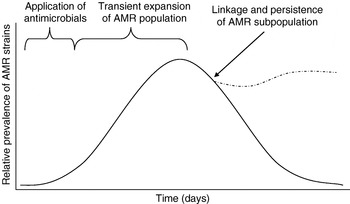
Another possibility is that antimicrobial traits become, on occasion, linked to other traits that offer niche-specific selective advantages (Fig. 1). Under this scenario, transient increases in the proportion of AMR bacteria result in an increased probability for a genetic event that links AMR genes with locally selective fitness traits. In the case of studies by Khachatryan et al. (Reference Khachatryan, Hancock, Besser and Call2004, Reference Khachatryan, Besser, Hancock and Call2006a, Reference Khachatryan, Hancock, Besser and Callb, Reference Khachatryan, Besser and Call2008) this appears to be linkage between SSuT genes and the ability to outcompete non-SSuT strains when calves consume a simple milk supplement. There are probably numerous other linkages of this type in cattle populations, but unlike linkage to genes that confer an advantage in a negative selection regime (e.g. antimicrobials and heavy metals), the linkage events for the heuristic model described herein (Fig. 1) would be better characterized as ‘positive selection’ traits. Linkage leads to better survival, but there is nothing to suppress competing flora that do not harbor the better fitness trait. Positively selected traits are much harder to detect empirically than negatively selected traits. Another hint in support of the validity of this model is the observation that stressed animals frequently shed higher rates of AMR bacteria (Moro et al., Reference Moro, Beran, Hoffman and Griffith1998, Reference Moro, Beran, Griffith and Hoffman2000; Langlois and Dawson, Reference Langlois and Dawson1999; Mathew et al., Reference Mathew, Arnett, Cullen and Ebner2003). Stress by itself is unlikely to be related to AMR, but in some cases (e.g. during shipping) it might speed fecal motility and provide more opportunity to excrete AMR bacteria from limited niches in the gastrointestinal tract. This could occur if there are small subpopulations of bacteria that are adapted for local niches within the gastrointestinal tract as suggested by Catry et al. (Reference Catry, Dewulf, Goffin, Decostere, Haesebrouck and De Kruif2007). Those AMR bacteria are likely to be present at all times, but only detectable in this case because motility increases the likelihood that these strains are excreted in numbers high enough to detect. While this is a heuristic model (Fig. 1), it would explain the discontinuities between prevalence of AMR organisms in the absence of antimicrobial selection pressures.
A heuristic model illustrating how antimicrobial selection pressure leads to transient expansion of AMR subpopulations within individual animals. Over time these antimicrobial induced population expansions abate and the relative proportion of AMR subpopulations decline. Expanded populations also increase the likelihood of a genetic event whereby an AMR gene is linked to some other trait that confers a niche-specific fitness advantage in the host animal. When this latter event occurs, there is a long-term relative increase in the baseline prevalence of the AMR subpopulation that harbors this selective linkage.

While there is no immediate way to test this model, it lends support to many of the ideas that have been advocated for reducing AMR bacterial loads in cattle. This starts with prudent use of antimicrobials that subsequently reduces the opportunities for selective linkage events (Fig. 1) and reduces the burden of AMR bacteria that might otherwise be carried to the consumer. Prudent use means limiting antimicrobials to only those cases where clear production benefits and animal welfare needs are satisfied. As Berge et al. (Reference Berge, Lindeque, Moore and Sischo2005b) found, addition of in-feed antimicrobials has the positive effect of reducing onset of morbidity, decreasing overall morbidity and increasing weight gain in dairy calves; nevertheless, the most important factor associated with these outcomes was passive immune transfer. Thus, colostrum management remains a key variable to reducing the need for therapeutic or prophylactic antimicrobial use in dairy calves. In a retrospective study of antimicrobial use after termination of growth promoter use in Denmark, Norway and Sweden, Grave et al. (Reference Grave, Jensen, Odensvik, Wierup and Bangen2006) found a decrease in overall annual usage of antimicrobials so it is possible that either the antimicrobials were not needed or adaptive management compensated for their loss. Other obvious and important steps that can be taken include tighter biosecurity to prevent introduction of both pathogens and new AMR strains in a herd.
We will eventually discover more selectively advantageous traits that increase the fitness of commensal bacteria in cattle and with this knowledge we could engineer ‘probiotics’ that include these fitness traits without AMR genes. These probiotics could be used to colonize niches that would otherwise be colonized by AMR strains. Finally, it might be possible to enhance the fitness cost for harboring resistance genes and by doing so AMR bacteria would be less competitive against antimicrobial susceptible bacteria. For example, tetracycline resistance conferred by tet(A) or tet(B) is very common in cattle. These two genes that encode efflux pumps are very frequently associated with a repressor gene, tet(R), that prevents expression of the efflux pumps in the absence of tetracyclines. It may be possible to include a non-antimicrobial feed additive that shuts-off the activity from the repressor and allows expression of the efflux pumps in the absence of tetracyclines. Presumably, this would incur a higher fitness cost for the host bacterium and select for loss of tetracycline resistance genes. Because many cattle-associated multi-drug resistance plasmids include these tetracycline resistance elements, a strategy that increases the cost of harboring tetracycline resistance genes might concurrently eliminate other genetically linked AMR genes. It might also be possible to add a ‘plasmid-curing’ agent to select for loss of AMR plasmids in vivo (Shriram et al., Reference Shriram, Jahagirdar, Latha, Kumar, Puranik, Rojatkar, Dhakephalkar and Shitole2008). In the case of mastitis treatment, Gram-negative infections are often self-limiting so with rapid diagnosis, these animals can be isolated long enough for infection to clear without having to treat animals and deal with subsequent withholding periods (Sears and McCarthy, Reference Sears and McCarthy2003).
Summary
Reducing AMR in cattle populations may or may not have important public health ramifications, but given the uncertainty principle, all efforts should be made to reduce AMR populations in production environments. This can be a ‘win–win’ scenario because in the long-run, reducing AMR is also likely to help producers economically if morbidity and mortality are reduced with concurrent reductions in expenditures for antimicrobials, and because antimicrobial-free management systems have growing economic advantages as consumers become more informed about these issues. Transient selection, genetic linkage to niche-specific traits, and multi-factorial spatial and temporal variables contribute to the persistence of AMR in cattle production environments. A combination of careful management (colostrum, biosecurity, sick pen isolation, etc.) can reduce the need for antimicrobials and satisfy the prudent use principle. More creative tools may be available in the near future to enhance the inherent fitness cost of harboring AMR traits and a combination of all these strategies will probably be needed to reduce the overall burden of AMR bacteria in cattle production environments.
Acknowledgment
This work was supported in part by the Washington State University College of Veterinary Medicine Agricultural Animal Health Program.