Introduction
Bordeaux, the capital of Aquitaine, was known at the beginning of the previous century as one of the major European centers of the wine and pine industries (Paul Reference Paul1985, 6; Archives 11). While its famous wines have spread around the world, the pines are today nothing more than a curiosity of the city's rich natural and industrial heritage. The greatest existing French forest, la forêt landaise in the departments Landes and Gironde, is barely known to the wider scientific public, yet, throughout the twentieth century, the Pine Institute at the University of Bordeaux was a world-class research center in the field of resin chemistry (Bentejac 1996). Maritime pines are an abundant source of resin: a sticky substance made of terpenes and complex tricyclic acids. Resins were exploited for hundreds of years and used in shipyards for caulking the hulls of wooden ships and tarring the ropes (Langenheim Reference Langenheim2003, 306; Outland Reference Outland2004, 7). But the true days of glory for pine resins came in the pre-World War I era, when their derivatives were included in the compositions of many more sophisticated products, such as paints, varnishes, road coatings, paper size, synthetic camphor, adhesives, perfumes, oils, and even fuels (e.g. Speh Reference Speh1939; Langenheim Reference Langenheim2003, 301). Yet this rapid growth in the number of possible applications was threatened by competition from the rising and versatile petroleum industry. Under the circumstances, the resin-producing companies had to resort to science to enlarge their potential market outlets and to enhance the quality of the existing resin products. The Pine Institute in Bordeaux, whose history spans the years 1900 to 2010, was an international industry-funded research institution pushing forward the boundaries of resin chemistry. By gradually discovering the surprisingly complex composition of resins (which varies not only among different pine species but also among individual trees) and by crafting new products and resin distillation procedures, it greatly contributed to enriching our global pool of knowledge and techniques. The Institute's directors, such as the Dean of the University of Bordeaux, Georges Brus, and the future French Minister of Research, Jacques Valade, were among the most influential people in the French scientific world. Nevertheless, despite the Institute's incontestable contributions to the development of the French resin industry, in the 1970s this millennium-old trade started disappearing from France, mainly because of low labor costs in developing countries such as Portugal, Mexico, and China (Zinkel and Russel Reference Zinkel and Russel1989, 41). As a result, the Pine Institute had to move towards wood-related research.
At first glance, this narrative may sound classical – a new field of industry requires the assistance of science to become more sophisticated and to conquer new markets. Science provides the answers, and for years the two contributed to one another's growth, until the moment comes when some external economic factors disturb this prolific relationship. Inside this narrative it may even be argued that perhaps if the industry were more courageous and invested more willingly in research, it would have survived. And yet, we claim that the history of the Pine Institute is much more nuanced and defies the existing innovation paradigm that we take for granted.
Science and the Economy
The modern innovation paradigm has two essential parts. The first was probably expressed most skillfully by the famous French chemist and pioneer of microbiology, Louis Pasteur: “Science is the soul of prosperity of nations and the living source of all progress” (Pasteur [1876] Reference Pasteur and Valery Radot1927). It is almost banal to state today that prosperity in developed countries was made possible by the development of science and technology. Pasteur's words have been emblematic for entire generations of scientists for more than a century all over the world. They inspired explicitly American nuclear physicists in the wake of the Cold War (Compton Reference Compton1948, 376), as well as contemporary Pakistani social scientists (Aftab Reference Aftab2008, 3) and Spanish science policymakers (Garcia Reference Garcia2014). But in an implicit way, the idea became ubiquitous also among politicians and the general public after the famous Vannevar Bush's speech “Science, the endless frontier” (Bush Reference Bush1945). If science is so essential to economic and social progress, a curious spirit may wonder how to cultivate it and make it grow in order to secure the prosperity of future generations. Fortunately, a few decades after Pasteur, another great Frenchman, Henri Poincaré, provided an essential hint: “Science needs money” (Poincaré Reference Poincaré1904). If Pasteur and Poincaré were right, we are lucky indeed. Science-founded knowledge-based economies are supposed to grow almost indefinitely according to the new growth theory (e.g. Cortright Reference Cortright2001; OECD 1996). Non-rival, intangible goods resulting from human creativity (e.g. United Nations 2008) and innovation (e.g. Rosenberg Reference Rosenberg2004) continuously increase the general wealth. The share of intangible capital in the companies’ assets has quadrupled only during the last 30 years (Tomo Reference Tomo2015). If economic growth can be indefinite, then investments in research and innovation should also grow indefinitely. In other words, science feeds prosperity and prosperity feeds science: thus a virtuous circle of innovation is established. Prosperity implies peace and healthy competition and makes innovation possible. In return, innovation contributes to prosperity. The more we invest in science, the more science gives us back.
This direct correlation between scientific progress, technological development, and economic change was baptized by some as “linear model of innovation” (see for example Stokes Reference Stokes1997 on the relationship between Pasteur's ideas and the linear model; also Godin Reference Godin2006). Even though the concept was criticized as never truly reflecting the mindset of policymakers (Edgerton Reference Edgerton, Grandin, Wormbs and Widmalm2004), the general link between scientific discoveries and economic prosperity is a truism today. Contemporary economic studies leave no doubt regarding the link between the number of published scientific articles and the gross domestic product of a country (Meo et al. Reference Meo, Al Masri, Usmani, Memon and Zaidi2013; Lopez-Carlos Reference Augusto2010, 155; Vinkler Reference Vinkler2010, 237). There is an optimistic simplicity in this vision of progress, in which science benefits from its own fruits and improves the global economic situation. The question we ask today is not whether we should invest in research, but how to manage funding priorities in order to obtain the highest return. Entire academic fields such as innovation studies (Fagerberg Reference Fagerberg2013) or the science of science policy (e.g. Office of Science and Technology Policy 2008; Bozeman and Sarewitz Reference Bozeman and Sarewitz2007) are built upon this positivistic paradigm of innovation oriented towards optimization of expenses towards the desired goals.
Some historians of science tone down this perspective by pointing out that military conflicts can also be profitable for the development of scientific disciplines and new technologies (e.g. Hughes Reference Hughes2003). Science and innovation feed not only on economic prosperity but also on war and on prolonged political struggles (e.g. Oreskes and Krige Reference Oreskes and Krige2014; Hounshell Reference Hounshell2001). Atomic energy, rockets, and computers did not emerge in normal economic conditions but were made possible thanks to army-driven investments. One could perhaps even argue that conflicts are much more prolific for techno-scientific growth than is a prosperity-based economy.
And yet there is one more social phenomenon whose impact on science remains ambiguous: economic crises. After the financial crisis struck Europe in 2007, the European scientific community faced a lack of jobs (Mintz Reference Mintz2009; Stafford Reference Stafford2014) and shrinking funding (Alok Reference Alok2010). Thanks to a carefully constructed rhetoric arguing that research is the way out of the crisis, scientists successfully defended some of the EU budgets from being cut (Tindemans Reference Tindemans2015). Let us leave aside the question of whether the recent difficulties in science funding have truly resulted from the depression or rather constitute an inevitable consequence of wrong assumptions proper to our economic system. It begs the question, though, whether there are any data confirming that economic crises are effectively bad for science. Deeply entrenched in the paradigm of continuous innovation associating economic growth with scientific progress, we may tend to assume that the answer is obvious and we may overlook some ambiguities of this narrative. A period of economic difficulties can stimulate research, as happened in the case of the British laboratories trying to save the traditional indigo blue industry in colonial India from the rise of the synthetic dye (Kumar Reference Kumar2012). Inversely, a period of prosperity and economic security can slow down knowledge diffusion and research, which happened, for example, to agricultural chemistry under the Second Empire in France (Jas Reference Jas2000, 54). However, there are no specific case studies examining this phenomenon in detail. This article fills this gap by presenting an example that casts a shadow of a doubt on the traditional perspectives of the relations between science and economy. The Pine Institute's history seems to defy the existing innovation paradigm and shows that, at least under certain circumstances, the economic troubles of a localized industry may contribute to the development of the discipline that drives it.
From the methodological point of view, we will make use of two concepts: sociology of expectations and local production systems. Sociology of expectations provides some introductory elements. “Expectations and visions [. . . play a central role in mobilizing resources both at the macro level for example in national policy through regulation and research patronage, and at the meso level of sectors and innovation networks, and at the micro-level within engineering and research groups and in the work of the single scientist or engineer” (Borup et al. Reference Borup, Brown, Konrad and van Lente2006, 286). My ambition is to explore how these expectations may affect especially the “meso” level, which we will define through the concept of the “local production systems” or “industrial districts” (Daumas et al. Reference Daumas, Lamard and Tissot2007; Crouch et al. Reference Crouch, Oliver, Hearle, Buckley, Chapman and Francis2000), clusters of small enterprises in a clearly defined geographical zone, rooted in a specific social, cultural, and natural environment. In our case, we will examine the local production system of the forest of Landes which financed the activities of the Pine Institute until the 1970s.
1. Golden age or prelude to a crisis? The origins of the resin industry and resin chemistry in Aquitaine (until 1918)
In order to understand the controversy surrounding the Pine Institute, it is necessary to retrace its origins, which are inextricably linked to the economic history of la forêt landaise. Our story takes place in the departments of Landes and Gironde in Aquitaine, near the famous city of Bordeaux. By the end of the eighteenth century both departments regions were covered by desert-like wastelands inhabited by scattered communities of shepherds. The land was not barren though: on the one hand, small islands of pine forests provided the shipyards of Bordeaux with tars and other resinous products; on the other hand, the local agro-pastoral system was self-sufficient, with sheep being a major source of revenue (Sargos Reference Sargos1997, 66). Nevertheless, the local elite, inspired by Saint-Simoniste ideas of progress, dreamed of entirely reconfiguring the panorama of the region. The local landowners believed that the only way to deal with the inhospitable marshes and deserts of Landes and Gironde, also called the French Sahara, was to cover them entirely with prosperous resin-producing pine forests that would potentially be useful for both the French navy and the emerging paint and varnish industry. This zeal for forestation was not uncommon during this period in France, with figures such as François-Antoine Rauch (1762-1837), father of French ecology, who particularly insisted on the ecological and economic importance of forests (Fressoz and Locher Reference Fressoz and Locher2015).
In the 1850s, Napoleon III, the French emperor, visited the region and introduced a set of legal measures aiming to accelerate the forestation process (Sargos Reference Sargos1997, 310). Still, the people of Landes were much less eager to share the enthusiasm of both the ruling class and the huge forest investors. Unlike land used for herding sheep, a forest needs at least twenty years before it will bring tangible profits. Thus the local communities either opposed forestation entirely or opted for more mixed long-term forms of transition. The situation changed drastically in 1861, after Abraham Lincoln ordered the Continental Blockade in the first days of the American Civil War. North Carolina, South Carolina, and Georgia had for years provided both the emerging German chemical industry and the British Navy with the so-called naval stores, i.e. resinous products extracted from pine trees (Outland Reference Outland2004, 46). The blockade accelerated the reforms that had been initialized in the 1850s by Napoleon III in France. The inhabitants of Aquitaine wanted to profit from the exorbitant prices that resinous products yielded and became involved more willingly in the management of the existing forests and in the plantation of new trees. In parallel, local communities massively sold their lands to huge forest investors. While the pine forest in Landes and Gironde covered only 100,000 hectares at the end of the eighteenth century, by the beginning of the twentieth century the surface of la forêt landaise had grown ten-fold up to almost one million hectares, and the resin industry became the driving force of the local economy (Sargos Reference Sargos1997, 501). A new “local production system” was formed with a complex network of relations between distillation plants, forest owners, forest workers, and distributors.
However, the fruits of this transformation were bitter. After the end of the Civil War, intercontinental trade was re-established. Prices fell dramatically, the promise of prosperity was not fulfilled and the whole region was struck with a severe economic crisis. The chief of the turpentine farmers’ union, Groc, wrote in the 1930s that “The inhabitants of Landes of Gascogne, after having lived for centuries in conditions close to misery, experienced suddenly in 1860, during the American Civil War, a year of exceptional prosperity, prosperity that was, alas!, ephemeral” (Groc 1931). Unfortunately for the local population, after the war it was already too late to turn back and give up the reforms. The property structure in Landes and Gironde had changed, and owners of huge forests continued the forestation projects, hoping to profit from pine resin in the long run. The Landais and Girondins, struggling to survive, had no other choice than to accept the new forest jobs and to hope that prices would increase on the global markets.
Alexandre Léon, member of the general council of Gironde, in 1872 became aware of the scope of the crisis and of the potential solutions, when he launched an appeal to the local chemists to solve the industry's difficulties: “I demand, in the name of Landes, that science come to us to study resin extraction methods, to examine our fabrication techniques, and to find as soon as possible either a means to stop the coloration of our products, or a means for their discoloration” (color being one of the determining factors for the price of many naval stores) (Archives 12, 4). The Faculty of Sciences of Bordeaux refused at this time because there were too few chemists, and there was no way to forge cooperation with the industry at the existing level of funding without neglecting activities in teaching and fundamental research (Paul Reference Paul1985, 201). As a consequence, the industry had to wait almost 30 years before resins found their place behind the university walls.
At the end of the nineteenth century the French government introduced a series of reforms to construct bridges between academia and industry (Shinn Reference Shinn1980, 625). This trajectory was paralleled by a new wave of initiatives aspiring to reinvent agricultural research in France along practical lines (Jas Reference Jas2000, 395). The intellectual climate changed as well and the most eminent researchers at the Faculty of Sciences of Bordeaux, such as Pierre Duhem, also called for weaving closer ties between universities and the industrial world (Duhem Reference Duhem1899). A whole range of institutions reuniting two realms sprang up in the region during this period (Nye Reference Nye1986, 204). It was precisely at this moment that local entrepreneurs called the Faculty for assistance once more. Despite the promises of prosperity, the post-Civil War crisis continued and the prices of turpentine spirits, which was the major product of resin distillation, fell from 245 francs for 100 kg in the middle of the Civil War to 53 francs in 1879, and then to 42 francs in 1896. They increased to up to 95 francs in 1900, but only to fall one more time in 1901 to 55 francs (Barraud Reference Barraud1931, 13:3). The inhabitants of the region were aware of the scale of the crisis. In 1901 the local journal, Petite Gironde, deplored the disorganization of the local industry, and some commentators even expressed their disbelief in the possibility of a recovery: “The situation is disastrous in Landes, misery is growing, people emigrate, and soon no more turpentine farmers will be left” (cited in ibid., 13:2). In this intellectual atmosphere, Maurice Vèzes, professor of mineral chemistry at the University of Bordeaux, answered the call.
In 1900 he opened the Laboratory of Chemistry Applied to the Resin Industry at the Faculty of Sciences of Bordeaux (Paul Reference Paul1985, 201). Its goal was to disseminate knowledge on resin distillation technology, to analyze counterfeited turpentine in litigations and, most importantly, to conduct research in the field of resin chemistry to help the local industry fight the crisis. Pine resin, after being extracted from trees in the primitive process of “tapping” pines, is distilled into two substances: first, volatile turpentine spirits made principally out of terpenes (alpha and beta-pinene), and, second, solid rosin, which is a complex mix of tricyclic resin acids (for a general overview on resin chemistry, see Vèzes and Dupont Reference Vèzes and Dupont1924; Howes Reference Howes1949 and Langenheim Reference Langenheim2003). Turpentine's immediate use was as a thinner in the paint and varnish industry, but it had the potential to become an extremely valuable product thanks to its derivatives which were used for the production of perfumes and of synthetic camphor. Rosin, which had been valueless for years, from the beginning of the twentieth century entered into the composition of many elaborate products, such as road coatings, paper size or black ink, and its prices also slowly increased. The second huge research discovery relevant to resin chemistry throughout the twentieth century was the elaboration of more and more sophisticated methods of cleaning and distilling pure resin. Traditional and primitive techniques often resulted in impure and overheated products of very low value. The ambition of the resin chemists was to develop modern, safe, reliable and inexpensive stills, ideally using continuous distillation, to separate different components of resins more and more precisely. Both of these research goals were addressed by the Laboratory of Maurice Vèzes and its successor: the Pine Institute.
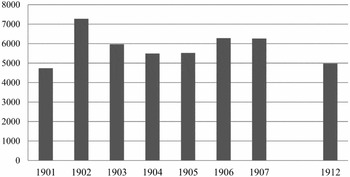
In a certain way, the history of the laboratory's establishment questions the traditional view that the hierarchy between pure and applied science in the French provincial universities was unwavering at the beginning of the previous century (Pestre Reference Pestre1988, 81) and that the faculty staff was somehow more attached to the principles of disinterested research. On the contrary, the Laboratory of Resin Chemistry Applied to the Resin Industry proudly announced its “applied” character as something desirable. It “sold” this feature to those who were facing economic distress. Interestingly, even though hosted inside the university buildings, the laboratory of resin chemistry was financed directly by the local communities. In 1903 its budget was about 6000 francs, with almost two-thirds coming from the communes and of Landes and Gironde. The rest came from individual companies and chambers of commerce (Vèzes 1905). The entire local production system was involved in funding research on resins.
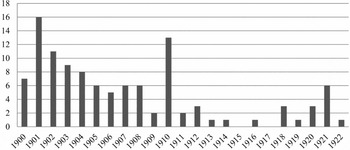
No full data are accessible, but we can clearly see a certain stability in funding between 1902 and 1907 (see fig. 1). The budget shrank in 1912 though. In fact, when taking inflation into account the fall is even more pronounced: the budget in 1912 was equivalent to only 4308 francs from 1907.Footnote 1 In other words, the budget fell by 32 percent from 1907 to 1912. Is this an exceptional outlier or a part of some larger tendency? The publication rate of Maurice Vèzes seems to confirm the second possibility (see fig. 2).
Budget of the laboratory of Professor Vèzes in francs. (Source: compiled from Vèzes, Maurice. Le rapport du fonctionnement du laboratoire de la chimie appliquée à l'industrie des résines, years 1901 – 1908, 1913.)

Publications of Vèzes 1900 - 1922. (Source: Anonymous. 1935. Bulletin de l'Institut du Pin 2: 31–37.)

The first years were the most prolific. Vèzes published numerous articles that gathered information on foreign industrial methods and techniques. This was not necessarily original research, strictly speaking, but rather a general introduction to the problems proper to resin chemistry and the resin industry. Nevertheless, the publication rate seems to have stabilized between 1905 and 1908. On the other hand, the second decade was completely barren, with only 1.5 articles per year. What is the reason for this sudden decrease? It seems that the broader social and economic context explains both the shrinking number of publications and the exceptionally low budget in 1912.
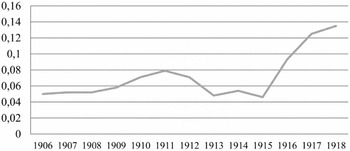
From 1891 onwards a series of violent strikes shook the region. The tensions between the poor forest workers and the forest owners transformed into a ferocious struggle with mortal victims. The forest workers accused the landowners of unjustly distributing profits from the resin trade and of profiting from the misery of the local population (Alquier Reference Alquier2009, 6). Moreover, this social conflict mirrored the political cleavage in the region that existed between the Catholic labor and the republican, secular upper class. Its culmination took place in 1907 and in 1908, with a forest-wide workers’ uprising paralyzing the entire resin industry (ibid., 84). However, the violence was not fruitless for the local workers. They succeeded in advancing their postulates and new, more equal, benefit redistribution measures were introduced. Exactly at the same time, resin prices started growing on international markets, with a surge of 25 percent between 1908 and 1911.
The general well-being of the populations of Landes and Gironde improved considerably over this period (see fig. 3). The years 1912–1915 brought some new price fluctuations, but these ended with the beginning of World War I. Resin was an important consumption good for European armies and intercontinental trade was threatened again. As a consequence, prices rocketed sky-high, beating previous records. World War I was later considered the “golden age of prosperity” for the French resin industry (Barraud Reference Barraud1931, 13:2).
French gum resin price, US dollar/liter. (Source: adapted from Woolset, Theodore S. 1921. “Conservative Turpentining by the French: The Methods Pursued in France, Algiers and Corsica.” In Naval Stores History, Production, Distribution and Consumption, edited by Thomas Gamble, 175 (Savannah: Review Publishing & Printing Company.)

This story reveals an intriguing paradox. The laboratory of Maurice Vèzes was established in order to fight the economic crisis, but in the 1910s social unrest ended and prices went up. The crisis was over and the laboratory lost its raison d’être. There was no more incentive for investing in science, and local communities were less interested in contributing to research and development, which seemed to be irrelevant to their wealth. As a consequence, the laboratory's budget shrank, and Vèzes did not have enough funding to conduct his own research.
2. Selling hope: the Pine Institute in the interwar period (1918-1939)
Despite the laboratory's marginalization, local chemists were convinced that their discipline was crucial for successful development of the industry in the region in upcoming years. They deplored France's dependence on foreign end-product producers. A young graduate of the famous Parisian Ecole Normale Supérieure, Georges Dupont, thundered in 1921: “Considering [turpentine spirit and rosin] whose immediate uses are very limited, we have realized that they were most often exported to Germany. . . . We have no reason to leave to the Germans the benefits of this industry!” (Dupont Reference Dupont1921, 15:31). Dupont wanted Aquitaine to possess its own chemical synthesis industry by using the riches of la forêt landaise. Alongside Maurice Vèzes he campaigned for the establishment of a new scientific industrial center: the Pine Institute. Its goal would be to conduct basic and applied research on resins, to disseminate knowledge as well as to engage the local community in the understanding of the everyday technical difficulties resin companies have to face (Dupont Reference Dupont1921). The Pine Institute was supposed to be much more than a simple university laboratory – it aspired to reunite local companies, end-product industries, and chemists into a single organism coordinating the development strategy for the entire resin industry in Aquitaine. It is worth noting that Dupont appealed to a presumed “retard agricole” of France compared to Germany, although we know today that this narrative suffers from numerous weaknesses (Jas Reference Jas2000). It was, above all, a rhetorical tool deployed to mobilize potential stakeholders to contribute to the funding of a new organism.
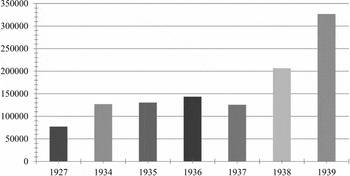
In 1922 the “Pine Institute” Association was launched. Comprising representatives of regional enterprises, it financed the functioning of the renewed resin laboratory of Maurice Vèzes, which became the official laboratory of the Pine Institute. Its budgets grew continuously from 1927 to 1939 (see fig. 4). Moreover, it should be noted that the official budgets did not include punctual material acquisitions; for example, in 1929 the French forestry agency rented to the Pine Institute a huge, fully equipped forest laboratory in Pierroton near Bordeaux free of charge (Dupont Reference Dupont1932, 27:50). Furthermore, even though the laboratory comprised in the 1920s and 1930s only about five permanent chemists, the number of doctoral students funded independently by the University rose to include 17 people in 1927. These numbers indicate that the Pine Institute was a crowded and extremely busy institution during this period. Its researchers were pioneers in the study of the impact of harvesting methods on turpentine composition (Barraud Reference Barraud1927), of financially rewarding synthetic camphor production (Dupont Reference Dupont1925, 13:133-140), or of sodium resinateFootnote 2 applications (Uzac Reference Uzac1926, 24:373-374). The Institute's scientists were cherished in 1930 by the American chemists from the USDA Bureau of Chemistry as the most important actors in shaping the discipline of resin chemistry:
the bulk of general systematic research on the subject of turpentine resin in all its phases has come and is coming from the French Pine Institute Laboratory work . . . and to the Pine Institute chemists has fallen the task of correlating, coordinating and summarizing the accumulated information, which, if it were not for their careful and painstaking literature treatment, would be a mass of confusion. (Archives, 9)
Pine Institute's budgets in francs, adjusted by inflation prices in 1927. (Source: compiled from the activity reports of the Pine Institute from the years 1927, 1934–1938, 1941.)

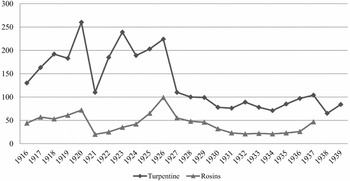
At first glance, this would confirm our initial expectations regarding the relationship between scientific progress and economic prosperity. With the growing funding the Pine Institute was able to conduct more and more cutting edge research which, in return, contributed to the growth of the local companies. The local industry, profiting from the Institute's expertise, was thus willing to invest even more money into research. A seemingly virtuous circle of resin innovation was established. And yet the economic data contradict this narrative (see fig. 5).
Evolution of resin products prices in francs, adjusted by inflation prices in 1916. (Source: compiled from the journal Bois et Résineux, years 1927 – 1939.)

The plot reveals many interesting phenomena. First, there is some turbulence in 1921, i.e. an abrupt fall in prices. This fall coincides with the establishment of the Pine Institute at the beginning of 1922. It seems that after years of economic growth, paralleled by the degeneration of the redundant resin laboratory, 1921 was the year of a sobering shock to the resin industry which realized that its well-being was not unconditional. Georges Dupont and Maurice Vèzes succeeded, in 1921, in convincing a sufficient number of investors that the Pine Institute was necessary in order to avoid future crises, even though this was a mere rebranding of the existing resin chemistry laboratory. They “sold” their expectations about the future results of the research and the resin companies “bought” their security by investing in the Pine Institute. However, the 1921 crisis was short-lived. The economic situation was considerably better starting from 1922 and it seems that the local actors had lost interest in science in the first half of the 1920s. In 1927 (the budget being based on 1926 conditions), 40 percent of the Pine Institute’ funds came from the Office National des Combustibles Liquides and Chemins de fer de France, public institutions that were not connected with the local resin industry (Dupont Reference Dupont1928, 46:49-54). Without them, the future of the Institute would have been called into question. The Pine Institute had to move in these years towards research on wood carbonization techniques or ‘wood alcohol’ synthesis, topics that were of interest to public authorities hoping to synthesize carburant national, a national, affordable fuel that would compete with petroleum (Roux Reference Roux1930, 73–81). This work had nothing in common with the Institute's original mission but it was the only way to provide subsistence to its chemists. In other words, the Pine Institute would not have been able to function without external investors, since the resin-producing companies and local communities were not convinced of the necessity of research in the field of resin chemistry.
However, in the same year, 1927, the most severe crisis, this time permanent, struck the resin industry in Aquitaine. From this moment on, the budgets of the Pine Institute were steadily growing with an even more astonishing upsurge in 1938 and 1939 (Brus Reference Brus1939, 53–54:85-90). What happened? The voice of desperate local forest workers and small still owners was finally heard in Paris, and the government decided to intervene directly in the region. The time was ripe for this kind of initiative. Stirred by the political tensions in Europe, French policymakers were eager to support collaborations bridging industry and academia at the end of the 1930s (Shinn Reference Shinn1980, 629). The establishment in 1937 of the Centre National de la Recherche Scientifique Appliquée was probably the most important science policy decision from this period. But the Parisian officials did not neglect the small scale local efforts to stimulate applied research. Also in 1937, the French Ministry of Agriculture created a special fund of 100,000 francs to finance research in the field of resin chemistry, the entire amount being distributed to the Pine Institute in Bordeaux (Brus Reference Brus1937, 27:2).
Of course, all of this did not happen on its own. The Pine Institute's chemists were strongly involved in campaigning and lobbying for recognition of their importance. In 1930, the editor-in-chief of the most widespread regional journal, Bois et Résineux, André Bodin, in an article titled “Crisis of resin products: first remedies” insisted on the necessity of attributing “an important subvention to the Pine Institute” in order to facilitate the discovery of new applications (Bodin Reference Bodin1930, 1). In 1931, the chief of the turpentine section of the Institute, Marcelle Barraud, affirmed on the pages of the same journal that the Landes forest was a “considerable wealth” and that “the progress of science will allow [us] to exploit it rationally, to preserve it and to live from it” (Barraud Reference Barraud1931, 1). The next year Marcelle Barraud repeated: “basic research is the foundation of the modern resin industry” (Barraud Reference Barraud1932, 1). Also in 1932 Pierre Maydieu, the local industrial leader and a member of the Pine Institute Association, evoked rhetoric identical to the one that had been used by Georges Dupont ten years earlier: “These are foreigners, Germans especially, who knew how to profit from the derivatives of turpentine spirit and of rosin. . . . France is lucky to have raw materials, but she was not perseverant enough to conduct well the manufacture of end products” (Maydieu Reference Maydieu1931, 1). How was this problem to be solved? “We have to make the laboratory [of the Pine Institute] thrive; we have to provide it with all the necessary resources so that the turpentine and rosin-based end products will be manufactured here” (ibid.). The director of the Institute, Georges Dupont, explained in 1931 that an end to the resin industry would be “disastrous” to the entire region, as, according to him, the Landes forest could not survive and it would disappear if it were not carefully maintained (especially in the context of fire prevention). And it would not be maintained if resin-extracting forest workers abandoned it. “Giving up [on the resin industry] would mean returning to the ancient state of the land: one million hectares of pestilent swamps and moving dunes, and Bordeaux, the region of great wines, would be threatened by the invasion of sands once more” (Dupont Reference Dupont1931, 1). According to Georges Dupont, investing in the Pine Institute was not only necessary in order to maintain 20,000 families working in the resin industry, but also to preserve the entire region from an imminent economic and environmental catastrophe.
This carefully elaborated narrative turned out to be very efficient. In 1934, Bois et Résineux announced in strong terms: “The future of resin products is in science” and argued that to end the crisis “it is necessary to form men of science, experienced and knowledgeable technicians farseeing and courageous . . .; to provide this intellectual elite which will be entrusted with the mission of defending the Forest of Landes . . . with fully equipped scientific laboratories” (Bois et Résineux 1934, 1). How? Bois et Résineux left no doubt in the article “To fight the crisis – teaching tax to the Pine Institute.”Footnote 3
By 1939 the budget of the Pine Institute was not only three times larger than in 1927, but it was almost entirely funded by the local industry or by the state that was aiming to save it, while in 1927 the share of the local industry was only slightly above 50 percent. It is worth mentioning that in the 1930s money came not only directly from subventions and donations but also from service fees. Quite a few manufacturers in Landes diluted resin products with low-quality petroleum solvents, hoping to reduce the final production costs. In response the Institute charged for the control of conformity of the turpentine and rosin samples to legal and trade standards in order to detect any fraudulent practices (Barraud Reference Barraud1930, 7:147). In fact, French national, legally binding standards concerning turpentine were elaborated by the Institute's researchers themselves.
The Pine Institute thrived, not despite the misery in the region, but thanks to it. On the one hand, the economic crisis made the locals more willing to listen to the Institute's chemists advertising the power of scientific thought, which was supposedly capable of bringing the industry back to its former glory. On the other hand, the low prices encouraged fraudulent practices, thus questioning trust in trade relations and making the Institute an important player in shaping the standards and assuring the quality of the resinous products. In other words, the crisis perpetuated social patterns inside the local production system of Landes that strengthened the position of resin chemistry in Bordeaux. Interestingly, even though the provincial faculties of science in France somewhat faded in general during the inter-war period (Pestre Reference Pestre1984; Pestre Reference Pestre1988, 81), the Pine Institute not only resisted the general trend, but continued to grow precisely thanks to its entanglement with the local economy that was struggling with the economic crisis.
3. The vicious circle of progress and crisis: the Pine Institute in its industrial environment after World War II (1945-1970)
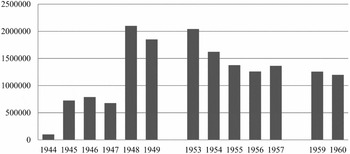
The impact of World War II on the Institute was ambiguous. Since Bordeaux was a part of the occupied area and the resin trade was strictly controlled by the Third Reich, the Institute's position was certainly more fragile during this period. On the other hand, Marshal Philippe Pétain sanctioned, under the Vichy regime, the Union Corporative des Résineux (U.C.R), which was a monopolistic structure of forest workers, forest owners, resin producers and resin traders (Bois et Résineux 1940, 1). In a single organism were united all the actors representing the local production system. One of the major missions of the U.C.R. was to provide funding for scientific research on resins, and it funded the Pine Institute abundantly. Thanks to its contributions, after World War II the Institute became richer than ever (see fig. 6).
U.C.R. donation to the Pine Institute, adjusted by inflation of prices in 1944. (Source: compiled from the journal Bois et Résineux, years 1939 – 1970.)

In 1948 the total budget of the Institute rose to 16,250,000 francs, with U.C.R. subvention accounting for about 80 percent (Archives, 3). For comparison, the famous physics and electrostatics laboratory of the future Nobel Prize winner Louis Néel in Grenoble had a budget of 4,500,000 francs and six permanent researchers (Teissier Reference Teissier2014, 116; see also Pestre Reference Pestre1990). Certainly, in contrast to Néel's laboratory, which was entirely attached to the University of Grenoble, the Pine Institute had to cover the salaries of some of its employees from its own budget. Nonetheless, many of its 42 permanent collaborators were researchers and lecturers attached to and paid by the University of Bordeaux. In other words, in 1948 the Pine Institute was larger and richer than ever, and comparable with some of the best French laboratories. We can see that the subvention shrank considerably after 1953, but this was not the only source of money for the Institute. In 1956 Georges Brus, the new director of the Pine Institute and the Dean of the University of Bordeaux, explained that other subventions oscillated around 5 to 6 million francs, especially thanks to new collaborations that had been established with the paper industry (Archives, 5).
Over the same period the Institute continued its research, slowly moving towards terpene chemistry, polymers, and more and more sophisticated uses of resin acids. One of its important successes was the elaboration of an alternative resin fractionation procedure. Traditional resin production methods involved distilling raw resin into volatile turpentine spirit and solid rosin. In contrast to distillation, the new method allowed for the isolation of chemical compounds not transformed by heat, such as levopimaric acid (Archives, 4). It consisted in adding to purified resin sodium hydroxide that neutralized resinic acids. The solution could then be separated by decantation into resinous soaps and a terpenic mixture. Both substances could be fractionated consecutively into more sophisticated products, without overheating. This new procedure was supposed to revolutionize resin manufacture, thus opening it up to new markets. But Brus moved further, explaining that “without fractionation we get substances of mediocre quality . . . with no commercial future” (Archives, 3). He suggested that the current state of art in Landes and Gironde was obsolete and that without the Institute's technology the resin industry was doomed to fail. Another amazing achievement of the Institute was its cooperation with Laboratoire des recherches balistiques et aérodynamiques on rocket fuels from turpentine spirit (Archives, 7). The Institute's research contributed to the development of the first generation of French rockets and missiles, and to the establishment of the aerospace industrial complex in Aquitaine. Suffice it to mention that the rocket that put on the Earth's orbit the first French artificial satellite “Asterix” was fueled by turpentine spirit (Huwart 2002, 385).
Apart from the research, the Institute also continued to promote its activities in the local press. Even in 1948, the Institute's most successful year in terms of financing, Georges Brus wrote: “Unfortunately, this subvention [from the U.C.R.] is largely insufficient if the Pine Institute wants to approach basic research” (Bois et Résineux 1947, 1). Two years later he added: “We conduct our research with applications in mind. No one should believe it is too theoretical even if the applications are not immediately possible” (Archives, 3). In 1950 he explained “Scientific research always pays and . . . the expression ‘Knowledge is Power’ engraved on the pediments of some American universities is not an empty slogan” (Bois et Résineux, January 20, 1949, 1). In 1956 he deplored the fact that investment in resin science is not proportional to the wealth of the resin industry itself (Bois et Résineux, 1956, 1).
This narrative was coupled with the one about the economic crisis in Landes and Gironde. A short look at the press titles throughout the 1950s conveys the atmosphere in the region: “Why is the forestry region of Landes in distress?”; “The crisis of the Landes forest”; “The crisis of resinous products”; “Perspectives of crisis, perspectives of salvation”; “The end of crisis? Or the light of hope”; “An inevitable jump or the last chance.”Footnote 4 One of the most important local leaders, Charles Prat, wrote in the last article, in 1956, that “The manufacture of resin is in danger, we can even say, in mortal danger.” The economic data suggest that the situation was far from satisfying, and that it showed negative trends (Prat Reference Prat1956).
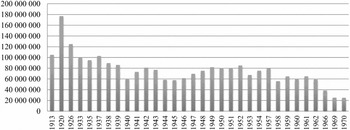
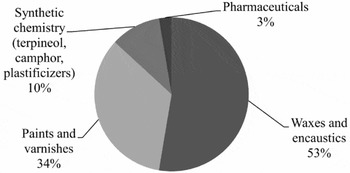
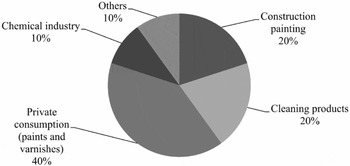
Even though a certain improvement is visible at the beginning of the 1950s in comparison with the immediate postwar period, the general trend leaves no doubt that the resin industry was shrinking (see fig. 7). France, being the second most important producer of resin at the beginning of the twentieth century, was completely insignificant, with less than 1 percent by the 1970s (Archives, 2). In 1945 there were 19 thousand forest workers; by 1970 there were only 4,400 of them, and their average age grew, respectively, from 46 years old to over 56. Why was the Pine Institute incapable of saving the industry? Let us have a look at the market structure of turpentine spirit (the more expensive of two resin products) in 1938 and in 1970 (see fig. 8 and 9).
Raw resin production in Aquitaine (in liters). (Source: compiled from the journal Bois et Résineux, years 1939 – 1970.)

Turpentine consumption in France in 1937. (Source: adapted from Sargos, Roger. 1938. “L'évolution économique de la forêt landaise.” Bulletin de l'Institut du Pin 45–46:182-202, 190.)

Turpentine consumption in France in 1970. (Source: adapted from Bentejac, Roger. 1970. La gemme, sa production, son utilisation. Pine Institute Archives, Box “Saint-Symphorien”.)

While the categories are not exactly the same, at least one conclusion is clear. The market for sophisticated products (synthetic chemistry and chemical industry respectively) did not grow. Turpentine spirit was used both in 1939 and in 1970 for the same purpose as in the nineteenth century, as a solvent for paints, waxes, cleaning products, and so on. The Pine Institute was supposed to diversify the offer by developing new products but it did not succeed in revolutionizing the consumption trends or opening new market outlets. The most striking example of this phenomenon was the Pine Institute's involvement in the work on rocket fuels (Archives, 7). Even though the project was extremely prestigious and the Institute advertised it in the local press as a game changer for the industry (Rusterholz Reference Rusterholz1961, 1), in the long run it revealed itself to be nothing more than a curiosity from the first years of the French space exploration program (see Huwart Reference Huwart and Vaisse2002, 375), and in terms of quantity it was a marginal outlet. Symbolically, rockets flying on turpentine were an extraordinary success and helped the Institute to formulate new promises and dreams on the verge of the space age. However, from the market point of view, this collaboration remained an insignificant event (Rusterholz Reference Rusterholz1964, 1).
Not only did the Pine Institute fail to create new market niches, but it did not transform the local industry either. The innovative fractionation technique advertised by the Institute in the late 1940s was never implemented in the region. Twenty years after the invention, at the beginning of the 1970s, the Institute still tried to present it as a potential revolution in its promotional materials (Archives, 10). What were the reasons for the failure? The industrial district of Landes was composed of small, often family-run, distillation units unwilling or incapable of implementing new expensive techniques. The producing infrastructure in France was not consolidated contrary to the one in United States of America where the number of distilleries had fallen from one thousand in the 1930s to about twenty in 1949 (Patton and McKennon Reference Patton and McKennon1950, 78). In the middle of the 1950s, even though France was producing only about three times less gum turpentine than the USA, it still had 77 distillation plants, most of which had not changed since the 1920s (Archives, 6). U.C.R. was more interested in preserving the existing power relations between different continuously conflicted stakeholdersFootnote 5 than in transforming the industry in a way that would stimulate development.
Another notable failure was the introduction of new resin extraction methods involving the use of sulfuric acid to improve yield (Brus and Legendre Reference Brus, Legendre, Champetier and Rabaté1956, 228). The French lagged behind the Americans in their implementation but the Pine Institute tried to adapt this technology to the local conditions. This time it met resistance on political grounds: the syndicates allied to the Communist party of France considered the new technique to be a symbol of capitalist oppression, concerned with improving the forest owners’ gains, not the forest workers’ salaries (Frie Reference Frie1956, 44). Even though the position changed subsequently, the technological gap did not stop widening.
Finally, in the 1950s the slow disintegration of the local production system commenced. The vast majority of French consumers instead of buying more expensive turpentine from the local producers, imported it from countries such as China, Portugal, or Mexico, where the labor costs were considerably lower in than in France. Pine tapping remained a primitive manual activity and the forest workers’ salaries corresponded to about 40–50 percent of the final price of raw resin (Bois et Résineux 1955, 1). France was not the only country who suffered from industrial delocalization. The American gum resin industry, despite being considerably more innovative, disappeared over the same period alongside with its scientific infrastructure. The US gum naval stores research station in Olustee (Florida) was closed in 1973 (Earley Reference Earley2005, 221). However, for environmental reasons,Footnote 6 France never developed a potential alternative: the so-called wood naval stores that allowed the US to preserve an important position on the resin market until the 1990s (Zinkel and Russel Reference Zinkel and Russel1989, 140).
As a consequence, the resin industry in France, once thriving and essential to the economy of the entire region, became obsolete and forgotten in the second half of the century. How did the Pine Institute face this decline? In 1964, after a long and strenuous lobbying campaign Georges Brus obtained a subvention of one million new francs from the Ministry of Agriculture, which was the equivalent of 32 million francs from 1948, in order to launch new research projects that were supposed to save the resin industry via the development of new products and applications (Archives, 8). In 1966, the budget of the Pine Institute amounted to 608,150 new francs, which corresponded to 18,496,877 francs from 1948. Let us recall that the budget in 1948 was about 16.25 million francs. In other words, the budget grew by 13 percent between 1948 and 1966, even though the resin industry that had funded it for years was in agony (Archives, 8). Not only that. In 1965 Brus complained that with the extended laboratory team, the existing buildings of the Pine Institute (860 m2) were too crowded. The Institute's team that year numbered nine chemical engineers, 14 technicians and four members of the administrative staff. This number does not include the students, lecturers, and other permanent collaborators profiting from the Institute's laboratories. Brus applied, inside the science-funding scheme of the 5th French economic framework (Ve plan économique), for 8,500,000 new francs to construct larger buildings (6000 m2) that would be able to host semi-industrial equipment, and to buy sophisticated laboratory tools such as a mass spectrometer.
In 1966 Brus modified his proposal to “only” five million francs. It was accepted and in 1970 the Institute moved to more spacious and modern buildings on the campus of the University of Bordeaux. Exactly during the same period the degeneration of the resin industry accelerated, and in 1970 it was on the verge of disappearing altogether. Curiously, even this year the Pine Institute did not change its tone in the official statements. “We all know that the production of resin is going through a severe crisis, but we should not believe that there is no hope. . . . We can trust that tapping of pines will survive thanks to the sheer number of research projects concerning derivatives and new resin-based products” (Archives, 2). How was the crisis to be fought? The solution was as simple as always: by investing in science.
Interestingly, in 1969 the director, Georges Brus, retired, convinced that there was no hope for the Institute with the industry falling apart. And yet the Institute survived. Brus was replaced by a young dynamic chemist and the future Minister of Research, Jacques Valade (Archives, 1). He reoriented the Institute towards wood and polymer research and fostered collaborations with non-resin companies. Even though the resin industry became marginal in the economic panorama of Aquitaine, the Pine Institute remained the heart of the region's scientific-industrial network for the next 40 years, almost until 2010. In other words, the Institute outlived the industry that had given rise to it.
Conclusions: Can Science feed on a crisis?
Let us briefly recapitulate the major points of our narrative. After a short upsurge in the 1860s during the American Civil War, the French resin industry plunged into a permanent crisis. At the beginning of the twentieth century, social and economic tensions became more and more pronounced, and to appease this dangerous situation the Faculty of Sciences of Bordeaux intervened and established a new Laboratory of Chemistry Applied to the Resin Industry with Professor Maurice Vèzes appointed as the director. The laboratory slowly took root in the local industrial environment, but when resin prices started rising, along with the forest workers’ salaries, the laboratory that was supposed to fight the crisis became redundant. Its budget and scientific production shrank. In 1921 an abrupt fall in prices sobered up the local community, which was more willing to hear the voice of a young chemist, Georges Dupont, who advocated the necessity of establishing the Pine Institute. Alas, with the return of high resin prices, the Institute seemed to slowly lose the support of the local industry which was less interested in funding science. The Institute struggled to find funding until 1927, when a new crisis, this time a permanent one, appeared. From 1927 onwards, resin production slowly but continuously diminished and the position of the resin industry in Aquitaine deteriorated. This decline became particularly steep in the 1960s, and the industry itself disappeared altogether in France in the 1970s. Over that same period the Pine Institute flourished, with budgets rocketing sky-high. The last days of the resin trade were the most prolific for the Institute. Desperate companies and forest workers lobbied the government which provided the Pine Institute with gargantuan sums in hope of saving the business by inventing new applications for resinous products. In the end the industry fell, but thanks to its scientific position, up-to-date equipment, and a young and dynamic team, the Institute survived and remained one of the key industrial players in Aquitaine until the 2000s.
What is remarkable, the inverse correlation between the Institute's funding and the industry's prosperity transgresses different periods. It is unrelated to broader national science policies before World War I, in the interwar period, under the 4th Republic or under de Gaulle. We argue that this long-term funding stability can be explained by the longevity of the “local production system” of Landes whose collective expectations made the Pine Institute possible. “Expectations are foundational in the coordination of different actor communities and groups” (Borup et al. Reference Borup, Brown, Konrad and van Lente2006, 286). When in the 1900s protesters rallied in the middle of la forêt landaise, the public authorities had already run out of conciliatory measures and a peaceful dialogue seemed unlikely. However, symbolically, science offered an unanticipated solution. Investing in a new laboratory was a tangible uncontroversial political action. Expectations surrounding techno-scientific progress allowed for the construction of a larger political platform made of local communities. Twenty-five years later the story repeated itself when a crisis struck Aquitaine once again. Otherwise competing companies were convinced that investing together in a university laboratory would bring beneficial results to all of them. Nevertheless, helping the Pine Institute was a sign of the lack of any other potential resolutions rather than the result of any long-term planning. The same logic pushed the U.C.R., representing the entire local production system, to fund resin chemistry. This is one of the key elements that contributed to the Institute's success: from the very beginning of its existence, the U.C.R., being a meta-syndicate of forest workers, forest owners, and resin producers, was a profoundly divided institution made up of hundreds of individuals. Internal struggles were pulling it apart and agreement regarding any other thoughtful policies capable of preventing aggravation of the economic situation was impossible. The only common policy that this fragmented community could agree on was the necessity of investment in science. “Expectations link technical and social issues, because expectations and visions refer to images of the future, where technical and social aspects are tightly intertwined” (Borup et al. Reference Borup, Brown, Konrad and van Lente2006, 286). Expectations about the Institute's supposed abilities to miraculously solve deeply buried economic difficulties and underlying social conflicts via technical solutions drove the emergence of fragile political and business alliances that funded first the resin laboratory and then the Pine Institute. However, precisely because of the incoherence of all these groups and lack of a common ground, these expectations were vague at best and hardly any accountability was possible.
What makes this account different from other similar narratives on expectations (e.g. Fortun Reference Fortun2001 on biotechnology or Selin Reference Selin2007 on nanotechnology) is that there was no moment of “dismay” or “toning down.” Their vagueness made the Pine Institute scientists capable of resuscitating hope with their promises multiple times. The Institute overrode disappointments with new promises. Let us recall the name given by Vèzes to his institution: the Laboratory of Chemistry Applied to the Resin Industry, clearly suggesting its “applied” profile. Twenty years later, Georges Dupont explained that the Pine Institute, contrary to the existing “university resin laboratory” (the full name being dropped by Dupont on purpose), would be application-oriented (Dupont Reference Dupont1921, 4). In 1960 the same rhetorical turn took place when the necessity of creating a new technical service was defended, as the Pine Institute was judged too “basic research-oriented” (Rusterholz Reference Rusterholz1961, 1). In other words, the Institute was continuously reinventing itself and trying to show that with new funding it would (finally!) be properly equipped to confront practical problems. But at the same time the Pine Institute never denied the importance of basic research in its communications: “[our work] should be theoretical. It is in your best interest,” assured Brus the U.C.R. members in 1950 (Archives, 3). Whether the linear model of innovation was ever genuinely relevant for policymakers or not (e.g. Edgerton Reference Edgerton, Grandin, Wormbs and Widmalm2004), it is true, at least in a very general sense, that it shows the way science works according to the scientists themselves (e.g. Godin Reference Godin2006) and especially according to the general public. The broad coalition of forest workers and resin still owners contributed generously to the Pine Institute over the period of seventy years (1900-1970) because they all shared the expectations intrinsic to the linear model. They desperately tried to save themselves from the economic crisis and maintained their faith in the chemists from Bordeaux who did not hesitate to profit from their position and financed their activities by continuously promising to solve the economic difficulties by scientific research, under the condition that a constant money flow was assured.
Science made incredible advancements possible in the general understanding of the composition of resins, it offered radically new extraction methods and elaborated uses as sophisticated as rocket fuels, deeply touching the imagination of the general public. However, inside the narrative promoted by the Institute it was never accountable for its failures. According to its researchers the linear model worked: the Institute produced both research papers and patents but it was always the local businesses or the forest workers who failed to apply them and were to blame. When faced with criticism, the response was always the same – that the Institute needed more money to confront real-world issues. Again, according to the Institute's narrative, it was the unwillingness of the recalcitrant locals who failed to appreciate the importance of science with their money, which was responsible for the lack of change in the industry.
The goal of this study was not to claim that resin chemistry was useless to the resin industry. On the contrary, it is most likely that the Institute's scientific spill-overs profited a whole range of companies in France and abroad by pushing the applications of resins forward. The question whether the work of the Pine Institute became useful in the long run at some point of history for some actors in some countries is irrelevant. The key point is that an otherwise healthy, successful, and exemplary scientific institution benefited from the economic crisis and from the financial difficulties of the local people for many years. Its history questions the viability and the universality of the innovation paradigm and formulates a whole set of new questions, e.g.: How do scientific institutions adapt their rhetoric to obtain funding during times of social and financial crises? How do fears, hopes and expectations affect choices of funding agencies under exceptional political and economic conditions? How do crises perpetuate certain funding patterns? And, most importantly, to what extent may the willingness of social and political actors to accept the additional financial burden of funding research not be a sign of political wisdom and far-sightedness, but rather a symptom of desperation and powerlessness towards economic difficulties?
Acknowledgments
This study has been carried out with financial support from the French State, managed by the French National Research Agency (ANR) in the frame of “the Investments for the future” Programme IdEx Bordeaux – LAPHIA (ANR-10-IDEX-03-02).
Archives
-
1. Anonyme. 1987. 50ème anniversaire de l'Institut du Pin. Pine Institute Archives, Box “Divers”.
-
2. Bentejac, Roger. 1977. La gemme, sa production, son utilisation – complément. Pine Institute Archives, Box “Saint-Symphorien”.
-
3. Brus, Georges. 1950. Travaux Récents effectués à l'Institut du Pin. Pine Institute Archives, Box “Divers”.
-
4. Brus, Georges. 1952. Résumé des travaux effectués par le laboratoire de M. Legendre au cours de l'année 1951. Pine Institute Archives, Box “Divers”.
-
5. Brus, Georges. 1956. Rapport sur le fonctionnement et les travaux de l'Institut du Pin. Pine Institute Archives, Box “Divers”.
-
6. Commission d’étude du développement de l'emploi des produits résineux, Compte-rendu de la 1ère réunion. Pine Institute Archives, Box “Commission Fréjacques”.
-
7. Travaux de l'Institut du Pin, Campagne 1961 – 1962. Pine Institute Archives, Box “U.C.R”.
-
8. Anonyme. 1966. Recherche universitaire hautement spécialisé, construction et équipement de l'Institut du Pin. Pine Institute Archives, Box “Institut du Pin, Ve Plan”.
-
9. Internal report from February 6, 1930, US National Archives (College Park), Records of the Bureau of Agricultural and Industrial Chemistry, entry 69, ARC ID# 3887383, Subject Files Relating to Naval stores Research, 1903–1935, 00530: 052/024/00, box 4, folder « Memoranda 1927-June 30 1935 ».
-
10. Bentejac, Roger. 1970. La gemme, sa production, son utilisation. Pine Institute Archives, Box “Saint-Symphorien”.
-
11. 1er Congrès International de la Vigne et du Vin - Congrès International du Vin et du Pin Maritime - Bordeaux 21 - 24 Juin 1928 – 1ère Section, 1929. Pine Institute Archives.
-
12. Vèzes, Maurice. 1901. “Une Fondation Régionale.” Revue Internationale de l'Enseignement. Excerpt in the Pine Institute Archives, Box “Institut du Pine de Faculté”.