Introduction
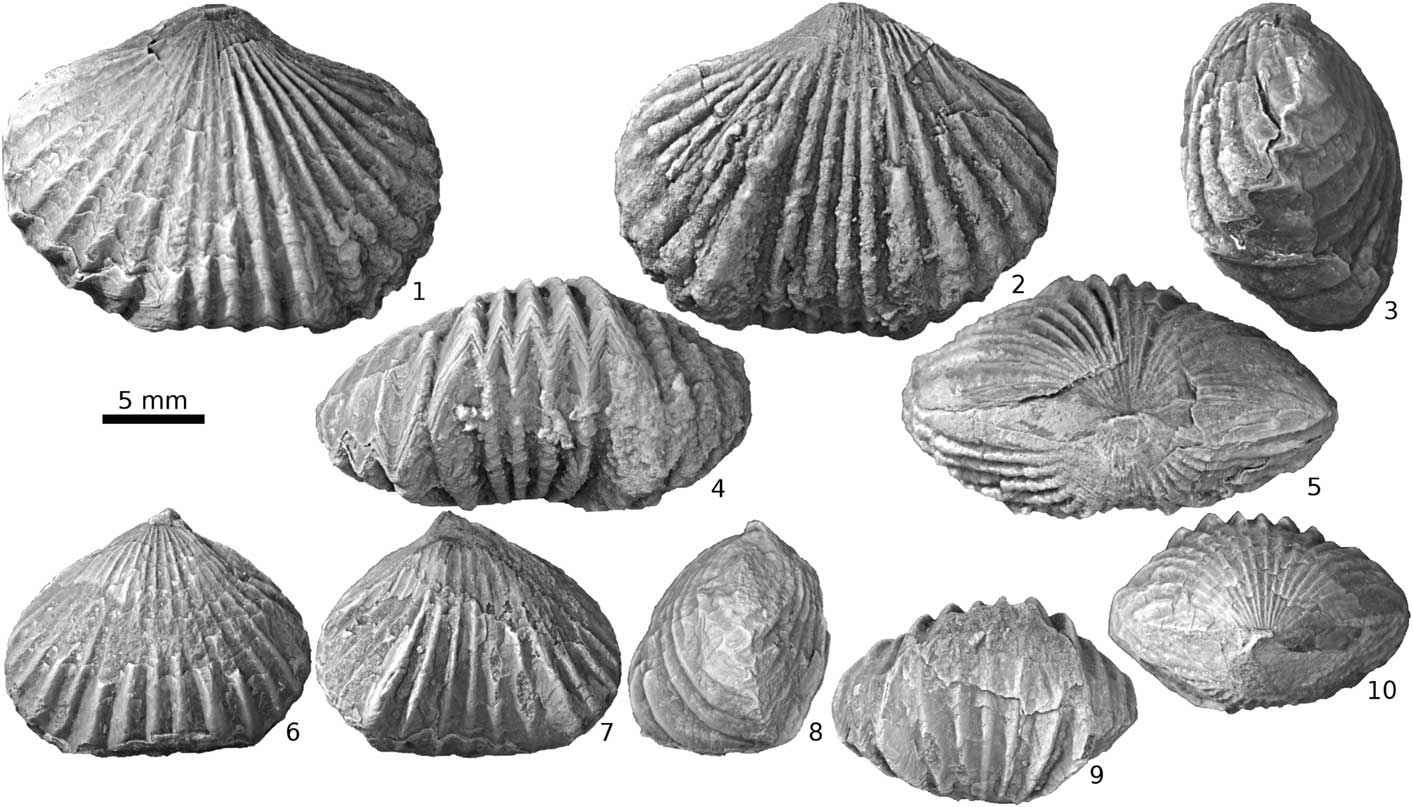
Altaethyrella is a late Katian (Late Ordovician) rhynchonellide brachiopod found in Central Asia and China. The genus has a typical rhynchonellide form, featuring a biconvex lateral profile, strong dorsal fold and ventral sulcus with a distinct uniplicate anterior, and strong, simple, angular ribs. Shells vary in size and are generally subcircular to subpentagonal in outline (Fig. 1).
Altaethyrella tarimensis n. sp. from collection AFT-X 399. (1–5) NIGP 167277, dorsal, ventral, lateral, anterior, and posterior views of conjoined shell; (6–10) NIGP 167278, dorsal, ventral, lateral, anterior, and posterior views of conjoined shell.

The genus was established by Severgina (Reference Severgina1978) as a lissatrypide when she studied the Katian (Ashgill) brachiopods of northwestern Altai, and was systematically revised by Kulkov and Severgina (Reference Kulkov and Severgina1989). Subsequently, it has been found elsewhere in Central Asia and China, often first identified as the homeomorphic genus Rhynchotrema. Several key internal shell features can be used to differentiate these two genera, however. This is the first record of Altaethyrella on the Kuruktag Platform on the edge of the Tarim Basin in the Xinjiang region of northwestern China—part of the Tarim paleoplate during the Late Ordovician.
During the Late Ordovician, the Tarim paleoplate was located approximately in tropical latitudes (e.g., Cocks and Torsvik, Reference Cocks and Torsvik2013, fig. 7; Popov and Cocks, Reference Popov and Cocks2017, fig. 13), although its precise location is still uncertain. Given the limited paleomagnetic data available from Tarim, fossils are useful in determining its position in relation to other plates. For example, recently the position of microbial reefs on the carbonate platform has been used to suggest a position either slightly north or south of the equator, rotated 90˚ or in a similar orientation to the present (Zhang et al., Reference Zhang, Li, Wang and Munnecke2017). The limited paleogeographic distribution of Altaethyrella, along with other elements of the brachiopod fauna, makes it a valuable paleogeographic tool in determining the relative location of the Tarim plate to the nearby North and South China plates and Kazakh terranes during the Late Ordovician.
The primary objective of this study is to systematically describe a new species of Altaethyrella from the Hadabulaktag Formation (upper Katian) in the Tarim Basin, including basic measurements of shells and serial sectioning to examine key diagnostic structure of the interior of the shell, for comparison with previously described species on other paleoplates. The study provides key material for future taxonomic revisions, given that Altaethyrella was treated as nomia dubium in the latest revision of the Treatise on Invertebrate Paleontology (Savage, Reference Savage2002a).
Data from this investigation are used to discuss several aspects of the significance of Altaethyrella and this new species below. The differentiating features between Altaethyrella and the homeomorph Rhynchotrema as well as atrypides associated with the new species in Tarim are reviewed, focusing on internal shell structures. A high degree of intraspecific variation is noted in the Tarim species, but this is also characteristic of other Altaethyrella species (e.g., Li and Zhan, Reference Li and Zhan1998). Shells encrusted by bryozoans indicate the important role that Altaethyrella shells played as a firm substrate for filter feeders on the carbonate platform.
Previous studies of Altaethyrella
Altaethyrella was first described as an atrypide by Severgina (Reference Severgina1978), but was re-classified to the Rhynchonellida by Kulkov and Severgina (Reference Kulkov and Severgina1989) due to the lack of cruralium and spiralia in the type species, Altaethyrella megala. Additionally, they synonymized the genus Otarorhyncha Nikiforova and Popov, Reference Nikiforova and Popov1981 from the Chu-Ili Terrane of Kazakhstan.
Altaethyrella is best known from Central Asia. The type species was described from the northwestern Altai region of Siberia (Severgina, Reference Severgina1978). Several studies have described specimens from Kazkhstan, including the Chu-Ili Range (Rukavishnikova, Reference Rukavishnikova1956; Popov et al., Reference Popov, Nikitin and Cocks2000; Popov and Cocks, Reference Popov and Cocks2006) and the Maikain-Ekibastuz Ophiolitic Zone (Nikitin et al., Reference Nikitin, Popov and Bassett2006). The genus has also been documented from Uzbekistan (Nikiforova and Popov, Reference Nikiforova and Popov1981) and Kyrgyzstan (Misius, Reference Misius1986).
The genus was first systematically documented in China by Zhan and Li (Reference Zhan and Li1998), revising species formerly described as Rhynchotrema (e.g., R. zhejiangensis Wang in Wang and Jin, Reference Wang and Jin1964; R. yaoxianensis Fu, Reference Fu1982; and R. gushanensis Liang in Liu et al., Reference Liu, Xu and Liang1983). Rhynchotrema zhejiangensis and R. gushanensis are from the upper Katian Xiazhen Formation and the upper Changwu Formation of the Jianshan-Changshan-Yushan border region between Zhejiang and Jiangxi provinces (JCY area), and R. yaoxianensis is from the Beiguoshan Formation (middle Katian) of Yaoxian and Longxian counties in Shaanxi Province. Serial sections for the topotype materials of these species clearly demonstrate a lack of cruralium and dorsal median septum, and the presence of a small simple ridge-like cardinal process characteristic of Altaethyrella, which they assigned to the Rhynchotrematidae.
Popov et al. (Reference Popov, Nikitin and Cocks2000), in their remarks on Altaethyrella otarica (Rukavishnikova, Reference Rukavishnikova1956) from the Otar Member (upper Caradoc) of the Chu-Ili Range in Kazakhstan, disagreed with this re-assignment. They explained that the genus has features that align it with the Ancistrorhynchoidea, including ventral muscle scars with adductors only slightly shorter than completely separated diductor scars, and a lack of cruralium and dorsal median septum, and consequently re-assigned Altaethyrella to that superfamily.
Savage (Reference Savage2002a) cited poor figures of the type material and the ambiguous nature of the internal structures of the type species in classifying Altaethyrella as nomium dubium in the most recent edition of the Treatise on Invertebrate Paleontology. Savage suggested that the short dorsal median septum and small cardinal process in Altaethyrella otarica described by Popov et al. (Reference Popov, Nikitin and Cocks2000) supports its classification to the Rhynchotrematidae. However, the material described by Popov et al. (Reference Popov, Nikitin and Cocks2000), and indeed all material described as Altaethyrella for which the interior shell structure is known, lacks a dorsal median septum, often having a low dorsal median ridge instead, and do not possess medially fused hinge plates characteristic of the Rhynchotrematidae (see Systematic Paleontology below).
Geographical and geological setting
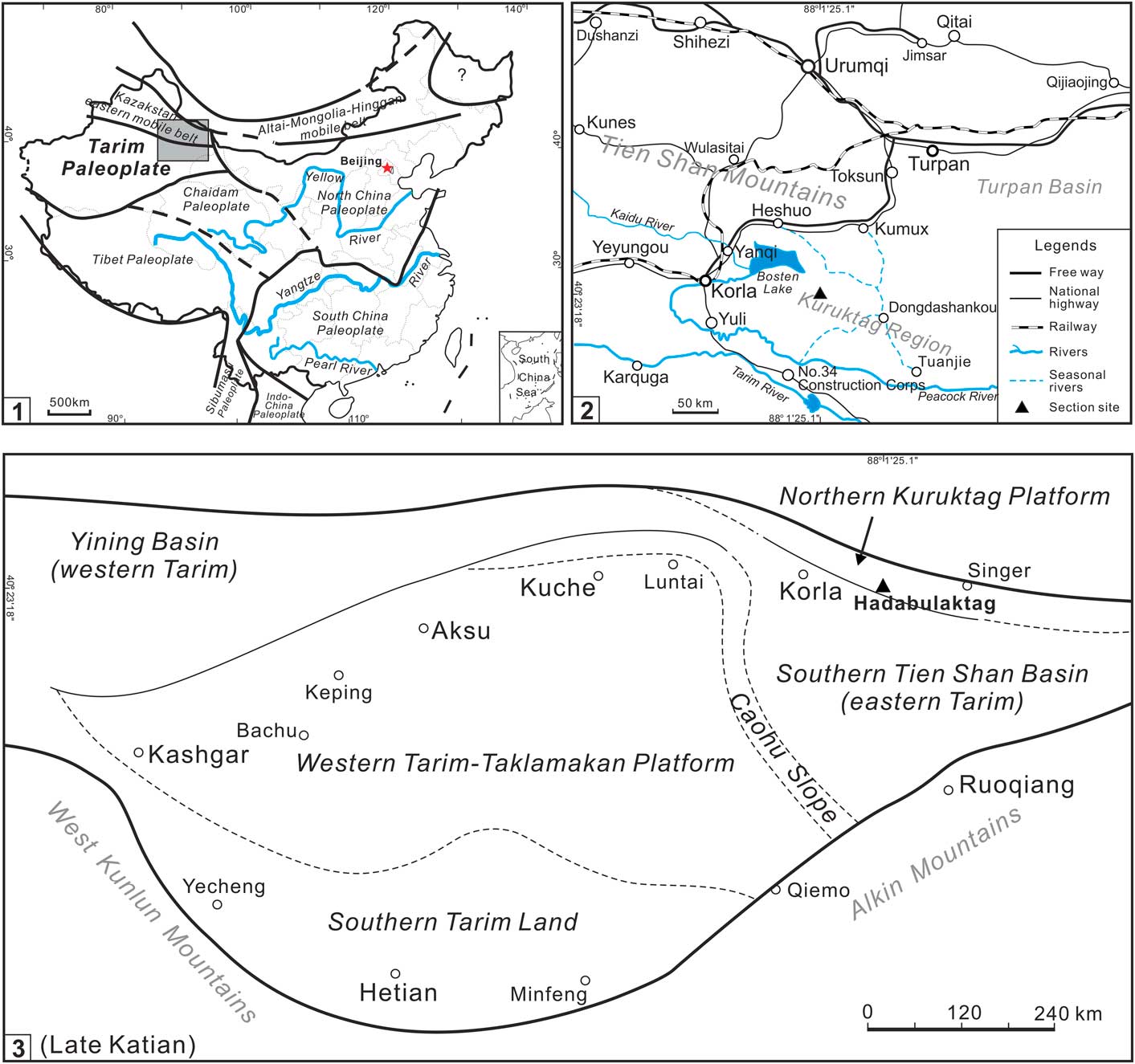
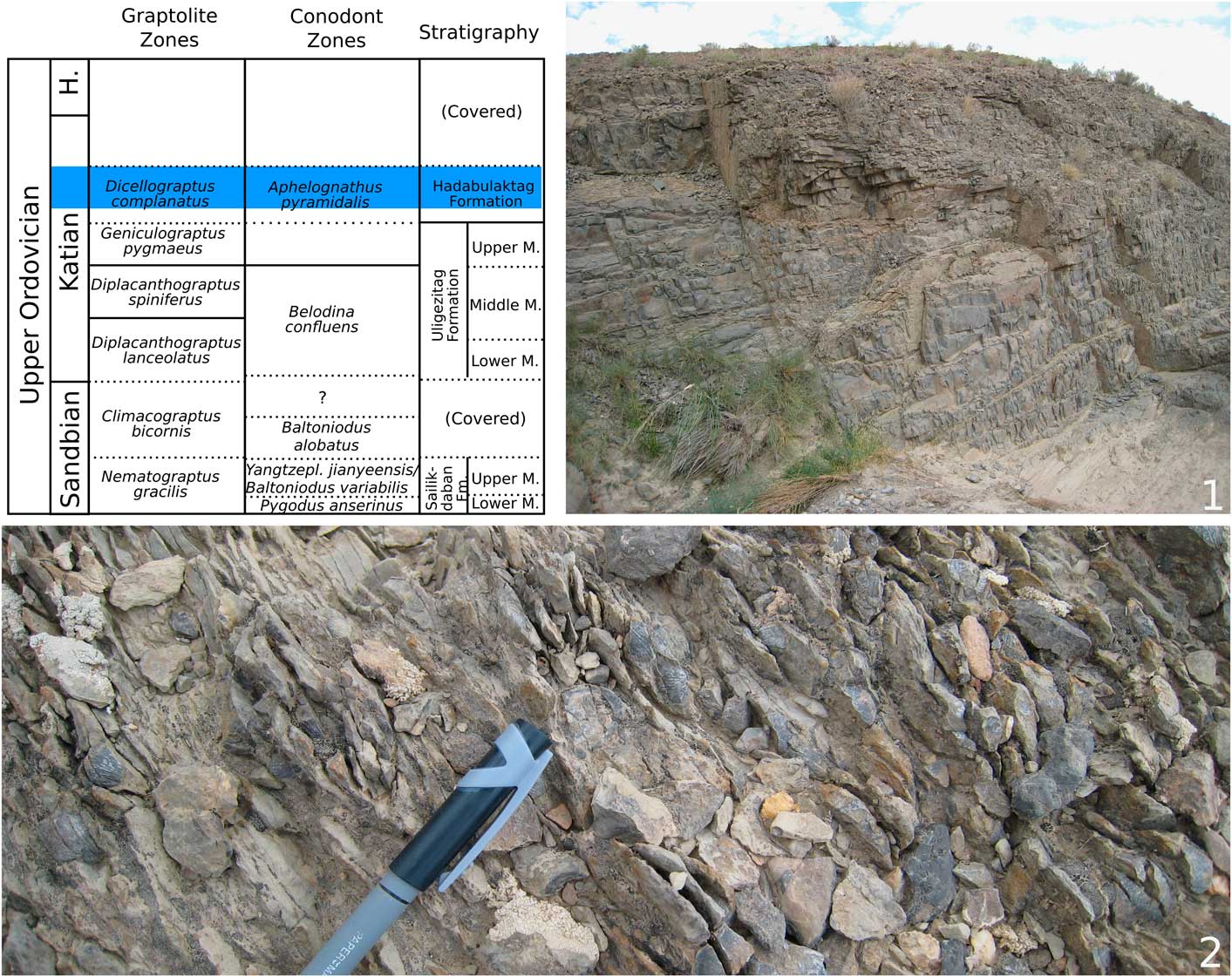
The material in this study was collected from the northern Kuruktag region near the northeastern margin of the Tarim Basin in Xinjiang, Northwest China (Fig. 2). The Ordovician sequence in this region consists of the Jinlonggou, Xiangguletag, Sailikedaban, Uligezitag, and Hadabulaktag formations (ascending stratigraphic order, Fig. 3; see also Zhang and Munnecke, Reference Zhang and Munnecke2016). This succession consists of mainly carbonate rocks that formed on a shallow tropical carbonate platform. Very little detailed geological and paleontological work has been completed in this region due to its remote location in a desert environment, making access to the study area very difficult.
Study area on the Kuruktag Platform at the edge of Tarim Basin in Xinjiang, northwestern China (1). The triangle in (2) and (3) is the locality from which the collections were made. Latitude and longitude coordinates of the locality are as indicated on figure.

Stratigraphic chart and photos of the collection locality (chart adapted from Zhang and Munnecke, Reference Zhang and Munnecke2016). All specimens are from the middle to upper Hadabulaktag Formation. (1) photo of the formation in outcrop; (2) close-up view showing typical lithology and numerous brachiopod shells on the outcrop surface.

Altaethyrella tarimensis n. sp. was collected from the middle to upper Hadabulaktag Formation, which is thin- to medium-bedded argillaceous limestone intercalated with thin- to medium-bedded bioclastic and micritic limestone. Common fossils in the formation include brachiopods, corals, bryozoans, bivalves, and gastropods, with less common trilobites and crinoids. Brachiopods are the most abundant element of the fossil assemblage. Conodonts collected from this formation elsewhere confirm its biostratigraphical position in the Aphelognathus pyramidalis Biozone, indicative of a late Katian age (Zhang and Munnecke, Reference Zhang and Munnecke2016).
Materials and methods
Collection
287 Altaethyrella shells from 11 horizons at the collection locality, including 226 conjoined shells, 35 dorsal valves, and 26 ventral valves. Most of these specimens are loose, but some are adhered to slab surfaces.
Owing to the deep weathering of the outcrop, most of the Altaethyrella shells in the collection are damaged to a certain degree, but many are still in adequate condition to guarantee a full set of measurements. Generally, the outermost layers of the shell have been abraded, likely due to the effects of exposure in a desert environment with strong and continuous winds.
Coarse pink to white calcite crystals are often visible on the shell surface, commonly cross-cutting the shell interior. Sometimes the entire mantle cavity is filled with crystalline calcite that obscures internal morphology such as the cardinal process and crura.
Measurements
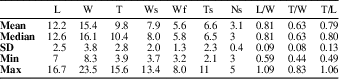
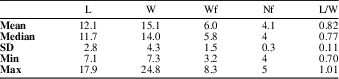
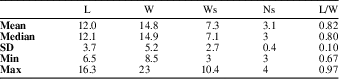
The specimens from each collection horizon were counted, and the numbers of whole shells, dorsal, and ventral valves were tabulated. Basic length, width, and depth measurements were made of shells that were sufficiently well preserved. Additionally, when the anterior was well preserved, measurements were recorded of the width of sulcus along the commissural plane and at the top of the tongue formed by the fold and sulcus at the center of the anterior commissure, as well as the depth of the sulcus from the commissure on the shell flanks to the top of the tongue formed where the dorsal fold and ventral sulcus meet. Basic summary statistics were calculated for each set of measurements for all measured specimens in Tables 1–3.
Whole shell measurements (N=99). Abbreviations for measured values are as follows: L=length, W=width, T=thickness, Ws=width of sulcus along commissure, Wf=width of sulcus along fold, Ts=depth of sulcus from top of fold to commissure, Ns=number of ribs in sulcus, and Nf=number of ribs on fold.

Dorsal valve measurements (N=15). Abbreviations are as for Table 1.

Ventral valve measurements (N=8). Abbreviations are as for Table 1.

These measurements were then compared with other species and used to construct bivariate plots. The plots were created using the PAST software package (v. 3.16), freely available at http://folk.uio.no/ohammer/past/ (Hammer et al., Reference Hammer, Harper and Ryan2001).
Serial sectioning
Three shells were selected for serial sectioning to analyze their internal morphology, of which two are shown below. The shells were mounted on a manual parallel grinder and ground to produce transverse sections approximately perpendicular to the commissural plane. The interval between each section varied from 0.05 mm to 0.5 mm, depending on the distance from the posterior—many of the smaller structures such as the very small cardinal process near the posterior necessitate a finer interval.
After each session of grinding, the polished surface was treated with dilute hydrochloric acid to etch the surface. A drop or two of acetone was then applied to the surface, and replication film was lain on the polished surface to produce a representation of the cross-section of the shell.
The GNU Image Manipulation Program (GIMP) (version 2.8.22) was used to manually trace the sections after photographing each section with a digital camera mounted to a microscope. The most recent version of this free and open source image processing program is available from https://www.gimp.org.
Repository and institutional abbreviation
All specimens examined and figured in this study are deposited at the Nanjing Institute of Geology and Palaeontology (NIGP), Chinese Academy of Sciences.
Systematic paleontology
Order Rhynchonellida Kuhn, Reference Kuhn1949
Superfamily Ancistrorhynchoidea Cooper, Reference Cooper1956
?Family Ancistrorhynchidae Cooper, Reference Cooper1956
Remarks
The diagnosis in the Treatise on Invertebrate Paleontology for Ancistrorhynchoidea does allow for the presence of a cardinal process (Savage, Reference Savage2002b, p. 1041), but that of Ancistrorhynchidae (p. 1035) states that ancistrorhynchides do not have a cardinal process. In the past, some authors had placed Altaethyrella in the Rhynchotrematidae in part because of its small cardinal process (e.g., Zhan and Li, Reference Zhan and Li1998).
These families are very similar, but Altaethyrella shares more similarities with the Ancistrorhynchidae than the Rhynchotrematidae. Most notable are the lack of a true dorsal median septum that is replaced by a small dorsal median ridge in most Altaethyrella shells, and the lack of fused hinge plates forming a septalium that is common in some members of the Rhynchotrematidae. These differences are elaborated on below in the discussion on the homeomorphy of these two groups. Altaethyrella may be a transitional form with characteristics that fall between these families.
Rather than erect a separate family within the Ancistrorhynchoidea for this single genus, we tentatively agree with the opinion of Popov et al. (Reference Popov, Nikitin and Cocks2000) in assigning Altaethyrella to the Ancistrorhynchidae, with the provision that its small cardinal process is different from other ancistrorhynchides. A more extensive study including other genera may allow for emending the diagnosis of the family, but it is beyond the scope of this study.
Genus Altaethyrella Severgina, Reference Severgina1978
Type species
Altaethyrella megala Severgina, Reference Severgina1978, from the Upper Ordovician (Ashgill) of northwestern Altai, Siberia.
Remarks
Altaethyrella has been well described elsewhere (e.g., Zhan and Li, Reference Zhan and Li1998; Popov et al., Reference Popov, Nikitin and Cocks2000), and thus a full re-description here is unnecessary. However, one notable feature that has not been addressed by other studies is a very small median ridge that extends anteriorly from the cardinal process in the specimens sectioned here (best shown in Figure 6 for the current species). This feature was not noted by other authors, but it is present in illustrated sections of A. zhejiangensis (Zhan and Li, Reference Zhan and Li1998, fig. 6) and A. otarica (Nikitin et al., Reference Nikitin, Popov and Bassett2006, fig. 33), and thus is probably characteristic of the genus. This differs from the much more prominent dorsal median septum in Rhynchotrematidae such as Rostricellula, Rhynchotrema, and Hiscobeccus that supports fused hinge plates forming a septalium (Sproat et al., Reference Sproat, Sohrabi and Jin2014).
Species described as Drepanorhyncha by Fu (Reference Fu1982) from the Jinhe Formation in northern China may belong to Altaethyrella, but cannot be confirmed without detailed study of larger collections and additional serial sectioning. Drepanorhyncha pentagonia Fu, Reference Fu1982 is flattened in form compared to our current material. Drepanorhycha triplicata Fu, Reference Fu1982 is a smaller, tranversely elongated form that is similar in form to the Tarim species. Both appear to have angular ribs, indicating that they do not belong to Drepanorhyncha, which have rounded ribs, more subtriangular outline, and weak fold and sulcus. More accurate and detailed revision of these species is awaiting additional topotype material and serial sectioning.
Altaethyrella tarimensis new species
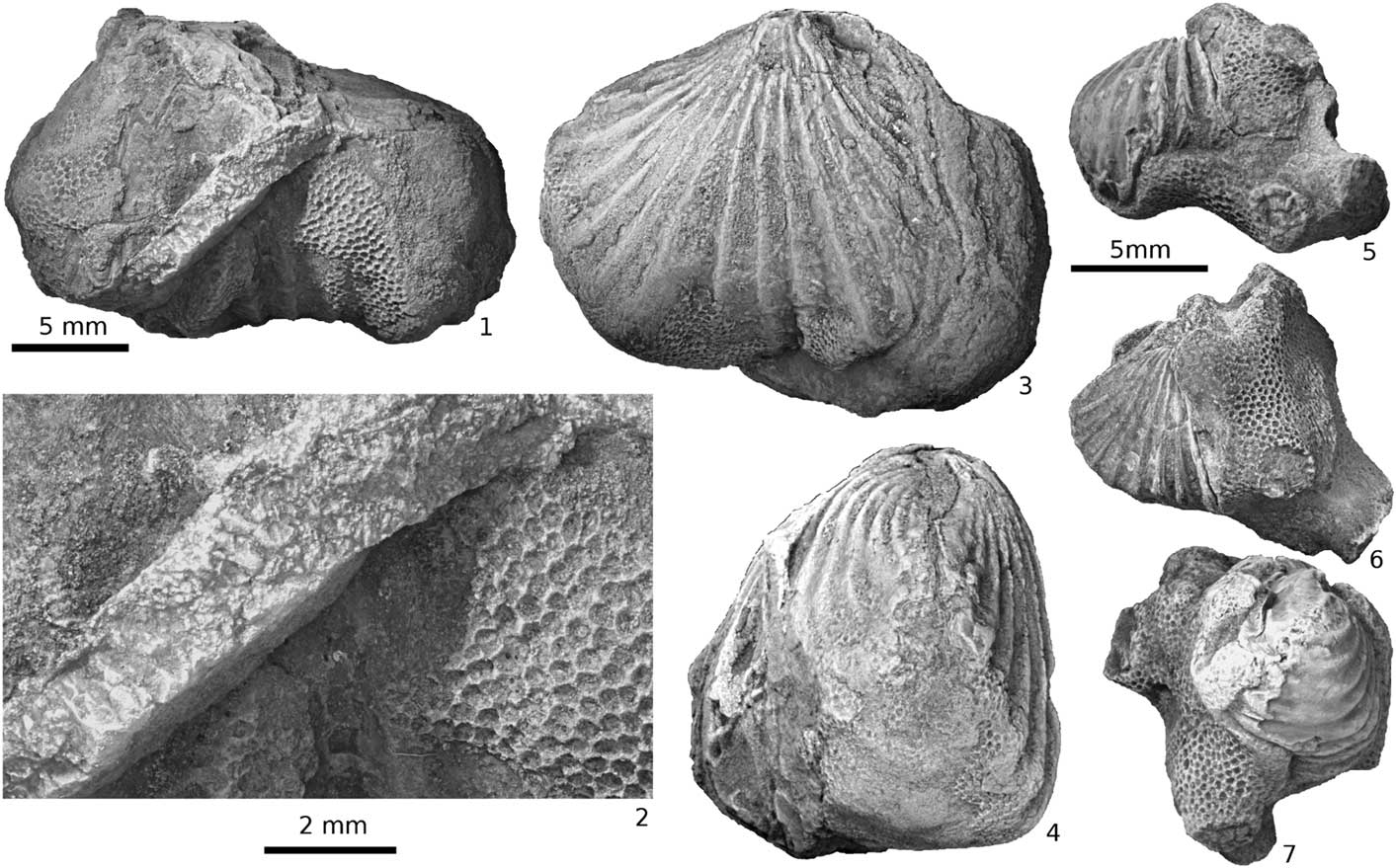
Association between Altaethyrella tarimensis n. sp. encrusted by both ramose (left) and treptostome bryozoans. The bryozoans cross the commissure of both brachiopod shells, indicative of post-mortem encrustation. (1–4) NIGP 167279 from collection AFT-X 398, anterior, magnified anterior, ventral, and lateral views of conjoined shell with calcite vein; (5–7) NIGP 167280 from collection AFT-X 400, anterior, dorsal, and lateral views of conjoined shell. Scale bars are (1, 3–7) 5 mm and (2) 2 mm.

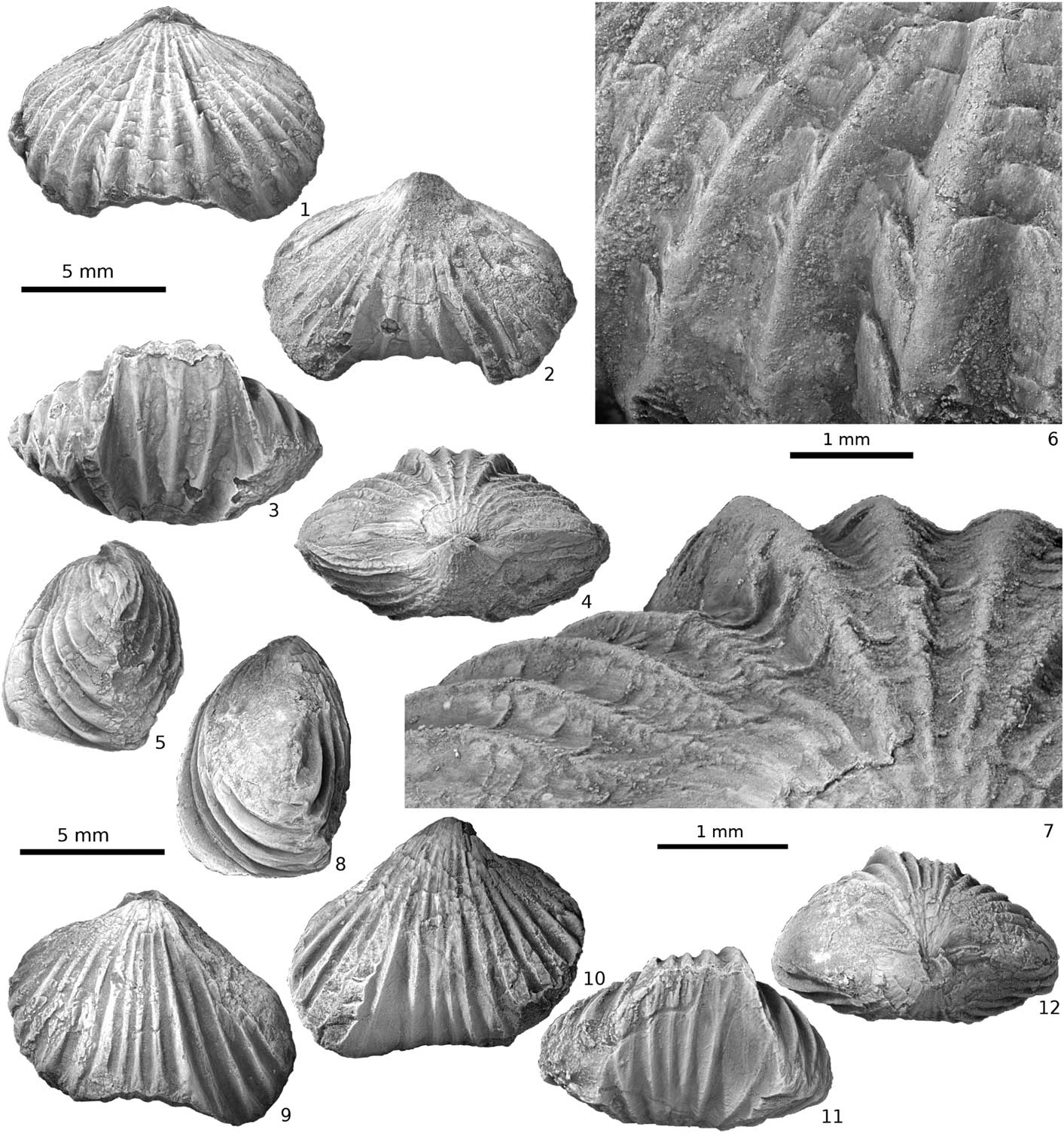
Altaethyrella tarimensis n. sp. from collection AFT-X 400. Shells from the same collection show variation in the number of ribs in the fold and sulcus and degree of bilateral symmetry. (1–7) NIGP 167281 (holotype), dorsal, ventral, anterior, posterior, and lateral views with enlargements of dorsal and posterior of shell. Possible fine growth lines are preserved on the shell surface, shown in the magnified views of (1) and (4) in (6) and (7), respectively. (8–12) NIGP 167282, lateral, dorsal, ventral, anterior, and posterior views. Scale bars are (1–5, 7–12) 5 mm and (6) 2 mm.

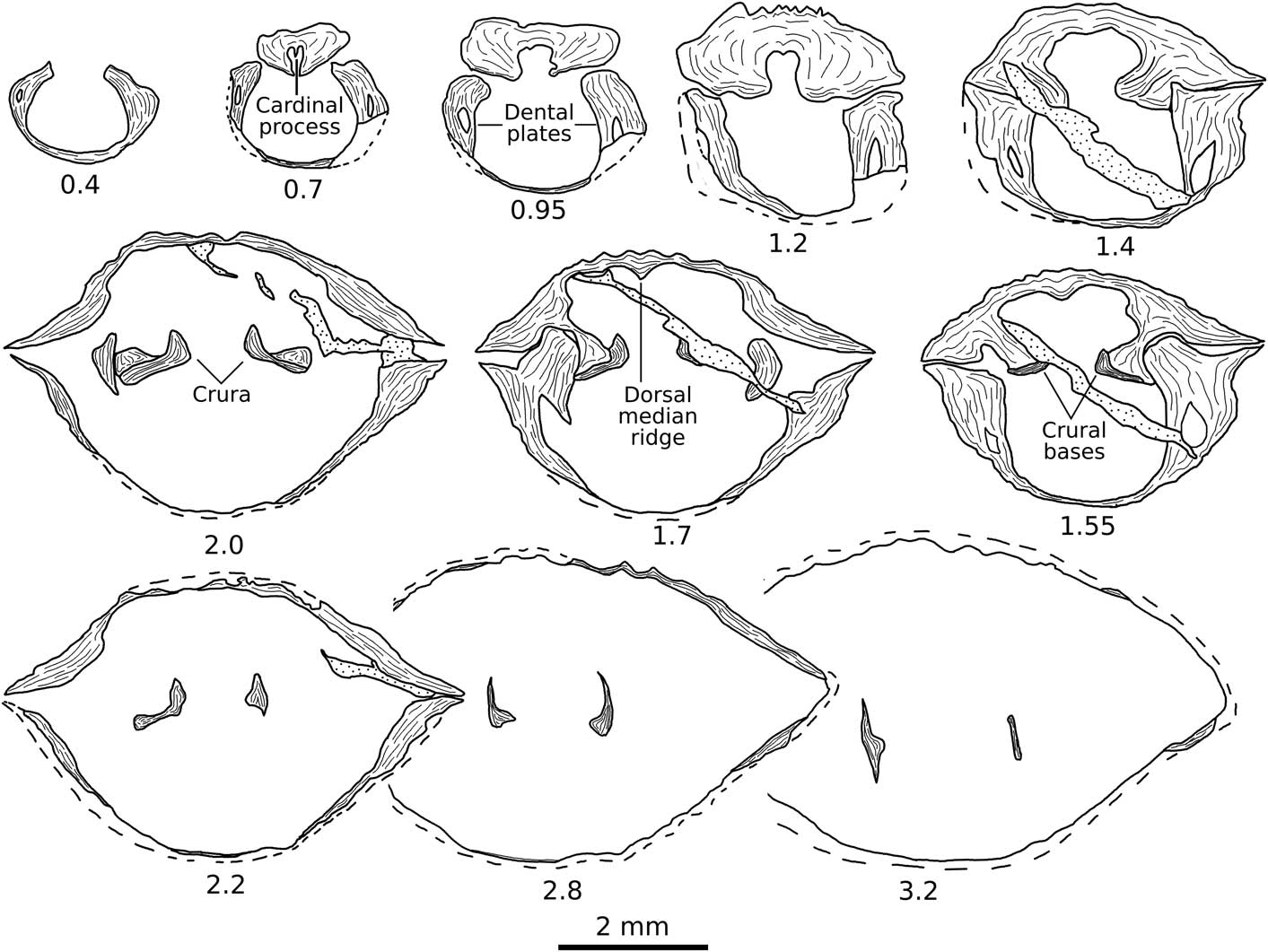
Internal structures of Altaethyrella tarimensis n. sp. from ATX-398. Distance from the ventral umbo indicated in mm for each section. Dorsal valve uppermost. Note the characteristic thin dental plates and small dental cavities, lack of septalium, and small dorsal median ridge. Speckled region indicates crystals of calcite that cross-cut the shell interior.

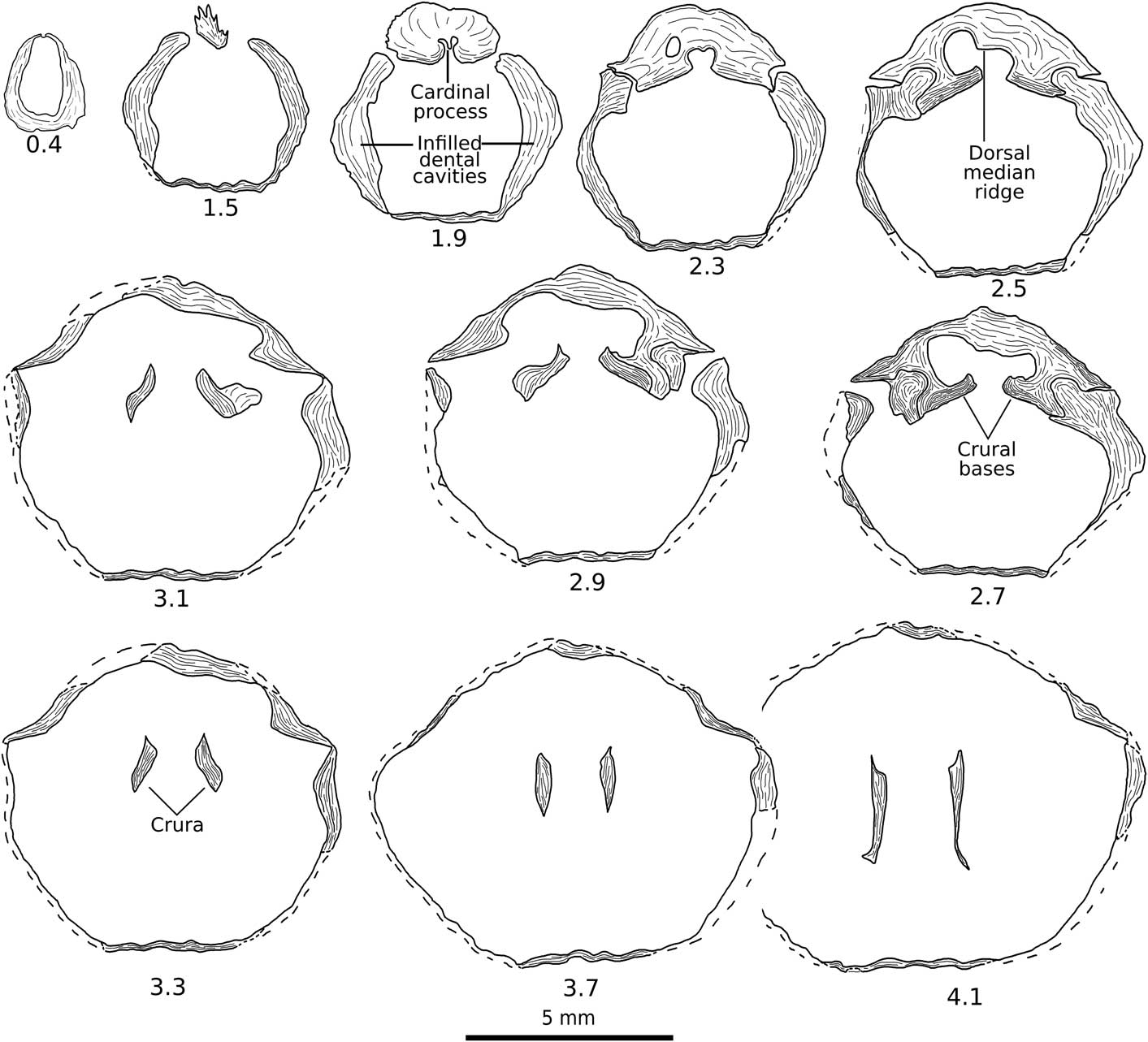
Internal structures of Altaethyrella tarimensis n. sp. from ATX-402. Distance from the ventral umbo indicated in mm for each section. Dorsal valve uppermost. In this specimen, the dental plates are apparently missing, but dental cavities have likely been infilled by secondary shell growth. Due to the preservational state of the shell, this is difficult to determine.

Holotype
NIGP 167281 from the upper Hadabulaktag Formation (upper Katian) in the Kuruktag region, southern Xingjiang, Northwest China. NIGP 167277, NIGP 167278, and NIGP 167282 are paratypes. Collection locality consists of a small hill of rocky outcrop located at 40°23’18”N, 88°1’25.1”E.
Diagnosis
Shell small to medium sized, dorsibiconvex, commonly asymmetrical, ~81% as long as wide and 65% as thick as wide; ribs simple and angular, usually five to seven on shell flank, with four in dorsal fold and three in ventral sulcus but occasionally more; cardinal process and dorsal median ridge small.
Occurrence
Middle to upper Hadabulaktag Formation (upper Katian), Kuruktag Platform, southern Xinjiang, northwestern China.
Description
Shell small to medium, average length of whole shells 12.2 mm, width 15.4 mm, thickness 9.8 mm; transverse outline subpentagonal to subcircular; lateral profile dorsibiconvex. Shell ~81% as long as wide and ~65% as thick as wide. Astrophic hingeline approximately one-quarter to one-third shell width. Ribs strong and angular, simple, originating at the umbo; usually five to seven ribs on shell flanks, with four ribs in dorsal umbo and three ribs in ventral sulcus but occasionally more.
Ventral umbo large and prominent with anacline interarea, strongly incurved toward hingeline and projecting over the hinge in larger shells; triangular-shaped open delthyrium obscured by curvature of umbo. Triangular-shaped sulcus beginning within 2 mm of ventral umbo, projecting upward to form prominent trapezoidal tongue at anterior commissure where it meets the dorsal fold.
Dorsal umbo minute, interarea apsacline and minute with obscured notothyrium. Dorsal fold beginning <1 mm from dorsal umbo, triangular in outline, rising >1 mm above shell surface in large shells, usually with flat and angular top but occasionally rounded near its margins.
Teeth of moderate size supported by thin dental plates. Dental cavities sometimes infilled by secondary shell material (as in Fig. 7). Ventral muscle scars obscured.
Very small, ridge-like cardinal process. Dorsal median ridge small, not connected to hinge plates. Sockets moderately deep, with hinge plates separated medially, lacking septalium. Crura projecting anteriorly from crural bases embedded in shell material medial to sockets, becoming reduced in width anteriorly to become rod-like and eventually become lath-like and change orientation to a dorsal-ventral axis closest to the anterior. Dorsal adductor scars obscured.
Etymology
Named after the Tarim region and paleoplate where the type material was collected.
Remarks
Poor preservation of the material makes identification of fine details on the shell difficult. For example, Zhan and Li (Reference Zhan and Li1998) identified fine concentric filae in A. zhejiangensis from South China, but given the state of preservation of the current material, it is impossible to definitively determine whether these shells possess this trait. The remnants of fine filae may be preserved in one specimen from collection AFT-X 400 (Fig. 5.6, 5.7), but it is difficult to determine whether these are truly filae or features caused by exfoliation of the shell surface. Their regular spacing along the flanks of ribs suggests that these may, in fact, be part of the shell structure.
Altaethyrella tarimensis n. sp. is very similar to A. otarica from the Chu-Ili range in Kazakhstan (Nikitin et al., Reference Nikitin, Popov and Bassett2006); both are nearly identical in profile and outline, although A. tarimensis n. sp. is slightly more convex and wider (but similar to a collection from the Odak Beds of Kazakhstan), and shells usually have fewer ribs (although shells from the Koskarasu Beds have more numerous ribs similar to the current species). The slight variation between these two species seems to indicate close affinities, and they may represent subtly differing evolutionary responses to slightly different paleoenvironmental and paleoecological constraints on each plate.
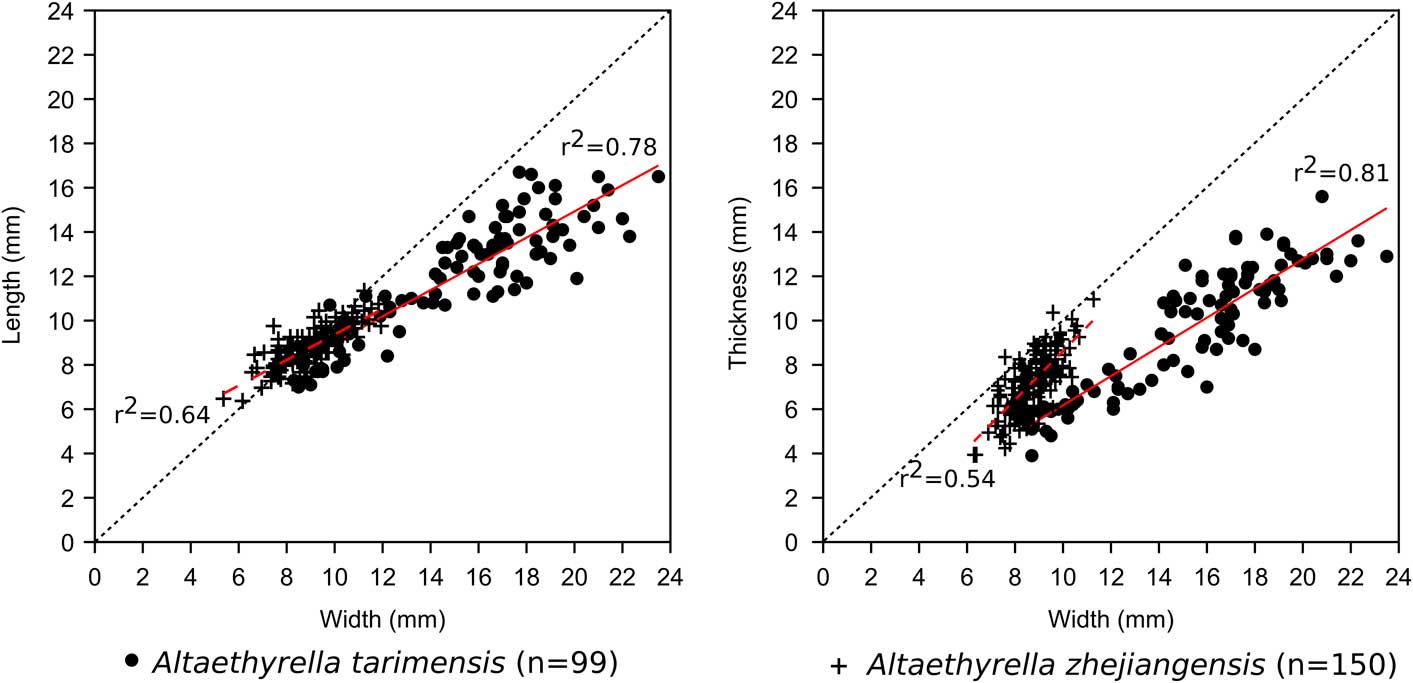
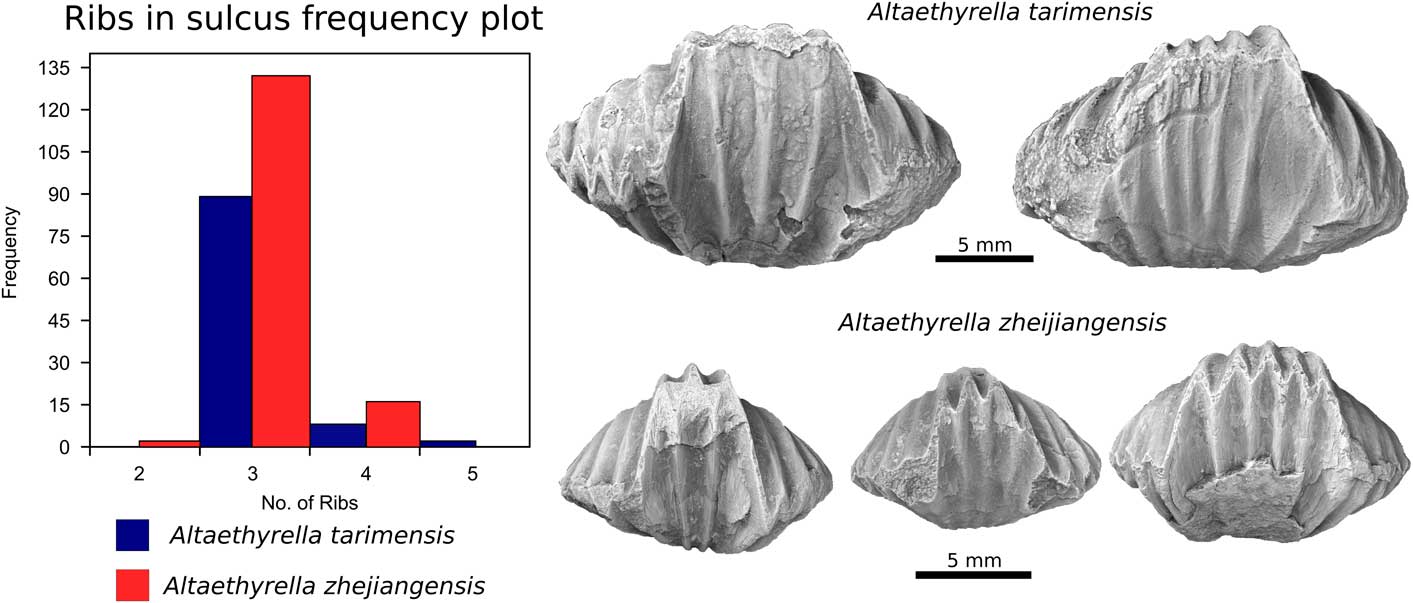
Altaethyrella tarimensis n. sp. is also similar to A. zhejiangensis from the border region of Zhejiang and Jiangxi provinces in South China (Zhan and Cocks, Reference Zhan and Cocks1998). A. tarimensis n. sp. is generally larger in size, and generally less convex relative to shell size (as shown by T/W in Figure 8), but comparable in shell outline (L/W in Figure 8). The dorsal fold of A. tarimensis n. sp. tends to rise slightly higher above the shell surface in comparison with A. zhejiangensis, and the shell flanks are generally more convex. Rib counts are similar between the species (Fig. 9), with the majority of shells in both species having three ribs in the ventral sulcus that correspond to four ribs on the dorsal fold.
Variation in the outline (length/width) and profile (thickness/width) of A. tarimensis n. sp. from the Kuruktag Platform in northwestern China in comparison with A. zhejiangensis from the JCY area in South China. The r2 values are indicated for respective linear regression lines. Both species share a similar outline, but are significantly different in lateral profile.

Variation in number of ribs in the sulcus at the anterior of A. tarimensis n. sp. and A. zhejiangensis as shown in a frequency plot (left) and figured specimens (right). Both A. tarimensis n. sp. shells are from the same population, collection AFT-X 400; A. tarimensis n. sp. shells are also shown in Figure 5 in full.

Altaethyrella tarimensis n. sp. is not as convex as A. yaoxianensis (Fu, Reference Fu1982) from the Jinhe Formation (middle to upper Katian) in North China, and the fold and sulcus usually form a wider tongue at the anterior commissure.
Discussion
Similarities between Altaethyrella and other groups
Before Altaethyrella was established, species were often assigned to the rhynchonellide Rhynchotrema, which is known mainly from Laurentia. Rhynchotrema and Altaethyrella are similar in shell shape, have strong and simple ribs, and share similar distinctive strongly uniplicate anterior commissures with the dorsal fold and ventral sulcus forming a tongue. Only very minor differences, including a tendency of greater variation and asymmetry and a generally more prominent and strongly curved ventral umbo in Altaethyrella differentiate it externally from Rhynchotrema (e.g., Sproat et al., Reference Sproat, Sohrabi and Jin2014, figs. 2, 3 for Rhynchotrema).
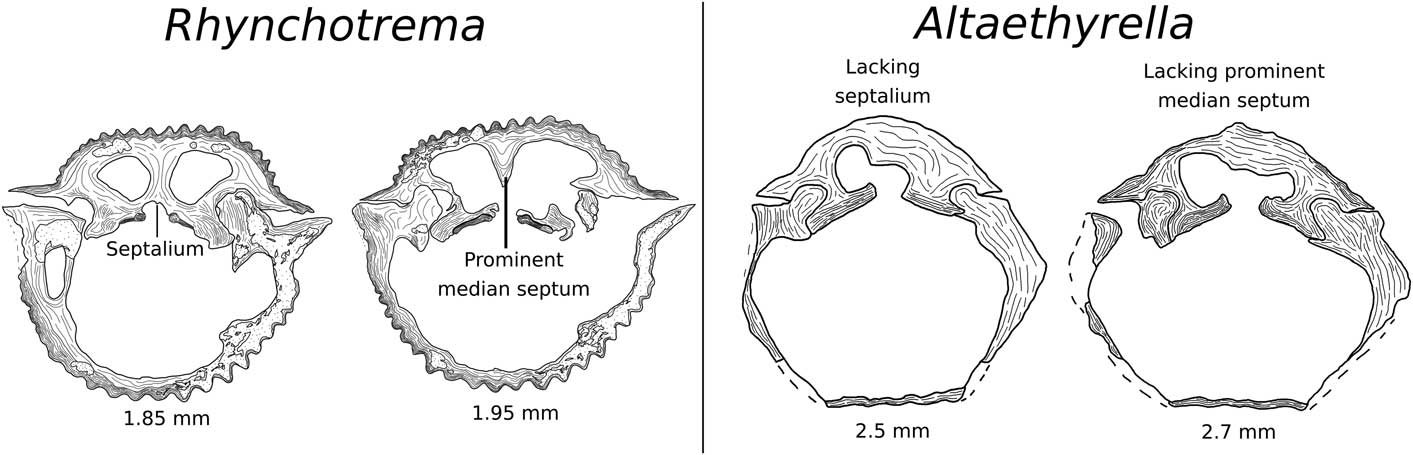
The internal structures of the shell are also similar between these two genera, but three key differences can easily be identified in serial sections (Fig. 10). The hinge plates of Rhynchotrema merge medially to form a septalium supported by median dorsal septum, but in Altaethyrella, the hinge plates remain separated by a median gap. Altaethyrella lacks a septalium, and only sometimes possessed a low dorsal median ridge rather than a true median septum. Popov et al. (Reference Popov, Nikitin and Cocks2000) also noted that the ventral muscle scars are smaller in Altaethyrella than in rhynchotrematides such as Rhynchotrema, and that the adductor scars are only slightly shorter than the diductor scars. Ventral muscle scars are often obscured, however, because specimens are only rarely found disarticulated. The shells from Tarim clearly lack a septalium and median septum (Figs. 6, 7), and thus should be assigned to Altaethyrella.
Serial sections of Rhynchotrema increbescens (Hall, Reference Hall1847) and Altaethyrella tarimensis n. sp. showing differences in internal structures of the shell, despite similar external shell morphology (dorsal valve uppermost). Numbers indicate distance in millimeters from the posterior-most point of the shell. Rhynchotrema from Sproat et al. (Reference Sproat, Sohrabi and Jin2014, Fig. 7); Altaethyrella from Fig. 7. herein.

Many species that were previously assigned to Rhynchotrema from the paleoplates that make up Central and Eastern Asia need to be critically re-assessed to determine whether they are in fact Rhynchotrema or Altaethyrella. There may be no true Ordovician Rhynchotrema in China (Zhan and Li, Reference Zhan and Li1998).
Some specimens of Altaethyrella tarimensis n. sp. are similar to an atrypide from the study area to be described in a future study. The atrypides are much more abundant than Altaethyrella, and can usually be differentiated externally from Altaethyrella by their smaller size, lower dorsal convexity, and slightly more rounded outline.
However, differentiating between small Altaethyrella and atrypide shells can be difficult. Small shells of Altaethyrella are also less convex and do not have a clearly subpentagonal outline as in larger shells. The only reliable external feature to differentiate the genera at this stage is the number of ribs in the sulcus and fold—Altaethyrella generally has at least three ribs in the ventral sulcus and four ribs on the dorsal fold with a sharp boundary between the fold or sulcus and shell flanks on each side, while the atrypides often have a much weaker fold and sulcus, with only a single rib in the sulcus and two ribs on the fold. Altaethyrella also tends to have sharp, angular ribs while the atrypides feature less-prominent rounded ribs. In small and/or poorly preserved material, these characters can be difficult to determine reliably. The differences in internal shell structures are immediately obvious, because the atrypides possess larger crura that diverge toward the anterior and two mediodorsally directed spiralia—rhychonellides do not have skeletal lophophore supports amenable to preservation in the fossil record.
One of the species previously classified as Rhynchotrema in China mentioned in Zhan and Li (Reference Zhan and Li1998), R. pentagonia Fang (in Liu and Fang, Reference Liu and Fang1990) also from the Hadabulaktag Formation in Xinjiang, is likely one of these atrypide forms. Figures show only one rib within the ventral sulcus that corresponds to two ribs on the dorsal fold that are separated by a median groove and the shells have a more rounded outline in comparison to the subcircular to subpentagonal Altaethyrella.
Morphological variation within Altaethyrella tarimensis n. sp
As in other species of Altaethyrella, there is considerable intraspecific variation in A. tarimensis n. sp. in terms of: shell size, shell shape, number of ribs in the ventral sulcus and dorsal fold, and degree of asymmetry.
The collection contains shells of a range of sizes and shell shapes. Shell length, for example, varies from 7 mm to 17.9 mm, or a difference of 256% (see Tables 1–3). To illustrate the variability of shell shape, shell length/width and thickness/width were plotted as proxies for shell outline and convexity, respectively, independent of shell size (Fig. 8), producing a linear trend indicative of a single morphospecies. The r2 values from linear regression in both cases are near 0.80, indicating a clear trend, but the scatter of individual datapoints reveals some variability.
Most shells have three ribs in the sulcus at the anterior commissure that correspond to four ribs on the dorsal fold. This pattern is similar to the homeomorphic Rhynchotrema. However, whereas Rhynchotrema almost always has only three ribs in its sulcus, Altaethyrella exhibits greater variation similar to the rhynchonellide genus Rostricellula. Some shells of A. tarimensis n. sp. feature as many as four, and rarely five ribs in the sulcus, with five or six corresponding ribs on the fold. These extra ribs commonly cause a deflection of the tongue formed by the prominent dorsal fold and ventral sulcus (e.g., Fig. 5.11). Similar variability was also noted by Zhan and Li (Reference Zhan and Li1998) in A. zhejiangensis.
Although these extra ribs apparently contribute to asymmetry at the anterior, there is significant degree of asymmetry in shells that only have three ribs in the sulcus as well. Such asymmetry is apparent in both small and large shells, indicating that it is independent of ontogeny, beginning early in the life of the brachiopod. Like the variation in rib number, this also sets Altaethyrella apart from Rhynchotrema in North America that are almost always symmetrical.
This relatively high degree of intraspecific variation could be caused by deformation of the shells during deposition and diagenesis. However, this may be a feature of Altaethyrella because a high degree of intraspecific variation has been noted in other species from different paleoplates. Zhan and Li (Reference Zhan and Li1998) noted significant variation in shell sizes and shape, number of ribs in the fold and sulcus, and morphology of the ventral beak, even within a single collection. Nikitin et al. (Reference Nikitin, Popov and Bassett2006) noted variation in the number of ribs between populations of Altaethyrella otarica, and their shell measurements show significant variation in shell size and shape within single populations.
Paleogeographical significance
Until Altaethyrella was differentiated from Rhynchotrema, it seemed as though Rhynchotrema had a worldwide distribution during the Late Ordovician. It is now known that Altaethyrella was confined to the plates and terranes that comprise modern day Kazakhstan and China. Conversely, Rhynchotrema was mainly limited to Laurentia during the Ordovician, where by the early Katian, it and the closely related Hiscobeccus had colonized eastern North America before extending across the continent by the late Katian (Sproat et al., Reference Sproat, Sohrabi and Jin2014; Sproat and Jin, Reference Sproat and Jin2017).
Rhynchotrema has been described from outside Laurentia. Nikitin et al. (Reference Nikitin, Popov and Bassett2003) described R. seletensis from Selety River Basin of Kazakhstan. Laurie (Reference Laurie1991) and Percival (Reference Percival1991) noted several species from Australia (from Tasmania and New South Wales, respectively). Detailed serial sections are lacking in the species from Australia, although figures and descriptions show a septalium in these species (Laurie, Reference Laurie1991, figs. 46.6, 46.26, 47.14; Percival, Reference Percival1991, figs. 18.40, 18.41 as internal molds), indicating that these species probably cannot be classified as Altaethyrella. The species from Kazakhstan also possess a septalium (Nikitin et al., Reference Nikitin, Popov and Bassett2003, fig. 6), but the septalium only completely connects the hinge plates in the extreme posterior of the shell, unlike in species from Laurentia where the septalium extends further toward the anterior (e.g., Sproat et al., Reference Sproat, Sohrabi and Jin2014, figs. 6, 7). These Central Asian and Australian species may, in fact, represent distant relatives of the species from Laurentia where Rhynchotrema is dominant.
This geographic separation can be traced back to the early evolution of these lineages. Early rhynchonellide evolution is not well known, but by the Sandbian (early Late Ordovician), early rhynchotrematoides (such as Rostricella and Rhynchotrema) and ancistrorhynchoides (of which Altaethyrella is a member) had become established on the margin of Laurentia. By the middle Katian, the ancistrorhynchoides largely went extinct in Laurentia while rhynchotrematoides dispersed throughout the expanding epicontinental seas.
On the plates that now comprise Central and Eastern Asia, however, the ancistrorhynchoides became established in the shallow carbonate platforms and survived into the Devonian in Siberia. Rhynchotrema was rare on these platforms, although the closely related Rostricellula would become established there in the Silurian.
This clear paleogeographic division between these two brachiopod lineages during the Late Ordovician has some utility in paleogeographic studies. The limited geographic range of Altaethyrella re-affirms that Tarim, North and South China, and the Kazakh terranes were located close to one another. The similarities of the specimens in this study to those of Altaethyrella otarica from the Chu-Ili terrane of Kazakhstan (see discussion above in Systematic Paleontology) matches the recent paleogeographic projection of Popov and Cocks (Reference Popov and Cocks2017), showing Tarim and the Chu-Ili terrane located close to one another during the Late Ordovician. Future additional studies of this brachiopod fauna will enable a more accurate projection of the location of the Tarim paleoplate during the Late Ordovician, once the fauna can be compared to those of other nearby plates in its entirety (see Harper et al., Reference Harper, Rasmussen, Liljeroth, Blodgett, Candela, Jin, Percival, Rong, Villas and Zhan2013; Rasmussen, Reference Rasmussen2014 for a broad overview of the global paleobiogeography of the Ordovician brachiopod fauna).
Encrusting epibionts
Two Altaethyrella shells in our collection were found to have been encrusted by bryozoan colonies (Fig. 4). One is a ramose bryozoan that has encrusted the surface of a shell, while the other is a treptostome form that has anchored to a shell.
In the first example (Fig. 4.1–4.4), ramose bryozoans have encrusted both the dorsal lateral shell flanks and within the ventral sulcus near the anterior commissure. A lattice-work of individual zooaria is visible within the sulcus of the brachiopod near its anterior commissure. At first glance, it seems that the colony was taking advantage of feeding currents created by the brachiopod, but the colony continues across the commissure onto the shell flanks, confirming post mortem encrustation (Fig. 4.4). The shell was probably encrusted in living position given the poorer preservation of the bryozoans on the dorsal and posterior portions of the shell. The bryozoan colony is dissected by the fracture, showing that the fracture must have been post-depositional.
In the second example (Fig. 4.5–4.7), a treptostome bryozoan has encrusted a smaller Altaethyrella shell. The bryozoan covers the ventral valve almost entirely, and extends across the commissure on the lateral flank on one side. Given that the bryozoan terminates very abruptly at the commissure on one side, it is possible that initial colonization of the shell occurred while the brachiopod was still alive. The overturned position with the ventral valve oriented upward would not be ideal for the brachiopod, because the feeding current (i.e., incurrent) that was thought to enter the mantle cavity at the top of the tongue at the anterior commissure (Rudwick, Reference Rudwick1970) would have been drawing water in near the sediment-water interface, increasing the probability of clogging the lophophore due to sediment being drawn into the mantle cavity. Regardless of whether the brachiopod was still alive or not during initial colonization, bryozoan growth across the commissure of the shell on the shell flank indicates that the bryozoan colony expanded across the shell after the brachiopod host had died.
Although, these are not clear examples of symbiotic relationships between the bryozoans and brachiopod, they do highlight the important role that Altaethyrella would have played as an anchor for sessile benthic filter feeders like bryozoans. As noted above, the lithology of the Hadabulaktag Formation is primarily argillaceous limestone and calcareous mudstone. Prior to lithification, the relatively soft substrate was not amenable to colonization by sessile benthic filter feeders like bryozoans. The abundant large, biconvex Altaethyrella shells would have created firm “islands” within the soft surrounding mud for these encrusting forms to adhere to—particularly the branching treptostome forms that presumably would have sunk into the mud or been overturned without a firm base. The coarse ribs and well-developed fold and sulcus might provide an ideal anchor for bryozoans and other filter feeders such as cornulitids that could use the currents created by brachiopods to enhance their feeding efficiency (as shown in A. zhejiangensis in Zhan and Vinn, Reference Zhan and Vinn2007).
Conclusions
Altaethyrella tarimensis n. sp. is the first species of the genus reported from the Tarim paleoplate, and has a similar shell morphology to most rhynchonellides. Like other members of the genus, this species can be easily differentiated from homeomorphs based on the lack of a median septum and septalium in the dorsal interior, and lack of spirlia in the mantle cavity. However, these characteristics are only visible through serial sectioning of the shells.
Altaethyrella tarimensis shares a number of characteristics with other species thus far described in the genus. Shells exhibit a high degree of variation in shell size, shape, ornamentation, and bilateral symmetry, even within a single population of a particular collection.
The limited paleogeographic range of Altaethyrella indicates that the Tarim paleoplate was located close to North and South China paleoplates and the Kazakh terranes during the late Katian, all of which were likely of low paleolatitude. The high degree of similarity between A. tarimensis n. sp. and A. otarica from the Chu-Ili terrane in Kazakhstan agrees with published paleogeographic reconstructions showing the close proximity of the Tarim paleoplate to the Chu-Ili terrane at that time (e.g., Popov and Cocks, Reference Popov and Cocks2017).
Due to its large size and abundance, A. tarimensis n. sp. would have been an important substrate for other filter feeders in the relatively soft sea floor of the Kuruktag platform. Bryozoans, for example, were able to use these large shells as anchors on a relatively unconsolidated substrate. It is possible that the brachiopod shells were important stabilizers on the seafloor for other filter-feeding organisms, such as crinoids and corals.
Further study of the fauna will no doubt shed light on the paleoecology of the fauna and provide details on the paleogeographic relationships between Tarim and adjacent paleoplates during the Late Ordovician and patterns of faunal dispersal in the region.
Acknowledgments
Zhang Y., Wang H., and Li G. from the Nanjing Institute of Geology and Palaeontology (NIGP), Chinese Academy of Sciences, provided assistance in the field and Rong J.-Y. (NIGP) provided many suggestions on the early version of the manuscript. The authors thank I.G. Percival and C.M.Ø. Rasmussen for their constructive reviews and editor-in-chief B. Hunda for her editorial comments on the manuscript. Funding for this study was provided by research grants to Zhan from the National Natural Science Foundation of China (Nos. 41521061 and 41290261), the Chinese Academy of Sciences (XDPB05), and the State Key Laboratory of Palaeobiology and Stratigraphy (LPS), Nanjing Institute of Geology and Palaeontology (NIGP). This is a contribution to IGCP Project 653: the onset of the Great Ordovician Biodiversification Event.