Introduction
Adult female parasitoids invest a significant portion of their lives in searching for suitable hosts. According to the Optimal Diet Theory (ODT), female wasps prioritise selecting the most nutritious host to maximise the fitness of their offspring (Vinson and Iwantsch, Reference Vinson and Iwantsch1980; Godfray, Reference Godfray1994). However, the application of ODT is often constrained by various factors, even within single host–parasitoid systems (Iwasa et al., Reference Iwasa, Suzuki and Matsuda1984; Sih and Christensen, Reference Sih and Christensen2001; Ray, Reference Ray2010). These factors include the trade-off between mortality and fitness gain (Harvey et al., Reference Harvey, Bezemer, Elzinga and Strand2004; Gols et al., Reference Gols, Ros, Ode, Vyas and Harvey2019), as well as the trade-off between host handling difficulty and fitness gain (Barrette et al., Reference Barrette, Wu, Brodeur, Giraldeau and Boivin2009; Khatri et al., Reference Khatri, He and Wang2016).
The majority of studies on oviposition strategies for ladybird parasitoids have focused on specific species, such as Dinocampus coccinella (Hymenoptera: Braconidae), certain species of the genus Oomyzus (Hymenoptera: Eulophidae) and Homalotylus (Hymenoptera: Encyrtidae) (Fei et al., Reference Fei, Gols and Harvey2023). Among these, D. coccinella has been the subject of extensive research, covering a wide range of topics (Ceryngier et al., Reference Ceryngier, Franz and Romanowski2023; Fei et al., Reference Fei, Gols and Harvey2023). Studies have investigated its preferences for different stages, sexes and host species (Majerus et al., Reference Majerus, Geoghegan and Majerus2000; Davis et al., Reference Davis, Stewart, Manica and Majerus2006; Firlej et al., Reference Firlej, Lucas, Coderre and Boivin2010), as well as its life-history traits (Geoghegan et al., Reference Geoghegan, Majerus and Majerus1998). Other research has explored the physiological suppression of the host immune system (Firlej et al., Reference Firlej, Lucas, Coderre and Boivin2007), the chemical cues involved in host searching behaviour (Al Abassi et al., Reference Al Abassi, Birkett, Pettersson, Pickett, Wadhams and Woodcock2001) and its potential as a biocontrol agent against Harmonia axyridis (Coleoptera: Coccinellidae) (Comont et al., Reference Comont, Purse, Phillips, Kunin, Hanson, Lewis, Harrington, Shortall, Rondoni and Roy2014; Knapp et al., Reference Knapp, Řeřicha, Maršíková, Harabiš, Kadlec, Nedvěd and Teder2019). The genus Oomyzus is another well-studied ladybird parasitoid, particularly Oomyzus scaposus (Thomson), in relation to life-history traits. It is known to prefer larger host larvae and shows a positive correlation between brood size and increasing host size at parasitism (Song et al., Reference Song, Meng and Li2017; Fei et al., Reference Fei, Hu, Gols, Liu, Wan, Li and Harvey2021). A few species of Homalotylus have also been studied for their life-history traits. For instance, Homalotylus hemipterinus (De Stefani) (= misidentification of eytelweinii, see Noyes Reference Noyes2010) and closely related species, Homalotylus eytelweinii and Homalotylus flaminius, which are sometimes challenging to identify (Noyes, Reference Noyes2010; Tirunagaru et al., Reference Tirunagaru, Sagadai and Kumar2016; Biranvand et al., Reference Biranvand, Nedvĕd, Karimi, Vahedi, Hesami, Lotfalizadeh, Ajamhasani and Ceryngier2020), are capable of attacking various species of Coccinellidae (Ceryngier et al., Reference Ceryngier, Roy, Poland, Hodek, van Emden and Honěk2012). Homalotylus eytelweinii increases brood size with increasing instar of the host at parasitism, but the emergence rate of adults is higher when parasitising young hosts (Guo et al., Reference Guo, Meng, Fei and Li2022). However, the majority of these studies have primarily focused on Coccinella septempunctata (Coleoptera: Coccinellidae) and H. axyridis, leaving a significant knowledge gap regarding other species of Coccinellidae.
Cheilomenes sexmaculata (Fabricius) (Coleoptera: Coccinellidae) is a generalist predator of aphids, psyllids and other herbivorous insects, making it a highly promising biocontrol agent (Pervez, Reference Pervez2004; Chavez et al., Reference Chavez, Chirinos, González, Lemos, Fuentes, Castro and Kondo2017; Abbas et al., Reference Abbas, Zaib, Zakria, Hani, Zaka and Ane2020). This species is primarily distributed in East Asia, where it is often the dominant aphidophagous predator (Duffield, Reference Duffield1995; Sreedevi et al., Reference Sreedevi, Verghese, Vasudev and Devi2006). However, in Taiwan, we have observed that this ladybird is commonly parasitised by H. hemipterinus, O. scaposus and Nothoserphus mirabilis Brues (Hymenoptera: Proctotrupidae), as documented in previous studies (Lin, Reference Lin1988; Ceryngier et al., Reference Ceryngier, Roy, Poland, Hodek, van Emden and Honěk2012). These parasitoids are widely distributed around the world and are known to parasitise a variety of ladybird species (Ceryngier et al., Reference Ceryngier, Roy, Poland, Hodek, van Emden and Honěk2012). All of them are koinobiont endoparasitoids of ladybird larvae when parasitising C. sexmaculata, with H. hemipterinus and O. scaposus being gregarious parasitoids, and N. mirabilis being a solitary parasitoid (Ceryngier et al., Reference Ceryngier, Roy, Poland, Hodek, van Emden and Honěk2012). However, most research on these parasitoids parasitising C. sexmaculata has been limited to field surveys (Ceryngier et al., Reference Ceryngier, Roy, Poland, Hodek, van Emden and Honěk2012; Fei et al., Reference Fei, Gols and Harvey2023). Considering that these parasitoids may compete for the dominant ladybird within the same niche, resource partitioning may be critical for their coexistence. Therefore, the objective of this study is to examine whether host instar preferences separate the niche prior to interspecific interactions.
In this study, we examine the suitability of different host instars from various perspectives. Initially, non-choice tests were conducted to assess development time, adult offspring dry mass, sex ratio, brood size and parasitism success rate. The aim was to evaluate host profitability across each host instar. Additionally, choice tests were conducted using video recording to investigate host instar preferences based on host handling difficulty and parasitism decision-making. Given that all parasitoids showed high abundance in the field, we hypothesise that the influence of each perspective on host instar preferences might vary among parasitoids, leading them to exploit different host instars. Furthermore, we discussed the potential interspecific competition among ladybird parasitoids and provided some evidences from field surveys.
Materials and methods
Insect rearing
Cheilomenes sexmaculata, along with all associated parasitoids, were collected from an eco-friendly citizen farm near the Agricultural Experiment Station at National Chung-Hsing University (NCHU) in the Dali district (24.078650, 120.715755) of Taichung, Taiwan. The prey of ladybird, the green peach aphid Myzus persicae (Sulzer) (Hemiptera: Aphididae), was obtained from Good Farms Company Limited and maintained in insect rearing cages (32.5 × 32.5 × 32.5 cm) on eggplant Solanum melongena L. (Solanales: Solanaceae). Ladybird colonies were initiated from 3 to 5 adult females to produce offspring. Five ladybird larvae were reared in a 9 cm Petri dish with daily replenished green peach aphids. The parasitoids were reared in colonies using the larvae of C. sexmaculata. Male and female parasitoids were kept together for 24 h, assuming they had mated. A ladybird larva was then exposed to a mated female using a small brush and was considered parasitised when the female inserted her ovipositor once and extracted it voluntarily. The parasitised larva was reared using the same procedure as the ladybird colony, and once the larva had pupated, mummified or become a ‘bodyguard’, it was transferred into a plastic tube. Newly emerged wasps were kept in a Petri dish with honeydew-dipped cotton. All insects were maintained in a greenhouse at a temperature of 24 ± 2℃, relative humidity of 60 ± 15% and a full light photoperiod.
Life-history traits measurement in offspring
To assess the effect of host instar on the life-history traits of parasitoids, 1-day-old ladybird larvae from each of the four instars were individually exposed to one of the parasitoid species in a 9 cm Petri dish. A female wasp was allowed to parasitise the host once, until it voluntarily extracted its ovipositor. Female wasps aged 2–5 days for N. mirabilis, 3–10 days for H. hemipterinus and 3–10 days for O. scaposus were used. The parasitised larvae were then reared in a Petri dish with green peach aphids until the parasitoids emerged. Development time (from oviposition to adult offspring emergence), brood size (number of emerging wasps), sex ratio (proportion of male at emergence) and parasitism success rate (proportion of hosts giving rise to adult wasps) were recorded. After emergence, all N. mirabilis, H. hemipterinus, male O. scaposus and five female O. scaposus were euthanised by freezing, dried in an oven at 60℃ for 72 h and weighed using a Sartorius micro balance (Sartorius M2P, Gottingen, Germany). The sample sizes for H. hemipterinus from first, second, third and fourth instar hosts were 30, 32, 30 and 33, respectively. The sample sizes for male of N. mirabilis from first, second, third and fourth instar hosts were 42, 38, 38 and 33, respectively. The sample sizes for female of N. mirabilis from first, second, third and fourth instar hosts were 30, 31, 32 and 30, respectively. The sample sizes for O. scaposus from first, second, third and fourth instar hosts were 31, 30, 30 and 51, respectively.
Choice test
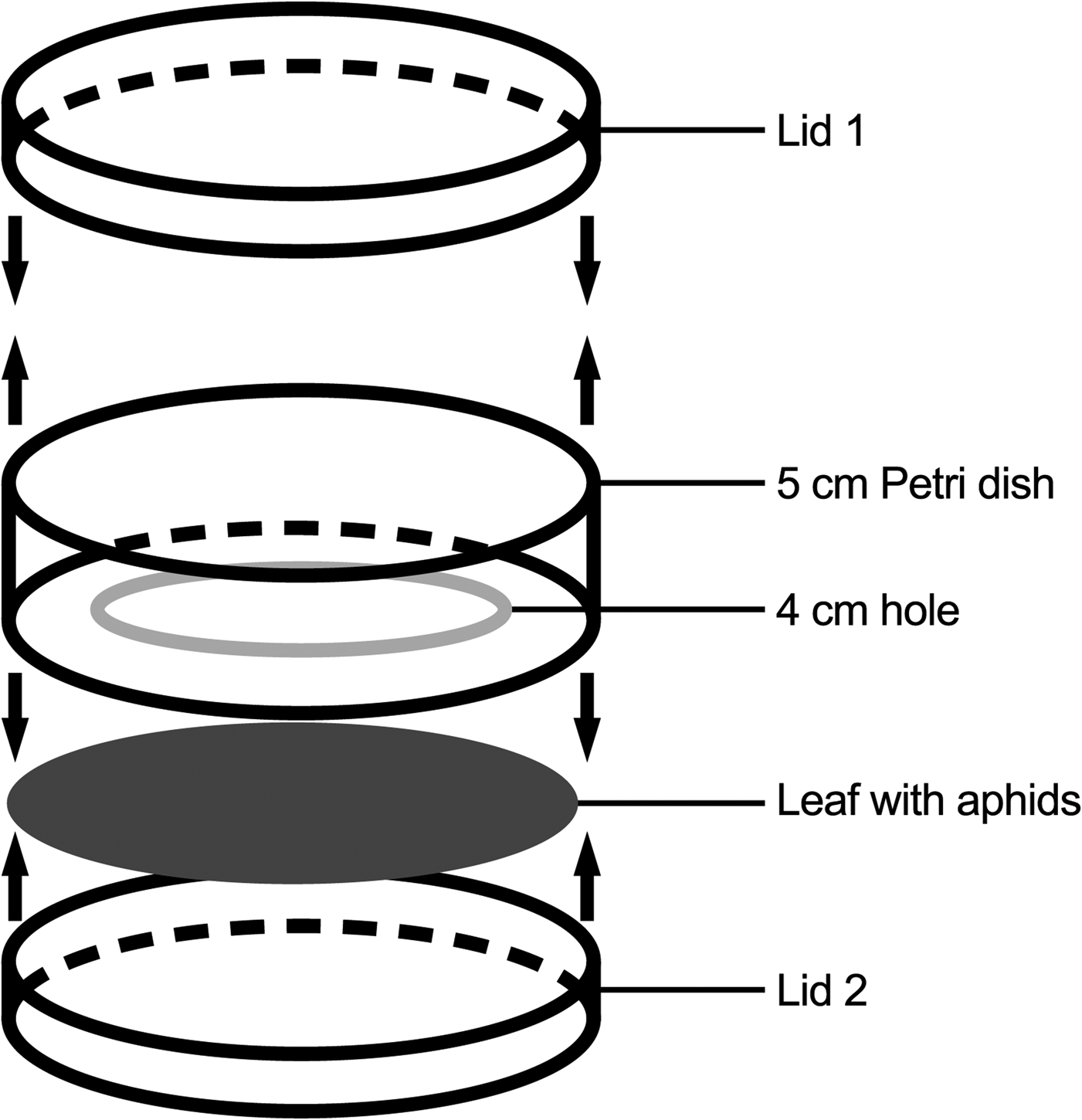
A 5 cm Petri dish containing two 1-day-old ladybird larvae of each instar (total of eight hosts), green peach aphids and a sliced eggplant leaf was used to observe host selection behaviour. A 4 cm hole in diameter was cut out in the bottom of the Petri dish, and an aphid-infested leaf was sandwiched between the Petri dish bottom and another Petri dish lid (fig. 1). An experienced female adult of N. mirabilis (2–4 days old), H. hemipterinus (3–5 days old) or O. scaposus (3–5 days old) was introduced into the arena, and the foraging behaviour was recorded using a Canon camera (Canon EOS 800D, Tokyo, Japan). The parasitoid behaviour was then observed using the Cyberlink Power Director 365 version 21.12401.0 program. A bioassay was considered valid only when a female wasp of H. hemipterinus, N. mirabilis or O. scaposus inserted its ovipositor for more than 10, 1 or 30 s, respectively. During the 30 min of observation, the number of host encounters (number of unparasitised hosts drummed by the female wasp), acceptance rate of the female wasp (attack or not attack), host handling time (time from first antennae detection to the ovipositor extraction), host defence prior to oviposition (defence or no defence) and host defensive behaviour during oviposition (defence or no defence) were recorded. Ladybirds using their abdomen, forelegs or mandible to attack parasitoids were defined as exhibiting host defensive behaviour. Each female wasp was used only once, and 20 replications were carried out for each species.
The structure of the experimental scenario.

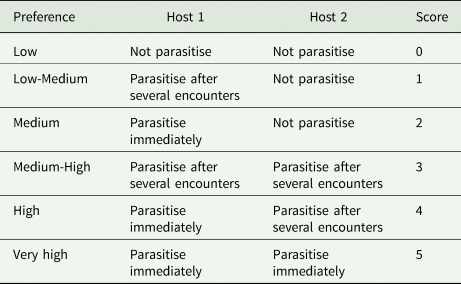
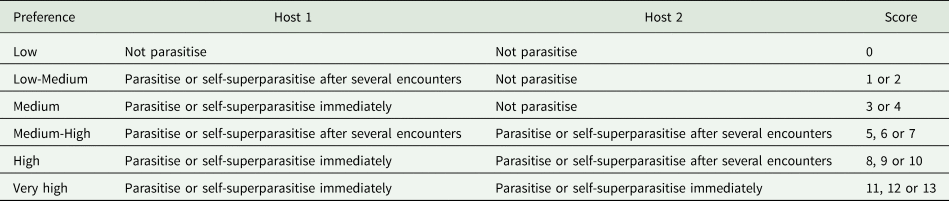
After video recording, the host instar preferences of parasitoids on unparasitised hosts were scored based on their foraging behaviour. The number of hosts attacked in the same instar, as well as whether the parasitoid attacked the host immediately, were both taken into account when determining the scoring criteria. If both individuals were attacked or the host was attacked during the first encounter, the score was increased, as shown in tables 1 and 2. However, O. scaposus sometimes self-superparasitise the hosts, meaning it parasitises the same host multiple times in a single encounter, which might increase host fitness (see discussion). Thus, self-superparasitism was also considered in the scoring criteria for O. scaposus, with instances of self-superparasitism indicating a higher preference score (table 2).
The criteria of preference score of Homalotylus hemipterinus and Nothoserphus mirabilis female adult

The criteria of preference score of Oomyzus scaposus female adult

Field survey
To examine the occupation rates of different parasitoids in each instar, 677 ladybird larvae were collected from the same eco-friendly citizen farm mentioned in the insect rearing section from 25 June 2022 to 5 October 2023. The farm covered approximately 0.3 hectares and featured Brassicaceae, Cucurbitaceae, Fabaceae and Zea mays as major crops, with Duranta erecta as landscape plants and Eragrostis amabilis, Bidens pilosa and Amaranthus viridis as the most abundant weeds. It was located in a suburban area. The survey was conducted biweekly, collecting all immature stages of C. sexmaculata for 1 h. Immature ladybirds were kept under the same environment and procedures as mentioned in the insect rearing section. Parasitism status and species of parasitoids in each instar host were recorded. If the parasitoid was found in the host, we considered it in the calculation of the occupation rate regardless of whether this parasitoid emerged successfully or not. Due to the seasonal fluctuations in parasitoid populations, the results were presented in two survey periods: N. mirabilis-dominant period (Nm-dominant period, hereafter) and H. hemipterinus-dominant period (Hh-dominant period, hereafter). The former ranged from 6 January 2023 to 17 March 2023 and the latter from 3 August 2022 to 10 December 2022, and 9 May 2023 to 26 August 2023. A total of 677 ladybird larvae were examined, and ladybirds that died for unknown reasons were excluded from the results.
Statistical analysis
A generalised linear model (GLM) with Poisson distribution and log link function was used to analyse brood size and development time. The host instar was entered as the explanatory variable, and the number of emerging parasitoids per host (brood size) and days from oviposition to the eclosion of first wasp from each host (development time) were entered as response variables, respectively. For N. mirabilis, gender was additionally included as an explanatory variable. A GLM with binomial distribution and logit link function was used to analyse the sex ratio, parasitism success rate, acceptance rate and host defence frequency. The host instar was entered as the explanatory variable, and individual trial success (host producing the parasitoid or not), number of male and female parasitoids in different instars (sex ratio), host defence prior and/or during parasitism (host defence frequency) and result of acceptance in each encounter (acceptance rate) were entered as response variables, respectively. Any host instars without observational values of the response variable were excluded from the analysis. A GLM with Gaussian distribution and identity link function was used to analyse adult dry mass and host handling time. When the adult dry mass of each gender was entered as the response variable, host instar and gender were entered as the explanatory variables. When the host handling time was entered as the response variable, host instar and host defence frequency were entered as explanatory variables. If any of the above main factors showed a significant effect, Tukey multiple comparison tests among means were conducted.
The host instar preference score was analysed using Kruskal–Wallis test. The host instar was entered as explanatory variable, and preference score was entered as a response variable. If the host instar showed a significant effect, Dunn's tests among the medians were conducted.
All statistical analyses were performed using R statistical software (R Core Team, Reference R2022) with the packages ‘rstatix’ (Kassambara, Reference Kassambara2023), ‘lme4’ (Bates et al., Reference Bates, Maechler, Bolker and Walker2015) and ‘emmeans’ (Lenth, Reference Lenth2023).
Results
Life-history traits measurement in offspring
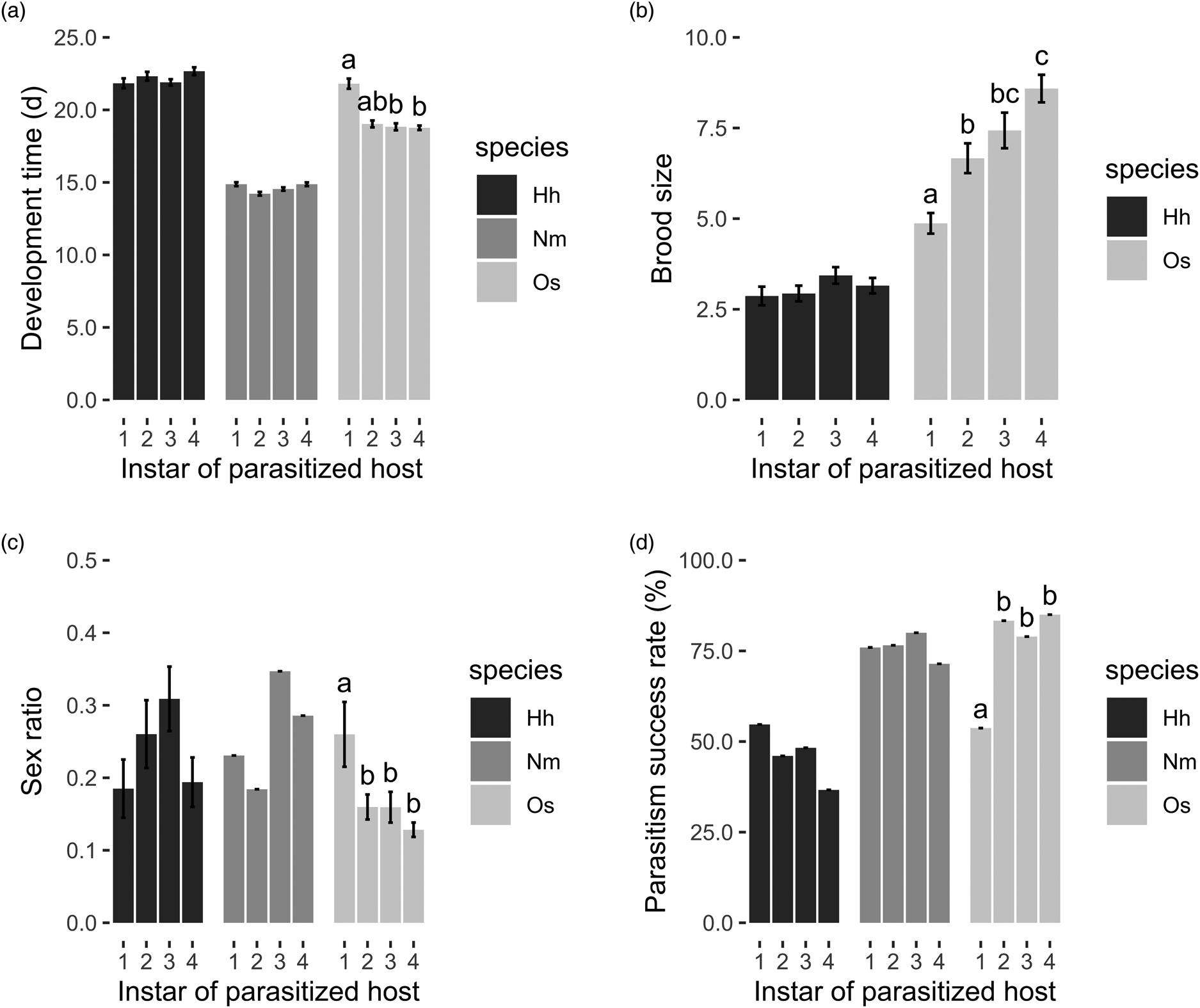
The egg-to-adult development time of H. hemipterinus, N. mirabilis and O. scaposus ranged from 19 to 26, 12 to 19 and 15 to 25 days, respectively. Development time in H. hemipterinus and N. mirabilis did not show significant differences between host instars (GLM: Hh: χ2 = 0.65, df = 3, P = 0.886; Nm: χ2 = 1.39, df = 3, P = 0.707). Furthermore, in N. mirabilis, the effect of gender on egg-to-adult development time was not significant (GLM: χ2 = 3.21, df = 1, P = 0.073). The development time of O. scaposus differed with host instars (GLM: χ2 = 10.60, df = 3, P = 0.014), and it was longest when parasitising the first instar host (fig. 2a).
Egg-to-adult development time (a), brood size (b), sex ratio (c) and parasitism success rate (d) of parasitoids parasitising first to fourth instar Cheilomenes sexmaculata hosts. Bars represent means ± SE. Tukey HSD multiple comparison tests were conducted separately for comparing variables among the three parasitoid species. Letters denote significant differences among means (P < 0.05). Hh, Homalotylus hemipterinus; Nm, Nothoserphus mirabilis; Os, Oomyzus scaposus.

In the two gregarious parasitoids, brood size of H. hemipterinus and O. scaposus ranged from 1 to 5 and 2 to 15, respectively. Only the brood size of O. scaposus varied with the host instar (GLM: Hh: χ2 = 1.88, df = 3, P = 0.597; Os: χ2 = 40.57, df = 3, P < 0.001), and it tended to increase with host instar (fig. 2b).
The sex ratio of O. scaposus varied with the host instar (GLM: χ2 = 25.57, df = 3, P < 0.001), with the male proportion being highest when parasitising the first instar host (fig. 2c). In contrast, the sex ratios of H. hemipterinus and N. mirabilis did not vary significantly with host instar (Hh: χ2 = 4.07, df = 3, P = 0.254; Nm: χ2 = 3.30, df = 3, P = 0.348) (fig. 2c).
Only the parasitism success rate of O. scaposus varied significantly with host instar (GLM: Os: χ2 = 16.77, df = 3, P < 0.001), with the first instar host having the lowest rate (fig. 2d).
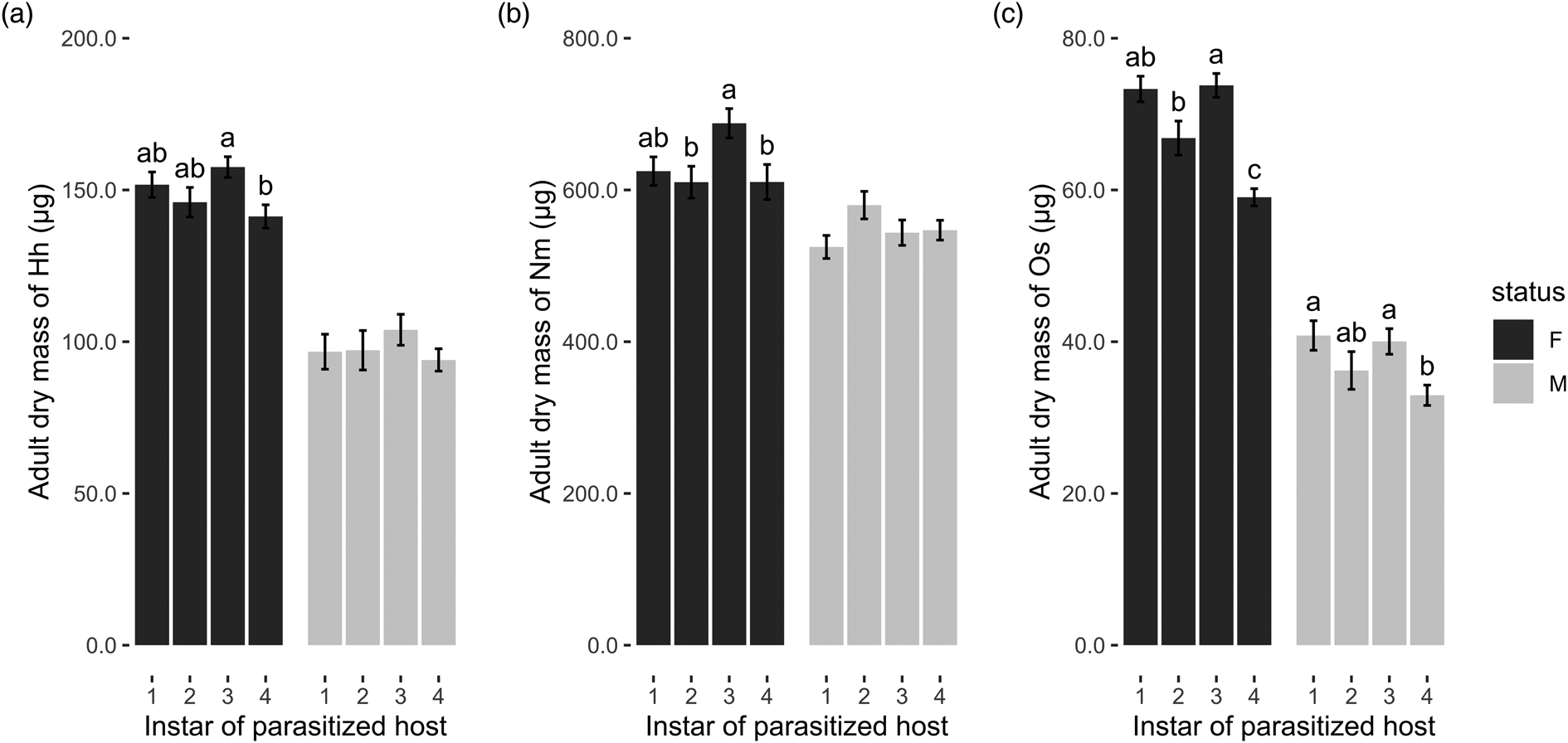
In females of all the parasitoids, adult dry mass varied with the host instar (GLM: Hh: χ2 = 11,169, df = 3, P = 0.025; Nm: χ2 = 129,432, df = 3, P = 0.019; Os: χ2 = 26,234, df = 3, P < 0.001). Female offspring from third instar hosts had the highest mass in all parasitoids (fig. 3). On the other hand, in the adult dry mass of male parasitoids, only O. scaposus varied with host instar (GLM: χ2 = 1673.8, df = 3, P < 0.01). Females were heavier than males in all parasitoids (GLM: Hh: χ2 = 182,314, df = 1, P < 0.001; Nm: χ2 = 491,396, df = 1, P < 0.001; Os: χ2 = 106,753, df = 1, P < 0.001).
Adult dry mass of Homalotylus hemipterinus (a), Nothoserphus mirabilis (b) and Oomyzus scaposus (c) parasitising on first to fourth instar Cheilomenes sexmaculata hosts. Bars represent means ± SE. Tukey HSD multiple comparison tests were conducted separately for comparing adult dry mass among the three parasitoid species. Letters denote significant differences among means (P < 0.05). Hh, H. hemipterinus; Nm, N. mirabilis; Os, O. scaposus; F, female; M, male.

Choice test
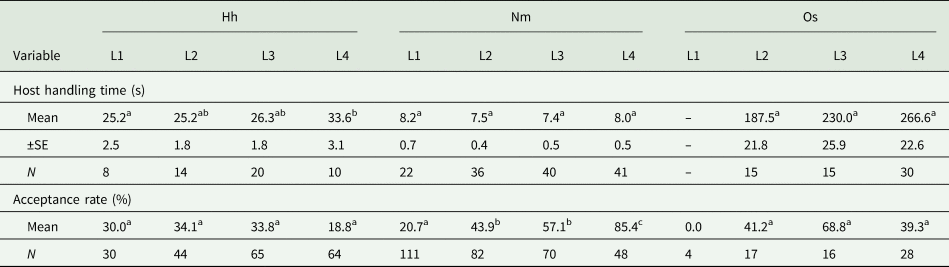
Only the host handling time of H. hemipterinus varied with host instar (GLM: χ2 = 486.90, df = 3, P = 0.046), but was not affected by the host defence prior (GLM: χ2 = 63.43, df = 1, P = 0.307) or during parasitism (GLM: χ2 = 192.95, df = 1, P = 0.075). Homalotylus hemipterinus spent less time handling first to third instar hosts than fourth instar hosts (table 3). In contrast, the host handling time of N. mirabilis and O. scaposus did not vary with the host instar (GLM: Nm: χ2 = 15.26, df = 3, P = 0.633; Os: χ2 = 63,700, df = 3, P = 0.069) or host defence prior (GLM: Nm: χ2 = 1.35, df = 1, P = 0.696; Os: χ2 = 10,082, df = 1, P = 0.357) or during parasitism (GLM: Nm: χ2 = 29.22, df = 1, P = 0.070; Os: χ2 = 21,056, df = 1, P = 0.183).
The host handling time and acceptance rate

Hh, Homalotylus hemipterinus; Nm, Nothoserphus mirabilis; Os, Oomyzus scaposus.
The number of instar hosts parasitised during the choice test determines the sample size of host handling time. The number of unparasitised hosts encountered by female wasps determines the sample size of acceptance rate. Tukey HSD multiple comparison tests were conducted separately for comparing variables among the three parasitoid species.
In N. mirabilis, the number of host encounters decreased as the host instar increased, but the acceptance rate significantly increased (GLM: χ2 = 66.83, df = 3, P < 0.001) (table 3). In contrast, the number of host encounters increased with host instar in H. hemipterinus and O. scaposus, but the acceptance rate of both parasitoids did not show significant differences between host instar (GLM: Hh: χ2 = 4.81, df = 3, P = 0.186; Os: χ2 = 3.99, df = 2, P = 0.136) (table 3). However, O. scaposus rejected all of the first instar hosts.
Host defensive behaviour was only exhibited by second to fourth instar hosts, regardless of parasitoid species. When H. hemipterinus contacted the hosts, 25.0, 41.5 and 50.0% of second, third and fourth instar hosts showed host defensive behaviour, respectively. The frequency of host defence varied with host instar (GLM: χ2 = 7.05, df = 2, P = 0.029), with fourth instar hosts exhibiting a significantly higher frequency than second instar hosts (P = 0.028). When N. mirabilis contacted the hosts, 20.7, 31.7 and 16.7% of second, third and fourth instar hosts showed defensive behaviour, respectively. The frequency of host defence varied with host instar (GLM: χ2 = 7.79, df = 2, P = 0.020), with third instar hosts performing significantly higher frequency than fourth instar hosts (P = 0.048). When O. scaposus contacted the hosts, 29.6, 40.0 and 33.3% of second, third and fourth instar hosts showed defensive behaviour, respectively. The frequency of host defence did not vary with host instar (GLM: χ2 = 0.64, df = 2, P = 0.728).
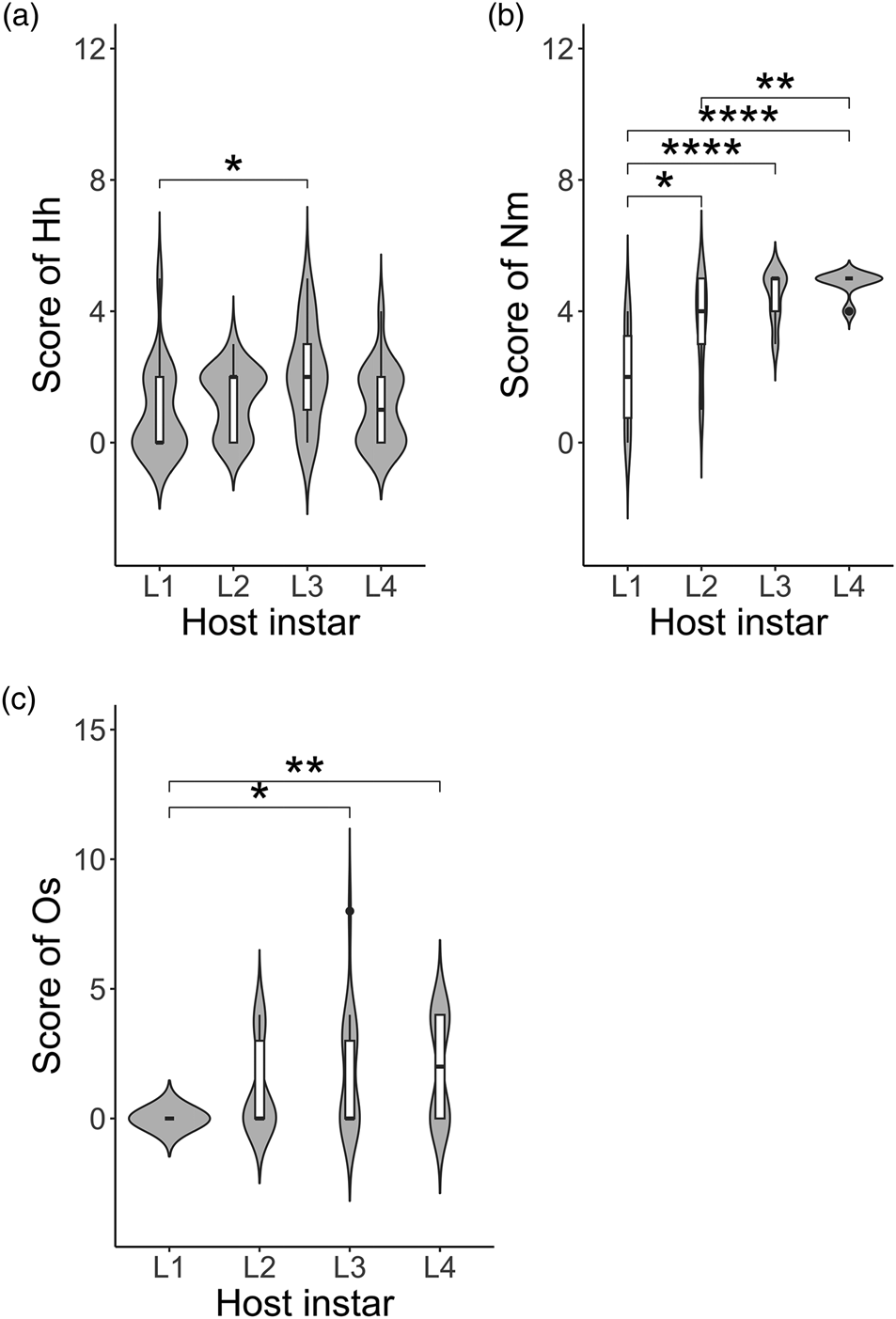
The scores of all the parasitoids varied with the host instar (Kruskal–Wallis: Hh: χ2 = 8.30, df = 3, P = 0.040; Nm: χ2 = 41.24, df = 3, P < 0.001; Os: χ2 = 15.63, df = 3, P < 0.01). In H. hemipterinus, most of the second and third instar hosts received medium preferences, while first and fourth instar hosts usually received low to low-medium preferences (fig. 4a). In N. mirabilis, the scores tended to increase with host instars, with the first instar host having a significantly lower score than the other instars (fig. 4b). In O. scaposus, all instar hosts received low to low-medium preferences, particularly the first instar, which had no hosts attacked by the adult female parasitoid (fig. 4c).
Preference scores of Homalotylus hemipterinus (a), Nothoserphus mirabilis (b) and Oomyzus scaposus (c) parasitising on first to fourth instar Cheilomenes sexmaculata hosts. The width of each violin corresponds to the proportion of score value, with wider sections indicating higher proportion. Each box represents the interquartile range (IQR) of score within each host instar, with the horizontal line inside the box representing the median score. Dunn's tests were conducted separately for the score of each of the three species. Asterisks denote significant differences among medians (*P < 0.05; **P < 0.01; ***P < 0.001; ****P < 0.0001). Hh, H. hemipterinus; Nm, N. mirabilis; Os, O. scaposus.

Field survey
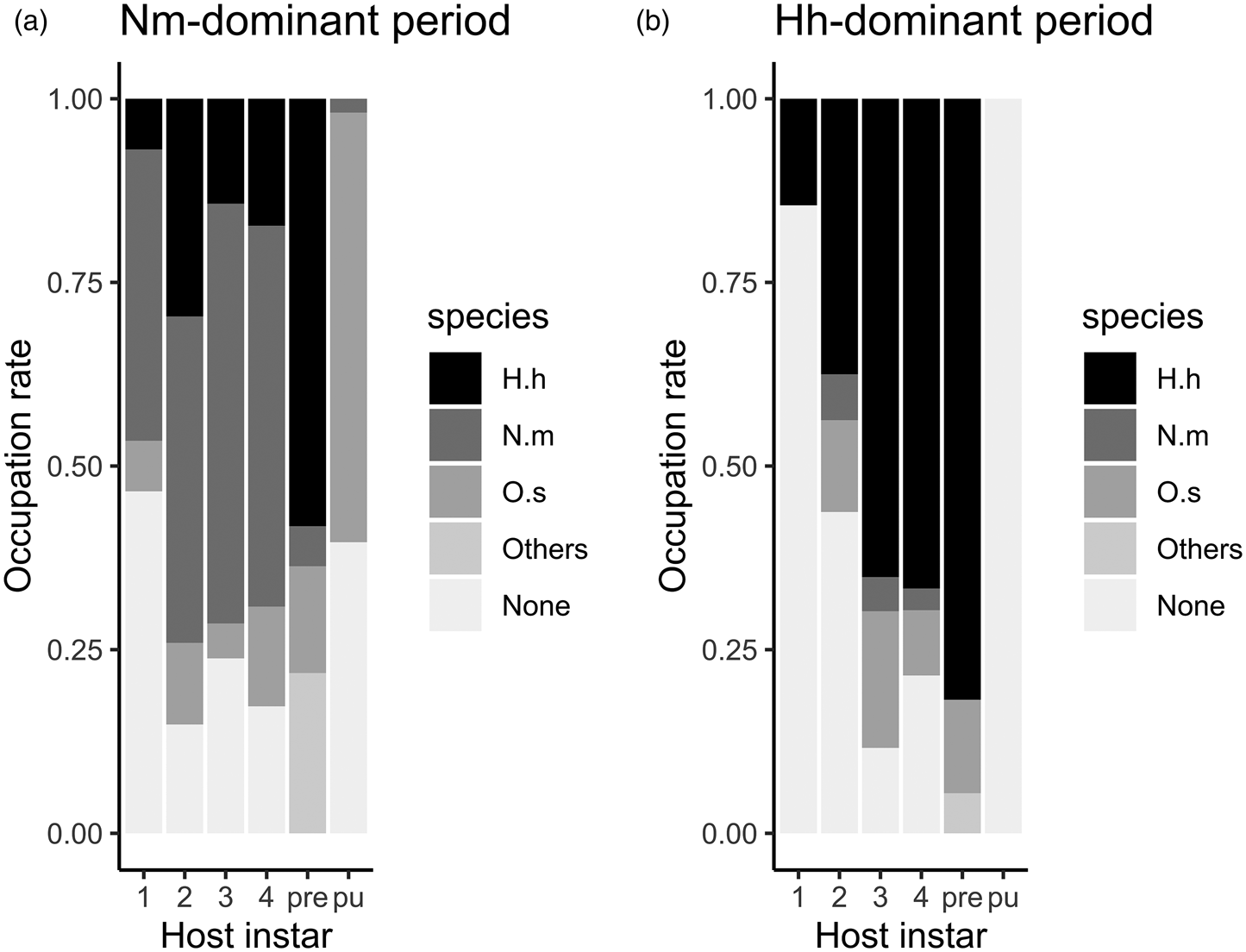
Twenty-three ladybirds that died for unknown reasons were excluded from the analysis. During the Nm-dominant period, H. hemipterinus, N. mirabilis and O. scaposus had occupation rates of 6.9–29.6, 39.7–57.1 and 6.9–14.7% in first to fourth instar hosts, respectively. During the Hh-dominant period, H. hemipterinus, N. mirabilis and O. scaposus occupation rates had 14.5–66.7, 0.0–6.3 and 0.0–18.6% in each host instar, respectively. The occupation rates of H. hemipterinus and O. scaposus increased in third instar hosts when N. mirabilis was absent, while O. scaposus showed increased occupation rates in first instar hosts and pupae when N. mirabilis was present (fig. 5a and b).
Occupation rates of different parasitoids from each host instar during (a) Nm-dominant period and (b) Hh-dominant period. Different colours indicate different species of parasitoids. In the x-axis, ‘1’, ‘2’, ‘3’, ‘4’, ‘pre’, and ‘pu’ represent the first instar, second instar, third instar, fourth instar, prepupal, and pupal of hosts, respectively. Hh, H. hemipterinus; Nm, N. mirabilis; Os, O. scaposus; Others, other parasitoids that are associated with Cheilomenes sexmaculata; None, hosts that were not parasitised by any parasitoids.

Discussion
This study compared the suitability of different host instars for parasitoids under various perspectives when foraging in the absence of interspecific competition. For H. hemipterinus, profitability was higher on first to third instars due to the heavier female adult dry mass; handling time was shorter on first to third instars; acceptance rate was higher on first to third instars; defensive behaviour was less frequent on first and second instars; preference score was higher on second and third instars but lowest on the first instar. For N. mirabilis, profitability was maximised on third instar hosts due to the heaviest female adult dry mass; handling time was similar on each instar; defensive behaviour was more frequent on third instar; acceptance rate was highest on the fourth instar; preference score was higher on third and fourth instars. For O. scaposus, profitability was higher on third and fourth instars due to the heaviest female adult dry mass and the highest brood size, respectively; handling time increased with host instar; acceptance rate was higher on third instar; defensive behaviour was more frequent on third instar; preference score was highest on the fourth instar. Based on the rank in each factor, first to third instar hosts are ideal for H. hemipterinus, third and fourth instar hosts are ideal for N. mirabilis but the first and second instars are acceptable, and third and fourth instar hosts are ideal for O. scaposus but the second instar is acceptable. These findings support our hypothesis that the contribution of each perspective on host instar preferences differs between parasitoids but contradicts the hypothesis that they separate the niche through different host instar preferences.
First to third instar hosts are more suitable to H. hemipterinus. Parasitising fourth instar hosts resulted in the most frequent host defensive behaviour, longest host handling time, lowest acceptance rate and lowest parasitism success rate, indicating that the benefit of parasitising this instar host was extremely low. Similar results were also observed in H. eytelweinii ( = misidentification of H. hemipterinus, see Noyes Reference Noyes2010) parasitising C. septempunctata (Guo et al., Reference Guo, Meng, Fei and Li2022). The host instar preferences were almost consistent across our five perspectives, suggesting that H. hemipterinus might properly select hosts suitable for both host handling difficulty and profitability. However, the preference score of the first instar host was relatively lower than that of the fourth instar host, implying the existence of other minor effects. This effect might be related to the host encounter rate, which was two times higher for third and fourth instar hosts than for first instar hosts. Adult H. hemipterinus possess strong mid legs (Tirunagaru et al., Reference Tirunagaru, Sagadai and Kumar2016) and usually keep moving. Larger hosts can be found more easily in small scenarios, which explains why first instar hosts have a low score due to their small size. Host encounter is also influenced by other chemical or physical cues emitted by the host (Aartsma et al., Reference Aartsma, Cusumano, de Bobadilla, Rusman, Vosteen and Poelman2019), and it can affect life-history traits such as brood size in the field (Bezemer and Mills, Reference Bezemer and Mills2003; Samková et al., Reference Samková, Hadrava, Skuhrovec and Janšta2019). Previous studies show that host encounter rates and mortality play a crucial role in determining the lifetime reproductive success of Aphytis (Hymenoptera: Aphelinidae) parasitoids (Heimpel et al., Reference Heimpel, Mangel and Rosenheim1998). The mechanism by which chemical blends attract H. hemipterinus is still unknown. It might be detrimental to survival if H. hemipterinus is attracted to certain amount or kinds of chemical cues from fourth instar hosts. Compared our result with previous study on H. eytelweinii (probably the synonym of H. hemipterinus), H. eytelweinii also showed higher mortality on fourth instar hosts of C. septempunctata, but had the same susceptibility to all the instars (Guo et al., Reference Guo, Meng, Fei and Li2022). Nonetheless, if H. hemipterinus tends to superparasitise larger hosts or attacks the gregarious status of newly hatched first instar ladybirds, which are the two situations ignored in our lab experiments, the drawbacks of low parasitism success rate and host encounter rate might be eliminated. Further research is required to examine their oviposition strategy in nature.
In contrast to H. hemipterinus, N. mirabilis prefers to parasitise larger hosts. Both acceptance rate and preference score indicated that fourth and third instar hosts were the most and second most preferable hosts for N. mirabilis, respectively. This host instar preference contrasted with some aspects of host profitability and the frequency of host defensive behaviour, as the former was lowest on the fourth instar host, while the latter was highest on third instar hosts. As a result, the acceptance rate and preference score might provide more accurate representation of their preferences on third and fourth instar hosts than host profitability and host handling difficulty. We speculate that the reason it prefers larger hosts might be related to its vision. During the choice test, N. mirabilis consistently exhibited an extremely high host encounter rate and foraging efficiency compared to other parasitoids. We also observed that N. mirabilis changed its movement when a shadow passed by, indicating good vision. Some parasitoid have been found to have sensitive vision regarding host shape (Pérez et al., Reference Pérez, Rojas, Montoya, Liedo, González and Castillo2012) and colour (Chen et al., Reference Chen, Xu, Kuang and Sun2016), and can integrate this information with other cues (Canale et al., Reference Canale, Benelli and Lucchi2013; Lim and Ben-Yakir, Reference Lim and Ben-Yakir2020). In most environments, larger hosts are usually easier to detect. Given that parasitism success rates on each instar were high (more than 70%), and host handling time was not affected by host defensive behaviour, parasitising larger hosts should be the most profitable and time-saving option.
Similar to N. mirabilis, O. scaposus also prefers to parasitise third and fourth instar hosts. However, host profitability might be the most critical factor in its host instar preference. Third and fourth instar hosts exhibited higher profitability due to the heaviest female adult dry mass when parasitising the former and the highest brood size when parasitising the latter. Heavier female adult dry mass is usually linked to higher fecundity and population growth (Sagarra et al., Reference Sagarra, Vincent and Stewart2001; Saeki and Crowley, Reference Saeki and Crowley2013). As a result, the high acceptance rate in the third instar host might benefit from this advantage. On the other hand, a higher brood size usually comes with a trade-off with female body size and is also positive for population growth (Saeki and Crowley, Reference Saeki and Crowley2013). The behaviour of self-superparasitism can effectively increase the brood size and fitness in a host (Silva-Torres et al., Reference Silva-Torres, Ramos Filho, Torres and Barros2009) and has been frequently observed when O. scaposus parasitises fourth instar hosts. A previous study had recorded that O. scaposus was good at adjusting the clutch size depending on the host size (Song et al., Reference Song, Meng and Li2017), and tended to superparasitise or self-superparasitise the larger host, which made the number of offspring reach up to 47 per host (Ceryngier et al., Reference Ceryngier, Roy, Poland, Hodek, van Emden and Honěk2012). Although the mechanism of such behaviour in O. scaposus is understudied, it has been proved that other parasitoids obtain benefits through increasing host quality (Liu et al., Reference Liu, Zhao, Cao and Wei2021), suppressing the host immune system (Luna et al., Reference Luna, Desneux and Schneider2016), or enhancing the survival of offspring under various temperatures (DaSilva et al., Reference DaSilva, Morelli and Parra2016). Thus, self-superparasitising fourth instar hosts might increase profitability and reduce the time spent on host searching. The reason why host profitability is the major factor in host instar preference of O. scaposus is not only because of the preference for high profitability hosts but also the avoidance behaviour to poor profitability hosts. The first instar host had the lowest profitability in most life-history traits, and it was never attacked in the choice test. The above results imply that O. scaposus adapts well to C. sexmaculata because its oviposition strategy is flexible and the host instar preference can effectively increase fitness. Comparing our results to another study on O. scaposus parasitising C. septempunctata, they found that parasitising the third instar host resulted in shorter development time, higher brood size, heavier biomass and a lower parasitism success rate, which align with our findings (Fei et al., Reference Fei, Hu, Gols, Liu, Wan, Li and Harvey2021). The major difference is that the parasitism success rates on second to fourth instar larvae of C. sexmaculata (more than 78%) are higher than those of C. septempunctata, which were consistently below 50% for each instar (Fei et al., Reference Fei, Hu, Gols, Liu, Wan, Li and Harvey2021). Future study can focus on comparing the host suitabilities and preferences for O. scaposus between different ladybird species.
All of the parasitoids strike a balance between host profitability and foraging efficiency when encountering C. sexmaculata as a host. Larger hosts are more valuable for both N. mirabilis and O. scaposus. The former parasitoid prefers them because of the high encounter rate and ample host profitability, while the latter prefers them because of their high profitability. In contrast, smaller hosts are more suitable for H. hemipterinus because they provide higher profitability than fourth instar hosts and are easier to handle. However, our findings indicate that these parasitoids overlap their preferences for the first two options on third instar host. Based on previous theories, we anticipate that N. mirabilis would be the most dominant species in both extrinsic and intrinsic competition. They exhibit higher foraging efficiency with significantly shorter host handling times, higher mobility and less sensitivity to host defensive behaviours, making them superior in extrinsic competition (Ode et al., Reference Ode, Vyas and Harvey2022). Similar cases of competition, such as the competition between Aphidius rhopalosiphi (Hymenoptera: Braconidae) and A. picipes (Hymenoptera: Braconidae), have shown that shorter host handling times and lower host defence rates provide a competitive edge for parasitoids (Van Baaren et al., Reference Van Baaren, Héterier, Hance, Krespi, Cortesero, Poinsot, Le Ralec and Outreman2004). In terms of intrinsic competition, N. mirabilis exhibits faster development, broader preferable instars and higher parasitism success rates across all instars, allowing them to occupy host resources and have more flexibility in their parasitism choice (Cusumano et al., Reference Cusumano, Peri and Colazza2016; Zhu et al., Reference Zhu, Lammers, Harvey and Poelman2016). Additionally, larvae of Proctotrupidae bear heavy falcate mandibles, large paired ventral processes and apparently four-segmented tail (Clausen, Reference Clausen1940). These characters enable many solitary parasitoids to attack competitors or enhance their mobility (Harvey et al., Reference Harvey, Poelman and Tanaka2013; Murillo et al., Reference Murillo, Liedo, Nieto-López, Cabrera-Mireles, Barrera and Montoya2016). Previous studies have often shown that solitary parasitoids can outcompete gregarious competitors through these characters (Harvey et al., Reference Harvey, Poelman and Tanaka2013; Cusumano et al., Reference Cusumano, Peri and Colazza2016). Our results of field survey also indicate that the occupation rates of H. hemipterinus and O. scaposus in third instar hosts decreased during the Nm-dominant period. Thus, it can be expected that N. mirabilis is the superior competitor against H. hemipterinus and O. scaposus.
However, there are still opportunities for H. hemipterinus and O. scaposus to survive in the competition. One potential chance is the timing of parasitism between the first and second competitors. Many inferior competitors can benefit from parasitising younger hosts, thereby monopolising host resources or controlling the physiological condition (Cusumano et al., Reference Cusumano, Peri and Colazza2016; Magdaraog et al., Reference Magdaraog, Tanaka and Harvey2016; Zhu et al., Reference Zhu, Lammers, Harvey and Poelman2016). Our results suggest that H. hemipterinus has a minor advantage in this regard, although N. mirabilis also shows a slight willingness to parasitise this instar. The other opportunity lies in the ability of host discrimination. Recent research has shown that some inferior competitors can exhibit host discrimination abilities and avoid parasitising already parasitised hosts. This behaviour can be achieved through cues sensed from a distance during flight (Tamò et al., Reference Tamò, Roelfstra, Guillaume and Turlings2006), or through probing and inserting the ovipositor after the contact with the host (Savino et al., Reference Savino, Luna, Gervassio and Coviella2017; Cebolla et al., Reference Cebolla, Bru, Urbaneja and Tena2018). In fact, our unpublished field survey data showed that the multiparasitism rate of N. mirabilis with other parasitoids was much lower than the H. hemipterinus–O. scaposus combination (unpublished data). Considering the asymmetric competitive abilities conferred by their biological traits and the evidence provided by our field survey data and unpublished data, it is logical that H. hemipterinus and O. scaposus have the ability to detect the presence of N. mirabilis. Further research is needed to examine the reasons for low multiparasitism rate in N. mirabilis and the presence of host discrimination in H. hemipterinus and O. scaposus. Another possibility is that H. hemipterinus and O. scaposus have a much wider range of host species compared to N. mirabilis (Ceryngier et al., Reference Ceryngier, Roy, Poland, Hodek, van Emden and Honěk2012), which allows them to be more flexible in changing environments. Homalotylus hemipterinus and closely related species, H. eytelweinii and H. flaminius, can attack nine tribes in six subfamilies of Coccinellidae (Ceryngier et al., Reference Ceryngier, Roy, Poland, Hodek, van Emden and Honěk2012). Oomyzus scaposus has been reported to attack species in tribes Coccinellini and Chilocorini, as well as some species of Scymnus and Chrysopa (Ceryngier et al., Reference Ceryngier, Roy, Poland, Hodek, van Emden and Honěk2012). In contrast, N. mirabilis only attacks a few species (Ceryngier et al., Reference Ceryngier, Roy, Poland, Hodek, van Emden and Honěk2012). In addition to the host species, previous studies recorded that O. scaposus was capable of parasitising the pupal stage of ladybirds (Iperti, Reference Iperti1964; Klausnitzer, Reference Klausnitzer1969; Ceryngier et al., Reference Ceryngier, Roy, Poland, Hodek, van Emden and Honěk2012), and our field survey showed that occupation rates of O. scaposus in pupae and first instar hosts increased during the Nm-dominant period, implying that O. scaposus shifted its preferred host stages. Host discrimination behaviour and alternative hosts can release competitive pressure through resource partitioning (Messing and Wang, Reference Messing and Wang2009; Chen et al., Reference Chen, Gols, Biere and Harvey2019; Ode et al., Reference Ode, Vyas and Harvey2022), allowing them to coexist in enemy-free spaces (Holt and Lawton, Reference Holt and Lawton1993; Thierry et al., Reference Thierry, Hrček and Lewis2019). Moreover, the response of parasitoids to environmental changes often depends on complex interactions involving hosts, parasitoids, competitors and symbionts (Andrade et al., Reference Andrade, Krespi, Bonnardot, van Baaren and Outreman2016; Thierry et al., Reference Thierry, Hrček and Lewis2019). This aspect is particularly important for ladybird parasitoids, as their higher trophic levels make them more sensitive to changes in environmental factors (van Baaren et al., Reference van Baaren, Le Lann, van Alphen, Kindlmann, Dixon and Michaud2010). In addition to finding competitor- or enemy-free spaces and adapting to a changing environment, the abundance of various species of ladybirds might also be important because C. sexmaculata is usually the dominant species in habitats (Duffield, Reference Duffield1995; Sreedevi et al., Reference Sreedevi, Verghese, Vasudev and Devi2006). Occupying C. sexmaculata means accessing most resources and having the largest population. Interactions among these factors construct the complicated ecosystem of ladybird parasitoids and ladybirds.
In conclusion, our results indicate H. hemipterinus, N. mirabilis and O. scaposus exhibit host instar preferences influenced by various factors. They overlap in their optimal host instar preference for third instar larvae of C. sexmaculata, suggesting the potential for intense interspecific competition. However, it is important to note that our study only examines host–parasitoid interactions and provides indirect evidence of interspecific competition in the field. Further research into the interactions of these parasitoids in both laboratory and natural conditions is necessary. Additionally, the effect of these parasitoids on the valuable biocontrol agent, C. sexmaculata, remains unclear. Hyperparasitoids, which are also parasitoids at fourth trophic level, have been identified as a major problem for biocontrol agents (Poelman et al., Reference Poelman, Cusumano and De Boer2022). In contrast, the relationship between ladybird parasitoids and biocontrol efficiency has received little attention (Bayoumy, Reference Bayoumy2011; Bayoumy and Michaud, Reference Bayoumy and Michaud2012). To control these parasitoids, studying chemical ecology is important as it shows potential for developing traps to mitigate their impact (Cusumano et al., Reference Cusumano, Harvey, Bourne, Poelman and de Boer2020). Moreover, higher-order interactions may play a critical role in species coexistence in nature (Fox, Reference Fox2023). Previous studies have suggested that the enemy release hypothesis in H. axyridis and C. sexmaculata may lead to a decrease in other aphidophagous predators (Brown and Roy, Reference Brown and Roy2018; Assour and Behm, Reference Assour and Behm2019). Future research is required to better understand the relationships between multitrophic and non-trophic organisms. Ladybird parasitoid might play an important role in advancing our knowledge of the entire aphid-based ecosystem.
Acknowledgement
Our gratitude to Integrative & Comparative Biomechanics Laboratory, National Chung Hsing University for lending the camera, Good Farms Company Limited for the initial colony of green peach aphids, Dr Kok-Boon Neoh for valuable suggestions for the experiments and Dr Sheng-Feng Lin for the assistance of parasitoid species identification.
Author contributions
C.-H. Cheng conducted experiments, performed statistical analysis and wrote the manuscript; S.-Y. Hwang advised the experiments and contributed materials and funding. All authors read and approved the manuscript.
Financial support
This research did not receive any specific grant from funding agencies in the public, commercial, or not-for-profit sectors.
Competing interests
None.