


Antibiotics are a class of emerging contaminants (ECs) present in medicines used to prevent and treat disease for humans and livestock (Kummerer Reference Kummerer2009). However, the great majority of antibiotics are used as feed additives for aquaculture and fish farms to increase productivity (Hirsch et al. Reference Hirsch, Ternes, Haberer and Kratz1999; Zhang et al. Reference Zhang, Ying, Pan, Liu and Zhao2015). A significant fraction of antibiotics used in animals end up being discharged along with their metabolites in urine and faeces, eventually finding their way into the environment (Kim & Carlson Reference Kim and Carlson2007). In Mexico, catfish farmers routinely used oxytetracycline to treat healthy fish against bacterial diseases (Sanches-Martinez et al. Reference Sanches-Martinez, Perez-Castaneda, Rabago-Castro, Aguirre-Guzman and Vazquez-Sauceda2008). Carbadox, which is an antibiotic used solely in pig farms, was found in 28 % of the 50 lakes sampled in a study in Minnesota, one of the states with the highest number of hogs in the United States of America (USA) (rounding at about 19 million) (Ferrey et al. Reference Ferrey, Heiskary, Grace, Hamilton and Lueck2015).
Antibiotics used in humans have been found to bypass current wastewater treatment processes, leading to high concentrations of antibiotic residues being discharged in treated effluents (Thomas & Hilton Reference Thomas and Hilton2004). Some studies indicated that the main pathways of antibiotics entering water bodies are effluents from wastewater treatment plants (WWTPs) (Wang et al. Reference Wang, Zhang, Huang and Wang2015). For instance, trimethoprim (65 %, 70 ng l−1), erythromycin (44 %, <10 ng l−1) and sulfamethoxazole (9 %, median ≤50 ng l−1) were detected in the WWTP effluent samples and trimethoprim (38 %, median ≤10 ng l−1) and erythromycin (38 %, median ≤10 ng l−1) were found in the corresponding receiving streams in the United Kingdom (Ashton et al. Reference Ashton, Hilton and Thomas2004).
The presence of antibiotics in WWTPs and in the environment has led to the spread of antimicrobial resistance (Martinez Reference Martinez2008; Ventola Reference Ventola2015). Resistance can be transferred to other bacteria living in other environmental matrices such as groundwater or drinking water (Kummerer Reference Kummerer2003). Furthermore, the occurrence of antibiotic resistance bacteria resulted in controlling the infection ineffectively, and even the emergency of superbugs (Martinez Reference Martinez2009). For example, vancomycin-resistant enterococci have been found in wastewater and surface water, which caused difficulties when treating debilitated and immunocompromised patients owing to multiresistance of these bacteria (Schwartz et al. Reference Schwartz, Kohnen, Jansen and Obst2003). Antibiotic resistance genes (ARGs) as an emerging contaminant are paid much attention recently (WHO, 2014). Noticeably, the horizontal gene transfer (HGT) of ARGs greatly expanded the threat to ecosystems and human health. A total of 149 unique resistance genes (e.g., aadA, qacEΔ1, sul2) have been found in Chinese swine farms (Zhu et al. Reference Zhu, Johnson, Su, Qiao, Guo, Stedtfeld, Hashsham and Tiedje2013).
Bibliometric analysis has been broadly applied to analyse quantitatively publications of a certain field and predict the development trends using abundant literature data (Mao et al. Reference Mao, Zou, Chen, Du and Zuo2015b). Some of the published literature using bibliometric analysis included medicine, biology, environmental protection, education, etc. (Glanzel & Schoepflin Reference Glanzel and Schoepflin1999; Weingart Reference Weingart2005; Yin et al. Reference Yin, Aris and Chen2009; Chen et al. Reference Chen, Yeh, Wu, Haschler, Chen and Wetter2010). The Science Citation Index (SCI) database of Web of Science Core Collection is one of the most widely and popularly used data sources of bibliometric information to extract information about high-quality scientific articles. Furthermore, bibliometric analysis offers a useful tool to shift from micro (scientist and institute) level to macro (national and global) level (Mao et al. Reference Mao, Liu, Du, Zuo and Wang2015a). Similarly, the level of development of a given field or research idea, extent of collaborative work, main research hotspots and future research directions can be identified. Likewise, network analysis is applied to the processed data from Bibexcel which can help visualise a variety of nexus between countries and institutes simultaneously (Xu & Boeing Reference Xu and Boeing2013). To date, no study has compared the research about the presence of antibiotics and antimicrobial resistance in water, soil and sediment using bibliometric analysis.
It is crucial to identify the consistency and difference of antibiotics research development among different environmental matrices. Therefore, this paper presents an overview by comparing simultaneously research outputs on antibiotics in water, soil and sediment, complementing the studies already made individually for water, soil and sediment. Hierarchical cluster analysis was used to describe the research status with the combination of authors’ addresses, journals and author keywords. Our study included four perspectives as follows: (1) analyse international collaborations by the 20 most productive countries; (2) make the ranking and visualisation attribution of research institutions; (3) rank the most popular journals and subject categories; (4) compare the top 50 keywords to study research trends and hotspots.
1. Results and discussion
1.1. International collaborations
Until 2016, a total of 146, 109 and 79 countries had contributed to the studies of antibiotics in soil, water and sediment, respectively, producing a total of 15,430, 6053, and 1479 publication times (PT), respectively. The 20 most publication-productive countries (i.e., 13.6 % of the 146 countries) yielded more than 197 PT for water, contributing a total of 12,235 PT (i.e., 95.5 % of total 15,430 PT). Likewise, the 20 most publication-productive countries were responsible for more than 58 and 13 PT on soil and sediment with 4869 and 1413 PT, respectively.
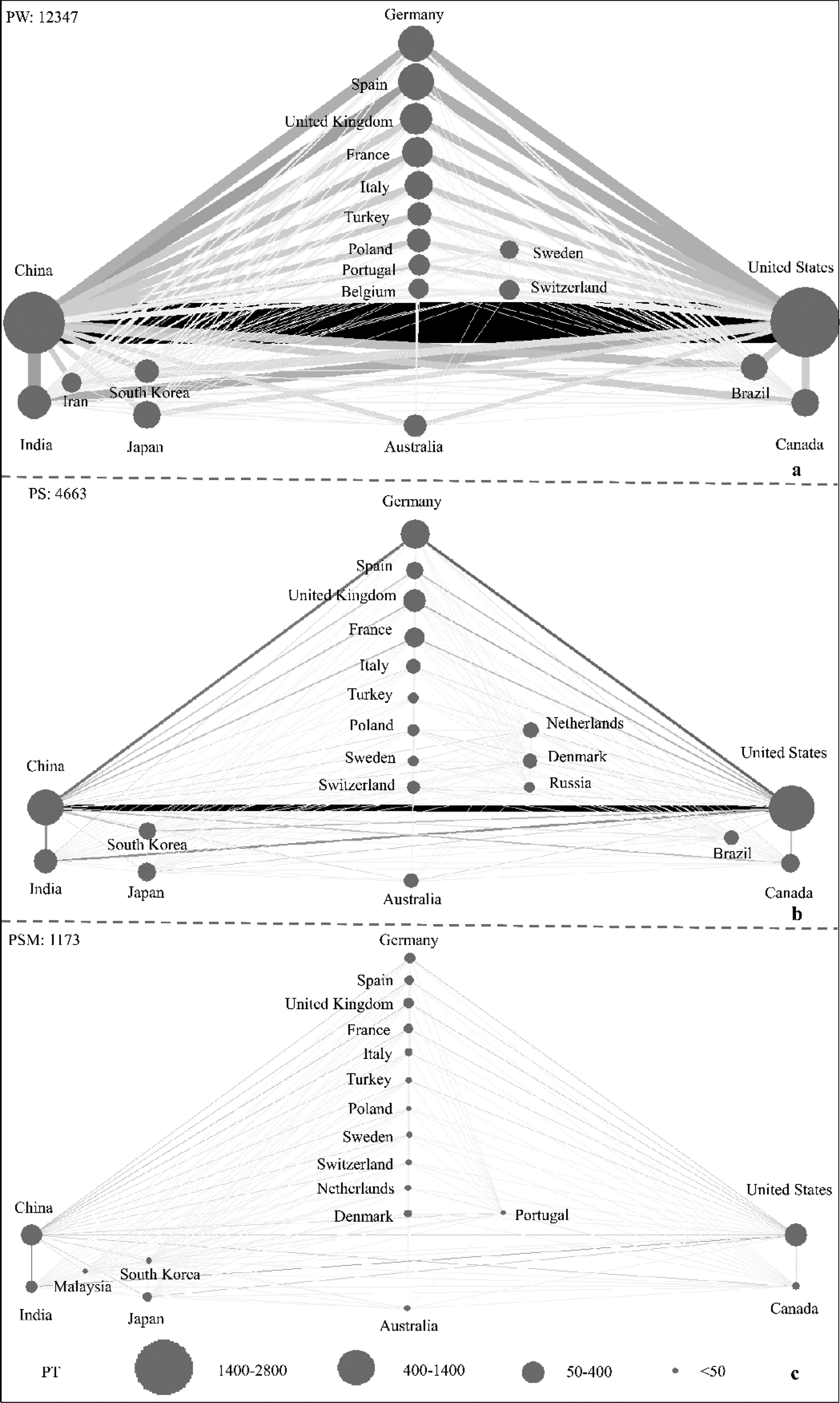
The collaboration networks were mapped for the 20 most publication-productive countries on PT (Fig. 1). The vast majority of countries located in Europe (Germany, Spain, United Kingdom, France, Italy, Turkey, Poland, Portugal and Belgium), Asia (China, India, Japan, South Korea and Iran), America (USA, Canada and Brazil) and Oceania (Australia). Figure 1b shows that some countries in Europe such as the Netherlands, Denmark and Russia ranked among the 20 most productive for soil research, but not for water. While Portugal, Belgium and Iran showed the inverse. Similarly, Portugal and Malaysia appeared among the top 20 countries for sediment study, but not for soil. While Brazil and Russia showed the inverse. The cooperation link was the strongest between the USA and China followed by many strong links with many European countries. Overall, international collaborations were more intensive inside Europe and America than in Asian countries, which preferred collaborations outside the region. The USA published the largest number of articles. China ranked second but with a large gap. Spain, Germany and India ranked third, fourth and fifth, respectively.
The collaboration networks for the 20 most productive countries on publication times of antibiotics in water, soil and sediment. PT, PW, PS and PSM refer to publication times, publications of water, publications of soil and publications of sediment, respectively.

The collaboration networks were mapped for the 20 most productive countries on PT in water (Fig. 1a). The vast majority of countries located in Europe (Germany, Spain, United Kingdom, France, Italy, Turkey, Poland, Portugal, Belgium, Sweden and Switzerland). Other countries distributed in Asia (China, India, Japan, South Korea and Iran), America (USA, Canada and Brazil) and Oceania (Australia). The USA published the largest number of articles in the field of antibiotics in water. China and Spain ranked second and third, respectively. Furthermore, the line was the darkest and widest between the USA and China, which showed the most close international cooperation of the two countries. International cooperation was also predominant in countries like Germany, Spain and India. There were three obvious triangle closed loops, including USA–China–Germany, USA–China–Spain and USA–China–India, which indicated there are main international partners.
The 20 most productive countries all together generated 4869 PT of antibiotics in soil (Fig. 1b). Globally, these 20 countries were distributed in five continents, of which three continents had more than one country. In Europe, there were 12 countries, including Germany, Spain, United Kingdom, France, Italy, Turkey, Poland, Sweden, Switzerland, Netherlands, Denmark and Russia. Three countries including USA, Canada and Brazil were in America, and Asia had four countries including China, India, South Korea and Japan. Australia is in the continent of Oceania. As shown in the network developed from the analysis of the 20 most productive countries, the most obvious triangle closed loop was USA–China–Germany, which showed the collaboration was strongest among the three countries. Furthermore, United Kingdom, France, India, Japan and Canada were also in tight collaboration with the USA and China, possibly owing to the close academic exchanges among them.
Network analysis revealed the relationships of international collaborations among the countries located in Europe (i.e., Germany, Spain, United Kingdom, France, Italy, Turkey, Poland, Sweden, Switzerland, Netherlands, Denmark and Portugal), Asia (i.e., China, India, South Korea, Japan and Malaysia), America (i.e., USA and Canada) and Oceania (Australia) of articles on antibiotics in sediment (Fig. 1c). The triangle closed loop with widest and darkest line was USA–China–India, which indicated that these three countries played very important roles on international collaborations of antibiotics in sediment followed by many links with many European countries.
It is apparent that cooperation link was the strongest between the USA and China in the field of antibiotics in water, soil and sediment, respectively. Figure 1a, b showed that some countries in Europe such as Netherlands, Denmark and Russia ranked among the 20 most productive countries for soil research, but not for water. However, Portugal, Belgium and Iran showed the inverse. This phenomenon may show some countries focused on the singular pollution of antibiotics in soil or water. Similarly, Fig. 1b, c indicated that Portugal and Malaysia appeared among the top 20 countries for sediment study, but not for soil. Besides, Brazil and Russia showed the inverse. The network of top 20 countries for water had wider triangle closed-loops than those of soil and sediment. Overall, international collaborations were more intensive inside Europe and America than in Asia countries, which preferred collaborations outside the region.
1.2. Publication attribution of institutes
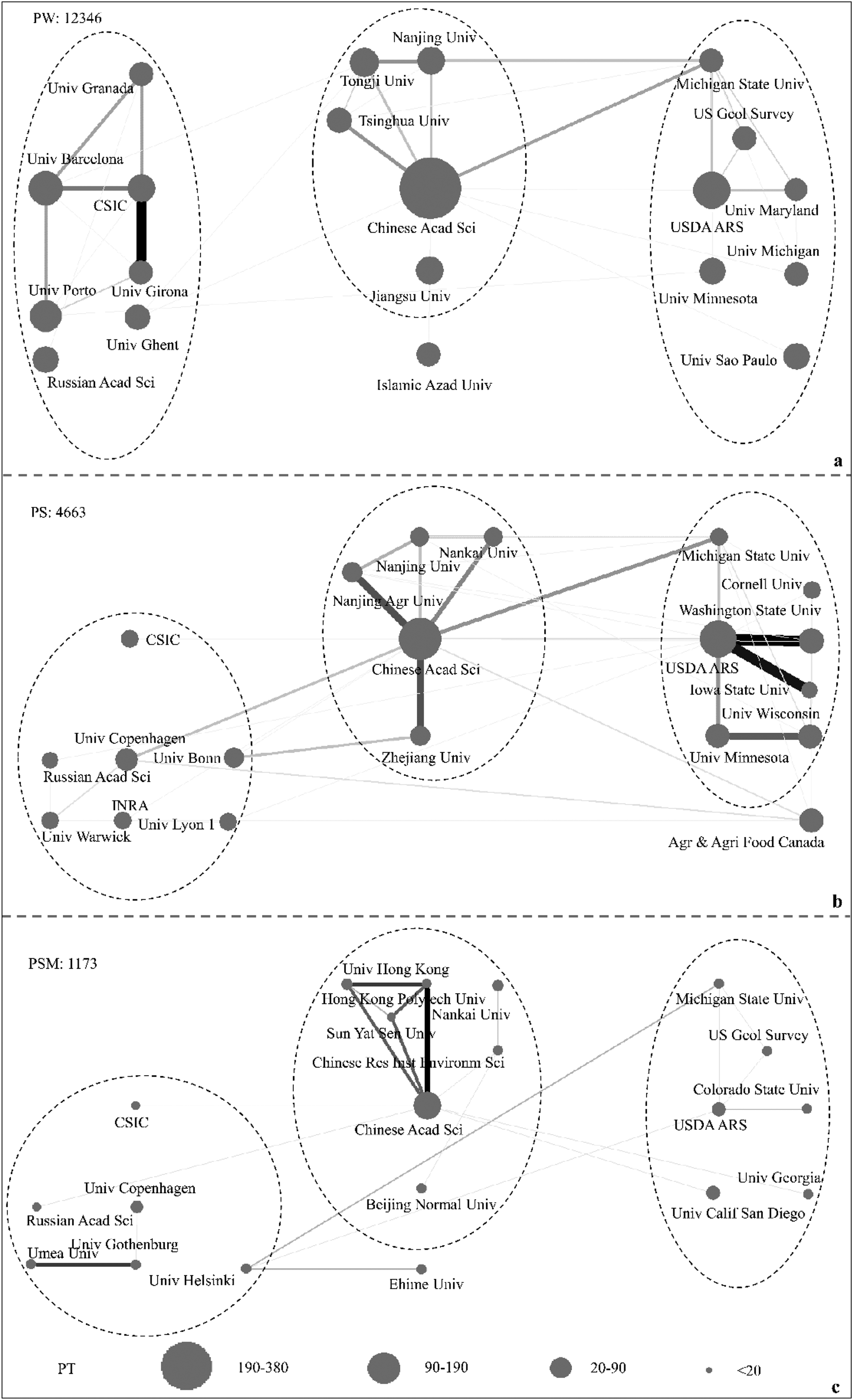
At the institution level, the literature about antibiotics research in water, soil and sediment included 7756, 3347 and 1259 institutes, respectively. Furthermore, Chinese Academy of Sciences (CAS) ranked first among the most productive institutes (Fig. 2). Agricultural Research Service of U.S. Department of Agriculture (ARS, USDA), USA, and University of Barcelona (UB), Spain, with 139 and 114 articles, ranked second and third in the field of antibiotics in water. Similarly, ARS, USDA, also appeared in the top three institutes in the field of antibiotics in soil and sediment but not CAS. Washington State University, USA, ranked third for antibiotics in soil, while University of California, San Diego, USA, ranked second for antibiotics in sediment.
The difference for the 20 most productive institutes of antibiotics research in water, soil and sediment. PT, PW, PS and PSM refer to publication times, publications of water, publications of soil and publications of sediment, respectively.

Of the 20 most productive institutes for antibiotics research in water 14 are equally distributed in Europe and America, and six are in Asia (Fig. 2a). In Europe four countries were more productive on the subject including Spain, Portugal, Russia and Belgium. In particular, Spain has four highly productive institutes, the UB, Spanish National Research Council, University of Granada and University of Girona. Although America counts only two highly productive countries, USA and Brazil, six institutes from the USA were in the most productive group, Michigan State of University (MSU), ARS, USDA, U.S. Geological Survey, University of Maryland, University of Michigan and University of Minnesota. Asia also includes two countries, China and Iran: China is the most productive of the two, with five institutes as the most productive, CAS, Nanjing University (NU), Tongji University, Tsinghua University and Jiangsu University.
The 20 most productive institutes of antibiotics research in soil are again from America and Europe with eight and seven institutes, respectively (Fig. 2b). The five institutes in Asia were all from China, including CAS, NU, Zhejiang University, Nanjing Agricultural University and Nankai University (NKU). The top 20 institutes in the field of antibiotics research in sediment were from Asia, with eight institutes, and from America and Europe, with six institutes each (Fig. 2c). Among the eight institutes from Asia, China had seven institutes such as CAS, NKU, Beijing Normal University, University of Hong Kong, Hong Kong Polytechnic University, Chinese Research Academy of Environmental Sciences and Sun Yat-sen University. This phenomenon indicated that China's publication rates on the subject have been gaining momentum over the last decades, greatly helped by the referred institutions. However, currently less productive institutions are expected to follow their footsteps very soon, probably reshaping the publication landscape as we see it now.
1.3. Journals and Subject categories
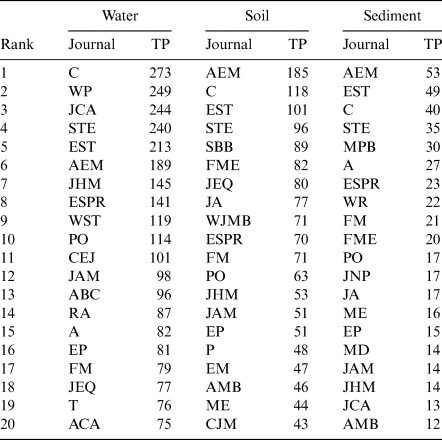
The database contained a total 2,498, 1,122 and 407 different journals; however, the most frequently used 20 journals published a total of 2,779, 1,484 and 469 articles on different environmental media of antibiotics research, which accounted for 21.6 %, 29.9 % and 38.9 % of all 12,838, 4959 and 1206 articles, respectively. The journal ‘Chemosphere’ published the greatest quantities of articles in the field of antibiotics in water, with 273 papers (Table 1). The journals ‘Water Research’, ‘Journal of Chromatography A’, ‘Science of the Total Environment’, ‘Environmental Science and Technology’ and ‘Applied and Environmental Microbiology’ followed in ranking. Four journals were chosen most frequently to publish articles on soil and sediment. They were ‘Applied and Environmental Microbiology’, ‘Chemosphere’, ‘Environmental Science and Technology’ and ‘Science of the Total Environment’. ‘Applied and Environmental Microbiology’ alone counted 185 articles for antibiotics in soil and 53 articles for sediment.
The most frequently used journals rank and the number of publications of antibiotics in water, soil and sediment.

C, Chemosphere; WP, Water Research; JCA, Journal of Chromatography A; STE, Science of the Total Environment; EST, Environmental Science and Technology; AEM, Applied and Environmental Microbiology; JHM, Journal of Hazardous Materials; ESPR, Environmental Science and Pollution Research; WST, Water Science and Technology; PO, PLoS ONE; CEJ, Chemical Engineering Journal; JAM, Journal of Applied Microbiology; ABC, Analytical and Bioanalytical Chemistry; RA, RSC Advances; A, Aquaculture; EP, Environmental Pollution; FM, Frontiers in Microbiology; JEQ, Journal of Environmental Quality; T, Talanta; ACA, Analytica Chimica Acta; SBB, Soil Biology and Biochemistry; FME, FEMS Microbiology Ecology; JA, Journal of Antibiotics; WJMB, World Journal of Microbiology and Biotechnology; P, Phytopathology; EM, Environmental Microbiology; AMB, Applied Microbiology and Biotechnology; ME, Microbial Ecology; CJM, Canadian Journal of Microbiology; MPB, Marine Pollution Bulletin; JNP, Journal of Natural Products; TP, Total publications.
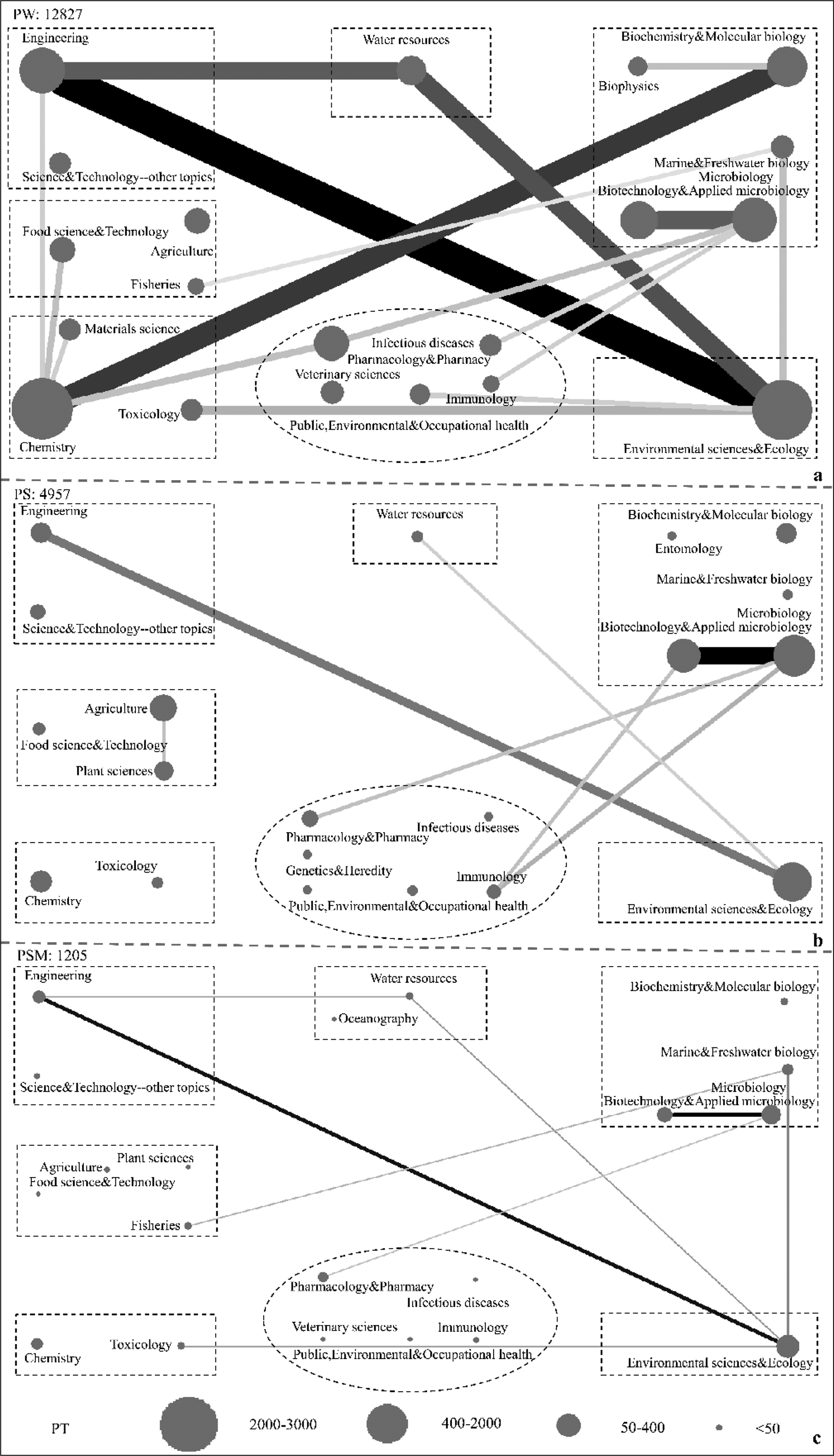
At the subject category level, the literature about antibiotics research in water, soil and sediment included 109, 91 and 63 subject categories, respectively. Among the 20 major subject categories on different environmental media of antibiotics research, there were much similar relationship (Fig. 3). The 20 most prolific subject categories all can be grouped into seven main sections including ‘Environmental Sciences and Ecology’, ‘Chemistry’, ‘Engineering’, ‘Microbiology’, ‘Pharmacology and Pharmacy’, ‘Water Resources’, and ‘Food Science and Technology’. There were two obvious pairs including ‘Environmental Sciences and Ecology’ with ‘Engineering’, and ‘Microbiology’ with ‘Biotechnology and applied Microbiology’ which indicated that antibiotics research contained more comprehensive studies. Noticeably, ‘Entomology’ and ‘Genetics and Heredity’ only appeared in the top 20 subject categories of antibiotics in soil. However, the research about antibiotics in sediment focused on ‘Oceanography’ and ‘Plant Sciences’. This may indicate that the study of antibiotics was multidisciplinary.
The variation for the 20 most appeared subject categories of antibiotics research in water, soil and sediment. PT, PW, PS and PSM refer to publication times, publications of water, publications of soil and publications of sediment, respectively.

1.4. Current research tendencies and hotspots
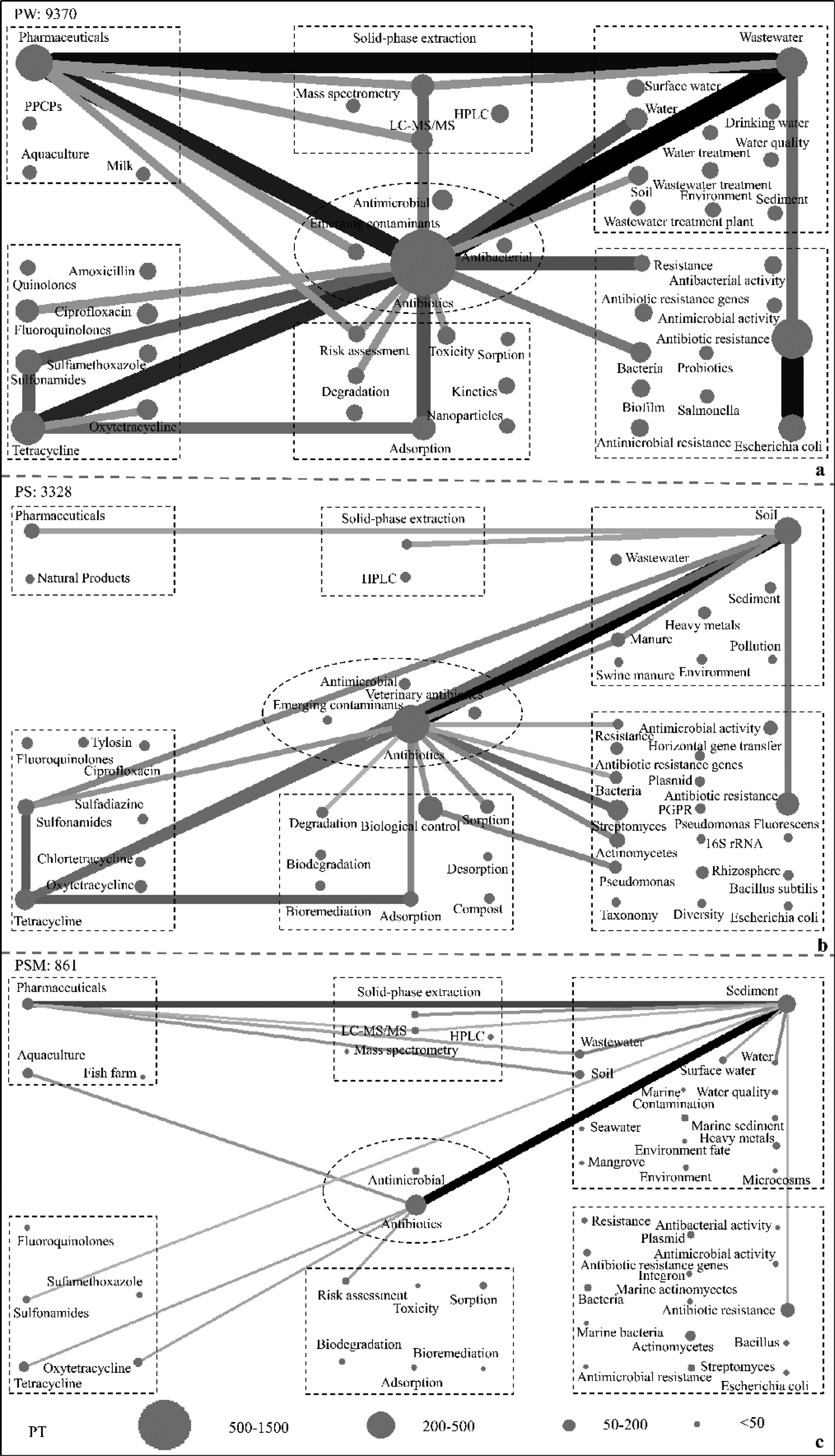
Keyword analysis not only reveals future research directions but also provides important information about research trends and hotspots. The total number of records with keywords information were 9370, 3328 and 861, which accounted for 73.0 %, 67.1 % and 71.4 % of the original 12,838, 4959 and 1206 in the field of antibiotics in water, soil and sediment. Altogether, among all articles with keywords information, there were a total of 20,291, 8240 and 2406 different keywords used, respectively. However, we analysed only the top 50 most frequently used keywords to provide current research tendencies and hotspots in these fields (Fig. 4). ‘Antibiotics’ was the most frequent among all keywords because it was also one of the topic words. The number of articles with the keyword ‘Antibiotics’ in aquatic systems was around three times that of antibiotics in soil and nine times that of antibiotics in sediment.
The different hotspots among the 50 most frequently used keywords of antibiotics research in water, soil and sediment. PT, PW, PS and PSM refer to publication times, publications of water, publications of soil and publications of sediment, respectively.

Accordingly, it was not difficult to find that much attention has been given to the presence of antibiotics in ‘Wastewater’ on the research of antibiotics in aquatic system, having this keyword ranked as five. Antibiotics are mainly applied to human and animals. About 2.26 million kilograms of antibiotics are produced in the USA each year, being approximately 40 % of them used in livestock treatment (Kim et al. Reference Kim, Cho, Kim, Vanderford and Snyder2007). Veterinary antibiotics including lincomycin, monensin, tiamulin, sulfadimethoxine and sulfamethazine were detected with high frequencies (40–94.5 %) in Shell Creek, Nebraska, USA (Jaimes-Correa et al. Reference Jaimes-Correa, Snow and Bartelt-Hunt2015). Owing to an excessive use of antibiotics and improper disposal, these compounds and their by-products can enter the environment through various routes. Consequently, the vast majority of wastewater, especially pharmaceutical wastewater, included difficult to degrade antibiotic residues. These substances are not completely removed by conventional treatment processes, which causes serious pollution to natural water bodies, even drinking water. The study about pharmaceutical residue pollution in KwaZulu-Natal province of South Africa indicated that the concentrations of antibiotics were up to 34,500 ng l−1 in wastewater (Matongo et al. Reference Matongo, Birungi, Moodley and Ndungu2015).
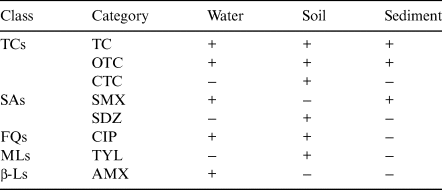
Additionally, ‘Tetracycline’ also appeared in the top five keywords throughout the three different environmental media. ‘Tetracycline’ is one of the most widespread antibiotics, being also the most researched. The categories of antibiotics mainly included tetracyclines (tetracycline, doxycycline, chlortetracycline, oxytetracycline, etc.), sulfonamides (sulfamethoxazole, sulfadiazine, sulfamerazine, sulfamethazine, etc.), fluoroquinolones (ofloxacin, ciprofloxacin, enrofloxacin, norfloxacin, etc.), macrolides (erythromycin, azithromycin, tylosin, roxithromycin, etc.), and beta-lactam antibiotics (amoxicillin, chloramphenicol, thiamphenicol, florfenicol, etc.). Antibiotic categories that appeared on the top 50 most used keywords were different (Table 2). Tetracycline (TC) and oxytetracycline both appeared in the top 50 in all environmental media. TCs are broad-spectrum antibiotics applied as human and veterinary medicine for prevention and treatment of infectious diseases (Pang et al. Reference Pang, Han, Chao, Jing, Ji, Zhu, Chang and Li2015). Owing to the poorly absorbed characteristic of TCs, they were excreted via urine and faeces, and were detected in various environmental matrices. The detected concentrations of TC in surface water and sediment were 7.73 ng l−1 and 2.64 ng. g−1 on January of 2011 in Pearl River estuary, China, respectively (Liang et al. Reference Liang, Chen, Nie, Shi, Huang and Li2013). Notably, the degraded substances of TCs by photochemical degradation are highly soluble and have more stable form (Topal & Arslan Topal Reference Topal and Arslan Topal2015). Sulfamethoxazole (SMX) only appeared in the top 50 frequently used keywords of antibiotics research in water and sediment. Low concentrations of SMX may alter the composition of the enriched nitrate-reducing microcosms and inhibit their capabilities to reduce nitrate (Wan et al. Reference Wan, Zhou, Deng, Zhan and Zhang2015). Similarly, ciprofloxacin (CIP) was in the top 50 frequently used keywords of antibiotics research in water and soil. The aqueous solubility of CIP is strongly pH dependent. Besides, CIP shows low solubility at neutral pH limiting the bioavailability of the compound and has poor permeability across biological membranes (Ross & Riley Reference Ross and Riley1990; Breda et al. Reference Breda, Jimenez-Kairuz, Manzo and Olivera2009). Chlortetracycline, sulfadiazine and tylosin (TYL) all emerged in the top 50 keywords of antibiotics study in soil. Distribution coefficients determined by a batch equilibrium method were between eight and 128 for TYL and the sorption of TYL seems to correlate positively with the soil clay content (Raboll and Spliid Reference Raboll and Spliid2000). However, only amoxicillin (AMX) was in the top 50 in water.
Different antibiotic categories appeared in the top 50 keywords on antibiotics research in water, soil and sediment.

TC, tetracycline; SA, sulfonamide; FQ, fluoroquinolone; ML, macrolide; β-L, beta-lactam antibiotic; TC, tetracycline; OTC, oxytetracycline; CTC, chlortetracycline; SMX, sulfamethoxazole; SDZ, sulfadiazine; CIP, ciprofloxacin; TYL, tylosin; AMX, amoxicillin; +, appearance; −, no appearance.
Notably, ‘Antibiotic Resistance’ also appeared in the top five keywords among three different environmental media except ‘Antibiotics’ and ‘Tetracycline’. Due to the great majority of antibiotics applied to production of animals as feed additives, their unmetabolised excretion entered into environment (Halling-Sorensen et al. Reference Halling-Sørensen, Nors Nielsen, Lanzky, Ingerslev, Holten Lützhøft and Jørgensen1998). However, antibiotic residues can affect the resistance of non-target microbial strains. Especially, ARGs as an EC can accumulate and spread among all types of microorganisms by HGT potentially posing negative impacts on environment and human health (Watkinson et al. Reference Watkinson, Murby and Costanzo2007). There were around 25,000 patients died from an infection with the selected multidrug-resistant bacteria every year, and more than 63,000 patients in USA died each year from hospital-acquired bacterial infection (Aminov Reference Aminov2010). The keywords such as ‘ARGs’, ‘ECs’ and ‘HGT’ can show this kind of threat. Lin et al. proved that sulfonamide resistance, tetracycline resistance and class I integron genes were ubiquitous in the sediments of the Yangtze Estuary and nearby coastal area and exhibited a declining trend from the inner estuary to the coast (Lin et al. Reference Lin, Yuan, Liang, Chen, Zhao, Yang, Zou, Luan and Chen2015). To date, some researches started to explore the ways to remove or decrease antibiotic concentration. Membrane filtration processes using reverse osmosis and nanofiltration showed excellent removal for erythromycin, SMX and trimethoprim (Kim et al. Reference Kim, Cho, Kim, Vanderford and Snyder2007). Liquid chromatography tandem mass spectrometry (LC-MS/MS), High Performance Liquid Chromatography (HPLC) and ‘Mass Spectrometry’ were commonly used methods to detect and measure antibiotics. It obviously reflected that ‘Sorption’, ‘Degradation’, ‘Adsorption’, ‘Toxicity’ and ‘Risk Assessment’ have aroused great concern by researchers in the field of antibiotics (Ternes et al. Reference Ternes, Stüber, Herrmann, McDowell, Ried, Kampmann and Teiser2003; Kosutic et al. Reference Kosutic, Dolar, Asperger and Kunst2007; Naslund et al. Reference Naslund, Hedman and Agestrand2008). Fan et al. investigated the degradation of sulfamethazine (SMZ) in heat-activated persulfate oxidation process and results revealed that heat-activated persulfate oxidation could be an efficient approach for remediation of water contaminated by SMZ and related sulfonamides (Fan et al. Reference Fan, Ji, Kong, Lu and Zhou2015). The environmental risk of antibiotics was mapped by undertaking a multicriteria decision analysis approach for all pasture lands, which indicated that the potential risk of antibiotic transport from pasture lands is moderate across the Marmara Region, and a high level of risk prevailed in some areas, particularly in Balikesir (Küçükdoğan et al. Reference Küçükdoğan, Güven and Balcıoğlu2015). Some researchers started to focus on risk assessment protocols for antibiotics and resistant bacteria, based on better systems for antibiotics detection and antibiotic resistance microbial source tracking (Baquero et al. Reference Baquero, Martinez and Canton2008). It is crucial to identify the relationship among antibiotics, ARGs and ‘Bacteria’, which will be beneficial to have a better understanding of the corresponding crisis.
2. Methodology
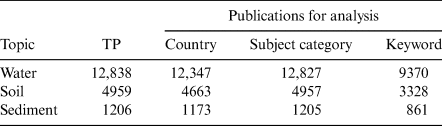
We built bibliometric datasets of antibiotics in water, soil and sediment on 8 April 2017. Data were downloaded from SCI database of the Web of Science Core Collection (Clarivate Analytics). We chose ‘antibiotics’ as the topic and ‘water’, ‘soil’ and ‘sediment’ were used to refine advance search results between the years 1900 and 2016. Full records including fields for authors' addresses (C1), published year (PY), subject categories (SC), author keywords (DE), journal name (JN) and cited documents (CD) were downloaded. A total of 12,838, 4959 and 1206 records were obtained for water, soil and sediment, respectively (Table 3). Further, the data was processed by merging the keywords with similar meanings and was ranked from the most to least frequently appeared keyword. The articles from England, Northern Ireland, Scotland and Wales were reclassified as publications of United Kingdom. Articles from Taiwan were also merged into one group under China. Articles published by the University of the Chinese Academy of Sciences were included into those of the CAS.
Publications for analysis of countries, subject categories and keywords.

TP, total publications.
Bibexcel software was used to count and rank the most commonly used journals for publication. The networks of the 20 most publication-productive countries and 20 most prolific research institutions were visualised with the help of the software package Pajek® (Batagelj & Mrvar Reference Batagelj and Mrvar2011). Microsoft Excel 2010 was used for data processing. The PT for countries, subject categories and keywords were computed by
 $${\rm Publication\;times} = \sum\limits_{N = 1}^N {\rm Number\,of\,different\; \unicode{x02018}\!\unicode{x02018} countries\unicode{x02019}\!\unicode{x02019} \;per\;paper } $$
where N is the number of papers, and ‘subject’ refers to the category of interest. (Zheng et al. Reference Zheng, Cotner, Sato, Li and Xu2018).
From a total of 12,838, 4959 and 1206 articles for water, soil, and sediment, respectively, we excluded some articles for which full records were not complete. Consequently, the final set consisted of 12,347, 4663 and 1173 records for water, soil and sediment, respectively.
3. Conclusions
In this paper, we have presented an overview of antibiotics research in water, soil and sediment. We performed a qualitative and quantitative analysis on comparing the developments, trends and hot subjects among the research of antibiotics in three different environmental media using bibliometric analysis method. The results showed that the cooperation was the strongest between the USA and China. Overall, international collaborations of antibiotics study were much stronger within European and American countries than Asian countries. CAS, ARS and USDA were the top three institutes in the field of antibiotics in water, soil and sediment.
The journal ‘Chemosphere’ published the greatest quantities of articles in the field of antibiotics in water. Among the top 20 journals of antibiotics in soil and sediment, the top four journals were ‘Applied and Environmental Microbiology’, ‘Chemosphere’, ‘Environmental Science and Technology’ and ‘Science of the Total Environment’. ‘Environmental Sciences and Ecology’, ‘Chemistry’ and ‘Microbiology’ were the main studied subject categories. The keywords ‘Antibiotics’, ‘Tetracycline’ and ‘Antibiotic resistance’ all appeared in the top five keywords among three different environmental media. SMX appeared in the top 50 frequently used keywords of antibiotics research in water and sediment, and CIP was the most used in water and soil. Only AMX was in the top 50 in water. Further research should explore more the influence of these antibiotics had on water, soil and sediment. ‘Sorption’, ‘Degradation’, ‘Adsorption’, ‘Toxicity’ and ‘Risk assessment’ have aroused great concern by researchers in the field of antibiotics. Conclusively, it is suggested that the study of antibiotics should focus on identifying the relationship among antibiotics, ARGs and ‘Bacteria’.
4. Acknowledgements
This paper is based upon the fund supports provided by the National Natural Science Foundation of China (41967051), Initiative Fund for PhD of Guizhou Medical University and the First-Class Discipline Construction Project in Guizhou Province Public Health and Preventive Medicine (2017[85]) and Guizhou Medical University with High Level Talents Project (XBHJZ[2020]034).
5. Competing interests statement
The authors declare that they have no competing interests.