


Introduction
Cancer is a leading cause of premature death among people aged 30–69 in many African countries [Reference Jemal, Torre, Soerjomataram and Bray1]. In Nigeria (population >218 million), 127,763 new cancer cases were reported in 2022, with 62% (79,542) resulting in death [2]. Despite treatment advances, gaps in patient–provider communication persist, limiting outcomes. Public understanding of cancer remains low in Nigeria, across Africa, and in other low- and middle-income countries (LMICs) [Reference Simba, Mutebi and Galukande3]. Patients who understand their diagnosis and treatment are more likely to adhere to treatments, report symptoms early, engage in shared decision-making, and have fewer complications [Reference Holden, Wheelwright, Harle and Wagland4].Nigerian cancer care is further hindered by shortages of oncology specialists, long travel distances to treatment centers, and inconsistent health education [Reference Chidebe, Orjiakor, Lasebikan, Joseph, Toland and Simons5].
Low health literacy, which is the limited ability to access, understand, and use health information effectively, is a pervasive global barrier to optimal cancer care [Reference Nutbeam6]. In a South African study, it was reported that 32% of people had low health literacy [Reference Marimwe, Dowse and Mo7]. In Egypt, about 75% caregivers of older adults with cancer have low health literacy [Reference Rahman8]. In the United States, only 31% of fourth-grade students could read at the proficient level or above, [9] whereas only 36% of adults have basic or below basic health literacy [Reference Lopez, Kim and Sacks10]. There is no representative national data on health literacy in Nigeria; however, a few community-based studies have shown that health literacy is particularly low [Reference Kuyinu, Femi-Adebayo, Adebayo, Abdurraheem-Salami and Odusanya11,Reference Chiweta-Oduah and Buchanan12]. Low literacy is associated with delays in care-seeking, [Reference Hadaro, Shewangizaw and Geltore13] poor medication adherence, [Reference Shin and Konlan14] and limited understanding of cancer prevention and treatment, [Reference Bamodu and Chung15] underscoring the urgent need for accessible, culturally responsive educational tools. Nigeria’s adult literacy gap exceeds that of sub-Saharan Africa, standing at 18.6%, [Reference World Bank16] indicating that a larger proportion of the population has only a secondary school education or less and may experience difficulties with reading. Sadly, most patient education materials (PEMs) are written at a secondary school level or above. Hence, low health literacy is widespread across the country.
As cancer cases and deaths continue to rise in Nigeria, accurate patient and public education about cancer has remained poor and extensively documented to be propelling late detection of cancer [Reference Ishola and Omole17]. Cancer prevention efforts have been promoted in the population to reduce the disparities in care and increase patient and public education [Reference Chidebe, Leibel and Orjiakor18]. However, poor funding, a workforce shortage, and other system-wide issues have been barriers affecting access to cancer prevention and patient education. With a population exceeding 218 million and an annual incidence of over 127,000 cancer cases, the country has only 80 oncologists [Reference Chidebe, Orjiakor, Lasebikan, Joseph, Toland and Simons5] The ratio of physicians to the patient is 3.8 per 10,000 people [Reference Organisation19] and nurses and midwives is 1.7 per 1,000 people [20], against the World Health Organization’s recommendation of 2.5 medical staff (physicians, nurses and midwives) per 1,000 people needed to provide adequate coverage for primary health care [Reference World Health21]. Given this shrinking workforce, it is crucial for the health system to accelerate the adoption of digital tools and innovations that could support patient education and provide health information for this population.
Digital tools, including artificial intelligence (AI), telemedicine, mobile apps, and web-based decision aids, have helped personalize cancer information to meet patient needs, especially in underserved settings. AI, such as large language models (LLMs) like Chat Generative Pre-trained Transformer (ChatGPT), represent a new generation of digital tools capable of generating dynamic, conversational responses to patient queries [Reference Iqbal, Tanweer, Rahmanti, Greenfield, Lee and Li22]. Trained on vast amounts of text, LLMs produce human-like responses by predicting the next word in a sentence. This allows them to translate complex medical concepts into simplified language, adjust tone and style, and respond to user input in real-time. Previous studies suggest that AI tools like ChatGPT can generate understandable and acceptable cancer patient education materials (PEMs). Spuur and colleagues evaluated breast cancer screening content generated by ChatGPT using the GPT-3.5 and GPT-4 models, assessing it with the PEMAT-P and the Center for Disease Control and Prevention (CDC) Clear Communication Index. They found that GPT-4 outperformed GPT-3.5 (understandability 75%, SD = 17; actionability 53.3%, SD = 11.5), but both models scored below established readability and clarity standards for patient education [Reference Spuur, Currie, Al-Mousa and Pape23]. ChatGPT’s outputs on urological cancers have been rated “excellent” for clarity when prompted to simplify, and it outperforms health-system materials in completeness [Reference Shah, Ghosh, Hochberg, Mark, Lallas and Shah24]. ChatGPT responses to prostate cancer questions were reported to be largely accurate and rated as clear by both providers and the public, though accuracy varied [Reference Hershenhouse, Mokhtar and Eppler25]. A recent study found no significant patient preference between traditional and AI-generated colon cancer materials (51% vs. 49%, p = 0.866) [Reference Nitsch and Ivatury26]. Collectively, these findings suggest that AI and ChatGPT will not replace doctors and clinicians but can be helpful members of the healthcare team, collaborating with clinicians to enhance patients’ education and communication [Reference Prazeres27].
Many other studies have shown that LLMs can enhance patient education in cancer; [Reference Zitu, Le and Duong28–Reference Yalamanchili, Sengupta and Song31] however, most of these studies were conducted in high-income countries (HICs). Data, evidence, and studies on AI and cancer PEMs from low- and middle-income countries (LMICs) and Africa are scarce and still emerging. To close this knowledge gap, we examined the relative clarity, usefulness, and understandability of ChatGPT compared with clinician-authored PEMs in Nigeria.
We hypothesized that ChatGPT-generated PEMs would match clinician-authored content in usefulness, understandability, and clarity.
Methods
Study design
This cross-sectional study assessed ChatGPT-generated PEMs against clinician-authored content in terms of usefulness, understandability and clarity. We also conducted a literature search in PubMed to identify studies comparing ChatGPT with traditional PEMs for cancer patients in Nigeria and across Africa. We followed the strengthening of the reporting of observational studies in epidemiology (STROBE) guidelines for reporting cross-sectional studies.
Participants, recruitment, and data collection
We recruited 409 participants from the World Cancer Day walk on February 1, 2025, and from volunteers at Project PINK BLUE – a nonprofit organization that hosts the annual WCD walk in Abuja, Nigeria. [Reference Organisation19] The data collection was closed on April 30, 2025. Participants (204) completed the printed cancer education information (CEI) questionnaire, and 205 completed them online via Qualtrics. Of the 409 responses, 38 had missing data, and only 371 participant responses were analyzed.
Measures
First, we adopted Project PINK BLUE’s “10 Ways of Reducing Your Cancer Risk” PEM, created by clinicians for Nigerians, based on established literature. We conducted face validity with eight established healthcare professionals. All the feedback from the face validity was integrated into the PEM and coded as H1-10. Although there is no single globally recommended reading level for PEMs, the clinician PEM was written at an eighth-grade English reading level (approximately equivalent to Junior Secondary School Two or Three in the Nigerian system).
Second, we asked ChatGPT (GPT-4o web free version), “What are the 10 ways to reduce cancer risks?” on January 20, 2025, in Abuja, Nigeria. We used responses from a single ChatGPT attempt. We reviewed all 10 statements generated by ChatGPT, coded them as J1-10, and assessed each statement according to the level of evidence, ranging from low to high, as supported by the literature. Three of the authors (RC, KPS, and LL) rated all the statements as having high evidence, except for J7, which was rated as moderate evidence. J5, J8, and J10 had acronyms without defined meanings. We were concerned about the last words in J2; however, they were rated as high evidence. None of the statements from ChatGPT contained information that could cause harm to participants. Based on the above, we did not edit or change any information on the 10 statements. The research team met three times to reach a consensus on the ChatGPT-generated PEMs (J) and those developed by clinicians (H). Both the PEM statements from clinicians and those from ChatGPT were in English. Although Nigeria is linguistically diverse, with about 520 languages, including Igbo, Hausa, and Yoruba as major languages, Nigerian English remains the country’s official language, while Nigerian Pidgin (Naijá) is the most widely spoken lingua franca [32].
Third, we developed two CEI questionnaires with three sections. The first CEI comprises 11 items on demographic characteristics, 8-items on digital health information, and 10 clinicians’ statements (H). The second CEI had the same two sections, and the third section consisted of the 10 statements from ChatGPT. The response options for the demographic questions and digital health information were Yes/No, fill-in-the-gap, and a tick of the option. For the H and J questionnaires, each statement has three questions with a response option of Yes/No and a Likert-type rating scale of 1-5, where 1 indicates ‘‘strongly disagree’’ and 5 indicates ‘‘strongly agree’’. Finally, response formats were selected to align with the measurement intent of each construct. Clarity, a graded attribute, was rated on a Likert-type scale to preserve sensitivity to degrees of difference; usefulness and understandability were assessed dichotomously (yes/no) as threshold judgments of adequacy, consistent with the dichotomous scoring conventions of established PEM assessment tools, such as the PEMAT [Reference Capik and Gozum33,Reference Shoemaker, Wolf and Brach34]. The CEI questionnaires were used to assess the PEMs’ understandability, clarity, and perceived usefulness (see supplementary for the CEI questionnaires).
Data analysis
The data were analyzed using descriptive statistics and a t-test on SAS version 9.4. The t-test evaluated whether there was a difference in clarity between statements created by clinicians and AI-ChatGPT. Differences were examined for the overall mean score of the 10 statements and each individual statement, from statement 1 to 9. Statement 10 was excluded from the t-test because the contents of clinicians and AI-ChatGPT were not comparable. The results are presented as the mean score of each statement, effect size (Cohen’s d), and p-value. The readability of AI- and clinician-generated PEMs was assessed with Readable.com, using Flesch–Kincaid Grade Level, Flesch Reading Ease, SMOG, and Gunning Fog indices. Each set was scored on its combined educational text after removing scaffolding, labels, and response options; abbreviations and symbols were normalized, and list fragments made into sentences to avoid false sentence boundaries. Since these indices are calibrated to U.S. English, scores roughly indicate textual complexity rather than direct comprehension in a Nigerian population where English is a second language.
Results
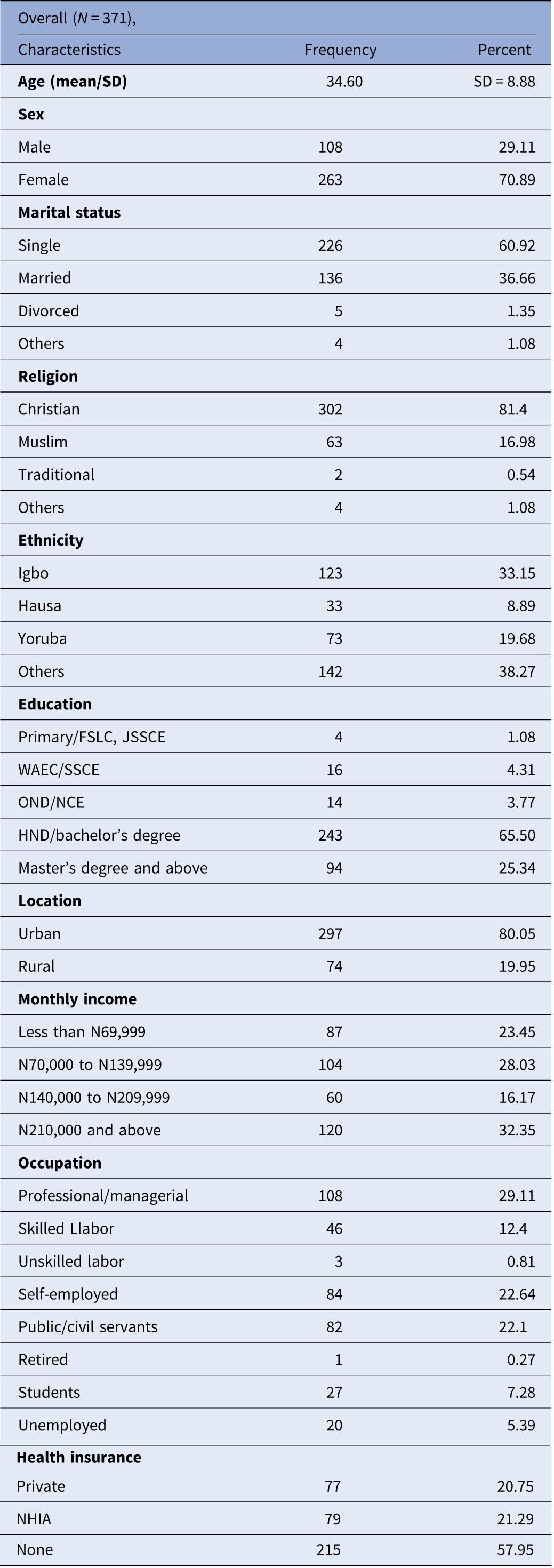
Among the 371 participants, most were female (70%), single (61%), and Christian (81%). One-third (33%) were from the Igbo ethnic group. The majority (90%) had at least a bachelor’s degree, 80% lived in urban areas, and 29% worked in professional or managerial roles. Over half (58%) did not have health insurance (See Table 1).
Socio-demographic characteristics of participants

Table 1. Long description
The table presents socio-demographic characteristics of 371 participants. It has 15 rows and 3 columns. The columns are labeled Characteristics, Frequency, and Percent. The table includes data on age, sex, marital status, religion, ethnicity, education, location, monthly income, occupation, and health insurance. Row 1: Age (mean/SD), 34.60, SD = 8.88. Row 2: Sex, Male, 108, 29.11 percent. Row 3: Sex, Female, 263, 70.89 percent. Row 4: Marital status, Single, 226, 60.92 percent. Row 5: Marital status, Married, 136, 36.66 percent. Row 6: Marital status, Divorced, 5, 1.35 percent. Row 7: Marital status, Others, 4, 1.08 percent. Row 8: Religion, Christian, 302, 81.4 percent. Row 9: Religion, Muslim, 63, 16.98 percent. Row 10: Religion, Traditional, 2, 0.54 percent. Row 11: Religion, Others, 4, 1.08 percent. Row 12: Ethnicity, Igbo, 123, 33.15 percent. Row 13: Ethnicity, Hausa, 33, 8.89 percent. Row 14: Ethnicity, Yoruba, 73, 19.68 percent. Row 15: Ethnicity, Others, 142, 38.27 percent. Row 16: Education, Primary/FSLC, JSSCE, 4, 1.08 percent. Row 17: Education, WAEC/SSCE, 16, 4.31 percent. Row 18: Education, OND/NCE, 14, 3.77 percent. Row 19: Education, HND/bachelor’s degree, 243, 65.50 percent. Row 20: Education, Master’s degree and above, 94, 25.34 percent. Row 21: Location, Urban, 297, 80.05 percent. Row 22: Location, Rural, 74, 19.95 percent. Row 23: Monthly income, Less than N69,999, 87, 23.45 percent. Row 24: Monthly income, N70,000 to N139,999, 104, 28.03 percent. Row 25: Monthly income, N140,000 to N209,999, 60, 16.17 percent. Row 26: Monthly income, N210,000 and above, 120, 32.35 percent. Row 27: Occupation, Professional/managerial, 108, 29.11 percent. Row 28: Occupation, Skilled Labor, 46, 12.4 percent. Row 29: Occupation, Unskilled labor, 3, 0.81 percent. Row 30: Occupation, Self-employed, 84, 22.64 percent. Row 31: Occupation, Public/civil servants, 82, 22.1 percent. Row 32: Occupation, Retired, 1, 0.27 percent. Row 33: Occupation, Students, 27, 7.28 percent. Row 34: Occupation, Unemployed, 20, 5.39 percent. Row 35: Health insurance, Private, 77, 20.75 percent. Row 36: Health insurance, NHIA, 79, 21.29 percent. Row 37: Health insurance, None, 215, 57.95 percent.
SD = Standard Deviation. FSLC = First School Leaving Certificate. WAEC/SSCE = West African Examination Council/Senior Secondary Certificate Examination. HND = Higher National Diploma. The monthly income was in Nigerian Naira, with $1 USD equivalent to N1,490 in February 2025. NHIA = National Health Insurance Authority.
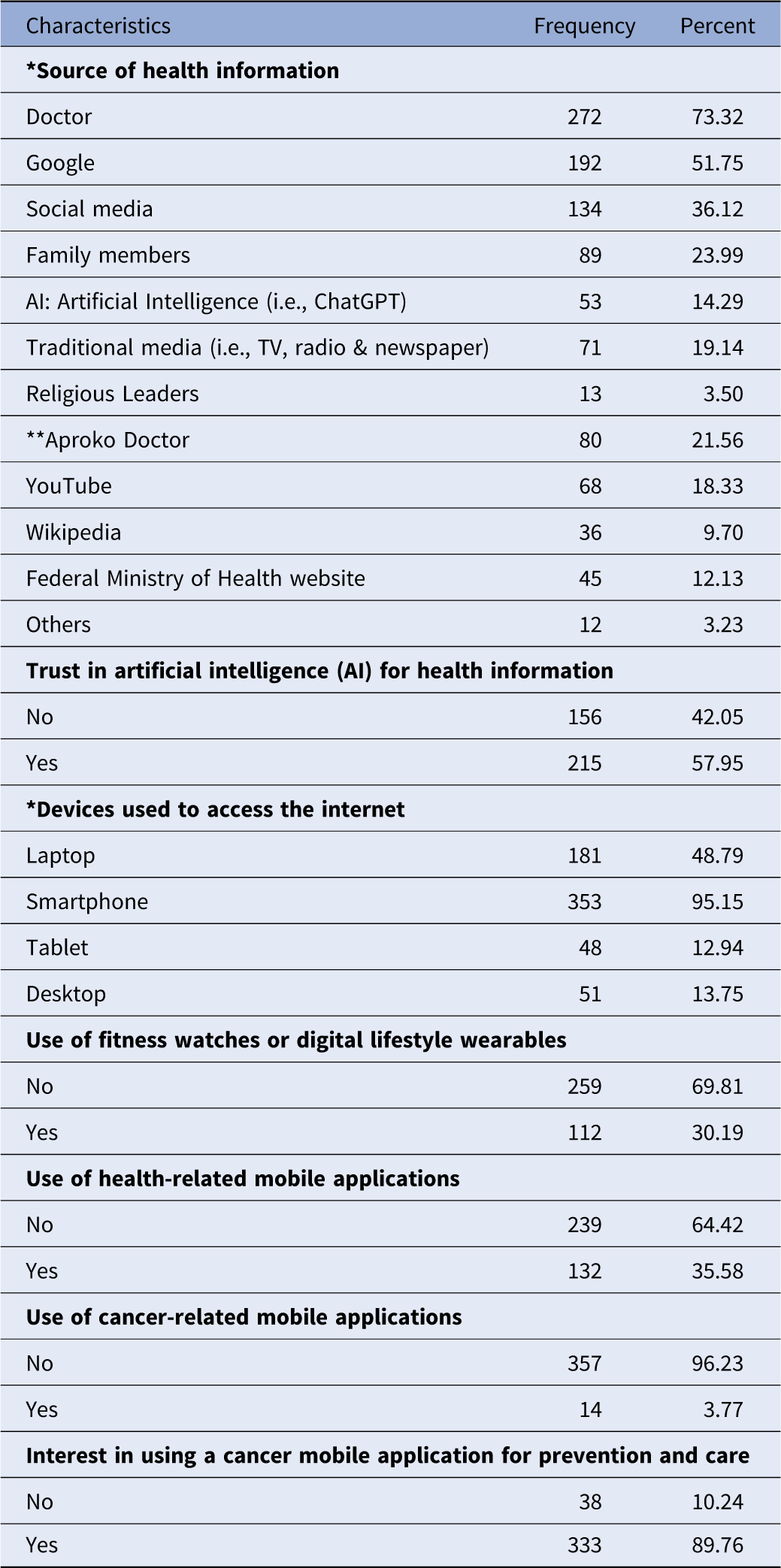
When seeking health information, 73% relied on doctors, 52% on Google, 36% on other social media, 22% on “Aproko Doctor” (a Nigerian physician influencer), and 14% on AI tools like ChatGPT. Most (95%) accessed the internet via smartphones, while 49% used laptops. Just over half (58%) said they trusted AI for health information. Regarding technology use, 30% used fitness wearables, 36% used health-related mobile apps, and only 4% used cancer-related apps. However, 90% expressed interest in using cancer apps for prevention and care (See Table 2).
Digital health information sources, trust, and technology use among participants

Table 2. Long description
A table with 12 rows and 3 columns detailing characteristics and their frequency and percent among participants. The table includes data on sources of health information, trust in AI for health information, devices used to access the internet, use of fitness watches or digital lifestyle wearables, use of health-related mobile applications, use of cancer-related mobile applications, and interest in using a cancer mobile application for prevention and care. Row 1: Doctor, 272, 73.32 percent. Row 2: Google, 192, 51.75 percent. Row 3: Social media, 134, 36.12 percent. Row 4: Family members, 89, 23.99 percent. Row 5: AI: Artificial Intelligence (i.e., ChatGPT), 53, 14.29 percent. Row 6: Traditional media (i.e., TV, radio & newspaper), 71, 19.14 percent. Row 7: Religious Leaders, 13, 3.50 percent. Row 8: Aproko Doctor, 80, 21.56 percent. Row 9: YouTube, 68, 18.33 percent. Row 10: Wikipedia, 36, 9.70 percent. Row 11: Federal Ministry of Health website, 45, 12.13 percent. Row 12: Others, 12, 3.23 percent. Trust in AI for health information: No, 156, 42.05 percent. Yes, 215, 57.95 percent. Devices used to access the internet: Laptop, 181, 48.79 percent. Smartphone, 353, 95.15 percent. Tablet, 48, 12.94 percent. Desktop, 51, 13.75 percent. Use of fitness watches or digital lifestyle wearables: No, 259, 69.81 percent. Yes, 112, 30.19 percent. Use of health-related mobile applications: No, 239, 64.42 percent. Yes, 132, 35.58 percent. Use of cancer-related mobile applications: No, 357, 96.23 percent. Yes, 14, 3.77 percent. Interest in using a cancer mobile application for prevention and care: No, 38, 10.24 percent. Yes, 333, 89.76 percent.
*Participants were allowed to choose multiple answers. Percentages might not add up to 100% due to rounding. **Aproko doctor is a Nigerian physician who utilizes social media for health promotion.
The comparative evaluation of PEM statements generated by clinicians versus AI-ChatGPT showed consistently high ratings across usefulness, understandability, and clarity for both sources, with AI-generated content demonstrating comparable or marginally superior performance on key metrics (Figure 1). Respondents reported high proportions of “Yes” for usefulness (Figure 1A) and ease of understanding (Figure 1B), consistently exceeding 94% across all items, with AI-generated prompts achieving 100% endorsement in key categories such as exercise, vaccination, and regular screenings. Similarly, Likert-scale evaluations of clarity (Figure 1C) revealed that over 80% to 90% of respondents agreed or strongly agreed that the statements were clear for both sources of PEMs.
Stacked bar charts showing the usefulness (A), understandability (B), and clarity (C) of PEM statements created by clinicians versus AI-ChatGPT.

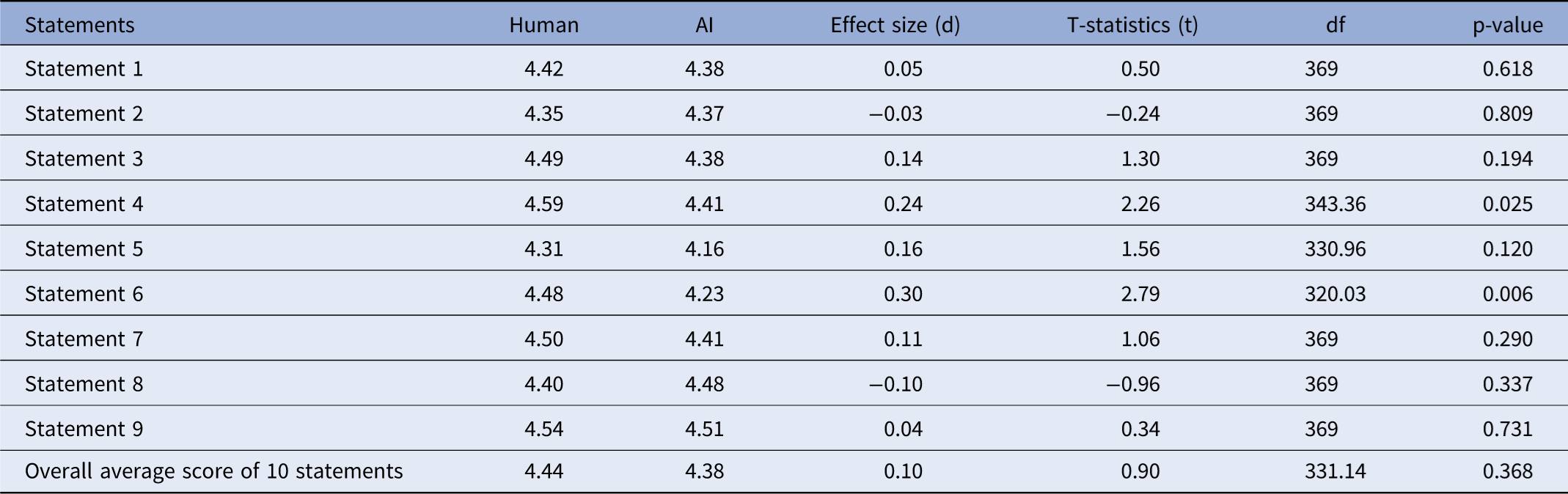
Table 3 shows the differences in clarity scores between clinicians and AI-ChatGPT (GPT-4o) PEM statements. Overall, there was no statistically significant difference between the two groups. However, some specific statements differed significantly in clarity. Statements 4 “healthy diet” and 6 “limit alcohol” created by clinicians were rated clearer than those generated by AI-ChatGPT. The mean clarity score for statement 4 created by clinicians was 4.59, compared to 4.38 for AI-ChatGPT. Similarly, the clarity score for statement 6 was 4.48 for clinicians, while for ChatGPT it was 4.23. Both statements had statistically significant differences (d = 0.24, p = 0.025 for statement 4, and d = 0.30, p = 0.006 for statement 6).
T-test results about the difference in clarity between the clinician and AI-ChatGPT

Table 3. Long description
The table compares clarity scores between clinicians and AI-ChatGPT for 10 statements. It includes columns for Human, AI, Effect size (d), T-statistics (t), df, and p-value. Row-wise data: Row 1: Human, 4.42; AI, 4.38; Effect size (d), 0.05; T-statistics (t), 0.50; df, 369; p-value, 0.618. Row 2: Human, 4.35; AI, 4.37; Effect size (d), -0.03; T-statistics (t), -0.24; df, 369; p-value, 0.809. Row 3: Human, 4.49; AI, 4.38; Effect size (d), 0.14; T-statistics (t), 1.30; df, 369; p-value, 0.194. Row 4: Human, 4.59; AI, 4.41; Effect size (d), 0.24; T-statistics (t), 2.26; df, 343.36; p-value, 0.025. Row 5: Human, 4.31; AI, 4.16; Effect size (d), 0.16; T-statistics (t), 1.56; df, 330.96; p-value, 0.120. Row 6: Human, 4.48; AI, 4.23; Effect size (d), 0.30; T-statistics (t), 2.79; df, 320.03; p-value, 0.006. Row 7: Human, 4.50; AI, 4.41; Effect size (d), 0.11; T-statistics (t), 1.06; df, 369; p-value, 0.290. Row 8: Human, 4.40; AI, 4.48; Effect size (d), -0.10; T-statistics (t), -0.96; df, 369; p-value, 0.337. Row 9: Human, 4.54; AI, 4.51; Effect size (d), 0.04; T-statistics (t), 0.34; df, 369; p-value, 0.731. Row 10: Human, 4.44; AI, 4.38; Effect size (d), 0.10; T-statistics (t), 0.90; df, 331.14; p-value, 0.368.
Note: AI = artificial intelligence, d = Cohen’s d, df=degree of freedom, t = t-statistics.
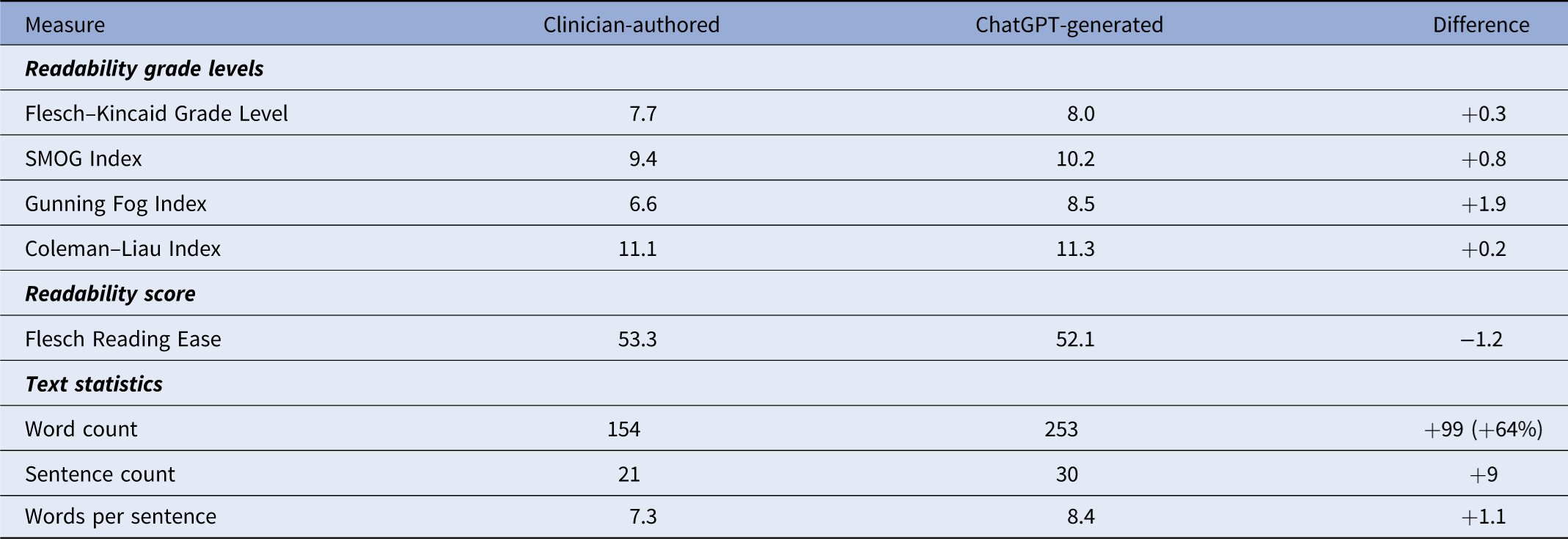
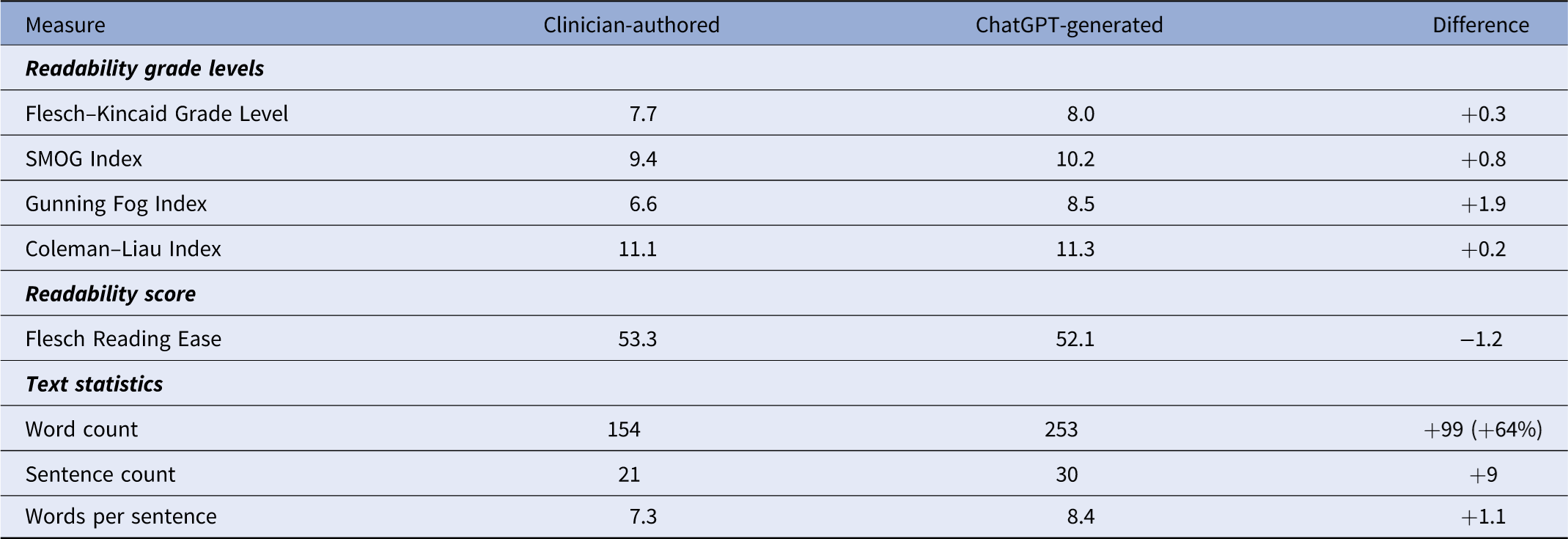
Readability was comparable across the two sets. The clinician-authored PEMs scored at a Flesch–Kincaid Grade Level of 7.7 (Flesch Reading Ease 53.3; SMOG 9.4), and the ChatGPT-generated PEMs at 8.0 (Flesch Reading Ease 52.1; SMOG 10.2). Both sets approximated an eighth-grade reading level, above the sixth-grade level recommended for patient education materials. However, the ChatGPT-generated content was 64% longer (253 vs 154 words) and had a higher mean sentence length (8.4 vs 7.3 words). (See Table 4).
Readability of clinician-authored and ChatGPT-generated cancer prevention patient education materials (PEMs)

Table 4. Long description
A table comparing readability measures of clinician-authored and ChatGPT-generated cancer prevention materials. The table has 3 columns: Measure, Clinician-authored, ChatGPT-generated, and Difference. Row 1: Flesch-Kincaid Grade Level, 7.7, 8.0, +0.3. Row 2: SMOG Index, 9.4, 10.2, +0.8. Row 3: Gunning Fog Index, 6.6, 8.5, +1.9. Row 4: Coleman-Liau Index, 11.1, 11.3, +0.2. Row 5: Flesch Reading Ease, 53.3, 52.1, -1.2. Row 6: Word count, 154, 253, +99 (+64 percent). Row 7: Sentence count, 21, 30, +9. Row 8: Words per sentence, 7.3, 8.4, +1.1.
Discussion
To our knowledge, this is the first study to evaluate the use of AI-generated cancer prevention PEMs in Nigeria and across Africa. Our results demonstrate that ChatGPT can produce PEMs that are comparable to clinician-authored materials in usefulness, understandability, and clarity. This finding aligns with similar studies [Reference Spuur, Currie, Al-Mousa and Pape23–Reference Nitsch and Ivatury26]. While our findings showed no overall significant difference between PEMs developed by clinicians and those developed by AI-ChatGPT, statements developed by clinicians regarding “healthy diet” (H4) and “limit alcohol” (H6) were clearer for the participants than those developed by AI-ChatGPT. See Figure 1 and Table 3 and 4.
The clinicians’ and AI-ChatGPT’s items on “healthy diet” were not markedly different; however, the clinician prompted participants to “eat” plenty of vegetables and fresh fruits and to limit high-calorie foods, whereas AI-ChatGPT prompted participants to “focus.” The finding clearly underscores the importance of how words and sentences convey information and how people interpret them. While both “eat plenty of vegetables and fresh fruits” and “focus on fruits and vegetables” may be equally understandable, the former was more actionable because it specified the behavior expected of PEM readers. This distinction reflects the Patient Education Materials Assessment Tool (PEMAT), which evaluates understandability and actionability as separate constructs [Reference Shoemaker, Wolf and Brach34]. Actionability assesses whether users can identify what they can do based on the information presented. On this premise, we argue that when developing PEMs, actionable language should be used. When using AI-ChatGPT to develop cancer PEMs, users should prompt the tool to generate actionable, population-specific language rather than general terms.
Similarly, “limit alcohol intake” is a risk-reduction and cancer-prevention measure, but this information could be interpreted differently across participants’ cultures and religious affiliations, depending on the data source and how the item was presented. AI-ChatGPT presented the item through the lens of “moderation” and what different “genders” could drink per day. By contrast, the clinicians’ item was more instructive and connected to cancer prevention, stating “not drinking is better for cancer prevention.” The clinician-generated item aligned with current cancer-prevention guidance from the World Health Organization (WHO), World Cancer Research Fund International, Union for International Cancer Control, and International Agency for Research on Cancer (IARC) recommendations, which hold that no safe level of alcohol consumption exists for cancer risk and that not drinking is better for cancer prevention [Reference World Health Organisation35–38]. In contrast, the AI-generated item framed alcohol in terms of sex-specific ‘moderate’ daily limits, a general health convention that is inconsistent with recent global cancer-specific recommendations but aligns with older harm-reduction approaches, illustrating how AI-generated PEMs may default to outdated or context-inappropriate framing. These findings suggest that ChatGPT could be a valuable tool in addressing Africa’s cancer education needs, particularly given the continent’s shrinking oncology workforce and critically low health literacy. However, as highlighted by the American Society of Clinical Oncology Consensus Guideline, [Reference Gilligan, Coyle and Frankel39] clinician oversight is essential to ensure accuracy, contextual relevance, and accessibility.
Readability was closely comparable between AI- and clinician-generated PEMs, with both approximating an eighth-grade reading level (Flesch–Kincaid 8.0 vs 7.7) and falling within the same reading-ease band (see Table 5). This convergence aligns with the primary finding that overall clarity did not differ significantly between the two sets and supports the interpretation that ChatGPT-generated materials are broadly equivalent to clinician-authored content in linguistic accessibility. Both sets exceeded the sixth-grade level recommended for patient education materials by the American Medical Association and the National Institutes of Health, [Reference Rooney, Santiago and Perni40] indicating that clinician authorship alone does not guarantee an appropriate reading level and that AI generation neither exacerbated nor remedied this shortfall. This is consistent with prior findings that AI-generated materials exceed recommended readability thresholds unless explicitly prompted to simplify, [Reference Shah, Ghosh, Hochberg, Mark, Lallas and Shah24,Reference Hershenhouse, Mokhtar and Eppler25] and suggests that readability targets must be specified deliberately regardless of authorship. These results should be interpreted with caution, however, as readability indices are calibrated to U.S. English and serve as approximate indicators of textual complexity rather than direct measures of comprehension among Nigerian readers, many of whom speak English as a second language and have uneven health literacy.
Readability of clinician-authored and ChatGPT-generated cancer prevention patient education materials (PEMs)

Table 5. Long description
A table comparing readability measures of clinician-authored and ChatGPT-generated cancer prevention materials. The table has 10 rows and 4 columns. The columns are labeled Measure, Clinician-authored, ChatGPT-generated, and Difference. The rows are grouped into three categories: Readability grade levels, Readability score, and Text statistics. The Readability grade levels include Flesch-Kincaid Grade Level, SMOG Index, Gunning Fog Index, and Coleman-Liau Index. The Readability score includes Flesch Reading Ease. The Text statistics include Word count, Sentence count, and Words per sentence. Each row provides specific values for Clinician-authored, ChatGPT-generated, and the Difference between them.
The PEMs in this study were generated and evaluated in English, Nigeria’s official language. Our sample was highly educated (90% held at least a bachelor’s degree) and predominantly urban. However, language choice materially affects LLM output quality, and frontier models show substantial performance differences across languages in medical domains, [Reference Strasser, Anschuetz, Dennstädt and Hastings41,Reference Kim, Shin and Yoo42] likely reflecting English-centric training data and internal representations in models such as GPT-4o [Reference Guo, Conia, Zhou, Li, Potdar, Xiao, Che, Nabende, Shutova and Pilehvar43]. Prompting in English has been found to outperform language-matched prompting [Reference Strasser, Anschuetz, Dennstädt and Hastings41]. Our findings may therefore represent a best-case scenario: model performance at its strongest in its native language, assessed by readers well equipped to read it. In a country with over 520 languages, [32,Reference Global44] where English proficiency is uneven and health literacy is lowest among rural and less-educated populations, reaching those with the greatest information needs would require PEMs in Igbo, Hausa, Yoruba, or Nigerian Pidgin, where LLM performance is likely weaker. The observed equivalence should not be assumed to extend to non-English PEMs, and their evaluation in Nigerian languages is a priority for future research.
Although only 14% of participants reported relying on AI, such as ChatGPT, for their health information, 58% indicated that they trusted AI when asked about their confidence in it. This suggests that AI adoption in Nigeria and across Africa is increasing, underscoring the urgent need to incorporate more African evidence-based and culturally relevant information into AI outputs to prevent misinformation among the African population. The use of AI in healthcare and oncology is now widespread in many regions [Reference Farina, Nabhen, Dacoregio, Batalini and Moraes29]. Evidence suggests that AI-generated content can reduce disparities if culturally tailored but may also introduce bias if the training data are unrepresentative [Reference Dankwa-Mullan and Weeraratne45]. Nevertheless, Afrocentric datasets are lacking because most of the training datasets primarily reflect HICs and Western countries, [Reference Kponyo, Kemausuor, Tchao, Nunoo-Mensah and Adjoe46] which may explain AI-ChatGPT’s inclusion of recommendations such as “get regular screenings” (J9) that are more feasible in HICs with established cancer screening programs. Incorporating Afrocentric datasets would enable AI to produce accurate, context-specific guidance aligned with local health system capacities. Achieving this will require local ownership of data, targeted AI and oncology training, and infrastructure for open-source, collaborative data sharing.
Limitations, strengths, and future directions
The study sample was predominantly highly educated (90% with a bachelor’s degree or higher), likely overestimating PEM clarity compared with the general population. Rural residents accounted for only 20%, which limits the generalizability to populations with reduced digital access. Recruitment during the World Cancer Day Walk may have introduced selection bias towards individuals already engaged with cancer awareness. Furthermore, the study assessed immediate perceptions without evaluating long-term retention or behavior change. We used a single response attempt and did not measure the average performance and variance across multiple PEMs generated by the AI prompt. The CEI questionnaire measured clarity using a Likert-type scale and assessed understandability and usefulness using a yes/no dichotomous format. The mix of response formats may reduce cross-dimensional comparability, construct sensitivity, and the interpretability of the results. Finally, AI statements were generated using ChatGPT(GPT-4o), which was trained largely on HIC datasets, potentially reducing contextual relevance. Despite these limitations, this study has several strengths. It is the first study to assess AI-ChatGPT in the context of understanding, usefulness, and clarity of cancer PEMs in Africa. Comparing AI-generated and human-created PEMs using two CEI questionnaires across participants is a strength. Future studies should consider using qualitative methods such as focus groups for data collection, cognitive interviewing, and content analysis. Qualitative methods could explore participants’ attitudes toward generative AI in PEM creation, as well as their perceptions of the PEM’s readability, usability, and perceived trust. Future studies should explore PEMs across multiple attempts and measure average performance and variance.
Conclusions
AI, particularly ChatGPT, could supplement clinician-created PEMs in Africa, provided outputs undergo rigorous local review. Ministries of Health, NGOs, and cancer control programs should explore the integration of AI-assisted PEM into national strategies while prioritizing the development of Afrocentric datasets. Investment in digital health literacy, AI governance, and open-access health content repositories will be essential to maximize benefits and minimize bias or misinformation. These findings suggest that generative AI can lower significant barriers in translational research by providing a fast, reliable method to convert complex clinical evidence into clear, highly understandable patient communications.
Practice Implications
Clinicians and health educators may consider using AI, particularly ChatGPT, as a foundational tool to support PEMs development and enhance patient education and awareness in Africa; however, the outputs must undergo rigorous, professional clinician review. The review process should first be clinical validation, verifying that all medical information and statements on the PEMs are accurate as outlined in global clinical guidelines, reputable cancer websites, and peer-reviewed articles. Second, cultural adaptation, ensuring that the PEMs align with local cultural realities, habits, social norms, and contexts – thereby making the PEMs useful to the population. Finally, conduct a clarity audit to confirm that the information is comprehensible, uses plain language, and is actionable in alignment with the specific health system for which it was created.
Supplementary material
The supplementary material for this article can be found at https://doi.org/10.1017/cts.2026.10831
Author contributions
Runcie C.W. Chidebe: Conceptualization, Data curation, Formal analysis, Funding acquisition, Investigation, Methodology, Project administration, Resources, Software & Validation, Supervision, Visualization, Writing - original draft, Writing - review & editing; Krishna Prasad Sapkota: Conceptualization, Formal analysis, Visualization, Writing - original draft, Writing - review & editing; Sampson C. Ipiankama: Data curation, Writing - original draft, Writing - review & editing; Deborah N. Ejemole: Data curation, Writing - original draft, Writing - review & editing; Leigh Leibel: Conceptualization, Writing - original draft, Writing - review & editing; Faridah M. Banwo: Data curation, Writing - original draft, Writing - review & editing; Fabio Ynoe de Moraes: Conceptualization, Supervision, Writing - review & editing.
Funding statement
R.C.W. Chidebe was supported by a T32 postdoctoral training grant from the National Cancer Institute of the National Institutes of Health (T32CA278766). The funder had no role in the study design or conduct, data collection, analysis, interpretation, or manuscript preparation. The contents are solely the responsibility of the authors and do not necessarily represent the official views of the National Cancer Institute.
Competing interests
None.
Ethical standards
Exempted from IRB.



 Open access

