

INTRODUCTION
As a part of the Turkish Strait System, the Sea of Marmara is an important biological corridor between the Black and Mediterranean Seas (Öztürk & Öztürk, Reference Öztürk, Öztürk and Briand1996; Öztürk, Reference Öztürk, Leppekoski, Gollasch and Olenin2002). Therefore, biological diversity research is important for the development of conservation strategies within the Sea of Marmara together with the Aegean Sea. The Sea of Marmara, an inner sea, is also of great economic importance in the Turkish fishing industry. The sea is under the influence of chemical and biological pollution due to the fact that the adjacent land is heavily populated with respect to dwelling, industrial activity and marine transportation (Erenturk et al., Reference Erenturk, Saygı, Kut, Esen, Bassarı, Seddigh and Topcuoglu1990; Esen et al., Reference Esen, Topcuoglu, Egilli and Kut1999; Kut et al., Reference Kut, Topcuoglu, Esen, Kucukcezzar and Guven2000; Topcuoglu, Reference Topcuoglu2000; Altuğ & Güler, Reference Altuğ and Güler2002). Moreover, the pollution levels in the Sea of Marmara have increased as a result of the effects of the Black Sea due to opposite water currents between the Black Sea and the Aegean Sea (Topcuoglu, Reference Topcuoglu2000). Although the eastern Mediterranean is characterized by one of the most oligotrophic areas of the world's oceans (Azov, Reference Azov1986), the northern Aegean Sea, as a part of the eastern Mediterranean, has productive water characteristics due to the influence of Black Sea waters (Ignatiades et al., Reference Ignatiades, Psarra, Zervakis, Pagou, Souvermezoglou, Assimakopoulou and Gottis-Skretas2002).
Heterotrophic bacteria play a key role in marine biogeochemical cycling and food-webs because of the wide diversity of their metabolic properties. Although culture independent studies have served as common applications in detecting bacterial diversity, there are also a number of studies in which it has been shown that cultured strains of marine bacteria can represent significant fractions of the bacterial biomass in seawater (Rehnstam et al., Reference Rehnstam, Bäckman, Smith, Azam and Hagström1993; Pinhassi et al., Reference Pinhassi, Zweifel and Hagström1997). There is still no knowledge about culturable heterotrophic bacteria diversity in the Aegean and the Marmara Seas of Turkey. In this study, the composition of culturable heterotrophic bacteria was investigated and compared for the first time in both seas.
Phytoplankton, as a significant component of the marine ecosystem, occupies an important position in the primary productivity within the aquatic systems. They play an important role in the cycling of organic matter in the aquatic microbial food web. The studies on phytoplankton diversity are an important contribution to the understanding of the system dynamics. A number of studies on phytoplankton assemblages (Caroppo et al., Reference Caroppo, Turicchia and Margheri2006), community structure and dynamics (Ignatiades et al., Reference Ignatiades, Psarra, Zervakis, Pagou, Souvermezoglou, Assimakopoulou and Gottis-Skretas2002) have been conducted in the northern Aegean Sea. Although the physical and chemical oceanography of the Sea of Marmara are well documented, there are little data on the phytoplankton in this area. More detailed phytoplankton studies in the Sea of Marmara were conducted in the north and north-eastern part of the Sea of Marmara in recent years (Uysal & Ünsal, Reference Uysal and Ünsal1996; Balkıs, Reference Balkıs2003; Balkıs et al., Reference Balkıs, Ergör and Giresunlu2004; Aktan et al., Reference Aktan, Tüfekçi, Tüfekçi and Aykulu2005; Deniz & Taş, Reference Deniz and Tas2009). This study contributes to the phytoplankton knowledge of the northern Aegean and south of Marmara Sea waters.
The pelagic environments of the northern Aegean Sea and the Sea of Marmara share some basic common features due to their connection through the Çanakkale Strait. Water-mass exchanges cause changes in planktonic fauna between the Sea of Marmara and the Aegean Sea (Benli et al., Reference Benli, Tarkan and Sever2001; Isinibilir, Reference Isinibilir2009b). Although the majority of the Sea of Marmara species are of Mediterranean origin, some zooplankton groups are rare and generally zooplankton community shows low diversity (Benli et al., Reference Benli, Tarkan and Sever2001). The studies on the zooplankton species of the Sea of Marmara and Aegean Sea have been reported before (Tarkan & Ergüven, Reference Tarkan and Erguven1988; Benli et al., Reference Benli, Tarkan and Sever2001; Tarkan et al., Reference Tarkan, Isinibilir and Tarkan2005; Svetlichny et al., Reference Svetlichny, Kideys, Hubareva, Isinibilir and Shmeleva2006; Isari et al., Reference Isari, Psarra, Pitta, Mara, Tomprou, Ramfos, Somarakis, Tselepides, Koutsikopoulos and Fragopoulu2007; Isinibilir et al., Reference Isinibilir, Kideys, Tarkan and Yilmaz2008; Isinibilir, Reference Isinibilir2009a, Reference Isinibilirb). In the present study, an attempt has been made to compare the zooplankton communities in both areas.
Benthic studies on the Aegean Sea are comparatively limited (Morri et al., Reference Morri, Bianchi, Cocito, Peirano, De Biase, Aliani, Pansini, Boyer, Ferdeghini, Pestarino and Dando1999). The earliest studies of the Turkish Aegean coast were carried by Forbes (1848), Colombo (1885) and Ostroumoff (1896) (Ergen et al., Reference Ergen, Kocatas, Katagan and Cınar1994). Most studies in the Aegean Sea are limited to particular taxa, gastropoda (Albayrak, Reference Albayrak2001), teuthofauna (Salman et al., Reference Salman, Katagan and Benli1997) and sponges (Voultsiadou, Reference Voultsiadou2005). In this study, benthic organism diversity was examined for the first time using the photo-quadrat technique in both seas.
Fish species richness decreased from the Aegean Sea to the Sea of Marmara due to the barrier effect of different topography, morphology and hydrological conditions along the colonization route (Bilecenoglu et al., Reference Bilecenoglu, Taskavak, Mater and Kaya2002). The ichthyofauna of the northern Aegean Sea has been reported by Papaconstantinou & Tsimenidis (Reference Papaconstantinou and Tsimenidis1979, Reference Papaconstantinou and Tsimenidis1985), Papaconstantinou & Tortonese (Reference Papaconstantinou and Tortonese1980) and Papaconstantinou (Reference Papaconstantinou1992). The coastal ichthyofauna of Gökçeada has been studied from a systematic point of view by Ulutürk (Reference Ulutürk1987) and Keskin & Ünsal (Reference Keskin and Ünsal1998). In this study, it is intended to derive and compare the data on the ichthyofauna of the northern Aegean Sea and the southern part of the Sea of Marmara.
It is known that there are nine species of cetacean (whales and dolphins) inhabiting the Aegean Sea, namely: Delphinus delphis (common dolphin), Tursiops truncatus (bottlenose dolphin), Stenella coeruleoalba (striped dolphin) Globicephala melas (long-finned pilot whale), Grampus griseus (Grampus), Pseudorca crassidens (false killer whale), Ziphius cavirostris (Cuvier's beaked whale), Physeter macrocephalus (sperm whale) and Balaenoptera physalus (fin whale) (Jefferson et al., Reference Jefferson, Leatherwood and Webber1993; Beaubrun, Reference Beaubrun1995; Öztürk & Öztürk, Reference Öztürk and Öztürk1998; Reeves & Notarbartolo di Sciara, Reference Reeves and Notarbartolo di Sciara2006). However, only three species are known from the Sea of Marmara: T. truncatus, D. delphis and Phocoena phocoena (Jefferson et al., Reference Jefferson, Leatherwood and Webber1993; Beaubrun, Reference Beaubrun1995; Öztürk, Reference Öztürk1996). Few studies have focused on the Cetacea in the Sea of Marmara and the Aegean Sea. It is reported that three dolphin species live in the Turkish Straits System and while D. delphis and T. truncatus are widely distributed, P. phocoena is rarely observed (Öztürk & Öztürk, Reference Öztürk and Öztürk1997). In this study the cetacean diversities were compared in the Aegean Sea and the Sea of Marmara.
The oceanographic characteristics, mentioned below, offer us interesting opportunities for biological studies in the northern Aegean Sea and the Sea of Marmara. In this study, marine biodiversity assessment was performed on phytoplankton, zooplankton, culturable aerobic heterotrophic bacteria, fish, benthos and cetacean in the northern Aegean Sea and the southern part of the Sea of Marmara, Turkey, from 2006 to 2007 and was conducted with the intention of collecting the first main data in these seas.
MATERIALS AND METHODS
Four cruises were carried out seasonally in the southern part of the Sea of Marmara and the northern Aegean Sea between July 2006 and June 2007 by the Istanbul University research vessel ‘Yunus-S’.
Study area: southern part of the Sea of Marmara to the northern Aegean Sea
The Istanbul Strait connects the Sea of Marmara to the Black Sea and the Çanakkale Strait to the Aegean Sea. The less saline waters of the Black Sea (7–24°C and 22–26 psu) reach the Mediterranean while the concentrated saline waters of the Mediterranean (38.5–38.6 psu) reach the Black Sea via the undercurrents of the Çanakkale and Istanbul Straits (Ünlüata et al., Reference Ünlüata, Oğuz, Latif, Özsoy and Pratt1990; Besiktepe et al., Reference Besiktepe, Sur, Ozsoy, Latif, Oguz and Ünlüata1994). These massive water bodies of 8.8–25°C and 31.8–38.3 psu affect the uppermost layer (20–30 m depth) and are modified, moving westward and southward, by mixing with the intermediate waters of Levantine origin, warm and highly saline water originating from the South Aegean to the Levantine basins, extending down to 350–400 m depth (Theocharis & Georgopoulos, Reference Theocharis and Georgopoulos1993; Tokat, Reference Tokat2006; Pazi, Reference Pazi2008).
Black Sea waters enter through the Istanbul Strait in the upper layer (20–25 m), with a renewal time of ~5–6 months. Below, there are the sub-halocline waters of the Marmara basin, which possess nearly constant temperature (14.5–15.0°C), with a renewal time of ~6–7 years, produced by the Mediterranean inflow via the Çanakkale Strait undercurrent. Dissolved oxygen concentration declines depending on depth, from saturated levels at 30–50 m, being nearly exhausted in sub-halocline waters during August and September (Beşiktepe et al., 1993).
Biogenic and terrigenous sandy bottoms are dominant on the shelf in the north-eastern Aegean Sea (Sarı & Çağatay, Reference Sarı and Çağatay2001), while muddy bottoms are predominant on the shelf in the south-western Sea of Marmara, given the detrital inputs by rivers (e.g. Algan et al., Reference Algan, Balkıs, Çagatay and Sarı2004).
Bacteria
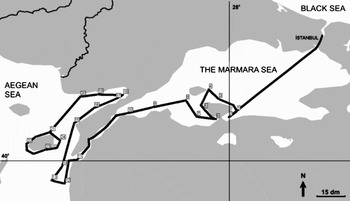
The seawater samples used in the bacteriological analysis were collected (Figure 1) in a Nansen bottle that had been cleaned with acid (10% HCl in distilled water), sterilized with alcohol (50:50, v/v), and rinsed with sterile water. Samples were transferred into 250 ml sterile, brown glass bottles under aseptic conditions and processed on-board the research vessel. Serial dilutions of water samples were prepared to 10−5 in 9-ml amounts of sterile seawater (artificial seawater, Sigma) and were inoculated (0.2 ml) in duplicate on Marine Agar (Difco). Colonies were tested after seven days of incubation at 22°C (Bianchi et al., Reference Bianchi, Perfettini and Bianchi1992; Joux & Lebaron, Reference Joux and Lebaron1997). At the end of the incubating period all the colonies were counted, sub-cultured, Gram stained and characterized biochemically using an automated microbiology system utilizing growth-based technology: VITEK 2 Compact 30 (Biomereux, France).
Locations of stations for sampling zooplankton, phytoplankton and bacteria.

Phytoplankton
For quantitative plankton sampling (Figure 1), phytoplankton samples were placed in 1-l jars and immediately fixed with formaldehyde solution in situ. Samples were stored in dark and cool conditions until analyses. Sub-samples (10 ml) were allowed to settle for 24 hours on HydroBios chambers, using the deposited algae contained in the 1-l samples. Counting and identification of phytoplankton cells was made at 400× magnification with a Nikon TE2000U inverted microscope. Total phytoplankton density was calculated as cells per litre (Uthermöhl, Reference Uthermöl1958). Phytoplankton samples for qualitative analyses were collected by plankton nets (with 30-μm mesh size). Identification was carried out according to Cupp (Reference Cupp1943), Hendey (Reference Hendey1964), Kramer & Lange-Bertalot (Reference Kramer and Lange-Bertalot1986), Tomas (Reference Tomas1996) and Hartley et al. (Reference Hartley, Barber, Carter and Sims1996).
Zooplankton
Zooplankton was vertically sampled (Figure 1) using a WP2 closing net (200-µm mesh, 0.5-m mouth diameter). The material was preserved in 4% buffered formalin and zooplankton was enumerated under a stereo microscope with a zooplankton counting apparatus (Bogorov Rass Chamber). Quantitative analyses of common species were made on subsamples drawn from a 1-ml Stempel pipette (repeated at least twice). Samples were identified at either the species or genus level.
Benthos
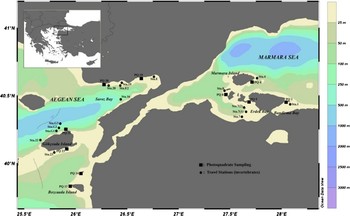
Trawling and photo-quadrat sampling were used to understand the characteristics of benthos in the study area (Figure 2). In total, trawl sampling was conducted 39 times in 16 stations, six of which are in the southern part of the Sea of Marmara and ten are in the northern Aegean Sea. The trawl samples were taken between 27 and 70 m in the southern part of the Sea of Marmara and 45–320 m in the northern Aegean Sea. The samples were sieved out by a 500-µm mesh size sieve, fixed by 4% formalin, washed and divided into taxonomic groups in the laboratory. The specimens were identified, counted and weighed.
Study area: trawl stations for sampling invertebrates and stations for photo-quadrat sampling.

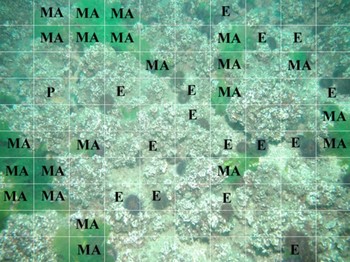
Dives using SCUBA were performed to determine the benthic diversity at the stations and a total of 523 pictures were selected for the photo-quadrat sampling. The pictures were each divided into 100 squares (10 × 10), the main coverage of major macrobenthic groups were counted, and percentage coverage of macrobenthic groups for the main cover was calculated seasonally for each station.
Fish
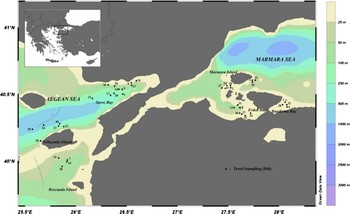
Sampling was carried out with a bottom trawl net, with a 16-mm mesh size cod-end (Figure 4). A total of 20 hauls were carried out, 16 between 45 and 73 m in the Sea of Marmara; 14 randomly taken between 65 and 100 m depth in the northern Aegean Sea. All fish samples were sorted and identified according to Whitehead et al. (Reference Whitehead, Bouchot, Hureau, Nielsen and Tortonose1986).
A sample picture for photo-quadrat sampling (autumn, Station 8. Pic: 1/20): MA, Macroalgae; E, Echinodermata; P, Porifera.

Location of trawl stations for sampling fish.

Cetacea
Shipboard dolphin observations were recorded while the research vessel cruised between sampling stations. For each cetacean: sighting date, time, location, species, group size and other sighting data (radial distance, movements and behaviour of animals etc.) were recorded by using ‘distance sampling’ procedures (Buckland et al., Reference Buckland, Anderson, Burnham and Laake1993). Photographs and films were taken for each encounter to eliminate duplication. Coordinates and track-log of the cruises were obtained by Magellan Explorist XL GPS and these data were transferred via additional software and stored in a Laptop PC.
RESULTS
Bacteria
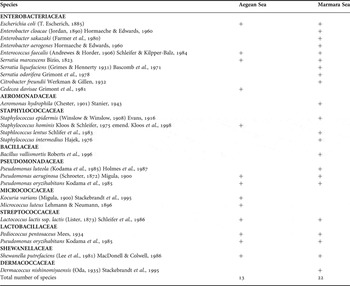
The aerobic heterotrophic culturable bacteria species isolated from the northern Aegean Sea and the southern part of the Sea of Marmara, Turkey is listed in Appendix 1.
The species belonging to the Enterobacteriacea family were the most prevalent in the southern part of the Sea of Marmara. Escherichia coli has previously been reported from the northern Aegean Sea (Altuğ & Erk, Reference Altuğ, Erk, Öztürk and Veysel2001). The presence of twenty-five bacteria species belonging to ten different families from the southern part of the Sea of Marmara and the northern Aegean Sea were reported for the first time. Among all the strains, Gram negative bacteria numbers were higher in the Sea of Marmara than the northern Aegean Sea. While the bacteria species belonging to the Gamma-Proteobacteria class were found to be the highest, the species belonging to Actinobacteria and Bacilli classes closely followed, in the Sea of Marmara. On the other hand, the most prevalent bacteria species in the Aegean Sea was found to belong to the Bacilli class, followed by Actinobacteria and Gamma-Proteobacteria.
Phytoplankton
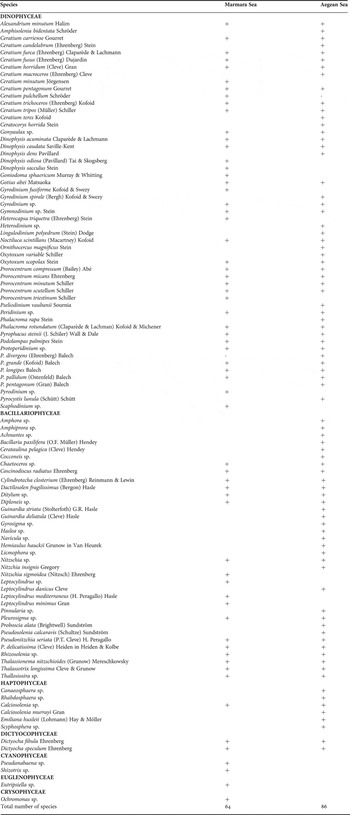
Taxonomic composition of phytoplankton in the southern part of the Sea of Marmara and the northern Aegean Sea is shown in Appendix 2.
During the study period, a total of 103 taxa from seven algal classes, Dinophyceae (51%), Bacillariophyceae (37%), Haptophyceae (7%), Dictyocophyceae (2%), Cyanophyceae (2%), Euglenophyceae (1%) and Chrysophyceae (1%) were determined. Dinophyceae and Bacillariophyceae were the most important groups in terms of species number in comparison with the other taxonomic groups both in the southern part of Marmara and the northern Aegean Seas.
Zooplankton
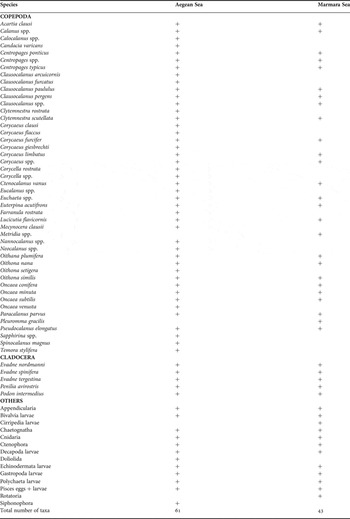
Taxonomic composition of zooplankton in the southern part of the Sea of Marmara and the northern Aegean Sea is shown in Appendix 3.
During the study period, while 44 Copepoda species were recorded in the northern Aegean Sea, 27 Copepoda species were observed in the southern part of the Sea of Marmara.
Benthos
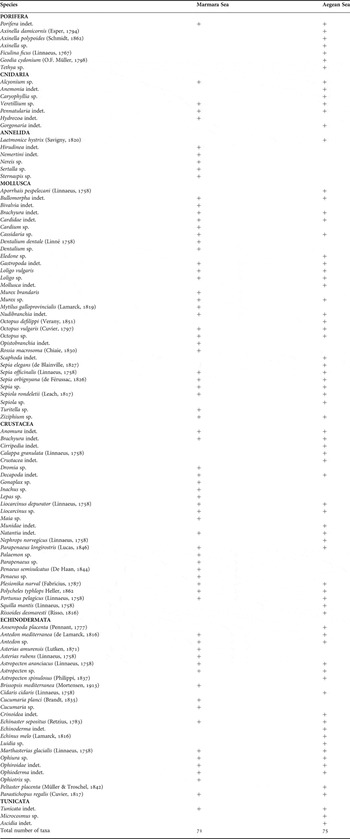
In total, 11,353 specimens, sampled by means of trawling from the southern part of the Marmara Sea, belonged to 71 taxa in six stations. In total, 12,039 specimens, sampled by means of trawling from the northern Aegean Sea, belonged to 75 taxa in ten stations. The taxonomic composition of benthos in the southern part of the Sea of Marmara and the northern Aegean Sea is shown in Appendix 4.
During the study period, while 75 benthic species were recorded in the northern Aegean Sea, 71 species were observed in the southern part of the Sea of Marmara.
A sample picture for photo-quadrat is shown in Figure 3.
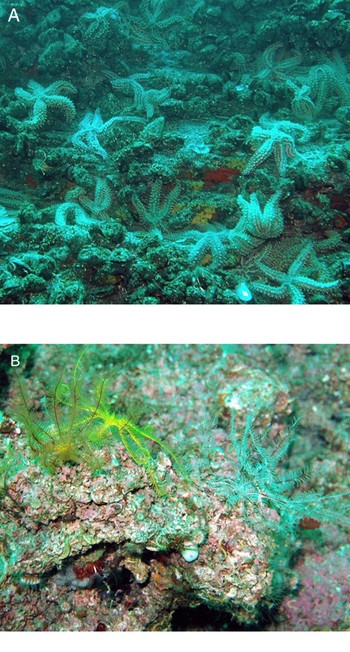
Different dominant echinoderm species in Station 4 at 10 m (A) and 25 m (B) depth are shown in Figure 5.
Different dominant echinoderm species: (A) Marthasterias glacialis at 10 m; (B) Antedon mediterranea at 25 m depths at Station 4.

Fish
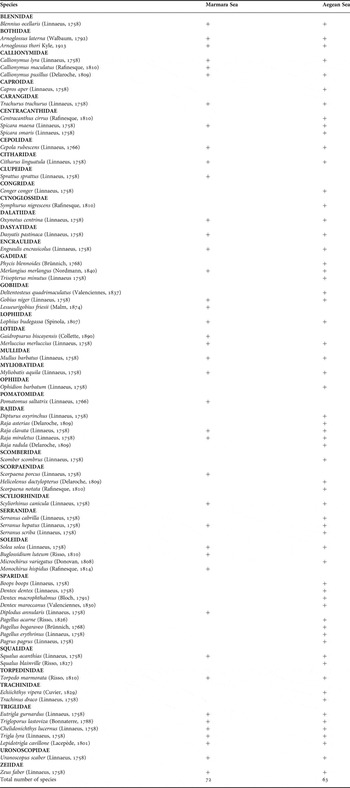
A total of 72 fish belonging to 36 families were collected seasonally from the Sea of Marmara and the northern Aegean Sea in 2006 and 2007. Sixty-three species were found in the northern Aegean Sea and 43 in the Sea of Marmara. Thirty-four species were found both in the Sea of Marmara and the northern Aegean Sea. The species list of two areas is shown in Appendix 5.
During the study period, while 63 fish species were recorded in the northern Aegean Sea, 72 species were observed in the southern part of the Sea of Marmara.
Cetacea
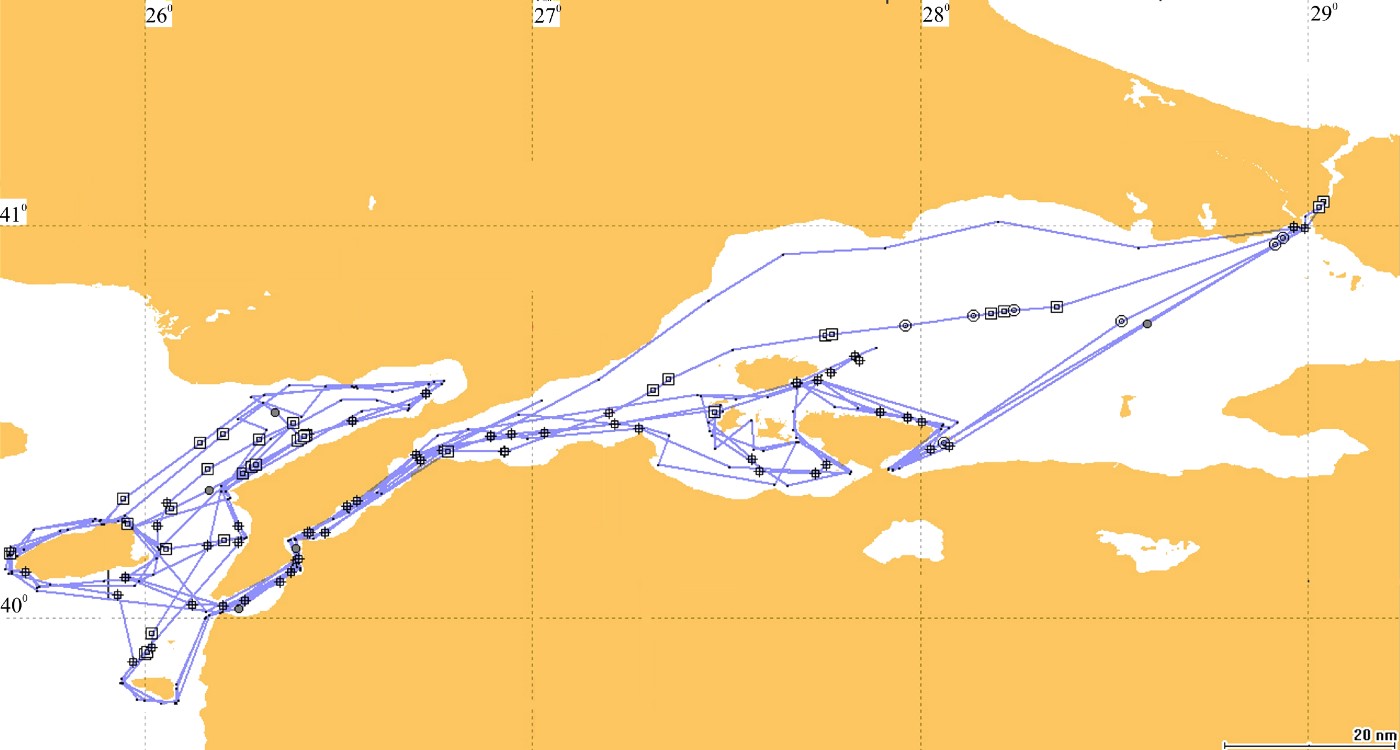
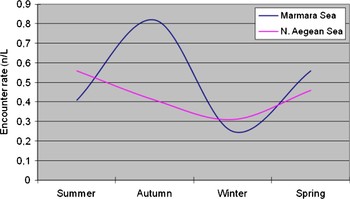
For each seasonal cruise, a total of 387 nautical miles (n.m.) of survey effort (193 n.m. in the Sea of Marmara, 194 n.m. in the northern Aegean Sea) were conducted during this period. While the encounter rate (sighting/10 n.m.) for the summer, autumn, winter and spring periods was recorded to be 0.41, 0.82, 0.25 and 0.56, respectively in the Sea of Marmara, it was recorded for the summer, autumn, winter and spring periods to be 0.56, 0.41, 0.31 and 0.46, respectively in the northern Aegean Sea. A significant peak was observed (Figure 7) during the autumn period in the Sea of Marmara and was linked to the wintering migration of pelagic fish which attracted dolphins. Low rates, both on the group size and encounters' percentage were related to the difficult winter observation conditions (decrease in visibility due to the waves and rain). Average group sizes were calculated for bottlenose dolphin, common dolphin and striped dolphin to be 4.4, 13.1, and 11.2, respectively. Because of single or few encounters, average group size for the others could not be calculated.
Total effort and total observation during the study period for cetaceans.
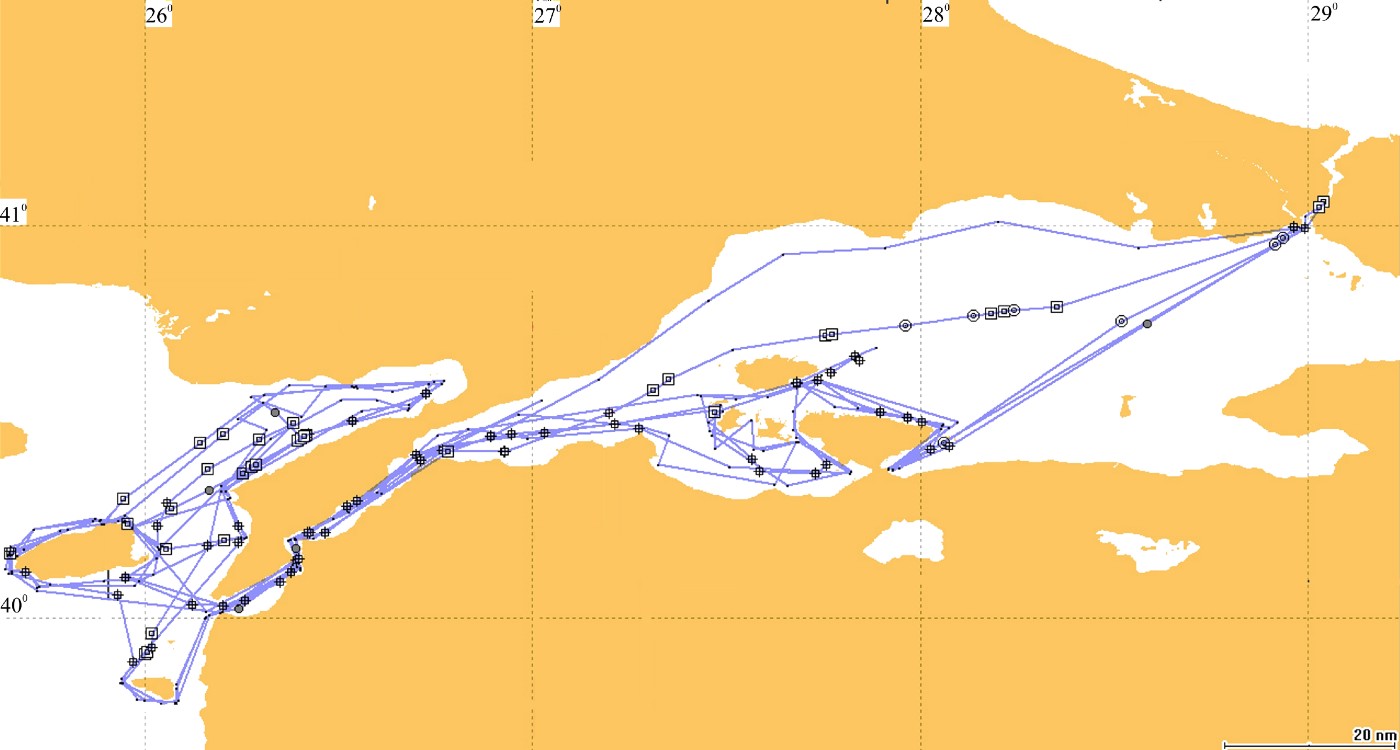
Encounter rate of cetaceans during the study period in the northern Aegean Sea and the Sea of Marmara.

In total, 74 observations: Tursiops truncatus (35), Delphinus delphis (15), Stenella coeruleoalba (14), Phocoena phocoena (5) and Grampus griseus (1) were performed while four remain unidentified. Stenella coeruleoalba species were monitored for the first time in the Sarköy offshore area and in the Kapıdag Peninsula — Cape of Kapsul location in the Sea of Marmara.
DISCUSSION
Due to their particular oceanographic features mentioned above, the Sea of Marmara and the northern Aegean Sea offer unique opportunities for comparing organism and microorganism composition, under different, poorly described conditions. In this study, a total of 27 taxa of aerobic heterotrophic mesophilic bacteria including ten bacterial classes were reported for the first time in both areas. The taxonomic composition of culturable bacteria was found clearly different in the northern Aegean Sea in comparison with the southern part of the Sea of Marmara. For example, the numbers of species of the Enterobacteriaceae family belonging to the Gammaproteobacteria class, which contain medically and scientifically important groups of bacteria, was recorded as the highest in the Sea of Marmara. However, it was recorded as the least highest in the northern Aegean Sea. The high numbers of enteric bacteria species isolated from the Sea of Marmara are characteristic for influenced areas by anthropological pollution. The data, which were evaluated in this study relating to trophic status (levels of nutrients, chlorophyll-a and indicator bacteria), were obtained to be a part of this study and previously were reported as a project report by the authors (Altuğ et al., Reference Altuğ, Aktan, Oral, Topaloglu, Dede, Keskin, Isinibilir, Cardak and Ciftci2007).
Actinobacteria, which play a vital role in organic matter decomposition and carbon cycle, were the second group in the Sea of Marmara. The Bacilli class, which includes the species that is able to secrete large quantities of enzymes, followed Actinobacteria in the Sea of Marmara. This situation was evaluated to be a result of the anthropological pollution input to which the Sea of Marmara is exposed. Shewanella putrefaciens was more abundant in the northern Aegean Sea than the Sea of Marmara. Staphylococcus hominis was reported as a less-common species in clinical specimens but, on the contrary, it was dominant in water samples collected from unpolluted regions (Gunn et al., Reference Gunn, Keiser and Colwell1983). In this study, S. hominis was not isolated in the southern part of the Sea of Marmara, however, it was dominant in water samples collected from the northern Aegean Sea. The differences of bacterial taxonomic composition may be strongly related to unpolluted conditions of the northern Aegean Sea (Altuğ et al., Reference Altuğ, Aktan, Oral, Topaloglu, Dede, Keskin, Isinibilir, Cardak and Ciftci2007) and existing different pollution inputs in the Sea of Marmara (Topcuoglu, Reference Topcuoglu2000; Altuğ et al., Reference Altuğ, Aktan, Oral, Topaloglu, Dede, Keskin, Isinibilir, Cardak and Ciftci2007).
The oligotrophic conditions in the Mediterranean Sea could favour the richness of dinoflagellates, typical organisms of oligotrophic waters (Gomez, Reference Gomez2003). The taxonomic structure of phytoplankton showed a difference between the northern Aegean Sea and the southern part of the Sea of Marmara. The northern Aegean Sea had high species numbers with predominance of dinoflagellates. The Ceratium is the most important group with 12 species in the dinoflagellates, followed by the Protoperidinium with six species, the Dinophysis with five species, and the Prorocentrum with four species. Relatively lower species richness compared to the northern Aegean Sea was found in the southern part of the Sea of Marmara due to the high nutrient values as a result of anthropogenic inputs.
Total numbers of zooplankton taxa increased from the southern part of the Sea of Marmara towards the Aegean Sea. The species composition of zooplankton in the northern Aegean and the south Marmara Seas show differences and similarities. The most taxonomic groups of zooplankton are present in the northern Aegean Sea, but smaller quantities of them have been found in the southern Marmara Sea. This feature seems to be mainly due to differences in salinity between the two seas. In the Marmara Sea, 19 Mediterranean copepod species were found and among these, the dominant species were Clausocalanus spp., Oncaea conifera and O. minuta. This seems to be the result of strong deep currents from the Aegean Sea to the Sea of Marmara. The Sea of Marmara connects the Black Sea to the Aegean Sea via the Straits. The less saline and cool water at the surface and the more saline and warm water at the bottom allows the zooplankton fauna of the Sea of Marmara to include many species from neighbouring seas (Benli et al., Reference Benli, Tarkan and Sever2001). The species composition of zooplankton assemblages is affected by several factors, such as the movements of seawater of different origins and the level of pollution (Isinibilir et al., Reference Isinibilir, Kideys, Tarkan and Yilmaz2008; Isinibilir, Reference Isinibilir2009a). Zooplankton assemblages are generally more abundant in the Sea of Marmara than in the Aegean Sea due to their eutrophic characters (Benli et al., Reference Benli, Tarkan and Sever2001; Siokou-Frangou et al., Reference Siokou-Frangou, Shiganova, Christou, Kamburska, Gubanova, Konsulov, Musaeva, Skryabin and Khoroshilov2004). The species Acartia clausi, Paracalanus parvus and Penilia avirostris are the most common species in the Sea of Marmara (Isinibilir, Reference Isinibilir2009a). They could have been transported into the northern Aegean Sea via the upper water current of the Çanakkale Strait. They could also have affected the zooplankton community structure of the northern Aegean Sea. In this study, typical stenohalin marine organisms such as Siphonophora and Doliolida were not found in the southern Sea of Marmara. Eutrophic species Aurelia aurita, Rhizostoma pulmo and Chrysaora hysoscella were found only in the Sea of Marmara.
The number of benthic specimens was higher in the northern Aegean Sea than the Sea of Marmara. The most important reason is the 8573 individuals of Parapenaeus longirostris sampled from Station G2 in the northern Aegean Sea in the winter season. With the exception of this extraordinary reason, the number of taxa in the northern Aegean Sea is usually higher than the Sea of Marmara. The taxa number of Mollusca and Crustacea was slightly higher in the Sea of Marmara (Appendix 5).
According to photo-quadrat sampling, macroalgae were observed in the main cover of benthos for all stations throughout all seasons except summer. Porifera were also found at the same numbers with macroalgae in the spring and winter. The high observation rate of the macroalgae may be a normal result due to depth. Other observed species were Posidonia oceanica for the northern Aegean Sea and Mytilus galloprovincialis for the southern part of the Sea of Marmara. This is a normal result due to the different oceanographic conditions of the Marmara and Aegean Seas. Although they were not found in high values, the members of phylum Echinodermata were observed from all stations. The dominant echinoderm was Marthasterias glacialis in Station 4 (Sea of Marmara) and the Echinoidae (sp.) (sea urchins) in the Aegean Sea. The effects of the two layer current system in the Sea of Marmara were also observed on the distribution of benthos. Station 4 is a natural reef in the southern part of the Sea of Marmara and Mytilus galloprovincialis was observed mostly in the first 20 m which is typical for a dominant species of the Black Sea. Furthermore, Caryophyllia smithii, Antedon mediterranea and one of the typical Mediterranean sponges Axinella sp. were observed at further depths than 25 m in Station 4 (see Figure 2). This is clearly due to the effects of the Black Sea and Mediterranean Sea originated waters.
The composition of the fish fauna on the continental shelf between the northern Aegean Sea and the Sea of Marmara was attributed to both ecological factors and the same geological history. In relation to geological history, the northern Aegean Sea and the Sea of Marmara were parts of the southern Sarmatic Sea during the upper Miocene era, extended from the Caspian Sea to Austria, and were connected to the area which is now occupied by the North Atlantic (Papaconstantinou & Tortonese, Reference Papaconstantinou and Tortonese1980). Merlangius merlangus, Raja clavata, Squalus acanthias and Gobius niger, which compose the affinity present in the Adriatic and Black Seas, were also found in the Sea of Marmara and the northern Aegean Sea. Also, a high number of common species for both areas may be supporting proof for this affinity. On the other hand, differences in both diversity and species composition were observed between shelf assemblages in the northern Aegean Sea and the Sea of Marmara. The distinct biogeographical, environmental characteristics (depth, dissolved oxygen and temperature) and fishing pressure were the main factors which could explain the differences detected (Keskin et al., Reference Keskin, Ordines, Guijarro and Massuti2011).
Observations on Tursiops truncatus, Delphinus delphis, Stenella coeruleoalba, Phocoena phocoena and Grampus griseus species were also performed in the study areas. Even though only stranded, dead individuals of the S. coeruleoalba species have been observed in the Sea of Marmara (Öztürk et al., Reference Öztürk, Dede and Komut1999); live individuals of the S. coeruleoalba species were monitored for the first time in the Sea of Marmara, in the Sarköy offshore area and in the Kapıdag Peninsula — Cape of Kapsul location. Among all species P. phocoena was only observed in the Sea of Marmara and G. griseus was only observed in the Aegean Sea. Besides, other species were observed both in the Aegean and Marmara Seas. It is thought that D. delphis and S. coeruleoalba are distributed in the Saroz Bay and Gökçeada during the year and it is assumed that there may be local populations in this region. Likewise, it is assumed that local populations of T. truncatus inhabit the Straits, Bandırma Bay, Erdek Bay, South Marmara islands, around Gökçeada–Bozcaada Islands and Saroz Bay. The observation frequency for D. delphis species which follows these pelagic fish, was high in the Marmara Sea and near the Straits area. It is supposed that dolphin presence during the spring and autumn seasons' monitoring in the Sea of Marmara, Istanbul Strait and Çanakkale Strait, were related to the pelagic fish migration. Long term periodic surveys on the dolphin population in the study site as well as sampling studies by catch and stranded animals are essential for the future of these species. With the help of these long term studies, we will collect more detailed data which will eventually help us to improve our knowledge on the changes of their population and their distribution.
The taxonomic composition of bacteria, phytoplankton and zooplankton showed differences related to trophic character differences (Altuğ et al., 2007) between the northern Aegean Sea and the Sea of Marmara. The taxonomic compositions of benthic communities were found to be different due to the different oceanographic conditions of the Marmara and Aegean Seas. The taxonomic structure of fish also showed differences and this situation was evaluated as possible affects of biogeographical, environmental characteristics and fishing pressure in these areas as mentioned above. Furthermore, the observations on dolphin species have provided the first main data especially for the Turkish part of the northern Aegean Sea during the study period.
This study provides increased knowledge about the existence of identified species in Turkish marine environments. The first detailed research was conducted to determine the diversity of bacteria, phytoplankton zooplankton, benthic species, fish and mammals to put forth the situation of the ecosystem as it is today in these areas. However, there is a need for long term and more detailed studies in these areas for the development of conservation strategies.
ACKNOWLEDGEMENTS
The authors wish to thank the Scientific and Technological Research Council of Turkey (TUBITAK, Project no. 105Y039) for their financial support. The authors also thank Professor Dr Bayram Öztürk for the support and the crew of RV ‘Yunus-S’ for their help in sampling.
Aerobic heterotrophic culturable bacteria species from the northern Aegean Sea and southern part of the Sea of Marmara, Turkey (2006–2007).

Taxonomic composition of phytoplankton in the northern Aegean Sea and southern part of the Sea of Marmara, Turkey (2006–2007).

List of zooplankton taxa in the northern Aegean Sea and the southern part of the Sea of Marmara.

Taxonomic composition of benthos in the southern part of the Sea of Marmara and the northern Aegean Sea.

Fish species collected on the continental shelf in the Sea of Marmara and the northern Aegean Sea, Turkey (2006–2007).