The choice of consuming beneficial microorganisms is a habit that grows day by day in the society. In the presence of certain pathologies or treatments that weaken the body’s natural defenses, many supplement their diets with healthier food products, which can exert some beneficial effects on their health and general well-being. Probiotics, defined as ‘live micro-organisms which when administered in adequate amounts confer a health benefit on the host’(1), are associated with the concomitant upturn in the consumption these kinds of products. Although these beneficial microorganisms can currently be purchased as dietary supplements in pharmacies, fermented foods remain the most popular source of probiotic intake(Reference Homayoni Rad, Mehrabany and Alipoor2–Reference Soemarie, Milanda and Barliana4).
In this context, the importance of the food matrix is not limited to the sensory properties of the product and consumer acceptability. It has been shown that the components of the matrix can influence the functionality of probiotics, affecting survival in the gastrointestinal tract and their clinical efficacy(Reference Flach, van der Waal and van den Nieuwboer5). Yoghurt is one of the fermented foods that have been produced and consumed by humans for thousands of years(Reference Aryana and Olson6). Several studies have demonstrated its potential as a health-promoting food(Reference Hadjimbei, Botsaris and Chrysostomou7–Reference Savaiano and Hutkins9). According to the Codex-Alimentarius, yoghurt is a fermented milk obtained with the symbiotic cultures of Streptococcus thermophilus and Lactobacillus delbrueckii subsp. bulgaricus; in which these starter microorganisms must be viable, active and abundant in the final product(10).
Considering the numerous beneficial effects attributed to the consumption of yoghurt, it was proposed that yoghurt can be considered a functional food and its starter cultures potential probiotics(Reference Guarner, Perdigon and Corthier11). However, the benefits associated with specific yoghurt bacterial strains should be demonstrated before claiming that they are probiotic because beneficial properties of the microorganisms are strain dependent(Reference Arena, Caggianiello and Russo12). The International Scientific Association for Probiotics and Prebiotics has written a consensus document on the appropriate use of the term probiotic(Reference Hill, Guarner and Reid13).
For many years, probiotic effects were mainly aimed at intestinal health; however, currently many works postulate the effects of these beneficial microorganisms against extra-intestinal pathologies. In this context, breast cancer is the leading cause of cancer-related death in women worldwide(Reference Sung, Ferlay and Siegel14). When the tumour is detected in the earliest stages, it is usually removed surgically. Although this is the most appropriate treatment, it must also be considered that many women who suffer from breast cancer, after surgery, or due to the presence of metastases, undergo oncological treatments. Furthermore, chemotherapy remains a competent treatment option in cases where targeted therapies are not effective, and it is expected that it will continue to be integrated in the treatment of breast cancer in the near future(Reference Claessens, Ibragimova and Geurts15). However, chemotherapy drugs affect both tumour cells and normal cells in constant division, causing a negative impact on the health of patients, with damage to the intestinal mucosa being one of the major contributors to the decline in quality of life(Reference Basile, Di Nardo and Corvaja16). These negative effects can impact chemotherapy dosing and often lead to treatment discontinuation. Therefore, there is an urgent need to develop strategies that alleviate the side effects of chemotherapy to improve treatment tolerance and quality of life of these patients(Reference Thomsen and Vitetta17). Probiotics were analysed in the prevention or mitigation of side effects related to chemotherapy and radiotherapy, highlighting their properties to act on the alterations in the composition of the intestinal microbiota associated with these treatments(Reference Rodriguez-Arrastia, Martinez-Ortigosa and Rueda-Ruzafa18). However, although the use of probiotics has become widely popular, it is important to consider that the effects are specific to each strain and that, particularly in cancer patients, more studies are required to demonstrate the effectiveness and safety of these microorganisms, especially considering the immunosuppressed condition of patients undergoing oncological treatments(Reference Lu, Dong and Wu19).
It has been previously described using an animal model that a yoghurt prepared with a pool of 10 strains from the Culture Collection of Centro de Referencia para Lactobacilos (CERELA, San Miguel de Tucumán, Argentina) inhibited colon cancer promotion through its anti-inflammatory potential(Reference de Moreno de LeBlanc and Perdigon20). Following the probiotic guidelines, two strains (Streptococcus thermophilus CRL807 and Lactobacillus delbrueckii subsp. bulgaricus CRL864) from this yoghurt have been selected because of their intrinsic anti-inflammatory potential(Reference del Carmen, de Moreno de LeBlanc and Martin21). With these two strains, a potentially probiotic yoghurt was formulated, and its beneficial effects were demonstrated in animal models of colitis and colon cancer(Reference Del Carmen, de Moreno de LeBlanc and LeBlanc22).
The novelty of this research lies in the evaluation, in a breast cancer model, of the benefits associated with a potentially probiotic yoghurt obtained with starter cultures selected for their immunomodulatory effects. Furthermore, this work not only evaluated the antitumour potential of this yoghurt but also analysed its effect in a breast cancer model undergoing treatment, bringing us closer to the situation of a cancer patient who will likely receive conventional treatment. The study’s hypothesis is that this yoghurt, in addition to its modulating effect on the immune response against the tumour, is beneficial by reducing some negative side effects associated with chemotherapy.
Based on these results, the aim of this work was to evaluate the beneficial properties of a yoghurt obtained by the fermentation of two strains of lactic acid bacteria (LAB) selected for their immunomodulatory properties using an in vivo model of mice with breast cancer undergoing chemotherapy. In addition, the individual effects of each of the selected LAB strains were also analysed.
Materials and methods
Bacterial strains growth conditions and yoghurt preparation
Streptococcus (S.) thermophilus CRL807 and Lactobacillus (L.) delbrueckii subsp. bulgaricus CRL864 were obtained from the CERELA Culture Collection (San Miguel de Tucumán, Argentina) and grown in LAPTg/l (broth which contains 1·5 % peptone, 1 % tryptone, 1 % yeast extract, 0·1 % Tween 80, 0·1 % glucose and 2 % lactose(Reference Raibaud, Caulet and Galpin23)) or Man Rogosa and Sharpe (MRS, Britania, Argentina) broth, respectively, for 16 h at 37°C without agitation.
For yoghurt preparation, after incubation, each strain was inoculated into reconstituted sterile nonfat milk (La Serenísima, Mastellone Hnos S.A, Argentina) at a concentration of 2 % (v/v) and incubated for 16 h at 37°C. Both resulting cultures (ranging from 1 × 10⁸ to 5 × 10⁸ CFU/ml) were used to inoculate a larger volume of nonfat sterile milk, at a concentration of 1 % (0·5 % of each strain, v/v), without agitation for 16 h at 37°C. Under these conditions, the final total count in yoghurt was 2 ± 1 × 10⁸ CFU/ml, maintaining an approximate 50/50 balance of both bacterial species at the end of fermentation.
Animals
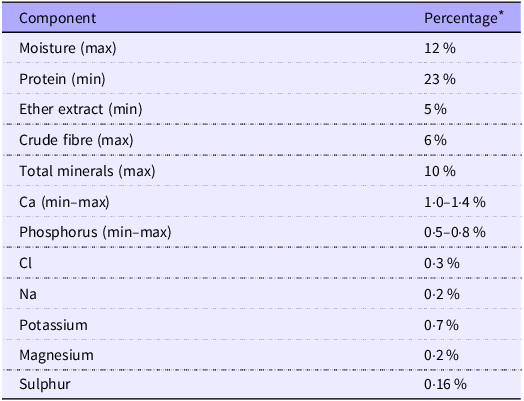
Female BALB/c mice (7–8 weeks old) were obtained from the CERELA inbred colony and maintained in its facility. The animals weighted between 18 and 22 g and were housed in a room with controlled conditions (12-hour light/dark cycle and 20 ± 2°C). The mice had free access to balanced rodent food (Asociación de Cooperativas Argentinas (ACA)) and filtrated water ad libitum. Table 1 shows the qualitative and quantitative composition per kilogram of dry matter. The diet ingredients are (i) raw materials of vegetable origin: corn, wheat, soya flour, soy oil, corn gluten, sunflower flour and wheat bran. (ii) Raw materials of animal origin: fish meal. (iii) Vitamin components: A, B1, B2, B6, B12, D3, E, K, biotin, nicotinic acid, folic acid, pantothenic acid and choline chloride. (iv) Mineral components: calcium carbonate, sodium chloride, sodium selenite, calcium iodate, copper oxide, ferrous sulphate, manganous oxide, zinc oxide and magnesium oxide. (v) Amino acids: methionine, lysine and threonine. (vi) Additives: antifungal.
Composition of the standard rodent diet

min, minimum; max, maximum.
* Composition per kilogram of dry matter.
All the experiments were approved by the CERELA Animal Protection Committee (CRL-CICUAL-IBM-2023/5A, CRL-CICUAL-IBM-2023/6A and CRL-CICUAL-IMB-2023/7A).
Tumour induction
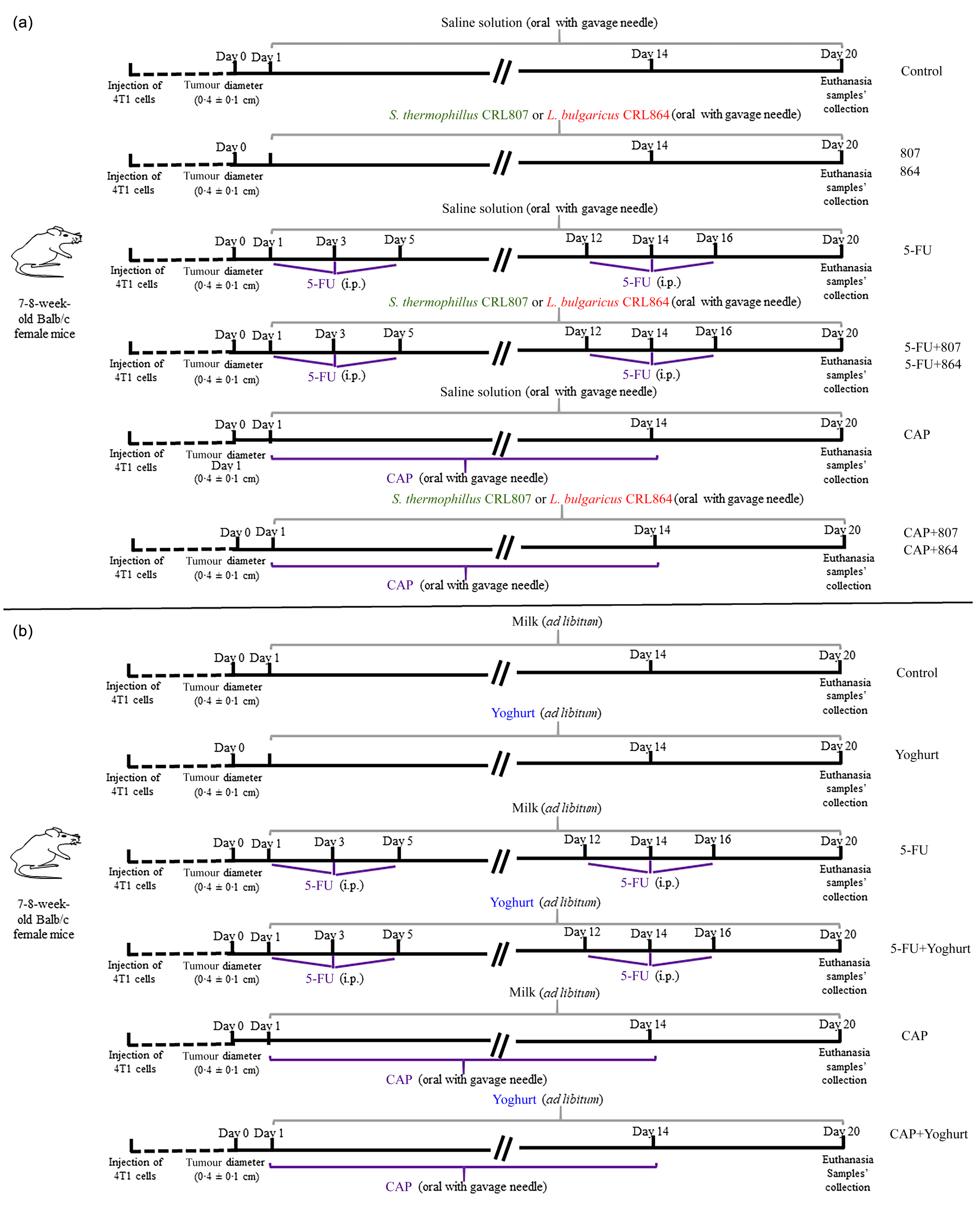
Murine breast tumour 4T1 cells were purchased from American Type Culture Collection, (ATTC ® CRL-2539TM) and grown in RPMI1640 (GlutaMAX medium, Gibco, Gran Island) supplemented with 10 % fetal bovine serum (NATOCOR, Córdoba, Argentina) and 1 % penicillin-streptomycin-amphotericin B solution at 37ºC in a humidified atmosphere of 5 % CO2. Cells were subcultured when growth reached 80 % confluence. For tumour induction, cells were detached with trypsin-EDTA solution (Gibco, Gran Island) and resuspended in sterile PBS (pH 7·4), composed of sodium chloride (NaCl), potassium chloride (KCl), disodium hydrogen phosphate (Na2HPO4) and potassium dihydrogen phosphate (KH2PO4), to reach a concentration of 1 × 10⁶ cells/ml. Mice were injected subcutaneously with 0·2 ml of 4T1 suspension into the upper right mammary gland following a previously described protocol(Reference Levit, Savoy de Giori and de Moreno de LeBlanc24). Tumour growth was followed by caliper measurement, and when its largest diameter reached 0·4 ± 0·1 cm (approximately 7 d after injection), mice were randomly separated into groups (n 5) started on different treatments (Figure 1(a) and (b)).
Experimental breast cancer model undergoing chemotherapy treatment with LAB (a) or yoghurt (b). Day 0 corresponds to the day the tumor reached the desired size; when the mice were separated into groups and the different chemotherapy treatments and the administration of LAB or yoghurt began. Chemotherapy with 5-fluorouracil (5-FU) consisted of two cycles of three intraperitoneal (i.p.) injections at a dose of 50 mg per kg of body weight, separated by a six-day treatment-free period. Oral chemotherapy treatment with capecitabine (CAP) consisted of a dose of 350 mg per kg of body weight in a volume of 0·1 ml (administered with a gavage needle) for 14 consecutive days. S. thermophiles CRL807 or L. bulgaricus CRL864 were administered daily with a gavage needle from day 1 until the end of the protocol (day 20). Mice in the Control, 5-FU and CAP groups received saline solution instead of the LAB suspension (a). For evaluation of yoghurt, yoghurt was administered ad libibitum between days 1 and 20; and the Control, 5-FU and CAP groups received unfermented milk (b). At the end of both experimental protocols (day 20), the mice were sacrificed, and samples were collected. LAB, lactic acid bacteria; 5-FU, 5-fluorouracil; CAP, capecitabine.

Chemotherapy treatments and bacterial feeding protocol
Two different chemotherapy regimens were administered, one systemically with 5-fluorouracil (5-FU) and the other orally with capecitabine (CAP). 5-FU chemotherapy consisted of two cycles of three intraperitoneal (i.p.) injections of 5-FU (Sigma Aldrich) at a dose of 50 mg per kg of body weight day in between, separated by a 6-day treatment-free period, according to a protocol described previously(Reference Levit, Savoy de Giori and de Moreno de LeBlanc24). Oral chemotherapy treatment consisted of a daily CAP (Sigma Aldrich) dose of 350 mg per kg of body weight in a volume of 0·1 ml (administered with a gavage needle) for 14 consecutive days, following the protocol described by Mendez et al with some modifications(Reference Méndez Utz, Pérez Visñu and Perdigón25). The CAP dose was adjusted again because the pure drug was used and not the dissolved pharmaceutical tablet as described in the previous work.
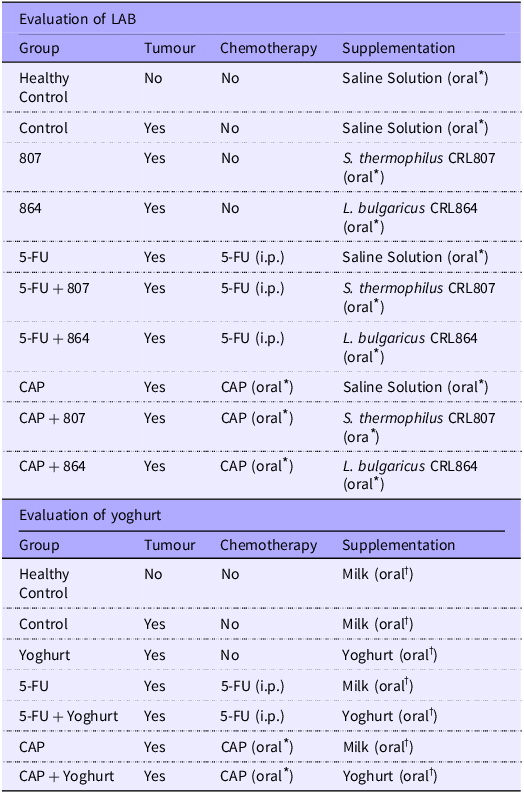
The experiments were divided into two in order to analyse in one of them the effect of LAB when administered in suspension (n 45; 5 mice per group) and in the other the effect of yoghurt (n 30; 5 mice per group). Each of these experiments had its tumour control group (Control) and the chemotherapy controls (CAP and 5-FU groups), which received saline solution orally (with the gavage needle) or skimmed milk ad libitum according to the protocol to evaluate the LAB or yoghurt, respectively (Table 2 and Figure 1). Animals were randomly separated into the groups when the tumours reached the appropriate size. As the tumours were measured, if a mouse reached the desired volume, it was included in an experimental group, always following the same scheme (Control, each LAB, 5-FU, 5-FU with each LAB, CAP, CAP with each LAB; or Control, yoghurt, 5-FU, 5-FU with yoghurt, CAP, CAP with yoghurt), according to the individual strains or yoghurt were evaluated (Table 2 and Figure 1). In the LAB evaluation protocol, animals from different experimental groups shared the same cage (they were individually identified). In the yoghurt evaluation, the groups receiving yoghurt and those receiving milk shared cages.
Experimental groups for evaluation of LAB and Yoghurt

LAB, lactic acid bacteria; 5-FU, 5-fluorouracil; CAP, capecitabine.
* Oral administration by using a gavage needle.
† Ad libitum administration in special baskets.
LAB were administered as suspensions (0·1 ml) with a gavage needle at a concentration of 9 ± 1 × 10⁸ CFU/ml every day. Three groups of mice received S. thermophilus CRL807, two of them together with the treatment (5-FU + 807 and CAP + 807 groups) and another as a LAB control, without chemotherapy (807 group). Three other groups received L. bulgaricus CRL864 (5-FU + 864, CAP + 864 and 864 groups). The control groups (Control, 5-FU and CAP groups) received saline solution (Figure 1(a)). For yoghurt evaluation, it was prepared fresh every day, and administered ad libitum in aluminum baskets in a volume of 50 ml per cage, while controls (Control, 5-FU and CAP groups) received skimmed milk without inoculum (Figure 1(b)). Yoghurt or milk was changed daily. Three yoghurt groups were evaluated (5-FU + Yoghurt; CAP + Yoghurt and Yoghurt). A group of mice (not shown in Figure 1) that received saline solution and did not develop tumour was used to determine the average values of some determinations in healthy animals (Healthy Control group). The experiments were repeated twice and in each repetition, each group consisted of five mice (n 5 per group). The total number of animals used per repetition was ninety five (forty-five for the study of LAB in suspension and 30 for the yoghurt); however, the initial sample size was 10 % larger because tumour growth occurs in 90–100 % of animals.
Throughout the experiment, the diameter of each tumour was measured with a caliper to calculate the volume, and the mice were weighed every two days. If any mouse lost more than 20 % of its initial body weight or showed excessive weakness, difficulty breathing or lethargy, it was euthanised to avoid unnecessary suffering.
Euthanasia and samples’ collection
Twenty days after starting the treatments, animals were euthanised to avoid unnecessary suffering due to the growth of the primary tumour, mainly within the untreated control groups. Mice were anaesthetised using a mixture of ketamine (100 µg per g of body weight) and xylazine (5 µg per g of body weight). Blood samples were obtained by cardiac puncture and received in tubes containing anticoagulant (EDTA, Sigma-Aldrich) for haematological analyses (haematocrit and white blood cell count) and plasma collection. Small intestines (ileum) were also dissected for histological evaluation, and breast tumour, spleen and liver were removed and weighted.
Intestinal damage assessment
Ileal samples were fixed, embedded in paraffin and cut using a microtome (Hyrax, 15M Carl Zeiss) obtaining 4-µm-thick slices. Sections were stained with Hematoxylin-Eosin and observed under light microscope (Carl Zeiss). Five villus heights and five crypt depths were measured using Zeiss ZEN 3.8 software (blue edition). Additionally, histological damage was determined using an inflammation score, ranging from 0 to 3 as established in a previous protocol(Reference Levit, Savoy de Giori and de Moreno de LeBlanc26).
Cytokines’ determination in plasma
Concentrations of selected cytokines (IL-10, TNF-α, IL-6 and IL-17) were measured in blood plasma using a cytometric bead array kit following the manufacturer’s instructions (BD Bioscience).
Statistical analysis
The minimum sample size (n 5 per group) was determined based on previous experiments and took into account the magnitude of the effect to be measured in the experimental population. In this model, 10 % more animals were included in the initial simple size (fifty mice for the LAB evaluation and thirty-four for the yoghurt evaluation) since tumour growth occurs in 90–100 % of the animals. All mice with tumours were included in the study. To achieve the minimum value per group, each experiment was repeated twice, and the data were analysed together. This was done due to the mortality associated with chemotherapy, especially with 5-FU.
Statistical analyses were performed using MINITAB 14 software. A factorial experimental design (replicates × dietary supplement × treatment) was used for each chemotherapy treatment because they were not compared with each other. For the experiment with individual LAB, the design was 2 × 3 × 2, and to study the effect of yoghurt, the design was 2 × 2 × 2. Comparisons were made using a general linear model ANOVA followed by a Tukey post hoc test, and P < 0·05 was considered significant. No significant differences were observed between the two independent replicates; the results of the two replicates were combined and the comparisons were obtained from ten animals (n 10) for groups in which there was no mortality. For groups in which animals died, the corresponding n is described for each result. GraphPad Prism software version 9 was used to show the results with their comparisons in the figures.
Results
Effect of lactic acid bacteria or yoghurt administration on tumour volume progression in mice under chemotherapy. Changes in liver and spleen weight
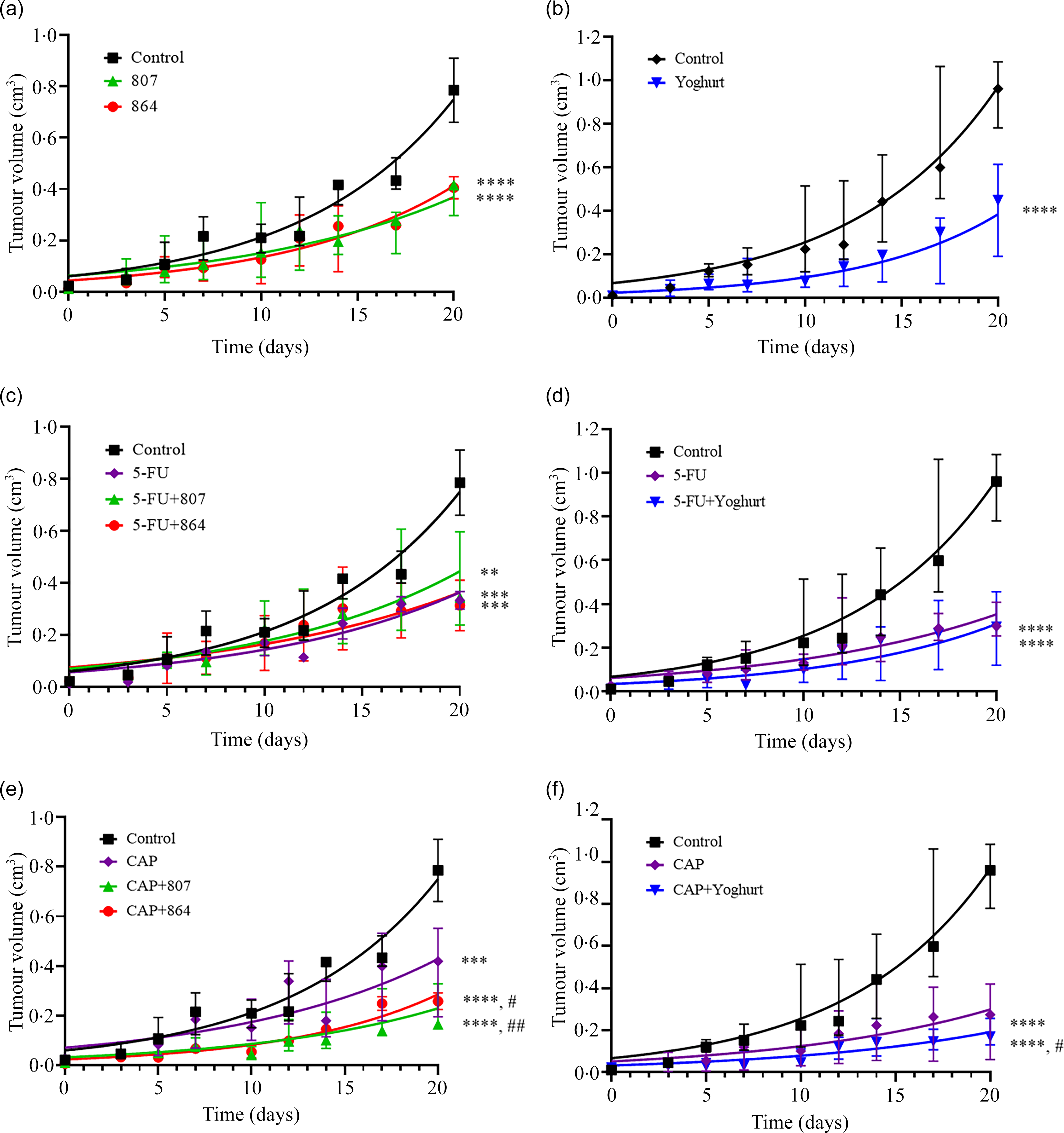
Administration of LAB as individual suspensions significantly (P < 0·0001) decreased tumour volumes in the absence of chemotherapy treatment, compared with the Control group at the end of the experimental protocol (Figure 2(a)). Similar effect was observed in mice systemically treated with 5-FU (P = 0·0004 for 5-FU v Control at day 20), highlighting that in the presence of this drug, the administration of L. bulgaricus CRL864 maintained its effect (P = 0·0002 for 5-FU + 864 v Control, Figure 2(c)). The evaluation of capecitabine oral treatment showed that both LAB administration improved this treatment with more significant differences compared with the Control (P = 0·0007 for CAP v Control, and P < 0·0001 for CAP + 807 and CAP + 864 v Control at day 20, respectively; Figure 2(e)). In addition, significant differences for tumour volume were observed when compared CAP v CAP + 807 (P = 0·002) and CAP v CAP + 864 (P = 0·01). Similarly, mice administered yoghurt significantly decreased (P < 0·0001) tumour volume compared with Control group (Figure 2(b)). Its consumption maintained the effect of both 5-FU and CAP treatment (P < 0·0001 compared with Control), highlighting the significant difference (P < 0·05) in tumour volumes when compared CAP and CAP + Yoghurt groups at the end of the protocol (Figure 2(d) and (f)).
Beneficial effects of LAB or yoghurt administration on tumour growth in mice receiving or not chemotherapy. Tumour volume (cm3) changes during the experiment are shown for each group. (a) Mice received individual bacterial strains (S. thermophiles CRL807 or L. delbrueckii subsp. bulgaricus CRL864). (b) Mice received yoghurt. (c) and (d) Mice under 5-FU treatment which received or not LAB or yoghurt. (e) and (f) Mice under capecitabine (CAP) treatment which received or not LAB or yoghurt. For each time point, results show the median and range for each group (n 10 for most groups and time points; however, n decreased in 5-FU-treated groups due to animal death; n 6 for 5-FU, n 8 for 5-FU + 807, 5-FU + 864 and 5-FU + Yoghurt at the end of the experiment). The statistical analysis is presented for the last time point where groups were compared v the Control (*P < 0·05; **P < 0·01; ***P < 0·001; ****P < 0·0001) and v the respective chemoherapy treatment (#P < 0·05, ##P < 0·01). LAB, lactic acid bacteria; 5-FU, 5-fluorouracil; CAP, capecitabine.

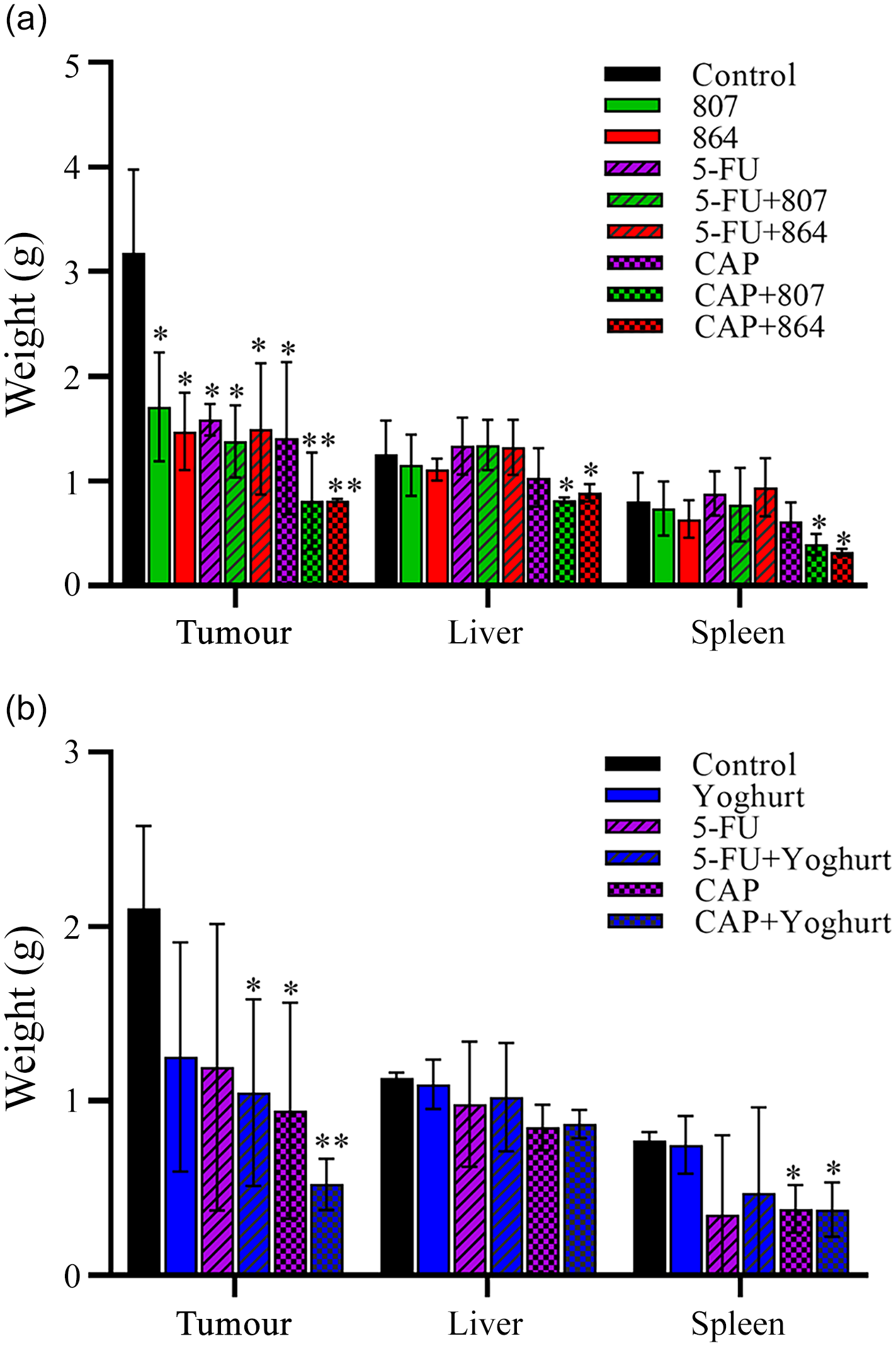
Tumour volumes were also correlated with their weight at the end of the experiment, showing a significant decreased (P < 0·05) after LAB consumption and chemotherapy treatments, with the CAP + 807, CAP + 864 and CAP + Yoghurt groups presenting the lowest tumours’ weights (P < 0·01 compared with Control, Figure 3). Furthermore, these groups showed a significant (P < 0·05) smaller spleen weight compared with the Control (Figure 3). Similar effects were observed in liver weight, with significant differences (P < 0·05) when CAP was administered with individual strains (Figure 3(a)).
Beneficial effects of LAB or yoghurt administration on tumour, liver and spleen weights. Tumour, liver and spleen weights were obtained at the end of the experiments from mice received individual bacterial strains with or without chemotherapy (CAP or 5-FU) treatment (a), and from mice administered yoghurt with or without chemotherapy (b). Data are expressed as mean with 95 % CI (n 6 for 5-FU, n 8 for 5-FU + 807, 5-FU + 864 and 5-FU + Yoghurt and n 10 for the rest of the groups). Statistical analysis shows differences with respect to the Control group (*P < 0·05; **P < 0·01). LAB, lactic acid bacteria; 5-FU, 5-fluorouracil; CAP, capecitabine.

Effect of lactic acid bacteria or yoghurt on chemotherapy toxicity
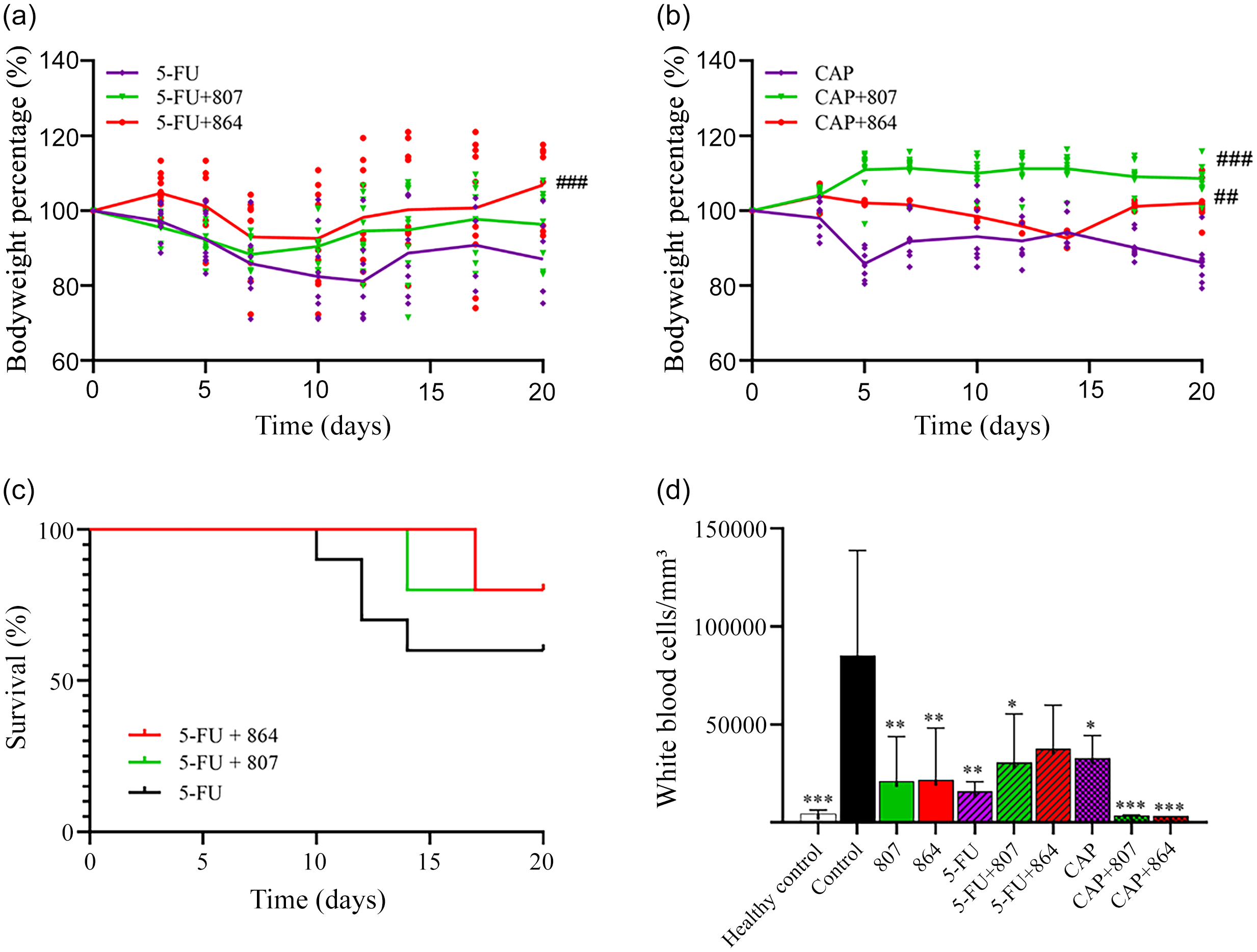
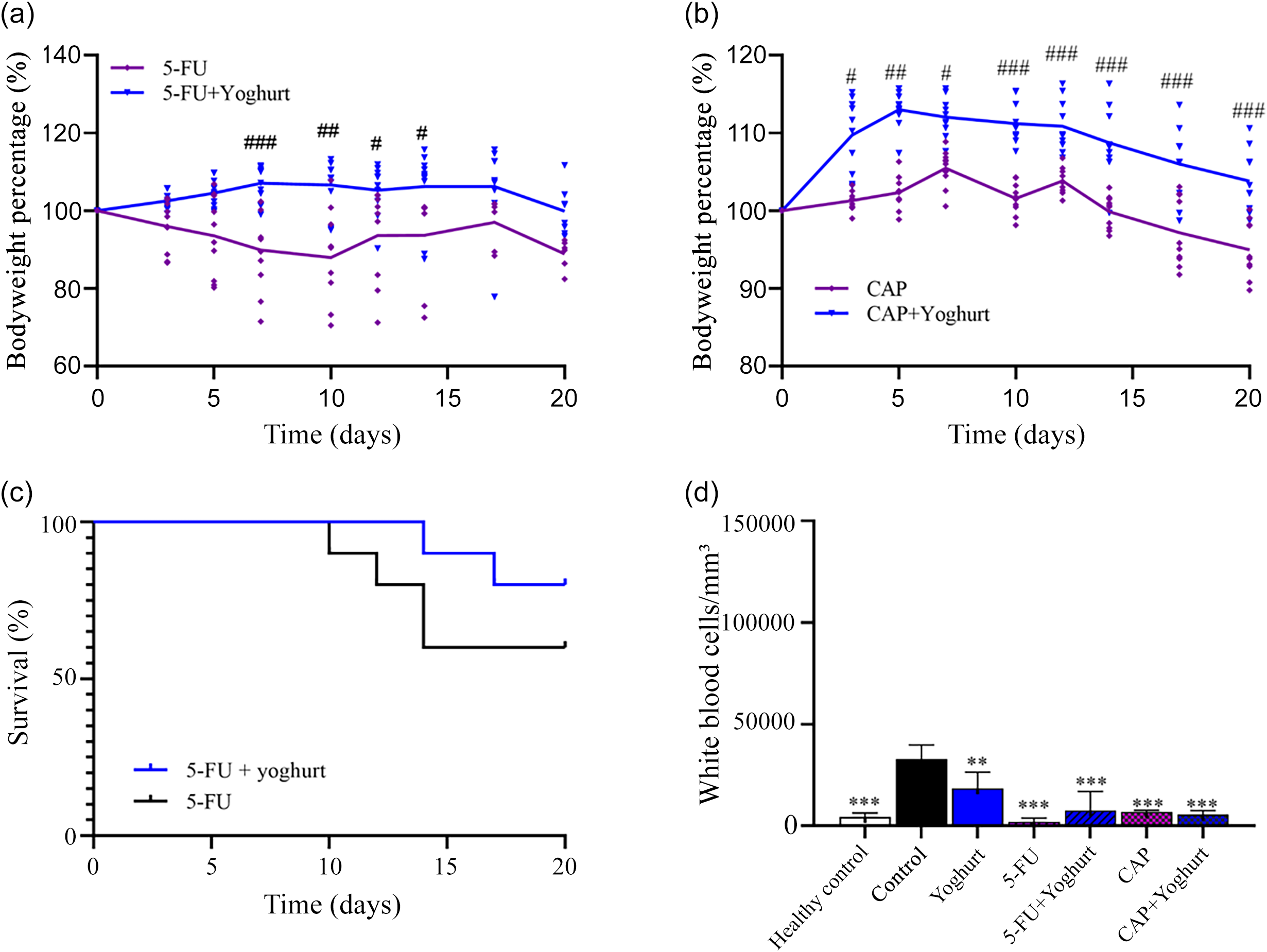
One of the well-documented side effects of chemotherapy is weight loss. Measurements carried out throughout the experiment showed that the administration of both drugs was associated with decreases in the body weight of the animals compared with their original condition. However, those mice undergoing chemotherapy treatment that received LAB showed a lower body weight loss, with significantly different values, at some time points, from those of the groups that received chemotherapy alone (Figure 4(a) and (b)). Highlighted at the end of the protocol are the significant differences observed between 5-FU and 5-FU + 864 (P < 0·001), CAP and CAP + 807 (P < 0·001) and CAP v CAP + CAP864 (P < 0·01). Similar effects were observed in mice administered yoghurt, with significant differences in body weights when CAP and CAP + Yoghurt were compared throughout the experiment (Figure 5(a) and (b)).
Selected LAB administration decreased secondary side effects associated to chemotherapy in mice bearing breast tumour. Variations of body weight through the experiment are expressed related to initial body weight (100 %) for mice received individual bacterial strains (S. thermophiles CRL807 or L. delbrueckii subsp. bulgaricus CRL864) and treated with 5-FU (a) or capecitabine (CAP, (b)). Survival is showed for the groups treated with 5-FU (c). White blood cell counts were performed on whole blood samples (d). Data are expressed as mean ± sd (n 10 for all groups without chemotherapy or with CAP treatment; n 6 for 5-FU, n 8 for 5-FU + 807 and 5-FU + 864). The statistical analysis shows the comparisons with the Control (*P < 0·05; **P < 0·01; ***P < 0·001) and with the 5-FU or CAP groups (##P < 0·01: ###P < 0·001). LAB, lactic acid bacteria; 5-FU, 5-fluorouracil; CAP, capecitabine.

Yoghurt feeding decreased secondary side effects associated to chemotherapy in mice bearing breast tumour. Variations of body weight through the experiment are expressed related to initial body weight (100 %) for mice received yoghurt and treated with 5-FU (a) or capecitabine (CAP, (b)). Survival is showed for the groups treated with 5-FU (c). White blood cell counts were performed on whole blood samples (d), and data are expressed as mean ± sd (n 10 for all groups without chemotherapy or with CAP treatment; n 6 for 5-FU, n 8 for 5-FU + Yoghurt). The statistical analysis shows the comparisons with the Control (*P < 0·05; **P < 0·01; ***P < 0·001) and with the 5-FU or CAP groups (#P < 0·05; ##P < 0·01: ###P < 0·001). LAB, lactic acid bacteria; 5-FU, 5-fluorouracil; CAP, capecitabine.

Mice treated with 5-FU or CAP showed differences in blood cells compared with the groups without chemotherapy, especially in leukocyte counts (Figures 4(d) and 5(d)). However, in this model, it is important to consider that tumour growth is accompanied by a leukaemic reaction with an elevated number of white blood cells (some of them immature) and a change in the leukocyte formula (higher percentage of polymorphonuclear cells than lymphocytes). For this reason, the counts obtained, although low, are not lower than those described for healthy animals (5000 ± 1000 leukocytes/mm3). In some animals that received chemotherapy, the leukocyte formula was reversed with higher percentages of lymphocytes, similar to healthy animals (data not shown). The administration of LAB suspensions or yoghurt in the absence of treatment was also associated with a significant decrease (P < 0·01) in the blood leukocyte counts compared with their respective Control group. Furthermore, in the presence of chemotherapy treatment, administration of LAB or yoghurt maintained leukocyte counts similar to those of the respective chemotherapy control groups (5-FU and CAP groups). It is noteworthy that the CAP + 807, CAP + 864 and CAP + Yoghurt groups had counts close to those of healthy control mice (Figures 4(d) and 5(d)). Regarding haematocrits, no significant differences were observed for erythrocytes’ percentages between the assessed groups (data not shown).
Furthermore, during the experiment, general health of the mice worsened due to the effects of the chemotherapies, causing the death of 40 % of those treated with 5-FU (considering both experimental protocols, Figures 4(c) and 5(c)). Whereas when LAB suspensions or yoghurt were administered, a lower percentage of death was observed (20 %). No deaths were reported in mice going under capecitabine treatment.
Effect of lactic acid bacteria or yoghurt on intestinal mucositis associated to chemotherapy
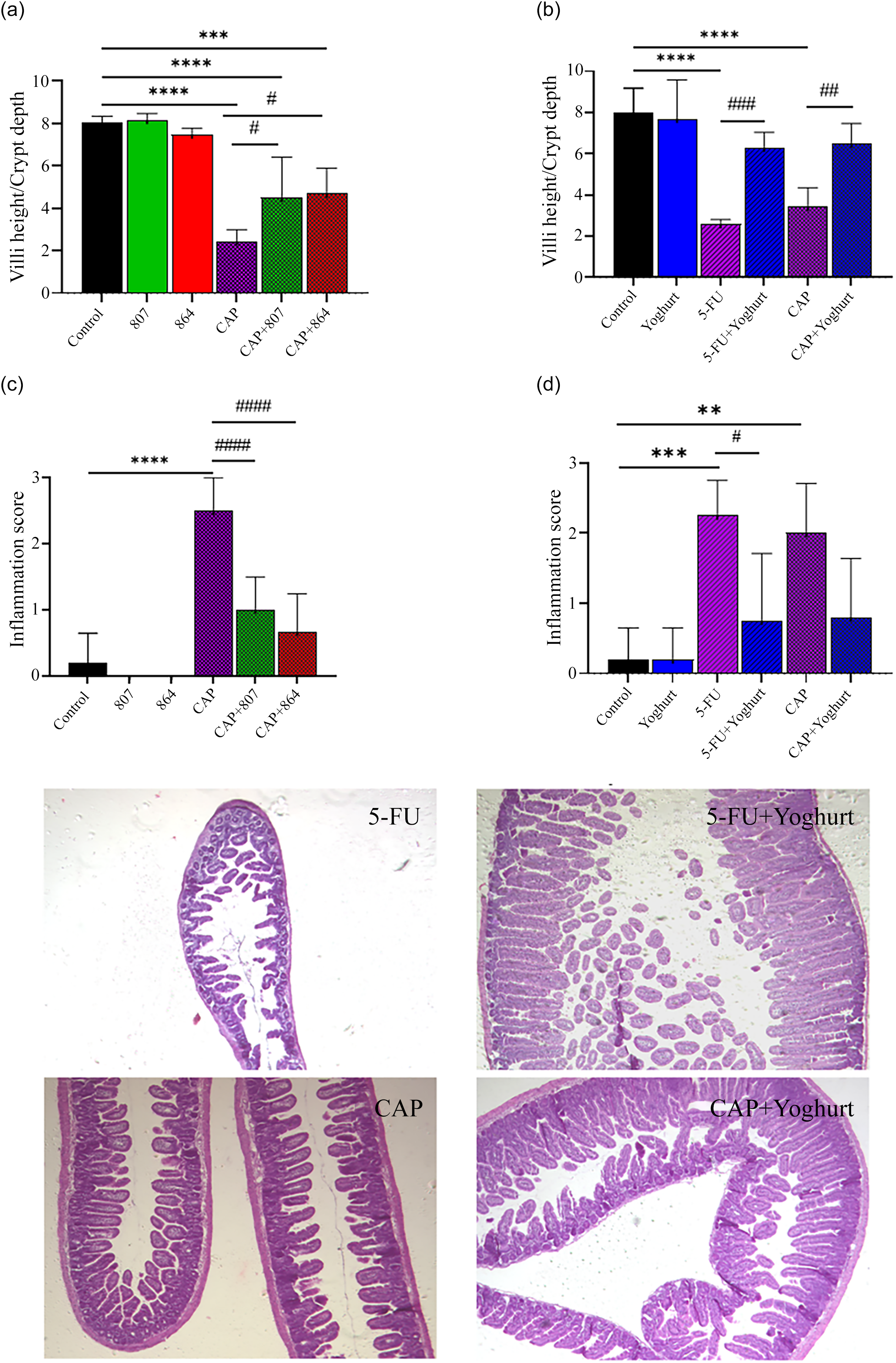
Microscopic examinations of ileum samples showed that the ratio of villus height to crypt depth decreased significantly (P < 0·0001) in chemotherapy treated mice compared with the Control group in both experimental protocols (Figure 6(a) and (b)). Mice from the CAP + 807 and CAP + 864 groups showed a significantly (P < 0·05) higher ratio compared with the CAP group. Mice from 5-FU + Yoghurt and CAP + Yoghurt groups also showed significant improvement (P = 0·0004 and P = 0·0027) in the ratio compared with 5-FU or CAP groups, respectively (Figure 6(a) and (b)).
LAB or yoghurt administration relieved intestinal mucositis associated with the chemotherapy treatment in mice bearing breast tumour. Morphometric analysis of intestinal villus heights and crypt depths in mice received individual LAB strains (a) or yoghurt (b). Histopathological grading (0–3) of intestinal inflammation performed in ileum samples (c) and (d). Data are expressed as mean ± sd (n 6 for 5-FU, n 8 for 5-FU + 807, 5-FU + 864 and 5-FU + Yoghurt, and n 10 for the rest of the groups). The statistical analysis shows the comparisons with the Control (**P < 0·01; ***P < 0·001, ****P < 0·0001) and with the 5-FU or CAP groups (#P < 0·05; ##P < 0·01: ###P < 0·001; ####P < 0·0001). At the bottom, representative photomicrographs are showed for ileum sections of each group that received yoghurt with chemotherapy and their treatment’s controls, stained with hematoxylin and eosin (magnification 50×). LAB, lactic acid bacteria; 5-FU, 5-fluorouracil; CAP, capecitabine.

Additionally, to assess the inflammatory state of the intestines, an inflammation score was used taking into account the histological structure, where higher values indicate a high degree of inflammation or tissue damage. Treatments with 5-FU or CAP were associated with the highest scores in both experimental protocols (Figure 6(c) and (d)). Mice from CAP + 807 and CAP + 864 groups significantly decreased (P < 0·0001) the score compared with CAP group (Figure 6(c)). Similarly, the 5-FU + Yoghurt group showed a significantly lower score (P < 0·05) compared with 5-FU group (Figure 6(d)).
Mice from 5-FU and CAP groups showed abundant inflammatory infiltrates and alterations of the villus and crypts, while animals receiving LAB suspensions or yoghurt showed lower tissue structure losses and lower degrees of inflammation (Figure 6 shows representative microphotographs).
Changes in blood plasma cytokines
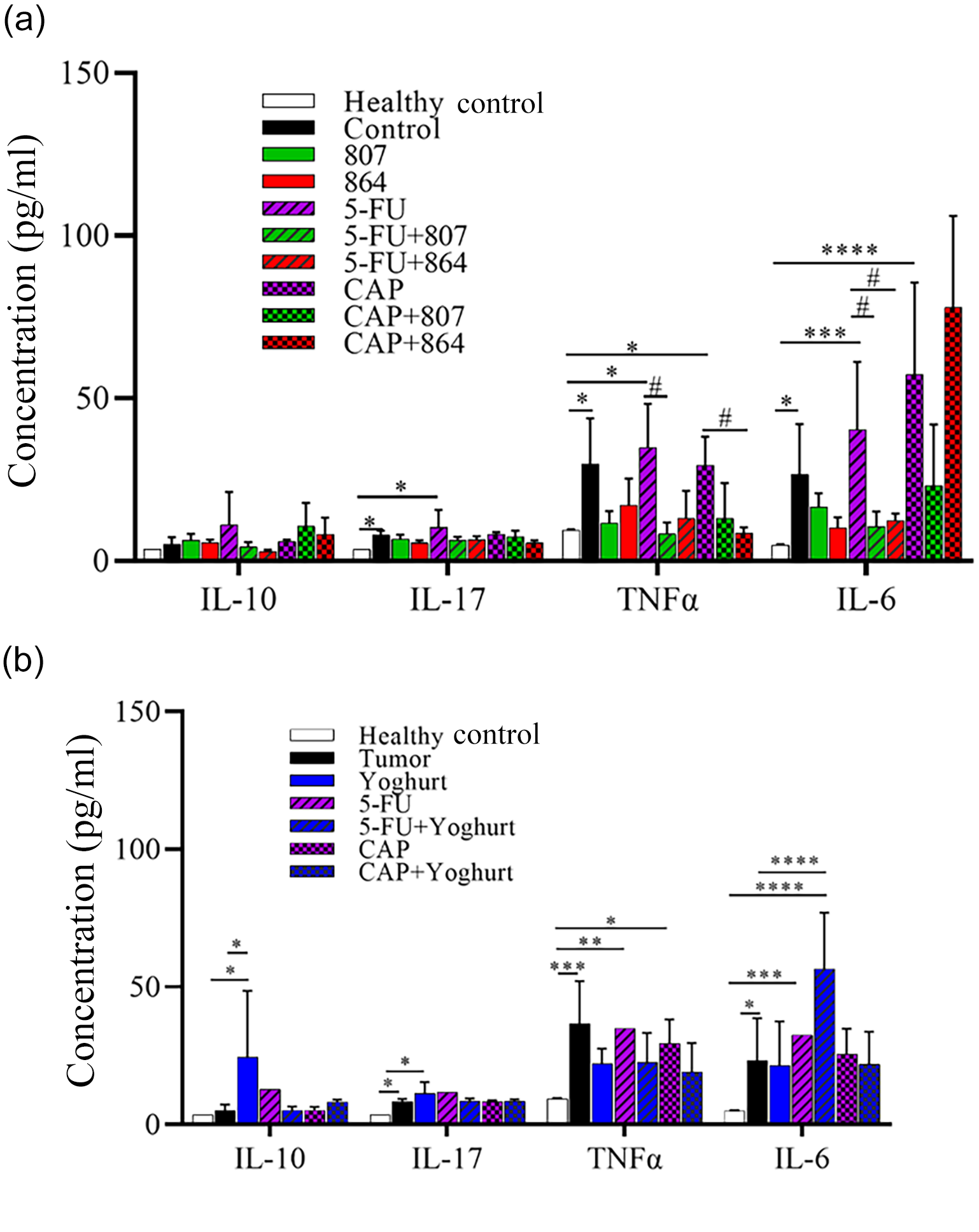
Tumour development was associated with an inflammatory response, increasing significantly (P < 0·05) the concentrations of cytokines such as IL-17, TNFα and IL-6 when compared Control v. Healthy Control group in both experimental protocols (Figure 7(a) and (b)). Mice from the 5-FU and CAP groups maintained significantly increased levels (P < 0·05) for these proinflammatory cytokines in the LAB administration assay (Figure 7(a)) and for TNFα and IL-6 in the yoghurt evaluation protocol (Figure 7(b)), both compared with the Healthy Control group. In contrast, administration of LAB showed a tendency to decrease the concentration of these cytokines in most animals, both in the presence and absence of chemotherapy. Concentrations significantly lower (P < 0·05) of TNFα were observed in 5-FU + 807 and CAP + 864 group compared with 5-FU and CAP, respectively, and for IL-6 in 5-FU + 807 and 5-FU + 864 compared with 5-FU group (Figure 7(a)). In yoghurt evaluation, IL-6 levels were significantly (P < 0·0001) higher in mice treated with 5-FU and fed with the probiotic yoghurt in comparison to both Healthy Control and Control group (Figure 7(b)); however, these values were not significant different compared with 5-FU group. Regarding IL-10, yoghurt administration was associated with the highest concentrations of this cytokine, being significantly (P < 0·05) higher in Yoghurt group than both Controls (Health Control and Control groups, Figure 7(b)).
Administration of LAB or yoghurt modulated plasma cytokines. Cytokines concentrations were determined in blood plasma samples of mice received individual LAB strains (a) or yoghurt and (b) treated or not with chemotherapy. Data are expressed as mean ± sd (n 6 for 5-FU, n 8 for 5-FU + 807, 5-FU + 864 and 5-FU + Yoghurt, and n 10 for the rest of the groups). The statistical analysis shows the comparisons with the Healthy Control and Control groups (*P < 0·05; **P < 0·01; ***P < 0·001, ***P < 0·0001) and with the 5-FU or CAP groups (#P < 0·05). LAB, lactic acid bacteria; 5-FU, 5-fluorouracil; CAP, capecitabine.

Discussion
Chemotherapy and radiotherapy are still widely used treatments against breast cancer and its metastases; however, the side effects associated with these therapies can affect their effectiveness due to the need to interrupt them. This has led to investigate alternatives that can mitigate these side effects, among which probiotics have gained special importance in recent years. However, it is important to evaluate the safety of these live microorganisms in immunosuppressed hosts and ensure that these supplements do not interfere with anti-cancer treatments.
In this work, a chemotherapy-treated breast cancer model was performed to evaluate the effects of two LAB selected for their immunomodulatory properties(Reference del Carmen, de Moreno de LeBlanc and Martin21). After demonstrating their benefits, these LAB were used to develop a probiotic yoghurt, which was also evaluated in the described model. This yoghurt was previously proposed as a probiotic food due to its beneficial effects reported in models of intestinal inflammation and cancer(Reference Del Carmen, de Moreno de LeBlanc and LeBlanc22). In addition, studies showed the benefits associated with other fermented milks against breast cancer, in which the improvement of host immune response was highlighted as a mechanism to act against the tumour(Reference Aragon, Carino and Perdigon27,Reference Méndez Utz, Pérez Visñuk and Perdigón28) . However, as explained above, it is important to consider that cancer patients receive special treatments that affect their immune status. For this reason, the yoghurt was analysed in a breast cancer model undergoing two different chemotherapies, one systemic and the other oral. 5-FU is prescribed to patients with breast cancer at different stages, both early and advanced, and generally in combination with other drugs. Capecitabine is a prodrug of 5-FU that has the advantage of being administered orally. It has been shown to be effective as an adjuvant treatment in advanced breast cancer, and also combined with first-line chemotherapy to improve patient survival(Reference Joensuu, Kellokumpu-Lehtinen and Huovinen29–Reference Xu, Chen and Li31). The most common side effects of these treatments are associated with rapidly dividing cells, affecting blood cells and those of the digestive tract, among others. While these adverse effects can be treated, they are patient and dose dependent, and in some cases are the cause of interrupting therapy(Reference Shahrokni, Rajebi and Saif32). In the present study, both treatments were effective in reducing tumour volume, and also to prevent splenomegaly related with this tumour(Reference DuPre and Hunter33). However, they were also associated with negative effects, especially at the intestinal level.
The results showed that the administration of individual LAB strains and yoghurt was associated with significant decreases in tumour volumes (compared with their respective controls) in the absence of chemotherapy treatment. Similar results were described for other LAB administered to mice bearing breast tumour(Reference Aragon, Carino and Perdigon27,Reference Méndez Utz, Pérez Visñuk and Perdigón28,Reference Zhang, Zhang and Li34) . These results are also in agreement with those reported for humans in a recent descriptive review and meta-analysis(Reference Thu, Ondee and Nopsopon35). The authors highlighted the effects of different probiotic/prebiotic supplements in breast cancer patients, relating them mainly to key modifications in the intestine. This, in turn, may be associated with the production of short chain fatty acids, such as butyrate, propionate and acetate, known for their potential anti-tumour effects in breast cancer models(Reference Muradás, Freitas and Gonçalves36). Microbiota-derived short chain fatty acids have been described as regulators of intestinal cell function and also of local and systemic immune responses. Thus, they may influence the efficacy of cancer treatment and also reduce its toxicity through their anti-inflammatory effects and by acting as protectors of epithelial functions(Reference Al-Qadami, Secombe and Subramaniam37). The need for future clinical trials of probiotics in breast cancer patients and survivors to relate them to quality of life and synergistic benefits with anti-cancer treatments are required(Reference Thu, Ondee and Nopsopon35). In this context, in the present work, LAB or yoghurt were administered in the presence of 5-FU or CAP treatment, and it was observed that they did not interfere with the anti-tumour treatment, with even lower tumour volumes (in some mice) than those observed in the chemotherapy control groups. Based on these results, the potential to reduce the undesirable effects of these therapies was analysed. One of the well-documented side effects is the loss of body weight due to poor absorption of nutrients, related to inflammation at the gastrointestinal level, in addition to diarrhoea associated with intestinal mucositis(Reference Dahlgren, Sjöblom and Hellström38). The administration of LAB or yoghurt together with 5-FU or CAP improved the general condition of the animals, with decreased body weight loss and greater survival rates (considering the treatment with 5-FU which was more aggressive for the animals). This was related to improvements at the intestinal level, increasing the relationship between the length of the intestinal villus and the depth of the crypts, with a lower degree of inflammation. Similar results were reported for two probiotic bacteria when they were administered together with vitamin D3 in a breast tumour model treated with doxorubicin; this co-administration, in addition to maintaining the anti-cancer effect of the therapy, showed an enteroprotective effect(Reference Mirzadeh, Eslami and Ghanbari39). In this sense, it was described that probiotics can help reduce side effects associated with cancer treatments, such as mucositis and diarrhoea, by balancing the microbiota and restoring the integrity of the intestinal barrier(Reference Nama, Sandeepa and Buddolla40).
Analysis of white blood cells showed that both chemotherapies reduced these circulating cells, but without reaching the values of healthy controls. This difference with respect to the haematological toxicity described for these chemotherapies, in which blood cell counts decrease significantly(Reference Qian, Qian and Chen41), can be explained by the leukaemic reaction associated with the tumour model(Reference Wang, Chen and Gao42). Thus, the lower counts observed in animals that received LAB or yoghurt in the absence of treatment were related, as for chemotherapy, to lower tumour growth, similar to that described for other fermented milks(Reference Aragon, Carino and Perdigon27,Reference de Moreno de LeBlanc, Matar and Perdigon43) . However, it is noteworthy that in the presence of treatment with 5-FU or CAP, the administration of LAB or yoghurt not only maintained leukocyte counts close to those of the chemotherapy controls (5-FU and CAP groups), but they were also associated with leukocyte counts and formulas similar to those of healthy mice without cancer.
Finally, considering the importance of the immune response modulation reported for the effect of other fermented milks in this breast cancer model, cytokine profiles were analysed in blood plasma. Tumour development was associated with an inflammatory response, increasing the concentrations of cytokines such as TNFα and IL-6, as observed in other works(Reference Levit, Savoy de Giori and de Moreno de LeBlanc24,Reference Walker Ii, Borniger and Surbhi Zalenski44) . Chemotherapy treatments did not decrease the levels of these proinflammatory cytokines, which can be explained by the inflammation associated with these therapies. In this context, it was described that 5-FU therapy increased the inflammatory response in the presence or absence of the tumour(Reference Levit, Savoy de Giori and de Moreno de LeBlanc24). In contrast, the administration of the selected LAB decreased the concentration of these cytokines in some animals, although due to different individual responses, these values were significantly lower only in some experimental groups when compared with the tumour control. While most of the results obtained with yoghurt were similar to those of the individual strains, the cytokine analysis showed a greater activation of the immune response in the groups that received it, whether in the presence or not of chemotherapy. Even if it did not decrease the levels of proinflammatory cytokines, it was associated with elevated concentrations of IL-10, a regulatory cytokine. These data demonstrated the immunomodulatory potential of this yoghurt, which, by maintaining the response necessary to fight the tumour in this growth phase (especially in the untreated group), modulated/regulated this response to prevent from worsening and causing further damage. It is possible that some of the ingredients in yoghurt may be related to this effect because it was not observed with the administration of the individual strains. Similar results were observed with yoghurt in a colon cancer model in which at difference of the anti-inflammatory therapy, yoghurt maintained a modulated immune response against the tumour with beneficial effects for the host(Reference de Moreno de LeBlanc, Matar and Perdigon43). In this regard, a recent review shows evidence of how the microbiota, which in turn can be improved by the administration of probiotics/prebiotics, can play a role in reducing systemic inflammation and stimulating the innate and adaptive immune response against breast tumour(Reference Xue, Li and Huang45). The authors described the importance of certain beneficial intestinal microorganisms, such as bifidobacteria and lactic acid bacteria, to improve the balance of the immune response by inhibiting chronic inflammation. Thus, probiotics have the potential to regulate the production of inflammatory mediators, which is frequently elevated in cancer patients. It has been reported that certain probiotics can enhance the expression of anti-inflammatory molecules such as TGF-β and IL-10, which would help combat the proinflammatory state associated with cancer(Reference Ahmad, Ahmad and Alsayegh46). In this regard, new studies are being conducted to evaluate the potential of the probiotic yoghurt to regulate the inflammatory response associated with breast tumours by analysing different immune populations infiltrating the tumour.
Like all research studies, this one has limitations that must be taken into account. First, the use of a single animal model for breast cancer with the relatively short experimental duration (20 d) because the large size of the tumours, and in which metastasis was not assessed. However, in an ongoing study, we are addressing this issue in a more appropriate model, following surgical removal of the tumour, which has a longer duration. This allows us to separate metastasis from tumour size, which was reduced in animals receiving probiotic yoghurt. Furthermore, in that study, capacitabine is beings used as a treatment, which allows for longer treatments with lower mortality (another limitation of our work that reduced the number of samples in certain groups), without the need to work with large numbers of animals per group. Another limitation is that we cannot guarantee the dose of yoghurt consumed by each animal. However, for this type of product, it is very difficult to simulate the situation of a person consuming one yoghurt a day in an animal model, and this is the most common way to evaluate it. Furthermore, a key limitation is the lack of analysis of the fecal microbiota, which we plan to perform in the future since its alteration has been described in patients and models with breast cancer and many of the results obtained may be related to the property of probiotic yoghurt to act against this dysbiosis. Finally, it is important to highlight that for the real-world application of the findings obtained, clinical studies in humans will be necessary.
Conclusions
Yoghurt obtained through the fermentation of milk with two LAB selected for their beneficial properties is presented as an adjuvant therapeutic strategy for breast cancer, with improved stimulation of the host immune response against the tumour, maintaining its balance and preventing the exacerbation of inflammation. Furthermore, its administration was safe in the presence of the evaluated chemotherapies, without decreasing its effectiveness while reducing some of their adverse side effects.
Acknowledgements
This work was financially supported by CONICET (Consejo Nacional de Investigaciones Científicas y Técnicas, projects PIP 2021-2062, PIP 2022-0280 and PUE 2017-0035) and ANPCyT (Agencia Nacional de Promoción de la Investigación, el Desarrollo Tecnológico y la Innovación, project PICT 2019-0942,and PICT-2021-CAT-II-00071), Argentina
M. N. C., J. G. L and A. d. M. d. L. planned and conducted the research; M. N. C., J. G. L and A. d. M. d. L. analysed the data; M. N. C and A. d. M. d. L. wrote the manuscript; J. G. L. made critical revisions of the manuscript; M. N. C., J. G. L and A. d. M. d. L approved the final version of the manuscript.
None of the authors declares any conflict of interest.