Introduction
Food security is a major concern in developing and many developed countries since the world will need 70–100% more food to feed the expected 10 billion habitants by 2050 (Baulcombe et al., Reference Baulcombe, Crute, Davies, Dunwell, Gale, Jones, Pretty, Sutherland and Toulmin2009; FAOSTAT, 2017). In developing countries, the situation of the population regarding food security is alarming because of factors such as high population growth, rapid urbanisation, high pressure on land and poor agricultural sector development (Godfray et al., Reference Godfray, Beddington, Crute, Haddad, Lawrence, Muir, Pretty, Robinson, Thomas and Toulmin2010). Chapagain and Raizada (Reference Chapagain and Raizada2017) reported additional factors such as poor access to agricultural inputs, markets and services, increased labour cost and climate change. This is also the case of Benin Republic (West Africa) where it has been reported that more than 43% of households are suffering from malnutrition along with poor access to quality food (WFP Benin, 2020). In this country, agriculture is still rainfed with bottlenecks such as poor access to quality inputs and poor yield of traditional crops (FAOSTAT, 2018). At the same time, many reports recommended the valorisation of some species ‘not known or known but not valued’ due to their high nutritional value as alternative source of income for vulnerable population in rural areas (Ezin et al., Reference Ezin, Quenum, Bodjrenou, Kpanougo, Kochoni, Chabi and Ahanchede2018; Tadele, Reference Tadele2009). These species include among others leafy vegetables, fruit vegetables, grain crops and oil crops such as sesame (Dansi et al., Reference Dansi, Vodouhè, Azokpota, Yedomonhan, Assogba, Adjatin, Loko, Dossou-Aminon and Akpagana2012).
Sesame (Sesamum indicum L., Pedaliaceae) is one of the known but less valued crops in Benin. The crop is produced for its seeds (Ajavon et al., Reference Ajavon, Bello and Adégbola2015; Anilakumar et al., Reference Anilakumar, Pal, Khanum and Bawa2010) and is regarded as one of the most important and oldest oil crops in the world (Arslan et al., Reference Arslan, Uzun, Ülger and İlhan Çağırgan2007). The primary product from sesame is its high-quality oil extracted from the seed, reaching ∼50% of the seed weight (Kurt, Reference Kurt2018; Mekonnen and Mohammed, Reference Mekonnen and Mohammed2010). The oil is rich in polyunsaturated fatty acids, natural antioxidants, sesamin and sesamolin (Pathak et al., Reference Pathak, Rai, Kumar and Bhat2014). Sesame seeds are also used in making bread sticks, crackers and added to salad. In addition to its nutritional value, sesame production provides income to small-scale farmers. Due to its reasonable market price, it is cultivated as cash crop and supports the livelihoods of small farmers (Myint et al., Reference Myint, Gilani, Kawase and Watanabe2020). Besides, the sesame crop shows high adaptation to low-input farming systems and can return acceptable yields in harsh growth environments. Salifou (Reference Salifou2008) reported several African countries such as Burkina Faso, Senegal and Mali whose governments are allocating huge financial resources to stimulate sesame production. For instance, in Burkina Faso, although cotton is the first cash crop, oilseeds such as shea (Vitellaria paradoxa C.F. Gaertn.), sesame (Sesamum indicum L.) and cashew (Anacardium occidentale L.) account for a significant share of exports (Chopra and Ouaouich, Reference Chopra and Ouaouich2017).
Due to the growing demand of healthy vegetable oils, sesame production is expanding all over the world with Sudan, Myanmar, India, Nigeria, Tanzania listed as the top five sesame seed producers in the world in 2018. In the same period in Africa, Sudan, Nigeria, Tanzania, Ethiopia and Burkina Faso were listed as the main top five sesame grains producers (Wacal et al., Reference Wacal, Basalirwa, Okello-Anyanga, Murongo, Namirembe and Malingumu2021).
In Benin, sesame production is poorly developed and concentrated in some locations in the northern part with low productivity and a poor presence on the market (Ajavon et al., Reference Ajavon, Bello and Adégbola2015). Such a situation constitutes a bottleneck to the use of the crop potential, its wide valorisation and expansion to many other potential areas in Benin. As stated by Paramesh et al. (Reference Paramesh, Ravisankar, Behera, Arunachalam, Kumar, Rajkumar, Misra, Kumar, Prusty, Jacob, Panwar, Mayenkar, Reddy and Rajkumar2022), the first step toward the improvement of crop productivity is the understanding of the management practices along with specific bottlenecks hampering the exploitation of the crop potential. Haumba and Kaddu (Reference Haumba and Kaddu2017) stated that agricultural indigenous knowledge is also important in increasing areas under crop production along with food processing and storage techniques. Therefore, in the case of the sesame crop in Benin, there is an urgent need to dig into the current management practices, bottlenecks and knowledge associated with the crop in the production areas. Such an approach has been successfully used with many crops such as Kersting’s groundnut [ Macrotyloma geocarpum (Harms) Maréchal & Baudet], and sisrè berry [ Synsepalum dulcificum (Schumach. & Thonn.) Daniell] in Benin (Coulibaly et al., Reference Coulibaly, Agossou, Akohoué, Sawadogo and Achigan-Dako2020; Tchokponhoué et al., Reference Tchokponhoué, Achigan-Dako, N’Danikou, Nyadanu, Kahane, Odindo and Sibiya2021). Indeed, crop management practices are a set of actions implemented by farmers to ensure the availability and the sustainability of plant production, while indigenous knowledge refers to the different uses and values of the species for local communities. Management practices are a component of a farming system which is characterised by climate and environment, other agricultural activities, other natural resource-based activities and off-farm activities. In addition, we consider in this study, farm typology as a set of sesame management practices (pesticide and fertilisers use, intercropping, land preparation), access to resources (seed origin, storage material), farm facilities at farmers’ disposal (seed drying place), labour and product allocation, since farm management may depend on farmers’ features, available resources and product allocation strategies. Dixon et al. (Reference Dixon, Stringer and Challinor2014) showed that crop management practices evolve and can vary from one region to another. Ekue et al. (Reference Ekue, Gailing, Finkeldey and Eyo-Matig2009) reported that socio-demographic factors influence crop management practices with gender affecting management practices. Sogbohossou et al. (Reference Sogbohossou, Achigan-Dako, Van Andel and Schranz2018) found that sociolinguistic factors were the main cause of variation of local knowledge in spider plant (Gynandropsis gynandra (L.) Briq.) across sociolinguistic groups. Studies by Ntshangase et al. (Reference Ntshangase, Muroyiwa and Sibanda2018) showed that young people’s limited involvement in small-scale farming threatens the sustainability of new methods of crop management practices such as no-till or conservation agriculture.
In order to understand sesame crop management practices in Benin, this study investigated the current management practices, ethnobotanical knowledge and constraints associated with sesame production in different agroecological zones. The specific objectives were to (1) identify socio-demographic factors influencing management practices, (2) compare sesame farm typologies across the growing agroecological zones in Benin, (3) make an inventory of knowledge associated with sesame in the different agroecological zones, (4) identify constraints associated with sesame production in the different agroecological zones in Benin. The following research questions were addressed: (i) is there any relationship between socio-demographic factors and sesame management practices? (ii) how are the farm typologies organised and is there any variation across agroecological zones? (iii) what are the different uses of sesame and is there any variation in the uses across agroecological zones? (iv) what are the constraints impeding sesame production and how are they related to agroecological zones?
We hypothesised that (i) sesame crop management practices are influenced by socio-demographic factors, (ii) sesame crop farm typology varies across the agroecological zones in Benin, (iii) sesame uses vary across agroecological zones in Benin, and (iv) constraints on sesame production are agroecological zone dependent.
Material and Methods
Study areas and farmers’ sampling
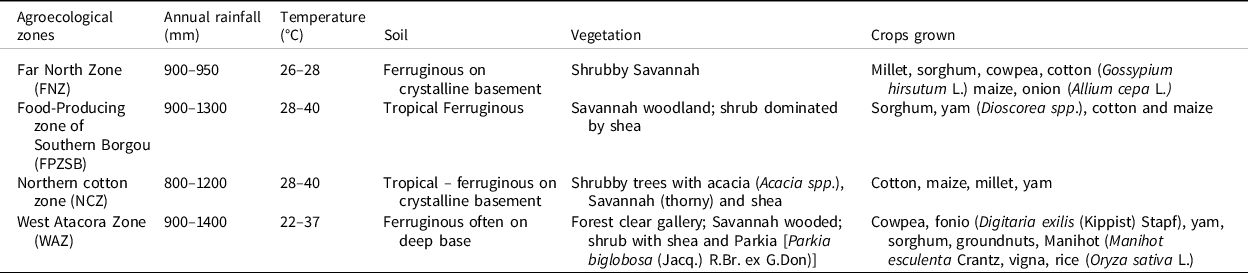
The study was carried out in the northern part of Benin in different sesame-growing areas from October to December 2019 using a semi-structured questionnaire. The questionnaire was digitalised on a KoboCollect platform and contained pre-coded and open questions to allow respondents to share their knowledge and facilitate data processing. The terms of the questionnaire were (i) general information on the farmer including age, gender, educational attainment, origins and sociolinguistic groups, (ii) management practices and (iii) uses of different parts of the sesame plant and source of knowledge. A total of four agroecological zones including 4 departments, 12 municipalities, 96 villages (Figure S1) were surveyed with 370 farmers interviewed including 68 women. The characteristics of each agroecological zone are presented in Table 1. Surveyed areas and farmers within the agroecological zones were identified with the help of local extension agents who possessed a database or in-depth knowledge on sesame production. Sesame farmers were selected regardless of the area devoted to sesame crops and without any other criteria of choice due to the aim to cover a wide range of sesame farmers. Stratified sampling was used to move from the department to the village. Information on the seed characteristics was recorded from farmers, and sesame grains were classified based on seed coat colour and seed size.
The wide range of ethnic groups was classified into well-known sociolinguistic groups, namely Dendi and related, Bariba and related, Peulh and related, Ottamari and related, Yoruba and related, Yoa-lokpa and related and other ethnic minorities (including Zerma, Haoussa, Cotimba and Mossi) (Sanni and Atodjinou, Reference Sanni and Atodjinou2012) to better depict the variation in knowledge across sociolinguistic groups taking into account the agroecological zones.
Data analysis
Descriptive statistics including mean and standard deviation were calculated to summarise quantitative variables. A χ2 test or Fisher’s exact test (to account for observation counts <5) was used to test dependence of categorical variables across management practices and agroecological zones. An analysis of variance was used to test difference of quantitative variables across agroecological zones and different clusters obtained through cluster analysis. For variables showing difference among clusters, the Tukey test at 5% of probability was used to compare means. A binary logistic regression was used to explain socio-demographic factors affecting management practice variables such as the use of fertilisers, use of pesticides and intercropping system.
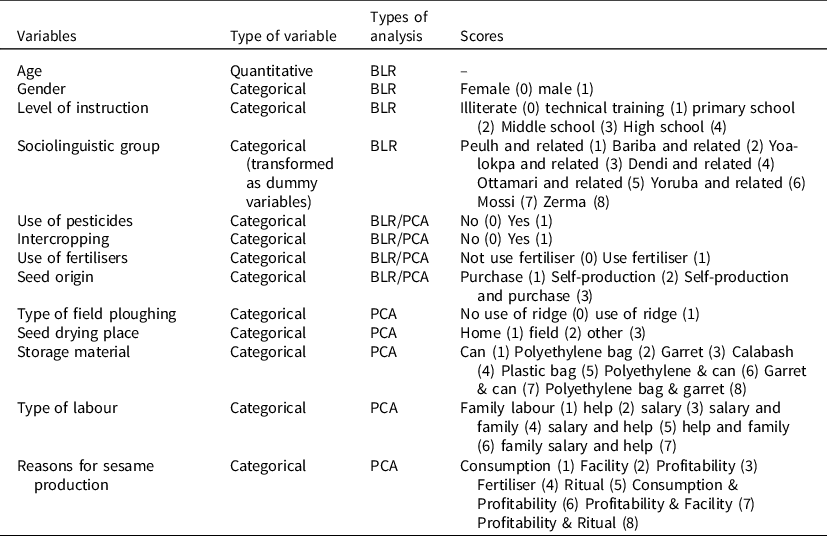
Principal component analysis (PCA) followed by cluster analysis was performed using FactoMineR, factoextra in R software version 4.0.5 to classify sesame production into different farm typologies. Such a method was used by numerous authors such as Musafiri et al. (Reference Musafiri, Macharia, Ng’etich, Kiboi, Okeyo, Shisanya, Okwuosa, Mugendi and Ngetich2020) and Innazent et al. (Reference Innazent, Jacob, Bindhu, Brigit, Anith, Ravisankar, Prusty, Venkatesh and Panwar2022) to classify farms/farms households in different categories. The number of components with more than 50% of contribution from PCA was used for cluster analysis to classify the used variables in different clusters. The dendrogram was generated through cluster analysis based on Euclidean distance. Scores were attributed to variables used for PCA and logistic regression (Table 2). Barplots (with ggplot2) were generated for the different constraints encountered in the sesame production. For the ethnobotanical analysis, indices such as the total use value (UVTotal), food use value (UVFood), medicinal use value (UVMed), social use value (UVSoc), cultural worship (UVCc), plant part use value (PPUV) and fidelity level (FL) were computed. The indices related to the use value (UV) and PPUV were computed following the formulas used by Akakpo and Achigan-Dako (Reference Akakpo and Achigan-Dako2019); the FL was computed following the formula used by Ugulu (Reference Ugulu2012).
Characteristics of the agroecological zones selected

Information about characteristics of the agroecological zones was collected from Bonou-Gbo et al. (Reference Bonou-Gbo, Djedatin, Dansi, Dossou-Aminon, Odjo, Djengue and Kombate2017); FAO et al. (2018); Nacoulma and Guigma (Reference Nacoulma and Guigma2015).
Scores of variables for PCA and binary logistic regression analysis

BLR: binary logistic regression; PCA: principal component analysis.
The UVTotal was obtained using the formula (1a and 1b) below which is based on the average number of uses reported in the food use category (UVFood), the average number of uses reported in the medicinal use category (UVMed), the average number of uses reported in the social use category (UVSoc) and the average number of uses reported in the cultural use category (UVCc).
 $${\rm{UVTotal}} = {\rm{UVFood}} + {\rm{UVMed}} + {\rm{UVSoc}} + {\rm{UVCc}}$$
 $${\rm{UVtotal}} = \mathop \sum \nolimits_{i = 1}^n {{\;{\rm{URFoo}}{{\rm{d}}_i}{\rm{\;}}} \over n} + \mathop \sum \nolimits_{i = 1}^n {{{\rm{URMe}}{{\rm{d}}_i}} \over n} + {\rm{\;}}\mathop \sum \nolimits_{i = 1}^n {{{\rm{URSo}}{{\rm{c}}_i}} \over n} + {\rm{\;}}\mathop \sum \nolimits_{i = 1}^n {{{\rm{URC}}{{\rm{c}}_i}} \over n}$$
URFood i is the total number of food uses reported by respondents i;
URMed i is the total number of medicinal uses reported by respondents i;
URSoc i is the number of social uses reported by informant i;
URCc i the number of cultural uses reported by respondent i;
n is the total number of respondents.
PPUV was obtained following the formula (Equation 2) below:
 $${\rm{PPUVk}},s = \mathop \sum \limits_{i = 1}^n {{{\rm{URk}},s,i} \over n}\;$$
URk, s, i is the number of reported uses by the informant i for the plant part k of the species s;
n is the total number of respondents.
The FL was calculated following this formula (Equation 3):
 $$FL = {{Fp} \over {Fu}}\;X\;100\;$$
where
FL = fidelity level,
Fp = number of farmers who cited the species for the same use category,
Fu = is the total number of informants who mentioned the species for any use category.
All analyses were performed in R software version 4.0.5.
Results
Socio-demographic parameters
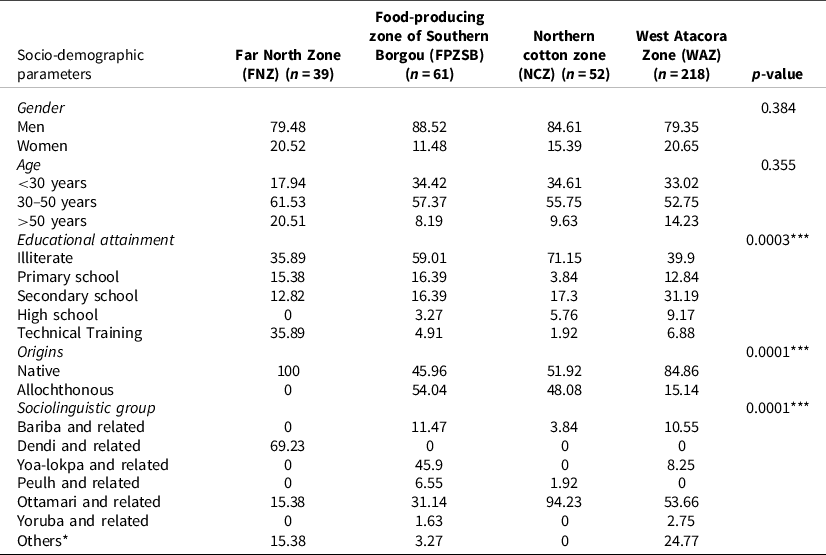
More than 50% of the respondents were male aged between 30 and 50 years old. There was no significant difference in farmers’ age categories across the different agroecological zones (Table 3). Various educational attainments were observed among the respondents with significant difference across agroecological zones; illiterate producers were the most represented across agroecological zones with the highest proportion (71.15%) recorded in Northern cotton zone (NCZ). All the respondents in far north zone (FNZ) are native of this zone, whereas in food-producing zone of Southern Borgou (FPZSB), only 45.96% are native of this zone. There was significant difference (p < 0.0001) in the proportion of farmers belonging to a given sociolinguistic group across agroecological zones. The most represented sociolinguistic groups in the FNZ, NCZ, FPZSB and West Atacora Zone (WAZ) were Dendi and related (69.23%), Ottamari and related (94.23%), Yoa-lokpa and related (45.9%) and Ottamari and related (53.66%), respectively.
Proportion of farmers falling within different socio-demographic parameters across the surveyed agroecological zones

*: Others include Zerma, Haoussa, Cotimba and Mossi; ***: p < 0.001.
Socio-demographic factors influencing sesame management practices
The use of intercropping system was age- and gender-dependent as showed by the significant p-values (p < 0.001, p = 0.0317, respectively for gender and age) (Table S1). Regarding the age, the coefficient was positively associated with the variable intercropping suggesting that older farmers were more likely to use intercropping compared to young farmers. Considering gender, our results indicated that female farmers were more likely to use intercropping system compared to male farmers. In terms of the use of fertiliser, our study showed that it was not age and educational attainment dependent. Male sesame farmers were more likely to use fertiliser than female (p = 0.00331). Among all the sociolinguistic groups surveyed, Peulh and related affirmed they did not use any type of fertilisers (organic or inorganic). The use of pesticide was practised more by the male than female farmers (p < 0.0001). Among sociolinguistic groups, only Peulh and related were likely to use pesticide. The use of pesticide was not age and educational attainment dependent (see information in the supplementary material Table S1).
Description of sesame farm typology across agroecological zones of Benin
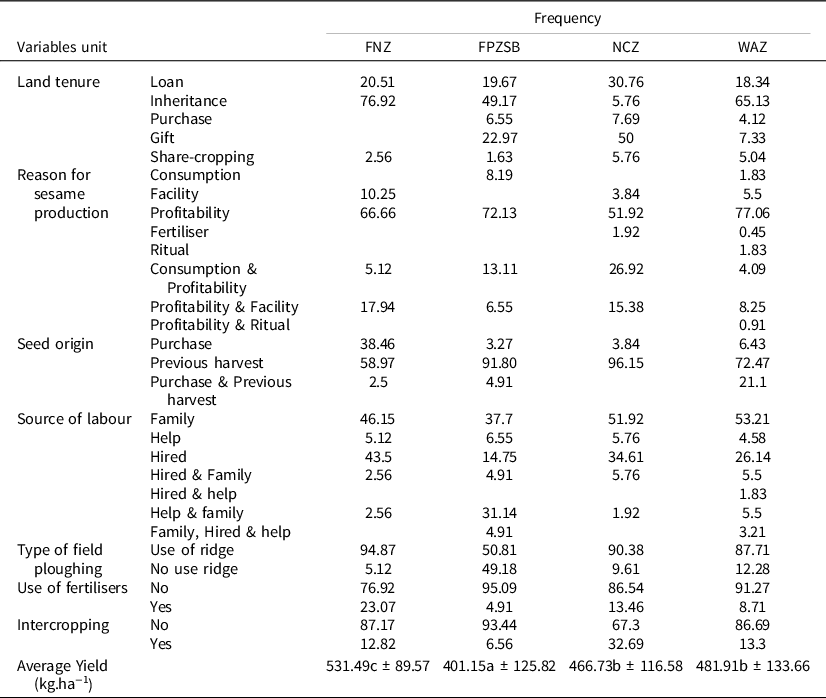
Sesame management practices and reasons for sesame production were depicted across agroecological zones (Table 4).
Frequency of farmers using different techniques of sesame management practices and producing sesame for various reasons across agroecological zones of Benin

FNZ: far north zone, FPZSB: food-producing zone of southern Borgou, NCZ: northern cotton zone, WAZ: West Atacora Zone. Different letters in the same line indicate significant difference at 95% by the Tukey test (p < 0.05). Means having the same letter on a line are not significantly different from each other.
Land tenure, reasons for sesame production and seed origin
Across the selected agroecological zones, five modalities of land tenure were recorded, namely loan, gift, inheritance, purchase and share-cropping. In FNZ, FPZSB and WAZ, most farmers inherited their lands (76.92%, 49.17% and 65.13%, respectively) against 5.76% of respondents in NCZ. Share-cropping, purchase and gift were the rare land tenure modalities across the four agroecological zones.
Sesame is mostly produced because of its profitability as reported by more than 50% of the respondents in the four agroecological zones. Also, sesame production is adopted by farmers because it is used as food, as fertiliser, for ritual purpose and easy to grow. Only a few respondents in WAZ claimed that they use sesame as fertiliser and for ritual purposes.
Seeds used by sesame growers were sourced either from the previous harvest, purchased (market) or both previous harvest and purchased. Our results revealed that, across agroecological zones, more than 50% of farmers sourced sesame seeds from the previous harvest.
Sources of labour and types of field ploughing
Three main sources of labour were identified in the surveyed areas: family labour, hired labour and mutual aid (help). In addition, a combination of different sources was observed, namely hired and family labour, help and hired labour, help and family labour and combination of family, help and hired labour. More than 50% of the respondents from the NCZ and WAZ relied solely on the family labour whereas (46.15% and 37.7%, respectively) of farmers from FNZ and FPZSB relied solely on family labour. All the sources of labour were observed in WAZ.
Two types of field ploughing were encountered, namely ploughing into ridges (and sowing on ridges) or flat ploughing (not using ridges). Sowing on ridges is practised by more than 50% of the respondents from all agroecological zones. Farmers practising sowing on ridges mentioned that such practice increases the sesame grain yield.
Application of fertilisers
Most farmers affirmed that they do not apply any fertilisers to sesame crops and argued that sesame does not need fertilisers to grow. Other reasons supporting this choice were the lack of financial resources (16.38% of farmers), the non-availability of fertilisers on time (19.47% of farmers) and the supposed negative effects of the mineral fertilisers on the sesame crop (yellowing of leaves or high leaf biomass instead of capsule formation and the crop does not need fertiliser) (64.15% of respondents). It is important to stress that farmers applying mineral fertilisers reported using mainly NPK and urea.
Sesame in intercropping systems and sesame yield across agroecological zones
Sesame is grown either as a sole crop or in intercropping systems. Results showed that most farmers grow sesame as a sole crop across the four agroecological zones. Regarding intercropping, farmers intercropped sesame with many crops such as Bambara groundnut (Vigna subterranea (L.) Verdcourt), egusi (Cucucmeropsis mannii Naudin Syn. Cucumeropsis edulis (Hook. f.) Cogn), beans (Phaseolus vulgaris L.), maize (Zea maize L.), millet (Pennisetum glaucum (L.) R.Br.), okra (Abelmoschus esculentus L. (Moench.), peanut (Arachis hypogaea L.), cotton (Gossypium hirsutum L.) and soybean (Glycine max (L.) Merr.). The associated crops varied across agroecological zones. In NCZ, the most associated crops encountered were millet and cotton. In FNZ, the sesame is associated with millet, peanut, beans, maize and sorghum (Sorghum bicolor (L.) Moench). In the FPZSB, sesame is intercropped with beans, maize, millet, okra, peanut, sorghum and soybean. In WAZ sesame is intercropped with Bambara groundnut, beans, egusi, maize, okra, sorghum and peanut.
The highest yield (531.49 ± 89.57 kg.ha−1) was obtained in the FNZ, whereas the lowest yield was (401.15 ± 125.82 kg.ha−1) obtained in the FPZSB. The values obtained in NCZ and WAZ were respectively (466.73 ± 116.58 kg.ha−1) and (481.91 ± 133.66 kg.ha−1).
Farm typology of sesame management practices, access to resources, farm facilities at disposal, source of labour and product allocation at farm level
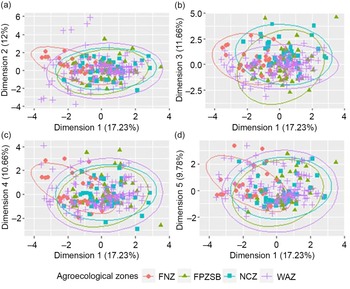
Eleven variables (Use of fertiliser, Use of pesticide, Intercropping, Seed origin, Type of field ploughing, Seed drying place, Storage material, Source of labour, Reason for sesame production, Yield, Area devoted to sesame production) related to farm typology were combined to perform a PCA and cluster analysis for the classification into different clusters to identify the most appropriate farm typology which can be more profitable to farmers in terms of yield and hence to be recommended. The first five axes of the PCA explained 61.33% of variation of variables related to farm typology (Figure 1). The use of pesticide, source of labour, seed drying place, reasons for sesame production, the yield of the crop and area devoted to sesame production were positively correlated with the first principal component (17.23%) (Figure 1a).
PCA scores of respondents from different agroecological zones based on management practices. (a) Projection of the respondents on principal components 1 and 2. (b) Projection of the respondents on the principal components 1 and 3. (c) Projection of the respondents on principal components 1 and 4. (d) Projection of respondents on principal components 1 and 5.

The variables – types of field ploughing, seed drying place, reasons for sesame production, were positively correlated with the second principal component (12%). The variables – use of fertiliser, use of pesticide, type of field ploughing, reasons for sesame production, yield and area devoted to sesame production, were positively correlated with the third principal component which explained 11.66% of the variation of these variables, while the fourth principal component explaining 10.66% of the variation was positively correlated with the variables intercropping, storage material, type of labour and area devoted to sesame production. The fifth principal component was positively correlated with use of pesticide, intercropping, storage material, source of labour, reasons for sesame production, and crop yield and explained 9.78% of the total variation (Table S2).
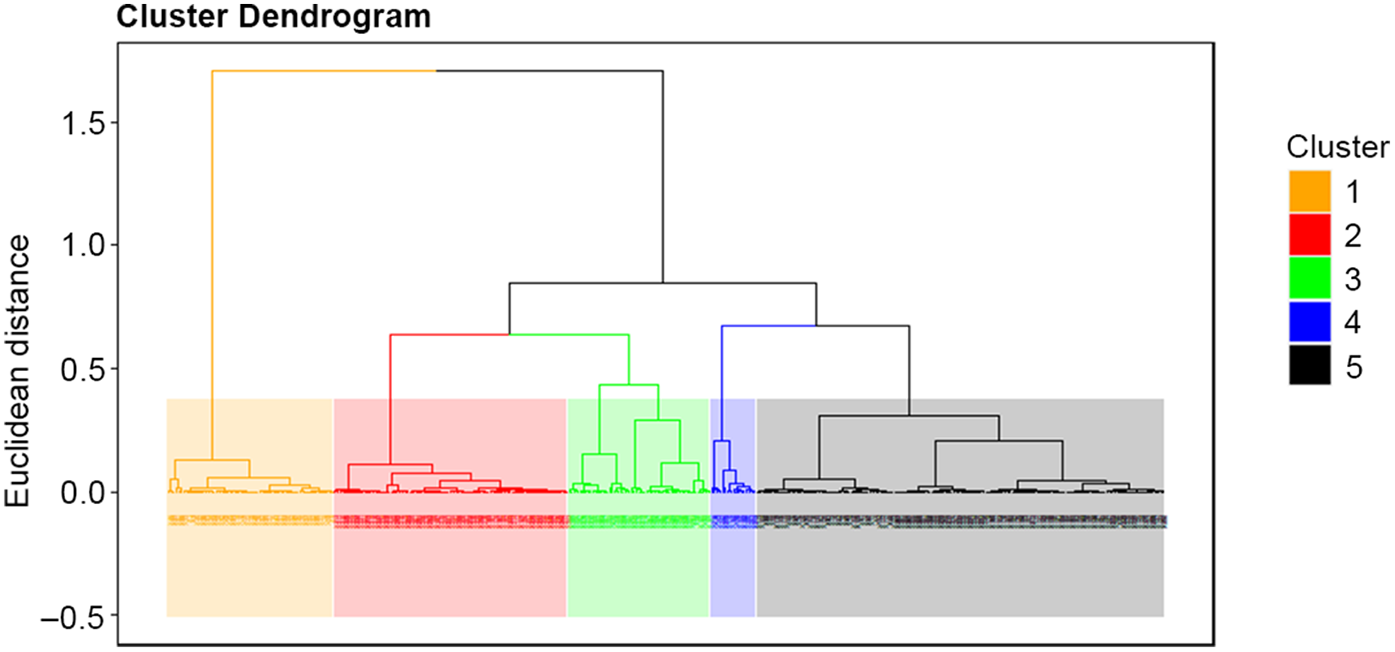
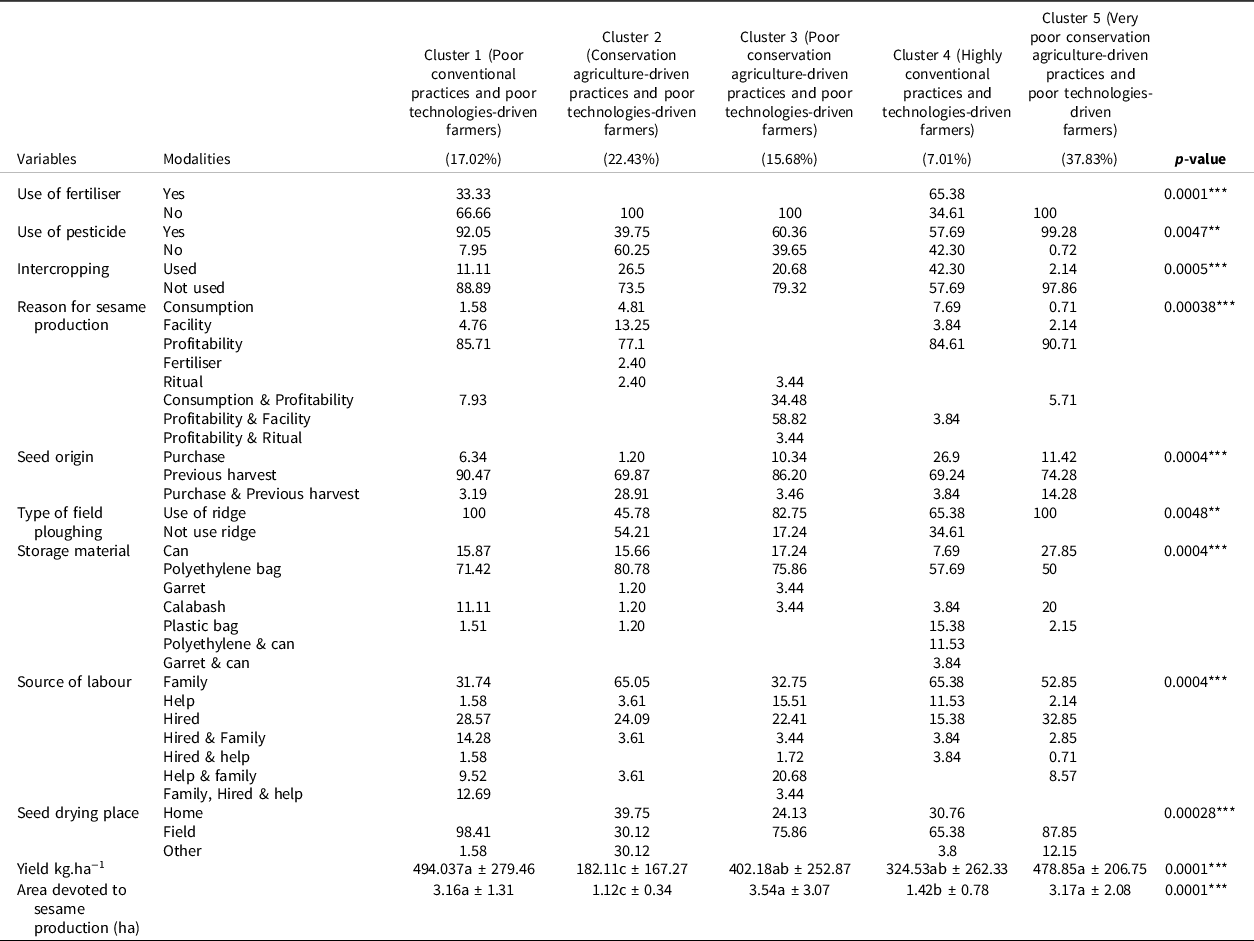
The projection of the respondents on the first five principal components (Figure 1) highlighted the differences in the farm typology among the different agroecological zones. The dendrogram (Figure 2) showed that overall, the variables used could be classified into five clusters (farm typologies). The farm typologies with their associated seed yield derived from the dendrogram are presented in Table 5. The clusters were described based on the variables characterising them. The chi-square test showed a significant difference among clusters of variables describing sesame farm typology.
Dendrogram of five farm typologies across agroecological zones of sesame in Benin.

Classification of sesame management practices, reason for sesame production, access to resources, farm facilities at disposal, labour and product allocation into different clusters (farm typology)

***: p < 0.001; **: p < 0.01; different letters in the same line indicate significant difference at 95% by the Tukey test (p < 0.05). Means having the same letter on a line are not significantly different from each other.
Fertilisers were used only by farmers belonging to cluster 1 and cluster 4 respectively called ‘Poor conventional practices and poor technologies-driven farmers’ and ‘Highly conventional practices and technologies-driven farmers’. More farmers in cluster 1 (33.33%) were inclined to apply fertilisers than those in cluster 4 (65.38%). Concerning the use of pesticide, cluster 2, ‘Conservation agriculture-driven practices and poor technologies-driven farmers’, was the category with the highest proportion of farmers (60.25%) not using pesticide. All the farmers belonging to clusters 1 and 5 (‘Very poor conservation agriculture-driven practices and poor technologies-driven farmers’) practised only sowing on ridges. The majority of farmers (more than 50%) did not practice intercropping regardless of the cluster they belong to.
In all the five clusters, seed storage was done by a high proportion of farmers, using polyethylene bags. Clusters 1 and 5 included farmers who did not dry sesame at home; the majority of farmers in these clusters dry seed in the field. The highest seed yield was obtained among farmers in clusters 1, 5, 3 (‘Poor conservation agriculture-driven practices and poor technologies-driven farmers’), 4 and cluster 2 in decreasing order. There were differences in the mean yield across clusters. In clusters 1 and 5 showing the highest seed yield, the major sesame farm typology was characterised by: use of fertiliser (only by a small proportion of farmers in cluster 1), use of pesticide, sowing on ridges, drying of seed in the field, whereas in cluster 2 showing poor seed yield, farmers did not use fertilisers, the majority of them did not use pesticide, did not practice sowing on ridges and seed drying was mostly done at home.
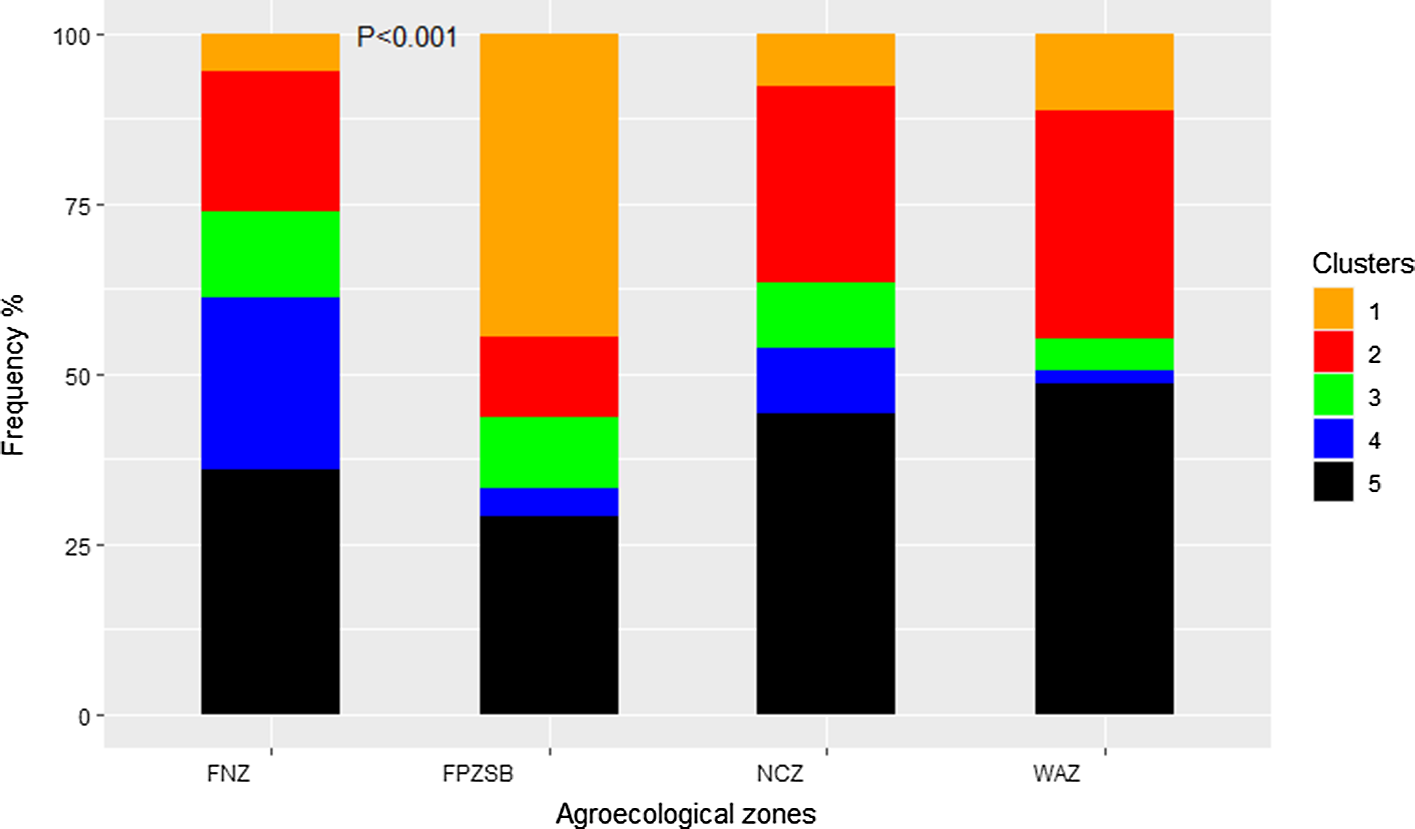
Sesame farm typology varied (p < 0.001) across agroecological zones (Figure 3). All the five farm typologies represented by the five clusters were found in the four agroecological zones. The farm typology 1 (cluster 1) with high sesame grain yield was most frequently found in FPZSB and less frequent in FNZ, whereas cluster 2 farm typology with the lowest seed yield was the most common in WAZ and NCZ but less so in FPZSB.
Frequency of sesame farm typology across agroecological zones in Benin.

Seed characteristics and ethnobotanical uses of sesame
Types of seed in sesame
Sesame seed was classified based on the information recorded from farmers on the colour and the size. Four seed colours were observed, namely white-seeded, red-seeded, yellowish-seeded and black-seeded cultivars. The white cultivars have different seed sizes: large size and small size. Only small seed size was recorded for the yellowish-seeded, whereas big seed size was recorded for the reddish and black-seeded (Figure S2). The widest spread cultivar was the white-seeded cultivar with large size, whereas the black cultivar was very rare and was found in WAZ.
Use, FL and PPUV across agroecological zones
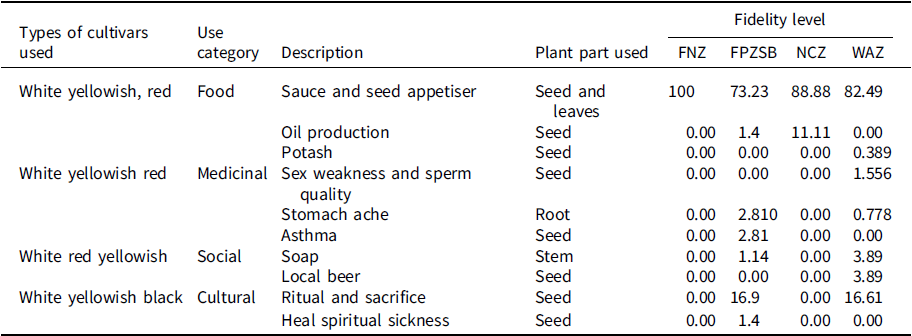
Sesame has various uses (considering the colour) which differ from one agroecological zone to another. Sesame is used for food, medicinal, social and cultural purposes. As for food, the seeds are used to prepare sauce, make seed appetiser or for cooking after extracting the oil. For medicinal uses, the root is used to cure stomach-ache, and the seeds are used to treat asthma and erectile trouble. The social use categories consist of making soap or local beer respectively with stem and seeds. Also, sesame has some cultural uses including sacrifice, ritual ceremonies and healing of spiritual diseases (Table 6). The grains serve only as food for local consumption in FNZ and NCZ. The FL for sauce and seed appetiser is 100% in FNZ and 88.11% in NCZ. In FPZSB and WAZ, the crop was used not only for local consumption but also for social, medicinal and cultural purposes. In the FPZSB, the FL was 73.23% for sauce and seed appetiser uses, 1.4% for oil extraction and healing of spiritual sickness, 16.9% for ritual and sacrifice. In WAZ, sauce and seed appetiser use had FL of 82.49% and 16.61% for ritual and sacrifice. Regarding the PPUV, values were 0.871, 1.278, 1.057 and 1.555 for FNZ, FPZSB, NCZ and WAZ respectively. The PPUVs for leaf and root were the same in WAZ. PPUVs for stem in FPZSB, WAZ were respectively 0.016 and 0.018.
Different uses of sesame in different agroecological zones in Benin

FNZ: far north zone, FPZSB: food-producing zone of southern Borgou, NCZ: northern cotton zone.
UV
In the FNZ and NCZ, only UVFood was recorded and was estimated to 0.871 and 1.057, respectively. In the FNZSB, the UVTotal was 1.261 and was composed of 1.114 for UVFood, 0.0163 for UVMed and 0.131 for cultural UV. In the WAZ, the UVTotal was 1.544 including 1.481 for UVFood, 0.018 for medicinal and for UVSocs and 0.027 for cultural value.
Local nomenclature of sesame cultivars and source of knowledge related to sesame production
The names of sesame across the four agroecological zones were sociolinguistic group-dependent. Overall, the different names of sesame listed by respondents were lempti, boussoumari, sogni, gouolo, hignin, mounssougni, nondere, saham, sari, moussoum, ngné, sigbélou, sili, sonwe, wôdomepè, wogoumou, yinti and sowa. Most sociolinguistic groups used different local names for the same cultivars (Table S3). To these names, farmers add the name of the colour or the size to identify each cultivar. For example, sesame is called moussoum in Bariba and related sociolinguistic group, and the cultivar with large seed size is called moussoum bakanou, whereas sesame with small seed size is called moussoum pibinou.
Concerning the source of knowledge related to sesame production, three modalities of knowledge sources were encountered. Farmers got knowledge on sesame production from either a member of their community or another community or from instruction (documentation). In FNZ, the proportion of farmers obtaining the knowledge from their community for sesame production was 79.48% and those who received it from another community was 20.52%. The same observation was made in the FPZSB. In the NCZ, 44.23% of sesame farmers stated that they got the knowledge related to sesame grain production from member of their community, whereas 55.77% received it from member of another community. For the WAZ, 73.39% of farmers got the knowledge related to sesame grain production from the member of their community, 23.39% from member of another community and 3.22% from member of their community and documentation.
Bottlenecks in sesame production in Benin
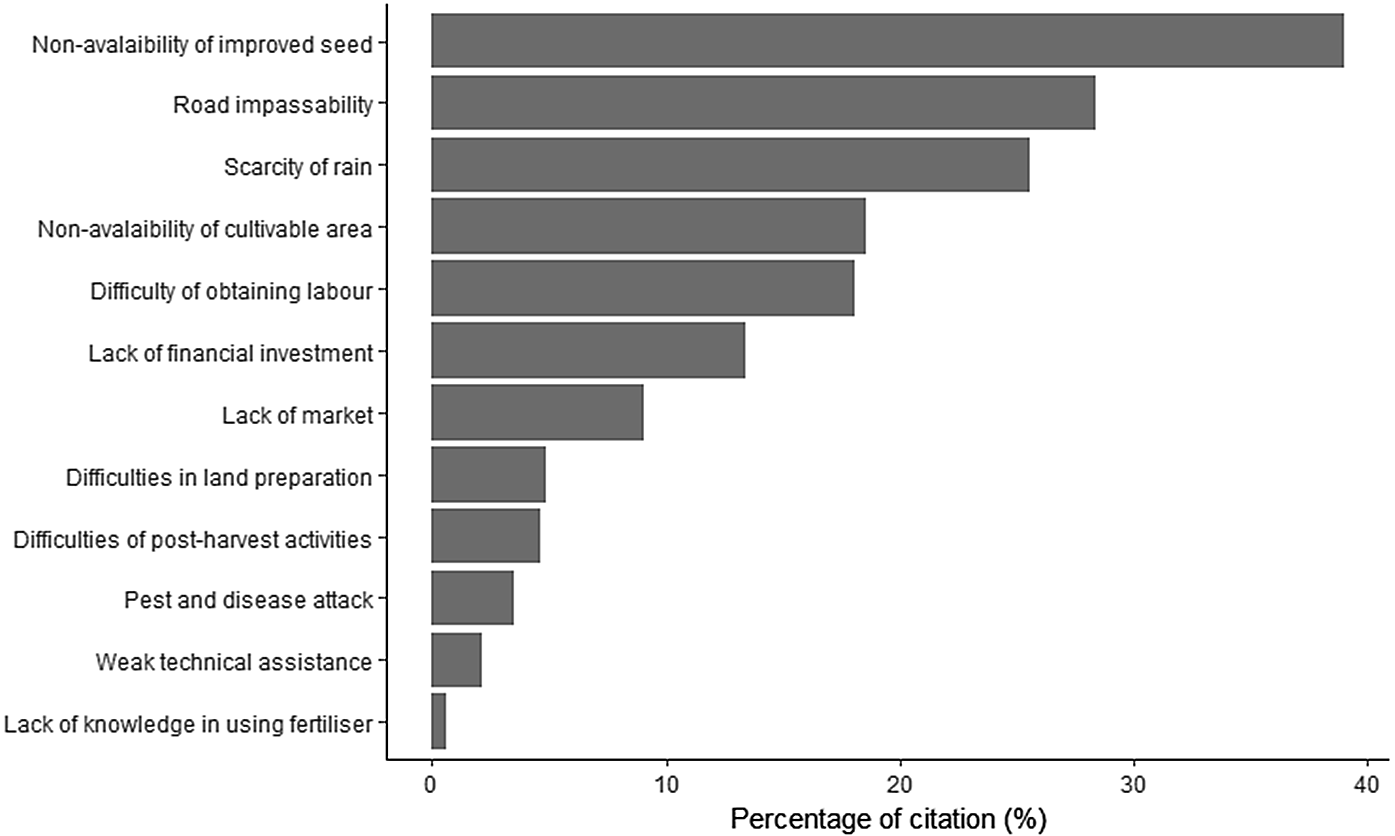
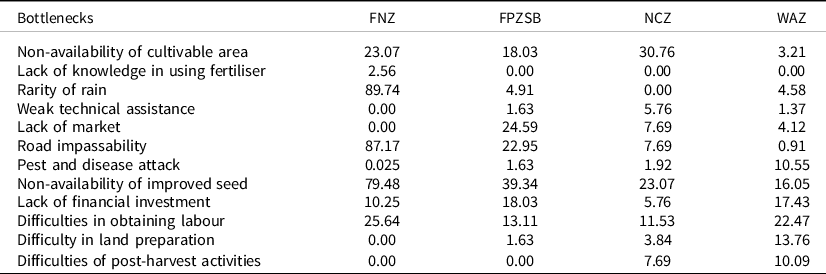
According to respondents, different bottlenecks that impede the expansion of sesame production in Benin were related to non-availability of improved seed, road impassability, scarcity of rain, non-availability of cultivable land, difficulty of obtaining labour, lack of financial investment, lack of market, difficulties in land preparation, difficulties of post-harvest activities, pest and disease attacks, weak technical assistance and lack of knowledge in using fertiliser (Figure 4). The most reported constraints mentioned by most of the respondents (39.01%) were the non-availability of improved seed, followed by road impassability and scarcity of rain (Figure 4). The frequency of citation of the bottlenecks varied across agroecological zones (Table 7).
Bottlenecks to sesame production in Benin.

Frequency of different bottlenecks to sesame production listed by sesame farmers across agroecological zones in Benin

FNZ: far north zone; FPZSB: food-producing zone of southern Borgou; NCZ: northern cotton zone; WAZ: West Atacora Zone.
Discussion
Status of sesame production
The current study investigated the management practices and knowledge associated with sesame production in four agroecological zones in Benin. Results showed that sesame is mainly produced by men aged between 30 and 50 years old on inherited land (Table 3). Similar observations regarding the age of sesame farmers were made by Jonah et al. (Reference Jonah, Shettima, Umar and Timothy2020) in Nigeria who found that men were more involved in sesame production than women. Ikwuakam et al. (Reference Ikwuakam, Iyela and Sangotegbe2016) in Katsina state in Nigeria also pointed out the involvement of 58.6% of farmers between 30 and 50 years old in sesame production. This can be seen as an opportunity since this category of people is really active and can increase the production of the crop. However, the use of inherited land for sesame production may lead in the long term, to a reduction of the size of land allocated to sesame due to sharing among successive generation as reported by Ezra and Yahaya (Reference Ezra and Yahaya2013) on rice (Oryza sp).
Factors affecting management practices
Our results showed the influence of the socio-demographic factors on farmers’ decisions to intercrop sesame with other crops, the use of fertiliser and the use of pesticide (Table S1). Older farmers tended to practice intercropping in sesame production more than the young farmers. This could be explained by the fact that old people have gained experience in sesame production over time. More male sesame farmers used fertiliser and pesticide than female. The study showed that the application of fertiliser did not depend on educational attainment; however, educated people have more knowledge on the use of pesticide than the uneducated as mentioned by Gaber and Abdel-Latif (Reference Gaber and Abdel-Latif2012).
Sesame management practices and reasons for sesame production
Sesame is produced mostly for its profitability. The estimated price of sesame in Benin was about 300 FCFA/kg (0.46 €/kg) (personal communication with some sesame traders) in 2022 compared to the price of maize used as staple crop which was 236 FCFA/kg (0.36 €/kg) (Lihoussou and Limbourg, Reference Lihoussou and Limbourg2022). Five statistical distinct (p < 0.001) farm types distributed across agroecological zones were observed in this study. The analysis of different farm typologies showed that the yield is high in cluster 1, 5 and 3 in decreasing order. Use of pesticide, sowing on ridges, drying seed at the field were practised by the majority of farmers in these clusters. In addition, cluster 1 where fertilisers were applied showed the highest seed yield. This could lead to the conclusion that a good application of fertilisers combined with use of pesticide, sowing on ridges, drying the seed at the field is important to increase the sesame yield. The use of ridges for sowing increases the yield of the crop according to farmers using this practice. This assertion was confirmed by the studies of Yunusa et al. (Reference Yunusa, Usman, Nangere and Usman2019) in Nigeria who showed an increase of sesame yield from when the crop was on ridges compared to flat land. Such results by Yunusa et al. (Reference Yunusa, Usman, Nangere and Usman2019) can support the observation related to the high yield obtained in the cluster 1 where all the farmers sow on ridges. Also, farmers in clusters 3, 4 and 5 use ridges to a great extent and high yield is also recorded in these clusters compared to cluster 2 where more than 50% of farmers did not sow on ridges.
Sesame was mostly grown in monoculture. The same result was found by Dossa et al. (Reference Dossa, Konteye, Niang, Doumbia and Cissé2017) who asserted that monoculture practice as mentioned by farmers facilitates husbandry which is essential for yield optimisation. The same authors also mentioned that sesame was previously produced using intercropping. In sesame crop management in Benin, sesame is intercropped with millet, cotton, soybean, beans, peanut, okra, Bambara groundnut, maize and sorghum.
In our study, the sesame crop was reported to be affected by pests. Gebremichael (Reference Gebremichael2017) and Gebregergis et al. (Reference Gebregergis, Assefa and Fitwy2018) suggested that pesticides can be applied for a period of two to four weeks after emergence against insects, mostly to control the sesame webworm Antigastra catalaunalis Duponchel (Lepidoptera: Crambidae). In our study, farmers reported using pesticide based on the observation of pest attacks.
The yield of sesame was management decision dependent. The average seed yield obtained in cluster 1 was 494 037 kg.ha−1. This value is approximatively the one reported by Ajavon et al. (Reference Ajavon, Bello and Adégbola2015) in Benin which revealed that the average yield in sesame from 2003 to 2013 was 449.13 kg.ha−1.
These results revealed that the yield of the crop is very low in Benin compared to some countries like Nigeria (Benin’s neighbouring country) and China where the average yield in 2018 was 1063 kg.ha−1and 1393 kg.ha−1, respectively (Myint et al., Reference Myint, Gilani, Kawase and Watanabe2020). Such low yield along with the fact that sesame is only produced in the northern part of Benin point out the need to expand sesame production. A first step to that objective could be the evaluation of sesame accessions in different environments to select high-yielding cultivars adapted to each agroecological zone. In our study, farmers do not follow any specific technical itinerary to grow sesame. Only a few farmers applied fertilisers. The reasons are, among others, lack of knowledge on fertilisation rate and time of application and effects. A similar finding was reported by Langham et al. (Reference Langham, Riney, Smith and Wiemers2008) who showed that up-front fertility can lead to tall leafy plants that do not give more yield. On the other hand, fertilisers are commonly used in some countries and some studies showed that appropriate and timely fertilisation increased the seed yield in sesame up to 150 kg.ha−1 (Gebregergis and Amare, Reference Gebregergis and Amare2019; Haruna and Aliyu, Reference Haruna and Aliyu2012).
Our results showed that most farmers put seed aside and use it for the next production season. Seeds are also purchased on the market by farmers. The same observations were reported in some studies for other neglected crops where farmers use their own seeds because of the lack of improved seed (Bougma et al., Reference Bougma, Sawadogo, Ouedraogo, Ouedraogo, Balma and Sawadogo2018). On the other hand, in countries like Burkina Faso and Mali there are certified sesame varieties used by farmers and provided by research Institutes and NGOs (Miningou et al., Reference Miningou, Traoré and Hijikata2018). According to Sharaby and Butovchenko (Reference Sharaby and Butovchenko2019), incapacity to provide high-quality seeds to farmers is due to lack of research programmes on the crop. With regard to seed storage, various storage materials were used by farmers in this study. In addition to the storage material encountered during our survey, Nyo et al. (Reference Nyo, Htwe and Win2020) used woven polypropylene bag, IRRI super bag and metal bin to assess the effect of different packaging materials and storage environments on seed quality of sesame. They found that the use of woven polypropylene bag as storage material showed higher viability of sesame seed.
Ethnobotanical uses and bottlenecks in sesame production
Sesame in this study was classified into five cultivars and WAZ showed wide diversity suggesting that this zone could be used for in situ conservation. The discriminant characteristics of seed observed during this survey are seed coat colour and seed size, including large white-coated seed, small white-coated seed, red, yellowish and black-coated seed. Falusi (Reference Falusi2008), reported in addition to these colours, the brown, yellow, grey colour and mentioned that 60% of farmers preferred the white-seeded accessions. Also, in some countries the pod colour and pod shape are discriminant characters to identify landraces (Yol et al., Reference Yol, Furat and Bulent2013). We suggest that future studies include more data for the assessment of discriminant characters in sesame. In Benin, farmers’ preferences in terms of cultivars should be identified for future introduction of high-performing varieties. The name of sesame varies according to sociolinguistic groups. As observed by Akohoué et al. (Reference Akohoué, Sibiya and Achigan-Dako2018) in their studies on Kersting’s groundnut accessions in Benin and Togo, the local name of sesame cultivars refers to the colour and the size of the seeds. Seeds were collected for each cultivar to better characterise cultivars and identify, in addition to seed, the other discriminant characteristics such as pod characteristics, number of branches, cycle of each cultivar etc.
Many uses of sesame were recorded, namely consumption, social, medicine, cultural and worship.
For consumption, seed is mostly consumed in sauce and processing into oil is not commonly practised by farmers. This could be explained by the fact that farmers do not have technology for oil extraction suggesting that new technologies could be developed to facilitate oil extraction. In addition, Ishaq et al. (Reference Ishaq, Wada, Oshigbo and Falusi2004) raised the industrial and fodder use of the crop. The PPUV is higher for seed suggesting that seed is the most used part of the crop. Only a few respondents mentioned they use leaves for consumption which is reflected in its low PPUV.
Non-availability of improved seed, road impassability to the field, scarcity of rain, lack of cultivated area, difficulties to find hired labour, lack of financial investment, lack of market, land preparation, difficulties on post-harvest activities, pest and disease attacks, low technical assistance, lack of knowledge on fertilisation were the major bottlenecks in sesame production in Benin. Indeed, the northern part of Benin is known to have vast cultivable land and 20% of farm households have more than five hectares in the north compared with 5% in the south (FAO et al., 2018). Thus, the constraint of non-availability of cultivable land mentioned by farmers could be explained by the fact that farmers hesitate to devote all their land to sesame production despite the fact they find sesame production profitable.
Conclusion
In this paper, we (i) investigated socio-demographic factors influencing sesame production, (ii) compared sesame farm typology across sesame-growing agroecological zones in Benin, (iii) assessed knowledge associated with sesame and (iv) finally identified constraints associated with sesame production. Our findings revealed that young men were mostly involved in sesame production which is sown on ridges. Most farmers did not apply fertiliser, and sesame is produced mostly as a sole crop. Five farm typologies were recorded and varied across agroecological zones. Five cultivars based on seed coat colour and seed size were found. The white-seeded cultivars were the widest spread. The seeds are the most used part of the crop across all agroecological zones. The major constraint in sesame production was the non-availability of improved seed. Research action needs to focus on the development of high-yielding cultivars in order to generate more cash for farmers and increase the sesame export potential of Benin.
Supplementary Material
To view the supplementary material for this article, please visit https://doi.org/10.1017/S0014479723000078
Financial Support
None.
Competing interest
The authors declare that they have no conflicts of interest.