Kawasaki disease is the most common cause of paediatric acquired heart disease in developed countries. Reference Newburger, Takahashi and Gerber1 Despite extensive investigation, the aetiology of Kawasaki disease remains unknown with no definitive laboratory test for diagnosis. Instead, the diagnosis of Kawasaki disease is based on American Heart Association clinical criteria, including ≥5 days of fever and 4 of 5 specific clinical findings (erythema/swelling of the extremities, polymorphous exanthaema, bilateral bulbar conjunctival injection without exudate, mucous membrane changes, and cervical lymphadenopathy ≥1.5 cm in diameter). However, some patients have an incomplete presentation with <4 of these specific findings. Reference Newburger, Takahashi and Gerber1-Reference Witt, Minich, Bohnsack and Young3 Thus, Kawasaki disease (and associated coronary aneurysms) may be over or underdiagnosed. For this reason, the American Heart Association published diagnostic and management guidelines for both complete and incomplete Kawasaki disease.
Accurate diagnosis and initiation of timely treatment with intravenous immunoglobulin is particularly important for children with incomplete Kawasaki disease, since they have a higher risk of coronary artery abnormalities compared to those with complete Kawasaki disease. Reference Sonobe, Kiyosawa and Tsuchiya4-Reference Sudo, Monobe and Yashiro5 Therefore, the 2004 American Heart Association guidelines introduced a revised algorithm Reference Newburger, Takahashi and Gerber1 to aid clinicians in deciding which children with incomplete features of Kawasaki disease should undergo further evaluation and/or treatment. In a multicentre study, Reference Yellen, Gauvreau and Takahashi6 the 2004 American Heart Association algorithm for the diagnosis of incomplete Kawasaki disease was associated with a higher proportion of patients with coronary artery abnormalities being appropriately treated with intravenous immunoglobulin. Since the algorithm appeared effective, it was not significantly revised in the updated 2017 guidelines. Reference McCrindle, Rowley and Newburger2
Practitioners must adhere to the algorithm for it to be effective in appropriately diagnosing incomplete Kawasaki disease while preventing both under- and overdiagnosis. Undertreatment of Kawasaki disease can lead to an increase in potentially preventable coronary artery aneurysms that can lead to myocardial ischaemia and death, while overtreatment can lead to possible adverse reactions to intravenous immunoglobulin, unnecessary cost, and potentially a delay in appropriate diagnosis. The purposes of this study were to 1) determine the proportion of cases in which practitioners adhered to the American Heart Association algorithm for diagnosing incomplete Kawasaki disease, 2) compare time to treatment between the group for whom practitioners adhered to versus those who did not adhere to American Heart Association criteria for treatment of incomplete Kawasaki disease, and 3) compare the proportion of cardiology consults between the adherence and nonadherence groups. We hypothesised that cardiology consultation would be associated with more consistent use of the American Heart Association algorithm and shorter time to appropriate treatment for patients with incomplete Kawasaki disease.
Methods
This single centre, retrospective cohort study was conducted at a tertiary care children’s hospital. Using ICD codes, the hospital database was searched for all patients <18 years of age with a discharge diagnosis of Kawasaki disease who received ≥1 dose of intravenous immunoglobulin between January, 2006 and February, 2018. The discharge diagnosis of Kawasaki disease and intravenous immunoglobulin treatment were confirmed by chart review. Patients treated for Kawasaki disease at an outside institution and patients with a discharge diagnosis of Kawasaki disease who never received intravenous immunoglobulin were excluded from the study. The start date of 2006 was selected to allow sufficient time for adopting the 2004 American Heart Association guidelines as standard of care. Our institution’s Research and Human Subjects Committee reviewed and approved this study.
Study measures and definitions
The electronic medical record was reviewed for demographic, clinical, and laboratory data, retreatment for intravenous immunoglobulin resistance, coronary artery abnormalities, and written paediatric cardiology consultation. Intravenous immunoglobulin resistance was defined as recrudescent or persistent fever ≥36 hours after the end of initial intravenous immunoglobulin infusion. Reference Newburger, Takahashi and Gerber1 Echocardiography reports were reviewed for coronary artery abnormalities using American Heart Association definitions of left anterior descending or right coronary artery (RCA) z-scores ≥2.5 and/or Japanese Ministry of Health definitions of aneurysms: coronary artery dimension >3 mm for patients <5 years of age and >4 mm for patients ≥5 years of age; internal diameter of a segment measuring ≥1.5 times that of an adjacent segment; or the coronary artery lumen clearly irregular. Reference Yellen, Gauvreau and Takahashi6 Patients treated for presumed incomplete Kawasaki disease were divided into 2 groups: those cases in which practitioners adhered to the American Heart Association diagnosis and treatment algorithm versus those cases in which practitioners did not (Table 1).
Overtreatment and undertreatment based on non-adherence to 2004 incomplete Kawasaki disease criteria

*Clinical criteria include extremity changes, polymorphous exanthaema, bilateral bulbar conjunctival injection without exudate, mucous membrane changes, and cervical lymphadenopathy ≥1.5 cm in diameter.
**Supplemental laboratory criteria are considered “positive” if albumin ≤3.0 g/dl, anaemia for age, elevation of alanine aminotransferase, platelets after 7 days ≥450,000/mm3, white blood cell count ≥15,000/mm3, and urine ≥10 white blood cells/high-power field.
Statistical Analyses
We summarised continuous demographic and clinical outcome variables of interest using median and interquartile range (IQR) due to distribution skew. We summarised categorical variable counts and percentages and compared these variables between the two groups, “adhered to” and “did not adhere to” American Heart Association criteria, using nonparametric Wilcoxon rank sum test and chi-squared or Fisher’s exact test. Statistical significance was assessed at the 0.05 level. Statistical analyses were implemented using R v. 4.0.3 (R Core Team, 2020).
Results
Clinical characteristics
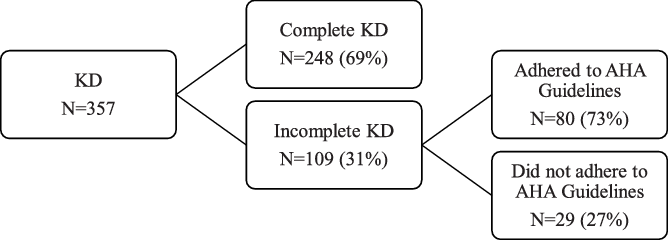
Of the 357 children treated for Kawasaki disease during the study period, 248 met criteria for complete Kawasaki disease, and the remaining 109 children (31%) formed our study cohort (Fig 1). Of these 109 subjects, 80 (73%) were treated in adherence with the American Heart Association guidelines (Fig 1).
The study cohort consisted of 109 patients treated for incomplete KD: 80 adhered to AHA criteria and 29 did not adhere to AHA guidelines.

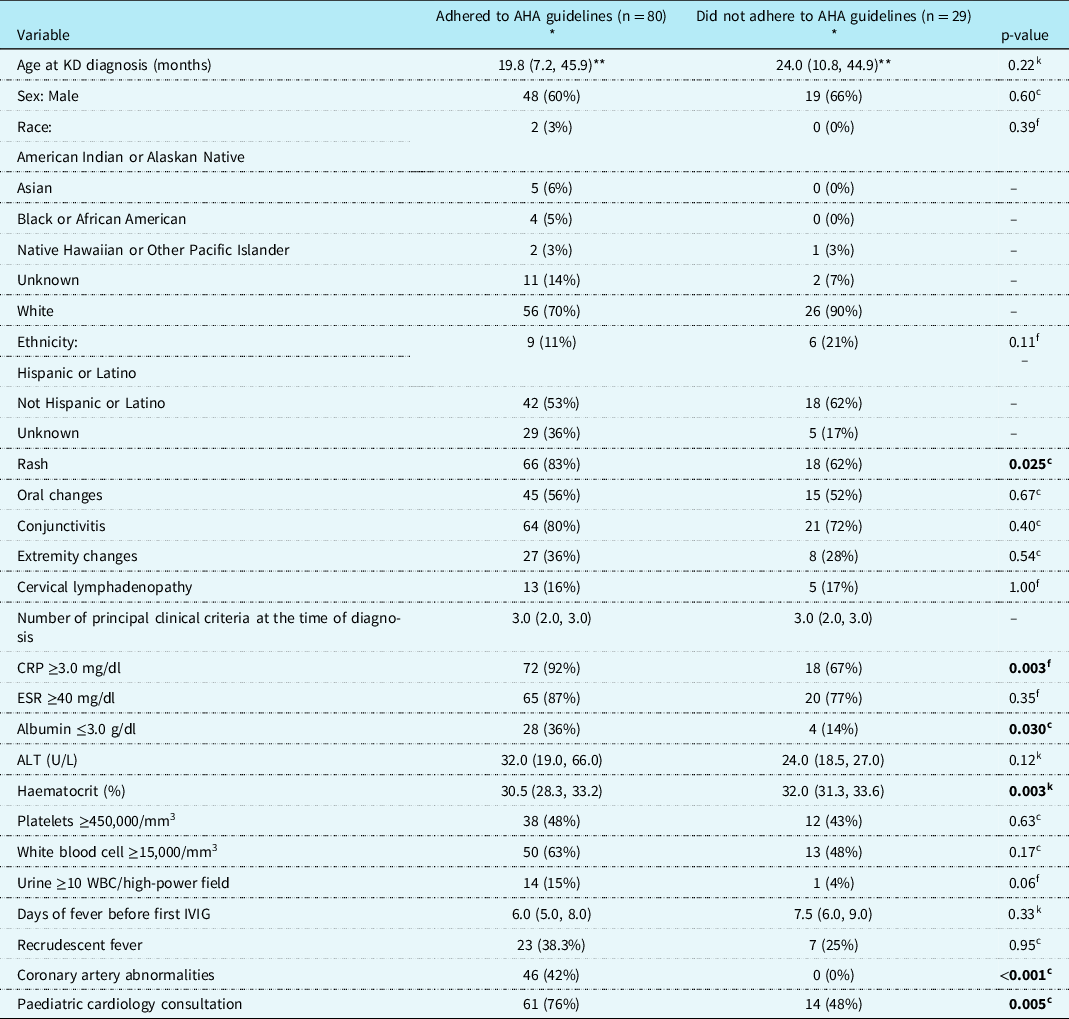
Age, sex, race, and most physical findings associated with acute Kawasaki disease were similar between those cases for whom practitioners adhered to and those who did not adhere to the American Heart Association criteria for incomplete Kawasaki disease (Table 2). Rash occurred more frequently in children in the adherence group compared to those in the non-adherence group (83% versus 62%, p = 0.025). The number of days of fever prior to treatment and the proportion of patients who had recrudescent fevers post intravenous immunoglobulin treatment were similar between the two groups.
Patient characteristics
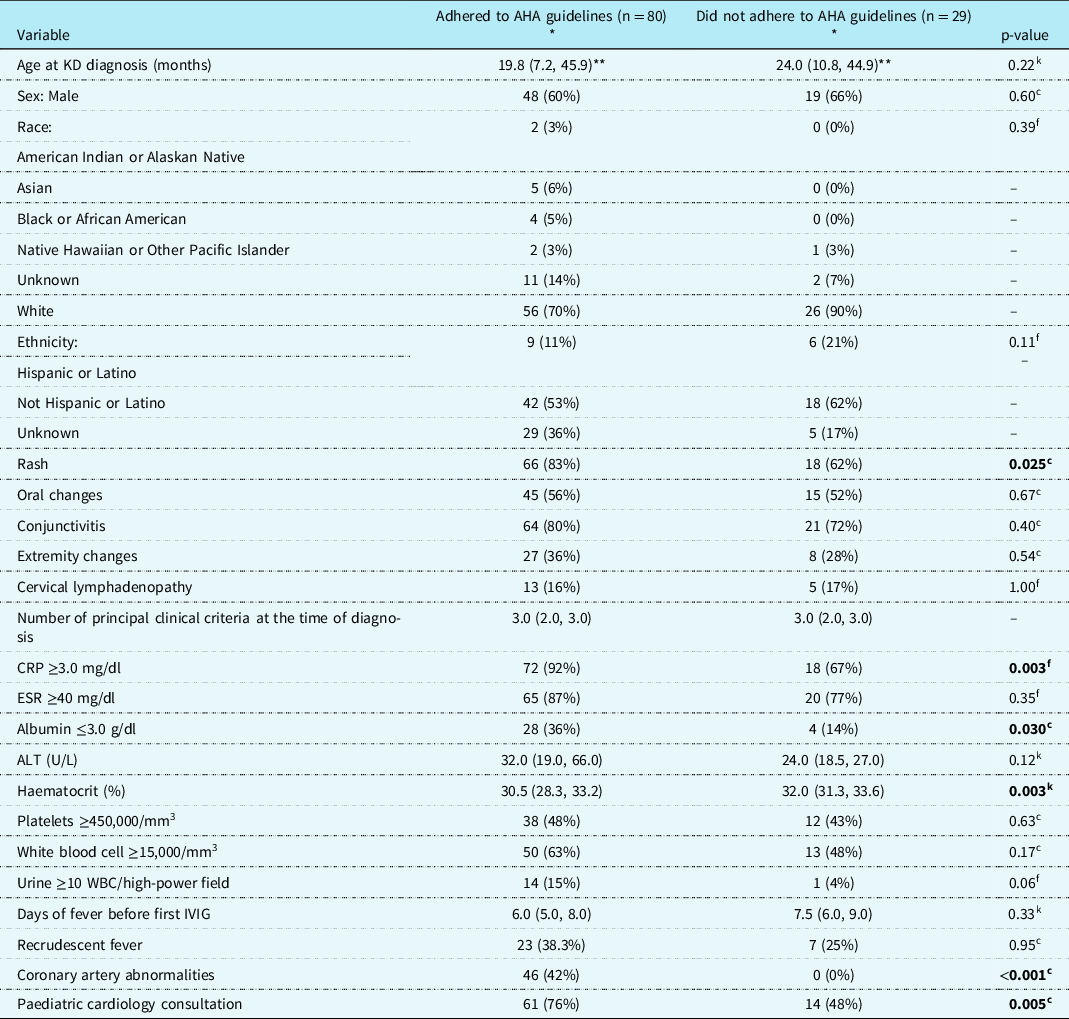
*Note: Missing values for each of the following data points in adhered to guidelines/did not adhere to guidelines: Days of fever before IVIG: 0/1; highest CRP ≥3.0 mg/dl: 2/2; highest ESR ≥40 mg/dl: 5/3; albumin ≤3.0 g/dl: 3/1, highest platelet count ≥450,000/mm3:1/1; highest white blood cell count ≥15,000/mm3: 1/2; urinalysis (U/A) result prior to receiving IVIG: 2/13; recrudescent fever 36 hours post first IVIG: 2/1” ALT U/L: 2/3.
**Median (IQR); kKruskal–Wallis test, cChi-squared test, fFisher’s exact test.
p-values less than or equal to 0.05 are bolded to indicate statistical significance.
Some of the supplemental laboratory findings recommended in the American Heart Association algorithm were different between the adherence and non-adherence groups (Table 2). Compared to the non-adherence group, a higher proportion of patients in the adherence group had a C-reactive protein ≥ 3.0 (92% versus 67%, p = 0.003) and albumin levels ≤ 3 g/dl (36% versus 14%, p = 0.030). Haematocrit was significantly lower in those who met American Heart Association criteria (30.5% versus 32.0%, p = 0.003), though this difference is clinically insignificant. The remaining laboratory tests (erythrocyte sedimentation rate, white blood cell count, platelet count, alanine transaminase, and >10 white blood cells in urine) were similar between the two groups. Of those treated for incomplete Kawasaki disease, 46 (42%) had coronary artery abnormalities and 13 (16%) would not have met American Heart Association criteria without an abnormal echocardiogram.
Paediatric cardiology consultation
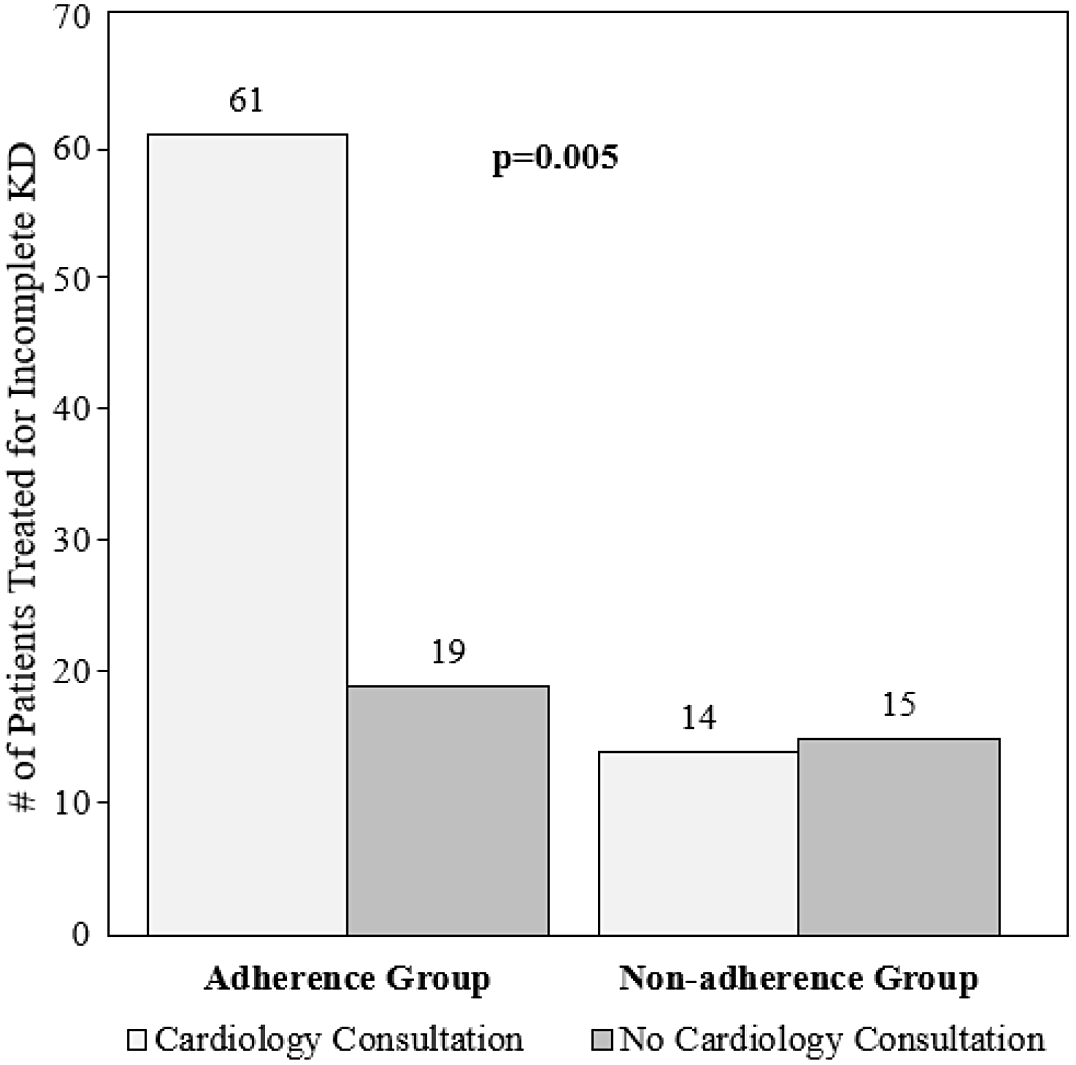
Paediatric cardiology consultation (Table 2, Fig 2) was obtained more frequently in the adherence group versus non-adherence group (76% versus 48%; p = 0.005). Cardiology consultation occurred in 39/46 (85%) of subjects with incomplete Kawasaki disease and coronary artery abnormalities. A paediatric cardiology consultation was not associated with fewer days of fever before the first intravenous immunoglobulin treatment (p = 0.33).
Paediatric cardiology consultation was obtained more frequently in the group who adhered to AHA guidelines.

Discussion
Practitioners failed to adhere to the American Heart Association guidelines for the diagnosis and treatment of incomplete Kawasaki disease in over a quarter (27%) of treated children. Although the American Heart Association algorithm was specifically designed to avoid both overtreatment and underdiagnoses of Kawasaki disease, clinicians appeared to err on the side of overtreatment of children with prolonged fever and some clinical findings of Kawasaki disease. Since there are no pathognomonic findings of Kawasaki disease, overdiagnosis may occur if practitioners feel unsure in their ability to recognise the clinical features Reference Grignani and Quek7 or if the clinical picture is ambiguous. Since the risk of coronary artery abnormalities is higher in children with incomplete Kawasaki disease, clinicians may decide risk of treatment with intravenous immunoglobulin is less than the risk of not treating. However, the algorithm takes into consideration the potential for undertreatment. Inappropriate treatment may incur rare risks related to intravenous immunoglobulin treatment including renal impairment, thrombosis, arrhythmia, nerve palsy, aseptic meningitis, haemolytic anaemia, or transfusion-related acute lung injury. Reference Guo, Tian and Wang8 Additionally, inappropriate intravenous immunoglobulin treatment may result in unnecessary costs or may delay treatment of the patients’ true diagnosis. None of the patients in the “non-adherent” group had coronary artery aneurysms and this is likely because many of these patients did not have Kawasaki disease. Nevertheless, the echocardiogram is an important part of the evaluation of suspected atypical Kawasaki disease and was the deciding factor in in making the diagnosis for 16% of the cohort.
At our institution, paediatric emergency medicine physicians and subsequently hospitalists are typically the practitioners treating these patients and deciding whether to obtain consults from subspecialists. The proportion of patients with a cardiology consult was higher in the group whose practitioners adhered to American Heart Association guidelines compared to the non-adherence group. This may simply indicate that any consulting physician with experience and expertise in evaluating and treating patients with incomplete KD is likely to improve the accuracy of the diagnosis and the appropriateness of treatment. Our finding of cardiac consultation in the majority of subjects with incomplete Kawasaki disease adhering to guidelines and coronary artery abnormalities supports this theory. It is also possible, however, that the treating practitioner may have decided to treat regardless of outside opinion, in an attempt to prevent coronary artery abnormalities. Finally, some clinicians may have been unfamiliar with the American Heart Association algorithm. The algorithm contains nuances, such as differentiating between exudative conjunctivitis and non-exudative conjunctivitis as well as cervical lymphadenopathy versus generalised lymphadenopathy and lymphadenopathy >1.5 cm versus smaller than 1.5 cm in size. These nuances may be difficult to identify or appropriately categorise if the practitioner is not familiar with them. Consulting cardiology in our study was consistently associated with an increased likelihood of following the guidelines. Importantly, following the guidelines may prevent unnecessary treatment and unnecessary cost. Based on our experience, this was more likely to occur when a cardiologist was consulted; however, this may also be applicable to any physician with experience and expertise in Kawasaki disease.
This was a retrospective study with several limitations. In the absence of a diagnostic test for Kawasaki disease, the diagnosis cannot be confirmed in incomplete cases without coronary artery abnormalities. Some patients treated for incomplete Kawasaki disease may have been misdiagnosed and the true aetiology of their symptoms discovered at a later date. Without this information, the actual accuracy of the American Heart Association algorithm (including rates of underdiagnoses and overtreatment) could not be tested. The results from this single centre study may not be generalisable to other centres since other centres may have a different care pathway and subspecialty involvement for the management of patients with incomplete Kawasaki disease. Given the electronic medical record and consult process at our institution, it was not possible to delineate the specific timing of consultation relative to timing of intravenous immunoglobulin administration.
Conclusions
Diagnosis and management of incomplete Kawasaki disease remains a clinical challenge. Despite recommendations and a detailed algorithm published in the last two American Heart Association guideline statements in 2004 and 2017, the guidelines were not adhered to in over a quarter of patients treated with intravenous immunoglobulin for incomplete Kawasaki disease at our institution. Paediatric cardiology consultations were sought more often in the group who adhered to the American Heart Association algorithm. Based on our study, consultation with physicians with experience and expertise in the evaluation and management of incomplete KD should be strongly considered in the care of these patients.
Recommended tweet
Consulting physicians with experience and expertise in the evaluation/management of incomplete KD should be strongly considered in the care of these patients. #PedsCards #PediatricCardiology #KawasakiDisease #KD
Acknowledgements
None.
Financial support
The authors did not receive external funding from any organisation for the submitted work.
This investigation was supported by the University of Utah Population Health Research (PHR) Foundation, with funding in part from the National Center for Research Resources and the National Center for Advancing Translational Sciences, National Institutes of Health, through Grant UL1TR002538 (formerly 5UL1TR001067-05, 8UL1TR000105, and UL1RR025764).
Conflicts of interest
The authors have no conflicts of interest to declare that are relevant to the content of this article.
Ethical standards
This retrospective chart review study involving human participants was in accordance with the ethical standards of the institutional and national research committee and with the 1964 Helsinki Declaration and its later amendments or comparable ethical standards. The University of Utah’s Research and Human Subjects Committee reviewed and approved this study.