Introduction
Body-focused repetitive behaviours (BFRBs) refer to a group of problematic and non-functional behaviours resulting in damage directed towards the body, including hair-pulling (HP), skin-picking (SP), and nail-biting (NB) (American Psychiatric Association [APA], 2013; O'Connor, Lavoie, Robert, Stip, & Borgeat, Reference O'Connor, Lavoie, Robert, Stip and Borgeat2005). More specifically, trichotillomania is characterised by repetitive and chronic HP (e.g. eyebrows, eyelashes, and pubic hair) that can lead to hair loss (APA, 2013). Dermatillomania is characterised by an excessive and repetitive scraping, pinching, or tearing of the skin, leaving physical sequelae on body tissues (APA, 2013). Finally, onychophagia is characterised by the nibbling of the nails and the skin nearby, causing visible damage as well as bleeding, infections, and pain (APA, 2013).
Self-grooming behaviours can occur on a continuum ranging from mild to severe, leading to the development of BFRBs (Maraz, Hende, Urbán, & Demetrovics, Reference Maraz, Hende, Urbán and Demetrovics2017). Individuals with BFRBs report an inability to control and stop their behaviours, despite the significant distress and psychosocial dysfunction they cause (APA, 2013). Studies report that between 0.5 and 2.0% of the population suffers from HP (Christenson, Pyle, & Mitchell, Reference Christenson, Pyle and Mitchell1991; Duke, Bodzin, Tavares, Geffken, & Storch, Reference Duke, Bodzin, Tavares, Geffken and Storch2009) and between 1.4 and 5.4% suffers from SP (Hayes, Storch, & Berlanga, Reference Hayes, Storch and Berlanga2009; Keuthen, Koran, Aboujaoude, Large, & Serpe, Reference Keuthen, Koran, Aboujaoude, Large and Serpe2010). The prevalence of NB is estimated to be 25–60% at puberty, followed by 10–25% among young adults, and affecting less than 10% of people over 35 (Duke et al., Reference Duke, Bodzin, Tavares, Geffken and Storch2009; Keuthen, Koran, et al., Reference Keuthen, Koran, Aboujaoude, Large and Serpe2010; Snyder & Friman, Reference Snyder, Friman, Grant, Stein, Woods and Keuthen2012). The Diagnostic and Statistical Manual of Mental Disorders, fifth edition (DSM-5) classifies HP and SP as distinct diagnoses in the Obsessive-Compulsive and Related Disorders chapter, whereas other BFRBs such as nail-biting are classified under Other Specified Obsessive-Compulsive and Related Disorders.
The different types of BFRBs frequently co-occur; for example, comorbidity between SP and HP ranges from 10 to 51% (Snorrason et al., Reference Snorrason, Ricketts, Flessner, Franklin, Stein and Woods2012; Stein et al., Reference Stein, Flessner, Franklin, Keuthen, Lochner and Woods2008). Additionally, BFRBs share a large number of common features, including the impulsive, compulsive, and chronic nature of their behaviours (Bohne, Keuthen, & Wilhelm, Reference Bohne, Keuthen and Wilhelm2005; Lochner, Simeon, Niehaus, & Stein, Reference Lochner, Simeon, Niehaus and Stein2002; Snorrason et al., Reference Snorrason, Ricketts, Flessner, Franklin, Stein and Woods2012). Moreover, they exhibit overlapping genetic, neurobiological, and personality traits (Bienvenu et al., Reference Bienvenu, Wang, Shugart, Welch, Grados, Fyer and Nestadt2009; Grant, Odlaug, Hampshire, Schreiber, & Chamberlain, Reference Grant, Odlaug, Hampshire, Schreiber and Chamberlain2013; Snorrason et al., Reference Snorrason, Ricketts, Flessner, Franklin, Stein and Woods2012). As such, despite HP and SP representing a distinct diagnosis from the Other Specified BFRBs category in DSM-5, many authors support their conceptualisation as a cohesive group of diseases and likewise support the development of etiologic models that apply to BFRBs altogether (e.g. Roberts, O'Connor, & Bélanger, Reference Roberts, O'Connor and Bélanger2013; Snorrason et al., Reference Snorrason, Ricketts, Flessner, Franklin, Stein and Woods2012; Teng, Woods, Twohig, & Marcks, Reference Teng, Woods, Twohig and Marcks2002).
Various behavioural models have been developed to explain the onset and maintenance of BFRBs. Penzel's (Reference Penzel1995, Reference Penzel2002, Reference Penzel2003) proposes a Stimulus Regulation model that explains the initial development and performance of BFRBs as an external means to control an internal state of sensory imbalance, such as a state of overstimulation (e.g. stress or excitation) or under-stimulation (e.g. boredom or inactivity). Moreover, the Cognitive and Behavioural model of Mansueto, Stemberger, Thomas, and Golomb (Reference Mansueto, Stemberger, Thomas and Golomb1997) proposes that different episodes of BFRBs are facilitated or inhibited by the presence of internal and external stimuli, either cognitive, environmental, or emotional. Thus, the persistence of these behaviours is explained primarily in terms of positive and negative reinforcement (Mansueto et al., Reference Mansueto, Stemberger, Thomas and Golomb1997).
More recent models of BFRBs have increasingly focused on the role of affective states in BFRB episodes. In particular, the Emotion Regulation model claims that people with BFRBs demonstrate an underlying emotional regulation deficit characterised by a difficulty coping with emotional experiences (Roberts, O'Connor, Aaderma, & Bélanger, Reference Roberts, O'Connor, Aaderma and Bélanger2015; Shusterman, Feld, Baer, & Keuthen, Reference Shusterman, Feld, Baer and Keuthen2009; Snorrason, Smari, & Olafsson, Reference Snorrason, Smari and Olafsson2010). According to this model, those with BFRBs engage in repetitive behaviours due to a lack of effective coping strategies to regulate negative emotions elicited by an event or a situation (Diefenbach, Tolin, Meunier, & Worhunsky, Reference Diefenbach, Tolin, Meunier and Worhunsky2008; Keuthen et al., Reference Keuthen, Rothbaum, Fama, Altenburger, Falkenstein, Sprich and Welch2012; Roberts, O'Connor, Aardema, Courchesne, & Bélanger, Reference Roberts, O'Connor, Aardema, Courchesne and Bélanger2016; Shusterman et al., Reference Shusterman, Feld, Baer and Keuthen2009; Snorrason et al., Reference Snorrason, Smari and Olafsson2010). When people with HP and SP were asked to retrospectively rate affective states involved in pulling or picking episodes, they reported an increase in negative affect prior (e.g. anxiety and tension), followed by a decrease after the behaviour (Diefenbach et al., Reference Diefenbach, Tolin, Meunier and Worhunsky2008; Snorrason et al., Reference Snorrason, Smari and Olafsson2010).
Consistent with this model, the Frustrated Action Model developed by O'Connor and colleagues (O'Connor, Aardema, & Pélissier, Reference O'Connor, Aardema and Pélissier2005; O'Connor et al., Reference O'Connor, Brault, Robillard, Loiselle, Borgeat and Stip2001; O'Connor, Gareau, & Blowers, Reference O'Connor, Gareau and Blowers1994; O'Connor, Gareau, & Borgeat, Reference O'Connor, Gareau and Borgeat1997; Pélissier & O'Connor, Reference Pélissier and O'Connor2004) integrates the influence of specific emotions and cognitive variables on BFRBs. According to this model, individuals with BFRBs exhibit a form of perfectionism that leads them to adopt an overactive style of planning, which is defined as a difficulty relaxing and pacing tasks in which they are involved, and a desire to constantly be productive (O'Connor et al., Reference O'Connor, Brault, Robillard, Loiselle, Borgeat and Stip2001, Reference O'Connor, Gareau and Borgeat1997; Pélissier & O'Connor, Reference Pélissier and O'Connor2004). Further, the model claims that as the result of these unrealistic expectations and failing to meet personal standards, individuals with BFRBs tend to experience uncomfortable emotions such as boredom, impatience, frustration, and dissatisfaction. Experimental studies have supported these findings demonstrating that a higher urge to engage in BFRBs was reported after experimenting affects such as frustration, anxiety, tension, boredom, and guilt (Duke, Keeley, Ricketts, Geffken, & Storch, Reference Duke, Keeley, Ricketts, Geffken and Storch2010; Roberts et al., Reference Roberts, O'Connor, Aardema, Courchesne and Bélanger2016; Williams, Rose, & Chisholm, Reference Williams, Rose and Chisholm2007). Consequently, individuals engage in BFRBs to release the tension resulting from these emotions. Ultimately, however, more research is needed to clarify the dimensions of perfectionism involved in this model.
While the Frustrated Action Model emphasises an important role to perfectionism in the development of BFRBs, perfectionism is a multidimensional construct, and the exact dimensions involved in the regulation of emotion in BFRBs are currently unknown. Dunkley, Blankstein, et al. (Reference Dunkley, Blankstein, Halsall, Williams and Winkworth2006) propose two distinct dimensions: (1) the search for high personal standards and (2) the tendency to be self-critical. People who tend to suffer from perfectionism often generate stress for themselves by harsh self-evaluation and a focus on the negative aspects of situations (Hewitt & Flett, Reference Hewitt and Flett1993). However, individuals with high personal standards alone tend to deal with stress better by engaging in problem-focused coping, unlike self-critical people who tend to respond with hopelessness (Dunkley, Blankstein, Halsall, Williams, & Winkworth, Reference Dunkley, Blankstein, Halsall, Williams and Winkworth2000). As such, self-criticism appears to represent a more pathological dimension of perfectionism (Dunkley, Blankstein, Masheb, & Grilo, Reference Dunkley, Blankstein, Masheb and Grilo2006; Dunkley, Zuroff, & Blankstein, Reference Dunkley, Zuroff and Blankstein2006). More precisely, self-criticism is described by a style of negative response to a perceived failure, characterised by a judgment and a harmful evaluation of it. In addition, self-criticism stretches along a continuum ranging from an optimal degree (allowing self-reflection) to an unhealthy degree with adverse consequences for an individual (Blatt, Reference Blatt1974; Chang, Reference Chang2008; Gilbert & Irons, Reference Gilbert and Irons2005; Shahar, Reference Zuroff, Moskowitz, Wielgus, Powers and Franko2001; Whelton & Greenberg, Reference Whelton and Greenberg2005).
A high level of self-criticism is also conceptually closely related to feelings of shame (Gilbert, Reference Gilbert2005). Shame is defined as a painful emotion that impacts an individual's sense of self through negative self-evaluation leading to feelings of distress, powerlessness, and worthlessness (Tangney & Dearing, Reference Tangney and Dearing2002). Thus, constant self-criticism, a cognitive precursor of shame, has a particularly important role in the development and maintenance of shame as an emotion (Gilbert, Reference Gilbert2007). Moreover, shame can even play a role in some parts of the brain involved in emotion regulation (Hooley & St. Germain, Reference Hooley and St. Germain2013). In fact, shame is described as one of the most difficult emotions to regulate (Elison, Garofalo, & Velotti, Reference Elison, Garofalo and Velotti2014). Thus, self-critical thoughts and how perfectionists respond to situations can have harmful effects on how they feel and perceive the world. This cognitive aspect of emotion regulation is described by the usage of mental strategies to cope with emotional experiences (Garnefski, Kraaij, & Spinhoven, Reference Garnefski, Kraaij and Spinhoven2001; Thompson, Reference Thompson1994). Although many researchers have focused on the cognitive aspect of emotion regulation, no study yet has examined the maladaptive cognitive emotion regulation strategies employed by those with BFRBs.
Current study
The emotion regulation difficulties experienced by people with BFRBs suggest that several psychological processes might be involved in the regulation of their emotions. Cognitive and emotional processes such as self-criticism, emotion regulation strategies, and shame might be important factors in BFRB symptomatology. Few studies have so far investigated specific psychological characteristics in BFRBs that have been implicated in their development and maintenance, especially with respect to the regulation of specific negative and unpleasant emotions. Although the Frustrated Action Model highlights the importance of perfectionism in BFRB, the specific dimensions of perfectionism involved, such as self-criticism, and associated feelings of shame, have yet to be clarified.
The aims of the present study were threefold. First, we wanted to examine the relationship between shame, self-criticism, maladaptive cognitive emotion regulation strategies, and BFRB symptoms severity. Second, we wanted to investigate if these three variables had an impact on BFRB symptoms severity. Lastly, in line with the Frustrated Action Model of BFRBs, we wanted to test if self-criticism and/or shame mediated the link between perfectionism and BFRB symptoms severity. With regard to clinical correlates, it was hypothesized that HP, SP, NB, and total BFRB symptoms would correlate positively with shame, self-criticism, and maladaptive cognitive emotion regulation strategies. Further, it was hypothesized that the level of self-criticism, maladaptive cognitive emotion strategies, and shame would significantly relate to BFRB symptoms severity. Finally, it was hypothesized that self-criticism and shame would mediate the relationship between perfectionism and all BFRB symptoms.
Methods
Participants and recruitment
Participants from the present study were recruited from the community. The use of analogue samples in research on clinical phenomena is often considered appropriate on the basis of the notion that symptoms exist on a continuum (Abramowitz et al., Reference Abramowitz, Fabricant, Taylor, Deacon, McKay and Storch2014). Similarly, and consistent with this approach, participants in the current study were recruited from the general population. However, given the relatively low potential frequency of specific forms of BFRBs in a community sample, a ‘purposive sampling’ technique was used to ensure a normal distribution of scores in our dependent measures (Patton, Reference Patton2002). Participants were recruited through social networks and online advertisements (Facebook, Kijiji, and word of mouth), inviting people to participate in a study of BFRB symptoms. These ads were placed in general outlets, but also online, targeting support groups and mental health platforms in order to increase the likelihood of recruiting participants exhibiting some level of BFRB symptoms to fit the specific purpose of the study. Individuals wishing to participate in the study were subjected to the following inclusion criteria: age 18–65, and understand written French or English. The inclusion criteria were listed on the ads, and participants were free to take the survey if they considered respecting the criteria.
Procedure
This study was approved by the Research Ethics Board at the Montréal Mental Health University Institute. Participants interested in the study were required to take an online survey designed on the GoogleForm platform. The link to access the survey was on the ads. Participation in the study was voluntary, and no financial compensation was offered. First, participants were allowed to choose between completing the survey in French or in English, given the bilingual nature of Canadian society. Before participating in the study, participants had to accept the online informed consent or exit the survey. They were informed that they could quit the survey at any time. Participation in the study was anonymous and personal information to trace participants was not collected. The data were collected between March and September 2019.
Upon starting the survey, participants were prompted to answer socio-demographic questions. Then, participants were asked to answer eight questionnaires with a total duration ranging from 25 to 45 min. In order to advance to the next questionnaire, all questions from the previous questionnaire had to be answered. The questionnaires were administered in the same order for all participants. Before submitting their answers, several resources were provided in the event of discomfort or psychological distress.
Measures
Massachusetts General Hospital Hair-Pulling Scale (MGH-HPS; Keuthen et al., Reference Keuthen, O'Sullivan, Ricciardi, Shera, Savage, Borgmann and Baer1995)
The MGH-HPS is a 7-item tool designed to identify the frequency, severity, and control associated with trichotillomania behaviours. Responses range from 0 to 4, with a maximum of 28. The questionnaire demonstrates good internal consistency of 0.89 and test–retest reliability of 0.97. Versions of this questionnaire for nail-biting and skin-picking will also be administered to have comparable severity scores between BFRBs and have been used in other studies (O'Connor, St-Pierre-Delorme, Leclerc, Lavoie, & Blais, Reference O'Connor, St-Pierre-Delorme, Leclerc, Lavoie and Blais2014; Roberts et al., Reference Roberts, O'Connor, Aaderma and Bélanger2015, Reference Roberts, O'Connor, Aardema, Courchesne and Bélanger2016). MGH-Total will represent the addition of all BFRB scores for people who have multiple BFRBs.
Frost Multidimensional Perfectionism Scale (FMPS; Frost, Marten, Lahart, & Rosenblate, Reference Frost, Marten, Lahart and Rosenblate1990)
The FMPS is a questionnaire designed to evaluate different dimensions of perfectionism using 35 questions. This scale assesses parenting expectations, concerns about errors, personal standards, parental criticism, doubts about actions, and organisation. The internal consistency of the questionnaire ranges from 0.77 to 0.93, and the test–retest reliability is considered good, between 0.75 and 0.88. The French version demonstrates psychometric properties similar to the initial English version (Bouvard et al., Reference Bouvard, Robbe Grillet, Pham, Milliery, Amireche, Fanget and Cottraux2000; Labrecque, Stephenson, Boivin, & Marchand, Reference Labrecque, Stephenson, Boivin and Marchand1998).
Depressive Experiences Questionnaire (DEQ; Blatt, D'Afflitti, & Quinlan, Reference Blatt, D'Afflitti and Quinlan1976)
This questionnaire contains 66 questions assessing dependency and self-criticism. These two dimensions can cause different depressive symptoms but do not assess actual depressive symptoms. Answers can range from 0 (not at all) to 7 (totally agree). The test–retest validity for the Dependency scale ranges from 0.89 for 5 weeks to 0.81 for 13 weeks, while for the self-criticism scale, it varies between 0.83 for 5 weeks and 0.75 for 13 weeks (Zuroff, Moskowitz, Wielgus, Powers, & Franko, Reference Zuroff, Moskowitz, Wielgus, Powers and Franko1983). The internal consistency is 0.81 for dependence and 0.80 for self-criticism (Blatt, Quinlan, Chevron, McDonald, & Zuroff, Reference Blatt, Quinlan, Chevron, McDonald and Zuroff1982). The questionnaire was validated in French (Boucher, Fortin, & Cyr, Reference Boucher, Fortin and Cyr2006). For the purpose of this study, only the ‘Self-criticism’ subscale will be used (DEQ-Sc).
Experience of Shame Scale (ESS; Andrews & Hunter, Reference Andrews and Hunter1997)
This self-administered 25-item questionnaire assesses various aspects of shame, namely characterological, behavioural, and physical shame. Participants respond on how they felt about the past year, on a 4-point scale (1 = not at all, 4 = a lot). The total scores vary between 25 and 100. The questionnaire demonstrates a high internal consistency (Cronbach's alpha = 0.92), and high test–retest reliability over 11 weeks of r (88) = 0.83. The French version of this instrument has also been validated (Théberge et al., Reference Théberge, Gamache and Savard2019).
Cognitive Emotion Regulation Questionnaire (CERQ; Garnefski et al., Reference Garnefski, Kraaij and Spinhoven2001)
This 36-item multidimensional questionnaire was constructed to identify cognitive emotion regulation strategies using nine distinct strategies. These are described as appropriate and inappropriate strategies for dealing with difficult emotional experiences. The strategies considered adaptive are (1) acceptance, (2) positive reappraisal, (3) refocus on planning, (4) positive refocusing, and (5) putting into perspective. On the other hand, the maladaptive strategies are (1) self-blame, (2) blaming others, (3) rumination, and (4) catastrophizing. For the purpose of this study, only the maladaptive strategies will be used in the analyses as a global score. The CERQ subscales demonstrate good internal consistency ranging from 0.68 to 0.86 (Garnefski et al., Reference Garnefski, Kraaij and Spinhoven2001). The French version also offers good internal consistency (Jermann, Van der Linden, d'Acremont, & Zermatten, Reference Jermann, Van der Linden, d'Acremont and Zermatten2006).
Difficulties in Emotion Regulation Scale (DERS; Gratz & Roemer, Reference Gratz and Roemer2004)
This self-administered questionnaire assesses emotion regulation difficulties and consists of 36 items consisting of a 5-point Likert-type scale (1 = almost never, 5 = almost always). This questionnaire consists of six scales assessing various aspects of emotional regulation. The instrument has high internal consistency (a = 0.93), good test–retest reliability (ρI = 0.88, p < .01), and adequate predictive validity. The questionnaire has also been validated in French (Dan-Glauser & Scherer, Reference Dan-Glauser and Scherer2013).
Results
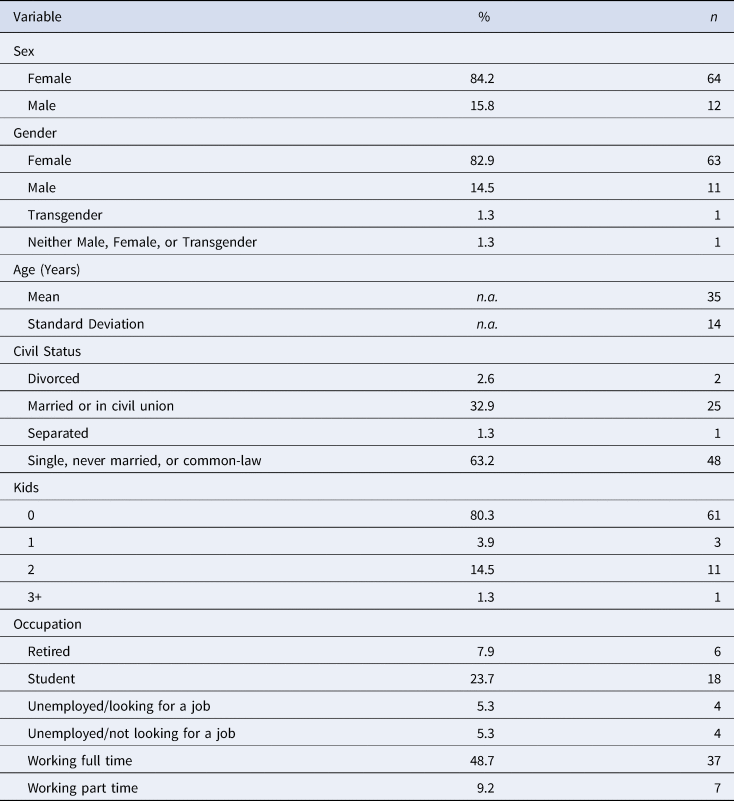
Over the course of 6 months, 76 participants completed the survey, 64 women and 12 men. In total, 28 people completed the survey in French and 48 in English. Despite the inclusion criteria, 2 participants aged 16 and 82 took the survey. Since they displayed normal data, we decided to keep them in the study. Additionally, distributions of scores were normal for all measures. Table 1 displays participants’ demographic data.
Participant Characteristics

Means, standard deviations, and reliability
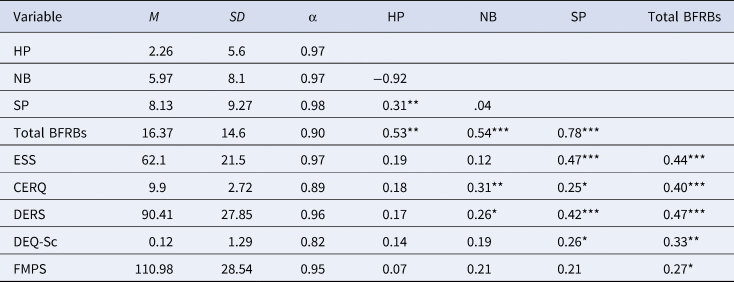
Means, standard deviations, and internal consistencies for all measures are reported in Table 2. Coefficient alphas suggest that the different measures were internally consistent with values ranging from 0.82 to 0.98. Compared to previous studies using the MGH, our sample displayed mean scores in between the ones obtained by community samples and clinical BFRB populations. For example, Roberts et al. (Reference Roberts, O'Connor, Aardema, Courchesne and Bélanger2016) reported mean scores of 16.21 (SD = 4.59) in their BFRB group and 0.87 (SD = 1.22) in their control group.
Correlations between Symptoms and Cognitive and Emotional Measures

HP = hair-pulling; NB = Nail-biting; SP = Skin-picking; Total BFRBs = Multiples body-focused repetitive behaviour symptoms; ESS = Experience of Shame Scale; CERQ = Cognitive Emotion Regulation Questionnaire (Maladaptive strategies global score); DERS = Difficulties in Emotional Regulation Scale; DEQ-Sc = Depressive Experiences Questionnaire–Self-criticism subscale (scores standardised by Blatt et al. (Reference Blatt, D'Afflitti and Quinlan1976) standard scoring system); FMPS = Frost Multidimensional Perfectionism Scale.
Note: *p < .05, **p < .01, ***p < .001.
Relationships between symptoms, emotional, and cognitive variables
We conducted correlation analyses to study the associations between BFRB symptoms severity and our different measures (see Table 2). Regarding our different measures, the ESS was moderately correlated to total BFRB scores and SP symptoms. Also, the DEQ-Sc related moderately with total BFRB scores, and weakly with SP symptoms. Further, maladaptive strategies of the CERQ demonstrated strong correlations with total BFRB, and symptoms of NB, while a weak relationship with SP symptoms.
Regression analyses predicting symptoms
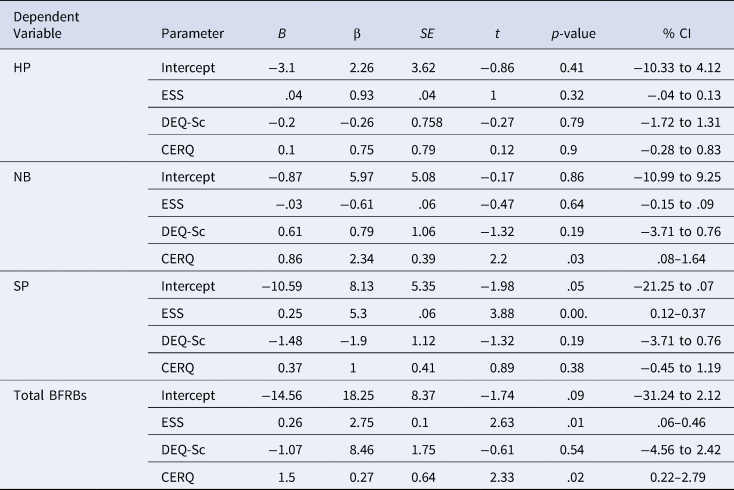
In order to investigate unique contributions of shame, self-criticism, and cognitive emotion regulation strategies in the prediction of BFRB symptoms severity, we conducted several regression analyses. Table 3 displays the results of the regression. The regression model with all three predictors explained 5% of the variation observed in HP symptoms, 24.3% in SP symptoms, 10% in NB symptoms, and 25% of total BFRB symptoms. Specifically, results showed that the ESS significantly and uniquely predicted SP symptom severity and total BFRB symptoms. Additionally, findings demonstrate that the CERQ uniquely predicted NB and total BFRB symptoms.
Results of Regression Analyses with Shame, Self-Criticism and Cognitive Emotion Regulation Strategies Predicting BFRB Symptoms

Note: B = unstandardized regression coefficient; β = standardised regression coefficient; SE = Standard error; t = t-statistic; p-value = probability value; % CI = percentage of confidence interval. HP = hair-pulling; NB = Nail-biting; SP = Skin-picking; Total BFRBs = multiples body-focused repetitive behaviour symptoms; ESS = Experience of Shame Scale; DEQ-Sc = Depressive Experiences Questionnaire–Self-criticism subscale (scores standardised by Blatt et al. (Reference Blatt, D'Afflitti and Quinlan1976) standard scoring system); CERQ = Cognitive Emotion Regulation Questionnaire (Maladaptive strategies global score).
Mediation analyses
Regression analyses were also used to investigate the hypothesis that self-criticism and shame would mediate the effect of perfectionism on symptom severity. Parallel mediation models were conducted using Model 4 of the SPSS macro PROCESS (version 3) (Hayes, Reference Hayes2013). Mediation analyses were based on 1000 bootstrapped samples using bias-corrected and accelerated 95% confidence intervals (Preacher & Hayes, Reference Preacher and Hayes2004). The presence of a significant indirect effect is indicated by not crossing zero in the confidence interval (CI).
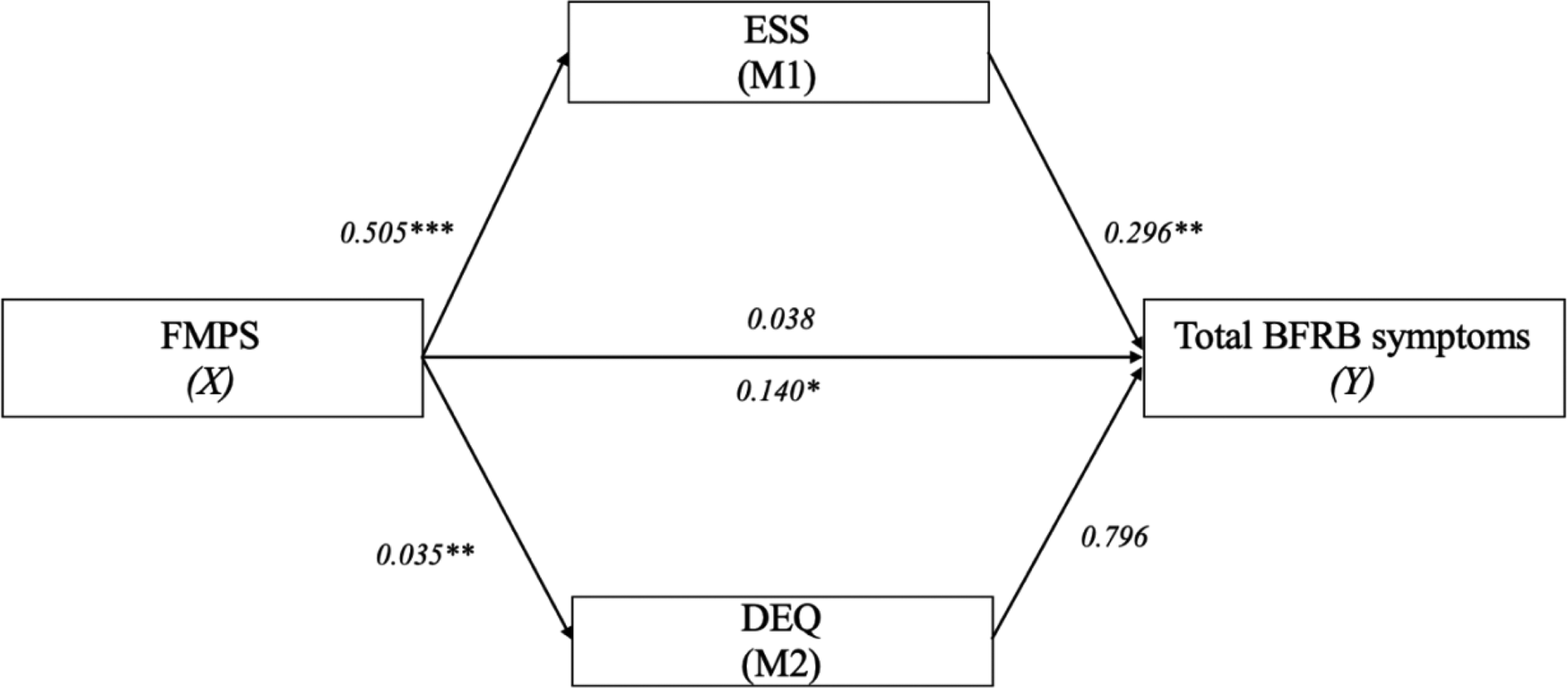
First, we investigated whether the relationship between perfectionism and total BFRB symptoms was mediated by shame and self-criticism (Figure 1). Results indicated that the FMPS was indirectly related to total BFRB symptoms through the ESS, β = 0.29, SE = 0.12, 95% CI = [.07, 0.55]. In contrast, the indirect effect through the DEQ-Sc was not significant, β = .05, SE = 0.14, 95% CI = [−0.16, 0.39].
Mediational model for total BFRB symptoms. And the note that goes below the figure is : Note: Mediation model with FMPS as the predictor; total BFRB symptoms as the outcome variable; and ESS and DEQ (self-criticism scale) as the predictors. Numbers represent standardized B coefficients. *p < .05; **p < .01; ***p < .001.

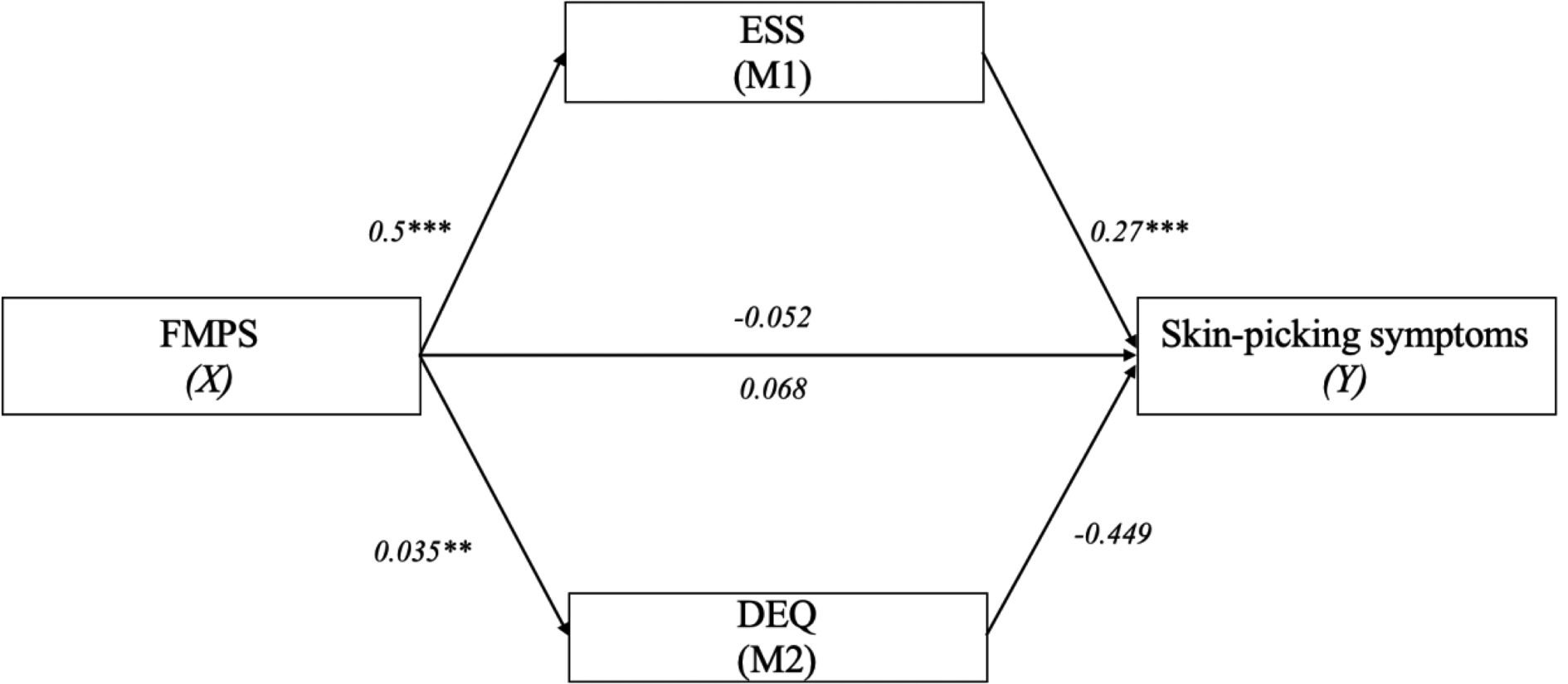
Second, we conducted several analyses aimed to investigate if perfectionism was related to specific BFRB symptoms through its relationship with shame and self-criticism (Figure 2). Findings from the mediation analysis indicated that the FMPS was indirectly related to SP symptoms through the ESS, β = 0.42, SE = 0.13, 95% CI = [0.18, 0.68], but not for DEQ-Sc, β = −.05, SE = 0.14, 95% CI = [−0.30, 0.26]. These results indicated that perfectionism accounted for SP symptoms severity through shame, but not self-criticism. No significant indirect effects were found between perfectionism and shame and self-criticism, with symptoms of HP and NB.
Mediational model for skin-picking symptoms. Note: Mediation model with FMPS as the predictor; skin-picking symptoms as the outcome variable; and ESS and DEQ (self-criticism scale) as the predictors. Numbers represent standardized B coefficients. *p < .05; **p < .01; ***p < .001.

Discussion
The primary aim of the current study was to examine the relationship between shame, self-criticism, and cognitive emotion regulation strategies with BFRB symptoms. In addition, the current study aimed to investigate the purported role of affective states in BFRBs (Roberts et al., Reference Roberts, O'Connor, Aaderma and Bélanger2015) in the context of dysfunctional emotional regulation and the Frustrated Action Model (O'Connor et al., 2005; Pélissier & O'Connor, Reference Pélissier and O'Connor2004) by testing if the relationship between perfectionism and symptoms were mediated by self-criticism and shame.
Our first hypotheses, namely that shame, self-criticism, emotion regulation deficit, and maladaptive cognitive emotion regulation strategies related significantly to symptoms of BFRBs was confirmed. Overall BFRB symptomatology, regardless of its form, was linked to higher scores on those measures. Despite having utilised a purposive sampling technique for the current study, there was a paucity of participants reporting HP symptoms in our sample, which might explain the lack of a relationship between HP symptoms and the different variables. The relationship of BFRBs with difficulties in emotion regulation is consistent with previous findings, suggesting that regulating emotions might be an essential factor in the development of these conditions (Roberts et al., Reference Roberts, O'Connor, Aardema, Courchesne and Bélanger2016). For example, the desire to self-regulate may result from experiencing emotions more intensely as well as difficulty tolerating and accepting aversive emotional states. Indeed, treatments utilising mindfulness techniques and a focus on tolerating emotions like Dialectical Behaviour Therapy (Linehan, Reference Zuroff, Moskowitz, Wielgus, Powers and Franko1993) have been successful at decreasing BFRB symptoms and improving emotion regulation (Keuthen et al., Reference Zuroff, Moskowitz, Wielgus, Powers and Franko2010, Reference Keuthen, Rothbaum, Falkenstein, Meunier, Timpano, Jenike and Welch2011, Reference Keuthen, Rothbaum, Fama, Altenburger, Falkenstein, Sprich and Welch2012).
Regression analyses identifying unique relationships between negative emotions and symptomatology highlighted the role of shame in symptoms of BFRBs. Specifically, shame was a major predictor of SP, but not for NB and HP. Interestingly, maladaptive cognitive emotion regulation strategies were correlated to all BFRB symptoms, except HP. Previous studies have reported higher usage of maladaptive cognitive emotion regulation strategies among different clinical populations (Aldao, Nolen-Hoeksema, & Schweizer, Reference Aldao, Nolen-Hoeksema and Schweizer2010). In addition to the use of dysfunctional behaviours to regulate affective states, individuals suffering from these conditions seem to struggle with unhelpful cognitive emotion regulation strategies when facing negative events.
Lastly, we hypothesized that perfectionism would account for symptoms severity through self-criticism and shame, which was only partially supported. Our mediational analyses revealed that shame mediated the relationship between perfectionism and BFRB symptoms, while self-criticism was not a significant mediator. With regard to specific BFRB symptoms, shame was a significant mediator for SP, but not for the other BFRB symptoms. Perhaps SP symptoms were more represented in our sample, which might explain why shame did not emerge as a significant mediator for other BFRBs. These findings extend previous research on the role of perfectionism in BFRBs by highlighting the importance of targeting shame (O'Connor, Lavoie, et al. (Reference O'Connor, Lavoie, Robert, Stip and Borgeat2006); Pélissier & O'Connor, Reference Pélissier and O'Connor2004). Studies have suggested that people with BFRBs are impacted by shame through physical sequelae caused by their behaviours, along with the stigma associated with their symptoms (Weingarden & Renshaw, Reference Weingarden and Renshaw2015). Weingarden and Renshaw (Reference Weingarden and Renshaw2015) suggested that feelings of shame could even trigger or contribute to BFRBs, but experimental studies on shame are needed to draw any causal conclusions. A more fine-grained investigation of specific forms of shame would be of interest in future research.
Limitations
The current study has a number of other limitations. First, participants were from a community sample, not from a clinical population, and might not represent accurately problematic BFRB symptoms. However, we targeted those with potential BFRBs through purposive sampling, adding to the clinical validity of the findings beyond those of non-clinical populations alone. In addition, women are known to be most likely than men to participate in online surveys (Curtin, Presser, & Singer, Reference Curtin, Presser and Singer2000), therefore predominant in our sample, limiting the generalizability of findings to a male population. Second, we used online self-report questionnaires to collect our data. However, recent evidence supports the obtention of similar results when comparing online surveys to in-person interviews or questionnaires (Gosling, Vazire, Srivastava, & John, Reference Gosling, Vazire, Srivastava and John2004; Wetterneck et al., Reference Zuroff, Moskowitz, Wielgus, Powers and Franko2006). Our study was correlational in nature; therefore, we cannot assume causal links between emotional and cognitive variables and symptoms. Finally, we also did not investigate other common BFRBs such as teeth-grinding, check-biting, knuckle-cracking, and neck or jaw-cracking. Another limitation was the small size of our sample, but the study still contributes to the literature given that research on BFRBs is still at its infancy. Future research should continue to study these conditions within a transdiagnostic framework and replicate these findings with a larger sample size.
Conclusion
The current study extends earlier research by looking at the relationship between cognitive emotion regulation strategies and BFRBs. To our knowledge, the current study is the first to investigate the emotion regulation strategies used by people presenting BFRB symptoms. The association between maladaptive cognitive emotion regulation strategies and BFRB symptoms suggests the use of cognitive restructuring could be helpful in fostering the use of adaptive strategies. Lastly, our study highlights the importance of targeting shame, as it has a substantial association with the severity of BFRB symptomatology. The shame reported by people struggling with BFRB symptoms contributes to more severe symptoms, adding further distress and body dissatisfaction. Broader constructs like perfectionism could benefit from further refinement with specific processes like shame. Mental health professionals should be aware that, because of the high level of shame displayed by people with BFRBs, they frequently report not disclosing their behaviours.
Declarations of interest
None.
Funding Statement
This research did not receive any specific grant from funding agencies in the public, commercial, or not-for-profit sectors. The second author is a recipient of a senior research scholar award from the Quebec Health Research Fund (Fonds de la recherche en santé du Québec).