Over the past five decades, tremendous progress had been made in the diagnosis and treatment of patients with congenital cardiac malformations. Survival is now expected for many patients with lesions previously considered untreatable. Mortality is a necessary, but insufficient, definition of outcome. As mortality ceases to be effective as a primary measure of outcome, and as new, frequently non-surgical, treatments emerge, new indicators are needed to describe the results of treatments for patients with congenitally malformed hearts. Description of outcomes requires true multi-disciplinary involvement, and should include surgeons, cardiologists, anaesthesiologists, intensivists, neurologists, educators, primary care physicians, nurses, and physical therapists.
Outcomes should determine primary therapy, and as such must be monitored life-long. In this review, we consider the current state of analysis of outcomes of treatments for patients with congenitally malformed hearts,Reference Jenkins, Newburger, Lock, Davis, Coffman and Iezzoni1–81 lay out some principles which might make it possible to achieve life-long monitoring and follow-up using our databases, and describe the next steps those involved in the care of these patients need to take in order to achieve these objectives. The relatively small numbers of patients with congenitally malformed hearts requires multi-institutional cooperation in order to accomplish these goals.
In order to perform meaningful multi-institutional analyses, we suggest that any database must incorporate the following six essential elements:
• Use of a common language and nomenclatureReference Mavroudis and Jacobs5–Reference Mavroudis, Gevitz, Elliott, Jacobs and Gold40, Reference Maruszewski, Lacour-Gayet and Elliott45–Reference Beland, Franklin and Jacobs53, Reference Jacobs, Mavroudis and Jacobs56, 57, Reference Jacobs, Maruszewski and Tchervenkov60, Reference Jacobs, Lacour-Gayet and Jacobs61, Reference Jacobs and Maruszewski66–Reference Jacobs, Franklin and Wilkinson72, Reference Jacobs, Mavroudis and Jacobs74, Reference Jacobs, Anderson and Weinberg77–79
• Use of an established uniform core dataset for collection of information2, Reference Mavroudis, Gevitz, Ring, McIntosh and Schwartz4–Reference Mavroudis and Jacobs6, Reference Lacour-Gayet, Maruszewski, Mavroudis, Jacobs and Elliott38–Reference Mavroudis, Gevitz, Elliott, Jacobs and Gold40, Reference Jacobs42, Reference Mavroudis and Jacobs43, Reference Maruszewski, Lacour-Gayet and Elliott45, Reference Gaynor, Jacobs and Jacobs46, Reference Kurosawa, Gaynor and Jacobs49–Reference Jenkins52, Reference Lacour-Gayet, Clarke and Jacobs54–57, Reference Jacobs, Elliott and Anderson59–Reference Jacobs, Lacour-Gayet and Jacobs61, Reference Jacobs and Maruszewski66, Reference Jacobs, Jacobs and Maruszewski67, 70, Reference Jacobs, Mavroudis and Jacobs74, 78, 79, 80, 81
• Incorporation of a mechanism of evaluating case complexityReference Jenkins, Newburger, Lock, Davis, Coffman and Iezzoni1, Reference Jenkins, Gauvreau, Newburger, Kyn, Iezzoni and Mayer3, Reference Lacour-Gayet41, Reference Mavroudis and Jacobs43, Reference Jenkins, Gauvreau, Newburger, Spray, Moller and Iezzoni44, 51, Reference Jenkins52, Reference Lacour-Gayet, Clarke and Jacobs54–Reference Welke, Jacobs and Jenkins58, Reference Jacobs, Maruszewski and Tchervenkov60–Reference Lacour-Gayet, Jacobs and Clarke63, Reference Jacobs65, Reference Jacobs, Jacobs and Maruszewski67, Reference Jacobs, Mavroudis and Jacobs69, Reference Al-Radi, Harrell and Caldarone73–76, 81
• Availability of a mechanism to assure and verify the completeness and accuracy of the data collectedReference Jacobs, Mavroudis and Jacobs56, 57, Reference Jacobs, Maruszewski and Tchervenkov60, Reference Jacobs, Lacour-Gayet and Jacobs61, Reference Maruszewski, Lacour-Gayet, Monro, Keogh, Tobota and Kansy64–Reference Jacobs, Jacobs and Maruszewski67, Reference Jacobs, Mavroudis and Jacobs69, 70, Reference Jacobs, Mavroudis and Jacobs74
• Collaboration between medical and surgical subspecialties,Reference Jacobs, Mavroudis and Jacobs74 and
• Standardization of protocols for life-long follow-up.Reference Wernovsky, Rome and Tabbutt82
Nomenclature
During the 1990s, both The Society of Thoracic Surgeons and The European Association for Cardio-Thoracic Surgery created databases to assess the outcomes of congenital cardiac surgery.Reference Mavroudis and Jacobs6 Beginning in 1998, these two organizations collaborated to create the International Congenital Heart Surgery Nomenclature and Database Project.Reference Mavroudis and Jacobs5 By 2000, a common nomenclature, along with a common core minimal dataset, were adopted by The European Association for Cardio-Thoracic Surgery and The Society of Thoracic Surgeons, and published in the Annals of Thoracic Surgery.Reference Mavroudis and Jacobs5 On Friday October 6, 2000, The International Nomenclature Committee for Pediatric and Congenital Heart Disease was established.Reference Beland, Jacobs, Tchervenkov and Franklin47, Reference Franklin, Jacobs, Tchervenkov and Beland48, Reference Beland, Franklin and Jacobs53 This committee eventually evolved into the International Society for Nomenclature of Paediatric and Congenital Heart Disease. The working component of this international nomenclature society has been The International Working Group for Mapping and Coding of Nomenclatures for Paediatric and Congenital Heart Disease, also known as the Nomenclature Working Group. By 2005, the Nomenclature Working Group crossmapped the nomenclature of the International Congenital Heart Surgery Nomenclature and Database Project of The European Association for Cardio-Thoracic Surgery and The Society of Thoracic Surgeons with the European Paediatric Cardiac Code of the Association for European Paediatric Cardiology, and therefore created the International Paediatric and Congenital Cardiac Code, which is available for free download from the internet at [http://www.IPCCC.NET]. The Nomenclature Working Group has also crossmapped separate systems for coding, and provided unified nomenclature and definitions for several complex congenital cardiac malformations, including the functionally univentricular heart,Reference Jacobs, Franklin and Jacobs68 hypoplastic left heart syndrome,Reference Tchervenkov, Jacobs and Weinberg71 congenitally corrected transposition,Reference Jacobs, Franklin and Wilkinson72 and heterotaxy.Reference Jacobs, Anderson and Weinberg77
On Monday July 9, 2007, the International Society for Nomenclature of Paediatric and Congenital Heart Disease created two new committees so that the Society now has the following three committees:
• The International Working Group for Mapping and Coding of Nomenclatures for Paediatric and Congenital Heart Disease, also known as the Nomenclature Working Group,
• The International Working Group for Defining the Nomenclatures for Paediatric and Congenital Heart Disease, also known as the Definitions Working Group, and
• The International Working Group for Archiving and Cataloguing the Images and Videos of the Nomenclatures for Paediatric and Congenital Heart Disease, also known as the Archiving Working Group, and the Congenital Heart Archiving Research Team.
The Nomenclature Working Group will continue to maintain, preserve and update the International Paediatric and Congenital Cardiac Code, as well as provide ready access to it for the international paediatric and congenital cardiology and cardiac surgery communities, related disciplines, the healthcare industry, and governmental agencies, both electronically and in published form. The Definitions Working Group will write definitions for the terms in the International Paediatric and Congenital Cardiac Code, building on the previously published definitions from the Nomenclature Working Group.Reference Jacobs, Franklin and Jacobs68, Reference Tchervenkov, Jacobs and Weinberg71, Reference Jacobs, Franklin and Wilkinson72, Reference Jacobs, Anderson and Weinberg77 The Archiving Working Group will link images and videos to the International Paediatric and Congenital Cardiac Code. These images and videos will come from cardiac morphologic specimens, echocardiography, angiography, and additional imaging modalities such as computerized axial tomography and magnetic resonance imaging, as well as intraoperative images and videos. An image and video archive will be created, based on the International Paediatric and Congenital Cardiac Code, and this archive will be linked to the CTSNet Congenital Portal.
Database standards
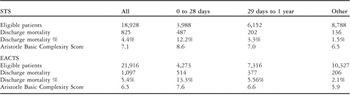
The International Paediatric and Congenital Cardiac Code, and the common minimum database dataset created by The International Congenital Heart Surgery Nomenclature and Database Project, are now used by both The Society of Thoracic Surgeons and The European Association for Cardio-Thoracic Surgery.Reference Jacobs, Mavroudis and Jacobs56, Reference Jacobs, Lacour-Gayet and Jacobs61, Reference Jacobs, Jacobs and Maruszewski67, 81 Between 1998 and 2007, this nomenclature and database was used by both these two organizations to analyze outcomes of over 100,000 patients undergoing surgical treatment for congenital cardiac disease.Reference Jacobs, Mavroudis and Jacobs74 In Table 1, we show data culled from an analysis of over 40,000 patients undergoing surgery in the years 1998 through 2004 inclusive.Reference Jacobs, Jacobs and Maruszewski67
Aggregated data from the European Association for Cardiothoracic Surgery (EACTS) and the Society of Thoracic Surgeons (STS).Reference Jacobs, Jacobs and Maruszewski67

The data represent surgical operations performed between 1998 and 2004 inclusive.39, 50, 51, Reference Jacobs, Jacobs and Maruszewski67
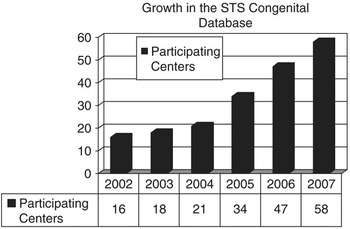
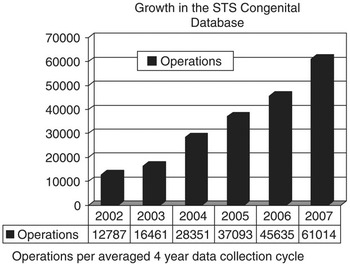
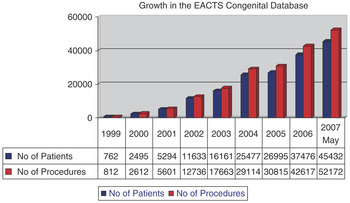
The Report of the 2005 Society of Thoracic Surgeons Congenital Heart Surgery Practice and Manpower Survey, undertaken by the Society of Thoracic Surgeons Workforce on Congenital Heart Surgery, documented that 122 centres in the United States of America and 8 centres in Canada perform paediatric and congenital heart surgery.Reference Jacobs, Mavroudis, Jacobs, Tchervenkov and Pelletier83 As of July, 2007, the congenital database of the Society of Thoracic Surgeons contains data from 58 of these 130 centres from North America, and is now the largest database in North America dealing with congenital cardiac malformations. It has grown annually since its inception, both in terms of the number of participating centres submitting data, and the number of operations analyzed (Figs 1 and 2). The report from 2007 includes 61,014 operations performed in 58 centres in North America, 57 from the United States of America and 1 from Canada. One Japanese centre also submits data; however, this Japanese data is not included in the aggregate report produced by the Society of Thoracic Surgeons. The congenital database of the European Association for Cardio-Thoracic Surgery now includes data from 103 active centres from 30 countries. As of May 2007, this database included 52,172 operations (Fig. 3). Multiple publications generated from these two databases have reported outcomes after treatment for congenital cardiac disease in general, as well as outcomes for specific lesions.Reference Jacobs, Mavroudis and Jacobs56, Reference Jacobs, Lacour-Gayet and Jacobs61, Reference Jacobs, Jacobs and Maruszewski67, 81
The graph documents the annual growth in the Society of Thoracic Surgeons Congenital Database by number of participating centres submitting data. The aggregate report from 2007 of the Society of Thoracic Surgeons Congenital Database includes data from 58 Congenital Heart Surgery Centres from the United States of America and Canada. One Japanese centre also submits data; however, this Japanese data is not included in the aggregate report produced by the Society of Thoracic Surgeons.

The graph documents the annual growth in the Society of Thoracic Surgeons Congenital Database by the number of operations. The aggregate report from 2007 of the Society of Thoracic Surgeons Congenital Database included 61,014 operations submitted from 58 centres from North America, 57 from the United States of America and 1 from Canada. One Japanese centre also submits data; however, this Japanese data is not included in the aggregate report produced by the Society of Thoracic Surgeons.

The graph documents the annual growth in The European Association for Cardio-Thoracic Surgery Congenital Database by both number of participating centres submitting data and the number of operations. Between 2004 and 2005, database specifications were updated, possibly accounting for the lag in growth seen at that time. This graph is provided courtesy of Bohdan Maruszewski of the Children’s Memorial Health Institute in Warsaw, Poland, and Director of The European Association for Cardio-Thoracic Surgery Congenital Database.

Stratification of complexity
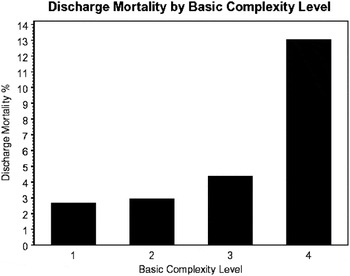
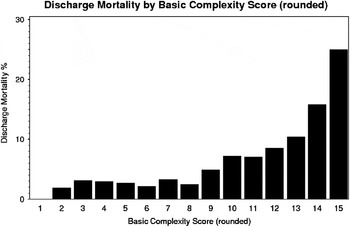
The importance of the quantitation of complexity centres on the fact that, in the field of paediatric cardiac surgery, analysis of outcomes using raw measurements of mortality, without adjustment for complexity, is inadequate. The mix of cases can vary greatly from programme to programme. Without stratification of complexity, the analysis of outcomes will be flawed. Two major multi-institutional efforts that have attempted to measure the complexity of congenital heart surgery are the Risk Adjustment in Congenital Heart Surgery-1 system,Reference Jenkins, Newburger, Lock, Davis, Coffman and Iezzoni1, Reference Jenkins, Gauvreau, Newburger, Kyn, Iezzoni and Mayer3, Reference Jenkins, Gauvreau, Newburger, Spray, Moller and Iezzoni44, Reference Jenkins52, Reference Welke, Jacobs and Jenkins58, Reference Al-Radi, Harrell and Caldarone73, 81, Reference Boethig, Jenkins, Hecker, Thies and Breymann84, Reference Kang, Cole, Tsang, Elliott and de Leval85 and the Aristotle Complexity Score.Reference Lacour-Gayet41, Reference Lacour-Gayet, Clarke and Jacobs54, Reference Lacour-Gayet, Clarke and Jacobs55, Reference Welke, Jacobs and Jenkins58, Reference Jacobs, Lacour-Gayet and Jacobs61–Reference Lacour-Gayet, Jacobs and Clarke63, 76, 81 The databases of Society of Thoracic Surgeons and The European Association for Cardio-Thoracic Surgery have included the Aristotle Complexity Score in their reports since 2002.39, 50, 51, 57, 70, Reference Jacobs, Mavroudis and Jacobs74, 76, 81 In 2006, both databases also incorporated the Risk Adjustment in Congenital Heart Surgery-1 method into their reports.70, Reference Jacobs, Mavroudis and Jacobs74 The Risk Adjustment in Congenital Heart Surgery-1 method has been demonstrated to be a useful tool in several studies in both Europe and North America,Reference Welke, Jacobs and Jenkins58, Reference Al-Radi, Harrell and Caldarone73, Reference Jacobs, Mavroudis and Jacobs74, 81, Reference Boethig, Jenkins, Hecker, Thies and Breymann84, Reference Kang, Cole, Tsang, Elliott and de Leval85 and represents one of the first widely accepted tools for adjustment of complexity developed in our field. Initial data from The European Association for Cardio-Thoracic Surgery and The Society of Thoracic Surgeons multi-institutional databases indicates that the Aristotle Complexity Score correlates well with mortality prior to discharge from the hospital after congenital cardiac surgery, as well as prolonged postoperative length of stay.Reference Jacobs, Lacour-Gayet and Jacobs61, Reference Jacobs, Mavroudis and Jacobs74, 76, 81 In Figure 4, we show the Aristotle Basic Complexity Level plotted against mortality at discharge, demonstrating the expected relationship of increasing mortality with increasing complexity, based on data from the harvest of the Society of Thoracic Surgeons in 2002 from 16 centres. These data include 12,787 total operations, with 2881 neonatal operations, and 4124 infant operations, and represent surgical operations performed between 1998 and 2001 inclusive.39, Reference Jacobs, Mavroudis and Jacobs56 In Figure 5, we show the rounded Aristotle Basic Complexity Score plotted against mortality at discharge, again demonstrating the expected relationship of increasing mortality with increasing complexity, based on data from the harvest of the Society of Thoracic Surgeons in 2005 from 34 centres. These data include 27,820 total operations and represent surgical operations performed between 2002 and 2004 inclusive.57
The graph plots the Aristotle Basic Complexity Level against discharge mortality, and demonstrates the expected relationship of increasing mortality with increasing complexity, based on the harvest of 2002 made by the Society of Thoracic Surgeons, using data from 16 centres, with 12,787 total operations, including 2881 neonatal operations and 4124 infant cases, performed between 1998 and 2001 inclusive.39, Reference Jacobs, Mavroudis and Jacobs56

The graph plots the rounded Aristotle Basic Complexity Score against discharge mortality, and demonstrates the expected relationship of increasing mortality with increasing complexity, based on the harvest of 2005 made by Society of Thoracic Surgeons using data from 34 centres, including 27,820 total operations performed between 2002 and 2004 inclusive.57

Verification of data
The need exists for a common methodology to be developed and implemented to verify the data submitted to all registries worldwide that analyse the outcomes of treatments for patients with congenitally malformed hearts. Common definitions must be used for fields such as mortality.Reference Jacobs, Mavroudis and Jacobs69 Verification of the completeness of the data is crucial because it has been previously shown that patients not included in medical audit have a worse outcome than those included.Reference Elfstrom, Stubberod and Troeng86 The importance of the verification of the accuracy of the data is demonstrated by a recent prospective, longitudinal, observational, national cohort survival study from the United Kingdom Central Cardiac Audit Database.Reference Gibbs, Monro, Cunningham and Rickards87 This analysis included 3666 surgical procedures and 1828 therapeutic catheterizations performed from 2000 and 2001, in all 13 tertiary centres in the United Kingdom performing cardiac surgery or therapeutic cardiac catheterization in children with congenital cardiac disease. Deaths within 30 days of the procedure were established both by results volunteered from the hospital databases, and by independently validated records of deaths obtained by the Office for National Statistics, using the patient’s unique National Health Service number, or the general register offices of Scotland and Northern Ireland. Central tracking of mortality identified 469 deaths, with 194 occurring within 30 days and 275 later. Of the 194 deaths occurring within 30 days, 42, or 21.6%, were detected by central tracking but not by volunteered data. In other words, hospital-based databases underreported mortality within 30 days of the procedure by 21.6%, even though the hospitals were aware that the data would be independently verified. The authors of the report concluded that “independent data validation is essential for accurate survival analysis” and that “one-year survival gives a more realistic view of outcome than traditional perioperative mortality”.Reference Gibbs, Monro, Cunningham and Rickards87 These two publicationsReference Elfstrom, Stubberod and Troeng86, Reference Gibbs, Monro, Cunningham and Rickards87 clearly demonstrate the importance verification of data for both completeness and accuracy.
Collaborative efforts continue, with the goal of improving and standardizing the methodology of verification of data. The European Association for Cardio-Thoracic Surgery,Reference Maruszewski, Lacour-Gayet, Monro, Keogh, Tobota and Kansy64 and the Society of Thoracic Surgeons, have initiated a program of site visits for onsite verification of data. A combination of site visits with “Source Data Verification”, in other words, verification of the data at the primary source of the data, and external verification of the data from independent databases or registries, such as governmental death registries, may ultimately be required to allow for optimal verification of data. Further research in the area of verification of data is also necessary. Data must be verified for both completeness and accuracy.
Collaboration between medical and surgical subspecialties
Further collaborative efforts are ongoing between paediatric and congenital cardiac surgeons and other subspecialties, including paediatric cardiac anaesthesiologists, via The Congenital Cardiac Anesthesia Society, paediatric cardiac intensivists, via The Pediatric Cardiac Intensive Care Society, and paediatric cardiologists, via the Joint Council on Congenital Heart Disease and The Association for European Paediatric Cardiology. The MultiSocietal Database Committee for Pediatric and Congenital Heart Disease has been created to foster these collaborative efforts and is composed of members of the following organizations:Reference Jacobs, Mavroudis and Jacobs74
• The Society of Thoracic Surgeons Congenital Database Taskforce
• The Society of Thoracic Surgeons Congenital Database Taskforce Core Users Group
• The Society of Thoracic Surgeons Congenital Database Data Verification Subcommittee
• The European Association for Cardio-Thoracic Surgery Congenital Heart Committee
• The Aristotle Institute, developers of the Aristotle Complexity Score
• The Multi-Center Panel of Experts for Cardiac Surgical Outcomes, developers of the Risk Adjustment in Congenital Heart Surgery-1 system
• The Pediatric Cardiac Intensive Care Society VPS Database
• The Congenital Cardiac Anesthesia Society
• The Joint Council on Congenital Heart Disease, which is composed of representatives of the American Academy of Paediatrics, the American Board of Paediatrics, the American College of Cardiology, the American Heart Association, the Congenital Heart Surgeons' Society, the International Society for Adult Congenital Cardiac Disease, and the Society of Thoracic Surgeons.
• The Association for European Paediatric Cardiology
• The Pediatric Committee of the International Consortium of Evidence Based Perfusion
• The International Working Group for Mapping and Coding of Nomenclatures for Paediatric and Congenital Heart Disease, otherwise known as the Nomenclature Working Group
• The World Society for Pediatric and Congenital Heart Surgery
• The Center for Quality Improvement and Patient Safety of Agency for Healthcare Research and Quality of the United States Department of Health and Human Services
• The Birth Defect Branch of the Centers for Disease Control and Prevention.
Under the leadership of The MultiSocietal Database Committee for Pediatric and Congenital Heart Disease, multiple ongoing collaborative initiatives include:
• Developing regional outcomes reporting initiatives
• Developing improved methodologies of data verification, utilizing site visits with source data verification and perhaps linking to the National Death Index in the United States
• Validating the Aristotle Basic Complexity Score
• Unifying the Aristotle Basic Complexity Score and the Risk Adjustment for Congenital Heart Surgery methodology
• Developing improved methodologies to assess and measure morbidity
• Developing improved methodologies of long term follow-up
• Improving the level of national and international database participation
• Increasing the involvement from Africa, Asia, Australia and Oceania, and South America.
Future initiatives – can we do better?
A great deal has already been accomplished to improve and standardize methodologies of analysis of outcomes for treatment congenital cardiac disease. While this work has laid the groundwork, much remains to be done. We can, and should, do a better job defining and measuring outcomes, followed by changes in our practice to improve upon our current results. A non-comprehensive listing of areas in need of improvement includes:
• Standardizing and unifying the tools for stratification of complexity
• Improving the tools for stratification of complexity in order to account for patient-specific variables
• Creating methodologies for analysis beyond mortality as an endpoint
• Defining morbidity and complications
• Improving methodologies for verification of data
• Clarifying the relationship between administrative databases and clinical databases
• Developing and implementing unique identifiers of all patients, compliant with The Health Insurance Portability and Accountability Act of the federal government of the United States of America
• Establishing links between databases
• Moving beyond geographical barriers
• Moving beyond subspecialty barriers
• Standardizing long term follow-up, including modules for collection of this data
• Identifying non-traditional sources of funding for collection, entry, and verification of data, as well as real time statistical analyses.
Standardizing and unifying the tools for stratification of complexity
Current efforts to unify the Risk Adjustment in Congenital Heart Surgery-1 system and the Aristotle Complexity Score are in their early stages, but encouraging.81 Both tools for stratification of complexity are slightly different, and each is only an approximation of stratification of complexity, and not true risk-adjustment. With both systems, as complexity increases, mortality prior to discharge from the hospital also increases.81 The Aristotle methodology allows classification of more operations, while the Risk Adjustment in Congenital Heart Surgery-1 system discriminates better at the higher end of complexity.81 The developers of both systems feel that time and effort spent comparing these two systems are better spent improving overall outcomes for patients with congenitally malformed hearts. Efforts are already underway, involving the developers of each system, to unify these two systems so as to capitalize on the strengths of both. This new combined index of mortality will include elements of both methods, will be based on objective, observed data whenever it is available, and will limit the use of subjective probability, or expert opinion, to areas where objective data is lacking.
Improving the tools for stratification of complexity in order to account for patient specific-variables
Neither the Risk Adjustment in Congenital Heart Surgery-1 system nor the Aristotle Basic Complexity Score incorporate detailed patient-specific risk factors into their algorithms. The Aristotle Comprehensive Complexity Score adds to the Aristotle Basic Complexity Score by incorporating two sorts of patient-specific modifiers of complexity:
• Procedure Independent Factors
• Procedure Dependent Factors.
“Procedure Independent Factors” include general factors, clinical factors, extracardiac factors, and surgical factors. “Procedure Dependent Factors” include anatomical factors, associated procedures, and age at procedure. The Aristotle Committee is currently involved in ongoing research to validate the Aristotle Comprehensive Complexity Score on a multi-institutional basis.
Creating methodologies for analysis beyond mortality as an endpoint
In the databases of both The Society of Thoracic Surgeons and The European Association for Cardio-Thoracic Surgery, mortality prior to discharge from the hospital is now between 4% and 5%. In order to evaluate the quality of care delivered to the remaining 95% to 96% of patients, parameters must be developed and standardized that will allow the analysis of the outcomes of these surviving patients. This analysis will require standardization of measurements for morbidity, complications, quality of life, long term survival, and functional status. These standards must then be implemented into our databases.
Defining morbidity and complications
Under the leadership of The MultiSocietal Database Committee for Pediatric and Congenital Heart Disease, a “Universal Encyclopedia for Definitions of Complications Related to Congenital Heart Surgery and Interventions” is being developed, and should be published in Cardiology in the Young within the next year. Supported by a grant from the Children’s Heart Foundation, this multi-disciplinary project will move toward standardization of the definitions of complications and morbidity. This group has already offered multiple definitions,78, 79 four of which are presented below:
• Morbidity is defined as “a state of illness or lack of health, and includes physical, mental, or emotional disability”.
• A complication is defined as “an event or occurrence that is associated with a disease or a healthcare intervention, is a departure from the desired course of events, and may cause, or be associated with, suboptimal outcome”.
• A medical error is defined as “a health care intervention, that may be an act of commission or omission, where a planned action fails to be completed as intended or the use of a wrong plan is implemented to achieve an aim; this event is a departure from the desired course of events, is less than ideal, and may cause or be associated with suboptimal outcome”.
• An adverse event is defined as “a complication that is associated with a healthcare intervention and is associated with suboptimal outcome”.
Improving methodologies for verification of data
The European Association for Cardio-Thoracic Surgery Congenital Heart Surgery DatabaseReference Maruszewski, Lacour-Gayet, Monro, Keogh, Tobota and Kansy64 attempted to verify the data within the databases of five European centres utilizing “source data verification”. Pre-verification and post-verification mortalities in all groups showed no significant differences, although 7 deaths out of 68 (10.27%) were missed. None of the other verified fields showed significant differences after verification. The authors stated that “source data verification” showed no statistically significant differences between verified and nonverified data on mortality at 30 days after surgery, length of stay in the hospital, age, body weight, cardiopulmonary bypass time, aortic cross-clamp time, and circulatory arrest time. The authors also state that “an international committee of experts is needed to define common data verification methodology and to apply it in future works on outcome analysis in CHS (congenital heart surgery).” This studyReference Maruszewski, Lacour-Gayet, Monro, Keogh, Tobota and Kansy64 analyses the data properly, and appropriately discusses the limitations of the analysis.Reference Jacobs65, Reference Jacobs, Mavroudis and Jacobs74 The authors candidly report that one-tenth of deaths were missed. This presentation of the “missed mortality” data is more honest than stating that 7 deaths out of 1895 operations, or 0.37 percent, were missed. Although the authors state that “source data verification” showed no statistically significant differences between verified and nonverified data in the field of mortality 30 days after surgery, it is troubling that one-tenth of these deaths were not reported. This study confirms the need for a common methodology for verification of data to be developed and implemented in all registries collecting outcomes worldwide. Common definitions for fields such as mortality will need to be implemented into these registries.Reference Maruszewski, Lacour-Gayet, Monro, Keogh, Tobota and Kansy64, 78, 79 Collaborative efforts continue, with the goal of improving and standardizing the methodology of verification of data. The Society of Thoracic Surgeons has initiated a program of site visits for onsite verification of data. A combination of site visits with “source data verification” and external data verification of data from independent databases or registries, such as governmental death registries, may ultimately be required to provide optimal verification of data. Further research in the area of verification of data is necessary.
Clarifying the relationship between administrative databases and clinical databases
The Society of Thoracic Surgeons Congenital Database Task Force advocates the use of clinical databases rather than administrative databases for the evaluation of quality of care for patents undergoing treatment for congenital cardiac disease. Evidence from three recent investigations suggests that the validity of coding of lesions seen in the congenitally malformed heart via the International Classification of Diseases as used in administrative databases is likely to be poor.80, Reference Cronk, Malloy and Pelech88, Reference Frohnert, Lussky, Alms, Mendelsohn, Symonik and Falken89 First, in a series of 373 infants with congenital cardiac defects at Children’s Hospital of Wisconsin, investigators report that only 52% of the cardiac diagnoses in the medical records had a corresponding code from the International Classification of Diseases in the hospital discharge database.Reference Cronk, Malloy and Pelech88 Second, the Hennepin County Medical Center discharge database in Minnesota identified all infants born during 2001 with a code for congenital cardiac disease using the International Classification of Diseases. A review of these 66 medical records by physicians was able to confirm only 41% of the codes contained in the administrative database from the International Classification of Diseases.Reference Frohnert, Lussky, Alms, Mendelsohn, Symonik and Falken89 Third, the Metropolitan Atlanta Congenital Defect Program of the Birth Defect Branch of the Centers for Disease Control and Prevention of the United States government carried out surveillance of infants and fetuses with cardiac defects delivered to mothers residing in Atlanta during the years 1988 through 2003.80 These records were reviewed and classified using both administrative coding and the clinical nomenclature used in the Society of Thoracic Surgeons Congenital Heart Surgery Database. This study concluded that analyses based on the codes available in the International Classification of Diseases are likely to “have substantial misclassification” of congenital cardiac disease.
Several potential reasons can explain the poor diagnostic accuracy of administrative databases and codes from the International Classification of Diseases:
• accidental miscoding
• coding performed by medical records clerks who have never seen the actual patient
• contradictory or poorly described information in the medical record
• lack of diagnostic specificity for congenital cardiac disease in the codes of the of International Classification of Diseases
• inadequately trained medical coders.
Ongoing collaborative research under the leadership of The MultiSocietal Database Committee for Pediatric and Congenital Heart Disease, involving both the Agency for Healthcare Research and Quality, and the Centers for Disease Control and Prevention, should clarify further the relationship between administrative databases and clinical databases.
Developing and implementing unique identifiers of all patients, compliant with The Health Insurance Portability and Accountability Act of the federal government of the United States of America
In 1996, the Health Insurance Portability and Accountability Act was enacted by the Congress of the United Stated of America.90 Title I of this legislation protects health insurance coverage for workers and their families when they change or lose their jobs. Title II of this legislation, the Administrative Simplification provisions, requires the establishment of national standards for electronic health care transactions and national identifiers for providers, health insurance plans, and employers. The Administrative Simplification provisions also address the security and privacy of health data, with the goal of improving the efficiency and effectiveness of the nation’s health care system by encouraging the widespread use of electronic data interchange. The Privacy Rule, that took effect on April 14, 2003, established regulations for the use and disclosure of Protected Health Information, which is any information about the state of health, provision of health care, or payment for health care, that can be linked to an individual. Protected Health Information is interpreted rather broadly and includes any part of a payment history or medical record of the patient.90
Although the Health Insurance Portability and Accountability Act is law only in the United States of America, many nations have enacted similar legislation, or will do so in the future. An understanding of this law and its relationship to the incorporation of unique identifiers of patients into a multi-institutional database will therefore likely play a role in many countries. The databases of The Society of Thoracic Surgeons and The European Association for Cardio-Thoracic Surgery currently do not include such unique patient identification. Information allowing for the identification of individual patients needs to be included in multi-institutional databases to facilitate the following objectives:
• The multi-institutional database would be able to verify mortality data with state-wide, regional, and national death registries such as the United States National Death Index.
• The multi-institutional surgical database would be able to share data with other subspecialty database like the databases of the American College of Cardiology and the Pediatric Cardiac Intensive Care Society.
• The multi-institutional database would be able to link and follow patients when they have multiple operations in different institutions, a common occurrence in congenital cardiac surgery.
• The Society of Thoracic Surgeons Database would be able to link and follow patients who have had operations in more than one of their three databases: Adult Cardiac Surgery, Adult Thoracic Surgery, and Congenital Heart Surgery
• The multi-institutional database would be able to perform long term follow-up and generate Kaplan-Meier Survival curves form the data.
It is possible to incorporate unique patient identification into a multi-institutional database and remain compliant with the Health Insurance Portability and Accountability Act and similar legislation. Unique patient identification used for initiatives to improve quality and related incidental research can be maintained in a compliant fashion by using several data protective strategies.
Establishing links between databases
Developing useful links between different multi-institutional databases requires two accomplishments:
• Standardization of nomenclature, definitions, and terminology
• Incorporation of unique patient identification into the multi-institutional database.
These links between databases will then lead to multiple benefits in the areas of data verification, subspecialty collaboration, and long term follow-up, as described above and below.
Moving beyond geographical barriers
As documented by this review, the current initiatives, concerning databases designed to analyse outcomes of the treatment of patients with congenitally malformed hearts, are dominated by projects in Europe and North America. As we move forward, it will be crucial to extend beyond traditional geographical barriers, and increase the involvement from Africa, Asia, Australia and Oceania, and South America. The newly formed World Society for Pediatric and Congenital Heart Surgery lists as one of its primary objectives “To organize and maintain a global database on operations and outcomes built upon extant continental databases.”91 The globalization of these efforts is certainly an area where “we can do better.”
Moving beyond subspecialty barriers
As this review also documents, with the exception of the United Kingdom Congenital Cardiac Audit Database, the current initiatives, concerning databases designed to analyze outcomes of the treatment of patients with congenitally malformed hearts, are dominated by surgeons. Under the leadership of The MultiSocietal Database Committee for Pediatric and Congenital Heart Disease, multiple ongoing collaborative projects exist, with the ultimate objective of increasing involvement, in these initiatives and databases, of paediatric cardiac anaesthesiologists, paediatric cardiac intensivists, and paediatric cardiologists. The Society of Thoracic Surgeons Congenital Database Taskforce and The Pediatric Cardiac Intensive Care Society have had several meetings. The Pediatric Cardiac Intensive Care Society utilizes a database known as the VPS. The Pediatric Cardiac Intensive Care Society has agreed to map its coding system to the International Paediatric and Congenital Cardiac Code and this project is near completion. Efforts are also being explored to link The Society of Thoracic Surgeons Congenital Database to the Pediatric Cardiac Intensive Care Society VPS system. The Congenital Cardiac Anesthesia Society has also agreed to utilize the International Paediatric and Congenital Cardiac Code in its database and has begun to develop a joint “Congenital Cardiac Anesthesia Society – Society of Thoracic Surgeons Congenital Database”. The Joint Council on Congenital Heart Disease is developing a paediatric cardiology database project that will also utilize the International Paediatric and Congenital Cardiac Code. All of these collaborative efforts will be integral to achieve the ultimate goal of developing a multi-institutional outcomes database that allows long term follow-up.
Standardizing long term follow-up, including modules for collection of this data
Standardizing long term follow-up is the key to the future of the discipline, and yet it is thoroughly undeveloped! The databases of The Society of Thoracic Surgeons and The European Association for Cardio-Thoracic Surgery currently do not allow for long term follow-up. At the present time, the period of collection of data for these databases ends when both of the following two criterions have been satisfied:Reference Jacobs, Mavroudis and Jacobs69, 78
• the patient has been discharged from the hospital after the operation, and
• 30 days have passed since the operation.
Thus, if a patient is discharged home prior to 30 days after surgery, data is collected until 30 days have passed since the operation. Furthermore, if a patient is still in the hospital after 30 days have passed since the operation, data is collected until discharge from the hospital.
As stated earlier, analysis of outcomes must move beyond mortality, and encompass longer term follow-up, including cardiac and non cardiac morbidities, and importantly, those morbidities impacting health related quality of life. Patients and their families are interested in much more than the limited follow-up currently available from most registries that document outcomes. They deserve to know information about long term follow-up. Patients and families frequently equate the terms “long term” and “life long”. While much of the information of interest will require decades of follow-up, our current follow-up infrastructure is centre-specific, frequently practitioner-specific, and not collected in any systematic fashion. Thus, it is impossible to understand and quantitate important information regarding late mortality, morbidity, complications, quality of life, and long term survival and functional status. To achieve this goal will require the definition of agreed follow-up protocols for each of the relevant diagnostic groups, irrespective of procedure performed. Guidelines for outpatient follow-up have been previously proposed by the group at The Children’s Hospital of PhiladelphiaReference Wernovsky, Rome and Tabbutt82 as a template for national and international societies to discuss, modify, and use. This practice is widespread in adult cardiovascular disease, and must be adopted in paediatric and adult congenital cardiac circles. The results of follow-up tests should be logged into the databases of the various societies to create meaningful long term follow-up in a uniform way. The definition of these follow-up protocols is urgent and should be a priority for the International Societies.
In order to accomplish this objective of meaningful long term follow-up, many of the previous discussed areas of improvement in these databases must be operationalized. It seems plausible that the surgical database could be linked, via unique patient identifiers, to a follow-up database maintained by the physicians responsible for long term follow-up. At the most basic level, an internet-based form could be created to allow for documentation of basic follow-up data, such as mortality, morbidity, and functional state via the classification of the New York Heart Association. This web-based form to enter the data could then be filled out every four years in all patients undergoing surgery or intervention for treatment of congenital cardiac disease. While the benefits of such a follow-up registry are self evident, challenges will exist, including practitioner “buy-in”, funding of the registry, external data validation, statistical analysis with real-time feedback to practitioners, and decisions on “ownership” of the database for publication and research purposes.
Conclusions
The ultimate goal of those who established and currently use the databases of The Society of Thoracic Surgeons and The European Association for Cardio-Thoracic Surgery is the capture of all of the cardiac surgery operations for paediatric and congenital cardiac disease performed in the United States of America, Canada, and Europe. Through collaboration with other international societies, the goal becomes the eventual capture of all cardiac surgery operations for paediatric and congenital cardiac disease performed in the world. Although much has been accomplished, we can do better!!
Ultimately, we need to define the outcomes we will monitor,Reference Lacour-Gayet, Jacobs, Jacobs and Mavroudis92 the intervals at which we will measure and validate these outcomes, and the mechanisms by which we may merge the resultant datasets around unique patient identifiers, providing real time feedback to practitioners on a much larger scale than currently achieved in solo practice or single centre series. Regulations designed to protect patient privacy, such as the Health Insurance Portability and Accountability Act, must be respected. We must solve the legal, technical, financial, and ethical issues using methodology that respects patient privacy and these regulations. Appropriate informed consent will be necessary to move forward. Methodologies must be implemented to allow uniform, protocol driven, and meaningful, long term follow-up. This long term follow-up is necessary to generate data to define what we do, based not only on “expert” opinion, but on validated experience. We should eventually create a multi-institutional database for congenital cardiac disease that spans geographic, subspecialty, and temporal boundaries.
Acknowledgements
We thank the Children’s Heart Foundation (http://www.childrensheartfoundation.org/) for financial support of this research. We acknowledge in particular the contributions of several investigators who contributed significantly:
• Tina Merola, Tracey Cox, and Debbie McIntosh of The Congenital Heart Institute of Florida, Cardiac Surgical Associates, All Children’s Hospital, Children’s Hospital of Tampa, and the University of South Florida, Saint Petersburg and Tampa, Florida, United States of America
• Janet Kreutzer, of The Congenital Heart Institute of Florida, Cardiac Surgical Associates, Children’s Hospital of Tampa, and the University of South Florida, Saint Petersburg and Tampa, Florida, United States of America,
• Jean Wilhelm of The Congenital Heart Institute of Florida, Cardiac Surgical Associates, All Children’s Hospital, and the University of South Florida, Saint Petersburg and Tampa, Florida, United States of America.