Introduction
Caloplaca is one of the world's largest lichen genera, comprising an estimated 800 to 1000 species (Kärnefelt Reference Kärnefelt1990; Arup Reference Arup2006). The genus includes species from various different substrata and with many different reproductive strategies. Among the asexually reproducing species sorediate taxa clearly predominate whereas the isidiate taxa are much fewer. Kärnefelt (Reference Kärnefelt1990) reviewed all the isidiate taxa known in the genus at that time and included only 9 taxa. Perhaps twice that number are now known, but compared to the majority of sorediate species this mode of asexual reproduction is relatively rare in the genus. Two isidiate species of interest are the corticolous to lignicololus Caloplaca herbidella (Hue) H. Magn. and C. furfuracea H. Magn. They both have ferruginous apothecia and generally grey thalli without any anthraquinones, although within C. herbidella there are forms with orange thalli.Normally, these two taxa have been recognized as good species (e.g., Santesson et al. Reference Santesson, Moberg, Nordin, Tønsberg and Vitikainen2004; Wetmore Reference Wetmore2004), but doubts about the specific status of C. furfuracea have also been expressed, and it has been included in C. herbidella (Clauzade & Roux Reference Clauzade and Roux1985; Nimis Reference Nimis1993). Tønsberg (Reference Tønsberg1992) noted that there are ecological differences between the subalpine specimens of C. herbidella from Norway and the lowland specimens from Sweden and Britain, and concluded that there was a need for a further thorough investigation.
During an ongoing project to produce a new phylogenetic classification of the genera within the Teloschistaceae, two rather different ITS sequences from C. herbidella have been produced. One of the sequences was taken from a strongly fertile specimen with a grey thallus and robust isidia, corresponding to C. herbidella in a strict sense, while the other sequence was taken from a sterile specimen with an orange thallus and more delicate isidia. These facts, combined with the doubts that had been put forward regarding the specific status of C. furfuracea, led us to investigate further the taxonomy of these forms.
Material and Methods
This study is based on material from B, BG, E, GB, GZU, C, CBFS, H, LD, M, O, S, TRH, UPS and the private collections of U. Arup and Ö. Fritz. A total of c. 600 specimens of Caloplaca herbidella and c. 50 of C. furfuracea have been studied.
Initially, apothecial characters were investigated, but since no or only minor differences were found and because very few fertile specimens of the orange form of C. herbidella were available, subsequent studies concentrated mainly on morphological characters of the thallus and on genetic data. Morphological characters were measured using a dissecting microscope (×40), all on dry material except for thallus thickness that was measured on wet thalli sections. All anatomical features were examined by interference contrast and light microscopy on hand-cut sections or squash preparations mounted in water. Data on hymenium, hypothecium and asci are average values of 3 measurements per specimen. Spore dimensions are average values from ten measurements per specimen. Data on hymenium, hypothecium and spore dimensions are presented in the following way: (c. 7·5 % of the variation–) 85 % of the variation (–7·5 % of the variation). No pre-treatment of the spores with heat was necessary because the material measured was more than one year old.
DNA-extraction, PCR-amplification and sequencing
PCR-amplification of the ITS regions including the 5.8S gene of the nuclear rDNA was made without an extraction step, but using Direct PCR as described by Arup (Reference Arup2006). Primers for amplification were ITS1F (Gardes & Bruns Reference Gardes and Bruns1993) and ITS4 (White et al. Reference White, Bruns, Lee, Taylor, Innis, Gelfand, Sninsky and White1990). The PCR settings used followed the manufacturer's recommendations.
Products were cleaned using E.Z.N.A. Cycle-Pure Kit (Omega Bio-Tech). PCR cycling parameters included an initial hold at 94 °C for 5 min, then denaturating at 94 °C for 1 min, annealing at 56 °C for 1 min., decreasing 1 °C per cycle for the first 6 of the 39 cycles (touchdown), and extension at 72 °C for 3 min. Both complementary strands were sequenced with the BigDye Terminator Cycle Sequencing kit (Applied Biosystems) using the primers mentioned above, and run on an ABI PRISM 3100 Genetic Analyzer.
Sequence alignment and phylogenetic analyses
A total of 27 ingroup taxa and 2 outgroup taxa were aligned by hand. The alignment included the ITS1, 5.8S, and ITS2 regions for a total of 542 bases. Caloplaca chlorina (Flot.) H. Olivier and C. cerina (Hedw.) Th. Fr. were used as outgroup.
A phylogenetic analysis was carried out using PAUP*4.0b10 (Swofford Reference Swofford2002) under the maximum parsimony optimality criterion. The characters were given equal weight and gaps were treated as missing data. A heuristic search was performed using tree bisection-reconnection (TBR) branch-swapping. Bootstrap proportions were estimated using 10 000 bootstrap replicates, each with 10 random addition sequence replicates. Because of the large numbers of trees found in test runs the maximum number of trees to be saved per run was set to 1 000.
Principal Component Analysis of C. herbidella forms
To evaluate if the forms of C. herbidella were separable on morphological grounds, a principal component analysis (PCA) was conducted on a total of 354 specimens using the programme PAST v. 1.77 (Hammer et al. Reference Hammer, Harper and Ryan2001). A PCA is, in short, a way of interpreting complex datasets by combining the variation of several observed or measured characters into so called principal components. The first few components are assumed to contain most of the variation and when plotting them together, trends and patterns in the dataset may be revealed (Glen et al. 1990). Initially we tried to use several characters to describe more complex differences in structure, layering and coralloidity of the isidia, but due to the large number of specimens and difficulties in separating the various character states, complete objectivity in the judgement of these characters could not be obtained. Therefore the number of characters was reduced to four clear and easily defined ones, two of them quantitative and two qualitative.
Thallus. Measurements of thallus thickness were made on hand-cut sections of wet thalli to the closest 0·01mm on three thallus sections cut from representative places on each specimen.
Isidia. The thickness of isidia was measured on dry material to the nearest 10 μm on ten randomly chosen isidia per specimen. The value recorded is the diameter of the isidium at its thickest part.
Fertility. A specimen displaying at least 20 well-developed apothecia was considered highly fertile and was scored as 1. Specimens with none or less than 20 apothecia were considered poorly fertile and scored as 0. Very small specimens (smaller than approximately 1 cm2) with 10–20 apothecia were also considered highly fertile and were scored as 1.
Colour. Specimens displaying an orange colour over the main part of thallus and isidia were scored as 1. If a specimen was lacking orange pigment or displaying orange colour in only small or very isolated parts of the thallus/isidia it was considered grey and scored as 0.
Results
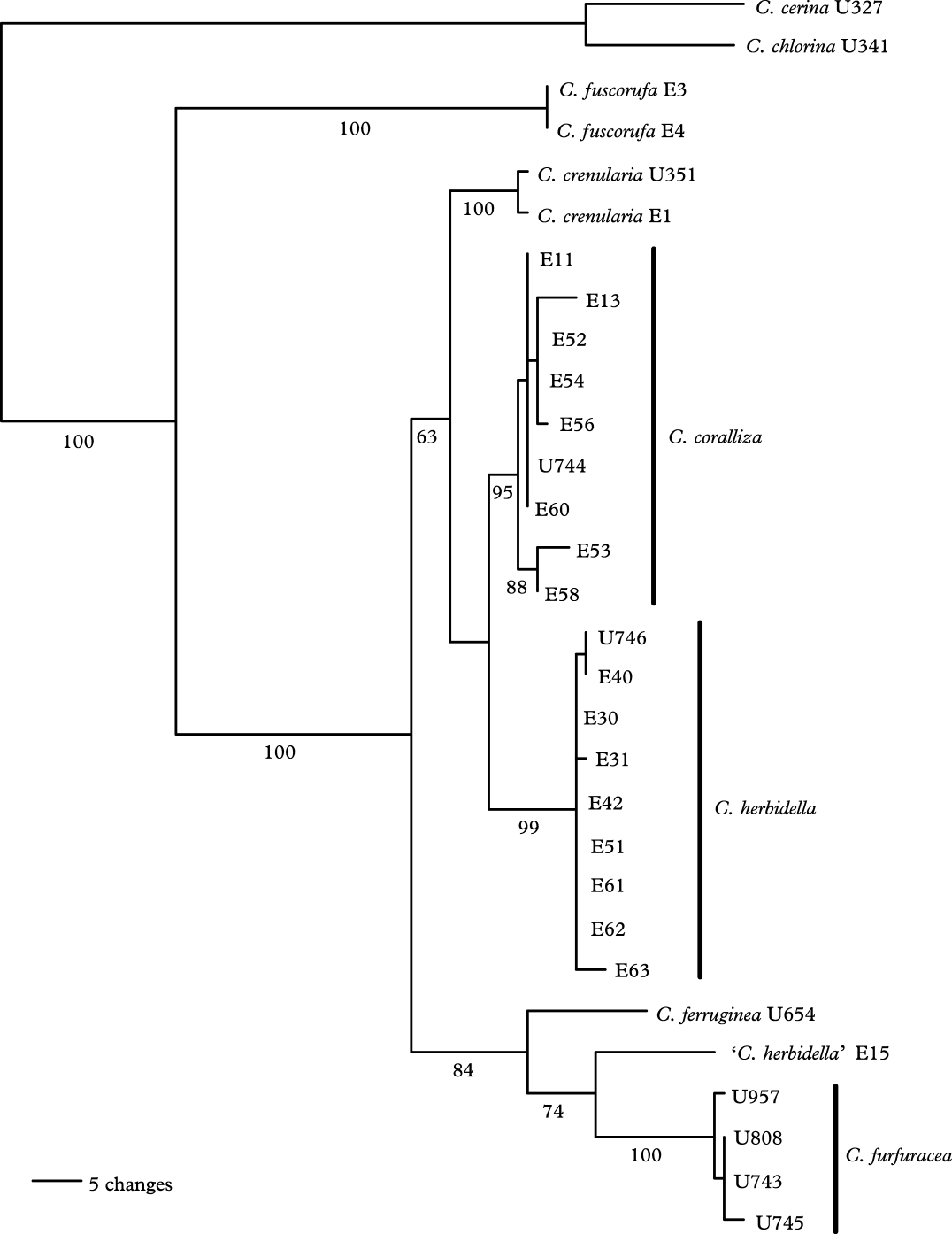
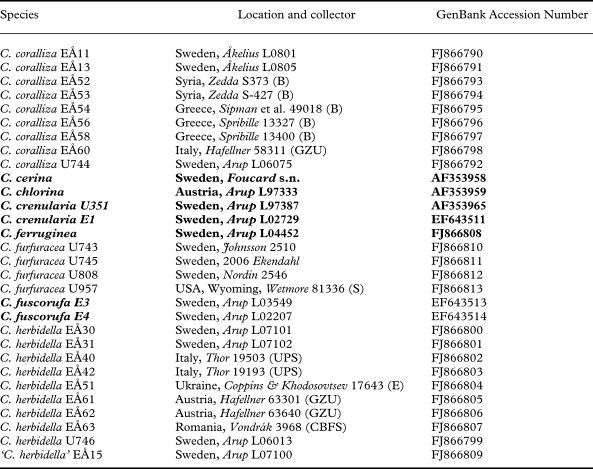
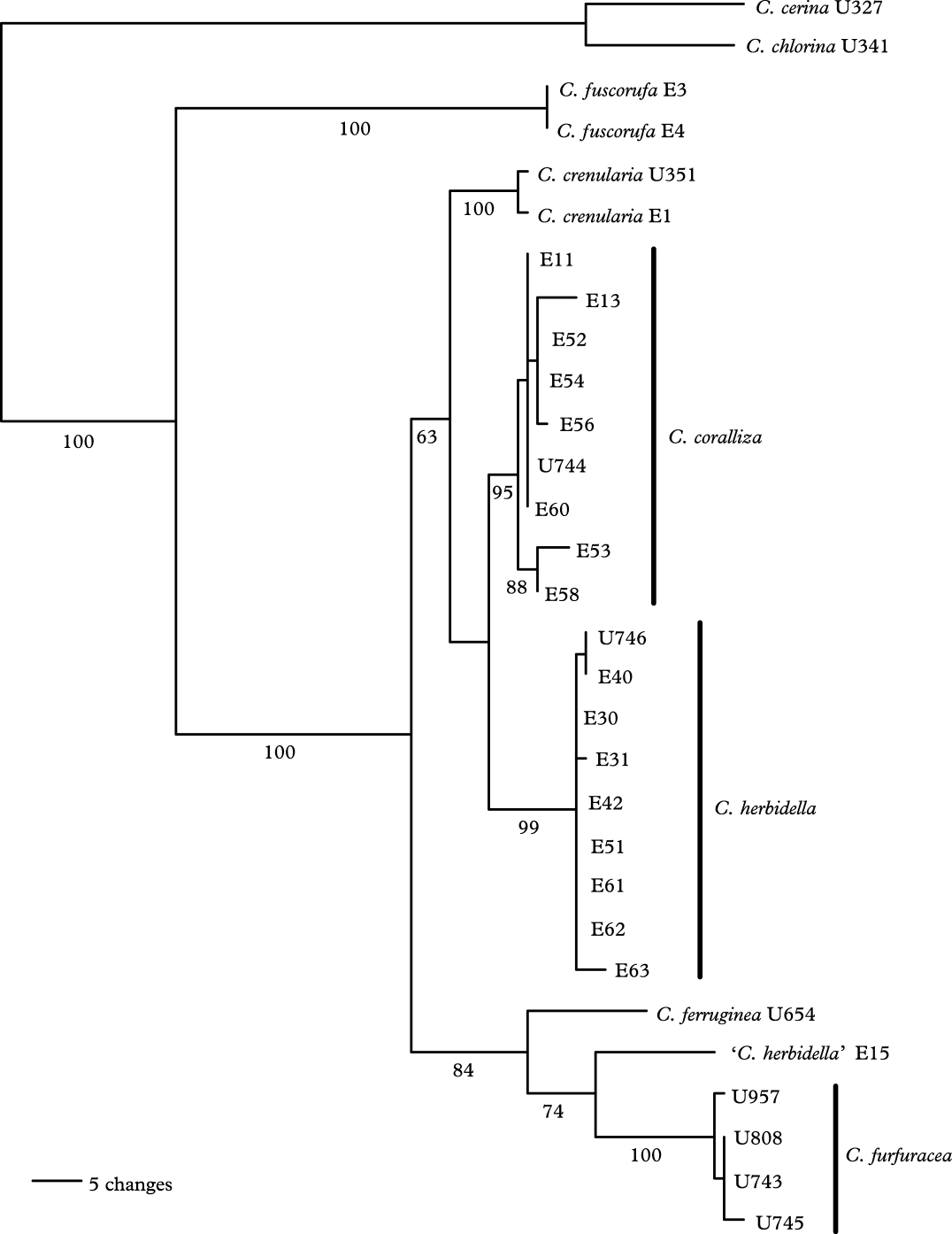
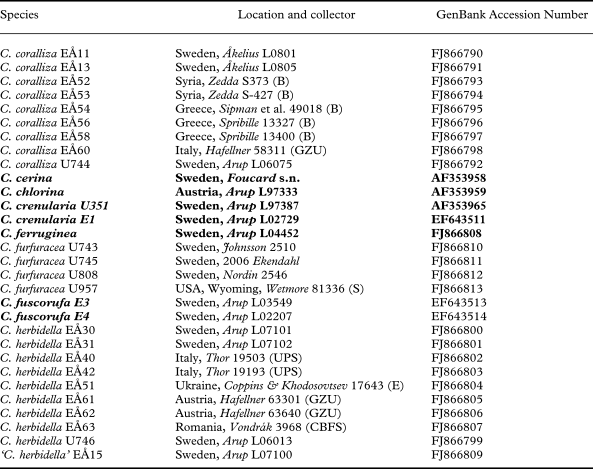
For this analysis, 24 new ITS sequences were produced and 6 sequences were already available (Table 1). Of 597 aligned characters, 158 were parsimony-informative and used in the analysis, which resulted in 3259 most parsimonious trees 276 steps long, CI = 0·851, RI = 0·908, HI = 0·149. The trees differ from each other only in the topology within the species but not between them. One of these trees is shown in Fig. 1. The results clearly show that C. herbidella and C. furfuracea are closely related to C. crenularia (With.) J. R. Laundon and C. ferruginea (Huds.) Th. Fr., and that they are clearly separated from both these species as well as from each other. The analysis also shows that the two forms of C. herbidella branch as two monophyletic sister groups with good bootstrap support for each of the clades (95 and 99 respectively). The name C. coralliza in the tree corresponds to the orange, often sterile form with more delicate isidia whereas the name C. herbidella corresponds to C. herbidella in the strict sense, which normally is grey, fertile and has more robust isidia. There is also one deviating sequence, ‘C. herbidella’ E15 that does not branch with the C. herbidella s. str. or C. coralliza, but is a sister branch to the monophyletic clade of C. furfuracea.
One of 13 most parsimonious trees from the phylogenetic analysis based on nrDNA ITS data. Numbers below branches are bootstrap values.
Location, collector and GenBank accession numbers of sequences of Caloplaca species used in the analyses. Specimens in bold were already available from previous studies. Specimens are from (LD) if not stated otherwise.
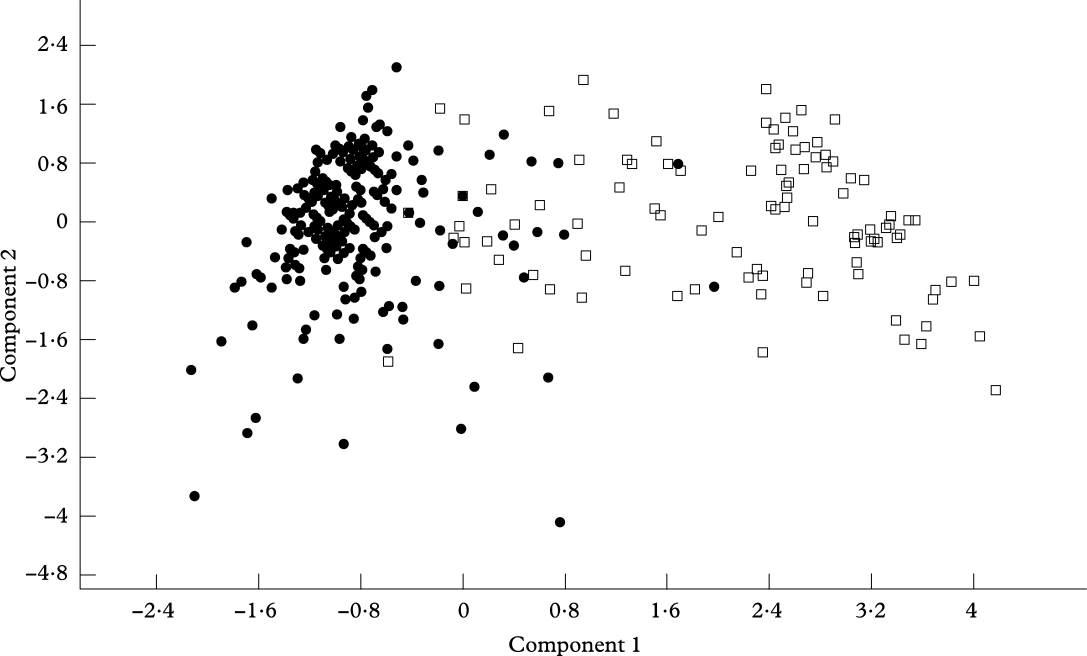
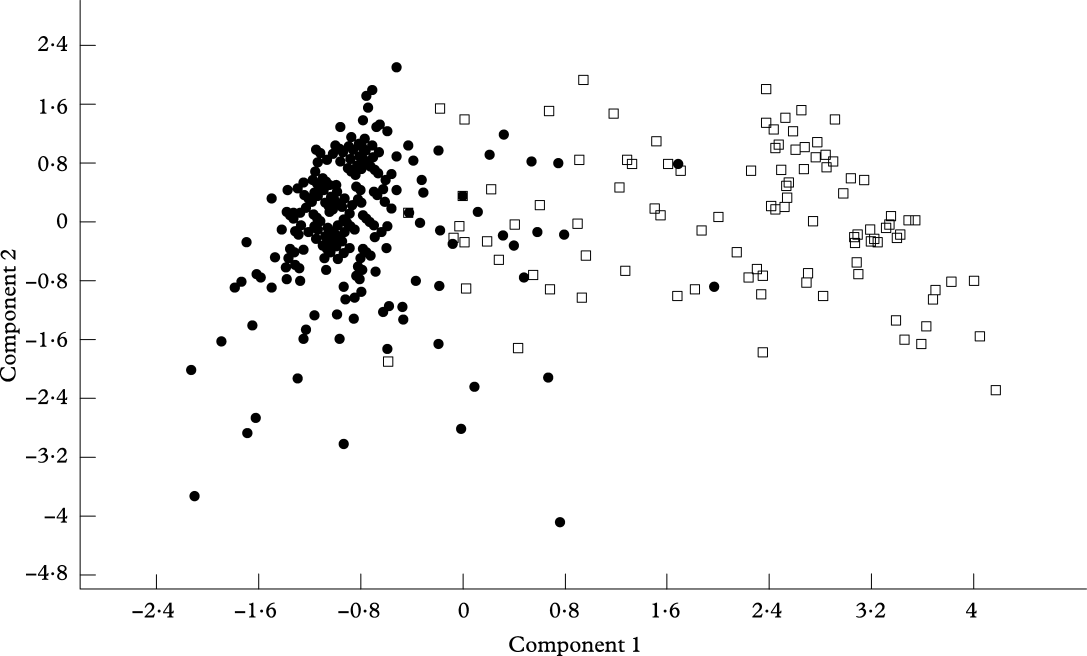
The PCA analysis of the morphological characters also gave a rather clear separation between C. herbidella and C. coralliza (Fig. 2). When plotting the first two components, two fairly distinct groups are formed with a minor overlap. The character loadings for the first two components in the PCA analysis are presented in Table 2. Most of the variation, c. 80%, is accounted for by these two components. In the first component all characters are equally important for the separation, but for the second component the thickness of thallus and isidia are most important.
Principal component analysis, projection of specimens onto the first and second components. •, C. herbidella; □, C. coralliza.
Character loadings for the first two components of the Principal Component Analysis

† The variance explained by each of the components given in percent.
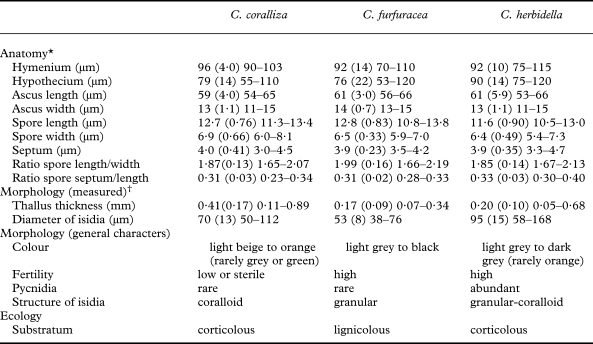
The results of the anatomical and morphological studies are presented in Table 3.
Comparison of morphological and anatomical characters for all three Caloplaca species. All measured characters recorded as mean (standard deviation) followed by range from lowest to highest mean value measured for each species
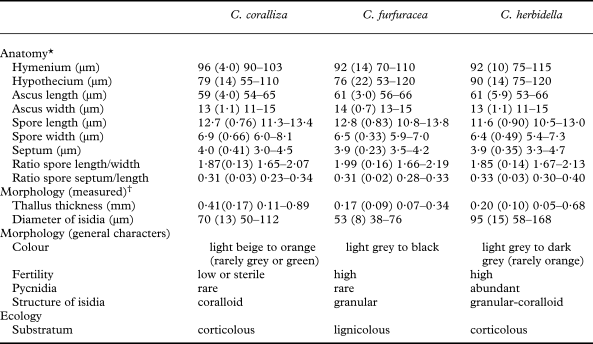
* anatomy: n = 10 for C. coralliza and C. furfuracea, 20 for C. herbidella
† morphology: n = 101 for C. coralliza, 25 for C. furfuracea and 254 for C. herbidella
General morphological characters and ecology determined from all specimens available.
Discussion
According to both the molecular and morphological analyses C. herbidella and C. furfuracea should be regarded as separate species. In addition, C. herbidella can be further divided into two separate species: C. herbidella s. str. and a new species for which the name C. coralliza is proposed here. These two species branch as sister taxa in the tree, but, while the monophyly of each of them is clear and well supported, their positions as sister species are not supported at all. Caloplaca crenularia seems to be closely related to these corticolous species, but this species is saxicolous and never isidiate. Furthermore, its position as sister species to the two isidiate species is not supported. The three sequences of C. furfuracea also form a well supported, monophyletic group with almost no differences among them. This species forms a fairly well supported clade together with C. ferruginea and a deviating sequence of C. herbidella (E15). This latter sequence is from a specimen collected in northern Sweden while other Swedish sequences of C. herbidella and C. coralliza come from southern Sweden and southern Europe. Since we have only one specimen from that area it is not possible to know from the ITS sequence alone whether this deviating form is another new species. Furthermore, the specimen is morphologically rather similar to C. herbidella s. str. and would probably not have been noticed without the ITS sequence. Further research is therefore needed regarding this puzzling entity.
It is usually not difficult to distinguish between C. herbidella and C. coralliza (see Table 3 for general characters and measurements). Typical C. herbidella is usually richly fertile with a grey thallus and isidia. The isidia are normally thick and irregularly distributed over the thallus. Some parts of the thallus are covered by clusters of aggregated, sometimes branched isidia, that form fairly robust coral-like structures, whilst other parts bear sparsely scattered, granular or rod-like isidia. Pycnidia are usually present. Typical C. coralliza, on the other hand, is sterile or has just a few apothecia and an orange thallus and isidia. The isidia are thin and somewhat branched, forming delicate coral-like structures, normally as a thick crust that appears to consist of several layers of isidia (although the layers cannot be counted or separated). When the isidiate crust is thick enough it usually cracks into areole-like structures. This is an important difference from C. herbidella, because when C. herbidella forms similar clusters, they are not usually thick enough to crack, and they normally only cover small parts of the thallus. It is also more common in C. coralliza that large parts of the thallus are completely covered by isidia. Finally, pycnidia are rare in C. coralliza.
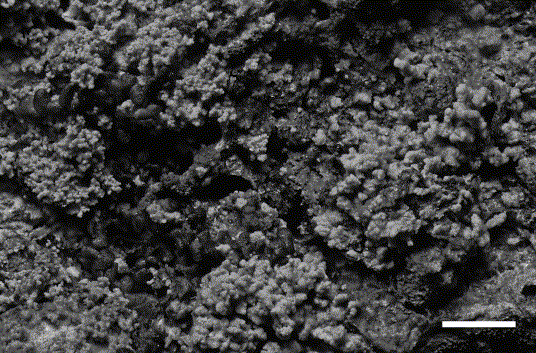
As shown by the PCA analysis (Fig. 2), there is an overlap in morphological characters so that it is not possible to rely on only a single character when determining a specimen, but there are usually no problems assigning a specimen to the correct species with a combination of characters. Problems may arise when C. herbidella is orange or with somewhat finer and more densely distributed isidia, or when C. coralliza is fertile, has a thin thallus, has thick isidia or is lacking the orange colour. Curiously enough many specimens with these intermediate characteristics are found on Greek and Italian Mediterranean islands. Overall these morphologically ‘problematic specimens’ constitute less than 10% of all the specimens examined. The two species sometimes grow together on the same piece of bark (Fig. 3) and may even become intricately intermixed. This is probably one reason for the long maintenance of C. herbidella as one single species, even if the extreme forms are very dissimilar.
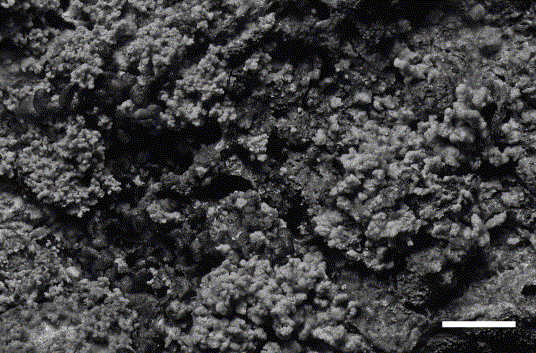
Caloplaca coralliza (upper left) and C. herbidella (lower right) growing together on the same piece of bark, (Nordin 2877, UPS). Scale = 1 mm.
Distinguishing C. herbidella from C. furfuracea is usually not problematic (see Table 3 for general characters and measurements). Both species are richly fertile and normally grey, but C. furfuracea always has thin, granular isidia that are never branched or coralloid. Sometimes the isidia aggregate into clusters, but they rarely coalesce (one isidium can normally be separated from another). They are usually dark grey or even black in contrast to the normal light grey of C. herbidella. In C. herbidella the isidia may be granular but they are usually much thicker than those of C. furfuracea and when clustered they normally have at least a tendency to branch or coalesce. Furthermore, C. furfuracea is never orange, and pycnidia are rare, while C. herbidella commonly has pycnidia and is sometimes orange. The substratum is also an important feature when distinguishing C. herbidella from C. furfuracea, since (at least in Europe) the former normally occurs on bark while the latter is found almost exclusively on wood. Any problems of identification mostly occur with grey specimens with tightly clustered isidia so that the thickness of isidia is difficult to determine. Confusion may also arise if C. herbidella is found on wood, which is rare. Caloplaca furfuracea and C. coralliza are not easily confused and therefore not compared here.
The three species are united by their round to irregular, light red to ferruginous apothecia. No significant differences in apothecial structure and anatomy between the species have been found. However the apothecia in C. furfuracea seem to be a little smaller on average than those of C. herbidella and C. coralliza. For all species, the apothecia are light red-orange when young, becoming darker with age. The shape of apothecia is seldom round, but normally slightly irregular to lobate, the irregularity also increasing with age. Abnormal apothecia with unusual shapes or small secondary apothecia emerging from the disc are not uncommon.
The Species
Caloplaca coralliza Arup & Åkelius sp. nov
A simili Caloplaca herbidella differt isidiis angustioribus, structura coralloide complexiore, plerumque in thallo magis dispersis, plerumque aurantiacis nec griseis; nec non apotheciis pycnidiisque rarioribus.
Typus: Sweden, Skåne, Kågeröd par., Knutstorp, c. 200 m N of the castle. On old Quercus in wooded meadow, elev. c. 90 m, Arup L06075 (LD—holotypus; C, MIN—isotypi).
(Figs 3, 4A & B, 5)
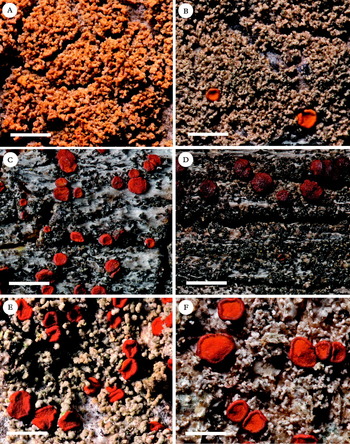
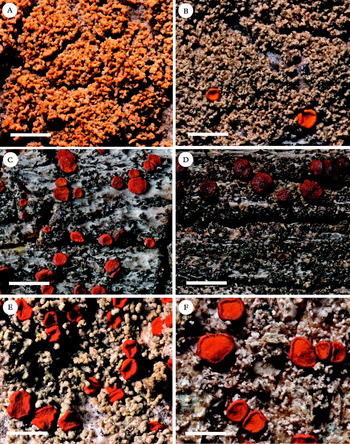
Thallus, more or less continuously covered by isidia, when not covered flat to slightly scurfy-granular, (0·11–)0·21–0·66(–0·89) mmthick including isidia, concolorous with isidia or slightly paler; isidia (50–)56–90(–112) μm, light beige to orange, sometimes dark orange or brown, occasionally grey or green, normally branched, forming a delicate coral-like structure, often layered and forming a cracked-areolate crust (Fig 4A).
Caloplaca, habitus of treated species. A. C. coralliza (Frödén 44, LD), typical specimen with orange delicate, coralloid isidia in thick cracked areolate crust; B. C. coralliza (Magnusson 142, GB) grey form with delicate isidia in slightly thinner crust almost without cracks; C. C. furfuracea (Jonsson 2541, LD) typical form with small, grey, scattered, granular isidia and abundant apothecia; D. C. furfuracea (1917 Vrang, UPS) with dark grey, slightly thicker isidiate crust of granular isidia; E. C. herbidella (Arup L06103, LD) with robust, granular to rod-shaped, light grey isidia and irregularly shaped apothecia; F. C. herbidella (Hafellner 49276, GZU) with more scattered, slightly thinner and clustered isidia and well developed apothecia. Scales: A–F = 1 mm.
Apothecia present in about one third of specimens examined, adnate to sessile, round to very irregular or lobate (irregularity increasing with age), younger apothecia orange to light red, darkening to a more ferruginous red with age; disc strongly concave to convex, older apothecia sometimes increasingly convex; proper margin slightly raised or level with the disc, 60–85 μm thick, consisting of ± radiating, elongate cells, 4–10(–15) × 2·5–4·0 μm; thalline margin usually absent, algae sometimes occurring at the base of proper margin; epihymenium orange, granular inspersed; hymenium (80–)85–100(–105) μm, hyaline; hypothecium (50–)60–100(–110) μm, frequently with shades of brown, often with oil droplets; paraphyses simple or branched in upper part, 1·0–2·5 μm, upper cells sometimes slightly widened; asci clavate c. 50–70 × 10–16 μm, 8-spored; ascospores polaribilocular (10·0–)11·5–14(–15·0) × (4·0–) 6·0–8·0(–9·0) μm, septum (3·0–)3·5–4·(–5·0) μm.
Pycnidia rare, but abundant when they occur, immersed, ostiole red and slightly raised, conidia 3·0–5·0 × 0·8–2·0 μm, bacilliform to narrowly ellipsoid.
Chemistry. Thallus K+ purple red and C+ light red, (K− and C− on specimens without orange colour). The chemistry of the thallus and apothecia corresponds to chemosyndrome C4 of Søchting (Reference Søchting2001) where 7-Cl-emodin is the dominant compound, followed by emodin and small amounts of 7-Cl-emodinal, 7-Cl-emodic acid and 7-Cl-citreorosein. In the apothecia parietin is also present, reducing the dominance of 7-Cl-emodin. In addition to the compounds already mentioned, small amounts of citreorosein, emodinal and fragilin are also found in the apothecia.
Habitat and distribution. Caloplaca coralliza is corticolous and occurs on at least 25 different tree species in Europe. It seems to prefer older deciduous trees with rough bark such as species of Quercus (35% of the specimens examined), Ulmus (19%) and Fraxinus (18%). When compared to C. herbidella a difference in substratum preference is noticeable. Both species are found on a wide range of trees, but C. coralliza seems to be rare on conifers. Only about 2 % of the C. coralliza specimens examined are found on coniferous trees, compared to 45% for C. herbidella.
It is difficult to determine the ecological requirements of the species from specimen labels as this information is seldom noted on older specimens. For C. coralliza it may be noted that when ecological details are available, the specimens were often collected from environments either created or maintained by man, such as roadside trees, avenues, churchyards, pastures, meadows or other open areas where the nutrient deposition may be rather high.
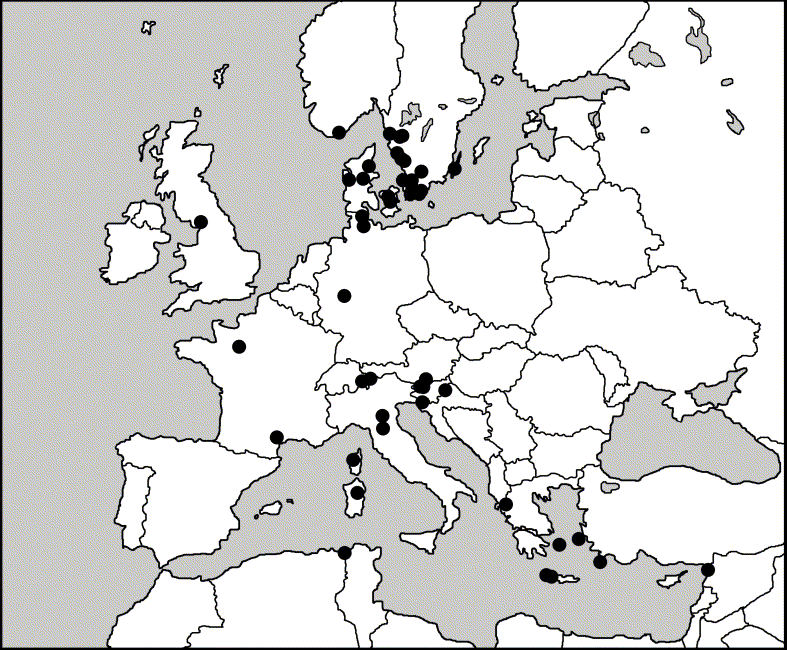
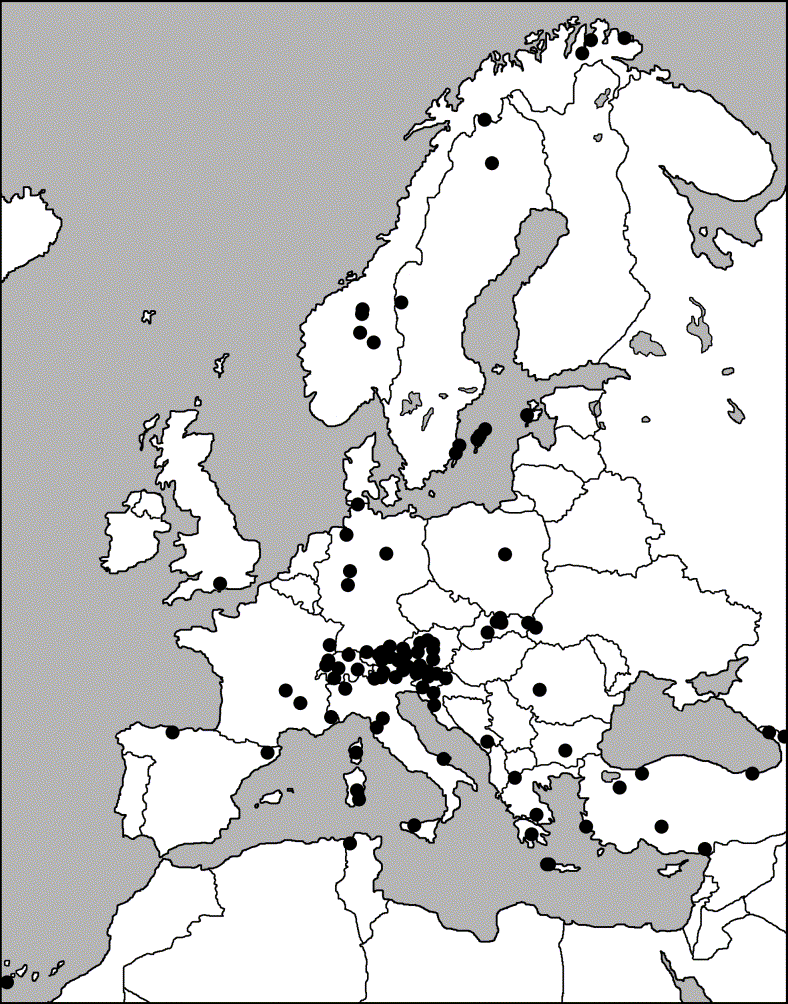
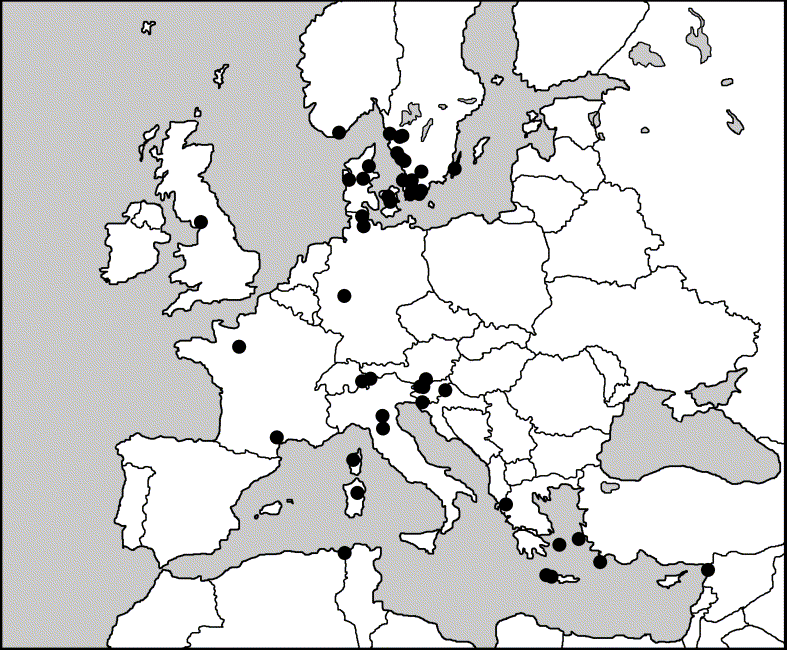
The species is widely distributed across Europe, from Norway in the north to Tunisia in the south (Fig. 5), from the lowland to altitudes of more than 2000 m above sea level. So far the new species is recorded from Denmark, Norway, England, France, Germany, Switzerland, Austria, Italy, Slovenia, Croatia, Greece, Syria, and Tunisia. The majority of the specimens come from southern Sweden and Denmark, which may indicate that the species has its geographical centre in these areas. However, since this species has not been previously recognized, several other herbaria may have specimens of C. coralliza still filed under C. herbidella, which could change the distribution pattern of this species.
Distribution map for C. coralliza based on the material studied.
Remarks. Caloplaca coralliza is recognized by its thin, somewhat branched and coral-like isidia. The isidia normally cover large parts of the thallus and generally form coral-like clusters that sometimes coalesce, forming a thick crust which in well-developed specimens becomes cracked areolate. The colour of C. coralliza ranges from light beige to dark orange or brownish orange, sometimes grey or greenish grey. About 80% of the C. coralliza specimens examined display at least a tint of orange or yellow, and c. 70% can be regarded as completely orange/yellow.
Another important character is the low fertility, only about 1% of the C. coralliza specimens examined have apothecia (compared to 100% of the C. herbidella and C. furfuracea specimens examined). When fertile, C. coralliza commonly has just a few apothecia, while C. herbidella and C. furfuracea normally have 20 or (many) more. Whether this is a genetic difference or just the effect of C. coralliza being more sensitive to air pollution or other possible environmental threats is as yet unknown. Pycnidia are also quite rare in C. coralliza, but in cases where they do occur, they can sometimes be very abundant.
Only about one sixth of the total number (c. 600) of specimens examined belong to C. coralliza indicating that C. coralliza is less common than C. herbidella.
Selected specimens studied. Austria: Kärnten: Steiner Alpen, Vellacher Kotschna, 1975, Poelt (GZU).—Croatia: Zagreb: Mt. Medvednica, Pustodol valley, Nordin 2877 (UPS).—Denmark: Nordjylland: Als, Verteminne, 1980, Ramkaer (C). Sjælland: Nederskov, 2km SW of Tølløse, Søchting 7319 (C). Sydjylland: Hovgård, 1976, Søchting (C). Vestjylland: Brejninggård Efterskole, 1977, Søchting (C). Central Jutland: Hørbylunde, SW of Silkesborg, Søchting 2543a (C).—France: Corsica: Col de Vergio bei Evisa, Kalb 6792 (GZU).—Germany: Nordrhein-Westfalen: Girkhausen, John 8672 (M); Sauerland, Rothaargebirge, Sipman 21031 (B). Schleswig-Holstein: Pobüller Bauernwald, NE Rupel, Jacobsen 6571 (E); Staatforst Rendsburg, Lurup, 2 km W Nübbel, Jacobsen 6564 (E).—Great Britain: England: Levens Park, 1970, Coppins, Rose & Hawksworth (E).—Greece: Crete: Levka Ori, just W of Agii Theodori, Spribille 13327 (B); Western Crete, Elos, Spribille 13400 (B). Nomos Samos: Ikaria island, Sipman 49018 (B). Rhodos: Profitis Ilias, Coppins 12492 (E).—Italy: Emilia Romagna: prov. Parma Lago Lagoni S above Corníglio, Hafellner 58311 GZU). Toscana: Firenze prov., Pratomagno, Valambrossa, Coppins 12039 (E).—Norway: Vest-Agder: Kristiansand, Randesund, Tønsberg 18661 (UPS).—Slovenia: Krain, Vrhnika 1934 Degelius (UPS); Sneznik Area, 4·5 km S Kozarisce, 1992, Grube (GZU).—Sweden: Bohuslän: Lycke, Instön, Magnusson 18885 (S); Spekeröd, Magnusson 24231 (UPS). Halland: Fagered, Övre Höghult, Ekman & Fröberg L216 (LD). Skåne: Allerum, Kulla-Gunnarstorp, 1943 Degelius (S); Andrarum, 1890, Malme (S); Bara, Torups friluftsgård, Åkelius L0801 (LD); Genarp, Häckeberga, Åkelius L0805 (LD). Småland: Stenbrohult, Möckelsnäs, Arup L92034 (LD). Västergötland: Asklanda, Magnusson 15262 (S); Göteborg, Rya skog, Magnusson 13169 (UPS). Öland: Norra Möckleby, Arup L95023 (LD).—Switzerland: Rätische Alpen, Kt. Graubünden, 1980, Poelt (GZU).—Syria: Muhafazat Lattakia: E of Slenfe, Zedda S373, S-427 (B).—Tunisia: NW Tunisien, nördlich Ain Draham, Poelt 5851 (GZU).
Exsiccata examined: Sweden: Bohuslän: Lindome, Annestorp, Magnusson: Lich. sel. scand. exs. 142 (H, LD).
Caloplaca furfuracea H. Magn
Göteborgs Kgl. Vet. och Vitterh. Samh. Handl. Ser. B 6. 1944 3(1):33; type: Sweden, Jämtland, Undersåker Hålland. G. O. Malme in Malme, Lich Suec. Exs. 763 [GB!—lectotypus, selected by Wetmore Reference Wetmore2004 (as holotypus); H!, LD!, S!—isotypi].
(Figs 4 C & D, 6)
Thallus pale grey to black, normally covered by isidia, (0·07–)0·08–0·30(–0·34) mm thick including isidia. Isidia pale grey to black, normally dark grey-black, (38–)43–64(–76) μm granular, sometimes layered.
Apothecia always present, abundant, adnate to sessile, round to irregular, younger apothecia orange to light red darkening to a more ferruginous red with age, occasionally dark brown; disc concave to convex but mostly flat, older apothecia increasingly convex; proper margin slightly raised or level with the disc, 55–80 μm thick, consisting of ± radiating, elongate cells, 5–10(–14) ×2·5–4·0 μm; thalline margin rarely present but sometimes algae are present at the base of the proper margin and occasionally isidia grow on the margin of the apothecia, resembling a thalline margin; epihymenium orange, granular inspersed; hymenium (70–)80–105(–110) μm, hyaline; hypothecium (45–)50–100(–120) μm regularly with shades of brown, often with oil droplets; paraphyses simple or branched in upper part, 1·0–3·0 μm, upper cells sometimes slightly widened; asci clavate 47–70 × 11–16 μm, 8-spored; ascospores (10·0–)11·5–14·0(–15·0)× (5·0–)6·0–7·0(–8·5) μm, septum (3·0–)3·5–4·5(–5·5) μm.
Pycnidia immersed, ostiole red and slightly raised. Conidia 3·0–4·0 × 1·0–1·5, bacilliform to narrowly ellipsoid.
Chemistry. Thallus K− and C−. The chemistry of the thallus and apothecia corresponds to chemosyndrome C4 of Søchting (Reference Søchting2001) where 7-Cl-emodin is the dominant compound, followed by emodin and small amounts of 7-Cl-emodinal, 7-Cl-emodic acid and 7-Cl-citreorosein. In the apothecia parietin is also present, reducing the dominance of 7-Cl-emodin. In addition to the compounds already mentioned, small amounts of citreorosein, emodinal and fragilin are also found in the apothecia.
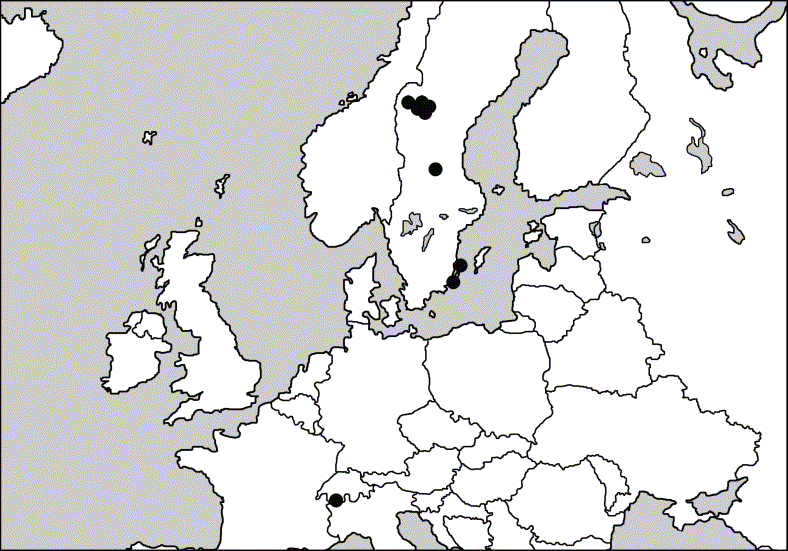
Habitat and distribution. Caloplaca furfuracea is lignicolous and is found mainly on old barns and fence posts, sometimes on dead parts of living Picea and Betula. All European collections are from northern Sweden apart from some specimens found in Wallis, Switzerland (Fig. 6). Several specimens determined as C. furfuracea from other regions in Europe (Norway, Austria, Turkey and Croatia) have been examined but all of them were found to belong to C. herbidella.
Distribution map for C. furfuracea in Europe based on the material studied.
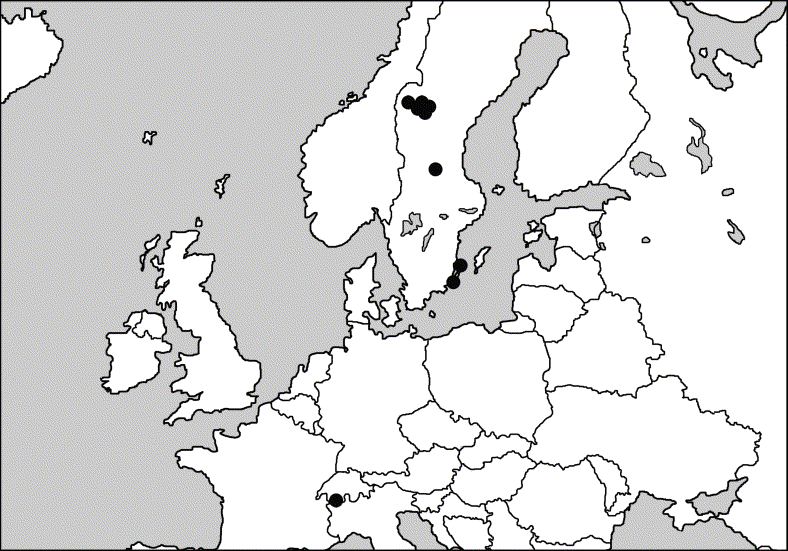
Some specimens from the Rocky Mountains (Wyoming and Montana, USA) and Yukon (Canada) have also been seen that fall within the variation of C. furfuracea. Wetmore (Reference Wetmore2004) also reports several finds of C. furfuracea from North America, mainly from the Rocky Mountains. This could perhaps indicate that C. furfuracea is more common in North America than in Europe.
Nearly all the specimens seen came from relatively high altitudes with a cold winter climate. Generally they are also found close to streams or lakes in areas with calcareous bedrock, indicating a need for high air humidity and a high pH of the substratum. In Europe it is usually found on lignum, only rarely being found on the bark of living trees, while in North America it is frequently found on Pseudotsuga (Wetmore Reference Wetmore2004).
Remarks. Caloplaca furfuracea is recognized by its dark grey to black thallus and thin, granular isidia that are never branched. The isidia are scattered over the thallus, intermixed with wood fibres or aggregated into clusters that seldom become thick enough to crack into areolae-like structures. The colour of C. furfuracea ranges from light grey to black, sometimes with a brown tint. The orange colour that is observed in C. coralliza and C. herbidella has never been found in C. furfuracea. Apothecia are always present and normally abundant while pycnidia are rare. Some authors (Nimis Reference Nimis1993; Foucard Reference Foucard2001) point out that one of the differences between C. furfuracea and C. herbidella is that C. furfuracea has thicker isidia. This observation is apparently wrong, since all specimens we have seen of C. furfuracea have thin isidia, even thinner than those in C. coralliza (Table 3).
All material of C. furfuracea in the herbaria listed has been studied, and since much of it could be disregarded as C. herbidella, very few specimens remain. This suggests that the species is rare in Europe. One reason could be that the type of environment and substratum required are also rare. Almost all European collections of C. furfuracea are from old wooden barns and fences in rural areas. Many of these buildings are remnants from the old rural society and are left to decay or have been refurbished with new paint that may affect the lichens. New substratum is not generated since wood used nowadays is normally treated with covering paint, preservatives or waterproofing agents making it unsuitable for lichens. These factors combined with a possible need for a high pH and high air humidity reduces suitable habitats for C. furfuracea every year. It is red-listed in Sweden (Gärdenfors Reference Gärdenfors2005).
Selected specimens studied. Canada: Yukon: S of Whitehorse, along and W of Hwy 2, Tønsberg 33024, 33030 (BG).—Finland: Etelä-Pohjanmaa [Ostrobottnia australis]: Lapua, 1918, Räsänen (H).—Sweden: Dalarna: Rättvik, Övre Gärdsjö, Hermansson 8486, 8487 (UPS); Gärdsjö, 1931, Vrang (UPS). Jämtland: Berg, Oviken, Nordin 2546, Jonsson & Nordin 2549 (LD); Brunflo, 2006 Ekendahl (LD); Odensala, Magnusson 22059 (UPS); Krokom, Alsen, Jonsson 2223, 2508, 2510 (LD); Föllinge, Nordin 2555 (LD); Undersåker, Hålland, 1917, Vrang (UPS); Åre, Mattmar, Jonsson 2541, 2552 (LD). Öland: Högby, by Högby church, Floderus & Stenhammar (S); Ottenby, Stenhammar (S).—USA: Montana: Gallatin Co., Yellowstone Nat. Park, Black Butte Trail to Big Horn Peak, Wetmore 80623 (S); Wyoming: Park Co., Yellowstone Nat. Park, E of Barronette Peak, Wetmore 81336 (S).
Exsiccata examined: Schweiz: [Valais], Westalpen, Walliser Alpen, Kalb, Lich. exs. 52 (B).
Caloplaca herbidella (Nyl. ex Hue) H. Magn
Bot. Not. 1932 : 430 (1932).—Lecidea caesiorufa f. herbidella Nyl. ex Hue, Nouv. Arch. Mus., Series V, 3: 151. (1911); type: Lecanora caesiorufa v. herbidella, Hungary, Arva, Supra corticem Abietis pectinatae in alpe “Chocs” comit. Lojka (5 Lojka, Lich. Reg. Hung. Exs. 31) (PC—holotypus, B!; LD!, M!, S!, UPS!—isotypi).
Figs 3, 4E & F, 7)
Thallus often discontinuously covered with isidia, when not covered flat to slightly scurfy-granular, (0·05–)0·09–0·35(–0·70) mmthick including isidia, concolorous with isidia or slightly paler; isidia (58–)76–114(–168) μm,pale grey to dark grey, occasionally with a tint of orange or yellow, rarely completely orange/yellow, cylindrical to coralloid, rarely granular, sometimes branched, seldom layered or continuous.
Apothecia always present and normally abundant, adnate to sessile, round to irregular to slightly lobate, younger apothecia orange to light red, darkening to a more ferruginous red with age; disc strongly concave to strongly convex, older apothecia sometimes increasingly convex; proper margin slightly raised or level with the disc, 50–85 μm thick, consisting of ± radiating, elongate cells, 5–10(–14) × 3·0–4·0 μm; thalline margin usually absent, though sometimes algae are present at the base of the proper margin; epihymenium orange, granular inspersed; hymenium (70–)75–105(–130) μm, hyaline; hypothecium (45–) 70–110(–160) μm, regularly with shades of brown, often with oil droplets; paraphyses simple or branched in upper part, 1·0-3·0μm, upper cells sometimes widened; asci clavate, 45-80 × 8–16 μm, 8-spored; ascospores polaribilocular (8·0–)10·5–13·5(–14·0) × (4·5–)5·5–7·5(–8·0) μm, septum (3·0–)3·5–4·5(–5·0) μm.
Pycnidia often present, normally abundant, immersed, ostiole red and slightly raised, conidia 3·0–5·0 × 0·8–1·5 μm, bacilliform to narrowly ellipsoid.
Chemistry. Thallus K− and C− (K + purple and C + light red on specimens with orange colour). The chemistry of the thallus and apothecia corresponds to chemosyndrome C4 of Søchting (Reference Søchting2001) where 7-Cl-emodin is the dominant compound, followed by emodin and small amounts of 7-Cl-emodinal, 7-Cl-emodic acid and 7-Cl-citreorosein. In the apothecia parietin is also present, reducing the dominance of 7-Cl-emodin. In addition to the compounds already mentioned, small amounts of citreorosein, emodinal and fragilin are also found in the apothecia.
Habitat and distribution. Caloplaca herbidella grows on bark of both deciduous and coniferous trees and is found on at least 40 different species of trees or shrubs. However it is most often found on Juniperus (15% of specimens examined), Acer (13%), Picea (10%), Abies (10%), Quercus (8%) and Fraxinus (8%). When counting all specimens examined 49% are found on deciduous trees, 45% on conifers and 6% on shrubs, for example, Rhododendron and Euphorbia (see also discussion above under C. coralliza). In Sweden, the collections from coniferous trees are strictly correlated with calcareous areas suggesting that the species may require a higher pH to thrive on conifers. This is not confirmed from other countries, but could be a possible subject for future investigation.
Caloplaca herbidella is distributed throughout Europe, occurring in at least 30 countries (Fig. 7), at altitudes varying from lowland to over 2000 m above sea level. Many of the specimens seen came from high altitudes, something that at least indicates that it does well in alpine environments.
Distribution map for C. herbidella based on the material studied.
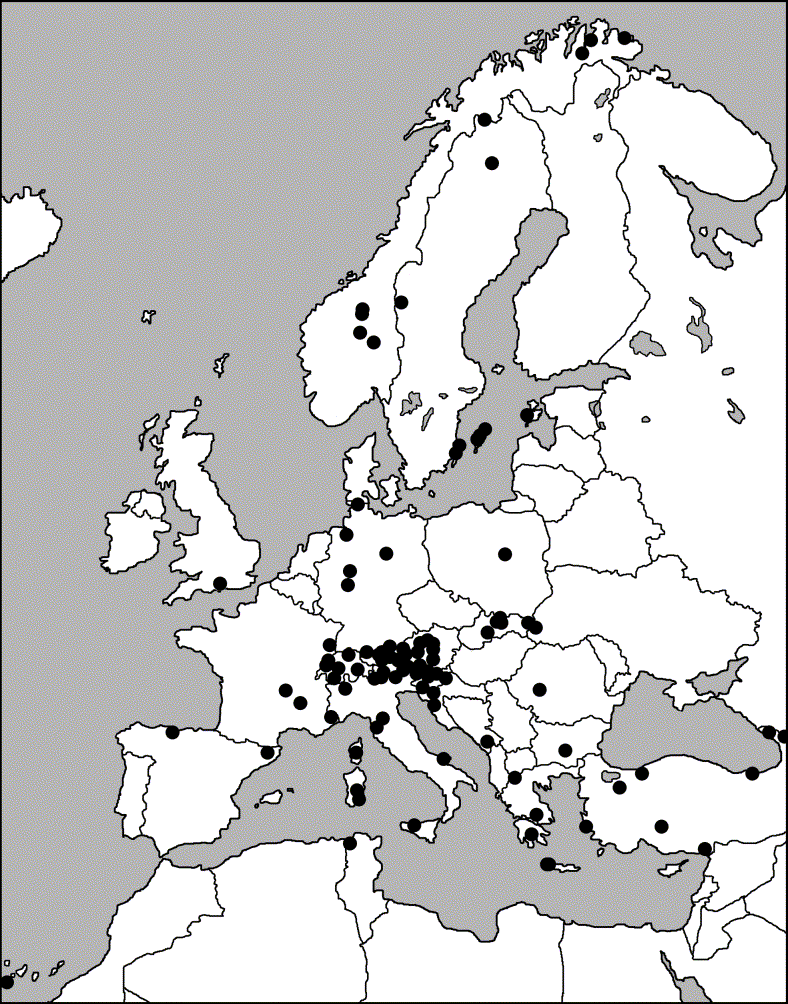
Caloplaca herbidella is also reported from the Rocky Mountains of North America (Anderson Reference Anderson1974) but this appears to be erroneous. Wetmore (Reference Wetmore2004) states that C. herbidella does not occur in North America, but does not mention any earlier reports. The species is recorded on the most recently published checklists of North American lichens (Egan Reference Egan1987; Esslinger & Egan Reference Esslinger and Egan1995), but not on the cumulative internet based checklist (Esslinger Reference Esslinger2008). In all the herbaria listed there are only three North American specimens and one of these happens to be mentioned both by Anderson (Reference Anderson1974) as C. herbidella and by Wetmore (Reference Wetmore2004) as C. furfuracea. The specimen is of an intermediate character, but probably belongs to C. furfuracea. Since the specimen was collected in 1967 no molecular data can be obtained. The other two collections seen correspond fairly well with C. furfuracea, but the identity of the North American material should be confirmed by DNA analyses. There is also one unconfirmed report of a finding from Venezuela in South America (Kärnefelt Reference Kärnefelt1990).
Remarks. Caloplaca herbidella is distinguished mainly by its thick, granular to coralloid isidia, its normally grey thallus and abundant apothecia. The species is variable, ranging from having an almost naked thallus with only a few scattered granula or rod like isidia to a thallus completely covered by branched, coralloid isidia that build up a crust of several layers (reminiscent of C. coralliza). Intermediates between these two extremes seem to be common, with thalli partly covered by small clusters of moderately branched isidia, partly naked or with scattered isidia of a more granular character. The colour range for C. herbidella is light grey to dark grey, sometimes orange or with orange tints. The orange colour is much less common than in C. coralliza; 20% of the C. herbidella specimens examined display a tint of orange/yellow, but only 2% are completely orange/yellow. Caloplaca herbidella always seems to be fertile with 95% of specimens examined with more than 20 apothecia. Pycnidia are normally common. See also discussion above under C. coralliza.
Selected specimens studied. Austria: Osttirol: Kreis Lienz, Hohe Tauern, Sipman 25609 (B). Steiermark: Kalkalpen, Hochschwab-Gruppe, Hafellner 63301, 63640 (GZU).—Bulgaria: Plovdiv: Cepelarska planina, 1929 Szatala (UPS).—Canary Islands: El Hierro: La Dehesa, Hafellner 33733 (GZU).—Croatia: Dalmatien: Südlicher Velebit, 1973 Poelt (GZU).—Estonia: Saaremaa: W of Veere, Nordin & Thor 216 (UPS).—Finland: Kittilän Lappi [Lapponia kittilensis]: Sodankylä, SE Saariselkä, Ahti 11972 (H).—France: Languedoc-Rousillon: Alpes Maritimes zw. Casterine, 1963 Schauer (M). Auvergne: Ambert, Puy-de-Dôme, 1900 Brevière (S).—Georgia: Abchasien: Caucasus Occidentalis, Distr. Sukhumi, 1983 Vašák (GZU).—Germany: Bayern: Ammergauer Alpen, Hertel 356 (LD); Berchtesgaden, Marktschellenberg, Sipman 25717 (B). Oberbayern: Lkr. Wolfratshausen, NSG Pupplinger Au, Hertel 8901 (H).—Great Britain: England: V.C. 11, South Hampshire: New Forest, 1971 Coppins (E).—Greece: Fokis, Mt. Parnassos, 1981 Bowen (E).—Italy: Trentino-Alto Adige: Trento, Paneveggio Natural Park, Thor 19193 (UPS). Veneto: Belluno, Thor 19503 (UPS).—Norway: Finnmark: Båtsfjord co., Perselvtoppen, Søchting 5136b (C); Lebesby co., 1km S of Adamsfjord, Søchting 4846 (C). Oppland: Skeikampen, 13 km WNW of Tretten,Søchting 5216 (C). Sør-Trøndelag: Dovre, Kongsvold, 1926, Nilsson (LD).—Poland: Droga do kuinic, Dolina Bystrej, Zakopane, Seaward 103493 (E); Gorce, poludniowe zbocze Lubania, 1965, Glanc & Tobolewski (E). Kuźnice b. Zakopane (Kr. Nowy Targ), 1955, Tobolewski (M).—Romania: Retzeat Mts, Lupeni, Cåmpu liu Neag, Vondrák 3968 (CBFS).—Slovenia: Snežnik-Javorniki, Javorniki, E Jurišče, N Blatna dolina, 1998, Prügger & Surina (GZU).—Spain: Cantabrien: Covadonga, 1962, Schauer (M).—Sweden: Gotland: Bunge, Arup L07101, L07102 (hb. Arup); Visby, 1983 Sjökvist (C); Västerhejde, Högklint, 1917, Malme (S). Härjedalen: Tännäs, Ljusnestöten, 1866 Almqvist & Söderlund (LD). Torne Lappmark: Jukkasjärvi, prope Torne träsk, Jebrinjokk, Magnusson 3258 (UPS).—Switzerland: Gurningel Berner Voralpen, 1964, Schauer & Frey (M); Unter Wallis. Val d'Herens, S of Sion, Sipman 30263(B).—Tunisia: NW Tunisia, nördl. Ain-Draham, Wunder 967 (M).—Turkey: Provins Trabzon: S von Hamsiköy, E von Zitas Tesisleri, John 10380 (M).—Ukraine: Zakarpatska oblast, Velyky Berezny district, Novostuzhytzia forestry, Coppins 17643 (E).
Exsiccata examined: Austria: Tirol, Stubaier Alpen, Sandestal bei Gschnitz, Lich. Alp. exs. nr. 263 (H, M). Salisburgia, Lungau, Vĕzda: Lich. Sel. Exs. exs. nr. 1812 [as C. furfuracea] (B, H).—Slovakia: Carpati, Tatra Minor, Vĕzda: Lich. Bohem. exs. nr. 270 (M).—Turkey: Bursa, Uludag, Plant. Graec. exs. nr. 367 [as C. furfuracea] (H, GZU).
We express our gratitude to all curators who have sent us large quantities of specimens on loan and to Dr Ö. Fritz for allowing us use of material from his private collections. Prof. U. Søchting is acknowledged for information on the secondary chemistry and we thank Dr P. Lassen for providing the Latin diagnosis. This work was made possible through grants from the Swedish Threatened Species Unit and Lunds Botaniska Förening.