Case description
A previously healthy 18-month-old boy was referred for 5 days of high fever (39.5°C) with poor general condition. Clinical examination found erythema of oral and pharyngeal mucosa, bilateral non-exudative conjunctivitis, and oedema of the extremities. Transient rash attributed to amoxicillin allergy occurred 3 days before. Laboratory tests revealed white blood cell count at 13.1×10⁹/L with neutrophil predominance, haemoglobin level at 9 g/dl, blood platelet count at 483 000/mm3, C-reactive protein at 203 mg/L, albuminaemia at 28 g/L, natraemia at 134 mmol/L, and sterile leukocyturia. Extensive serological tests were taken.
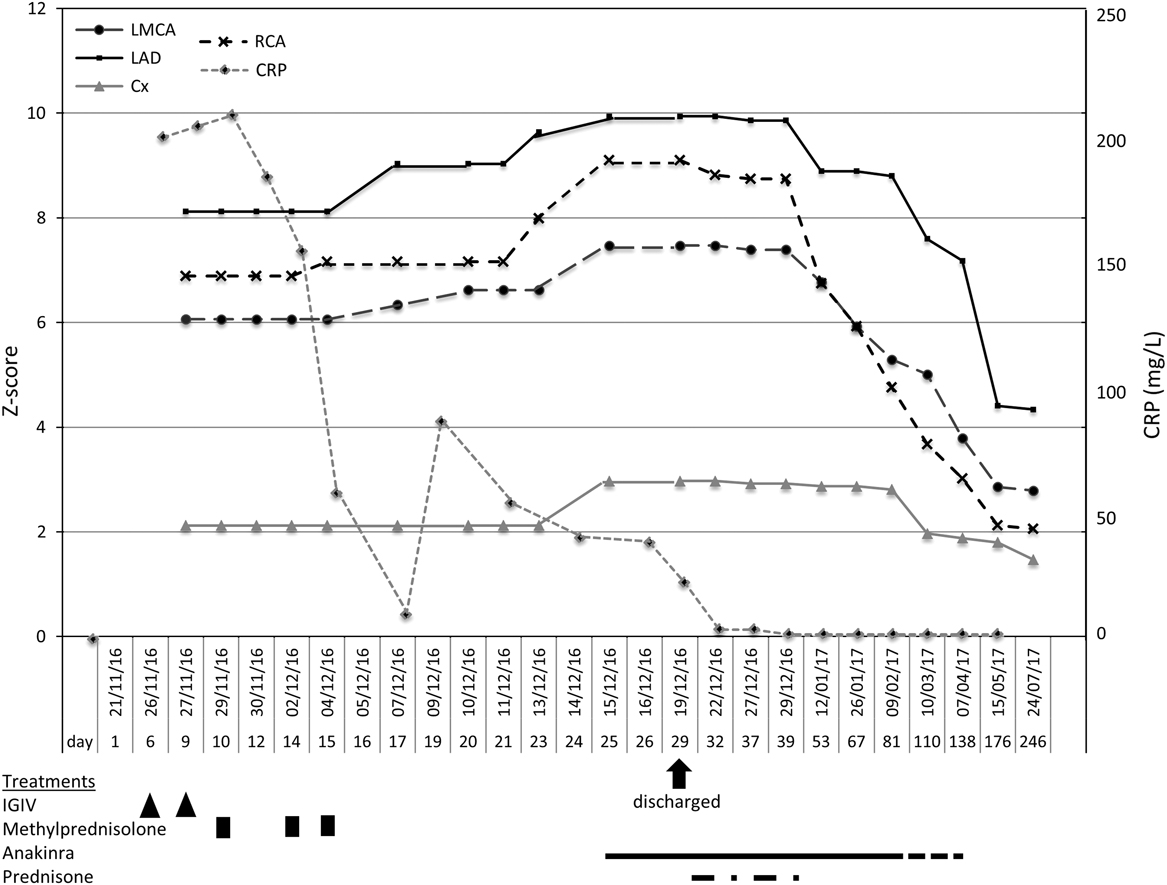
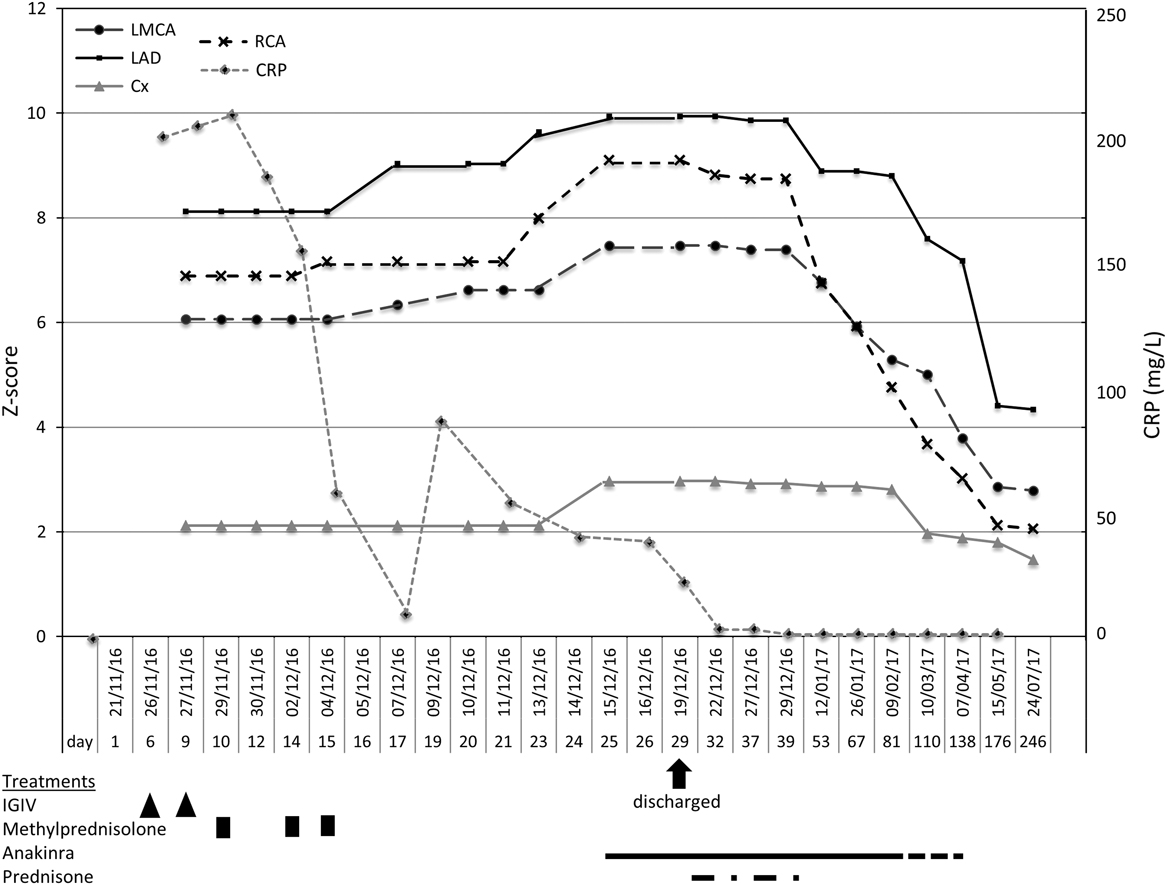
Fulfilling criteria of complete Kawasaki disease, treatment with intravenous immunoglobulins at a dose of 2 g/kg was administrated on day 6 of illness together with acetylsalicylic acid at a dose of 100 mg/kg/day. Echocardiography performed on day 7 revealed diffuse and fusiform aneurysms of coronary arteries: right coronary artery 4 mm (z score 6.89); left main coronary artery 4 mm (z score 6.06); left anterior descending artery 4.1 mm (z Score 8.12); and circumflex 2.1 mm (z score 2.12). Electrocardiogram was normal. On day 9, a second administration of intravenous immunoglobulins (2 g/kg) was performed owing to recrudescence of fever at 38.5°C, followed by pulse of methylprednisolone (30 mg/kg) on day 10. White blood cell count was at 11.1×10⁹/L, C-reactive protein at 187 mg/L, and platelet count at 828000/mm3. Apyrexia was obtained.
Two pulses of methylprednisolone (30 mg/kg) (days 14 and 15) were administrated for recurrent fever at 38.2°C on day 13 associated with poor general condition. C-reactive protein was at 41 mg/L and platelet count at 474 000/mm3. Apyrexia was obtained and general condition improved. Treatment with warfarin was introduced on day 14 regarding coronary arteries z score. Blood test showed C-reactive protein at 10 mg/L and thrombocytosis (926 000/mm3) on day 17. Echocardiographic examinations performed twice a week showed stability of coronary aneurysms.
On day 19, new recurrence of fever 38.4°C was associated with rhinitis, cough, and good general condition. C-reactive protein re-ascended to 88 mg/L. White blood cell count was at 12.7×10⁹/L; platelets count at 553 000/mm3; and respiratory viruses were negative. Echocardiographic controls were stable. Fever decreased spontaneously at 48 hours, but a subfebrile state remained at 37.8–37.9°C.
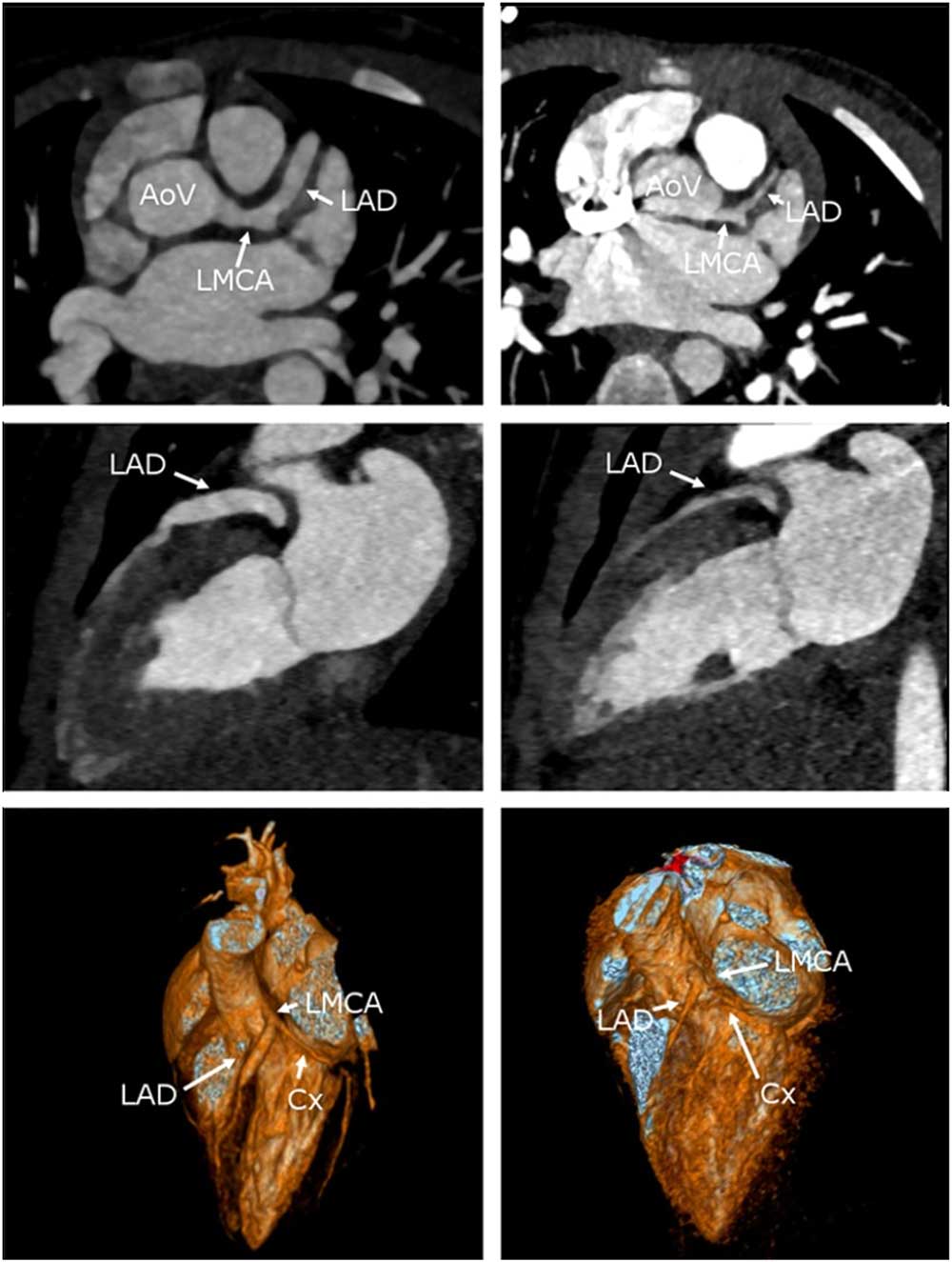
Since day 21, acetylsalicylic acid was administered at anti-platelets dosage (3 mg/kg/day). The subfebrile state persisted along with a very slow regression of the biological inflammatory syndrome despite regression of respiratory symptoms. On day 25, coronary aneurysms increased: right coronary artery, 4.9 mm (z score 9.10); left main coronary artery, 4.5 mm (z score 7.47); left anterior descending artery, 4.7 mm (z score 9.94); and circumflex, 2.4 mm (z score 2.97). In this context, treatment by anakinra was started regarding persistent subfebrile state, persistent high C-reactive protein (>35 mg/L), and worsening of coronary aneurysms. Parents were informed of the lack of scientific data in use of anakinra in this indication but appearing to be promising in the few cases described. They agreed to this treatment. Anakinra 6 mg/kg/day subcutaneously once a day was administered for 10 weeks and then tapered at 6 mg/kg/day every 2 days for 4 weeks and then 6 mg/kg/day every 3 days for 4 weeks and then stopped. Anakinra was arbitrarily pursued regarding improvement on coronary arteries size on follow-up and, in absence of guidelines, was stopped to avoid side effects. Apyrexia was obtained at 24 hours of initiation of anakinra therapy; the infant was discharged on day 29. Prednisone was initiated on day 30 at 2 mg/kg/day for 5 days to strengthen the anti-inflammatory effect and was tapering over 10 days. C-reactive protein value was normalised on day 32. Warfarin was administered for 4 months and stopped regarding regression in coronary arteries z score and absence of giant aneurysm on follow-up. Treatment by anakinra was well tolerated with no adverse effects or complications. Progressively, partial regression of coronary arteries was noted on echocardiographic controls and confirmed on CT scan at 7 months of evolution (Fig 1): right coronary artery, 2.5 mm (z score 2.06); left main coronary artery, 3 mm (z score 2.79); left anterior descending artery, 3 mm (z score 4.34); and circumflex, 2 mm (z score 1.47) (Fig 2).
CT scan showing evolution of coronary arteries aneursyms: on the left, CT scan performed at 46 days of fever onset; on the right, CT scan performed 6 months later. AoV=Aortic Valve; LMCA=left main coronary artery; LAD=left anterior descending artery; Cx=circumflex.

Time course of coronary arteries z score, C-reactive protein (CRP), and treatments. LMCA=left main coronary artery; LAD=left anterior descending artery; Cx=circumflex; RCA=right coronary artery; IVIG=intravenous immunoglobulins. Coronary artery z score according to Dallaire & Dahdah. JASE 2010.
Discussion
Kawasaki disease is an acute self-limited vasculitis of unknown aetiology affecting children <5 years and is the leading cause of acquired heart disease in children in developed countries. Intravenous immunoglobulins, the standard treatment, have reduced coronary involvement to <5%.Reference Burns, Kushner and Bastian 1 , Reference McCrindle, Rowley and Newburger 2 Corticosteroid therapy may be used in combination or in second-line therapy. However, for non-responders to those treatments, there is no consensus regarding adjunctive therapeutics including infliximab, cyclosporine, plasma exchange, cyclophosphamide, and etanercept.Reference McCrindle, Rowley and Newburger 2
It has been proven that in refractory Kawasaki disease the risk for developing coronary aneurysms is increased. Some studies have attempted to establish a risk score to treat these patients more aggressively, but these scores are not valid in non-Asian populations.Reference Kobayashi, Kobayashi and Morikawa 3 , Reference Brogan and Levin 4
Three linked processes are involved in Kawasaki disease arteriopathy: an acute self-limited necrotising arteritis – neutrophilic process – within 2 weeks after fever onset, destroying the arterial wall; a subacute/chronic vasculitis – lymphocytes, plasma cells, eosinophils, and macrophages infiltration – within the first 2 weeks that can persist for months or years and damage the arterial wall; and luminal myofibroblastic proliferation – myofibroblasts and inflammatory cells – beginning in the first 2 weeks and pursuing for years, responsible for arterial stenosis and thrombosis.Reference Orenstein, Shulman and Fox 5
A recent study showed the key role of caspase-1 and interleukin-1, pro-inflammatory cytokines, in the development of coronary damage in Kawasaki disease mouse model, blocked by an interleukin-1 receptor antagonist. The authors suggest that anti-interleukin-1 treatment may be an effective and more targeted therapy to prevent coronary damage in Kawasaki disease.Reference Hoang, Shimizu and Ling 6 , Reference Lee, Schulte and Shimada 7
Anakinra is a recombinant interleukin-1β receptor antagonist. Its efficacy and good tolerance have been demonstrated in the treatment of inflammatory diseases including juvenile idiopathic arthritis. Anakinra has been used in a limited number of patients with Kawasaki disease. Three clinical cases have been reported in the literature.Reference Cohen, Tacke and Straver 8 – Reference Sánchez-Manubens, Gelman and Franch 10 Currently, there is no recommendation for its use in Kawasaki disease. Studies are in progress to assess efficacy and tolerance of interleukin-1 receptor antagonist in Kawasaki disease.Reference Burns, Kushner and Bastian 1 , Reference Dusser and Koné-Paut 11
In our report, treatment with anakinra has allowed to negate the inflammatory syndrome, to slow the progression of coronary aneurysms with even a partial regression. Our observation raised two questions: the interest of interleukin-1 receptor antagonist as a first- or second-line treatment alone or in combination with intravenous immunoglobulins (in severe and/or refractory forms), to act on the acute phase of vasculitis, responsible for morbidity and mortality, and the interest of pursuing this treatment for months to the optimal dosage, to act on the subacute/chronic phases to prevent or reduce the occurrence of stenosis. This has to be counterbalanced with the possible immunosuppressive-effect-related complications of this treatment. Clinical researches are needed to support the use of anakinra with confidence in Kawasaki disease and to better define the place of interleukin-1 receptor antagonist in the algorithm of Kawasaki disease treatment.
Acknowledgements
The authors are grateful to Dr Koné-Paut Isabelle, Le Kremlin-Bicêtre Hospital, Paris-Sud University Hospital, Paris, France and Dr Dahdah Nagib, CHU Sainte Justine, Montreal, Canada, for their expert council in the management of their patient. The authors thank Dr Silvestri Valentina and Dr Baudelet Jean-Benoît (CHU Lille, Lille, France) for their help in the iconography.
Financial Support
This search received no specific grant from any funding agency or from commercial or not-for-profit sectors.
Conflicts of Interest
None.
Ethical Standards
The authors assert that all procedures reported comply with the ethical standards, and consent for publication was obtained from the patient’s family. Ethics approval and consent was not needed for the use of anakinra in the patient. It was used as an off-label medication with the parents and the Pharmacy Department consent.
Supplementary material
To view supplementary material for this article, please visit https://doi.org/10.1017/S1047951117002864