Miniaturized forms of objects, humans, and animals are found in archaeological contexts throughout the world. These forms are unique in that they are constructed to reference or signify a full-sized object, in addition to embodying their own inherent meaning and/or function (Foxhall Reference Foxhall2015; Kiernan Reference Kiernan2015; López-Bertran and Vives-Ferrándiz Reference López-Bertran and Vives-Ferrándiz2015). Miniature ceramic vessels, though relatively uncommon, have been found at sites across the Pueblo Southwest. While these ceramic forms are able to hold small quantities of material, suggesting their function may be closely tied to larger ceramic forms (Blinman Reference Blinman, Blinman, Phagan and Wilshusen1988:461; Foxhall Reference Foxhall2015:2), the reason for their reduced size is debated. Southwest literature variously identifies these forms as individual serving vessels, grave offerings, ritual/votive objects, children's toys, or vessels produced by novices (e.g., Bagwell Reference Bagwell and Kamp2002; Bullen Reference Bullen1947; Clark Reference Clark1967; Crown Reference Crown2001, Reference Crown2007; Kamp Reference Kamp2001).
For the purpose of this research, miniature vessels are defined as vessels of small enough size to render them unlikely to be involved in daily practices of cooking, serving, or storing food, but that mimic in design and vessel form the standard corpus of a ceramic assemblage (see also López-Bertran and Vives-Ferrándiz Reference López-Bertran and Vives-Ferrándiz2015). Their size—typically weighing 40 g or less and measuring under 10 cm in height and diameter—distinguishes these from vessels on the smaller end of the size distribution of a typical ceramic assemblage. Explanations for miniature vessels in the Southwest can be divided into three main categories, although these are not mutually exclusive. The first two are based in learning frameworks, suggesting either that miniature vessels represent early attempts to produce pottery, possibly by children, or that they are children's toys that contribute to enculturation. The third views these vessels as ritual objects used as offerings or in ceremonial performances. Our study examines the miniature vessels uncovered during excavations of Homol'ovi I, an ancestral Hopi pueblo in northeastern Arizona, to better understand their significance in past Pueblo society. This analysis considers both technological characteristics and contexts of use and deposition to understand production as well as the social practices and performances utilizing these vessels (Flegenheimer et al. Reference Flegenheimer, Weitzel and Mazzia2015; Foxhall Reference Foxhall2015; López-Bertran and Vives-Ferrándiz Reference López-Bertran and Vives-Ferrándiz2015). By completing a detailed analysis of the assemblage, the variability in miniature vessel construction, use, and discard can be assessed in relation to the hypothesized learning and ritual frameworks.
Practice Approaches to Miniature Vessels
Recent archaeological discussions of miniature vessels largely involve applications of practice theory. Broadly speaking, practice theory concerns the dialectic created between social structure and human agency. Through their respective concepts of “habitus,” “structuration,” and “tactics,” Bourdieu (Reference Bourdieu and Nice1977), Giddens (Reference Giddens1984), and De Certeau (Reference De Certeau and Rendall1984) addressed the internalization of social roles and the concurrent ability of individuals’ actions to alter those roles. Practices, or the social processes by which individuals interact with the world, create material patterns that can be used to understand the archaeological record and the social role of individual artifacts or artifact types (e.g., Lightfoot et al. Reference Lightfoot, Martinez and Schiff1998). Interpretations of miniature vessels as objects for learning and play derive from communities of practice frameworks, whereas assignments of ritual significance arise from studies of ritual practice and performance.
Communities of Practice, Learning Frameworks, and Enculturation through Play
Communities of practice are the social networks through which individuals transmit and learn cultural knowledge (Lave and Wenger Reference Lave and Wenger1991; Minar and Crown Reference Minar and Crown2001; Wenger Reference Wenger1998). These communities structure opportunities of learning necessary to both produce technology and reproduce culturally appropriate practices of production. Many of the lessons are not explicitly taught but are instead communicated through the observation of appropriate behaviors and interactions facilitated by social situations. Learning is thus understood as a negotiated process that ensures successful membership in society (Lave and Wenger Reference Lave and Wenger1991; Wenger Reference Wenger1998).
Membership in communities of practice is often informal and based in established social relationships, such as kinship groups. Beginning at a young age, children, in particular, learned craft production through the observation and imitation of adults (e.g., Crown Reference Crown, Skibo and Feinman1999, Reference Crown2001; Lave and Wenger Reference Lave and Wenger1991). Toy tools, such as miniature vessels or the materials used to produce them, allow children to prepare to handle real tools, serving as a medium that directly links play and learning (Carey Reference Carey2006; Gagné Reference Gagné2014; Lillehammer Reference Lillehammer1989). Play itself can serve as a form of enculturation, allowing children to experiment with and act out societal practices on their own (Bourdieu Reference Bourdieu and Nice1977; López-Bertran and Vives-Ferrándiz Reference López-Bertran and Vives-Ferrándiz2015), although it also occurs entirely outside of adult frameworks (e.g., Baxter Reference Baxter2005; Crawford Reference Crawford2009). These activities provide a context in which children actively engage with and develop an understanding of how to be part of society.
Reconstructing objects’ associations with children in the past is complicated by the variable forms these interactions may take (e.g., Baxter Reference Baxter2008; Crawford Reference Crawford2009; Kamp Reference Kamp2001). The products of children or adult novices learning to make pottery are expected to be of lower quality and exhibit less artistic skill than vessels produced by more experienced potters. Less proficient miniature vessels are often interpreted as the byproduct of learning activities (Crown Reference Crown, Skibo and Feinman1999, Reference Crown2001, Reference Crown and Kamp2002, Reference Crown2014; Kamp Reference Kamp2001; Kamp et al. Reference Kamp, Timmerman, Lind, Graybill and Natowsky1999). Alternatively, if miniature vessels were produced by adults for children's play/enculturation (e.g., Bullen Reference Bullen1947; Park Reference Park1998), the production quality may be high, closely mimicking full-sized versions. When objects ended their use life as toys, they were likely to be discarded in domestic or midden areas of a village; miniature vessels have been recovered from domestic contexts in India (Menon and Varma Reference Menon and Varma2010) and Iron Age Iberia (López-Bertran and Vives-Ferrándiz Reference López-Bertran and Vives-Ferrándiz2015). It is also possible that miniature vessels were appropriated and used for play by children at some point in their life history (Crawford Reference Crawford2009:61–62). Combining production, use, and depositional analyses can begin to reveal production by novice potters and potential associations with children.
Ritual Practice and Performance
Ritual practice pervades all aspects of life (e.g., Fowles Reference Fowles2013; Walker Reference Walker2002), but studies of ritual practice are differentiated by their focus on how these practices create, reify, modify, or reject social beliefs and organizations (e.g., Bell Reference Bell1997; Fogelin Reference Fogelin2006). This framework allows archaeologists to investigate and interpret the spatial and temporal extents of ritual through the repetition, alteration, or cessation of practices involving material culture (e.g., Bradley Reference Bradley1998; Pauketat Reference Pauketat2001). Thus, ritual is viewed as a process that aids in the negotiation of social relationships.
Considerations of performance are inherent to studies of ritual practice; Bell (Reference Bell1997:159–164), for instance, specifically lists performance as a characteristic to identify ritual or ritual-like activities. Most studies of performance focus on the relationships between performers and audience members, often emphasizing the impression of social order they create (e.g., DeMarrais Reference DeMarrais2014; Fogelin Reference Fogelin2007; Goffman Reference Goffman1959). In general, these studies have favored grand arenas and costly productions as indicative of negotiations of power (e.g., DeMarrais et al. Reference DeMarrais, Castillo and Earle1996; Inomata Reference Inomata2006; Inomata and Coben Reference Inomata and Coben2006; Spielmann Reference Spielmann2002), although researchers have also investigated the performance of social roles in daily interactions (e.g., Butler Reference Butler1993; Goffman Reference Goffman1959). Thus, the visibility and potential social impact of ritual practices form an important component of these studies.
Miniature vessels have been associated with ritual practice and performance based on the quality of their manufacture and their depositional context. High-quality miniature vessels and figurines have been identified in Minoan, Mississippian, and Southwest assemblages (Carey Reference Carey2006; Kamp Reference Kamp2001; Tournavitou Reference Tournavitou2009). The care put into the construction of these objects has led researchers to argue for their ritual importance; however, expediently manufactured vessels or vessels appropriated from children may also serve as offerings or grave goods (e.g., Bullen Reference Bullen1947; Sillar Reference Sillar2016). Miniature vessels have been recovered in burial contexts throughout the world (e.g., Holmes Reference Holmes1903; Jackson Reference Jackson1992; Martin Reference Martin1991; Park Reference Park1998) and are commonly encountered as votive offerings or dedications (e.g., Barfoed Reference Barfoed2015; Tournavitou Reference Tournavitou2009). While quality of production may vary, their appearance in locations of particular significance strongly supports their role as ritual paraphernalia.
Previous Studies in the Southwest
Southwest data supports each of the main interpretations of miniature vessels. Ethnographic accounts indicate that people began producing pottery at a relatively young age in the region. Pueblo girls learned to make ceramics by observing and imitating their adult female relatives (Bunzel Reference Bunzel1929; Crown Reference Crown2014; Fowler Reference Fowler1977; Hill Reference Hill1982:139; John-Steiner and Souberman Reference John-Steiner and Souberman1978; Stanislawski and Stanislawski Reference Stanislawski, Stanislawski and Hodder1978). Miniature vessels often exhibit lower levels of technical expertise than larger ceramics, suggesting they were constructed by novices, likely children (Crown Reference Crown, Skibo and Feinman1999, Reference Crown2001, Reference Crown and Kamp2002; Kamp Reference Kamp2001; Kamp et al. Reference Kamp, Timmerman, Lind, Graybill and Natowsky1999). Additionally, the use of miniatures as toys has been observed by ethnographers (Bullen Reference Bullen1947; Hough Reference Hough1918).
Alternatively, ethnographic sources state that miniature vessels were made as offerings to ceramic firings or clay sources to ensure successful pottery production (Bartlett Reference Bartlett1934:53; Bullen Reference Bullen1947; Nequatewa Reference Nequatewa1939); for example, the recovery of 12 miniature vessels in an ash heap has been interpreted as an offering to the firing process (Brew and Hack Reference Brew and Hack1939:11–12; Nequatewa Reference Nequatewa1939:18). These ceramic forms have also been found in ritual caches and burial contexts across the Southwest (Clark Reference Clark1967; Nelson Reference Nelson1914:91–93; Parsons Reference Parsons1939:919). A cache from Kitt Peak in southern Arizona contained 14 miniature vessels, dating from 1700 to 1860, and throughout this region miniature vessels typically appear as burial goods or shrine offerings (Clark Reference Clark1967). They are particularly common in shrines associated with springs, caves, and mountains (Hough Reference Hough1907; Parsons Reference Parsons1939:316–317).
In some cases, both interpretations are supported by the data, as is seen in the frequent association of miniatures with children's burials (e.g., Bullen Reference Bullen1947; Fewkes Reference Fewkes1895:96). Vessels produced by learners are sometimes kept and involved in ceremonies after production (Bunzel Reference Bunzel1929:13; Crown Reference Crown2014:78; Nahohai and Phelps Reference Nahohai and Phelps1995:73–74). Kidder (Reference Kidder1932) posited that battered miniature effigies recovered from refuse areas at Pecos Pueblo represented ceremonial objects that had become toys. A subsequent analysis of this assemblage concluded that some were made by inexperienced potters, likely children, and probably served as toys or practice vessels, while others were produced by adults, likely for use in ritual contexts (Bagwell Reference Bagwell and Kamp2002). Similarly, an analysis of miniature vessels from Lizard Man Village concluded that both beginner and expert potters manufactured these forms (Kamp Reference Kamp2001). The evidence for miniature vessels as learning, play, and ritual objects in the Southwest indicates their complex role in society warrants further investigation.
Implications for Analysis
As evidenced by the previous sections, interpretations of miniature vessels are nuanced and complex. While at first glance it may be tempting to attribute significance based solely on quality of manufacture, evidence for use, or context of deposition, artifacts pass through various stages throughout their use lives, accumulating meaning along the way (e.g., Kopytoff Reference Kopytoff and Appadurai1986; Schiffer Reference Schiffer1987). Some stages may alter the trajectory fundamentally, while others serve only as a temporary detour (e.g., Crawford Reference Crawford2009). Taking into account the literature discussed above, Figure 1 illustrates a number of potential trajectories of miniature vessels in the Southwest. Given the limited volume of these vessels, use was likely restricted to children or the storage or serving of small quantities of materials for ritual purposes. Alternatively, the vessels may have been used as offerings in burials, shrines, or other significant contexts, forgoing additional social roles in favor of immediate deposition. The numerous and overlapping options at each stage complicate interpretations, although certain paths are more likely than others. For these reasons, analyses of production, use, and disposal, in concert with ethnographic information about descendant community practices, provide the best opportunity to understand the role of miniature vessels in Pueblo contexts.
Flow chart illustrating potential life history trajectories for miniature vessels in the US Southwest.

Homol'ovi I
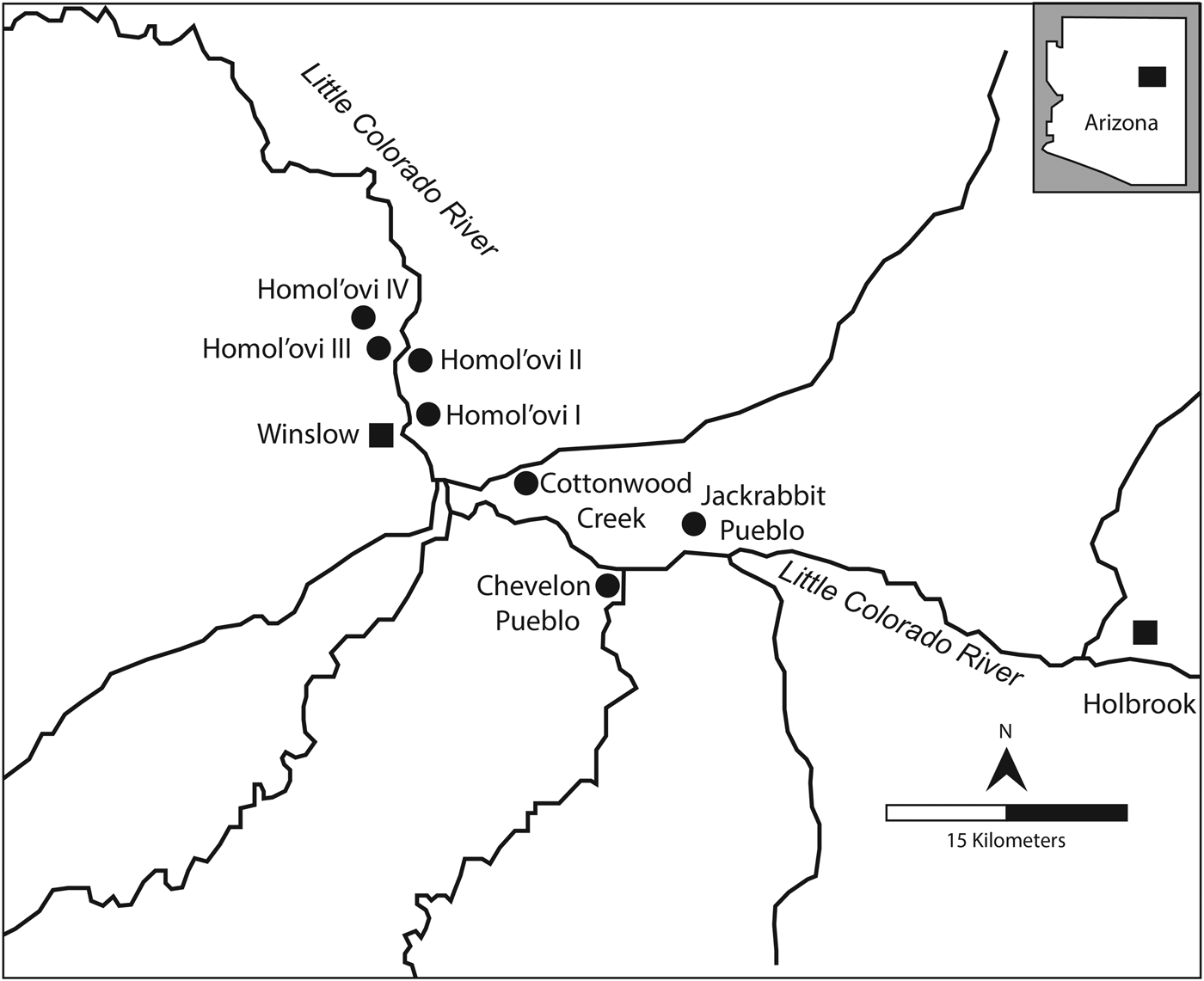
The Homol'ovi Settlement Cluster (Figure 2) consists of seven ancestral Hopi villages, occupied during the Pueblo IV period (AD 1260–1400; Adams Reference Adams2002). Homol'ovi I, the second largest village at about 1,100 rooms, is situated in the widest portion of the Little Colorado River floodplain. Construction at Homol'ovi I began around AD 1290, and occupation continued for over a century (Adams Reference Adams2002; LaMotta Reference LaMotta2006). At about AD 1360, Hopi immigrants constructed the largest village within the cluster: Homol'ovi II. Around this time, Homol'ovi I underwent extensive remodeling; most notably, a large southern plaza was constructed and enclosed by adobe brick room blocks (Adams Reference Adams2002; LaMotta Reference LaMotta2006). Three small plazas were also built over razed rooms in the northern half of the village at this time. Occupation of Homol'ovi I ended around AD 1400, when residents migrated to the Hopi Mesas.
Map of the Homol'ovi Settlement Cluster (adapted from Adams Reference Adams, Adams and Duff2004:Figure 12.1).

Ceramic evidence indicates that a large number of Homol'ovi I residents migrated from the north (Barker Reference Barker2017; Lyons Reference Lyons2003); however, locally produced utilitarian pottery manufactured in a different style, most closely resembling corrugated brown pottery imported to the site, has also been recovered from Homol'ovi I (Barker Reference Barker2017). This pottery tradition may be related to contemporaneous traditions practiced in the Puerco area or earlier ceramic traditions of the Chevelon drainage (Barker Reference Barker2017). All sites in the Homol'ovi Settlement Cluster produced or used Winslow Orange Ware, Homol’ovi Orange Ware, and Homol’ovi Gray Ware. As both gray and orange surface colors frequently co-occur on the same vessel, Homol’ovi Orange Ware and Homol’ovi Gray Ware are better considered as firing variations within a single utility ware tradition—Homol’ovi Utility Ware—local to the cluster (Adams Reference Adams2002; Barker Reference Barker2017; Lyons and Hays-Gilpin Reference Lyons, Hays-Gilpin and Adams2001). In addition to locally produced wares, imported ceramics appear in all Homol'ovi Settlement Cluster assemblages. Ceramics from areas throughout the Southwest, including the Hopi Buttes, Hopi Mesas, Silver Creek, upper Little Colorado River, Mogollon Rim, Anderson Mesa, Petrified Forest, and Flagstaff areas, have been recovered (Adams Reference Adams2002; Bubemyre Reference Bubemyre and Adams2004; Cutright-Smith and Barker Reference Cutright-Smith, Barker and Adams2016; Hays-Gilpin and Lyons Reference Hays-Gilpin, Lyons and Adams2001; Lyons Reference Lyons2003).
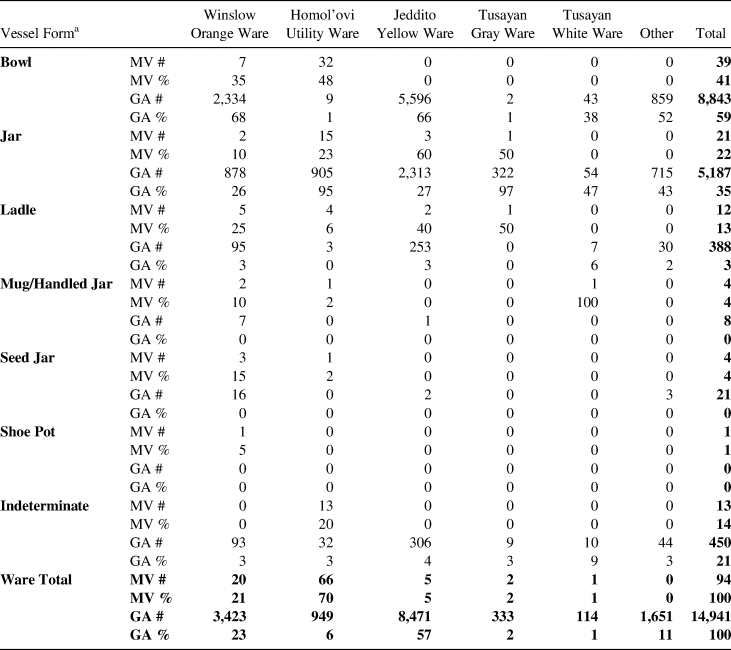
Jeddito Yellow Ware, imported from the Hopi Mesas, is especially abundant, representing 57% of the ceramic assemblage from Homol'ovi I (Adams Reference Adams2002). Progressive increase in the trade for Jeddito Yellow Ware over the occupation of the Homol'ovi Settlement Cluster has been used to produce a strong chronological sequence for the social history of these villages, allowing LaMotta (Reference LaMotta2006:42) to define four periods of deposition: Tuwiuca (AD 1290–1330), Early Homol'ovi (AD 1330–1365), Middle Homol'ovi (AD 1365–1385), and Late Homol'ovi (AD 1385–1400). To classify a deposit as one of these four periods, the frequency of Jeddito Yellow Ware relative to total decorated ceramics was calculated; this process has been corroborated through dendrochronology, radiocarbon dating, and ceramic seriation (Cutright-Smith and Barker Reference Cutright-Smith, Barker and Adams2016; LaMotta Reference LaMotta2006). The detailed chronology created by the percentage of Jeddito Yellow Ware provides temporal control of deposition that enables comparisons of practices within and among the villages.
The Homol'ovi Research Program, directed by E. Charles Adams, excavated 70 structures and several extramural areas at Homol'ovi I. Excavations of the site focused on the detailed recording of depositional processes. This methodology, and the development of a detailed chronology, have made the Homol'ovi Settlement Cluster an important case study for research focused on deposition and room closure—“a suite of practices with material manifestations that ends the occupation of a structure or settlement with the added intent of either remembering or forgetting associated people, groups, or events” (Adams Reference Adams2016a:43; see also Adams Reference Adams2002; Adams and LaMotta Reference Adams, LaMotta, VanPool, VanPool and Phillips2006; Schiffer Reference Schiffer1987; Walker Reference Walker1995). These data have been used to examine important depositional trends throughout the village, laying the groundwork on which this research builds (e.g., Adams Reference Adams2016a, Reference Adams2016b; Adams and Fladd Reference Adams2017; Hedquist Reference Hedquist2016; Miljour Reference Miljour2016). The current analysis of the construction and deposition of miniature vessels at Homol'ovi I provides important evidence about the social role of this ceramic form, while also furthering the detailed understanding of the construction, use, and closure of this large pueblo.
Miniature Vessel Construction at Homol'ovi I
The ceramic assemblage from Homol'ovi I contains 94 whole and fragmentary miniature vessels. Eccentric vessels, which are so rare within the ceramic assemblage of the Homol'ovi Settlement Cluster that standard size or function cannot be ascertained, were excluded from this study. Table 1 shows the number and percentage of miniature vessels by ware compared with the general assemblage. These data suggest miniature vessels were largely produced locally, comprised mainly of Homol’ovi Utility Ware and Winslow Orange Ware, whereas the general assemblage from Homol'ovi I is more diverse. The most striking contrast can be seen in the frequency of Jeddito Yellow Ware, which represents 57% of the general assemblage but only 5% of the miniature vessel assemblage. Although the miniature vessel assemblage contains a less diverse array of ceramic wares, it includes a wider variety of vessel forms (Table 1). While both assemblages consist of numerous bowls and jars, vessel forms such as ladles, mugs/handled jars, seed jars, and shoe pots (so called due to their shape resembling a shoe, with a horizontally extended body and an offset orifice opposite the elongated termination) are relatively more abundant in the miniature vessel assemblage. The most common miniature vessels (38%) were classed as pinch pots, which often took the form of bowls or jars, but also included some disks and ladles. Pinch pots are defined as vessels whose walls are shaped by pinching them between the thumb and forefinger. Unlike other vessels, these pots were not modified further through smoothing or decoration, leaving finger indentations and divots visible.
Homol'ovi I Ceramic Assemblage.

aMV # = miniature vessel count; MV % = miniature vessel percentage; GA # = general assemblage count; GA % = general assemblage percentage
Ceramic types in the US Southwest are based on decorative attributes, such as layout and design style (Gladwin and Gladwin Reference Gladwin and Gladwin1930). The decoration of miniature vessels rarely conforms to the layouts and styles used to characterize types of larger vessels; therefore, no attempt was made to type these vessels. Rather, the miniature vessel assemblage was broken down by two broad criteria: slip (the presence or absence of slip, as well as slip color) and paint (the presence or absence of paint, as well as the number of paint colors used). Slip did not occur on any of the Jeddito Yellow Ware vessels, while 40% of the Winslow Orange Ware assemblage had orange or red slip. Tusayan White Ware, relatively rare in this assemblage, is always slipped white (Hays-Gilpin and van Hartesveldt Reference Hays-Gilpin and van Hartesveldt1998).
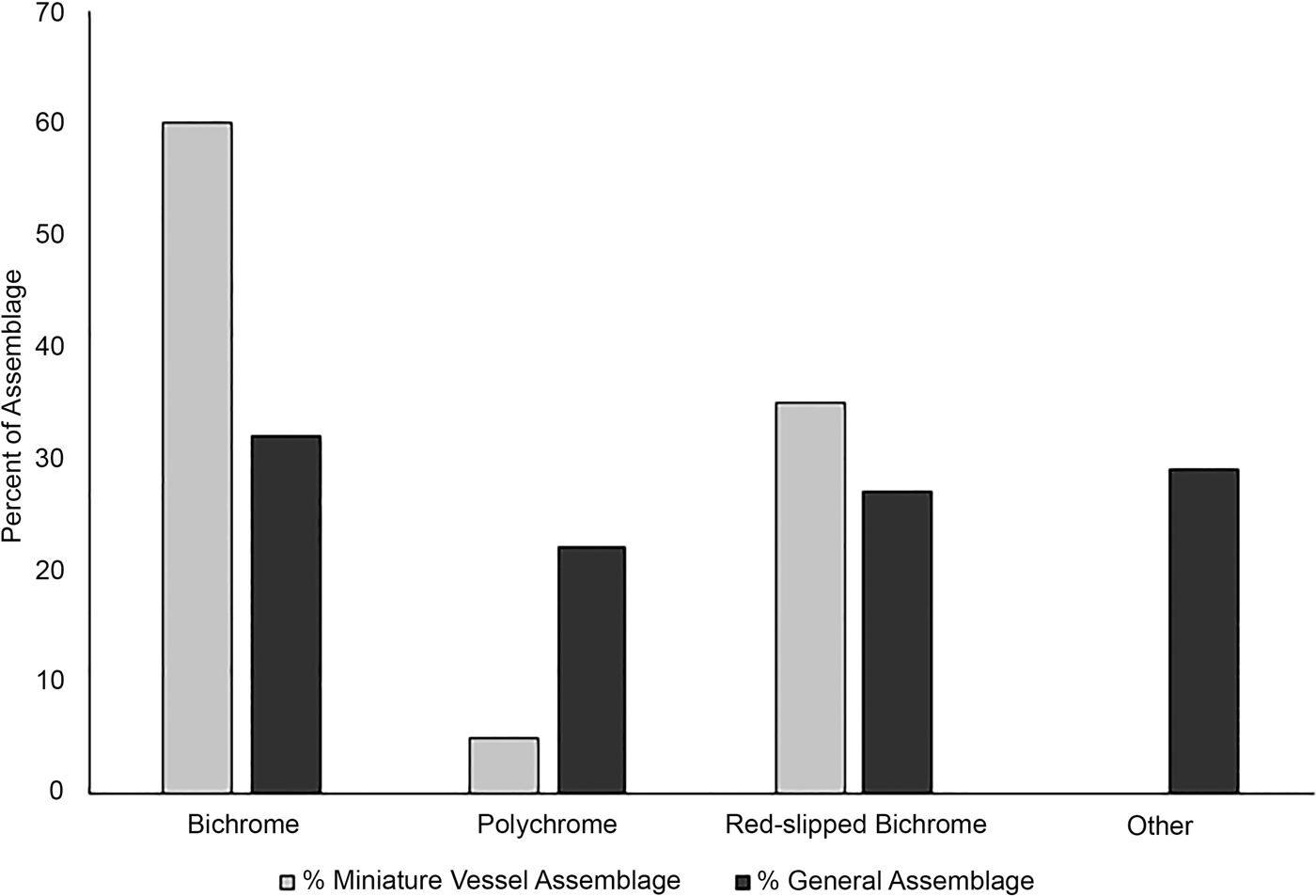
Winslow Orange Ware may be bichrome (black on orange), polychrome (black and white on orange), or red-slipped bichrome (black on red slip). Bichrome Winslow Orange Ware is more common in the miniature vessel assemblage than in the general assemblage, while polychrome varieties of Winslow Orange Ware are far less frequent (Figure 3). This may be due in part to the restricted decorative surface on miniature vessels. Within the general assemblage, polychrome Winslow Orange Ware consists of white outlining around dark brown or black lines and decorative elements, which may have proved difficult to execute on the smaller surface of a miniature vessel. Jeddito Yellow Ware in general may be bichrome (black on yellow) or polychrome (black and white on yellow or black and red on yellow; Colton Reference Colton1956; Colton and Hargrave Reference Colton and Hargrave1937). Jeddito Yellow Ware miniature vessels at Homol'ovi I are all bichrome—black paint on a yellow background. The Tusayan White Ware in this assemblage is all bichrome—black paint on a white-slipped background.
Winslow Orange Ware varieties in the Homol'ovi I ceramic assemblage.

The Jeddito Yellow Ware in the miniature vessel assemblage is less diverse than in the general assemblage. In contrast, the Winslow Orange Ware miniature vessels are fairly diverse. The relative abundance of red-slipped bichrome Winslow Orange Ware is particularly interesting. The most abundant types of red-slipped Winslow Orange Ware—Chavez Pass Red, Chavez Pass Black-on-red, and Chavez Pass Polychrome—are more common in the early occupation of the settlement cluster, occurring rarely in later contexts (Adams Reference Adams2001, Reference Adams2002; Hays-Gilpin et al. Reference Hays-Gilpin, Bubemyre, Senior and Adams1996; Lyons and Hays-Gilpin Reference Lyons, Hays-Gilpin and Adams2001). This probably represents a temporal shift, as red slip, popular in the late thirteenth century, is later phased out of the decorative corpus of this ware. The relative abundance of red-slipped Winslow Orange Ware miniature vessels suggests their production may have been more common earlier in the occupation of Homol'ovi I. This is supported by the presence of two other typically early wares in the miniature vessel assemblage: Tusayan Gray Ware and Tusayan White Ware (Colton Reference Colton1956; Hays-Gilpin and van Hartesveldt Reference Hays-Gilpin and van Hartesveldt1998; see Table 1). However, the presence of Jeddito Yellow Ware miniature vessels indicates their use did extend beyond AD 1325 (Colton Reference Colton1956; Colton and Hargrave Reference Colton and Hargrave1937).
A primary goal of this analysis was to assess the proficiency of potters producing miniature vessels. To explore this issue, we measured several variables of the assemblage at Homol'ovi I. Recorded variables include the following: consistency in vessel wall thickness and line thickness; firing control; brush control; quality of decoration, construction, and surface treatment; and the presence or absence of unintentional errors. Three measurements of wall thickness were taken on each vessel. These measurements were averaged, and then standard deviations were determined to identify standardization of thickness across the vessel. Line thickness was assessed using a similar method, with measurements taken along a single painted line. Other characteristics were categorized as poor, moderate, or good, based on visual examination, with the exception of unintentional errors, which were categorized as present or absent.
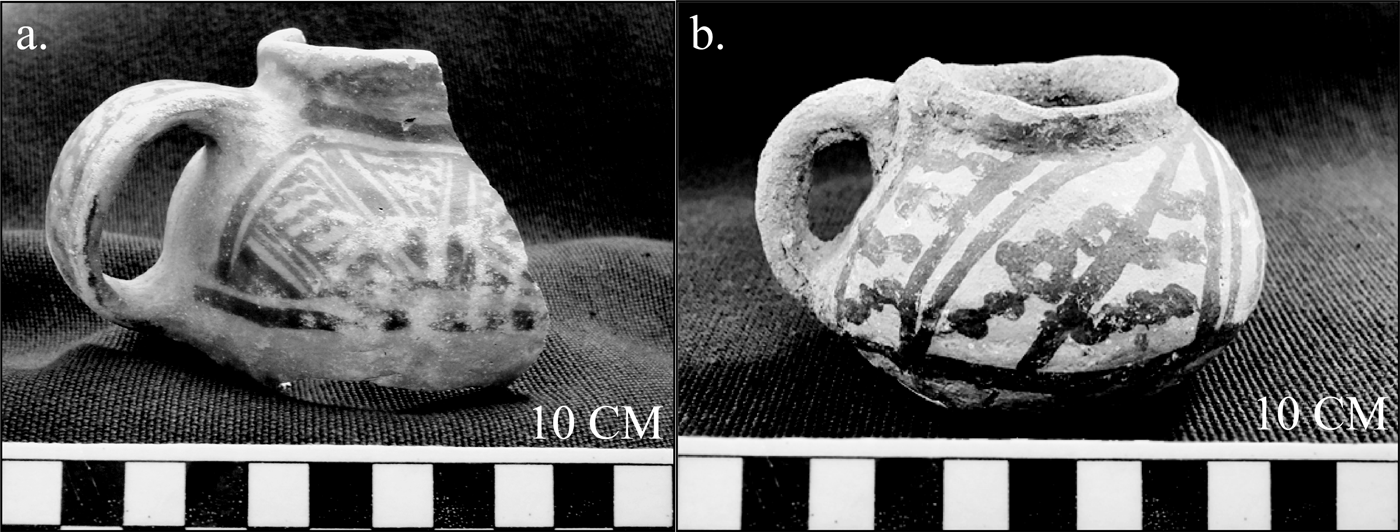
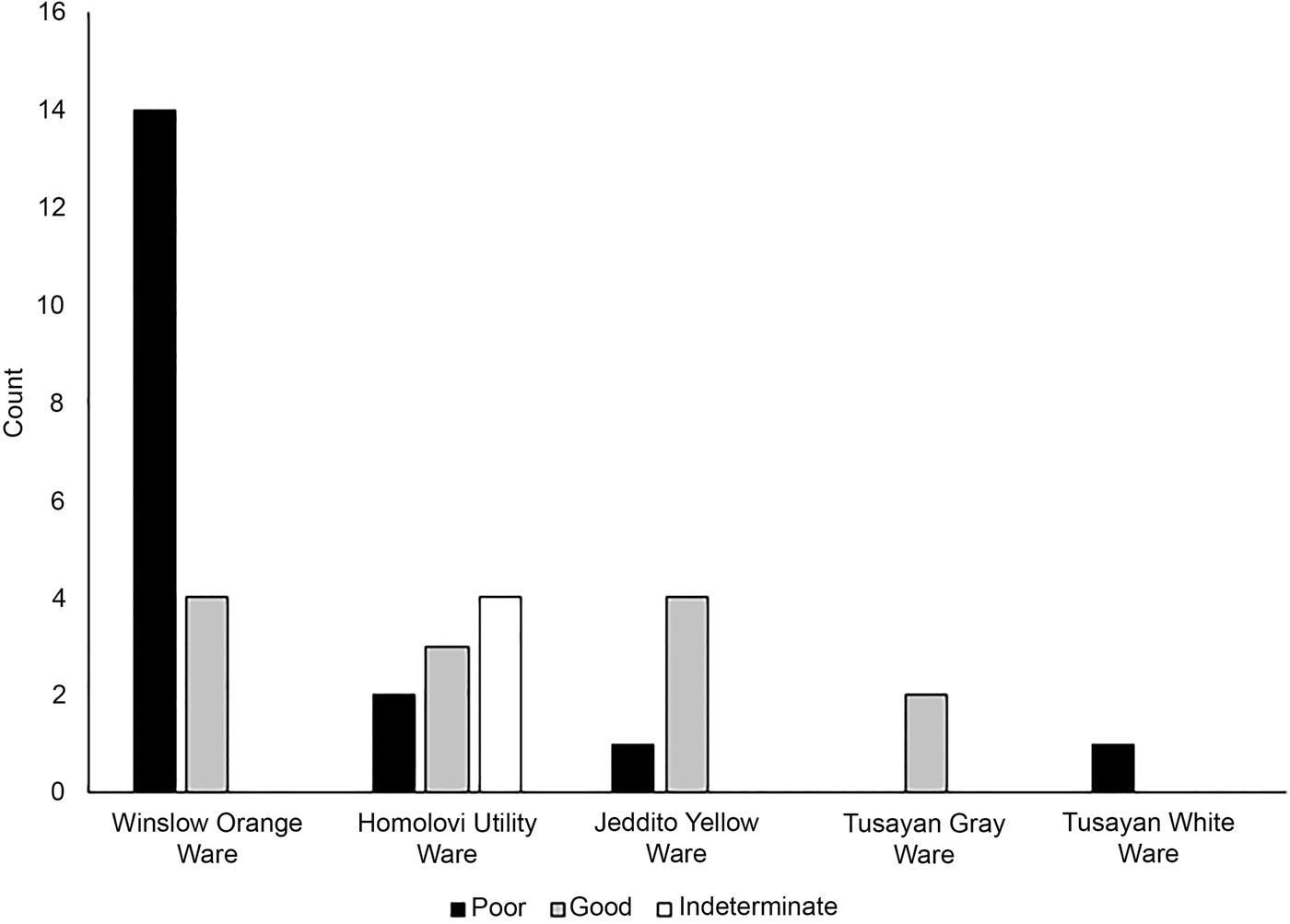
Additionally, each vessel was qualitatively assessed for artistic mastery. Vessels were categorized as poor (constructed by a novice or by an expert in an expedient fashion—not prioritizing technical proficiency), good (produced by a skillful potter), or indeterminate (Figure 4). This assessment was based on visual comparison with the whole vessel assemblage from Homol'ovi I. Miniature vessels that largely conformed to the stylistic and production standards evident within the whole vessel assemblage were categorized as good. Miniature vessels that strayed substantially from these standards—suggesting that the potter had not fully mastered the artistic conventions of the ceramic ware or was not prioritizing these conventions—were classified as poor. Thirty-five vessels could be classified in this manner (Figure 5). This variable was not recorded for pinch pots. Pinch pots are not present in the whole vessel assemblage from Homol'ovi I; therefore, no suitable specimens were available for this comparison.
Examples of miniature vessels at Homol'ovi I classified as (a) good artistic mastery and (b) poor artistic mastery. Photographs by Claire S. Barker.

Artistic mastery of miniature vessel production.

Building on these classifications, a series of Chi-square (χ) tests assessed the recorded variables for their correlation with observed artistic mastery. The correlation of three variables proved highly significant at the 0.01 alpha level: brush control (χ = 21.613; df = 3; p < 0.001), quality of decoration (χ = 19.649; df = 4; p = 0.001), and quality of surface treatment (χ = 15.362; df = 3; p = 0.002). These findings suggest the adeptness of experts in the production of miniature vessels was most clear in the execution of motifs and layouts, the finishing of the vessel surface, and fine motor control. These skills are likely learned as a potter progresses in their craft with young or amateur potters more prone to errors in execution (Crown Reference Crown2001, Reference Crown2014), suggesting well-executed vessels were produced by skillful potters. In contrast, the association of poorly executed motifs and layouts and less-refined motor control with miniature vessels categorized as poor in artistic mastery implies that these vessels were likely produced by young or novice potters. While different levels of artistic mastery are evident in miniature vessels at Homol'ovi I, the similarities between novice and expert pots supports the existence of learning frameworks based in the interaction of potters with different skill levels.
The variables of average vessel wall thickness, average line thickness, firing control, and presence/absence of unintentional errors did not correlate significantly with artistic mastery at the 0.05 alpha level. However, quality of construction was close to the significance threshold (χ = 5.876; df = 2; p = 0.053). This may be due to the difficulty inherent in constructing smaller pots (Foxhall Reference Foxhall2015), increasing the likelihood of errors in execution regardless of skill level. Despite the lack of statistically significant correlation, the averages and standard deviations of line and wall thickness do reveal several interesting trends (Figure 6). Vessels with poor artistic mastery tended to have thicker lines. The standard deviation of line thickness also varied more on these pots, suggesting that the potters producing these vessels lacked consistency in their execution—another attribute typically associated with young or novice potters (Crown Reference Crown2001). While average wall thickness does not appear to vary based on artistic mastery, the standard deviation reveals that vessels categorized as poor in terms of artistic mastery exhibited much greater variability in wall thickness than pots categorized as good. Both of these patterns reinforce the observed correlation between low technological proficiency and poor motor control. Together, these data suggest consistency and standardization of appearance serve as good markers for artistic mastery. The lack of association between firing control and artistic mastery indicates that all pots, once constructed, were likely fired together.
Average and standard deviations of vessel line thickness and vessel wall thickness.

The majority of the miniature vessels at Homol'ovi I were classified as having poor artistic mastery (Figure 5). These vessels exhibited characteristics that were more suggestive of expedient construction or construction by a novice. However, the nonlocally produced miniature vessels were more likely to be assessed as having good artistic mastery, indicating that artistic mastery was more valued in imported miniature vessels than in locally produced vessels. In other words, the residents of Homol'ovi I typically chose to import only well-made miniature vessels, or only well-made miniature vessels were selected for export by potters in the areas in which they were produced. It is possible that the value of miniature vessels constructed by children or novices may have been more personal to individuals and families, lessening the likelihood of their trade to distant communities.
Miniature Vessel Use and Depositional Contexts at Homol'ovi I
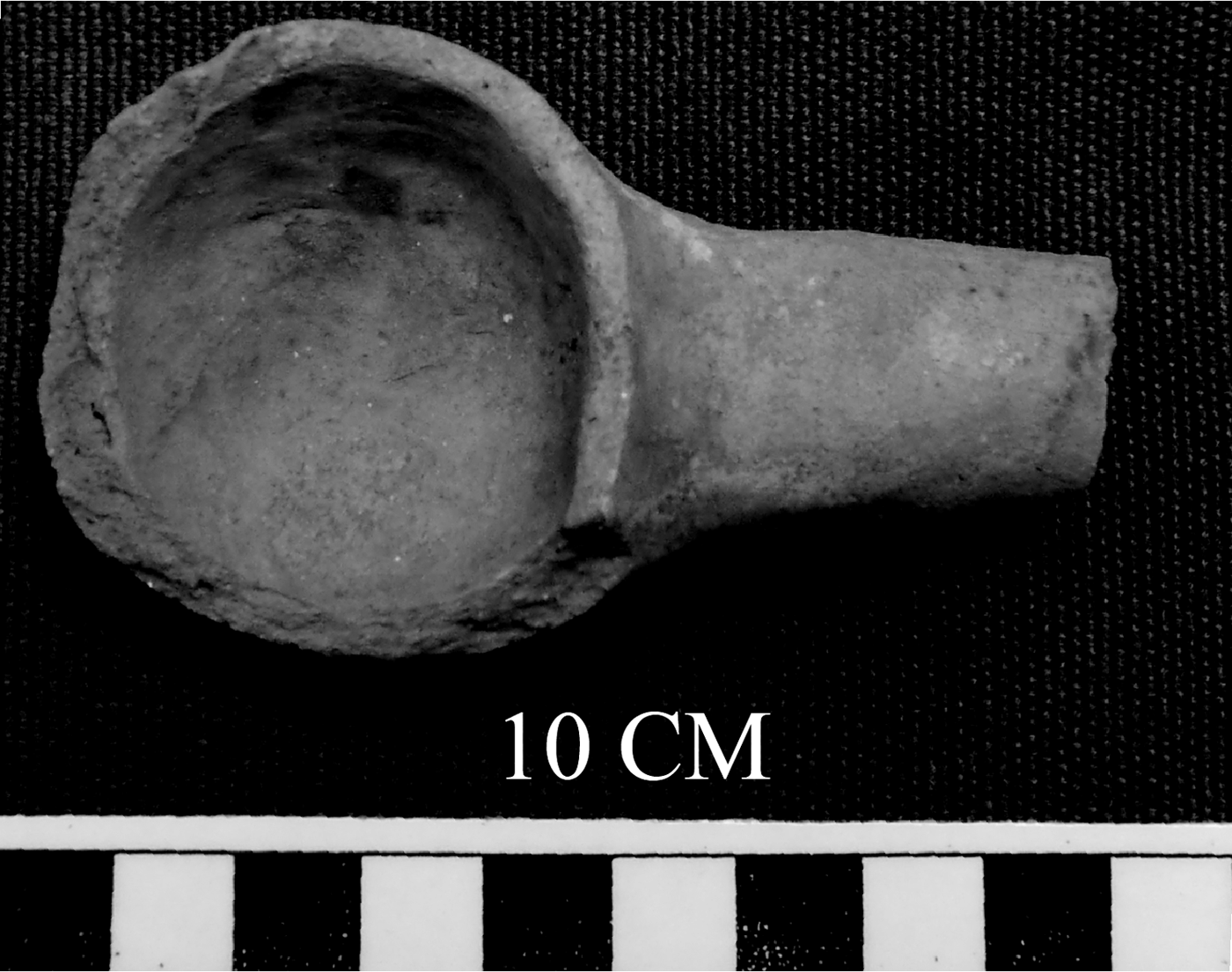
Determining the use of miniature vessels is complicated by their reduced size. While these artifacts could certainly function similarly to typical vessels (see also Blinman Reference Blinman, Blinman, Phagan and Wilshusen1988; Ericson et al. Reference Ericson, Read and Burke1972; Heidke Reference Heidke, Thiel and Mabry2006), the quantities of material they could contain, generally less than 100 mL, would be incredibly limited. The majority of the miniature vessels were bowls and jars, suggesting use for storage and serving (Table 1); however, access to the contents of these vessels would be restricted by their small orifices (Blinman Reference Blinman, Blinman, Phagan and Wilshusen1988:461). Abrasions were noted on the base and wall of one jar, as well as on the base of one mug/handled jar. The addition of a handle would have increased stability during transfer of contents and may have increased the usability of this form in miniature. While use for cooking is also a possibility, and soot was noted on one pinch pot jar, the potential for food to boil over make this unlikely to be a primary function. Two bowls exhibited abrasions on their bases, while one possessed an abraded rim suggestive of use for serving and transporting materials. This wear is similar to the type caused by scooping often observed on ladles; three of the miniature ladles also had abraded rims. Finally, the base of the shoe pot was abraded. In total, only 10 (11%) of the miniature vessels at Homol’ovi I exhibited use wear of any type. The presence of wear on one-quarter of the ladles and mugs/handled jars may suggest less common forms were utilized more heavily as miniatures, possibly tied to the added portability provided by the handles (Figure 7). In any case, the small amount of material that could be contained within these vessels supports either individualized use, possibly by children as toys, or their association with materials that occurred in small quantities, such as pollen or pigment, often linked to ritual practices.
Miniature Winslow Orange Ware ladle with broken rim from Homol'ovi I. Photograph by Samantha G. Fladd.

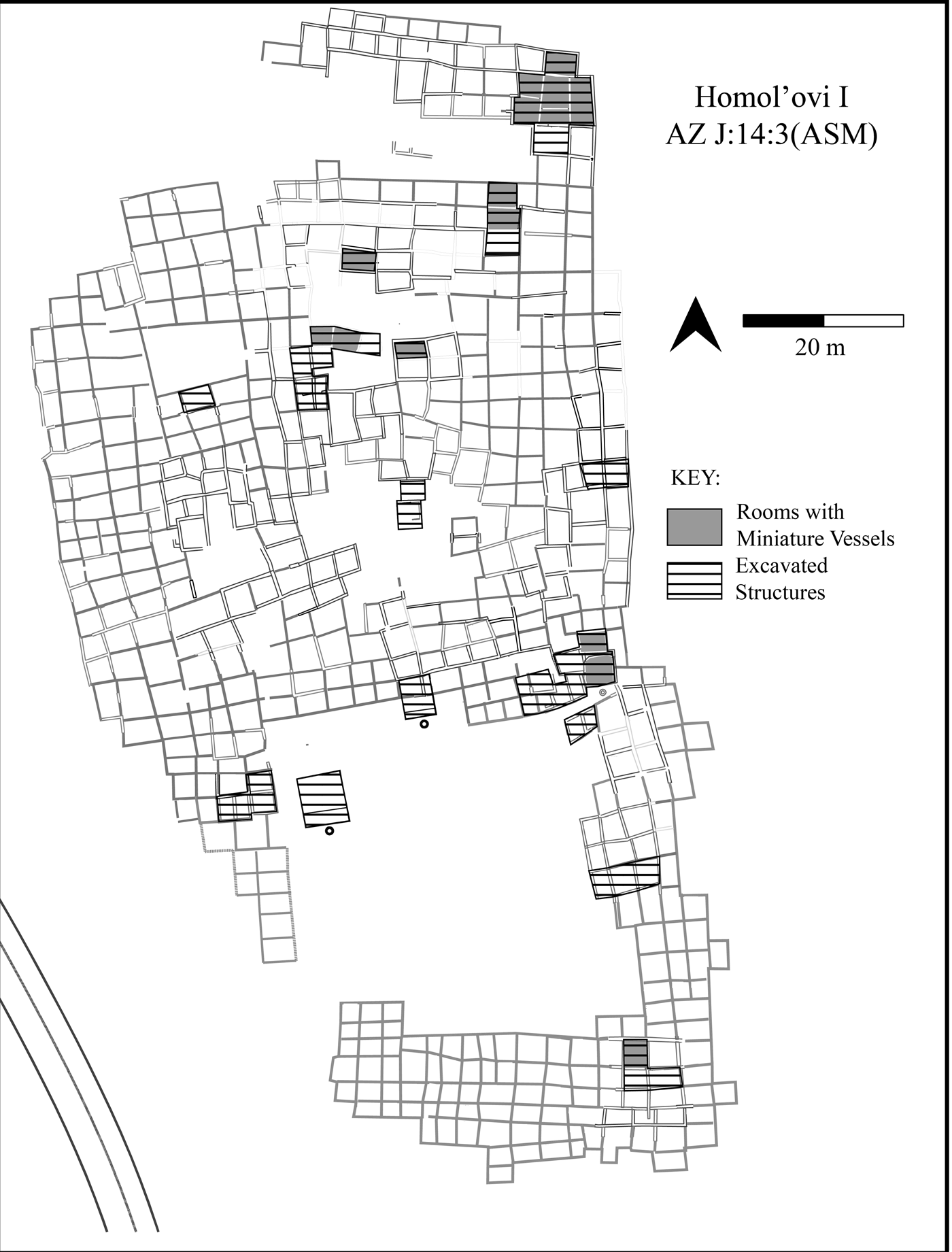
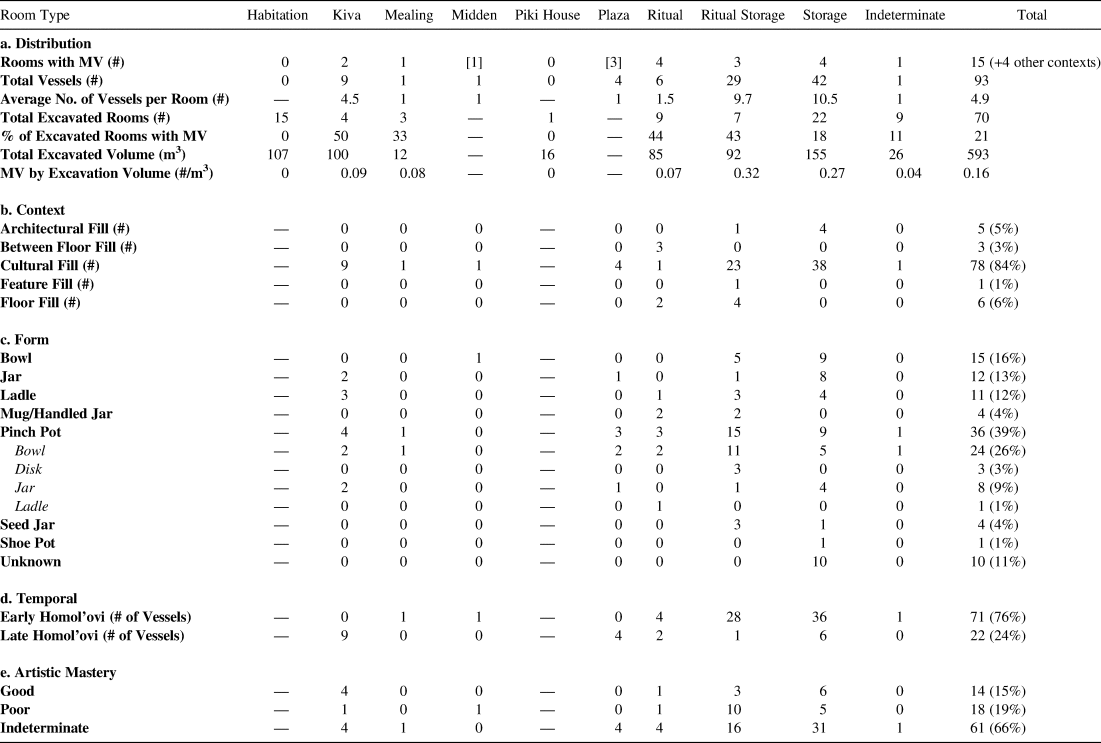
Contextual analyses could only be completed for 93 of the 94 miniature vessels, as one jar lacked this information and was thus excluded from this portion of the study. At Homol'ovi I, miniature vessels were recovered from 15 (21%) of the 70 excavated structures, as well as three plazas and one midden context (Figure 8). For these 15 rooms, the average number of miniature vessels found within each is 4.9, suggesting spatial concentration in their use and/or disposal as an even distribution throughout the 70 excavated rooms would result in 1.33 miniature vessels per room (Table 2a). The limited number and distribution of these artifacts highlights their relative rarity in the ceramic assemblage. More patterns were noted when room use was considered. In addition to habitation, storage, and kiva classifications, four other room types were defined at Homol'ovi I (Adams Reference Adams2002:Table 2.2). Mealing rooms and piki houses are communal spaces used by women for grinding and cooking activities. Ritual rooms often contain ventilator-deflector complexes and occasionally other features common to kivas, but unlike kivas, they are connected to surrounding structures by doorways and tend to be found within room blocks. Finally, ritual storage structures are located adjacent to either ritual rooms or kivas. Ritual storage and general storage rooms contain the highest quantities (45% of the total assemblage) and proportions of vessels per room; however, 50% of excavated kivas contained miniature vessels at higher than expected rates (4.5 per room). Miniature vessels were found in over 40% of both ritual and ritual storage structures, suggesting a link with ritual practices. While room count provides one way to standardize distribution, volume of excavated material from each room type further clarifies their relationships to structures (Table 2a). On average, 0.16 miniature vessels were recovered per excavated cubic meter at the site. Ritual storage and general storage rooms continue to stand out for their high proportions of miniature vessels, while recovery from kiva, mealing, and ritual room contexts all occurred at similar rates. Notably, no miniature vessels were recovered from habitation rooms, despite these representing the second most prevalent type of structure in terms of both count and excavation volume.
Distribution of miniature vessels at Homol'ovi I (adapted from map provided by the Homol'ovi Research Program).

Contextual Data on the Miniature Vessels at Homol'ovi I.

Whether the locations of miniature vessels reflect use or depositional practices can be better understood through the analysis of their specific contexts (Table 2b). The vast majority of these artifacts (89%) were recovered from room fill, largely comprised of cultural deposits, although roof and wall collapse contained five vessels. Depositional practices, rather than use, would result in their placement in upper room fill. The remaining 10 miniature vessels occurred in contexts associated with floor surfaces or, in one case, a feature. Half of these were in ritual rooms and half in ritual storage rooms. Given the large quantity of miniature vessels in ritual storage rooms, their occurrence in a feature and on floor surfaces is unsurprising. However, over half of the vessels found in ritual rooms occurred either between or on floor surfaces. These placements may suggest use in practices occurring in ritual rooms; however, they could also reflect depositional decisions made during the resurfacing of a structure, the filling of a feature (in this case a doorway), or the initial closure of a room.
Overall, the deposition of vessel forms does not appear to vary greatly by room type (Table 2c). Most miniature vessels were classed as pinch pots. This form was found in all room types with the exception of the midden, which contained a single miniature bowl. Bowl and jar forms also appear throughout the village. Twelve miniature ladles were found at Homol'ovi I in four different room types: kiva, ritual, ritual storage, and storage. The three ladle fragments found in storage rooms were all from Rooms 651 and 652, early rooms razed and filled to create the west plaza. Room 652 also contained the only miniature shoe pot found at Homol'ovi I and a miniature seed jar. The remaining three miniature seed jars were found in Room 704. Throughout Homol'ovi I, only two areas—a storage room and a plaza surface—contain isolated miniature vessel sherds without more substantial and visually identifiable miniature vessel fragments, such as whole, reconstructible, or partially reconstructible pots. The grouping of isolated sherds with larger fragments suggests that their significance continued after breakage and was remembered socially through deposition. Alternately, only certain groups may have had access to or use for miniature vessels and the materials they contained, and these individuals may have deposited the remains in areas they frequented.
The chronology of the deposition of miniature vessels was examined using the percentage of Jeddito Yellow Ware (LaMotta Reference LaMotta2006) to relatively date the deposits. The majority (76%) of the miniature vessels (Table 2d) were deposited during the two earliest Homol'ovi phases (AD 1290–1365), with only 22 (24%) being deposited during the two latest Homol'ovi phases (AD 1365–1400). Interestingly, almost all of the vessels found in ritual and ritual storage rooms were placed during the early phases, including all of the red-slipped Winslow Orange Ware, whereas all of those deposited in kivas and plazas date to the later phases. While only a few of these vessels could be assessed for quality of production, their distribution reveals several interesting patterns (Table 2e). A large proportion (44%) of the miniature vessels found in kivas were categorized as exhibiting good artistic mastery, while 34% of those found in ritual storage rooms were categorized as poor. While access to both spaces was restricted within Homol'ovi I (Adams Reference Adams2002), the ritual practices that occurred in kivas may have been more formalized and performative, possibly necessitating greater attention to the visual appearance of associated objects than was required within ritual storage contexts.
Closer examinations of a few rooms can further clarify the role of these objects. The concentration of 27 miniature vessels in Room 704 (Figure 9), a ritual storage structure accessible only from an adjacent ritual room, suggests that the use of these objects was restricted spatially. The limited distribution at the site as a whole and the density found within the closure deposits in this room indicate that miniature vessels may have only been needed by limited segments of the population or that they required specific depositional contexts to end their use lives. Additionally, three rooms that contained miniature vessels underwent significant conversions following the placement of these and other materials. Storage Rooms 651 and 652 were razed and a plaza was built over them. The placement of large quantities of ash and artifacts, as well as a neonate burial, may have served to prepare or purify this space to become one of ritual significance. These two structures contained 39 of the 42 miniature vessels found within storage rooms; their unique life histories suggest storage rooms themselves are not closely linked to miniature vessels, but instead miniature vessels formed an important component of deposits tied to the symbolic conversion of this space for later ritual use. Notably, miniature vessels were not found in habitation rooms, and the special circumstances explaining their deposition in storage rooms suggests placement in household areas was not encouraged. This pattern is also observed in Room 701, which was converted into a ritual structure, possibly a clan house, after the sealing of a lower floor surface with ash, turkey bones, and a pinch pot.
Sample of the miniature vessels from Room 704: (a) Winslow Orange Ware, (b) Tusayan White Ware, (c) red-slipped Winslow Orange Ware, and (d) Winslow Orange Ware. Photographs by Samantha G. Fladd.

Thus, miniature vessels appear to be part of a suite of materials whose deposition served to either prepare an area for subsequent ritual activities or to close a ritually significant space (see also Hedquist Reference Hedquist2016; Walker Reference Walker1995, Reference Walker2002). The variable markers of use suggest miniature vessels experienced different life history trajectories prior to deposition. In some cases, this may have involved their immediate use as offerings, while in other cases, indications of serving and storage are evident. Regardless, depositional contexts emphasize their important role in the creation of meaningful spaces across the village and demonstrate that these vessels ended their use lives through ritualized practices.
Discussion
Although the analysis of miniature vessels at Homol'ovi I does not provide definitive answers about the use and meaning of these objects, it does offer insights into the social life of these vessels within the village. As with earlier studies in the Southwest (e.g., Bagwell Reference Bagwell and Kamp2002; Kamp Reference Kamp2001), this assemblage comprises examples of miniature vessel production by both skilled and unskilled potters, potentially including children. While use was limited by their small size, they could have stored and served small quantities of material, and a small portion of the assemblage evidences these activities, particularly ladles and handled jars. Discard decisions demonstrate a strong preference for spaces associated with ritual practices, such as kivas, plazas, ritual storage rooms, and ritual structures.
While the quantity decreases, the deposition of miniature vessels during the latest Homol'ovi phases demonstrates their importance in ritual activities continued throughout village occupation, although the form of those activities may have shifted. The elaboration of the katsina religion, notable for large public dances (Adams Reference Adams1991; Titiev Reference Titiev1992:109–129), is tied to the appearance of the south enclosed plaza at Homol'ovi I, which likely shifted the balance of ritual expressions within the village. The temporal shift in the deposition of miniature vessels from ritual rooms to kivas also corresponds with other ritual shifts, such as a new pattern of fauna exploitation (LaMotta Reference LaMotta2006) around this time. Objects, such as miniature vessels, may have been important components of the ritual practices that contributed to the social position of kiva groups within the village and thus their legitimacy (Adams Reference Adams1991, Reference Adams2002). The ethnographic association of these objects with burials, caches, and shrines supports their potential contribution to sanctifying spaces and could explain their appearance in ritual spaces of all types at Homol'ovi I (e.g., Clark Reference Clark1967; Hough Reference Hough1907; Nelson Reference Nelson1914:91–93; Parsons Reference Parsons1939:317, 919).
Nevertheless, the variable life histories that could have affected the deposition of miniature vessels constructed by different types of individuals remains important (LaMotta and Schiffer Reference LaMotta, Schiffer and Allison1999; Walker Reference Walker1995). Although some vessels may have been constructed with the plan of ritual deposition, the use of other objects for these purposes may not have been determined until much later in their use lives. The inherent symbolism of miniature vessels likely varied based on the identity of the producer, despite the shared association with ritual upon deposition. Langin-Hooper (Reference Langin-Hooper2015:65) suggested that interactions with miniatures take on a performative quality tied to physical intimacy between the individual and the object. As noted earlier, vessels produced by novice adults or children may accrue additional significance for the family or social group. Parsons (Reference Parsons1939:45) discussed the high value placed on children in Pueblo society, particularly as they contribute to households and the legacy of a descent group. Vessels produced by learners, likely children, were sometimes kept and used in ceremonies (Bunzel Reference Bunzel1929:13). The placement of vessels produced by children or novices in ritual spaces could speak to the importance of longevity for the social group and/or the initiation of members into ritual societies, thus emphasizing continual renewal of the group.
The only potential difference in the deposition of miniature vessels exhibiting good and poor artistic mastery occurred in kivas and ritual storage rooms. The placement of locally and inexpertly produced miniature vessels in ritual storage rooms suggests that these spaces belonged to small-scale, possibly kinship-based, groups who sought to emphasize their continuity through their association with children within the village. Alternately, kivas contained several well-made imported miniature vessels. While in part reflecting a temporal shift in the preference for imported Jeddito Yellow Ware throughout the occupation of the Homol'ovi Settlement Cluster, their appearance in the late fill of kivas prior to emigration to the Hopi Mesas could also have served as a marker of growing affiliations with this distant identity. Rather than emphasizing local renewal and continuity, these miniature vessels may have symbolized an external focus as the village was depopulated and eventually closed (see also Bernardini Reference Bernardini2005; Lyons Reference Lyons2003). Despite broad similarities in their treatment and placement, the significance of miniature vessels produced by different segments of the population should not be overlooked.
Conclusions
Understanding the social life and meaning of miniature vessels within Homol'ovi I required a combined approach that assessed the attributes of the vessels themselves, their use, and their depositional context. Together, these datasets suggest miniature vessels were an important component of ritual assemblages used to prepare or close locations associated with ritual organizations. The objects may have symbolized either local individuals or distant identities that were drawn upon during these practices. This pattern held true regardless of construction quality or vessel form and posited use, although there may be slight differences in the types and scales of ritual organization with which vessels of different quality were associated. Despite differences in production and use, these vessels ended their life histories in similar and predictable ways at Homol'ovi I—in deposits associated with ritual spaces.
Future research on miniature vessels could take many forms, but one focus should be on integrating studies of construction, use, and context. In later prehispanic pueblos, ceramics have often been used to understand the social changes that accompanied population aggregation and the growing ritual importance of plazas and feasting, emphasizing their role in communicating identities and social affiliations (e.g., Chamberlin Reference Chamberlin, Glowacki and Keuren2011; Mills Reference Mills2007; Potter Reference Potter2000). However, the deposition of miniature vessels within Homol'ovi I indicates that less visible ceramic forms and practices also played important roles in the ritual lives of social groups, possibly helping to define boundaries within villages. A clearer understanding of the miniature, hidden, and/or understated aspects of the archaeological record is needed to fully address this topic.
Acknowledgments
This work was supported by the National Science Foundation through Grants BCS-1405748 and BCS-1616970. We would like to thank Chuck Adams and Rich Lange for providing access to the Homol'ovi collections, as well as helpful comments on drafts that vastly improved the quality of this article. Comments from three anonymous reviewers and the editor were also extremely helpful. We are very grateful to Jaye Smith and Riley Duke for help with ceramic analysis. Thank you to Jessica MacLellan for translating the abstract into Spanish. Finally, this work would not have been possible without the numerous students and researchers who have participated in the Homol'ovi Research Program.
Data Availability Statement
The data included in this manuscript are based on examinations of the Homol'ovi Research Program's excavation records and archaeological collections. These are housed in the Homol'ovi Research Lab at the Arizona State Museum in Tucson. The excavation records are currently in the process of being scanned, and a digitized version will be made available on tDAR (the Digital Archaeological Record) shortly.