By the time I completed fieldwork in Qatar in 2016, the Msheireb project that aimed to redevelop the heart of Doha was nearing completion of its first phase. The way this development project unfolded during this time was indicative of broader negotiations of Qatari cultural brokers with ideas of indigeneity and expertise: the project was rebranded from Dohaland, “The Heart of Doha,” to Msheireb (after the local wadi) in the first half of 2011, while the iconic Al Kahraba Street—the “spine” of the old city and the first street to be electrified in Qatar—was referred to in architectural notations as the “Champs-Élysées” of Doha. The politics of indigeneity of place-making in these negotiations reflected an unresolved unease with the cosmopolitan nature of expertise. This tension was related not necessarily to the ingenious remixing of traditional and modern concepts of cultural and environmental sustainability,Footnote 1 but rather to the active erasure of foreign expertise. We see this, for example, in the active rebranding of the I. M. Pei's Museum (in reference to the Chinese American “starchitect” who designed it) in order to take its rightful “local” name, the Museum of Islamic Art. While these efforts would suggest an intention to localize expertise and build local capacity as part of national objectives, I argue in this essay that this mastering in fact obscures local expertise by dissociating it from the cosmopolitan context in which knowledge production is negotiated in Qatar.
In the age of cultural heritage organizations largely aimed at assessing the state of conservation and challenges to heritage resources, especially in areas of the Middle East where conflict has taken a toll on heritage places, two apparently opposing types of “stakeholders” emerge: on the one hand, a learned community of scholars and concerned citizens, and on the other hand, the perpetrators of crimes against heritage and their supporters. With epistemological concerns centered on this tension and on forces which, one could argue, the field of heritage studies is not equipped to disarm, this discussion will focus on an aspect of heritage management that this field is equipped to address: the growth and operation of heritage expertise in the region. This involves the development of a field of nonlocal, “international” interventions in local heritage practices and an accompanying set of power relations centered upon the heritage “experts” who oversee and manage such interventions.
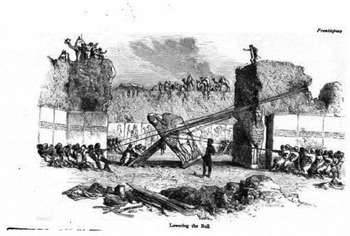
The history of what are broadly termed heritage interventions in the Middle East is haunted by specters of forms of expertise that serviced foreign (colonial) agendas. In fact, the region was a formative terrain for various stages in the development of the field of heritage studies: it was a playground of antiquarian activities and concerns, early large-scale archaeological excavations, and both in situ and ex situ conservation work. Ironically, despite this controversial period from the perspective of heritage ethics, the region later became an important context for discussions about illicit trade in antiquities, which led to calls for the development of international principles of “best practice” in the management of cultural heritage. These legacies remain the focus of debates around heritage in the region,Footnote 2 fueled by concerns about autonomy and self-reliance in the management of its heritage resources. One cannot help but invoke the depiction of Henry Layard's work in Nineveh in 1847–48 (Figure 1), a visual representation of “heritage management” in operation in this region that not only naturalized the chaîne opératoire of heritage objects in European institutions to European audiences,Footnote 3 but also were accompanied by antiquarian accounts that caricaturized the interaction between these expeditioners and the local population. Referencing the depiction of a local workforce apparently assisting in the removal of a lamassu, Henry Layard's detailed description of this intervention portrayed a willing or ambivalent endorsement of his activities from “the Arabs” who assisted him.Footnote 4 Through colorful and often misinterpreted characterizations firmly situated within an Orientalist agenda and tradition, the depiction of local stewardship of heritage objects and places in the early explorations of heritage resources suggested that there was simply no local expertise that could recognize the value of these monumental finds—how else could the documented cooperation of local populations in the removal of these objects be explained?
“Lowering the Bull,” frontispiece in Henry Austen Layard's Nineveh and Its Remains.

While I refer hyperbolically to a time when local worldviews were marginally interesting to antiquarians, as cavalry officers, artists, and even circus strongmen were the creators and interlocutors for an early institutionalization of universal heritage value, current channels of expertise may be similarly dislocated from local resources. Today, the Middle East features countless local institutions and professionals that carry out the valuation, assessment, and management of heritage resources across borders. But I argue in the case of my field site that much of the work of these institutions and professionals is guided by disciplinary principles and codes of ethics that are rarely if ever concocted in situ. Against this backdrop, I would like to propose that we reflect on the tensions inherent in heritage studies as a discipline that favors specific forms of expertise and knowledge practices developed in specific geographical contexts, often the “West.” I raise this challenge about my own field in order to think about the ways in which the discipline itself may contribute positive changes within its modest but influential means. To do so, I draw from my experience conducting ethnographic heritage fieldwork in Qatar during the period 2011–16, when I was both a foreign disciplinary expert living in the country and a sort of local informant for disciplinary experts coming from abroad, who sought to recruit me for the type of translation work that a local informant is usually asked to do. In this position, I tried to problematize the nature and role of heritage expertise in the work of heritage in Qatar, which are obscured by several interconnected factors that were the norm during my time in the field. I therefore aim to provide an example of the way in which these factors obscured channels of expertise and stood in the way of forging a situated discipline for heritage preservation and management.
The first factor is the high number of imported expertise on the workforce of most heritage organizations, which challenged the very concept of “local expert.” Within this demographic were not just the experts imported by various institutions to conduct capacity building or take a leadership role, but also those Qatari scholars who returned to Qatar bearing foreign advanced degrees, a form of knowledge that remains exogenous. Secondly, the rules of engagement of heritage work in operation in Qatar were tried and tested elsewhere. Despite Qatar's prominent position during this period in heritage debates worldwide, taking a leadership role in the UNESCO World Heritage Committee, for example,Footnote 5 the heritage scene lacked discussions about the suitability of specific methodological and epistemological approaches that had been transported—but not always translated—from other contexts for the construction of heritage value in a local context. In turn, I noted little concern and research carried out on the constructive and destructive effects of specific heritage preservation approachesFootnote 6 —the type of discussion that invokes and gives shape to heritage ethics. Thirdly, there was a concerted effort to erase certain forms of expertise that were being deployed legitimately to resolve different preservation challenges. Therefore, the relationship between heritage construction narratives and the expert voice involved in their production becomes ruptured in such a way that questions of epistemology and the politics of heritage are obstructed. This precludes contemporary and future discussions of the nature of heritage value in its own context.
At a time when the relative authority of architectural heritage preservation projects was being contested by Qatari museums and the Private Engineering Office in Qatar, each of which deployed very different philosophies of preservation, four new museums on different aspects of the cultural identity and history of Qatar were inaugurated in the new downtown Msheireb area in Doha. These museums made ample use of oral histories to consolidate different aspects of an emerging cultural heritage sensitivity. Qatar University also invited a group of scholars to discuss the value and challenge of oral history research in a roundtable format. Projects gathering oral histories were clearly gaining popularity across various institutions as a public engagement activity or as efforts to formalize and incentivize cultural debates in Qatar, a feasible and potentially productive methodology in the construction and use of cultural heritage resources.Footnote 7 The mobilization of oral history as an artifact—that is, an object of cultural or historical interest made by a human being and extracted through investigative procedures—was nonetheless weakly contextualized across the board. The ease with which it was deployed in many institutions failed to consider three critical problems that need to be planned for in this research strategy: the conditions under which the data is obtained; the conditions under which the data is curated; and the conditions under which the data is later put to work, transgressing the boundaries of private and public life that are particularly significant in Qatari culture. Considering that “oral history erases the text-producing activities of the interviewer,”Footnote 8 the popularization of such an extractive methodology by powerful institutional knowledge-brokers has potentially damaging results, as certain cultural norms were inevitably shifting “in the name of heritage preservation.” What needs to be investigated more critically is whether this deployment is giving adequate room for vernacular methodological approaches and debates to emerge and gain authority over the academic production of oral histories as artifacts. Considering that methodologies that might operate well among communities in Queens could do significant damage in Qatar, are these academic engagements ethical, that is, taking into consideration the power structures in operation?
While the empowerment of local voices in the work of heritage is a key objective in postcolonial heritage approaches, it could be argued that this “local voice” is becoming increasingly concealed and difficult to identify and access. In a recent volume dedicated to a critical reappraisal of the dichotomy of “us” and “them,” Charlotta Hillerdal, Anna Karlstrom, and Carl-Gosta Ojala propose that “blurring the borders between the colonizer and colonized, newcomer and native, means that set categories are challenged on the ground, and the archaeological perspective reveals a complexity far beyond dichotomized categories and oppositional identities.”Footnote 9 This condition is compounded by the reality that, although heritage practices may be performed locally, the predominant discourse and spaces of discussion and dissemination tend to be in languages and contexts that are not local. The performance of knowledges is attached to the enforcement of categories, application of standards, education and training, and application of technologies, all of which may serve the purpose of aligning with international—but not necessarily localized—objectives. In this sense, the type of expertise that is deployed in the work of heritage could echo an “ethnographic authority” that allows for the accumulation of privileged forms of knowledge and power.Footnote 10 Therefore, an undisclosed expertise has the ability to overshadow and devalue not only forms of heritage that are created through this channel but also forms that are excluded. Recognizing the absence or creation of specific ideas of locality in debates in and about Qatar and considering their relevance to elsewhere in the Middle East highlights the idea that the agenda for localized heritage debates is susceptible to being defined elsewhere—in zones of conflict, guided by the hands of perpetrators, for example, or by the “saviors” themselves through diplomatic transactions.