Individuals raised in harsh or unsupportive households are at heightened risk for both mental health disorders and physical health problems (Belsky, Ruttle, Boyce, Armstrong, & Essex, Reference Belsky, Ruttle, Boyce, Armstrong and Essex2015; Repetti, Taylor, & Seeman, Reference Repetti, Taylor and Seeman2002). For example, a representative longitudinal study of families in two New York counties found that 63% of youths experiencing high levels of maladaptive parenting in childhood had psychiatric disorders by young adulthood, independent of their parents’ mental health status (Johnson, Cohen, Kasen, Smailes, & Brook, Reference Johnson, Cohen, Kasen, Smailes and Brook2001). A steep graded association has also been shown between exposure to childhood household dysfunction or abuse and diseases in adulthood, including cancer and heart, lung, and liver diseases (Felitti et al., Reference Felitti, Anda, Nordenberg, Williamson, Spitz, Edwards and Marks1998).
While the mechanisms behind these associations are numerous, inflammation may be one important biological pathway. Inflammation is implicated in many mental and physical health problems and is a potential common mechanism to explain how psychological adversity may “get under the skin” (Miller, Chen, & Parker, Reference Miller, Chen and Parker2011). When the body activates an inflammatory response (e.g., in response to a bacterial exposure), proinflammatory cytokines, such as interleukin 6 (IL-6) and tumor necrosis factor-α (TNF-α), are released and help coordinate responses of immune cells to destroy infection or repair tissue damage (Kiecolt-Glaser, McGuire, Robles, & Glaser, Reference Kiecolt-Glaser, McGuire, Robles and Glaser2002). In the short term, these responses protect the body; however, if they become sustained over the long term, low-grade inflammation can result, which may contribute to illnesses such as heart disease (Ridker, Hennekens, Buring, & Rifai, Reference Ridker, Hennekens, Buring and Rifai2000) or psychiatric disorders such as depression (Felger & Lotrich, Reference Felger and Lotrich2013).
Adverse childhood family environments have been linked to proinflammatory phenotypes. For example, adolescents raised by families displaying high harshness and low support exhibited increasing production of proinflammatory cytokines when their white blood cells were exposed in vitro to a bacterial product, lipopolysaccharide (LPS; Miller & Chen, Reference Miller and Chen2010). Childhood maltreatment, family chaos, and low levels of parental empathy are also each related to elevations in markers of low-grade inflammation in offspring, including circulating C-reactive protein and IL-6 (Danese, Pariante, Caspi, Taylor, & Poulton, Reference Danese, Pariante, Caspi, Taylor and Poulton2007; Manczak, DeLongis, & Chen, Reference Manczak, DeLongis and Chen2016; Schreier, Roy, Frimer, & Chen, Reference Schreier, Roy, Frimer and Chen2014). Conversely, a parenting-focused intervention in an at-risk population of African American youth reduced six biomarkers of low-grade inflammation (Miller, Brody, Yu, & Chen, Reference Miller, Brody, Yu and Chen2014), further supporting causal links between family relationships and inflammation.
While these previous studies have largely focused on the quality of parenting, another important aspect of family relationships may be consistency. That is, the variability (rather than just the valence) of behaviors as they occur across time may represent another important characteristic of family experiences for children. For example, inconsistent disciplinary practices have been shown to hinder executive functioning and to predict adolescent antisocial behavior (Halgunseth, Perkins, Lippold, & Nix, Reference Halgunseth, Perkins, Lippold and Nix2013; Hughes & Ensor, Reference Hughes and Ensor2009). Intraparental inconsistency has also been demonstrated to relate to internalizing and externalizing symptoms in sixth-graders (Benson, Buehler, & Gerard, Reference Benson, Buehler and Gerard2008) and longitudinal work by Hightower (Reference Hightower1990) found that adolescents’ reports of parental rule-setting inconsistency predicted their mental health outcomes at age 50. These findings are congruent with attachment theory, as well, which posits the importance of caregiver consistency and dependability in shaping children's expectations about their world (Bowlby, Reference Bowlby1982; Verhage et al., Reference Verhage, Schuengel, Madigan, Fearon, Oosterman, Cassibba and van IJzendoorn2016).
Could inconsistency in parent–child interactions also be related to inflammatory activity in youths? One possibility is that interaction variability may contribute to a sense of unpredictability, in turn amplifying experiences of stress and physiological responses to family interactions. Previous work has demonstrated that predictability represents a key psychological dimension related to physiological stress responses (Dickerson & Kemeny, Reference Dickerson and Kemeny2004; Sapolsky, Reference Sapolsky1994). If less predictable parenting interactions create more stressful environments for children, these stress experiences may contribute to how immune cells respond to challenges. Variability in social interactions may also undermine important regulatory cues to the body. For example, consistent interpersonal interactions are considered a type of social zeitgeber, an environmental cue that helps entrain certain biological rhythms to a 24-hr circadian cycle (Ehlers, Frank, & Kupfer, Reference Ehlers, Frank and Kupfer1988). In healthy individuals, regular social interactions have been shown to predict cortisol rhythms (Stetler & Miller, Reference Stetler and Miller2007), a hormone that, in part, regulates inflammation.
Preliminary support for links between inflammation and family consistency come from two studies suggesting that broad indicators of stability in homes may be related to inflammatory indices in children. In the first, higher ratings of chaos in the home environment for low socioeconomic children was found to be related to youths’ inflammatory profiles (Schreier et al., Reference Schreier, Roy, Frimer and Chen2014). However, the focal questionnaire of family chaos was a trait measure that did not assess consistency in day-to-day behaviors in the family (Matheny, Wachs, Ludwig, & Phillips, Reference Matheny, Wachs, Ludwig and Phillips1995). In a second study, greater use of routines within the families of children with asthma were found to predict lower stimulated production of an asthma-relevant cytokine, IL-13, in youths (Schreier & Chen, Reference Schreier and Chen2010). It remains unclear, however, whether day-to-day consistency in interactions between family members may be linked to inflammatory processes in adolescent healthy populations.
In previous research, family inconsistency has most commonly been measured by employing global self-report questionnaires that ask respondents to aggregate across experiences and time (e.g., Benson et al., Reference Benson, Buehler and Gerard2008; Hughes & Ensor, Reference Hughes and Ensor2009). However, with a variable such as consistency in behavior, the best approach to understanding this process may be to capture day-to-day interactions in the lives of families (Fuligni et al., Reference Fuligni, Telzer, Bower, Irwin, Kiang and Cole2009). A daily diary approach may also highlight the more nuanced aspects that contribute to connections between early family environments and youth inflammation, perhaps through repeated or frequent stress-system activation (Fuligni & Telzer, Reference Fuligni and Telzer2013; Repetti et al., Reference Repetti, Taylor and Seeman2002). In this study, we took a daily diary approach to measuring consistency and chose to focus on two dimensions of daily consistency in parent–youth interactions: affective and temporal. By affective consistency, we refer to whether family members consider their interactions to be positive or negative, and whether this is consistent across days. By temporal consistency, we refer to when interactions occur, specifically focusing on whether parents and children engage in leisure time together at the same time of day across days. These two aspects were selected because each may contribute differently to the family environment: variability in the degree of positivity of parent–child interactions may challenge a youth's ability to predict whether that parent might be a helpful source of support (Mallinckrodt, Reference Mallinckrodt1992). In contrast, variability in the timing of leisure interactions may undermine anticipation of daily parent–child contact and disrupt a potentially important social zeitgeber (Stetler & Miller, Reference Stetler and Miller2007), possibly reflecting more chaotic or irregular structural family elements (Evans, Gonnella, Marcynyszyn, Gentile, & Salpekar, Reference Evans, Gonnella, Marcynyszyn, Gentile and Salpekar2005). The elective nature of leisure interactions makes it particularly relevant to the assessment of timing variability, as it represents a jointly decided and mutually pleasurable form of interaction that may be more stabilizing for youths than, for example, interactions relating to the completion of chores.
The present study sought to test whether variability in day-to-day interactions between parents and children would be related to the production of proinflammatory cytokines in youths 1 year later. We also aimed to test associations with both affective consistency and temporal consistency in these daily interactions. As an index of inflammatory processes, we exposed youths’ immune cells in vitro to a bacterial stimulus, LPS, and then measured the amounts of several different proinflammatory cytokines that were produced. It was hypothesized that greater variability in the quality of daily parent–child interactions and in the timing of parent–child leisure interactions would relate to greater production of proinflammatory cytokines in youths’ immune cells. Moreover, these effects were hypothesized to be independent of overall relationship quality and frequency of parent–child leisure interactions. An exploratory question was whether variability in quality and in timing of leisure interactions would relate independently to production of proinflammatory cytokines or would reflect shared risk.
Method
Participants
Using advertisements in local media, adolescent youths (age 13–16) and their parents were recruited as part of a larger study of psychosocial contributors to health (e.g., Schreier et al., Reference Schreier, Roy, Frimer and Chen2014). One parent and one child from each family participated. Both family members were required to be English-speaking and to be free of any chronic or acute medical illness. Data from three assessments were utilized in the present study: a baseline laboratory visit during which demographic and anthropometric data was gathered, 2 weeks of daily diary reporting following the laboratory visit, and biomarker data collected 1 year later. One hundred twenty-three dyads participated in these assessments (95 mothers and 28 fathers, 66 daughters and 57 sons) and all available data were utilized. Youths were on average 14.57 years old (SD = 1.05) and parents were on average 46.56 years (SD = 5.15) at baseline. Fifty-seven percent of youths identified as being of European descent, 31% identified as being of Asian descent, 5% identified as being of African descent, 3% identified as being of Latin American descent, and 4% identified as other. Parents had on average 16.62 years of education (SD = 2.66) with a range of 10–27 years.
Procedure
During the baseline laboratory visit, parents and youths provided informed consent and assent and supplied demographic information. Anthropometric data, including youths’ waist circumference (a measure of central adiposity, which is related to inflammation) was also collected. Immediately following this visit, parents commenced 2 weeks of daily diary assessments where they reported on several aspects of their daily experiences with their child (described below). They were instructed to complete this diary at the end of each day just before going to bed. One year later, youths returned to the lab to have blood samples collected for cytokine production assays.
Measures
Daily diaries
Variability in quality of interactions
For 14 days, parents rated the quality of their daily interactions with their child by responding to the item “Overall, my day with my child was ____” using a 3-point scale in which 1 = negative, 2 = neutral, and 3 = positive. In the case of multiple children, parents were instructed to respond with respect to the target child participating in the study. To calculate variability, each person's standard deviation of ratings across days was extracted. This was our “variability of relationship quality” variable, with higher numbers indicating greater variability in relationship quality across days. To control for the fact that variability could be related to average levels, the mean rating of quality across days was also calculated (“overall relationship quality”), with higher scores reflecting more positive overall quality of parent–child interactions.
Variability in timing of leisure interactions
Over the same period, parents also recorded the time of day at which they engaged in a number of daily behaviors (e.g., eating breakfast, exercising). Relevant to the current study, they reported the time of day at which they spent leisure time with their child. This item was examined because it (a) probed explicitly for a type of interaction that included both the parent and the target child (as opposed to other items on the parent daily diary that probed activities the parent may have done alone) and (b) represented a theoretically relevant form of interaction presumably reflecting exposure to a shared positive experience (i.e., mutually elected time with each other vs. engaging in chores or discipline), which would be consistent with research on social zeitgebers (Stetler & Miller, Reference Stetler and Miller2007). If parents spent leisure time with their child multiple times during the day, they were asked to only record the time of their first experience, as this would capture daily structure while being consistent across as many families as possible. The variability in the timing of leisure interactions across days was calculated by extracting the standard deviation of their onset time and was labeled “variability in timing of interactions.” To control for the possibility that families who rarely spent time together might show lower variability, the number of days over the 2-week period during which parents reported spending leisure time with their child was also calculated (“overall interaction frequency”).
To confirm compliance, diaries were primarily completed online, which logged the time and date of completion. If a participant preferred to complete diaries by paper, then he or she was given electronic time stampers, which similarly logged the time and date of completion.
Stimulated cytokine production
Peripheral blood was drawn in youths 1 year after the baseline visit using antecubital venipuncture into sodium heparin vacutainer tubes. The sequencing of this measurement is a result of the larger research protocol in which there was no stimulated cytokine production assessed following the daily diaries more closely than a year. However, examining cytokine production a year later reflects the hypothesis that interaction inconsistency represents a reliable dimension of the family environment that encourages the emergence of proinflammatory phenotypes over time and reduces the possibility that any associations are due to an unusually chaotic period. Moreover, it allows for an examination of directionality that would not be possible with concurrent assessment. Blood was diluted 10% with an isotonic saline solution and was then mixed with the bacterial stimulus LPS at a final concentration of 50 ng/ml before being incubated for 6 hr at 37 °C at 5% CO2. The production of four proinflammatory cytokines in response to LPS were measured: IL-1β, IL-6, IL-8, and TNF-α. Samples were assayed using electrochemiluminescence with a Sector Imager 2400 from Meso Scale Discovery, using the Meso Scale Discovery human proinflammatory 7-plex base kit (Meso Scale Discovery, Gaithersburg, MD). Mean intra-assay coefficient of variation was 3.46. Values were log-transformed prior to analysis in order to normalize their distribution. Stimulated cytokine values were significantly correlated; all rs (121) > .40, ps < .001. Hence, a composite variable was created by summing z-scored values for the four cytokines.
Participant characteristics
To statistically control for the fact that differences in cytokine production, daily relationship quality, or daily relationship timing variables may be related to participants’ backgrounds, family structure, or work schedule, additional demographic variables were assessed. These included youths’ age, gender, ethnicity (dummy coded for Asian descent, European descent, and other descent), and waist circumference, as well as parents’ gender, marital status (dummy coded for married/cohabitating), years of education, and hours worked per week.
Potentially confounding variables
We tested three possible alternative explanations for findings with daily consistency by also including as covariates variables related to parent–child relationship quality, child psychological state, and child emotion regulation variability.
Parental warmth
To better gauge the role of parent–child interaction inconsistency in the context of broader family relationship characteristics, child-reported parental warmth was also assessed using items developed by Brody et al. (Reference Brody, Ge, Conger, Gibbons, Murry, Gerrard and Simmons2001). Using 4-point scales, nine items probed for how frequently youths believed their parents acted supportively and lovingly toward them, such as helping them on something important or acting affectionately (α = 0.88, current sample). Higher scores on this scale reflect greater parental warmth.
Youth depressive symptoms
Youths reported on depressive symptomatology using the Center for Epidemiological Studies—Depression Scale Short Form (Bjorgvinsson, Kertz, Bigda-Peyton, McCoy, & Aderka, Reference Bjorgvinsson, Kertz, Bigda-Peyton, McCoy and Aderka2013), which assesses the presence and severity of 10 symptoms of depression over the course of the previous week (α = 0.72, current sample). The reliability and validity of this measure has been established in both clinical and community samples (Bradley, McGrath, Brannen, & Bagnell, Reference Bradley, McGrath, Brannen and Bagnell2010), and higher scores on this screen reflect greater depressive symptomatology.
Emotion regulation variability
To account for the possibility that day-to-day variability in a child's mood might affect the quality of interactions with his or her parent while also predicting a more proinflammatory phenotype, youth reported on their daily emotional experiences during the same 2-week period during which parent–youth interactions were assessed. Prior to going to bed each night, youths responded to four aspects of emotion regulation for that day: “Got angry at other(s),” “Noticed I had mood swings across the day,” “Got frustrated,” and “Recovered quickly from things that made me upset” (reverse coded). The sum of endorsed items for each day was computed. The standard deviation of scores across the 2-week period was extracted to reflect greater variability in emotion regulation as was the average of scores, with higher scores relating to greater overall difficulty regulating emotion.
Statistical analyses
First, associations with participant characteristics and the independent and dependent variables of interest were assessed. Variables relating to participant background, family structure, or work schedule that were significantly correlated with interaction variables or cytokine production were retained for further analyses. Second, hierarchical multiple regression analyses were conducted in which the stimulated cytokine production composite variable was predicted from retained participant characteristic variables entered at Step 1, overall quality of the parent–child relationship entered at Step 2, and variability of parent–child relationship quality entered at Step 3. This statistical approach provides the most stringent test of the contribution of variability in relationship quality, as predictive variance shared with other variables would be assigned to earlier steps. Third, this was repeated, substituting overall frequency of parent–child leisure interactions in Step 2 and variability in timing of parent–child leisure interactions in Step 3. Fourth, to gauge the relative contribution of variability in timing versus variability in quality, both variables, as well as their mean-level counterparts, were simultaneously entered into a single hierarchical model. Fifth, to test alternative explanations, the covariates of parental warmth, youth depressive symptoms, and youth emotion regulation variability were added to models of interaction inconsistency and stimulated cytokine production.
Results
Descriptive and preliminary statistics
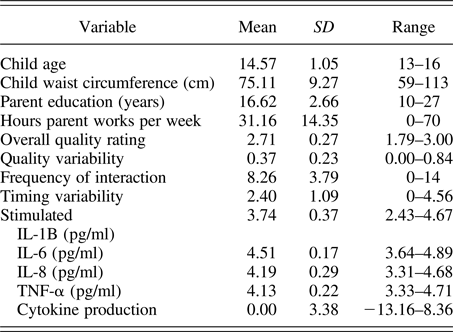
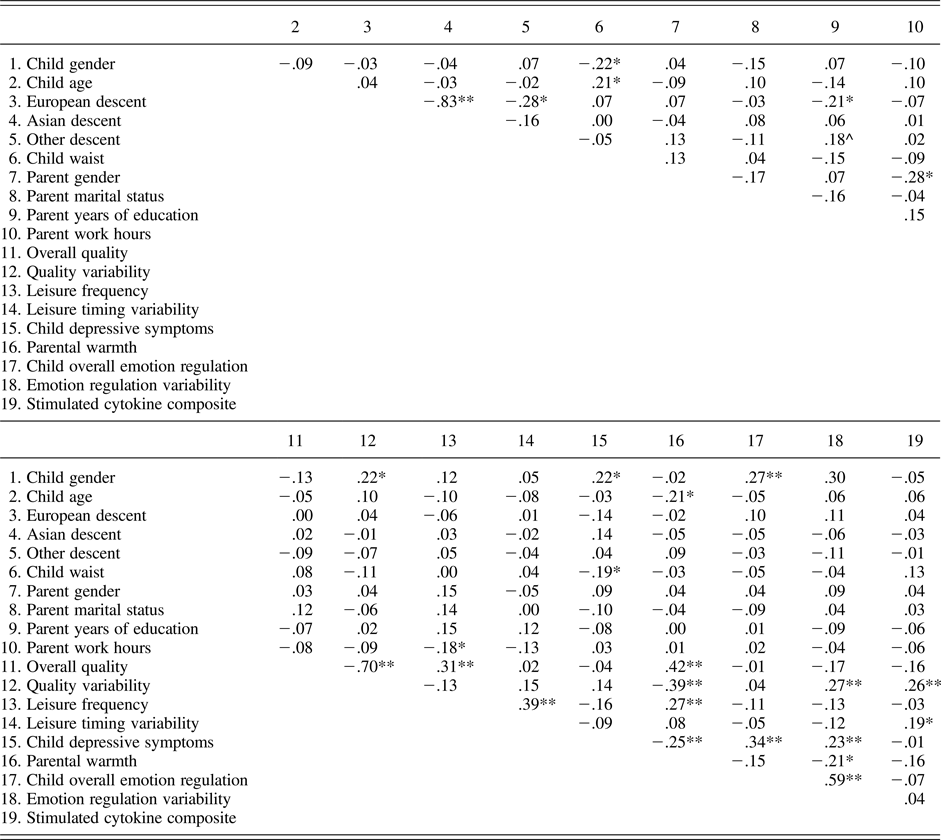
Descriptive statistics are presented in Table 1, and intercorrelations among psychosocial variables are displayed in Table 2. Dyads with female children evinced greater variability in the quality of their interactions, and parents who worked more hours per week had less frequent leisure interactions with their children. There were no other associations between participant characteristic variables and interaction or cytokine variables; thus, only youth gender and parent work hour variables were retained for subsequent analyses.
Descriptive statistics for study variables

Note: Stimulated cytokine variables are presented with log transformation. The composite stimulated cytokine production variable reflects the sum of z-scored interleukin (IL)-1B, IL-6, IL-8, and tumor necrosis factor (TNF)-α values. The overall quality rating reflects the average of daily ratings of quality on a 1–3 scale. Frequency of interaction reflects the number of days within a 2-week period in which parents and youths spent leisure time together.
Intercorrelations among psychosocial variables
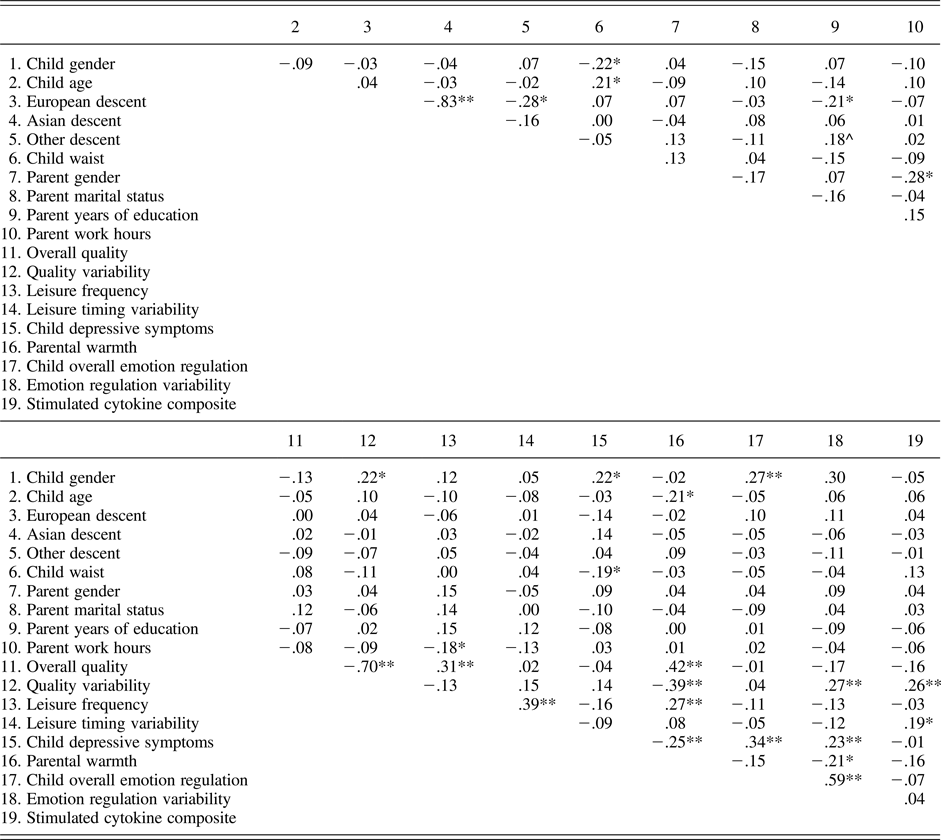
Note: For parent and child gender, males were coded 0 and females were coded 1. Marital status was coded 0 for unmarried/widowed/divorced and 1 for married. European, Asian, and other descent were dummy coded 1 for endorsement and 0 for no endorsement of that ethnic status.
*p < .05. **p < .01.
In addition, dyads with higher overall quality showed significantly less variability in their ratings of that quality and also had more frequent leisure interactions. Greater frequency of leisure interactions was associated with greater variability in the timing of those interactions; however, there was no direct relationship between variability in leisure activity timing and variability in quality of interactions.
Variability in quality of parent–child interactions and stimulated cytokine production in youths
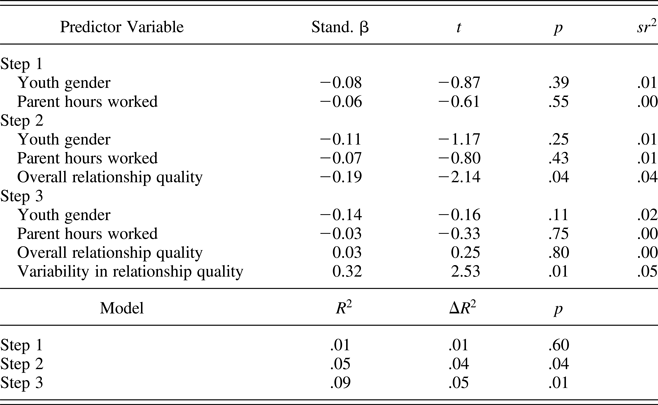
As displayed in Table 3, hierarchical regression analyses revealed that, at Step 1, participant characteristics of youth gender and parents work hours did not significantly predict stimulated cytokine production in youths, and neither variable emerged as a significant independent predictor. The addition of overall quality at Step 2 improved the model and made a significant independent contribution to the prediction of stimulated cytokine production in youths. However, this association was no longer significant once the variability of relationship quality variable was added at Step 3. Instead, variability of quality was a significant independent predictor. In other words, parents who reported greater day-to-day variability in the quality of their interactions with their child had youths who exhibited greater production of proinflammatory cytokines in response to in vitro stimulation by LPS, and this was not accounted for by overall relationship quality.
Hierarchical regression model for affective variability of parent–child interactions predicting youths’ stimulated cytokine production

Note: sr 2, semipartial r 2. Additional potential covariates of youth age, ethnicity, waist circumference, parent gender, parent marital status, and parent years of education were not associated with cytokine production, interaction, or variability variables and were therefore not included in the models.
Variability in timing of parent–child leisure interactions and stimulated cytokine production in youths
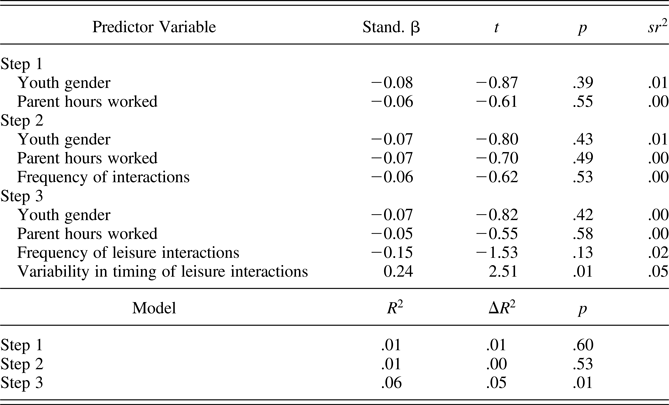
Similar analyses were conducted regarding the timing of parent–child leisure interactions and are presented in Table 4. Step 1 of the analysis was identical to that for quality variability, where youth gender and parent work hours were not significantly predictive of stimulated cytokine production in youths. The inclusion of overall frequency of parent–child leisure interactions did not significantly improve the model, nor was it independently associated with stimulated cytokine production in youths. However, at Step 3, variability in timing of parent–child leisure interactions emerged as a significant independent predictor of youths’ stimulated cytokine production, such that greater day-to-day variability in when parents and children spent leisure time together was associated with greater stimulated proinflammatory cytokine production in youths.
Hierarchical regression model for temporal variability of parent–child interactions predicting youths’ stimulated cytokine production

Note: sr 2, semipartial r 2. Additional potential covariates of youth age, ethnicity, waist circumference, parent gender, parent marital status, and parent years of education were unrelated to cytokine production, interaction, or variability variables and were therefore not included in the models.
Variability in quality versus variability in timing
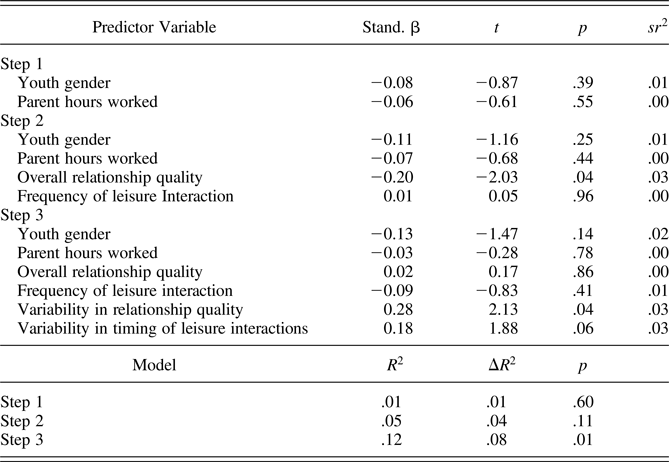
To assess whether variability in affective (quality) versus temporal (timing) aspects of parent–child interactions each had unique associations with inflammation and to gauge the relative predictive power of each, both the variability of relationship quality and the variability in timing of leisure interactions were simultaneously entered in a hierarchical model of youths’ stimulated cytokine production (see Table 5). At Step 2, overall quality of parent–child interactions made a significant independent contribution to the model, but this became nonsignificant once variability of quality and variability of timing variables were added at Step 3. When both dimensions were considered together, variability in relationship quality continued to be significantly associated with stimulated proinflammatory cytokine production in youths, and variability in the timing of parent–child leisure interactions showed a trend-level independent contribution. These findings suggest that variability in both the affective and the temporal dimensions of daily parent–child interactions contribute independently to youths’ proinflammatory cytokine production in response to microbial stimulation, even after accounting for average levels of quality and leisure time together.Footnote 1
Hierarchical regression model for simultaneous inclusion of affective and temporal variability predicting youths’ stimulated cytokine production

Note: sr 2, semipartial r 2. Additional potential covariates of youth age, ethnicity, waist circumference, parent gender, parent marital status, and parent years of education were unrelated to cytokine production, interaction, or variability variables and were therefore not included in the models.
Alternative explanations
To test whether observed associations with stimulated cytokine production might be confounded by other characteristics of parents or children, analyses were rerun controlling for parental warmth, controlling for youth depressive symptoms, and controlling for youth emotion regulation variability. These variables were selected to represent the possibilities that (a) more loving, positive relationships between parents and youth might foster more consistent interactions and better inflammatory profiles; (b) that youths’ negative affect or behavior could interfere with interaction consistency and also relate to stimulated cytokine production; and/or (c) that greater variability in youths’ mood might affect their interactions with their parents while also predicting a more proinflammatory phenotype. Variability in interaction quality continued to significantly predict stimulated cytokine production (standardized β = 0.32, t = 2.43, p = .02), even after controlling for parental warmth, as did variability in leisure interaction timing (standardized β = 0.22, t = 2.24, p = .03). Controlling for youth depressive symptoms revealed similar results: variability in interaction quality remained a significant independent predictor of stimulated cytokine production (standardized β = 0.33, t = 2.48, p = .02). Variability in leisure interaction timing also remained a significant independent predictor when controlling for youth depressive symptoms (standardized β = 0.21, t = 2.07, p = .04). Finally, controlling for variability in youths’ emotion regulation abilities as well as their average emotion regulation across the 2-week period did not alter results; variability in quality continued to make a significant independent prediction of stimulated cytokine production (standardized β = 0.30, t = 2.23, p = .03), as did variability in leisure interaction timing (standardized β = 0.24, t = 2.36, p = .02), supporting the assertion that associations between stimulated cytokine production and interaction inconsistency are not better accounted for by parental warmth, youth depressive symptoms, or variability in youths’ mood.
Discussion
Consistency in parent–child interactions, and not solely the quality or frequency of those interactions, was significantly associated with the production of proinflammatory cytokines in youths. We found that greater variability over a 2-week period in the positivity/negativity of daily parent–child interactions related to youths’ greater production of proinflammatory cytokines following in vitro exposure to LPS, even after controlling for average quality of interactions. Similarly, greater variability in the time at which parents and children engaged in leisure activities together also related to greater proinflammatory cytokine production in youths, regardless of how frequently they engaged in those activities. Furthermore, the contributions of affective and temporal variability were largely independent of each other and were not accounted for by parental warmth or youth depressive symptoms or daily mood.
There are several possible explanations for these findings. More consistent day-to-day interactions with parents may engender greater psychological predictability within youths’ home life, resulting in reduced experiences of stress. This would reflect the cross-species phenomenon that greater situational predictability is associated with less physiological and psychological responses to stress (Dess, Linwick, & Patterson, Reference Dess, Linwick and Patterson1983; Tiggemann & Winefield, Reference Tiggemann and Winefield1987) and would likewise be consistent with theoretical models of the psychological effects of family consistency (e.g., Boyce, Jensen, & James, Reference Boyce, Jensen and James1983; Dickstein, Reference Dickstein2002). These findings also parallel work documenting that less chaos in families related to reduced proinflammatory phenotypes in low socioeconomic status adolescents (Schreier et al., Reference Schreier, Roy, Frimer and Chen2014) as well as research on children with asthma demonstrating that those with more family routines showed decreasing stimulated production of an asthma-relevant cytokine over 1.5 years (Schreier & Chen, Reference Schreier and Chen2010).
That variability in quality and variability in leisure interaction timing each independently predicted proinflammatory cytokine production suggests that affective and temporal inconsistencies may operate through distinct pathways. Through affective consistency, youths may develop clearer expectations for the availability of parental support and dependability, in line with attachment theory (Bowlby, Reference Bowlby1982). For example, consistently positive interactions may encourage coping behaviors that utilize parental help, whereas consistently negative interactions may motivate youths to seek support from other advocates. In either scenario, this may contribute to reduced proinflammatory cytokine production through the use of positive, engagement coping, which has been shown to relate to lower levels of C-reactive protein in adolescents (Low, Matthews, & Hall, Reference Low, Matthews and Hall2013). In contrast, consistency in the timing of leisure interactions may foster environmental predictability by establishing expectations about schedules and may serve as a social zeitgeber that affects several biological rhythms related to inflammatory processes, including sleep and diurnal cortisol secretion (Stetler & Miller, Reference Stetler and Miller2007; Tighe, Dautovich, & McCrae, Reference Tighe, Dautovich and McCrae2015). Although further research is needed to clarify the cascade, having regularly timed leisure activities with parents may entrain biological processes with downstream effects on inflammation.
If less consistent interactions affect how youths’ immune cells’ respond to bacterial challenge, over the long term, these patterns may contribute to low-grade inflammation and, ultimately, to heightened risk for a number of poorer mental and physical outcomes (Miller & Chen, Reference Miller and Chen2010). Low-grade inflammation is implicated in the pathogenesis of many diseases of aging, including heart disease, cancers, diabetes, and arthritis (Heikkilä et al., Reference Heikkilä, Harris, Lowe, Rumley, Yarnell, Gallacher and Lawlor2008; Ridker et al., Reference Ridker, Hennekens, Buring and Rifai2000) and is also associated with psychological disorders, including depression and schizophrenia (Dowlati et al., Reference Dowlati, Herrmann, Swardfager, Liu, Sham, Reim and Lanctôt2010; Fan et al., Reference Fan, Pristach, Liu, Freudenreich, Henderson and Goff2007). For these reasons, then, inconsistent quality and timing of interactions within families may provide an additional explanation for why individuals raised in challenging early environments evince high rates of disease later in life (e.g., Miller et al., Reference Miller, Chen and Parker2011).
The current work is limited by single time-interval assessments of study variables, making it impossible to know how these associations may change longitudinally or to be confident of causality. It is also not possible to determine the specific causes of variability; for example, children who are more scheduled with after-school activities may appear to have more variable leisure interactions. In addition, there was as significant gap of 1 year between our assessment of daily diaries and cytokine production, due to the protocol of the larger research project from which this study was derived. Cytokines would ideally be assessed shortly after the diary reports and followed across time to assess stability and change. As well, timing and quality variability indices were taken from single-item responses over the 14-day period (which may lead to range restriction) and from the parent's perspective. Though not uncommon in daily diary studies, future work should consider additional and more thorough ways of operationalizing daily inconsistency, including other types of parent–youth interactions beyond leisure activities, and should also explore potential differences between parent versus youth reports. For example, future work might sample variability more intensively within a day, rather than across days. Reliability and validity have also not been established for these diary items; however, this is not unusual for daily diary assessments (Doane et al., Reference Doane, Mineka, Zinbarg, Craske, Griffith and Adam2013). Furthermore, we were unable to assess hypothesized psychological mechanisms, such as predictability or coping, that may underlie associations.
Despite these limitations, by identifying facets of daily family experiences related to inflammatory processes, the current study has implications for interventions and future research. For example, the cultivation of behavioral consistency may be more cost effective, more easily disseminated, and less socially stigmatized than specialized psychotherapy or pharmacotherapy for parents and youths at risk. Such interventions could also serve to better illuminate causal relationships among variables. Another interesting topic for future research would be to examine how the sequelae of consistency with one parent are buffered or exacerbated by the consistency of other caregivers. Youths who have at least one parent who is more consistent on quality and timing dimensions may be protected from negative physiological outcomes, whereas those with two unpredictable caregivers may have greatest risk.
The current study also has several notable strengths. For instance, the observed associations emerged across naturalistic multimethod and multi-informant assessments, minimizing the likelihood that shared measurement variance or biases in youths’ perceptions of relationships account for the findings. Moreover, we believe this is first study to link dimensions of inconsistency in daily parent–child interactions to youths’ production of proinflammatory cytokines. As such, it moves beyond focusing on deficits in parenting behaviors to identifying additional family characteristics that may have implications for inflammatory processes and, eventually, mental and physical health. That variability in the quality and leisure activity timing of daily family interactions predicted youths’ proinflammatory cytokine production beyond averaged quality and frequency of interactions also underscores the importance of considering day-to-day fluctuations in relationship features, which may be obscured through assessments that aggregate across experiences. Together, these findings highlight important and novel links between daily family interactions and inflammatory processes in youths.