


The effort to identify and comprehend the underpinnings of human behavior requires attention to two broad classes of factors, those that are situational and those that are dispositional. Our accounts gain added nuance when they also contemplate the interplay between these two sets of forces. Recognition of these three pillars of behavior—elements of the environment, individuals’ basic traits, and interaction between traits and the environment—seems uncomplicated in principle, yet incorporation of all three in theoretical and empirical representations of human behavior remains rare. In research on political behavior, the norm for decades has involved primary focus on environmental variables. Phenomena such as political participation and political attitudes have been explained in terms of factors such as a person's exposure to news media, susceptibility to contextual influences, and accumulated political socialization. Conversely, several studies in recent years have taken the opposite approach, highlighting the political significance of core personality traits and even biological differences, yet giving short shrift to environmental influences, and also to questions of process such as those involving interrelationships between situational factors and dispositional variables.
The growing movement to identify biological influences on political behavior holds considerable promise, as does, we believe, the related resurgence in attention to personality. However, these approaches should not be seen as alternates to environmental perspectives, but rather as complements. Most crucially, we view it as imperative that research seek to identify causal pathways, including those involving situation–disposition interactions. Environmental forces influence political behavior, but how and to what extent they do differs as a function of individuals’ traits. Likewise, psychological dispositions and even genetic differences contribute to patterns in political behavior, but the expression of these effects will often be contingent on the situation.
In this article, we seek to demonstrate the importance of attention to dispositions, situations, and their interactions. We anchor our discussion with a focus on personality and political participation. Several recent studies have reported on the significance of personality traits, and especially the Big Five trait dimensions, for participation. The Big Five approach centers on a broad-scale trait taxonomy that enables a relatively comprehensive yet parsimonious representation of trait structure. As such, its emergence facilitates renewed attention to the possible influence of personality on politics, a topic that has received only sporadic scholarly attention for decades. We begin with a brief review of the Big Five approach and an assessment of its utility for research on political behavior. We then articulate our thesis regarding the causal pathways at work in linking personality to politics, including the interrelationship between the effects of personality traits and environmental influences. Specifically, we place the impact of personality on political participation in context via discussion of the biological bases of personality and the situational expression of trait effects. Empirical tests then commence with a consideration of the possible direct impact of personality on various facets of political behavior, followed by examination of several contingent effects designed to demonstrate the value of attention to the matter of process, including personality–environment interactions. We end with a brief warning regarding some of the hurdles inherent in the positing and testing of holistic accounts of political behavior, and especially in the incorporation of personality traits in our frameworks.
PERSONALITY AND POLITICS
“Personality” refers to a multifaceted, enduring, internal psychological structure. This view draws on research in trait psychology, the leading approach in contemporary empirical studies of personality. The prominent Big Five approach holds that five traits provide a comprehensive, hierarchical model of trait structure. The trait dimensions are openness to experience, conscientiousness, extraversion, agreeableness, and emotional stability.Footnote 1 Proponents of five-factor approaches claim neither that only these five traits warrant study nor that these dimensions capture all variance in personality. Instead, the Big Five are seen as broad domains, collectively organizing and summarizing the vast majority of subsidiary traits. Attention to these five factors has been central in trait research for more than two decades.
Goldberg (Reference Goldberg1990, Reference Goldberg1992, Reference Goldberg1993) and McCrae and Costa (Reference McCrae and Costa1987, Reference McCrae and Costa1997, Reference McCrae and Costa2003, Reference McCrae, Costa, John, Robins and Pervin2008) have been leading proponents of five-factor approaches, but today applied work on the Big Five extends well beyond these initial research programs. In a recent review, John, Naumann and Soto (Reference John, Naumann, Soto, John, Robins and Pervin2008, 114) refer to the ascendance of the Big Five as constituting a “paradigm shift” for research on personality. They note that some 2000 publications on the Big Five have appeared since John and Srivastava's (Reference John, Srivastava, Pervin and John1999) review, including more than 300 in 2006, the most recent year for which a full count was possible. These figures dwarf those for other trait models. For instance, for the period 2005 to 2009, John and his colleagues estimate that there were ten times more studies published on the Big Five than the combined total for two prominent earlier models, those of Cattell (Reference Cattell1956) and Eysenck (Reference Eysenck1947).
Students of personality view traits as internal psychological structures that are relatively fixed and enduring, that are susceptible to observation, and that predict behavior. With the emergence of the Big Five as a framework enabling parsimonious representation of the bulk of trait structure, applications in research on political behavior have understandably followed (e.g., Gerber et al. Reference Gerber, Huber, Raso and Ha2009; Mondak and Halperin Reference Mondak and Halperin2008; Schoen and Schumann Reference Schoen and Schumann2007; Vecchione and Caprara Reference Vecchione and Caprara2009). These initial efforts have identified numerous political correlates of the Big Five, but these studies have been mostly silent on broader questions of theory. For instance, applied research on the Big Five and political behavior has not yet discussed the bases of personality traits or what relationship, if any, might exist between the effects of personality on politics and the effects of environmental factors.
Attention to these questions of context and process constitutes the chief task to be pursued in this article. We develop an account of where personality fits among other antecedents of political behavior, and we offer multiple empirical tests of the processes hypothesized to give rise to personality effects. As a foundation for those analyses, we first present a series of direct tests of the correspondence between the Big Five trait dimensions and multiple aspects of political engagement. As a prelude to those tests, a brief discussion of the Big Five traits is warranted, with particular focus on how and why these aspects of personality may influence patterns in political participation.
People high in openness to experience seek information and engagement of virtually all sorts. Initial applications of the Big Five in research on political participation and civic engagement have reported positive effects of openness on a wide array of dependent variables (Gerber et al. Reference Gerber, Huber, Raso and Ha2009; Mondak and Halperin Reference Mondak and Halperin2008; Vecchione and Caprara Reference Vecchione and Caprara2009). Conscientiousness includes a basic dispositional sense of dependability, measured with terms such as “organized” and “reliable,” and a volitional component captured by terms such as “hard working” and “industrious.” It is conceivable that individuals with high levels of conscientiousness would dutifully participate in politics. But this point is uncertain. If political engagement is viewed as a luxury rather than a duty, the conscientious might forego politics to free more time for work and family. Consistent with this latter view, initial research has reported mostly null and negative effects when examining the influence of this trait on participation (Gerber et al. Reference Gerber, Huber, Raso and Ha2009; Mondak and Halperin Reference Mondak and Halperin2008; Vecchione and Caprara Reference Vecchione and Caprara2009).
Extraversion is the Big Five factor for which links to civic engagement are most easily hypothesized because many aspects of political behavior include social components. Working on a petition drive, discussing politics with friends and neighbors, and joining voluntary associations all entail social interaction. Unsurprisingly, Mondak and Halperin (Reference Mondak and Halperin2008) and Gerber et al. (Reference Gerber, Huber, Raso and Ha2009) find strong positive effects of extraversion for acts such as attending and speaking at political meetings, volunteering for campaigns, and engaging in political discussion, but mixed and mostly insignificant effects for less socially oriented acts such as posting yard signs and contributing money to candidates.
Virtually all scales used to represent agreeableness employ terms such as “warm,” “kind”, and “sympathetic,” and often terms such as “generous” and “altruistic,” whereas emotional stability is represented with terms such as “calm,” relaxed”, and “stable,” with instability captured by words such as “tense” and “nervous.” We have little basis to hypothesize relationships between these trait dimensions and civic engagement, and the empirical record for both is thin. Vecchione and Caprara (Reference Vecchione and Caprara2009) find no impact of these trait dimensions on participation. Mondak and Halperin (Reference Mondak and Halperin2008) and Gerber et al. (Reference Gerber, Huber, Raso and Ha2009) report mostly insignificant results for agreeableness, although a handful of both positive (community affairs) and negative (campaign activity) effects reach statistical significance. These same two studies report 28 insignificant effects for emotional stability across 35 tests, along with four positive and three negative coefficients that are statistically significant.
A basic understanding of the expectations associated with the Big Five trait dimensions provides essential foundation. However, our principle objective is not merely to identify links between the Big Five and political engagement, but rather to position personality within a broader theory of political behavior, one that also accounts for biological and environmental influences.
PERSONALITY IN CONTEXT
The addition of personality variables to models of political behavior can generate evidence that traits matter for politics, but that simple lesson affords little explanatory purchase. Left unaddressed in such an approach are, first, questions regarding what the identified personality effects imply about the deeper bases of human behavior, and second, any sense of mechanism—of the processes through which personality effects operate. A fuller account requires that we view personality within the broader context of the various forces that combine to influence political behavior. Toward this end, our chief theoretical contribution centers on the effort to orient personality relative to other behavioral antecedents, and our chief empirical contributions come in a series of illustrative tests regarding the situational expression of personality effects.
Rather than contemplating only the effects of personality on political behavior, the course we advocate involves positioning personality traits within a framework that also accounts for biological and environmental influences. The key tenets of our thesis are depicted in Figure 1. The four bold lines capture the central forces that we contend operate when personality influences political behavior: personality is to a substantial extent rooted in biology, but the expression of personality effects will typically be situational, such as via personality × environment interactions. We elaborate on these elements of our thesis momentarily. However, the other processes depicted in Figure 1 require brief discussion.
Personality in Context: A Schematic Depicting the Emergence of Personality Influences on Political Behavior

The thin solid lines in Figure 1 represent effects antecedent to political behavior that are supported in the empirical record, whereas dashed lines represent plausible effects for which past research offers less certainty. The first point to note is that a series of unspecified influences are depicted as operating on biological and environmental factors. These arrows signify merely that politically consequential biological and environmental forcesFootnote 2 are themselves the result of prior processes. A precise accounting of these processes is unnecessary for our purposes, but the list for biology would include any factors that produce genetic mutations (e.g., a pregnant mother's exposure to radiation or narcotics), and the list for the environment would include any dynamic that alters politically relevant features of the environment (e.g., introduction of electricity to a community, emergence of the Internet).
The next components of Figure 1 to note are the paths linking biological and environmental factors. First, in some instances, environmental influences can alter or disrupt biological structures. One example is the occurrence of a traumatic brain injury; indeed, prior to functional magnetic resonance imaging, the study of brain lesion patients was central in research on biological functions (e.g., Rorden and Karnath Reference Rorden and Karnath2004). Other environmental effects on biological processes include those associated with the psychotropic drugs used to treat some psychiatric disorders. Second, and more prominently, biological influences help shape both the individual's personal environment and how the individual reacts to or experiences the environment (e.g., Kendler and Baker Reference Kendler and Baker2007; Krueger and Johnson Reference Krueger, Johnson, John, Robins and Pervin2008, pp. 293–6). In part, the impact of biology on the environment operates via personality (thus the arrow from personality traits to environmental factors). The empirical analyses reported here offer examples of such effects, where we show, for instance, that introverts and extraverts differ in the social communication networks they construct. In Figure 1, we also acknowledge that biological factors may exert direct influence on the environment (or, at the least, influence not mediated by personality). The interrelationship between biological and environmental influences casts simplistic discussions of “nature vs. nurture” in a new light. Biological and environmental factors do not act in isolation from or in competition with one another. Appreciation of this reality is essential if we are to make meaningful progress in identifying the complex bases of human behavior.
In the lower portion of Figure 1, a box is included for “additional mediating factors” because the expression of biological influences need not operate exclusively through personality. For instance, recent research has revealed physiological differences that correspond with political attitudes (Oxley et al. Reference Oxley, Smith, Alford, Hibbing, Miller, Scalora, Hatemi and Hibbing2008), suggesting that paths in addition to personality may link biological influences and political effects. Cognitive ability provides another example (Denny and Doyle Reference Denny and Doyle2008). Two dashed lines connect mediating factors to personality traits, acknowledging the possible interplay between these sets of variables.Footnote 3
Figure 1 purposely omits two paths. First, our thesis posits no direct effect of biology on political behavior. Biological influences are mediated by other processes. Genes’ protein-coding sequences are logically some number of steps removed from matters such as a person's holding of a given political attitude or decision to post a yard sign in an election campaign (see also Smith et al. Reference Smith, Oxley, Hibbing, Alford and Hibbing2009). This point provides important context with respect to recent research on the heritability of political attitudes and behaviors (e.g., Alford, Funk, and Hibbing Reference Alford, Funk and Hibbing2005; Fowler, Baker, and Dawes Reference Fowler, Baker and Dawes2008; Settle, Dawes, and Fowler Reference Settle, Dawes and Fowler2009). Thus far, many of the studies in that fledgling field have had a “black box” quality to them in that the findings have revealed only that biological influences operate on political behavior, but not by what processes. As with research identifying simple personality effects, studies of this form take an essential first step, but eventual attention to questions of mechanism is vital. In particular, theorizing such as that mapped in Figure 1 must occur. As suggested in Figure 1, and as is articulated further in this article, we believe that research on personality holds the potential to shed light on some of the lingering questions of process raised in early research on biology and politics.
A second set of paths omitted in Figure 1 are reciprocal links between political behavior and its immediate antecedents. Some reciprocal relationships, particularly between political behavior and environmental factors, obviously do exist. For example, donating money to a political campaign prompts the solicitation of further donations. We omit these paths partly for the sake of visual clarity, as well as because our primary interest centers on personality, and we see it as unlikely that political behavior exerts influences that reconfigure an individual's personality. To understand why this is requires that we return to the first of the bold arrows depicted in Figure 1, that linking biological factors and personality traits.
Biological Influences on Personality
Research on the antecedents of personality reveals that all known personality traits are heritable.Footnote 4 Hatemi, Medland, and Eaves (Reference Hatemi, Medland and Eaves2009, 265) summarize the literature well, noting “There is overwhelming evidence, in numerous large scale studies across cultures and continents, that personality is substantially influenced by genes.” A familiar claim is that heritability for personality averages 0.50; the unshared environment accounts for the bulk of remaining variance. Recent research suggests that this 0.50 mark may understate biological influences, especially for the Big Five trait dimensions. In estimating heritability, effects of measurement error are categorized as aspects of the unshared environment (Medland and Hatemi Reference Medland and Hatemi2009). Thus, measurement error will tend to deflate estimates of heritability and of effects associated with the shared environment, while exaggerating the apparent influence of the unshared environment. Recognizing this, Riemann et al. (Reference Riemann, Angleitner and Strelau1997; see also Heath et al. Reference Heath, Neale, Kessler, Eaves and Kendler1992) measure the Big Five using both self-reports and peer reports. Using only self-report data, heritability was found to be between 0.42 and 0.56, but estimates rose to between 0.66 and 0.79 with corrections for measurement error.Footnote 5 Further evidence on this point is reported by McCrae et al. (Reference McCrae, Jang, Livesley, Riemann and Angleitner2001), who examine the antecedents of the Big Five structure itself rather than only the component traits. On decomposing the unshared environment into two subcomponents, the actual impact of the unshared environment and systematic error attributable to method bias (e.g., Borkenau Reference Borkenau1992), the authors find no impact of the actual unshared environment on the Big Five structure. Thus, apart from method bias, the only systematic correlate of the five-factor personality structure they identified is genetics.Footnote 6
The lesson we derive from these studies is that biological forces account for most of the variance in personality traits. Three interrelated questions arise from this claim: (1) in addition to biological factors, do environmental forces also influence personality?; (2) is it not the case that people's personalities change, and does this not imply a role for influences other than biology?; and (3) irrespective of other nonbiological effects, can political behavior alter an individual's personality? Brief attention to these questions should be sufficient to convey why we do not see these matters as problematic.
In Figure 1, one certain path by which environmental factors shape personality is acknowledged: if environmental forces alter biological processes, effects on personality may occur (e.g., Bagby et al. Reference Bagby, Levitan, Kennedy, Levitt and Joffe1999). In McCrae and Costa's (Reference McCrae, Costa, John, Robins and Pervin2008) Five-Factor Theory, environmental influences on personality are recognized only if those influences alter the biological bases of personality, and the authors note only one past study that, contrary to the tenets of Five-Factor Theory, offers persuasive evidence suggestive of direct environmental influences on personality. In that research (McCrae et al. Reference McCrae, Yik, Trapnell, Bond and Paulhus1998), a strong environmental shock was needed to induce discernible impact on personality. Specifically, acculturation was identified among Chinese students who had moved to Canada to attend college. In our view, the empirical record supports three conclusions. First, biological factors account for the vast majority of influence on personality traits, and especially on the five-factor structure. Second, environmental forces that operate through alteration of biological processes are acknowledged. Third, direct environmental influences on personality may occur (as represented by the dashed arrow in Fig. 1 from environmental factors to traits); however, to produce discernible impact on personality, the change in environment apparently must be quite stark—as in the case of students from China changing continents and cultures by attending college in Canada.
The second question noted previously concerns the possibility that people's personalities change over time. It is true that all humans exhibit characteristic changes in their personalities over the life cycle, and especially during adolescence, but the mere occurrence of change does not necessarily signify a noteworthy impact of environmental influences. First, the changes are slight. Costa and McCrae (Reference Costa and McCrae1988) find that the estimated stability of the Big Five trait dimensions averages 0.94 when measured at six-year intervals. Second, all change is not environmental. Costa and McCrae's (Reference Costa and McCrae2006) analysis reveals that biological influence—specifically, intrinsic maturationFootnote 7—offers the most plausible account for why life cycle changes in personality are identical across a wide array of cultural contexts (c.f. Roberts, Walton, and Viechtbauer Reference Roberts, Walton and Viechtbauer2006).
The final question is whether political behavior might alter an individual's personality. Although we have no means to issue an ironclad rejection of this possibility, the studies reviewed here provide ample grounds for skepticism. First, biological factors account for the vast majority of variance in personality, leaving little room for any environmental forces, let alone those based in politics, to operate. The high temporal stability of personality likewise leaves little space for environmental effects. Second, the sole study that McCrae and Costa (Reference McCrae, Costa, John, Robins and Pervin2008) concede might have identified a direct impact of the environment on personality involved a marked environmental change. Here, we examine acts of political participation such as contributing money to political candidates and affixing campaign bumper stickers to one's car. At least for dependent variables such as these, the parallel to immersion in a new culture is difficult to discern.
By viewing personality in context, we have seen that the bulk of variance in personality is rooted in biology, and that effects of political behavior on personality are unlikely. These points bring two important implications. First, statistical relationships between personality traits and facets of political behavior can reasonably be interpreted as signaling causal influence of the former on the latter. Most past research on personality and politics has been silent on this subject, apparently taking for granted that personality is causally prior to political behavior. By placing personality in context, and especially by reviewing key research regarding the antecedents of personality, we have established a much firmer and more explicit foundation for causal inference. Second, as articulated in Figure 1, because personality is substantially rooted in biology, any effects of personality on political behavior likely signal the mediated influence of biology. Scholars examining the heritability of political behavior have made passing reference to personality as a likely mechanism (e.g., Alford, Funk, and Hibbing Reference Alford, Funk and Hibbing2005; Fowler, Baker, and Dawes Reference Fowler, Baker and Dawes2008), but past research on personality and politics has neglected the possibility that personality effects imply biological influence.
The remaining components of Figure 1 to be discussed involve the effects of personality traits and environmental factors on political behavior. Here, the pivotal question is whether environmental and trait effects operate independently of one another, or in combination. Central to our argument is the proposition that full understanding of personality effects requires attention to possible environmental interactions.
Situational Expression of Trait Effects
In contemplating the political influences of environmental factors and personality traits, two types of processes can be considered. One scenario is characterized by isolated, homogeneous effects. For example, partisan mobilization efforts might be hypothesized to yield comparable returns irrespective of the attributes of the citizens targeted for mobilization. Likewise, the effects of personality traits might be presumed to be similar in form and magnitude regardless of the situation, as would be the case were we to posit that conscientiousness should exert a positive influence on the propensity to execute all duties of citizenship. The second scenario, in contrast, is characterized by situational, heterogeneous effects. Here, it is assumed that variation in people's psychological predispositions leads them to respond differently when exposed to common environmental stimuli, and, correspondingly, that the expression of personality traits will vary by situation.
In Figure 1, the dashed lines flowing from environmental factors and personality traits to political behavior acknowledge the possibility of isolated, homogeneous effects. Nonetheless, we contend that effects of this form are rare. The complexities of human psychology and of the social and political environments are such that heterogeneous effects should be the norm. When scholars report empirical models with predictors specified in simple additive form (as we ourselves have done countless times), our sense is that these specifications are rarely premised on an explicit rejection of heterogeneous influences, but instead imply only that theories and/or data do not yet allow for identification of more complex paths. As summarized in Figure 1, our framework highlights contingent effects, and especially personality × environment interactions. This emphasis marks what we believe is the essential course if attention to personality is to aid in the development of rich, nuanced accounts of political behavior.
The possibility of trait–environment interactions has received curious treatment by psychologists for several decades. In the mid-twentieth century, the norm in the field was for researchers to posit and test direct, additive effects of personality traits on a wide array of attitudes and behaviors. In the late 1960s, though, such inquiry faced a strong challenge from Walter Mischel (Reference Mischel1968), who argued that situational differences in human behavior were so pronounced as to make the very concept of personality traits essentially meaningless. Research on personality traits then stalled, with relatively little progress made for some two decades. It was only with the emergence of the Big Five framework, coupled with efforts by some scholars, including Mischel himself (e.g., Mischel Reference Mischel1979; Mischel and Shoda Reference Mischel and Shoda1995), to forge a détente built on recognition of person–situation interactions, that the field saw reinvigoration. Today, it is common to encounter statements in studies of personality traits acknowledging the likely significance of interactions between environmental factors and personality traits. As one example, McCrae and Costa (Reference McCrae, Costa, John, Robins and Pervin2008, 165) highlight these interactions in Postulate 5a of their Five-Factor Theory: “The social and physical environment interacts with personality dispositions to shape characteristic adaptations, and with characteristic adaptations, to regulate the flow of behavior.” In a recent review, Funder (Reference Funder, John, Robins and Pervin2008) stated the fundamental logic underlying attention to person–situation effects with admirable clarity: “What people do depends both on who they are—their dispositions such as personality traits—and the situation they are in” (568), and “situations and persons interact in a way that goes beyond the statistical sense of this term . . . (N)either can have any impact on the world at all without the contributions of both” (569).
Although students of trait psychology now commonly note that traits likely operate in interaction with situational variables, theory and research dedicated toward specifying such interactions has been rare. Hence, beyond a tip of the hat to the likelihood that personality effects are best understood in context, most empirical analyses differ little in form from those reported in the mid-twentieth century, with the norm once again being specification of isolated, additive effects. The problem, as Funder (Reference Funder, John, Robins and Pervin2008, 577) notes, is that attention to interactions is easier said than done: “Dispositions and situations interact to determine what people do. Which dispositions and which aspects of situations (specifically) affect which behaviors? The search for specific answers to this seemingly straightforward question lays out a formidable research agenda.” We concur with Funder both that it is essential that personality–environment interactions be awarded a central position in theories of human behavior and that the challenges associated with such a research agenda help explain why most scholars pay no more than lip service to these effects.Footnote 8
A true advance in scholarship in this area requires careful consideration of process. For both personality traits and environmental factors, we must detail in clear terms how and why effects on political behavior are expected to operate, and ultimately in what circumstances. Our view regarding how to proceed has much in common with Mischel and Shoda's (Reference Mischel and Shoda1995) “if-then” depiction of situational effects. When focused on environmental factors, the question to be entertained is whether the impact of a given factor may be contingent on the individual's psychological dispositions. Likewise, when focused on personality traits, the central issue is whether the expression of trait effects might depend on aspects of the situation. Funder (Reference Funder, John, Robins and Pervin2008) is correct that these seemingly straightforward tasks actually require formidable effort. Because of this, the empirical tests presented here should be seen only as illustrative examples, and certainly not as either definitive or exhaustive representations of personality × environment effects.
Rather than limiting our tests to specification of formal statistical interactions, we follow a more inclusive course. Likewise, situational variables are broadly construed. With focus on political participation, four sets of tests will be conducted. The first tests are of mediating influences. Here, the question is how and why one Big Five trait dimension, openness to experience, comes to exert positive influence on various facets of political participation. Invoking a variant of Mischel and Shoda's (Reference Mischel and Shoda1995) “if-then” logic, we posit that if openness to experience enriches the individual's resource base, particularly in terms of political information, then positive effects on participation will follow. The second tests are interactive, but with focus on the interplay between an individual's psychological predispositions and the person's attitudes. Specifically, we propose that any relationship between conscientiousness and participation will be contingent on the individual's views regarding whether political engagement constitutes an obligation of citizenship; that is, if the person perceives a sense of duty, then conscientiousness will compel engagement. The third tests are classic explorations of situational differences in trait expression. In one, we argue that extraversion will bring positive effects on participation in some circumstances, but not in others, with the key being whether the acts in question include elements of sociability. In the second, the impact of extraversion on protest activity is hypothesized to vary as a function of the nature and prevalence of protest within the context. Last, our final tests consider whether an environmental factor, the size of one's political discussion network, produces differing effects on patterns in social communication depending on levels of three traits, extraversion, agreeableness, and emotional stability.
Our objective in this section has been to reconsider personality effects on political behavior from the vantage point of a broader and more nuanced theoretical context. In doing so, we have highlighted both the powerful influence of biological forces on personality traits and the likelihood that there will be situational variance in the expression of trait effects. Testing of our thesis will be most illuminating with a wide array of dependent variables and a multiplicity of research contexts. Hence, our empirical analyses make use of data from national surveys conducted in the United States and two other nations, and our models begin with simple additive specifications before addressing possible situational variation. Last, we reiterate that because of clear evidence regarding the heritability of the five-factor trait structure, any findings we report regarding the effects of personality on political behavior will be strongly suggestive of a role for personality as a mechanism linking biology and politics.
MEASURES OF PERSONALITY
Trait psychologists often measure the Big Five with twenty or more items per dimension. Several item formats have been used. Costa and McCrae's (Reference Costa and McCrae1992) proprietary inventory asks respondents to rate themselves on statements such as “I really like most people I meet.” The primary alternates are univocal and bipolar adjective scales (e.g., Goldberg Reference Goldberg1992). We follow this course, with data gathered via bipolar, or semantic-differential, adjective scales. Our choice was motivated by Goldberg's (Reference Goldberg1992) favorable report on bipolar indicators of the Big Five, coupled with the well-known attributes of semantic-differential measures in survey research (e.g., Heise Reference Heise and Summers1970; Osgood et al. Reference Osgood, Tannenbaum and Suci1957).
Use of lengthy multi-item personality batteries is not feasible on most telephone surveys, and thus efforts have been made in recent years to devise functional Big Five scales that require only one or two items per trait (e.g., Gosling, Rentfrow, and Swann Reference Gosling, Rentfrow and Swann2003; Rammstedt and John Reference Rammstedt and John2007; Woods and Hampson Reference Woods and Hampson2005). Consistent with this strategy, we sought to form measures of the Big Five that would require, on average, only about ninety seconds of interview time to administer as part of a telephone survey. We found that this objective could be met by asking two items for each of the five trait dimensions.Footnote 9 We primarily draw on data from a survey that included a ten-item Big Five battery, a U.S. national survey administered in 2006, the 2006 Congressional Elections Survey (CES).
The survey focused on the 2006 midterm elections. There were 1,195 interviews completed before the November elections, with 766 respondents reinterviewed after Election Day. An additional 400 respondents participated only in a supplemental postelection survey.Footnote 10 Respondents were drawn from 155 congressional districts, with districts including a mix of some that were selected randomly and some that were determined to be open seats or competitive contests.Footnote 11 The two postelection instruments included participation items and a brief discussant generator that asked respondents to provide information on up to four political discussion partners. The ten-item personality battery was also included on the postelection instruments. Thus, our analyses center on items posed to respondents following the November elections.
Respondents were asked to rate themselves on ten bipolar personality items. Interviewers read this introduction to respondents:
The following section contains pairs of words. On a scale of zero to ten, please tell us which word best describes you. For example, the number zero means “relaxed,” the number ten means “tense,” and the number five is exactly in the middle—neither relaxed nor tense. On this scale, what number best describes you? You can use any number from zero to ten.
Subsequent items were asked in quick succession, with interviewers saying, for example, “next, zero is kind and ten is unkind.” All items are adapted from those reported by Goldberg (Reference Goldberg1992).
We used a logarithmic transformation in the construction of all final scales as a means to minimize the possible impact of skewed distributions on individual items and to maximize comparability across the trait measures. Specifically, each item was initially recoded so that a value of one represents the highest possible score on the trait in question, and eleven the low value. These recoded variables then were logged. Final trait scales were constructed by averaging the logged indicators for the two items asked for each trait, and then recoding the resulting values to range from zero (lowest observed value) to one (highest observed value).
Data on the item pairs and resulting Big Five measures are depicted in Table 1. The correlations range from 0.28 for conscientiousness to 0.57 for extraversion. Although not ideal, the two lower correlations, those for openness to experience and conscientiousness, are minimal cause for concern. Openness is generally seen as the most difficult of the Big Five traits to measure. As to conscientiousness, we deliberately selected both a dispositional (neat/sloppy) and a volitional (hard working/lazy) item. Compared with use of two dispositional items, this strategy not only better reflects the breadth of this trait dimension, but also inherently limits the correlation between the sets of terms. For Gosling Rentfrow, and Swann's (Reference Gosling, Rentfrow and Swann2003) ten-item Ten-Item Personality Inventory (TIPI) scale, the lowest bivariate correlation also was 0.28, yet Gosling and his colleagues demonstrate that their scale performs well in a series of tests of validity. Additional properties of our Big Five scales, along with evidence of validity, are discussed in Appendix A.
Indicators of the Big Five

Note: Scales are constructed using logged data, and scale values range from 0 (lowest observed value on the trait) to 1 (highest observed value). Item labels were reversed for half of the items on the survey instrument.
EFFECTS OF PERSONALITY ON CIVIC ENGAGEMENT
Our analysis begins with assessment of the possible direct effectsFootnote 12 of the Big Five trait dimensions on various indicators of citizen engagement in American politics. We focus attention on models that include as controls three demographic attributes, sex (1 = female, 0 = male), race (1 = black, 0 = other), and age. Additional variables that might mediate personality effects are omitted from our main models, but a second version of each model in Table 2, this time adding controls for education, income, and strength of partisanship, is reported in Appendix B. These variables are omitted from the main models because their values may be influenced by personality, meaning that their inclusion would lead to underestimation of the total effects of the trait measures. Models are estimated for ten dependent variables that collectively encompass a wide array of participatory acts. Included are six behaviors that inherently entail social interaction: contacting members of Congress, attending meetings with members of Congress, working on campaigns, attending campaign meetings and rallies, attempting to persuade others on how to vote, and maintaining a large political discussion network. The remaining four dependent variables focus on behaviors that require little or no face-to-face interaction with others: voting, displaying yard signs and bumper stickers, contributing money to candidates, and contributing money to political organizations.
Direct Effects of the Big Five on Political Engagement

Source: 2006 CES.
Notes: Each row reports results from a separate model; the first entry in each row is the dependent variable. Cell entries are binomial logistic regression coefficients, with the exception of those for social network size (ordered logistic regression). Standard errors are in parentheses. Models include, as controls, age and indicators for female and black. All personality variables range in value from 0 to 1.
***p < .001, **p < .01, *p < .05, #p < .10.
Results are largely consistent with those reported in prior studies of the Big Five and political participation (e.g., Gerber et al. Reference Gerber, Huber, Raso and Ha2009; Mondak and Halperin Reference Mondak and Halperin2008; Vecchione and Caprara Reference Vecchione and Caprara2009). Specifically, the finding of significant positive effects for all openness coefficients maps well to patterns in prior studies, as does the mix of insignificant and significant negative effects for conscientiousness, the mix of insignificant and significant positive effects for extraversion, and the null results for agreeableness. The one noteworthy discrepancy between present findings and those in earlier studies is for the final trait dimension, emotional stability. All coefficients in Table 2 are negative, with six reaching statistical significance. In the prior studies (e.g., Gerber et al. Reference Gerber, Huber, Raso and Ha2009; Mondak and Halperin Reference Mondak and Halperin2008; Vecchione and Caprara Reference Vecchione and Caprara2009), insignificant coefficients were reported for most tests, and the few significant effects included a mix of both positive and negative coefficients.Footnote 13 We return to this matter later in the article.
Substantively, the largest effects in Table 2 are those for openness and extraversion. Using these two trait dimensions as examples, it is clear that variance in personality corresponds with sizeable changes in patterns of political participation. Among the full models reported in Appendix B, the openness and extraversion effects for contacting a member of Congress provide a good test case. With other variables held constant at mean or modal values, the predicted probability of having contacted a member of Congress rises from 0.28 to 0.45 across the values of openness to experience, and from 0.27 to 0.49 across extraversion.Footnote 14 These substantive effects are in line with those for education. Specifically, as education rises from its lowest (no formal education) to highest (professional degree) values, the predicted probability of contacting a member of Congress increases from 0.24 to 0.47. More modest changes emerge in a second example, self-reported voter turnout. There, only the negative effects for conscientiousness and emotional stability reach statistical significance in the fully specified models. Data on turnout are from the second wave of a panel survey, and self-reported turnout levels are quite high. The predicted probability of having reported voting drops from 0.92 to 0.85 across conscientiousness and from 0.92 to 0.80 across emotional stability, versus much sharper effects for other predictors, including an increase from 0.79 to 0.94 as a function of education and from 0.54 to 0.96 as the respondent's age rises from 18 to 80.
In Figure 1, one pathway we suggest is that personality helps shape the contours of the individual's environment. Results in Table 2 for social network size provide an example of such an influence. Four of the Big Five trait dimensions yield significant effects, indicating that even phenomena reasonably described as environmental may vary in form as a result of the influence of personality.Footnote 15
These initial results reveal apparent direct effects of the Big Five personality trait dimensions on various facets of political engagement. However, central to our thesis is the claim that full understanding of personality effects requires attention to situational variance. Both dispositions and the environment must be taken into account, and the possible interplay between the two must be considered. Although psychologists have long spoken of the importance of situation–trait interactions—much as many scholars in the emerging field of biology and politics now routinely speak of gene–environment interactions—actual empirical research exploring such effects remains rare. With past research offering little guidance, we have elected to follow a broad course, examining a multitude of contingent effects of personality.
Contingent Effects
The first effort to view personality in context does not require further analysis, but instead merely closer inspection of results in Table 2. Our thesis regarding extraversion holds that individuals scoring high on this trait will be inclined toward social interaction, which should prompt involvement in those forms of political participation that bring engagement with others. Conversely, in situations in which participation is more individualistic, extraversion should be inconsequential. Results in Table 2 provide evidence of the expected pattern. Coefficients for extraversion reach at least minimal levels of statistical significance in the six tests involving political discussion, attendance at political meetings, working for candidates, and contacting elected officials; conversely, the coefficients are insignificant for the four tests pertaining to voter turnout, displaying yard signs and bumper stickers, and contributing money to candidates and organizations. Prior research provides further evidence of the situational effect suggested here. For instance, Mondak and Halperin (Reference Mondak and Halperin2008) report significant effects for extraversion in seven of nine tests involving social forms of political participation.
Openness to experience is the only Big Five trait dimension to produce significant coefficients in all ten models in Table 2. Our next process-based test brings closer consideration of these results. We hypothesized positive effects of openness partly because persons high in openness should welcome novel aspects of political action, and partly because the high levels of information exposure characteristic of people who are open to experience should facilitate participation. We focus on the latter as our second test of process. The basic test is quite straightforward: if the impact of openness on participation is mediated by information, then the openness effects seen in Table 2 should be attenuated on inclusion of controls for political information. For the sake of simplicity, we add only two information-related variables. The first is an objective measure of civics knowledge, with values ranging from 0 to 5.Footnote 16 The second is a subjective indicator of internal political efficacy, or ability to comprehend the complexities of politics, with values ranging from 1 to 5.Footnote 17 When knowledge and internal efficacy are used as dependent variables in models with the same predictors as in Table 2, openness to experience produces significant positive effects for both (p < .01). Thus, any direct effect of knowledge or efficacy on participation would signal an indirect effect of openness.
The efficacy measure is only available on the panel survey, not on our alternate postelection survey. Therefore, in Table 3 we first replicate the openness effects from Table 2, this time using only those cases available via the panel survey (and for which valid responses are available on the knowledge and efficacy variables). We then report a second version of each model, now adding the knowledge and efficacy controls. In the first column of Table 3, nine of the ten coefficients again reach at least a minimal level of statistical significance. However, in the second column, we see that five of these nine effects slip to insignificance on introduction of the knowledge and efficacy variables, and all ten coefficients are reduced in magnitude. For their part, the coefficients for political knowledge reach at least a minimal level of significance in all ten models, along with seven for internal political efficacy. The average coefficient for openness in the first model is 1.39 versus 0.85 in the second column. Hence, it appears that, on average, approximately 40 percent of the impact of openness to experience on political engagement, at least in terms of coefficient size, is mediated by political knowledge and internal efficacy. People high in openness to experience are thoughtful, analytical, and welcoming of exposure to information. As a result, they fare well in terms of both the actual possession of political knowledge and self-confidence that they can navigate the complexities of the political arena. In turn, this knowledge and efficacy facilitates civic engagement.Footnote 18 Although the results in Table 3 are consistent with our thesis that the effects of openness on civic engagement are mediated by efficacy and political knowledge, caution is warranted due to the modest correlation between the two items used to construct our openness scale, especially as compared with the stronger alpha for the knowledge measure. Following our argument that openness is causally prior to knowledge and efficacy, results in Table 3 suggest mediation, but we cannot rule out the possibility that these results instead merely reflect the fact that knowledge is measured more precisely than is openness. This matter highlights the importance of attention to measurement issues, and especially reliability, in future research on personality and politics. We discuss this concern further later in the article.
Openness to Experience and Civic Engagement: Influence of Political Information

Source: 2006 CES.
Notes: Each row reports results from two separate models; the first entry in each row is the dependent variable. The first replicates the openness effects from Table 2 using only 2006 CES panel data, and the second adds political knowledge (0–5) and internal efficacy (1–5) as control variables. Cell entries are binomial logistic regression coefficients, with the exception of those for social network size (ordered logistic regression). Standard errors are in parentheses. Models include, as controls, conscientiousness, extraversion, agreeableness, emotional stability, age, and indicators for female and black.
***p < .001, **p < .01, *p < .05, #p < .10.
In Table 2, people scoring high in conscientiousness tended to fare poorly in terms of levels of civic engagement. One explanation for these results is perhaps individuals high in conscientiousness do not see civic engagement as a duty. Under this scenario, the conscientious would focus their time and effort on matters such as job and family, leaving little time for political participation. To test this interpretation, we rely on data from a three-category item asked of panel survey respondents regarding the importance of “being involved in election campaigns” (2 = very important, 1 = somewhat important, 0 = not very important). Our expectation is that an interaction between this variable and conscientiousness will produce a positive effect because any sense of the presence or absence of duty captured by the importance measure should resonate especially strongly with the conscientious. As a dependent variable, we sum the six dichotomous measures of campaign activity: working for a candidate, attending rallies or meetings, persuading others on how to vote, displaying yard signs or bumper stickers, contributing money to candidates, and contributing money to political groups.
Table 4 displays the relevant ordered logistic regression results.Footnote 19 Because the importance item is not available on the supplemental postelection survey, we again report two models. In the first, conscientiousness produces a negative coefficient of moderate magnitude. In the second model, where we introduce the interaction between conscientiousness and perceived importance of campaign activity, the negative effect of conscientiousness—the impact of conscientiousness for respondents who believe that involvement in election campaigns is unimportant—sharpens considerably. And, as expected, the interaction term produces a positive coefficient. This pattern of results suggests that the actions of individuals with high levels of conscientiousness are strongly shaped by a sense of the task's importance: where civic engagement is seen as highly important, the conscientious get involved, but where that engagement is viewed as unimportant, the conscientious focus their attention elsewhere.
Conscientiousness and Campaign Activity: Influence of Perceived Importance

Source: 2006 CES.
Notes: Cell entries are ordered logistic regression coefficients. The dependent variable is the sum of six campaign activities from Table 2: working for a candidate, attending campaign meetings or rallies, persuading others regarding how to vote, displaying yard signs or bumper stickers, contributing money to candidates, and contributing money to political groups. The first model includes the same predictors as those used in Table 2. The second model adds the perceived importance of campaign activity and its interaction with conscientiousness. Data are available from panel respondents only. Standard errors are in parentheses.
***p < .001, **p < .01, *p < .05, #p < .10.
Further clarification regarding this effect emerges in Figure 2, which reports the predicted probability that a respondent will engage in at least one form of campaign activity.Footnote 20 The horizontal axis represents perceived importance of being involved in campaigns. Among respondents with low levels of conscientiousness, the perceived importance of campaign activity is of virtually no relevance in determining actual involvement; specifically, the predicted probability of participation increases from only 0.48 to 0.56. In sharp contrast, the predicted values rise from 0.14 to 0.62 among the highly conscientious. What is especially noteworthy in Figure 2 is that conscientious individuals who see campaign activity as important barely outpace respondents who are low in conscientiousness, but when campaign activity is seen as unimportant, the conscientious exhibit a striking hesitance toward civic engagement. When contemplating the creed “do it right, or don't do it all” as applied to civic engagement, the highly conscientious seemingly embrace the second half of the statement more strongly than the first.
Conscientiousness, Sense of Duty, and Participation in Elections and Campaigns

Our next tests involve interactions between personality traits and respondents’ social communication networks. Much of the research on political discussion in recent years has examined communication that yields exposure to disagreement (e.g., Huckfeldt, Johnson, and Sprague Reference Huckfeldt, Johnson and Sprague2004; McClurg Reference McClurg2006; Mutz Reference Mutz2006; Mutz and Mondak Reference Mutz and Mondak2006). These works have fared well in documenting the effects, mostly positive, of cross-cutting political discourse, and they also have shed light on the social and contextual factors that give rise to such conversations. But one point of dispute in this literature concerns the impact of network size. As networks grow, the likelihood that they will include at least one person with a differing point of view rises (Huckfeldt, Johnson, and Sprague Reference Huckfeldt, Johnson and Sprague2004), but it also appears that aggregate homogeneity increases as networks expand (Mutz Reference Mutz2006). In reconsidering this matter, we propose that the impact of network size on a person's exposure to disagreement may be conditional on personality. The key point is this: as network size increases, any tendency toward homogeneity or heterogeneity should not be assumed to be constant for all individuals. Instead, we posit that the person's enduring psychological tendencies may predispose the person to prefer homogeneity within the network, or to accept heterogeneity.
For the moment, we treat network size as an environmental factor fully exogenous to individual choice. We know, of course, that this assumption is at least partly incorrect; as noted in Figure 1, our framework acknowledges the influence of personality on the environment, and in Table 2, the evidence shows that personality strongly influences network size. Nonetheless, factors outside the realm of conscious choice also affect one's number of discussion partners, factors such as employment status and occupation, place of residence, and family composition. What is important for our purposes is that however a network came to be of a given size, the impact of that network on exposure to cross-cutting discourse may be contingent on personality.
Respondents were asked to indicate which way their discussion partners had voted in the local U.S. House race. We operationalize exposure to disagreement within the network with a dummy variable coded 1 if at least one of the respondent's discussion partners cast a House vote at odds with the respondent's partisan affiliation, and 0 if otherwise. With the analysis limited to respondents who named at least one discussant, a score of 1 is recorded in just under 40 percent of cases.Footnote 21 Our chief predictor is network size, but three of the Big Five variables may moderate its impact. First, the free-wheeling sociability of the extravert supports the hypothesis that extraverts will be relatively undiscriminating in their political conversations, in which case larger networks should magnify the odds of exposure to disagreement. Second, because people high in agreeableness tend to avoid conflict, we predict that the agreeable will surround themselves with like-minded discussion partners. Conversely, exposure to disagreement should be less disconcerting for individuals who are themselves disagreeable. Last, owing to their minimal need for social acceptance, we expect that individuals with high levels of emotional stability will tend to have heterogeneous networks.
Two logistic regression models are reported in Table 5. In the first, interactions between personality and network size are omitted. Among the personality variables, only openness produces even a hint of a direct effect on exposure to disagreement. As expected, a very crisp effect is found for network size. The second model adds interactions between network size and the Big Five. Two strong interactive effects are identified. A significant positive interaction is observed for extraversion, along with a significant negative interaction for agreeableness.
Personality, Network Size, and Exposure to Cross-cutting Political Discourse

Source: 2006 CES.
Note: Cell entries are binomial logistic regression coefficients with standard errors in parentheses. The dependent variable is exposure to cross-cutting political views in social communication (1 = exposure occurs, 0 = no exposure occurs).
***p < .001, **p < .01, *p < .05, #p < .10.
Predicted probabilities derived from the extraversion and agreeableness interactions are depicted in Figure 3.Footnote 22 The two patterns bear a strong resemblance to one another. First, the positive effect of network size on exposure to differing political preferences is quite modest for introverts (an 11-point swing as network size increases from one to four) and for individuals scoring high in agreeableness (a nine-point swing).Footnote 23 Second, much more dramatic effects are seen for extraverts and those with low marks on agreeableness, with a 49-point swing found for the former and a 58-point swing for the latter. The link between network size and exposure to disagreement clearly represents more than the occurrence of a simple stochastic process. The extent to which an expansion in the size of a person's political discussion network translates into a higher probability of exposure to disagreement depends to a substantial extent on the individual's personality. In short, our understanding of the conditions under which exposure to cross-cutting discourse takes place grows markedly with attention to interactions between personality and network size.
Conditional Impact of Network Size on Exposure to Disagreement

As a final note on Figure 3, recall from Table 2 that network size itself is strongly influenced by personality. In particular, we know from Table 2 that extraverts tend to have large networks. This point, of course, brings implications for the interpretation of the extraversion results in Figure 3 because introverts and extraverts are not distributed evenly across categories on the horizontal axis. Most important, extraverts are substantially more likely than introverts to have full four-person discussion networks.Footnote 24 Large networks facilitate exposure to cross-cutting political discourse in part because the type of person who is likely to have a large network—i.e., the extravert—is the very type of person who is receptive to free-wheeling conversation.
Thus far, our consideration of how personality variables interact with other factors to influence patterns in political participation has shown that the impact of extraversion on participation is contingent on the nature of the participatory act in question, that the effects of openness are mediated partly by political information, that conscientiousness operates in concert with attitudes regarding civic duty, and that personality moderates the effects of network size on a person's exposure to cross-cutting social communication. Our final tests shift gears, this time assessing whether personality effects on participation may be contingent on the national context.
Applications of the Big Five in the study of politics mostly have made use of U.S. data, but the five-factor framework itself has been studied extensively cross-nationally. Evidence consistent with the five-factor model has been derived from personality batteries administered in numerous languages from multiple language families (Church Reference Church2000, Reference Church2001; McCrae and Costa Reference McCrae and Costa1997; Saucier and Goldberg Reference Saucier and Goldberg2001), and much of McCrae's recent research has involved further cross-cultural analysis (e.g., Allik and McCrae Reference Allik and McCrae2004; McCrae and Costa Reference McCrae, Costa, Mroczek and Little2006; Schmitt et al. Reference Schmitt, Allik, McCrae and Benet-Martinez2007). This research has also served to solidify claims regarding the biological basis of the five-factor structure. For instance, Yamagata et al. (Reference Yamagata, Suzuki, Ando, Kijima, Ostendorf, Riemann, Livesley, Jang, Spinath, Angleitner, Kimio and Ono2006) examine twin data from North America, Europe, and Asia to test whether there is a commonality of influence of genetics on personality across diverse geographic regions. Results are positive, supporting the conclusion that a universal genetic structure underlies the Big Five.
We provide a look at the possible influence of personality on political behavior outside the United States via examination of data from two national surveys conducted in 2007, one in Uruguay and the other in Venezuela.Footnote 25 The surveys were virtually identical in form. Big Five indicators are again constructed using data from bipolar adjective pairs. Unfortunately, openness to experience is represented with data from only a single item, “intellectual/pragmatic.” Two items are available for each of the other four trait dimensions: “hard working/lazy” and “neat/sloppy”” for conscientiousness, “introverted/extraverted” and “talkative/shy” for extraversion, “sympathetic/unsympathetic” and “kind/rude” for agreeableness, and “relaxed/tense” and “calm/nervous” for emotional stability.
We provide a look at the possible influence of personality on political behavior outside the United States via examination of data from two national surveys conducted in 2007, one in Uruguay and the other in Venezuela.Footnote 25 The surveys were virtually identical in form. Big Five indicators are again constructed using data from bipolar adjective pairs. Unfortunately, openness to experience is represented with data from only a single item, “intellectual/pragmatic.” Two items are available for each of the other four trait dimensions: “hard working/lazy” and “neat/sloppy” for conscientiousness, “introverted/extraverted” and “talkative/shy” for extraversion, “sympathetic/unsympathetic” and “kind/rude” for agreeableness, and “relaxed/tense” and “calm/nervous” for emotional stability.
Inclusion of data from Uruguay and Venezuela serves two purposes. First, we can determine whether any of our core findings from the United States replicate in other national contexts. Toward this end, our first dependent variable is a four-category indicator drawn from an item that asks about attendance at partisan political meetings (0 = respondent never attends partisan political meetings to 3 = respondent attends such meetings at least weekly). This item approximates our U.S. indicators from Table 2, and especially the measure of attendance at campaign meetings or election rallies. Attendance at meetings is a social form of political engagement, and thus the clearest hypothesis to consider is whether extraversion exerts a positive influence in these nations. Positive effects of openness are also to be expected.
Our second purpose is to test whether personality effects differ when relevant features of the national context vary. In this instance, the second dependent variable captures participation in protests (1 = respondent has participated in a protest in the past year, 0 = respondent has not participated in a protest). In Venezuela in this period, “political demonstrations occur regularly throughout the country” (Overseas Security Advisory Council 2006), and violent acts in those protests had become increasingly common (Overseas Security Advisory Council 2008). In 2007, in particular, Venezuela experienced a relatively high degree of social and political turmoil, and protests of various kinds were frequent. These protests include those both in support of and in opposition to President Hugo Chavez. Our analysis of media reportsFootnote 26 identified numerous protest incidents in Venezuela in the year prior to the fielding of our survey, including incidents in August, September, October, and December of 2006, and April, May, June, and August of 2007. Some of these incidents lasted many days, and even weeks. Protests surrounded government response to crime, upcoming elections, the government closing of an opposition television station, and several labor-related matters. Many of these incidents—especially those in September 2006 and May 2007—turned violent. Some of the incidents summarized here gave rise to literally hundreds of protests. For example, Venezuelan Interior Minister Pedro Carreño reported in mid-June of 2007 that there had been more than 400 demonstrations in the prior three weeks over the closing of the opposition television station—243 in the first week, 123 in the second, and 73 in third (“Government Says Conflict on the Decline in Venezuela” 2007). In Uruguay, in contrast, the nation's enduring democratic stability was in evidence in 2007, and, with one anomalous exception, protest was rare. The exception occurred in March of 2007, when there were large-scale demonstrations in Uruguay surrounding U.S. President George Bush's visit to that nation. Outside of those protests, Uruguay is highly stable, and protest there is uncommon (see Overseas Security Advisory Council 2007). In our review of media coverage, the only other incidents we identified in Uruguay were in October 2006; these were actions in protest of government fuel and free trade policies.
Consistent with this history, only eight percent of respondents on the Uruguay survey indicated that they had participated in a protest in the past year versus more than fourteen percent in Venezuela.Footnote 27 Our reading of protests in Venezuela in 2007 suggests that protest activity there was a commonplace occurrence. The same was not true in Uruguay. This distinction holds importance for extraversion. Specifically, we predict that any positive influence of extraversion on participation in protest will be strongest in Venezuela, where protest had, by 2007, become a familiar mainstream group-based behavior. Similar logic arguably could apply to conscientiousness. That is, because protest in Venezuela was so common, any negative stigma regarding protest activity may have become muted. In this scenario, the negative effect of conscientiousness on involvement in protest should be most pronounced in Uruguay. We expect similar effects in Uruguay and Venezuela for a third trait, agreeableness; high values should correspond with a lessened proclivity toward protest.
Results for the Uruguay and Venezuela models are reported in Table 6. The first two rows of results are those for our indicator of conventional participation, attendance at party meetings. Based on findings from the United States, our expectation for this variable would be a strong positive effect of extraversion and a moderate positive effect of openness to experience. Openness, which is measured in these data with only a single indicator, yields positive coefficients in both models, but neither reaches statistical significance. The expected strong influence of extraversion emerges in both nations. Substantively, the effects are quite pronounced. The predicted probability that a respondent will have attended a political meeting once or more in the past year (as opposed to never) rises from 0.06 to 0.13 across extraversion in Uruguay and from 0.10 to 0.27 across extraversion in Venezuela. Together with the U.S. results, these findings provide clear support for the contention that extraversion functions as a critical determinant of the individual-level propensity to join in group-based forms of political engagement.
The Big Five and Cross-national Political Behavior: Evidence from Uruguay and Venezuela

Sources: 2007 Uruguay and Venezuela LAPOP Surveys.
Notes: Each row reports results from a separate multivariate model; the first entry in each row is the dependent variable. Cell entries in the first two rows are ordered logistic regression coefficients, and cell entries in the third and fourth rows are binomial logistic regression coefficients. Models include age (age in years) and sex (female = 1, male = 0) as controls. Standard errors are in parentheses.
***p < .001, **p < .01, *p < .05.
Estimates for the protest models reveal that personality effects differ as a function of both the form of political participation and the nation's political context. We hypothesized that conscientiousness would be inversely related with the propensity to protest. This hypothesis is supported in both nations, although, contrary to expectations, the effect is no stronger in Uruguay than in Venezuela. The projected negative effects for agreeableness are also found, although the coefficient on this trait dimension reaches statistical significance only in Venezuela. Last, findings for extraversion match with expectations. In Venezuela, where political protests were common in 2007, extraversion acts much as it did in our other models of group-based political activity. Conversely, extraversion alone was not enough to prompt protest activity in Uruguay, a nation where, notwithstanding the events surrounding George Bush's visit, this form of engagement remained infrequent in 2007.Footnote 28
Collectively, the empirical results presented here help establish the possible importance of renewed attention to personality and politics, particularly when seen in combination with findings from other recent studies. We see value in the incorporation of personality in our theoretical and empirical accounts of political behavior. However, we also see it as important that analysts proceed with caution and with awareness of some of the possible pitfalls that may be encountered.
HURDLES IN THE STUDY OF PERSONALITY AND POLITICS
Although hundreds of studies involving the Big Five personality trait dimensions now are being published each year, applications in research on politics remain in a fledgling state. As research on personality and politics proceeds, numerous matters will require consideration and numerous hurdles will need to be overcome. Drawing on both our reading of the trait literature and our own experiences in working with Big Five data, we call attention to a few of these key issues.
First, and most critically, effort is needed to strengthen theories regarding the possible political significance of personality. In this article, we highlighted the need for holistic accounts of political behavior, and we emphasized that those accounts must incorporate both personality traits and situational factors. But we recognize that the schematic presented in Figure 1, while hopefully of heuristic value, has not yet been refined to the point where rigorous testing of all causal paths can occur. As noted previously, trait psychologists have spoken of disposition–situation interactions for some four decades, yet rarely have developed and tested hypotheses focused on such effects. Applied research in political science should not follow that example of talk rather than action. The first step requires careful contemplation of (1) in what circumstances personality effects should be expected to be more or less pronounced, and, likewise, (2) for which personality profiles environmental effects are most likely to occur. As such theorizing transpires, concern with nuance and detail is to be encouraged. Here, we have operationalized “environment” in an admittedly rather broad manner. Future work must endeavor to differentiate more systematically between mediating and moderating effects, and must define and categorize nonpersonality factors more precisely.
Second, difficult decisions must be made regarding the trade-off between reliability and parsimony. Like several other teams of researchers, we developed functional brief measures of the Big Five trait dimensions. But functional is less than ideal. Brief measures suffer from two basic limitations. First, their reliabilities are low. With our scales, for instance, the bivariate correlations for items used to measure openness and conscientiousness dipped below 0.30. One consequence of this low reliability was noted previously during discussion of results in Table 3. Second, nuance—and thus validity—is sacrificed. The Big Five dimensions are broad and multifaceted, whereas brief measures are necessarily coarse. Ideally, the Big Five would be measured with large multi-item trait batteries, but this is unrealistic in circumstances in which personality items are added to existing national surveys, as was the case with all three data sets examined in this article. Psychologists have noted this same concern. For instance, Oliver P. John, who collaborated in crafting a ten-item, one-minute Big Five battery (Rammstedt and John Reference Rammstedt and John2007), has cautioned against use of precisely such a measure (John, Naumann, and Soto Reference John, Naumann, Soto, John, Robins and Pervin2008, 137): “At this point, we cannot recommend the use of even shorter instruments, with as few as ten items, unless a researcher encounters truly exceptional circumstances, such as the need to measure the Big Five as part of a national phone survey.” In our view, this situation means neither that we should exclude personality measures when only brief batteries can be used nor that we should be complacent about the limitations associated with such brief scales. Instead, we should acquire what personality data we can while also endeavoring to more fully understand the properties—and limits—of those data.
Two general courses of action are to be encouraged as means to address the problems inherent in use of brief personality scales. The first is replication. If similar findings emerge in independent analyses conducted with different data sets and different Big Five instruments, confidence rightly will grow in the identified effects. Conversely, if different effects are observed in different studies, skepticism would be warranted.Footnote 29 Second, some research making use of larger Big Five measures is essential. With large measures, more precise identification of personality effects will be possible. For instance, we may be able to pinpoint which subfacets of the Big Five traits are most relevant for political behavior. This, in turn, could yield improved brief batteries.
A third point to note is that some areas of uncertainty have already been identified, and more are to be expected as research proceeds. Present findings for emotional stability provide an example. Between current results and those of three prior studies that have examined the effects of the Big Five on participation (Gerber et al. Reference Gerber, Huber, Raso and Ha2009; Mondak and Halperin Reference Mondak and Halperin2008; Vecchione and Caprara Reference Vecchione and Caprara2009), findings have been quite similar for openness, conscientiousness, extraversion, and agreeableness, but frankly, findings have been about as varied as possible for emotional stability. Given that none of the research teams offered strong hypotheses regarding emotional stability, we have no clear means to make sense of the disparate findings. Scale construction seemingly does not account for the differences. For instance, several of our dependent variables resemble some of those examined by Gerber and his colleagues (Reference Gerber, Huber, Raso and Ha2009), and both studies used data from U.S. national surveys conducted in 2006. We measured emotional stability using items that probed whether respondents are “relaxed,” “tense,” “calm,” and “nervous” versus “emotionally stable,” “anxious,” “calm,” and “easily upset” for Gerber et al. The word choices seem consistent, and certainly not of sufficient difference to account for the discrepancies in findings in the two studies. With applied research on the Big Five in an early state, curious findings such as this are perhaps to be expected, but these anomalies must be identified and resolved.
The final point we note is that scholars conducting applied research on personality and politics should be prepared to face questions, and even skepticism, from readers unfamiliar with developments in psychology. Political scientists using data from twin studies have had to defend their methods against questions that, in the past, were debated quite thoroughly among behavioral geneticists. Those using personality measures may encounter similar circumstances. For example, all recent applications of the Big Five in studies of political behavior have measured personality via respondents’ self-reports. Readers unfamiliar with psychological research on the properties of self-report measures may find this problematic. This matter has been studied in work that assesses the correlations between self-reported measures and those offered by an individual's spouse or peer. In one early study, respondent–spouse correlations averaged 0.56 for the Big Five, respondent–peer correlations averaged 0.50, and even values provided entirely by others—peer–peer and spouse–peer ratings—averaged 0.41 (McCrae and Costa Reference McCrae, Costa, Forgas and Innes1989; see also Watson Reference Watson1989; Watson, Hubbard, and Wiese Reference Watson, Hubbard and Wiese2000). A recent meta-analysis by Connolly, Kavanagh, and Viswesvaran (Reference Connolly, Kavanagh and Viswesvaran2007) reports mean correlations between self-ratings and observer ratings on the Big Five traits ranging from 0.46 for agreeableness to 0.62 for extraversion. Reference to such work is essential if applied research on personality and politics is to be viewed as compelling. But, better still, we encourage research on personality and politics that measures personality with both self-report data and third-person data so that the validity of self-report measures can be gauged with direct reference to the political phenomena in question.Footnote 30
Although we are enthusiastic regarding the potential inherent in research on personality and politics, the issues highlighted here should make clear that we also see possible stumbling points. These matters have been discussed not to discourage further work on personality, but rather to point to courses of action that will lead such work to be most fruitful. In that spirit, we note that the empirical tests reported here are best seen as illustrative rather than definitive; replications of both our direct tests and our process-based tests are encouraged.
CONCLUSION
For decades, research on political behavior has virtually ignored the possible role of personality. Until quite recently, those few mentions of personality that did make their way into the literature failed to apply contemporary broad-scale models of trait structure. Most critically, no prior study has drawn on current developments in trait psychology and behavioral genetics to advance an integrated theoretical framework for the study of personality and politics, and no study that has employed a broad-scale trait taxonomy has addressed key questions of process. We see this dearth of research as both distressing and perplexing. Five-factor models of personality trait structure have thrived in psychology for two decades, and rigorous attention to these models offers an obvious complement to recent developments in the exploration of links between politics and genetics. Our concern with this situation has motivated the present investigation. We have covered considerable ground in the hope that this effort will provide the impetus for serious, widespread inquiry on personality and political behavior.
Throughout this article, we endeavored to depict personality in context, and to call attention to the many possibly complex pathways linking personality and politics. In particular, we emphasized the likely significance of interactions between personality and the environment. The greatest promise for the emergence of rich, sophisticated, and nuanced accounts of political behavior resides in efforts to contemplate and explore these interactions. In our view, it would be folly to assert that the environment is inconsequential for political action or to put forth a similar claim about individuals’ enduring, intrinsic tendencies. But the most enticing dynamics surely are those that involve both sets of forces. People with similar personality profiles do not behave identically. People in similar environmental circumstances do not behave identically. When we view these forces in isolation, much remains unknown. But focus on the interplay of the two sets of forces, as in the case of our test of personality and network size, brings the potential to unlock the door on many of the complexities of political behavior.
Numerous conceivable intervening processes must be assessed if the mechanisms underlying personality effects are to be identified. In this article, evidence has been reported of the situational activation of personality effects, the existence of mediating factors connecting personality and political participation, personality × attitude interactions, and personality × environment interactions. These examples merely illustrate the complexity inherent in holistic accounts of political behavior, and thus we reiterate that progress is needed in the development of theory. Simply adding personality measures to one's models may provide evidence that personality traits matter for civic engagement, but the greatest promise rests with further effort to understand personality effects within a theoretical context that also accounts for other factors, and especially biological and environmental influences.
The research agenda described here is an ambitious one, and one we see as vitally important. The first step requires that personality be taken seriously. Together, the theoretical framework we outlined and the empirical tests we reported provide the rationale for why this step must be taken.
APPENDIX A: PROPERTIES OF TWO-ITEM BIG FIVE SCALES
This appendix provides further information on the Big Five scales. Table A.1 reports the correlation matrix for the U.S., Uruguay and Venezuela scales, and Table A.2 reports results of a validation exercise for two-item Big Five measures. In Table A.1, most of the correlations among the Big Five trait dimensions reach statistical significance, a common finding in the literature given that the scales are not, and are not intended to be, orthogonal (for discussion, see John, Naumann, and Soto Reference John, Naumann, Soto, John, Robins and Pervin2008). However, the correlations are all modest, with only those for conscientiousness and agreeableness reaching 0.40. Even at that level, the trait dimensions share only about one-sixth of their variance, a level too low to support Eysenck's (Reference Eysenck1992) depiction of agreeableness and conscientiousness as a single dimension (the opposite state of Eysenck's psychoticism), and certainly too low to support higher-order frameworks that reduce the Big Five to a smaller number of even broader trait dimensions (e.g., DeYoung Reference DeYoung2006; Digman Reference Digman1997).
Correlations among Big Five Trait Measures: United States, Uruguay, and Venezuela

Note: Cell entries are Pearson correlation coefficients. The top entry in each cell is for data from the United States (average N = 1099), the second entry is from Uruguay (1,141), and the third entry is from Venezuela (1,444). All entries are statistically significant (p < .05) unless otherwise indicated. n. s. indicates correlations that are not significant.
Properties of Two-Item Indicators of the Big Five

Note: Scales in sections A and B are constructed using logged data and scale values ranging from 0 (lowest observed value on the trait) to 1 (highest observed value). All correlations in section B are statistically significant (p < .001). In section C, * = p < .01. Models include controls for sex, age, and race. The dependent variable is coded 0 (strong liberal) to 6 (strong conservative). Fifty models were estimated to obtain the results summarized in the middle column of section C; for each trait, models were estimated using all ten subsidiary two-item scales while controlling for the full five-item indicators of the other four trait dimensions. In the final column in section C, discordant results are defined to include (1) statistically insignificant (p > .05) coefficients for two-item scales when the corresponding five-item scale yielded a significant coefficient, and (2) statistically significant (p < .05) coefficients for two-item scales when the corresponding five-item scale yielded an insignificant coefficient.
As a test of the quality of two-item scales, Table A.2 assesses data from a U.S. national paper-and-pencil survey administered in 2005. On this survey, the Big Five battery included five bipolar items per trait dimension, with many items asked in identical form to those on the 2006 survey.Footnote 31 Using the 2005 data, we constructed both the full five-item indicators of each trait and each of the ten possible subsidiary two-item measures, allowing comparison of the performance of the two-item measures with that of the full five-item scales. Section A of Table A.2 reports information on the five-item scales. Each scale fares well in terms of reliability. In Section B, we first report the correlations between each five-item scale and the scale's ten subsidiary two-item measures.Footnote 32 All are quite high. Specifically, the fifty tests yielded correlations ranging from 0.81 to 0.90, with a mean of 0.87.Footnote 33 These are inflated in that the two-item scales are subcomponents of the larger scales. Thus, in the second portion of Section B, we report the correlations between the two-item scales and scales composed of the remaining three items for each trait. These marks, too, are large, ranging from 0.45 to 0.69, with a mean of 0.63. Past research provides an opportunity to place these findings in context. Woods and Hampson (Reference Woods and Hampson2005) compare both their single-item Big Five measure, (Single-Item Measure of Personality or SIMP) and the Gosling, Rentfrow, and Swann (Reference Gosling, Rentfrow and Swann2003) two-item measure (TIPI) with various larger measures of the Big Five. The resulting correlations range between 0.41 and 0.80, with a mean of 0.64 for the SIMP and 0.66 for the TIPI. Viewed in this context, our 0.63 average is quite encouraging.
Although all participants on the 2005 survey were asked the Big Five items, they were not asked about political discussion or political participation. Thus, we do not have dependent variables from 2005 comparable to those reported here. As a simple test, though, we focus on ideology (0 = strong liberal to 6 = strong conservative), which numerous studies have shown to be linked to personality. We first used all five-item scales, and then estimated ten additional models per trait, with each model including the five-item measures for the other four trait dimensions and one of the two-item scales for the test trait; models also include indicator variables for female, black, and age. These results are summarized in Section C of Table A.2. In the full model, significant effects emerge for three traits, with openness linked to ideological liberalism and conscientiousness and emotional stability corresponding with conservatism. Null results are obtained for extraversion and agreeableness. At question is whether this same pattern is obtained when we move from five-item trait measures to their two-item counterparts. The results are summarized in the second and third columns of Section C. The news is excellent for openness and conscientiousness, and good for the remaining traits. For openness and conscientiousness, no discordant results (i.e., false negatives) emerged when two-item scales were used in place of five-item indicators; one false negative (p = .11) was found for emotional stability. As to extraversion and agreeableness, five of the twenty tests produced false positives, all at the level of .01 < p < .05. These latter findings suggest that caution is warranted in interpreting weakly significant results, particularly when such effects are neither hypothesized nor corroborated via a related dependent variable. Conversely, the risk that true effects will go unobserved appears to be less of a concern.
FULL MODELS, DIRECT EFFECTS OF THE BIG FIVE ON POLITICAL ENGAGEMENT

Notes: Each column reports results from a separate model. Standard errors are in parentheses. Column headings indicate the dependent variables. Models replicate those in Tables 2 and 6, but with inclusion of additional control variables. In the U.S. models, added controls are strength of partisanship, education, income and income response (coded 1 if the respondent answered “don't know” or “refuse” on the measure of household income).
***p < .001, **p < .01, *p < .05, #p < .10.
Notes: Each column reports results from a separate model. Standard errors are in parentheses. Column headings indicate the dependent variables. Models replicate those in Tables 2 and 6, but with inclusion of additional control variables. In the U.S. models, added controls are strength of partisanship, education, income, and income response (coded 1 if the respondent answered “don't know” or “refuse” on the measure of household income). In Uruguay and Venezuela, added controls include education and household wealth (a count of eleven household goods, from potable water and indoor plumbing to computers and cellular phones).
***p < .001, **p < .01, *p < .05, #p < .10.
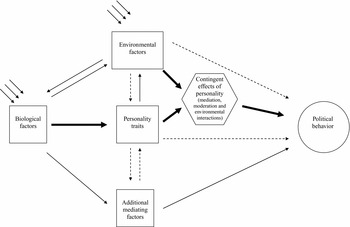
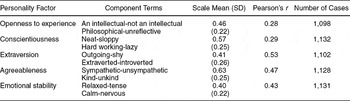
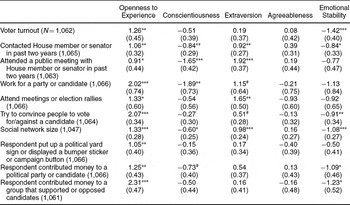
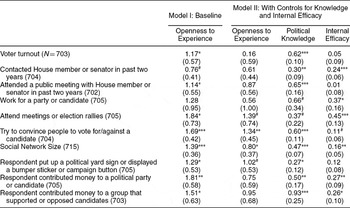
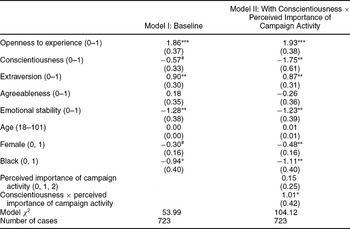
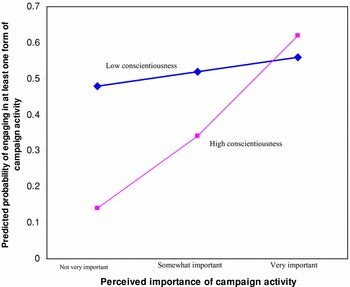
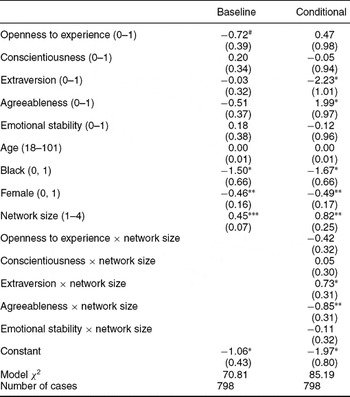
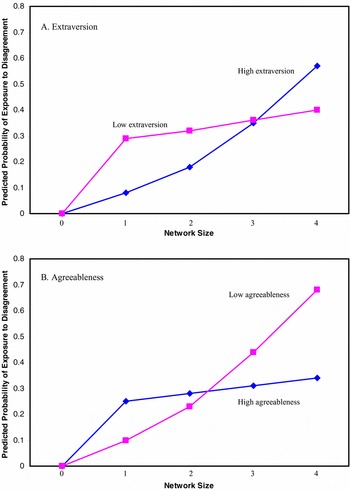
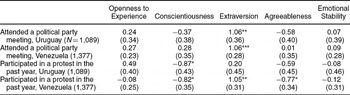
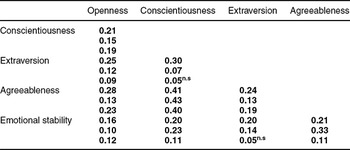
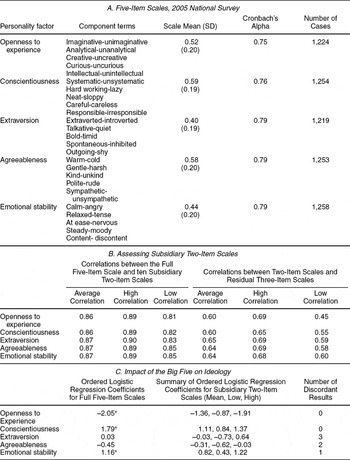
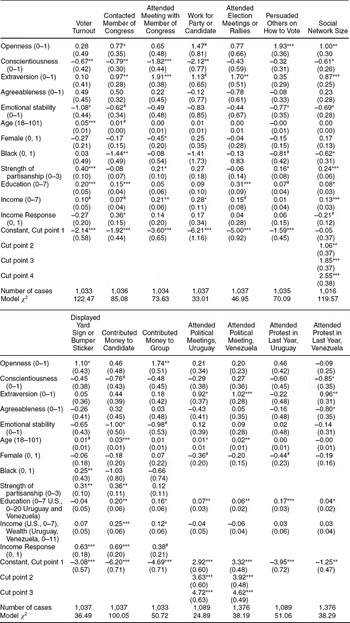



Comments
No Comments have been published for this article.