




No CrossRef data available.
Article contents
- Extract
- Acknowledgements
- WHEN, HOW, AND WHY DID U.S. CIVIC LIFE CHANGE?
- The Decline of Social Connectedness
- The Reorganization of Civic Groups and Elite Affiliations
- EXPLORING THEORIES OF CIVIC CHANGE
- A New Kind of Data
- Methods of Analysis
- Theories and Expectations
- THE SHAPE OF CONTEMPORARY CIVIC CHANGES
- Trends in Group Affiliations
- Trends in Connectedness
- THE ROOTS OF CIVIC REORGANIZATION
- Individual Characteristics and Civic Choices
- Contexts of Civic Reorganization
- SENATORS AND CITIZENS
- CONCLUSION
Disconnection and Reorganization: The Transformation of Civic Life in Late-Twentieth-Century America
Published online by Cambridge University Press: 15 December 2005
Article contents
- Extract
- Acknowledgements
- WHEN, HOW, AND WHY DID U.S. CIVIC LIFE CHANGE?
- The Decline of Social Connectedness
- The Reorganization of Civic Groups and Elite Affiliations
- EXPLORING THEORIES OF CIVIC CHANGE
- A New Kind of Data
- Methods of Analysis
- Theories and Expectations
- THE SHAPE OF CONTEMPORARY CIVIC CHANGES
- Trends in Group Affiliations
- Trends in Connectedness
- THE ROOTS OF CIVIC REORGANIZATION
- Individual Characteristics and Civic Choices
- Contexts of Civic Reorganization
- SENATORS AND CITIZENS
- CONCLUSION
Extract
From the early 1800s through the middle of the twentieth century, U.S. democracy was energized by the remarkable propensity of Americans to organize and join voluntary associations. Observers of many persuasions agree on this point – and also concur that the final decades of the twentieth century brought fundamental shifts in civic organization and citizen involvements with voluntary groups in the United States. The nature, tempo, and causes of these changes remain a topic for scholarly discussion, however. Investigators highlight different aspects of recent civic transformations and explore these changes using contrasting theoretical perspectives and types of empirical data.
Information
- Type
- Research Article
- Information
- Copyright
- © 2005 Cambridge University Press
Acknowledgements
Various colleagues have given us comments and criticisms that helped to improve this article. We are grateful to anonymous journal reviewers; to colleagues in the American Politics Research Workshop at Harvard University; and, for specific suggestions, to Barry Burden, Rob Sampson, and Martin West.
From the early 1800s through the middle of the twentieth century, U.S. democracy was energized by the remarkable propensity of Americans to organize and join voluntary associations.1
Gabriel A. Almond and Sidney Verba, The Civic Culture: Political Attitudes and Democracy in Five Nations (Princeton, NJ: Princeton University Press, 1963); James Bryce, The American Commonwealth, 3rd ed., vol. 2 (New York: Macmillan, 1895); Robert D. Putnam, Bowling Alone: The Collapse and Revival of American Community (New York: Simon and Schuster, 2000); Arthur M. Schlesinger, Sr., “Biography of a Nation of Joiners,” American Historical Review 50 (1)1944: 1–25; Theda Skocpol, Diminished Democracy: From Membership to Management in American Civic Life (Norman: University of Oklahoma Press, 2003); and Alexis de Tocqueville, Democracy in America, ed. J. P. Mayer, trans. George Lawrence (1835–1840; Garden City, NY: Doubleday, Anchor Books, 1969).
Led by Robert D. Putnam, social capital theorists emphasize the unraveling of many sorts of social connections, and they see citizen withdrawal from affiliations with voluntary associations, especially membership groups, as an integral part of recent civic shifts.2
Putnam, Bowling Alone. See also Putnam's Making Democracy Work (Princeton, NJ: Princeton University Press, 1993).
In contrast, civic reorganization theorists such as Theda Skocpol and Matthew Crenson and Benjamin Ginsberg focus on abrupt shifts in organizational populations – the displacement of popularly rooted membership associations by professionally managed advocacy groups and nonprofit institutions.3
Matthew Crenson and Benjamin Ginsberg, Downsizing Democracy: How America Sidelined Its Citizens and Privatized Its Public (Baltimore, MD: Johns Hopkins University Press, 2002); Skocpol, Diminished Democracy; Theda Skocpol “Unraveling from above,” The American Prospect 25 (1996); and Theda Skocpol, “Voice and Inequality: The Transformation of American Civic Democracy,” Perspectives on Politics 2 (2004): 1–18. The same kind of reorganization at the metropolitan level is documented in Peter Dobkin Hall, “Vital Signs: Organizational Population Trends and Civic Engagement in New Haven, Connecticut, 1850–1998,” in Civic Engagement in American Democracy, ed. Theda Skocpol and Morris P. Fiorina (Washington, DC: Brookings Institution Press and Russell Sage Foundation, 1999).
In this article, we introduce a new type of long-term empirical data: the civic group affiliations declared by Massachusetts state senators over much of the twentieth century. Despite limitations, which we discuss in the following sections, these data – used alone and in conjunction with other available data – offer a window into the nature and possible causes of shifting elite civic affiliations, and help to pinpoint the relative timing of elite and mass withdrawals from major membership associations. These new data provide greater detail and longitudinal depth than the survey responses collected between the 1970s and the 1990s that are more typically used to analyze recent civic transformations.
We do not aim to test all aspects of social capital and civic reorganization arguments about civic change in the late-twentieth century. Our fresh data do, however, help to explore and adjudicate certain areas of differential emphasis and disagreement between these perspectives. Social capital theory, we find, offers valid insights about civic disconnection and generational replacement, but this perspective also misses much that is going on beneath the surface of general trends, especially after 1965. As the reorganization perspective argues, elites led the way in abruptly changing the types (not just numbers) of civic groups with which they affiliated. The new evidence we present also suggests that rights revolutions and shifts in government welfare policies might indeed have been implicated in late-twentieth-century civic reorganizations.
WHEN, HOW, AND WHY DID U.S. CIVIC LIFE CHANGE?
As the foregoing remarks suggest, leading analysts not only offer contrasting explanations, they also highlight somewhat different civic changes as worthy of theoretical attention. As Putnam's social capital argument is so well known, we summarize it only briefly, opting instead to explore less-well-known arguments about civic reorganization in more detail.
The Decline of Social Connectedness
Robert Putnam's social capital theory holds that the effectiveness of democratic government rests in large part on the presence of interpersonal social ties that foster trust and norms of reciprocity among citizens.4
Putnam, Making Democracy Work, esp. chap. 6.
Putnam, Bowling Alone, 277.
Ibid., 54, 81, 84.
Ibid., chap. 3.
In chapter 15 of Bowling Alone, Putnam sketches “the complex of factors” that explain recent erosions of American social capital.8
Generational replacement and increased television-viewing are partially overlapping factors in the pie-chart explanatory model Putnam presents, so the percentages summarized in this paragraph cannot be simply totalled.
Ibid., 283.
Notable for their absence in Putnam's explanation of declining social connectedness are the “rights revolutions” of the 1960s and 1970s; the rise in economic inequality since the 1970s; and changes in U.S. politics and governance. In Putnam's view, declines in civic engagement have occurred relatively equally between races, between men and women, and across social strata (despite cross-sectional differences that might persist). Governmental changes, furthermore, are not seen as causally important. Using data across nations, across the United States, and across time, Putnam maintains that the size of the welfare state is “uncorrelated” with declines in social connectedness.10
Ibid., 281–82.
The Reorganization of Civic Groups and Elite Affiliations
Although Putnam sees late-twentieth-century civic change primarily in terms of the decline of overall social connectedness, accounts such as that offered by Matthew Crenson and Benjamin Ginsberg in Downsizing Democracy and by Theda Skocpol in Diminished Democracy posit an abrupt juncture of civic reorganization led by elites. In their descriptions and explanations of late-twentieth-century civic changes, reorganizationists focus as much on innovation as on decline. Theoretically, these scholars hold that nonelites must be mobilized and organized by elites if they are to become collectively organized and participatory in sustained fashions. American elites, they argue, once competed with one another by mobilizing masses of fellow citizens into political parties, social movements, and voluntary membership associations. But in recent times, elites have created and operated through increased numbers of professionally run advocacy groups without members, through nonprofit agencies serving clients rather than members, and through voluntary groups with only mailing-list adherents. Moreover, among membership groups as such, cross-class and popular associations have declined more sharply than elite professional groups.11
See Skocpol, Diminished Democracy, 216, fig. 5.9.
Causally speaking, the Civil Rights era of the 1960s and 1970s matters in the reorganization account, because it discredited membership associations that were racially exclusive and gender-specific. (Ethnic-identified membership groups, however, continued to have some legitimacy and broad appeal.) The war in Vietnam also contributed to the sharp decline of membership associations, as many educated young men tried to avoid that conflict and found the patriotic themes stressed by longstanding fraternal and veterans' groups less appealing than had earlier generations.
Perhaps the most telling contrast between social capital and civic reorganization theories is related to the causal role of government. As Crenson and Ginsberg note, “civil society is as much a product of political institutions as vice versa. . . . Civic traditions do not spring up spontaneously to undergird a passive state. The exercise of public authority often shapes civic culture and determines whether or not civic institutions take root in the society that surrounds government.”12
Crenson and Ginsberg, Downsizing Democracy, 12.
At the national level between the late 1950s and the 1970s, a sudden “bulge” of federal legislation aimed to influence new realms of social and economic life – ranging from women's and minority rights, to the health of the environment, to the well-being of the poor and the elderly.13
David R. Mayhew, Divided We Govern: Party Control, Lawmaking, and Investigations, 1946–1990 (New Haven, CT: Yale University Press, 1991), chap. 4; and William Howell, Scott Adler, Charles Cameron, and Charles Riemann, “Divided Government and the Legislative Productivity of Congress, 1945–94,” Legislative Studies Quarterly 25 (2000): 285–312.
Frank R. Baumgartner, Beth L. Leech, and Christine Mahoney, “The Co-Evolution of Groups and Government,” paper delivered at the Annual Meeting of the American Political Science Association, 28–31 August 2003; and Jack L. Walker, Jr., Mobilizing Interest Groups in America: Patrons, Professions, and Social Movements (Ann Arbor: University of Michigan Press, 1991).
Hugh Heclo, “Issue Networks and the Executive Establishment,” in The New American Political System, ed. Anthony King (Washington, DC: American Enterprise Institute, 1978), 87–124; and Skocpol, “Voice and Inequality,” 5–7.
More relevant for the empirical analysis to be developed in this article, reorientation of the U.S. welfare state also encouraged civic reorganization in the states and localities. U.S. social policies created during and after the New Deal emphasized income maintenance for broad categories of citizens; however, beginning in the 1960s, the emphasis shifted to ameliorative social services.16
Jeffrey M. Berry and David F. Arons, A Voice for Nonprofits (Washington, DC: Brookings Institution Press, 2003), chap. 1.
Heclo, “Issue Networks,” 89–93.
Crenson and Ginsberg, Downsizing Democracy, 220.
EXPLORING THEORIES OF CIVIC CHANGE
Current empirical research makes it difficult to explore the validity of the different accounts of the nature and roots of civic change offered by social capital and civic reorganization theorists. Some students of civic change have traced recent shifts in populations of organizations, yet they can tell us little about individuals who affiliate with various types of civic groups.19
Frank R. Baumgartner and Bryan D. Jones, Agendas and Instability in American Politics (Chicago: University of Chicago Press, 1993), chap. 9; Frank R. Baumgartner and Beth L. Leech, Basic Interests: The Importance of Groups in Politics and Political Science (Princeton, NJ: Princeton University Press, 1998), chapter 5; Jeffrey M. Berry, Lobbying for the People: The Political Behavior of Public Interest Groups (Princeton, NJ: Princeton University Press, 1977); Jeffrey M. Berry, The Interest Group Society, 3rd ed. (New York: Longman, 1997); Jeffrey M. Berry, The New Liberalism and the Rising Power of Citizen Groups (Washington, DC: Brookings Institution Press, 1999); Michael T. Hayes, “The New Group Universe,” in Interest Group Politics, ed. Allan J. Cigler and Burdett A. Loomis, 2nd ed. (Washington, DC: CQ Press, 1986), 133–45; Debra C. Minkoff, Organizing for Equality: The Evolution of Women's and Racial-Ethnic Organizations in America, 1955–1985 (New Brunswick, NJ: Rutgers University Press, 1995); and Walker, Mobilizing Interest Groups.
In addition to Putnam, Bowling Alone, see Henry E. Brady, Kay Lehman Schlozman, Sidney Verba, and Laurel Elms, “Who Bowls? The (Un)Changing Stratification of Participation,” in Understanding Public Opinion, ed. Barbara Norrander and Clyde Wilcox (Washington, DC: CQ Press, 2002), 219–42; Dora L. Costa, and Matthew E. Kahn, “Understanding the American Decline in Social Capital, 1952–1998” Kyklos 56 (2003): 17–46; Robert Wuthnow, Loose Connections: Joining Together in America's Fragmented Communities (Cambridge, MA: Harvard University Press, 1998); and Robert Wuthnow, “United States: Bridging the Privileged and the Marginalized,” in Democracies in Flux: The Evolution of Social Capital in Contemporary Society, ed. Robert D. Putnam (New York: Oxford University Press, 2002), 59–102.
A New Kind of Data
Seeking new kinds of systematic empirical evidence stretching over a long period of time, we turned to the annual biographical directories that U.S. states publish profiling their public officeholders. In a few states, it turns out, biographical compendia include not just information on the personal characteristics, partisan affiliations, occupational identifications, and governmental careers of officeholders, but also data on the specific civic organizations with which they claim affiliation on an annual basis. The Commonwealth of Massachusetts, in particular, provides such information dating to the late nineteenth century. Prior to 1920, a private company annually published A Souvenir of Massachusetts Legislators, providing a paragraph or two about each officeholder, usually including data on civic affiliations. Starting in 1920, the Massachusetts government began to publish annual directories, in which biographical information was published in a format that has remained unchanged since. “Organizations” has been an explicit category in every annual biographical questionnaire collected from each Massachusetts officeholder since 1920, and the listings under this heading are extraordinarily rich. The types of affiliations claimed ranged from membership associations of all types, through various sorts of nonmembership-based civic organizations, including cultural and social service institutions, foundations and funds of various sorts, organizations that coordinate activities or other groups, and affiliations with mailing-list-based advocacy organizations. Often senators indicate that they are serving on the board of directors of nonmembership groups – for example, as a trustee of a service agency, or museum, or educational fund.
We have computerized all biographical information, including civic affiliations, for the forty members of the Massachusetts State Senate at five-year intervals between 1900 and 2000. We coded information for each senator for each year studied. Then, in separate, but linked, computer files we coded the characteristics of the 929 separate civic associations or organizations with which one or more of the senators claimed affiliation between 1900 and 2000. These data allow us to link the individual characteristics of senators to the types of groups in which they have claimed membership or another kind of affiliation. Codes classify membership versus nonmembership groups; elite versus cross-class and popular membership groups; and federated versus local versus state or national groups. We also coded many particular kinds of groups, such as “fraternal group,” “veterans group,” “social service-providing institution, group or agency,” and so forth.
Readers might wonder whether senators honestly list their all group affiliations. In truth, we cannot be sure whether every individual lists all groups involvements – an uncertainty which also plagues national surveys. What we can determine from these public biographical profiles, however, are the civic affiliations that senators openly proclaim. Methodologically, it is also reassuring that senators have responded to the same questionnaire stimulus over time.
For the purpose of exploring civic change in America, these data obviously have both weaknesses and strengths. On the downside, the data are not nationwide. We have not found consistent, long-term data on civic group affiliations for national officials; and our investigations show that most states do not collect such data. Outside of New England, surprisingly few states publish year-by-year civic affiliations for their officeholders, whereas those states that do provide such information do so in varying formats over fewer decades. We have completed preliminary analyses on reported senatorial affiliations in Maine (1950s through 1990s), North Carolina (1950s through 1990s), and Illinois (1950s through 1980, when the format of the official biographies changed). Tellingly, these analyses suggest that an overall shift from membership affiliations to ties with nonmembership organizations occurred at roughly the same time – 1960s to 1980s – in this diverse set of states, just as the following analysis will show that such a shift occurred in Massachusetts. Reassured that we are not talking about changes that occurred only in one region, we concentrate here on our Massachusetts data, given their unique quality and consistency over the entire twentieth century. Although the lack of national representativeness is unfortunate, these data are extraordinarily valuable because they cover many decades. Scholars cannot adequately assess change after 1960 without knowing about civic affiliations before that time. We must exploit detailed, long-term data where they can be found, especially when those data allow us to link individuals with particular, named civic organizations.
Our data are uniquely helpful for exploring the changing civic affiliations of elites, because virtually all of those who have served in the Massachusetts Senate are well-educated persons from business or professional backgrounds. These are all public officeholders, of course, yet the biographical compendia also include each senator's nonofficial occupational identification (such as “dentist” or “businessman” or “lawyer”). What is more, if we must study just one kind of elite, public officeholders are arguably ideal, because their civic choices are likely to reflect – and help create – public legitimacy. The ties to civic organizations proclaimed by political officeholders should tell us what kinds of affiliations have been publicly respectable in various eras, at least in the eyes of fellow elites.
Our data on Massachusetts senators' changing civic affiliations have the added advantage that for certain particular named groups, we can link these elite data with information on mass membership trends. As we will see in the following sections, numerous Massachusetts senators claimed ties to certain major cross-class associations over many decades. Because we know when senators ceased to list these groups as often as their predecessors did in previous decades, we can correlate trends in senatorial withdrawal with overall membership declines in these groups.
Methods of Analysis
We use four methods of empirical analysis in this article. First, and most basically, we dissect descriptive trends in the declared civic affiliations of Massachusetts state senators. Beyond considering overall numbers of civic affiliations, we can compare trends over many decades for various types of affiliations, such as those with “membership” versus “nonmembership” groups. We can also compare trends in affiliations with predominately “elite” membership groups, predominantly “popular” membership groups (trade unions comprise the bulk of this limited category), and clearly “cross-class” membership groups (fraternal groups, veterans groups, ethnic associations, religious associations, and the like).
Second, we use quantitative network techniques to measure the degree to which the officeholders in each senate examined at five-year intervals are linked together by shared ties to the same, specifically named groups.21
John P. Scott, Social Network Analysis: A Handbook (Thousand Oaks, CA: Sage Publications, 2000).
Third, we explore individual-level data through OLS regression models designed to predict the changing proportions of different types of group affiliations in the period since 1940. We focus on the proportions of types of affiliations each senator claims at various dates, because we want to explain, not absolute numbers of ties, but the changing weight of various kinds of affiliations. Our multivariate analyses allow us to assess how well various characteristics of senators – including their birth dates and the periods in which they came into office – explain the proportions of affiliations they claim with membership groups of all sorts, with cross-class and popular membership groups, and with nonmembership organizations of all kinds.
Finally, we move beyond our primary dataset to relate shifts in senators' civic affiliations to broader contextual trends. We examine the timing of shifts in senatorial affiliations in relation to trends in social-welfare policymaking. And, as suggested previously, we look closely at specific, major voluntary associations in which large numbers of Massachusetts senators and masses of Massachusetts citizens have claimed membership. In probing these issues, we are fortunate that the five organizations Massachusetts state senators most frequently cited across the twentieth century turn out to be major, nationally prominent membership associations for which long-term data on membership trends in Massachusetts is available. Do trends in affiliation for senators track those for citizens in general? Where membership trends diverge, who withdraws from the major cross-class associations first, the senators or the broad citizenry?
Theories and Expectations
Before we present empirical results, it is worth addressing, from a social capital versus a civic reorganization perspective, what we might expect to find in our long-term data from the Massachusetts state senate. Each perspective suggests what we should look for in descriptive and causal analyses – and in some areas, expectations diverge.
If the social capital account is accurate and complete, we should find a gradual and steady decline in per capita numbers of Massachusetts state senators' civic affiliations after the 1950s and 1960s. In particular, we should find steady and comparable declines for involvements with all types of individual membership associations. As for network analysis, over recent decades, we should find fewer shared, overlapping civic ties among members of each senate cohort, as “disconnectedness” increases. In individual-level statistical analyses, moreover, we should find powerful relationships between birth dates of senators and their likelihood of claiming affiliations with membership groups. Senators born later should have steadily fewer affiliations with membership groups of all sorts, reflecting the predominant causal emphasis social capital theory places on generational replacement. Other factors, such as partisanship, gender, occupational identification, and the timing of arrival in the senate should not be significant predictors.
The civic reorganization account, descriptively speaking, leads us to expect a sharp disjuncture in elite civic affiliations starting around the mid-1960s, coincident with the rights revolutions, the war in Vietnam, and reorientations in U.S. social policy. With the exception of ties to ethnic-identified groups, senators' declared affiliations with popular and/or cross-class membership groups should drop quickly – much more than their ties to elite membership associations. Affiliations with nonmembership organizations should increase – and, specifically, ties to social service institutions and agencies might be expected to grow especially sharply following the reorganization of the U.S. welfare state in the late 1960s and 1970s. Because the reorganization perspective does not place much emphasis on issues of interpersonal connection and disconnection, it does not offer strong expectations for our network analyses.
From the reorganization perspective, birthdate should not be the only temporal variable explaining late-twentieth-century changes in the civic affiliations of individual senators in our individual-level OLS models. There should also be a powerful “period effect” reflected in new choices by senators, regardless of age, who assume public office after the mid-1960s: specifically, senators who come into office after 1965 should list smaller proportions of popular and cross-class membership associations and higher proportions of civic affiliations with nonmembership organizations. The reorganization perspective, finally, does not suggest significant differences by gender or partisanship; however, it does suggest that senators with the most elite occupational identifications should be the ones most likely to abandon cross-class membership groups and adopt nonmembership civic affiliations after the 1960s.
When we compare late-twentieth-century membership trends for senators and citizens affiliated with prominent cross-class associations, social capital theory and reorganization theory offer clearly different expectations. If social capital theory is correct, Massachusetts senators and citizens should disaffiliate from the prominent associations roughly in tandem.22
Recall that social capital theory expects membership declines to occur relatively equally for people in different social strata and for elites and nonelites.
THE SHAPE OF CONTEMPORARY CIVIC CHANGES
Let us begin with what long-term trends show about the numbers and types of group affiliations claimed by Massachusetts state senators. Our initial analyses, largely descriptive, allow us to explore expectations about civic decline, shifts in types of affiliations, and trends in connectedness versus disconnectedness.

Fig. 1. Average Number of Civic Affiliations Listed by Massachusetts State Senators, 1900–2000
Source: Directories of Massachusetts state officials, 1900–2000.
Trends in Group Affiliations
Figure 1 displays the average number of group affiliations claimed by Massachusetts state senators over the twentieth century, aggregating listings of all types of civic associations and institutions. We display the numbers in two ways, first comparing the average number of affiliations for all forty members of the senate at five-year intervals, with the average number calculated only for those senators who listed any groups in their biographical profiles for a given year. In most years, there are a few senators who fail to list any groups. While we cannot be sure why this occurs, our analysis in Figure 1 demonstrates that the trends are not markedly different with those nonlisters included or excluded. From now on, we will analyze data only for senators who listed at least one or more group affiliations at each five-year interval.
What does our analysis here offer on recent declines in aggregate numbers of group affiliations? Overall, the average number of affiliations for senators who list groups ranges from fewer than four groups in 1900 to more than six and a half in 1970. The numbers for the years prior to 1920 should be considered with caution, because the format of the biographical profiles was not fully institutionalized until 1920. Since then, however, the average number of group affiliations has fallen and risen from around five, with a dip during the Great Depression followed by an upward bulge after World War II – just as Putnam leads us to expect. If we consider average numbers of affiliations listed from 1970 onward, we do see a downward trend of roughly the magnitude that various data presented in Putnam's Bowling Alone might lead us to expect. Significantly, however, as Figure 2 illustrates, virtually all of this decline is the result of declining affiliations with military veterans associations, which is traceable to the aging of the World War II generation. While this does not in any way contradict the evidence of overall decline in sheer numbers of civic affiliations, it does illuminate those types of groups that might play a strong role in generationally-linked declines in affiliations.
In Figure 3, we begin to take advantage of the specific codings allowed by our rich data on various types of affiliations. In order to trace trends separately, we break overall averages in listings into three categories. Here, the “membership groups” category includes all nonoccupational voluntary associations that have individuals as members, including such organizations such as veterans and fraternal groups, athletic clubs, church-related groups, ethnic associations, and many other types. Although the “occupational” category also refers to groups with individual members, these groups – the vast majority of them business or professional associations – recruit members from particular industries or occupations. Finally, the “nonmembership” category aggregates cultural and social service institutions; funds that channel money for community purposes; groups that coordinate functional activities (such as professional coordinating bodies or community councils); and professionally managed advocacy groups of various sorts.

Fig. 2. Civic Affiliations Listed by Massachusetts State Senators with and without Veterans Associations, 1900–2000

Fig. 3. Types of Civic Affiliations Listed by Massachusetts State Senators: Membership, Occupational, and Nonmembership Groups

Fig. 4. Class Scope of Membership Associations Listed by Massachusetts State Senators: Elite, Cross-Class, and Popular Groups
Figure 3 clearly documents an abrupt reorganization of civic ties lurking beneath the modest decline in total numbers of affiliations claimed by Massachusetts senators since the 1960s. As both social capital and civic reorganization theorists expect, ties to individual membership groups have declined precipitously. Yet occupational memberships have held their own over recent decades – a finding not expected by social capital theory. Furthermore, ties to nonmembership civic institutions have clearly climbed steadily since 1960.
Figure 4 presents another approach to recent civic trends, this time classifying (both occupational and nonoccupational) membership groups according to the usual social status of their members. Declining sharply in recent decades have been claims by Massachusetts state senators of ties to “cross-class” groups that typically seek members across social strata. Ties to “popular” groups are persistently few and far between in this data set, consisting of the very occasional claim of membership in a trade union. “Elite” groups, finally, have privileged constituents, and include business and professional associations, college-related honor societies and alumni groups, elite social clubs, and yacht clubs. There were also many “clubs” whose exact class character we could not determine, particularly in the early years of this data set. As it is likely that many, or perhaps most, were elite social groups, we display the elite membership trends in Figure 4 with and without such unknown clubs. The long-term direction of elite membership group affiliations depends on whether we include or exclude such clubs. However, save perhaps for a modest dip in elite membership affiliations in the 1990s, Massachusetts senators have not reduced their ties to elite groups over the course of the late-twentieth century. Senators have disaffiliated from cross-class groups at a much sharper rate. The contrast between the trends involving cross-class groups and elite groups is exactly what civic reorganization theory leads us to expect. For these prominent public officeholders in Massachusetts, we do not see the universal withdrawals from membership groups suggested by social capital theorists. Instead, starting quite abruptly at 1965, we see a precipitous decline in the average number of affiliations Massachusetts senators claim specifically with cross-class membership associations.
Figure 5 effectively sums up the heart of the civic reorganization that occurred after 1970. Before that juncture, 70 percent or more of Massachusetts senators always proclaimed two or more affiliations with cross-class membership associations in their biographical profiles.23
A handful of affiliations with popular associations are also grouped with cross-class affiliations in Fig. 5.

Fig. 5. Shifting Types of Multiple Civic Affiliations Listed by Massachusetts State Senators, 1900–2000
Trends in Connectedness
If our data about specific types of group affiliation provide considerable support for a civic reorganization perspective, other trends support the social capital claim that disconnectedness is on the rise in American civic life. In fact, the very data just displayed on declines in senators' ties to cross-class associations support a finding that senators' civic affiliations are now less likely to connect them to broad cross-sections of citizens. As they now sit on boards of institutions and funds, participate in managerial meetings to coordinate policy or community activities, or occasionally affiliate through the mail with professionally managed advocacy groups, today's Massachusetts state senators are not likely to encounter ordinary citizens face to face. This kind of “disconnection” supports the claims of both social capital and civic reorganization theorists.
Network analyses allow us to quantify ties formed by civic affiliations shared among senators themselves. In each senate at five year intervals, we have examined every possible pair of senators to see if they share affiliations through one or more groups. The shared ties here are not, in most cases, face to face ties. When two senators each belong to the Knights of Columbus, for example, they probably have immediate affiliations with different local chapters. Nevertheless, fellow fraternalists of this sort share an identity, adhere to explicitly common principles, and might attend meetings together (members can attend any local chapter and they can participate jointly in state-level meetings).
Figure 6 displays the percentage of all possible ties formed by one or more shared group affiliations for each pairing of senators in each of the senates we analyzed at five-year intervals. The results of this analysis are striking: shared ties were extraordinarily common in the 1930s and again the 1950s and 1960s; however, the percentage of possible shared ties declined thereafter – to historic lows by 1980. In the contemporary era (since the 1960s), Massachusetts state senators usually have individualized affiliations, as Figure 7 underscores. Typically, each senator serves on boards or committees unique to his or her local district. In an important sense, as ties to shared voluntary federations have diminished, civic localism has increased. In Putnam's social capital perspective, localism and shared memberships are presumed to vary together, but these data suggest that local links can increase even as membership ties diminish.

Fig. 6. Density of Shared Civic Affiliations among Massachusetts State Senators, 1900–2000

Fig. 7. Massachusetts State Senators Whose Group Affiliations Are Not Shared with any Other Senator
THE ROOTS OF CIVIC REORGANIZATION
Having described the transformations revealed by these data from Massachusetts, we can turn now to exploring the causes of the sharp shift from membership to nonmembership civic affiliations. Potentially, the changing individual characteristics and experiences of senators might contribute to the changes we see. In addition, there might also have been contextual conditions that furthered civic changes, including the new federal policies stressed by civic reorganization theorists.
Individual Characteristics and Civic Choices
Because we record the biographical characteristics of Massachusetts senators, we can perform multivariate tests to see which help to explain shifts in proportions of self-proclaimed civic affiliations. For this part of our analysis, we examine the period from 1940 to 2000, which encompasses the shift from high proportions of cross-class membership affiliations listed by senators to high proportions of nonmembership affiliations. Using OLS regression analysis, we examine three dependent variables in the models included in Table 1: (1) the proportion of each senator's affiliations with Membership Groups of all types; (2) the proportion of affiliations with Cross-Class and Popular Groups; and (3) the proportion of affiliations with Nonmembership Organizations.
Key independent variables test for the temporal effects expected by social capital and civic reorganization theorists.24
Logically, another way in which time might figure into individual-level civic shifts would be if particular senators who remained in office from the 1950s or 1960s through the 1970s changed the specific groups that they listed. A modest number of senators remained in office over this era of transformation, and in a couple of telling cases the groups they listed did change from membership to nonmembership organizations. However, most senators never changed the groups they listed.
We also performed all of the following analyses using a continuous measure of First Year in the Senate. The results do not change substantively with the alternative measurement of this variable. We consider the categorical coding reported here to be more valid, because we are trying to pinpoint a period effect—that is, not the year a person comes into office, but whether he or she arrived after 1965.
Additional independent variables refer to the occupational identifications listed by senators in their biographical profiles. In order to see whether various kinds of identifications are associated with declining proportions of membership affiliations or rising proportions of nonmembership affiliations, we classify elite identifications into Business, Private Sector Professional, and Public Sector Professional. All other identifications – namely a small number with blue-collar and lower-level white-collar occupations – fall in a nonlabeled residual category.
Control variables used in our OLS statistical models refer to partisan identification (Democrat) and gender (Female). The Massachusetts Senate was dominated by Republicans through mid-century, with the Democrats steadily gaining ground after 1950. While the timing is off for partisan change to be the major factor driving civic changes that took off after the 1960s, partisan identity could be a contributing factor. Similarly, Massachusetts state senators were virtually all men until recent decades; yet the numbers of women gradually increased by 2000 to the 25 percent of the senate.
The first model included in Table 1 attempts to account for the decline that occurred (especially after the 1960s) in the proportion of affiliations with membership groups. We examine membership ties of all sorts in the first model, because this broad dependent variable is of special interest to social capital theory. The second model in Table 1 focuses more precisely on what we already know to have been the key change in the post-1960s period: the sharp decline in proportions of ties to popular and (especially) cross-class voluntary membership associations.
Significant results for the Date of Birth and Post-1965 Entry into Senate categories appear in the first model. As social capital theory would predict, younger senators have lower proportions of membership groups. The effect is small, however – and we see that Post-1965 Entry into Senate is a stronger predictor. As civic reorganization theory expects, senators arriving after 1965, regardless of age, tend to have lower proportions of membership affiliations.
In the second model of Table 1, birthdate remains a slightly significant predictor of the more precise dependent variable, the proportion of cross-class and popular groups declared by each senator. Post-1965 Entry into Senate becomes an even stronger predictor in this model. Civic reorganization theory focuses on the differential decline of ties to cross-class membership groups, and this perspective correctly suggests that generation is a less important predictor than entering into office after 1965.
Table 1. Predicting Proportions of Massachusetts Senators' Affiliations with Various Types of Civic Groups

There are also significant control variables to discuss for both models. In both cases, Democrat is a significant predictor of declining proportions of membership ties. Democrats are more likely to retain higher proportions of membership ties – and specifically, higher proportions of cross-class and popular membership affiliations – in an era when such ties are declining overall. This might seem surprising, but on qualitative inspection, the data reveal why. Some of the Democrats who, in recent years, declare ties to ethnic membership associations are African Americans, and others are Irish Catholics. Since 1970, most Democrats, like Republicans, claim fewer ties to longstanding cross-class membership associations; nonetheless, many Democrats still list at least one ethnically or racially identified membership association, such as the Knights of Columbus, the Ancient Order of Hibernians, or the National Association of Colored People.
In the first model presented in Table 1, partisanship is the only control variable that proves significant. But in the second model there are significant results for Female and for the Business, Private Sector Professional, and Public Sector Professional identifications. Regardless of birthdates or timing of arrival in the Massachusetts Senate, female senators are significantly more likely to claim lower proportions of membership affiliations. This result is not expected by either social capital theory or civic reorganization theory, and we have no ready explanation for it, save to suggest that, as generally late arrivals in the Massachusetts Senate, women, who are few in number in any event, might have been especially strongly affected by the discrediting of traditional gender roles characteristic of the post-1960s era. Most longstanding U.S. voluntary membership groups, especially cross-class and popular associations, were predicated on a traditional gendered division of labor. Such groups might be especially unattractive to women who entered public office in substantial numbers only in recent times.
According to the second model, elite occupational identifications with business and private sector professions are associated with fewer claims of ties to popular or cross-class membership groups. This is true regardless of birthdates or timing of arrival in the Massachusetts Senate. By contrast, senators whose occupational identifications are with public sector professions or the residual category of less elite occupations are more likely to claim ties to popular or cross-class membership groups. We have no ready explanation for these findings, which might suggest avenues for research that go beyond the social capital and civic reorganization models.
In the third model in Table 1, we consider which individual-level characteristics help to predict innovative civic ties, measured as rising proportions of affiliations with nonmembership organizations. Tellingly, both younger senators and senators arriving in office after 1965 are significantly more likely to declare nonmembership affiliations. The period effect (Post-1965 Entry into Senate) is stronger than the generational effect (Date of Birth), but both matter. In the third model, the only control variable that proves significant is Democrat. Democrats are less likely to have higher proportions of nonmembership affiliations, reflecting (as discussed above) the proclivity of African-American and Irish-Catholic Democrats to retain ties to ethnically identified, cross-class membership associations.
Overall, the most theoretically interesting results from these OLS models have to do with Date of Birth and Post-1965 Entry into Senate. Confirming the expectations of social capital theory, generational replacement has been at work in the Massachusetts Senate, in that younger senators are less likely to list membership groups and more likely to list nonmembership affiliations. Yet the civic reorganization perspective offers a more precise focus on the decline of popular and cross-class membership affiliations in particular, and is also correct to posit a period effect cutting across all age groups. Regardless of age, senators entering office after 1965 are significantly more likely to list lower proportions of membership affiliations – especially cross-class membership affiliations – and higher proportions of ties to nonmembership organizations. Declines in membership group ties are somewhat softened for Democrats, who (our qualitative data inspection shows) differentially retain ties to ethnic-identified cross-class associations.
Contexts of Civic Reorganization
Results presented in the descriptive and regression analyses offered so far underline that the period between 1965 and 1970 represented a pivotal point in the reorganization of the declared civic ties of Massachusetts state senators from membership to nonmembership groups. Civic reorganization theorists point to major shifts in societal and governmental contexts that can help explain why civic transformation happened at that juncture, especially among elites.
As certain civic reorganization theorists have maintained, many longstanding membership associations in the United States were invested in racial exclusion and traditional gender roles, and so were undercut by the emergence of changed racial and gender ideals during the period of rights revolutions.26
See Skocpol, Diminished Democracy, chaps. 4–5; and also Michael Schudson, The Good Citizen: A History of American Civic Life (Cambridge, MA: Harvard University Press, 1998); and John D. Skrentny, The Minority Rights Revolution (Cambridge, MA: Harvard University Press, 2002).
Another conjunctural factor in the decline of ties to cross-class membership associations was almost certainly the war in Vietnam, which was not well-regarded by younger educated elites in Massachusetts. The sudden drop in ties to military veterans' groups in the late-twentieth-century Massachusetts Senate (see Figure 2) results from the fact that younger cohorts of U.S. men had less involvement with the military than did those of the World War II and Korean War generations. However, it is also the case that Massachusetts politics became increasingly liberal by the 1960s and after. Younger elites often found ways to avoid military service in Vietnam. As our data suggest, this led to fewer senatorial affiliations with veterans' and perhaps fraternal associations, the major traditional types of cross-class male membership associations.
As the civic reorganization perspective maintains, reorientations in the practices of the U.S. welfare state starting in the 1960s contributed to civic reorganization. Between the early 1960s and the early 1970s, policy changes pushed the U.S. federal welfare state toward service delivery, and toward the indirect administration of national programs via state and local governments and via nonprofit social service agencies. Of special importance, federal legislation in 1967 provided sharply increased funds to states that could contract for the provision of services through nonprofit agencies. This encouraged the proliferation of such agencies. According to many scholars, new relationships were forged between state governments and nonprofits, stimulated by the enhanced federal funding and rules that encouraged third-party contracts.27
Berry and Arons, Voice for Nonprofits; Crenson and Ginsberg, Downsizing Democracy; Richard P. Nathan, with the assistance of Elizabeth I. Davis, Mark J. McGrath, and William C. O'Heaney, “The ‘Nonprofitization Movement' as a Form of Devolution,” in Capacity for Change? The Nonprofit World in the Age of Devolution, ed. Dwight F. Burlingame, William A. Diaz, Warren F. Ilchman, and assoc. (Bloomington, IN: Indiana University Center on Philanthropy, 1996), 23–55; and Steven Rathgeb Smith and Michael Lipsky, Nonprofits for Hire: The Welfare State in the Age of Contracting (Cambridge, MA: Harvard University Press, 1993).

Fig. 8. Ties of Massachusetts State Senators to Welfare and Health Institutions, 1940–2000
Figure 8 assembles data that suggest the impact of welfare state reorganization on the ties of Massachusetts senators to social service agencies and health institutions – that is, to nonmembership entities dispensing services to such client groups as the sick, the disabled, the mentally ill, the drug-addicted, the poor, the elderly, battered wives, and delinquent youth. During the critical period of U.S. welfare-state reorientation between 1960 and 1980, Massachusetts senators reported sharply rising per capita ties to social service groups. And, as Figure 8 shows, such ties increased at the expected juncture and initially rose especially sharply for senators serving on committees that dealt with health and social welfare issues.
From our data, we cannot determine whether ties were forged by nonprofits recruiting already-elected senators to their boards, or – as seems equally probable – were formed before people entered the legislature. Nonprofit experience likely became increasingly useful to people seeking public offices in the states in the late-twentieth century. The precise cause of these ties, however, is not important as our data demonstrate that such affiliations brought prestige to senators at exactly the juncture when America's federal welfare state was reorganized to emphasize nonprofit social services in addition to categorical social spending. A new context was created, in which people tied to nonprofits ran for and won public offices – and in which there were surely good reasons for state-level public officeholders to be invited to sit on the boards of service agencies.
SENATORS AND CITIZENS
Our long-term data on Massachusetts senators obviously focus on relatively privileged individuals and these data alone cannot be used to explore the civic reorganization argument that elites abandoned cross-class membership affiliations sooner than nonelites. However, the fact that our data includes group affiliations by proper name allows us to identify specific membership associations that, historically, involved Massachusetts senators along with large numbers of their fellow citizens. The five voluntary associations most frequently listed by Massachusetts state senators between 1900 and 2000 include three male fraternal associations – the Masons, the Knights of Columbus, the Benevolent and Protective Order of Elks – and two overwhelmingly male associations of military veterans – the American Legion and the Veterans of Foreign Wars. These groups were among the largest and most extensively organized associations in U.S. history.28
For a list of such groups, see Skocpol, Diminished Democracy, 26–28, Table 2.1.

Fig. 9. Massachusetts Citizens and State Senators in the American Legion
Source: Public Officials of Massachusetts, 1940–2000; and data from Legion.
Privileged persons, like those who have served in the Massachusetts State Senate over the decades, typically participate in voluntary groups at higher absolute levels than nonprivileged persons. What we should examine, however, in Figures 9–13 are the relative membership trajectories for senators versus citizens in general. If social capital expectations about across-the-board decline after the 1950s and 1960s hold, we should expect the trends for senators and citizens to track one another closely, showing rising levels of participation in these major membership federations through the early post-World War II era, followed by similar declines in participation starting around 1960. However, if the civic reorganization perspective is correct in its expectation that elites abandoned cross-class membership groups first, then we should see a divergence in trends around the 1960s, with senators ceasing to list these major cross-class federations at a sharper rate than citizens in general back off from them.
Overall, the relative trends traced in Figures 9–13 provide considerable evidence in favor of the civic reorganization view. As the social capital perspective leads us to expect, membership trends for all of these major groups rise and then decline for both senators and citizens in the post-World War II era – and the pivot falls around 1965. From that point, however, trend lines diverge, as the elite senators disaffiliate at sharper rates than citizens in general. This is a rather remarkable fact, given that these elites are elected officials. Not just from a social capital perspective, but given the conventional wisdom in political science, we would expect the publicly proclaimed civic ties of these elected officeholders to closely mirror the preferences of citizens in general.29
If data were available (which they are not), older citizens might be a better comparison group, given that the memberships of once-prominent cross-class voluntary federations have aged during the late-twentieth century. However, older citizens are more politically active than younger citizens, as documented by Andrea Louise Campbell, How Policies Make Citizens: Senior Political Activism and the American Welfare State (Princeton, NJ: Princeton University Press, 2003); if anything, elected officeholders of all ages have an especially strong incentive to identify with associations popular with older citizens.
These figures need to be interpreted in two clusters, however. Figure 9, Figure 10, and Figure 11 display trends for three groups – the American Legion, the Veterans of Foreign Wars, and the Elks – that attracted both Democrats and Republicans in the Massachusetts Senate. In these three figures, membership trends between male senators and male citizens track each other quite closely until the 1970s, when the trends diverge. The data on Masons and Knights of Columbus tracked in Figure 12 and Figure 13 provide a more muted picture, however, because these groups historically had very strong partisan leanings. Republicans tended to be Masons, whereas Democrats, often Catholics, tended to be members of the Knights of Columbus. We also know that the partisan balance of the Massachusetts Senate shifted sharply in the post-World War II era, moving from overwhelmingly Republican toward Democratic dominance – and during the same era, the Massachusetts population became more Catholic and less Protestant. Although partisan shifts certainly drove affiliations with the Masons and the Knights of Columbus, there is still some evidence of senatorial disaffiliation in these data. Thus, in Figure 12, we see that senatorial affiliations with the Masons declined along with the proportions of Republicans in the Senate – until around 1975, when Republicans leveled off in the Senate, but senatorial ties to the Masons went to zero and remained there. Similarly, in Figure 13, we see that a sharply rising proportion of Democrats in the Senate was associated with a sharp rise in the proportions of male Senators affiliated with the Knights of Columbus – until 1965, when the senatorial affiliations stop rising. After 1980, the senators, though still overwhelmingly Democrats, stop listing the Knights of Columbus at a sharper rate of decline than disaffiliation occurs among male citizens in general.

Fig. 10. Massachusetts Citizens and State Senators in the Veterans of Foreign Wars
Source: Public Officials of Massachusetts, 1940–2000; and data from VFW.

Fig. 11. Massachusetts Citizens and State Senators in the Benevolent and Protective Order of Elks
Source: Public Officials of Massachusetts, 1940–2000; and data from Elks.

Fig. 12. Republicans in the Massachusetts State Senate and Male Citizens and Senators Listing Memberships in the Masons, 1940–2000
Source: Public Officials of Massachusetts, 1940–2000; and data from the Masons.

Fig. 13. Democrats in the Massachusetts State Senate and Male Citizens and Senators in the Knights of Columbus, 1940–2000
Source: Public Officials of Massachusetts, 1940–2000; and data from the Knights of Columbus.
CONCLUSION
The results presented in this article underscore the value of finding and probing new types of long-term data, rather than repeatedly reanalyzing social surveys that say little about specific types of civic affiliations and are available only for the period after 1970. Our data open up new ways of thinking about individual elite civic affiliations as they unfold within shifting societal and governmental contexts and in relationship to changing populations of civically visible organizations.
In fact, we have been able only to scratch the surface here. Our analysis, for example, raises the question of how elite strategies for gaining as well as exercising the responsibilities of public office might have changed in Massachusetts – and beyond – during an era of civic transformation from membership groups to professionally managed organizations. Because our data relate individuals to organizations, they invite further dynamic analysis of the civic underpinnings of electoral and governmental careers. As federal and state welfare policies shifted toward contracting out to nonprofit social service providers, and nonprofit groups multiplied in states and localities, did the civic basis for seeking public office change in complementary ways? Especially because these changes came at the same juncture – in the 1960s and 1970s – when educated Americans were turning away from traditional associations identified with racial exclusion and gender separation, the very definition of what counted as a publicly respectable kind of civic affiliation might have abruptly shifted. Our data on elite shifts from cross-class membership affiliations to ties with nonmembership organizations, and especially social service agencies, are congruent with this interpretation. But future research would need to track individual civic, electoral, and official careers in order to disentangle simultaneous processes.
In this article, we have used our uniquely detailed and long-term data to address aspects of ongoing theoretical debates about civic change in late-twentieth-century America. We have not done exhaustive “tests” of any given theory – and have certainly not offered any overall critique of social capital theory.30
A large literature commenting on social capital theory is emerging. For examples, see the special issue of the American Behavioral Scientist 40 (1997) devoted to “Social Capital, Civil Society, and Contemporary Democracy,” edited by Bob Edwards and Michael W. Foley; and Social Capital: Critical Perspectives on Community and ‘Bowling Alone',” ed. Scott L. McLean, David A. Schultz, and Manfred B. Steger (New York: New York University Press, 2002).
Social capital theory, we find, offers valid propositions about declining group affiliations, generational replacement, and growing disconnectedness. After 1970, Massachusetts senators did declare fewer civic affiliations on average, especially with membership groups; younger senators were among those in the vanguard of change; and senators shared ever-fewer civic affiliations, thus becoming more disconnected from one another.
Yet these insights are incomplete. A closer look at disaggregated trends in the civic affiliations declared by Massachusetts state senators during the late-twentieth century reveals a startling reorganization of types of civic affiliations lurking beneath gradual declines in aggregate ties. As civic reorganization theorists have argued, senators abruptly shifted away from declaring affiliations with longstanding cross-class membership associations, and toward proclaiming ties with nonmembership-based institutions, coordinating bodies, funds, and advocacy groups. Senators retained ties to elite membership groups, including professional and business associations and college alumni clubs.
Well-educated and relatively privileged, Massachusetts senators abandoned once-typical affiliations with major cross-class associations sooner than did Massachusetts citizens in general. Civic reorganization, moreover, occurred not just through replacement of older officeholders by younger ones, but also through relatively abrupt shifts in the kinds of affiliations declared by Massachusetts senators of all ages who took office after 1965.
Our evidence suggests that in its approach to comprehending civic change in late-twentieth-century America, social capital theory may overemphasize the idea of gradual, across-the-board, generationally driven declines in membership participation. Civic reorganization theory helpfully points toward abrupt, elite-driven transformations. Civic reorganization theory also underlines the importance of relating changes in civic affiliations to shifts in societal contexts and modes of government activity. In telling details as well as broad trends, our results are congruent with arguments that the rights revolutions, the war in Vietnam, and the reorientation of the U.S. welfare state toward indirectly subsidized, privately administered social services all helped to prompt new civic ties and affiliations. Putnam's claim that changes in the late-twentieth-century U.S. welfare state were “uncorrelated” with civic transformations turns out to be, at best, an overly narrow conclusion.31
Putnam, Bowling Alone, 281–82.
Civic impacts might have followed not so much from changes in aggregate levels of federal spending, but from shifts in the orientation and administrative activities of the U.S. welfare state. When the government goes from directing broad spending programs at masses of citizens, toward encouraging administrative partnerships between state and local governments and nonprofit agencies to deliver ameliorative social services, that is bound to have an impact on the kinds of civic groups that can organize or sustain themselves and achieve public legitimacy and clout. Our detailed data from Massachusetts suggest that shifts in federal policy were one of the key contextual shifts – along with the rights revolutions and the war in Vietnam – that helped to fuel abrupt changes in the civic affiliations proudly declared by publicly visible elites. Furthermore, because elites shifted their affiliations at the leading edge of mass civic changes, they, in turn, might have helped to lower the visibility and appeal of once-prominent and long-standing types of cross-class voluntary associations.
Our findings also raise normative questions. In some respects, the changes that occurred after the mid-1960s can be described as democratizing, because Massachusetts senators no longer declared affiliations with cross-class associations that had long histories of racial exclusion and gender separation. Yet gains in racial and gender integration might have been accompanied by losses in fellowship across class lines. During pivotal decades of the late-twentieth century, American elites – including the Massachusetts state senators tracked here – went from joining membership associations along with fellow citizens from many walks of life, toward joining boards and coordinating committees that left them in the position of doing public-spirited things for or to ordinary citizens. Has U.S. democracy suffered as a result, during an era when elites, including elected officials, are less likely than they once were to participate alongside broad cross-sections of citizens? And what does it mean that public officials may now find themselves closely tied to nonprofit agencies in each individual district, but not often tied to one another or to broad cross-sections of fellow citizens in shared civic endeavors? Although such questions exceed the scope of this one article, the fresh data we have explored suggest the need – as well as the possibility – for political theorists as well as empiricists to find new ways to explore the manifold and changing relationships between government activities and organized civic life in the United States and beyond.
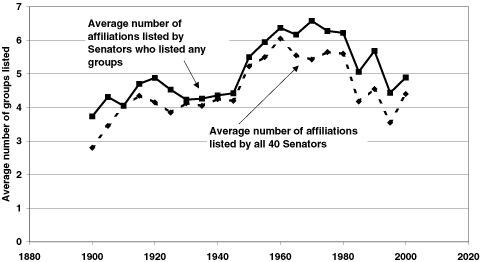
Fig. 1. Average Number of Civic Affiliations Listed by Massachusetts State Senators, 1900–2000Source: Directories of Massachusetts state officials, 1900–2000.
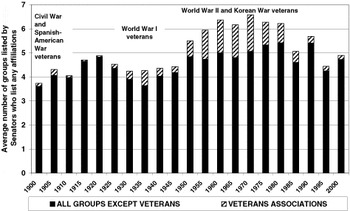
Fig. 2. Civic Affiliations Listed by Massachusetts State Senators with and without Veterans Associations, 1900–2000
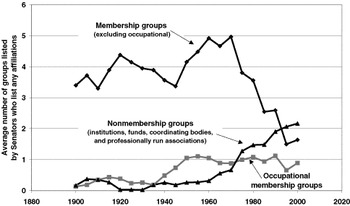
Fig. 3. Types of Civic Affiliations Listed by Massachusetts State Senators: Membership, Occupational, and Nonmembership Groups
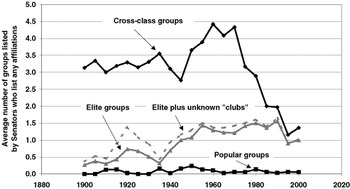
Fig. 4. Class Scope of Membership Associations Listed by Massachusetts State Senators: Elite, Cross-Class, and Popular Groups
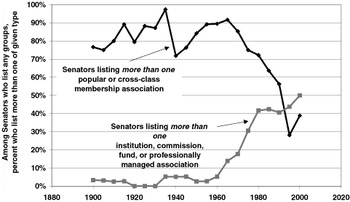
Fig. 5. Shifting Types of Multiple Civic Affiliations Listed by Massachusetts State Senators, 1900–2000
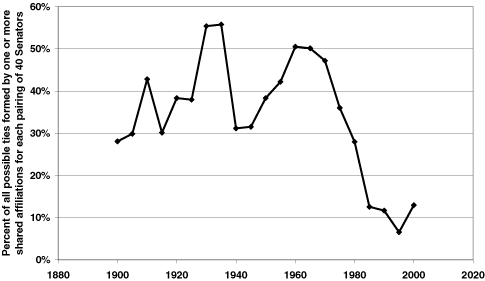
Fig. 6. Density of Shared Civic Affiliations among Massachusetts State Senators, 1900–2000
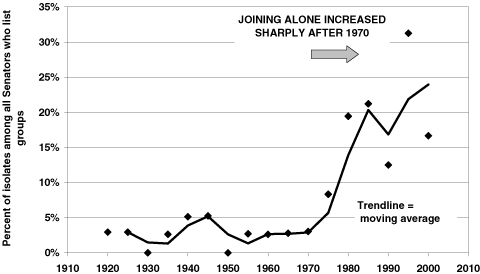
Fig. 7. Massachusetts State Senators Whose Group Affiliations Are Not Shared with any Other Senator
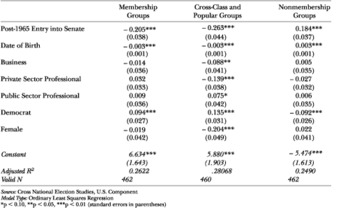
Table 1. Predicting Proportions of Massachusetts Senators' Affiliations with Various Types of Civic Groups
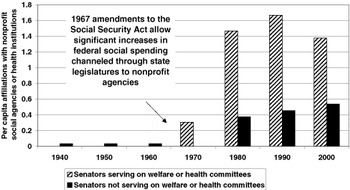
Fig. 8. Ties of Massachusetts State Senators to Welfare and Health Institutions, 1940–2000
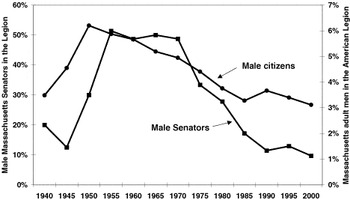
Fig. 9. Massachusetts Citizens and State Senators in the American LegionSource: Public Officials of Massachusetts, 1940–2000; and data from Legion.
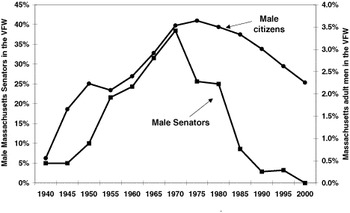
Fig. 10. Massachusetts Citizens and State Senators in the Veterans of Foreign WarsSource: Public Officials of Massachusetts, 1940–2000; and data from VFW.
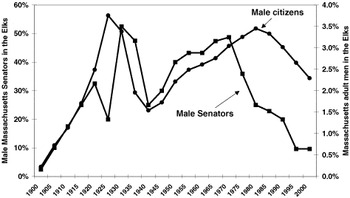
Fig. 11. Massachusetts Citizens and State Senators in the Benevolent and Protective Order of ElksSource: Public Officials of Massachusetts, 1940–2000; and data from Elks.
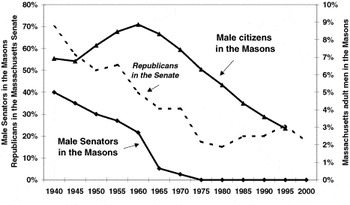
Fig. 12. Republicans in the Massachusetts State Senate and Male Citizens and Senators Listing Memberships in the Masons, 1940–2000Source: Public Officials of Massachusetts, 1940–2000; and data from the Masons.
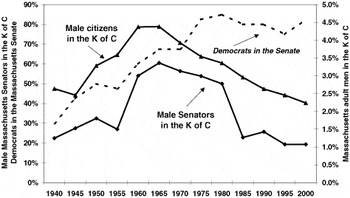
Fig. 13. Democrats in the Massachusetts State Senate and Male Citizens and Senators in the Knights of Columbus, 1940–2000Source: Public Officials of Massachusetts, 1940–2000; and data from the Knights of Columbus.
 You have
Access
- 9
- Cited by