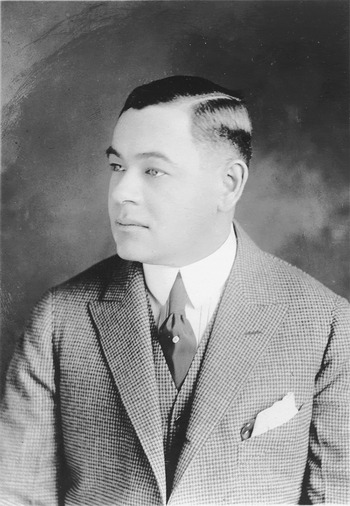
Music scholars Lynn Abbott and Doug Seroff have researched what they call “a deep African American vaudeville theater tradition” in Memphis during the first decade of the twentieth century that helped lead the way to the commercialization of the blues.Footnote 1 Their body of work provides a very useful and fascinating historical overview of the black vaudeville scene of the time on the national level.Footnote 2 This article seeks to broaden that overview, using a much more focused, microhistorical perspective on the history of theatre management on one particular street in one particular, midsized southern city. It argues that in Memphis, the story of African American and Italian American theatre managers shows that realities were often much more complex than histories that portray a rigid and heavily drawn color line have suggested.
In the space of little more than a year, between 1911 and 1912, Memphis lost two of the most influential forces in the local African American vaudeville scene. Fred A. Barrasso, an Italian immigrant and founder of one of the first black theatrical circuits in the South, died of a cerebral embolism at only twenty-eight. His burial permit lists his occupation as “merchant” and describes his color as “white.”Footnote 3 The following year, Robert R. Church Sr., who built one of the first theatres in the United States that was owned and operated by people of color, died at the age of seventy-three from cardiovascular disease. The son of a wealthy white steamboat captain and a manumitted Malay slave, Church was one of the first men of color in the South to become a millionaire. He is described on his burial permit as “colored,” and his occupation is listed as “capitalist.”Footnote 4
Such formulaic and official categorizations belie the complicated existences of these two men as they negotiated the lines of color, race, and class in their varied business dealings with the theatre and elsewhere, and on these documents little but place, gender, and mortality tie the two men together. However, both of their deaths marked the beginning of a transition in Memphis's developing black theatrical scene. Their family members carried on with the family business of theatre management, and the story of the Churches, the Barrassos, Tick Houston, and other Memphis managers illustrates some of the complexities—racial, ethnic, and otherwise—involved in the ownership and management of African American theatres at this time.
Why Microhistory?
Why use the techniques of microhistory to tell this story? It is my aim in relating this narrative to show not only how the place and the people involved were typical of larger developments across the country but also how they might have differed because of these distinct individuals in this unique place. Like any microhistory, this one involves questions of completeness and agency that can be subsumed in larger macronarratives of early twentieth-century U.S. theatre history.
Many of these macronarratives focus primarily on larger cities, particularly New York. Because of the centrality of New York in the process of commercial theatre production in the United States during this period, a disconnection between performance and place seems to have developed in some theatre scholarship that imbues representations of this theatre with a kind of placelessness. Felicia Hardison Londré has noticed this trend. In her recent book, The Enchanted Years of the Stage: Kansas City at the Crossroads of American Theater, 1870–1930, which offers a rich depiction of local theatre in that city, she remarks that as she conducted her research, she “came to realize how very ‘New York-centric’ is the published history of American theater. For most traditional historians of American dramatic art, if it didn't happen in Gotham, it was not worth mentioning.” In other words, some places do not seem to matter. As an antidote, Londré proposes that the story of theatre in this period “should be told repeatedly in all its regional variations” and refers to her own work as “one piece—a key piece, I believe—in a huge mosaic. The local is indeed the universal.”Footnote 5
While I heed her call to focus on local variations of the larger story, I would argue that the temptation to look for a synecdochic relationship of the local and the universal is too easy. As Carlo Ginzburg has stated, “the results obtained in a microscopic sphere cannot be automatically transferred to a macroscopic sphere (and vice versa). This heterogeneity … constitutes both the greatest difficulty and the greatest potential benefit of microhistory.”Footnote 6 Still, it is hard not to agree with the assessment that “the shift in scale offers the possibility not merely of greater complexity but of greater completeness.”Footnote 7
Further, with regard to African American theatre, histories of this period tend to focus on New York and Chicago—and rightly so, given the great strides that were happening in those cities, in contrast to the cities of the South, which were stifled by the effects of white supremacy. But especially in the years before the peak of the Great Migration, some individuals in southern cities, such as Robert Church, were attempting to make change in the face of seemingly insurmountable difficulty. Before the African American population shifted north in vast numbers, there were large audiences hungry for entertainment, and innovations were taking place. As Abbott and Seroff have shown, the spread of the blues tradition was influenced in part by performances happening in the vaudeville theatres of Beale Street. One of the hopes of microhistory, according to John Brewer, is that “by shifting the perspective, scale and point of view of historical analysis … the relationship between structure and agency can properly be understood.”Footnote 8
While microhistory should not be equated with local history or biography, there is often by default a good deal of either or both involved in its practice. In seeking to find the differences between traditional biography and microhistory, Jill Lepore has proposed that, unlike biographers, “microhistorians, tracing their elusive subjects through slender records, tend to address themselves to solving small mysteries… . The life story, like the mystery, is merely the means to an end—and that end is always explaining the culture.”Footnote 9 This article is an attempt to piece together from primary sources such as newspapers, public records, and city directories the interpersonal dealings and life details of the subjects in order to explain the theatre culture of Memphis at this time more fully.
The main primary source for such information is not a Memphis newspaper but rather the Indianapolis Freeman, an African American weekly based in that city. Advertisements for black entertainment venues in the dominant Memphis papers of the time are very rare, and full reviews of shows in black theatres are nonexistent. Also, a deafening silence is produced by the absence of any extant copies of Memphis's primary black newspapers of the time, The Colored Citizen and the Bluff City News. Archival sources on African American theatre in Memphis during this period are very scarce. The lack of acknowledgment in the ensuing years of the importance of black culture in Memphis during this period, in terms of both coverage and preservation, obscures the view of a vibrant African American theatre culture at the turn of the twentieth century.Footnote 10
Because Memphis is perhaps not as familiar to readers as the larger cities often discussed in theatre studies, some social and cultural context will be helpful before going further into the details of the Beale Street theatre managers and their navigations of the color line.
Ethnic Composition of Memphis
Proportionally, Memphis was the most African American city in the United States during the first two decades of the twentieth century.Footnote 11 African American society in Memphis was very diverse in terms of class, social background, politics, and education, among other things. There were upper-class, free people of color who had lived in the city since before the Civil War—some of whom, after a devastating race riot in 1866, had suggested that the newly freed slaves who had recently swelled the ranks of the city's black population should be sent back to their old plantations in order to avoid conflict. There were middle-class businesspeople and professionals—some former slaves and some daughters and sons of freedpeople, many of whom espoused the accommodationist stance of Booker T. Washington, accepting “separate but equal” in order to maintain and develop financial stability. And then there were the vast waves of rural migrants—poor blacks from hinterland farms who, like their white counterparts, found their way to the city in search of a better, more exciting life. In a place like Memphis, these working-class African Americans could, as Robin D. G. Kelley has remarked, create a “social space free from the watchful eye of white authority or, in a few cases, the moralizing of the black middle class.”Footnote 12 By the end of the nineteenth century, a complex network of black neighborhoods, schools, churches, businesses, fraternal orders, social clubs, political associations, cultural organizations, and newspapers had developed in the city.
Some historians of Memphis report that around 1900, the ethnic makeup of the city was just about half black and half white.Footnote 13 While this statement rightly emphasizes the significance of the black population in Memphis, it oversimplifies what was a fairly eclectic ethnic mix, especially in North Memphis and around the Beale Street area, of African and European Americans of myriad backgrounds that included first- and second-generation Irish, Germans (Protestant, Catholic, and Jewish), French, Italians, Greeks, and Chinese. In 1910, the proportion of foreign-born citizens and their children in Memphis was about 14 percent.Footnote 14 While this number is nowhere near that of the immigrant population in northern cities at the time, the percentage of population that was born abroad was higher than in other southern cities such as Atlanta, Birmingham, Richmond, and Nashville.Footnote 15
Italian immigrants had been present in fairly substantial numbers in Memphis for several decades at this point. Many came from central Italy to work as tenant farmers on delta plantations in return for payment of their passage fare, and some were exploited by planters who sought to replace the slave labor they had lost in the wake of emancipation.Footnote 16 Eventually, some of these people and their descendants made their way to the city. But immigrants also came from elsewhere in Italy: the Barrassos were from Naples, whereas Fred DeLuca and the Maceris, who also managed theatres on Beale Street, were from Sicily.Footnote 17 Upon moving to the city, many Italians became engaged in the restaurant, saloon, and liquor businesses; the number of Italian surnames included in the list of saloon proprietors in city directories around the turn of the twentieth century reveals how integral they were to that business. Like the Irish, they also served in law enforcement and other capacities.
Separate Spaces: Urban Geography
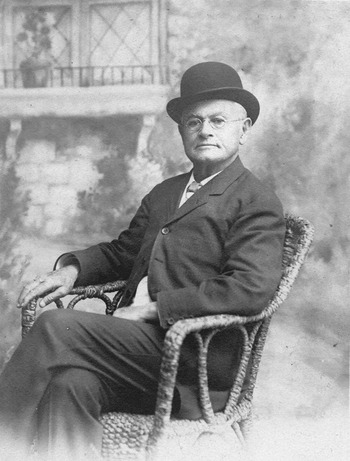
Beginning in 1863, the year of emancipation, all classes of African Americans moved into the neighborhoods just south of Beale Street, and Robert R. Church Sr. (Figure 1) was one of the most influential figures in establishing Beale as the center of the Memphis black community. As a young man, Church had worked on his father's steamboats, where he gained a hands-on business education. He later opened a saloon and became successful in that business. The key to his wealth, however, was real estate. During the 1870s, when a lethal combination of municipal bankruptcy and yellow fever had decimated the city, whites fled or died in greater numbers than blacks. Calculating that Memphis would survive and thrive again, Church used his earnings and an inheritance from his father to invest in land around the Beale Street area and in other parts of the city. When the city initiated a bond sale for the purpose of debt repayment in 1885, he had amassed enough wealth from rents to be the first person to purchase one of the $1,000 bonds. This public act of generosity and faith in the city of Memphis gained him much favor with the entire community. In addition to building an African American park and theatre, Church also rented properties to African American businessmen, managed African American saloons, built an African American bank, and in many other financial and symbolic ways helped strengthen the black community in the area.Footnote 18
Robert R. Church Sr. From the Robert R. Church Family Papers. Courtesy of Special Collections, University of Memphis Libraries.

Although African American culture came to dominate the heart of Beale Street, the area was a patchwork of ethnic settlement during this period. Throughout the city, groups that had assimilated into white society, such as German and Irish descendants of earlier waves of immigrants, tended to reside in white neighborhoods, whereas newer immigrants from southern Europe and elsewhere tended to take up residence near black neighborhoods. At the western end of Beale Street, the river landing, the bluff, and Front Street were dominated by cotton warehouses and shipping businesses where the labor force was black and management was white. Most of the businesses from Main Street up to Third Street were owned by whites, with some black businesses mixed in starting at Second Street. The next several blocks past Third were the part of Beale Street that became known as the “Main Street of Negro America,”Footnote 19 where black doctors, lawyers, businessmen, and storekeepers worked and lived along with Italians, Jews, Greeks, and Chinese, and where many of the black theatres were located. Just east of there for a block or so were the stately mansions of a wealthy white community that had developed beginning in the 1840s, and at the end of the street was another patch of African American residents.
This period was, of course, a time of increasing segregation in the South, when Jim Crow laws were passed to ensure the separation of whites and blacks. Even with its large population of African Americans, Memphis was not immune to this legislation of spatial practice. Segregation by custom already had a long history in the city, and racially segregated seating in theatres had been common—if not always strictly adhered to—since at least the end of the Civil War.
In 1900, Memphis was proclaimed by the national census to be one of the largest cities in the South, and almost half of that large population was African American. If population increase meant urban progress, whites were hard pressed to deny that blacks had helped make Memphis a New South city. However, some European Americans saw the growing and visible presence of African Americans in the city as a threat to white supremacy. The Reunion of Confederate Veterans, held in Memphis in 1901, may have added to the racial tension.
Perhaps Robert Church Sr.’s conspicuous (and controversial) donation to the reunion was intended to help defuse the situation. Although he was praised in the mainstream Memphis papers for his contribution, Church was chastised by the Memphis correspondent to the Freeman, who remarked that Church had “given his money to a class of people who could make a brush heap … and burn him.” Instead of assisting such people, the correspondent suggested that Church could have better spent the funds by supporting the indigent elderly and orphans of the black community.Footnote 20 However, the following week, another Freeman reporter commended Church for his act of generosity, stating that “the man behind a check cuts a wide swath, and the world takes off its hat to him, even if he is black… . Church has advertised the Negro in a hopeful light.”Footnote 21 The contrast in these two opinions reveals two of the many conflicting philosophies at the conjunction of race, class, and color during this period. The first seems to espouse a separatist point of view that African Americans should take care of their own. In fact, earlier in the same article, this correspondent had reacted to a recent incident at a local theatre where a vaudeville act featuring both black and white actors had been banned from the stage. He stated that he wished “a gallows was at the buzzard entrance of every theater and every fool Negro who continues to force himself where he is not wanted was hung by the neck until he ceased to breathe.”Footnote 22 The use of such words from a black journalist in an age of lynch-mob hysteria would seem to indicate a strong desire to maintain the color line, if only for the protection of the race. The second opinion seeks reconciliation with whites but also seems to exhibit a veiled inferiority complex: “even” blacks can be respected if they strive to have money.
Often upper- and middle-class African Americans during this period felt a responsibility to advocate for the rights of all African Americans and to lead the race forward, while at the same time they attempted to set themselves apart as “respectable” from those blacks they deemed not respectable.Footnote 23 Several members of the upper class in Memphis, such as Church and his business partner Josiah T. Settle, were light-skinned people of biracial ancestry who prided themselves on both their European and their African roots and continued to seek from whites acceptance as first-class citizens. Willard B. Gatewood points out that aristocrats of color who “clung to the idea of ‘amalgamation’ or integration into the larger society … tended to place greater social distance between themselves and the masses in the hope of achieving amalgamation on an individual basis.”Footnote 24 Indeed, in a 1907 article in the New York Age that extolled the many achievements of and opportunities for African Americans in Memphis despite the deplorable conditions of Jim Crow, the reporter states that successful businessmen were very concerned with “the utter indifference to their success evinced by the Negro higher up.”Footnote 25 Tellingly, at a time when Church maintained a high profile, there is no mention of his name in this article. In addition to the racial divisions mandated by the dictates of white supremacy, there were also divisions based on class and color within African American society in Memphis.
Italians also suffered from prejudice in the U.S. South and elsewhere—though, of course, to nowhere near the same extremes as African Americans. During this period new waves of immigrants from southern Europe, many with darker skins than earlier groups from other areas, faced persecution in some situations in the white South. Such prejudice was not always the case with Italian immigrants, however, and in the racist hierarchies prevalent in the dominant worldview of white supremacy, Italians were often perceived as occupying a place “above” African Americans, even if they were seen as “below” whites.
This “in-between” status of European immigrants with regard to “whiteness” has been the subject of much scholarly work. James R. Barrett and David Roediger have remarked that the racialization of Italians in the United States, particularly in the South, was pronounced, and that the evolution of the word “guinea,” which was first used to describe African slaves and later Italians, suggests that this process of racialization was “more likely to connect Italians with Africans.”Footnote 26 They also note that “in many cases Jewish and Italian merchants sold to African-American customers. Their ‘middleman minority’ status revealingly identifies an inbetween position which … rested on a more humane attitude toward black customers.”Footnote 27
Complicating what he sees as a conflation of race and color in this viewpoint, however, Thomas Guglielmo argues that Italians were “white on arrival,” in that their color was accepted by the U.S. government as such, as is evidenced in immigration and census documents. He explains the racial discrimination that Italians suffered as resulting from their cultural heritage and foreignness rather than having anything to do with their color—at least in any systematic way. As “whites,” Italians enjoyed many of the privileges that came along with whiteness in a nation obsessed with color, even though they were sometimes subject to prejudice and inequality.Footnote 28
Perhaps the shared experience of discrimination and the “otherness” of Italians made for some understanding and easier relations between African Americans and Italians in the entertainment business. At any rate, the racial status of the Beale Street Italians could certainly be viewed as ambivalent because of their close and enduring associations with the black community and their ability to liaise with the white community for business purposes. Somehow they managed to straddle the color line.
Enter Robert Church
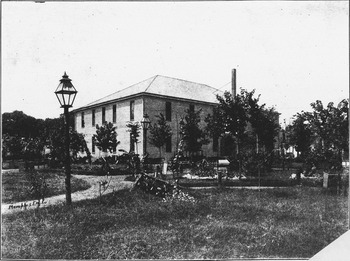
Robert Church Sr. opened Church's Auditorium (Figure 2) in the fall of 1901 so African American performers and audience members could have a theatre to call their own.Footnote 29 Although Abbott and Seroff state that the Rialto was the first of several theatres to appear during this period, I would contend that this very short-lived performance space was merely a training ground for the new company intended for Church's Auditorium.Footnote 30 Lew Hall's Ragtime Opera Company began performances at the Rialto during May and spent several weeks there before leaving for a stint in Birmingham. When the company returned to Memphis at the end of July, it moved to Church's Auditorium. Although it had not had its grand opening yet, Church's theatre was apparently open and drawing crowds during the month of August. Statements that the Rialto was the “largest place in America that employs colored talent” and that it could seat two thousand people—this was actually a description of Church's Auditorium—seem to indicate some editorial conflation of the two theatres.Footnote 31 At any rate, after August, the Rialto is heard of no more in the Freeman.
Church's Auditorium. “View of the Church Park from entrance gate.” Courtesy of the Memphis and Shelby County Room, Memphis Public Library & Information Center.

There may have been good reason to downplay any possible connection between Church's theatre and the Rialto. If the former was meant to convey the image of respectability that many middle- and upper-class African Americans in Memphis sought to promote, the latter was much less concerned with such things. In addition to theatrical performances, Church's Auditorium was used for events catering to the city's black elite, such as social club meetings and graduation ceremonies, and for hosting prominent visitors such as Booker T. Washington and Theodore Roosevelt. Also, though Church was—at least until 1906—involved in the saloon business, it seems that drinking was not allowed at his auditorium. The name of the Rialto never appeared in the Memphis city directory, but the Freeman, the city directory, and county records all confirm that James Kinnane—the son of Irish immigrants and an influential ward boss—was the owner and manager of the building that housed the theatre at 96 Front Street. It appears that the Rialto was in the same building as Kinnane's new saloon, the Phoenix Athletic Club, which provided “amusement, sport, and recreation,” meaning that gambling was offered here in addition to theatrical entertainment.Footnote 32
Saloons were very big business in Memphis at this time, as were the gambling and prostitution that were often associated with them. In fact, whereas in 1903 Atlanta had 90 saloons and Birmingham 125, Memphis supported 504.Footnote 33 It was not unusual for saloon owners to open an adjoining variety theatre or dance hall, although these were derided in the press for providing opportunities for criminal mischief.Footnote 34 As a high-profile saloon owner himself, Church may very well have known Kinnane. Church owned the building that housed the Turf Saloon, known as the “nerve center” of the Fourth Ward. It was run by George Degg and Michael Haggarty, Irish immigrants, who in addition to being ward bosses served as lieutenants to crime boss John Persica.Footnote 35 Persica, an Italian immigrant who came to Memphis by way of New Orleans, ran his own variety theatre, the Garden, where risqué vaudeville shows served as a front for activities that were more illicit. Haggarty and Degg also ran a variety theatre, the Memphi, which was connected with their saloon. After this theatre burned in 1905, possibly because business had fallen off after all gambling houses had been shut down a few months earlier, it was announced that Church had plans to remodel and repair the Memphi. One reason for the crackdown on gambling was that the previous year, a raid on one of the gambling dens had left two police officers dead—one black and one white. This had resulted in a citywide scandal that incited a large group of citizens to call for the resignation of the chief of police and the mayor himself because of their inability or unwillingness to deal with vice in the city, or perhaps because of their complicity with such vice.Footnote 36
The early twentieth century was a period when Memphis was rife with corruption at all levels of society, made all the harsher by the dominant system of southern white supremacy. Many things contributed to the emotional powder keg that Memphis could sometimes be during this period: a deeply hypocritical and inhumane social system; the unmitigated clash of rural, urban, and foreign worldviews; the near-impossibility of cultural exchange predicated on the color line; abject poverty induced by and enforced through uneven economic development; a corrupt political and administrative system that concentrated power in the hands of a few who overlooked—and at times, in the pursuit of profit, even engaged in and encouraged—out-of-control indulgences in vice; and a national system that made all bow in deference to northern capital.
In a city like Memphis, a successful businessman like Church—especially a successful person of color—had to be able to deal with every kind of person and situation. Besides garnering respect and admiration from the black community, Church had several friends in high places in white society. He was close friends with John Overton, an important real estate magnate who was the grandson of one of the city's founders. A wealthy real estate owner in his own right, Church owned properties that ranged from his own mansion on South Lauderdale Street (just south of Beale) to residences and businesses on Beale Street and even—if I am reading congruencies between the city directory and a list of Church's holdings correctly—some of the brothels on Gayoso Street.Footnote 37 It would appear that Church's wealth and biraciality lent him the ability to engage in some questionable activities for monetary gain while at the same time maintaining his air of respectability—a privilege often afforded to white men but denied the majority of blacks in Memphis during this period.
As to the possible connection of the Rialto with Church's theatre, the latter was under construction at the time of the Rialto's opening; perhaps it could not open on schedule, and Church needed a place to house the company meanwhile. A theatre opening delayed by unfinished construction was not without precedent in Memphis. Although Church owned several saloons in the Beale Street area, perhaps none was quite large enough for the size of crowds that such a company, catering specifically to African American audiences, would have drawn. Or did Kinnane offer to take the company on, knowing that Church's theatre was not yet ready and that he might stand to make a great deal of money? Was it just that Kinnane wanted a variety theatre as part of his saloon but was only ever able to fund one short summer season, after which the company went to Church's? Of course, it is possible that none of these scenarios is true; I am speculating here. At any rate, ads for the Rialto disappeared from the Freeman by September of 1901, whereas coverage of the opening of Church's Auditorium intensified.
As the opening of Church's theatre approached, the Freeman remarked that Church was deserving of “the patronage of all those who appreciate theatre going, as he has spared no pains to make this the greatest place of amusement in the city.” It also stated that Church was looking to book high-profile acts “if the colored people will only lend their support, and will stop going to white theatres to be placed in the buzzard roost.”Footnote 38 Again pointing out the significance of the venture, the journalist remarked that “we do not need to climb into the peanut gallery to see a play. The days of the peanut gallery are numbered.”Footnote 39 When Church's Auditorium held its grand opening in early November, the Freeman correspondent stated that
as one sat and looked out upon the large audience he reviewed one of the grandest sights ever witnessed in this country… . Every seat in the boxes, 12 in number, was taken by the elite of this and surrounding cities and as you viewed the evening costumes of the audience one could proudly say for the first time in the annals of the South or probably anywhere in America, he was seated in a grand theatre, run in every particular by one of his own race. Even every nail that was driven in the building was by a Negro.Footnote 40
Despite the differences of class and color that existed within the Memphis black community—from the elite in their evening costumes to the men who drove the nails—the sentiments of this reporter seem to indicate that perhaps for one night at least, the theatre provided a place of solidarity. After the show, company director Lew Hall remarked that he was proud of his role in creating “substantially the first of its kind in the United States, a colored vaudeville house.”Footnote 41
The Rialto and Church's were not the only African American theatres to open in Memphis during 1901. Another was Tick's Tivoli, one block up from Beale at the corner of DeSoto and Gayoso Streets, which also seems to have been associated with a saloon.Footnote 42 The proprietor of the place was Alfred “Tick” Houston, who in 1902 and 1903 was referred to in the National Police Gazette as the popular manager of the Idle Hour Saloon, known as the “headquarters of the sporting fraternity” of Memphis, at the same address as the theatre. The Gazette also stated that Houston had “a large acquaintance with sporting and theatrical people throughout the country.”Footnote 43 Kinnane seems to have had his hand in this place as well; the city directory for 1902 actually lists him as proprietor at this location.Footnote 44 Whereas Church's booked nationally renowned traveling performers such as the Black Patti Troubadours—the largest African American minstrel-variety show on the road—and Salem Tutt Whitney and J. Homer Tutt's Smart Set, Tick's appears to have had a resident company. Again, in opposition to the air of respectability at Church's, theatrical activities at Tick's were directly or indirectly associated with drinking and gambling at the same address. The two theatres catered to different classes of people.
Throughout the next decade, theatres for black audiences proliferated around the country, especially in the South, where a large African American population was hungry for theatrical entertainment. By October 1910, Salem Tutt Whitney, a well-known black performer who had worked with both the Smart Set and the Black Patti Troubadours, noted in the Freeman that “colored playhouses are springing up in the South like mushrooms, and doing good business.” He also warned traveling performers that African American audiences in the South were harder to please than in the North and that they had better be versatile and “have something original.”Footnote 45
Between 1908 and 1909, a new crop of African American theatres began to appear in Memphis several blocks northwest of Church's and Tick's. At this point, the situation was such that James E. Simpson of the Freeman attempted to put the city's theatrical activities on a par with those in Chicago. He reported that “Memphis is the only city in the South that has five theatres supported by and run exclusively for colored patrons and therefore I am proud to say that I can name it the Memphis Stroll,” mimicking the name of Chicago's famous black entertainment district.Footnote 46 The five theatres that Simpson cites are the Royal, the Gem, Tick's, the Lyric (a very short-lived Beale Street theatre), and the Amuse U. Of these five, only Tick's and the Gem were managed by African Americans. The Gem was run by Lulu “Too Sweet” (Susie Johnson, who was also the theatre's resident playwright) and her husband Willie. It is unclear if the Johnsons actually owned the Gem, but Houston had been consistently listed as the proprietor at the address of Tick's since 1906.Footnote 47 Jim Kinnane's father, Thomas, ran the Royal Theatre, which was next door to his own saloon. The Amuse U was run by the Barrasso family and will be discussed below. Although Church's Auditorium is not among those listed, the Smart Set appeared there in both 1908 and 1909. It is possible that Church's was being used more for social and political events than theatrical ones at this point; two thousand seats were a lot to fill on a nightly basis. By the fall of 1909, Memphis's Pekin Theatre (named after the famous theatre in Chicago) had opened near the Beale Street area, where African Americans “Happy” John Goodloe and his wife Ella managed and performed. By this time, the business of African American theatre management in Memphis had become a multiracial enterprise. However, around the same time, Tick's, which had been touted in a November 1908 Freeman blurb as “the only house in Memphis that is owned and operated by a colored man,” was out of business.Footnote 48
Enter Fred Barrasso
One of these new theatres, the Amuse U, was the first to be operated by the Barrasso family. Genoroso Barrasso, a Neapolitan by birth and a tailor by trade, immigrated to the United States in 1890 with his wife Rosa and their children, including their son Fred. After brief stays in New York and St. Louis, where their son Anselmo was born, they moved to Memphis in 1893. Barrasso had owned property in Naples and arrived in the city with considerable cash in hand. He opened a tailoring business and also began to invest in real estate, including, eventually, the movie theatre on North Main that would become the Amuse U.Footnote 49 Fred became the manager of this theatre when it opened opposite the Gem on North Main in 1909.
When Tick's went out of business that same year, the Barrassos took over this theatre, remodeled it, and reopened it as the Amuse U Theatre No. 2 in November 1909. Two months later the theatre was renamed the Savoy and had a grand opening. The company included Charles Gilpin, a prominent African American actor of the early twentieth century who first gained widespread fame when he created the title role in Eugene O'Neill's Emperor Jones. Gilpin stayed on at the Savoy, becoming part of “the strongest stock company Memphis theatre-goers had yet seen.”Footnote 50
In May 1910, a list of fifty-three theatres around the country appeared in the Freeman under the title “Where You Find Colored Theatres: Real Play Houses That Are Owned and Managed by Negroes.” In his discussion of black vaudeville, Thomas L. Riis has noted that forty-two of these—a clear majority—were located in southern cities. Interestingly, the Barrassos’ Savoy Theatre is listed among these black-owned and -managed theatres.Footnote 51 Although the reason for this inclusion may have been that the Barrassos often employed African American company managers, “F. A. Barrasso” is clearly indicated as the manager of the Savoy. It may be that this is an example of the ambivalent racial status of Italian immigrants during this period. Accepted as “white” in some circles, perhaps they were, at the same time, accepted as nonwhite by the African Americans they worked with and served in the business of black entertainment.
As more African Americans entered into theatre ownership and management nationwide, the question of black versus white control continued to be debated. After his Memphis theatre closed, Tick Houston moved to Louisville and opened the New Tick Houston Theatre there in 1910. An article about Houston's new theatre urged the public to support black-owned theatres and admonished managers not to “stand idly by and see the white neighbor reap the results of entertaining the colored people with theaters built for them.”Footnote 52 It is possible that Houston felt he had been pushed out of Memphis by white managers there, regardless of their ethnicity. Clearly he felt that a call to action was necessary in the competition between blacks and whites in theatre management. However, Sylvester Russell, the most well-known African American theatre critic in the country, asserted in his annual review that it would be better at the time for experienced whites rather than inexperienced blacks to own the theatres, so long as the white owner was “a square, cordial, unbiased man … willing to employ a colored manager as a preference.”Footnote 53 Yet as theatre scholar David Krasner has argued, many white owners and agents “had little if any knowledge of the black community's tastes in entertainment,” even when they had business acumen.Footnote 54 There do, however, appear to have been a few exceptions.
Taking the Show on the Road
For a year prior to his death in 1911, Fred Barrasso had been engaged in the creation of his Tri-State Circuit, which, according to Abbott and Seroff, was “the first attempt to establish a black theater chain or vaudeville booking agency in the South” and “the first outward manifestation of Memphis's identity as the ‘Home of the Blues.’”Footnote 55 Although it was small and short-lived, Barrasso's circuit was significant not only because of the reasons Abbott and Seroff cite but also because it was the only theatrical circuit for which Memphis served as the hub.
The early development of the Tri-State Circuit is often cited but much misconstrued. Several sources claim that the Theatre Owners’ Booking Association (or an earlier organization with the same name) got its start in Memphis when Fred Barrasso created it in 1907 or when his brother Anselmo did in 1909. However, this is not only highly unlikely but it also gives more credit to European Americans for what was primarily the work of African Americans in the theatrical business. The Barrassos had only just entered the theatrical business in 1909, and Fred's Tri-State Circuit was only one of several small circuits that eventually made up the Theatre Owners’ Booking Association (TOBA) when it was formed in 1921.Footnote 56
With the proliferation of black theatres and traveling troupes in the South and the trend toward consolidation and streamlining in theatrical business generally throughout the country, it was inevitable that black theatres, too, would begin to coalesce into circuits run by enterprising managers and booking agents. As early as 1902, African American performer Pat Chappelle announced plans to form a circuit comprising theatres in Savannah, Jacksonville, and Tampa, but this circuit did not come to fruition.Footnote 57 Several years later, just over a month after the first ad for Barrasso's Tri-State Circuit appeared in the Freeman, L. D. Joel, a white booking agent who billed himself as the “Theatrical King,” announced the formation of the Southern Vaudeville Circuit.Footnote 58 Ads began to appear regularly in the Freeman for both the Tri-State and Southern Vaudeville Circuits, enticing performers with the prospect of up to twenty-four consecutive weeks of steady work and pay without long railroad jumps.
By late spring of the following year, Barrasso and Joel had consolidated their circuits. With the addition of Charles P. Bailey, the white manager of the Central Theatre in Atlanta, the new Joel–Bailey–Barrasso Circuit claimed to be able to offer sixty weeks of bookings at twenty of the principal theatres throughout the South. An ad for the circuit in the 10 June issue of the Freeman carried photos of all three managers and continued to refer to Joel as the “Theatrical King,” whereas Bailey was the “Vaudeville Prince” and Barrasso the “Performers’ Friend.” These titles seem to indicate a hierarchy that placed Barrasso, the Italian, at the lower end of the scale while at the same time suggesting a more intimate connection between him and the players instead of a relationship of ruler to subject.
Barrasso died two weeks later, but ads for the circuit continued to run for another two weeks following his death, and no announcement was made of any change. Not until the end of July was there mention of the “Joel and Bailey Southern Vaudeville Circuit,” and it was September before an ad appeared stating that Genoroso Barrasso would be taking over the business of his late son's Tri-State Circuit. Two months later, an ad revealed that Fred's 21-year-old brother Anselmo was managing the family's theatre in Vicksburg and running a stock company produced by African American performer James Ransom, but it does not appear that the Barrassos continued the association with Joel and Bailey.Footnote 59
Right around this time, the first black-owned and -operated theatrical circuit in the United States was beginning to appear on the horizon. Sherman H. Dudley, a very successful African American minstrel performer, began buying and leasing theatres. In 1912, he wrote a letter that the Freeman published that issued a challenge to prominent African Americans interested in promoting and investing in theatre. Dudley claimed that there was more money to be made in theatrical entertainment than in any other field and declared that “the day is now ripe, the time has come.” He encouraged those who had the money to buy up theatres, which were easily obtainable at the moment “due to the passing of the ‘pistol drama’ for the whites, which has seen its best days, thereby leaving a vast amount of theatrical property practically valueless for immediate usages.”Footnote 60 The field of cheap melodrama in ten-twent’-thirt’ theatresFootnote 61 was indeed being superseded by the movies at this point, and Dudley saw an opportunity for the advancement of black theatre through property ownership. He proposed the creation of a chain of African American theatres that would be “controlled and operated exclusively by business men of the race” and offered his own time, money, and professional experience to help guarantee its success. At this early stage, Dudley did not offer a detailed plan for how such a chain would come about or how he would dole out his own finances; rather, his letter was meant to throw the idea out on the table and create enthusiasm for the project.Footnote 62
Dudley's proposal was met with both enthusiasm and skepticism. Soon after his letter was published, another letter appeared that praised Dudley and encouraged businessmen to “jump at the proposition” he had presented.Footnote 63 Athelia Knight has noted, however, that critic Russell was one of the first to sound a note of pessimism in the matter, stating “that he would reserve his judgment until Dudley had proved it could be done and had raised $500,000 to establish a corporation with stockholders to oversee the venture.”Footnote 64 Whereas Dudley had offered vague talk about big ideas, Russell was more pragmatic about the matter. Further doubt came from Andrew N. Johnson, a successful African American businessman in Nashville who had recently opened a theatre there. Johnson claimed that
the race has not developed to the corporation point. You just can not get any two men together to build a theater, to say nothing of a joinst [sic] stock company. Mr. Church, of Memphis, and Mr. Motts, of Chicago [who had opened the Pekin Theatre in 1905], were pioneers in the line. They didn't have an outside dollar invested with them… . White men can form stock companies, but the Negro can not. He is mentally afraid he will lose.Footnote 65
It should be noted that Johnson's lack of confidence was probably affected by his own new theatre's inability to draw a sufficient number of African American patrons away from the balconies of Nashville's predominantly white theatres.Footnote 66
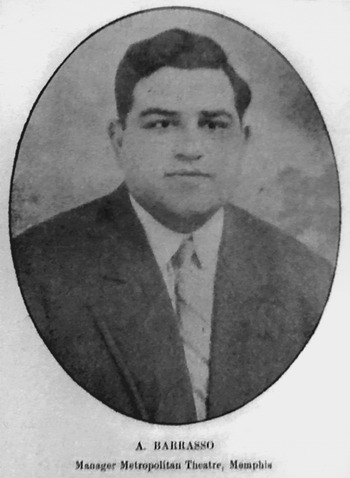
Despite the naysayers, Dudley's circuit proved to be quite successful, so much so that by summer of that year the Freeman began publishing a regular feature entitled “What's What on the Dudley Circuit.” In December 1912, the paper listed all fourteen houses that comprised the circuit, which were mostly located in midwestern and southeastern cities but also included the Savoy in Memphis.Footnote 67 By the end of the following year, the S. H. Dudley Amusement Enterprise, based in Washington, D.C., was expanding, and Anselmo Barrasso's new Metropolitan Theatre in Memphis was a part of it (Figure 3). Although Dudley had called for a circuit composed exclusively of “business men of the race,” he seems to have been willing to make certain allowances.
Anselmo Barrasso. From “The Metropolitan Theatre,” The Memphis Sun, 27 December 1913. Clipping in the Robert R. Church Family Papers. Courtesy of Special Collections, University of Memphis Libraries.

The Metropolitan and the Reopening of Church's
In 1911, Sylvester Russell wrote a piece in the Freeman entitled “Warning to Southern Managers” in which he condemned managers in the South, white and black, who did not pay black performers fairly. Such managers needed reminding that performers should be treated like human beings, especially when having to travel in “heathen lands against their will to earn a living. I say heathen lands because, unfortunately for America, the South is a lawless country, where actors have no redress in the courts if they go to law in order to force managers to give them their money.”Footnote 68 Although Barrasso seems to have been accepted by the black community in Memphis and the burgeoning theatrical institution that was the S. H. Dudley Amusement Enterprise, he appears to have felt the need to make clear his intentions as a European American presenter of African American vaudeville.
In the Christmas number of the Freeman in 1913, a large ad appeared for the Colored Consolidated Vaudeville Exchange, which included Dudley's circuit and for which Dudley acted as secretary. The ad contained photographs of the officers and many of the managers on the circuit. Of the twelve men shown, Barrasso was one of three who were not African American. The other two, Martin Klein and a Mr. Edelman, were Jewish. The caption under Barrasso's photo refers to him as “the wealthy southern manager … who has made it possible for colored acts to receive the same salary South as in the East or West.”Footnote 69 Thus it would seem that Anselmo continued in the tradition of his brother Fred as the “Performer's Friend.”
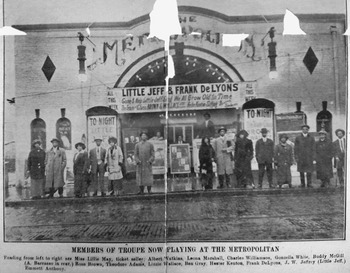
A week later, the Barrassos took out a full-page ad in the Memphis Sun, an African American newspaper, in which they touted their theatre as an “important link” in the Exchange's chain of theatres. They announced their intentions to “fetch every actor and actress who has won distinction to the people of the city” and assured the public that “no theatre in Memphis is conducted with more order and dignity, and none appreciate more than the Metropolitan the support of the people for whom it was opened and is still maintained.”Footnote 70 Echoing this sentiment, a photograph of the theatre and the company playing there at the time accompanied the ad. In it, all of the African American performers, musicians, and even the ticket seller are prominently shown, while Barrasso, albeit in the center of the photo in front of the box office, hides inconspicuously behind a sandwich board (Figure 4).
The only known image of the Metropolitan Theatre. From “The Metropolitan Theatre,” The Memphis Sun, 27 December 1913. Clipping in the Robert R. Church Family Papers. Courtesy of Special Collections, University of Memphis Libraries.

On the same day as the ad in the Sun, a puff piece appeared in the Freeman about the Metropolitan that referred to it as “Memphis’ Great Theater” and recognized it as one of the most famous in the South, the “pleasure center of Memphis,” and “something of a star house on the Dudley circuit.” One reason the article gave for the theatre's popularity was that “here may be seen for ten cents what other theatres in the city, with jim crow [sic] surroundings, charge twenty-five and fifty cents for without, indeed, measuring up to the slightest offering of the Metropolitan.”Footnote 71 The memory of Fred Barrasso was alluded to in both the Sun and the Freeman, and Genoroso and Anselmo Barrasso were described as genial, professional, fair, and aware that their success was dependent upon the satisfaction of the African American theatregoing public.
One reason for this need to clarify their position may have been that by the time the Barrassos opened the Metropolitan in 1913, no Beale Street theatre was actually being run by an African American. At this point, the number of black vaudeville houses in Memphis had fallen off from its peak between 1908 and 1910. Not only was Church's Auditorium closed at this time after the death of its creator in 1912, but the Gem, the Royal, and the Pekin had all closed, and it appears that the Barrassos had also closed the Amuse U and the Savoy to concentrate all their efforts on their new theatre.Footnote 72 In addition, other Italians had begun to enter the business of black entertainment. In 1911, Fred DeLuca opened the Daisy Theatre, and Samuel Zerilla opened the Pastime. In 1914, DeLuca, Mercurio Maceri, and Maceri's son Joseph opened the New Daisy. These theatres were primarily devoted to movies. Together with the Metropolitan, they constituted an entertainment hub for African Americans on Beale Street, but one that was run almost exclusively by Italians.
By September of 1914, the Barrassos seem to have been successful enough to plan the reopening of the Savoy. An announcement about the new Savoy in the Freeman asserted that Memphis could “support two theaters, one stock and the other vaudeville” and that “[Anselmo] Barrasso is the king of Memphis, and treats performers right.”Footnote 73 The reason the Savoy did not reopen was probably that during that fall, Robert Church Jr. reopened Church's Auditorium, which was located just one block east of the Metropolitan on Beale Street.
Robert Church Jr. (Figure 5) was to become even more widely influential than his father had been. Born in 1885, he went away to military school after early education in Memphis, attended college at Oberlin, studied at the Packard School of Business in New York City, and worked for two years on Wall Street. Robert Sr. had wanted his son to receive thorough training in banking so that he could become an integral part of the Solvent Savings Bank, an African American institution in Memphis that Robert Sr. had set up along with Josiah Settle in 1906. While in New York, Church became a member of the Frogs Club, an organization for theatrical professionals founded by Bert Williams that also included such stage luminaries as George Walker, Bob Cole, Sam Lucas, and Dudley himself. The Frogs invited high-profile African American professionals from other fields, such as Church, to be members, and they raised money for charity by presenting an annual vaudeville show, in which Church participated in 1912. This year also marked the beginning of Church's long and prominent career in national politics; he served as a delegate to the Republican National Convention from then until 1940. When his father died, Church returned to Memphis to take over at the bank and to manage Church's Auditorium. Besides being well-connected in theatrical and political circles, Church was also a close friend of Roscoe Conkling Simmons, an acclaimed orator and a columnist at the Chicago Defender, an influential African American newspaper. Inspired by developments in Memphis's black community and the young Church's leadership, Simmons moved to Memphis in 1913 and founded the Memphis Sun, the newspaper in which the ad for the Metropolitan appeared.Footnote 74
Robert R. Church, Jr. From the Robert R. Church Family Papers. Courtesy of Special Collections, University of Memphis Libraries.

The announcement of the reopening of Church's Auditorium in November 1914 described Church as “fast developing into a great leader in all the affairs his many interests touch” and reported that he proposed to “bring to Memphis all the latest and highest acts on the several circuits.” It seemed that Church intended to continue his father's concern for respectability; the paper reported that he planned to present “the latest acts, from which the ‘rough stuff’ is whacked.” He also wanted to show African American films.Footnote 75 For a short while, the city seems to have been able to support both Church's and the Metropolitan; announcements in the Freeman throughout the season of 1914–15 indicate activity at both theatres. But after this season, ads and blurbs about Church's Auditorium seem to disappear.
Several factors may have contributed to the decline of Church's Auditorium as a theatrical venue. Perhaps Church Jr. also became aware, as time went on, that the Auditorium was really too large to run consistently as a theatre with adequate audiences. At less than half the seating capacity of Church's, the Metropolitan appears to have fared better. Also, Church was at a disadvantage in that Barrasso had developed relationships with many touring performers and booking agents over several years in the business. Church had many other interests in addition to the theatre anyway; by this time he had left the bank in order to manage his family's extensive real estate holdings and was more and more turning his energies toward politics. In 1916, he created the Lincoln League, a Republican organization that fought “lily-whitism” within the party, and the following year he instigated the formation of the Memphis chapter of the NAACP.Footnote 76 Then, too, as in many cities across the United States, the continuing proliferation of movie theatres was luring patrons away from the vaudeville houses.
It might have been a sense of unease at the growing control by Italians and other “whites” of the movie houses around the city intended for black audiences that led Church to open the Lincoln Theatre on Beale Street in 1917. Apparently a dispute erupted soon after when Church hired an African American who was not a union member to operate the projector at his new theatre. (It is quite likely that, as an African American, he would not have even been allowed into the union at this point, especially in the South.) An article appeared in the Chicago Defender about the fallout, complaining that the Italians had thrown fits and provoked “labor agitators,” who in turn prompted the city administration and the local white press—that “organ of the lynching organization in Memphis”—to lash out at Church.Footnote 77 Viewing this situation as evidence that “the white race means to drive the Race into industrial slavery,” the reporter claimed that “the dagoes and Greeks have pushed the Race off of Beale Street, and the Race seems willing to be pushed.”Footnote 78
The inconsistent capitalization of the word “race” is indicative of the Defender’s staunch mission to promote and literally defend black interests against encroachment and persecution by whites. But the reporter's fervent indignation creates some confusion: he groups Italians and Greeks together with the “white race” at one moment and then calls them out based on their ethnicities in the next. Italians had lived and worked together with African Americans in the Beale Street area, especially in the entertainment arena, for several years up to this point. Had something changed? Were things never as harmonious as they had seemed? Had the Barrassos been among those who complained about Church's new theatre? After several years of seeming embrace of the Barrassos by the black theatregoing community in Memphis, and indeed the African American theatrical community across the country, did those who had embraced them now feel betrayed? Had they engaged in racist business practices all along? Had this Italian American family, who seem to have been accepted in part because of their “otherness,” become “white” just like all the other southern whites who persecuted their black neighbors? What was the immediate result of the furor raised by the Italians? Was the projectionist allowed to stay on? Maddeningly, the record seems silent for now. It is at this point in the story that the absence of archival sources is most keenly felt. Still, Anselmo Barrasso remained a prominent figure in the entertainment landscape of Beale Street for decades afterward, whereas Church soon gave up managing theatres. It is possible that class trumped race for Beale Street theatregoers; perhaps they felt alienated from Church because of his wealth and social standing. Whatever the case may have been, it would seem that the black community chose to continue to support Barrasso and the African American performing artists he booked at his theatre.
Epilogue
As had happened with the Syndicate and the Shuberts in so-called legitimate theatre, the consolidation of circuits inevitably led to conflict in African American vaudeville. Charles Bailey, the Atlanta manager with whom Fred Barrasso had briefly been associated just before his death, caused a rift in the national organization of black circuits when he protested furiously against the nomination of Dudley for a key position. Apparently, Bailey had developed a reputation for doing business much like the Syndicate and the Shuberts, for whom blacklisting and money-grubbing were common. Not only was Dudley an opponent of such activities but race also appears to have been an issue in the dispute. Tempers soon cooled, however, and in January of 1921, the TOBA was formed, which in essence consolidated the entire African American theatre business.Footnote 79
During the time of these conflicts and consolidations, the Beale Street theatres were undergoing change as well. They remained on the national circuits, but available primary sources make it appear that affairs in the Memphis African American vaudeville scene were much less rancorous than in the other sectors of the entertainment business, where local interests in theatre became pawns in the hands of national conglomerates at war with each other. Of course, this apparent lack of conflict in Memphis black vaudeville may have had to do with an imbalance of economic and social power in favor of the Italians who owned all the theatres. In 1918, the Zerillas opened a new theatre, the Grand, at 332 Beale. Later that year, Anselmo Barrasso severed his connections with the Metropolitan Theatre and Sam Zerilla took it over.Footnote 80 Eventually, either Zerilla tore down the Metropolitan or it burned. Whatever the case, a new theatre named the Venus was built in the same location. Barrasso appears to have been without a theatre during 1919, but by 1920 he had opened the Palace Theatre. According to Chicago Defender columnist Frank Montgomery, Barrasso and Zerilla worked in harmony and made things pleasant for performers working at either theatre. In early 1921, Montgomery reported that Barrasso had assumed control of the Venus.Footnote 81
By the time the TOBA was formed and Barrasso's dominance in the African American vaudeville scene of Memphis was firmly established, Church's days as a theatre manager were over. He had closed the Lincoln, sold Church's Auditorium to the city, and turned all of his energy toward politics. In the decade that followed, he would become one of the most prominent African American political figures in the country—so much so that he became known as the “roving dictator of the Lincoln Belt.”Footnote 82 Meanwhile, Barrasso's Palace Theatre would remain open into the 1950s as one of the brightest spots on Beale Street.
Why did African American theatres in Memphis not remain under black leadership? Did other middle- and upper-class African Americans step up to help, and if not, why not? It is possible that the issue of respectability surrounding the theatre—especially in the Beale Street area, where vaudeville was often associated with drinking and gambling—kept other members of the African American upper and middle classes from helping Church with his theatre or investing in other theatres themselves. Or perhaps Italians used the privileged status and influence that came with being perceived as “white” to corner the market in African American entertainment in Memphis. If this were the case, though, would the black community have continued to patronize these establishments with regularity for decades? Growing racial tensions in Memphis during the second decade of the twentieth century certainly made it imperative for Church to fight harder for his community. Perhaps he, along with other African Americans who had money and social standing during this period, felt that they had a more important fight on their hands.