Temperament is a child's emotional and behavioral style across settings and contexts (Rothbart & Bates, Reference Rothbart, Bates, Damon and Eisenberg1998), with a broad reach that helps explain the what, when, where, how, and why of children's responses to environmental challenges. It is biologically based and can contribute to particular profiles of neurobiological functioning, rendering it a key consideration in the study of stress-sensitive physiological systems (Bijttebier & Roeyers, Reference Bijttebier and Roeyers2009; Muris & Ollendick, Reference Muris and Ollendick2005; Rothbart & Bates, Reference Rothbart, Bates, Damon and Eisenberg1998). Prior research has shown direct associations between certain temperamental traits and cortisol, the hormonal end product of the corticotropin releasing hormone system that activates the hypothalamus–pituitary–adrenal (HPA) axis (Kryski et al., Reference Kryski, Dougherty, Dyson, Olino, Laptook, Klein and Hayden2013; Spinrad et al., Reference Spinrad, Eisenberg, Granger, Eggum, Sallquist, Haugen and Hofer2009). However, as this body of research has matured, it has advanced beyond the study of main effects to examine additional factors that may moderate associations between temperament and children's cortisol. The concept of goodness of fit has guided much of this more recent research, positing that child outcomes are jointly or interactively determined by a child's particular temperament and the degree to which the social and emotional environment provides an appropriate “match” for that temperament (Chess & Thomas, Reference Chess and Thomas1999). This framework suggests the need to consider the context of children's primary relationships when examining associations between temperament and cortisol expression.
The preponderance of temperament research has focused on family-based relational and contextual factors that may moderate the association between temperament and children's emotional and behavioral health. As children reach school age, however, primary relationships extend beyond those that develop within the family environment to include those that are formed in the classroom. As such, characteristics of the teacher–child relationship may also interact with child temperamental style, exacerbating or buffering associations with children's health. Much less is known about the moderating effect of teacher–child relationship, particularly in relation to children's biological health. This paper begins with a review of temperament and its dimensionality, followed by a summary of extant literature that has explored interactionist perspectives, including limited research that has explored Temperament × Classroom Context interactions on children's neurobiological functioning. Guided by the goodness-of-fit framework, the present study tested the hypothesis that the relation between temperamental traits and children's cortisol expression depends on the extent to which such characteristics “fit” with relational and contextual qualities of the classroom environment among kindergarten children. As a test of the robustness of our results, we also examined these relations within a smaller sample of children in third grade.
Temperament: Definitions and Dimensions
Temperament has long been an important focus across various areas of developmental research, which is likely due to its early emergence, stability over time, and powerful influence on children's adaptive and maladaptive functioning. It is considered a multidimensional construct, and a number of models have been proposed to capture its structure. Rothbart (Reference Rothbart, Kohnstamm, Bates and Rothbart1989, Reference Rothbart2007) conceptualizes temperament as “constitutionally-based individual differences in reactivity and self-regulation” that span the domains of emotion, activity, and attention (Rothbart & Bates, Reference Rothbart, Bates, Eisenberg, Damon and Lerner2006, p. 100). Three primary dimensions have been shown to reliably index reactivity and self-regulation across multiple cultures and contexts: negative affectivity, surgency, and effortful control (Rothbart, Ahadi, Hershey, & Fisher, Reference Rothbart, Ahadi, Hershey and Fisher2001).
There is extensive cross-sectional and prospective evidence showing strong associations between each of these dimensions of temperament and various indices of child maladjustment (e.g., Eisenberg et al., Reference Eisenberg, Valiente, Spinrad, Cumberland, Liew, Reiser and Losoya2009). Negative affectivity, or negative emotionality, refers to sensitivity to threat and negative environmental stimuli; in the context of a stressor, this sensitivity predisposes the child to feel discomfort, anger, fear, or sadness, and to resist being soothed (Buss & Plomin, Reference Buss and Plomin1984; Rothbart, Reference Rothbart2007). Negative affectivity is at the core of what has been referred to as a “difficult temperament” (Thomas & Chess, Reference Thomas and Chess1977) and is a robust predictor of many negative outcomes including poor physical and psychological health (Eisenberg et al., Reference Eisenberg, Valiente, Spinrad, Cumberland, Liew, Reiser and Losoya2009; Lahey, Reference Lahey2009). Surgency reflects behavioral re(activity) and a tendency toward approach-related behavior (Buss & Plomin, Reference Buss and Plomin1984). Although not inherently problematic, high levels of surgency may serve as a risk factor for the development of behavioral issues when children are in environments intolerant of high behavioral activity or in settings with rigid rules for appropriate behavior (Berdan, Keane, & Calkins, Reference Berdan, Keane and Calkins2008). Gunnar, Sebanc, Tout, Donzella, and van Dulmen (Reference Gunnar, Sebanc, Tout, Donzella and van Dulmen2003) suggest that the extent to which surgency becomes problematic is determined by children's capacity to regulate their activity levels to match the demands of the context. Effortful control comprises regulatory capacities, including task persistence, attentional focusing, and the self-regulation of emotions and behaviors (Compas, Connor-Smith, & Jaser, Reference Compas, Connor-Smith and Jaser2004). High levels of effortful control may enable a child with high surgency to modulate his or her own behavior through inhibitory and/or attentional control (Rothbart & Bates, Reference Rothbart, Bates, Eisenberg, Damon and Lerner2006). When considered in conjunction, the levels of surgency and effortful control converge to create temperamental profiles of reactive undercontrol and overcontrol (Eisenberg et al., Reference Eisenberg, Spinrad, Fabes, Reiser, Cumberland, Shepard and Thompson2004). An overcontrolled temperament is characterized by low activity and high control, potentially resulting in behaviors that are rigid and withdrawn (Eisenberg et al., Reference Eisenberg, Valiente, Spinrad, Cumberland, Liew, Reiser and Losoya2009). Conversely, an undercontrolled temperament is characterized by extreme activity and low control, a pattern that has been associated with greater externalizing problems and lower social competence (Eisenberg et al., Reference Eisenberg, Fabes, Shepard, Murphy, Guthrie, Jones and Maszk1997). Dimensions of temperamental overcontrol and undercontrol may be particularly salient to children's adjustment during developmental transitions, such as entry into kindergarten, in which children are exposed to new environments, routines, and boundary setting.
An Interactionist Perspective: Goodness-of-Fit Framework
The biological and behavioral manifestations of temperament do not unfold in isolation of the environment. Nearly four decades ago, Thomas and Chess (Reference Thomas and Chess1977) proposed a goodness-of-fit framework that suggests that children's development is a function of the “fit” or “match” between temperamental domains and environmental demands. More specifically, temperament-context fit is evident when “the properties of the environment and its expectations and demands are in accord with the organism's own capacities, characteristics, and style of behaving” (Chess & Thomas, Reference Chess and Thomas1999, p. 3). Within this model, specific domains of temperament do not bear direct relations with adaptive or maladaptive outcomes; rather, the extent to which temperament serves as a risk or protective factor depends upon its functionality within the constraints and opportunities posed by the environment (Windle & Lerner, Reference Windle and Lerner1986).
There is extensive empirical support for the importance of fit between the family context and temperament in the prediction of children's psychological health (Rothbart & Bates, Reference Rothbart, Bates, Eisenberg, Damon and Lerner2006). For example, the association between temperamental irritability and children's depressive symptoms has been shown to vary as a function of parental warmth, whereby irritable children evidenced greater depressive symptoms in the context of low parental warmth as compared to high parental warmth (Oldehinkel, Veenstra, Ormel, De Winter, & Verhulst, Reference Oldehinkel, Veenstra, Ormel, De Winter and Verhulst2006). Similarly, high levels of irritability have emerged as a risk factor for internalizing problems, but only in the context of highly controlling, intrusive parenting (Morris et al., Reference Morris, Silk, Steinberg, Sessa, Avenevoli and Essex2002). In addition, children's fearfulness and negative emotionality have been associated with greater internalizing and externalizing symptoms when negative maternal control was higher (Gilliom & Shaw, Reference Gilliom and Shaw2004). Interactive effects between child temperament and parenting quality have also been observed in the prediction of school-related adjustment, such as social skills and academic outcomes (Stright, Gallagher, & Kelley, Reference Stright, Gallagher and Kelley2008).
The teacher–child relationship and broader classroom environment are crucial contexts for children's development (Breeman et al., Reference Breeman, Wubbels, van Lier, Verhulst, Van der Ende, Maras and Tick2015; Griggs, Gagnon, Huelsman, Kidder-Ashley, & Ballard, Reference Griggs, Gagnon, Huelsman, Kidder-Ashley and Ballard2009; Hamre & Pianta, Reference Hamre and Pianta2001), operating together as an additional source of influence alongside the family environment, particularly during children's initial entry into novel academic settings (Sanson, Hemphill, & Smart, Reference Sanson, Hemphill and Smart2004). Although goodness-of-fit models have primarily explored adjustment as a function of the correspondence between temperament and family factors, the framework may similarly apply to interactions between children's temperament and qualities of the school context. Temperament exerts an important influence on classroom processes, affecting teachers' perceptions and treatment of children, as well as the manner in which children process classroom experiences (Rothbart & Jones, Reference Rothbart and Jones1998). Particular teaching styles, teacher–child relationship qualities, and methods of classroom management may “match” the needs of children with certain temperament profiles more than others. Theoretically, children who have an overcontrolled temperament may particularly benefit from a teacher–child relationship characterized by warmth and the nurturance of exploration. In contrast, the challenges that accompany an undercontrolled temperament may be best met by a context that is characterized by management and structure.
Research specific to school contexts is scarce and often diverges from traditional definitions of fit or correspondence (e.g., “good fit” has been defined as a match between children's actual temperaments and teachers’ reports of ideal temperament; Sanson et al., Reference Sanson, Hemphill and Smart2004). Findings from this limited body of research are suggestive, however. Essex, Armstrong, Burk, Goldsmith, and Boyce (Reference Essex, Armstrong, Burk, Goldsmith and Boyce2011) found that the relation of temperamental inhibition to mental health problems was exacerbated by higher than average levels of teacher–child conflict and attenuated by lower than average levels of teacher–child conflict. Among disinhibited children, parallel associations were observed for teacher–child closeness: the influence of disinhibition on mental health problems was exacerbated by low closeness and attenuated by high closeness. Qualities of the teacher–child relationship have also been shown to moderate the influence of negative affectivity on behavior problems at school (McCormick, Turbeville, Barnes, & McClowry, Reference McCormick, Turbeville, Barnes and McClowry2014) and that of effortful control on children's psychosocial adjustment (Myers & Morris, Reference Myers and Morris2009). However, additional research is needed to examine the potential moderating role of broader measures of classroom climate on relations between children's temperament and biological health.
Temperament, Context, and Neurobiological Functioning
On a daily basis, temperament and contextual influences interact to shape how children appraise and encode stressful and nonstressful events, how they feel in relation to these events, and how they respond behaviorally and biologically (Rueda & Rothbart, Reference Rueda and Rothbart2009). In recent years, there has been an increase in attention to relations between temperament and neuroendocrine stress response system functioning. As one of the primary arms of the stress response system, the HPA axis regulates longer term patterns of stress responsivity through a series of hormonal processes that culminate in the release of its end product, cortisol. Healthy activity of the HPA axis and reactivity/regulation of cortisol is involved in a variety of adaptive psychobiological responses to stress (e.g., increased cardiovascular functioning, suppression of nonessential biological functions, emotional-laden information processing, and alterations to sensory thresholds; Abbott et al., Reference Abbott, Keverne, Bercovitch, Shively, Mendoza, Saltzman and Sapolsky2003; de Kloet, Reference de Kloet2010). However, chronically excessive or deficient HPA axis responses can lead to negative physical health outcomes, including hypertension, diabetes, ulcers, osteoporosis, and poor cardiovascular functioning (McEwen & Wingfield, Reference McEwen and Wingfield2003; Sapolsky, Reference Sapolsky, Becker, Breedlove, Crews and McCarthy2002) and have also been implicated as a key biological pathway through which stress exposure influences physical and psychological health across the life span (Essex, Shirtcliff, et al., Reference Essex, Shirtcliff, Burk, Ruttle, Klein, Slattery and Armstrong2011; Gunnar & Vazquez, Reference Gunnar, Vazquez, Cicchetti and Cohen2006). Elucidating the early determinants of dysregulated cortisol expression has important implications for prevention and intervention efforts in the development of psychopathology and poor health outcomes.
HPA axis functioning is sensitive to the quality of early life experiences (Bush, Obradovic, Adler, & Boyce, Reference Bush, Obradovic, Adler and Boyce2011; Gunnar & Donzella, Reference Gunnar and Donzella2002), and expression of cortisol varies with individual differences in how stressors are perceived and meaning ascribed to challenging events (Dickerson & Kemeny, Reference Dickerson and Kemeny2004). Since temperament influences children's appraisal of their environment and patterns of behavioral responding, it follows that temperamental traits may be associated with cortisol activity in response to new social environments or environmental demands. Higher levels of surgency have been associated with higher morning and evening cortisol levels during the transition to a new school year (Davis, Bruce, & Gunnar, Reference Davis, Bruce and Gunnar2002) and increased cortisol expression on school days relative to weekend days among elementary-age children (Davis, Donzella, Krueger, & Gunnar, Reference Davis, Donzella, Krueger and Gunnar1999). Higher cortisol responses to stress have also been observed among preschool children who exhibited greater surgency and effortful control (Donzella, Gunnar, Krueger, & Alwin, Reference Donzella, Gunnar, Krueger and Alwin2000) and those with greater temperamental fearfulness (Talge, Donzella, & Gunnar, Reference Talge, Donzella and Gunnar2008). However, the magnitude of these associations is often quite variable across studies (Gunnar, Reference Gunnar, Vassey and Dadds2001; Phillips, Fox, & Gunnar, Reference Phillips, Fox and Gunnar2011). It has thus been argued that relations between children's temperamental characteristics and HPA axis functioning are sensitive to context (Gunnar et al., Reference Gunnar, Sebanc, Tout, Donzella and van Dulmen2003) and potentially moderated by early social and relational experiences (Hastings et al., Reference Hastings, Ruttle, Serbin, Mills, Stack and Schwartzman2011), highlighting the need to examine potential interactive processes.
Investigations of Temperament × Context interactions have focused primarily on the effects of goodness of fit (or lack thereof) on children's behavioral or mental health outcomes, with less attention to the prediction of biological or physical health. Only a few studies have examined moderated associations between temperament and cortisol, and have generally focused on the effects of parenting quality on the relation between temperamental inhibition and children's cortisol reactivity (Hastings et al., Reference Hastings, Ruttle, Serbin, Mills, Stack and Schwartzman2011; Kertes et al., Reference Kertes, Donzella, Talge, Garvin, Van Ryzin and Gunnar2009). Despite the salience of school contexts to children's development, to our knowledge, only one study has examined interactive effects of temperament and relationship factors on cortisol activity in the school setting. Tarullo, Mliner, and Gunnar (Reference Tarullo, Mliner and Gunnar2011) reported an interaction between children's temperament and peer relationship quality. Inhibited children exhibited increased cortisol over the course of the school year when social integration and peer friendship quality was higher than average, suggesting that more intensive socialization functioned as a stressful experience for behaviorally inhibited children. Together, these studies provide a foundation on which to hypothesize interactions between children's temperament and the classroom context on daily cortisol output.
The Current Study
In the present investigation, we used a multimethod, multirater, prospective study design to extend the goodness-of-fit framework in two novel ways: (a) moving beyond the family environment to consider interactions between child temperament and qualities of the classroom environment, and (b) examining how temperament and classroom climate interactively predict a biological indicator of stress system functioning, daily cortisol output. Primary analyses were carried out on data from a diverse sample of children during their kindergarten year, a developmental period characterized by exposure to new roles and responsibilities during which the influence of the classroom environment may be particularly important to physiological functioning. To explore the robustness of associations outside of this sample and at a later time point in development, we also evaluated the potential for temperament and classroom climate to interact in the prediction of cortisol output in a separate, smaller sample of older children in third grade.
Method
Data for the present analyses were drawn from two studies, the Peers and Wellness Study (PAWS) and the Wisconsin Study of Families and Work (WSFW). A separate description of the sample and methods for each study is provided below.
PAWS participants
Participants were a community sample of children who participated in a larger longitudinal project of adversity, social relationships, and mental and physical health during the kindergarten year. The sample included 338 children (175 males and 163 females) ranging in age from 4 to 6 years old (M = 5.32, SD = 0.32). The sample was ethnically diverse, as demonstrated by the following distribution: 19% African American, 11% Asian, 43% European or Caucasian, 4% Latino, 22% multiethnic, and 2% other. Caregiver-reported data on children's functioning was primarily provided by mothers (87%), followed by biological fathers (9%), adoptive mothers (2.5%), biological grandmothers (0.6%), and individuals with other relationships with the child (0.9%). All caregivers will be hereafter referred to as parents.
PAWS procedures
Recruitment occurred in fall of the kindergarten year from six public schools from the Oakland, Albany, and Berkeley Unified School Districts in the San Francisco Bay Area. Data were collected in three waves (2003–2005) from children in 29 kindergarten classrooms headed by 17 teachers (several teachers participated in successive years of data collection). Schools were chosen in order to ensure that the participating children and families represented the sociodemographic characteristics of the larger metropolitan region. All families with a child who was a member of a participating classroom were invited to take part in the study and were only excluded due to lack of fluency in English or Spanish that would have prevented adequate comprehension of the questionnaires.
Data collection occurred during fall, winter, and spring of the kindergarten year. Prior to data collection, parents and teachers provided informed consent and children provided assent to participate. All parties were compensated for their time and effort; parents and children received $100 in gift certificates over the course of the kindergarten year, teachers were given $30 per each completed child assessment, and schools were awarded $20 for each child enrolled.
PAWS measures
Demographics
Parents provided data on child and family background characteristics using questionnaires mailed to their home in fall of the kindergarten year. Questions evaluated socioeconomic status, family structure, parents' marital status, children's race/ethnicity, and other demographic information.
Temperament
Children's temperament was evaluated by parental report on the the Child Behavior Questionnaire Very Short Form (CBQ-VSF; Putnam, Jacobs, Gartstein, & Rothbart, Reference Putnam, Jacobs, Gartstein and Rothbart2010), a 36-item measure based on the standard CBQ (Rothbart, Ahadi, & Hershey, Reference Rothbart, Ahadi and Hershey1994), which was administered via home mailing in winter of the kindergarten year. Consistent with the standard CBQ, items on the CBQ-VSF are rated on a scale from 1 (extremely untrue of your child) to 7 (extremely true of your child) or as not applicable when the child has not been observed in the situation in question, and yield three broad factors of negative affectivity, surgency, and effortful control (Putnam et al., Reference Putnam, Jacobs, Gartstein and Rothbart2010). Internal consistency scores of the factors in the present sample were as follows: negative affectivity α = 0.73, surgency α = 0.68, and effortful control α = 0.75.
As described above, indices of surgency and effortful control may be combined to create meaningful profiles of undercontrolled and overcontrolled temperament. Following procedures outlined by Gunnar et al. (Reference Gunnar, Sebanc, Tout, Donzella and van Dulmen2003), we combined scores on the surgency domain with reverse-scored totals on effortful control to create a surgency-effortful control index. Lower scores on the resulting index represent more inhibited and overcontrolled temperaments, and higher scores designate more disinhibited and undercontrolled temperaments.
Teacher–child relationship and instructional climate
Qualities of the teacher–child relationship and instructional environment in the classroom were evaluated with teachers’ report on the Assessment of Learner-Centered Practices (ALCP; Deakin Crick, McCombs, Haddons, Broadfoot, & Tew, Reference Deakin Crick, McCombs, Haddon, Broadfoot and Tew2007; McCombs, Daniels, & Perry, Reference McCombs, Daniels and Perry1998), which was completed in spring of the kindergarten year. The ALCP evaluates teachers' manner of interacting with students and the extent of child-focused classroom instructional practices across three domains: creates positive relationships (e.g., “I demonstrate to each student that I like him/her as an individual”), provides motivational support for learning (e.g., “I provide positive emotional support and encouragement to students who are insecure about performing well”), and facilitates thinking and learning (e.g., “I help students learn how to do their work better”). Items were rated on a 4-point scale ranging from 1 (almost never) to 4 (almost always).
Daily salivary cortisol expression
Cortisol was sampled from children during the first and last 20 min of the school day during morning and afternoon kindergarten classes on three consecutive school days for a total of six collections in spring of the kindergarten year. Children did not eat or drink during the half-hour period prior to sampling and were then provided with cotton rolls to chew until they became saturated. The cotton rolls were deposited in Salivette tubes (Sarstedt, Nümberg, Germany) and frozen at –7 °C until they were shipped to the University of Dresden for assay using a commercial immunoassay with chemiluminescence detection (Cortisol Luminescence Immunoassay; IBL-Hamburg, Hamburg, Germany). The detection limit of the assay was 0.41 nmol/l with mean inter- and intrassay variations of 8.5% and 6.1%, respectively. Values over 55 nmol/l were considered unreliable and were discarded (<1% of sample met this criteria). Seven children were excluded from analyses due to use of prescription medications with known effects on salivary cortisol levels (e.g., human growth hormone and exogenous glucocorticoids).
Cortisol values were log10-transformed to correct for deviations from normality. The average cortisol values and times of collection were computed across the six samples and area under the curve with respect to ground (AUCg) was calculated using the method of Pruessner, Kirschbaum, Meinlschmid, and Hellhammer (Reference Pruessner, Kirschbaum, Meinlschmid and Hellhammer2003). Cortisol AUCg reflects total cortisol output (Pruessner et al., Reference Pruessner, Kirschbaum, Meinlschmid and Hellhammer2003) and, as computed in the present study, provided a measure of children's chronic HPA arousal during the kindergarten day averaged over three school days.
WSFW participants
This sample consisted of 165 children in third grade (90 females, 75 males) and their parents and teachers who were participating in a larger longitudinal study of the family environment, school experiences, and children's physical and socioemotional development. The sample demographics reflected the composition of the larger Midwest area from which individuals were recruited (3% African American, 2.4% Asian/Pacific Islander, 90% Caucasian, <1% Hispanic, 3% Indian/Alaska native, 1.2% other).
WSFW procedures
Originally, a total of 570 pregnant women and their partners were recruited for a study of maternity leave and family health from prenatal clinics in Milwaukee and Madison based on the following eligibility criteria among women: age 18 or older, in the second trimester of pregnancy, living with the baby's biological father, and either employed or full-time homemaker. Data used in the present analyses were collected during two assessment time points from the larger study: when children were 4.5 years and in third grade (approximately 9 years old). At the time of the third grade assessment, nearly four-fifths (79%, n = 448) of families from the initial cohort remained in the study. Equipment malfunction resulted in a loss of salivary cortisol data for a random subset of participants, and thus the present analyses only included children for whom viable cortisol data was available at the third-grade assessment (37%, n = 165). Parents and teachers provided informed consent to participate prior to the beginning of data collected. Parents were compensated $100, and children received a toy and book. School policies precluded some teachers from accepting compensation for their participation; thus, teachers from all participating schools were given the opportunity to select a book for their library.
WSFW measures
Demographics
During interviews and via responses to mailed questionnaires administered during the second trimester of pregnancy, mothers and fathers provided data on personal background characteristics, including marital status, ethnicity, and household structure. Parents' socioeconomic status was assessed repeatedly throughout the larger longitudinal project. In order to most closely parallel the PAWS models, analyses using the WSFW data included measures of family socioeconomic status (a composite of education and income) collected when children were 4.5 years old.
Temperament
Children's temperament was evaluated at age 4.5 via maternal report on a modified version of the CBQ (Rothbart et al., Reference Rothbart, Ahadi, Hershey and Fisher2001), an extended version of the same measure that was used to assess temperament in the PAWS study (see above). Items were evaluated on a 7-point scale from 1 (extremely untrue of your child) to 7 (extremely true of your child) with an additional response option if the item was not applicable to the child. Analogous to the measure of temperament used in the PAWS analyses, subscales on the CBQ were composited to reflect negativity affectivity (withdrawal-related negativity and approach-related negativity; α = 0.51), surgency (activity level and approach; α = 0.66), and effortful control (attentional focusing and inhibitory control; α = 0.72). To parallel the measurement approach in the PAWS study, the surgency and effortful control scales were combined to reflect the extent to which child temperament was more inhibited and overcontrolled versus more disinhibited and undercontrolled.
Teacher–child relationship
Qualities of the teacher–child relationship were collected during spring of Grade 3 using teachers' report on a shortened version of the Teacher–Child Closeness Scale from the Student–Teacher Relationship Scale (Pianta, Reference Pianta1996; Pianta, Steinberg, & Rollins, Reference Pianta, Steinberg and Rollins1995). The closeness scale assesses aspects of positivity, warmth, responsiveness, and support between teachers and children within the classroom instructional environment. Example items include “If upset, this child will seek comfort from you and You share an affectionate, warm relationship with this child.” Scale scores were constructed as the mean of five items that were rated on a scale of 1 (definitely does not apply) to 5 (definitely applies) and internal consistency was good (α = 0.79).
Daily salivary cortisol expression
At Grade 3, children provided saliva samples for 3 consecutive days at three collection times: after waking (before brushing teeth or consuming any food/liquids), between 3 p.m. and 7 p.m. (prior to eating dinner), and immediately before going to bed. In order to construct a measure of cortisol secretion comparable to PAWS, only the first two samples (after waking and afternoon) were used in the calculation of AUCg. Cortisol was assessed in duplicate using a highly reliable salivary enzyme immunoassay kits (Salimetrics, State College, PA). The detection sensitivity limit of the assay was 0.02 mg/dl and mean inter- and intra-assay variation was 7.4% and 3.8%, respectively. Exclusion criteria mirrored those applied in PAWS: cases with values over 55 nmol/l (n = 1, <1% of sample provided samples that exceeded this value) or who reported use of prescription medication that likely affected cortisol (n = 3) were excluded. In addition, a select few participants (n = 6, <4% of the sample) provided samples that while biologically plausible, were exceptionally high relative to the remainder of the sample (>4 SD above the raw mean) and were omitted from analyses. Cortisol values were log10-transformed to normalize the distribution, and calculation of AUCg proceeded in the manner detailed above for PAWS analyses.
Statistical analysis plan
PAWS
Multilevel linear modeling was conducted using SPSS MIXED to account for the hierarchical structure of the data (i.e., children nested within teachers' classrooms). Models evaluated the impact of temperament (negative affectivity or undercontrolled/overcontrolled), classroom climate (positive relationships, motivational support, and facilitates thinking on the ALCP), and their interaction on cortisol AUCg, controlling for sex, ethnicity, and socioeconomic status. All predictors and the interaction term were entered as fixed effects. The distributions of the ALCP scales were negatively skewed, precluding the probing of interactions at standard cut points (i.e., 1 SD above and below the mean; Aiken, West, & Reno, Reference Aiken, West and Reno1991). Rather, the distributional properties of the ALCP subscales were examined to determine the most appropriate levels at which to examine significant interactions. Thus, lower scorers were represented by ALCP subscale of <4 on positive relationships or ≤3 on motivational support and facilitates thinking, while scores of 4 on positive relationships or >3 on motivational support and facilitates thinking designated higher scorers. Socioeconomic status (a composite of standardized education and income) and ethnicity (dummy coded variables; Caucasian and ethnic minority) were included as covariates in all analyses due to previously reported relations with cortisol AUCg (see Bush et al., Reference Bush, Obradovic, Adler and Boyce2011). Analyses also adjusted for child sex given prior research that has observed differences in associations between temperament or social behavior and cortisol between males and females in early childhood (Dettling, Gunnar, & Donzella, Reference Dettling, Gunnar and Donzella1999; Tout, de Haan, Campbell, & Gunnar, Reference Tout, de Haan, Campbell and Gunnar1998).
WSFW
The statistical approach for WSFW mirrored that of PAWS, with the exception of the multilevel framework: children in the WSFW were not clustered within classrooms, precluding the necessity of a modeling strategy that accounted for nestedness. Multiple regression models tested the interactive influence of temperament (negative affectivity or undercontrolled/overcontrolled) and classroom climate (teacher–child closeness) on cortisol AUCg in the WSFW, statistically controlling for sex, ethnicity, and socioeconomic status. Reflecting the general tendency of teachers to report a highly close relationship with their students, measures of teacher–child closeness in the WSFW were somewhat negatively skewed. As done in PAWS, the distribution of the classroom climate measure was explored in order to dichotomize the sample for analyses. Scores below 4 were recoded to reflect lower levels of teacher–child closeness, while scores of 4 and higher indicated greater levels of teacher–child closeness.
Results
PAWS
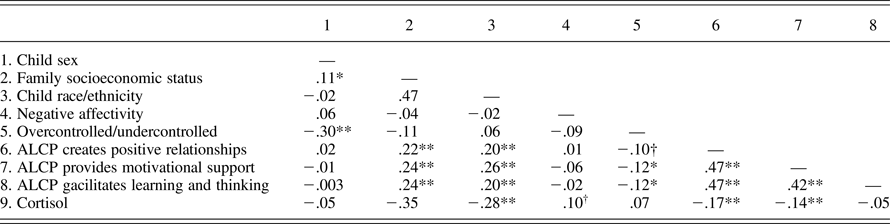
See Table 1 for zero-order correlations between key study variables.
Zero order correlations of Peers and Wellness Study key study variables
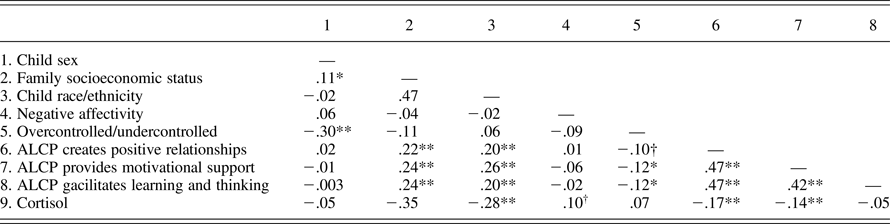
Note: ALCP, Assessment of Learner-Centered Practices. Sex was coded as 0 = male, 1 = female; ethnicity was coded as 0 = non-Caucasian, 1 = Caucasian.
†p ≤ .10. *p ≤ .05. **p ≤ .01.
Negative affectivity
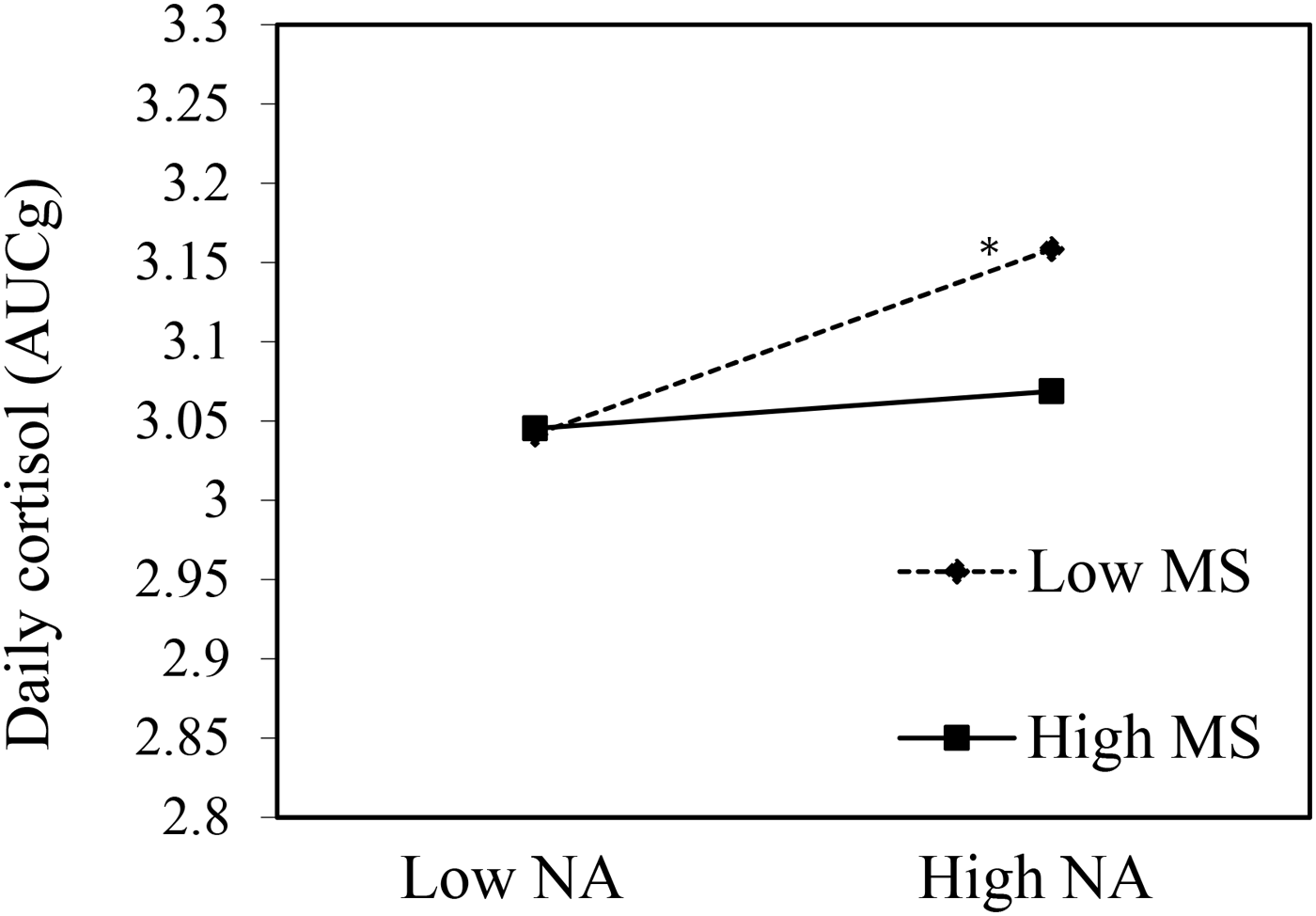
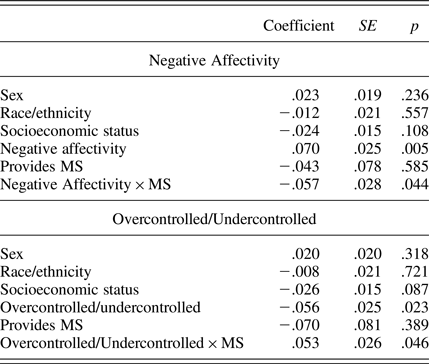
The first set of models investigated the main and interactive effects of children's negative affectivity and each of the three indicators of classroom climate on children's cortisol expression. There was a significant positive association between negative affectivity and cortisol (p = .005); however, this main effect was qualified by a significant interaction between negative affectivity and motivational support for learning (p = .044; see Table 2). The f 2 effect size was 0.13, indicating a small to medium effect (Cohen, Reference Cohen1988). Analyses of simple slopes (see Figure 1) indicated that children's negative affectivity was positively related to total cortisol output within classroom climates characterized by lower levels of motivational support for learning (b = 0.070, SE = 0.024, p < .01). However, there was no relation between children's negative affectivity and cortisol when motivational support was high (b = 0.014, SE = 0.013, p = .28). Children's cortisol was not predicted by the interaction of negative affectivity with other characteristics of the classroom environment as measured by the ALCP, including creates positive relationships (p = .972) and facilitates thinking and learning (p = .176).
Peers and Wellness Study (PAWS) interaction between negative affectivity and motivational support in the prediction of daily cortisol. NA, negative affectivity; MS, motivational support for learning.

Regression coefficients in the Peers and Wellness Study model of children's cortisol as a function of temperament, classroom climate, and their interaction
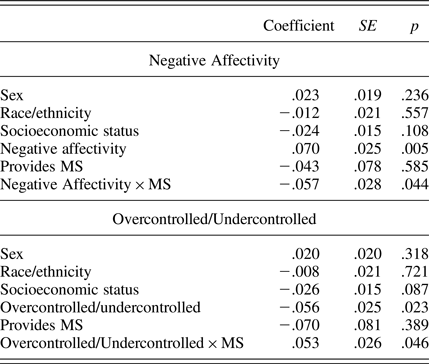
Note: MS, motivational support for learning. Sex was coded as 0 = male, 1 = female; ethnicity was coded as 0 = non-Caucasian, 1 = Caucasian.
Overcontrolled/undercontrolled
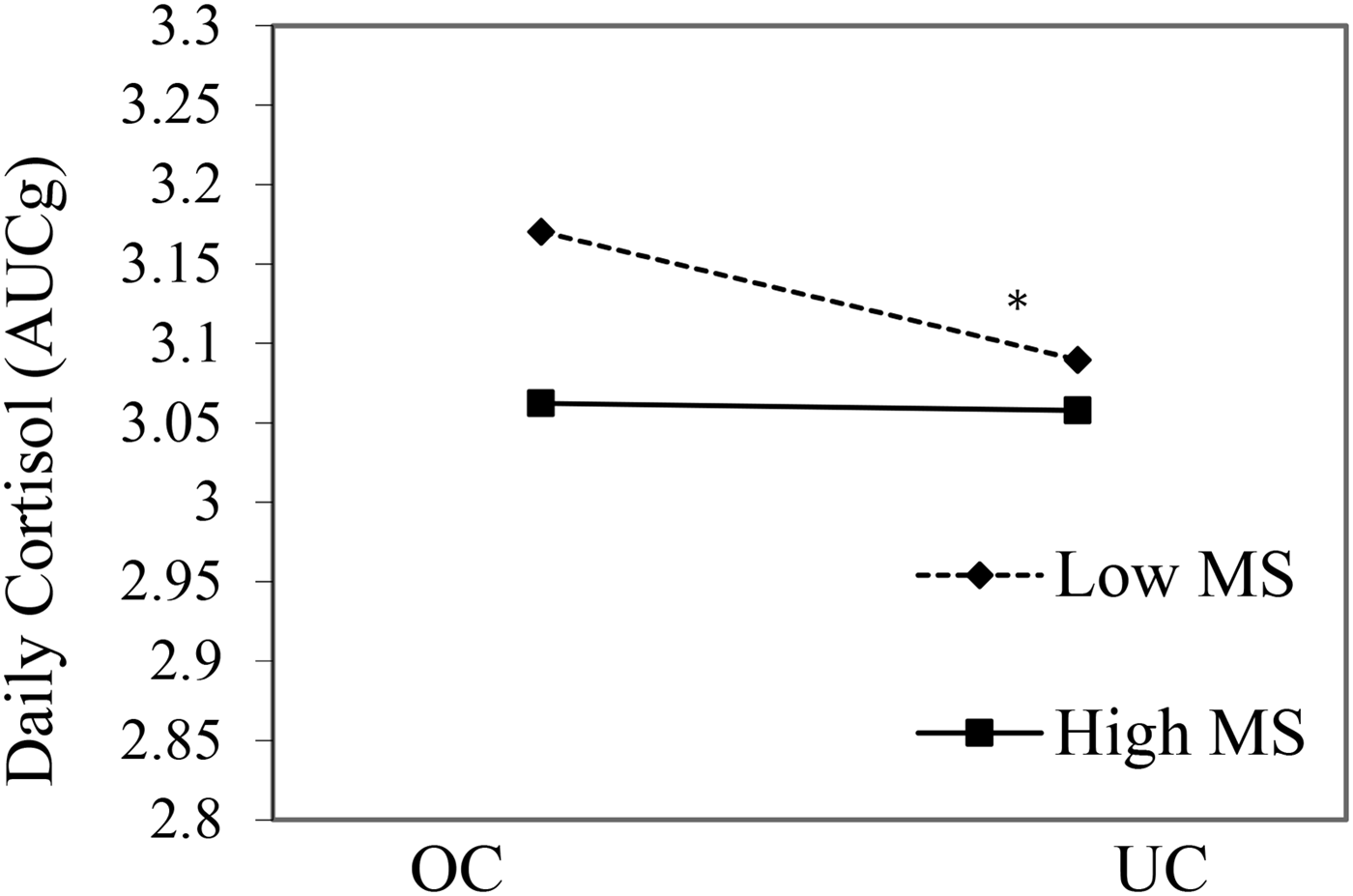
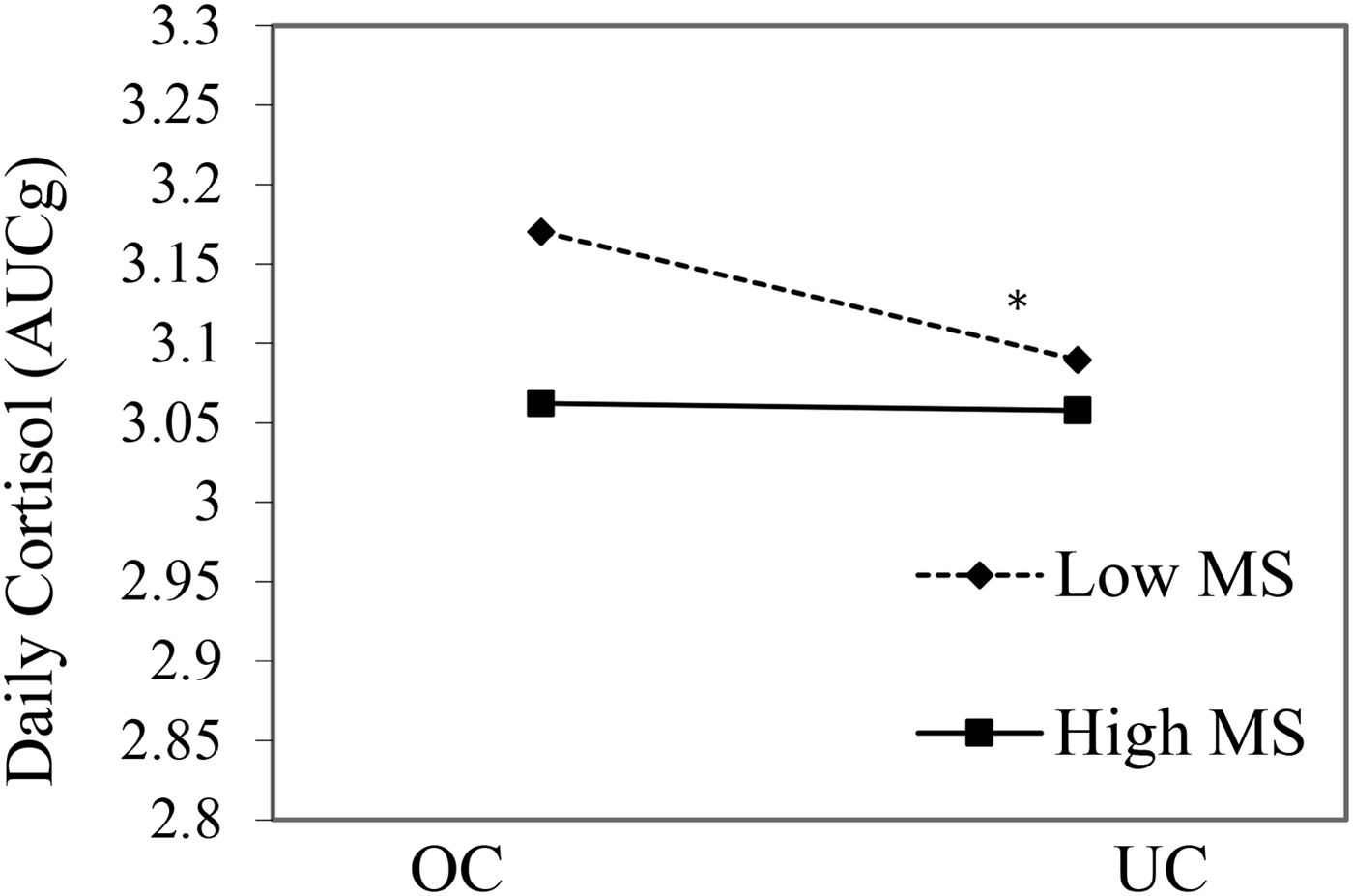
The second set of models explored the predictive influence of overcontrolled and undercontrolled temperament classroom climate on cortisol AUCg. Again, lower scores reflect a temperament characterized by lower surgency and higher effortful control (i.e., overcontrolled), whereas higher scores reflect the converse. There was a significant negative association between control and cortisol, such that those who appeared more overcontrolled exhibited higher levels of cortisol (p = .023). However, this significant main effect should be interpreted in the context of a significant interaction between overcontrolled/undercontrolled and motivational support for learning (p = .046, see Table 2; f 2 = 0.07). Probing the interaction revealed significantly greater cortisol output among more overcontrolled children as compared to undercontrolled children when motivational support for learning was low (b = –0.056, SE = 0.026, p = .023), but no relation between children's overcontrolled/undercontrolled temperament and cortisol output was found when the classroom climate was higher in motivational support for learning (b = –0.003, SE = 0.011, p = .774; see Figure 2). Consistent with prior analyses of kindergarten children's negative affectivity, overcontrolled/undercontrolled temperament did not interact with other classroom climate variables in the prediction of cortisol characteristics (creates positive relationships, p = .543; facilitates thinking and learning, p = .267).
Peers and Wellness Study (PAWS) interaction between overcontrolled/undercontrolled temperament and motivational support in the prediction of daily cortisol. OC, overcontrolled; UC, undercontrolled; MS, motivational support for learning.
WSFW
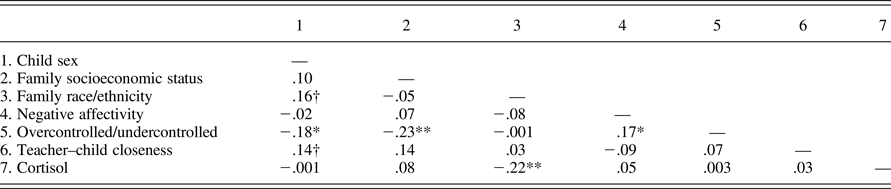
See Table 3 for zero-order correlations among key study variables.
Zero order correlations of Wisconsin Study of Families and Work key study variables
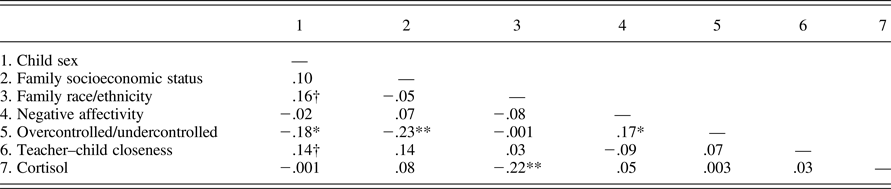
Note: Sex was coded as 0 = male, 1 = female; ethnicity was coded as 1 = Caucasian, 2 = non-Caucasian
†p ≤ .10. *p ≤ .05. **p ≤ .01.
Negative affectivity
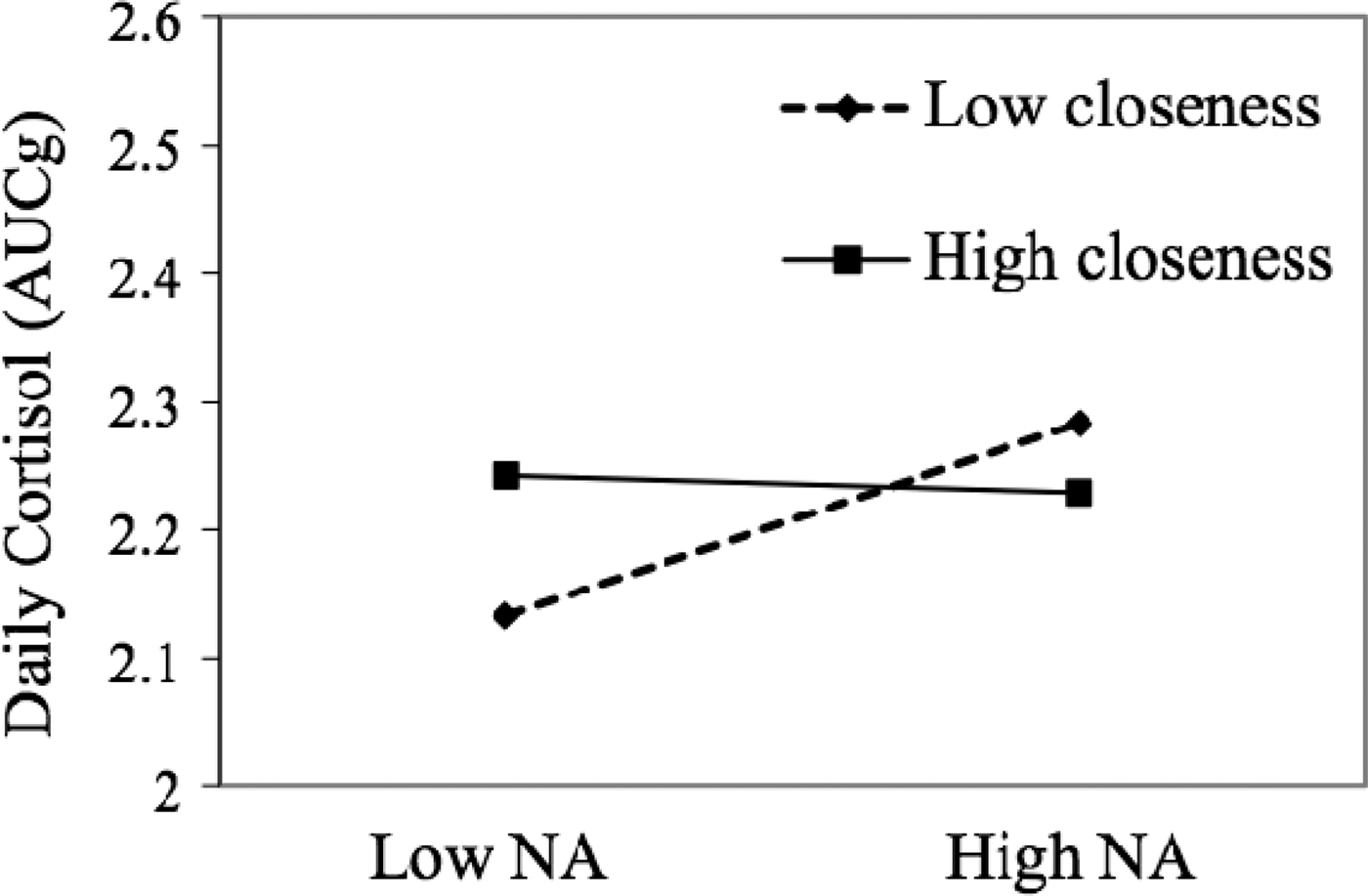
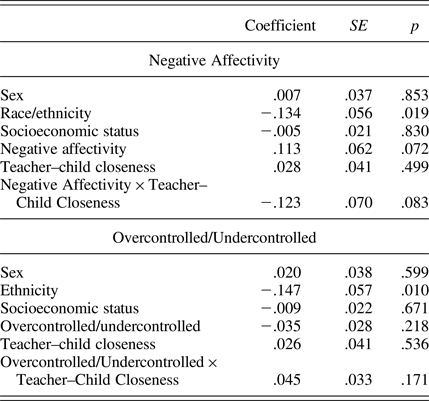
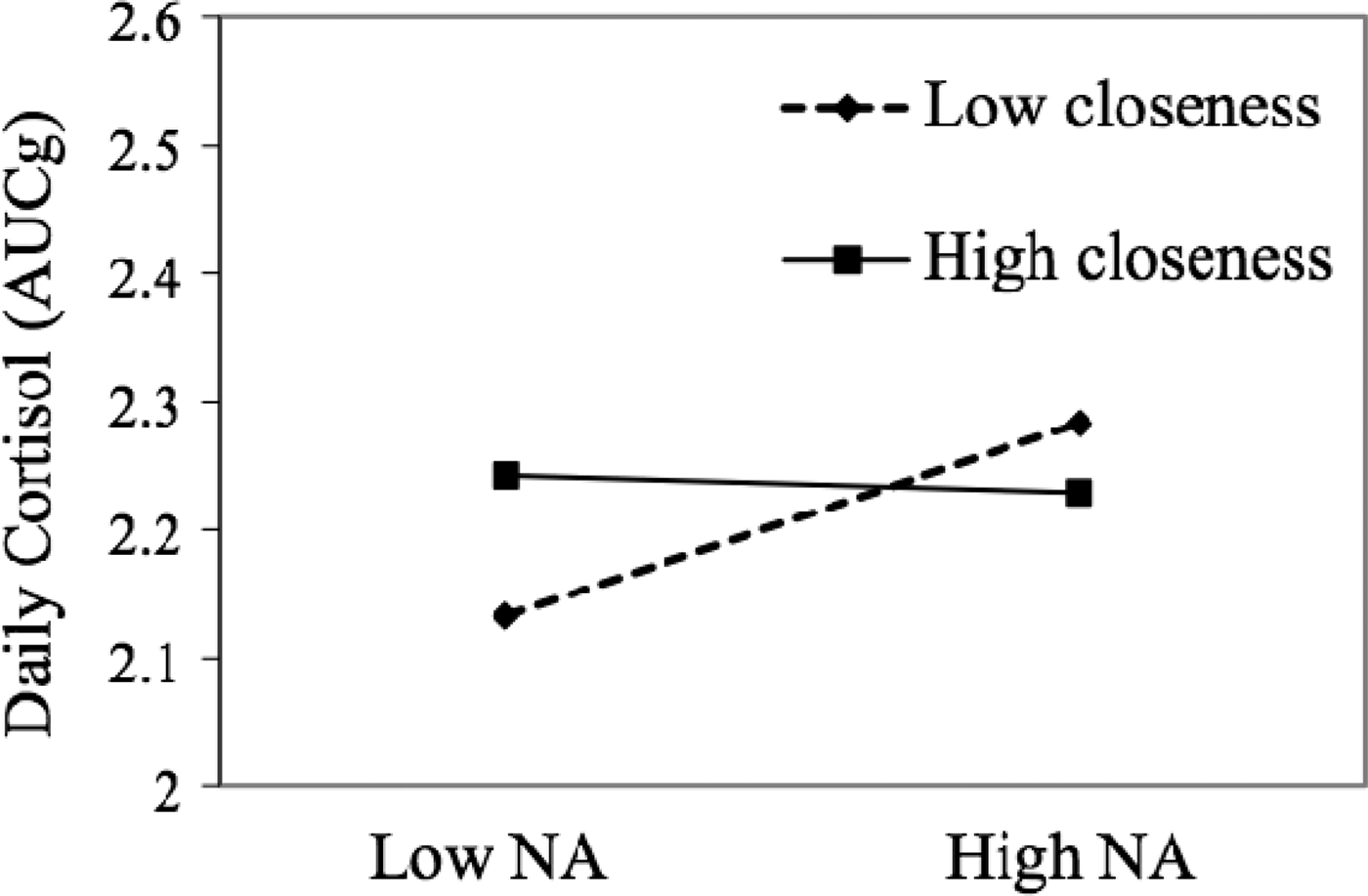
Following the same analytic plan, we first tested the moderating influence of teacher–child closeness on the relation between negative affectivity and cortisol AUCg among children who were in the third grade. A marginally significant interaction emerged (p = .083; see Table 4). The associated effect size was smaller than that of the comparable PAWS negative affectivity model but is still considered to be a small to medium effect (f 2 = 0.08; Cohen, Reference Cohen1988). Given our intent to confirm the robustness of the patterns of association found within PAWS analyses, we graphed the simple slopes in order to ascertain whether the pattern of interaction was similar (see Figure 3). There was a nonsignificant, trend-level positive slope between negative affectivity and total cortisol output in the context of lower levels of teacher–child closeness (b = 0.113, SE = 0.062, p = .072), similar to the significant positive association observed between negative affectivity and cortisol in the context of lower levels of motivational support within the PAWS sample. The slope representing the association between negative affectivity and cortisol at higher levels of teacher–child closeness appeared flat (b = –0.009, SE = 0.031, p = .764), paralleling the null association between negative affectivity and cortisol observed at higher levels of motivational support within the PAWS sample.
Wisconsin Study of Families and Work (WSFW) interaction between negative affectivity and teacher–child closeness in the prediction of daily cortisol. NA, negative affectivity.
Regression coefficients in the Wisconsin Study of Families and Work model of children's cortisol as a function of temperament, classroom climate, and their interaction
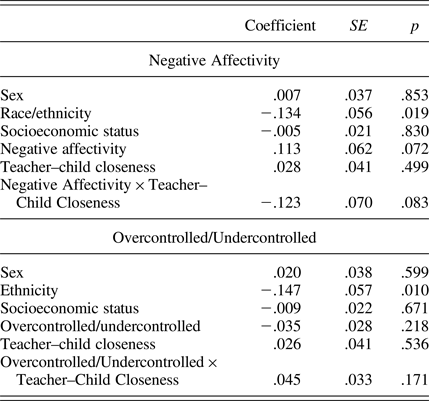
Note: Sex was coded as 0 = male, 1 = female; ethnicity was coded as 0 = Caucasian, 1 = non-Caucasian.
Overcontrolled/undercontrolled
The results of the models testing the interaction of overcontrolled/undercontrolled temperament and teacher–child closeness in the third grade sample are presented in Table 4. Neither the interaction nor the main effects of temperament and teacher–child relationship were significant predictors of cortisol within this older sample.
Discussion
The initiation of formal schooling is a developmental milestone that most children must navigate. There are notable individual differences in the nature of that transition and the extent to which children experience it as stressful. Children's temperament and qualities of the classroom environment represent person- and contextual-level factors, respectively, that shape children's functioning in educational settings. The goodness-of-fit hypothesis, as well as other interactionist perspectives, provide a useful framework for understanding the integrated effects of these multilevel influences, suggesting that temperamental qualities exert their influence through their “match” (or “mismatch”) to the contextual demands of the environment. The goodness-of-fit hypothesis has been tested primarily by examining the interaction between early temperament and quality of parenting in the prediction of children's psychological health outcomes. Based on and extending the goodness-of-fit model, the present study tested the hypothesis that children's temperament would interact with relational and contextual features of the classroom environment to predict children's daily cortisol output, a biological indicator of the stress response. In a racially, ethnically, and economically diverse sample of children in kindergarten, results indicated that greater parent-rated negative affectivity and overcontrolled temperament were associated with greater cortisol output during the school day, but only in the context of lower than average levels of motivational support from the teacher. Additional analyses based on a different sample of children in third grade revealed a similar, albeit marginally significant, positive relation between children's negative affectivity and cortisol output when teacher–child closeness was low, providing added evidence for the robustness of the interactive association found in the younger sample. However, among the sample of older children, the interaction of temperamental overcontrol/undercontrol and the classroom context did not significantly predict cortisol.
Temperament and children's daily cortisol: Moderation by classroom climate
Entry into kindergarten marks a period of new developments in and challenges to children's social, emotional, and behavioral functioning. During this time, children take on new roles of student and classmate, navigate relations with a new peer group and additional caregiving figures, and learn and abide by novel rules and boundaries (Boyce et al., Reference Boyce, Adams, Tschann, Cohen, Wara and Gunnar1995). In the current study, children whose temperaments were characterized by high negative affectivity or low surgency and high effortful control (i.e., overcontrolled qualities) exhibited heightened activation of the neuroendocrine stress system if the classroom environment lacked a certain level of encouragement and nurturance for children's learning. Interpreted within the goodness-of-fit framework, findings suggest a “mismatch” or “poor fit” between children with more difficult temperaments and lower levels of teacher-directed motivational support for learning, contributing to greater HPA axis arousal. Conversely, when children with more temperamental negative affectivity or overcontrol were in classroom environments characterized by higher than average levels of motivational support, they evidenced levels of HPA axis arousal similar to that of less negative and less overcontrolled children. Although HPA axis arousal is a normative response to social stress, ongoing or prolonged activations of the HPA axis may increase vulnerability to stress-related physical and mental health problems later in life (Juster, McEwen, & Lupien, Reference Juster, McEwen and Lupien2010). The findings of the present study suggest that a kindergarten classroom environment with relatively lower levels of motivational support may exacerbate the positive relation between children's temperamental negative affectivity and/or overcontrol and higher cortisol output.
There were some unique patterns within our findings among children in kindergarten. Of the three indictors of classroom climate assessed by the ALCP, only the measure of motivational support for learning emerged as a significant moderator of the relation between children's temperament and HPA axis activity. Indicators of warmth in the teacher–child relationship (creates positive relationships) and teachers' specific efforts to help students complete their work (facilitates learning and thinking) did not emerge as significant moderators. Teachers' motivational support for learning is assessed with items that are both affective (e.g., “I provide positive emotional support and encouragement to students who are insecure about performing well”) and process- or performance-oriented (e.g., “I tell my students it's okay to make mistakes”), essentially drawing upon concepts that are separately assessed by the two other ALCP scales. Adjustment to the school context requires successful navigation of tasks within both relational and achievement domains, and it may be the case that a highly supportive, encouraging learning environment exerts a stronger influence on children's physiological adjustment than indicators of relationship quality or achievement alone, particularly for children with difficult temperaments.
A secondary aim of the current study was to explore the robustness of the interaction effects in an older sample of children attending third grade. The interaction of overcontrolled/undercontrolled temperament and the classroom climate that predicted daily cortisol among kindergarten children was not observed among children in third grade. However, the interaction of negative affectivity and classroom climate in this older sample revealed a remarkably similar pattern to the significant associations found in the primary sample of young children. Although findings did not reach conventional levels of statistical significance in the older sample, they were associated at the trend level, and graphical display of the data demonstrated a nonsignificant positive association between negative affectivity and cortisol output in the context of low levels of teacher–child closeness. The similarity in the pattern of results related to negative affectivity across both studies is notable and provides a foundation for future longitudinal research on factors that moderate how children's temperament relates to developmental processes and outcomes in the classroom. The measures of classroom climate across the PAWS and WSFW studies captured teachers' warmth, sensitivity, and responsivity, and highlight the strong influence of these relational and contextual qualities in attenuating the influence of children's negative affectivity on elevated cortisol output. Moreover, these supportive aspects of the teacher–child relationship bear similarity to measures of positive parenting that have been shown to moderate the relation between negative temperament and children's socioemotional and behavioral outcomes (Mesman et al., Reference Mesman, Stoel, Bakermans-Kranenburg, van IJzendoorn, Juffer, Koot and Alink2009).
In considering the differences in results across PAWS and WSFW, it should be noted that the samples differed in demographics, sample size, place of cortisol collection, and the specific measures that were used to evaluate children's temperament and classroom climate, precluding the WSFW analyses from being a true replication of those conducted in PAWS. Aside from these methodological differences, there are also developmental differences in the meaning and significance of school attendance between kindergarten children (the majority of whom were navigating this transition for the first time) and children in third grade (for whom the academic environment is not novel). These distinctions may shape how the classroom climate is experienced as stressful or challenging, with downstream effects on HPA axis activity. Particularly in relation to children's temperamental overcontrol/undercontrol, it may be the case that other qualities of the academic environment, such as children's peer relationships, exert a stronger moderating influence than the teacher–child relationship among children in third grade as compared to younger children.
The goodness-of-fit theory guided the models tested within the current study; however, findings are consistent with other interactionist perspectives that suggest nuanced relations between individual-level factors and the environment in the prediction of children's adjustment. Biological sensitivity to context suggests that heightened reactivity increases children's sensitivity to the protective factors within supportive environments, but also elevates susceptibility to risk if present within stressful environments (Boyce & Ellis, Reference Boyce and Ellis2005). Paralleling this theory, Belsky and Pluess (Reference Belsky and Pluess2009) have proposed that behavioral or phenotypic (e.g., temperament), endophenotypic (e.g., physiological reactivity), and genetic factors contribute to differential susceptibility to positive and negative qualities of the environment, particularly parental rearing. The biological sensitivity to context and differential susceptibility models have historically emphasized different individual-level moderators and the degree to which nature (vs. nurture) is implicated in shaping such differences, but the models are conceptually tethered by an interactionist perspective on the influence of child characteristics and environmental context on adjustment outcomes. They are now sometimes referred to together as “differential neurobiological susceptibility” theories (Bush & Boyce, Reference Bush, Boyce and Cicchetti2016; Ellis, Boyce, Belsky, Bakermans-Kranenburg, & van IJzendoorn, Reference Ellis, Boyce, Belsky, Bakermans-Kranenburg and van IJzendoorn2011). Consistent with these theories, results of the present study suggest that children's temperamental characteristics do not operate as uniform determinants of HPA axis arousal, but rather interact with qualities of the classroom relational context to determine physiological activity across the school day. However, direct support for differential neurobiological susceptibility requires the presence of a clear crossover effect (i.e., high temperamental reactivity is associated with better outcomes in supportive conditions and worse outcomes in adverse conditions as compared to low temperamental reactivity). The absence of crossover effects in the current study may suggest that such frameworks do not always capture the nature of relations between temperament and classroom context on children's neurobiological functioning. It has also been suggested that such effects may be less likely to emerge when variables are measured in different physiological or psychological domains (e.g., temperament and neurobiological functioning; Essex, Armstrong, Burk, Goldsmith, & Boyce, Reference Essex, Armstrong, Burk, Goldsmith and Boyce2011).
As the aforementioned frameworks have primarily been tested in the context of the early family environment, the current study represents a significant contribution to understanding how such interactive influences unfold in the school setting. An extensive body of research supports the strong independent influences of the classroom and teacher–child relationship on children's academic, social, and behavioral functioning (Ferreira et al., Reference Ferreira, Cadima, Matias, Vieira, Leal and Matos2016; Hernández et al., Reference Hernández, Eisenberg, Valiente, VanSchyndel, Spinrad, Silva and Thompson2016). Results from the current study extend this body of work in two ways. First, the demonstrated interaction between temperament and classroom climate highlights the need to examine the fit between the two, rather than either variable in isolation. Second, the interactive effects of temperament and classroom qualities predicted a key indicator of neurobiological stress system functioning. These findings suggest that academic environment may be of similar importance to the family context in shaping the influence of children's temperamental characteristics on stress-sensitive biological systems.
Limitations
There are several limitations that bear consideration in assessing the findings of the present study. Although we used a strong multiple-informant, multiple-method approach to assess variables of interest, parent report of children's temperament and teachers' report of the classroom relational context may be influenced by social desirability biases; thus, behavioral or observational measures would bolster confidence in our conclusions. Children's HPA axis arousal was measured through repeated cortisol sampling over the course of 3 days. Although this approach provides a more reliable assessment than would be garnered through a single day's collection, cortisol was only measured in the morning and afternoon during the school day and would be strengthened by more frequent measures throughout the day (Adam & Kumari, Reference Adam and Kumari2009). As noted above, a number of other psychosocial and contextual variables not measured in the current study may also affect physiological responses to stress (e.g., coping, attention and peer relationships) and are fruitful areas for future research.
Implications and conclusions
Children's successful transition to kindergarten is of paramount importance for children's later academic achievement (Cooper, Moore, Powers, Cleveland, & Greenberg, Reference Cooper, Moore, Powers, Cleveland and Greenberg2014). Nearly one-third of children experience “some problems” and another 16% experience “many problems” when they begin kindergarten (Rimm-Kaufman, Pianta, & Cox, Reference Rimm-Kaufman, Pianta and Cox2000), and many parents feel unprepared to support their children's ability to meet the academic, social, and behavioral expectations of school attendance (McIntyre, Eckert, Fiese, DiGennaro, & Wildenger, Reference McIntyre, Eckert, Fiese, DiGennaro and Wildenger2007). Child-level factors, including children's cognitive abilities and socioemotional competences, have been identified as important determinants of the ease or difficulty with which children transition to kindergarten (Schulting, Malone, & Dodge, Reference Schulting, Malone and Dodge2005). Results of the current study also bring attention to the salience of children's temperament on the kindergarten transition and, as outlined by ecological models of children's development, highlight how such individual factors do not act in isolation of the larger classroom and teacher–child relational contexts in which they are embedded (Bronfenbrenner, Reference Bronfenbrenner1977).
In sum, the present study provides support for the moderating influence of the teacher–child relationship and classroom climate on associations between children's temperamental qualities and physiological stress regulation, particularly during the initial transition to kindergarten. Rather than operating uniformly, the physiological consequences of difficult temperamental traits may depend on the qualities of the context in which they unfold. Our results suggest that it may be valuable to consider the responsivity of neurobiological processes to school-based environmental and relational factors within the implementation and evaluation of interventions to promote children's positive adjustment within academic environments. Efforts to train educators in developing healthy teacher–student relationships and supporting children's optimal school functioning may benefit from addressing the complex interactions of children's temperament within varied classroom climates. Incorporating physiological measures can also provide a more comprehensive understanding of the multilevel, interactive processes that shape children's functioning as they spend increasing amounts of time outside the family setting.