Introduction
In the Netherlands, more than 200 different parenting programmes are available to support parents (Hermanns, Ory, & Schrijvers, Reference Hermanns, Ory and Schrijvers2005). Most programmes aim at reducing early childhood problems, since their impact and effect is assumed to be the greatest for young children. For parents of teenagers who have questions about their parenting style or worry about their teenage children's behaviour, only a few interventions or support programmes are available, while most parents experience especially puberty and adolescence as a difficult phase in their children's lives (Costello, Mustillog, Erkanli, Keeler, & Angold, Reference Costello, Mustillog, Erkanli, Keeler and Angold2003; Steketee, Jonkman, Berten, & Vettenburg, Reference Steketee, Jonkman, Berten and Vettenburg2013). During this life phase, there is also a high prevalence of emotional and behavioural problems among adolescents (Distelbrink, Ketner, & Winkelman, Reference Distelbrink, Ketner and Winkelman2015; Van Dorsselaer et al., Reference Van Dorsselaer, de Looze, Vermeulen-Smit, de Roos, Verdurmen, ter Bogt and Vollebergh2010). In the Netherlands, the prevention of problem behaviour in young people is mainly focused on the young people and less on their parents, despite the fact that we know that the quality of parenting is essential for the development, well-being, and opportunities of the youngsters. Research shows that parental support programmes can, indeed, bring about positive changes in parents’ competences and teenagers’ problem behaviour (Connell, Dishion, Yasui, & Kavanagh, Reference Connell, Dishion, Yasui and Kavanagh2007; Distelbrink et al., Reference Distelbrink, Ketner and Winkelman2015; Doyle, Hegarty, & Conor, Reference Doyle, Hegarty and Conor2018).
Given strong evidence for the pathways leading to conduct disorder during adolescence (Frick & Viding, Reference Frick and Viding2009), population-based parenting approaches are an alternative to clinic-based treatment models for reducing prevalence rates of problem behaviours among adolescents. The way children are raised, the parenting style and the parental competences, family relations in general, and the relation between parents and children all have an important and long-standing influence on the biological, mental, and social development of young people. Parental skills such as appropriate levels of parental monitoring and positive parenting have been identified as crucial factors in the prevention of negative developmental outcomes for adolescents (Eaton, Krueger, Johnson, McGue, & Iacono, Reference Eaton, Krueger, Johnson, McGue and Iacono2009; Furstenberg, Cook, Eccles, & Elder, Reference Furstenberg, Cook, Eccles and Elder1999; Kerr & Stattin, Reference Kerr and Stattin2000). The evidence further suggests that parental conflict and poor parental adjustment can interfere with parents’ ability to discipline in an effective and consistent manner (Sameroff, Gutman, & Peck, Reference Sameroff, Gutman, Peck and Luthar2003).
When children are in transition from primary to secondary school, it is important that their parents can give them adequate support and guidance. A programme aimed at supporting parents by means of the promotion of competent parenting is the Teen Triple P programme, an Australian parenting programme for parents with children aged 10–16 (Sanders, Reference Sanders2012; Sanders & Turner, Reference Sanders, Turner, Fiese, Celano, Deater-Deckard, Jouriles and Whisman2019). The aim of the programme is to stimulate and support parents to develop the knowledge, confidence, and skills needed to exert a positive influence on their children's development. Parents learn to use daily communication within the family to provide their children with adequate support and to stimulate their social skills and problem-solving ability. The Triple P system consists of five multilevel programmes, increasing in strength, for parents with different problems and needs in parenting their children or adolescents. Teen Triple P is a specially adapted version of the well-established Triple P programme for children under the age of 12 (Sanders, Reference Sanders2012).
Triple P is very popular in the Netherlands as an educational support programme for parents of young children. There, the programme has been widely implemented since 2004; it matches Dutch youth policy and Dutch youth care practice (Factsheet, 2015, 2017). Triple P is implemented in half (more than 200) of the Dutch municipalities, while approximately 15,000 professionals in different sectors of youth care are trained in Triple P (Schappin, De Graaf, & Reijneveld, Reference Schappin, De Graaf and Reijneveld2017). In the Netherlands, Teen Triple P (lectures, workshops, individual and group training) is frequently used, has been evaluated as theoretically well substantiated, and has been positively assessed by professionals and parents (Distelbrink & Winkelman, Reference Distelbrink and Winkelman2018; Naber, Smallegange, & Van Dongen, Reference Naber, Smallegange and Van Dongen2018).
Many international studies, various research projects, as well as meta-analyses have been set up to investigate the effects of the Triple P programme. Since 2007, several meta-analyses have been carried out, focused on the Triple P programme (for instance, De Graaf, Speetjens, Smit, De Wolff, & Tavecchio, Reference De Graaf, Speetjens, Smit, De Wolff and Tavecchio2008; Sanders, Kirby, Tellegen, & Day, Reference Sanders, Kirby, Tellegen and Day2014). These analyses differ strongly from one another regarding their focus and outcome measures, and the results are subject of discussion among researchers. Each of these meta-analyses, however, reports positive results. Overall, these studies show that Triple P contributes to the reduction of problem behaviours among children, while strengthening parenting skills (Schappin et al., Reference Schappin, De Graaf and Reijneveld2017).
Yet, less research has been done on the effectiveness of the programme for parents of teenagers. The systematic review done by Sanders et al. (Reference Sanders, Kirby, Tellegen and Day2014) of 101 studies also included data on parents and teens. It reports a significant improvement in the social, emotional, and behavioural outcomes of teenagers and of parental adjustment. There is also some evidence in Australia that, compared with ‘Care as Usual’ parents, parents who received Group Teen Triple P (GTTP) report significant improvements in parenting practices, parenting confidence, the quality of family relationships, and fewer adolescent problem behaviours post intervention (Chu, Bullen, Farruggia, Dittman, & Sanders, Reference Chu, Bullen, Farruggia, Dittman and Sanders2015). However, additional research is needed on the effectiveness of the intervention for teenagers (aged 10–16) in the Dutch context. To answer this question, this study focuses on the extent to which Teen Triple P is effective, both in reducing the social and emotional problem behaviours of teenagers and in increasing the parenting skills of parents.
Triple P as an Intervention for Teens
Triple P is a preventative, positive, educational programme (Behavioural Family Intervention) that originates from Australia and has developed over time. The objective of Triple P is to prevent and reduce (serious) emotional, behavioural, and developmental problems in children by promoting competent and positive parenting (Sanders & Turner, Reference Sanders, Turner, Fiese, Celano, Deater-Deckard, Jouriles and Whisman2019). The programme is based on five principles: (1) parents offer children a safe and encouraging environment; (2) they allow children to learn through positive support; (3) they use accountable discipline; (4) they have realistic expectations regarding their children; (5) they also take good care of themselves.
Based on these principles, various parenting strategies have been developed, which are aimed at dealing with children's undesirable behaviours, promoting positive contact, teaching new behaviours, and stimulating desired behaviours. Parents of teenage children are offered specific skills such as guiding teenagers in problem-solving, the use of behaviour contracts to encourage positive behaviour, ways to handle a family council, and learning how to cope with teenagers' emotional or risky behaviours. A wide range of tools have been developed to help parents master these strategies, such as DVDs, manuals, and role-plays (Mazzucchelli & Sanders, Reference Mazzucchelli and Sanders2010).
Similar to the programme for parents of younger children, Teen Triple P is based on social learning principles and aims to target those modifiable family risk and protective factors associated with negative youth outcomes. Teen Triple P, however, places a stronger emphasis on the importance of parents acknowledging and encouraging the growing autonomy and independence of the adolescent. It recognises the likelihood of adolescents getting engaged in risky behaviour that may jeopardise their current or future well-being. It provides parents with ways to assist their adolescent in managing these challenges effectively.
The Teen programme also echoes Triple P's key feature in the adoption of a self-regulatory framework, which involves teaching skills to parents that will enable them to become independent problem-solvers and that promote a generalisation of parenting skills (Ralph & Sanders, Reference Ralph and Sanders2003).
Triple P distinguishes various levels of intervention with a varying intensity, offered in a wide range of forms, such as individual counselling sessions or group courses. In this way, parents receive a tailor-made offer of support, depending on the seriousness of their parenting issues (Sanders et al., Reference Sanders, Kirby, Tellegen and Day2014). This study focuses on GTTP level 4: a group training for parents that includes five group sessions of 1.5–2 h each and three individual (phone) consultations (planned after the first four group sessions). The development of parenting skills is stimulated by means of video, a workbook, and explanation by the trainer. This is combined with exercises in small groups during the sessions and homework assignments in a private setting. The training is available to all parents interested and motivated to learn how to improve their parenting skills. Participation is voluntary and free of charge. The programme is offered to parents with children in secondary education (12–16 years old), as well as to parents with younger children, who are still in primary education (10–12 years old).
The Current Study
In this article, we will present the results of the effect study, in which the intervention condition (parents who use the Teen Triple P programme) is compared with the control condition in a quasi-experimental longitudinal design.
The central question of the research is formulated as follows: Is the Teen Triple Positive Parenting Programme demonstrably effective for parents of teenagers, and does it influence parenting skills, their stress level, and the emotional and behavioural problems of their teenage children? It was hypothesised that, compared with the control condition post intervention, parents participating in the Teen Triple P programme would report: (1) improved parenting skills, (2) decreased parenting stress, and (3) decreased emotional and behavioural problems among teenagers as reported by the parents.
Method
Procedure
The study was set up among a broad group of parents of teens (aged 10–16) in a metropolitan parenting context, where Teen Triple P was implemented from the beginning and widely applied in social work and youth care. For the experimental group, parents who participated in the Teen Triple P programme (level 4) between autumn 2013 and spring 2016 were asked to participate in the research. In total, 106 parents from 39 different parental Teen Triple P groups were involved in the study. According to the Triple P's standardised working method, all parents were asked to complete a questionnaire, prior to the programme (T 0) and again afterwards (T 1). For this study, some questions were added to the standard questionnaire used by Triple P trainers. The parents were contacted by researchers for the follow-up measurement (T 2), 3–5 months after they had finished Teen Triple P. This is the minimal follow-up period required for testing efficacious interventions by the Society for Prevention Research (Flay et al., Reference Flay, Biglan, Boruch, Gonzalez Castro, Gottfredson and Kellam2005).
Data collection of the control group also took place between September 2013 and March 2016. The first measurement (T 0) was done by students at the Institute of Applied Science Inholland (Educational Science Department). They were trained and coached to collect the surveys from the control group. For this control group, different ways of recruiting were used: a door-to-door approach (which was least successful), approaching parents through primary and secondary schools, and approaching parents in the social networks of students. The data collection on the following measurements (T 1 and T 2) was carried out by researchers who personally contacted parents and asked them to fill in the questionnaire again.
The criterion for the inclusion of parents in the experimental group was that parents had finished the Teen Triple P training. The teens in the experimental and control groups had to be 10–16 years of age and had to live in Amsterdam and its surrounding areas. Cases in the study were excluded when the parents withheld consent or when contact data were incomplete.
Participants
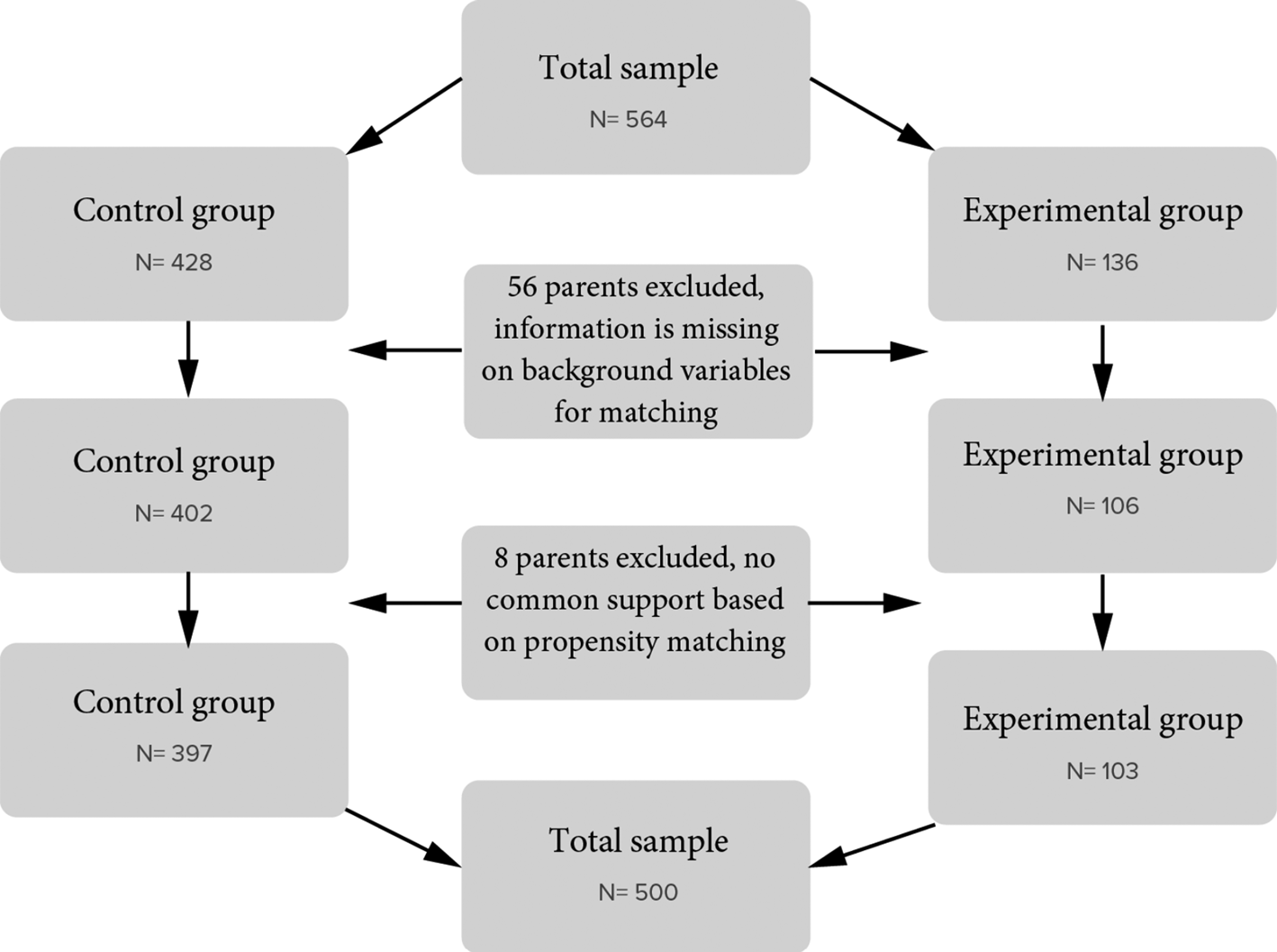
Originally, 564 parents participated. Information about variables for the matching procedure was available for 508 parents, 106 from the Triple P group, and 402 from the control group families. Based on the matching procedure used here, we eliminated eight cases in total from the study; for these subjects, we could not find common support in the other group (three from the Triple P group and five from the control group). In the end, for this study, data of 500 parents could be used (103 parents who participated in the Triple P programme and 397 parents from the control group (see Figure 1)).
Flowchart of the exclusion of participants based on the propensity matching.

The Fidelity and Integrity of the Teen Triple P Programme
The Teen Triple T programme was delivered by accredited Triple P facilitators who have extensive experience in working with parents of teenagers with behavioural problems. In the study, the fidelity and integrity of the programme was checked by using two instruments. A logbook was filled in by the trainer after every session (five group sessions and three telephone sessions in total). Additionally, an observational study was conducted to evaluate the degree of programme integrity (Distelbrink & Winkelman, Reference Distelbrink and Winkelman2018). The observational study consisted of film records of session 3 of the Triple P group intervention. Researchers analysed the data by calculating the means and standard deviations and by testing whether the 80% norm was reached. This norm is the accreditation norm of the training. The professionals reached self-reported scores of 80% on all sessions. The results for the observations by the independent trainers showed that for the core element of session 3, the norm of 80% was not reached. The quality of the programme scored higher, especially the interaction with the parents (positive atmosphere, collaboration, and non-judgmental attitude). The reason why not all core elements were addressed in the session as planned was that some elements were moved to the next session or skipped due to a lack of time or content-driven reasons. The time schedule of the Triple P session is tight, while the group of parents sometimes needs in-depth treatment of a specific element. Although programme fidelity is a prerequisite for the implementation of the programme, trainers must also be flexible while coping with contextual issues (e.g., Forehand, Dorsey, Jones, Long, & McMahon, Reference Forehand, Dorsey, Jones, Long and McMahon2010; Mazzucchelli & Sanders, Reference Mazzucchelli and Sanders2010). Thus, based on the trainers' self-reporting and the observation of session 3, the conclusion was that, in our study, the Teen Triple P programme did show programme fidelity and integrity.
Measurements
A standard self-report questionnaire was filled in by the parents at the start and the end of the programme. We also used it for the follow-up measurement. This questionnaire has demographic scales, scales to measure the problem behaviour of the adolescents, parenting style, disciplinary techniques of the parents, and conflicts with their teenager, as well as scales to measure the well-being of parents.
Demographics
The Family Background Questionnaire: This instrument collects family demographic background information, including parent marital status, employment and education, family composition, income, ethnic background, and professional help during the last 2 years (see Zubrick et al., Reference Zubrick, Silburn, Garton, Dalby, Carlton and Sheperd1995).
Problem behaviour of the adolescents
The Strengths and Difficulties Questionnaire (SDQ) was used to measure parental perceptions of difficult behaviours in their adolescent (Goodman, Reference Goodman1999, Reference Goodman2001). The 20 items are rated on 3-point scales (0 = not true, 1 = somewhat true, and 2 = certainly true) and cover four domains of problem behaviour: emotional symptoms, conduct problems, hyperactivity, and peer problems. Each of these scales contains five items that sum up to yield a Total Difficulties Score between 0 and 40. A fairly high international internal consistency was found for the Total Difficulties Score for parents (Achenbach et al., Reference Achenbach, Becker, Döpfner, Heiervang, Roessner, Steinhausen and Rothenb erger2008). Here, a Cronbach's score of α = .67 was found on our baseline measurement for SDQ. The prosocial subscale was also used in this study (α = .68), as well as four other subscales: SDQ_emotional (α = .67), SDQ_behaviour (α = .64), SDQ_hyperactivity (α = .78), and SDQ_peers (α = .54).
Parenting skills
To measure the parenting skills of parents, four scales were used.
The Parenting scale measures the parenting style of the parent. The questionnaire is used to reveal disturbances in the upbringing by measuring laxness (negligence) and overreactivity (excessive response). The total score shows the level to which the parent uses effective or ineffective parenting strategies. The scales are founded on 13 questions (Prinzie, Reference Prinzie2004). There are two options for answering the question. For the question, ‘If I give a clear warning,’ respondents can choose between ‘I do not often do that’ and ‘I always do what I said.’ The answering options show which parenting strategy is used. The Cronbach's alpha score for Laxness (six items) is α = .74, for overreactivity (also six items), it is α = .72.
The Nijmeegse Parenting Questionnaire (NOV) is a questionnaire used to measure the responsivity of the parents in their parental position (Gerris et al., Reference Gerris, Vermulst, Van Boxtel, Janssens, Van Zutphen and Felling1993). The subscale responsivity has eight items that can be measured on a 6-point scale, from 1 = totally agree to 6 = totally disagree. The internal consistency for this scale is α = .92. Next, the raw scores are summed up and a high score means high responsivity, while a low score stands for low responsivity.
The Alabama Parenting Questionnaire (APQ) is a questionnaire that measures different aspects of the parenting behaviour of parents (Frick & Viding, Reference Frick and Viding2009; Frick, Christian, & Wootton, Reference Frick, Christian and Wootton1999). The APQ survey measures five dimensions (Colder, Lochman, & Wells, Reference Colder, Lochman and Wells1997; Shelton, Frick, & Wootton, Reference Shelton, Frick and Wootton1996). This list consists of 42 items. For this research, only the scale Rewards (the use of positive disciplinary techniques) is used, which consists of six items. The extent to which parents positively confirm their children's behaviour is determined by a 5-point scale: 1 = never to 5 = nearly always. The internal consistency for the six items is α = .82.
Parenting control among parents was also examined (Kerr & Stattin, Reference Kerr and Stattin2000; Kerr, Stattin, & Burk, Reference Kerr, Stattin and Burk2010). The Parenting Control scale consists of 12 items over which the mean is measured. Answers can be given on a 5-point scale: 1 = nearly always to 5 = nearly never. We found an internal consistency of α = .83 for parental knowledge (three items), α = .65 for parental supervision (five items), and α = .89 for child disclosure (four items).
Parents’ disciplinary techniques and conflicts with their teenager
The Conflict Behaviour Questionnaire (CBQ) is a measure of perceived parent–teenager communication regarding conflict behaviour (Robin & Foster, Reference Robin and Foster1989). It gives a general estimate of how much conflict and negative communication the family experiences. Parents completed the CBQ retrospectively, rating their interactions over the 2-week period preceding the assessment session. The parent version has 20 items, for example: ‘We rarely agree with each other’ or ‘My teenager usually listens to what I say to him/her.’ They were asked to read each item and decide whether it is mostly true or mostly false for their relationship and fill in the questionnaire for true or not true. The internal consistency with 20 items was α = .91.
Parents’ well-being
For measuring the well-being of parents, the scales Parenting stress, Parental stress, Anxiety, and Depression were used.
Parental stress: Parents were asked to answer questions of the Nijmegen Parental Stress Index (NOSI) to measure parental competence (De Brock, Vermulst, Gerris, & Abidin, Reference De Brock, Vermulst, Gerris and Abidin2004). It is a translation and adaptation of the Abidin Parenting Stress Index (1983), which reflects the stress experience of parents in rearing a child. This short version, which can be taken in about 5 min, contains 15 items. In each statement, parents indicate to what extent they agree on a 6-point Likert scale, ranging from 1 = totally disagree to 6 = totally agree. Examples of items include ‘Raising my child often suggests problems’ and ‘I enjoy being a parent and educator.’ A higher score on this scale indicates more child-rearing stress. The total score on this questionnaire gives an indication of the parent-experienced rearing stress: the higher the score, the more stress they experience. For the NOSI (15 items), a Cronbach's alpha of α = .81 is found.
Depression Anxiety Stress Scales-21 (DASS-21) is the short version of the DASS, which assesses symptoms of depression, anxiety, and stress in adults (Henry & Crawford, Reference Henry and Crawford2005: Lovibond & Lovibond, Reference Lovibond and Lovibond1995). Symptoms are measured through a 4-point scale, from 0 = did not apply to me at all to 3 = applied to me very much. Examples of the questions are: ‘I felt gloomy and depressed’ (Depression); ‘I had the feeling that I nearly got into a panic’ (Anxiety); and ‘I noticed that I was very restless’ (Stress). The internal consistencies are α = .84, α = .75, and α = .86 for the subscales Depression, Anxiety, and Stress, respectively, each of which consists of seven items.
Analysis
This effect study was a quasi-experimental design in which the intervention condition (parents who use the Teen Triple P programme) was compared with the control condition (Care as Usual for these parents), measured at three moments: pre- and post intervention and during a 3–5-month follow-up. We collected the data of each measurement, merged the three measurements of both groups, and redefined data on scale information (Statacorp, 2017).
Differences in outcomes between treatment and control groups might be due, at least in part, to systematic differences on baseline covariates at the beginning of the study. To establish causal relationships in this quasi-experimental design, the propensity score matching technique was used. This part of the analysis was carried out in three steps: preparation, the execution of the propensity score, and the analysis of the pre- and post-matching data (Guo & Fraser, Reference Guo and Fraser2010; Roosenbaum & Rubin, Reference Roosenbaum and Rubin1983, Reference Roosenbaum and Rubin1984).
First, propensity score estimates were obtained by the implementation of a logistic analysis of the dependent variable ‘control/experimental’ for a larger number of potential confounders. To this end, we looked for several variables that might affect the relationship between the intervention and the outcome variables, which might, thus, affect the identification of the effect later on. For this study, we used the following four variables: educational level of the parents, gender of the parents, migrant background, and score on the SDQ.
Secondly, we matched a subject from the experimental group with an individual from the control group. We used the full matching procedure to construct matched sets of, in our case, one treatment subject and at least one, but often more, control subjects (Hansen, Reference Hansen2004; Roosenbaum, Reference Roosenbaum1991). We used all the experimental subjects in our study. Full matching produces subclasses in an optimal way. When units fell outside the range of common support, they were discarded. Full matching was performed here with MATCHIT, part of the programme R, using the full method (Ho, Imai, King, & Stuart, Reference Ho, Imai, King and Stuart2011). Although full matching is seen as a very strong matching procedure, its disadvantage was that only subjects could be used of which we had obtained information on all matching variables.
Eventually, we compared the experimental group and the control group in the analysis, supposing that the data from both groups were balanced. For both, the set of predefined variables should be more similar, while the total distance should be negligible. We did not include the individuals who, in the end, were out of range in the analysis. In this phase, we defined the group before and after matching and determined the final data set for our analysis. After this third step, the data were ready for the final analysis.
In this study, multilevel modelling was used to analyse the results for the matched data set (Hox, Reference Hox2010; Rabe-Hesketh & Skrondal, Reference Rabe-Hesketh and Skrondal2012). The multilevel technique is mostly used when the data have a hierarchical structure or when observations are not independent. In this effect study, observations of the experimental and control participants were clustered within individuals. We analysed the effects on all the defined scales, successively on the socio-emotional development of the teens, the parenting skills and stress, depression, and parenting conflict. Observations were clustered within individuals, and we looked at the influence of condition, time, and the interaction of condition and time (the main outcome in this effect study). We set up all analyses in a similar way, in which we controlled the outcomes for gender, age, and distance. The analysis was undertaken with Stata version 15 (StataCorp, 2017).
Results
Descriptive Analysis
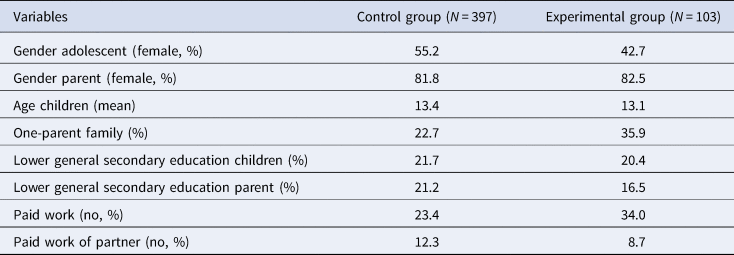
Overall, the differences between the two groups reduced after the matching procedure. The variable distance, which defines the overall distance between treated and control groups (of which the mean difference was 0.1663 before matching), was inappreciable after matching (mean difference = −0.0005 after matching). We found similar results for the experimental and control groups on the gender of parent, age of children, education level of children, and education level of parent. There were, however, small differences: the percentage of no paid work of the participant's partner was higher in the control group, while the percentages of one-parent family and no paid work of participant were higher in the expert group (see Table 1).
Descriptive for the Background Variables of the Control and Experimental Groups

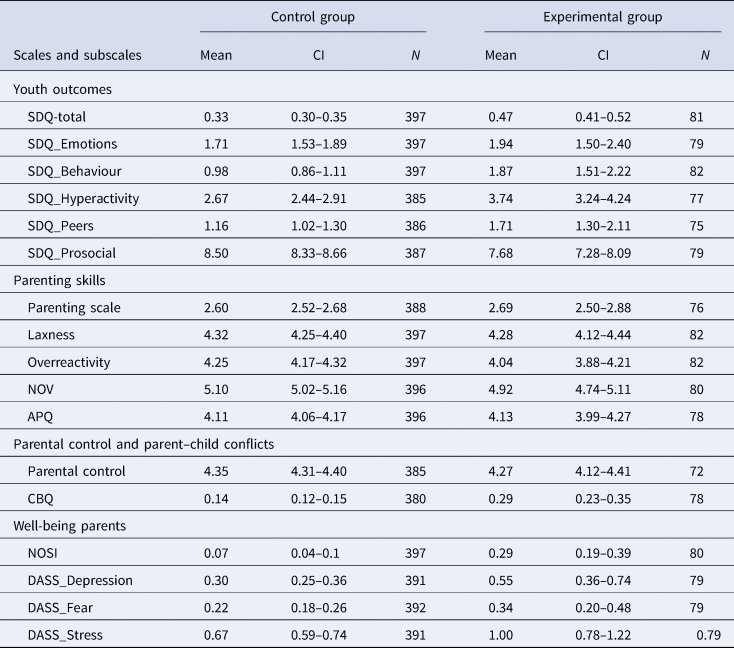
Table 2 describes the results, quite similar, on outcomes at the beginning of the study for the control group and the experimental group, their confidence intervals, as well as the numbers.
Outcome Scores on the First-Wave T 0 for the Control and Experimental Groups

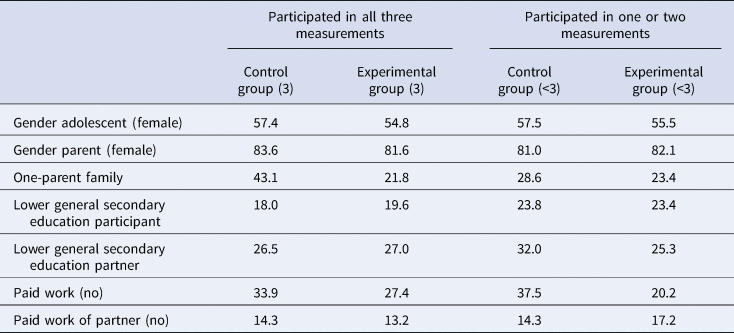
The attrition of the study sample was considerable over the three measurements (see Table 3). For the experimental group, attrition was higher in the second measurement, while it was higher in the first measurement for the control group.
Participation of the Parents in Research in the Three Measurements

An additional attrition analysis was done by comparing the experimental and control groups on the first measurement, consisting of participants who filled in the questionnaire at three measurements, and comparing it with the others (see Table 4). There were some small differences on specific variables, but the results did not point in any clear direction.
Descriptive for the Background Variables of the Control and Experimental Groups at Baseline for Those Parents Who Participated in all Three Measurements and Those Who Stopped Within the Research

Effects on Social and Emotional Behaviours of Youngsters and Parenting
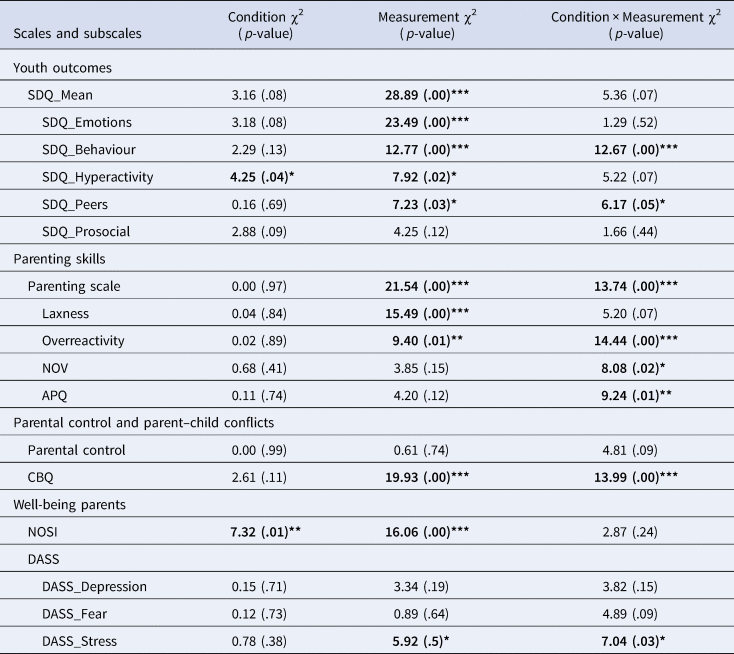
Next, a multilevel analysis was set up, controlled for gender, age, and distance (the overall distance between the experimental and the control groups on the matching variables), and for two levels (measurement and individual). The results of the youth outcomes, parenting scale, and parental control were analysed, as well as the effects on condition, measurement, and the interaction between condition and measurement (the treatment effect of the Triple P programme) (see Table 5).
The Different Outcomes on Condition, Measurement, and Treatment

***p ≤ .00; **p ≤ .01; *p ≤ .05.
The multilevel analysis over the time period, spanning the start of the course until 3–5 months after the treatment, shows a significant difference between the experimental and the control groups on youth outcomes for two subscales: SDQ_behaviour (χ2(df = 2, N = 500) = 12.67, p = .00) and SDQ_Peers (χ2(df = 2, N = 500) = 6.17, p = .05) (see Table 5). In Table 5, the experimental group shows clear improvements. We did not find any treatment effects for the other SDQ subscales (Emotions, Hyperactivity, and Prosocial behaviour).
A multilevel analysis was also done on parenting skill outcomes. This analysis showed that, over time, there was an effect of the programme on conditions for the Parenting scale (χ2(df = 2, N = 500) = 13.74, p = .00); on the parenting subscale Overreactivity (χ2(df = 2, N = 500) = 14.44, p = .00); on the responsivity of the parents in their position as parents of the NOV (χ2(df = 2, N = 500) = 8.08, p = .02); the scale Rewards of the APQ (the use of positive disciplinary techniques) (χ2(df = 2, N = 500) = 9.24, p = .01). No programme effects could be found for the subscale Laxness and the Parenting control scale. Overall, however, it seems that the programme is especially successful in improving parenting skills.
One of the standard questions asked when parents start with the Triple P programme is about their personal well-being. We did not find any significant treatment effects for stress caused by a parenting situation between parents and children.
We also measured the three related, negative emotional states of Depression, Anxiety, and Tension/Stress. For Stress of the parents, there was a significant difference for the total group ((χ2(df = 2, N = 500) = 7.04, p = .03), but there was no difference between the control and the experimental groups on the other two subscales. No intervention effect was found, either for Depression in parents or for Fear felt by parents. The CBQ, which measures perceived communication conflict behaviour at home, showed strong positive treatment effects for the experimental group ((χ2(df = 2, N = 500) = 13.99, p = .00).
Discussion
This study provides empirical support for the efficacy of Teen Triple P as an intervention that improves parental skills and the relationship of parents with their children.
The Teen Triple P programme focuses first and foremost on promoting competent and positive parenting. The programme seems to be successful in doing so. This study shows that parents who have participated in Teen Triple P report a significantly decreased level of dysfunctional parenting practices, a reduction of overreactivity towards their child, an increased responsivity towards their child, and a reduction of parent–adolescent conflict. It also has other effects: reducing parents' stress, lowering conflict, and reducing negative communication within the family, as Teen Triple P aspires. This programme is focused on teaching parents the use of specific/conflict management practices towards their adolescents, in order to eliminate or reduce coercive interaction patterns and to create positive family relationships and functioning (Sanders, Reference Sanders2012; Sanders & Turner, Reference Sanders, Turner, Fiese, Celano, Deater-Deckard, Jouriles and Whisman2019). These findings are also consistent with other, international findings on the Teen Triple P programme.
Furthermore, these studies found that parents who participated in the Teen Triple P programme reported significant improvements in family relationship quality post intervention, including reduced family conflict, increased family cohesion, and decreased levels of parent–adolescent conflict, a decreased use of dysfunctional parenting practices, increased parental monitoring, and reduced adolescent problem behaviour (e.g., Chu et al., Reference Chu, Bullen, Farruggia, Dittman and Sanders2015; Salari, Ralph, & Sanders, Reference Salari, Ralph and Sanders2014; Stallman & Ralph, Reference Stallman and Ralph2007).
Surprisingly, and in contrast with the results of other studies on the effect of the Teen Triple P programme, in our study, the intervention has not improved parental control. In contrast with our findings, however, Chu et al. (Reference Chu, Bullen, Farruggia, Dittman and Sanders2015) found increased parental monitoring. Yet, another scale to measure parental monitoring and control was used instead of the one used by Chu et al. (Reference Chu, Bullen, Farruggia, Dittman and Sanders2015). In the present study, we measured the disclosure of children towards their parents within the measurement scale for parental control. The difference in measurement scale might explain the difference in findings between our study and other studies on the Teen Triple P programme.
Another contrasting result of our study is that no evidence was found for the effect of the Teen Triple P programme on decreasing parental stress. A different scale was developed in the Netherlands, which is commonly used to look at the stress levels experienced by parents raising children. It is surprising that no decrease in parenting stress was found because, in general, parents do report a decrease in stress, as they feel more relaxed and have more confidence in their parenting skills. Thus, one might expect that the level of parental stress would decrease. We have no definite explanation for this finding, and this needs to be explored further in the future.
Overall, in our study, we found that, according to the participating parents, the Teen Triple P programme also has an effect on their children. Parents did report significant differences on the subscales SDQ_behaviour and SDQ_peers, as well as positive trends on the total SDQ scale. These results are consistent for both measurements, right after the programme had ended (T 1) and during the 3–5-month follow-up (T 2). At the same time, we cannot explain why we did not find any effect on the other subscales of the SDQ. We suppose that the 3–5-month follow-up is too short a period to find any effects of the changed parenting style on all levels of the adolescents' problematic behaviour.
A genuinely positive effect in this study is that treatment effects on parenting were not only found in the short term, just after the programme's finish, but also after a longer period of 3–5 months. The adolescent-reported outcomes remained the same at the 3–5-month follow-up. These findings suggest that changes in parenting practice have an effect on the reduction or prevention of adolescent problem behaviours in the long term. This might mean that the Teen Triple P programme results in a structural change in parenting style, competence, and strategies.
Strengths, Limitations, and Suggestions for Future Work
The results of the present study need to be interpreted considering the study's strengths and limitations. The strength of this study is that little quasi-experimental research has yet been done in the Netherlands when it comes to prevention programmes. Another strength is that hardly any research has been done on supporting programmes for parents with teenagers, either.
Yet, there also are some limitations that need to be discussed. First, the golden standard, a randomised control trial, was not used. Although we used a matching procedure in this quasi-experimental design, there are some differences between the experimental and the control groups that are important to consider. The group that participated in Teen Triple P consisted of more vulnerable families, who more often were single-parent families, had a lower education, and more often were unemployed.
Secondly, it is unknown whether the control group received any form of support or treatment (other than the Teen Triple P programme) during the research period.
Thirdly, more mothers than fathers participated in the programme and filled in the questionnaire, as is often the case in parenting research. It would be interesting to analyse whether there are differences between fathers and mothers in parenting style. In the systematic review of Sanders et al. (Reference Sanders, Kirby, Tellegen and Day2014), there were small- and medium-effect sizes in father data for child social, emotional and behavioral (SEB) outcomes, with small-effect sizes found for parenting satisfaction and efficacy, as well as for parental relationships. The number of fathers in our study was too low to analyse the gender differences between parents.
Another obstacle in the data collection was that it took an exceedingly long time, 3 years, to find enough parents willing to participate in this study. The delay was caused by a decentralisation of responsibilities from the national to local government in the Netherlands, which has made the role of the city in youth and family care much more important. During this transition period, local institutions were strongly focused on reshuffling tasks and responsibilities, and Teen Triple P groups were offered in far fewer numbers than before. The period of data collection had to be adjusted — lengthened; the period for data collection among the control group had to be adjusted in the same way.
Conclusions and Implications
The results of this study are hopeful. They show evidence that Teen Triple P does have positive effects on different kinds of parenting skills: parents' parental competences have increased, and they are more confident about their parenting skills towards their teenage children. We have seen some positive trends regarding stress reduction among the parents. Finally, as reported by parents, some positive effects could be found on the level of the teenagers as well: regarding behavioural problems, how their children interact with peers, and regarding conflicts and negative communication at home.
Parenting programmes for parents with adolescents are scarce, internationally as well as in the Netherlands. However, the Teen Triple P programme is an exception; it is well known and is now widely used. There is an urgent need for more evidence-based programmes in youth healthcare practice. The current findings of this study demonstrate effects of the Teen Triple P programme on the social and emotional behaviours of youngsters that improve parent-related outcomes, family relationships, and the functioning of families. The present effect study supports this preventive programme with sound scientific evidence. The programme may be promoted in Dutch communities and communities in other, similar countries. It may be used sensibly in the practice of youth health care to support parents in rearing their adolescent children.
Funding
This study has been made possible through funding from the Innovation Alliance Foundation (Project No. PRO-3-10), the cooperation of Triple P trainers, and parents' willingness to share their experiences with rearing their teens and with their participation in parenting support.
Declaration of interest
There is no conflict of interest. None of the involved researchers has any connection to the Triple P programme. The researchers participating in this study are working for two different institutions. The Verwey-Jonker Instituut is an independent research institute and the Inholland University of Applied Sciences is an institution of higher education and applied research.