Introduction
Early embryonic mortality is a major source of economic loss in cattle. The highest prevalence of embryonic mortality occurs until day 16 of pregnancy, probably earlier, until day 8, in high-yielding lactating dairy cows (Diskin & Morris, Reference Diskin and Morris2008). Early embryonic survival is partly dependent on maternal uterine receptivity, which is primed by circulating/uterine progesterone (P4) concentrations (Clemente et al., Reference Clemente, de La Fuente, Fair, Al Naib, Gutierrez-Adan, Roche, Rizos and Lonergan2009; Forde et al., Reference Forde, Carter, Fair, Crowe, Evans, Spencer, Bazer, McBride, Boland, O’Gaora, Lonergan and Roche2009). However, early embryonic survival is mainly dependent on the intrinsic developmental competence, which is associated with the proper activation of the embryonic genome and the ensuing transcription patterns (Kanka et al., Reference Kanka, Nemcova, Toralova, Vodickova-Kepkova, Vodicka, Jeseta and Machatkova2012). The effects of early embryo-maternal crosstalk on maternal and embryonic changes leading to embryonic survival are poorly understood.
Age of oocyte/embryo donors affects embryonic developmental competence and survival. Pre-pubertal (PP) donors had a lower production rate of viable blastocysts, compared with that of adult donors (Khatir et al., Reference Khatir, Lonergan, Carolan and Mermillod1996; Presicce et al., Reference Presicce, Jiang, Simkin, Zhang, Looney, Godke and Yang1997; Majerus et al., Reference Majerus, Roover, Etienne, Kaidi, Massip, Dessy and Donnay1999; Ptak et al., Reference Ptak, Loi, Dattena, Tischner and Cappai1999). In sheep, embryos from PP donors showed a delay in development (Ptak et al., Reference Ptak, Loi, Dattena, Tischner and Cappai1999; Majerus et al., Reference Majerus, Lequarré, Ferguson, Kaidi, Massip, Dessy and Donnay2000; Leoni et al., Reference Leoni, Succu, Berlinguer, Rosati, Bebbere, Bogliolo, Ledda and Naitana2006a) and a low survival following embryo transfer (O’Brien et al., Reference O’Brien, Beck, Maxwell and Evans1997; Ptak et al., Reference Ptak, Loi, Dattena, Tischner and Cappai1999, Reference Ptak, Tischner, Bernabo and Loi2003; Kelly et al., Reference Kelly, Kleeman and Walker2005). Additionally, changes in the expression of developmentally important genes were observed in embryos derived from PP cattle (Oropeza et al., Reference Oropeza, Wrenzycki, Herrmann, Hadeler and Niemann2004) and sheep (Leoni et al., Reference Leoni, Bebbere, Succu, Berlinguer, Mossa, Galioto, Bogliolo, Ledda and Naitana2006b).
Prostaglandins (PGs) are mediators known to be involved in several reproductive events. Prostaglandin synthase proteins (PTGS1 and PTGS2, also known respectively as COX-1 and COX-2) are rate-limiting enzymes that catalyze the conversion of arachidonic acid into PGH2, the common precursor of all PGs. The downstream enzymes, PGE-synthase (PGES) and PGF-synthase (PGFS), catalyze the conversion of PGH2 to PGE2 and PGF2α, respectively (Helliwell et al., Reference Helliwell, Adams and Mitchell2004). In cattle, PGF2α is the major luteolytic agent, whereas PGE2 has luteoprotective and anti-luteolytic properties (Asselin et al., Reference Asselin, Goff, Bergeron and Fortier1996; McCracken et al., Reference McCracken, Custer and Lamsa1999). PTGS2- and PGE receptor type 2 (EP2)-deficient mice show disturbances in ovulation, fertilization, embryonic development and implantation (Lim et al., Reference Lim, Paria, Das, Dinchuk, Langenbach, Trzaskos and Dey1997; Matsumoto et al., Reference Matsumoto, Ma, Smalley, Trzaskos, Breyer and Dey2001).
Production of PGs by blastocysts cultured in vitro was reported in the bovine (Shemesh et al., Reference Shemesh, Milaguir, Ayalon and Hansel1979), human (Holmes & Gordashko, Reference Holmes and Gordashko1980), rabbit (Dey et al., Reference Dey, Chien, Cox and Crist1980), ovine (Hyland et al., Reference Hyland, Manns and Humphrey1982), porcine (Davis et al., Reference Davis, Pakrasi and Dey1983), equine (Watson & Sertich, Reference Watson and Sertich1989; Weber et al., Reference Weber, Woods, Freeman and Vanderwall1992) and murine (Marshburn et al., Reference Marshburn, Shabanowitz and Clark1990) species. In vitro production of PGF2α and PGE2 from in vivo recovered bovine blastocysts was reported as early as days 13 to 16 (Shemesh et al. Reference Shemesh, Milaguir, Ayalon and Hansel1979), days 16 to 19 (Lewis et al., Reference Lewis, Thatcher, Bazer and Curl1982), days 12 to 15 (Hwang et al., Reference Hwang, Pool, Rorie, Boudreau and Godke1988) and day 10 (only PGE2; Wilson et al., Reference Wilson, Zalesku, Looney, Bondioli and Magness1992). Production of prostacyclin (PGI2) was also reported as early as day 15 (Hwang et al., Reference Hwang, Pool, Rorie, Boudreau and Godke1988) and day 10 (Wilson et al., Reference Wilson, Zalesku, Looney, Bondioli and Magness1992).
In ruminants, P4 produced by the corpus luteum (CL) is necessary for the establishment and maintenance of pregnancy (Juengel & Niswender, Reference Juengel and Niswender1999). Maternal post-ovulatory P4 concentrations stimulate blastocyst growth and elongation and synthesis of interferon tau, thus inhibiting luteal regression and expulsion of the embryo from the uterus (Mann & Lamming, Reference Mann and Lamming2001). This effect of P4 seems to be indirect, through changes in the endometrial transcriptome and composition of the histotroph (Lonergan, Reference Lonergan2011), although a direct effect on the embryo has also been reported (Merlo et al., Reference Merlo, Iacono and Mari2006; Ferguson et al., Reference Ferguson, Kesler and Godke2012). In luteal cells, cholesterol, the main substrate for P4 production, is transported from the cytoplasm into mitochondria through the steroidogenic acute regulatory protein (StAR), where the enzyme CYP11A1 (also known as P450scc) conducts a side chain cleavage reaction to generate pregnenolone (P5). Conversion of P5 to P4 is catalyzed by 3β-hydroxysteroid dehydrogenase (3β-HSD) at the endoplasmic reticulum (reviewed by Stocco et al., Reference Stocco, Telleria and Gibori2007). In vitro production of P4 by in vivo recovered days 14 to 16 bovine blastocysts was reported (Shemesh et al., Reference Shemesh, Milaguir, Ayalon and Hansel1979). Recently, we reported the production of PGF2α, PGE2 and P4 by in vitro bovine embryos cultured from days 2 to 7 (Torres et al., Reference Torres, Batista, Diniz, Mateus and Lopes-da-Costa2013). The role of these mediators in early embryonic development and maternal crosstalk leading to survival is unknown.
The objective of this study was to evaluate the transcription patterns of genes coding for enzymes of the PGs (PTGS2, PGES, PGFS) and P4 (StAR, P450scc, 3β-HSD) synthesis pathways, in day 7 in vitro produced bovine embryos, and their relationship with oocyte donor age (PP versus post-pubertal cyclic (C)) and embryonic stage of development (compact morulae and early blastocysts – CM + EBL – versus blastocysts and expanded blastocysts – BL + BEX). The hypothesis to be tested was that age of the oocyte donor and embryonic stage of development influence the transcription of the above genes in bovine early embryos.
Materials and methods
Experimental design
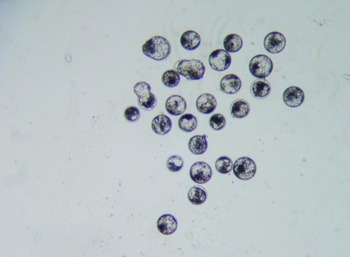
In five sessions, oocytes collected from PP (n = 894) and C (n = 908) heifers were matured and inseminated in vitro. At 48 h post in vitro insemination, cleavage rate (differentiating embryos arrested at the 2-cell stage, cleaved past the 2-cell stage and overall) was assessed, and embryos cleaved past the 2-cell stage were selected for in vitro culture until day 7 (day 0 = in vitro insemination). At day 7, embryos were evaluated for stage of development and morphological quality according to the International Embryo Transfer Society (IETS) guidelines (Stringfellow & Seidel, Reference Stringfellow and Seidel1998) (Fig. 1) and blastocyst rate determined. From embryos developing until day 7 (stages CM, EBL, BL, BEX), of quality grade 1–2, pools of three embryos were selected for RNA extraction and further analysis by real-time PCR (qRT-PCR). Embryos were allocated to four groups: (1) originating from PP heifers and of stages CM + EBL; (2) originating from PP heifers and of stages BL + BEX; (3) originating from C heifers and of stages CM + EBL; and (4) originating from C heifers and of stages BL + BEX. Five replicates of pools of three embryos from each group were used for RNA extraction, in a 2 × 2 factorial design (age × embryonic stage, 15 embryos/group; overall 20 replicates, n = 60 embryos).
Representative day 7 in vitro produced bovine embryos, of quality grades 1–2, used for RNA extraction and further analysis by qRT-PCR.

Reagents and media
All reagents and media were supplied by Sigma-Aldrich Química, S.A. (Madrid, Spain), except otherwise stated. Transport medium: Dulbecco's phosphate-buffered saline (PBS) (ref. 21300–017; Gibco, Life Technologies, Foster City, CA, USA), supplemented with 100 UI ml−1 penicillin plus 100 μg ml−1 streptomycin (ref. 15140–122; Gibco) and 1% w/v bovine serum albumin (BSA) (ref. A7906); holding medium: TCM-199 (ref. M2154) supplemented with 25 mM HEPES (ref. H3784), 5 mM sodium bicarbonate (ref. S4019), 0.2 mM pyruvic acid (ref. P3662), 25 μg ml−1 amphotericin β (ref. A2942), 5 USP ml−1 heparin (ref. H3393) and 1% v/v fetal calf serum (FCS; ref. 26140–079; Gibco); maturation medium: TCM-199 supplemented with 0.4 mM l-glutamine (ref. G5763), 0.05 mg ml−1 gentamycin (ref. G1522), 1 μl ml−1 insulin–transferrin–sodium selenite (ITS; ref. I3146), 10 UI ml−1 pregnant mare's serum gonadotropin (PMSG) and 5 UI ml−1 human chorionic gonadotrophin (hCG) (PG600; Intervet International, The Netherlands), and 15% v/v FCS; capacitation medium: modified Tyrode's medium (TALP) supplemented with 72.72 mM pyruvic acid and 0.05 mg ml−1 gentamycin; fertilization medium: TALP supplemented with 5.4 USP ml−1 heparin, 10 mM penicillamine (ref. P4875), 20 mM hypotaurine (ref. H1384), 0.25 mM epinephrine (ref. E1635) and gentamycin; culture medium: synthetic oviductal fluid (SOF) medium supplemented with amino acids (BME, ref. B6766, 30 μL ml−1 and MEM, ref. M7145, 10 μl ml−1), 0.34 mM tri-sodium-citrate (ref. 6448.1000, Merck, VWR, Carnaxide, Portugal), 2.77 mM myo-inositol (ref. I7508), 1 μl ml−1 gentamycin, 1 μl ml−1 ITS and 5% v/v FCS (Holm et al., Reference Holm, Booth, Schmidt, Greve and Callesen1999).
In vitro embryo production
Ovaries were collected post-mortem at the local abattoir from Holstein Frisian crossbred PP (age range: 6–9 months) and C (age range: 16–18 months) heifers. Differentiation between PP and C status was based on age, size of the genital tract and presence of CL. Pre-pubertal heifers showed a uterine length between 12–17 cm and absence of CL in both ovaries (Desjardins & Hafs, Reference Desjardins and Hafs1969). Ovaries were transported to the laboratory in transport medium at 37°C, within 1 h. Follicles with 2–6 mm in diameter were aspirated and unexpanded cumulus–oocyte complexes (COCs) with at least three layers of compact cumulus cells and even cytoplasm were selected, washed in holding medium, placed in 400 μl of maturation medium in 4-well dishes (ref. 7341175, Nunclon, Nunc, Roskilde,164 Denmark; 25 COCs/well) overlaid with 400 μl mineral oil (Sigma M-8410) and incubated at 39°C in a 5% CO2 in humidified air atmosphere for 24 h. Following maturation, COCs were washed in fertilization medium and placed inside 4-well dishes containing 400 μl of fertilization medium overlaid with 400 μl mineral oil and co-incubated with sperm at 39°C in a 5% CO2 in humidified air atmosphere for 48 h. For in vitro insemination, frozen–thawed semen from one bull with previously proven in vitro and in vivo fertility was used throughout the experiment. After thawing, semen was layered below capacitation medium in a test tube and incubated for 1 h at 39°C in a 5% CO2 in humidified air atmosphere to allow recover of motile sperm through the swim-up procedure (Parrish et al., Reference Parrish, Krogenaes and Susko-Parrish1995). After incubation, the upper two-thirds of the capacitation medium were recovered, centrifuged at 200 g for 10 min, the supernatant removed and the sperm pellet re-suspended in fertilization medium for in vitro insemination. The sperm concentration per fertilization well was adjusted to 1 × 10⁶ sperm ml−1 and the day of in vitro insemination was considered to be day 0. On day 2, presumptive embryos were denuded from remaining cumulus cells by vortexing and embryos with four or more blastomeres selected for in vitro culture. These embryos were washed in culture medium, placed in 4-well dishes (25–30 per well) containing 400 μl of culture medium overlaid with 400 μl mineral oil, and incubated in a 5% CO2 plus 5% O2 in humidified air atmosphere for 5 days.
RNA extraction and real-time PCR analysis
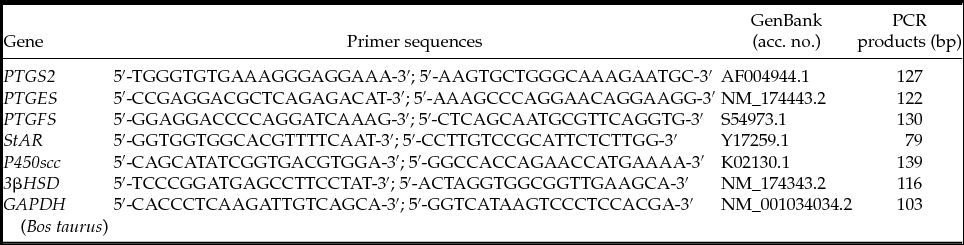
Embryonic RNA extraction was performed using the Arcturus® PicoPure® RNA Isolation Kit (Applied Biosystems, Life Technologies, Foster City, CA, USA), samples being stored at –80°C until processing. DNA digestion was performed with the RNase-free DNase Set (Promega, Wood Hollow Road, Madison, USA). Concentration and purity of RNA were determined spectrophotometrically at 260 nm and 280 nm and RNA quality was assessed by visualization of 28S and 18S rRNA bands after electrophoresis through a 1.5% gel agarose with ethidium bromide staining. Complementary DNA (cDNA) synthesis was obtained using the SuperScript® III First-Strand Synthesis SuperMix for qRT-PCR (ref. 11752–050, Invitrogen, Life Technologies, Foster City, CA, USA). The reverse transcriptase (RT) reaction was performed in a total reaction volume of 20 μl, using both oligo(dT)20 and random hexamers that were provided with the kit, and the obtained RT products were stored at –20°C until qRT-PCR amplification. Target genes included three genes coding for enzymes of the P4 synthesis pathway (StAR, P450scc, 3β-HSD) and three genes coding for enzymes of the PGs synthesis pathway (PTGS2, PGES, PGFS), and GAPDH as an internal control (housekeeping gene). The primers were chosen using an online software package (http://frodo.wi.mit.edu/primer3/input.htm) (Table 1). The housekeeping gene was chosen using the NormFinder software (Andersen et al., Reference Andersen, Jensen and Ørntoft2004), after comparison of GADPH, β-actin and H2A.1. Real-time PCR was performed in 96-well plates (ref. AB17500; Frilabo, Maia, Portugal) using the Power SYBR® Green Master Mix (ref. 4385612, Applied Biosystems), the StepOnePlus™ Real-Time PCR System (Applied Biosystems), and the universal temperature cycles: 10 min of preincubation at 95°C, followed by 45 two-temperature cycles (15 s at 95°C and 1 min at 60°C). Melting curves were acquired (15 s at 95°C, 30 s at 60°C and 15 s at 95°C) to ensure that a single product was amplified in the reaction. Data regarding relative mRNA quantification was analyzed with the real-time PCR Miner algorithm (Zhao & Fernald, Reference Zhao and Fernald2005). For validation of qRT-PCR amplification, PCR products of all target genes were sequenced. For all target genes, sequencing revealed a 100% homology with the corresponding bovine sequence in the GenBank database. For each target gene, dissociation curves showed a single peak.
Primer sequences, GenBank accession number and size of PCR products of target genes analyzed by real-time PCR

The three-embryo pools originated a 55 ng mean RNA content in 11 μl of elution buffer (5 ng/μl). cDNA synthesis started with a standardized amount of RNA from all samples (20 ng). All samples originated qRT-PCR amplification of the tested housekeeping genes (CT 23–24 for GAPDH, the chosen housekeeping). As all target genes were amplified in the same plates as the housekeeping genes and amplification of GAPDH was always within the same range of CT, cases of lack of amplification detection were attributed to lack of gene transcription. Therefore, 0 values were included in the statistical analysis.
Statistical analysis
Categorical data regarding oocyte developmental competence were analyzed by chi-squared tests in contingency tables. Data from relative mRNA levels (arbitrary units, a.u.) did not follow normal distribution and were log transformed for further analysis. The relative mRNA levels of target genes were analyzed by analysis of variance (two-way ANOVA) while using statistical software (Statsoft, Tulsa, OK, USA, 2004). The model included the main effects of age of oocyte donor (PP versus C), embryonic stage of development (MC + EBL versus BL + BEX) and their interaction. Significant effects were further analyzed post-hoc by the Fisher-least significant difference (LSD) test. Significance was tested at the 5% level (P < 0.05).
Results
Age of donor significantly affected oocyte developmental competence
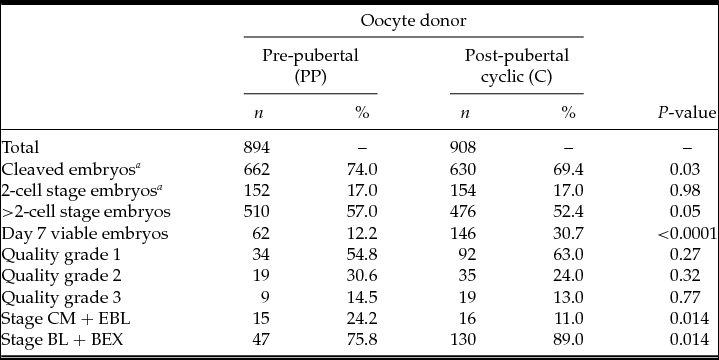
Table 2 shows the developmental competence of oocytes collected from PP and C heifers. As shown, compared with C heifer oocytes, PP heifer oocytes evidenced a higher (P < 0.05) cleavage rate, but cleaved embryos showed a lower (P < 0.0001) blastocyst rate and a slower (P < 0.05) kinetic of development until day 7, although embryo quality on day 7 was similar in both age groups.
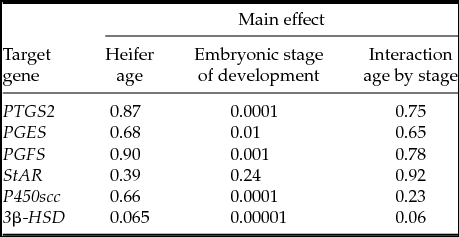
Results (P-values) of the factorial ANOVA model used to analyze transcription levels of target genes

In embryos developing until day 7, stage of development but not age of oocyte donor affected transcription of embryonic target genes
Through qRT-PCR, transcripts of PTGS2, PGES, PGFS and StAR were detected in all replicates. Transcripts of P450scc and 3β-HSD were not detected in two replicates from PP heifers and in two replicates from C heifers, these four replicates corresponding to the CM + EBL stage of development.
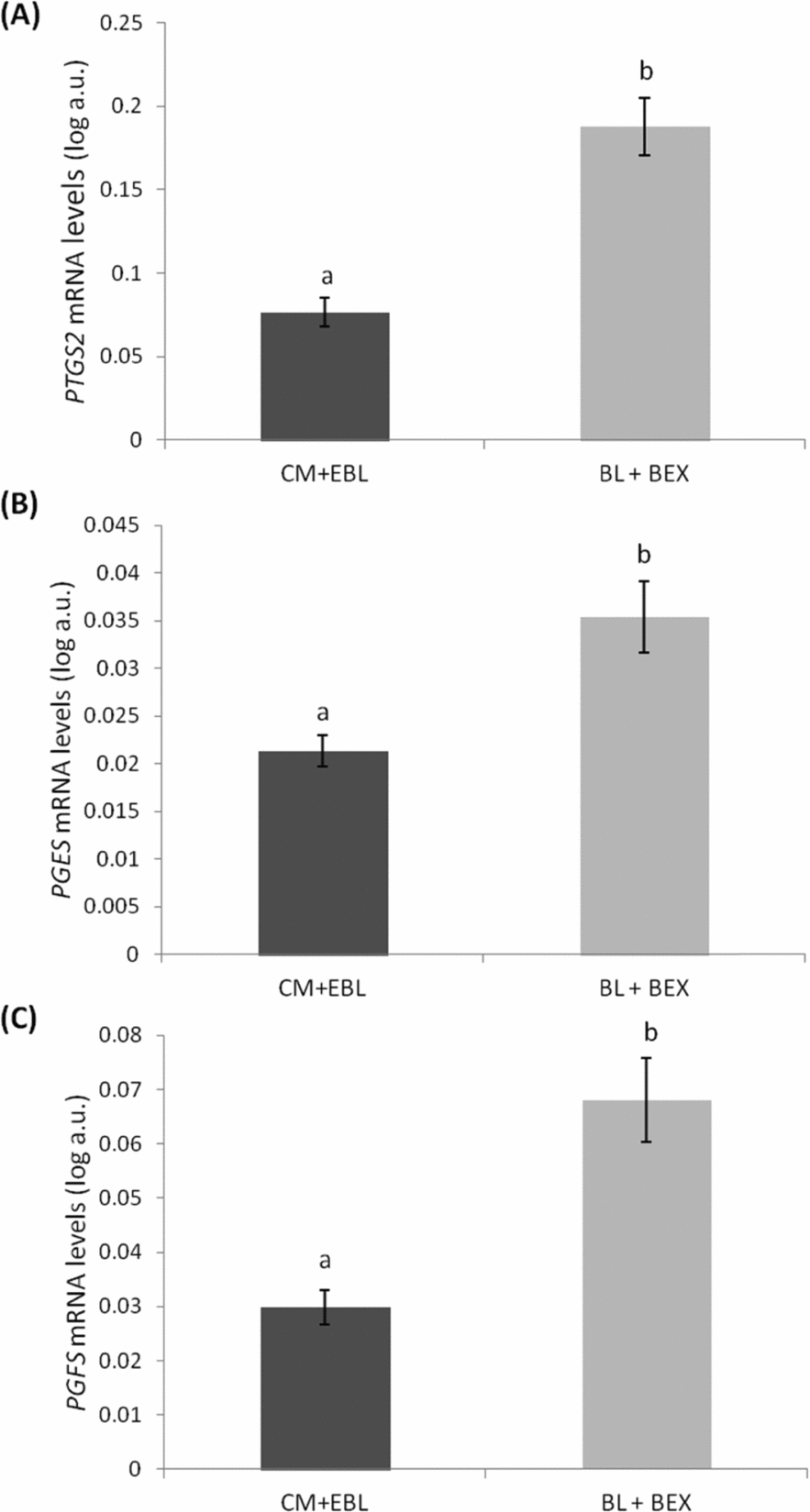
Table 3 shows the results (P-values) of the effects of the factorial ANOVA model used to analyze the transcription levels of target genes. Transcription levels of PTGS2, PGES and PGFS were not affected by heifer age but were significantly affected by embryonic stage of development. Figure 2 illustrates this latter effect. As the effect of heifer age was not significant, data from both age groups were combined. As shown, transcription levels were significantly higher in BL + BEX than in CM + EBL.
Effect of heifer age on in vitro oocyte developmental competence

a Cleavage was evaluated at 48 h post in vitro insemination. Only cleaved embryos > 2-cell stage were selected for further culture.
CM + EBL = compact morulae plus early blastocysts; BL + BEX = blastocysts plus expanded blastocysts.
Effect of embryonic stage of development on transcription levels (relative mRNA levels) of genes coding for enzymes of the prostaglandins synthesis pathways. Target genes: PTGS2 (A), PGES (B) and PGFS (C). CM + EBL = compact morulae plus early blastocysts; BL + BEX = blastocysts plus expanded blastocysts. Column bars represent the least significant difference (LSD) means (10 replicates, 30 embryos per group) and error bars represent the standard error of the mean (SEM). a,bColumns with different values differ significantly: P < 0.0001 (A); P < 0.01 (B); P < 0.001 (C).

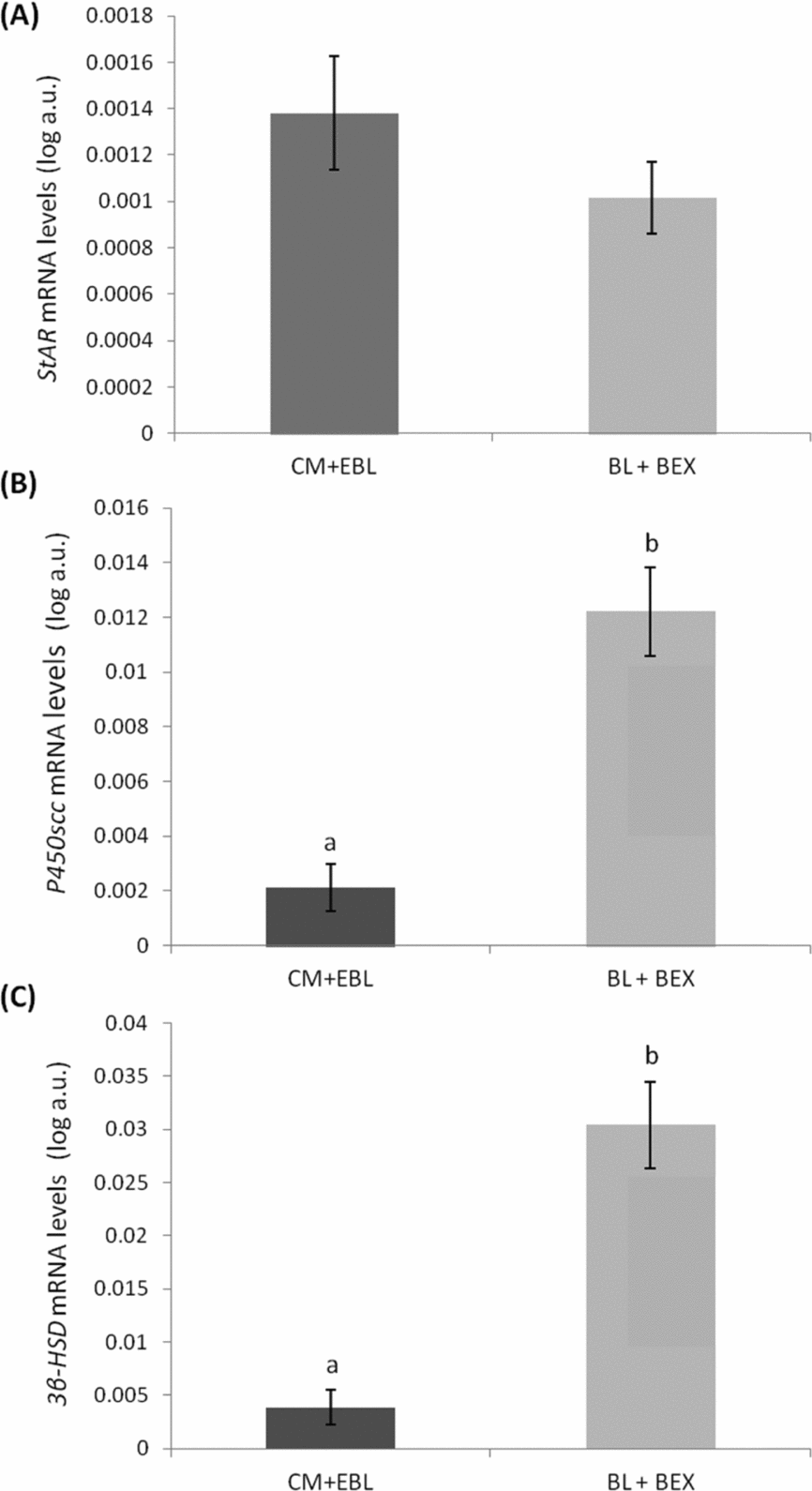
Transcription levels of StAR were not affected by heifer age and embryonic stage of development, whereas transcription levels of P450scc were not affected by heifer age but were significantly affected by embryonic stage of development (Table 3). Transcription levels of 3β-HSD showed a tendency (P = 0.065) to be affected by heifer age and were significantly affected by embryonic stage of development (Table 3). Figure 3 illustrates the effect of embryonic stage of development on transcription levels of genes coding for enzymes of P4 synthesis. As the effect of heifer age was not significant, data from both age groups were combined. As shown, transcription levels of P450scc and 3β-HSD were significantly higher in BL + BEX than in CM + EBL. Additionally, for 3β-HSD, the interaction heifer age × embryonic stage of development showed a tendency (P = 0.06) to be significant, transcription levels being higher in BL + BEX of C than of PP heifers.
Effect of embryonic stage of development on transcription levels (relative mRNA levels) of genes coding for enzymes of progesterone synthesis pathway. Target genes: StAR (A), P450scc (B) and 3β-HSD (C). CM + EBL = compact morulae plus early blastocysts; BL + BEX = blastocysts plus expanded blastocysts. Column bars represent the least significant difference (LSD) means (10 replicates, 30 embryos per group) and error bars represent the standard error of the mean (SEM). a,bColumns with different values differ significantly: P < 0.0001 (B); P < 0.00001 (C).

Discussion
This study evidences that transcription of genes coding for enzymes of the PGs (PGE2 and PGF2α) and P4 synthesis pathways already occurs in day 7 bovine embryos. Transcription of PTGS2 was reported in in vivo days 8 to 17 ovine embryos (Charpigny et al., Reference Charpigny, Reinaud, Tamby, Creminon and Guillomot1997), in vivo days 12 to 14 equine embryos (Aurich & Budik, Reference Aurich and Budik2005), in vivo murine morulae and blastocysts (Tan et al., Reference Tan, Liu, Diao and Yang2005), in vitro fertilized human morulae and blastocysts (Wang et al., Reference Wang, Wen, Mooney, Behr and Polan2002), and in vitro produced bovine day 7 embryos (Clemente et al., Reference Clemente, de La Fuente, Fair, Al Naib, Gutierrez-Adan, Roche, Rizos and Lonergan2009; Saint-Dizier et al., Reference Saint-Dizier, Guyader-Joly, Charpigny, Grimard, Humblot and Ponter2011) and hatched blastocysts (Pereira et al., Reference Pereira, Pimenta, Becker, Baptista, Vasques, Horta and Marques2005). In one report (Saint-Dizier et al., Reference Saint-Dizier, Guyader-Joly, Charpigny, Grimard, Humblot and Ponter2011), PTGS2 and PGES transcription levels were significantly lower in CM and EBL than in BL and BEX, which is in accordance with the results here presented. Increased transcription of PTGS2 and PGES at the first embryonic cell differentiation leads to the hypothesis that PGE2 is involved in blastocoel formation and expansion, as suggested for the mouse model (Baskar et al., Reference Baskar, Torchiana, Biggers, Corey, Andersen and Subramanian1981; Huang et al., Reference Huang, Wan, Goldsby and Wu2004). Also, the in vitro hatching rate of ovine embryos was increased in culture medium supplemented with PGE2 (Sayre & Lewis, Reference Sayre and Lewis1993), which prompts for a role of PGE2 in blastocyst hatching.
Recently, we reported the production of PGF2α by bovine embryos cultured in vitro from days 2 to 7 (Torres et al., Reference Torres, Batista, Diniz, Mateus and Lopes-da-Costa2013). Here is reported the transcription of PGFS by day 7 in vitro produced bovine embryos. The role of PGF2α in embryonic development is controversial. Added to culture medium, PGF2α decreased the rates of blastocyst yield and hatching in the rabbit (Maurer & Beier, Reference Maurer and Beier1976), rat (Buuck et al., Reference Buuck, Breuel, Fukuda and Schrick1997) and bovine (Fazio et al., Reference Fazio, Buuck and Schrick1997; Scenna et al., Reference Scenna, Edwards, Rohrbach, Hockett, Saxton and Schrick2004) models. In contrast, Soto et al. (Reference Soto, Natzke and Hansen2003) reported no inhibitory effects of PGF2α added to culture medium after fertilization on subsequent bovine embryonic development. A high ratio PGE2:PGF2α increased in vitro blastocyst hatching rates in the goat (Sayre, Reference Sayre2007).
In rodents, where implantation is invasive and occurs early after fertilization, PGs are major mediators in embryo implantation (Kennedy et al., Reference Kennedy, Gillio-Meina and Phang2007). In ruminants, where implantation is non-invasive and gradual over weeks (reviewed by Weems et al., Reference Weems, Weems and Randel2006), it is unlikely that PGs produced by early embryos act through the same mechanisms described in rodents. However, the bovine endometrium and myometrium synthesize receptors for PGE2 and PGF2α (Arosh et al., Reference Arosh, Banu, Chapdelaine, Emond, Kim, MacLaren and Fortier2003; Reference Arosh, Banu, Chapdelaine and Fortier2004). Therefore a paracrine effect of PGs of embryonic origin on the surrounding endometrium is plausible. This paracrine effect may induce changes in the local uterine lumen environment and composition of the histotroph that might be relevant to the establishment of uterine receptivity.
Transcription of genes coding for enzymes of the P4 synthesis pathway in in vitro day 7 bovine embryos was previously reported by us (Torres et al., Reference Torres, Batista, Diniz, Mateus and Lopes-da-Costa2013). Here, transcripts of P450scc and 3β-HSD were absent in some replicates of CM + EBL and transcription levels were significantly lower at those stages than at the BL + BEX stages. This indicates that these two genes start transcription at the time when blastomeres differentiate into the inner cell mass and trophectoderm cells. As P4 receptor (PGR) mRNA was detected at the blastocyst but not at the morula stage (Clemente et al., Reference Clemente, de La Fuente, Fair, Al Naib, Gutierrez-Adan, Roche, Rizos and Lonergan2009), an autocrine/paracrine role of P4 in the onset of the first embryonic differentiation is suggested. Endometrial expression of PGR is high in the early luteal phase (Robinson et al., Reference Robinson, Mann, Lamming and Wathes2001; Okumu et al., Reference Okumu, Forde, Fahey, Fitzpatrick, Roche, Crowe and Lonergan2010), but later on, in the mid luteal phase, P4 induces downregulation of PGR in endometrial epithelial cells (Bazer et al., Reference Bazer, Burghardt, Johnson, Spencer and Wu2008). Therefore, it is plausible that P4 of embryonic origin exert a paracrine effect in the surrounding endometrium, as discussed above regarding PGs. Interestingly, the presence of LH receptors in bovine embryos was reported (Mishra et al., Reference Mishra, Lei and Rao2003), although their specific role in embryonic development is unknown.
Embryos originated from oocytes of PP and C heifers had similar transcription levels of genes coding for enzymes of the PGs and P4 synthesis pathways (except 3β-HSD). The developmental competence of embryos of PP heifers was reported to be donor age dependent (Armstrong, Reference Armstrong2001). Older PP heifers (7–11 months) have oocytes with a higher developmental competence (Presicce et al., Reference Presicce, Jiang, Simkin, Zhang, Looney, Godke and Yang1997; Tervit et al., Reference Tervit, McMillan, McGowan, Smith, Hall and Donnison1997; Majerus et al., Reference Majerus, Roover, Etienne, Kaidi, Massip, Dessy and Donnay1999) and embryos that achieve a higher pregnancy rate (Yang et al., Reference Yang, Presicce, Du and Jiang1997), compared with younger PP heifers. Camargo et al. (Reference Camargo, Viana, Sá, Ferreira and Vale Filho2005) suggested that full developmental competence of PP oocytes is achieved at the age of 7–8 months, e.g. close to onset of puberty in Bos taurus breeds. As PP heifers used in this study were in the above age range, this may explain the absence of age effects on the transcription levels of target genes. However, BL + BEX transcription levels of 3β-HSD tended to be higher in embryos from C than in those from PP heifers. If embryonic synthesis of P4 is linked to first embryonic differentiation and early embryo-maternal crosstalk (see above), then a low P4 synthesis ability in PP heifer embryos might be associated to the reported disturbances in developmental kinetics (Ptak et al., Reference Ptak, Loi, Dattena, Tischner and Cappai1999; Majerus et al., Reference Majerus, Lequarré, Ferguson, Kaidi, Massip, Dessy and Donnay2000; Leoni et al., Reference Leoni, Succu, Berlinguer, Rosati, Bebbere, Bogliolo, Ledda and Naitana2006a) and low in vivo survival (O’Brien et al., Reference O’Brien, Beck, Maxwell and Evans1997; Ptak et al., Reference Ptak, Loi, Dattena, Tischner and Cappai1999; Reference Ptak, Tischner, Bernabo and Loi2003; Kelly et al., Reference Kelly, Kleeman and Walker2005) of PP-derived embryos.
Oocytes from PP heifers showed a significantly lower developmental competence and a significantly slower rate of development until the blastocyst stage. However, PP heifer embryos developing to day 7 showed similar morphological quality grades and similar transcription levels of target genes, to those of C heifer embryos. This may denote that the main limiting factor for embryo production from PP heifers is oocyte competence. Interestingly, although development to blastocyst was highly affected by oocyte donor age, cleavage rate of PP heifer oocytes was higher than that of C heifer oocytes. This increase in cleavage rate (around 5%) of PP heifer oocytes compared with C heifer oocytes cannot be explained. Oocyte parthenogenic activation was not evaluated.
In conclusion, day 7 bovine embryos evidence transcription of genes coding for enzymes of the PGs and P4 synthesis pathways. Transcription levels (except those of StAR) were affected by embryonic stage of development, being significantly higher in BL + BEX than in CM + EBL stages, which is coincidental with the first cellular differentiation within the developing embryo. This prompts for an autocrine/paracrine role of PGs in blastocoel formation and expansion and for a paracrine role of both PGs and P4 in the early embryo-maternal crosstalk. Age of oocyte donors had no significant effect on transcription levels of genes coding for enzymes of the PGs and P4 synthesis pathways (except those of 3β-HSD), which may be related to the use of older PP oocyte donor heifers. PP heifer oocytes showed a significantly lower developmental competence and a significantly slower rate of development to the blastocyst stage, compared with C heifer oocytes. This evidences that the main limiting factor for embryo production from PP heifers is oocyte competence.
Acknowledgements
This study was funded by project PTDC/CVT/65690/2006 from the Foundation for Science and Technology (FCT). Mariana Batista was a research fellow contracted through the project and Ana Torres a PhD student with a grant (SFRH/BD/37666/2007) from FCT.
Conflicts of interest statement
There are no conflicts of interest.