1. Introduction
Several authors defend the view that generalizations allowing for predictions and explanations are possible in biology. Elliott Sober (Reference Sober1997) and Mehmet Elgin (Reference Elgin2006) argue that given a set of initial contingent conditions I, at least some lawlike biological generalizations of the form if P then Q must hold true. Following a different thread, David Hull (Reference Hubbs1974, 80) and Kenneth Waters (Reference Sober1998) draw a distinction between generalizations about the course of evolution and generalizations about properties and dispositions of biological entities (e.g., generalizations about gene expression). The argument is that even if life on earth could have been very different, empirical laws about biological phenomena can still be formulated, especially if all life on earth has evolved from a common ancestor and therefore preserved some common characteristics. Building on Francis Crick's (Reference Crick1968, 369) ‘frozen accident’ argument, Kenneth Schaffner (Reference Roth and Dicke1993, 121) argues that, once established, some generalizations remain stable because strong selective forces prohibit any further changes. Finally, Stuart Kauffman (Reference Hull1993) argues that evolution is constrained by the self-organizing properties of biological systems, such that at least some biological generalizations are grounded in the necessity imposed by these constraints.
At the same time, the notion that one may find universal or necessary laws in biological sciences is vigorously debated. Elliott Sober (Reference Sober1989) and Mark Ereshefsky (Reference Ereshefsky1991) acknowledge that the universality requirement is unrealistic and propose that generalizations in biology can be conceived as local generalizations having a limited domain of applicability. John Beatty (Reference Beatty, Wolters and Lennox1995, 57) argues that generalizations in biology are also bound to be contingent because they are the result of evolution, and “evolution can lead to different outcomes from the same starting point, even when the same selection pressures are operating.” Thus, even if there are generalizations in biology, they are not akin to the strict laws of mechanics.
It seems, therefore, that there is a tension that needs to be addressed. If the notion of law is completely abandoned, then anything will turn out to be possible in evolution, and this does not seem to be the case. A growing list of instances of convergent and parallel evolution (some of which are discussed in more detail in this article) reveals that evolution is repeatedly biased toward favored outcomes when organisms are subjected to similar selection pressures.Footnote 1 Furthermore, these evolutionary biases, as well as other generalizations, such as the genetic code, Kleiber's law, and albinism in lightless environments, seem too robust and widespread across phylogenetically diverse groups of organisms to be purely accidental. However, it is also clear that all biological generalizations have their share of exceptions, and all seem to be contingent on the peculiarities of life on earth. Thus, while many acknowledge their usefulness, it is not clear how biological generalizations can allow for explanations or how to account in a principled way for the myriad exceptions plaguing them.Footnote 2
The solution defended in this article is that the traditional concept of necessary or universal ‘law’ can be replaced in biological sciences by the weaker notion of ‘mechanistic constraint’. I argue that biological mechanisms play a role in shaping evolution by imposing constraints resulting in the elimination of one or more possible evolutionary outcomes (strong constraint) or in an inequality in the degree of probability of possible evolutionary outcomes available at any given time (weak constraint). Thus, mechanistic constraints play a role similar to that of laws, in the sense that they explain why some evolutionary outcomes are more probable than others—most notably, they explain the widespread occurrence of convergent and parallel evolution, as well as the presence of some quasi-universal generalizations about living organisms, such as allometric laws—and allow for predictions of preferred evolutionary outcomes in specific lineages. However, mechanistic constraints are neither necessary nor universal in the way laws are traditionally thought to be: on one hand, they remain contingent on the past evolution of the biological mechanisms underpinning them; on the other hand, once in place, they constrain the future evolution of the organisms possessing them.
The article is organized as follows: In section 2, I define the term ‘mechanistic constraint’, and, by means of several examples, I show how evolutionary outcomes are constrained by the mechanisms in place at each step of evolutionary change. In section 3, mechanistic constraints are contrasted with laws. I argue that generalizations in biology are dependent on the presence of mechanisms, which are restricted to a more or less comprehensive set of organisms (hence, local regularity/reproducibility but no absolute universality) and are needed in order to produce/maintain certain outcomes or prohibit changes that would lead to different outcomes (hence, mechanistically constrained necessity rather than nomic necessity). Finally, in section 4, I summarize my arguments and findings.
2. Mechanistic Constraints on Evolutionary Outcomes
2.1. What Are Mechanistic Constraints?
Stephen Gould (Reference Glennan1989, 42–52) compares evolution with a videotape that, if replayed over and over, would have a different ending every time. The tacit assumption here is that evolutionary change is characterized by a multitude of possible outcomes that have a comparable degree of probability. By contrast, a constraint is any circumstance that results in the elimination of one or more possible evolutionary outcomes (strong constraint) or results in an inequality in the degree of probability of possible evolutionary outcomes available at any given time (weak constraint).
Under this probabilistic interpretation, constraints have both negative and positive effects: by eliminating or reducing the probability of certain outcomes, constraints increase the probability of the remaining possible outcomes, thus facilitating their evolution. Also, while many constraints are due to general physical/chemical properties of the matter living things are made of (e.g., life as we know it cannot exist on the sun because organic molecules would be immediately broken into subatomic particles), some of the most interesting and informative constraints in evolutionary biology (e.g., those explaining instances of parallel evolution) are attributed to mechanistic constraints, that is, constraints imposed by the peculiarities of biological mechanisms.
According to the Machamer-Darden-Craver characterization, mechanisms are “entities and activities organized such that they are productive of regular changes from start or set-up to finish or termination conditions” (Reference Kimura2000, 3).Footnote 3 Biological mechanisms are important in genetics, development, metabolism, physiology, and (debatably) natural selection.Footnote 4
The examples discussed in the remainder of this section will illustrate how a variety of biological mechanisms impose constraints on evolutionary outcomes. The relationship between a mechanism and the mechanistic constraints it imposes varies from case to case. The relationship can be straightforward or much more complex and only partially understood. As a general rule, constraints are imposed because mechanistic components (entities, activities, and organizational features) depend on one another in multiple ways, generating effects like robustness (e.g., tolerance to changes due to the functional redundancy of mechanistic components, changes in one component rescued by complementary changes in a second component), fragility (e.g., lethal changes in evolutionary conserved components that destroy the ability of the mechanism to produce a specific biological phenomenon or function at all), and coupling (e.g., changes in one component affect traits/functions underpinned by a common mechanism; changes in one component shared by several mechanisms simultaneously affect the traits/functions produced by these mechanisms). In turn, robustness, fragility, and coupling result in channeling effects resulting in a nonrandom clustering of evolutionary outcomes.
2.2. Examples of General Mechanistic Constraints on Evolutionary Outcomes
It is generally accepted that variation among living organisms is generated in part by means of genetic mutations. However, different mutations are not necessarily associated with different evolutionary outcomes. Constraints imposed by conserved mechanisms of genome expression ensure that many independent spontaneous mutations are channeled toward identical evolutionary outcomes.Footnote 5 For instance, the degeneracy of the genetic code constitutes a case of mechanistic robustness vis-à-vis genetic mutation. Given the codon-based mechanism of translation currently in place in all known living organisms, mutations in the coding sequence of a gene (open reading frame) that do not result in the incorporation of a different amino acid in a peptide sequence (i.e., silent, or synonymous, mutations) will not result in a distinct phenotypic outcome,Footnote 6 and therefore the mutant organism will not be subjected to differential selection compared to its nonmutated relatives (Kimura Reference Kauffman1983). Even though this mechanistic constraint is too weak to favor a particular evolutionary outcome, it nevertheless posits a constraint on the kind of mutations that can be fixed by selection (as opposed to the accumulation of neutral polymorphisms by random drift). A wealth of models used for the reconstruction of phylogenetic relationships (e.g., ‘molecular clocks’ and their calibration) or of the evolutionary processes at work in various populations (e.g., selection vs. drift in ecological/sympatric vs. geographic/allopatric speciation) rely heavily on this very basic constraint.
In more general terms, the mechanisms of genome expression dictate that only mutations affecting genomic sequences that contribute to a phenotype are conducive to evolutionary change. The fact that the genome is organized in functional elements (cistrons/functional units, transcription units, open reading frames, promoters, enhancers, exons) further dictates that the end result of many mutations is phenotypically equivalent (e.g., several changes in the sequence of an enhancer result in the loss of binding by its corresponding transcription factor, meaning that a whole set of mutations is channeled toward a unique outcome; likewise, many nonsynonymous mutations result in a nonfunctional gene product). Finally, the mechanism of translation makes it such that some mutations are silent, while differences and similarities in the chemical structure of amino acids further dictate that certain nonsynonymous mutations are less deleterious than others. Thus, thousands of distinct mutations may be channeled toward the same evolutionary outcome.
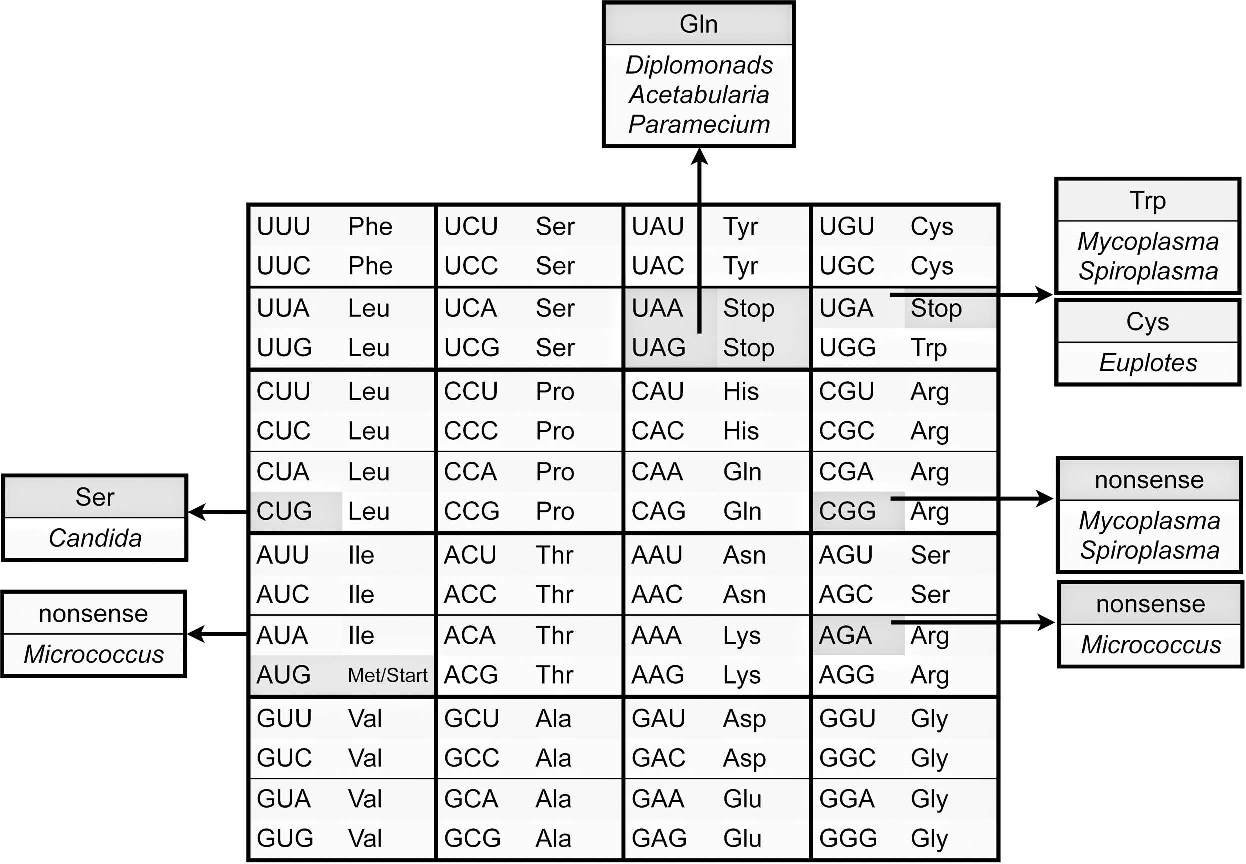
There is also evidence supporting the claim that the mechanisms of genome expression constrain their own future evolution. For example, while there are known variations of the genetic code (fig. 1), such variations are rare (presumably in virtue of the selection considerations raised by Crick [Reference Crick1968] and Schaffner [Reference Roth and Dicke1993]) and heavily constrained by certain peculiarities of the mechanism of translation: “new codon meanings do not occur at random among the likely candidates, but occur along routes that may reflect tRNA function. … The same reassignments recur, even in the small known set [of exceptions to the genetic code]. [For instance,] UAR codons have been independently assigned to tRNAGln, possibly twice in ciliates, and a third time in green algae” (Schultz and Yarust Reference Schluter1994, 1379).
Nuclear variants of the genetic code (adapted from Osawa et al. Reference Mitchell1992).

Among all possible changes, only certain changes actually occurred during evolution, and these changes occurred more than once in unrelated organisms. Unconstrained changes in the genetic code should have been more varied, with virtually no recurrence of the same changes in evolutionarily distant organisms. Schultz and Yarust (Reference Schluter1994) attribute this preference for certain evolutionary outcomes to a combination of mechanistic constraints on the possible ways in which tRNA reassignments can occur (e.g., dual codon specificity due to changes in the secondary structure of tRNA) and selection constraints on functional gene products. Thus, not only does the mechanism of translation in place weakly constrain the fate of any given future mutation; it also constrains in a much more rigid manner its own evolutionary fate.
2.3. Examples of Local-Strong Mechanistic Constraints on Evolutionary Outcomes
There is a growing tendency (e.g., Willmer Reference Waters2003) to view convergent and parallel evolution as the rule rather than the exception: “our current awareness in animal phylogeny suggests that independent origins of the most diverse features of animal organization have evolved many times independently” (Minelli Reference McKay and Williamson2009, 4). An ever longer list of cases of convergent and parallel evolution reveals that evolution is repeatedly biased toward preferred outcomes when organisms are subjected to similar selection pressures. This suggests that the range of possible adaptive strategies an organism can evolve in response to any given environmental challenge is constrained by the properties of that organism.
Recent and not so recent evidence demonstrates that some ecological speciation events are indeed reproducible; that is, given the same selective constraints, the same species repeatedly evolves into the same new species form (reviewed in Schluter Reference Schaffner2009). A classical study often cited in support of this claim concludes, “Again and again the parasitic lampreys have evolved into nonparasitic forms … correlated with life in small streams, where a suitable food supply in the way of large fish is scarce or seasonal” (Hubbs Reference Gould and Lewontin1940, 203).
These findings may seem to suggest that, given a set of initial contingent conditions I, it is possible to formulate generalizations about evolutionary outcomes having the form I → if P then Q. While the reproducibility of an evolutionary outcome is not enough to prove necessity, it is an indication that the generalization is unlikely to be accidental. It is worth noting, however, that such evolutionary phenomena occur over short periods of time and involve the same species. This suggests that we are not dealing with a timeless law holding true of evolution at large but with a locally constrained system, presumably in virtue of some mechanism common to all the members of the species.
More recent studies reveal that some biases toward preferred evolutionary outcomes are indeed imposed by mechanistic constraints. For example, the investigation of the loss of pigmentation and the degeneration of the visual system in organisms living in lightless environments reveals that organisms of the same species followed the same evolutionary path given the same environmental circumstances via distinct mutations affecting the same mechanistic component:Footnote 7
Here we describe the generation of a genome-wide linkage map to allow quantitative trait analysis of evolutionarily derived morphologies in the Mexican cave tetra, a species that has, in a series of independent caves, repeatedly evolved specialized characteristics adapted to a unique and well-studied ecological environment. We focused on the trait of albinism and discovered that it is linked to Oca2, a known pigmentation gene, in two cave populations. We found different deletions in Oca2 in each population and, using a cell-based assay, showed that both cause loss of function of the corresponding protein, OCA2. (Protas et al. Reference Powell2006, 107)
The study reveals that some changes are much more likely to evolve than others. One very important reason for this inequality hinges on the fact that the evolution of an adaptation via a substantially novel mechanism is an unlikely event compared with the evolution of an adaptation via the modification of one or few components of an already existing mechanism.Footnote 8 More precisely, the evolution of a novel mechanism requires many more changes than the modification of an existing mechanism; inasmuch as each change has a limited probability of occurrence, the former scenario is much less probable than the latter (e.g., in a short evolutionary time interval we can only observe the latter, never the former). This creates a differential dynamics, whereby modifications of existing mechanisms evolve much faster than novel mechanisms, meaning that adaptations relying on the modification of preexisting mechanisms take precedence over adaptations requiring novel mechanisms (therefore, they are likely to accompany any subsequent adaptations) and reduce the range of possible changes available for the evolution of novel mechanisms (thus reducing even further their probability).
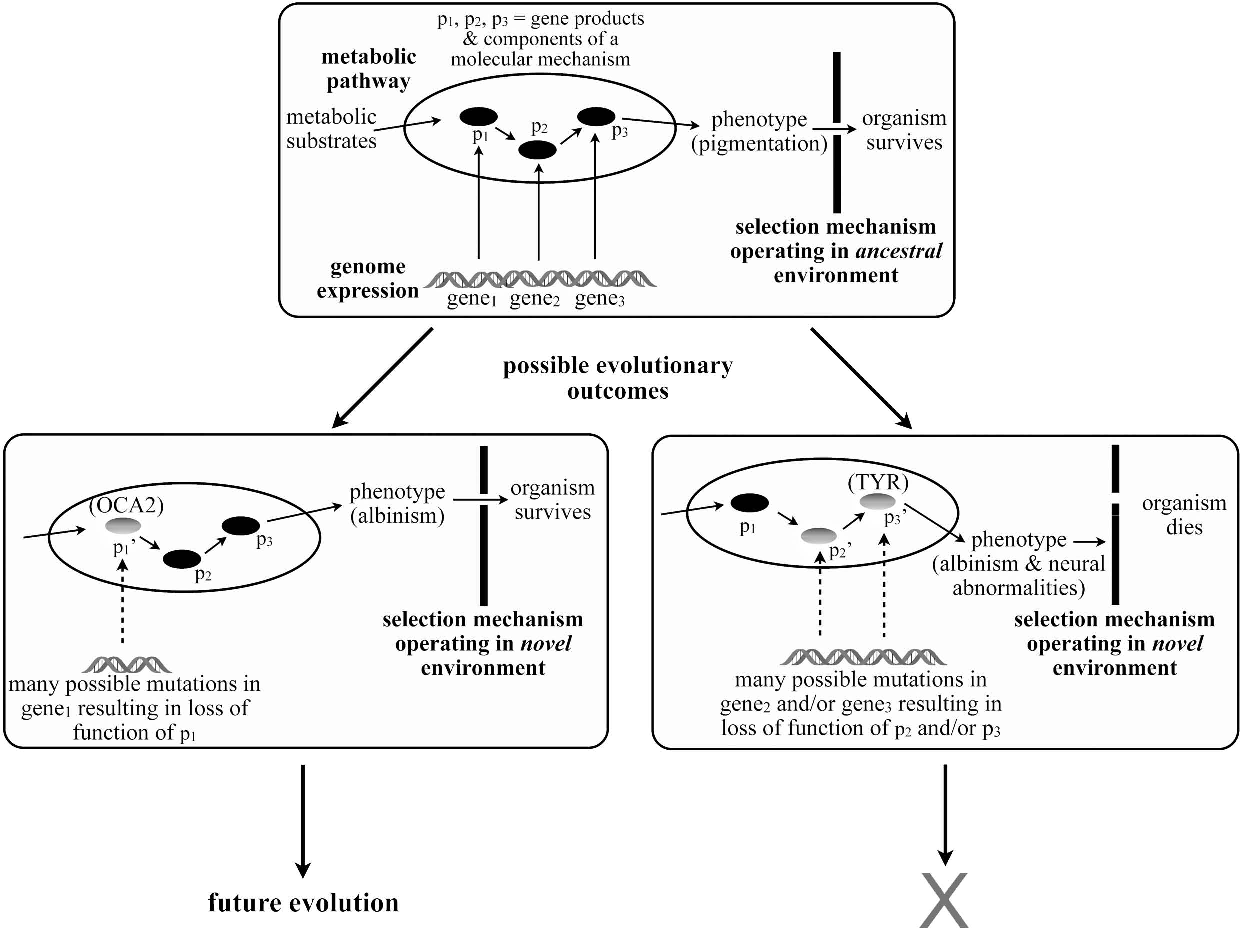
The end result is that evolutionary change is more likely to occur via the modification of already present biological mechanisms, where each mechanism can only be modified via mutations in one or more of the genes contributing to the synthesis, localization, and assembly of its components.Footnote 9 In the current example, an adaptation to a lightless environment (oculocutaneous albinism) repeatedly evolved in a short period of time via a modification of an existing mechanism (mutations in one of the genes coding for the components of the metabolic pathway responsible for the synthesis of pigments; fig. 2, top).
Mechanistic constraints on possible evolutionary outcomes.

As it turns out, coupling effects further dictate that among all possible components of the pigmentation pathway that could be modified, only Oca2 (oculocutaneous type II) is mutated.Footnote 10 The proposed explanation is that “other pigmentation genes have more pleiotropic effects and that those mutations are not as viable; for example, all of the mutations in zebrafish Tyr [another gene involved in pigmentation, coding for tyrosinase, or TYR] that cause complete loss of pigmentation are only semiviable” (Protas et al. Reference Powell2006, 109). OCA2 is required primarily for oculocutaneous pigmentation, while TYR seems to be required for neural development as well (Page-McCaw et al. Reference Osawa, Jukes, Watanabe and Muto2004). In addition, it is also possible that the Oca2 gene is preferentially targeted for mutation because of its large size and some of its structural features, such as “repetitive sequences, which are often associated with chromosomal rearrangements and deletions” (Protas et al. Reference Powell2006, 109).
The constraints imposed by molecular mechanisms make it such that some changes are more likely to occur than others. Selection (mechanisms) subsequently determines which changes are adaptive. Both mechanisms constrain evolution: molecular mechanisms, by making some ‘variations’ more probable than others; selection (mechanisms), by ‘pruning’ these variations (Brigandt, Reference Brigandt and Loveforthcoming).Footnote 11 As a general rule, the energy cost associated with adaptations requiring additional mechanisms further exacerbates the bias toward adaptations relying on the modification of existing mechanisms. In addition to this general constraint, there are also more specific selection constraints at work. Pigmentation is adaptive in lighted environments because it confers protection against ultraviolet radiation and its nefarious effects on DNA and other biomolecules. In lightless environments, loss of pigmentation seems to be advantageous, presumably because of the metabolic cost associated with pigmentation. Nevertheless, because of the coupling effects described above, OCA2 mutations result in pigmentation alone, while TYR mutations have pleiotropic effects resulting in reduced viability. Thus, selection in lightless environments favors OCA2 albinism over pigmentation over TYR albinism (fig. 2, bottom).
In summary, an already existing pigmentation mechanism imposes a strong constraint on the adaptations to lightless environments most likely to evolve (i.e., those that repeatedly evolve in a short time interval), while coupling effects and natural selection mechanisms further narrow down the number of possibilities to mutations affecting one of its components, namely, OCA2. This ensures that Oca2 albinism is very likely to be part of whatever set of adaptations the tetra cave fish evolve in lightless environments, while alternate sets of adaptations that do not include Oca2 albinism or require the wild-type Oca2 are considerably less likely to evolve.
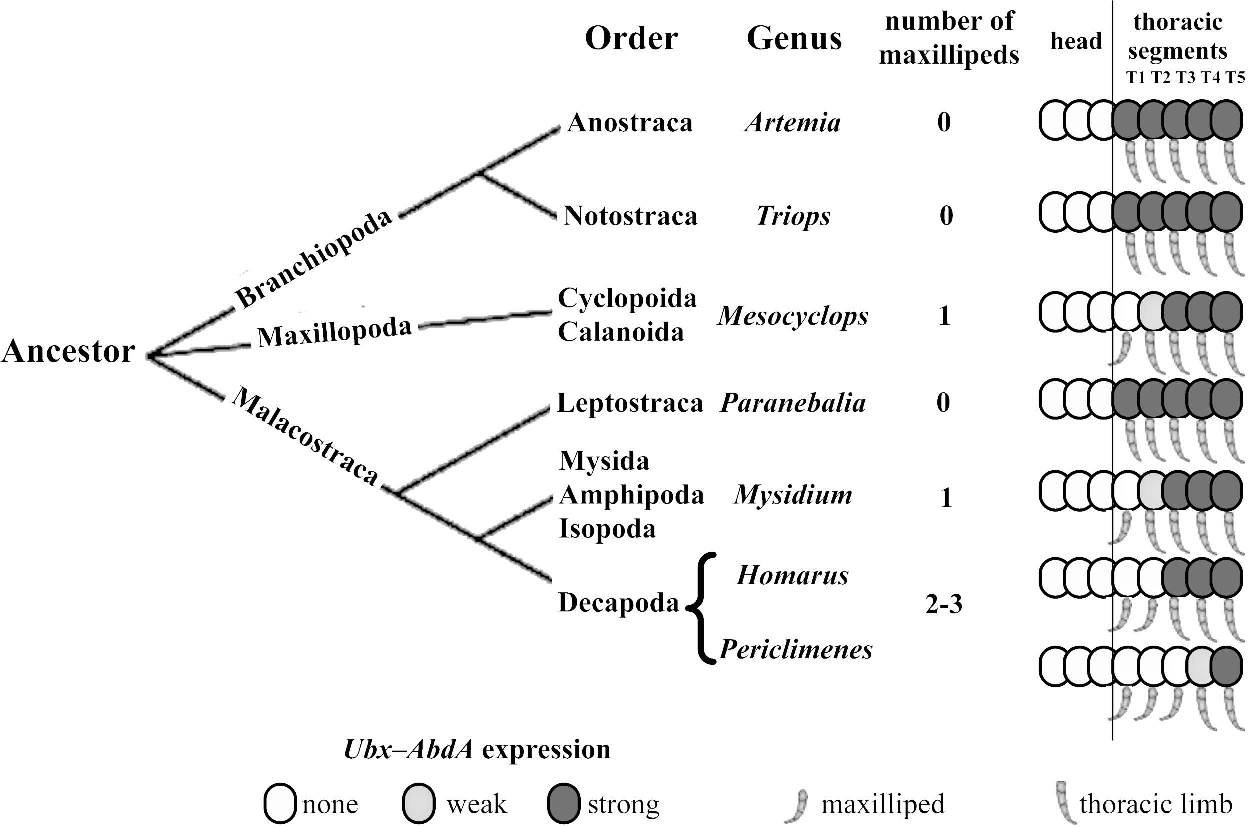
Evolutionary developmental biology (more commonly known as ‘evo-devo’) offers a growing list of findings showing that the evolution of new morphologies is constrained by existing developmental mechanisms. One example is the repeated parallel evolution of anterior thoracic limbs into maxillipeds (feeding appendages) in different crustacean lineages and the consistent correlation of this evolutionary change with a loss of Ubx and AbdA gene expression (fig. 3):
The fossil record suggests that primitive crustaceans had a rather uniform series of thoracic segments, with no apparent specialization of anterior thoracic limbs. Specialization of anterior thoracic appendages, however, is widespread among crustaceans today, and the phylogenetic distribution of these specializations suggests that similar morphological transformations have occurred independently several times during crustacean evolution. Maxillipeds, for example, appear to have arisen independently in crustacean groups as diverse as malacostracans, copepods and remipedes. Our findings indicate that such convergent changes may have been achieved by similar developmental changes (involving similar posterior shifts in the expression boundary of Ubx-AbdA) on several independent occasions. This suggests that, given a particular developmental system, there may be limited ways for achieving a particular morphological result. (Averof and Patel Reference Averof and Patel1997, 685–86)
Parallel evolution of maxillipeds and Ubx-AbdA expression (adapted from Averof and Patel Reference Averof and Patel1997).

The correlation between the repeated evolution of extra maxillipeds in distinct crustacean lineages and changes in the Ubx-AbdA expression pattern indicates that (1) the evolution of maxillipeds is a preferred evolutionary outcome, and (2) there is a preferred way in which this outcome is obtained. By analogy with the albinism example, a case for mechanistic constraints can be made. It may be argued that 1 is due to a constraint imposed by a selection mechanism. For instance, many crustaceans with maxillipeds are bottom feeders, and having extra maxillipeds may constitute an adaptive advantage in this kind of environment. Item 2 may be attributed to the fact that changes in the Ubx-AbdA expression pattern most probably involve very few mutations (possibly single mutations in the regulatory regions of the gene complex) and, therefore, evolve much faster than alternate adaptations requiring more changes (e.g., additional morphological structures underpinned by novel mechanisms dedicated to the development of these structures). Finally, the transformation of thoracic limbs into maxillipeds specifically via changes in the Ubx-AbdA expression pattern (as opposed to other changes of existing mechanisms) may be attributed to the fact that these particular changes are not coupled with undesired pleiotropic effects.
The parallel evolution of maxillipeds is not an isolated case. Another example is the pelvic reduction combined with the loss of pelvic girdle spines in three-spined stickleback populations (fish species that became isolated in glacial lakes 15,000 years ago) resulting in reduced predation by dragonfly nymphs. Genome-wide linkage mapping shows that distinct mutations in the regulatory regions of the Pitx1 homeobox gene were selected independently in different stickleback populations: “Pelvic-reduced populations have evolved repeatedly from marine ancestors in many different locations. The complementation cross between Paxton and Icelandic fish suggests that pelvic reduction has occurred by similar genetic mechanisms in populations located more than 5,700 km apart. Recent experiments also have shown that both Pitx1 and Tbx4 fail to be expressed in the prospective pelvic region of pelvic-reduced fish in Scotland” (Shapiro et al. Reference Schultz and Yarust2004, 722). It seems therefore that adaptations to predation by dragonfly nymphs involving the loss of pelvic girdle spines via changes in the regulation of Pitx1/Tbx4 are much more likely than adaptations that do not involve this developmental pathway. While the explanation is still incomplete, this evolutionary bias can also be attributed to mechanistic constraints similar to those at work in the albinism case.
Finally, a relatively well-understood example of coupling constraint is the multiplication of thoracic vertebrae in snakes, which is attributed to a change in the pattern of Hox-C6 gene expression. The same change in the expression domain of Hox-C6 is also responsible for the loss of forelimbs: “Combined limb loss and trunk elongation is found in many vertebrate taxa, suggesting that these changes may be linked by a common developmental mechanism” (Cohn and Tickle Reference Cohn and Tickle1999, 474). Coupling occurs when distinct phenotypic traits/functions are underpinned by a unique molecular mechanism or by mechanisms sharing the same components; in such cases, mechanisms create constraints by eliminating independent variables. In this example, Hox-C6 contributes at the same time to thoracic differentiation and loss of limb specification because it regulates the expression of genes important to both processes. Thus, trunk elongation and limblessness are coupled and cannot vary independently of each other. Alternatively, the evolution of snakes with limbs requires more changes than the evolution of snakes without limbs and, therefore, is a less probable evolutionary outcome. A similar comment applies to the coupling between pelvic reduction and loss of pelvic spines.
While many mechanistic details remain to be elucidated in each of the study cases presented above, an extrapolation of the missing pieces of information from one case to another supports the view that whenever organisms sharing conserved developmental mechanisms are subjected to similar selection pressures, we may expect similar morphologies to evolve via changes affecting the same or homologous mechanistic components: “Given the conserved tool-kit of intertwined [developmental gene regulatory] networks, we can expect that many morphological solutions currently believed to be caused by convergent evolution will be caused by parallelisms channeled by the natural selection of variations in ancestral developmental gene networks. In other words, many body plans that would be very adaptive might not exist in nature because they cannot be achieved unless compatible with the developmental pathways that generate the required changes in body form” (De Robertis Reference De Robertis2008, 193).
3. Mechanistic Constraints versus Laws
There are both significant similarities and important differences between laws and mechanistic constraints. Most notably, mechanistic constraints allow for explanations and predictions but not in virtue of nomic necessity or universality.
3.1. Mechanistic Constraints and Necessity
Elliott Sober (Reference Skipper and Millstein1997) argues that, given a set of initial contingent conditions I, some biological generalizations of the form if P then Q follow necessarily; the implication here is that every time I is satisfied, if P then Q must be the case. Mehmet Elgin (Reference Elgin2006, 128) supports Sober's approach by arguing that “given certain physical features of living things and under certain specifiable conditions, … organisms must behave in certain ways”; for example, “their metabolic rate must scale with the 3/4 of their body mass” ( ; Kleiber's law). The emphasis falls on the entailment relationship that provides the nomic necessity behind the ‘must behave’ claim. For instance, if we were to ask, “Why is the metabolic rate of a 10 times more massive (3 kg) cat only 5.6 times larger than that of a 300 g rat?” Sober and Elgin would answer, “Because there is a law dictating that, given certain physical features of organisms and under certain conditions, the metabolic rate of an organism (B) must be proportional with its mass3/4 (M 3/4).”
In contrast, in the context of a mechanistic constraint approach, the explanatory burden falls on a mechanism or system of mechanisms producing/maintaining the phenomenon described by the generalization. For instance, what underlies the coupling between the multiplication of thoracic segments and loss of forelimbs in snakes is not nomic necessity but a developmental mechanism in which the expression of Hox-C6 in cervical segments results in an inhibition of the sonic hedgehog signaling (SHH) pathway required for limb specification. The researchers who discovered the mechanistic basis of the coupling also showed that forelimb specification can be rescued by locally activating the SHH pathway via artificial means (e.g., by injecting fibroblast growth factor in the limb buds). While a local activation of the SHH pathway by natural means would require several nondetrimental alterations of current developmental mechanisms—thus rendering it an improbable evolutionary event—the experiment does show that there is not a nomic necessity underlying the correlation between the multiplication of thoracic segments and loss of forelimbs but rather a mechanism that can be artificially modified in such a way that the correlation fails to occur.
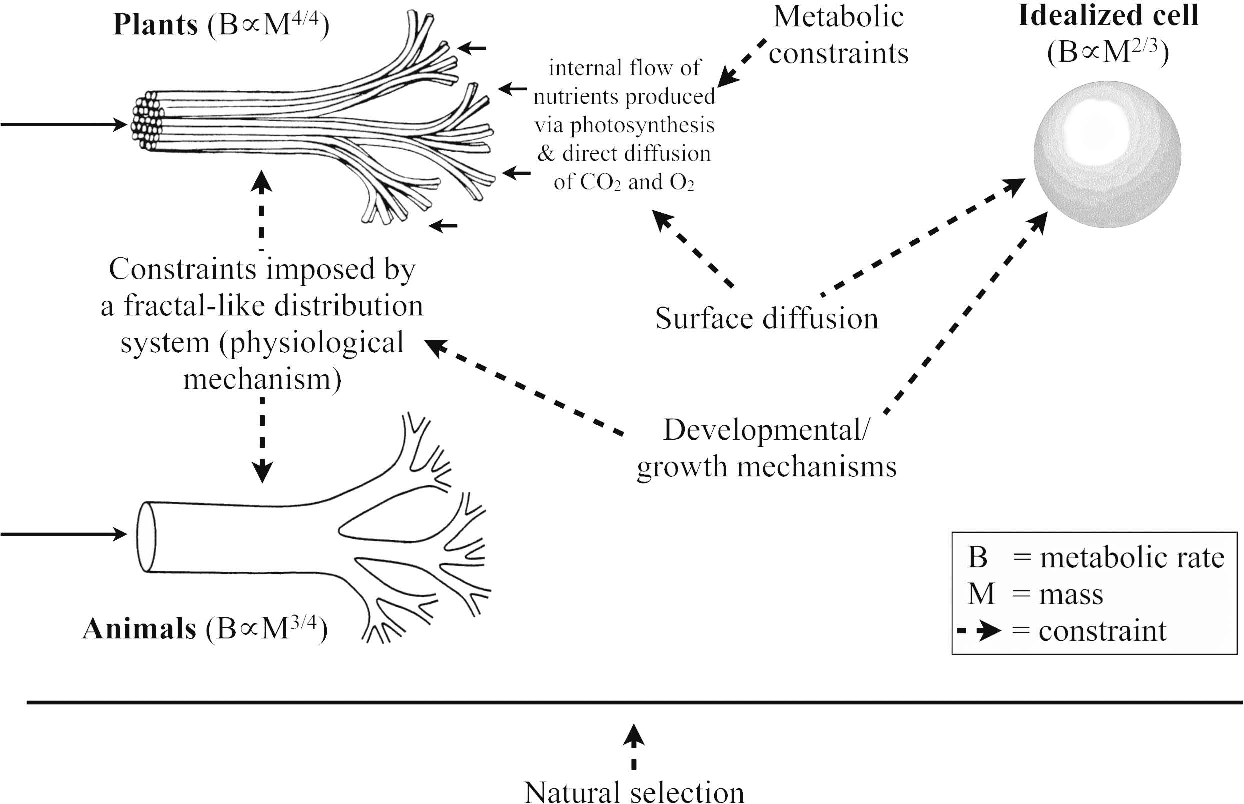
Likewise, in discussing allometric power laws, such as Kleiber's law, West, Brown, and Enquist (from whom Elgin draws his example) explicitly state: “We propose that a common mechanism underlies these laws: Living things are sustained by the transport of materials through linear networks that branch to supply all parts of the organism” (Reference Wakeley1997, 122). The fact that West et al. treat Kleiber's law as a phenomenon to be explained by a productive mechanism supports the view that there is a distinction to be made in biology between the descriptive nature of generalizations and the explanatory role of productive mechanisms (Cummins Reference Cummins, Keil and Wilson2000; Bogen Reference Bogen2005; Craver Reference Craver2007). It is a system of mechanisms, in conjunction with a number of idealizations providing further constraints, that ultimately explains the biological outcome described, but not explained, by Kleiber's law. The law is derived from the double assumption that the distribution systems in an organism grow in a fractal-like manner and that natural selection tends to maximize metabolic capacity by maintaining networks that occupy a fixed percentage (∼7%, according to West et al. Reference Wakeley1997) of the volume of the body. The first constraint pertains to a developmental mechanism and the resulting physiology of the circulatory system, while the second has something to do with natural selection. If these mechanisms change by natural means or, if such a change is improbable, if these mechanisms are modified in an artificial manner, Kleiber's law is expected to change as well.Footnote 12
As it later turned out, the power law is different in plants ( ): “whole-plant respiration rate scales approximately isometrically (scaling exponent ≈ 1). … These findings suggest that plants and animals follow different metabolic scaling relations, driven by distinct mechanisms” (Reich et al. Reference Protas, Hersey, Kochanek, Zhou, Wilkens, Jeffery, Zon, Borowsky and Tabin2006, 457). This difference between plants and animals is attributed to a difference in the O2 and CO2 exchange processes:
At the capillaries—the end points of the vascular delivery system in animals—the supply of all principal resources (O2, carbon substrates and mineral elements) required for respiratory metabolism is constrained by the geometry of the vascular network. By contrast, in plants the most metabolically active tissues—leaves—are at the distal ends of the delivery network for nutrients and water, but O2 and CO2 are exchanged with the atmosphere by diffusion directly into leaves, with an additional set of factors further constraining these fluxes. Furthermore, substrate supply to mitochondrial respiration in plants is linked to carbohydrates produced in photosynthesis, with source-sink relationships governing internal transport, which may also uncouple metabolism from vascular constraints. (Reich et al. Reference Protas, Hersey, Kochanek, Zhou, Wilkens, Jeffery, Zon, Borowsky and Tabin2006, 461)
It seems, therefore, that what explains the prevalence of Kleiber's law is not its truth in all possible worlds or that no other relationship between metabolism and mass could have been possible in this world but the presence of mechanisms that maintain the relationship, namely, developmental, physiological, and metabolic mechanisms, and prohibit changes that would lead to a different relationship, that is, natural selection. Shifting the explanatory burden from laws to mechanisms allows for the following argument: even though a generalization like Kleiber's power law could have been different, inasmuch as an organism is actually characterized by a particular kind of metabolism, distribution, and developmental mechanisms, the relationship between mass and metabolic rate is constrained in a certain way (fig. 4). The power law can drastically change if an organism evolves a different morphology (leaves or, in general, a much higher surface-to-volume ratio) suited for a radically different kind of metabolism (photosynthesis vs. respiration). Nevertheless, such an evolutionary change is heavily constrained by the developmental and metabolic mechanisms in place and the resulting adaptive advantages/disadvantages of the new morphology and metabolism (e.g., think of the likelihood of a vertebrate evolving into a plantlike organism). Smaller deviations from the power law are observed because more modest modifications of the constraining mechanisms are more likely to occur (e.g., higher metabolic rates and associated energy costs are tolerated inasmuch as they allow for highly adaptive traits).Footnote 13
Allometric power laws and mechanistic constraints.

3.2. Mechanistic Constraints and Universality
As several authors point out, it does not seem that there is a single biological generalization universally applicable to all living organisms. There are naturally occurring exceptions to the genetic code and Kleiber's law, and there are lab-produced exceptions to developmental generalizations of the kind “all snake-like vertebrates lack forelimbs.” While local generalizations are useful, our ability to rely on them is severely hampered by the absence of a principled way of accounting for the multitude of exceptions plaguing them. Reconceptualizing generalizations as manifestations of mechanistic constraints offers a solution to this problem.
The lack of universality of biological generalizations can be explained by the fact that mechanistic constraints are dependent on the mechanisms M in place at a given time t in evolution. As these mechanisms change, the constraints change as well; thus, different generalizations may hold true at different times in the evolutionary history of living organisms. The fact that some generalizations are lineage dependent is explained by the fact that different mutations m, m′, … occur only in a subset of the organisms containing the mechanisms M; as time progresses, a heterogeneous population of organisms containing M, M′, … is generated. Speciation events ensure that homogeneity is never recovered, such that different constraints are present in different lineages at different times in evolution.
More important, the fact that mechanistic constraints are dependent on the presence of mechanisms restricted to a more or less comprehensive set of organisms provides criteria of applicability for certain generalizations. For instance, it is possible to predict the development of maxillipeds in crustaceans, given a loss of Ubx-AbdA expression in thoracic segments. However, what allows the prediction is not the universality of the correlation between the development of maxillipeds and Ubx-AbdA expression but the presence of a mechanism in the context of which Ubx and AbdA play a certain functional role. A similar loss of expression in the mammalian homologues of these genes is not expected to result in the development of maxillipeds. This ‘contrary to the rule’ expectation is justified by the fact that certain developmental mechanisms diverged from crustaceans to mammals. Thus, mechanistic constraints allow for predictions, and, at the same time, they account for the exceptions and the limited domain of applicability of these predictions.
4. Conclusion
The thesis defended in this article is that mechanistic constraints can account for the various biases and patterns in evolutionary processes and, therefore, play a role similar to those of laws: they provide the basis for predictions and explanations. Nevertheless, unlike laws, mechanistic constraints are not necessary and universal but remain contingent on the past evolution of the biological mechanisms underpinning them and only constrain the future evolution of the organisms possessing them. To use Gould's metaphor, if we were to rewind the ‘tape of life’ back to the beginnings of life, we might witness a different outcome every time. However, if we were to rewind the tape back to the evolution of the genetic code, we would find certain recurrent patterns, such as no significant changes in translation mechanisms. If we were to rewind back to the time of the last common ancestor of all bilaterally symmetrical animals (Urbilateria), we would find that its descendants share a limited number of variations on the same ancestral body plan. If we were to rewind the tape back to the Cambrian period, we would witness several times the evolution of maxillipeds in crustaceans. Finally, if were to rewind the tape to a couple of thousands of years ago, we would repeatedly see fish evolve albinism when trapped in caves.
 ).