



No CrossRef data available.
Alexander Sandor Nadas: November 12, 1913 – May 15, 2000
Published online by Cambridge University Press: 20 January 2005
Abstract
An abstract is not available for this content. As you have access to this content, full HTML content is provided on this page. A PDF of this content is also available in through the ‘Save PDF’ action button.
Information
- Type
- The Paediatric Cardiology Hall of Fame
- Information
- Copyright
- © 2004 Cambridge University Press
We are honored to provide a tribute to Dr Alexander Nadas in Cardiology in the Young on the occasion of his induction into the Paediatric Cardiology Hall of Fame. Born in Budapest, Hungary, Nadas immigrated to the United States in 1939, after studying in London. He subsequently trained in New York, Cleveland, Boston, and Detroit. By the time of his retirement in 1982, he had served as Cardiologist-in-Chief at Children's Hospital in Boston for 33 years. In the course of those 33 years, the cardiology section had grown to an independent department with over 20 faculty members, three catheterization laboratories, an independent in-patient unit, and an independent unit for cardiac intensive care. His department had become the largest unit in the world dealing specifically with pediatric cardiology. He was involved in developing subsections of the various national cardiology associations, and was instrumental in developing the pediatric cardiology sub-boards. He had produced over 200 scientific articles; the members of his department added many more. He had trained over 150 pediatric cardiologists nationally and internationally. He had been invited to consult and speak in many countries. Among the many honors during his career, he received a Guggenheim fellowship, a Fulbright professorship, the Gifted Teacher Award of the American College of Cardiology (Fig. 1), the Edgar Mannheimer Memorial Lecture Award from the European Association for Pediatric Cardiology, and the Paul Dudley White Award of the American Heart Association. Harvard had set up an endowed chair in his honor, the Alexander S. Nadas Chair of Pediatric Cardiology. He was recognized as a leader not only among pediatricians, but also among adult cardiologists. He had risen from being the “Barefoot Boy from Budapest” – one of his favorite expressions – to being called the “Father of Pediatric Cardiology” by his associates. One evening in his 86th year, after having been honored at the Society for Pediatric Research, he had dinner with old friends at his long-favorite restaurant, the Café Budapest. After an evening of good fellowship, he was escorted home, retired, and died peacefully in his sleep.
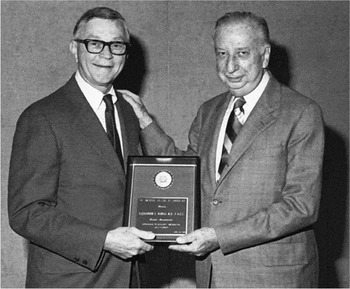
Figure 1. Alex Nadas receiving the Gifted Teacher Award of the American College of Cardiology from Dan McNamara.
Early life
Alexander Sandor Nadas was born in Budapest on November 12, 1913. His mother, Margit, was a prominent milliner in Hungarian society, and his father, Sandor, was a well-known intellectual and writer, who had wanted to be a doctor. In the later writing of his famous textbook, Alex believed that he paid homage to his father by fusing the profession of the writer with that of the physician. Indeed, the small emblem that appeared at the end of the Preface of each edition of his textbook was the trademark of his father's magazine. Alex was the only child of his parents, although he had a half sister and half brother from his father's first marriage.
Because his mother was so busy, Alex was brought up by his maternal aunt, Piroska, about whom he spoke with the greatest warmth throughout his life. When he was young, he enjoyed doing many activities with Piroska. He particularly liked to go to the American movies with her, and, when he had the chance, with his parents. These movies formed his earliest impressions of the United States. He also went to the theatre often, where his writer-father usually managed to get good seats. A love of the movies and theatre continued throughout Alex's life.
At the age of six, Alex began attending elementary school, which was conveniently located only four or five blocks away from his home, so he would walk to school every day. He loved the winter days on which his aunt would pick him up with a sled, and pull him home. In his teen years, life did not change drastically. As he later told, “We did not have that kind of teenage [sic]. It's almost an occupation here. Being a teenager, you have a role. When you were a teenager in Budapest, you lived at home.”1 In adolescence, Alex enjoyed playing chess, going to movies, playing bridge and tennis, cross-country skiing, and swimming at beaches and in the pools established in Hungary by the Turks in the 16th century. In high school, his favorite subjects were Latin and Hungarian literature. Like Alex, some of his high school friends immigrated to the United States, and he remained in contact with them through his later years. Also during adolescence, Alex accompanied his mother on some of her fashion trips to Paris, adding French to his knowledge of English and German.
After graduation from high school, Alex began studying medicine at Semmelweis Orvostudomanyi Egyetem in Budapest, from which he graduated in 1937. He especially enjoyed learning physiology, along with cardiology based in internal medicine. Ironically, Dr. Nadas strongly disliked pediatrics, because he felt that “the professor was a nobody.”1 At the strong urging of his Jewish father, who perceived the impending threat of Nazi Germany, Alex applied for a visa to immigrate to the United States in 1935, which was finally granted in 1938. In December, 1938, he began his journey to America on the second day of Christmas, leaving behind his family and friends. After six months in London with Paul Wood, furthering an interest in cardiology that had begun in Budapest, he entered the United States of America in 1939, as Germany invaded Poland.
New York City
When he arrived in New York City, Alex was met at the pier by one of his father's friends, the editor of a Hungarian newspaper in New York City. He did not like the hotel where the friend had made reservations, but instead searched for another place to live, deciding on the International House. “[The first hotel] was a shady kind of misery,” said Dr. Nadas. “I didn't like it. I wandered around, and somebody told me about the International House, which was a Rockefeller institution on 120th street, and I went to the International House. By some fluke, they let me in, and I stayed there until I left New York in July of 1939.”1 In his early childhood, Alex had been tutored in English, so communication was not a problem when he arrived in America.
During breakfast one day at International House, he was introduced to Elizabeth, a slender woman from Tennessee who was working as a librarian, and who lived across the street with a few other girls. “She was a tall, blond, beautiful, very American girl,” Dr. Nadas said. “And this is what I wanted. I wanted to run away from everything Hungarian, and that was about as far as I could run.”1 Later they married and had three children – Trudy, Betsy, and John (Fig. 2).

Figure 2. Nadas family with Danny Kaye (from left to right, Betsy Nadas, Trudy Nadas, Johnny Nadas, Alex, Danny Kaye, and Elizabeth Nadas).
About 9 months after Alex arrived in the United States, his parents came to visit him. Although they had planned to stay for only for a short time, the war broke out and they could not return to Hungary. They remained in New York City for the rest of their lives. His mother became a milliner on Madison Avenue.
To practice medicine in the United States, Alex needed board certification. He often studied for his boards at the New York Medical Society library, near Mount Sinai Hospital on Fifth Avenue. Even at this early phase of his career, Alex was interested in cardiology. In order to get some practical medical experience, he worked with an adult cardiologist named Pinky Shwartz at Montefiore Hospital.
Alex passed the entrance certificate for foreign medical graduates, but without personal references, he had to take whatever internships were available to him. The first was a rotating internship in Cleveland, Ohio, at Fairview Park Hospital. Dr. Nadas had hoped to go to the prestigious Case Western Reserve, but he stated, “They wouldn't let me near it.”1 He remained at Fairview Park Hospital for one year, and began to understand American medicine. Subsequently, he trained in pediatrics at Children's Hospital in Detroit under the guidance of Dr. Clement Smith, who then chaired its Department of Pediatrics. He was a resident in Pediatrics at the Massachusetts Memorial Hospital in Boston from 1941 through 1942, moving on to be a volunteer pediatric outpatient resident at The Children's Hospital, Boston, where his outstanding clinical skills were widely noted. When Clem Smith moved to Michigan, he invited Alex back to become Chief Resident in Pediatrics, a position he held from 1943 to 1945, while also earning another degree as Doctor of Medicine from Wayne State University.
After his stint as Chief Resident at the Detroit Children's Hospital, Alex settled down for the next five years in a private pediatric practice in Greenfield, Massachusetts. In Greenfield, he made news when he was discharged from the staff of a Roman Catholic hospital for his public support of a defeated referendum that would have allowed doctors to give married women contraceptive advice when, in their opinion, pregnancy would have endangered their life or health. Even after his return to Boston, Dr. Nadas traveled to Greenfield twice a year to run a pediatric cardiology outreach clinic, always accompanied by one or two cardiology fellows who had the terrifying responsibility of driving his car.
Return to Boston
During the war, a young physician named Charles A. Janeway was selected to work in the protein laboratory of Edwin J. Cohn at the Harvard Medical School. He also maintained his own laboratory at Boston Children's Hospital, where he was a regular visitor to the laboratory for clinical bacteriology located in the Gamble building. One day, the young doctor known as “Charlie” metamorphosed into The Thomas Morgan Roach Professor of Pediatrics. The unrest caused by the appointment of a very young internist to be head of pediatrics was notable. Staff members were in open revolt. Some left for appointments elsewhere, while residents felt that they were being cheated of exposure to a real pediatrician. Most of the pediatric house staff turned over the next year. According to Nadas, “the American system of open doors, or perhaps more importantly, open backdoors, is a useful entrance to center stage.”2
A year or so after his appointment, Janeway decided that there was need for a more formal program in pediatric cardiology. As graduate from Johns Hopkins, he almost certainly got his idea for a service in pediatric cardiology from the success of Helen Taussig. In casting about for a person to head up pediatric cardiology, he learned of Alex Nadas' interest in cardiology, probably from Clem Smith. In 1948, after Alex had been in private practice for about five years, Janeway asked him to develop a cardiac service for children comparable to that for adults at the Brigham. Nadas therefore spent the year of 1949 studying adult cardiology at the Peter Bent Brigham Hospital, under the tutelage of Samuel A. Levine and Lewis Dexter. By then, Dexter was in the process of developing cardiac catheterization in Boston, while Janet Baldwin, Dickinson Richards, and Andre Cournand were completing the first catheterizations of children in New York.
In 1950, Alex launched his program in pediatric cardiology at Boston Children's Hospital (Fig. 3), with the help of James Dow, a physiologist interested in cardiac catheterization, with whom Nadas had worked at the Peter Bent Brigham Hospital. That year, Abraham Rudolph joined the program as its first cardiac fellow, later spending two years at the Harvard Medical School Physiology Department before returning in 1954 to head the cardiac catheterization laboratory. At that time, almost no useful facts were known about cardiac disease in children. Often in the early years, cardiac catheterization in children amounted to accumulation of data on oxygen content and pressure from each heart chamber, these values simply being compared with those reported by Baldwin. A match was considered indicative of a diagnosis – a somewhat tenuous conclusion. Weekly pathology conferences reviewed the anatomic variations of congenital cardiac pathology that had been categorized by Maude Abbott3 and Helen Taussig.4

Figure 3. Portrait of Alex Nadas early in his career in the Department of Cardiology at Children's Hospital Boston.
Nadas made daily auscultatory rounds, assisted by Abe Rudolph, Pat Ongley, and Donald Fyler. Alex set up a system of dictating detailed bedside observations to the most junior house officer on rounds, these being written on pink slips readily identified in the chart. In the early years, he personally read every electrocardiogram. After he had obtained a history, detailed auscultation, a 12-lead electrocardiogram, and cardiac fluoroscopy, the data were presented, and Nadas then committed himself to a diagnosis and plan of management in public conferences. Over the next day or so, cardiac catheterization would be carried out.
In 1950, 50 children were catheterized, using a fluoroscope located in the Jimmy Fund building. A single blood sample, a pressure recording, and often a spot film were made in each cardiac chamber. Image intensification was not yet available. Exposure to radiation was limited to 10 min. Analysis of the blood samples by the Van Slyke technique took hours, great skill, and patience. Delineation of the physiology and anatomy of the various lesions facilitated subsequent operative procedures.
Nadas' detailed notes became the basis for his classic text on pediatric cardiology.5 Subsequently, four editions of this book were published (Fig. 4). Diastolic murmurs resulting from left-to-right shunts were emphasized in a paper on the rarity of Lutembacher's syndrome. Diastolic rumbles had been only rarely reported in children with congenital cardiac disease, yet Nadas found many, and initially thought that this must mean the presence of mitral stenosis. Because many had increased flow of blood to the lungs, the diagnosis of Lutembacher's syndrome was natural. Hardly any autopsies, however, showed the combination of a shunting defect with mitral stenosis, either in Boston or the other hospital pathology departments in New England that he surveyed. The observation that a rumble in congenital cardiac disease could be caused by increased flow across the atrioventricular valves, and not from stenosis of the valve, was a new discovery.6 Whereas the anatomic and fluoroscopic characteristics of congenital cardiac disease had been documented by Helen Taussig (Fig. 5),4 the description of the auscultatory and electrocardiographic characteristics was a major contribution made by Nadas. The books by Ongley on phonocardiography7, and of Ellison and Restieaux on vectorcardiography,8 documented these efforts.

Figure 4. Alex Nadas and Don Fyler at the signing of their textbook in 1992.

Figure 5. Alex Nadas with Helen Taussig.
Academic pediatric cardiology in the Nadas years
Over the ensuing years, the reputation of the units for paediatric cardiology and pediatric cardiac surgery at Boston Children's Hospital grew, and academic pediatric cardiology flourished. Nadas helped devise, and some say dominated, the Natural History Study,9, 10 published as a monograph in 1977,11 in which six centers contributed data from their patients, and Harvard School of Public Health served as the center coordinating the data. The second Natural History Study followed up these original patients, and was published in 1993.12
The clinical and academic success of the Nadas enterprise led to recognition by the National Institutes of Health in the form of a large program project grant awarded in 1966. This grant, awarded in competition with programs for adult cardiology, was the first of its size and breadth in pediatric cardiology. The program project included a research unit in which Grier Monroe, Grant LaFarge, and Walter Gamble focused on physiologic questions. Their technique of firing a tiny hollow cylinder, precisely timed by electrocardiography, through the myocardium and into liquid nitrogen for later electron microscopy was ingenious. Gamble's attempts using a fiberoptic catheter with a balloon tip filled with saline to visualize the aortic valve in an animal produced pictures of the valve. Gamble, a classic inventor with a desk piled high with paper and amazing ideas, was always on hand to solve problems or design new techniques.
LaFarge's special assignment was to help surgeon William Bernhard evaluate the mechanical heart he had implanted in cows. The surreptitious movement of an unconscious cow through the hospital corridors to permit studies in the cardiac catheterization laboratory was a cause for murmuring among the staff, even though these cows were treated with exquisite sterile techniques. The goal was to see how long a cow could be maintained on a mechanical heart, so breaks in sterile technique would have been unforgivable. Fortunately, not many such studies were necessary. Olli Miettinen, based at the Harvard School of Public Health, provided input on study design, and taught epidemiology and biostatistics to Cardiology fellows and faculty. At the New England Primate Center in Southborough, Stephen Vatner studied physiology in intact and unanesthetized animals during normal activities using radiotelemetry.
A cardiac pathology unit was set up, and run by Richard and Stella Van Praagh. This unit turned out to be of major value in training cardiac surgical residents and later, invaluable as a basis for the development of cardiac echocardiography and resonance imaging. Also in the 1950s, Don Fyler was due to go on sabbatical leave from the University of Southern California. When he phoned Alex to ask where he thought it would be useful to go, Alex invited him to come back to Boston and stay, and he accepted. Fyler and Gamble set up the first biplane 35 mm cineangiographic unit in the catheterization laboratory in the sub-basement of Children's Hospital. Waste, carried visibly in overhead glass pipes, was pumped up to the sewers. The hyperbaric chamber was next door, primarily being used by Bill Bernhard for infant cardiac surgery, and occasionally to treat wounded criminals with gas gangrene while the police stood guard. Perhaps because the Nadas' group had grown so large, Janeway declared cardiology to be a hospital department in 1968.
Paul Hugenholtz continued his attempts to measure cardiac output in patients by angiographic techniques, using a digitizing table and a PDP-9 computer. This apparatus was used by several groups around the medical school, and was used for storage and management of the data accumulated from the Regional Infant Cardiac Program. Several fellows were sent off to learn new methods, for example Thomas Hougen to work in Thomas Smith's laboratory at the Brigham Cardiology Department, Albert Rocchini to work with Clifford Barger in the Harvard Medical School Department of Physiology, Barry Keane to learn interventional cardiology at Texas Children's Hospital, and Edward Walsh to learn electrophysiology at the Massachusetts General Hospital.
By the late 1960s, it was clear that infants with congenital cardiac disease could be accurately diagnosed, and in some cases could be helped by surgery. It was evident, nonetheless, that not all infants in New England were being recognized and adequately managed. The Regional Infant Cardiac Program was proposed as a way to correct the situation. The Maternal and Child Health Service, along with the National Department of Health, Education and Welfare, agreed and provided funds for an educational program and for the transportation and even hospitalization of patients. All of the hospitals in New England that accepted referred infants with congenital cardiac disease were invited to participate, and all joined. The experiences of this program over nine years have served as a guide for programs of organized care for children with cardiac disease in various states in the United States of America, and in other countries (Fig. 6).13

Figure 6. Alex examining child with heart disease on his Asian tour.
It was fortunate that the cardiac surgery section was headed by Robert Gross, who was the first surgeon successfully to ligate a persistently patent arterial duct. Gross's reputation for innovative surgery facilitated development of the Department of Cardiology. With Gross's retirement, Aldo Castaneda was chosen as the next Chairman of Cardiac Surgery, and focused his efforts on reparative heart surgery in young infants. His development of cardiac surgical techniques for infants with cardiac disease succeeded beyond expectations. By the time of Nadas' retirement (Figs 7 and 8), three cardiac surgeons were occupied full time.

Figure 7. Alex and Elizabeth Nadas at the occasion celebrating his retirement as Chairman.

Figure 8. The unveiling of the Nadas portrait (from left to right, Alex, Trudy Nadas, Don Fyler, and Chief Executive Officer David Weiner).
The Man
What permitted Nadas such remarkable success compared to other bright and hard-working physicians? Without doubt, Alex's greatest advantages came from his spectacular intuition in dealing with and understanding people, his related insight into human behavior and politics, and his gift for language (Fig. 9). Together, these gave him an unparalleled ability to “put things in a nutshell.” His sharp and sometimes caustic wit diffused many volatile medical discussions and administrative hassles. His ability to hold the attention of his audience was unparalleled. It was not always so. Early in his tenure as Chief of Cardiology, he was called upon to produce programs for Pediatric Grand Rounds. He was noticeably tense on these occasions, presumably because English wasn't his native language. On these occasions, Alex's wife, Elizabeth, was often present, and took notes, perhaps serving as his critic, and contributing to his later polish as a speaker. He had remarkable self-discipline, commitment, drive to succeed, and executive function, including the ability to organize and triage. He also had the ability to firmly direct others to perform tasks to further progress in the field.

Figure 9. Alex Nadas at his desk.
Nadas was always at his best on medical rounds with house staff and fellows (Fig. 10). Once while making rounds, he surveyed his entourage, and recognized many cultures and nationalities. He announced, with his characteristic Hungarian accent, that “though we might look like the United Nations and we might sound like the United Nations, we sure as hell are going to function better than the United Nations.” Once when asked whether his job gave him ulcers, he said that he didn't get ulcers – he gave ulcers. Indeed, he never seemed to inhibit verbalizing a thought, which both spiced up rounds and caused embarrassment for those fellows who were not in command of the facts. He demanded discipline, hard work, and integrity in those around him. Above all, Alex drilled into his trainees the principle that the welfare of the patient was the first priority in all decisions. No compromises were acceptable.

Figure 10. Alex Nadas on rounds, with Welton Gersony (front left), Grant LaFarge (front right), and Martha Carpenter.
His relationships with his patients were remarkable. With his natural empathy, he seemed to have the uncanny ability to know exactly how a patient felt. As stated in a memorial by his former patient, Heidi Wilkinson, who has tetralogy of Fallot, “He was not only a medical practitioner of the first order, but boy, could he read me like a book.” After his formal retirement, he would make rounds with our house staff, who would present a case on the ward to him. After the presentation and bedside auscultation, he invariably made the correct diagnosis. We knew that he could not have had forewarning, because the case to be presented was virtually always chosen immediately before rounds.
Nadas took an intense personal interest in the members of his department, regardless of stature, inquiring about their spouses and children, the state of their research, or whatever he thought might be important to them. Little escaped his attention. When a fellow disappointed him, Nadas referred to him or her as being “in the doghouse,” a station out of which one could usually climb with sufficient penitence. More often, fellows earned “brownie points” for good deeds. He and Elizabeth invited them to their home on innumerable occasions each year, including barbeques and Sunday brunches. The unmarried or lonely fellow could count on an invitation to Thanksgiving, Christmas, or New Year's dinner. Politics was always a major topic of conversation. Alex was a rabid Democrat, and never hesitated to express strong opinions regardless of the venue. In his powerful paternal role, his sense of values, most prominently those of honesty, decency, hard work and dedication to the best possible care of the patient, permeated the department, and fostered a commonality of purpose.
Those of us who were privileged to train and work with Alex Nadas will always cherish his humanity, insight, and commitment to caring for the patient.
References
References
Nadas AS. Personal interview with Daniel Newburger, October 1996.
Smith CA. The Children's Hospital of Boston. Built better than they knew. 1st edn. Boston: Little, Brown, 1983.
Abbott MES. Atlas of congenital cardiac disease. New York, NY: The American Heart Association, 1936.
Taussig HB. Congenital malformations of the heart. New York: Commonwealth Fund, 1947.
Nadas AS. Pediatric cardiology. Philadelphia: W. B. Saunders Co, 1957.
Nadas AS, Alimurung MM. The myth of Lutembacher's syndrome. Am Heart J 1952; 42: 691–706.Google Scholar
Ongley PA. Heart sounds and murmurs: A clinical and phonocardiographic study. New York: Grune & Stratton, 1960.
Ellison RC, Restieaux NJ. Vectorcardiography in congenital heart disease; a method for estimating severity. Philadelphia: Saunders, 1972.
Nadas AS. Report from the Joint Study on the Natural History of Congenital Heart Defects. IV. Clinical course. Introduction. Circulation 1977; 56 (Suppl 1): I36–I38.Google Scholar
Nadas AS. Report from the Joint Study on the Natural History of Congenital Heart Defects. I. General introduction. Circulation 1977; 56 (Suppl 1): I3–I4.Google Scholar
Report from the Joint Study on the Natural History of Congenital Heart Defects. Circulation 1977; 65 (Suppl 1).
Driscoll DJ, Wolfe RR, Gersony WM, Hayes CJ, Keane JF, Kidd L, et al. Cardiorespiratory responses to exercise of patients with aortic stenosis, pulmonary stenosis, and ventricular septal defect. Circulation 1993; 87 (Suppl 2): I102–I113.Google Scholar
Fyler DC. Report of the New England Regional Infant Cardiac Program. Pediatrics 1980; 65 (Suppl): 375–461.Google Scholar
Selected References from Nadas' Curriculum Vitae
Castaneda AR, Lamberti J, Sade RM, Williams RG, Nadas AS. Open-heart surgery during the first three months of life. J Thorac Cardiovasc Surg 1974; 68 (5): 719–731.Google Scholar
Friedberg DZ, Nadas AS. Clinical profile of patients with congenital corrected transposition of the great arteries. A study of 60 cases. N Engl J Med 1970; 282 (19): 1053–1059.Google Scholar
Fyler DC, Nadas AS. Nadas' pediatric cardiology. Philadelphia: Hanley & Belfus, 1992.
Gersony WM, Peckham GJ, Ellison RC, Miettinen OS, Nadas AS. Effects of indomethacin in premature infants with patent ductus arteriosus: results of a national collaborative study. J Pediatr 1983; 102 (6): 895–906.Google Scholar
Greenwood RD, Rosenthal A, Parisi L, Fyler DC, Nadas AS. Extracardiac abnormalities in infants with congenital heart disease. Pediatrics 1975; 55 (4): 485–492.Google Scholar
Keane JF, Plauth WH, Jr., Nadas AS. Ventricular septal defect with aortic regurgitation. Circulation 1977; 56 (Suppl 1): I72–I77.Google Scholar
Nadas AS. Pulmonic stenosis – indications for surgery in children and adults. N Engl J Med 1972; 287 (23): 1196–1197.Google Scholar
Nadas AS. Report from the Joint Study on the Natural History of Congenital Heart Defects. I. General introduction. Circulation 1977; 56 (Suppl 1): I3–I4.Google Scholar
Nadas AS. Report from the Joint Study on the Natural History of Congenital Heart Defects. IV. Clinical course. Introduction. Circulation 1977; 56 (Suppl 1): I36–I38.Google Scholar
Peckham GJ, Miettinen OS, Ellison RC, Kraybill EN, Gersony WM, Zierler S, et al. Clinical course to 1 year of age in premature infants with patent ductus arteriosus: results of a multicenter randomized trial of indomethacin. J Pediatr 1984; 105 (2): 285–291.Google Scholar
Talner NS, Nadas AS. Regional plan to aid infants with heart disease. N Engl J Med 1969; 281 (14): 794–795.Google Scholar
Weidman WH, Blount SG, Jr., DuShane JW, Gersony WM, Hayes CJ, Nadas AS. Clinical course in ventricular septal defect. Circulation 1977; 56 (Suppl 1): I56–I69.Google Scholar
Williams RG, Ellison RC, Nadas AS. Development of left ventricular outflow obstruction in idiopathic hypertrophic subaortic stenosis. Report of a case. N Engl J Med 1973; 288 (17): 868–871.Google Scholar

Nadas family with Danny Kaye (from left to right, Betsy Nadas, Trudy Nadas, Johnny Nadas, Alex, Danny Kaye, and Elizabeth Nadas).

Portrait of Alex Nadas early in his career in the Department of Cardiology at Children's Hospital Boston.

Alex Nadas and Don Fyler at the signing of their textbook in 1992.

Alex Nadas with Helen Taussig.

Alex examining child with heart disease on his Asian tour.

Alex and Elizabeth Nadas at the occasion celebrating his retirement as Chairman.

The unveiling of the Nadas portrait (from left to right, Alex, Trudy Nadas, Don Fyler, and Chief Executive Officer David Weiner).

Alex Nadas at his desk.

Alex Nadas on rounds, with Welton Gersony (front left), Grant LaFarge (front right), and Martha Carpenter.
 You have
Access
- 1
- Cited by