


Preface
The following interview with Christine Pickering, an instructor of English as a foreign language at Duksung Women's University, Seoul, South Korea, discusses teaching English to North Korean refugees with People for Successful Corean Reunification (PSCORE). A non-profit nongovernmental organization and human rights-national unification initiative, PSCORE was founded in 2006 in Seoul and has an office in Washington, D.C., with support from the U.S. State Department. PSCORE offers a one-on-one education program and free volunteer tutoring in computers, languages, mathematics, and other subjects, serving some 140 North Korean refugees as they adjust to life and employment competition in South Korea. The interviewers thank Mr. Bada Nam, PSCORE secretary general, and Ms. Jeongeun Ahn, PSCORE research manager, for approving the interview. The interview questions were prepared by Alzo David-West, and the interview was conducted in person by Sora Suh on August 1, 2012, at a PSCORE teaching location in Seoul. All personal names of North Korean refugee students have been removed.
Program
Sora Suh (SS): When and how did PSCORE begin its English as a foreign language (EFL) program for North Korean refugees in South Korea?
Christine Pickering (CP): They only started a few years ago [in 2006]. They're a relatively new NGO compared to the other ones, like LiNK [Liberty in North Korea] and Citizen's Alliance. It's grown quite a great deal since its beginnings. When they started, there were like four students, and now—not all of them come regularly—but there are a few dozen [in the Wednesday English classes], so it's definitely growing every year.
SS: Where are PSCORE teachers assigned in South Korea; how many teachers are in the country; and what kind of support is received from local educational authorities?
CP: We're just in Seoul. The only branches of PSCORE are in [Washington] D.C. and in Seoul. All the teachers who work here [in Seoul] come to the Wednesday night classes, or they do the one-on-one tutoring. In terms of support from local educational authorities, they're an NGO, and they're independent. PSCORE makes their own materials; they find their own teachers; they find their own students themselves. Financial support is mainly from individuals who donate and grants from the government.
What's good about the one-on-one tutoring is that they match tutors, volunteers, with people who live close to them; so even though the office is in Seoul and most of the students are in Seoul, maybe there's a student in Bundang [district in Seongnam city], and we can just match them up and then they don't have to come to the office. They don't have to talk to any of the staff unless they're having a problem.
Methods and curriculum
SS: What EFL teaching methods are part of the PSCORE curriculum, and is there collaborative or team teaching between foreign and local English teachers?
CP: It's really informal. PSCORE doesn't train the tutors because most of us are already hagwǴn [cram school] teachers or university teachers. They don't really interfere with our teaching unless you're a new teacher and you ask them for some sort of training. PSCORE doesn't have any sort of prescribed method or style that they prefer. It's basically the needs of the student that dictate how the teacher will teach, so it's really different depending on who the student is and what they want.
For the one-on-one tutoring sessions, they have some South Korean teachers who volunteer for that as well, but it's not collaborative. It might be for math or maybe English and Korean or other subjects, but for the native English [speaking] teachers, we're mainly paired up with them [the South Korean teachers] to improve their English. There are South Korean and native English [speaking] teachers working with students, and maybe the same ones, but never as a team. Everything is one-on-one, or at least, we try to make it one-on-one.
A lot of North Korean students don't have the same opportunities available. They might not have the same resources to pay for hagwǴn or English classes, but a lot of South Korean students do have those resources, and it's to give them [the North Korean students] as much instruction as they need to get up to that same level as their South Korean counterparts.
We have way more volunteers than students. We have a program at the University of California. Last year, it was about ten students who are studying Korean studies, but they're also getting academic credit for volunteering for PSCORE. During the session, they come almost every Wednesday, and then there are regular volunteers like me and the other volunteer teachers who come regularly, so sometimes there is almost double the amount of volunteers than students. I think it's mainly for that reason that we can do one-on-one tutoring. We have the resources and the manpower to do that. I think it is more beneficial for the students to have private instruction so that they can learn what they need. They can have the attention and the private tutoring.
SS: Has there been a pedagogical preference in PSCORE EFL classes for the grammar-translation method over communicative language teaching and humanistic methods (e.g. TPR)?
CP: As I said before, PSCORE is very informal. I don't think there's a preference. It's really up to the teachers and how they want to teach because it is one-on-one—how they structure the class—and the needs of the students.
I don't speak Korean that well, so I don't do the translation method. I can't. With the student I've been working with for almost a year—she is in middle school—she wants to improve her grammar and have a little bit of speaking practice as well. We're using my university textbook, the textbook I use to teach my university freshmen. She's really smart, so we basically go through the book. There's a lot of speaking practice, so we do the speaking practice, and I give her a little bit of homework every week.
My other student is twenty-seven. We just do conversation, so those classes are even more informal. We usually go to dinner, and we take turns paying, and we have a conversation. I correct her English, and she speaks freely. There's really no structure, but she doesn't want any. I showed her two different textbooks, and I asked her, ‘Do you want to use one of these?’ and she said, ‘No, I just want to practice conversation.’
SS: What kinds of English are the North Korean refugees learning, for example, academic English, business English, or general English?
CP: Almost all of them are learning conversational English, except for the very low-level students, who are learning very basic English. Most of the older students who have some base in the English language just want conversation. I sometimes bring in articles and other things, but they usually say, ‘No, no, no, just conversation.’
SS: What are the most common goals the North Korean students have in learning English, and how might they use English in South Korean society?
CP: Most of the older students, their goal is to use English in the future for getting a job or to enter a good university. They're coming into a society that's really competitive or where their South Korean counterparts have been learning English since they were five. Unfortunately, a lot of our students haven't had those opportunities, so a lot of them want to get to that same level as a hagwǴn-trained South Korean student. But actually, a lot of them [the North Korean students] are much better. My [middle school] student is much better than my university students. My student wants to be an English teacher; she's using English for a future job. I think they all understand the importance of English in this society, and they really want to be on the same competitive level as everyone else.
Materials
SS: What sort of EFL teaching materials do PSCORE English teachers use, and are authentic texts such as comics, news articles, and short stories employed?
CP: PSCORE has one textbook now that they've developed. It's kind of a lower to intermediate adult-level textbook, but we're working on two more. I'm working on a children's book with another intern, so it'll be a low-beginner to high-beginner children's workbook and activity book, and the other textbook that two other volunteers are working on is an adapted version of that intermediate text, but for very low-level adults. In the future, they're hoping to have three textbooks available for use.
At the moment, because it's the summer and a lot of the students we're getting now just want conversation practice, we're not really using the textbooks, but when we get started and we have a lot more students, hopefully those three textbooks can be put into circulation. As for me, I use that university textbook with my student, with my twelve-year-old, who's amazing. I also bring in news articles. It depends on who comes to the class. They're great for the older students who have a higher English level, but if it's all the children, then we can't use them.
Comic books and short stories, we don't use those. For the really young kids at the lower level, it's mostly workbooks or exercises from the internet, like coloring and labeling and very low-level things.
SS: How have PSCORE teachers used information and communication technology (e.g. computers) as a language-learning tool with North Korean EFL students in South Korea?
CP: We don't use computers in the classroom. It's just not equipped for the equipment, but most of the teachers that come regularly use the internet for finding resources. Actually, the children's workbook that I'm putting together, 99 percent of the material was adapted from internet activities. It's a really useful tool for that; it's helpful for finding new resources, activities for the children, and obviously the news articles.
Management
SS: What are some day-to-day procedures of PSCORE EFL classrooms in South Korea, and is the classroom management format teacher centered or student centered?
CP: The students are really good. Most of them are adults, and they really want to be there. Even the younger students, they're surprisingly motivated, and there's no real management issue. In terms of guidelines from PSCORE, they did tell us, ‘It's one-on-one, so you have to have some material prepared, and you have to converse for an hour and a half with a student that's quite low level.’ I've never seen any managerial problems with the students.
SS: What classroom management problems have arisen concerning attendance, discipline, motivation, noise, seating, and tasks with PSCORE language students from North Korea?
CP: Attendance, that's sometimes a problem. Sometimes we have a large number of tutors and not enough students or vice versa. That creates a problem because sometimes we have to put one tutor with three students of varying levels or the opposite. PSCORE does encourage its tutors to come weekly and to exchange numbers with the student that they usually work with, just so there is consistency.
Discipline, there's never been any discipline issue. Sometimes some of the younger children take bathroom breaks like three times. But they're all well behaved and well disciplined, and motivation is pretty high, especially with the adults. All of them are very enthusiastic to be there. They're very appreciative of our time and grateful for the fact that we're offering them free classes and we're coming every week.
With noise and seating, sometimes when there is a big group, it does get quite noisy, so you can see your student's eyes kind of wandering. Sometimes that causes problems, but again, it's not really a big deal. It is one-on-one, so you can focus directly on that student; it is noisy, but you don't really have to focus on other people and controlling their noise level. The only big problem I would say is attendance, regular consistent attendance on the part of the volunteers and the students.
Challenges
SS: Generally, how challenging has it been to develop the four language skills of listening, reading, speaking, and writing in PSCORE students of English as a foreign language?
CP: I would say, like their South Korean counterparts, speaking is always the most difficult. But they're very enthusiastic to practice speaking. I see that with all the students, even the young children. I don't think we do that much writing with them, so I'm not really sure about that. And I don't think many of them want to do that much writing. They want English for interviews and getting a good job, getting into a university, so the most important things for that are speaking and grammar, so most of the students want to focus on that.
Because we are very student centered, they basically tell us what they want to do, and we do it, except for the children of course. But in terms of it being a challenge, I don't think any more so than working with South Korean students or with Japanese students. I don't think their level is that far behind, but this is probably a very specific sample of North Korean students because they all either contacted PSCORE, or they in some way took the initiative to be part of PSCORE's program, so they are probably a very select group of motivated, disciplined individuals.
Even with my middle school student, sometimes the textbook is not that interesting, but I never see her bored or ready to fall asleep. She's always ready to go, and every time I give her homework, she does it. And my older student, she doesn't want homework or textbook stuff. She's a bit lower level than my twelve-year-old student, but she tries really hard. Any word she doesn't know, she gets me to write it down for her. She has a little notebook; she reads it on the subway. Like I said, I think this is a very select sample of students that are highly motivated to learn English.
So to answer your question, no, I don't think there's a challenge with teaching the skills, but speaking is probably the one they have the most difficulty with, but for that reason, almost all of them want to improve speaking the most.
SS: What is the advice of PSCORE with regard to the special cultural, psychological, and social circumstances that come with teaching English to North Korean refugees?
CP: We're basically told not to ask any personal questions, even something as simple as, ‘Oh, what does your dad do?’ It seems very harmless, but we don't know how many family members came to Seoul with them. We don't ask questions about their journey here, because maybe some of them harbor painful memories about that experience. A lot of them are very willing and open to talking about it, but we don't bring it up ourselves.
A lot of these students want to just live in South Korean society and compete for jobs like everyone else and have a good job, go to a good university, and they don't want to be treated like victims all the time, I think at least for the older students. And the younger students, we don't really want to press them. Maybe they don't remember what happened, maybe they do. But it's not really any of our business anyway. We are here to help them out and give them English lessons.
We're not there to pry personal history, and we don't show affection with the students too much, even like hugging or patting on the head. Unless they initiate that, just try to keep a distance. We shouldn't go around hugging all of our students, and maybe they're not comfortable with that kind of attention or affection. I would say those are the main things. Other than that, most of our students seem pretty well adjusted, so with the exception of the personal family questions and their past—anything about the past—like everything else, I would treat them the same way as a South Korean student.
We have to be more sensitive in a way, but we also have to not treat them like ‘defectors,’ ‘refugees,’ ‘victims.’ You know, there're so many terms for them, but they are just people trying to live their life, get a good job, and have a family like everyone else. We have to be more sensitive in a way, but also try not to show that we are more sensitive, if that makes sense.
SS: Thank you for your time.
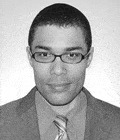 ALZO DAVID-WEST is a lecturer at Aichi Prefectural University in Japan, an associate editor for North Korean Review, and an ABD in communication at the European Graduate School in Switzerland. His publications in language education include ‘Teaching English to North Korean Refugees in South Korea: An Interview with Karen Choi’ (2010), ‘Sequential Art and Sentence Construction: Wordless Comics in an EFL Context’ (2012), and ‘Ok-Lee Maria: A One-Act Play: A Student-Written, Task-Based Drama at Duksung Women's University’ (2014). Email: adavidwest@yahoo.com
 SORA SUH is a PhD candidate in Language Education at Rutgers University in New Jersey. Her academic interests are in the fields of bilingual education, language socialization, and second language acquisition, with a focus on the bilingual development of young Korean Americans and the English learning processes of Koreans in transnational contexts. Email: sora.is@gmail.com


