Introduction
An emergency is an event or imminent threat that produces, or potentially produces, a range of health consequences that require coordinated actions, usually urgent and often non-routine. It includes epidemics, natural disasters, and those involving violence and conflict, which can become protracted. 1 In emergencies, infrastructure, supplies, and the health workforce can be impaired or non-existent, creating challenging environments to deliver good-quality care. 2
The Gaza Strip, in the occupied Palestinian territory (oPt), lives in a protracted emergency crisis. From 2008 through 2021, the Gaza Strip experienced four major Israeli military escalations (in 2008-2009, 2012, 2014, and 2021). During these escalations, 3,845 Palestinians were killed and 19,617 were injured. 3–6 Health care facilities have also sustained damage. In the 2008-2009 escalation, 21 health care facilities were damaged, 3 and in 2014, four Primary Health Care Centers (PHCCs) were destroyed. 7 Similarly in 2021, six hospitals and 11 PHCCs were damaged. 6 Damaged health care facilities, amidst electricity outages and severe depletion of medications and medical supplies, added additional strain to Gaza’s already overwhelmed health care system.
In the Gaza Strip, Primary Health Care (PHC) services are provided through 98 PHCCs; the Ministry of Health (MoH; Gaza, oPt) operates 52, the United Nations Relief and Works Agency for Palestinian Refugees (UNRWA; Gaza, oPt) operates 22, nongovernmental organizations operate 19, and the Ministry of Interior (MoI; Gaza, oPt) operates five through Police Medical Services. 8 In the Gaza Strip, PHCCs are either level three or level four. Level-three PHCCs provide preventive services (Maternal and Child Health [MCH], vaccination, and Family Planning [FP]); curative services (General Practitioner [GP] and medical specialist); and health education, and some PHCCs have a laboratory. Level-four PHCCs, in addition to the services provided in level-three PHCCs, provide dental care, obstetrics and gynecology, radiology, and Emergency Medical Services. 9
During escalations, the number of injuries dramatically increases, and hospitals deal with surges of casualties. During the 2021 escalation, the MoH emergency and surgical departments dealt with 1,900 patients over 11 days. 10 The Israeli forces also damaged roads leading to Al Shifa Hospital, the largest in Gaza, hindering the ambulances from accessing it. 11 This experience highlighted the urgent need for proper emergency management and proposed activating the emergency rooms (ERs) of MoH-run level-four PHCCs to respond to future escalations. 10 In the Gaza Strip, PHC could be optimized to form part of the emergency response system. Several studies have emphasized the importance of PHC in preparing for, responding to, and recovering from emergencies. Reference Millin, Jenkins and Kirsch12–Reference Swathi, González and Delgado16 Several studies have also recommended providing Primary Emergency Care (PEC) at PHCCs as a strategy to reduce the burden on hospitals’ emergency departments (EDs). Reference Mahfouz, Abdelmoneim and Khan17,Reference Bosch, Escoda and Nicolás18 But the question remains whether PHCCs in the Gaza Strip are prepared and whether Primary Care Providers (PCPs) have adequate emergency competencies to respond to emergencies. To the authors’ knowledge, PHC preparedness and PCPs’ roles, emergency competencies, and experiences have not been studied. This study, therefore, aimed to assess the emergency preparedness of MoH-run level-four PHCCs in the Gaza Strip. The primary objectives were to: (1) understand the role of level-four PHCCs in the Gaza Strip and the challenges encountered during emergencies; (2) determine whether PCPs (doctors and nurses) working in level-four PHCCs have the competencies and experience to respond to potential emergencies; and (3) assess the preparedness of ERs in level-four PHCCs.
Methods
Study Design
The study was cross-sectional, used quantitative methods, and utilized two tools. The first tool was a self-administered structured questionnaire developed by the research team and designed for yes/no and multiple-options answers. The questionnaire was then translated into Arabic and was pre-tested with four experienced PCPs (two doctors and two nurses). The participants in the pre-testing were asked to fill out the questionnaire, following which a discussion was conducted. During the discussion, the participants were asked to reflect on the questionnaire’s design and length, and the clarity and relevance of the questions. They were also asked to interpret some questions and whether they had suggestions for possible questionnaire improvements. Following the pre-testing process, modifications to the questionnaire were made accordingly.
The final version of the questionnaire included 44 questions divided into four sections: (1) participants’ basic information; (2) knowledge about the contingency plan (CP) and experience working during emergencies; (3) continuous education and training; and (4) Knowledge, Attitude, and Practice (KAP). The KAP section focused on the participants’ perceived competencies, experiences, and training needs to provide PEC, particularly for cardiac arrest and trauma patients.
The second tool was an observational checklist used to assess the availability of emergency drugs, disposables, and equipment in the ERs and the ERs’ infrastructure, and it was completed by the research team with assistance from a nurse from each PHCC. The drugs list was obtained from the essential drugs list for the PHC in the Gaza Strip.
Study Settings
The study was conducted from May through June 2022 and involved 16 level-four PHCCs distributed across the five governorates of the Gaza Strip. Three PHCCs were from North Gaza (Abu Shebak, Shuhada Jabalia, and Shuhada Beit Lahia); six from Gaza (Sabha, Al Surani, Shuhada Al Daraj, Shuhada Al Remal, Shuhada Al Zaytoun, and Shuhada Al Sheikh Radwan); two from the Middle Area (Shuhada Dair Al Balah and Shuhada Al Nuseirat); three from Khan Younis (Bani Suhaila, Muscat Al Qarara, and Shuhada Khan Younis); and two from Rafah (Tal Al Sultan and Shuhada Rafah).
Study Participants
All doctors and nurses working at the targeted PHCCs were eligible to participate in the study. Targeted participants were identified by contacting the heads of PHCCs who provided the numbers of PCPs. Doctors and nurses who were volunteers or were in an internship were excluded.
Doctors and nurses who were present in the PHCCs at the time of data collection were invited to participate after being informed about the study’s purpose and assured of data confidentiality. Those who agreed to participate gave consent and were given the printed Arabic version of the questionnaire after being instructed. All questionnaires were collected the same day or the next day.
Ethics
The study was approved by the Committee for Helsinki ethics approvals (Number: PHRC/HC/1156/22) in Gaza, the International Cooperation and Projects Directorate of the MoH, the PHC Directorate, and the MoI in Gaza.
Statistical Analysis
The collected data were entered, managed, coded, and analyzed using IBM SPSS statistics version 28 (IBM Corp.; Armonk, New York USA). Missing responses to the questions in the completed questionnaires were coded as missing. Descriptive statistics were reported as numbers and percentages, calculated from the total number of respondents for each question. Pearson Chi-square test was used to compare categorical data, and a P value <.05 was considered statistically significant.
Results
Participants Basic Characteristics
Of the 320 doctors and nurses working in the targeted PHCCs, 250 were present during data collection. Two hundred and forty-six completed the questionnaire, and four refused to participate. Data from 238 questionnaires were included in the data analysis. Reasons for non-inclusion were: not specifying the job title (n = 6), not filling the questionnaire (n = 1), and being an internship doctor (n = 1). Therefore, 74.4% of the total study population was included in the study.
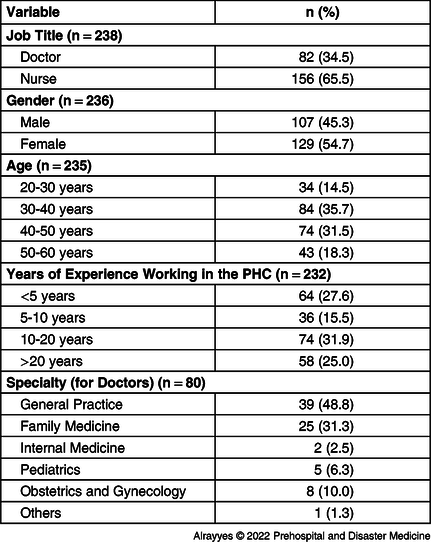
Participants’ basic characteristics are described in Table 1. Approximately two-thirds of the participants (65.5%; n = 156) were nurses, and over one-half (54.7%; n = 129) were females. Almost one-half of the doctors (48.8%; n = 39) were GPs, and most specialized doctors were in Family Medicine (31.3%; n = 25). Over one-third (35.7%; n = 84) were aged between 30-40 years, and approximately one-third (31.9%; n = 74) worked at the PHC for 10-20 years.
Basic Characteristics of Participants Working in the 16 Level-Four PHCCs in the Gaza Strip

Abbreviations: PHC, Primary Health Care; PHCC, Primary Health Care Center.
Experience Working during Emergencies and Knowledge about the CP
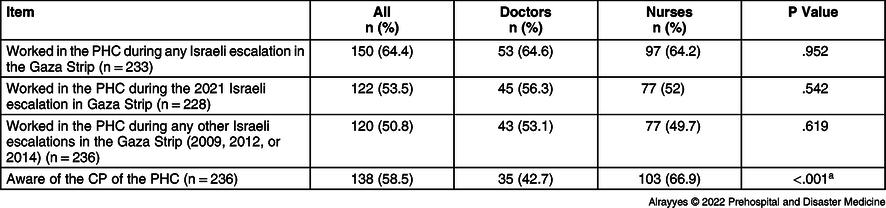
The participants were asked to report on whether they experienced working in the PHCCs during Israeli escalations in Gaza (Table 2). Only 53.5% (n = 122) worked in the PHCCs during the 2021 escalation, and they had varied roles; 48.9% (n = 44) provided routine health care services, 34.4% (n = 31) provided emergency services, 12.2% (n = 11) provided wound care and dressing, and 4.4% (n = 4) had administrative roles. The remaining staff (n = 32) did not specify their roles.
Participants’ Experience Working during Emergencies (Israeli Escalations) and Knowledge about the CP

Abbreviations: PHC, Primary Health Care; CP, contingency plan.
a P <.05, statistically significant.
Only 40.5% (n = 92) of the participants worked in at least two escalations, including the 2021 escalation. In this group, approximately two-thirds (66.7%; n = 60) stated that the provided services in their PHCCs were of better quality during the 2021 escalation. When asked about the reasons, the following were most frequently reported by the respondents (n = 55): the CP was well-activated (38.6%), the staff was well-trained and prepared to work during emergencies (27.7%), the PHCC was well-prepared in terms of drugs and equipment availability (30.1%), and other reasons (3.6%). The participants were also asked to report the most affected PHC services during the 2021 escalation: MCH was declared as the most affected (19.2%), followed by vaccination (14.9%), mental health services (13.6%), non-communicable diseases (12.1%), dental services (12.1%), and FP (11.1%). Emergency services and gender-based violence services were reported as the least affected (8.8% and 8.1%, respectively).
Over one-half of the participants (58.2%; n = 138) were aware of the available CP for PHCCs, though awareness varied considerably across the PHCCs (P = .014). Moreover, the percentage of nurses aware of the CP was significantly higher than that of doctors (66.9% versus 42.7%; P <.001). Furthermore, the percentage of aware participants was higher among those who had experience working in the PHC during escalations compared to the inexperienced (64.7% versus 45.8%; P = .005). Nevertheless, 35.3% of the participants (n = 53/233) who worked in the PHCCs during Israeli escalations were unaware of the CP.
Previous experience working in EDs was also investigated. More than one-half of the participants (56.4%; n = 133) had experience working in the ED of a hospital, of whom 45.6% (n = 61) worked for less than one year, 28.2% (n = 37) worked between one and five years, and 25.2% (n = 33) worked for more than five years.
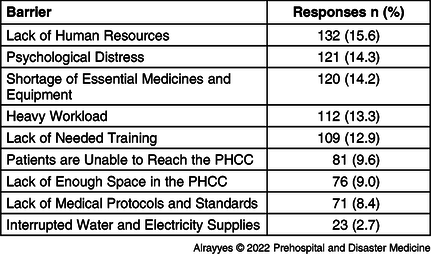
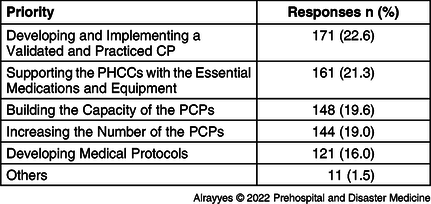
The participants were asked about their opinion regarding the potential barriers to providing high-quality PHC services during emergencies (Table 3). Lack of human resources was most frequently reported (15.6%), while interrupted water and electricity supplies were the least (2.7%). The participants were also asked about the priorities to improve PHC service quality during emergencies (Table 4). Developing and implementing a validated and practiced CP was most frequently reported (22.6%).
Participants’ Opinions Regarding the Potential Barriers to Providing High-Quality PHC Services during Emergencies

Abbreviations: PHC, Primary Health Care; PHCC, Primary Health Care Center.
Participants’ Opinions Regarding the Priorities to Improve the Quality of PHC Services during Emergencies

Abbreviations: CP, contingency plan; PHC, Primary Health Care; PHCC, Primary Health Care Center; PCP, Primary Care Provider.
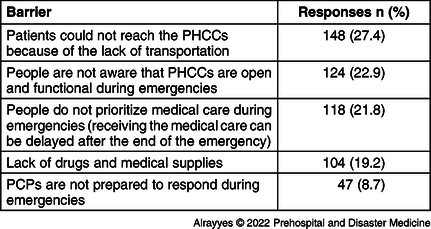
The participants were also asked about their opinion regarding barriers the local people encounter in accessing good-quality PHC services during emergencies (Table 5). Lack of transportation to reach the PHCCs was the most reported barrier (27.4%), while staff unpreparedness to respond during emergencies was the least reported (8.7%).
Participants’ Opinions Regarding the Barriers that the Local People Encounter in Accessing Good-Quality PHC Services during Emergencies

Abbreviations: PHC, Primary Health Care; PHCC, Primary Health Care Center; PCP, Primary Care Provider.
Continuous Education and Training
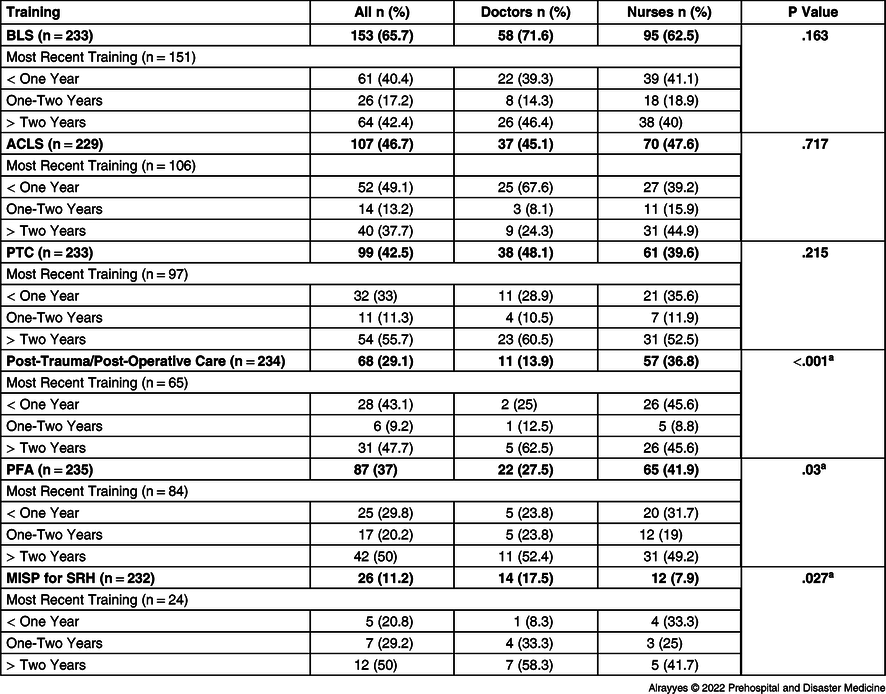
The participants were asked to report on whether and when they received several trainings (Table 6). Overall, 65.7% (n = 153) of the participants had received training in Basic Life Support (BLS), though 42.4% (n = 64) received it for more than two years. Moreover, 46.7% (n = 107) had received training in Advanced Cardiac Life Support (ACLS), of whom 37.7% (n = 40) had the training for at least two years. Ninety-nine participants (42.5%) received training in Primary Trauma Care (PTC), of whom 55.7% (n = 54) had the most recent training over two years ago. No statistically significant differences were observed between doctors and nurses regarding BLS, ACLS, or PTC training (P >.05). Most PHCCs (93.8%; n = 15) had at least 50% of their PCPs trained in BLS. However, only six PHCCs (37.5%) had at least 50% of their PCPs trained in ACLS, and only five (31.3%) had at least 50% of their PCPs trained in PTC. None of the PHCCs had all their PCPs trained in BLS, ACLS, or PTC.
Number and Percentage of Participants Working in Level-Four PHCCs Who Received Training in Several Training Areas, the Gaza Strip, June 2022

Abbreviations: PHCC, Primary Health Care Center; BLS, Basic Life Support; ACLS, Advanced Cardiac Life Support; PTC, Primary Trauma Care; PFA, Psychological First Aid; MISP, Minimum Initial Service Package; SRH, sexual and reproductive health.
a P <.05, statistically significant.
The majority of the participants (84.3%; n = 166) had never been trained in Post-Trauma/Post-Operative Care (wound care and dressing), and Psychological First Aid (PFA) training was received by only 37% (n = 87). Similarly, most participants (88.8%; n = 206) had never received training in the Minimum Initial Service Package (MISP) for Sexual and Reproductive Health (SRH). The percentages of nurses who reported receiving Post-Trauma/Post-Operative Care, PFA, and MISP for SRH training were significantly higher than those of doctors (P <.001, P = .03, and P = .027, respectively). None of the PHCCs had all their PCPs trained in Post-Trauma/Post-Operative Care, PFA, or MISP for SRH.
Knowledge, Attitude, and Practice (KAP)
The vast majority of the participants (93.2%; n = 218) believed that emergency services are an essential component of the PHC. However, 46.8% (n = 109) were unsatisfied with the PEC services provided at their PHCCs. When asked about the reasons for unsatisfaction, the participants reported the following in order: lack of emergency equipment (20.50%), the ER had inappropriate space or design to treat emergency cases (19.70%), lack of emergency medication (18.90%), lack of protocols and clinical guidelines (14.20%), shortage of PCPs (13.50%), and PCPs were not trained nor experienced in emergency medicine (13.20%).
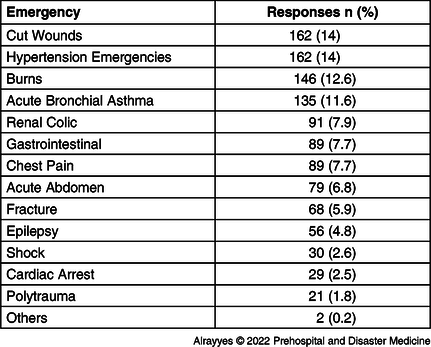
The participants were asked to report common emergencies encountered in their PHCCs (Table 7). Cut wounds and hypertensive emergencies were reported as the most frequent (14% each), while cardiac arrest and polytrauma were reported the least (2.5% and 1.8%, respectively). When the participants were asked what they would do if they encountered an emergency case in their PHCCs, the majority (91.1%; n = 204) said they would start providing initial resuscitation/treatment before transferring the patient to a hospital.
Common Emergencies Encountered in the PHCCs

Abbreviation: PHCC, Primary Health Care Center.
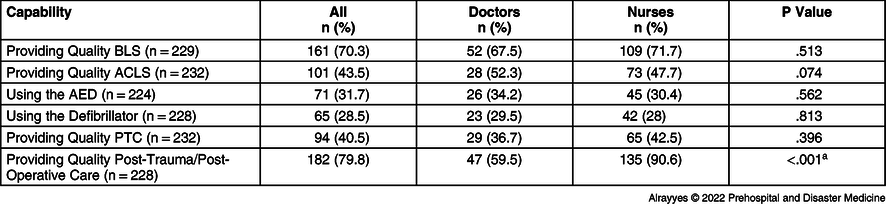
The participants’ perceived capabilities in providing PEC and their experiences in resuscitating emergency patients were also investigated (Table 8). Forty-nine participants (21.4%) reported being involved in resuscitating a patient with cardiac arrest during the last 12 months. Over two-thirds of the participants (70.3%; n = 161) reported that they could provide BLS (recognizing cardiac arrest, calling for help, and performing cardiopulmonary resuscitation [CPR]). However, less than one-half (43.5%; n = 101) reported that they could provide ACLS (inserting oropharyngeal or nasopharyngeal airway, using a bag mask, providing oxygen, continuing CPR, giving a shock, and administering emergency drugs). Those who felt incapable reported a lack of practical skills in BLS (72.6%) and ACLS (43.6%) as the main reason for being incompetent.
Participants’ Feelings Regarding their Capability to Provide Emergency Resuscitative Measures

Abbreviations: BLS, Basic Life Support; ACLS, Advanced Cardiac Life Support; AED, automated external defibrillator; PTC, Primary Trauma Care.
a P <.05, statistically significant.
Thirty-seven participants (16.1%) reported being involved with a polytrauma patient in the last 12 months. Only 40.5% (n = 94) admitted they could resuscitate polytrauma patients (conducting the primary and secondary survey and managing life-threatening emergencies). Similarly, lack of practical skills in PTC was recognized as the main reason by 44.8% of the participants who felt incapable. No statistically significant differences were observed between doctors and nurses regarding their perceived capabilities in BLS, ACLS, or PTC (P >.05).
One hundred and thirty-three participants (61%) reported being involved in providing care for a patient with a wound during the last 12 months. Most participants (79.8%; n = 182) reported being capable of providing wound care and dressing, but the percentage of capable nurses was significantly higher than that of doctors (90.6% versus 59.5%; P <.001). Similarly, the lack of practical skills in wound care was identified as the main reason by 52.6% of those who felt incapable.
The participants were also asked whether there was resuscitation equipment in their PHCCs and whether they could use it. Only 18.9% (n = 43) declared that their PHCCs had an automated external defibrillator (AED), and 18.1% (n = 39) reported the availability of a defibrillator. Overall, 31.7% (n = 71) and 28.5% (n = 65) stated that they knew how to use the AED and the defibrillator, respectively.
The participants were also asked whether they needed training to become more proficient in providing PEC (Table 9). The majority (89.2%; n = 207) admitted they needed ACLS training, followed by PTC (89%; n = 194), BLS (81.1%; n = 185), and Post-Trauma/Post-Operative Care (76.8%; n = 172).
Participants’ Needs for Training

Abbreviations: BLS, Basic Life Support; ACLS, Advanced Cardiac Life Support; PTC, Primary Trauma Care.
Finally, the participants were asked to report on their willingness to work in the ERs of PHCCs during emergencies (during future escalations). Approximately one-third (30.4%; n = 70) expressed their unwillingness. The following reasons were reported: not having previous experience working in the ER (49%), not having practical skills in emergency medicine (33.7%), and not having theoretical knowledge of emergency medicine (17.3%).
Capacity and Readiness of ERs in Level-Four PHCCs in the Gaza Strip
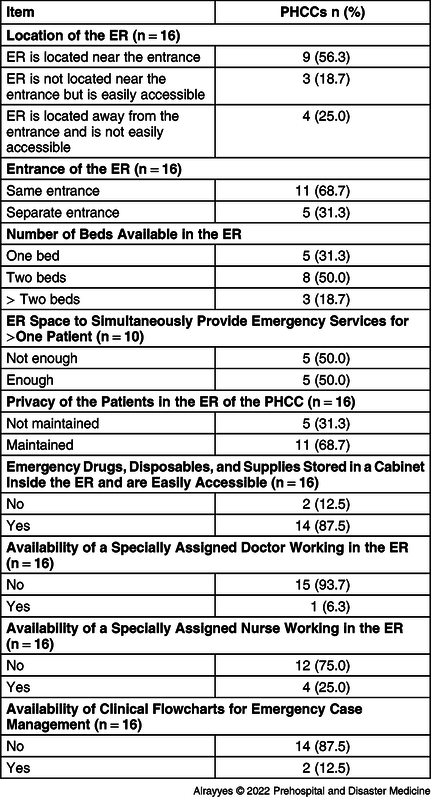
The results of the observational checklist are shown in Table 10. The ERs of nine PHCCs (56.3%) were located near the PHCC’s main entrance, and only five (31.3%) had a separate entrance. Regarding bed numbers and patient privacy (availability of curtains between the beds), the results showed that 11 PHCCs (68.8%) had at least two beds in the ER. However, the ER space in five PHCCs was insufficient to provide emergency services for more than one patient simultaneously, and the patient’s privacy was maintained in only 11 PHCCs (68.8%). Four PHCCs (25%) had a specially assigned nurse for the ER, and only one (6.3%) had a specially assigned doctor. The emergency drugs, disposables, and supplies were stored in a cabinet inside the ER and were easily accessible in 14 PHCCs (87.5%), and only two PHCCs (12.5%) had clinical flowcharts for emergency case management.
Results of the Observational Checklist of the ERs of PHCCs in the Gaza Strip, June 2022

Abbreviations: PHCC, Primary Health Care Center; ER, emergency room.
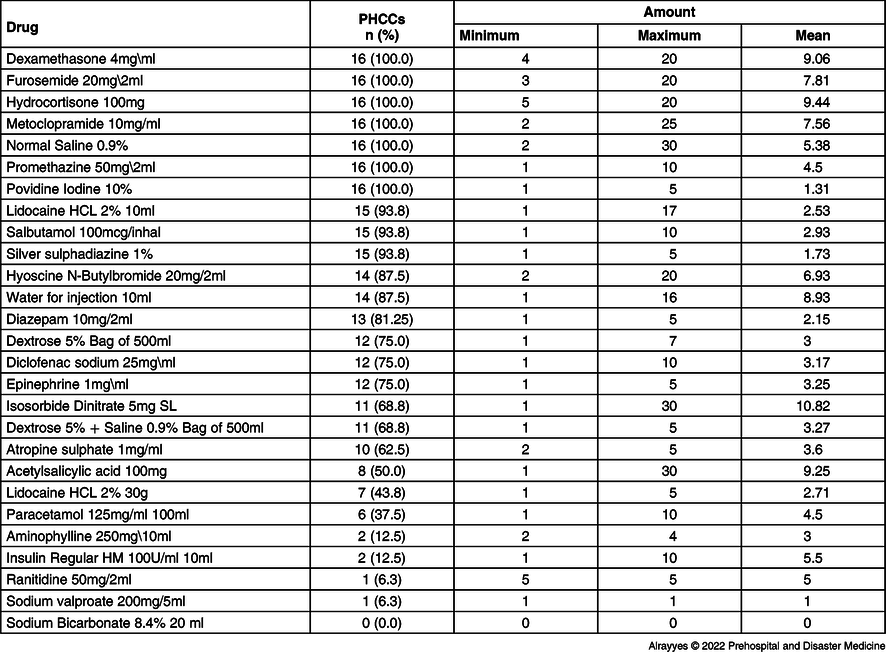
Regarding the availability of emergency drugs, the results showed that only 29.63% (n = 8) of the drugs (Dexamethasone, Furosemide, Hydrocortisone, Metoclopramide, Normal Saline 0.9%, Promethazine, Sodium Bicarbonate, and Povidine Iodine) were available in all PHCCs (Table 11). Sodium Bicarbonate was not available in any PHCC. None of the PHCCs had all the essential emergency drugs available.
Availability of Emergency Drugs in Level-Four PHCCs in the Gaza Strip, June 2022

Abbreviation: PHCC, Primary Health Care Center.
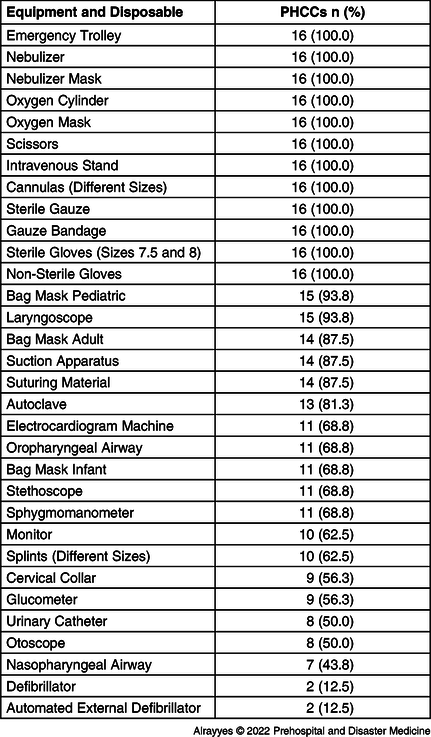
Emergency equipment and disposables were also assessed for availability (Table 12). Only 37.5% (n = 12) of the equipment and disposables (emergency trolley, nebulizer, nebulizer mask, oxygen cylinder, oxygen mask, scissors, intravenous stand, cannulas, sterile gauze, gauze bandage, sterile gloves, and non-sterile gloves) were available in all PHCCs. None of the PHCCs had all the emergency equipment and disposables available.
Availability of Emergency Equipment and Disposables in Level-Four PHCCs in the Gaza Strip, June 2022

Abbreviation: PHCC, Primary Health Care Center.
Discussion
The emergency unpreparedness of PHCCs and PCPs is a global problem. Several studies showed that PHC is not sufficiently prepared to respond to disasters, Reference Fuady, Pakasi and Mansyur19–Reference Van Minh, Tuan Anh and Rocklöv22 and in most countries, GPs are poorly prepared for disasters, Reference Handrigan, Becker, Jagminas and Becker13 and Gaza is not exceptional.
Even though the Gaza Strip lives in a protracted emergency crisis, 35.6% of the participants have never worked in PHCCs during any Israeli escalation, and only 40.5% worked in at least two escalations, including the 2021 escalation. These findings indicate that PHCCs in the Gaza Strip do not work at full capacity during emergencies. This observation is also suggested by the participants, who specified the lack of human resources as the main barrier to providing high-quality PHC services during emergencies. A sufficient number of physicians in disaster-prone areas is vital for disaster response, Reference Fuady, Pakasi and Mansyur19 and therefore, the lack of human resources at PHCCs in Gaza can primarily affect emergency response and poses a major challenge.
Health care workers need sufficient competencies to respond to emergencies. Familiarity with the institutional emergency operations plan, for example, is essential for health care workers to support and implement a practical, coordinated course of action during emergencies. Reference Hsu, Thomas, Bass, Whyne, Kelen and Green23 The results, though, showed that 41.5% of the participants were unaware of the CP. Moreover, 35.3% of those who worked in PHCCs during Israeli escalations were unaware of the CP. This implies that PCPs are poorly prepared, which could impact service quality and PHCCs’ ability to respond to emergencies. That could reflect why most participants (72.5%) reported developing and implementing a validated and practiced CP as a priority to improve PHC services quality during emergencies. Therefore, one of the highest priorities in preparing PHCCs for future emergencies is training PCPs on the CP.
Health care workers also need appropriate technical competencies to respond to disasters. Reference Hsu, Thomas, Bass, Whyne, Kelen and Green23 In the present study, the percentages of PCPs trained and capable of providing life-saving emergency services were investigated. These services are crucial, especially during emergencies when access to hospitals could be prohibited due to road damage. The fact that 34.3% of the participants were not trained in BLS and 53.3% were not trained in ACLS suggests that resuscitation training is not emphasized enough in the continuous education and training for PCPs. Moreover, the trained participants do not have periodic training (many had the training for more than two years). Such emergencies are not rare, as several participants (21.4%) reported being involved in resuscitating a patient with cardiac arrest during the last 12 months. Moreover, the study showed that over one-third of the participants who worked in PHCCs during the 2021 escalation had a primary role in providing emergency services, emphasizing the fundamental role of the PHCCs in emergency response. Other studies also showed that some patients with pre-cardiac arrest symptoms might seek help from GPs and/or collapse in the PHCC itself. Reference Colquhoun24,Reference Bury, Headon, Egan and Dowling25 Another study also showed that 12.5% of the participant doctors working in PHCCs were involved in cardiac arrest resuscitation. Reference Mohey and Azmi26 Therefore, training PCPs in immediate cardiac resuscitation is crucial, and they should make every effort to maintain up-to-date certification in BLS and ACLS. Reference Toback27 In other studies, the vast majority of doctors (97%) working in PHCCs were trained in BLS, Reference Aloufi and Bakarman28,Reference Einav, Wacht, Kaufman and Alkalay29 which is higher than in this study (71.6%). However, more doctors in this study were trained in ACLS compared to the study conducted in Jeddah, Saudi Arabia (54.9% versus 39.3%, respectively), Reference Aloufi and Bakarman28 but less compared to the study conducted in public PHCCs in Singapore (69.7%). Reference Ong, Chan, Ang, Lim and Tan30 In another study conducted in Indonesia following an earthquake in 2009, PCPs of only one PHCC were trained in BLS, but none were trained in ACLS. Reference Fuady, Pakasi and Mansyur19
The study showed that 57.5% of the participants were not trained in PTC, and 59.5% clearly stated they were incapable of resuscitating patients with polytrauma, suggesting that formal training in trauma management is not widely adopted. Although polytrauma was the least common emergency encountered by the participants, 16.1% were involved with a polytrauma patient during the last 12 months. Therefore, to improve PHCCs’ preparedness, more focus is needed to train PCPs in trauma management. A recent systematic review concluded that all front-line staff in low- and middle-income countries (LMICs) should be offered PTC training. Reference Kadhum, Sinclair and Lavy31 Several studies conducted in LMICs have also shown that medical staff’s (doctors and non-doctors) knowledge, perceived confidence, Reference Peter, Pandit, Le, Nduhiu, Moro and Lavy32,Reference Nogaro, Pandit and Peter33 and skills Reference Jawaid, Ahmed Memon, Masood and Nadeem Alam34 in managing trauma patients have improved significantly after participating in PTC courses. Moreover, this study showed that 55.7% of the trained participants had PTC training for more than two years, suggesting that refreshing sessions are not prioritized. Evidence showed that technical knowledge decreased noticeably after 6-12 months following PTC training, and thus all medical staff should obtain periodic training. Reference Amiri, Gholipour, Mokhtarpour, Shams Vahdati, Hashemi Aghdam and Bakhshayeshi35
The present study showed an overall positive attitude toward emergency services as an essential component of PHC. However, many participants expressed dissatisfaction claiming the ER’s unpreparedness as the main reason, a reality also suggested by the observational checklist findings. Several other studies also showed that PHCCs are inadequate for providing emergency care services. Reference Mohey and Azmi26,Reference Alsaad, Abu-Grain and El-Kheir36,Reference Yorganci and Yaman37 The participants also expressed the lack of emergency protocols and clinical guidelines as a reason for dissatisfaction, and only two PHCCs had clinical flowcharts available in the ER. Emergency algorithms displayed in the ERs of PHCCs are fundamental. Reference Toback27 Therefore, ensuring the availability of emergency drugs and equipment and clinical guidelines is essential to ensure emergency services quality and improve PHCCs’ preparedness.
The high percentage of the participants who expressed their need for emergency training, even among the trained and capable, suggests personal dissatisfaction. It could also indicate that PCPs are willing to learn and improve their competencies. In other studies, doctors and nurses working in PHC also reported needing emergency training. Reference Mahfouz, Abdelmoneim and Khan17,Reference Mohey and Azmi26,Reference Abu-Grain, Alsaad and El Kheir38 The high number of untrained PCPs and those who reported needing further training emphasize the importance of continuing medical education programs in emergency medicine in PHC. Training programs and continuous medical education in emergency care could help GPs to enhance their knowledge, competence, and confidence. Reference Dick, Schluter, Johnston and Coulthard39 Therefore, policymakers in the Gaza Strip need to develop a comprehensive training program based on professional standards with specific, measurable objectives tailored to PCPs’ needs and skills.
Limitations
This study focused mainly on PCPs’ skills in delivering essential emergency medical assistance during emergencies. It did not intend to assess PCPs’ knowledge or competencies concerning the concepts of disaster preparedness or response nor to assess PHCCs’ organizational or operational capabilities. Further research, therefore, is needed to evaluate the knowledge and skills of PCPs in disaster preparedness and management. Moreover, this study was conducted in the Gaza Strip and is relevant to its unique context; therefore, it likely does not apply in different contexts.
Conclusion
The increased scale, frequency, and impact of escalations in Gaza underpin the need for a better emergency response system where PHC is primarily integrated. However, this study showed that PHCCs in the Gaza Strip are not adequately prepared. Generally, PCPs lack appropriate emergency competencies, and many PHCCs lack the appropriate infrastructure to support PEC.
Conflicts of interest
The author(s) declare none.