Introduction
The purpose of this paper is to address a number of theoretical questions about the relationship between law and morality in the context of ICJ. Superficially, this exercise might appear somewhat tautologous because what we seek to describe as ICJ already reflects particular moral and legal judgements about what its values and norms should consist of and how responsibility and accountability should be apportioned. Whilst it may be argued that the corpus of international humanitarian law exists to give effect to the international consensusFootnote 1 regarding the need to put an end to impunity for international crimes and to foster peace and reconciliation in post-conflict societies, this consensus is, of course, illusory to the extent that the structures of ICJ and the pursuit of justice are conditioned by the power threatened or exercised by dominant western liberal democracies.Footnote 2
This apparent disjunction between the rhetoric and the reality of ICJ gives rise to the three interrelated and complex theoretical questions which form the basis of this paper:
1. The first question explores whether there is any substance in the argument that punishment for international crimes can influence the behaviour of individuals or social groups by giving effect to particular ideals and principles, irrespective of whether (or not) these are judged to be morally good.
2. Following on from this, and assuming that the above argument holds, the second question is concerned to examine how the transformative potential of penality,Footnote 3 the idea that the criminal process can somehow change moral values into ethical principles for action through punishment, may be realised within the context of the international criminal trial process.
3. Finally, the paper contemplates the implications of accepting this argument for establishing the legitimacy of international trial justice, especially through recognising and giving effect to the demands for justice of victims in post-conflict societies.
These questions arise from the author’s view (Henham, Reference Henham2005a; Findlay and Henham, Reference Findlay and Henham2005) that forms of ICJ should resonate with conceptions of what constitutes justice in post-conflict societies and, further, that the criminal trial process itself (whether global or local) should be regarded as the locus for giving effect to these demands.Footnote 4 What follows therefore addresses crucial stages in developing this thesis because, ultimately, the issue of the legitimacy of ICJ can only be rationalised constructively if we place the relationship between penal law and morality at its core. This includes the need to confront conflicting arguments about the intrinsic moral worth of the criminal process and its justification beyond retributivism.
It is important to clarify from the outset that this paper does not promote international trial justice as anything more than part of the solution to achieving post-conflict justice, or suggest that it alone has the capacity to satisfy the justice demands of victims and communities seeking justice. Nor does the paper seek to circumvent in any way discussion of the importance of power in defining issues of legitimacy and the morality of justice. Its purpose is to emphasise the importance of exploring the relationship between law and morality and explaining why this is of crucial significance for developing our understanding of international trial justice. The paper suggests why a consideration of this issue is central to providing us with the conceptual tools for thinking about what the international trial process could achieve beyond its conventional punishment role. Accordingly, the arguments explored in this paper debate more fully some of the fundamental conceptual ideas which underpin the notion of transformative justice in the context of international criminal trials recently argued for by Findlay and Henham (Reference Findlay and Henham2005). The concrete realisation of these ideas, especially consideration of how they can be achieved through the principled exercise of judicial discretionary power, is developed elsewhere (Findlay and Henham, forthcoming).
The paper begins by exploring the link between the rationales for punishment and their effect. It asks whether we are justified in thinking about the practice of punishment as a kind of transformative exercise, where punishment rationales are effectively operationalised into morally cogent reasons for action through the process of discretionary decision-making that constitutes penal practice in international criminal trials. This conceptualisation has particular resonance for ICJ because the rhetoric of international trial justice implies that there are tangible links between the justifications for punishment utilised in individual cases and human consciousness, to the extent that punishment affects the moral values of individual citizens and social groups and their reasons for action. In the context of sentencing in international criminal trials, such an impact on the human capacity to rationalise may be sought through rhetorical appeals to humanity at large,Footnote 5 founded on the basis that ending impunity for international crimes is universally regarded as essential to preserve the dignity of human life.
Aspirations for punishment may, however, extend far beyond the rhetorical parameters set by conventional penal justifications such as retributivism. Judges may additionally make considered claims for the benefits of consequentialist outcomes by articulating such justifications for punishment as deterrence or rehabilitation,Footnote 6 or by suggesting that particular outcomesFootnote 7 might contribute to peace and reconciliation in post-conflict societies.Footnote 8 Thus, the relationship between penal justifications and their claimed effects is maintained at both the individual and collective level. Paradoxically, however, ICJ purports to deal with issues of individual criminal responsibility in situations of mass violence, so that, despite the selectivity of trial proceedings, international trial justice sustains the myth that its penality engages with what is perceived as justice by victims and victim communities, in addition to contributing to world peace (Drumbl, Reference Drumbl2005).
The instrumentality of international criminal process
The first question posed in the Introduction concerns the extent to which it can be argued that punishment in the criminal process (global or local) actually impacts on those individuals or groups who are directly or indirectly subjected to it. However, the question is not framed in the conventional sense of considering whether particular penal measures are related empirically to outcomes in terms of increasing or decreasing the propensity towards recidivism, rather it examines the cogency of the argument that the process of punishment itself is instrumental in a transformative sense because it effectively operationalises particular punishment norms and thereby the values and principles which sustain them.
Empirical studies of sentencing effectiveness in western liberal societies are conventionally based on the assumption that a particular type of punishment has some kind of measurable effect, the fundamental problem being how to discover the impact of the punishment on the mind and actions of the offender. It is, however, important to pause and scrutinise this notion more closely. When we say that punishment has measurable effects, we might consider whether we are justified in treating the imposition of a punishment as something equivalent to the gratuitous infliction of pain, in the sense that punishment is applied randomly and without foresight on the part of the recipient. Without doubt, the recipient may be aware of different kinds of punishment and their effects as forms of abstract (or perhaps intimate) knowledge, but the specific punishment applied in any particular case is by definition a unique life experience. However, such a conceptualisation of the experience of punishment adds little to our understanding of how rationales for punishment may be transformed or operationalised through the practice of sentencing,Footnote 9 or whether or not such an argument is indeed sustainable.
I have recently argued (Henham, Reference Henham2005a, p. 83) that the subjective meanings attributed to procedural norms by trial actors are rationalised and reconstructed during the course of the trial, whilst what is regarded as ‘common experience’ or ‘objectivity’ depends on the extent to which shared meanings or understandings between trial actors at particular decision-making sites can be said to exist. The routine application of procedural norms therefore objectifies existing trial ideology recursively over time and invests it with a veneer of legitimacy.Footnote 10 Furthermore, although the attitudes and penal philosophies of trial actors influence their perceptions of procedural and situational norms, their decision-making is motivated by perceived system objectives and strategies for achieving them.Footnote 11
Whilst legal and cultural demographics are significant as determinants of motivation and perception for trial actors,Footnote 12 it is the ideological and normative context of the criminal process itself which determines its institutional and social reality, by providing the structural framework within which individual participants recognise, negotiate and determine events. It follows from this that any conceptualisation of the ideological and normative imperatives that underpin this process must take into account the ways in which external variables influence the subjectification of procedural norms by trial actors and operationalise them during the social interactions of the trial. Accordingly, I would argue that the processes of discretionary decision-making within the trial are best conceived as socially structured interactions where trial actors continually negotiate the relative realities of their subjective experiences, resulting in outcomes which are objectified by judges through rhetoric and symbolism. Procedural norms therefore provide a legal context for the reconciliation and reconstruction of subjective experience into objectively verifiable events.
However, this view of the intrinsic moral worth of the criminal process is not shared by all commentators. Roberts (Reference Roberts and Duff2006), for example, has recently questioned whether criminal process, global or local, can be regarded as intrinsically valuable, in the sense that say, friendship or marriage may be, by asking the question, what is it good for? Roberts goes on to suggest that criminal process has no intrinsic moral worth beyond its instrumental capacity to secure good ends. What constitutes acceptable moral ends for morally significant social mechanisms such as criminal process is – and always has been – highly contested terrain.
Roberts rejects most forms of consequentialism as morally acceptable ends for criminal process on the basis that consequentialism undermines the dignity principle,Footnote 13 whilst arguing that retributive justice is an inherently valuable and morally acceptable response to crime. Nevertheless, Roberts fully acknowledges that:
‘a full account of retributive justice would need to specify the conditions under which the criminal courts might exercise legitimate authority to pass judgement and impose penal censure and punishment.’
(Roberts, Reference Roberts and Duff2006)These observations raise several issues which concern the transformative potential of the trial, the most significant of which touches on the instrumentality of criminal process. It may be argued, in response to Roberts’ assertion that the ‘criminal process appears to be devoid of intrinsic moral worth’, that criminal process is intrinsically good as a regulator of purposeful social intercourse. The intrinsically good moral end served by criminal process is that it prevents social anarchy by providing the means for regulating human behaviour. Certainly, such an assertion elevates criminal process beyond the level of object and instrumentality; a view endorsed by Lacey (1988, p. 173), who argues that its moral boundaries should extend beyond the ‘individuals never being used as means to social ends’ argument because of the essential and intrinsic goodness for humans of a peaceful just society.
Furthermore, whilst Roberts (Reference Roberts and Duff2006) agrees that social relationships such as friendship are intrinsically good, others also remind us of the broader social dimensions of friendship in the sense of what Oderberg (Reference Oderberg2000) has called ‘social living’. This might include ‘living in a self-governing community, or perhaps state, whose sole purpose is to promote the peaceful and harmonious coexistence of its members.’ One might therefore identify as intrinsically good those structures of social life (such as criminal process) which generally ‘exist for man, in order to enable him to flourish, and so is [are] good for man’, as Oderberg (Reference Oderberg2000, p. 43) suggests.Footnote 14
Although this line of reasoning is compatible with the view that the human capacity for self-determination and autonomy is shaped by society’s capacity to reduce social conflict, it should not, as Kymlicka (Reference Kymlicka2002, pp. 220, 222) argues, be taken as the complete negation of individual autonomy, especially the capacity of individuals to pursue those ends which are perceived as morally virtuous. Although these arguments take us beyond the scope of this paper, they are extremely pertinent since, as I have argued, the resolution of conflict is intrinsically good; the maintenance of social cohesion achieved through repairing the damage caused by deviance is essentially bound up with the conditions necessary for human life. Consequently, the virtue of reducing damage to social relationships (and of social structures achieving this effect) has both individual and social functions, these having both reciprocal and symbiotic dimensions. Ultimately, of course, it is a matter of moral judgement as to whether or not criminal process has any intrinsic value, and a fine distinction exists between ‘something being intrinsically constitutive of the good, and something (merely) being an instrument to good ends’.
Arguing that the resolution of conflict is intrinsically good implicitly recognises peace and (possibly) solidarity as moral goods. Yet, there remains the difficulty of how we know these are good. Some may argue, for example, that war is intrinsically good. Although a Durkheimian explanation might suggest that some kinds of societal complexity make it socially appropriate – and, therefore, morally desirable – that values of universal respect and peaceful co-operation flourish, it remains difficult to specify exactly what sociological conditions might make these values best suited to society, or, indeed, what is meant by ‘best’ in this context.Footnote 15
In addition to its centrality in arguments about the transformative capacity of international penality and the legitimacy of ICJ, the relationship between the morality of punishment and its moral consequences raises some key issues about how the normativity of international penal law should be theorised. Raz (Reference Raz1999, pp. 163–70), for example, argues that the normativity of law depends on whether it is capable of claiming legitimate authority. Although Raz (Reference Raz2001, p. 330) maintains a clear distinction between the nature of law and morality,Footnote 16 he suggests that analysis of the concept of law cannot be seen purely in terms of how successful legal theory is at explaining what goes on in society, but rather in terms of the extent to which legal theory ‘helps us to understand how people understand themselves’ (Raz, Reference Raz2001, p. 237).
Raz (Reference Raz2001, p. 237) goes on to draw attention to the mediatimg role of law as part of its claim to authority which involves ‘evaluation of law’s distinctive character as a method of social organisation’. He therefore acknowledges that the moral judgements which are enshrined in political ideologies and ultimately in penal policy affect criminal process and adjudication, but would not agree that there is automatic connection between moral laws and morally correct decisions (Raz, Reference Raz2001, p. 333). Therefore, amoral or unjust law has legal validity, but it cannot provide an adequate justification for the use of state coercive power and hence is not law in the fullest sense because it fails to realise the moral ideals implicit in the concept of law.
Whilst recognising the influence of moral judgements on the context in which legal decisions are made, Raz’s distinction between legal and moral reasoning does not therefore support any connection between the morality of punishment norms and the morality of their consequential application by the institutions of punishment. Instead, his vision of an inclusive universe of legal reasoning whose normativity depends upon its claim to authority rejects the notion of any external moral hierarchy which might presume to judge whether the reasons given in criminal adjudication are moral or not.
In stark contrast, Fuller (Reference Fuller1969) envisages a dynamic sociological role for procedural law in determining the principles of justice, drawing a distinction between the moral (external) authority of law and its procedural (internal) morality against which the fairness and justice of punishment can be judged. Fuller’s functionalist approach therefore denies the status of law to anything which is incapable of fulfilling law’s essential function of guiding the behaviour of human beings. In this sense, the morality of a system of law can only be judged to the extent that it operates effectively as a guide to conduct. Hence, according to Fuller, the law and moral ideals which govern criminal adjudication should promote those principles which he proposes as ‘internal’ to law as essential conditions of its existence.
The conditions I propose for giving effect to penal norms within the context of ICJ envisage a dependant relationship between those moral judgements which inform, but are external to the relevant law, and those internal to the process of criminal adjudication. Consequently, procedural justice is not conceived of as the primary criterion for establishing the overall legitimacy of trial justice in the manner suggested by Fuller. To the contrary, as I have argued, a more complex set of relationships is suggested between the perceived external morality of criminal process and the perceived morality of its procedural outcomes.
This observation suggests that the crucial linkages which explain the translation of ideology through policy into norms of law and procedure and the context of the trial itself need to be explored, because these hold the key to understanding how external morality is rationalised through the social reality of the trial. More particularly, it involves a consideration of the social and psychological contexts and processes of discretionary decision-making which constitute procedural justice and an appreciation of how punishment outcomes are socially created by explaining the ways in which the objectivity of the criminal process is subjectively constructed by trial participants. This means exploring each participant’s subjective understanding of that objectivity and its implications in terms of the outcomes produced by the particular decision site in question. An understanding of the role of system norms such as communication structures and the strategic goals of system participants, including how these relate to the professed or officially prescribed objectives for the criminal process, is an essential aspect of this.
This vision of how law and morality interrelate is, therefore, one which envisages a conceptual link between ‘ought’ and ‘is’Footnote 17 that manifests itself in procedural terms through the practical reality of trial decision-making. Unlike Fuller, I do not propose to deduce a system of rules that should govern the criminal process through description and speculation about what actually happens in practice as a matter of social reality. Rather, what I am suggesting is that there should be an appreciation of how that which is regarded as ‘objective’ reality (shared meanings) relates to the subjective experiences of trial actors – in other words, an understanding of how the objectivity of what takes place at specific decision-making sites within the trial is subjectively experienced as a dynamic social process by the relevant actors. So, although, as Tamanaha (Reference Tamanaha1997, p. 47) argues, value and fact are collapsed through the practice of procedural justice, I believe it is necessary to explain what we understand to be the nature or content of value and fact so identified through empirical research.
In so doing, it is important to remember that the attribution of value to what is perceived as ‘fact’ is incremental and recursive – it has no beginning or end, in the sense that the information which is eventually accepted as ‘fact’ for trial purposes already has a status and value,Footnote 18 which may (or may not) conform with particular moral principles. Accordingly, the relationship between law and morals in trial decision-making (especially sentencing) is best described as two-dimensional, effectively the opposite sides of the same coin; the essential point being that explaining the social reality of the criminal process provides the key to understanding this relationship. This is not the same thing as inferring the moral virtues of a phenomenon from the observed ‘facts’ of its existence. Rather, it recognises that the moral significance of trial justice is a dynamic and particular aspect of human experience requiring explanation at several levels of abstraction and complexity.
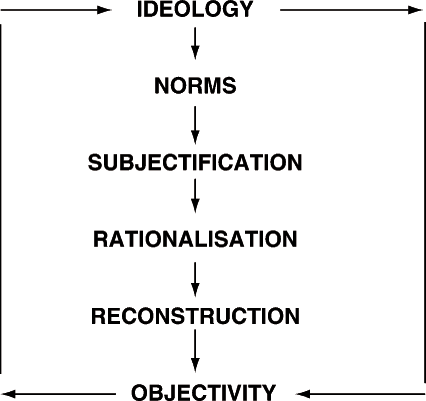
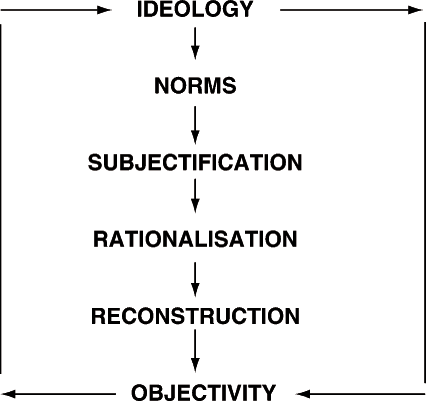
Figure 1 suggests key elements in the relationship between law and morality which are crystallised in the outcomes of discretionary decision-making within the criminal process. Such a conceptualisation is based on the assumption that the social reality of whatever describes the criminal process, as a matter of law or moral judgement, is something which can be generalised only because we can understand its subjectivity. It is the commonality of that subjective experience which allows us to generalise about the existence of that phenomenon as objectivity. I am suggesting that the objectivity of what the law signifies and how it impacts has both objective and subjective dimensions for legal professionals in trial decision-making. More specifically, in addition to already possessing knowledge about the resources of law,Footnote 19 trial participants subjectify this information to the extent that their knowledge of the law and its significance is coloured by individual attitudes and beliefs, depending on each individual’s social and cultural background. Similarly, participants will already have opinions and judgements about the moral virtues of particular punishment rationales and perceptions about the effectiveness of various penal outcomes.
Conceptualising law and morality as social reality

I would argue that what represents law’s objectivity so constituted is then rationalised and transformed through the process of discretionary decision-making so that it is reconstructed both in terms of law, fact and value. By this I mean that the outcome should be conceived as an observable and verifiable social experience; an objectivity which derives from the subjective rationalisations of law and fact made by those individuals who participate in the decision-making process. Thus, understanding the social reality of discretionary decision-making as a form of objectivity depends upon understanding how the legal and moral judgements made by trial participants in individual cases actually impact on the process of collective decision-making and what each outcome signifies. As an objectively experienced social phenomenon, each outcome represents a distillation of the individual subjective experiences of those participating in the trial. For that reason, I would contend that the objectivity of that experience can only be generalised as a matter of law or moral judgement by developing the means for understanding its creation. These propositions are represented diagrammatically in Figure 2:
Conceptualising process as the link between legitimacy and ideology
However, for legal theorists like Finnis (Reference Finnis1980), the significance of such debates is effectively diminished. Finnis contends that the intrinsic goodness of something is self-evident and, therefore, by definition normative in its effect. The attraction of such a position is, of course, that it avoids Hume’s ‘naturalistic fallacy’ of deriving ‘ought’ from ‘is’; a criticism frequently levelled (Cotterrell, Reference Cotterrell1989, p. 146) at the link made by some writers between their observations of socio-legal processes and their moral arguments for reform. For this reason it is important to clarify the connections implicit in my argument concerning the intrinsic goodness of criminal process and the concept of trial transformation, and, more specifically in the context of ICJ, the adoption of rationales for punishment and sentencing practice having greater resonance with the demands of victims and communities in post-conflict societies. The following propositions summarise the main points of this argument:
1. Criminal process as a form of conflict resolution is intrinsically good and not simply a means for satisfying particular penal ends.
2. Accepting point 1 above) establishes the moral status of criminal adjudicationFootnote 20 as a guide to normative social practice.
3. At the instrumental level, this suggests that the ends of retributive justice are not necessarily the exclusive ends of criminal process.
4. The argument further proposes that legal ideas and practices should be morally meaningful to citizens.
5. It accepts Cotterrell’s (Reference Cotterrell2002) prescription for extending the interpretative aspect of legal theory by suggesting that sociological insights might usefully illuminate how the moral meaning in law should be reflected in socio-legal research.
6. It accepts the view that the transformation of law’s moral power through punishment consists in the description and explanation of sentencing process as an interactive social practice.
These propositions collectively suggest that because criminal process (as conceived) is intrinsically good (and therefore moral) it will promote outcomes which are morally meaningful in the sense that the resolution of conflict is per se an intrinsic good. The task of socio-legal research is to describe and explain how this normativity exists as a matter of social reality, which means understanding how the political realities of power and ideology impact on the moral meaning of punishment in ICJ. Therefore, the legitimacy of normative practice and the ideology which sustains international penality is structured by moral judgements about outcomes which will be perceived as morally meaningful and how to realise these aspirations.
Accepting the argument that criminal process is intrinsically good serves to acknowledge that it represents theFootnote 21 essence (as well as the means) for resolving human conflict. This is because criminal process has the potential to repair and restore human relationships which have been damaged due to behaviour judged as socially immoral, and, therefore, potentially or actually destructive of the social well-being of a particular social group or society. It does so by redressing the balance between offenders and victims in ways which are deemed to be socially acceptable through the adoption of particular ideologically justified prescriptions for punishment. However, the most important point to make for the future development of ICJ is to stress that its penal strategies can (and should) extend far beyond those of retributive justice since criminal process has an infinite moral capacity to satisfy the demands for justice of victims and communities in post-conflict societies and thereby help to repair the damage done to their social fabric. Thus, the intrinsic goodness of criminal process invests it with a potential capacity and claim to legitimacy which may or may not be fulfilled in the real world of the social reality of international trial decision-making.
The concept of transformation
If we accept the proposition that criminal process is intrinsically good, this is not the same thing as suggesting that criminal process per se is somehow morally transformative. The latter proposition suggests that the intrinsic moral virtue of criminal process in some way translates itself into outcomes which are also (or equally) good and, therefore, having the potential to be regarded as legitimate by significant others. This is to confuse two conceptually distinct issues; the intrinsic virtue of something and the attribution to something of the quality of goodness. Attributing the quality of goodness to the concept of sentencing as a potentially transformative process is ultimately a moral judgement, just as the existence of the conception itself is an empirical question which cannot be answered, or even addressed, unless one first accepts the possibility of its occurrence.Footnote 22 In what follows, I therefore attempt to theorise the notion of transformation with the object of answering the second question posed at the beginning of this paper; namely, how can the notion of transformation be realised within the context of the international criminal trial process?
The answer to this question should lie in a closer examination and clarification of what is meant by the concepts of ‘transformation’ and ‘operationalisation’ in the context of ICJ. The former refers to the role of the criminal process in giving substance in reality (or making concrete) otherwise abstract values by suggesting that the process itself has a normative capacity which extends beyond mere criminal adjudication. This capacity derives from the notion that discretionary decisions about punishment in criminal trials are instrumental to the extent that they are capable of transforming values into individual conduct norms. Consequently, I would argue that the instrumental capacity of punishment goes further than the adjudicatory capacity of the criminal process culminating in the verdict.
Correspondingly, the notion of ‘operationalisation’ refers to the social process which transforms ideas into actions, so that the actual practice of discretionary decision-making that is sentencing is seen as giving practical effect to hitherto abstract reasons for action. Thus, the distinction between transformation and operationalisation is that the former refers to the instrumental capacity of the punishment process, whereas the latter is concerned with describing the wider interactive context within which that instrumentality is exercised. Each may be conceived as an aspect of transformative justice.
It might be argued that the concept of operationalisation simplifies and obfuscates a complex social process because it draws no distinction between what is objectively described and that which is subjectively experienced. In other words, it does not account for the way in which the practice of punishment is, as Tamanaha (Reference Tamanaha1997) argues, a process which adds value to fact. For that reason, the observation that fact and value are somehow collapsed through the practice of processual decision-making does not help us to understand the nature of the relationship between the rationale for performing a particular action and the effect of doing so in the context of punishment.
It is equally important to distinguish the criminal process as consisting of two distinct parts, namely the process of trial and verdict and the process of sentence. I would argue that the latter transcends the former in its transformative capacity because of the discretionary power of judges and their capacity to individualise sentences. Although Dworkin is correct in suggesting that the interpretation of legal rules and principles involves a mixture of legal and moral evaluative judgements,Footnote 23 this conceptualisation does not go far enough in drawing a distinction between the purposes of the trial and punishment phases of criminal process and their respective impact on the nature of judicial reasoning.
I have that argued that criminal process is intrinsically good because it facilitates a basic human need for some socially structured form of conflict resolution. This imbues the decision-making that takes place within that structure with a moral imperative that exercises a pervasive influence on the evaluative decision-making capacity of the judiciary. I would also suggest that the substantive and procedural distinctions which are frequently applied to the formal trial and punishment phases of the criminal trial within adversarial jurisdictions is highly misleading in that it detracts from the substantive significance of sentencing. The latter consists of the fact that the sentencing outcome represents the point where the interpretation of legal rules, principles and the purposes of penality are synthesised, thereby injecting the entire criminal process with a symbolic and purposeful rationality. The wide discretionary powers which international judges (in particular) enjoy to individualise sentences within the broad remit of achieving justice in post-conflict societies should, I suggest, be regarded as a vital instrumental force for promoting the good and positive ends implicit in criminal process; namely, those enhancing outcomes which contribute to the resolution of conflict.
The attribution of value to fact through the exercise of judicial discretion provides the power for change, so that judges effectively operate a kind of sociological methodology in their penal decision-making; they refer to and utilise their interpretation of general morality in order to adapt flexible legal norms relating to punishment to novel circumstances. To this extent, therefore, judicial discretionary power facilitates and achieves morally just solutions. Judges effectively operationalise competing moralities, but in an instrumental and creative way that draws on clear understandings of their role in forging the relationship between law, morality and justice. Such an argument favours using the instrumental power of judicial discretion to facilitate constructive processual outcomes, since discretionary decision-making sites within the trial provide a potentially creative context for the reconciliation of conflicting norms and values. This argument suggests a number of propositions:
• Law’s moral power may be realised through sentencing by developing the capacity for judicial discretionary decision-making to shape social reality.
• The capacity for developing the instrumental power of judicial discretion depends upon the formulation of policies allowing maximum flexibility for decision-makers.
• This suggests that judicial discretionary power has the potential to determine the morally appropriate linkage between value and fact.
• This correspondingly implies a conceptualisation of sentencing which recognises:
(a) the capacity of judicial decision-making to promote images of what the law signifies, and produces accounts of how the law impacts;
(b) the need for legal norms to engage with subjective interpretations of moral legitimacy.
The ability of judicial discretionary power to engage with morally legitimate conceptions of fact/value will depend upon the extent to which an identifiable common morality can be said to influence the exercise of discretion. The notion of a common morality has two important dimensions in this context:
1. It refers to the morality of justice as it may be perceived by the victims and communities in post-conflict societies.
2. It is a shared morality because the notion of inclusiveness has been adopted as a key element of trial ideology. Hence, the normative framework becomes the vehicle for identifying competing moral claims for justice. Judges are empowered to negotiate these demands through the use of their discretionary power.
Whether ideology and process is comfortable with the notion of judges as a mechanism for flexibility and creativity can therefore be envisaged as pivotal to the recursivity of criminal process. In this sense, human agency provides both the means and the ends for enforcing morality and justice and legitimating structure across time and space.
I would argue that the writings of Emile Durkheim have particular relevance to the notion of transformative justice and its relevance to international criminal trials. To begin with, transformative justice is consistent with the Durkheim’s notion of law as an integrative mechanism, thereby suggesting that the function of punishment, as expressed in sentencing law and practice, is to reflect and re-affirm society’s moral opprobrium (Garland, Reference Garland1990, pp. 52–4). A significant strength in Durkheim’s approach (Cotterrell, Reference Cotterrell1999, p. 199) is his exhortation that law must be viewed in terms of its actual or potential moral worth.Footnote 24 However, Durkheim’s sociological positivism ignores the subjective interpretation of normative meaning which consequently debars him from exploring the wider dimensions of collective experience. At the level of normative theorising, this restricts the utility of Durkheim for understanding how the objectivity of normative practice as a social reality actually reflects generalised accounts of the subjective experiences of trial participants
Thus, Durkheim fails to provide an interpretation which might allow us to make the link between the recognition of law as a representation of morality and the existence of forms of expressed morality in civil society which might exist in notions of communitarianism. Nevertheless, the significance of Durkheim for understanding the concept of transformative justice is his capacity to conceptualise the normative significance of sentencing rules and process as representing a form of moral legitimacy derived through the recursive exercise of judicial and/or state power.
However, arguing in favour of a moral basis for the legitimacy of international sentencing law entails not only establishing the case for change, but also poses a potentially much more difficult question relating to the extent to which international penality can be taken to represent any kind of international moral order. Hence, the issue to be explored relates, not to the validity of competing moral claims to punish,Footnote 25 but rather the degree to which the capacity exists to conceptualise and promote competing moral claims for punishment in the international sphere. In this respect, Durkheim’s (Reference Durkheim and Halls1982; Reference Durkheim, Lukes and Scull1984) assertions relating to the ‘normality of crime’ and the nature of ‘collective sentiments’ appear especially pertinent, and might lead to us to reflect upon the proposition that the function of punishment as expressed in sentencing praxis is to promote social solidarity through the recursive re-affirmation of societal values – in particular, to reflect and re-affirm society’s moral opprobrium regarding particular act or omissions defined as crime or deviance.
However, the crucial point about international forms of punishment concerns the nature of the paradox between the symbolic and the actual. The Durkheimian analogy is patently unsustainable in an international or comparative context without further elaboration, because it implies that the conceptualisation of international punishment should be concerned to establish linkage between individual morality and the manifestation of a collective conscience, as represented by some form of global penality. Such linkage may exist in form and rhetoric,Footnote 26 but not in substance. This is because there is no actual ‘significant other’, either in terms of ‘victim’ or ‘community’ which can be the focus of any kind of constructive engagement between individual morality and punishment beyond retributivism. It is also because the creation and operational reality of international regulatory structures reflect legal pluralism and cultural diversity. Although the foundation instruments of international trial institutions embody common goals there is disagreement on rationalising these objectives in practice. Consequently, aspirations for pluralism, compromise and reconciliation are reversed. This is because the structures are facilitative, they are not integral to everyday social life like domestic law to maintain civil society. There is no mutual dependency or social integration; no actual bond between universal aspirations and relative reality.
A particularly relevant aspect of this theorising concerns Durkheim’s notion of individualism (Cotterrell, Reference Cotterrell1999, p. 202), and its implication that individual collective concern for others as a moral imperative is a significant legitimation for national and international human rights movements. Cotterrell maintains that the value system of individualism envisaged by Durkheim can be conceptualised as sustaining a shared moral culture which transcends national boundaries. The difficulty remains in envisaging the moral basis upon which law’s authority is claimed to rest in terms of shared beliefs or sentiments; how to identify the transnational values of individualism in forms of international regulatory power such as structures designed for the implementation of international penal norms purporting to be grounded in principles of fairness and justice.
Nevertheless, the important theoretical insight which Durkheim’s sociological positivism provides is one which clearly does acknowledge law as a regulatory mechanism, and the need for pluralistic structures to ‘provide moral meaning in conditions of modern social complexity’ (Cotterrell, Reference Cotterrell1999, p. 226). Hence, although, as Roberts and McMillan (Reference Roberts and Mcmillan2003, p. 329) suggest, we may be far from realising the aspiration of a shared global moral consensus to underpin international principles for criminal justice, the significance of Durkheim’s theorising for understanding the notion of transformative justice lies in its potential to suggest a conceptual framework for the evaluation and analysis of the relationship between law and moral action in context.
The paradox of what constitutes justice in international punishment clearly illustrates weaknesses in the Durkheimian notion that law’s authority is derived from morality. Since it is impossible to assert convincingly that international penal norms uphold values of universal moral authority, the transformative potential of sentencing law appears diminished by this argument. As Cotterrell argues:
‘But nowhere in his [Durkheim’s] work does he recognise adequately the interpretative tension. . .between two values the law serves: the value of rule-governed consistency or predictability and the value of moral responsiveness to the particularity of circumstances.’
(Cotterrell, Reference Cotterrell1999, p. 211)However, this does not mean that that law’s authority and transformative capacity cannot be derived from pluralistic moral positions. Durkheim’s insight here is to suggest that the challenge for law is in terms of its relevance and meaningfulness for citizens. Whilst his analysis falls short in failing to grasp the significance of subjectivity for establishing the meaning of social action, and, therefore, in fully understanding both dimensions implicit in the transformative capacity of law,Footnote 27 this does not detract from his appreciation of law as a category of moral rules and the importance of understanding what law means as an expression of moral sentiment.
However, as Cotterrell (Reference Cotterrell1999, p. 61) points out, Durkheim also felt that matters of criminal procedure and the regulation of punishment were beyond the purview of what is necessary for law to exist, since customary legal rules have been established, interpreted and enforced throughout history by various structures of collective decision-making, ranging from tribal justice to the sophisticated and complex judicial edifices of today. This fact again serves to emphasise the point that criminal process is not just a facilitative or enabling legal structure; rather, it represents an essential (formalised) aspect of human social behaviour – the resolution of conflict, thus enabling social life within human groups to exist. As such, it can be argued that criminal process is a key component of civil communitarian society because it represents both the means and the ends for achieving community justice and accountability (see further, Hudson, Reference Hudson2003, ch. 3). However, what constitutes the morality of the common good is something which Durkheim failed to explore adequately, beyond asserting that particular societies themselves determine what is necessary for social solidarity. Unfortunately, representations of social morality in the post-conflict societies of late modernity are fragmented rather than held collectively by society at large so that the relative moral distance between the punishments provided internationally for breaches of humanitarian law and the social experiences of those who demand justice remains significant.
Legitimacy and international trial justice
The final part of this paper considers the implications of the notion of transformative justice for enhancing the perceived legitimacy of international punishment, especially through addressing the demands for justice of victims and communitiesFootnote 28 in post-conflict societies (see further, Findlay and Henham, Reference Findlay and Henham2005). If we accept that the rationality of international penality should be informed by adopting such a relational approach to the conceptualisation of justice, rather than through the imposition of external rationales foreign to local priorities for truth and restoration, it implies that localised notions of moral legitimacy ought to be mirrored in national and international criminal process structures. Seen from this perspective, conceptualising rationales which facilitate the individualisation of sentences in international criminal trials provides an opportunity to develop a relational framework for sentencing which is driven by the need to reconcile the moral justification for process with its perceived moral legitimacy. Consequently, a context for more restorative outcomes can be conceived by moving beyond conventional conceptualisations that envisage ‘communities’ purely in terms of victimisation towards one that sees criminal process as a context for their holistic restoration.
I would argue that international sentencing can provide an operational context for conflict resolution in the form of relational justice according to whatever interpretative categories the international judiciary are asked to work with. Rationality alone, in terms of prioritising moral values and their expression as general justifications, does not qualify for this task without further human intervention. As discussed, this level of moral reasoning only produces ‘ought’ statements, desirable states of affairs, or ethical principles for action. It is only when values are operationalised, by becoming instrumental as normative principles, that they have the capacity to influence individual thought and social action.
In the context of international penality as presently conceived, the relationship between ideology and norms is likely to take the form of a reasonably well-articulated sentencing policy (such as just deserts) which has been predicated on rational principles derived from a modified version of retributivism. However, it might equally arise through the incorporation of a set of autonomous rights principles, whose underlying values are enshrined in a foundational statement of intent. The crucial empirical question is: how far does practice (process) actually give effect to those values which have inspired the norms embodied in the relevant instrument or rights paradigm?Footnote 29 This implies that for restorative themes to impact on international penality requires the link between moral justification and legitimacy to be forged through processual norms by instrumental discretionary decision-making.
Any ideological reconceptualisation for international criminal trials which seeks to balance retributive and restorative aspirations must be reflected in a paradigm for justice delivery which recognises that:
• The involvement of victims and communitarian interests requires a process intended to have both empowering and healing potential.
• It will involve a principled delegation of power from the State Parties to the relevant community.
• The mechanism of the trial process must be transformed to enable solutions aimed at peace and reconciliation.
• There should be empowerment of victims and communitarian interests to formulate acceptable strategies for achieving aims.
• Policies and structures should exist for monitoring implementation and enforcement.
The predominant retributive paradigm generally reflected in adversarial systems of criminal justice currently produces a process where facts are distilled through adversarial argument and interrogation. Similarly, guilt or innocence is based on an allocation of individual responsibility derived through prevailing argument, with the victim being vindicated by state intervention and community interests supported through retributive punishment. By contrast, in a restorative process, the establishment of those facts constituting truth is derived through mediation and reconciliation; the objective is to empower victims and communities of interest by establishing harm and the needs of victims through confrontation and compromise. Rather than the process allocating responsibility in a seemingly autonomous manner, a restorative process concedes responsibility and tolerance and promotes reparation and restoration. By establishing the truthful story restorative outcomes effectively vindicate the victim through community intervention and confirm community interests through restoration.Footnote 30 In general terms, therefore restorative process enables victims to re-establish dominion by asserting their full rights as citizens. By extending the notion of victim to community, it allows victims and communities to claim ownership of conflict and achieve closure. Restorative justice models tend to diminish the tendencies for adversarial systems to encourage system efficiencies and standardisation and threaten notions of consistency and proportionality typical of deserts-based sentencing regimes.
Any synthesis of the ideologies underpinning retributive and restorative trial justice will require a reconceptualisation of the nature and meaning of truth finding within the trial. For example, the concept of individual responsibility and its association with the allocation of blame and guilt should be replaced with a more instrumental notion of fact-finding which promotes the emergence of truth from a process of compromise, driven by the desire to regulate relationships of community rather than a celebration of the subjugation of the offender and the vindication of the victim as part of an apparatus of social control. Professional actors in the trial will therefore be instrumental in protecting the interests of victims and community interests so reducing formalism and promoting inclusivity. In this the discretionary power of the judge and his ability to recognise the interests of the victim and the community and to ensure that their voices are heard will be pivotal. This will also involve a broadening of those who might be made accountable under the overriding direction and supervision of the judge.
Victim and communitarian interests are only going to be served if the interests of the victim/community are represented at each stage of the criminal process. If so, the ideological rationale for international criminal trial needs to be carefully re-defined to reflect the aspirations of such pluralistic demands for legitimacy. Hence, the overall justification for the trial is to provide a procedural context where the overriding objective is to facilitate the reconciliation of competing perceptions of ‘truth’. Those participants with claims for ‘truth’, and the determination of whose version of the ‘truth’ counts (and the reasons for this) will be implicated in process through the trial rationale. Such novel rationales for resolution would recursively sustain the existence and structure of the trial to promote outcomes appropriate for all parties.
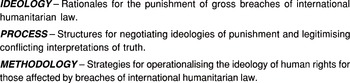
It is therefore important to provide linkage between normative and actual reality in satisfying the needs of victims and communities in war/post-war societies, particularly in scenarios of non-international armed conflict when regulatory imperatives are weaker. More particularly, the paradox between the ideology of universal human rights protection and the inadequacies of strategic intervention should be approached from a perspective which envisages rights protection as a methodological imperative. This paradox is reflected in the failure of process rationality to accommodate the inherent conflict between punishing violators and protecting the violated. Figure 3 shows how this disjunction can be conceptualised.
Conflict resolution as a methodological imperative

Figure 3 envisages the trial process as a mediator of ‘truth’ tasked to determine appropriate strategies for the implementation of solutions that are cognisant of the legitimate expectations of those who have been affected by armed conflict and social disintegration. At present, the methodological imperative for peace and reconstruction in conflict societies is divorced both conceptually and practically from the process of punishment in international criminal trials. I suggest that the resolution of ‘truth’ through process must go further than this and implicate process itself as an integral determinant of ‘legitimate’ strategies for intervention. In this way, international criminal process can be seen as giving effect to Durkheim’s moral imperative of individualism, since it places the dignity and integrity of the individual at the centre of a process which is designed to promote individual autonomy within the context of a shared morality. The morality which is shared in this way is the morality of justice; more specifically, what the criminal process can achieve to promote the reconciliation and healing of justice communities by recognising and facilitating these objectives.
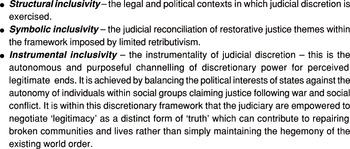
As in the domestic context, international criminal trials represent but one facet in a range of possible political responses to a particular form of normative conflict. Whether the deviant response is individual or collective, political action is shaped by the perceived social and cultural requirements of the powerful elite. Where trial rationality and penality are predicated on reasoning and structures that promote exclusion, as is currently the case with international criminal justice, the prospects for promoting peace through reconstruction and reconciliation will inevitably remain a remote possibility. Figure 4 suggests modelling for international criminal trials that identifies how the concept of inclusivity can be utilised thematically to reposition the ideology and strategies of international penality in order to facilitate the achievement of such constructive aspirations. The key to integration is through developing the instrumental capacity of judicial discretion.
The integrated decision-making model proposed in Figure 4 is, therefore, one which recognises how inclusivity as ideology and policy exists in legal and political contexts, and at the level of process through the symbolism of judicial rhetoric which appears to suggest combining retributive and restorative justice principles.
Inclusivity as a paradigm for international penality

However, the model’s most important feature is that it acknowledges the constructive potential of judicial discretionary power. This is instrumental power; judicial discretion is envisaged as a methodology for integrating strategies for reconstruction and peace; as a negotiator of legitimacy at the levels of ideology, process and intervention. Conceptualising the exercise of judicial discretion as a methodology for operationalising the transformative potential of the criminal process therefore takes the moral imperative implied by the intrinsic goodness of criminal process and gives it substantive force as a means for achieving justice for the victims and communities of post-conflict societies.
As I have argued, I believe that the moral imperative which derives from conceiving of the criminal process as intrinsically good is crucial in conceiving of international criminal trials as capable of embracing more holistic and constructive rationales for justice through the strategic use of judicial discretionary power. This moral imperative underpins judicial discretion as a positive force for change rather than discretion being regarded as essentially a matter of process, relevant only to the social mechanics of decision-making. Because the moral value of criminal process, of whatever degree of structural sophistication, is intrinsic to the human need to resolve social conflict, this imbues its rationality with a communitarian purpose. Hence, what judicial discretionary power can achieve within such a context is to pursue outcomes that restore the autonomy of individuals within social groups by recognising and working towards their collective aspirations for justice; collective in the sense that trial outcomes will represent moral and, therefore, legitimate forms of justice for individuals within victimised social groups. Legitimate also for the wider community of states which comprise the international world order; because the moral imperative of the criminal process is one which allows punishment, forgiveness and healing to co-exist as rationales for justice and, consequently, is able to reconcile the needs of the international community of states to punish and prevent heinous crimes such as genocide whilst also seizing the opportunity to promote meaningful penal strategies for peace and reconciliation.