INTRODUCTION
The growth of the Latino population, which has become the largest minority group in the United States, has significantly changed the racial and ethnic character of most urban areas. This development signals a shift in the U.S. racial structure as the spatial and economic configurations of groups in metropolitan areas evolve and groups compete for spatial and economic mobility. Scholars have argued that by focusing on Black/White comparisons, analysts of urban inequality often miss the changing multiethnic demographics of urban America (Bobo et al., Reference Bobo, Oliver, Johnson, Valenzuela, Bobo, Oliver, Johnson and Valenzuela2000; Iceland Reference Iceland2004). Residential segregation is a racial structure in metropolitan labor markets in which control over and access to resources maintains group inequalities (Dickerson Reference Dickerson2007). Bobo and Zubrinsky see it as the “structural linchpin of American race relations” (Reference Bobo and Zubrinsky1996, p. 884) because it is linked to key racial disparities, such as poverty, and educational and employment disadvantages.
Latino residential segregation is anomalous compared to other racial/ethnic groups in that it has been rising slowly in comparison to falling rates (albeit slowly) of segregation for African Americans and Asians (Iceland et al., Reference Iceland, Weinberg and Steinmetz2002). Thus, questions arise about whether the relationship between segregation and employment is similar for Latinos, and whether we might expect changes in segregation over time to impact their employment differently since it is moving in the opposite direction. Current theoretical and empirical research yields mixed results. Some studies stress the protective economic benefits of ethnic enclaves resulting from residential segregation for Latinos, especially those who are recent immigrants (Alba and Nee, Reference Alba and Nee2003). Others argue that Latinos, like African Americans, suffer economically from limited access to education and employment options as a consequence of their spatial isolation from the higher rates of employment growth offered in White-dominated neighborhoods (Ihlanfeldt Reference Ihlanfeldt1993; Kain Reference Kain1968; Wilson Reference Wilson1996). Second, racial/ethnic and cultural differences among Latino subgroups in patterns of residential segregation from Whites, regional concentration, and employment outcomes beg the question of whether or not the relationship between space and work is consistent across Latino subgroups (Martin Reference Martin2007). The typical monolithic treatment of Latino subgroups ignores their different immigration and employment histories in the United States which have substantially shaped their residential location and socioeconomic status (Alba and Logan, Reference Alba and Logan1991; Portes and Rumbaut, Reference Portes and Rumbaut1997).
This study investigates the effect of the spatial proximity of Mexicans, Cubans, and Puerto Ricans to Whites in metropolitan areas on Latino employment within the broader context of structural characteristics of metropolitan labor markets. Our goal is to assess the relationship between segregation and variations in Latino employment rates across cities and over time as segregation changes. We use a unique dataset that includes the demographic, employment, educational, occupational, and industrial characteristics of the ninety-five largest cities in the United States. The data is drawn from the 1980, 1990, and 2000 decennial censuses' One Percent Public Use Microdata Sample (PUMS) data aggregated to the metropolitan level, along with PUMS individual data. Using the five dimensions of residential segregation to represent various types of configurations of Latinos relative to Whites (Massey and Denton, Reference Massey and Denton1988), we develop a set of models that control for industrial composition, minority concentration, immigration, and education levels, while incorporating the spatial proximity of each of these groups to Whites. Our analyses feature ordinary least squares (OLS) regression to ascertain if varying levels of segregation across metropolitan areas in 2000 are associated with different levels of employment for Latinos, as well as a fixed-effects analysis to determine if changes in these structural factors across time within the same labor market affect the employment of Latino workers in that metropolitan area.
THE SPACE AND WORK CONNECTION
Several lines of inquiry dominate the literature that examines the connections between residential segregation and Latino employment. The spatial mismatch hypothesis contends that mismatches between the physical location of jobs and residence result in increased costs of job search and commuting, limited network-based employment information, and higher rates of unemployment and underemployment for minorities compared with Whites. This pattern is a consequence of the post-World War II trends towards deindustrialization of inner cities, in combination with the higher rates of job growth in suburban areas and high concentration of minorities' residence in metropolitan areas (Ihlanfeldt Reference Ihlanfeldt1993; Kain Reference Kain1968; Kasarda Reference Kasarda1989; Stoll Reference Stoll1999; Wilson Reference Wilson1996). In Kain's (Reference Kain1968) view, residential segregation in urban and suburban housing markets contributes to high rates of joblessness among minorities by spatially limiting their access to occupational opportunities and employment growth. Research shows that sources of employment-related information, education and job training, and transportation are stymied in residential areas with high concentrations of racial/ethnic minorities, especially when they are located in hypersegregated urban centers (Holzer et al., Reference Holzer, Ihlanfeldt and Sjoquist1994; Kasarda Reference Kasarda1993; Moore and Laramore, Reference Moore and Laramore1990; Taylor and Ong, Reference Taylor and Ong1995; Wilson Reference Wilson1987).
While the spatial mismatch hypothesis has been widely tested and critiqued for over thirty years, the findings are mixed—ranging from weak (Cohn and Fossett, Reference Cohn and Fossett1996) to strong (Ihlanfeldt and Sjoquist, Reference Ihlanfeldt and Sjoquist1990; Raphael Reference Raphael1998) effects on minority employment. Several urban researchers agree that minority hypersegregation continues to be a common structural feature of metropolitan areas that are dominated by less-educated African Americans (Massey and Denton, Reference Massey and Denton1988, Reference Massey and Denton1989) who suffer the economic consequences of spatial and skills mismatches within increasingly decentralized urban labor markets (Holzer Reference Holzer1996; Hughes Reference Hughes1995; Kain Reference Kain1992; Kasarda Reference Kasarda and Farley1995; Rosenbaum Reference Rosenbaum1996; Wilson Reference Wilson1996).
However, the degree to which this pattern holds for Latinos remains less clear. Some studies find that Latinos suffer some employment disadvantages to mismatches between residence and their proximity to jobs, but to a much lesser degree than African Americans (D'Amico and Maxwell, Reference D'Amico and Maxwell1995; Ihlanfeldt Reference Ihlanfeldt1993; Moore and Pinderhughes, Reference Moore and Pinderhughes1993). Supporters of the ethnic enclave model suggest a positive effect of residential segregation on Latino employment rates, particularly for recent immigrants who find employment success through segregated networks (Portes and Truelove, Reference Portes and Truelove1987; Rodriguez Reference Rodriguez1994; Sanders and Nee, Reference Sanders and Nee1987; Tienda and Lii, Reference Tienda and Lii1987). This theory predicts that residential segregation will decline with the succession or assimilation of minority groups as they achieve higher levels of socioeconomic status and acculturation with the majority group (Alba et al., Reference Alba, Logan and Stults2000; Alba and Logan, Reference Alba and Logan1991; Lieberson Reference Lieberson1980; Park Reference Park and Burgess1926; Portes Reference Portes1996). Both approaches focus on predominantly Latino neighborhoods and communities, but ignore their structural location and isolation in the broader metropolitan labor market. This belies the notion of residential segregation as a structure that creates employment inequality.
AN ALTERNATIVE CONCEPTUALIZATION OF RESIDENTIAL SEGREGATION'S CONNECTION TO EMPLOYMENT
Massey and Denton (Reference Massey and Denton1993) argue that residential segregation was created as a means through which majority groups establish and maintain their higher socioeconomic and social status. Whites, aware of their advantaged position, work to protect that position by isolating themselves from threats to their economic and social interests. The value of space is not only linked to the economy of real estate, but is also highly correlated with the availability of jobs. Wilson's (Reference Wilson1996) study clearly shows that the value of African American-dominated neighborhoods faced steady decline with the decline of the type and quality of employment. Dickerson (Reference Dickerson2007) argues that residential segregation is a racial structure in metropolitan labor markets in which control over and access to resources maintains group inequalities and finds that higher levels of residential segregation are associated with lower rates of Black employment.
Residential segregation may affect employment inequality directly by facilitating the uneven distribution of resources. For example, school segregation and property tax funding systems, which create enormous disparities in school funding, are interdependent systems organized by residential segregation. Additionally, scholars have found evidence that employer bias and stereotyping is influenced by residential segregation through spatial signaling; that is, some employers indicate an unwillingness to hire minorities from certain neighborhoods or areas of the city they deem “bad” (Moss and Tilly, Reference Moss, Tilly, Berg and Kalleberg2001). Finally, job information networks, which are crucial in workers' finding employment are often spatially bound, as people's networks are typically limited to family and friends in close proximity. All of these structures, processes, and perceptions are in some way organized by residential segregation. Cutler and Glaeser (Reference Cutler and Glaeser1997) analyzed leading mechanisms in comparison to direct effect of segregation and found that mechanisms explained some but not all of direct effect.
Some have raised the possibility that racial preferences are the primary source of residential segregation. The idea is that because all groups express a strong “mutual in-group preference,” residential segregation is a voluntary option rather than a consequence of racial stereotypes and prejudices (Clark Reference Clark1986, Reference Clark1992). It has been argued that same-race preferences in neighborhood composition are especially high among African Americans (Clark Reference Clark1986, Reference Clark1992; Patterson Reference Patterson1997; Thernstrom and Thernstrom, Reference Thernstrom and Thernstrom1997). However, this ethnocentric bias hypothesis is not supported in the empirical literature (Farley et al., Reference Farley, Krysan, Jackson, Steeh and Reeves1993; Zubrinsky and Bobo, Reference Zubrinsky and Bobo1996). Studies that show that Whites express more resistance toward neighborhood integration than African Americans or Latinos (Charles Reference Charles and Briggs2005; Krysan Reference Krysan2002; Krysan and Farley, Reference Krysan and Farley2002). Bobo and Zubrinsky (Reference Bobo and Zubrinsky1996) find that the idea of in-group attachments may have less of impact on neighborhood preferences than out-group prejudices and stereotypes. Research shows that preferences for neighborhood integration vary significantly according to the race of the integrating group. Whites and Latinos express stronger resistance to living in neighborhoods with high proportions of African Americans than other groups, whereas African Americans are more likely to express preferences for neighborhoods with a roughly fifty-fifty proportion of co-ethnics (Charles Reference Charles2003). Among Latinos, Charles (Reference Charles and Briggs2005) found that those who were foreign-born, had limited English proficiency, and had lived in the United States for five years or less were more likely than longer-term, native-born Latinos to prefer Latino-dominant neighborhoods. She attributes their residential preferences more to the increased reliance on ethnic cultural institutions and networks among newer immigrants than “natural ethnocentricism” (Charles Reference Charles and Briggs2005, p. 66). Others explain preferences for social distance from African Americans among recent immigrants as a perceived strategy for upward mobility in the United States (Portes and Rumbaut, Reference Portes and Rumbaut1997).
A number of race theorists cite segregation as a key component of the racial structure and process by which racial stratification is achieved and maintained (Cornell and Hartmann, Reference Cornell and Hartmann2007; Bonilla-Silva Reference Bonilla-Silva1997). Even though Latinos are formally thought of as an ethnic group with racial variations, we argue that their segregation defines their racialization as a group. Omi and Winant defined racialization as the “the extension of racial meaning to a previously racially unclassified relationship, social practice or group” (Reference Omi and Winant1994, p. 64). They identified segregation as an exclusionary policy (along with slavery and immigration) that structures and produces racial stratification. Cornell and Hartman offered a more precise definition of racialization: “the process by which certain bodily features or assumed biological characteristics are used systemically to mark certain persons for differential status or treatment” (Reference Cornell and Hartmann2007, p. 34). In a discussion about racial formation, Massey states that “Mexicans have steadily been racialized to label them socially as a dehumanized and vulnerable out-group” (Reference Massey2009, p. 12). He goes on to state: “The roots of social stratification ultimately lie in the construction of boundaries to enable social distinctions … People naturally favor boundaries and framings that grant them greater access to material, symbolic, and emotional resources …” (Reference Massey2009, pp. 12–14). In this light, we view residential segregation as a “boundary” mechanism that operates as both a source and consequence of racial stratification.
This conceptualization of residential segregation is not new. The theories underlying the contention that segregation is a cause of ongoing racial inequality implicitly conceptualize segregation as a macro structure that organizes metropolitan areas. However, the empirical studies that this contention spawned have most often focused on smaller units of this structure, typically specific neighborhoods in metro areas (predominantly minority in most cases). While this deepened our understanding of the effects of isolation on these neighborhoods, we argue that it shifted the focus from the structure itself to the consequences of the structure. We believe an examination of the effects of the structure itself can reveal even more about how the spatial configuration of groups in a metro labor market can impact employment opportunities.
Given the implication of residential segregation in racial economic stratification in metro areas, we believe it may also mediate the previously documented minority concentration effect (Huffman and Cohen, Reference Huffman and Cohen2004). Scholars have found a persistent negative relationship between the size of a metro area's minority population and the minority's economic outcomes (i.e. median income, employment, etc.). Some have hypothesized that this is due to efforts of the majority to maintain its hold on social and economic resources, a process which results in racial economic inequality. The historical role residential segregation played in partitioning off opportunity and resources as minority populations grew in cities (Massey and Denton, Reference Massey and Denton1993), is suggestive of its continuing role in maintaining social distance and unequal access to economic opportunity, especially as emerging minority populations, namely Latinos, continue to grow.
TRENDS IN LATINO RESIDENTIAL SEGREGATION AND EMPLOYMENT
Latino segregation is anomalous from other racial/ethnic groups in that it has been rising slowly in comparison to declining rates of segregation for Blacks and Asians (Iceland et al., Reference Iceland, Weinberg and Steinmetz2002). Recent studies on patterns of Latino residential segregation show that Latinos generally are less segregated from Whites than are Blacks (Charles Reference Charles2003; Fischer and Tienda, Reference Fischer, Tienda, Tienda and Mitchell2006; Iceland et al., Reference Iceland, Weinberg and Steinmetz2002; Massey and Denton, Reference Massey and Denton1987). Latino segregation is anomalous from other racial/ethnic groups in that it has been rising slowly in comparison to declining rates of segregation for Blacks and Asians (Iceland et al., Reference Iceland, Weinberg and Steinmetz2002). However, there is significant variation among Mexicans, Cubans, and Puerto Ricans on their residential proximity to Whites (Logan Reference Logan2003; Massey and Denton, Reference Massey and Denton1987, Reference Massey and Denton1989; Santiago Reference Santiago1990). According to census data, Puerto Ricans in metropolitan areas are the most segregated from Whites among the three sub-groups, followed by Mexicans, and Cubans (Iceland Reference Iceland2004). At the neighborhood level, Cubans live in neighborhoods with a higher concentration of other Latinos than do Mexicans or Puerto Ricans, while Mexicans are more likely than Puerto Ricans to live in neighborhoods that are largely exclusive to Mexicans (Logan Reference Logan2003).
These patterns of residential segregation are affected by nativity, socioeconomic status, and skin-color. Overall, native-born Latinos are more likely to live with Whites than foreign-born Latinos, although their degree of segregation varies with the length of time of their residence in the United States (Denton and Massey, Reference Denton and Massey1988; Iceland and Scopilliti, Reference Iceland and Scopilliti2008). Low socioeconomic status among Latinos is associated with higher rates of segregation from Whites (Iceland et al., Reference Iceland, Sharpe and Steinmetz2005; Iceland and Wilkes, Reference Iceland and Wilkes2006; White et al., Reference White, Biddlecom and Guo1993). Puerto Ricans are more likely than Mexicans or Cubans to live in poor urban neighborhoods and experience higher rates of residential segregation (Massey and Denton, Reference Massey and Denton1987; Santiago Reference Santiago1990; South et al., Reference South, Crowder and Chavez2005). Massey and Bitterman (Reference Massey and Bitterman1985) contend that the prevalence of Black phenotypes among Puerto Ricans may contribute to the socioeconomic and residential segregation patterns among Puerto Ricans. In an analysis of Census data for 1970 and 1980, Massey and Denton (Reference Massey and Denton1989) found that Black Latinos have higher patterns of racial segregation from White non-Latinos than White Latinos. This finding has found consistent empirical support in similar studies (Iceland and Nelson, Reference Iceland and Nelson2008; Logan Reference Logan2003; South et al., Reference South, Crowder and Chavez2005) and does not seem to be exclusive to those at the lowest socioeconomic levels. In their study of spatial attainment in New York, Rosenbaum and Friedman (Reference Rosenbaum and Friedman2007) found that among highly affluent Latino households (household income greater than $100,000) Black Latinos reside in poorer quality neighborhoods than non-Black Latinos. While non-Latino Blacks face a rigid color line regardless of socioeconomic status, the story for Latinos is more inconsistent. They may display spatial assimilation patterns similar to Whites, improving with each generation, but their highest attainment is capped, compared to Whites, even the poorest Whites. The authors suggest the color line does exist for Latinos even while it is more permeable for them than for non-Latino Blacks.
Geographic location is highly correlated with employment. Historically, Puerto Ricans were concentrated in the unionized Northeast and, as U.S. citizens, subject to labor protections. As employers found them more costly and began hiring other immigrant groups, a large proportion of Puerto Ricans migrated back to the island. Those who remained in the United States experienced unemployment and poverty rates comparable to those of African Americans (Bean and Tienda, Reference Bean and Tienda1987). The social and physical proximity of Latino groups in relationship to each other also affects employment rates. A study comparing Cuban and Mexican immigrants found that the employment of Cuban workers in ethnic enclaves contributed to their higher socioeconomic status (Portes and Bach, Reference Portes and Bach1985). But this pattern holds for later waves of Cuban immigrants who were more comparable in socioeconomic status to Mexicans than the first wave of Cuban immigrants. According to census estimates, Cubans are highest in terms of occupation, income, and self-employment, followed by Mexicans and then Puerto Ricans, although the differences between Mexicans and Puerto Ricans on these measures are small (Ramirez Reference Ramirez2004). Portes and Truelove (Reference Portes and Truelove1987) attribute this hierarchy to differences among the groups on concentrations in labor market sector, geographic location, as well as the time and political context of their presence in the United States.
Generally, Latinos in metropolitan areas experience relatively higher employment rates than African Americans but lower wages than Whites because of greater employer preferences for Latino workers for low-skilled operative, laborer, and service-sector jobs, as compared to higher-paying jobs (Catanzarite Reference Catanzarite2000). Although Latino immigrants, especially men, typically have high employment rates in general, it is often irregular and unstable (Catanzarite Reference Catanzarite2002). By 2008, the unemployment rate for Latinos had increased to 9.5 percent among the native-born and 8.0 percent among the foreign-born, compared with 5.5 percent for Whites and 11.5 percent for African Americans (Kochhar Reference Kochhar2009). Among Latinos, the unemployment rates for Puerto Ricans were still the highest, followed by Mexicans and Cubans.
Latino workers experienced an 11.8 percent displacement rateFootnote 2 in the early 1990s, compared with 8.8 percent for African Americans and 7.9 percent for non-Hispanic Whites (Boisjoly and Duncan, Reference Boisjoly and Duncan1994). This has been attributed to the high concentration of Latinos in construction and manufacturing industries that were subject to the greatest decline during the recession of the 1990s (Brown and Pagan, Reference Brown and Pagan1998; Gardner Reference Gardner1994). Recent immigrants did not experience the effects of the decline in employment rates among Latinos as significantly as the native-born and long-term immigrants did, although they were more likely to be employed in low-paying, service sector jobs. Catanzarite (Reference Catanzarite2002) also found that newly-immigrant Latinos were much more likely to work in “brown-collar” fields in ethnically segregated work sites than native Latinos and long-term immigrants. Many men hold more than one job. However, this study finds that the jobs that recent Latino immigrants are able to procure easily tend to be lower-wage, low-sector jobs. This means that higher rates of employment among recent Latino immigrants may not result in their increased residential succession because their high rates of employment are not necessarily linked to opportunities for upward socioeconomic mobility.
The structural perspective offered here can advance our theoretical and empirical understanding of residential segregation in several ways. First, we argue that residential segregation works in tandem with other structural factors, such as labor markets, to produce racial stratification. If the place stratification theorists are correct that residential location matters in terms of access to jobs, employment rates should increase with a minority group's increased physical proximity to Whites. If the ethnic enclave theorists are correct, minority group employment rates should increase with their decreased residential proximity to Whites. We think that the dynamics of the spatial mismatch and ethnic enclave models are complicated by the race and ethnicity of the groups. Thus, we expect to see significant variations among the Latino subgroups on the effect of residential segregation on employment rates.
Second, most research on residential segregation has examined racial inequality with comparisons of African Americans to Whites. Racial/ethnic and cultural differences among Latinos are often minimized in most of these studies. However, the issue of race in contemporary metropolitan contexts is more complex than what is offered in the traditional Black/White paradigm. Significant diversity in the social and economic adaptation of the various Latino groups has resulted from the “… distinct modes of incorporation of the three major Spanish-origin groups” (Portes and Truelove, Reference Portes and Truelove1987, p. 368). Latino subgroups differ in their rates of racial identification as Whites and subsequent patterns of residential segregation from Whites (Iceland and Nelson, Reference Iceland and Nelson2008; Rodriguez Reference Rodriguez2000; South et al., Reference South, Crowder and Chavez2005). Patterns of difference in the succession of Latinos should be reflected in racial/ethnic variations in the effects of residential segregation on employment among the three subgroups.
Third, this research can advance our understanding of the multiple effects of race and place on the relationship between residential segregation and employment. We suspect that the diversity of Latinos is reflected in their different patterns of residential location and/or employment status and therefore cannot be explained by one theoretical framework. It could be the case that ethnic enclave models are correct in their predictions about the residential isolation of newer immigrants being conducive to their increased ability to secure employment. However, this model may not hold for minority groups as they live longer in the United States and attempt residential succession only to experience racial resistance to their attempts to integrate White neighborhoods. To this end, we expect to see the three Latino subgroups vary significantly by nativity status on the effects of residential segregation on employment. We suspect that race plays a very important role here—one that may be more salient later than earlier for Latinos. This study provides an examination of the employment implications for Latino ethnic groups as a result of residential segregation, taking a predictive approach which views residential segregation as a structure that organizes metropolitan labor markets.
DATA, MEASURES AND METHODS
Data
This study utilizes a unique dataset of the structural characteristics of the ninety-five largest cities in the United States. The ninety-five cities in this study contain a majority of the Latino population (approximately two-thirds) and half of the White U.S. population. The demographic, employment, educational, occupational, and industrial characteristics of this panel of cities are drawn from the 1980, 1990, and 2000 decennial censuses' One Percent Public Use Microdata Sample data aggregated to the metropolitan level. The geographic unit of observation is a “metropolitan statistical area” (MSA) or the “primary metropolitan statistical area” (PMSA), defined on a consistent basis across the three successive censuses. We chose the largest cities that could be matched between 1980 and 2000 (i.e. that existed during that thirty-year period). The census' changing definitions of the metropolitan areas over the three census years resulted in substantial changes to the number of cities that were comparable over time; many cities that existed in the 1980 census no longer existed by the 1990 census usually because they had merged with a larger nearby metropolitan area. To this dataset of city characteristics were merged residential segregation indices for 1980, 1990, and 2000, created from census data analyzed and published by the Housing and Household Economics Statistics (HHES) Division of the U.S. Census Bureau. The HHES calculated the segregation indices using constant metropolitan area boundaries as defined on June 30, 1999 and imposed them back to 1990 and 1980, but allowed the census tract boundaries to vary. We also used national original specific segregation indices calculated by the Lewis Mumford Center for Comparative Urban and Regional Research, since these were not available in the census data. Finally, the age of oldest city data was obtained from the Census of Governments.
Methods
The multivariate analyses involve a cross-section analysis of the cities in 2000 to determine if variations in these structural factors affect Latino metropolitan employment rates as they vary across different labor markets and a fixed-effects analysis to determine if changes in these structural factors across time within the same labor market affect Latino metropolitan employment rates. Fixed-effects analysis is a simple transformation of standard OLS regression that estimates variation within an individual unit (city) over time, as opposed to variation across individual units estimated in conventional OLS. In fixed effects, for each individual unit the mean of all the observations for that individual across time is subtracted from the value for each variable (Kennedy Reference Kennedy2003). This technique is designed to remove the effects of unmeasured characteristics of cities that are fixed or stable by subtracting the city mean from each observation permitting us to examine whether changes over time in segregation within a city affect changes in employment, in addition to whether different levels of segregation across cities are associated with higher or lower employment (tested in the OLS analyses). We conducted fixed-effect models utilizing all three years (1980, 1990, and 2000) of city data to yield three observations for each city. Implicit in the model are dummy variables for each year and each city which control for unobservable (as well as observable) time-invariant characteristics of each city, which might otherwise mediate the coefficients on the residential segregation indices and other structural variables.
The model is represented as follows:

where
- e it
= u i + v t + w it
- i
= cities
- k
= observed independent variables
- t
= time
- u
= city component of error
- v
= time component of error
- w
= random error component
The fixed-effects analyses provide a more stringent test of the association between residential segregation and employment outcomes. A separate analysis is run for each of the five residential segregation measures, as three of the five indices are highly correlated with one another.
Measures
The outcome variable for each analysis is the group-specific aggregate employment rate, calculated as the share of working-age adults (18–64 years old) who are employed. Employment status distinguishes between those with jobs and the jobless, including non-labor force participants (discouraged, injured workers), as well as the formally unemployed, capturing a wide breadth of joblessness. We chose the employment rate instead of the unemployment rate in light of criticisms of the unemployment rate made by Lichter (Reference Lichter1988) and others pointing to the inability of the unemployment rate to capture fully the underutilization of labor resources. Official statistics measuring the unemployed population include only those who have worked fewer than one hour in the reference week/period, have looked actively for a job, and are available to work immediately. Many marginalized populations have given up and stopped looking for work, leading to artificially low and thus less-informative unemployment rates. Because of these concerns much of the literature on the minimum wage and employment rates of minority men at the city level almost exclusively use the employment rate as the chief measure of employment opportunities (Card and Krueger, Reference Card and Krueger1992; Freeman Reference Freeman, Jencks and Peterson1991).
The structural characteristics of the metropolitan areas are measured as follows. The industrial composition measures include the percent of workers in the city employed in the following industries: manufacturing, service, public-sector, and retail (retail and public-sector are sub-categories of service; agriculture and the armed forces categories are excluded from these analyses). The skills thesis is assessed by the percent of residents who have less than a high school degree; this measure is group-specific. The minority concentration thesis is represented by the percent of the city's population that is Latino, and the immigration thesis is measured by the percent of residents that is foreign-born; these measures are group-specific. The overall employment rate of White men is included as an indication of the economic health of the city. The population size, age of the oldest central city, and age structure of the Latino male population (group-specific) in the metropolitan area are controlled as well (Stoll Reference Stoll2006). Region is not included in the models. Because of the development of segregation historically, particularly in the Northeast and Midwest, segregation rates vary substantially by region; thus, region is highly correlated with segregation (Logan et al., Reference Logan, Stults and Farley2004). The only other study to use segregation as an independent variable, Cutler and Glaeser (Reference Cutler and Glaeser1997), also does not control for region, very likely for the same reason.
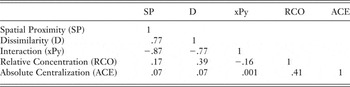
We use five different measures to represent each of the dimensions of segregation outlined by Massey and Denton in light of their argument that “… segregation is a multidimensional phenomenon that should be measured by a battery of indices rather than one single index” (Reference Massey and Denton1988, p. 312). They argue that despite some overlap each dimension is distinct conceptually, and offers a different understanding of spatial segregation. The following section describes the measures identified by Massey and Denton (Reference Massey and Denton1988) to represent the five dimensions of residential segregation. The equations for the indices and their intercorrelations can be found in the appendix. For evenness the dissimilarity index compares “the weighted mean absolute deviation of every unit's minority proportion from the city's minority proportion” (Massey and Denton, Reference Massey and Denton1988, p. 284); segregation is at its lowest when all tracts in the city reflect the same relative number of minority and majority members as the entire city. For clustering the spatial proximity index averages the proximity of predominantly minority tracts with respect to each other. High clustering occurs when minority areas are “contiguous and closely packed”, creating a racial enclave (Massey and Denton, Reference Massey and Denton1988, p. 293). When Latinos live nearer each other rather than Whites, the index is greater than 1; it is equal to 1 when there is no differential clustering between Latinos and Whites. For exposure the interaction index measures the probability that a minority member shares a tract with a majority member by taking “the minority weighted average of each spatial unit's majority proportion” (Massey and Denton, Reference Massey and Denton1988, p. 288). The index varies between 0 and 1 with higher values indicating greater exposure. For concentration, the relative concentration index measures the share of physical space (land area) occupied by a minority group in the city relative to the majority group. The minority group is more segregated if they are confined to a smaller share of the total area in the city. The index varies between −1 and +1, with higher values indicating the minority's concentration exceeds the majority. For centralization the absolute centralization index measures the extent to which a minority group is crowded near the center of the urban area by comparing a group's spatial distribution to the distribution of land area around the city center. The index varies between −1 and +1 and positive values indicate that minority members tend to be located closer to the city center rather than the outlying areas of the city and vice versa.
While there is some overlap among some of the indices, they measure distinct phenomena (Massey and Denton, Reference Massey and Denton1988). The clustering, concentration, and centralization indices are distinct from evenness and exposure in that they are explicitly spatial; they are comprised of spatial relationships (land area, distance functions, areal centroids, etc.), whereas exposure and evenness rely on minority and majority proportions of the population (i.e., percent Latino). However, even though exposure tends to be correlated with evenness empirically, exposure differs in that it takes into account the relative size of the two groups. A minority group can be evenly distributed throughout the city, but have little exposure if they make up a large share of the population; the converse is true if they are a small proportion of the population. Similarly, with concentration and centralization, a minority group that is highly centralized in a city is not necessarily highly concentrated in that city. Most importantly, Latinos are configured differently relative to Whites in different cities and we expect that examining variations in these configurations and their influence on Latino employment will lead to further insight into how space impacts employment.
Several caveats regarding the analyses and data should be mentioned here. The broad comparative approach taken in this study necessitates a sacrifice of an in-depth test of each theory. It does not allow for the most specific and detailed measures, particularly in the case of the industry categories, which are broad. While we hypothesize that the dimensions map conceptually to particular mechanisms associated with residential segregation, they cannot substitute for directly measuring these micro-processes. Also, the number of cities in the data is smaller than in metropolitan studies that examine a single census year, particularly 2000, because of the difficulty in matching cities across the census years. However, the resulting set of cities includes only medium- and large-sized metropolitan areas, where a large majority of urban Latinos reside. These analyses only include men for ease of comparability and to manage the scope of the analysis. Future work will focus on women. Also, the segregation measure used in the analyses is Latino segregation, not group-specific (i.e., Puerto Rican/White or Mexican/White). While group-specific segregation indices would be ideal, they are not available in the HHES data. In many metro areas, often only one of these groups is dominant because of the historical patterns of migration; thus, an overall Latino segregation is not likely to mask significant variation in segregation among different Latino groups in one metro area. The analyses reveal different patterns of association between segregation and employment for each of the three groups which lends support to this stance. Also, the analytic approach differs from many quantitative studies of racial inequality. Studies that address issues of racial stratification in the social sciences typically test their claims comparing characteristics among individuals of different races (i.e. individual-level analyses). However, the design of this study is founded in the idea that the theories underlying race, space, and work research are explicitly macro. The emphasis is on how individuals are organized spatially according to group membership and how the social location of particular groups relative to one another in the larger socioeconomic context structures their access to work. The current investigation focuses on how labor markets are structured and whether or not group-level outcomes are affected by structural characteristics of the market. This study adds to a small but growing body of work that examines the impact of metro-level characteristics on group and individual outcomes (Beggs and Villemez, Reference Beggs, Villemez, Berg and Kalleberg2001; Cutler and Glaeser, Reference Cutler and Glaeser1997).
RESULTS
Metropolitan Employment and Structural Characteristics
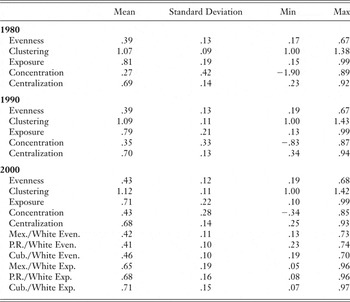
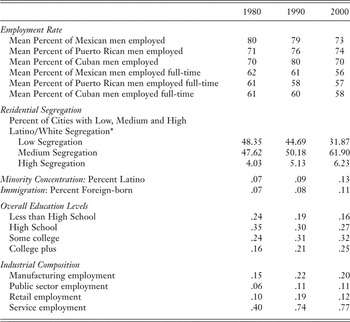
To assess employment and segregation patterns for Latino men over the two decades in metropolitan areas, Tables 1 and 2 describe the key structural characteristics of the cities in the study. First, we describe trends in residential segregation for Latinos by showing overall levels of segregation rates in the cities (Table 1), and then the distribution of cities among three levels of segregation (Table 2). As demonstrated in Table 1, residential segregation for Latinos overall has risen slightly during the study period. This has been attributed to increasing Latino immigration during this time period, as new immigrants often settle in ethnic enclaves (Charles Reference Charles2003). Table 1 also shows the means and dispersion of each of the segregation measures in each of the three study years. Among the five dimensions, the means for centralization are particularly close to their maximums, indicating that Latino/White segregation is highest on this dimension. In Table 2 the distribution of cities in terms of levels of segregation shows that the majority of cities fall into the low and moderate segregation category. Between 1990 and 2000, this distribution shifted such that the percentage of cities that were moderately segregated rose sharply, moving from low segregation to moderate. This shift highlights the usefulness of examining trends at the sub-national level. Whereas overall levels of Latino/White segregation changed very little, this interesting shift was detected when looking at the range of cities across different levels of segregation.
Descriptive Statistics for the Five Dimensions of Residential Segregation*

* The Evenness dimension is measured by the dissimilarity index, the clustering dimension by the spatial proximity index, the exposure dimension by the interaction index, the concentration dimension by the relative concentration index, and the centralization dimension by the absolute centralization index.
Structural Characteristics of Metropolitan Areas in 1980, 1990, and 2000

* Thresholds for residential segregation (dissimilarity index) are as follows: low 0–30, moderate 31–59, high 60–100, derived from those used in Massey and Denton, 1993.
Also shown in Table 2 are the mean employment rates for Latino men in metro areas from 1980 to 2000. Mexican men consistently had the highest employment rates over the two decades of any of the groups, although their rates fell substantially. Cuban men experienced an increase in their rates of employment between 1980 and 1990 and then a drop-off between 1990 and 2000. As for the ethnic composition of cities, the concentration of Latino and foreign-born residents of cities reveals both a substantial increase in the proportion of the population that is Latino, and in the percent of the population that is foreign-born; a result of increased immigration during this time period. The other structural characteristics of cities described in Table 2, mean educational attainment and industrial composition, reveal other important labor market conditions for Latino workers. The education attainment variables, or the percent of Latinos at each educational level, reflect rising levels of education in metropolitan areas during this time period. The percent of college-educated Latinos increased and the percent of high school dropouts decreased during the study period. This also refutes the assumption that the Latino workforce is dominated by poorly educated immigrants. The industrial composition variables, or the share of the city's workers employed in each of the four major industry groups, reveal the concentration of jobs to which workers are commuting. Since 1980 both manufacturing and retail employment increased, and then underwent a slight decline. Public-sector employment grew, while service-sector employment, in line with the phenomenon of restructuring, nearly doubled in this time period.
Multivariate Analyses
The chief objective of this paper is to determine how spatial configurations in metropolitan areas influence Latino employment in the broader context of structural characteristics of metropolitan labor markets. Our goal is to assess the relationship between the spatial proximity of Latinos to Whites in metropolitan labor markets and variations in Latino employment rates across cities and over time as this spatial proximity changes. The following analyses are designed to determine the relative influence of residential segregation on the percent of Latino men employed in the metro area in conjunction with other structural characteristics of cities known to be important to minority employment outcomes.
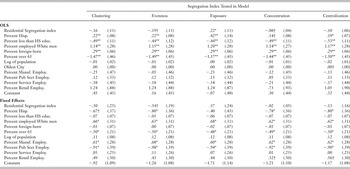
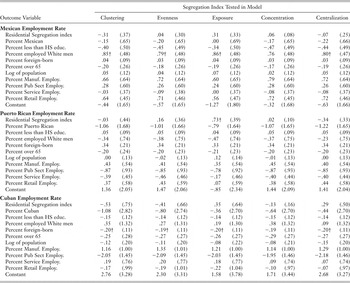
The analyses presented in the remaining tables test the influence of each of five dimensions of residential segregation—clustering, evenness, exposure, concentration, and centralization—across cities in 2000 in comparison with the other structural characteristics using OLS regression analysis. Table 3 shows this analysis for Latino men as a group, and then Table 4 does so separately for each national origin group. The primary focus is to determine which dimensions of residential segregation affect Latinos' employment rates in the context of other structural characteristics. The first half of Table 3 reveals that three of the segregation configurations—evenness, exposure, and concentration—are significantly associated with Latino male employment and each in the expected direction. In metro areas where Latino households are more unevenly distributed across the city vis-à-vis White households (dissimilarity), and where the Latino population relative to the general population is more concentrated, Latino male employment rates are lower. On the other hand, the exposure measure has a positive association to Latino male employment rates. It is likely that more exposure to Whites broadens and diversifies their job networks and consequently increases their access to information about a wider array of jobs. These findings are in line with the place stratification theories.
Effect of Structural Characteristics of Metropolitan Areas on Latino Men's Metropolitan Employment Rates Testing Five Different Dimensions of Residential Segregation, 2000 (OLS) and 1980–2000 (Fixed Effects)

† p < .10,
* p < .05,
** p < .01
Standard errors are in parentheses.
City age is dropped from the fixed effects analysis because it is redundant.
Effect of Structural Characteristics of Metropolitan Areas on Latino Men's Metropolitan Employment Rates Testing Five Different Dimensions of Residential Segregation, 2000

† p < .10,
* p < .05,
** p < .01
Standard errors are in parentheses.
Percent with less than HS educ., foreign-born, percent over 65 are group-specific (i.e., percent of Mexican adult population with less than HS educ.).
Other structural characteristics significantly related to Latino men's employment rates were Latino and foreign-born population density, both positively, meaning that Latino men's employment rates are higher in metropolitan areas where the Latino population and the foreign-born Latino population are higher, when controlling for the other factors in the model. Additionally, when the percentage of Latinos in the city with less than a high school degree is higher, the overall employment rate for Latino men is lower. This supports the skills deficit argument. The control variables, White male employment and age structure, are associated in the expected direction: Latino male employment tracks that of White men, and a higher population of Latino residents over the age of sixty-five in the city results in a lower employment rate.
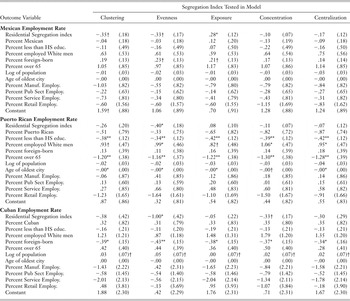
The analyses in Table 4 are structured the same as above but are modeled separately for each national origin group. The first section in Table 4 reveals that the evenness, clustering, and exposure dimensions of residential segregation had a significant and negative impact on the aggregate employment rate for Mexican men in metropolitan areas. The employment rate for Mexican men was lower in cities with higher residential evenness and clustering scores; that is, when Latino households are unevenly distributed across the city and Latino tracts cluster together in a particular area of the city, the employment rate for Mexican men is lower. Clustering is the operationalization of the ethnic enclave discussed earlier in the review of the literature. Greater exposure to Whites increased their employment rates as well.
The employment rate of Puerto Rican men was associated with the evenness dimension of residential segregation similarly to Mexicans; however, none of the other dimensions were significantly related to Puerto Rican men's employment. Evenness and concentration were associated with Cuban men's employment rates. Thus, different configurations were important to the employment rates of each of the groups. This is likely due to the fact that these groups tend to concentrate in very different types of cities and regions of the country under different types of spatial configurations: Cubans in the Southeast, Mexicans in the West and Southwest and Puerto Ricans in the Northeast. Additionally, different rates of immigration between the groups may underlie these patterns. Cuban immigration is smallest and Mexican immigration is largest. Increasing immigration flows and segregation are related since ethnic enclaves are often the destination of new immigrants.
Some scholars have raised the possibility that the association between residential segregation and employment could be due to simultaneity or reverse causation, or the idea that the unemployed or those with poor wages live in poor neighborhoods because they cannot afford better neighborhoods. The empirical literature does not support this claim. The strongest empirical evidence countering this claim is the high degree of racial residential segregation across poor neighborhoods and the fact that a majority of the White poor do not live in poor neighborhoods, while a majority of Latino and African-American poor do. In a report on low-income working families in the United States, Turner and Fortuny (Reference Turner and Fortuny2009)Footnote 3 found that only about three percent of low-income non-Hispanic Whites live in high-poverty neighborhoods, in comparison to one-fifth of Latino and one-third of all African American low-income working families.
Other structural characteristics were related to Latino men's employment rates as well. In the evenness and exposure model, the percent of foreign-born residents in the city had a positive association with employment for Mexican men. This finding contradicts findings that evidence a depressive effect of immigrants on Latinos' employment. Enclaves provide ready ethnic networks along which information about jobs is shared. For Cuban men, however, this association was significant and negative in all five models, more in line with the minority concentration thesis, or the hypothesis that immigration will have a negative impact on the existing minority population. In the models for Puerto Rican men, minority and foreign-born concentration were not significantly related to their employment rates as had been previously documented for Latinos in general. Controlling for residential segregation may have mediated the effect of minority concentration for Puerto Rican men. The percent of Puerto Ricans in the city without a high school degree also had a depressive effect on their employment rates, supporting the skills deficit argument. Group age structure and city age are negatively associated with employment as well.
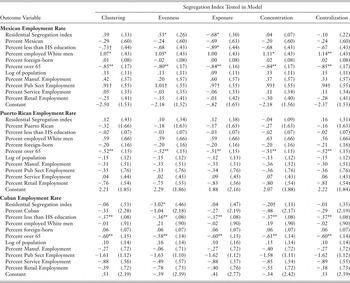
Do changes in the structural characteristics of metro areas over time, including their spatial configurations, explain changes in Latino male employment and similarly so among the sub-groups? In other words, as these groups become less segregated over time do they experience better employment outcomes? The analyses in Table 5 and in the second half of Table 3 use fixed-effects regressions to determine if changes in these structural factors over time within a metropolitan labor market influence changes in the percent of Latinos employed in the metro area. Fixed-effects analysis is an altered form of the standard OLS estimation that estimates a different component of variation than standard OLS, which estimates how variation across individual units (cities) affects variation in the dependent variable (e.g., the previous analyses). Fixed-effects analyses estimate variation within an individual unit (city) over time; the coefficients indicate whether change in the structural characteristic of the city affects change in the outcome variable (employment rate for Latinos) over time within that city. In the previous analyses, which used standard OLS, the variation measured was that between cities. Whereas the OLS analyses assessed whether varying levels of segregation across cities are associated with higher or lower employment across cities, the goal of this second set of analyses is to determine whether changes over time in segregation within a city affect changes in the Latino employment rate.
Effect of Structural Characteristics of Metropolitan Areas on Latino Men's Metropolitan Employment Rates Testing Five Different Dimensions of Residential Segregation, 1980–2000 (Fixed-Effects Analysis)

† p < .10,
* p < .05,
** p < .01
Standard errors are in parentheses.
Percent with less than HS educ., foreign-born, percent over 65 are group-specific (i.e., percent of Mexican adult population with less than HS educ.).
City age is dropped from the fixed effects model because it is redundant.
We first look at these models for Latino men as a group reported in the second half of Table 3. In the fixed-effects models evenness was the only segregation dimension associated with their employment rates; in metro areas where the segregation index (dissimilarity) decreased over time, Latino male employment increased. Additionally, the density of Latino population was negatively related to employment, more in line with the minority concentration thesis (Huffman and Cohen, Reference Huffman and Cohen2004; Tienda and Lii, Reference Tienda and Lii1987), and White male employment and age structure as before.
Table 5 shows the fixed effects analyses for each of the national origin groups separately. For Mexican or Cuban men, none of the residential segregation indices are significantly related to changes in their employment rates over time. For Puerto Ricans, changes in the exposure dimension of residential segregation over time affect their employment rates. As exposure to Whites increases over time, so does Puerto Rican employment.
The other structural characteristic of note was the effect of the foreign-born population on employment. For Cuban men, as the density of foreign-born Cubans in the metro area increased their employment rates decreased; this may be due to the later flows of Cuban immigrants who were poorer and less educated than the first wave. Puerto Rican men's employment had an opposite relationship with the percent of foreign-born residents. These differences in explanatory factors among the Latino groups highlight the importance of studying their outcomes separately, especially given that their labor market experiences are different.
A cautionary note on interpreting these fixed-effects results is in order. Because fixed-effects estimation provides such a conservative test, it may not necessarily conclusively show that decreases in residential segregation over time do not affect Mexican and Cuban employment. In fixed effects, the random error term plays a larger role in absorbing variation, thereby reducing power, and making it harder to achieve significance (and the sample size is small here). Thus, it is possible for a valid association between changes in segregation and changes in employment over time to go undetected.
The previous analyses demonstrated a link between residential segregation and Latino men's employment rates. However, these analyses distinguished between those with a job and the unemployed. Distinguishing between part-time and full-time employment provides a further test of the role of residential segregation in limiting access to stable, viable employment for Latino men. We conducted OLS and fixed effects regressions as before, but this time using percent employed full-time as the outcome variable. We discuss the results of these analyses below; the tables can be found in the appendices.
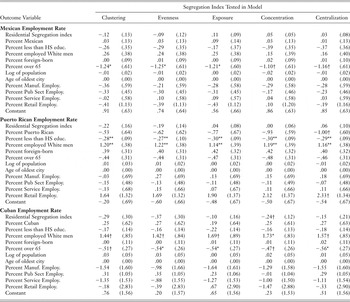
Among the OLS models, residential segregation was associated with the percentage of full-time employed Latino men in one case; for Cubans in the concentration model. As in previous models, in metro areas where Cubans were more concentrated, the percentage of full-time employed men was lower. Other metro characteristics associated with the full-time employment rate were the age structure for Mexican men, education and White male employment for Puerto Rican men, and age structure and White male employment for Cubans. All were associated in the direction expected as discussed in previous models.
In the fixed-effects models for full-time employment, two segregation dimensions—evenness and exposure—were related to Mexican employment; however, both in the opposite direction than expected. This may be due to differences between the native Mexican population and the immigrant population, which is less likely to get full-time work. Education, employment rate of White men, and public-sector employment were other persistent covariates in the Mexican models. For Cubans, evenness and concentration were negatively associated with their full-time employment rates, whereas only the density of men over sixty-five was associated with Puerto Rican men's full-time employment rate. In interpreting these fixed-effects results, the same caution discussed above is relevant here.
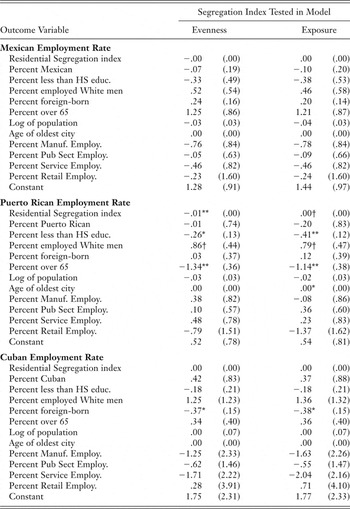
Finally, we conducted a limited set of analyses with segregation indices calculated for the national origin groups separately. These are of limited availability because they are particularly specialized. They are not available for the same time period as the main analyses and fewer dimensions of segregation indices are available, but they do offer a useful comparison since some groups, particularly Puerto Ricans and Cubans, are predominant in a smaller subset of metropolitan areas. We look at a 2000 cross-section of metropolitan areas using OLS regression to examine the effects of evenness, exposure, and isolation in Table 6. The findings in Table 6 reveal that of the three groups, Puerto Rican men's employment was significantly associated with residential segregation calculated using the group-specific comparisons. Specifically, the evenness and exposure dimensions were significantly related to their metropolitan employment rate, in the expected directions as before. We hesitate to compare these findings to the main analyses discussed previously because these indices compare much smaller groups of Latinos in metropolitan areas.
Effect of Structural Characteristics of Metropolitan Areas on Latino Men's Metropolitan Employment Rates Using Group-Specific* Residential Segregation Indices, 2000

† p < .10,
* p < .05,
** p < .01
Standard errors are in parentheses.
Percent with less than HS educ., foreign-born, percent over 65 are group-specific (i.e., percent of Mexican adult population with less than HS educ.).
* Residential segregation index in each model is group-specific (i.e., Mexican/White segregation, etc.).
CONCLUSION
We set out to assess the relationship between the spatial proximity of Latinos to Whites in metropolitan labor markets and Latino employment rates across cities, and over time as their spatial proximity changed. The findings revealed that Latino employment is constrained by their spatial arrangement in metropolitan labor markets in addition to other structural conditions of those markets. The analyses for Latino men as a group and the national origin-specific analyses demonstrated that residential segregation has a significant influence on the Latino male employment rate in metropolitan areas, while accounting for other structural characteristics of cities known to be associated with minority employment. In most cases, segregation had a deleterious effect on Latino men's employment; in cities where segregation was worse, their employment rates suffered. The fixed-effects analysis revealed that over time changes in residential segregation affected employment for Latino men as a group and in the group-specific analyses. As the cities that they lived grew more segregated over the twenty year period of study, their employment rates decreased.
There were important differences in the effect of segregation among the Latino sub-groups. In the general analyses, Puerto Rican male employment had the fewest associations with residential segregation relative to the other two groups. However, given their concentration in the Northeast (in contrast to Mexicans who reside in a wider range of cities), it is not surprising that the group-specific indices reveal that in particular metropolitan areas where Puerto Rican/White segregation is high, so are Puerto Rican male employment rates. Different spatial configurations were associated with the employment of each of the three groups. While evenness was consistently associated with employment across all the groups and analyses, Puerto Rican employment was most frequently associated with exposure and Cuban employment with concentration. Mexican employment was associated with the widest variety of segregation dimensions; they were the only group whose employment was associated with the clustering dimension of segregation. Clustering represents the barrio phenomenon, whose growth has been observed in metropolitan areas and has been attributed to chain immigration. These findings highlight the heterogeneity of the Latino population.
Another salient correlate of Latinos' employment was the overall percent of Latinos in the metro area and the percent of foreign-born Latinos in the metro area. With the exception of Cubans, these two variables were either positive or non-significant in all of the analyses, which is the exact opposite of the effect documented in previous research examining the minority concentration thesis. Residential segregation may mediate the previously documented minority concentration effect. Scholars have hypothesized that the usually negative effect of a higher minority population on the minority's economic outcomes is due to discriminatory practices deployed by the majority to maintain racial economic inequality. Massey and Denton (Reference Massey and Denton1993) argue that residential segregation specifically was created in Northeastern and Midwestern cities expressly for this purpose as the Black population grew during the Great Migration from the South as a means to restrict Blacks' access to White neighborhoods, schools, and jobs. The negative effect of residential segregation and the positive or null effect of minority population on employment found in these analyses offer preliminary evidence of this possibility. Future work, expressly for the goal of teasing out this relationship, would be useful.
These findings provide support for the idea that residential segregation is part of the racial stratification process via its role in limiting employment for Latinos. It can be viewed as an institutionalized form of discrimination, or the “structural linchpin of American race relations” as Bobo and Zubrinsky (Reference Bobo and Zubrinsky1996, p. 883) describe it. Deepening our understanding of how residential segregation is related to racial economic inequality, these findings point to a connection between employment and segregation that is different than that characterized in the spatial mismatch thesis. This connection highlights the importance of understanding how cities are organized, and the relationship among the neighborhoods in the city, to the study of racial and ethnic inequality. Using this relational perspective we show that even Latinos' proximity to Whites (not necessarily only jobs), mediates their access to employment.
This study takes into account important variations in employment and segregation among sub-groups within the Latino workforce which are not often examined. Examining variation within the Latino population informs our understanding of racial economic inequality in several ways. If the historical entry of a group into the U.S. labor market, their resultant position in the labor market, their geographic location and spatial arrangement, and race differ from one another, then finding differences among each of these groups that varied on these characteristics suggests that these factors underlie the construction of racial/ethnic economic inequality. Racial differences within the Latino population also play an important role here that we did not tease out—Black Latinos are more segregated and economically worse off compared to Latinos of other races (Logan Reference Logan2003; South et al., Reference South, Crowder and Chavez2005). These intra-group racial differences could suppress or dampen the effects of segregation on employment, especially among Puerto Ricans and Cubans who are more racially diverse than Mexicans (Iceland and Nelson, Reference Iceland and Nelson2008).
Future studies should investigate the impact of residential segregation on the type and quality of jobs held by Latino men, in comparison to African Americans and other racial/ethnic minorities. Such research would greatly contribute to current studies of Latino dominance in brown-collar jobs (Catanzarite Reference Catanzarite2000, Reference Catanzarite2002). If Latinos are residing in places where they are competing in labor markets with other racial minorities, it would also be interesting to see if there is a racial hierarchy among Latino subgroups, as well as other racial minorities, for more lucrative primary-sector jobs, and when (or if) spatial location is a factor in the construction of this hierarchy.
This approach expands the conversation on the persistence of racial inequality by shifting the lens from individuals to an examination of the U.S. racial structure (Bonilla-Silva Reference Bonilla-Silva2006; Cornell and Hartmann, Reference Cornell and Hartmann1998; Omi and Winant, Reference Omi and Winant1994). The ability of racial and ethnic groups to advance socially is dependent on their ability to navigate housing markets where better quality neighborhoods translate into greater opportunities for economic mobility for themselves and their children. However, they do not do this in a social, cultural, or economic vacuum where the structural landscape of spatial arrangements is racially neutral. We offer that residential segregation is a racial structure that serves to maintain existing racial/ethnic inequality in metropolitan labor markets, a stance that is in tension with theories that suggest that Latinos ultimately benefit economically when they reside in racially and ethnically homogeneous enclaves. Our study found no evidence that Latinos see increased employment when they are spatially segregated from Whites. Rather the findings suggest that Latino isolation is disadvantaging them in ways parallel to Blacks' isolation, signaling that the lines are shifting in ways that suggest a redefinition of the racial structure that includes Latinos in what Lee and Bean (Reference Lee and Bean2007) call a new “tri-racial hierarchy” or what Vickerman (Reference Vickerman2007) describes in his discussion of Latinos' adaptation of the Black/White dichotomy and search for alternative definitions of race through multiculturalism.
APPENDIX
Effect of Structural Characteristics of Metropolitan Areas on Latino Men's Metropolitan Fulltime Employment Rates Testing Five Different Dimensions of Residential Segregation, 2000 (OLS)

† p < .10,
* p < .05,
** p < .01
Standard errors are in parentheses.
Percent with less than HS educ., foreign-born, percent over 65 are group-specific (i.e., percent of Mexican adult population with less than HS educ.).
Effect of Structural Characteristics of Metropolitan Areas on Latino Men's Metropolitan Fulltime Employment Rates Testing Five Different Dimensions of Residential Segregation, 1980–2000 (Fixed Effects)

† p < .10,
* p < .05,
** p < .01
Standard errors are in parentheses.
Percent with less than HS educ., foreign-born, percent over 65 are group-specific (i.e., percent of Mexican adult population with less than HS educ.).
City age is dropped from the fixed effects analysis because it is redundant.
Correlations between Residential Segregation Measures 2000

Residential Segregation Indices
Dissimilarity

Interaction

Absolute Centralization

Spatial Proximity

where 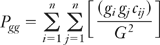
Relative Concentration

Definitions
- n
the number of areas (census tracts) in the metropolitan area, ranked smallest to largest
- m
the number of areas (census tracts) in the metropolitan area, marked by increasing distance from the Central business District (m = n)
- x i
the minority population of area i
- y i
the majority population (non-Hispanic Whites in the report) of area i
- t i
the total population of area i
- t j
the total population of area j
- X
the sum of all x i(the total minority population)
- Y
the sum of all y i(the total majority population)
- T
the sum of all t i(the total population)
- p i
the ratio of the x i to the t i(proportion of area i's population that is minority)
- P
the ratio of X to T (proportion of the metropolitan area's population that is minority)
- a i
the land area of area i
- A
the sum of all a i
- c ij
the exponential transform of − d ij [= exp(−d ij)]
- T 1
the sum of all t i in area 1 up to area n1
- T 2
the sum of all t i in area n2 up to area n