Introduction
Rice (Oryza sativa L.) is the second most cultivated cereal crop worldwide (Van Nguyen and Ferrero Reference Van Nguyen and Ferrero2006). It is an essential cereal for food and nutritional security of the world population and the nutritional base for about 3 billion people (FAO 2020). In Brazil, about 2.4 million ha of rice are cultivated each year, of which approximately 1 million ha are in a flood irrigation system in the state of Rio Grande do Sul (RS) alone. In this state, the mean production of the past five crops of rice (2015 to 2016 through 2019 to 2020) was 7,900 million kg, with a mean yield of 7,700 kg ha−1, which is higher than the average of 4,100 kg ha−1 in the other Brazil states producing this cereal (CONAB 2020; IRGA 2020). However, despite advances in genetic improvement and crop management, the mean yield results obtained in the RS flooded rice fields are below the potential yield of the cultivars that are in the market, which can reach 14,000 kg ha−1 (Ribas et al. Reference Ribas, Streck, Duarte, Ribeiro, Pilecco, Rossato, Richter, Bexaira, Pereira and Zanon2020).
The presence of weeds, especially those that are herbicide resistant, is one of the main factors that contributes to rice yield gap in the state of RS (Fruet et al. Reference Fruet, Merotto and Ulguim2020). In Brazil, new cases of herbicide-resistant weeds are increasing. The herbicide-resistant weeds that infest rice crops are weedy rice (Oryza sativa L.), barnyardgrass [Echinochloa crus-galli (L.) P. Beauv], gulf cockspur [Echinochloa crus-pavonis (Kunth) Schult.], smallflower umbrella sedge (Cyperus difformis L.), globe fringerush [Fimbristylis miliacea (L.) Vahl], flatsedge (Cyperus iria L.), and giant arrowhead (Sagittaria montevidensis Cham. & Schltdl.), with multiple cases of herbicide resistance in E. crus-galli and S. montevidensis (Heap Reference Heap2021). These weed species have recorded cases of resistance to imidazolinone chemical group herbicides.
Weed management in rice became easier with the introduction of cultivars with resistance to imidazolinone herbicides (Menezes et al. Reference Menezes, Mariot, Kalsing and Goulart2009), which are acetolactate synthase (ALS) inhibitors. Adoption of the ClearfieldTM System (CL) (BASF SE, Ludwigshafen, Germany) provided selective chemical control of weedy rice and can be considered the main tool for weed management of this species in flooded rice crops (Marchesan et al. Reference Marchesan, Massoni, Villa, Grohs, Avila, Sartori and Bruck2011; Menezes et al. Reference Menezes, Mariot, Kalsing and Goulart2009). In RS, the CL system was widely used by farmers, being planted in up to 99.5% of the production area, where imidazolinone-resistant weedy rice is present on 68.4% of the acreage (Avila et al. Reference Avila, Noldin, Mariot, Massoni, Fipke, Gehrke, Merotto, Tomita, Matos, Facioni, Vieira, Rosa, Santis, Camargo, Theisen and Roma-Burgos2021b). In a recent survey in RS, ALS herbicides were used for postemergence weed management in approximately 95% of the fields surveyed (Ulguim et al. Reference Ulguim, Silva, Agostinetto, Avila Neto and Zandoná2019).
Nevertheless, due to the exclusive and continuous use of this technology for more than 4 yr in succession, weeds resistant to ALS-inhibiting herbicides increased by 58% in relation to the area and 35% in number of cases (Ulguim et al. Reference Ulguim, Silva, Agostinetto, Avila Neto and Zandoná2019, Reference Ulguim, Fruet, Merotto and Silva2021). This has caused management of resistant weeds to become more complex, resulting in a more than 200% rise in the cost of producing flooded rice crops (Merotto et al. Reference Merotto, Goulart, Nunes, Kalsing, Markus, Menezes and Wander2016). The main alternative management practice for resistant weeds used in southern Brazil is a rice–soybean [Glycine max (L.) Merr.] crop rotation, established in up to 25% of the total rice production area (Ulguim et al. Reference Ulguim, Fruet, Merotto and Silva2021). Another practice is related to the rice production system. Minimum tillage is predominant, and soil tillage performed in the fall is more common than in the summer on farms (Ulguim et al. Reference Ulguim, Fruet, Merotto and Silva2021). Production systems with minimum tillage and with direct sowing can affect the presence and development of some weed species (Soares et al. Reference Soares, Bianco, Finoto, Bolonhezi, Albuquerque and Silva2016).
While strategies for resistance management are clearly understood by the farmers, few have implemented them, with most citing costs as a roadblock until a critical event promotes a paradigm shift (Beckie and Hall Reference Beckie and Hall2014; Edwards et al. Reference Edwards, Jordan, Owen, Dixon, Young, Wilson, Weller and Shaw2014). In this sense, efforts must be made to elucidate and raise farmer’s awareness of the real risks involving the increase of resistant weeds, so that good management practice strategies can be adopted to mitigate the evolution of resistance. Thus, more than 15 yr after the first CL cultivars were launched in Brazil, it is relevant to assess the impact of problems related to weed resistance (Avila et al. Reference Avila, Marchesan, Camargo, Merotto, Ulguim, Noldin, Andres, Mariot, Agostinetto, Dornelles and Markus2021a). The objective of the present study was to evaluate the association of weed management practices adopted by flooded rice farmers in the RS with yield.
Material and Methods
Survey
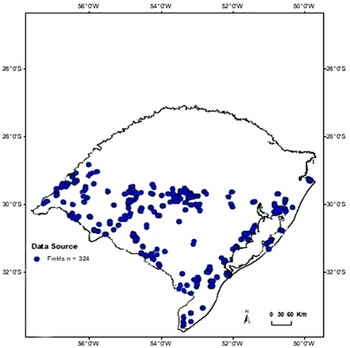
Field surveys were conducted with farmers of all flooded rice regions of RS during the growing seasons of 2015 to 2016, 2016 to 2017, and 2017 to 2018 to collect information about weed management history and grain yields. The surveys were filled out during personal interviews conducted by crop consultants and extension personnel from the Instituto Rio Grandense do Arroz (IRGA). Each interview was individual, characterizing the perspective of a different farmer and a specific field of the farmer’s property in each year. Fifty-seven municipalities belonging to five rice-producing regions of RS participated in this survey: Western (7), South Western (14), Central (16), Eastern (14), and Southern (6), for a total of 324 rice fields surveyed over 3 yr, with each interview illustrating the weed management an individual farmer’s respective crops (Table 1; Figure 1). For the last five crop seasons, the highest rice yields were observed in the Western and Southern regions (IRGA 2020). The majority of surveyed rice areas were drill-sown rice systems, with another ∼6% being pre-germinated seed crop systems.
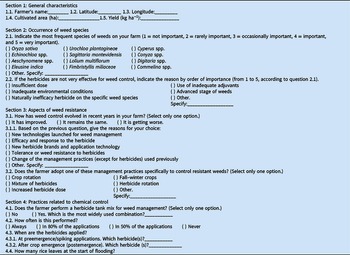
Survey given to flooded rice farmers in the state of Rio Grande do Sul, Brazil.

Locations of rice fields represented in the survey farms in Rio Grande do Sul, Brazil.

The survey was divided into four main sections: (1) general characteristics, (2) occurrence of weed species, (3) aspects of weed resistance, and (4) practices related to chemical control (Table 1). The questions in section 2 were composed of a list of predefined answers and descriptive answers that each farmer was asked to rank according to importance on a scale of 1 to 5 (1 = not important, 2 = rarely important, 3 = occasionally important, 4 = important, and 5 = very important) (Riar et al. Reference Riar, Norsworthy, Steckel, Stephenson, Eubank and Scott2013b). The other sections consisted of multiple-choice questions allowing a single response.
Statistical Analyses
For questions ranked according to importance scale, the data obtained were analyzed by summing the values for options 5, 4, 3, 2, and 1 to render the total number of points given to every alternative (Norsworthy et al. Reference Norsworthy, Burgos, Scott and Smith2007). The importance of the answers was calculated by the weighted average of all points (Equation 1), where W i represents the individual weights and X i the value indicated by each farmer interviewed for the survey. The standard error of the mean (SEM) of the importance scale was calculated for each question to verify the variation in the farmers’ answers.
 $${\rm Importance} = {{\sum\nolimits_{i \,=\, 1}^n W_i. X_i} \over {\sum\nolimits_{i \,=\, 1}^n W _i}}$$
To establish the influence of weed management practices adopted in grain yield, the yield data reported by the farmers were subjected to ANOVA using the F-test, and the means, when significant, were compared using the Scott-Knott test (α ≤ 0.05) with the aid of the InfoStat Student Version Program (Di Rienzo et al. Reference Di Rienzo, Casanoves, Balzarini, Gonzalez, Tablada and Robledo2018). To determine relations between weed management practices adopted and grain yield, the regression tree was analyzed using the rpart package of the R statistical program (Hothorn et al. Reference Hothorn, Hornik, A van de Wiel and Zeileis2006).
Regression tree analysis is a nonparametric method that classifies data into successively smaller groups with binary splits based on a single continuous predictor variable (Breiman et al. Reference Breiman, Friedman, Olshen and Stone1984). Regression tree analysis produces a tree diagram as output, with branches determined by the splitting rules and a series of endpoints that contain the average response and the number of observations in each terminal node.
The procedure initially creates the maximum number of branches in the tree, followed by a cross-validation approach to prune the tree to an ideal size (Therneau and Atkison Reference Therneau and Atkinson1997). The data set was divided into training data (80%) and testing data (20%) using the caret package in R (Kuhn Reference Kuhn2008). The training data set was used to execute the regression tree analysis, while the testing data set was used to estimate the mean-square error (MSE) between the observed and predicted yields. Regression tree analysis produces a tree diagram output, with branches determined by splitting rules and a series of terminal nodes that contain the mean response (i.e., yield) and the number of observations that fall within each terminal node.
Results and Discussion
Weed Occurrence and Resistance
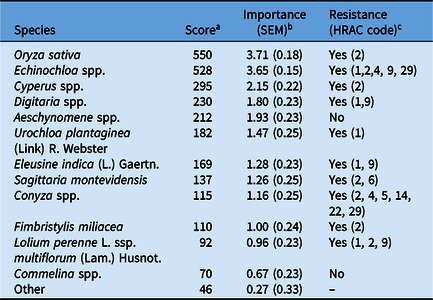
Regarding the ranking of weed species in their cultivation areas, the farmers classified both weedy rice and Echinochloa spp. as having an importance value greater than 3.0, making them the most important (Table 2). These species are widely distributed and occur in RS flooded rice–producing regions (Kalsing et al. Reference Kalsing, dos Reis Goulart, Mariot, Menezes, de Oliveira Matzenbacher and Merotto2019; Matzenbacher et al. Reference Matzenbacher, Bortoly, Kalsing and Merotto2015a). Weedy rice, previously the main weed infesting the RS flooded rice crops, leads to a loss of grain yield and reduces product quality (Marchesan et al. Reference Marchesan, Massoni, Villa, Grohs, Avila, Sartori and Bruck2011). Furthermore, it has genotypic and phenotypic characteristics similar to those of cultivated rice (Burgos et al. Reference Burgos, Norsworthy, Scott and Smith2008), making selective control difficult. Currently, it can only be controlled selectively in Brazil using the CL technology, through cultivars that are resistant to the imidazolinone chemical group (Sudianto et al. Reference Sudianto, Beng-kah, Ting-Xiang, Saldain, Scott and Burgos2013).
Classification of different weed species as to occurrence in areas where flooded rice is cultivated in Rio Grande do Sul, Brazil.

a Scores were calculated from the attribution of values 5, 4, 3, 2, and 1 to the first, second, third, fourth, and fifth most important weed for each respondent and resulting from the sum of the values of each weed.
b The importance was obtained by the weighted average of the score of each weed and the standard error of the mean (SEM) in parentheses.
c Weed-resistant species present in Brazil and in parentheses correspond to the HRAC group mode of action (Heap Reference Heap2021). n = 155.
Echinochloa spp. presents high complexity resistance in southern Brazil, due to resistance to multiple herbicides, multiple resistance mechanisms, and multiple mutations in the ALS enzyme gene (Matzenbacher et al. Reference Matzenbacher, Bortoly, Kalsing and Merotto2015a). Biotypes of E. crus-galli with multiple resistance to quinclorac, ALS, and acetyl-coenzyme A carboxylase (ACCase) inhibitors were reported in areas where flooded rice was produced in southern Brazil (Eberhardt et al. Reference Eberhardt, Oliveira Neto, Noldin and Vanti2016). Among the species with a value of importance equal to or above 1 in this survey, only Aeschynomene spp. has not been reported as herbicide resistant in this country (Table 2).
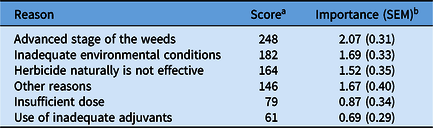
Regarding the main reasons for low control efficacy, and according to the importance scale, the farmers cited the weeds’ advanced leaf stage(s) (2.07) and inadequate environmental conditions (1.69), such as air temperature and relative humidity (data not shown), among other reasons (1.67) (Table 3). Weed control in initial developmental stages was reported as a resistance management practice utilized by approximately 86%, 59%, and 58% of rice, soybean, and cotton (Gossypium hirsutum L.) farmers, respectively, in the midsouthern United States (Riar et al. Reference Riar, Norsworthy, Steckel, Stephenson, Eubank, Bond and Scott2013a). In this context, applying cyhalofop to Echinochloa spp. with two to four leaves resulted in more control efficacy compared with advanced growth stages, such as tillering and flowering (Kalsing et al. Reference Kalsing, Tronquini, Mariot, Rubin, Bundt, Fadin and Marques2017), indicating the importance of early management. With respect to environmental conditions, both air temperature and relative humidity influence herbicide efficacy related to plant uptake and translocation as environmental fate. High temperature and low humidity increase evaporation, while the effect of high temperature on droplet drying at high humidity is reduced due to increased leaf retention time and thus increased herbicide absorption (Varanasi et al. Reference Varanasi, Prasad and Jugulam2016). The relationship between application methods and herbicide choice, rates, and adjuvants used had importance scale points lower than the other choices (Table 3).
Classification of the main reasons for the low efficacy of weed species control in flooded rice crops in Rio Grande do Sul, Brazil.

a Scores were calculated from the attribution of values 5, 4, 3, 2, and 1 to the first, second, third, fourth, and fifth most important reason for each respondent and resulting from the sum of the values of each reason.
b The importance was obtained by the weighted average of the score of each reason and the standard error of the mean (SEM) between parentheses. n = 111.
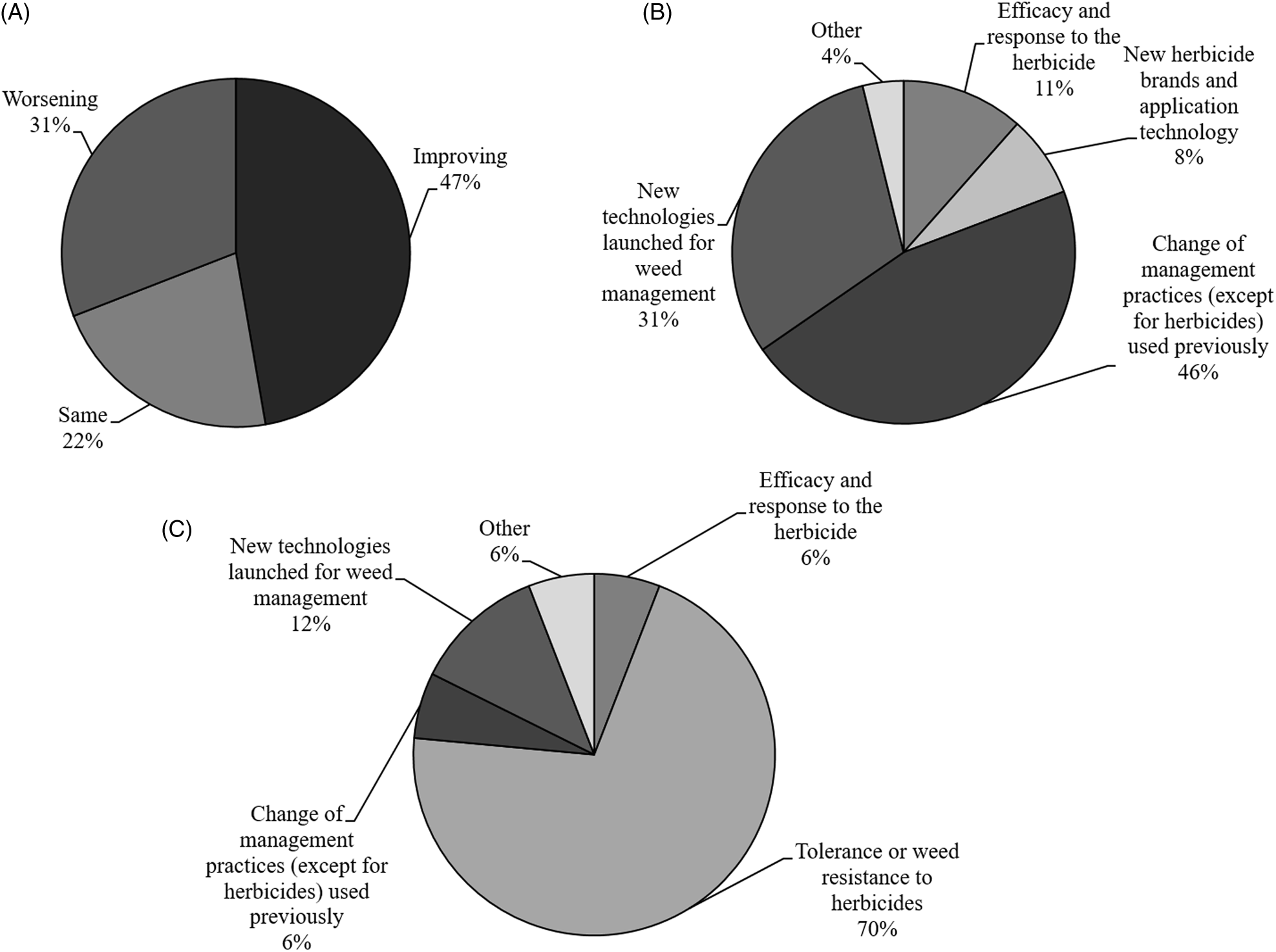
It should be emphasized that the most frequently cited other reasons were weed resistance to herbicides (48% of responses) and inadequate use of irrigation (40% of responses), examples being absence of water for flooding and delayed flooding, all with importance values equal or above 1.0 (Table 3). Weed resistance is frequently attributed to inadequate weed management practices. However, despite several known resistance cases in rice crops, many farmers do not give due importance to this factor as a key player in weed control. In addition, it is important to note that many of the control failures observed are not the result of resistance, but rather are due to improper crop management practices. Consequently, 47% of the interviewed farmers declared an improvement in the weed control efficacy in recent years, whereas for 31% there was a tendency for reduced weed control efficacy in the most recent rice harvests (Figure 2A).
Responses of flooded rice farmers in Rio Grande do Sul, Brazil, concerning (A) perception of evolution of weed control (n = 55), (B) increased weed control (n = 26), (C) decreased weed control, in the 2017–2018 growing season.

When asked what motivated their choices, those farmers who reported that control was improving attributed this mainly to the adoption of alternative practices (46%) not related to herbicide use (Figure 2B). On the other hand, weed tolerance or resistance (70%) was the main reason chosen by the farmers who observed a reduction in weed control efficacy on their properties (Figure 2C). Thus, the results allow inferring those agronomic practices related to nonchemical methods (minimum tillage, soybean crop rotation, water inflow management) are important strategies to mitigate the evolution of resistance and are also essential to control the already established cases (Norsworthy et al. Reference Norsworthy, Ward, Shaw, Llewellyn, Nichols, Webster, Bradley, Frisvolt, Powles, Burgos, Witt and Barrett2012; Ulguim et al. Reference Ulguim, Silva, Agostinetto, Avila Neto and Zandoná2019). Strategies based only on chemical methods tend to promote an increase in the number of cases of herbicide-tolerant or herbicide-resistant weeds (Vargas et al. Reference Vargas, Nohatto, Agostinetto, Bianchi, Gonçalves and Toledo2011).
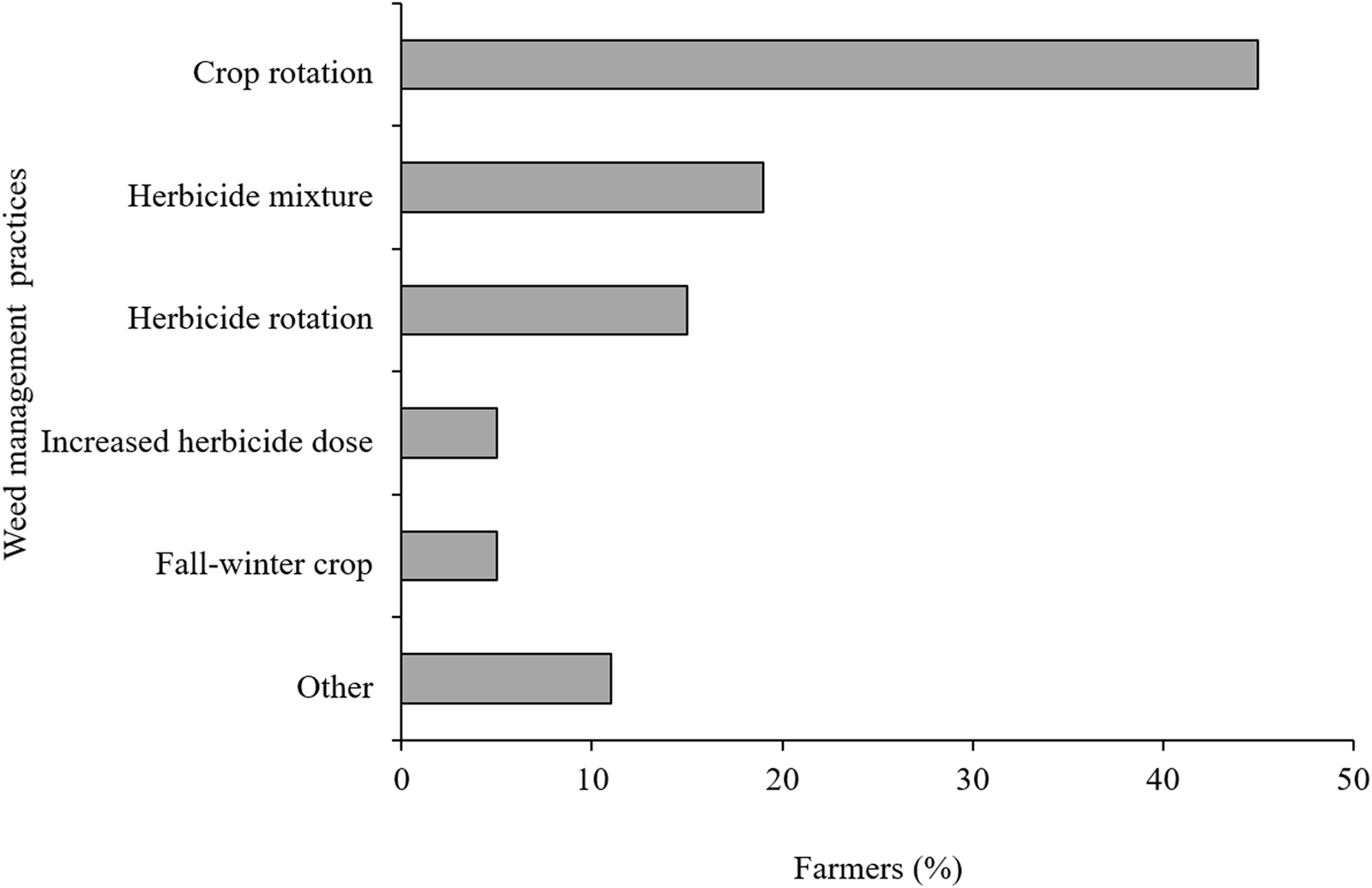
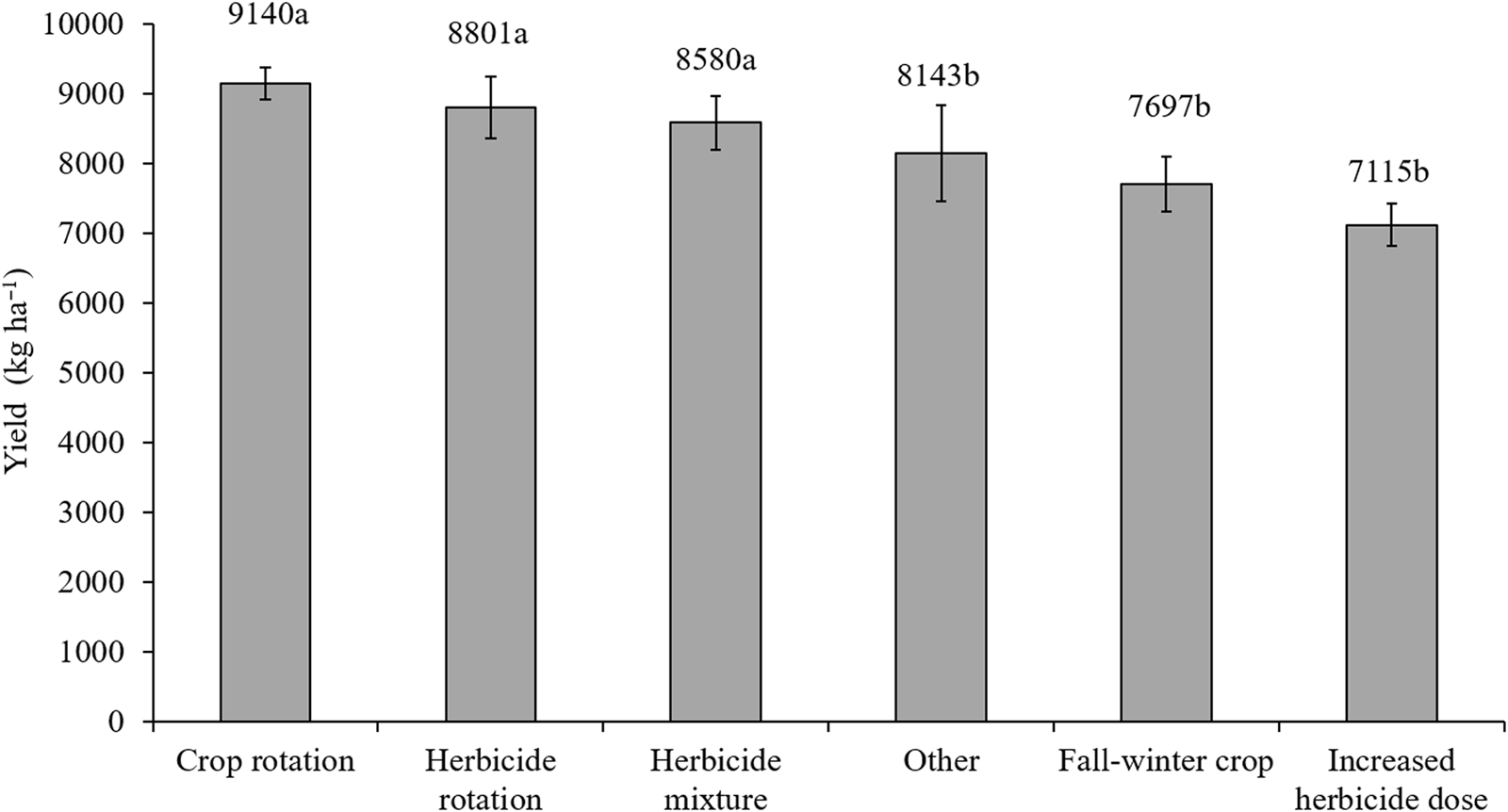
The most common resistance management practices adopted by the farmers surveyed were crop rotation (45%), followed by herbicide mixture (19%) and herbicide rotation (15%) (Figure 3). Farmers who adopted these practices had the highest grain yields (Figure 4). In a similar study, crop rotation was listed as one of the two most important factors for resistance management (Fruet et al. Reference Fruet, Merotto and Ulguim2020). The rice–soybean rotation is one of the main specific measures to reduce the frequency and promote effective control of resistant biotypes of weedy rice and E. crus-galli in southern Brazil (Matzenbacher et al. Reference Matzenbacher, Bortoly, Kalsing and Merotto2015a; Roso et al. Reference Roso, Merotto, Delatorre and Menezes2010).
Practices adopted by the farmers specifically to control resistant weeds on flooded rice farms for the 2015–2016, 2016–2017, and 2017–2018 growing seasons in Rio Grande do Sul, Brazil (n = 133).

Rice grain yield (kg ha−1) for the 2015–2016, 2016–2017, and 2017–2018 growing seasons as a function of the management practices specifically adopted by farmers to control resistant weeds in Rio Grande do Sul, Brazil (n = 128). Means followed by the same letter are not different from each other, according to the Scott-Knott test (α ≤ 0.05).

The yield rise of around 2,000 kg ha−1 from the 2009 to 2010 growing season to the 2019 to 2020 growing season could be related to soybean rotation, in spite of a decreased rice harvest area during that time (Avila et al. Reference Avila, Marchesan, Camargo, Merotto, Ulguim, Noldin, Andres, Mariot, Agostinetto, Dornelles and Markus2021a). Soybean crop rotation started with 11,000 ha in the 2009 to 2010 growing season, compared with approximately 1 million ha of cultivated rice (IRGA 2020). Despite the importance of using soybean in rotation in flooded rice fields as a resistance management tool, currently only ∼29% of these fields in RS have adopted this practice (Fruet et al. Reference Fruet, Merotto and Ulguim2020), mainly due to the difficulty of managing dryland crops in lowland environments (Avila et al. Reference Avila, Marchesan, Camargo, Merotto, Ulguim, Noldin, Andres, Mariot, Agostinetto, Dornelles and Markus2021a). Farmers who adopted crop rotation for resistance management reported yields around 20% higher than farmers who reported increasing the herbicide dose (Figure 4). Although it is a common practice among farmers, increasing herbicide rates is not a recommended weed management practice, as it can accelerate resistance due to herbicide selection pressure (Ulguim et al. Reference Ulguim, Silva, Agostinetto, Avila Neto and Zandoná2019). Farmers who chose other (11%) (Figures 3 and 4), cited anticipated minimum tillage, weed roguing, and crop–livestock integration.
Practices Involving Chemical Control and Rice Yield
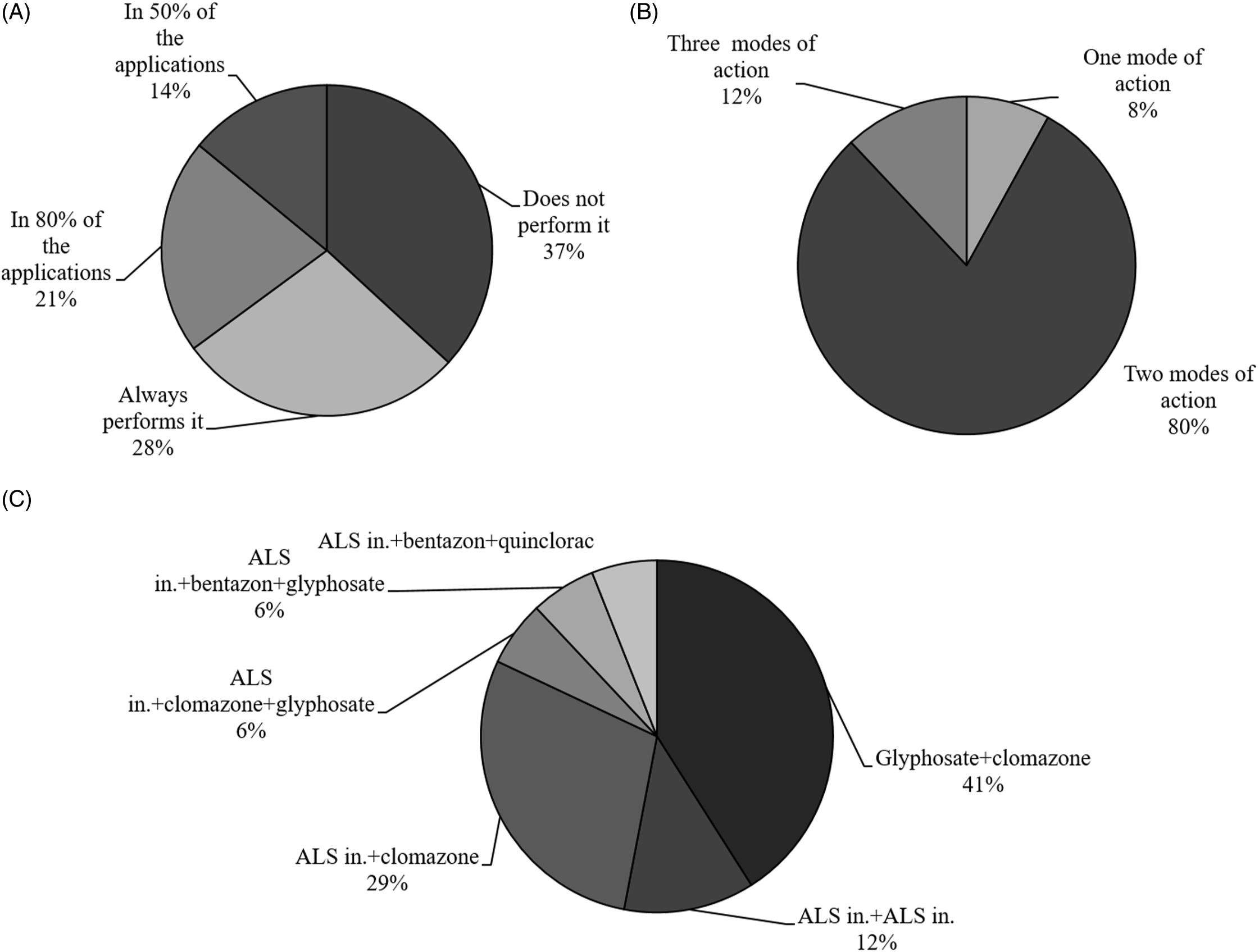
Herbicide tank mix was the second most used herbicide-resistance management practice (19%) (Figure 3), with satisfactory results (Figure 4). When asked about the frequency at which they adopt a herbicide tank mixture to control weeds, 28% of the farmers answered that they always do this, while 21% and 14% said that they used tank mixes in 80% and 50% of applications performed, respectively (Figure 5A). Herbicide tank mixtures are widely implemented by farmers in Brazil (Gazziero Reference Gazziero2015). However, 37% of the farmers in this survey answered that they do not do this. In 80% of the cases where tank mixing was used, at least two modes of action were used (Figure 5B). The most widely used herbicide tank mix was clomazone plus glyphosate at spiking (41%), followed by the mixture of clomazone plus ALS inhibitors used both at spiking and postemergence (29%) (Figure 5C). The use of more than one site of action in a tank mix is one of the main practices that should be used for the management of resistant weeds (Riar et al. Reference Riar, Norsworthy, Steckel, Stephenson, Eubank, Bond and Scott2013a).
Frequency of farmers who perform mixture in herbicide tanks (%) (A), number of mechanisms of action in each mixture (%) (B), and main mechanisms of action present (C) for the 2017–2018 growing season in rice-farming areas in Rio Grande do Sul, Brazil (n = 57). ALS in., acetolactate synthase inhibitors.

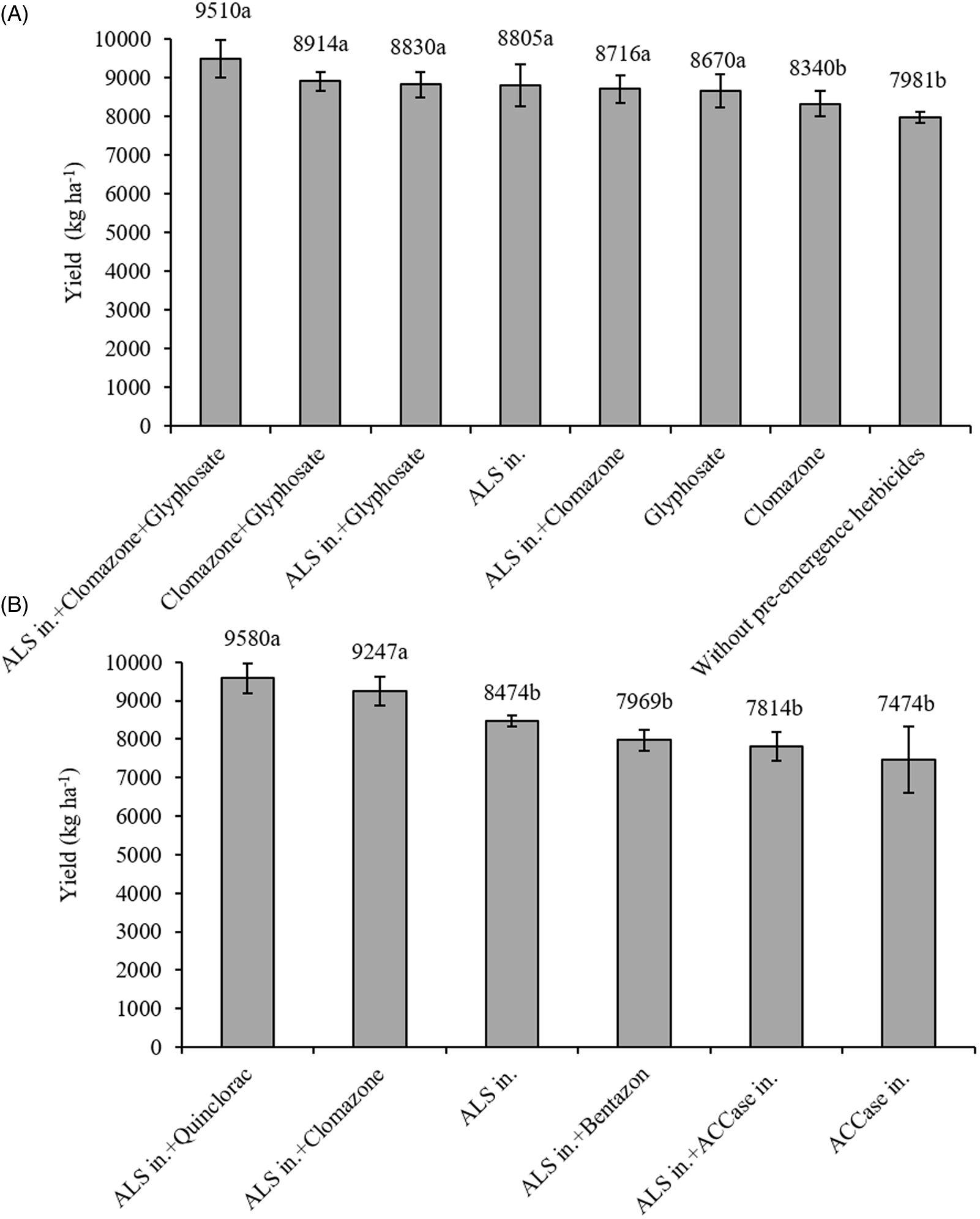
Evaluation of rice yields according to the herbicide programs utilized indicates that the farmers who used residual herbicides tank-mixed with glyphosate attained higher grain yields compared with those who did not use preemergence herbicides (Figure 6A). Application in the spiking stage (S3 stage) (Counce et al. Reference Counce, Keisling and Mitchell2000), considered in this research to be a preemergence application, corresponds to the use of a nonselective herbicide applied after rice sowing and before crop emergence to control weed seedlings, mainly weedy rice. Research that quantified the effect of applying glyphosate for the management of weedy rice evidenced a 75% reduction of the weed population and a 40% incremental gain in rice grain yields compared with the untreated control (Menezes et al. Reference Menezes, Mariot, Kalsing, Freitas, Grohs and Matzenbacher2013). The use of glyphosate associated with soil residual herbicides such as clomazone improves weed control, enabling the crop to emerge free from competition, thus increasing the efficacy of postemergence herbicides by delaying the weed emergence and growth (Table 3). However, glyphosate should also be applied with another site of action and/or soil-residual herbicide to mitigate the risk of resistance. Herbicide-resistant E. crus-galli has recently been recorded in soybean crops in RS (Heap Reference Heap2021), but not in the lowlands. This is considered the most problematic weed in terms of occurrence and control in flooded rice (Table 2).
Rice grain yield (kg ha−1) for the 2015–2016, 2016–2017, and 2017–2018 growing seasons as a function of the chemical management adopted by farmers at the spiking stage (A) (n = 242) and postemergence (V3–V4) (B) (n = 188) for the control of weeds in flooded rice crops in Rio Grande do Sul, Brazil. Means followed by the same letter are not different from each other, according to the Scott-Knott test (α ≤ 0.05). ALS in., acetolactate synthase inhibitors; ACCase in., acetyl-coenzyme A carboxylase inhibitors.

Regarding management performed postemergence, the highest grain yields were those with a tank mix of ALS+quinclorac inhibitors or ALS+clomazone inhibitors (Figure 6B). The efficacy of the ALS-inhibiting herbicides has been compromised by resistance cases, although resistance to quinclorac has also been reported (Andres et al. Reference Andres, Concenço, Melo, Schmidt and Resende2007). The use of this herbicide promoted greater rice yields, compared with other postemergence management programs (Figure 6B). This may be due to Echinochloa spp. resistance to quinclorac, as recorded in 1999 (Heap Reference Heap2021), with progressive reduction of resistant-biotype frequency in the field.
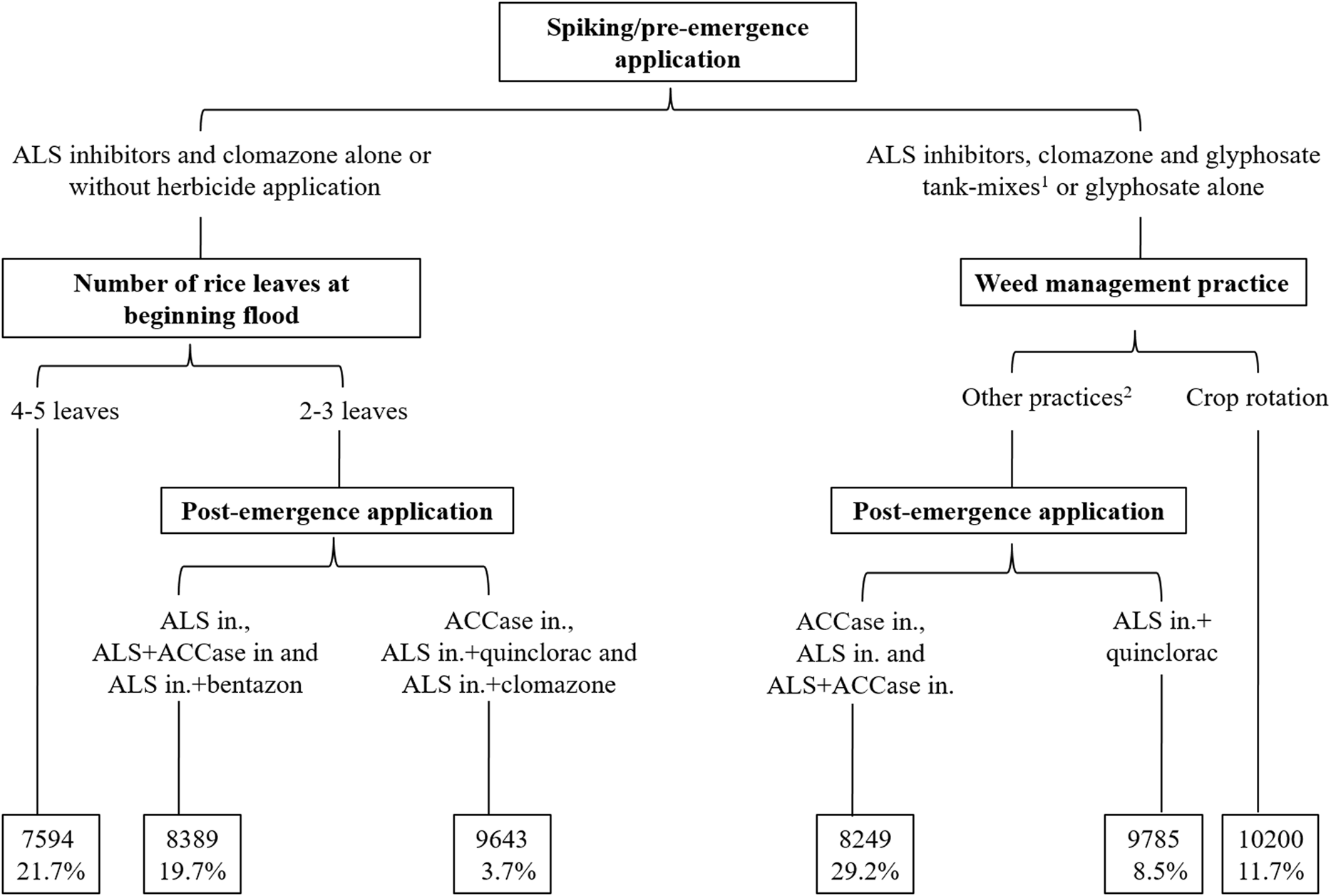
The regression tree results demonstrated that the use of herbicides in the spiking stage/preemergence is the main factor related to weed management that influenced the flooded rice yield (Figure 7). In this sense, the conditions of glyphosate spiking application associated with the use of crop rotation evidenced greater grain yield (10,200 kg−1) in the areas sampled. This result corroborates the data presented previously, in which it was found that higher grain yields were recorded with the adoption of crop rotation (Figure 4) and the use of broad-spectrum herbicides at the spiking stage (Figure 6A). When we isolate the influence of the spiking application of glyphosate plus residual herbicides against the condition where the application was not carried out, the average yield increases by ∼1,000 kg ha−1 (9,411 and 8,542 kg ha−1, respectively). Furthermore, postemergence application with quinclorac associated with ALS inhibitors resulted in higher yield than did other sites of action (Figure 7) when spiking application was made. These results may be due to the appropriate management of weedy rice and Echinochloa spp., which is currently considered one of the main weeds of flooded rice (Table 2). The glyphosate application at spiking stage is important to weedy rice management (Menezes et al. Reference Menezes, Mariot, Kalsing, Freitas, Grohs and Matzenbacher2013). The tank mix of an imidazolinone with quinclorac effectively controlled ALS-resistant E. crus-galli biotypes and also resulted in greater rice grain yield (Matzenbacher et al. Reference Matzenbacher, Kalsing, Dalazen, Markus and Merotto2015b).
Regression tree showing sources of variation in the grain yield due to the weed control management practices. Boxes are splitting nodes, with bottom boxes representing terminal nodes. Values within each terminal node indicate the average grain yield (kg ha−1) and the percentage of observations in each terminal node (n = 219). 1Tank-mix combinations: ALS inhibitors+clomazone, ALS inhibitors+clomazone +glyphosate, ALS inhibitors+glyphosate and clomazone+glyphosate.2Cover crops during fall and winter, herbicide mixtures, herbicide mode of action rotation, and increased herbicide dose. ALS in., acetolactate synthase inhibitors; ACCas e in., acetyl-coenzyme A carboxylase inhibitors.

For farmers who do not utilize spiking applications or do not use glyphosate in these applications, the time to apply postemergence herbicides is the most important factor for rice yields (Figure 7). Lower yields were observed for delayed beginning of flooding (V4–V5 rice stage), regardless of herbicide site of action applied at postemergence. This may be a result of the advanced stage of the weeds (Table 3), which is important for increase herbicide efficacy (Fruet et al Reference Fruet, Merotto and Ulguim2020). For farmers who implemented flooding and postemergence chemical management at an earlier time, when the rice was between two to three leaves (V2–V3), the use of herbicides with an effective action spectrum to control weeds of the Poaceae family promoted greater grain yields (9,643 kg−1) (Figure 7).
Our survey results presented herein make it evident that weed management in RS flooded rice has a direct impact on grain yield. As highlighted in our survey, Oryza sativa and Echinochloa spp. were the most problematic weed species in terms of occurrence in flooded rice, and the main reason for low weed control efficacy were related to the advanced development stage and inadequate environmental conditions. Farmers who adopt rotations with soybean and a mode of action herbicide along with tank mixes as specific weed-resistance management practices obtain higher yields. Also, the use of residual herbicides and glyphosate in the rice spiking stage is the main factor in high yields from flooded rice. In this case, the farmers must pay attention to the problems relating to the occurrence of weeds in their production areas so they can adjust their management practices for the purpose of improving weed control to avoid yield losses, like soybean crop rotation, spiking applications with glyphosate plus residual herbicides, postemergence applications with early weed plants, and flood beginning from two to three leaves. Findings in our study are relevant to help farmers identify and overcome bottlenecks in best weed management practices, which are a key element to identifying the main agronomic factors involved in herbicide resistance. Our survey results also contribute to expanding current knowledge concerning effective and sustainable integrated weed management in flooded rice.
Acknowledgments
The authors would like to thank Fundação de Amparo à Pesquisa do Estado do RS (FAPERGS, grant no. 01/2017) for financial support and the Conselho Nacional de Desenvolvimento Científico e Tecnológico (CNPq) for funding the first author. The authors also would like to thank the Instituto Riograndese do Arroz (IRGA) and undergraduate and graduate students in the agronomy major at the Federal University of Santa Maria (UFSM), Federal University of Pampa (UNIPAMPA), and Federal University of Pelotas (UFPel) for their support in distributing the survey. The authors are also grateful to each farmer who took the time to complete the survey.