The study of argument structure has occupied a central place in both first (L1) and second language (L2) acquisition research (e.g., Berman, 1993, 1994; Bowerman, 1982, 1990; Cabrera & Zubizarreta, 2003, 2005; Juffs, 1996; Montrul, 1999, 2000; Pinker, 1989; Pye, 1994). In particular, researchers have focused on the ways in which learners of a language, whether L1 or L2, come to know the specific properties of verbs in addition to the quintessential problem of learning their idiosyncratic dictionary meanings. For example, upon encountering the verb talk, a learner of English must not only discover the arbitrary relation between the phonological form and the activity that it denotes in the real world but also the structural aspects of the verb that allow it to participate in certain syntactic frames (e.g., talk involves one participant whose role is that of agent and allows an optional prepositional phrase to encode the conversation partner). This dimension of verb meaning—which encompasses the number of participants in the event, the thematic roles that they bear, and the mapping of those roles to syntactic positions—is what is generally referred to as argument structure.1
Depending on the syntactic theory that one adopts, the term argument structure can refer to the semantic arguments of a verb (e.g., agent, patient, experiencer), its syntactic arguments (e.g., subject, direct object, indirect object), or both. In this article, I use argument structure in the global sense to refer to both aspects of a verb's subcategorization information.
Naturally, the study of argument structure is intimately related to the notion of transitivity, given that, traditionally, the most basic distinction among verb classes rests on the delineation of transitive and intransitive predicates. In overly simplified terms, transitive verbs are those that have a subject and direct object, whereas intransitive verbs have only one argument that occupies subject position. This type of binary distinction was questioned in a seminal article by Hopper and Thompson (1980), who proposed that transitivity be viewed as a continuum in order to account for the systematic crosslinguistic marking of clauses that are high in transitivity. The prototypical transitive event, or cardinal transitivity in Hopper and Thompson's classification, is a punctual, telic event in which a volitional agent transfers an action totally to a definite or referential object. For example, He drank the beer is considered to be higher in transitivity than He likes beer, despite the fact that both sentences have two arguments.
Of particular interest, then, are verbs such as break, which constitutes an example of Hopper and Thompson's (1980) cardinal transitivity. In many languages, such verbs participate in an alternation by which they come to denote a change of state that occurs without the influence of an external agent or cause. This is commonly referred to as the causative-inchoative alternation, or a transitivity alternation.2
In English, break is commonly referred to as an ergative verb, which means that it can be used transitively or intransitively. The intransitive version, then, is an example of middle voice. I avoid the ergative terminology because of potential confusion with the ergative case. Finally, some have referred to these verbs as ambitransitive because they can be transitive or intransitive without requiring a morphological change.

Both of these sentences attest to the same result state: The clock is broken. However, in (1a), this is expressed by means of a prototypical transitive clause in which there are two distinct participants: an animate agent bringing about the action and an object that is maximally affected (i.e., the causative meaning). In (1b), the speaker focuses on the theme participant and the process of breaking (i.e., inchoative meaning), which eliminates the agent from the linguistic reconstruction of the event. This type of transitivity alternation is subject to numerous crosslinguistic differences at the morphological level, and verb class differences within a single language also prohibit certain verbs from participating in the alternation.
The current study examines transitivity alternations among L2 learners by focusing on two languages that differ in their morphological coding of such events: English (L1) and Spanish (L2). Whereas previous research (Cabrera & Zubizarreta, 2003, 2005; Montrul, 1999, 2000; Toth, 2000) relied primarily on acceptability judgments to detect learners' knowledge of these alternation patterns, the data for the present study were elicited by means of an oral production task that depicts both transitive and intransitive event scenes. Without a doubt, the learner's performance on this task depends, in large part, on his or her knowledge of the clitic se in Spanish—a polyfunctional morpheme that is used to mark (some) intransitive events. As the data will show, knowing when to use or omit se entails a rather complex learnability problem for the L2 learner for whom English is the L1.
This article considers the learnability problem from a constructivist approach to language learning and, more specifically, the sequencing account proposed by N. Ellis (1996, 2002). Constructivism encompasses various theories of language acquisition, including connectionist models (MacWhinney, 2002), functional linguistics (Bates & MacWhinney, 1982), emergentist approaches (Elman, 1990), and cognitive grammar (Lakoff, 1987; Langacker, 1991). These approaches converge with respect to their rejection of nativist Universal Grammar (UG) explanations of phenomena observed in language acquisition. Instead, they focus on the general processes of associative learning, inductive reasoning, and the cognitive mechanisms shared by all language users. Although such usage-based models of language acquisition have made important strides in L1 acquisition research (Tomasello, 1992, 2003), their potential contribution to L2 data has been largely unexplored. Accordingly, this article presents empirical data on the acquisition of a complex system of form-function mappings within the context of a usage-based model that provides clear and readily testable hypotheses (Harrington & Dennis, 2002).
ALTERNATING VERBS AND SE IN SPANISH
Linguistic descriptions of Spanish (cf. Whitley, 2002) have identified numerous functions of the clitic se, which include reflexive, reciprocal, passive, decausative, and impersonal uses. In syntactic theory, much attention has been devoted to understanding exactly how many types of se exist and, perhaps even more important, why so many diverse functions are performed by the same morpheme. Traditional analyses that sought to unify the various uses of se have argued for its role as an argument absorber (Grimshaw, 1990; Wehrli, 1986). In this view, se suppresses an internal or external argument during sentence formation. The argument suppression analysis, although applicable to parts of the data, has been shown to be inadequate for several types of se constructions (Nishida, 1994). In this brief review of se constructions, I include key features of syntactic as well as semantic accounts, remaining cognizant that alternative analyses are possible. The goal of this section is to present the distributional data in order to appreciate the learnability problem that it poses for L2 learners of Spanish.
A logical starting point for the discussion begins with the morphological properties that characterize the class of alternating verbs in Spanish and English. As the examples in (1) demonstrated, English requires no overt morphology to distinguish between the transitive and intransitive uses of the verb break. There are countless verbs that pattern like this in English, including open, close, shatter, melt, burn, and spill; note that none of them requires any additional detransitivizing morpheme. In certain cases, English encodes such intransitive events with the get construction, which can overlap with the passive interpretation, as in (2).

In Spanish, on the other hand, the change in syntactic transitivity requires a change in verb morphology; the intransitive configuration requires the presence of the verbal clitic se, as illustrated in (3). Thus, in Spanish, the transitive form is morphologically simple in comparison with the intransitive form.

Some additional verbs that pattern like quemar “to burn” in Spanish are derramar “to spill,” abrir “to open,” derretir “to melt,” detener “to stop,” mover “to move,” secar “to dry,” and many others. The intransitive uses of these verbs require what Suñer (1983) termed the spontaneous se in the context of change verbs. For the purposes of this article, I adopt the term decausative to describe the intransitive construction in (3b), following Aid (1973), Turley (1999), and others. The decausative label is fitting because it highlights the fact that the cause has been left out, which profiles the theme that undergoes a spontaneous change of state.
As expected, there are many verbs that do not participate in the transitive-decausative alternation (e.g., escribir “to write”) due to semantic constraints.3
Verbs like escribir “to write,” pintar “to paint,” and limpiar “to clean” cannot be interpreted as decausative because the acts of writing, painting, and cleaning necessarily imply a human agent. Turley (1999) provided an in-depth treatment of the semantic restrictions associated with se constructions.

Finally, an impersonal reading can be rendered with any verb that takes a human agent (Suñer, 1982), as illustrated once again with escribir “to write” in (5).

The key observation to be made on the basis of (4) and (5) is that many high-frequency verbs like escribir “to write” can appear with or without se depending on the particular syntactic environment in which they are found and the semantic reading that the speaker ascribes to the event.
Up to this point, we have seen that the clitic se is a crucial grammatical element used to mark events that are conceptualized as decausative, which are necessarily intransitive. However, se does not consistently mark all intransitive verbs in Spanish. There are countless intransitive verbs—both unaccusative and unergative—that have no overt morphological marker, such as vivir “to live,” existir “to exist,” and llorar “to cry.” It has been pointed out in the literature (Levin & Rappaport Hovav, 1995) that the theme argument of inchoative verbs (e.g., romperse “to break”) is similar to that of unaccusatives like llegar “to arrive.” The similarity stems from the lack of a specified external agent that brings about the action of the verb (in both cases, the sole argument is considered a theme rather than an agent). Despite this underlying similarity, romper “to break” requires se to function in intransitive frames, whereas llegar “to arrive” does not.
To complicate matters further, many intransitive verbs optionally appear with se, which signals a change in meaning rather than a change in argument structure. For example, salir “to leave” refers to the act of departing, whereas salirse implies that one leaves unexpectedly or inopportunely. Similarly, aparecer “to appear” contrasts with aparecerse “to appear all of a sudden.” Maldonado (1993) argued that the function of se in the context of these intransitive verbs is to signal the dynamic or unexpected nature of the event. Such verb pairs, unlike romper/romperse “to break,” do not alternate in transitivity. In other words, omitting se from salirse does not allow it to function as a transitive verb, whereas the opposite is true for romperse.
Another function of se, also unrelated to the class of alternating verbs, is to indicate telicity with transitive events (Nishida, 1994), as shown in (6).

In (6), the presence of se does not affect argument structure but imposes certain aspectual restrictions on the event. Specifically, the use of se in such constructions is compatible only with noun phrases (NPs) that are quantitatively delimited. Although the use of se in examples such as (6) is optional from a strictly syntactic point of view, Nishida explained that native speakers (NSs) prefer the sentences with se when they “intend to highlight that the totality of an object is involved in the situation or that the event was completed” (p. 442).
Finally, Spanish employs a small class of verbs that have a lexicalized se component, such as acordarse “to remember,” quejarse “to complain,” and atreverse “to dare.” These so-called pronominal verbs or inherent reflexives are restricted to a small set and optionally take an oblique complement, which has led some researchers (Masullo, 1992) to consider them antipassives. Other linguists (Fontana & Moore, 1992; Green, 1975) have argued for the lexicalized nature of se with this class of verbs. Regardless of the analysis that one ultimately adopts, the key point is that no alternation is possible with verbs of this class.
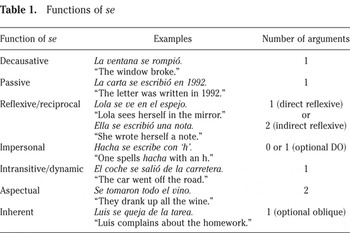
Table 1 summarizes the uses of se, as identified in this section. The examples presented thus far highlight that the clitic se, an essential morphological feature of verbs of the alternating class, also corresponds to numerous other surface meanings.
Functions of se

GENERATIVE APPROACHES TO TRANSITIVITY ALTERNATIONS
The existing research on transitivity alternations in the SLA context has been carried out within the generative framework, which assumes that UG contributes in some way to the learning task by constraining learners' hypotheses about the target language. It is not the aim of this article to explore the many issues surrounding UG-constrained knowledge in the process of SLA (see White, 2003, for an up-to-date synopsis of the framework). Nevertheless, it is necessary to examine how the problem of transitivity alternations has been addressed from this perspective, the questions that have been posed, and the methodologies that have been used in attempts to address those questions.
Guiding Questions of Previous Research
One of the central questions that has guided empirical research in this area is whether L2 learners have knowledge of universals that determine how arguments are mapped to syntactic positions (i.e., linking rules). Some linguists believe these linking rules to be innate (Montrul, 1999, 2000; Pinker, 1989), which means that one would come to the learning task knowing that agents are usually subjects, whereas patients or themes are likely to be realized as objects. On the other hand, Bowerman (1982, 1990) contended that linking rules are not innate, but that the learning of argument structure is driven by language-specific patterns in the input. A related issue is whether L2 learners follow the same path as L1 learners in making overgeneralization errors by applying intransitive verbs to transitive frames in order to achieve a causative meaning. Such causative errors have been amply documented in L1 acquisition (Bowerman, 1982; Lord, 1979; Pinker) and also in SLA (Juffs, 1996; Moore, 1993; Zobl, 1989). Consider the example in (7a) as representative of children's causative errors; (7b) shows the same pattern from an L2 learner.

The question, then, is what causes learners to produce such errors and how they eventually recover from them, given the assumption that the input data is not rich enough (i.e., the poverty of the stimulus argument) and that negative evidence is usually not available (at least in the case of L1 acquisition). Montrul (1997, 1999) proposed that L2 learners rely on the transitive template of alternating verbs as a default (available from UG) and apply newly learned verbs to it. Thus, errors such as (7b) are a logical consequence if learners apply intransitive verbs to this transitive template.
Another pivotal issue in the study of argument structure from the generative perspective has been the unaccusative-unergative distinction. According to the unaccusative hypothesis (Perlmutter, 1978), there are two distinct classes of intransitive verbs. Unaccusatives like arrive and fall typically denote a change of state and have nonagentive subjects. Unergatives like walk and work have agentive subjects and typically denote a process; that is, they are atelic. The distinction between unaccusatives and unergatives is believed to be universal, despite some crosslinguistic differences with respect to the classification of individual verbs (Rosen, 1984). Furthermore, the unaccusative-unergative distinction has been shown to have syntactic consequences in a variety of languages. If the syntactic distinction between unaccusative and unergative verbs is innate (van Hout, 1996), it would play into the acquisition of argument structure. Based on this hypothesis, several studies explored whether L2 learners know the underlying difference between unaccusatives and unergatives (Cabrera & Zubizarreta, 2003, 2005; Montrul, 2004; Toth, 2000). If they do, one piece of evidence would be found in higher rates of causative errors with unaccusatives than with unergatives, given the underlying similarity between alternating verbs and unaccusatives. This similarity is illustrated in (8).

In (8a), the alternating verb open is used to denote a change of state without external causation. The subject bears the thematic role of theme. Similarly, in (8b), the unaccusative verb arrive has a single argument that is considered to be a theme rather than an agent. Recall that in Spanish, (8a) requires overt morphology (se) to mark the intransitive event, whereas (8b) prohibits it. Toth laid out the hypothesis that might guide the L2 learner of Spanish: “If L2 Spanish learners were sensitive to the thematic similarities between the subject NPs of unaccusative verbs and those of single-argument alternators, […] they might overgeneralize se to the unaccusative class but not the unergative class” (p. 176). This is an important theoretical question because if it can be shown that L2 learners perceive the unaccusative-unergative distinction (despite L1/L2 differences in its realization), this would provide support for the view that they still have access to UG.
The third issue that has been investigated in the area of transitivity alternations is that of transfer from the L1—that is, how transfer interacts with UG-derived knowledge and if transfer affects all language domains equally. Although there is disagreement among researchers as to the amount of access that L2 learners have to UG, there is some consensus that transfer from the L1 is an important mechanism that mediates the process of language acquisition (Schwartz & Sprouse, 1996; White, 2003). Assuming that the semantic composition of alternating verbs is crosslinguistically uniform, the differences between languages and their realization of verbs like break are purely at the surface (morphological) level. Additional crosslinguistic differences stem from the fact that not all verb classes participate in the causative-inchoative alternation. For example, English motion verbs (e.g., roll, slide) can appear in both intransitive and transitive configurations, whereas Spanish motion verbs are barred from such an alternation.4
For a detailed study of motion verbs in Spanish, see Morimoto (2001).
In sum, the existing research on transitivity alternations within the generative approach has centered on the following theoretical questions: (a) Do L2 learners have universal knowledge of verb classes and the linking rules that map arguments to syntactic positions? (b) Are L2 learners sensitive to the distinction between unaccusative and unergative verbs, and how is this sensitivity manifested in the types of errors they make? and (c) How does transfer from the L1 mediate the acquisition process? In the next subsection, I examine the specific findings of the key studies that have been conducted, the methodologies that have been used, and the questions that remain unanswered. For reasons of scope, I focus on the class of alternating verbs and L2 Spanish learners' omission and overgeneralization errors that involve se.
Key Findings of Previous Research on Transitivity Alternations
Montrul (1997, 1999, 2000) investigated the nature of transitivity alternations in SLA in a series of three related experimental studies that involved Spanish, English, and Turkish speakers. One of the specific questions addressed by Montrul in these studies is whether learners perceive se as a marker of intransitivity and, consequently, whether they overgeneralize it to intransitive verbs that do not alternate (i.e., unaccusatives and unergatives). A picture judgment task was designed to test the learners' knowledge of four classes of verbs: alternating (hundir “to sink”), transitive nonalternating (cortar “to cut”), unaccusative (entrar “to enter”), and unergative (bailar “to dance”). The task consisted of a series of pictures and pairs of sentences that the participants judged on a scale ranging from −3 (completely unnatural) to 3 (completely natural). The transitive event scenes (e.g., a man breaking a window) were accompanied by two construction types, as illustrated in (9). The periphrastic construction with hacer “to make” was tested because it is the only way of expressing causation with unaccusative and unergative verbs.5
Another reason for including the periphrastic causative stems from the inclusion of L1 Turkish speakers (Montrul, 1999, 2000). Turkish utilizes an overt causative morpheme with a subset of change-of-state verbs. For example, for verbs like sink, the intransitive form is morphologically simple, whereas the transitive variant takes a causative marker.

For the intransitive scenes (i.e., a broken window without external causation), learners were asked to judge two sentences: one grammatical structure with a se-marked verb and one ungrammatical structure without the necessary se clitic.
As reported by Montrul (1999), the English NSs (intermediate and high-intermediate level of Spanish proficiency) performed inaccurately with well-formed intransitive sentences such as La ventana se rompió “The window broke.” These learners tended to reject the se-marked sentences at the same time that they accepted sentences without se. In fact, the intermediate group rated the sentences without se (*La ventana rompió) significantly higher than the correct sentences with intransitive morphology. Montrul concluded that the problem is morphological in nature, on the basis of the highly accurate performance of the Turkish learners who patterned like the Spanish NS controls.6
Turkish follows the pattern of Spanish with respect to verbs like open, close, and break. There is an anticausative morpheme (-il) that marks the intransitive form of these verbs.
Additionally, Toth (2000) documented a different kind of error, one that cannot be explained by transfer from the L1: overgeneralization of se to unaccusative verbs (i.e., llegar “to arrive”). Toth attributed this error to UG, which would allow learners to implicitly perceive the function of se as a marker of nonagentive subjects. Montrul (1999) also set out to determine if learners would overgeneralize se to other classes of intransitive verbs, but she did not find significant differences between unaccusative and unergative verbs. Interestingly, the Turkish-speaking learners were generally more likely to accept se with verbs that did not require it—a result that Montrul attributed to the more prominent role of morphology in Turkish (compared to English).
There is an additional issue that merits discussion here: the question of learners' variable judgments on verbs that belong to the same class. Such variable performance is a potential problem for theories of UG because it would call into question learners' sensitivity to verb classes. Indeed, Montrul (1999) found some evidence of variability among English-speaking learners, especially with intransitive verbs of the alternating class. For example, the high-intermediate learners were most inaccurate with romperse “to break” but very accurate with abrirse “to open.” The intermediate learners were also less accurate with romperse “to break” and hundirse “to sink” than with the other items in the same verb class. Despite this variable performance, Montrul ultimately concluded that L2 learners recognize verbs as belonging to particular semantic classes and that variability can be attributed to specific L1 patterns and crosslinguistic differences in the classification of particular verbs.
Cabrera and Zubizarreta (2003, 2005) also addressed the problem of variability, but from the perspective of individual variation and proficiency level. Cabrera and Zubizarreta (2003) proposed that learners might be either conservative (those who never overgeneralize causatives) or creative (those who overgeneralize the transitive construction to unaccusatives, unergatives, or both). Furthermore, Cabrera and Zubizarreta (2005) suggested that proficiency level interacts with the kind of transfer that takes place: Beginning and intermediate learners exhibit transfer of constructional properties, whereas advanced learners make use of specific lexical properties of verb classes. Although Cabrera and Zubizarreta's proposals (2003, 2005) might effectively account for the individual variation in their data, their results are collapsed across verb class, which does not address the vexing problem of variable performance on individual verbs within those classes.
To summarize, previous findings (Montrul, 1999, 2000; Toth, 2000) point to a consistent pattern of transitivity errors in the context of alternating verbs. These errors stem primarily from the omission of se in intransitive contexts. The possible overgeneralization of se to unaccusative verbs has also been explored, but the results are not consistent in this area. Surprisingly, although it is widely accepted that transitivity errors can occur in both directions (Berman, 1993), no study to date has addressed the overgeneralization of se to transitive event scenes. Recall that Montrul's picture judgment task included transitive scenes accompanied by two sentence types: a lexical causative and a periphrastic causative with the verb hacer “to make” (in [9]). However, the transitive scenes were never accompanied by sentences containing a se-marked verb, as hypothetically illustrated in (10).

To determine if learners overgeneralize the se morpheme to contexts that do not require it, sentences like (10) should be tested as well.
Montrul (1999) asked whether L2 learners perceive se as a marker of intransitivity, which is undoubtedly one of its key functions in the Spanish of NSs; indeed, Spanish-speaking children exhibit early use of se in the context of high-frequency intransitive verbs (e.g., se cayó “it fell” and se fue “he/she went away”) as well as unexpected events such as se mojó “it got wet” and se rompió “it broke” (Jackson-Maldonado, Maldonado, & Thal, 1998). However, the L2 data point to a different pattern: learners' general tendency to omit se with verbs of the alternating class despite instruction (Toth, 2000). Perhaps the opposite hypothesis is worth exploring: Do L2 learners perceive se as a marker of transitivity? Such a hypothesis is not completely incoherent, given that se is used in the context of many transitive events in Spanish (Nishida, 1994).
There is, however, a third hypothesis also worth considering: Given the enormous complexity of the distributional evidence, learners are not initially sensitive to either transitive or intransitive frames in which se is used but, rather, learn the uses of se on a verb-by-verb basis.7
Tomasello (1992) proposed exactly this for L1 acquisition with the verb island hypothesis.
In fact, Toth (2000) found exactly this kind of intrasubject variation, and he explained that some learners “varied their application of the rule for se within a single verb class” (p. 199). This result poses a special problem for generative theories of language acquisition, as Toth acknowledged, because it is impossible to determine if the two forms arise from a hybrid grammar (L1-L2) or if the data are better explained by the competence-performance distinction.
Before examining the learnability problem from a constructivist approach, it is crucial to consider the fundamental issue of data elicitation methods. The SLA research reviewed here was gathered primarily by means of acceptability judgment tasks, either with or without pictures to accompany the target sentences. It is beyond the scope of this article to take up the controversy associated with the validity and reliability of grammaticality judgments in SLA research (cf. Birdsong, 1989; R. Ellis, 1991; Gass, 1994). It is not unreasonable, however, to state that grammaticality judgments represent only one kind of performance, specifically metalinguistic performance. Thus, it would be beneficial to complement the existing grammaticality judgment data with production data. Although picture judgment tasks (Montrul, 2000) have many advantages over standard grammaticality judgment tasks, they, nevertheless, limit learners' options to the two sentences provided by the researcher. There might be additional constructions that learners prefer or consider when presented with particular event scenes. Only production data can tell us how learners verbalize transitive and intransitive events when the communicative situation requires them to do so.
However, it is well known that the use of production data also entails certain limitations, the main one being the avoidance of the target linguistic form(s). To overcome this difficulty in collecting production data, researchers have developed structure-focused tasks in which the communicative context strongly encourages the use of certain structures (Doughty & Long, 2000). Although no elicitation procedure guarantees that a particular learner will, indeed, produce the expected form, the goal is to create an instrument that targets particular forms by providing a large number of meaningful contexts for their use. With this goal in mind, I have adapted an instrument originally developed by Berman (1993), which was successful in testing children's knowledge of transitivity alternations in Hebrew.
The current study also extends the notion of alternation to include transitive verbs that participate in reflexive constructions (e.g., ver “to see”). Although it is generally assumed that alternating inchoatives (e.g., romper “to break”) and transitive verbs (e.g., ver “to see”) have different semantic templates,8
According to Haspelmath (1993) and Levin and Rappaport Hovav (1995), verbs like ver “to see” are labeled as accusatives. They do not participate in the causative-inchoative alternation because they always imply an external agent.

Thus, it is possible to conceptualize both types of verb as participating in a transitivity alternation. Berman (1993) included verbs such as wash (oneself) and dry (oneself) in addition to change of state verbs (e.g., spill, break) in her study of transitivity alternations in Hebrew. Before describing the methodology in more detail, I outline some of the predictions made by the sequence learning approach with respect to the acquisition of se and alternating verbs in Spanish.
THE LEARNABILITY PROBLEM FROM A CONSTRUCTIVIST APPROACH
In a series of articles, N. Ellis (1996, 1998, 2002, 2003, 2004) described sequence learning as the process that is ultimately responsible for the attainment of fluent comprehension and production in both L1 and L2 acquisition. In this view, all components of a language (vocabulary, word class knowledge, the grammatical system) are acquired by means of the same general chunking and abstraction process. The learner's task begins with learning sequences—that is, memorizing the recurring chunks of language and then searching for patterns and forms that reliably mark meaning. Simply put, “learning grammar involves abstracting regularities from the stock of known lexical sequences” (1996, p. 93). Frequency in the input is an important mediator of this process, given that frequent sequences are more readily stored in long-term phonological memory (2002).
With respect to the acquisition of morphology, N. Ellis (2001) explained that learning is affected not only by frequency of exposure to a particular form but also by the system of form-function mapping.9
The concept of form-function mapping is extensively developed in the competition model (MacWhinney, 2002).
It should be clear from the discussion in preceding sections that the Spanish clitic se is a prime example of an exceedingly complex form-function mapping. The se is a marker of intransitivity in inchoative events (e.g., break), but not all intransitive verbs are marked with se. Conversely, se is used to indicate telicity and total object consumption with transitive events (Nishida, 1994). Recall that se can appear with both transitive and intransitive verbs to render an impersonal meaning as well as with nonalternating verbs in passive constructions. From a learnability perspective, the distributional evidence is chaotic. The L2 learner is faced with the enormous task of sorting newly learned verbs into different categories based on their inherent semantic properties, the argument frames in which they appear, and the presence or absence of se. Consider the learner who, after hearing (13) in the input, might produce an ungrammatical sentence like (14).

The [NP [se V NP]] pattern in (13) is quite productive in Spanish: It is used in the indirect reflexive construction (El niño se lava la cara “The boy washes his face”), the reciprocal (Ellos se escriben cartas “They write each other letters”), and with a wide range of verbs to express total object consumption. It is clear that L2 learners of Spanish are exposed to input that contains the surface pattern in (13) and, as a result, they might overgeneralize it to structures that do not permit it. The current study explores this possibility. Finally, the learner must realize that (14) is ungrammatical in spite of hearing se baña “to bathe” in other contexts (e.g., Se baña por la noche “He/she bathes at night”), which encourages the learner to store se baña as a chunk, given the preceding discussion of sequence learning.
Given that the sequence learning approach is input-driven, it is crucial to consider the kind of input that classroom learners receive with se constructions. Initial classroom exposure to se typically occurs in the context of fixed phrases like se llama “his/her name is” and ¿Cómo se dice X en español? “How do you say X in Spanish?” Soon afterward, the instructional sequence presents se as a reflexive pronoun in the context of the so-called daily routine verbs, which inevitably include se as part of the lexical entry (e.g., despertarse “to wake up,” acostarse “to go to bed”). This anecdotal description is confirmed by Davies (2004), who conducted a corpus-based study of se-marked verbs in Spanish language textbooks. To determine if popular textbooks reflect NS frequency norms, Davies compared the most common se-marked verbs from 10 different textbooks with the top 50 se constructions in a 20 million word corpus of Spanish (www.corpusdelespanol.org). The results suggest that there is an inordinate focus on so-called getting ready verbs in the textbooks (e.g., lavarse “to wash,” maquillarse “to put on makeup”). For example, Davies found that afeitarse “to shave” (one of the verbs targeted in the current study) was frequently mentioned in the textbooks but was not among the top 500 se-marked verbs in the NS corpus.
If learners approach the task on a verb-by-verb basis, then verbs such as afeitarse “to shave” will enter the learners' lexicon as unanalyzed chunks. Consequently, overgeneralization errors such as (14) are expected, and the process of acquisition (i.e., abstraction) will involve removing se in the context of transitive events. The question, then, that empirical studies should address is how the learner comes to know that se is not an inherent part of the lexical entry but, rather, a morpheme that can be attached or removed according to argument structure.
In addition to the overgeneralization errors described in the preceding paragraphs, omission errors are also expected. Because transfer from the L1 is considered to be a central cognitive mechanism involved in L2 learning (MacWhinney, 2002), usage-based models predict that English-speaking learners will produce zero morphology (i.e., omission of se) on intransitive verbs that depict inchoative events. The correct use of se with verbs that are ambitransitive in English will entail making an important grammatical distinction that is simply ignored in the L1: whether to include an intransitive marker on the verb itself. Although the conceptual distinction between causative and inchoative events might be obvious on cognitive grounds (Slobin, 1996), the learner still must treat this distinction as obligatory in the L2 grammar.
To summarize, the learnability problem (from a constructivist perspective) of the Spanish se and its role in transitivity alternations consists of three elements. The first concerns the complex distributional evidence or unreliable form-function mapping: Learners must figure out that se is required in some intransitive clauses, is ungrammatical in others, and also appears in the context of highly transitive events. The second concerns the role of transfer from the L1: Learners must realize that the intransitive-transitive distinction is marked morphologically in Spanish and that such marking is obligatory for the class of alternating verbs. The third implicates the role of sequence learning: Learners will initially encounter some verbs marked with se, which will enter their lexicon as unanalyzed chunks. With more experience and exposure to the target language, the learner will unpack these chunks and thus begin to use se in a productive manner. Berman (1993) explained that the notion of productivity refers to “how knowledge is generalized from individual items to classes of items and abstract structural categories” (p. 645). In other words, learners display productive use of se when they move beyond rote-learned forms and are able to use a lexical item (e.g., romper “to break”) correctly in contexts that require se marking as well as in those that prohibit it.
RESEARCH QUESTIONS AND HYPOTHESES
The research questions that guided the design of the current study are as follows:
- When do learners begin to exhibit productive use of the se morpheme, in contrast to the use of unanalyzed amalgams?
- Given that transitivity errors occur in both directions (Berman, 1993; Lord, 1979; Nomura & Shirai, 1997), is directionality a factor in learners' performance with alternating verbs? In other words, do learners prefer to extend transitive verbs to intransitive contexts or vice versa?
- Is learners' performance on transitivity alternations consistent with a verb-by-verb learning strategy?
Several hypotheses can be formulated with respect to each research question. The first question is developmental in nature and, thus, it is difficult to predict with precision the point in the acquisition process at which learners move beyond rote-learned forms and generalize the use of se to particular functions. However, it is probable that beginning and intermediate learners will display little productive use of se and will instead rely on chunked forms. More productive usage is expected from the advanced learners, although some rote-learned forms might persist.
The second research question attempts to determine the relative difficulty of alternations from transitive to intransitive contexts and vice versa. If learners perform better in transitive contexts, this would mean that they are more successful at removing se when it is not necessary. In a sense, accurate performance in the transitive condition would mean that the learner is moving beyond rote-learned or chunked forms. On the contrary, if learners perform more accurately in the intransitive condition, this would mean they do not omit se in required contexts. Furthermore, it would indicate that they have acquired the decausative value of this morpheme, overcoming the influence of their native language. Transitivity errors might be expected to occur in both directions, and the performance of the learners in this area will likely be related to their overall proficiency in the language. Errors of omission, however, are expected to be more pervasive, given the L1 pattern of zero derivation.
The final research question explores the possibility that learners will perform better with certain lexical items than with others, regardless of the type of alternation pattern that the verb participates in (causative-inchoative vs. transitive-reflexive). If learners approach the task on a verb-by-verb basis, as predicted by the sequence learning account, we could see drastically different results for two verbs that participate in the same kind of alternation pattern. This would be a consequence of input frequency. Based on the frequency analysis provided by Davies (2004), I assume that some of the target verbs (e.g., bañar(se) “to bathe”) will be familiar to all of the participants, whereas others (e.g., pesar(se) “to weigh”) are less likely to be encountered in classroom discourse.10
I assume that the content of textbooks reflects, in an important way, the kind of input to which these classroom learners are exposed. This does not deny the possibility that they hear other se constructions in regular classroom discourse and, perhaps, in interactions outside the classroom.
METHODOLOGY
Instrument
The data were collected by means of an oral production task, similar to the one designed by Berman (1993). Following this design, participants are presented with pairs of pictures that represent similar events, but from different perspectives. More specifically, the pictures target verbs that can express both transitive and intransitive events, as determined by the syntax of the sentence and the verb's morphological shape. The procedure is as follows: The investigator provides source input by describing the first picture in each pair, and the participant is asked to describe what is happening in the second picture. The example in (15) illustrates the structured elicitation procedure as described in Berman (2000).

By providing the source input, the researcher primes the target lexical item and the participant does not have to guess which verb to manipulate. This is done in order to avoid a wide range of appropriate but off-target responses. Previous studies of transitivity alternations (cf. Montrul, 2000) administered a vocabulary translation task to ensure that learners knew the dictionary definition of the target verbs. This was not done in the current study because the instrument was designed to provide the learners with source input as well as a visual stimulus.11
As pointed out by an anonymous SSLA reviewer, depicting actions with pictures is often difficult, and it cannot be assumed that learners always focused on the action provided in the source input. Although this is certainly true (thus yielding some irrelevant responses), an independent measure of vocabulary can also be problematic. A major issue is deciding which form of the verb (with or without se) should be included on the vocabulary test; this can also prime the learners toward certain forms.
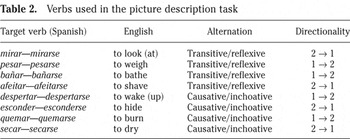
The picture description task consisted of eight verb pairs (16 pictures).12
The pictures were carefully chosen from Arttoday.com, an Internet graphics site. As an Arttoday member, one can download the images without any infringement on copyright law.


Source and target pictures: pesar(se)
Two verb classes were tested: those that participate in the causative-inchoative alternation and those that are classified as belonging to the transitive-reflexive alternation pattern.13
There has been ongoing debate as to the status of grooming verbs such as bañarse “to bathe (oneself).” Some linguists (Jackson-Maldonado et al., 1998) have suggested that they constitute an intermediate category, somewhere in between direct reflexives and middles. In this view, they differ slightly from middles because they do not focus specifically on the moment of change, yet they differ from reflexives with respect to the degree of separability between the coreferred elements (Kemmer, 1993). Although I recognize the unique nature of these grooming verbs, for the purposes of this study I have classified them as participating in the transitive-reflexive alternation.
Verbs used in the picture description task

Participants
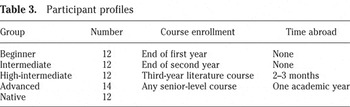
The study included 50 English-speaking learners of Spanish who were enrolled in various Spanish language courses at a large state university on the West Coast. A group of 12 NSs of Spanish served as the control group. A profile of the participants is given in Table 3. The 50 learners were divided into four proficiency groups, determined on the basis of their institutional status and prior exposure to Spanish: beginning, intermediate, high-intermediate, and advanced (note that the population is unbalanced, with 14 individuals in the advanced group). Additionally, all of the participants were English NSs and all reported English as the only language spoken in their household. Moreover, potential participants were excluded from the study if they had formally studied a language other than Spanish for 3 years or more.
Participant profiles

The participants in the beginner group were finishing their third quarter of language study, having taken the first two quarters of Spanish at the same university.14
All of the learners in the beginner group had some exposure to Spanish in high school. Although it would have been ideal to collect data from a group of true beginners, such learners are exceedingly rare at the university where data collection took place.
Data Analysis
Following Berman's (1993) original scoring procedure, participants' responses were divided into two main categories: appropriate and inappropriate. The appropriate category was further subdivided into correct and acceptable in order to account for a range of possible responses. If the learner made the expected transitivity alternation, the response was classified as correct. If, however, the learner provided a grammatically correct response without making the expected change in transitivity, the response was judged acceptable. Examples of both kinds of response are provided in (17); these sample responses accompany the visual stimulus in Figure 2.

The category of acceptable responses is useful for dealing with unexpected (but grammatical) responses. These could take the form of a transitive clause despite the fact that the intransitive scenes were carefully chosen because they lacked a volitional agent. Alternatively, an inchoative perspective on a two-participant event would also be considered acceptable. The inappropriate response category was further subdivided into ungrammatical and irrelevant. Responses that contained an overt transitivity error were classified as ungrammatical, whereas the irrelevant category was reserved for utterances in which the learner used a verb that was unrelated to the source input. Examples of both types of inappropriate response are provided in (18).


Intransitive scene: secarse
RESULTS
Group Results
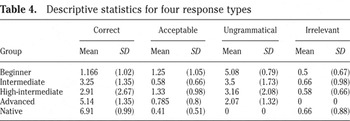
The first step in analyzing the data involves determining how accurately the participants from all five groups performed on the elicitation task, given the four-way classification of responses discussed earlier. Table 4 presents the descriptive statistics for each group in terms of correct, acceptable, ungrammatical, and irrelevant responses on the eight sets of target pictures.
Descriptive statistics for four response types

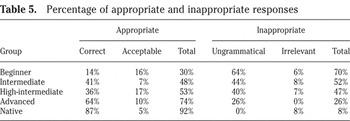
The same data set is presented in Table 5 in percentage format in order to reveal how the groups compare when correct and acceptable responses are merged together under the umbrella term appropriate responses. The same is done for ungrammatical and irrelevant answers, which together constitute the category inappropriate responses. Note that the percentages were calculated out of a total of 96 items for each group, with the exception of the advanced learners, for whom there were 112 items.
Percentage of appropriate and inappropriate responses

It should be pointed out that Tables 4 and 5 do not reveal what kind of errors the learners made (this will be discussed in the subsection on directionality); however, these composite results illustrate several trends. As expected, appropriate responses increase with language proficiency, as the percentage of inappropriate responses decreases. Transitivity errors (see ungrammatical column) are quite prevalent among all learner groups, peaking at 64% among the beginners. Even the advanced learners—despite their extensive exposure to the target language—still made transitivity errors more than 25% of the time. The percentage of irrelevant responses, which could undermine the value of the elicitation task, was rather low: It never surpassed 8% of the total responses for a particular group of learners. In fact, irrelevant responses were completely absent from the advanced group, which suggests that avoidance behavior is minimal under these conditions; the learners were trying to complete the task as they were instructed.
The reader will note that the NSs did not perform at ceiling level, although their descriptions were correct 87% of the time. They did, however, produce some irrelevant responses for three of the target pictures: esconder(se) “to hide,” despertar(se) “to wake,” and secar(se) “to dry.” The irrelevant responses generally took the form of a stative description rather than the intended transitive or inchoative verb. This sort of variation among NSs is quite normal, simply because NSs possess a range of grammatical options and might choose to focus on one aspect of the picture over another. Nevertheless, the high rate of correct responses from the NS group is indicative of the validity of the instrument.
In the category of appropriate responses, a one-way ANOVA using the Tukey-Kramer post hoc test revealed significant differences between the NSs and the other four groups, F(4, 57) = 18, p < .0001 (p < .05 for all four comparisons). Significant differences were also found when the beginners were compared to the high-intermediate and advanced groups. The other comparisons failed to reach significance with appropriate responses as a dependent variable.
A similar—yet not identical—pattern emerges when examining correct responses, which arguably involve more stringent criteria than appropriateness. Once again, the NSs distinguished themselves from the four L2 learner groups. Additionally, there were significant differences between the advanced learners and the other groups, F(4, 57) = 23.23, p < .05, as well as between the beginner and intermediate groups. However, the difference between the beginner and high-intermediate groups failed to reach significance on the measure of correct responses. The comparison between the intermediate and high-intermediate learners did not yield significant differences either.
Directionality
Before presenting the results by directionality, it is beneficial to consider some examples of the overt transitivity errors made by the L2 learners in this study. As hypothesized, transitivity errors occurred in both directions. In (19), examples of learners' errors in transitive contexts are given, whereas the utterances in (20) illustrate omission of se in the intransitive picture scenes.
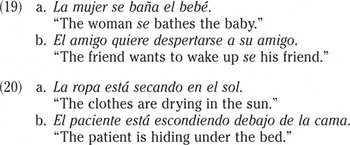
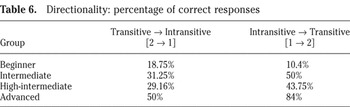
Table 6 presents the directionality results for the L2 learners by percentage of correct responses in each condition. The percentages were tabulated out of 48 items for each proficiency level for each directionality condition, with the exception of the advanced learners, for whom there were 56 items.
Directionality: percentage of correct responses

The results from a mixed model analysis of variance (MANOVA) showed that, overall, learners performed slightly better in the intransitive → transitive [1 → 2] condition, F(1, 46) = 8.26, p < .01. In this directionality condition, the advanced group outperformed the remaining three groups (p < .01 for all three comparisons), and the beginner group performed significantly worse than the other groups (p < .001 for all three comparisons). There were no significant differences, however, between the intermediate and high-intermediate groups. Thus, the results for the [1 → 2] condition suggest that there is steady improvement with increasing proficiency. Beginning learners' performance is highly inaccurate (only 10.4% correct), the two intermediate groups can be combined for statistical purposes to yield a composite score that approaches 50% accuracy, and the advanced group displays 84% accuracy.
The transitive → intransitive [2 → 1] condition yielded lower mean scores overall as well as less differentiation among the groups. Again, the advanced group performed significantly better than the other three learner groups (p < .05 for all three comparisons), but the differences among the beginner, intermediate, and high-intermediate learners failed to reach significance. Although the advanced group outperformed the other groups, its mean score of 50% correct is far below any benchmark for acquisition. Within-group comparisons revealed a significant effect for directionality in the advanced group only, p < .01, which means that these learners performed significantly better in the [1 → 2] condition than in the [2 → 1] condition.
Results by Lexical Item
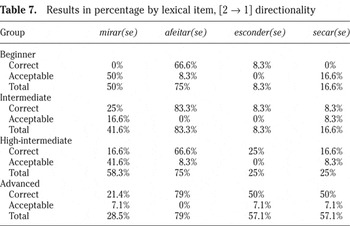
To determine if learners' knowledge of verb alternation patterns differed for individual lexical items, the data were analyzed to show group performance on each target verb. Table 7 presents these results for the [2 → 1] directionality condition; the percentage of correct and acceptable responses for the four verbs within this directionality condition is listed.
Results in percentage by lexical item, [2 → 1] directionality

What is immediately evident from Table 7 is the considerable variability in performance for different verbs. Consider, for example, learners' ability to manipulate mirar(se) “to look” compared with afeitar(se) “to shave.” All learners, regardless of proficiency level, struggled with the verb mirar(se) “to look”; their inaccurate responses with this verb contrast sharply with afeitar(se) “to shave,” which yielded high scores across proficiency groups. In fact, afeitar(se) “to shave” was the only verb that the beginners were able to manipulate with any success.
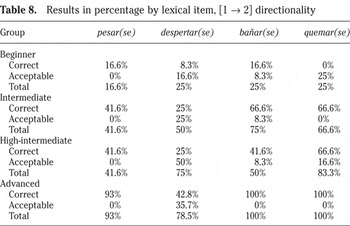
Table 8 presents the results by lexical item for the [1 → 2] directionality condition. Recall that this condition yielded a clearer differentiation among groups. This is especially clear in the results for the verbs bañar(se) “to bathe” and quemar(se) “to burn,” which highlight a gradual path toward mastery of this alternation (25% appropriate responses from the beginners vs. 100% correct from the advanced speakers).
Results in percentage by lexical item, [1 → 2] directionality

Nevertheless, there is still considerable variability between individual lexical items. For example, despite their perfect performance with bañar(se) “to bathe” and quemar(se) “to burn,” advanced learners still struggled to produce the correct alternation for despertar(se) “to wake” (42.8%). In similar fashion, the high-intermediate group scored only 41.6% with pesar(se) “to weigh” but displayed greater knowledge of quemar(se) “to burn” (83.35%). The beginners were the only group to score consistently (low) on all verbs in this directionality condition.
A Qualitative Exploration of the Data
In the case of learners' transitivity alternations, there is a wealth of information that cannot be revealed by a quantitative analysis. It is worthwhile to consider learners' utterances with individual lexical items, especially those that were judged acceptable but not correct. As shown in Table 7, the target verb mirar(se) “to look” yielded low scores among all groups of learners; they experienced considerable difficulty in verbalizing the event in Figure 3.

Mirarse.
The learners who omitted se relied instead on a variety of constructions, which included transitive constructions (21) or some variant of a sí misma “at herself” (22). The examples in (21) and (22) are from the advanced group, but similar attempts at coreference were made by learners of all levels.

A particularly revealing example comes from a learner in the beginner group who code-switched halfway through the utterance.

It is clear that this learner is looking for a lexical item that is equivalent to the English herself, not realizing that coreference is indicated morphologically in Spanish by attaching se to the verb. The attempted use of a sí misma in (22) might result from the same basic need for a lexical item that could express coreference.
It seems, then, that in the case of some omission errors, learners are looking for alternative means of expressing the function that would normally be marked by se. This is certainly true with mirar(se) “to look” and to a certain extent with afeitar(se) “to shave,” although learners were generally much more accurate with the second verb. It is interesting, however, that learners did not attempt similar strategies with verbs that participate in the causative-inchoative alternation. There was not a single example of a sí mismo “to himself/itself” being used with secar(se) “to dry” or esconder(se) “to hide.” With these two verbs, participants omitted se at very high rates but did not compensate for it with alternative means. Only a few learners opted for a causative construction with secar(se) “to dry” by referring to el sol “the sun” as the agent. This apparent distinction between reflexive and inchoative verbs on the part of the learners is likely explained by transfer from the L1. Note that reflexive events in English tend to be marked overtly with himself, herself, and so forth, in contrast to inchoative events that use zero-derived morphology. The contrast is exemplified by one of the advanced learners, who omitted se in both (24a) and (24b), but selectively used a sí mismo with mirar “to look.”

The case of despertar(se) “to wake” is also worth examining in more detail, as this verb elicited a substantial number of acceptable responses from learners (Table 8). A partial explanation is that many of the learners, when presented with the picture of a person deliberately trying to wake someone else, opted to verbalize this event as inchoative. This is illustrated in (25) with an utterance from one of the advanced learners:

There might be a natural tendency to express this event as inchoative, because many speakers might view the act of waking up as inherently internal rather than initiated by an outside force (i.e., an agent). In fact, two of the NSs in the control group used the subordinate clause para que se despierte “so that he will wake up” after mentioning the other participant and the noise he was about to make. Alternatively, the picture might not have clearly elicited a causative event, encouraging some participants to use the inchoative despertarse “to wake up.”
DISCUSSION
Productivity
This study was designed to investigate L2 learners' ability to verbalize transitive and intransitive event scenes. Overall, the results confirm the difficulties that learners face in what appears to be a relatively simple choice: whether to include se marking on the verb. The first research question set out to determine if there is a clearly defined point at which learners begin to utilize se in a productive manner. Although longitudinal studies are generally more suitable for tracking developmental patterns, some insights from the cross-sectional data presented here can be drawn. The results emphasize that learners at beginning levels of proficiency (i.e., after 1 year of language study) display almost no productive use of se. Their performance on the task was mainly limited to the rote-learned forms—that is, the forms that they heard during the task itself (the source input). This finding indicates that learners initially learn se as part of the verb and not as a marker of intransitivity, telicity, or any other linguistic function. This is not surprising because se is a clitic; phonologically, it forms a contiguous unit with the verb to which it attaches. It is also precisely what the sequence-learning account (N. Ellis, 1996) predicts: Memorized chunks of language are the initial step in the development of a grammatical system.
It is not until the advanced levels of proficiency that learners are able to extract se from a given lexical item and avoid overgeneralizing it to transitive contexts. However, many of the advanced learners in this study continued to omit se in the context of intransitive, inchoative events. It seems clear that the term productive knowledge cannot be applied in an all-or-nothing fashion. Likewise, Berman (1993) found that children were successful with some alternations but not others, which led her to conclude that they passed through a developmental phase in which the grammatical system was only “semi-productive” (p. 663). Thus, although the advanced learners in this study displayed productive use of se in many instances, their grammar did not converge completely with that of NSs. One would have to examine data from even more advanced learners or near-NSs in order to determine whether they eventually master the complete system of verb transitivity alternations in Spanish.
Although the data reveal that learners' accuracy with se marking gradually increases with proficiency, there is not a sharp cutoff at which they stop making overgeneralization and omission errors. Instead, there is a significant amount of individual variation among learners in the two intermediate groups, which were never statistically different from one another. This suggests that some intermediate learners begin to display semiproductive use of se, whereas others continue to rely on rote-learned forms. Another important source of variation is the fact that some verb pairs yielded much higher scores than others. I return to this point shortly, after reviewing the third research question.
In conclusion, the data suggest that productive knowledge of se develops gradually and manifests itself in three stages: The process begins with a rote-learning stage during which overgeneralization and omission errors dominate, continues through a period of semiproductivity with variation among verb pairs, and, finally, culminates in productive use. As noted earlier, not all of the advanced learners tested in this study can be said to display fully productive use of se.
Directionality
The results support the initial hypothesis that transitivity errors occur in both directions among L2 learners of Spanish. In general, the learners were slightly less accurate in the [2 → 1] condition, which means that omission errors were more frequent than overgeneralization errors. As predicted, the omission errors were also more enduring, given that advanced learners only reached a threshold of 50% correct. In fact, 86% (25/29) of the overt transitivity errors produced by the advanced learners occurred as a result of omission of se in the [2 → 1] directionality condition. The omission of se in intransitive contexts by English-speaking learners is seen as evidence for the lasting influence of one's L1 on the SLA process.15
This study only involved one L1 language group, which makes it difficult to argue for the role of transfer (i.e., it is possible that the omission of se is simply a developmental error that all learners make). However, Montrul (2000) convincingly demonstrated that L1 Turkish speakers do not accept the omission of se with alternating verbs; instead, they patterned like the Spanish NS controls. Thus, transfer is the most likely explanation in this case.
The opposite kind of transitivity error—overgeneralization of se to two-participant events—was also clearly documented. This overgeneralization occurred with both subclasses of verbs tested: alternating inchoatives (e.g., quemar “to burn”) and transitives (e.g., pesar “to weigh”). Toth (2000) emphasized learners' selective overgeneralization of se to verbs of the unaccusative class, which was attributed to UG influence and sensitivity to verbal semantics. However, in light of the data presented here, it seems that overgeneralization errors with se are not constrained to a single verb class. The reason why this type of error was not considered in previous research is, in part, a methodological issue (recall that se-marked transitive sentences were not included in the grammaticality acceptance tasks used in previous studies).
It is important to note that the UG perspective does not predict overgeneralization of se to the transitive template of two-participant events. Recall that the UG approach expects learners to be sensitive to the structural aspects that define verb classes (i.e., the templates of Levin & Rappaport Hovav, 1995). Thus, the overgeneralization of se to unaccusative verbs can be accounted for by a UG approach, given that both unaccusatives and alternating intransitives have a single NP that bears the role of theme rather than agent. However, the UG approach cannot easily explain the overgeneralization of se to transitive contexts. As Toth (2000) stated, “it would be difficult to find a rationale within UG that would account for learners linking se to semantically and structurally unrelated forms, such as, for example, unergatives and transitive accusatives” (p. 176). Although unergative verbs were not included in the present study, the overgeneralization of se to transitive verbs was confirmed. Such a finding is predicted by usage-based models in which sequence learning is seen as one of the main cognitive mechanisms that drives language development.
The results further indicate that this type of overgeneralization error is gradually eliminated from learners' performances as they gain proficiency in the target language. In other words, learners are capable, by some mechanism, of eventually recovering from this type of overgeneralization error. Therefore, it would seem that overgeneralization errors are, at least in the case of se, easier to recover from than omission errors. This would be in direct opposition to White (1991), who hypothesized that overgeneralization errors are more difficult to overcome because of the lack of direct negative evidence. Omission of se, on the other hand, could be remedied on the basis of positive evidence.
If negative evidence is needed to recover from overgeneralization errors, then White (1991) is correct in her prediction. The current study, however, shows that the advanced learners were able to overcome overgeneralization errors, although they continued to omit se with intransitive event scenes. At this point, I offer only a speculation as to why this might be the case. With respect to the omission errors in the inchoative scenes, I suspect that learners are not even aware that something is missing (recall that learners never tried to compensate for omission of se with verbs like secar “to dry” and esconder “to hide”). The overgeneralization errors, on the other hand, are more likely to be perceived by a learner who no longer treats se as an inherent part of the lexical entry. In short, the learners who do not overgeneralize se to transitive contexts have been able to unpack the clitic from the verbs with which it typically appears.
Nevertheless, the sheer frequency with which overgeneralization errors occur among beginning and intermediate learners is quite staggering and deserves further comment (recall the 10.4% accuracy of the beginner group). For example, when asked to use the verb bañar “to bathe” in a transitive event scene, only 2 of the 12 beginning learners (17%) were able to do so accurately. The remaining 10 learners relied on the rote-learned form bañarse and extended it to the transitive context. Consequently, it seems that bañarse “to bathe” and similar verbs encountered in the first-year classroom enter the learner's lexicon as single items (i.e., the learner is not initially aware that bañar and se are divisible elements). The learner most likely begins the acquisition process with a simple hypothesis: that there is one form for all functions (Andersen, 1990). Thus, upon encountering bañarse “to bathe” in the input, the beginning learner has no reason to suspect that this form is restricted to one-participant, intransitive events. The typological bias probably contributes to the formation of such a hypothesis: English-speaking learners do not approach the task of learning Spanish (or any other L2) by paying attention to morphemes that mark intransitive forms of verbs. Even if the learner encounters the form bañar alongside bañarse in the input, he or she might see these as two possible realizations of a single lexical item. In other words, there would be no functional differentiation between the two forms; they would exist in free variation in the learner's lexicon. R. Ellis (1999) proposed that free variation is a manifestation of item-learning. This is precisely the type of learning that occurs with se-marked verbs, which leads to the overgeneralization errors found in the corpus.
To summarize the response to the second research question, the data indicate that directionality is one of the key variables to understanding learners' ability to manipulate alternating verbs in Spanish. The clearest piece of evidence for the effects of directionality is the fact that two verbs that belong to the same class can yield strikingly different results. Consider afeitar(se) “to shave” [2 → 1] and bañar(se) “to bathe” [1 → 2], both of which participate in the transitive-reflexive alternation. Whereas only two learners were able to use bañar(se) “to bathe” in a transitive context, eight were able to produce afeitar(se) “to shave” in an intransitive context. Both of these verbs are taught in first-year Spanish classes, but they are generally presented in their reflexive form. Thus, the se-marked form enters the learners' lexicon and is utilized in both transitive and intransitive contexts.
Before addressing the final research question, a caveat is in order concerning the methodology used and whether it primes learners to make overgeneralization and omission errors. In other words, by providing the source input, is the researcher not leading the participant down the wrong path? Two points can be made here. First, the notion of structural priming refers to a speaker's preference for using a particular structure (e.g., passive vs. active sentence) only when there are two structurally different ways of saying the same thing (Loebell & Bock, 2003). It does not generally refer to the overuse or omission of a particular morpheme based on the source input or prime. Furthermore, one must remember that all learners participated in the same elicitation task. If, indeed, they were primed, they were all primed in the same way. This does not negate the fact that some learners were able to manipulate the source input with which they were provided. Clearly, the more proficient learners were able to give appropriate responses for the target items by utilizing their knowledge of verb argument structure in Spanish and how it is encoded with a particular morpheme (se). The lower level learners who did not have this knowledge were probably compelled to repeat the source input without being cognizant of how to encode the alternation. In this sense, it could be argued that the less proficient learners are more susceptible to the effect of priming. The sequence learning account predicts this, using slightly different terminology: that initial stages of language learning are primarily concerned with memorizing fixed chunks of language.
Verb-by-Verb Learning
The pattern of correct and acceptable responses documented in the current study indicates variability among particular lexical items and uniformity among others (see Tables 7 and 8). For example, when directionality was held constant, learners were quite accurate in producing the reflexive afeitarse “to shave” but not mirarse “to look.” This can be explained logically as the result of learners' exposure to input in the classroom environment. As mentioned previously, classroom students of Spanish are exposed to afeitarse “to shave” in the context of the daily routine. They have heard afeitarse “to shave” and most are able to use it, but lower level learners have not abstracted the form-function relationship between se and coreference. For this reason, they are not able to generalize the form to a different situation, such as a woman looking at herself in the mirror. Thus, the knowledge that they display is not productive because it has not been generalized across classes of items that behave alike in the target language.
In apparent contradiction, some lexical items produced consistent results. The verbs esconder(se) “to hide” and secar(se) “to dry,” both in the [2 → 1] condition, yielded similar scores within groups. However, this does not necessarily indicate that learners are sensitive to the semantic verb class of these items. It could simply be an indication that learners transfer the identical morphological marking of these two verbs from the L1: The patient is hiding and The clothes are drying. Because both of these verbs are zero-derived in English, learners of Spanish transfer the syntactic frame from the L1 without applying the required decausative morphology.
In a recent paper, Montrul (2005) considered the issue of variability among verbs that belong to the same semantic class (e.g., unergative, unaccusative) and attributed learners' variable responses to the fact that some verbs are more unergative or unaccusative than others. In other words, there is a continuum of verbs per subclass, with some that belong to the core and others that belong to the periphery (Sorace, 2000). Variability, then, is more likely to occur among more peripheral members of the subclass.
The possibility that there are semantic subtypes of verbs is not in conflict with the notion that verbs are learned on a verb-by-verb basis. Similarly, Hopper and Thompson (1980) proposed that some events are more transitive than others and, indeed, this seems to be a relevant notion for L1 acquisition (Slobin & Bever, 1982). In the verb-by-verb perspective, it is expected that learners' performance will be affected by their familiarity with individual lexical items. In other words, variation is anticipated because sensitivity to classes of items develops much later, when the learner is able to sort out the distributional properties of the input. However, there can certainly be a role for prototypicality in this process (i.e., that grammatical knowledge develops in relation to prototypes).16
Andersen and Shirai (1994) traced the development of tense-aspect marking in SLA and concluded that prototypical past events (those that are [+punctual], [+telic], and [+result]) are generally acquired earlier than other types of past situations. Additional studies that have examined the role of prototypes in Spanish L2 acquisition are Lubbers Quesada (1998) for the subjunctive and Zyzik (2006) for dative constructions.
CONCLUSION
This study considers the well-studied problem of transitivity alternations from the theoretical perspective of sequence learning. Although the notion that language is generated by a system of rules and abstract principles is still a dominant one in the field of SLA (Foster, 2001), several empirical studies suggest that many features of the L2 grammar are initially learned via rote-learned sequences (Myles, Hooper, & Mitchell, 1998; Myles, Mitchell, & Hooper, 1999). Likewise, the data presented in this article coincide with the view that sequence learning plays a significant role in the development of L2 grammars.
The present study contributes to the body of literature on the acquisition of argument structure by examining a single morphological feature with numerous surface meanings—Spanish se—and learners' ability to use it productively according to the nature of the event that they are asked to describe. For most learners in the study, omission and overgeneralization of se are persistent errors in oral production. The results concerning omission of se are consistent with previous research (Montrul, 1999, 2000; Toth, 2000) and provide further support for the important role of L1 transfer in the SLA process. On the other hand, this study documents overgeneralization errors with transitive verbs, a feature of learner language that was previously overlooked. Such errors are postulated to be a result of applying rote-learned forms to new contexts. The data suggest that overgeneralization errors with se are eventually eliminated from the speech of most advanced learners, whereas omission errors are more enduring, perhaps because they are more difficult to perceive. Further research is necessary to clarify why L2 learners recover from such overgeneralization errors but continue to make errors of omission.
In the constructivist view, it is assumed that all aspects of a verb's meaning, including its subcategorization requirements, are learned on the basis of exposure to input. It follows, then, that the process is affected to a large extent by the individual learner's familiarity with particular lexical items and the frames (i.e., sequences) in which he or she has heard them. The present study corroborates this view by presenting evidence of variable performance on verbs that belong to the same class.
The notion that rote-learned sequences play an important role in the language acquisition process is not new to L1 researchers (Bowerman, 1982; Bybee & Slobin, 1982; Gordon & Chafetz, 1990; MacWhinney, 1978). In SLA, however, rote-learned chunks were traditionally seen as serving a communicative function only (Krashen & Scarcella, 1978), allowing novice learners to gain access to basic social routines (notable exceptions are Hakuta, 1974, and Wong-Fillmore, 1976). More recently, SLA researchers have begun to examine empirically the role that such sequences might play in the development of a grammatical system, one that is characterized by productive knowledge of forms and their corresponding functions. This study contributes to our understanding of how the acquisition of one such grammatical form—the Spanish clitic se—is highly dependent on the learning of individual lexical items.