


Highlights
-
• In this population-based study of patients with primary cardiac diagnoses who developed in-hospital stroke, we compared outcomes among patients with prior cardiac surgery, cardiac procedures and no interventions.
-
• Adjusted mortality and complications were similar across groups.
-
• Later stroke recognition after cardiac procedures was associated with higher mortality.
Introduction
In-hospital acute ischemic stroke (AIS) refers to a stroke occurring in a patient admitted to hospital for a non-stroke condition. Reference Ignacio, Abdalrahman and Kaveeta1 It is a serious complication that increases morbidity, length of stay and healthcare costs. Reference Cumbler2–Reference Ignacio, Waraich and Khan4 Cardiac conditions are among the most significant causes of stroke, including those occurring in-hospital. Reference Koo, Zhou and Hameed5–Reference Fanning, Campbell and Bulbulia7 Data from large cohort studies demonstrate that atrial fibrillation increases the risk of ischemic stroke by 3 to 5 times. Reference Bernstein, Kamel and Granger8,Reference Marini, De Santis and Sacco9 Beyond atrial fibrillation, coronary artery disease, valvular heart disease and heart failure are among the most common causes of stroke associated with cardiac conditions. Reference Koo, Zhou and Hameed5,Reference Shu, Aziz and de Havenon6,Reference Robinson, Katzenellenbogen and Kleinig10,Reference Gaudino, Benesch and Bakaeen11
Cardiac procedures, such as coronary artery bypass grafting (CABG), valve replacement, catheter ablation and transcatheter aortic valve implantation, carry a risk of ischemic stroke. Reference Koo, Zhou and Hameed5,Reference Messé, Acker and Kasner12–Reference Gaudino, Rahouma and Di Mauro15 These interventions can predispose patients to stroke through various mechanisms, including perioperative embolization, hemodynamic instability and postoperative atrial fibrillation. Reference Shu, Aziz and de Havenon6,Reference Massaro, Messé and Acker13,Reference Gaudino, Di Franco, Rong, Piccini and Mack16 While prior studies have explored stroke risk after specific cardiac procedures, most rely on administrative data and focus on stroke incidence. Few studies have described the clinical characteristics, time-metrics and outcomes of AIS among patients hospitalized with a cardiac diagnosis or compared those with and without recent cardiac procedures. Such data are vital for identifying modifiable risk factors and informing optimal surveillance strategies for timely recognition and treatment of stroke. There is a lack of consensus regarding these strategies, which may contribute to preventable delays in diagnosis and treatment. Reference Nouh, Amin-Hanjani and Furie3 In this study, we define delayed diagnosis as recognition of stroke symptoms beyond 24 hours from symptom onset or last known well, based on Canadian Stroke Best Practices Guidelines, which recommend endovascular therapy within 6 hours and allow careful selection up to 24 hours using multimodal imaging such as CT or MRI perfusion. Reference Heran, Lindsay and Gubitz17,Reference Powers, Rabinstein and Ackerson18 In patients with in-hospital stroke, the exact time of ischemic stroke onset is often not directly observable. Accordingly, throughout this manuscript, time intervals referring to stroke are based on the time of stroke recognition rather than the true time of stroke onset.
Using a population-based cohort of in-hospital AIS patients, our objectives were to describe clinical characteristics and outcomes of in-hospital AIS among patients who underwent cardiac procedures, cardiac surgery and those who did not and to identify factors associated with in-hospital mortality among patients who underwent any procedure or surgery. Given the acute hemodynamic and embolic stresses associated with cardiac interventions, we hypothesized that patients with recent cardiac procedures might have more severe strokes and worse in-hospital outcomes than patients without procedures.
Patients and Methods
Study design
This is a subgroup analysis of INPATIENTS, a retrospective population-based cohort study assessing in-hospital stroke patients in Alberta. Reference Ignacio, Abdalrahman and Kaveeta19 The cohort included all adults ≥18 years who experienced an in-hospital stroke at any acute care hospital in the province from 2018 to 2022.
Ethical considerations
This sub-study was part of a larger retrospective study approved by the University of Calgary Conjoint Health Research Ethics Board (REB23-0864). Patient consent was waived due to the retrospective use of de-identified, minimal-risk data. We adhered to the STROBE and RECORD reporting guidelines.
Population
Among patients with a primary admission for a cardiac diagnosis and an in-hospital AIS, we compared three groups: patients with no prior cardiac procedure or surgery, patients who underwent cardiac procedure and patients who underwent cardiac surgery within 30 days prior to stroke recognition. Cardiac procedures included percutaneous coronary intervention (PCI) with and without stenting, coronary angiography, device implantation, ablation or cardioversion and drainage or other minor procedures. Cardiac surgery included CABG, aortic or mitral valve repair or replacement, implantation of a ventricular assist device (VAD), extracorporeal membrane oxygenation (ECMO) and other open cardiac repairs. The in-hospital AIS cohort was identified using post-admission comorbidity ICD-10 codes H34.1, I63.x and I64, with primary diagnoses including acute/chronic rheumatic heart disease, ischemic heart disease, other heart diseases and cardiogenic shock (see Supplementary Tables 1–2 for full diagnostic and procedure codes).
Data sources, variables and outcomes
Information on demographics, comorbidities, mortality, any intensive care unit (ICU) admission, in-hospital complications (acute kidney injury, cardiac arrest, deep venous thrombosis or pulmonary embolism, gastrointestinal bleeding, pneumonia, respiratory failure and urinary tract infection) and procedure type were derived from administrative data from the Discharge Abstract Database. Procedures were identified using CCI codes and grouped into major categories such as CABG, valve repair/replacement, PCI, VAD or device implants, drainage/minor procedures, ablation/cardioversion, ECMO/support devices and other coronary or major procedures. Acute treatment data on intravenous thrombolysis (IVT) and/or endovascular thrombectomy were obtained by linkage with the QuICR registry, a province-wide database of treated AIS patients in Alberta. The following variables were extracted by manual chart review: time of first recognition of stroke, altered consciousness before stroke symptom recognition (i.e., chart-documented drowsiness, altered sensorium or Glasgow Coma Scale score <15); reasons for withholding thrombolysis, and stroke etiology, classified using the Trial of Org 10172 in Acute Stroke Treatment (TOAST) criteria. Stroke severity was assessed retrospectively by neurologists using the National Institutes of Health Stroke Scale (NIHSS). Reference Williams, Yilmaz and Lopez-Yunez20 Procedural stroke was defined as an AIS that was explicitly documented in the patient’s chart by the treating neurologist as being temporally and clinically related to a recent cardiac procedure, after relevant diagnostic work-up and reasonable exclusion of other identifiable stroke etiologies. Stroke recognition time was defined as the time when symptoms were first recognized by healthcare staff or, when unavailable, the timing of the first stroke-related neuroimaging.
Statistical analysis
We compared baseline characteristics of AIS patients across three groups (no procedure, cardiac procedure and cardiac surgery) using descriptive statistics. Adjusted estimates of the associations between procedure status and the following outcomes: mortality, prolonged stay >7 days, ICU admission and in-hospital complications (acute kidney injury, cardiac arrest, deep venous thrombosis or pulmonary embolism, gastrointestinal bleeding, pneumonia, respiratory failure and urinary tract infection) were assessed using multiple logistic regression. Models were adjusted for age, sex and facility level, as well as biologically plausible comorbidities, including atrial fibrillation, coronary artery disease, heart failure and prior stroke or transient ischemic attack (TIA). Among patients who underwent procedures, factors most strongly associated with mortality were examined in a separate multivariable model, including age, sex, time from procedure to stroke recognition, procedure type (cardiac procedure vs cardiac surgery) and acute treatment. All comparisons were two-sided and conventional levels of significance with p < 0.05 were used.
Results
Characterizing in-hospital stroke patients with a primary cardiac diagnosis
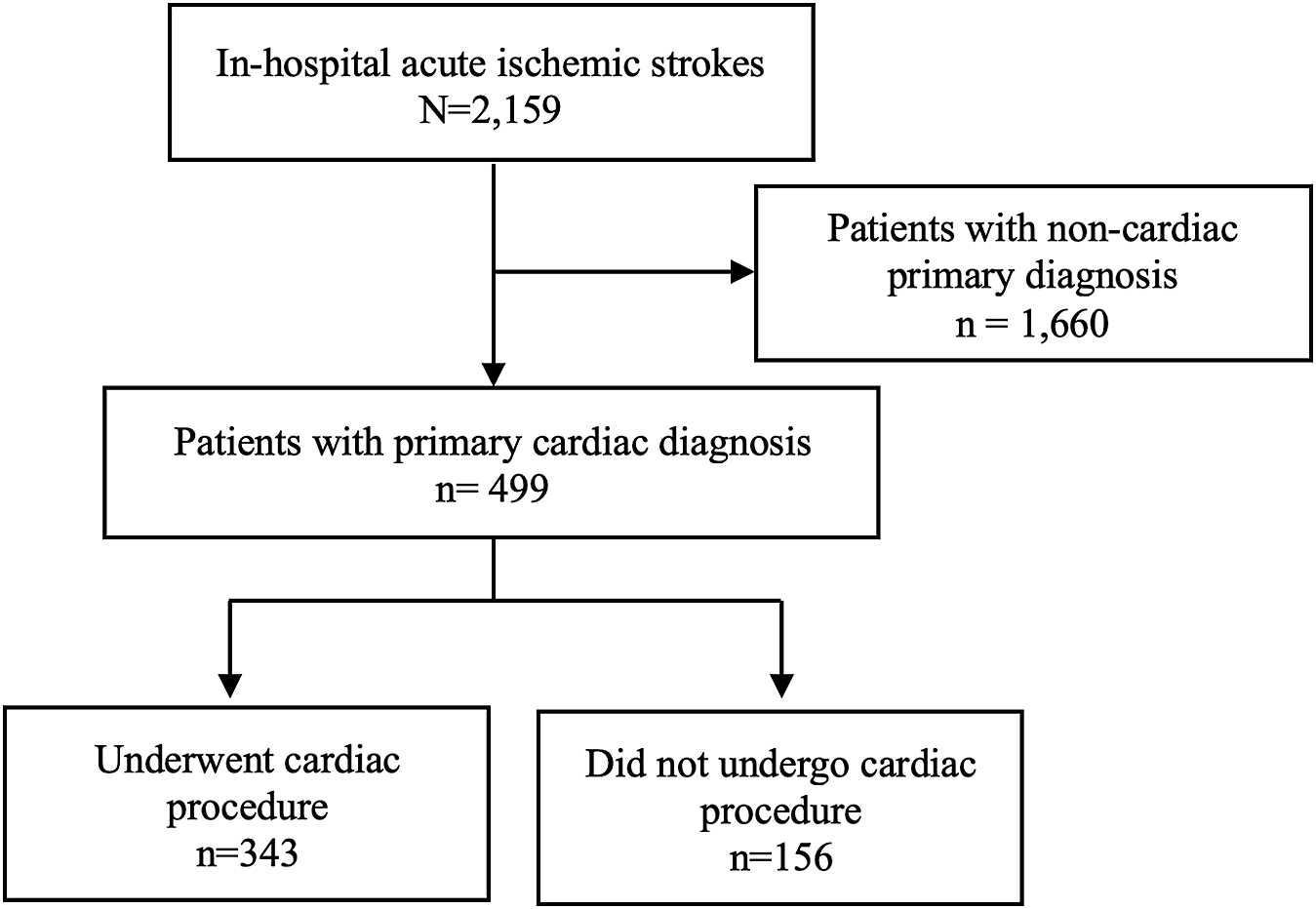
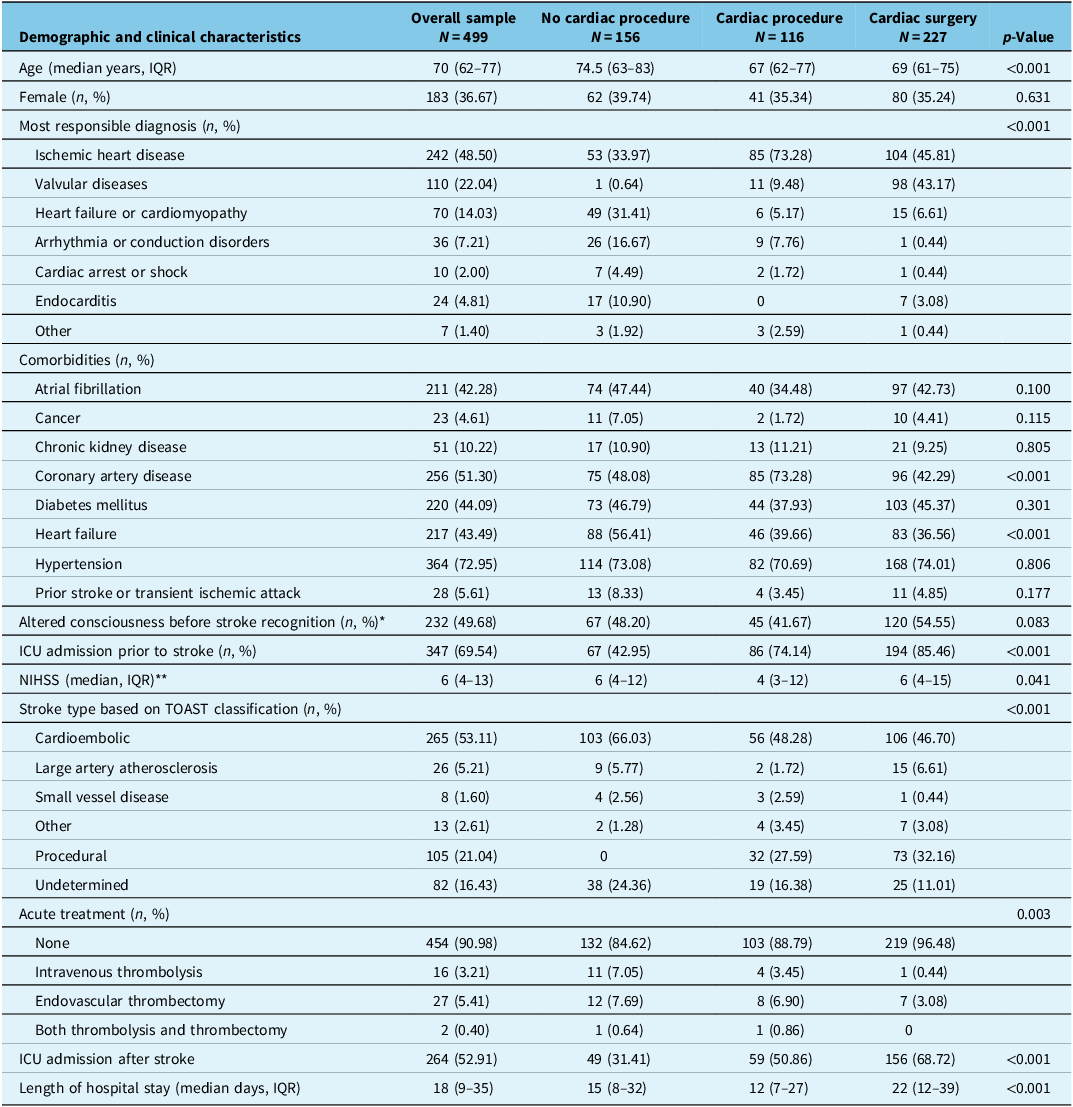
Among 2159 in-hospital AIS patients, we identified 499 with a primary cardiac diagnosis, of whom 156 (31.3%) did not undergo any cardiac procedure or surgery, 116 (23.2%) underwent a cardiac procedure and 227 (45.5%) underwent cardiac surgery (Table 1, Figure 1). The median age of the cohort was 70 years (IQR 62–77) and 183 (36.7%) were female. Most strokes (362 or 72.5%) occurred at comprehensive stroke centers. Common comorbidities included hypertension (73.0%), coronary artery disease (51.3%), diabetes mellitus (44.1%), heart failure (43.5%) and atrial fibrillation (42.3%). Nearly half had altered consciousness before symptom recognition (49.7%). The first neuroimaging was usually CT with CTA (49.1%). Baseline NIHSS was a median of 6 (IQR 4–13). Cardioembolic etiology was most frequent (53.1%), followed by procedural (21.0%) and undetermined (16.4%) etiologies.
Study flowchart for inclusion.

Baseline demographic and clinical characteristics of patients by cardiac procedure status

Table 1. Long description
A table comparing demographic and clinical characteristics of patients by cardiac procedure status. The table has 23 rows and 5 columns. Column headers are Overall sample N = 499, No cardiac procedure N = 156, Cardiac procedure N = 116, Cardiac surgery N = 227, and p-Value. Row labels include Age (median years, IQR), Female (n, %), Most responsible diagnosis (n, %), Comorbidities (n, %), Atrial fibrillation, Cancer, Chronic kidney disease, Coronary artery disease, Diabetes mellitus, Heart failure, Hypertension, Prior stroke or transient ischemic attack, Altered consciousness before stroke (n, %)*, ICU admission prior to stroke (n, %), NIHSS (median, IQR)**, Stroke type based on TOAST classification (n,%), Cardioembolic, Large artery atherosclerosis, Small vessel disease, Other, Procedural, Undetermined, Acute treatment (n, %), None, Intravenous thrombolysis, Endovascular thrombectomy, Both thrombolysis and thrombectomy, ICU admission after stroke, Length of hospital stay (median, IQR). Each row provides specific values for each column, detailing the demographic and clinical characteristics of patients based on their cardiac procedure status.
*Altered consciousness data were available for 467/499 patients (17 missing in no procedure group, 8 missing in cardiac procedure group, 7 missing in cardiac surgery group).
** Retrospective National Institutes of Health Stroke Scale (NIHSS) scores were available for 468/499 patients (11 missing in no procedure group, 7 in cardiac procedure group, 13 in cardiac surgery group).
TOAST = Trial of Org 10172 in Acute Stroke Treatment; ICU = intensive care unit.; IQR = interquartile range.
Comparison of patient characteristics by cardiac procedure status
Compared with patients who did not undergo a cardiac procedure before stroke, those with a prior procedure and prior cardiac surgery were younger (median age 67 [IQR 62–77] and 69 [IQR 61–75] versus 74.5 [IQR 63–83] years; p < 0.001). The most responsible cardiac diagnosis differed markedly between groups. Valvular disease was markedly more common in the cardiac surgery group (43.2%) compared with the cardiac procedure (9.5%) and no procedure (0.6%) groups. Meanwhile, ischemic heart disease was more frequent in the cardiac procedure group (73.3%) than in the cardiac surgery (45.8%) and no procedure (34.0%) groups. Arrhythmia or conduction disorders were more common in the no procedure group (16.7%) than in the cardiac procedure (7.8%) and cardiac surgery (0.4%) groups. Baseline stroke severity was lower in the cardiac procedure group (NIHSS 4 [IQR 3–12]) compared with the cardiac surgery (6 [IQR 4–15]) and no procedure (6 [IQR 4–12]) groups (p = 0.041). ICU admission after stroke was more frequent among patients who underwent cardiac procedures and surgeries (50.9% and 68.7%) compared with those without prior procedures (31.4%, p < 0.001). Cardioembolic stroke etiology was more frequent in the no procedure group (66.0%) compared with the cardiac procedure (48.3%) and cardiac surgery (46.7%) groups (p < 0.001). Strokes classified as procedural in etiology occurred in 27.6% of cardiac procedure and 32.2% of cardiac surgery patients. Large artery atherosclerosis, small vessel disease and other etiologies (e.g. vasculopathies and hypoperfusion) were less common. Median length of hospital stay was longest in the cardiac surgery group (22 [IQR 12–39] days) compared with the cardiac procedure (12 [IQR 7–27]) and no procedure (15 [IQR 8–32]) groups (p < 0.001). Only 45 patients (9.0%) received any acute treatment, with the lowest rates observed in the cardiac surgery group (3.5%) compared with the cardiac procedure (11.2%) and no procedure (15.4%) groups (p = 0.003; Table 1). Among 481 patients with documented reasons for withholding IVT, the most common reasons were recent surgery (cardiac or non-cardiac) (225/481; 46.8%) and presentation beyond the treatment window (141/481; 29.3%). Receipt of anticoagulation was documented as the reason in 7.7% (37/481) of patients. (Supplementary Table 3).
Details of procedures
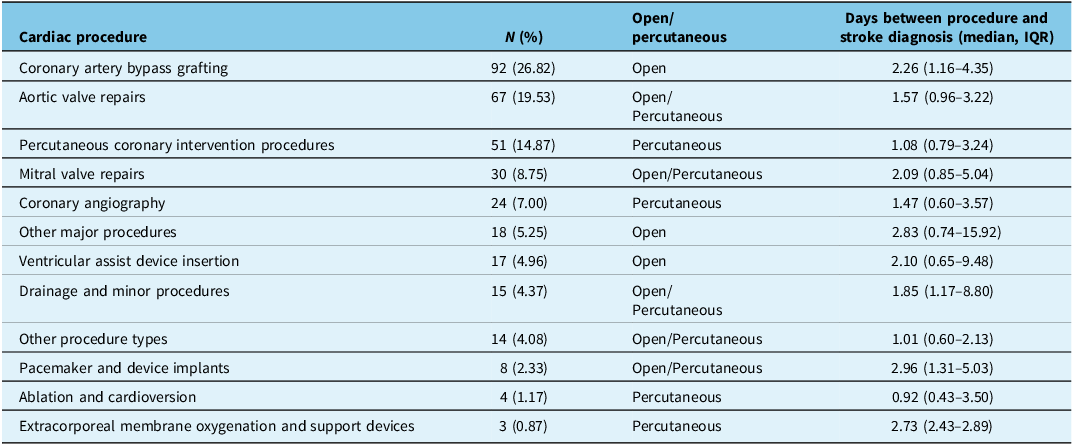
Among patients who underwent a cardiac procedure or surgery before stroke, most interventions were open (67.1%), and the remainder were percutaneous (32.9%). The most common individual procedures were CABG (26.8%), aortic valve repairs or replacements (19.5%), PCI (14.9%) and mitral valve repairs (8.7%). Strokes were mostly diagnosed shortly after the intervention with a median time between procedure and stroke diagnosis of 1.75 days (IQR 0.87–3.83). Time to stroke diagnosis was longer after open than after percutaneous procedures (median 2.10 days, IQR 1.01–4.27, vs 1.19 days, IQR 0.62–3.11; p < 0.001). In most procedural patients, the procedure and stroke diagnosis occurred on the same calendar day (66.2%). Meanwhile, strokes diagnosed 24–48 hours, 2–7 days and 8–30 days after procedures accounted for 1.8%, 19.0% and 13.0%, respectively. Median intervals were broadly similar across procedure types, ranging from 0.92 days (IQR 0.43–3.50) after ablation or cardioversion to 2.96 days (IQR 1.31–5.03) after pacemaker or device implantation (Table 2).
Summary of procedures undergone and median days between the procedure and stroke diagnosis

Table 2. Long description
The table presents data on various cardiac procedures and the median days between these procedures and stroke diagnosis. It has five columns: Cardiac procedure, N (%), Open/percutaneous, and Days between procedure and stroke diagnosis (median, IQR). The rows list different cardiac procedures, the number and percentage of patients undergoing each procedure, whether the procedure was open or percutaneous, and the median days with interquartile range between the procedure and stroke diagnosis. For example, Coronary artery bypass grafting was performed on 92 patients (26.82%), was an open procedure, and had a median of 2.26 days (IQR 1.16-4.35) between the procedure and stroke diagnosis. Another example is Percutaneous coronary intervention procedures, performed on 51 patients (14.87%), which were percutaneous with a median of 1.08 days (IQR 0.79-3.24) between the procedure and stroke diagnosis.
IQR = interquartile range.
Comparison of clinical outcomes across groups
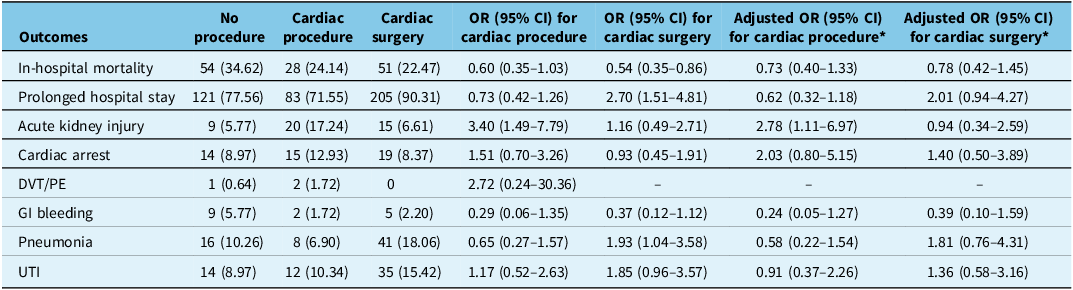
In-hospital mortality was nominally lower among patients who underwent cardiac procedures (28/116, 24.1%) or cardiac surgeries (51/227, 22.5%) compared with those who did not undergo any procedure (54/156, 34.6%). After adjustment for age, sex, facility level, presence of atrial fibrillation, coronary artery disease, heart failure and prior stroke or TIA, no significant differences were observed between groups. Compared with patients without any prior procedure, adjusted odds of in-hospital mortality were not statistically different in the cardiac procedure group (aOR 0.73, 95% confidence interval [CI] 0.40–1.33) or the cardiac surgery group (aOR 0.78, 95% CI 0.42–1.45). The odds of prolonged hospital stay were similar between the cardiac procedure (aOR 0.62, 95% CI 0.32–1.18) and cardiac surgery groups (aOR 2.01, 95% CI 0.94–4.27) compared with the no procedure group. All in-hospital complications showed no significant adjusted differences between groups, except for acute kidney injury, which was associated with higher adjusted odds in the cardiac procedure group compared with the no procedure group (aOR 2.78, 95% CI 1.11–6.97; Table 3).
Outcomes according to cardiac procedure status (no procedure, cardiac procedure or cardiac surgery)

Table 3. Long description
A table with 6 rows and 8 columns comparing outcomes of patients who underwent no procedure, cardiac procedure, or cardiac surgery. The columns are labeled as No procedure, Cardiac procedure, Cardiac surgery, OR (95% CI) for cardiac procedure, OR (95% CI) for cardiac surgery, Adjusted OR (95% CI) for cardiac procedure, and Adjusted OR (95% CI) for cardiac surgery. The rows are labeled with different outcomes: In-hospital mortality, Prolonged hospital stay, Acute kidney injury, Cardiac arrest, DVT/PE, GI bleeding, Pneumonia, and UTI. Each cell contains numerical values representing the count and percentage of patients experiencing each outcome. Notable trends include lower in-hospital mortality rates for patients who underwent cardiac procedures or surgeries compared to those who did not, and higher odds of acute kidney injury in the cardiac procedure group.
Odds ratios are relative to the no procedure group. Prolonged hospital stay was defined as >7 days.
*All models adjusted for age on admission, sex, facility level, atrial fibrillation, coronary artery disease, heart failure and previous stroke or transient ischemic attack; Adjusted OR for DVT/PE not estimated due to low event count; None of the patients in the cardiac surgery group had DVT/PE.
UTI = urinary tract infection; OR = odds ratio; CI = confidence interval; DVT/PE = deep venous thrombosis or pulmonary embolism; GI = gastrointestinal; DVT/PER = Deep venous thrombosis/pulmonary embolism.
Factors associated with mortality among in-hospital stroke patients who underwent cardiac procedures and cardiac surgeries
Among in-hospital AIS patients who underwent cardiac procedures and cardiac surgeries, only timing of stroke in relation to the procedure was significantly associated with in-hospital mortality. Strokes diagnosed 2–7 days (OR 2.31, 95% CI 1.18–4.52) and 8–30 days (OR 3.23, 95% CI 1.59–6.59) after the procedure had higher odds of in-hospital death compared with strokes diagnosed on the same day as the procedure. Other factors, including age, sex, procedure type (cardiac procedure or cardiac surgery) and acute treatment (thrombolysis or thrombectomy), were not significantly associated with mortality (Figure 2 and Supplementary Table 4).
Factors associated with in-hospital mortality among patients with in-hospital stroke following cardiac procedures and surgeries. Forest plot of odds ratios (ORs) with 95% confidence intervals (CIs) from multivariable logistic regression. Reference categories were female sex, stroke diagnosed on the same day as the procedure, cardiac procedure (vs cardiac surgery) and no acute treatment. The vertical line indicates an OR of 1. Strokes diagnosed 2–7 days (OR 2.31, 95% CI 1.18–4.52) and 8–30 days (OR 3.23, 95% CI 1.59–6.59) after the procedure were associated with higher in-hospital mortality. IVT = intravenous thrombolysis; EVT = endovascular thrombectomy.

Discussion
In this population-based cohort of in-hospital AIS, we examined cardiac inpatients who developed stroke, with emphasis on those who did and did not undergo cardiac procedures and cardiac surgeries. Adjusted odds of in-hospital mortality and in-hospital complications did not differ significantly across groups. Among patients who underwent procedures, most strokes were diagnosed on the day of the intervention, but strokes diagnosed later were associated with higher odds of mortality.
Few studies directly compare cardiac patients who develop in-hospital AIS across procedural subgroups. In our population-based analysis of in-hospital AIS restricted to patients with a primary cardiac diagnosis, patients who underwent cardiac procedures or surgery were generally younger and more frequently in the ICU at the time of stroke recognition, whereas those without prior procedures more commonly had heart failure, arrhythmia or endocarditis as the primary cardiac diagnosis. In contrast, ischemic heart disease predominated in the cardiac procedure group and valvular disease in the cardiac surgery group. These differences likely reflect variation in underlying cardiac pathology and care pathways rather than a simple gradient of illness severity. Reference Sultan, Bianco and Kilic21–Reference Karunanantham, Ali, Evans, Webb and Large23 Despite these differences, all groups carried a heavy comorbidity burden, similar to broader in-hospital stroke cohorts. Reference Ignacio, Waraich and Khan4
Procedure-related strokes were not inherently more lethal than strokes in other cardiac inpatients. This contrasts with surgical cohorts that compare cardiac surgery patients with and without postoperative stroke that report higher perioperative and longer-term mortality in those who suffer stroke. Reference Sultan, Bianco and Kilic21,Reference Karunanantham, Ali, Evans, Webb and Large23 One possible hypothesis for our result is that once a cardiac inpatient develops in-hospital AIS, prognosis is poor irrespective of procedural status. Baseline vulnerability and systems of care may also be important determinants of survival that outweigh cardiac procedures. However, these findings should be interpreted in the context of the study’s observational design. Although we adjusted for measured confounders, residual confounding by indication remains possible, as patients undergoing cardiac procedures or surgery may differ from medically managed patients in underlying cardiac pathology, procedural indications, periprocedural antithrombotic therapy and overall clinical complexity, which were not fully captured in our data.
The timing of stroke diagnosis in relation to cardiac procedures also emerged as an important signal in our cohort. Importantly, there is often a delay in stroke diagnosis among patients who have required anesthesia for intervention, and the timing of the stroke diagnosis will not be precise to the hour or minute despite having performed manual chart review. Nevertheless, a majority of strokes in procedural patients were diagnosed on the day of the intervention, consistent with studies that distinguish early (intraoperative or immediate postoperative) from delayed strokes after cardiac surgery, where early events are often embolic and procedure related, while later events are more often linked to evolving atrial fibrillation, hemodynamic instability and systemic illness, and are associated with poor survival. Reference Gaudino, Di Franco, Rong, Piccini and Mack16,Reference Ivascu, Khan and Rahouma24,Reference Hedberg, Boivie and Engström25
In our study, we found that strokes diagnosed 2 or more days after a cardiac procedure were associated with higher in-hospital mortality than strokes diagnosed on the same day. This finding may reflect a more vulnerable subset of patients with a complicated postoperative course rather than a direct effect of delayed stroke recognition alone. Delayed strokes may occur in the setting of postoperative complications such as atrial fibrillation, sepsis, low cardiac output, respiratory or renal failure and prolonged immobilization, which can accumulate during the postoperative period and contribute to mortality. Reference Nouh, Amin-Hanjani and Furie3,Reference Shu, Aziz and de Havenon6,Reference Saltman, Silver, Fang, Stamplecoski and Kapral26 Postoperative atrial fibrillation, occurring usually 2–4 days post-procedure, is a plausible contributor and has been reported in up to 30% of cardiac surgical patients, to as high as 40–50% after valve surgery. Reference Gaudino, Di Franco, Rong, Piccini and Mack16,Reference Lin, Kamel, Singer, Wu, Lee and Ovbiagele27 Another hypothesis is that delayed perioperative strokes may reflect a distinct phenotype with more severe strokes, whereas early strokes may include smaller, procedure-related embolic events. However, we cannot confirm this without imaging data, which would be important for identifying more granular patterns in perioperative stroke. Early post-procedural strokes, in contrast to delayed strokes, may also be recognized as procedure-related complications that may trigger more aggressive care pathways, for example, earlier referral to rehabilitation, which could influence outcomes. However, we do not have data on rehabilitation interventions to support this. Ultimately, our findings suggest the need for sustained neurological monitoring during the postoperative period and not only on the day of surgery.
Within the procedural subgroup, we did not find clear evidence that procedure type or receipt of acute reperfusion treatment was independently associated with in-hospital mortality. This may reflect the small sample size, which limits causal inference. Residual confounding and selection bias are likely, as patients chosen for reperfusion or admitted under surgical versus medical services may differ systematically in baseline risk.
Only 9% of the total cohort received acute treatment. This low rate could reflect multiple challenges to this population, including delayed stroke recognition, diagnostic uncertainty, recent procedures and treatment contraindications. In our cohort, among patients with documented reasons for withholding IVT, recent surgery and presentation beyond the treatment window were the most common factors. However, determining treatment eligibility retrospectively remains challenging, and the observed treatment rate may reflect both appropriate patient selection and potential treatment gaps. Reference Ignacio, Abdalrahman and Kaveeta1
Our results have important implications for the care of cardiac inpatients. First, they reinforce that in-hospital AIS in cardiac patients carries a high risk of death, highlighting the importance of prevention. These include optimizing atrial fibrillation detection and prompt resumption of anticoagulation after cardiac procedures. Reference Nouh, Amin-Hanjani and Furie3,Reference Shu, Aziz and de Havenon6 For patients in whom atrial fibrillation is not identified during hospitalization, post-discharge rhythm monitoring such as repeat Holter or extended ambulatory ECG monitoring should be considered.Reference Spooner, Messé and Chaturvedi 28 Second, strokes recognized later after the procedure also carried substantial mortality, emphasizing the need for sustained monitoring and vigilance across all cardiac wards and ICUs. In practice, neurological monitoring may include protocolized bedside neurological examinations during the immediate postoperative period for high-risk patients, minimization or structured interruption of sedation when feasible to enable meaningful assessment, and standardized screening tools such as BE-FAST (Balance, Eyes, Face drooping, Arm weakness, Speech difficulty and Time), Rapid Arterial oCclusion Evaluation (RACE) scale or a modified NIHSS to ensure consistent detection by nursing and physician staff. Emerging non-invasive technologies, such as wearable monitors and pressure-sensitive mattresses, may further aid early recognition in sedated or obtunded patients. Reference Ignacio, Abdalrahman and Kaveeta1,Reference Nouh, Amin-Hanjani and Furie3,Reference Shu, Aziz and de Havenon6,Reference Ganesh29 Third, ICU admission after stroke was frequent, particularly following cardiac surgery and procedures. This likely reflects routine postoperative management and baseline critical care needs rather than stroke severity and should not be interpreted as a stroke-related outcome. Nevertheless, it highlights that a substantial proportion of in-hospital AIS in cardiac patients occurs in higher-acuity settings, which may inform monitoring practices and resource planning. Reference Ignacio, Abdalrahman and Kaveeta1,Reference Shu, Aziz and de Havenon6
This study has several strengths. This population-based cohort of in-hospital AIS across an entire provincial health system reflects real-world practice in stroke centers and non-stroke centers. Manual chart review further supplemented administrative data with stroke etiologies and verification of cardiac procedures. However, it also has several limitations. Selection bias and confounding by indication may have affected comparisons between patients with and without cardiac procedures, as these groups may represent distinct underlying pathologies and levels of clinical complexity that were not fully accounted for in our data. Its retrospective observational design precludes causal inference, and residual confounding is likely despite adjustment for key covariates. Additionally, anticoagulation status at the time of stroke onset was not available and could not be included for adjustment in the regression models. Administrative data may also misclassify diagnoses, procedures and complications. We only considered the most proximal procedure and did not assess the impact of multiple procedures on outcomes. Data on ICU admission were limited since we could not distinguish between routine post-procedure ICU care and ICU admission driven by clinical need or medical complexity. Finally, local organization of cardiac and stroke services may limit generalizability to other settings. Our study was conducted within a province-wide integrated stroke system with centralized stroke expertise at two comprehensive stroke centers and standardized care pathways. Differences in hospital resources, availability of stroke specialists, access to acute reperfusion therapies, postoperative monitoring practices and patient case mix across healthcare systems may influence both stroke recognition and outcomes. Therefore, replication in other settings with different models of cardiac and stroke care will be important to determine whether these findings are consistent across healthcare systems.
Future work should further characterize stroke related to cardiac conditions. NeuroVISION-2, a large international cohort study designed to elucidate mechanisms and risk factors for noncardiac perioperative stroke, provides a model that could be adapted to cardiac periprocedural stroke. 30 Similar efforts are needed to clarify mechanisms, identify high-risk periods and determine modifiable factors in this population. Studies should also evaluate optimal care pathways for in-hospital AIS in cardiac patients (e.g., stroke unit or ICU vs ward care) and assess system performance, including time to recognition, treatment use and outcomes. Reference Ignacio, Abdalrahman and Kaveeta1,Reference Nouh, Amin-Hanjani and Furie3,Reference Shu, Aziz and de Havenon6 Promising parallel research is exploring approaches to earlier neurological detection, such as structured bedside assessments paired with simple continuous monitoring tools (e.g., limb actigraphy and bed-pressure monitoring to flag asymmetric movement and trigger rapid imaging). Reference Ignacio and Pensato31 A multifaceted research approach will be essential to advance our understanding of this special population.
Conclusion
In this population-based cohort of in-hospital AIS among patients with a primary cardiac diagnosis, in-hospital mortality did not differ according to cardiac procedure status. While most strokes were diagnosed early post-operatively, strokes recognized later after cardiac procedures were associated with higher odds of mortality. Our findings support optimizing care for all hospitalized cardiac patients with AIS, regardless of interventions.
Supplementary material
The supplementary material for this article can be found at https://doi.org/10.1017/cjn.2026.10707.
Data availability statement
The data supporting the findings of this study are available from the corresponding author upon reasonable request.
Acknowledgements
None.
Author contributions
AA, MAA and KI contributed to the study concept and design, acquisition, analysis and interpretation of data, and were involved in drafting and revising the manuscript.
JH, BM and MH contributed to the study concept and design, analysis and interpretation of data, critical revision of the manuscript and supervision.
RA and CK contributed to data acquisition and data cleaning, and critically revised the manuscript.
MM contributed to data acquisition and data cleaning.
DH, JS, RM, MA and BA contributed to data acquisition.
Funding statement
None.
Competing interests
AA, RA, CK, MM, DH, JS, RM, MA, BA, JH, BM, MAA and KI report nothing to disclose.
MH received grants from NoNO Inc., Canadian Institutes of Health Research, Medtronic, Boehringer Ingelheim and consulting fees from Sun Pharma, Merck and Penumbra. Patents pending for Circle NVI, DSMC Chair for: Oncovir Hiltonol Trial, DUMAS trial. DSMB Chair for: EVEREST trial, EMAGINE-2 trial. DSMB member for: ARTESIA trial, BRAIN-AF trial, LAAOS-4 trial, CARESTAR trial, EVEREST trial, POTENTIAL trial. President of CNSF. Stock in Circle Inc., Basking Biosciences.


 Open access

