Guinea-Bissau is a little-known African country, even though, during the 1960s and 1970s, it gained a huge standing in international fora, due to its anti-colonial war and the prestige of its leader, Amílcar Cabral. In 1998–9, an armed conflict brought international attention to the country once again, presenting a challenge to the analysis of contemporary so-called ‘new wars’ (Kaldor Reference Kaldor1999). At the end of the war, the television image of a high commander displaying human skulls as trophiesFootnote 1 might have supported the ‘new barbarism’Footnote 2 thesis on the root causes of wars. Images of this kind and their associated information (or lack thereof) are highly problematic. Not only do they reinforce the fear of a ‘coming anarchy’ (Kaplan Reference Kaplan1994), spread by sensationalist, popularizing writers, but they may also be very misleading if they are used to orient policy making, without any proper research into the social conditions of the conflict's emergence.
The social tissue and ethnic composition of Guinea-Bissau might suggest an ideal setting for the development of what has been called ‘political tribalism’ (Lonsdale Reference Lonsdale, Berman, Eyoh and Kymlicka2004) and inter-ethnic or religion-driven wars. The country has around thirty ethnic groups. The Balanta outnumber all other groups with about 30 per cent of the population, and together with the Fula they amount to half of the country's people. In pre-colonial times, the ‘decentralized’ Balanta society constituted one of the major sources of slaves. The Fula, with a hierarchical social organization, had been actively engaged both in the slave trade and in jihads against non-Muslim coastal societies. The Balanta farmers played a very important role in the making of Guinea-Bissau, mainly as the major and most innovative producers of rice (the national staple food) and as chief contributors of soldiers to the liberation army. Contrariwise, the Fula allied with the colonial ruler and engaged in the war against the anti-colonial movement. The Fula are also one of the main agents of the Islamization of non-Muslim societies on the Upper Guinea Coast, and the main introducers of ways of life perceived in the region as forms of ‘modernity’ (new styles of dress, schooling, literacy, praying). Other groups consider them ‘eager for power’ (misti regulandade) and able to combine common political strategies with magic charms made by Muslim specialists (marabus or murus). In Guinea-Bissau's political culture, the Balanta are often portrayed as ‘backward’ and as an example of a people who turned their backs on religion, development and modernity. They are also widely considered to be prone to violence.
In my opinion, an analysis of the 1998 war should consider the fact that, despite their major contribution to the making of the nation, ever since independence Balanta have been ousted inexorably from positions of power and marginalized. This may explain the adherence of Balanta (especially the war veterans) to the renewal of war. However, this conflict cannot be explained as an ‘ethnic’ one. The 1998 war was mainly an urban war fought by trained soldiers, in which foreign troops were deeply involved. Moreover, the role of rural peasants, of whatever ethnic identity, was essentially to provide support for displaced urban dwellers searching for refuge.
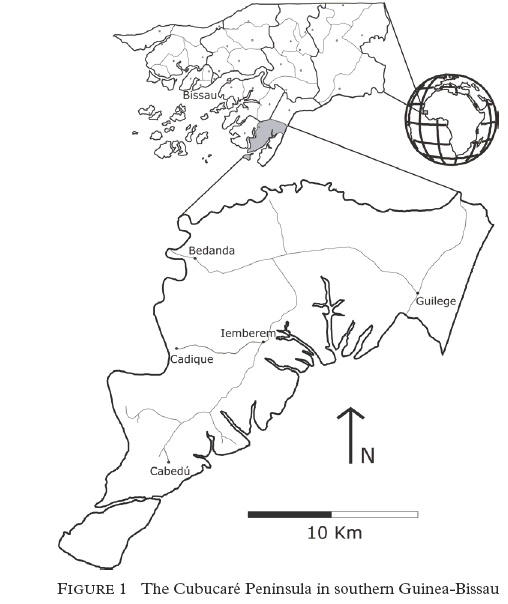
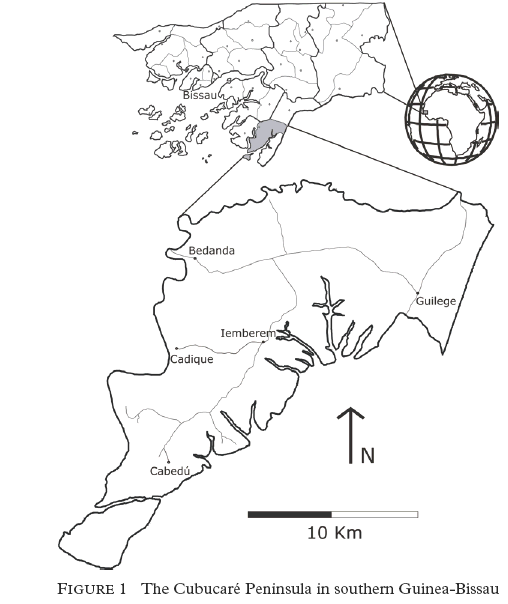
In this case study, I shall argue that in order to understand West African political crises we need to combine the analysis of several elements. First, we must consider the working of the post-colonial state and the impact of political and economic liberalization. Second, we need to look at how political instability developed into a conflict and examine the relative positioning of urban and rural actors. Third, we should analyse rural modes of conflict resolution and the contribution of agrarian tensions to the development of ‘political tribalism’. Last, but not least, we must take into account the relevance of cosmology in the working of politics and in the relationship between urban elites and rural actors. With these aims in mind, and through a mixed top-down and bottom-up approach, I shall knit together a description of national politics – driven, as it is, by political and economic elites and international stakeholders – with micro-politics in the multi-ethnic setting of Cubucaré Peninsula (southern Guinea-Bissau). In this region, the kind of negotiations and social processes Lonsdale refers to as ‘moral ethnicity’ (Lonsdale Reference Lonsdale, Berman, Eyoh and Kymlicka2004) can be analysed as being simultaneously internal to each group and part of the regional construction of a multi-ethnic identity.Footnote 3 In Cubucaré, the Nalu are considered the landlords, but today the Balanta constitute the majority of the population. Besides the Nalu, the Balanta and the Fula, the region harbours some other smaller ethnic groups.
THE GENEALOGY OF A CONFLICT
Guinea-Bissau attained full sovereignty in 1974 after eleven years of liberation struggle conducted mainly by the African Party for the Independence of Guinea and Cape Verde (henceforth PAIGC). Independence was unilaterally declared in 1973 by the PAIGC – which at that time controlled the majority of the territory – after the brutal assassination of its leader, Amílcar Cabral. Although the Portuguese political police (PIDE-DGS) was held responsible both by the PAIGC and by international observers, the murder (together with the seizure of many Cape Verdeans) was executed by PAIGC dissidents who were discontented with the segregation between the Cape Verdean Creole elite that ruled the party and the Guineans who were involved in direct warfare for the liberation of both nations (Castanheira Reference Kaldor1999).
Cabral's dream of creating a state with two nations did not correspond to the will of the people in either Cape Verde or Guinea- Bissau, and it became difficult to implement after independence. Discontent among war veterans who felt excluded from the resources of the state by the party intellectual elite, the failure of the economic policies in generating welfare, and major legal differences between the constitutions of the two nations created the conditions for a successful military coup in November 1980 (Galli and Jones Reference Galli and Jones1987: 92–9) that put an end to the rule of Luis Cabral (Amílcar's brother).
João Bernardo ‘Nino’ Vieira, the most famous war commander and former Prime Minister, ascended to the Presidency of Guinea-Bissau, supported by Balanta soldiers, and the country split from Cape Verde. Nino Vieira's regime did not put an end to war veterans' and popular discontent. On the contrary, several potential or actual rivals were successively accused of plots and either imprisoned or executed (Forrest Reference Forrest1992: 59–60; Induta Reference Induta2001: 26–35; Nóbrega Reference Nóbrega2003: 232–53). Despite their major contribution during the liberation war and in the 1980 coup, the Balanta – accused of ‘tribalism’ by Nino Vieira and his entourage – were the group most deeply affected by the party's and army's ‘cleansings’, a process that prepared the ground for the future development of ‘political tribalism’. Whilst the 1980 coup and the split with Cape Verde had reduced the influence and number of Cape Verdeans in the political elite,Footnote 4 these alleged coups served to ‘de-Balantacize’ the party and the army. Since then, and until the 1994 multi-party elections, the political elite had no clear ethnic composition, nor was it organized along ethnic lines.
After this split with the Balanta, Nino Vieira forged new alliances with other ethnic constituencies, mainly with the Fula and the Mandinka, as well as with an emergent trading petty bourgeoisie and plantation farmers supported by him with World Bank loans, following the adoption of structural adjustment measures in the late 1980s and early 1990s. Forrest states that Nino Vieira's regime continued Luis Cabral's strategy of strengthening ‘narrow power networks’ that were faithful to him (Forrest Reference Forrest, Chabal, Birminghan, Forrest, Newitt, Seibert and Andrade2002: 261). Another political card played by Vieira and the PAIGC was the move to strengthen ties with peasants. Traditional chiefs (kings), who had been replaced by local party representatives (comités de tabanca) since the creation of the liberated regions during the war, were recognized again and progressively re-installed (Fernandes Reference Fernandes1993: 47, 48).
From the beginning of the 1990s, the country adopted a multi-party regime. Divergent views on the liberalization process resulted in a split within the PAIGC around two groups of leaders. After the first parliamentary and presidential elections, both won by the PAIGC, President Nino Vieira had to face growing opposition from his own party, Parliament and the government, giving rise to a state of escalating political instability.
Over the years, several political parties were formed (some by the more westernized intellectual wing of the PAIGC), although most of them had similar programmes. Perhaps the most striking features of the political liberalization process were the sudden creation of a party – the Party for Social Renovation (henceforth PRS) – with a permanent Balanta basis of support, and the high electoral support for its presidential candidate, Kumba Yalá. Political mobilization revived and reinforced Balanta grievances against Vieira and the PAIGC. Kumba Yalá was the leader of this process and became the uncontested chief in the eyes of Balanta peasants.
The economic liberalization policies (started in the mid-1980s) and the adoption of a multi-party political system were accompanied by a growing discontent among war veterans and among the army in general. Together with a process of demobilization and a worsening of soldiers' economic conditions, the army could no longer be connected to the party – a problem felt particularly by the war veterans' elite.
During the late 1990s, Nino Vieira began to reinforce his relations with Senegal and France, and in 1997 Guinea-Bissau joined the West African Monetary Union and adopted its currency (Forrest Reference Forrest, Chabal, Birminghan, Forrest, Newitt, Seibert and Andrade2002: 244). This sudden change to the CFA franc was a source of popular discontent as many traders used it to raise prices and to deceive consumers. It was also in 1997 that Senegal and Guinea-Bissau signed a security accord, revealing Vieira's formal support of the neighbouring country's effort to control the civil war in Casamance (Forrest Reference Forrest, Chabal, Birminghan, Forrest, Newitt, Seibert and Andrade2002: 256). These events set the stage for the major post-independence political crisis of Guinea-Bissau: the 1998–9 war.
‘WAR’ NOT ‘STRUGGLE’
Ever since the Cold War period, Guinea-Bissau has had a history of real or alleged coup attempts and eliminations of rivals. Two of these coups succeeded, but only the last one evolved into a civil war. The 1998–9 Guinea-Bissau war cannot be considered either a ‘mindless’ war or an ‘apolitical’ one. To a certain degree, it can be considered a ‘proxy war’, given the involvement of Senegal and of the Republic of Guinea (and allegedly of France too),Footnote 5 intended to control the war in Casamance. Wars and coups are explained in different ways, according to the criteria of relevance chosen by analysts. While some focus on ‘motives’ (Richards Reference Richards1996) or ‘opportunities’ (Collier and Hoeffler Reference Collier and Hoeffler1998), others have pointed out that ‘motives’ can be manipulated by insurgents in order to acquire legitimacy (Reno Reference Reno2004). Although I tend to agree with Reno, I also think it is necessary to distinguish between warlords' allegations of grievances and the allegations of ordinary people. If we failed to do so, we would not be able to understand why some people adhere to a violent enterprise and others do not, as has been argued by some authors (for example, Paul Richards Reference Richards2005; Geffray Reference Geffray1991). In this section I analyse the differences in motives and perceptions among the different actors involved in the Guinea-Bissau war.
The war started out of a military uprising in June 1998. At first, it seemed to be a personal conflict between President Nino Vieira and the recently dismissed High Chief of the Armed Forces, Ansumane Mané. Mané had been accused of negligence in failing to control the illegal traffic of weapons with the Casamance rebels of Senegal. The fear of being imprisoned or killed, together with the reduction of his personal power and privileges, caused him to attempt a coup two days after being formally dismissed and placed under house arrest.
The issue about trafficking illegal weapons had emerged about five months before, when President Vieira, pressed by Senegal and France, declared his intention to stop any form of support to Casamance rebels and thereafter suspended Ansumane Mané. As we shall see, Mané tried to gather support from dissatisfied war veterans. About two months after his dismissal, an organized group of 1,500 war veterans signed a public letter (stating they were capable of mobilizing 600 more) in which they declared their intention to prevent Vieira's ‘plan to invent another coup d’état'.Footnote 6 The letter accused many high-ranking officials close to Vieira of being involved in the illegal trafficking with Casamance rebels.Footnote 7 It also emphasized that Vieira had destabilized the country by creating a ‘powder keg’ inside the armed forces that could only be controlled by getting rid of him (Induta Reference Induta2001: 39–49). This event happened at a very critical moment for both the PAIGC and for Guinea-Bissau – a time of political instability that dated back to the 1994 multi-party elections and of urban social unrest against worsening economic conditions.
On the morning of 7 June 1998 fighting signalled the onset of a military uprising. At first Mané's support was confined to a group of soldiers quartered in a strategic military base. But when, two days later, the country was invaded by a military force of about 1,700 soldiers (the number would triple during the course of the war) from neighbouring Senegal and the Republic of Guinea, the huge majority of soldiers and civilians adhered to the cause of the Military Junta, recently formed. Vieira found himself politically isolated (Rudebeck Reference Rudebeck1998: 26).
In his first public communication from a radio station taken by the insurgents, Ansumane Mané gave as a motive the need to recover his reputation in the face of the allegations made against him; he asked for an audience with the president, who refused his request. Soon after, Mané progressively added political motives and demands, at the same time as the Junta was gaining the support of political parties and civil society organizations. On no occasion did the insurgents admit the intention to overthrow the government. Further motives such as the harsh conditions of soldiers and war veterans and the corruption and autocracy of Vieira's governance were presented in later statements. Explicit political demands were then reported, such as the retreat of foreign troops, Nino Vieira's dismissal and the creation of a transition government for the accomplishment of legislative and presidential elections (cf. (Gaillard Reference Gaillard2000: 233–4).
The war remained essentially urban and was fought mainly by trained soldiers (war veterans included). Many young urban (and some rural) dwellers volunteered to fight for the Military Junta in reaction to the lootings and atrocities committed by foreign troops against the people of Guinea-Bissau. They were also driven by a sense of defending national sovereignty.Footnote 8 During the eleven months of conflict, there was no durable ceasefire and emergency relief was insignificant. The urban displaced were taken in by rural peasants who gave them shelter, food and an environment of trust (Drift Reference Drift2000: 39; Temudo and Schiefer Reference Temudo and Schiefer2003: 404–13).
Recently Paul Richards has reminded us that ‘war does not break out because conditions happen to be “right”, but because it is organised’ (2005: 4). According to several interviewees from Cubucaré, some months before the beginning of the conflict Mané called most of the demobilized war veterans in his friendship network, preparing them for a possible uprising should Vieira attempt to kill or imprison him. A former war veteran narrated how he tried to advise Mané in the following way:
Ansumane [Mané] did not want to accept his dismissal as head of the Armed Forces and told me that Nino [Vieira] wanted to send him to prison and for that reason he was calling all war veterans to fight against Nino. I told him to give up, because he had been Nino's bodyguard since the liberation struggle and Nino had granted him the rank of head of the Armed Forces and he should now accept to be replaced. (Abú, elderly man, 7 December 1999)
I heard similar reports from other non-Balanta demobilized war veterans who had been called up by Mané at this time. In sharp contrast, the response of Balanta war veterans to Mané's call to present themselves at the southern military barracks was total. At the national level, the Balanta were also the group that contributed most soldiers to the Junta side.
In Cubucaré, the attitude of most of the population was different to that of the Balanta. The majority tried to maintain themselves in a position of ‘non-alignment’: on the one hand they accused Mané of having started a war; on the other hand, they criticized Vieira for putting national sovereignty in danger with his call for foreign troops. In this region – one of the first areas to be liberated by the PAIGC in the independence war – people make a distinction between the anti-colonial war, always referred to as luta (struggle) and the 1998 event, designated rather as es guera de gose (this war of today), as though with this distinction they were attributing a different legitimacy to each one of them. As an illustrative comment of a peasant puts it: ‘This war was a war between two persons, it was a war of soldiers; it was not a people’s war!'Footnote 9 Indeed, even if Amílcar Cabral's political message may have been forgotten by the PAIGC vanguard that presently constitutes Guinea-Bissau's political elite, it still remains intact in the minds of many peasants. It is in no way a mere mechanical repetition of an ideological speech, but the memory of an ethical and political vision that marked them for the rest of their lives.Footnote 10 In the words of a Nalu war veteran:
Now war veterans want a gratification, but Cabral said that our gratification would not be money but a better future for our children. The liberation struggle was a war for independence. Cabral said ‘it is not the trigger that is going to bring us independence, but the courts! For this reason you must put your children in school!’ Oh Cabral, we did lose a man! (Laminé, elderly man, 17 January 2001)
Non-Balanta peasants considered that the accusations against Vieira and the PAIGC made by the Balanta (that they had being neglected after independence even if they had been instrumental in the war) were unfounded. For them, the ultimate goal of the liberation struggle was political independence, and not material gains. In fact, they accused the Balanta of wanting to be ‘rewarded’; however, as has already been stated, Balanta grievances were, in reality, rooted in real persecutions of which they had been the target, and not only in the lack of a ‘reward’ for their role in the liberation war.
The war came to an end in 1999 with Vieira's defeat and his exile in Portugal. In the elections that followed the end of the war, the PRS emerged as the dominant political force, with the Guinea-Bissau Resistance–Bafata Movement (RGB-MB) in second place and the PAIGC in third. The PRS leader, Kumba Yalá, was elected President of the Republic. His party captured votes not only from the Balanta and urban unemployed youngsters, but also from some Fula (a number of whom joined the party and acquired high positions). Lacking an outright majority in the national assembly, the PRS had to enter into a coalition with the RGB-MB, a party that relied on a permanent Fula basis of support. Thus, the Balanta became a major force in Guinea-Bissau politics. Some scholars have called the process that ensued ‘the Balantization of the state apparatus’ (Nóbrega 2003: 293), though we can speak as easily of a ‘re-Balantization’ if we take into account the importance the Balanta had already attained in the army's composition during the liberation war and the first years after independence.
At that time, local perceptions among non-Balanta peasants in Cubucaré regarding the future governance by Balanta predicted a high level of corruptionFootnote 11 and the possibility of violence among rival factions, but also an increase in local conflicts and tensions. In the next section I shall illustrate how ongoing conflicts between Balanta and non-Balanta ethnic groups used to be solved and how they developed in a completely reversed political context.
LOCAL CONFLICTS AND THE ETHNICIZATION OF POLITICS
In 1994, I witnessed a violent conflict among Balanta and Nalu people in one of the villages of Cubucaré. The conflict escalated and only came to an end when a group of soldiers, headed by Ansumane Mané, intervened. It had emerged from a long-lasting land dispute between two compounds – one Nalu, the other Balanta – that local customary courts were unable to resolve. More than a clash over resources, it was a political conflict. During the liberation war, a whole Balanta compound left a village that harboured a Portuguese barracks in order to join the PAIGC. One of their plots of land was then occupied by the members of a Nalu compound, who planted coconut palm trees that in 1974 were in full production. After independence, most people returned to their villages of origin and the farmers from the Balanta compound in question tried to recover the possession of their plot. In a normal situation, the investments made in the plot should be paid back. However, the plot had been occupied ‘illegitimately’, according to local custom, and, besides, the ones who had made the investment had taken the ‘wrong side’ (the pro-colonial one) during the liberation war. So the landlords (Nalu elders), by judging the whole behaviour as wrong, tried to convince the head of the Nalu compound to resign and give back the plot without asking for any indemnification. Being unable to enforce their decision, they sent the case to local state officials, who dismissed it.
The plot of land was returned to its Balanta owner, but over a period of about twenty years the Nalu man invaded the field to harvest the coconuts, under the persistent death threats of the Balanta owner. The latter, being a war veteran who still belonged to the armed forces, had a gun; in 1994, he shot the Nalu farmer dead. In revenge, the dead man's family set fire to the Balanta compound, causing the whole Balanta ward to burn down. The quarrel acquired ethnic proportions and the entire Nalu population of the village was forced to take refuge in the forest.
This conflict occurred some time after the first multi-party elections, when Balanta people were feeling aggrieved by the suspicion of fraud in the legislative elections in which the PRS candidate, Kumba Yalá, lost by a small margin. Given the tense national political situation, this conflict could have turned into a powder keg if the urban political elite had attempted to instrumentalize it. Luckily, this was not the case, and Ansumane Mané, having spent many years in close contact with Cubucaré peasants and being highly respected as a commander, was able to imprison the murderer and calm down the peasants of both groups.
This and other kinds of conflict are usually solved through local customary courts, and tensions between landlords and latecomers are low in Cubucaré. According to local custom, anyone who settles has the right to a piece of land big enough for household self-sufficiency and well-being. Furthermore, production systems follow a rough ethnic pattern and the undersupply in rice is mitigated by a complex system of inter-ethnic exchange mechanisms. These include an exchange of labour and of other products for rice (Balanta being the only group in the region that produces a rice surplus) as well as a system of loans based on networks that give rise to strong inter-ethnic social relations. In addition to this, Cubucaré inhabitants forged a strong cohesion during the liberation war. They feel they were the chief contributors to the anti-colonial war and that they had been the major food producers of the country. And yet, they possess the worst communication, education and health infrastructures in Guinea-Bissau, which contributes to their perception of themselves as victims of an enduring marginalization by those previously in power positions. All these facts contributed to the creation of a Cubucaré ‘moral identity’ that encompasses all ethnic groups.
After the multi-party elections (1994), the Balanta, feeling aggrieved by their party and presidential candidate defeats, began what was termed locally a ‘strike’ against the other ethnic groups – globally considered as PAIGC adherents – through their refusal to exchange their surplus rice for upland products and by increasing the price of rice. Again, during the 1998–9 war, the Balanta often repeated that if ‘they’ won the war, nobody was going to kill their cattle any more, in conflicts over damaged crops. In their perception, this was a war against the major PAIGC representative (Nino Vieira), whom they supported until the 1980s, when he started a political ‘witch-hunt’ against them, eliminating their most important leaders. By volunteering, they felt they had made it their war: if the Junta won, it would be their victory against the PAIGC. So once the war was finally over, conflicts over cattleFootnote 12 (leading in some villages to huge problems of food insecurity) and natural resources management increased. However, traditional mechanisms of compensation for damage to cattle or crops were deactivated by the imposition of Nalu elders, in order to lower social tensions.
The Balanta also began another ‘strike’ by either refusing direct exchanges of rice for other products or, in other cases, by altering to their advantage the terms of exchange and by refusing to work for other people. In addition, as a consequence of the low harvests in the years that followed the war, Balanta loans of peanuts to upland farmers were not paid back; and, since now they would never be paid – ‘debts do not grow old’, it is said – debtors lost the trust of their lenders. This event had major consequences in the weakening of inter-ethnic relations of solidarity and reciprocity.
Following the former political reasoning of the PAIGC, the Balanta decided that, considering that the elections had been won by the PRS, all PAIGC ‘village committees’ should be replaced. At the same time that former PAIGC representatives were being substituted, the Balanta began to question the legitimacy of traditional authorities: ‘the land has no owners’, they now claimed, and so the kings (régulos) created by the PAIGC should now be abolished by the PRS. Nalu elders responded to this attitude with the common expression ‘we sit, we shut up, we are only waiting’, which, according to its intonation, may express either a passive attitude of observation or a veiled threat. In this context, it was intended to express their faith in a change of power relations in the next elections. The attitude of Nalu youngsters and women, however, was much more intimidating: they wanted to curse the Balanta who were offending them at the shrines. Notwithstanding this, women from all the ethnic groups in Cubucaré played a powerful role in mitigating inter-ethnic tensions through their itinerant trade activities, which developed a network of friendships and solidarities.
PRS rule had been characterized by the constant change of ministers, accusations of corruption, the assassination of Ansumane Mané, a coup that overthrew Kumba Yalá, and a soldiers' mutiny that led to the assassination of the head of the Armed Forces. If some Balanta of Cubucaré had been ‘ashamed’ of their party's rule (according to comments by non-Balanta people), the coup against Kumba Yalá caused even more of them to lose their trust in the party. These events, together with an ongoing feeling of being marginalized by their elite who were now in power, were important in improving Balanta relations with the other ethnic groups, which had deteriorated after the end of the war. Another factor that contributed towards the reduction of inter-ethnic tensions was related to the sequence of bad harvests that obliged the Balanta to rely, once again, on the inter-ethnic networks of exchange and loans of agricultural products.
A good example of the re-establishment of local mechanisms of conflict resolution is an event that I witnessed in a Cubucaré village in January 2001. One day, a group of Balanta and Nalu women who were queueing to husk their rice in a machine located in the Balanta ward became embroiled in a fight because a Nalu woman was accused of stealing the bran of a Balanta. The news that a Nalu woman had been attacked by a group of Balanta soon came to the Nalu king. He decided to send a group of men to investigate the roots of the problem. When they returned, he concluded that it was not an inter-ethnic conflict but simply a women's quarrel. Fearing an increase in inter-ethnic tensions, the Nalu king decided to ban Nalu women from using the machine from then on. However, the Balanta chief of the ward where the machine was located sent for him in order to explain that it would be unfair to overload Nalu women with work. He minimized the problem by insisting it had just been a women's quarrel. The chief proposed that the best solution would be to establish a schedule by which each ward would have fixed days to husk its rice, and this proposal was accepted.
This event exemplifies a local culture of consensus and conflict negotiation among elders. The embeddedness of this political reasoning and the benefits that it could bring to the country's development, if it were to be transposed to the political elite, is well illustrated by the question a Balanta elder put to me one month before the 2004 legislative elections, when urban political instability and elite factionalism were quite high: ‘Why is it that the elders of all the political parties in the capital city do not meet and decide what is best to improve the land [country]?’13
THE SPIRIT OF POLITICS
In Guinea-Bissau, cosmology is a key element in the understanding of most political and social events. No matter how strongly influenced by Islam or Christianity, most people subscribe to a ‘basic cosmology’, to use Robin Horton's apt concept (Horton Reference Horton1975); they conceive of the territory as inhabited by spiritual entities known in Kriol as iran. Through contracts with these iran, the heads of the founding lineages of the ethnic group that first settled in a territory obtained the right to be called the ‘owners of the land’ (landlords). There is also a generalized understanding that every rich or famous person, every scientist and every powerful country, has one or several spirits working for them. Through contracts with these iran, mediated by the shrines' ritual specialists, people may try to solve problems (from health to disputes), to enact revenges or to obtain power and material or symbolic resources (Crowley Reference Crowley1990; Temudo 2005).
During the liberation struggle, Amílcar Cabral tried to fight against what he perceived as backwardness (Cabral Reference Cabral1979: 11, 71–107). Yet, incapable of fighting, in the short run, against the ‘cultural reality’ of the people, Cabral took the pragmatic decision to manipulate the religious notions about iran that could cause no harm to the liberation struggle (Cabral Reference Cabral1974: 121, 125 and 1979: 78, 82; see also Chabal Reference Chabal1983: 81); he left for post-colonial times the development of education and of a ‘scientific culture’ (Cabral Reference Cabral1979: 78, 85). By stating that the iran were also ‘nationalists’ and that they wanted the colonialists to leave Guinea, Cabral (1974: 123, 124) managed not only to convince peasants to abandon their compounds and take refuge in sacred forests, but also to gain a deeper legitimacy for the liberation war. Iran were summoned by ritual specialists to protect the land, peasants and soldiers alike. Contracts between combatants and the iran during the liberation war were considered vital in making soldiers invisible, invincible and famous in each battle that they fought. Some of these contracts, however, had to be regularly renewed during a whole lifetime; thus connecting shrine supplicants and landlords.
When the liberation war ended, rituals of healing, cleansing and social reconciliation were performed: the land had to be ‘washed’ of the blood that had been spilt; the ‘souls’ of the deceased had to be ‘washed’ so that they could rest in peace together with their ancestors; combatants were ‘washed’ to protect them from the revenge of the ‘souls’ of those they had killed. Rituals were also performed ‘so as to stop the hatred that they [Nalu] had taken to the shrines against those who had adhered to the colonial side and against the Fula who committed many atrocities’ (Infansu, elderly man, 18 March 2007). Besides the Nalu landlords who organized rituals to protect all Cubucaré inhabitants, the other ethnic groups also performed their own rituals of healing and cleansing.
Cosmology is also significant both because iran can be considered powerful combatants and because they can protect the territory. During the 1998–9 conflict, the southern region of Tombali – where Cubucaré lies – was ritually protected by Nalu landlords (the land was ‘closed’, as they say) to prevent the conflict from entering.Footnote 14 As had happened in the anti-colonial struggle, the spirits were, once again, summoned to participate in a war, not only to protect the Nalu territory, but also against a foreign army that was perceived as threatening national sovereignty.
Forged during the liberation struggle and reinforced in the aftermath of the 1980 coup d'état, the relationship between the rural population and the ‘Guinean’ (not of Cape Verdean, Luso-African or Lebanese origin) highest ranks of the political and military state apparatus is based not so much on kith and kin or straightforward patron– client relations as on the intermediation of contracts with the iran of each ‘spirit province’ that makes up Guinea-Bissau. The weakness (or even reversal) of patron–client relations is, in my opinion, due to their feeble development during the colonial eraFootnote 15 and to the empowerment of peasants, during both the liberation struggle and the post-colonial period, through their role in spiritual contracts and in the various practices and performances of the marabus.Footnote 16 Peasants are also empowered by their relatively stable livelihood systems in which agriculture provides basic wealth and reciprocity and solidarity supports people in harsh times. Through their social and political systems, through agriculture and local trade networks and through the use of their own health specialists, peasants remain, for most of their basic needs, relatively independent of the state (see also Drift Reference Drift2000: 43; Forrest Reference Forrest2003: 205–27). The weakness of patron–client relations is also a major factor in the waning of strategies of ‘political tribalism’, even if they were attempted by the political elite.
Cubucaré peasants can be considered to be more patrons than clients in their relations with the heroes of the liberation war, who continue to constitute an influential part of the political, military and economic elite. In return for some casual material benefits, they offer highly valued spiritual services reversing the patron–client model of urban–rural power relationsFootnote 17 and the ‘classic’ vision of state–society ‘vertical topographies of power’.Footnote 18 Common people usually accept all gifts on offer from the political parties, and then vote for the party or the candidate of their choice – ‘politics is trade’ as youngsters usually say – but this should not be confused with patron–client relations. Furthermore, although peasants (mainly those who contributed to the liberation war) have unfulfilled expectations and claims towards the state and even a certain sense of betrayal, there is no need, as in colonial times, for the hardening of patron–client relations. The most paradigmatic example of this reversed clientelistic relationship between the urban elite and peasants is that of Nino Vieira. His unprecedented courage and ‘invincibility’ as a commander during the liberation struggleFootnote 19 are popularly explained by the multiple contracts he had made with all the powerful iran of Guinea-Bissau and the protection granted by the most prestigious marabus. After the 1980 coup, ‘traditional’ ceremonies became public events (see, for example, Fernandes Reference Fernandes1993: 46; Gable Reference Gable2003: 98, 99) and rumour had it that Vieira had established contracts with all the powerful iran of the country in order to secure the presidency for life. Nonetheless, according to some of my Cubucaré interviewees, his imprisonment at the end of the 1998–9 war had been made possible because women – aggrieved by the invasion of their country by foreign troops called in by him and wanting to restore peace – had retrieved, using invisible means, the charm (guarda) they had given to Vieira in the days of the liberation struggle.
Silva notes that in the political campaigns after the war the urban elite increased the open use of ‘traditional ceremonies’ (Silva Reference Silva, Landry and Zobel2000: 114). Even such western-educated politicians as the well-known Dr Helder Vaz, then leader of the RGB-MB party, based his 2004 electoral campaign on contracts with the iran.Footnote 20 Again, Nino Vieira offers the best example. Before the beginning of the presidential electoral campaign, one of the most important marabus of Cubucaré (the eldest son of Vieira's main marabu during the liberation war) was called by Vieira to work for him in the neighbouring Republic of Guinea so that he could return to the country and win the presidential elections. Vieira is also said to have reinforced his contracts with most Guinea-Bissau iran during the electoral campaign. Nonetheless, Nalu elders refused to take him to their shrines on account of his responsibility in the 1998–9 civil war. In Guinea-Bissau, politics and cosmology are connected in inextricable ways and should not be conceived as two separate fields of action.
CONCLUSIONS
Amílcar Cabral's ideals and political practice were of the utmost importance in the strengthening of an inter-ethnic unity and a sense of national identity. He fought against hate rooted in grievances among broad social categories – segmentary societies versus stratified ones; Cape Verdeans versus Guineans; Portuguese versus Guineans and Cape Verdeans – by putting the emphasis on another political dichotomy based on class: the exploited versus their oppressors (Cabral Reference Cabral1974: 86, 87, 89 and Reference Cabral1979: 21, 114). The 1980 coup, that put an end to the Cape Verdean and Guinea-Bissau state, should not be analysed in ethnic terms, but, rather, understood as a way of ending what was perceived to be the illegitimate subjugation of the Guineans by the Cape Verdeans. In the same vein, the persecution of the Balanta, during the 1980s, may be interpreted as one more strategy by Vieira to eliminate potential rivals and not as a clash of ethnic identities. Finally, the 1998–9 conflict was much more a ‘brotherly war’ – as Vigh 2006: 70–80 calls it – than an ethnic one, although adhesion to both the government and the Military Junta sides acquired some ethnic dimensions. It was in no way a mindless apolitical war triggered by greed, religion or ‘tribalism’. Furthermore, external intervention was decisive in transforming a military uprising into a civil war.
After the introduction of multi-party politics, opposition parties (and politicians) had to find new ways to mobilize followers, apart from the legitimacy acquired by the liberation struggle, and both the ethnic and the religious cards had already been played. However, I disagree with Silva's argument that people in Guinea-Bissau are facing an ‘identity crisis’ that causes them to search for security ‘in constructions of an ethnic kind that are inculcated into them by the elites’ (Silva Reference Silva, Landry and Zobel2000: 121; my translation). If an ethnic manipulation by elites was effective in the Balanta case, it is not because it was ‘inculcated’ from top to bottom, but, rather, because it was rooted in historical experiences and grievances. We should also note that in Guinea-Bissau there is no party that claimed to be an ‘ethnic’ organization, and that even the PRS tried to disguise its stable Balanta constituency.Footnote 21 Accusations of ‘tribalism’ even constituted a political card played by Vieira against the Balanta, following the 1985 alleged coup and during the 1994 first multi-party elections, when Kumba Yalá became a strong presidential candidate. In general terms, ethnic politics in Guinea-Bissau is not instrumentalized through the use of patron–client relations, but, on the contrary, through the manipulation of long-lasting grievances.
Paul Richards (1996, for example,) has consistently demonstrated that agrarian tensions – whether based on generation, gender or ethnic identity – are of the utmost importance in the rural embeddedness of most African conflicts. What made the 1998–9 civil war in Guinea-Bissau so radically different to the violent conflicts of other countries in the region, such as Liberia and Sierra Leone, was, in part, the cohesion of this country's rural communities. Cubucaré offers an example of a war-resilient setting where conflicts are negotiated and food security attained through a complex inter-ethnic system of production exchange, loans and gifts. A close look at this interethnic fabric shows how what Lonsdale called ‘moral ethnicity’ (Lonsdale Reference Lonsdale, Berman, Eyoh and Kymlicka2004) is, together with a local ‘basic cosmology’, what empowers peasants vis-à-vis urban elites. It is this combination that undermines the instrumentalization attempted from above that would lead to what the same author calls ‘political tribalism’.
ACKNOWLEDGMENTS
This aticle was written within the framework of the project ‘Politics, social actors and citizenship in Africa’ funded by the Fundação para a Ciência e a Tecnologia (Portugal). An earlier version was presented at the Max Planck Institute for Social Anthopology
The Cubucaré Peninsula in southern Guinea-Bissau